

The Treaty of Lisbon: EU leaders sign at Jerónimos, 13 December 2007
Two years after French and Dutch voters sank the European Constitution, representatives of the 27 member states gathered in a Manueline cloister in Belém to sign its replacement. Britain's prime minister arrived after the ceremony. It took two Irish referendums and a reluctant Czech president to bring the treaty into force.
At a glance
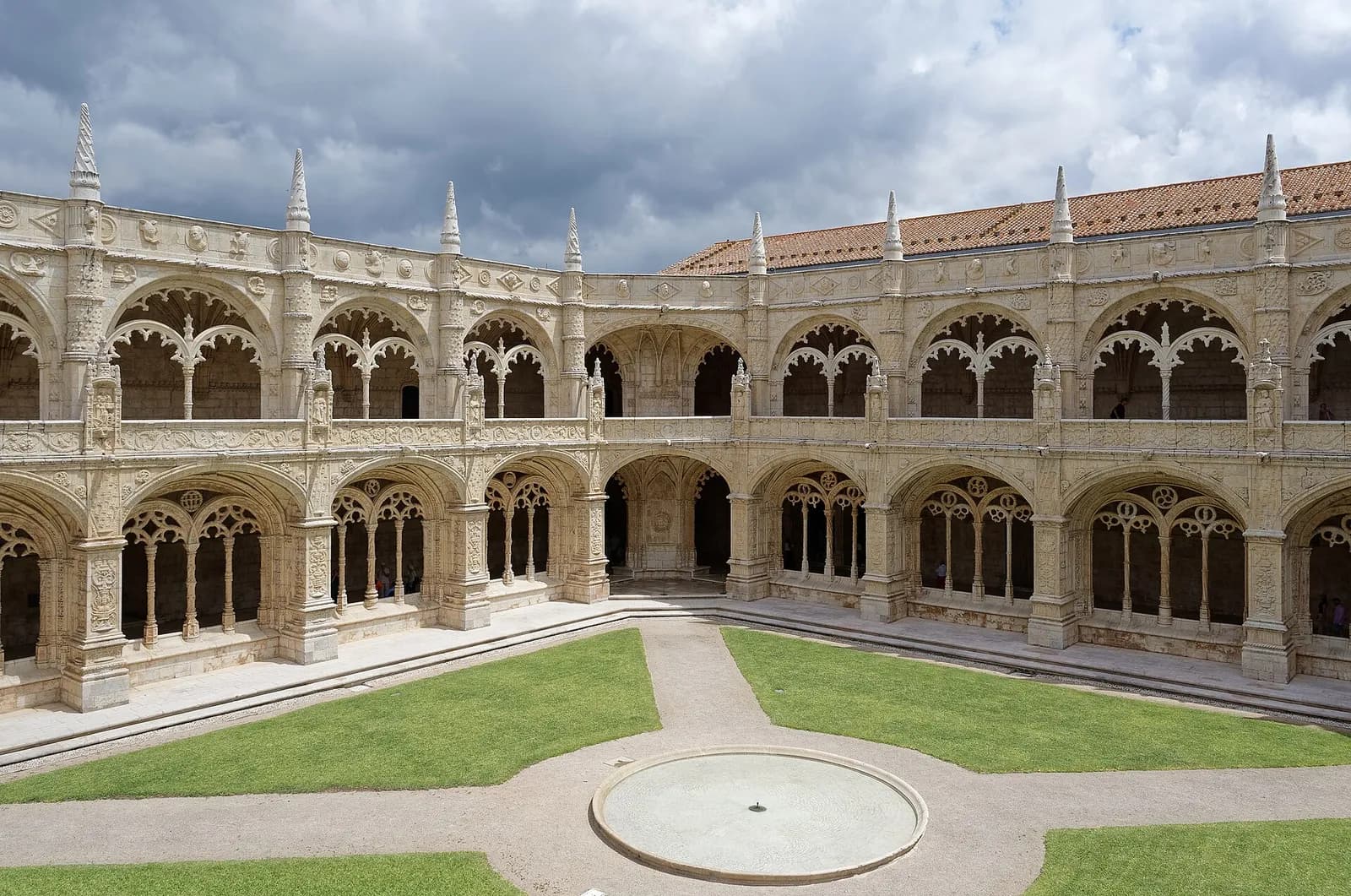
- On 13 December 2007 the leaders of the EU's member states signed the Treaty of Lisbon in the cloister of the Jerónimos Monastery, near the end of Portugal’s six-month presidency of the EU Council. Britain’s prime minister, Gordon Brown, missed the ceremony and signed later that day.
- The treaty kept most of the reforms of the European Constitution, which French and Dutch voters had rejected in 2005, but amended the existing treaties instead of replacing them and dropped the word “constitution”.
- It created a President of the European Council elected for two and a half years, a High Representative for foreign policy who was also a Commission vice-president, a new double-majority voting rule, a binding Charter of Fundamental Rights and the first exit clause, now Article 50.
- Irish voters rejected it on 12 June 2008 and approved it on 2 October 2009; the Czech Republic ratified last, on 3 November 2009, and the treaty entered into force on 1 December 2009.
- The United Kingdom used Article 50 in March 2017 and left the EU on 31 January 2020. In 2024 a Portuguese former prime minister, António Costa, was elected to the European Council presidency the treaty created.
A sunny Thursday in Belém
The leaders began arriving at half past ten. One by one they shook hands with José Sócrates, Portugal’s prime minister, whose government held the EU’s rotating presidency that half-year, and his foreign minister, Luís Amado. Then they went up to a waiting room at the Jerónimos Monastery, where they could enjoy the sun and a view of a very blue river. The area had been sealed off.
It was Thursday 13 December 2007, and the leaders of the member states had come to Lisbon to sign a treaty reforming how the EU worked. Britain's prime minister was not among them that morning. The ceremony had been scheduled for between noon and one o’clock. The Diário de Notícias reported that the whole spectacle lasted two hours and was staged above all for television.
The paper found its symbol in the monks’ old refectory, where a baroque painting of Saint Jerome hung. Legend says the saint pulled a thorn from a lion’s paw. By getting the treaty signed, the paper wrote, the Portuguese presidency had pulled a thorn from the EU’s side.
Three men spoke, for the three main institutions: Sócrates for the Council, José Manuel Barroso, a former Portuguese prime minister, for the European Commission, and Hans-Gert Pöttering for the European Parliament. The speeches were short. Pöttering, a German, called it the “Reform Treaty” and said “of Lisbon” only once. Barroso quoted Fernando Pessoa’s phrase “a sede de futuro”, the thirst for the future. Speakers recalled that Portugal had signed its own Treaty of Accession to the European Communities in the same monastery in 1985.
“History will not recognise the words that were spoken at this ceremony, but history will remember this day.”
Then came the signatures, which the paper said took as long as the voting at the Eurovision Song Contest. Each country sent its plenipotentiaries to the table, usually the head of government and the foreign minister, starting with Belgium’s caretaker prime minister, Guy Verhofstadt. Some sent three: France was represented by President Nicolas Sarkozy, his prime minister, François Fillon, and his foreign minister, Bernard Kouchner. Last came the British foreign secretary, David Miliband, alone, with no prime minister to shake hands with.
Gordon Brown spent the morning in London answering questions from the Commons liaison committee of senior MPs. EUobserver had reported a week earlier that the session would clash with the ceremony. Downing Street denied he was avoiding it, and pointed out that in 2001 the foreign secretary, Robin Cook, had signed the Treaty of Nice. Asked about Brown’s absence as he left, Sarkozy said in English: “We need Gordon.”
Brown reached Lisbon too late even for the official lunch and signed the treaty later that day. Barroso later said the British prime minister arrived late on purpose, to avoid the ceremony and the group photo, and signed “very discreetly” with him and one or two other witnesses, without the press.
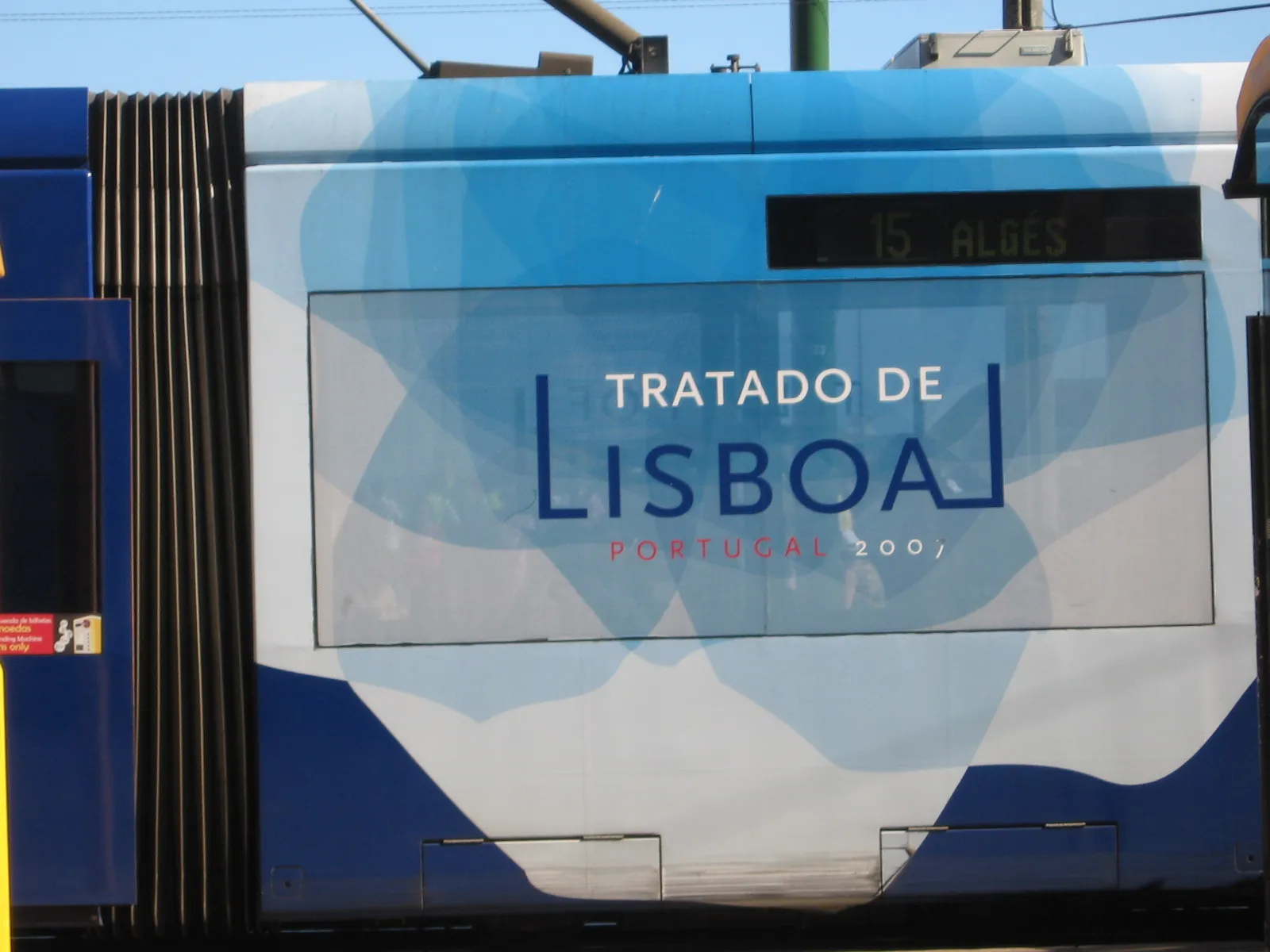
When it was over, the leaders boarded a modern tram to the official banquet given by the President of the Republic, Aníbal Cavaco Silva, at the Museu dos Coches. Outside the security perimeter a few protesters whistled. Mário Soares, prime minister when Portugal signed its accession treaty in 1985, told reporters the new treaty was “very confusing, too complex”, but a step forward. A referendum, he said, was not the issue; what mattered now was getting it approved.
A constitution that never came into force
The Lisbon treaty was a rescue. In 2004 the EU had signed a much grander text, the Treaty establishing a Constitution for Europe, drafted by a convention and signed in Rome on 29 October 2004. It was meant to replace all the existing founding treaties with a single document, and every member state had to ratify it.
Eleven countries had done so when France voted in a referendum on 29 May 2005. Of 28.3 million valid votes, 15.4 million were for “non”, 54.7 per cent, on a turnout of 69.4 per cent. Three days later, on 1 June, the Netherlands voted in an advisory referendum, its first national referendum: 61.5 per cent against, on a turnout of 63.3 per cent. The vote was not binding, but the Dutch government withdrew its bill to ratify.
Ratification stalled. Seven member states carried on with their procedures and seven others put theirs off indefinitely. CVCE, the University of Luxembourg’s European studies centre, describes an unprecedented crisis that lasted two years, in a Union that had just taken in twelve new members, most of them former communist states, in 2004 and 2007.
A mandate in Brussels, a deal in Lisbon
The German presidency of early 2007 broke the deadlock. At a European Council in Brussels in June 2007, the leaders agreed on 23 June to call an intergovernmental conference, the formal negotiation between governments that changes the treaties. Its mandate was a “Reform Treaty” that would amend the treaties in force. The constitutional idea, one text replacing all the others, was abandoned.
The mandate set a deadline: the conference was to finish before the end of 2007, leaving time to ratify before the European Parliament elections of June 2009. It was a bitter summit. Poland fought the new voting system, arguing that it gave too much power to Germany, the most populous member state.
Portugal took over the presidency in July, and the conference opened on 23 July. Most of the substance came from the 2004 text. What went were the symbols: every reference to a constitution, and any article on an EU flag, anthem or motto. The planned “Union Minister for Foreign Affairs” became a High Representative.
The leaders met informally in Lisbon on 18 and 19 October to settle the last disputes. Italy won one extra seat in the European Parliament. Poland won a guarantee that a mechanism letting small groups of states delay decisions could be removed only unanimously, and a permanent advocate general’s post at the EU Court of Justice for a Pole. After midnight they had a deal, and toasted it with champagne.
In Britain, the Conservatives and the Sun newspaper demanded a referendum, accusing Brown of breaking a promise to hold one on the constitution. Brown replied that the new treaty was less ambitious and needed no referendum, and that he had won safeguards limiting how it would apply to British justice and labour policy.
“It’s an important page in the history of Europe. Europe is now stronger, more confident and ready to face the challenges in the future.”
The treaty itself says it is to be known as the Treaty of Lisbon, after the city where it was signed. The day before the signing, in Strasbourg, an adapted version of the Charter of Fundamental Rights was proclaimed, so that the new treaty could refer to it. The Charter had first been proclaimed on 7 December 2000 but had no binding force.
29 October 2004
Constitution for Europe signed in Rome
29 May 2005
French referendum rejects the Constitution
1 June 2005
Dutch referendum rejects it too
23 June 2007
European Council agrees the mandate for a Reform Treaty
23 July 2007
Intergovernmental conference opens under the Portuguese presidency
18–19 October 2007
Political agreement at the informal summit in Lisbon
12 December 2007
Adapted Charter of Fundamental Rights proclaimed in Strasbourg
13 December 2007
Treaty of Lisbon signed at the Jerónimos Monastery
23 April 2008
Portugal’s parliament approves the treaty
12 June 2008
Irish voters reject the treaty
2 October 2009
Irish voters approve it in a second referendum
3 November 2009
Czech president Václav Klaus signs, completing ratification
1 December 2009
Treaty enters into force
What the treaty changed
The treaty runs to 271 pages of the EU’s Official Journal and is hard to read on its own, because it is a long list of amendments. It rewrote the Treaty on European Union and renamed the Treaty establishing the European Community as the Treaty on the Functioning of the European Union. The EU gained legal personality and replaced the old Communities, and the three “pillars” of the 1990s were merged.
| Area | Before Lisbon | After Lisbon |
|---|---|---|
| Chair of the European Council | Head of government of the country holding the six-month rotating presidency | A President elected by qualified majority for two and a half years, renewable once, who may hold no national office |
| Foreign policy | No single post spanning the Council and the Commission | A High Representative for Foreign Affairs and Security Policy, also a Commission vice-president, chairing the Foreign Affairs Council, with a European External Action Service |
| Council voting | Weighted votes per country: 255 of 345 votes needed for a qualified majority, kept as a transitional rule until 31 October 2014 | From 1 November 2014, at least 55% of member states (at least 15) representing at least 65% of the EU population; a blocking minority needs at least four states. Until 31 March 2017 any government could still ask for a vote under the old weights |
| European Parliament | Co-decision, an equal say with the Council, in some policy areas only | Co-decision, renamed the ordinary legislative procedure, extended to 40 more areas, 73 in all by EUR-Lex’s count; elects the Commission President; at most 751 members (750 plus the President) |
| Fundamental rights | Charter proclaimed in 2000, not legally binding | Charter has the same legal value as the treaties |
| Leaving the EU | No procedure in the treaties | A withdrawal clause, now Article 50 of the Treaty on European Union |
| Citizens | No formal right of initiative | At least one million citizens can ask the Commission to propose a law |
In the treaty as signed, the withdrawal clause is numbered Article 49 A; it became Article 50 when the treaties were renumbered.
The double-majority rule replaced a system in which each country had a fixed number of weighted votes: in the transitional table annexed to the treaty, Germany, France, Italy and the United Kingdom had 29 each, Malta 3 and Portugal 12. Under the new rule a law needs the backing of enough states and of enough people, and fewer than four states can never block it, however large they are.
Poland and the United Kingdom obtained a protocol limiting how the Charter of Fundamental Rights could be applied to them in their own courts. National parliaments were given a greater say in EU decision-making, and the Court of Justice’s jurisdiction was extended to every EU policy area except common foreign and security policy.
“Any Member State may decide to withdraw from the Union in accordance with its own constitutional requirements.”
That exit clause set out a procedure for the first time. A country that decides to leave notifies the European Council; the EU negotiates a withdrawal agreement; and if none is in force after two years the treaties simply stop applying, unless every government agrees to extend the deadline.
Two Irish votes and a Czech signature
The treaty was to take effect on 1 January 2009 if all 27 countries had ratified by then. Most did it by a vote in parliament. On 9 January 2008 Sócrates announced that Portugal would do the same. The German MEP Jo Leinen, who chaired the European Parliament’s constitutional affairs committee, welcomed the decision. Portugal was under no legal obligation to hold a referendum, he said, and one would have increased the pressure on countries such as the United Kingdom to hold one too.
The Assembleia da República approved the treaty on 23 April 2008. The Socialists, the Social Democrats and the CDS-PP voted for it; the Communists, the Left Bloc and the Greens voted against. Sócrates, who opened the debate, spoke of “great political and social consensus”. The Portugal Resident counted Portugal as the tenth EU country to ratify. President Cavaco Silva signed the decree of ratification on 9 May, and it was published on 19 May 2008.
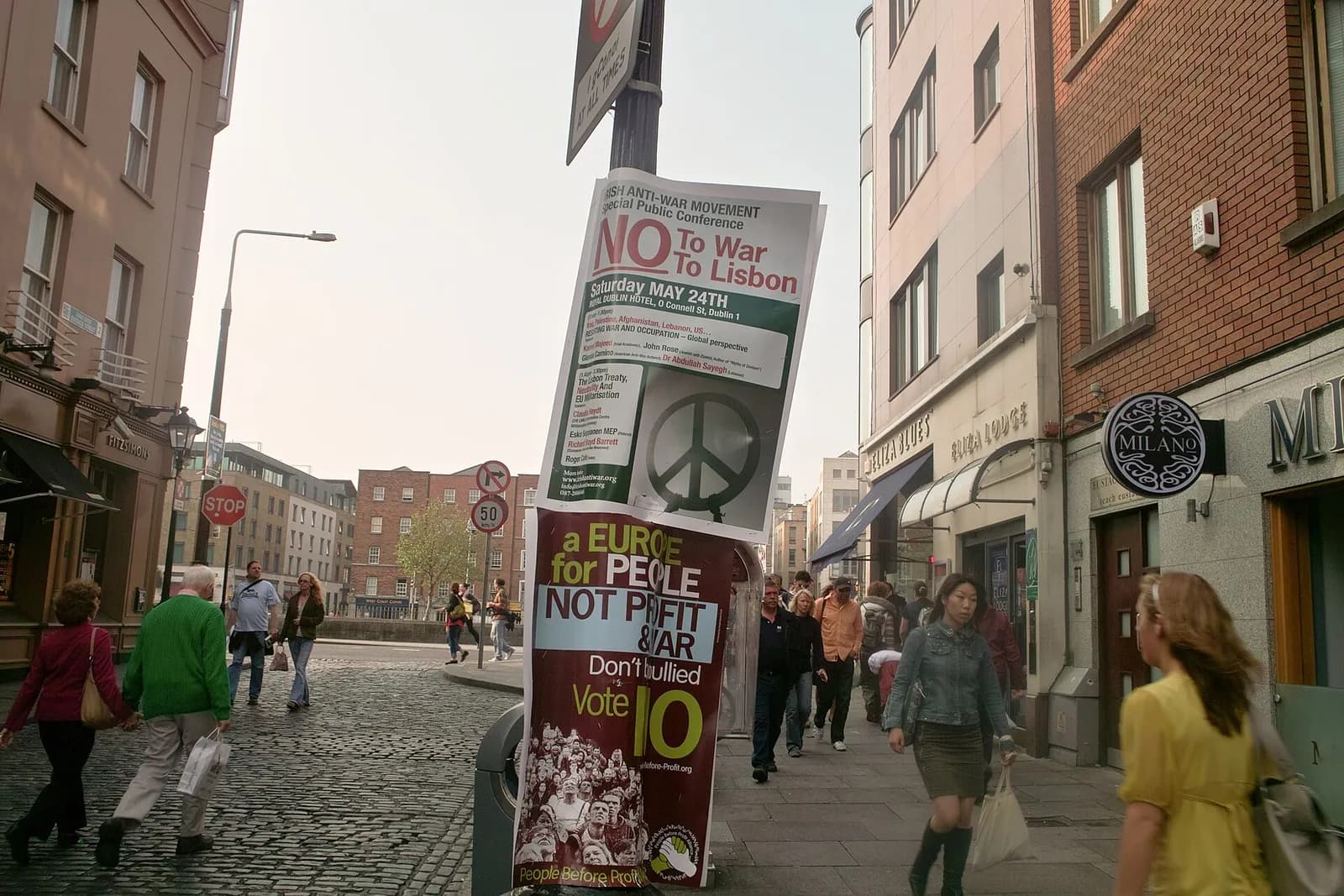
Ireland’s constitution required a referendum. On 12 June 2008, 862,415 Irish voters said no and 752,451 yes: 53.4 per cent against, on a turnout of 53.1 per cent. By then the parliaments of 19 member states had approved the treaty, and the other governments decided that renegotiating it was out of the question.
Instead, the other leaders addressed what Irish voters had said worried them. In December 2008 and June 2009 they gave legal guarantees that the treaty would not affect Irish policy on taxation, the right to life, education and the family, or the country’s military neutrality. They also agreed that the Commission would keep one member from every country. Under the treaty it would otherwise have shrunk in 2014 to two-thirds of the number of member states.
On 2 October 2009 Ireland voted again. This time 1,214,268 voted yes and 594,606 no, 67.1 per cent in favour, on a turnout of 59 per cent.
Yes vote in four referendums on EU treaty reform, 2005–2009
% of valid votes
France and the Netherlands voted on the Constitution in 2005, Ireland on the Treaty of Lisbon in 2008 and 2009. Shares of valid votes, calculated from the official totals.
Show the data
| Yes | |
|---|---|
| France 2005 | 45.3 |
| Netherlands 2005 | 38.5 |
| Ireland 2008 | 46.6 |
| Ireland 2009 | 67.1 |
There were other hurdles. On 30 June 2009 Germany’s Federal Constitutional Court ruled that the German law approving the treaty was compatible with the Basic Law. But Germany could not deposit its ratification until a new law gave the Bundestag and Bundesrat more say in EU lawmaking. The last holdout was the Czech president, Václav Klaus, a long-standing critic of the treaty.
On 3 November 2009 the Czech Constitutional Court ruled the treaty compatible with the Czech constitution. Within hours Klaus signed, while repeating that the treaty infringed Czech sovereignty and calling the court’s ruling politically biased. His signature completed ratification in all 27 member states.
“Once the Lisbon Treaty comes into force, the Czech Republic – contrary to the political opinion of the Constitutional Court – will cease to be a sovereign state.”
1 December 2009, and a door marked exit
The Treaty of Lisbon entered into force on 1 December 2009, the first day of the month after the last instrument of ratification was deposited with the Italian government. The same day the Charter of Fundamental Rights became binding, with the same legal value as the treaties.
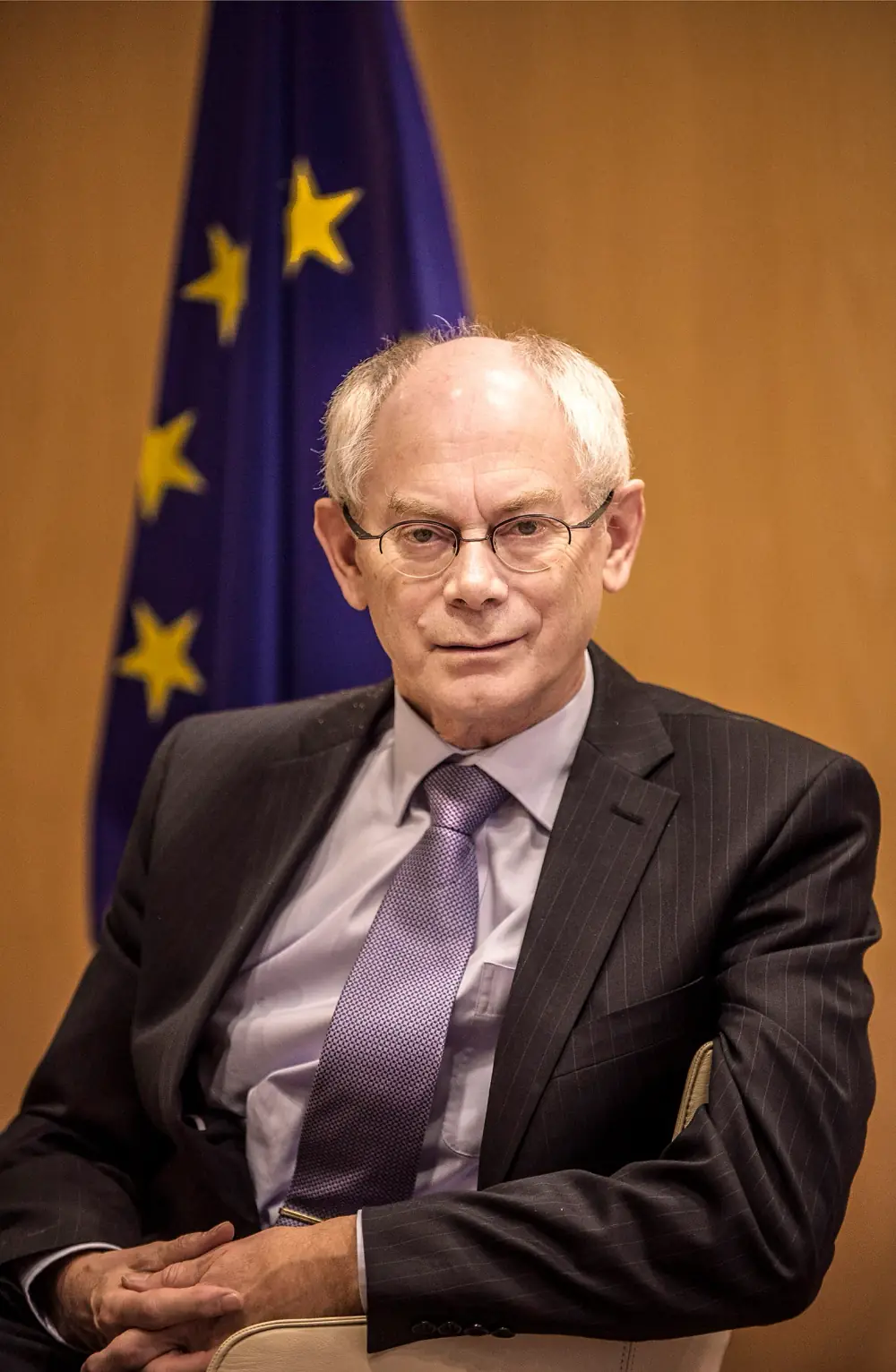
The new posts were filled at once. The European Council elected Herman Van Rompuy, Belgium’s prime minister, as its first full-time President, for a term from 1 December 2009 to 31 May 2012, and appointed Catherine Ashton High Representative for Foreign Affairs and Security Policy from the same day.
Article 50 was first used by the United Kingdom. On 23 June 2016 British voters chose to leave the EU. On 29 March 2017 the prime minister, Theresa May, wrote to the President of the European Council, Donald Tusk, to start the clock.
“I hereby notify the European Council in accordance with Article 50(2) of the Treaty on European Union of the United Kingdom’s intention to withdraw from the European Union.”
Under the two-year rule the UK was due to leave at 11pm on 29 March 2019. It asked for three extensions, each agreed unanimously by the other governments, and left on 31 January 2020. The Withdrawal Agreement negotiated under Article 50 entered into force on 1 February 2020.
Why it still matters
The EU still runs on the two treaties as Lisbon amended them. When EU ministers vote by qualified majority, they count states and populations. When EU summits meet, an elected president chairs them, and since 1 December 2024 that president has been António Costa, Portugal’s prime minister from 2015 to 2024, elected for a term ending on 31 May 2027.
For Portugal the treaty is also a matter of name. The European Commission’s office in Lisbon lists its signing in the Portuguese capital among the milestones of the country’s membership, alongside the accession treaty of 1985, the euro in 1999 and Barroso’s election as Commission President in 2004. Portugal has held the Council presidency four times; the third, in 2007, is the one that produced the treaty.
FAQs
Why is it called the Treaty of Lisbon?
The treaty itself says it is to be referred to as the Treaty of Lisbon, after the city where it was signed. Its text was agreed at a summit in Lisbon in October 2007 and signed at the Jerónimos Monastery on 13 December 2007, during Portugal’s presidency of the EU Council.
Is the Treaty of Lisbon the same as the European Constitution?
No. The Constitution of 2004 would have replaced the existing treaties with one text, and it failed after French and Dutch voters rejected it in 2005. The Treaty of Lisbon amended the existing treaties instead and dropped the constitutional language and symbols, but kept most of the Constitution’s institutional reforms.
When did the Treaty of Lisbon come into force?
On 1 December 2009. It was meant to apply from 1 January 2009, but Ireland rejected it in a referendum in June 2008, approved it in a second vote on 2 October 2009, and the Czech Republic completed ratification on 3 November 2009.
What is Article 50, and where did it come from?
Article 50 of the Treaty on European Union lets a member state leave the EU. It was introduced by the Treaty of Lisbon, the first time the treaties set out a procedure for withdrawal. The United Kingdom invoked it on 29 March 2017 and left on 31 January 2020.
Did Portugal hold a referendum on the Treaty of Lisbon?
No. José Sócrates announced on 9 January 2008 that Portugal would ratify by parliamentary vote. The Assembleia da República approved the treaty on 23 April 2008, with the PS, PSD and CDS-PP in favour and the PCP, Left Bloc and Greens against.
On the timeline
Open the timelineNearby moments from portugal in europe (1986–today).
Aníbal Cavaco Silva, prime minister from 1985 to 1995, is elected President of the Republic in the first round with just over 50 per cent of the vote, becoming the first head of state since 1974 to come from the centre-right PSD.
A cold snap brings snow to Lisbon on 29 January, the city's first snowfall since 1 and 2 February 1954, as a depression moving south carries snow across central and southern Portugal, from Santarém and Rio Maior to the hills of the Algarve.
In Portugal's second referendum on abortion, 59.25 per cent of valid votes back decriminalising terminations in the first ten weeks of pregnancy. Turnout of 43.6 per cent left the result non-binding, but Parliament legislated anyway, and the new law was promulgated that April.
The Treaty of Lisbon, 2007
European leaders sign the Treaty of Lisbon at the close of Portugal's presidency of the EU, in a ceremony in the Jerónimos Monastery at Belém. Britain's prime minister missed the ceremony and signed later the same day. Rescuing most of the failed European Constitution, the treaty created a permanent President of the European Council and a stronger EU foreign-policy chief, and entered into force on 1 December 2009.
Cristiano Ronaldo is named FIFA World Player of the Year in Zurich after winning the Premier League and the Champions League with Manchester United — the first Portuguese winner since Luís Figo in 2001.
Sculptor Lagoa Henriques dies in Lisbon. His best-known work is the bronze Fernando Pessoa seated at a café table outside A Brasileira in the Chiado, unveiled in 1988 for the poet's centenary — the empty chair beside him has made it a favourite photo stop for visitors.
Raul Solnado, one of Portugal's most beloved comedians and actors and a defining figure of Lisbon's Parque Mayer theatre scene, dies in Lisbon aged 79.
Coming up in history
All long reads 15 December 1885Fernando II, the King-Artist, dies in Lisbon: 15 December 1885
 16 December 1972Wiriyamu, 1972: the Mozambique massacre Portugal took 50 years to own up to
 17 December 1734Maria I, Portugal's first queen to reign in her own right, born 1734
 18 December 1914Naulila, 1914: Portugal's first battle with Germany, fought in Angola
33 sources
Archives, scholarship and reporting this article was checked against.
- 1
Treaty of Lisbon amending the Treaty on European Union and the Treaty establishing the European Community, signed at Lisbon, 13 December 2007 (OJ C 306, 17.12.2007)Official Journal of the European Union, via EUR-Lex
- 2
The Treaty of LisbonCVCE, University of Luxembourg (Laurence Maufort and Hervé Bribosia)
- 3
- 4O Tratado de Lisboa e o espinho de S. JerónimoDiário de Notícias, 14 December 2007
- 5
Referendum Results 1937–2024Department of Housing, Local Government and Heritage (Ireland)
- 6
Diário da República, 1.ª série, n.º 96, 19 May 2008: Decreto do Presidente da República n.º 31/2008 and Resolução da Assembleia da República n.º 19/2008Diário da República
- 7
Czech President Reluctantly Signs EU Reform TreatyRadio Free Europe/Radio Liberty, 3 November 2009
- 8
Brown may miss signing of new EU treaty (Renata Goldirova)EUobserver, 6 December 2007
- 9
Portugal na UEEuropean Commission Representation in Portugal
- 10
Brown signs EU reform treaty, eventuallyAgence France-Presse, 13 December 2007 (summary via OODA Loop)
- 11
Press Release: Gordon Brown signs EU Treaty (10 Downing Street, 13 December 2007)European Sources Online, Cardiff University
- 12
- 13
Décision n° 2005-38 REF du 1 juin 2005: Proclamation des résultats du référendum du 29 mai 2005Conseil constitutionnel (France)
- 14
Referendum Europese GrondwetParlement.com (Parlementair Documentatie Centrum, Leiden University)
- 15
EU leaders sign reform treatyAl Jazeera (news agencies), 13 December 2007
- 16
- 17
Brussels European Council, 21/22 June 2007: Presidency Conclusions (11177/1/07 REV 1), with Annex I, the IGC mandateCouncil of the European Union
- 18
Relief as EU leaders strike treaty deal (Ingrid Melander and Mark John, Reuters)Mail & Guardian, 19 October 2007
- 19
EU/Lisbon Treaty: item on Jo Leinen MEP’s press release of 9 January 2008Agence Europe, Europe Daily Bulletin No. 9576, 10 January 2008
- 20Treaty of Lisbon ratified by Portuguese parliament (Chris Graeme)The Portugal News / Portugal Resident, April 2008
- 21
European Union (Croatian Accession and Irish Protocol) Act 2013: Explanatory Notes, Irish Protocollegislation.gov.uk (The National Archives)
- 22
- 23
Act Approving the Treaty of Lisbon compatible with the Basic Law; accompanying law unconstitutional to the extent that legislative bodies have not been accorded sufficient rights of participation (press release, 30 June 2009)Bundesverfassungsgericht (Federal Constitutional Court of Germany)
- 24
- 25
- 26
Prime Minister’s letter to Donald Tusk triggering Article 50 (29 March 2017)GOV.UK, Prime Minister’s Office
- 27
Article 50 extensionInstitute for Government
- 28
The EU-UK Withdrawal AgreementEuropean Commission
- 29
- 30
António Costa, a socialist from the South, to preside over the European CouncilFondation Robert Schuman, European Issues no. 773
- 31
Efeméride: Morte de D. Manuel IMuseu de Marinha, Direção Cultural da Marinha
- 32
Mosteiro dos Jerónimos: fundação, o mosteiro, panteãoMuseus e Monumentos de Portugal, Mosteiro dos Jerónimos e Torre de Belém
- 33
Image credits
- The cloister of the Jerónimos Monastery in Belém, photographed in 2025. On 13 December 2007 it was the stage for the signing of the Treaty of Lisbon. Jakub Hałun, CC BY 4.0, via Wikimedia Commons.
- A modern tram on Lisbon’s route 15 to Algés, which runs past the Jerónimos Monastery, still wearing the “Tratado de Lisboa” livery in July 2008. Manuel Correia, Public domain, via Wikimedia Commons.
- Campaign posters against the treaty in Dublin on 23 May 2008, three weeks before Ireland’s first Lisbon referendum. William Murphy from Dublin, Ireland, CC BY-SA 2.0, via Wikimedia Commons.
- Herman Van Rompuy, the first elected President of the European Council, photographed in December 2012, during his second term. Michiel Hendryckx, CC BY-SA 3.0, via Wikimedia Commons.
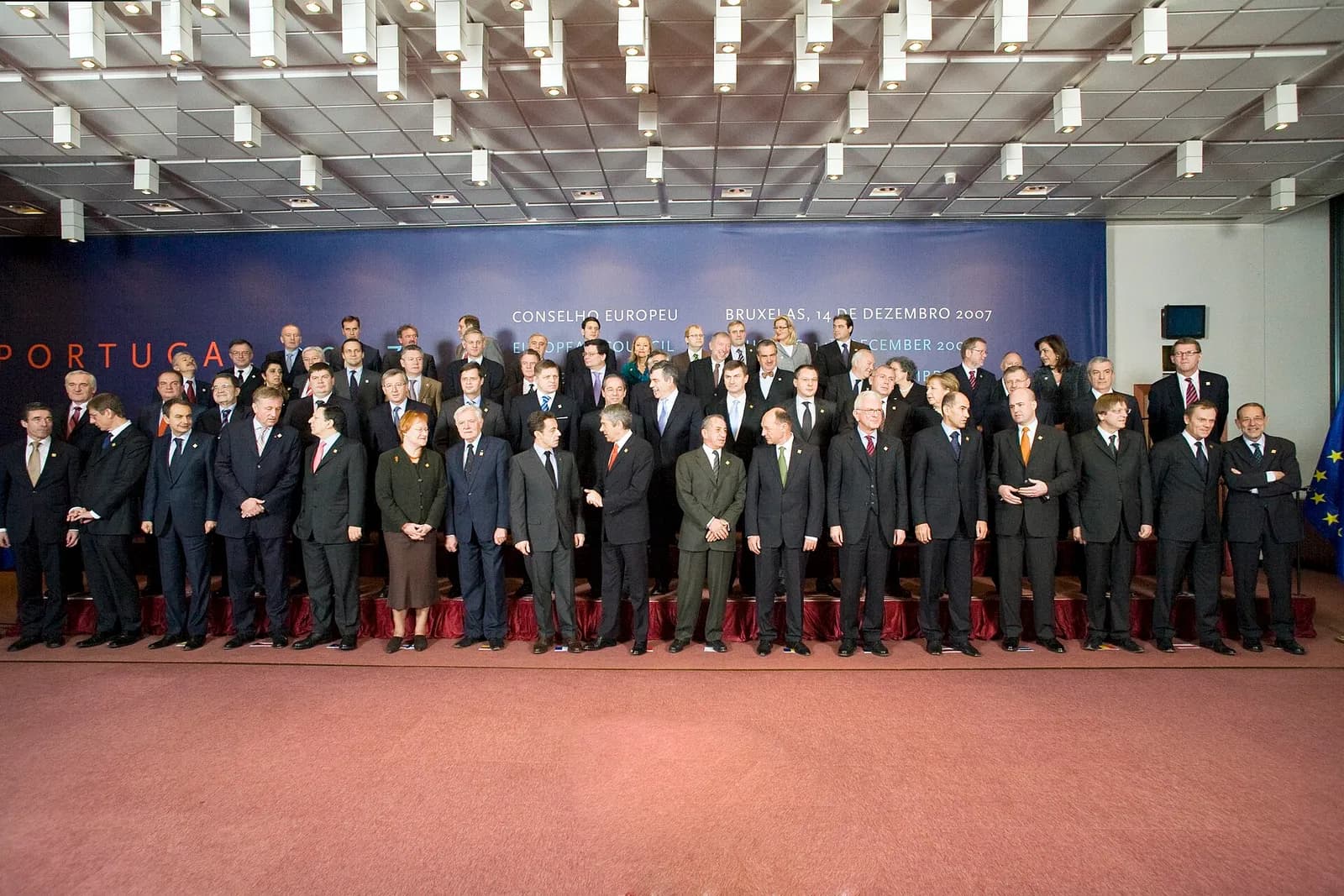
- The family photo of the European Council in Brussels on 14 December 2007, the day after the signing, under the Portuguese presidency’s backdrop. Gordon Brown, absent from the Lisbon ceremony, stands near the centre of the second row. Europäische Kommission - Audiovisueller Dienst, CE - Service audiovisuel, EC - Audiovisual Service, Georges Boulougouris, CC BY 4.0, via Wikimedia Commons.