

Portugal elects its town halls: the first free local elections, 1976
For fifty years the government in Lisbon had chosen every mayor. Then, on a Sunday in December 1976, voters filled in three ballots of different colours and picked 304 of them themselves.
At a glance
- On Sunday 12 December 1976 Portugal held its first free local elections since the military coup of 1926, choosing the councils and assemblies of 304 municipalities and the assemblies of their parishes.
- Under the Estado Novo the government had appointed every mayor; between 1974 and 1976 towns were run by administrative commissions named by the Ministry of the Interior.
- Voters filled in three ballots: white for the parish assembly, yellow for the municipal assembly and light green for the câmara, the council whose list leader became mayor.
- The Socialists (PS) won the most votes, about a third, and took Lisbon and Porto, but tied with the PPD (now PSD) at 115 mayors each. The Communist-led FEPU won 37, mostly in the Alentejo and Setúbal, and the CDS 36.
- Abstention was about 35 per cent, double the 16.7 per cent of the parliamentary election that April. Only five of the 304 new mayors were women.
“Mother, you’re mayor of Vagos”
On the night of 12 December 1976 Alda Santos Victor was at home in Lisbon, in the São Miguel neighbourhood, when her daughter brought the news: she had just been elected mayor of Vagos, a municipality in the district of Aveiro. Alda told her it was nonsense. Then she turned on the television and saw that it was true.
She was a housewife married to a magistrate, and she had never held office. A delegation from the CDS, the Christian democratic party, had travelled down from Vagos to ask whether she would head their list. She agreed, with one warning.
“I don't mind, only I know nothing.”
She was one of five women among the 304 mayors chosen that day. Under the Estado Novo, the dictatorship that ruled Portugal from the 1930s until 1974, not a single woman had been mayor. Nor had any man been elected to the job by ordinary voters: for nearly fifty years mayors had been appointed from Lisbon.
The 1976 local elections were the last of three national votes that year, after the parliamentary election in April and the presidential election in June. Instead of one ballot there were three, and instead of a handful of national lists there were thousands of local ones. Jorge Miguéis, later a senior official of the Interior Ministry, recalled that they were very difficult to organise because they were the first.
Fifty years of appointed mayors
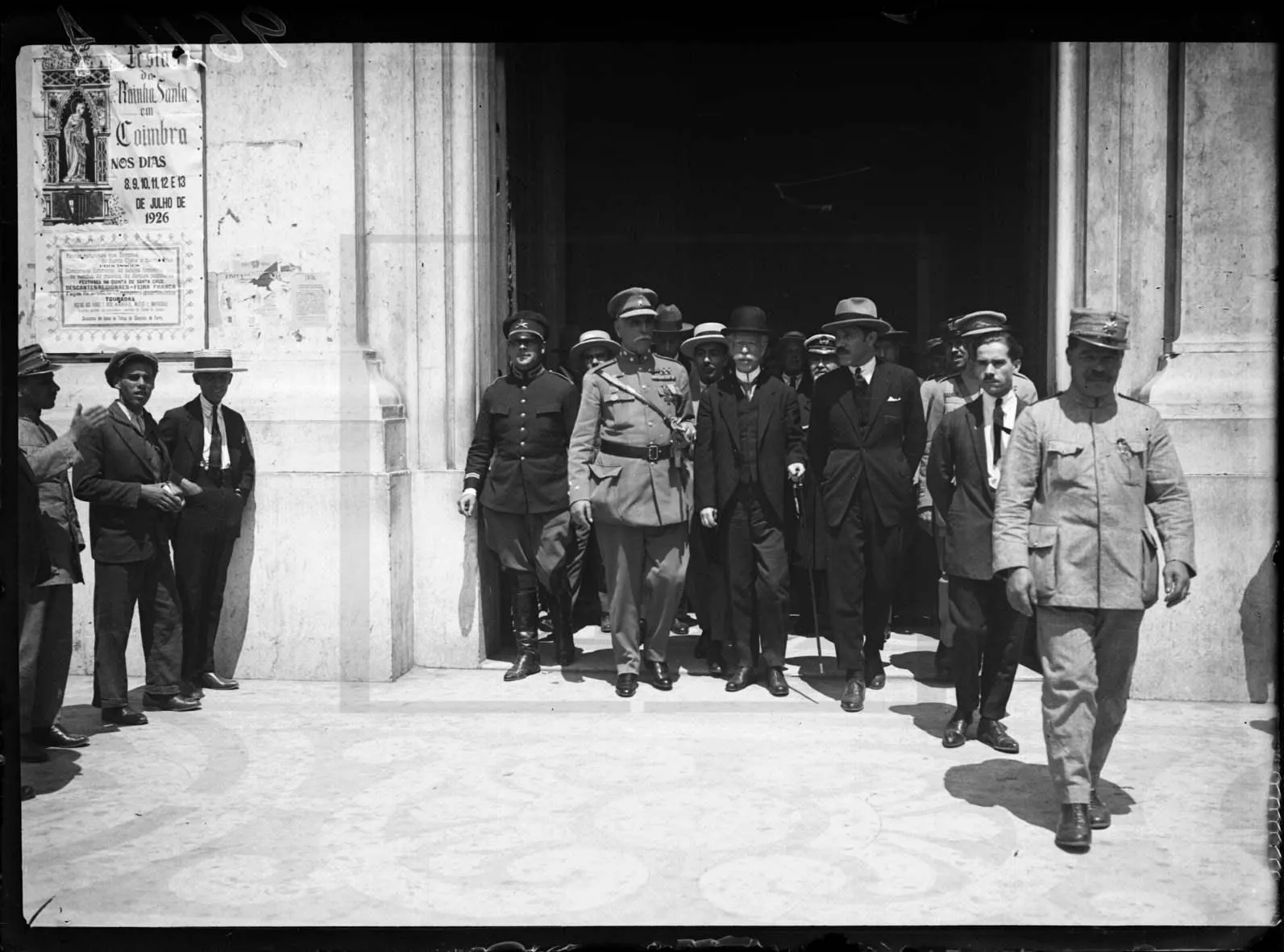
Portugal's councils had been elected under the constitutional monarchy and the First Republic, though by a limited electorate and under the eye of a civil governor sent from Lisbon. The military coup of 28 May 1926 ended that. In July 1926 every elected local body in mainland Portugal and the islands was dissolved, and the civil governors sent the Ministry of the Interior names for the administrative commissions that replaced them.
The Estado Novo made the arrangement permanent. Its Administrative Code, drafted by Marcelo Caetano, approved in 1936 and revised in 1940, kept the municipalities but put them under the civil governor of each district. Mayors were appointed by the Minister of the Interior on the governor's recommendation, for six years under the 1936 code and eight under the 1940 one.
Councils had almost no money of their own. Their revenue came from a tax on trade and industry and from property taxes based on out-of-date valuations; for the rest they lived on government grants and needed permission for every expense. Most mayors were unpaid, so the post went to local notables who could afford it. In 1964 the civil governor of Faro struggled to find anyone willing to run Vila do Bispo, and one candidate turned the job down because the allowance did not cover his travel.
In the parishes, the smallest unit of local government, the mayor named a regedor with police duties, and the parish council was chosen by a meeting of heads of family. Porto's appointed mayors, a study of the city's leaders concludes, were seen as agents of the government that named them.
The commissions of the revolution
The Carnation Revolution of 25 April 1974 removed the regime's mayors within weeks. Dismissals began to appear in the official gazette from 2 May. In Lisbon a lieutenant colonel of engineers, João António Lopes da Conceição, was named that day as delegate of the military junta to take over the outgoing mayor's powers.
A decree-law of 3 June 1974 let the Minister of Internal Administration dissolve councils and appoint administrative commissions of independents or of people from groups that backed the programme of the Armed Forces Movement (MFA). They were to govern until the first local elections. Often local committees proposed the names and the ministry confirmed them. By 8 July, 176 of the country's 304 municipalities had a commission.
The commissions reflected the mood of each place. Barreiro, the industrial town across the Tagus from Lisbon, got a president and 18 members, against an average of about five elsewhere. The first women to lead a municipality also came from these commissions: Aldina Graça, a notary, in Arruda dos Vinhos, and Maria Guiomar Romão in Oleiros. Only about 1 per cent of all mayors crossed over from the old regime to the new one.
Three ballots, three colours
The Constitution approved on 2 April 1976 gave local government its own section. Its first article on the subject read: “The democratic organisation of the State includes the existence of local authorities” (translated from Portuguese). They were to have their own property and finances, and the law would set their powers on the principle of administrative decentralisation.
The electoral law followed as Decree-Law 701-B/76 of 29 September, and on 1 October the government set the vote for Sunday 12 December. Candidates had until 29 October to file their lists. The campaign ran from 30 November to 10 December, and polling stations opened from 8 in the morning to 7 in the evening.
To explain the new system, the authorities printed 500,000 copies of an illustrated leaflet. Each voter, it said, would receive three ballots, one for each body, on paper of a different colour. Only political parties could stand for the câmara and the municipal assembly. For the parish assemblies, groups of citizens could run too, and 466 of them did.
| Body | Ballot colour | Who could stand | How it was made up |
|---|---|---|---|
| Assembleia de freguesia (parish assembly) | White | Parties and groups of citizens | Members elected by list; the first name on the most-voted list became president of the junta. Parishes with fewer than 300 voters held an open meeting of all citizens instead. |
| Assembleia municipal (municipal assembly) | Yellow | Parties only | Elected members, from 8 in small municipalities to 40 in Porto and 60 in Lisbon, plus the presidents of every parish junta |
| Câmara municipal (council) | Light green | Parties only | A mayor and 4 to 16 councillors, all directly elected; the first name on the most-voted list became mayor. Porto had 12 councillors and Lisbon 16. |
Seats on each body were shared out between lists in proportion to their votes.
“Democracy is the government of all of us. It begins in local government. Set out the problems and demand solutions!”
Eleven parties and fronts stood. The Communist Party (PCP) ran inside the FEPU, the United People's Electoral Front, an alliance with the smaller MDP/CDE. The CNE later found that most parties could not account properly for their spending, because they were contesting so many bodies at once, for the first time, without local organisations to match.
July 1926
Elected councils dissolved
After the 28 May coup, administrative commissions replace every elected local body.
31 December 1936
Administrative Code
Mayors are to be appointed by the government.
2 May 1974
The dismissals begin
A week after the revolution, the first mayors are removed and Lisbon gets a military delegate.
3 June 1974
Administrative commissions
A decree-law lets the government appoint commissions to run councils until elections.
2 April 1976
New Constitution
Local authorities with their own organs and finances become part of the democratic state.
29 September 1976
Electoral law
Decree-Law 701-B/76 sets the rules for the local elections.
30 November to 10 December 1976
Campaign
12 December 1976
Polling day
Polls open from 8 am to 7 pm.
From 16 December 1976
Official count
Each municipality's general count proclaims the winners.
A tie at 115
In Vila do Conde, north of Porto, Fernando Gomes, the 30-year-old Socialist who had led the town's commission since 1974, remembered that polling day “went very well”, though helpers had to move between the tables explaining whether people could vote with someone beside them. The results were not known until after one in the morning. In Vila Verde, near Braga, the local weekly reported that the vote went off “in great order”.
Not everything was settled that night. Some votes had to be repeated, and some parish assemblies were elected for the first time only much later.
When the counts were in, the Socialists, whose leader Mário Soares had become prime minister that summer, had the most votes: about a third, some 374,000 more than the PPD. Yet the two parties had the same number of mayors, 115 each.
| Party or front | Mayors | Votes for the câmaras | Share of valid votes |
|---|---|---|---|
| PS (Socialist Party) | 115 | 1,386,362 | 34.8% |
| PPD (Popular Democratic Party, now PSD) | 115 | 1,012,351 | 25.4% |
| FEPU (front led by the Communist Party) | 37 | 737,586 | 18.5% |
| CDS (Democratic and Social Centre) | 36 | 692,869 | 17.4% |
| PPM (People's Monarchist Party) | 1 | 7,507 | 0.2% |
| Others | 0 | 150,985 | 3.8% |
| Total | 304 | 3,987,660 | 100% |
Mayors counted from the CNE's list of the presidents of câmara elected in 1976. Votes are the official SGMAI figures published by PORDATA; another 182,834 ballots were blank or spoiled. Sources differ slightly: Lusa's 2016 report of CNE data gives lower shares (PS 33.0, PPD 24.3, FEPU 17.2 and CDS 16.6 per cent) and gives the CDS 37 mayors and the FEPU 36, and a 2021 study commissioned by the PS counts 118 PPD and 34 CDS mayors.
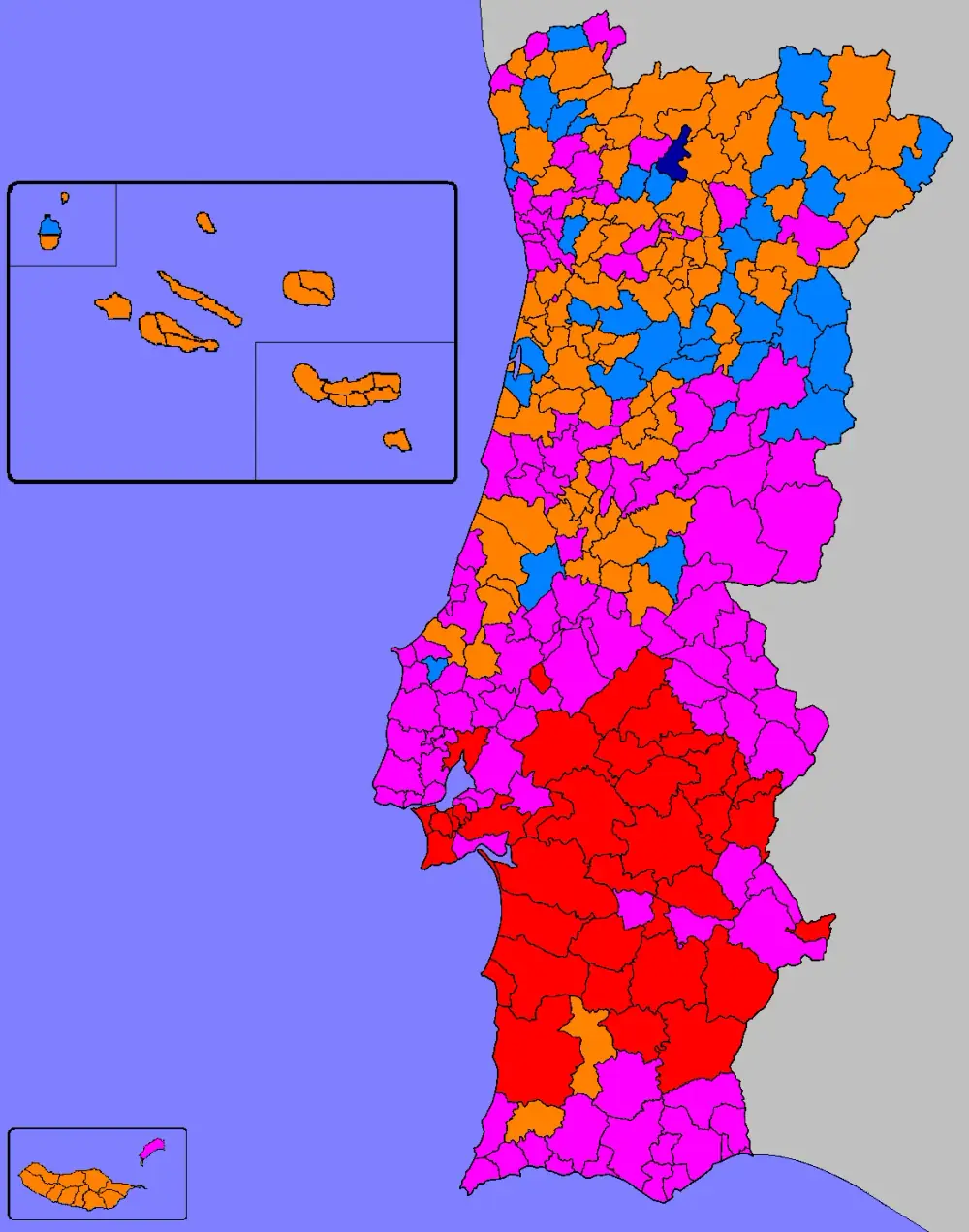
The map split almost by region. The FEPU took 12 of the 14 municipalities in the district of Évora, 10 of 13 in Setúbal and 9 of 14 in Beja. The PPD led in most of the north and swept the islands, winning 28 of the 30 councils there. The CDS was strongest in the inland north, taking 8 of the 24 councils in Viseu and 7 of 14 in Guarda. The PS led across much of the centre and south, with 13 of the 14 councils in the district of Lisbon, 12 of 15 in Portalegre and 15 of 16 in the Algarve. The monarchists won one council, Ribeira de Pena.
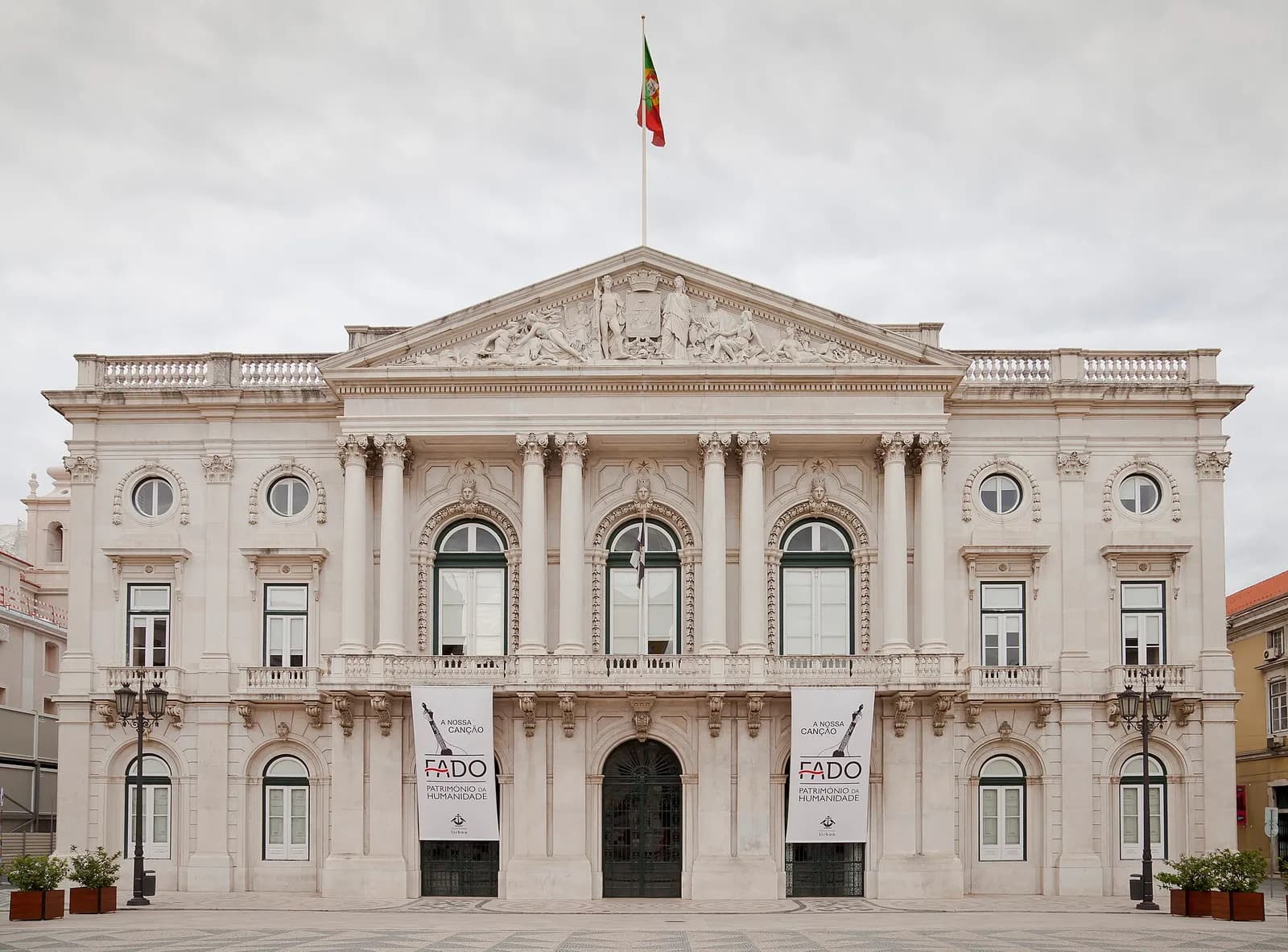
The Socialists won both big cities. In Lisbon their list was led by Aquilino Ribeiro Machado, an engineer; the city's magazine later called his council “the first elected chamber, after an interval of fifty years” (translated from Portuguese). He sat with 16 councillors, the largest council in the country.
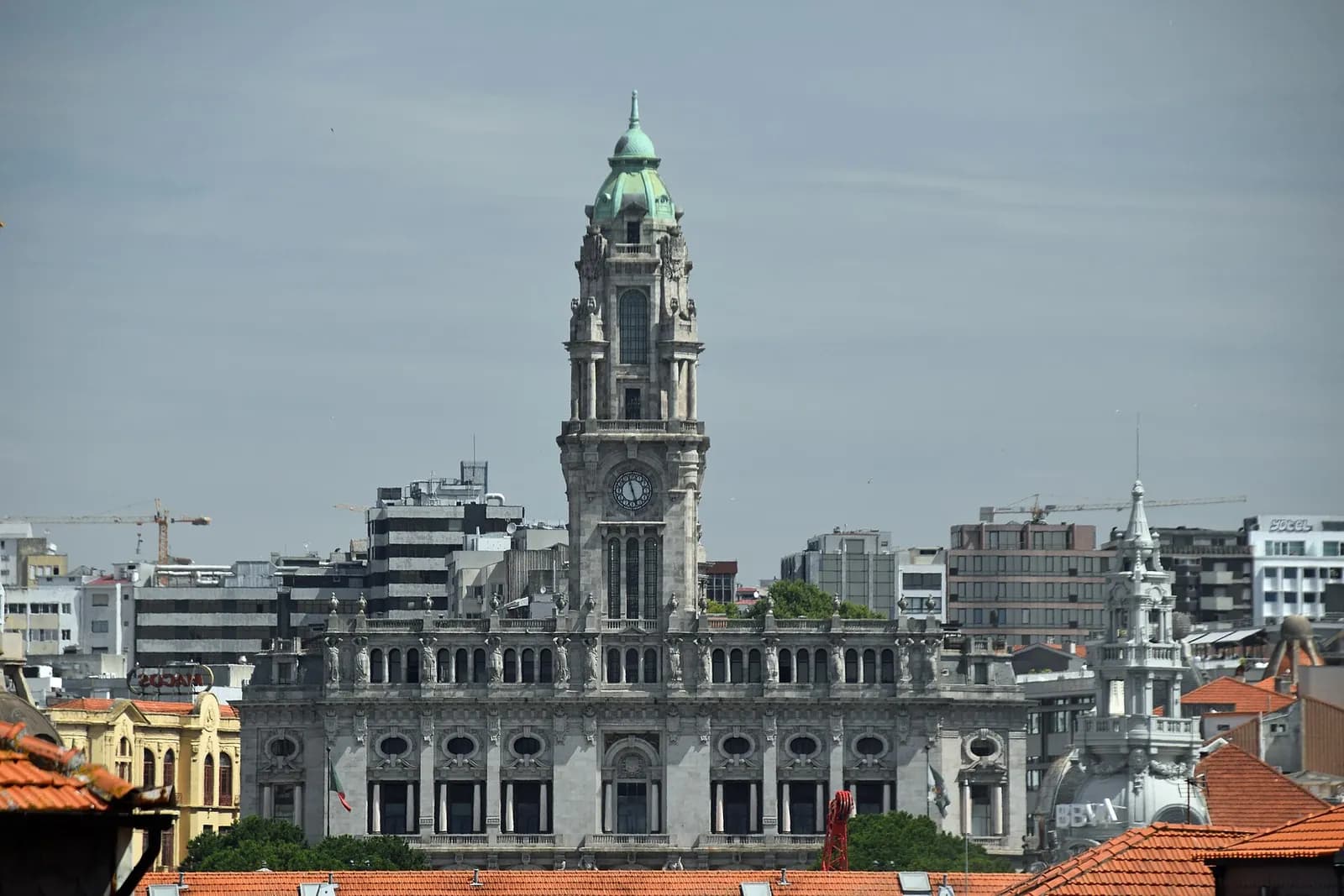
In Porto the Socialist list was headed by Aureliano Veloso, an engineer born in Gouveia who stood as an independent. He governed from 1977 to 1980. A history of Porto's mayors says he will be remembered, like the men first elected in 1822 and 1834, as the first president elected after a long dictatorship.
Almost all the new mayors were new to power. Braga's, the Socialist Francisco Mesquita Machado, was 29. The oldest took office in Albergaria-a-Velha at 73: he had been mayor before 1974 and chaired the town's commission after it, one of the very few men to run a council under appointment, revolution and election.
Turnout was the disappointment. About 35 per cent of registered voters stayed at home, against 16.7 per cent at the parliamentary election in April. The figure varied a great deal. In Vila Verde, near Braga, the local weekly counted 15,155 voters out of 23,942, an abstention of 36.7 per cent, and noted that the registers were out of date, with many old and sick people on them.
- Date
- Sunday 12 December 1976, polls open 8 am to 7 pm
- Municipalities
- 304, including 19 in the Azores and 11 in Madeira
- Contestants
- 11 parties and fronts, plus 466 citizens' groups for parish assemblies
- Mayors by party
- PS 115, PPD 115, FEPU 37, CDS 36, PPM 1
- Votes cast for the câmaras
- 4,170,494
- Abstention
- 35.3 to 35.4 per cent, depending on the source
- Women mayors
- 5 of 304
From commissions to councils
The new councils took office early in 1977 and inherited towns short of almost everything. In Vila Real only about a fifth of homes had piped water, and the mayor elected there in 1976 listed missing roads, paving and electric light. In Évora the informally built districts outside the walls had no electricity, water, sewers or rubbish collection. Vila do Conde, Fernando Gomes said, did not have a single paved street.
Parliament then gave them powers and money. A law of 25 October 1977 set out the competences of the councils and assemblies, including their own budgets and municipal master plans. The Local Finance Law of 2 January 1979 replaced the old system of grants with a fixed share of state revenue, distributed by formula and weighted towards poorer municipalities. Évora claims the first municipal master plan in Portugal, drafted over about two years with public consultation.
Many of the 1976 mayors did not last. Only 57.7 per cent ran again in 1979, and 40 per cent of those won. At the second local elections, on 16 December 1979, the Socialists fell from 115 mayors to 65, and the Democratic Alliance (AD) of the PSD, the CDS and the monarchists took both Lisbon and Porto. Others stayed for decades: the mayors elected in Braga and Vila Nova de Poiares in 1976 were still in office 37 years later.
Women elected mayor in Portugal, 1976 to 2005
mayors
Out of 304 mayors in 1976, 305 from 1979 to 1997 and 308 from 2001. From Maria Antónia Pires de Almeida's database of Portuguese mayors (Quadro XXVIII).
Show the data
| Women mayors | |
|---|---|
| 1976 | 5 |
| 1979 | 4 |
| 1982 | 6 |
| 1985 | 4 |
| 1989 | 7 |
| 1993 | 5 |
| 1997 | 12 |
| 2001 | 16 |
| 2005 | 19 |
The rules kept changing. Terms grew from three to four years in 1985. A constitutional revision in 1997 let groups of citizens stand for the câmaras, and in 2001 they did so for the first time: 21 mayors were elected as independents or at the head of citizens' lists. The administrative regions the Constitution had also promised were put to a referendum on 8 November 1998. Fewer than half the electorate voted, too few for the result to be binding, and 63.5 per cent of those who did said no.
A 2005 law limited mayors and parish presidents to three consecutive terms. It took full effect in 2013, when 160 mayors and 884 parish presidents could not stand again. That year a reform also merged parishes, cutting their number from 4,260 to 3,092. In 2025 parliament overrode a presidential veto to split 135 of the merged parishes back into 302, ahead of that year's local elections.
Fifty years on
December 2026 marks fifty years since the first vote. Local elections have been held every three or four years since, and the core of the 1976 design survives: an elected assembly beside an elected council, a mayor who is the first name on the most-voted câmara list, and 16 councillors in Lisbon and 12 in Porto.
Turnout recovered at the next two elections, then drifted down. Abstention passed 40 per cent in 2009 and peaked at 47.4 per cent in 2013, before falling back to 40.7 per cent in 2025.
Abstention in Portuguese local elections, 1976 to 2025
% of registered voters
Abstention at each local election, PORDATA from SGMAI data. For comparison, abstention at the parliamentary election of April 1976 was 16.7 per cent.
Show the data
| Abstention | |
|---|---|
| 1976 | 35.4 |
| 1979 | 26.2 |
| 1982 | 28.6 |
| 1985 | 36.1 |
| 1989 | 39.1 |
| 1993 | 36.6 |
| 1997 | 39.9 |
| 2001 | 39.9 |
| 2005 | 39 |
| 2009 | 41 |
| 2013 | 47.4 |
| 2017 | 45 |
| 2021 | 46.4 |
| 2025 | 40.7 |
Asked in 2017 what her council had done, Alda Santos Victor, by then in her nineties, began with the basics: Vagos got the sanitation it had never had.
FAQs
When were Portugal's first democratic local elections?
On Sunday 12 December 1976. Voters elected the councils (câmaras) and assemblies of all 304 municipalities and the assemblies of the parishes, the first free local elections since the military coup of 1926.
Who won the 1976 local elections in Portugal?
The Socialist Party won the most votes, about a third (34.8 per cent of valid votes), and took Lisbon and Porto. It tied with the PPD (now PSD) at 115 mayors each. The Communist-led FEPU won 37 councils, the CDS 36 and the monarchist PPM one.
How were mayors chosen before 1976?
Under the Estado Novo's Administrative Code of 1936 the Minister of the Interior appointed every mayor, on the recommendation of the district's civil governor. After the revolution of 25 April 1974, councils were run by administrative commissions appointed by the government until the 1976 elections.
How is a Portuguese mayor elected?
Voters do not vote for the mayor separately. They vote for party or citizens' lists for the câmara municipal, and the first name on the most-voted list becomes mayor. The same rule applied in 1976, when only parties could stand for the câmara; citizens' lists were allowed from 2001.
What was the turnout in the 1976 local elections?
About 65 per cent. Abstention was 35.3 to 35.4 per cent depending on the source, more than double the 16.7 per cent abstention at the parliamentary election of April 1976.
On the timeline
Open the timelineNearby moments from revolution and democracy (1974–1986).
General António Ramalho Eanes, aged 41, is sworn in as President of the Republic after winning 61.6% of the vote in the first round — the first head of state elected by universal suffrage after the Carnation Revolution. The career soldier would serve two terms until 1986, overseeing the end of military tutelage over Portugal's new democracy.
The first Regional Government of the Azores, led by João Bosco Mota Amaral, takes office in Ponta Delgada, inaugurating the autonomous government of the archipelago under Portugal's new democratic constitution.
Portugal becomes the 19th member state of the Council of Europe, with Foreign Minister José Medeiros Ferreira signing the instrument of accession in Strasbourg — a milestone in the young democracy's return to the European fold.
First local elections, 1976
Portugal holds its first democratic local elections, choosing 304 mayors and thousands of councillors and parish representatives. The Socialists win the most votes, about a third, and take Lisbon and Porto, though they tie with the PPD at 115 mayors each; abstention, at around 35%, is more than double that of the parliamentary election held that April.
Mário Soares's government formally applies for Portugal to join the European Economic Community, less than three years after the Carnation Revolution. Seen as the anchor of the young democracy, membership would follow on 1 January 1986.
TAP Flight 425, a Boeing 727 arriving from Brussels via Lisbon, overruns the short, rain-soaked runway at Funchal in Madeira and plunges onto the beach below, killing 131 of the 164 people on board. It remains the worst accident in TAP's history; the runway was later lengthened twice, in 1986 and in 2000, the second time on pillars over the sea.
Formal negotiations for Portugal's accession to the European Economic Community open, some eighteen months after the application lodged by Mário Soares's government in March 1977. They concluded with the signing of the accession treaty in June 1985.
Coming up in history
All long reads 14 December 1918Murder at Rossio: the assassination of Sidónio Pais, 14 December 1918
 15 December 1885Fernando II, the King-Artist, dies in Lisbon: 15 December 1885
 16 December 1972Wiriyamu, 1972: the Mozambique massacre Portugal took 50 years to own up to
 17 December 1734Maria I, Portugal's first queen to reign in her own right, born 1734
26 sources
Archives, scholarship and reporting this article was checked against.
- 1
Eleição autárquica de 1976: presidentes das câmaras municipais eleitosComissão Nacional de Eleições (PDF)
- 2
- 3
O Poder Local do Estado Novo à Democracia: presidentes de câmara e governadores civis, 1936-2012 (Maria Antónia Pires de Almeida)CIES, ISCTE-Instituto Universitário de Lisboa (e-book, 2013)
- 4
Primeiras autárquicas foram há 40 anos e consolidaram a democracia pós-AbrilAssembleia Municipal de Lisboa, from Lusa, 12 December 2016
- 5
Abstention rate in the elections for the Local AuthoritiesPORDATA, from SGMAI data
- 6Autarcas que levantaram o país do chão (Miguel Marujo)Diário de Notícias, 29 September 2017
- 7
- 8
As primeiras Eleições Autárquicas: 12 de dezembro de 1976 (Paula Bravo)Terra Ruiva (Silves), September 2021
- 9
Os Presidentes da Câmara Municipal do Porto (1822-2013), coordinated by Fernando de SousaCEPESE, Centro de Estudos da População, Economia e Sociedade
- 10
Constituição da República Portuguesa, texto original de 1976Assembleia da República
- 11
- 12
- 13
O Vilaverdense, no. 498, 19 December 1976Local weekly, Vila Verde; digitised by Aqualibri, CIM Cávado (PDF)
- 14
- 15
- 16
As marcas do Partido Socialista no poder local: relatório finalPartido Socialista, 2021 (PDF)
- 17
Lisboa: revista municipal, 2nd series, no. 1 (4th quarter 1979): “Primeira câmara eleita de acordo com a Constituição de 1976”Câmara Municipal de Lisboa, via Hemeroteca Digital de Lisboa (PDF)
- 18Morreu Aureliano Veloso, antigo presidente da Câmara do Porto e pai de Rui VelosoObservador, 12 June 2019
- 19
- 20
Limitação de mandatos: o impacto nas finanças locais e na participação eleitoral (Francisco Veiga, Linda Veiga, Bruno Fernandes, João Martins)Fundação Francisco Manuel dos Santos, May 2017 (PDF)
- 21
- 22
- 23Parlamento vota reposição de 302 freguesias agregadas em 2013Correio da Manhã, from Lusa, 17 January 2025
- 24Parlamento volta a enviar desagregação de freguesias para BelémECO, 6 March 2025
- 25
Autarquias locais: instalação dos órgãos autárquicosComissão de Coordenação e Desenvolvimento Regional de Lisboa e Vale do Tejo (CCDR LVT), November 2025 (PDF)
- 26
Marcelo Rebelo de Sousa (biography)CIDOB, Barcelona Centre for International Affairs
Image credits
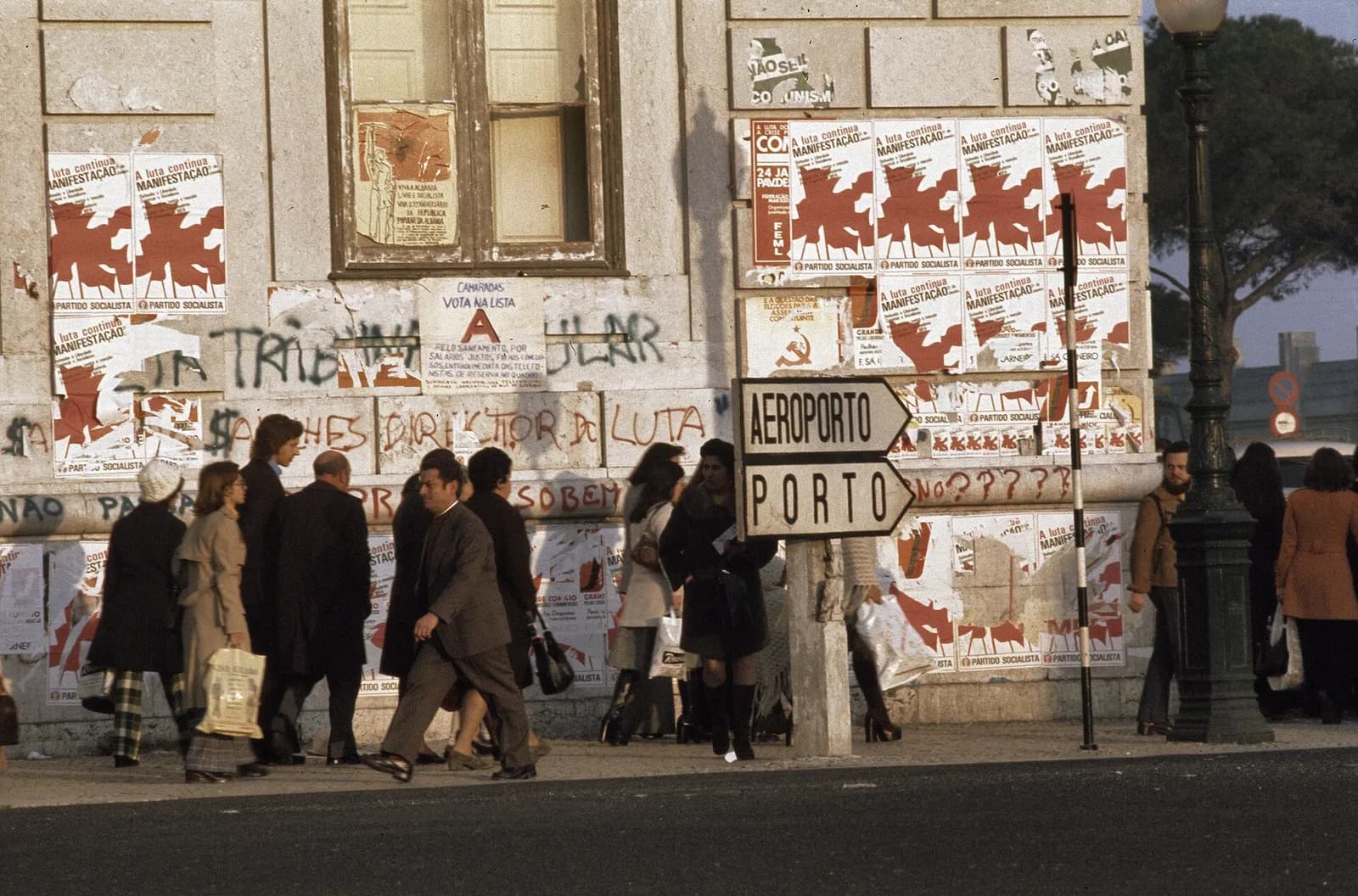
- Election posters and graffiti on a Lisbon street in early 1975, the year of the vote for the Constituent Assembly. The constitution that assembly wrote promised elected local government, and the first local elections followed in December 1976. Rob Mieremet / Anefo, CC0, via Wikimedia Commons.
- General Gomes da Costa, head of the military government, and his interior minister António Claro leave Lisbon's city hall on 5 July 1926 after installing the city's appointed administrative commission. Elected councils across the country were dissolved later that month. Unknown author, CC BY-SA 4.0, via Wikimedia Commons.
- The party that came first in each municipality in 1976, drawn by a Wikimedia contributor in 2016: PS pink, PPD orange, FEPU red, CDS light blue and PPM dark blue. Giloliveira1994, CC BY-SA 4.0, via Wikimedia Commons.
- Lisbon's city hall, the Paços do Concelho on the Praça do Município, in 2012. Aquilino Ribeiro Machado, elected in December 1976, was the first mayor of Lisbon chosen at a free election in fifty years. Diego Delso, CC BY-SA 3.0, via Wikimedia Commons.
- Porto's city hall in 2023. In December 1976 the city elected Aureliano Veloso, an engineer who stood as an independent on the Socialist list. Thomas Dahlstrøm Nielsen, CC BY-SA 4.0, via Wikimedia Commons.