

Maria I, Portugal's first queen to reign in her own right, born 1734
She was the first woman to rule Portugal in her own right. She freed Pombal's prisoners, built the Estrela basilica and founded an academy, then grief and illness pushed her aside, and she ended her life in a convent in Rio.
At a glance
- Maria Francisca, eldest daughter of the future King José I, was born in Lisbon on 17 December 1734 and married her father's brother, Pedro, on 6 June 1760.
- When José died on 24 February 1777 she became the first woman to reign over Portugal in her own right; she was acclaimed with her husband, King Pedro III, on 13 May 1777.
- Her reign opened with the release of some hundreds of prisoners of Pombal's regime and a review that cleared the memory of the executed Távoras in 1781, though the Crown's objections were never settled and their property was never returned.
- She approved the founding of the Academy of Sciences of Lisbon in 1779 and built the Basílica da Estrela to fulfil a vow she had made in 1760 for an heir.
- After the deaths of her husband and eldest son she fell ill; her son João governed for her from February 1792, and she died in Rio de Janeiro on 20 March 1816.
A princess born in Lisbon
On 17 December 1734, a week before Christmas, a daughter was born in Lisbon to Prince José, heir to King João V, and his wife, Mariana Vitória, an infanta of Spain. She was the couple's first child. On 9 January 1735 she was christened Maria Francisca Isabel Josefa Antónia Gertrudes Rita Joana.
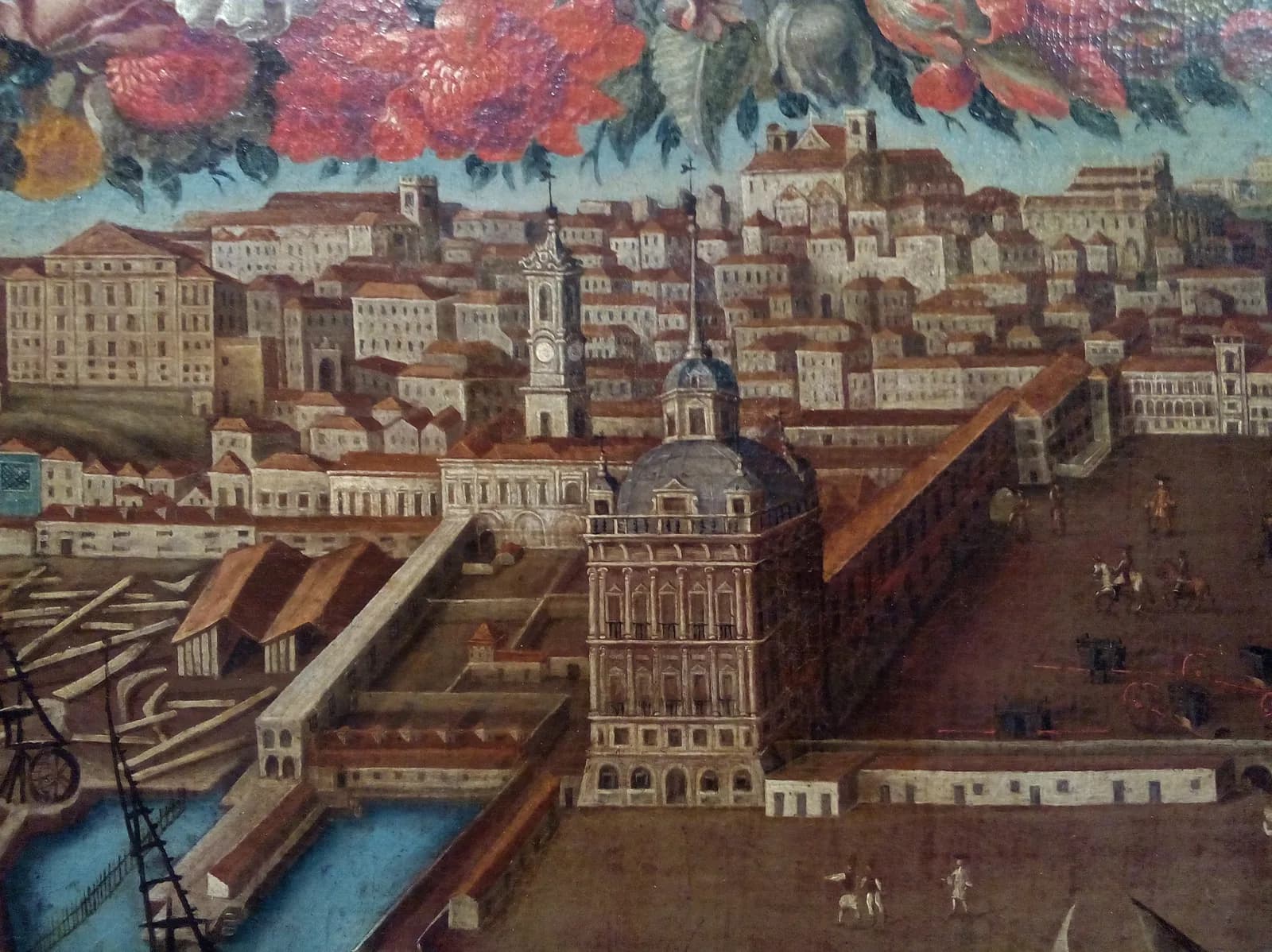
Popular biographies give her birthplace as the Ribeira Palace, the royal residence on the Tagus waterfront where the Praça do Comércio now stands; the scholarly accounts used here say only Lisbon. Nothing of the palace survives. It collapsed in the earthquake of 1 November 1755, together with its library and the new opera house next door.
Nobody in 1734 could be sure the little princess would rule. Her grandfather made her Princess of Beira only until her father had a son. He never did: three more daughters followed, and no woman had yet worn the Portuguese crown in her own right. Forty-two years later she was acclaimed in the square where the palace had stood.
- Born
- 17 December 1734, Lisbon
- Parents
- José, Prince of Brazil (King José I from 1750), and Mariana Vitória of Spain
- Married
- 6 June 1760, to her uncle Pedro (King Pedro III from 1777)
- Reigned
- 24 February 1777 to 20 March 1816; her son João governed for her from 1792
- Died
- 20 March 1816, Rio de Janeiro, aged 81
- Buried
- Basílica da Estrela, Lisbon, since March 1822
An heir in Pombal's shadow
Maria's father became King José I in 1750 and gave wide powers to his minister Sebastião José de Carvalho e Melo, later Marquis of Pombal, who made enemies of the old nobility and expelled the Jesuits in 1759. After an attack on the king on the night of 3 September 1758, a court condemned members of the Távora, Aveiro and Atouguia families, and on 13 January 1759 they were executed on a scaffold at Belém.
Her marriage was a political question for years. Spain put forward a younger brother of Charles III, a son of George II of Britain was briefly mentioned, and France told its envoys to watch closely. Her mother favoured Pedro, José's younger brother, and so did the princess. Pombal and the king were wary of him, because nobles who resented the minister looked to Pedro as a figurehead.
In the spring of 1760 the Spanish ambassador asked formally for her hand for the infante Luis. Turning Spain down without offence meant announcing the match with her uncle, and the wedding took place on 6 June 1760. By then, as the historian Caetano Beirão put it, with the nobility crushed by executions and arrests and the Jesuits expelled, Pombal had nothing left to fear from the match.
Their first son, José, was born on 20 August 1761, and two more children, João and Mariana Vitória, reached adulthood. As the boy grew, Pombal is said to have planned for Maria to renounce her rights in favour of her son, who was being educated by men the minister chose. The plan rests on later accounts and diplomatic letters, but she was kept off the Council of State, where an heir would normally sit.
1777: the prisons open
José I died at the Ajuda palace on 24 February 1777. In a political testament he asked his heir to free the prisoners of state, whom he pardoned without admitting they were innocent. Maria acted at once. From the forts of Pedrouços, the Junqueira, São Julião da Barra, the Barreiro and Setúbal, and from convents where noblewomen had been shut away, the prisoners walked out.
“Men and women alike, old and young, noblemen, magistrates, priests and commoners, some after eighteen and twenty years in prison.”
Counts differ. The historian Patrícia Alves, following Caetano Beirão's 1934 study of the reign, writes of some hundreds of people; a 2026 newspaper column puts the number freed by the general pardon at nearly 800. Among them were relatives of the Távoras, including the future poet Leonor de Almeida, shut in the convent of Chelas since 1759. On 17 May 1777 a royal decree declared that her father, the 2nd Marquis of Alorna, had been imprisoned unjustly and restored the honours of his house.
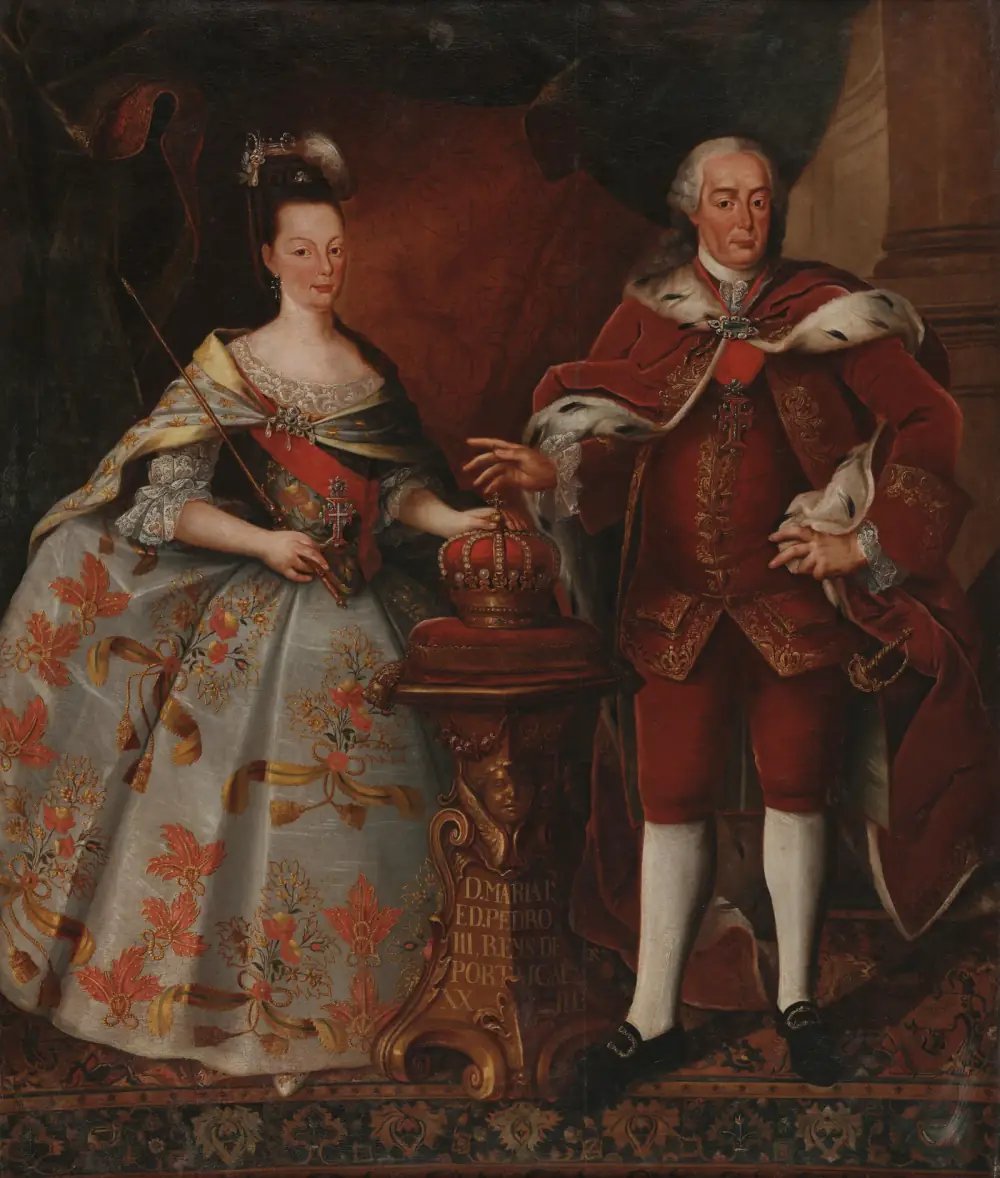
On 13 May 1777 Maria was acclaimed in the Terreiro do Paço, where the Ribeira Palace had stood, with the great nobles, councillors and secretaries of state around her and crowds filling the square. Her husband was acclaimed with her as King Pedro III. The official orator, the judge José Ricalde Pereira de Castro, spent much of his speech explaining why a woman could lawfully inherit the throne, citing the Cortes of Lamego, the supposed founding laws of the monarchy.
“And that lady would have been the first example of a sovereign queen of these kingdoms, had there been anyone in those calamitous times to do her justice freely.”
Pombal was already gone from court. Titles and posts went at the acclamation almost entirely to his known enemies, and two noblemen close to Pedro took senior offices. In October 1779 the queen had judges question the old marquis. A decree of August 1781 declared him guilty and deserving of exemplary punishment, then spared him because of his illness and great age, ordering only that he keep twenty leagues from court.
The new reign became known as the Viradeira, the turnabout, and liberal historians of the nineteenth century cast Maria as a pious reactionary undoing Pombal's Enlightenment. Recent work is more cautious. Maria kept men from the old government, such as Aires de Sá e Melo at foreign affairs and Martinho de Melo e Castro at the navy and colonies, and the reign founded scientific and teaching bodies of its own. Bello Vázquez reads the old picture as a mix of liberal ideology and a habit of describing a female ruler through piety and hysteria.
Reopening the Távora case
The freed prisoners wanted more than freedom. The Marquis of Alorna, son-in-law of the executed Marquis of Távora, pressed for a full review of the 1759 trial and gathered new testimony. By an alvará, a royal charter, of 9 October 1780 the queen appointed a board of judges to examine the original case file and nothing else.
Their sentence was published on 23 May 1781. The judges found it implausible that so many leading nobles had joined a plot to remove the king, given the absence of hard evidence. They revoked the 1759 sentence for the Marquis and Marchioness of Távora, their sons Luís Bernardo and José Maria, and their son-in-law the Count of Atouguia.
“They declare that they incurred no stain or infamy whatsoever. They absolve their memory and restore all the families of the aforesaid to their honours and to the use of the name of Távora, which the said sentence had forbidden them.”
The victory was mostly symbolic. Nothing in the sentence returned the confiscated estates, and the Crown's prosecutor lodged objections. Maria neither upheld nor rejected them. In December 1783 she named another board to study them, and the case was still open in 1790. The Duke of Aveiro, the other great house destroyed in 1759, was not cleared.
The review was awkward for the queen, since the 1759 sentence had been passed in her father's reign. Peters and Willis date an isolated episode of delirium to 1781, and the historian who prefaced Luísa Paiva Boléo's biography of the queen links one of her early crises to the pressure on her to sign the Távora document. Peters and Willis note that she was later tormented by fear for her father's soul because of the executions.
A vow, a basilica and an academy
On 24 October 1760, four months after her wedding, in the Carmelite nuns' convent at Carnide, outside Lisbon, Maria made a promise before an image of the Sacred Heart of Jesus. She would found a church and convent for Discalced Carmelite nuns if God gave the kingdom an heir. José's birth the next year settled the debt, and once she was queen she paid it.
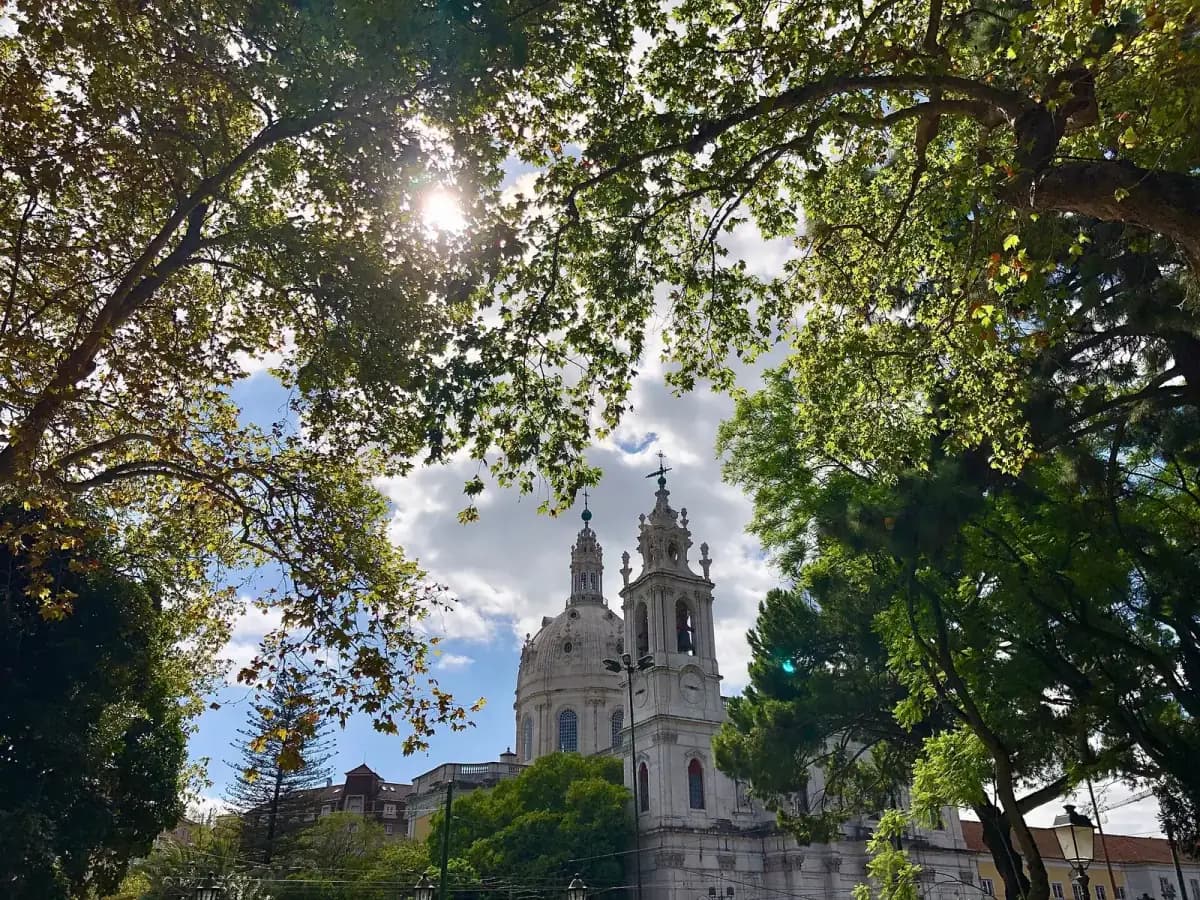
On 24 October 1779, the vow's nineteenth anniversary, Pedro III laid the first stone of the Basílica da Estrela with his own hands. The church was consecrated on 15 November 1789, though masons were still at work in the 1790s. Mary del Priore describes the convent's prioress gaining a growing hold over the queen as Maria weakened.
Two months after the stone was laid, on 24 December 1779, the queen approved the Royal Academy of Sciences of Lisbon. Its moving spirits were the 2nd Duke of Lafões, João Carlos de Bragança, and the Abbé José Correia da Serra, a priest who had grown up in Italy. Lafões was among the known enemies of Pombal rewarded at the acclamation. The academy met for the first time on 16 January 1780, and Maria lent it rooms and her protection.
| Institution | Founded | Purpose |
|---|---|---|
| Basílica da Estrela | First stone 24 October 1779 | Votive church and Carmelite convent |
| Academia Real da Marinha | 1779 | Naval academy |
| Academia Real das Ciências de Lisboa | 24 December 1779 | Scientific academy, still active |
| Casa Pia | 1780 | Education |
| Academia dos Guardas-Marinhas | 1782 | Training of naval cadets |
| Academia Real das Fortificações, Artilharia e Desenho | 1790 | Military engineering and drawing |
| Real Biblioteca Pública da Corte | 29 February 1796 | Public library, today's National Library |
The library was created by charter in 1796, when João was already governing in his mother's name.
Abroad, Maria made peace with Spain, ruled by her uncle Charles III, after fighting over the borders of southern Brazil: on 10 October 1777 she ratified the Treaty of San Ildefonso at her palace of Queluz. In Mary del Priore's account the early reign also saw the old laws compiled, private factories encouraged and a trade surplus that left the treasury some years of relief.
Three years of funerals
Pedro III died on 25 May 1786. The marriage had been a close one, and Maria lost the man some historians now see as her main political ally. On 11 April 1787 the noblewoman Teresa de Mello Breyner wrote from Lisbon that the queen seemed to want to resume all the outward signs of sovereignty she had given up out of deference to her husband.
Then smallpox came. Her eldest son and heir, José, died of it on 11 September 1788. On 2 November it killed her daughter Mariana Vitória, and soon afterwards her husband, the Spanish infante Gabriel, and their infant son. Maria had opposed inoculation against smallpox on religious grounds, and she blamed herself.
On 29 November 1788 she lost her confessor, Inácio de São Caetano, an ally against those at court who wanted the widowed queen off the throne. Mary del Priore counts six deaths of people closest to her in a few years, and adds the news from France, where revolution broke out in 1789 and her Bourbon cousins were later beheaded.
Doctor Willis comes to Lisbon
On 1 February 1792 the queen suffered a mental collapse. Pressed by the ministers, her surviving son João, now heir and Prince of Brazil, agreed on 10 February to carry out the royal functions on her behalf and in her name. He was not yet 25.
The court sent to England for Francis Willis, the doctor credited with bringing George III back from his madness of 1788 and 1789. He arrived in March 1792 and prescribed moral management, an early form of psychological treatment, and proper food instead of drugs. The first reports were hopeful. Unlike in England, though, he only advised; he did not control the patient.
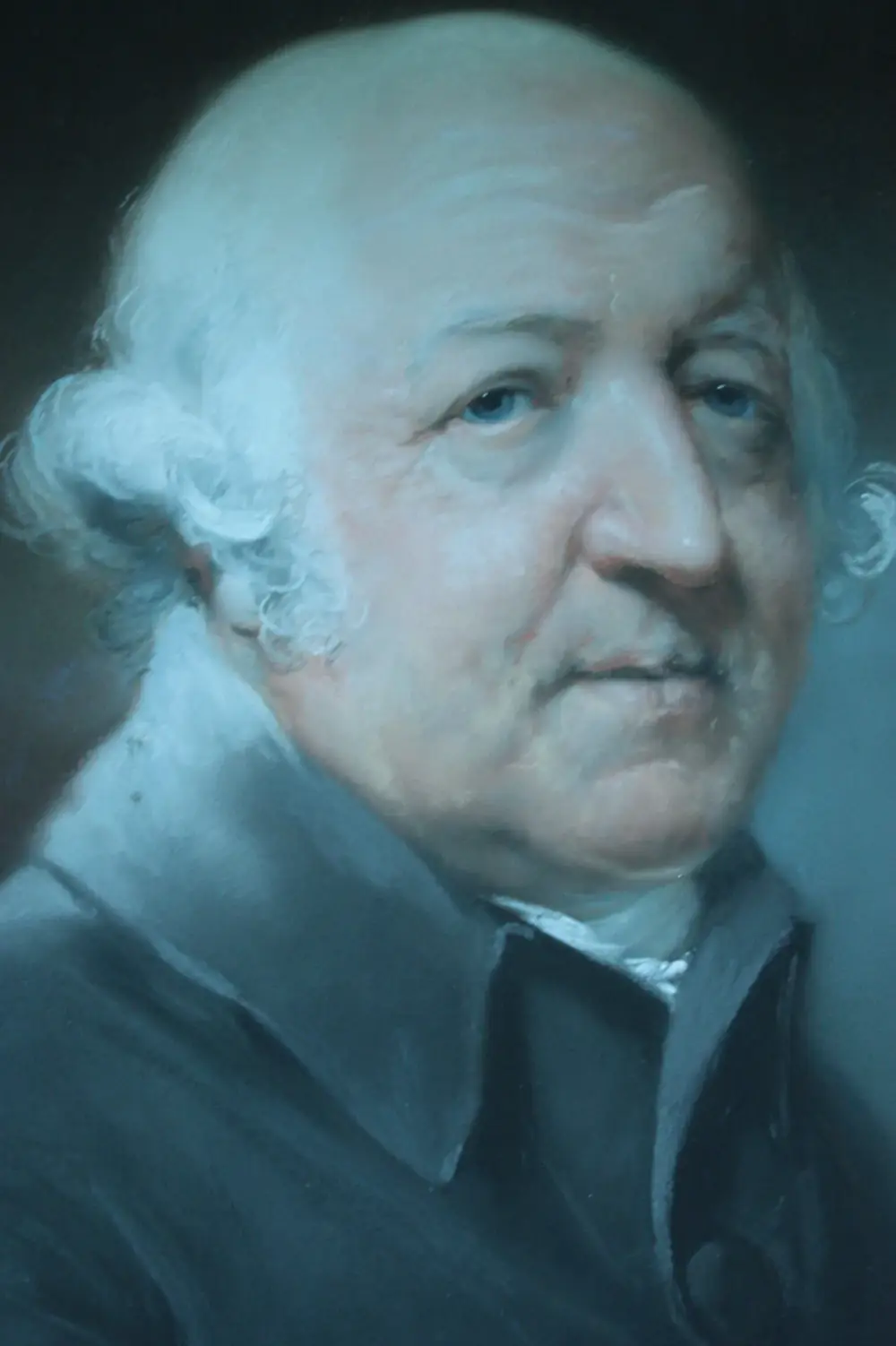
He tried to take the queen away from the pressures of court, including on a sea voyage, but her courtiers and officials insisted on going too. In the end he declared her incurable, advised that physicians from the University of Coimbra should go on caring for her, and left for England in August. Peters and Willis put his gain from the trip at some £16,000.
For seven years João governed without the title. Only on 15 July 1799, when the queen's condition was judged irreversible, did he formally become Prince Regent. By the time she died he had run the country for almost a quarter of a century.
Maria I's 39-year reign: who governed
years
Lengths worked out from the dates of her accession (24 February 1777), João's agreement to govern for her (10 February 1792), his formal regency (15 July 1799) and her death (20 March 1816). She governed in person for less than two-fifths of her reign.
Show the data
| Length of each phase | |
|---|---|
| Maria rules (1777–1792) | 15 |
| João acts in her name (1792–1799) | 7.4 |
| João as Prince Regent (1799–1816) | 16.7 |
Exile and death in Rio
When Napoleon's army under Junot marched on Lisbon in November 1807, the royal family sailed for Brazil, a story told in full elsewhere. Maria went aboard the ship of the line Príncipe Real with João and his sons on 27 November. The fleet reached Salvador on 22 January 1808; the queen came ashore on the 24th, a day after the rest of the family. On 7 March 1808 they entered the harbour of Rio de Janeiro.
In Rio she lived out of sight. On 16 December 1815 Brazil was raised to a kingdom, joined with Portugal and the Algarves in a United Kingdom. She died on 20 March 1816 at the Carmelite convent where she had been living, aged 81. João became king.
Her body was laid out with aromatic herbs and carried in procession to the convent of Nossa Senhora da Ajuda in Rio, where she was buried on 23 March 1816. In Lisbon the news came so late that the funeral rites for her soul were held only on 4 October.
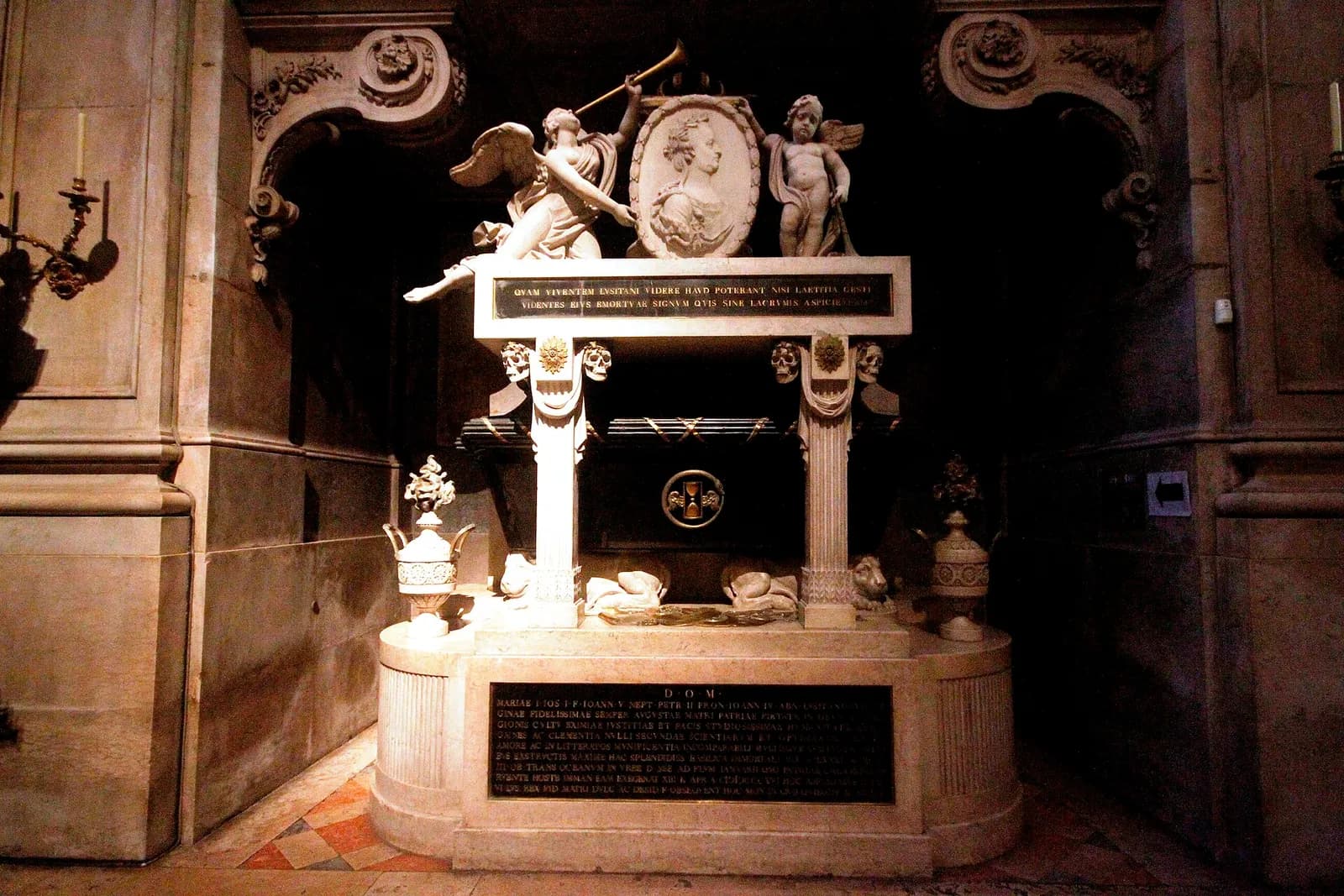
When João VI sailed home in April 1821, her coffin went too. The royal family came ashore in Lisbon on 4 July, the day after the fleet entered the Tagus. The coffin moved from convent to convent until 18 March 1822, when it was carried by torchlight to the basilica she had built, and she was buried there.
17 December 1734
Born in Lisbon
Eldest daughter of Prince José and Mariana Vitória.
1750
Heir to the throne
Her grandfather João V dies and her father becomes José I.
24 October 1760
The vow
She promises a church and convent if the kingdom is given an heir.
13 January 1759
Távora executions
Nobles condemned for the attack on José I are executed at Belém.
6 June 1760
Marries her uncle
Pedro, José's younger brother.
24 February 1777
Accession
José I dies; prisoners of state are freed.
13 May 1777
Acclamation
With her husband, King Pedro III, in the Terreiro do Paço.
24 December 1779
Academy of Sciences
Founded with her approval; the Estrela's first stone was laid in October.
23 May 1781
Távora sentence revised
The memory of the executed nobles is cleared; their estates are not returned.
25 May 1786
Pedro III dies
11 September 1788
Her heir José dies of smallpox
10 February 1792
João governs for her
Francis Willis treats her from March to August.
15 July 1799
Formal regency
27 November 1807
Embarks for Brazil
Reaches Rio de Janeiro on 7 March 1808.
20 March 1816
Dies in Rio de Janeiro
18 March 1822
Buried at the Estrela
Why she still matters
Maria I was the first woman to reign over Portugal in her own right, and the arguments heard in 1777 about the Cortes of Lamego and Catarina of Braganza were made to justify her. The academy she approved still meets in Lisbon, and the library created in her name in 1796 became the National Library.
Her reputation is still argued over. The republican poet Guerra Junqueiro helped fix the image of the mad queen, and Mary del Priore says she had believed it herself until she began reading. Bello Vázquez, following Beirão, points out that almost no private writings of the queen survive, so most of what is said about her mind comes from others.
FAQs
Was Maria I the first queen regnant of Portugal?
She was the first woman to inherit the throne and reign in her own right, from 1777. Earlier queens were consorts. Beatriz, Fernando I's daughter, had banners raised in her name in 1383 but never reigned, which is why Maria is often called the first undisputed queen regnant.
Why is Maria I called “the Mad”?
After the deaths of her husband in 1786 and of her eldest son, daughter and son-in-law in 1788, she fell seriously ill. In February 1792 her son João took over the government, and the English doctor Francis Willis judged her incurable. Modern writers who have studied the case, such as the psychiatrist Timothy Peters and the historian Mary del Priore, suggest severe depression rather than madness, though no diagnosis at this distance can be certain. In Portugal she was also called “the Pious”.
What was the Viradeira?
The “turnabout”: the name given to the start of Maria's reign in 1777, when Pombal fell, his political prisoners were freed and the Távora trial was reviewed. Historians now stress how much of Pombal's administration stayed in place.
Where is Queen Maria I buried?
In the Basílica da Estrela in Lisbon, the church she built to fulfil a vow. She died in Rio de Janeiro in 1816, was first buried there, and was brought back to Lisbon in 1821 and laid in the basilica on 18 March 1822.
Why did Maria I marry her uncle?
Pedro, her father's younger brother, was her own choice and her mother's, and the match let Portugal refuse a Spanish prince without offence in 1760. It also united the heir and the next male in line, so no one could use Pedro as a rival claimant.
On the timeline
Open the timelineNearby moments from restoration and the gold of brazil (1640–1750).
Birth in Coimbra of Joaquim Machado de Castro, Portugal's leading sculptor of the 18th century. His masterpiece, the bronze equestrian statue of King José I unveiled in 1775, still presides over the rebuilt Praça do Comércio — the symbolic centrepiece of Pombal's Lisbon after the earthquake.
In the early hours, lightning strikes the castle keep of Campo Maior in the Alentejo, which was being used as a gunpowder magazine holding some 6,000 arrobas (around 90 tonnes) of powder. The explosion and fire kill about 800 people and destroy roughly two-thirds of the town's buildings.
Diogo Inácio de Pina Manique is born in Lisbon. As Intendant-General of Police under Queen Maria I he introduced public street lighting and modern policing to Lisbon and founded the Casa Pia in 1780 to educate orphaned and abandoned children.
Queen Maria I
Maria Francisca, the future Maria I, is born in Lisbon. She became Portugal's first undisputed queen regnant in 1777, but after a mental collapse in 1792 (George III's doctor, Francis Willis, was summoned from England to treat her) her son João governed in her name, becoming formal regent in 1799.
The playwright António José da Silva, known as 'o Judeu', is sentenced as a relapsed Judaiser at an auto-da-fé in Lisbon's São Domingos church, then garrotted and his body burned. Born in Rio de Janeiro, he wrote comic operas for puppets that were staged with great success at the Bairro Alto theatre.
Tomás António Gonzaga, poet of 'Marília de Dirceu' and later a conspirator in Brazil's Inconfidência Mineira, is born in Porto. Exiled to Mozambique for his part in the plot, he died there in 1810.
Coming up in history
All long reads 19 December 1961The end of Portuguese India: Goa, Daman and Diu, December 1961
 20 December 1999The Macau handover: Portugal's last flag in China comes down, 1999
 21 December 1939Carlos do Carmo, born 21 December 1939: a life in Lisbon fado
 22 December 1761One treasury, one set of books: Pombal's Real Erário of 1761
20 sources
Archives, scholarship and reporting this article was checked against.
- 1
Louca ou isolada? Chaves para a interpretação política do reinado de D. Maria I (Raquel Bello Vázquez)Revista Galega de Filoloxía 26 (2025), Universidade da Coruña
- 2
D. João de Almeida Portugal e a revisão do processo dos Távoras: conflitos, intrigas e linguagens políticas em Portugal nos finais do Antigo Regime (c. 1777-1802) (Patrícia Woolley Cardoso Lins Alves, PhD thesis)Universidade Federal Fluminense, Niterói, 2011
- 3
Maria I of Portugal: another royal psychiatric patient of Francis Willis (Timothy Peters and Clive Willis)The British Journal of Psychiatry 203 (3), 2013, p. 167
- 4
Maria I: biographyArchontology.org
- 5
History of the AcademyAcademia das Ciências de Lisboa
- 6Mary del Priore: “D. Maria I não era louca, mas por força da Igreja considerava-se louca”Observador, 18 July 2020
- 7
A Basílica da Estrela: Real Fábrica do Santíssimo Coração de Jesus (Sandra Costa Saldanha)Livros Horizonte, Lisbon, 2008 (open access, Estudo Geral, Universidade de Coimbra)
- 8
The 1755 Lisbon Earthquake: The Catastrophe and the ReconstructionAna Cristina Araújo (University of Coimbra), Storicamente 17 (2021), peer reviewed
- 9
- 10D. Maria I: rainha louca de um país à procura da razão (João Pedro Ferreira)Correio da Manhã, 1 March 2026
- 11
A Batalha de Trancoso (with the political background and a narrative of 1383 to 1385)Fundação Batalha de Aljubarrota, Centro de Interpretação da Batalha de Aljubarrota
- 12
Chronica de el-rei D. Fernando (Fernão Lopes, Crónica de D. Fernando)Bibliotheca de Classicos Portuguezes, Lisbon, 1895 (digitised by Internet Archive)
- 13
Basílica da EstrelaTurismo de Lisboa (Visit Lisboa)
- 14
Biblioteca Nacional de Portugal (1796 – )Biblioteca Nacional de Portugal, Dicionário de Historiadores Portugueses
- 15
Tratado preliminar de paz, e de limites na America Meridional, relativo aos estados que nella possuem as coroas de Portugal, e de Hespanha (Lisbon, Regia Officina Typografica, 1777)Biblioteca Brasiliana Guita e José Mindlin, Universidade de São Paulo
- 16D. João VI: governar com equilíbrio e prudência (Paulo Drumond Braga)Observador, 4 June 2026 (Portugal 900 Anos series, Sociedade Histórica da Independência de Portugal)
- 17
The journey of the royal family to Brazil, 1807–1808 (Kenneth H. Light)Instituto Histórico de Petrópolis (first published in the Tribuna de Petrópolis, 2 and 9 November 1997; the English version online was revised for the 194th anniversary, in 2001)
- 18
Carta de Lei de 16 de Dezembro de 1815: eleva o Estado do Brasil à graduação e categoria de Reino (publicação original)Câmara dos Deputados (Brazil), Legislação Informatizada
- 19
Esta história macabra aconteceu na Basílica da EstrelaRFM, 24 October 2023
- 20
4 July 1821: João VI disembarks in Lisbon and swears an oath to the Constitutional basesParques de Sintra, Palácio Nacional de Queluz: King Pedro IV chronology
Image credits
- The Ribeira Palace, the royal residence on Lisbon's riverfront, in a view of the city painted around 1730, a few years before Maria was born. The palace was destroyed in the earthquake of 1755. Detail of a painting in the National Museum of Ancient Art, Lisbon. RickMorais, CC BY-SA 4.0, via Wikimedia Commons.
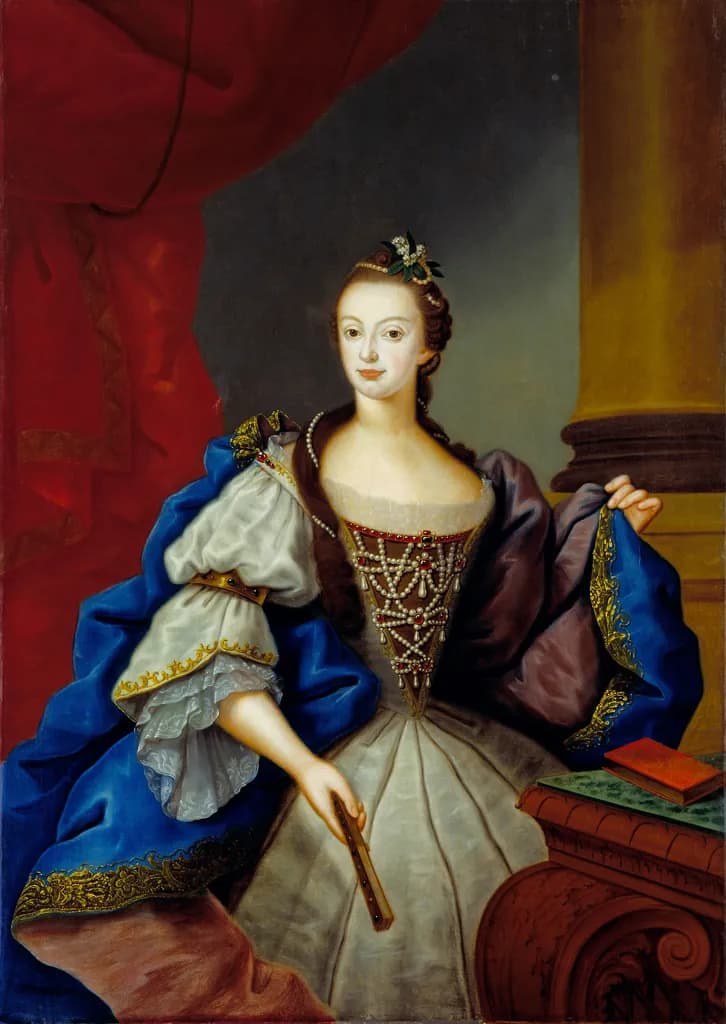
- Maria as heir to the throne, painted by Vieira Lusitano in 1753, when she was 18. Vieira Lusitano, Public domain, via Wikimedia Commons.
- Maria I and Pedro III, “kings of Portugal” as the inscription calls them both, painted by Miguel António do Amaral. National Coach Museum, Lisbon. Miguel António do Amaral, Public domain, via Wikimedia Commons.
- The dome and one of the bell towers of the Basílica da Estrela, seen from the Jardim da Estrela in 2019. Sonse, CC BY 2.0, via Wikimedia Commons.
- Francis Willis, in a detail of the portrait by John Russell dated 1789. In the spring and summer of 1792 he was in Portugal treating Maria I. Stephencdickson, CC BY-SA 4.0, via Wikimedia Commons.
- Maria I's tomb in the Basílica da Estrela, Lisbon, photographed in 2013. José Luiz, CC BY-SA 3.0, via Wikimedia Commons.