

Naulila, 1914: Portugal's first battle with Germany, fought in Angola
A shooting at a border fort, a German revenge raid and a panicked retreat turned southern Angola upside down. The bill was argued over in Lausanne until 1933.
At a glance
- At about 5 am on 18 December 1914 a German column of some 400 to 500 men from German South West Africa, today Namibia, attacked the Portuguese fort at Naulila, on the Kunene River in southern Angola.
- The attack avenged a German district official and two officers shot at Naulila on 19 October 1914, in what an international tribunal later called a chance incident caused by misunderstandings and a poor interpreter.
- Within three to four hours the Portuguese under Lieutenant-Colonel Alves Roçadas had lost the fort. The historian Luís Barroso counts 69 Portuguese dead, 76 wounded and 65 taken prisoner; by Jakob Zollmann's count the Germans lost 12 dead.
- The Germans went home the next day, but the Portuguese retreat ran for 150 kilometres and set off a rising in southern Angola. General Pereira d'Eça's 1915 expedition crushed it and conquered the Kwanyama kingdom of King Mandume.
- Portugal and Germany were not at war until 9 March 1916. In 1928 Swiss arbitrators ruled the German raids unlawful reprisals, a case still taught in international law as the Naulilaa case.
Dawn on the Kunene
The Germans came out of the bush from the east, with the rising sun behind them. It was about five in the morning of 18 December 1914, and Fort Naulila, a mud-walled post ringed with thorn-bush fences on the south bank of the Kunene River, anchored the Portuguese line along the border with German South West Africa.
Major Victor Franke, the most experienced officer in the German colony, had planned a pincer attack. It went wrong at once. One of his companies, misled by its guide, was still marching along the river when the battle began, and the Portuguese opened fire first, from trenches the German scouts had missed. Their gunners aimed too high.
The German guns did not miss. A shell hit the fort's munitions store, which exploded, and the huts and barracks around it caught fire. The east side of the position was held by African troops who had no training for artillery and machine-gun fire; they took cover in the trenches and then gave way.
Franke was shot in the face by a sniper firing from a tree, handed command to his deputy, Captain Georg Trainer, and ordered the fort stormed. The Germans went in with bayonets. By about 8.30 the fighting was over, and by nine the last Portuguese soldiers had crossed the Kunene, heading north.
Portugal and Germany were not at war. They would not be for almost 15 months more.
A border drawn blind, and a war next door
The frontier between Angola and German South West Africa was fixed by a Luso-German treaty of 30 December 1886, drawn by negotiators who did not know the ground. It ran up the Kunene to some cataracts “south of Humbe”, then due east. No map was attached, nobody was sure which cataracts were meant, and the line cut through the Ovambo kingdoms.
On the ground Portugal ruled far less than its maps claimed. At the start of the twentieth century only about a fifth of Angola was under Portuguese control. On 25 September 1904 the Cuamato routed a Portuguese column at the Pembe ford on the Kunene: Barroso puts its losses at about 300 of 500 men, Zollmann at more than 300 dead from a force of over 1,000. Between August and October 1907 Alves Roçadas, then a captain, avenged the defeat with a campaign that occupied the Cuamato country and made him a national hero.
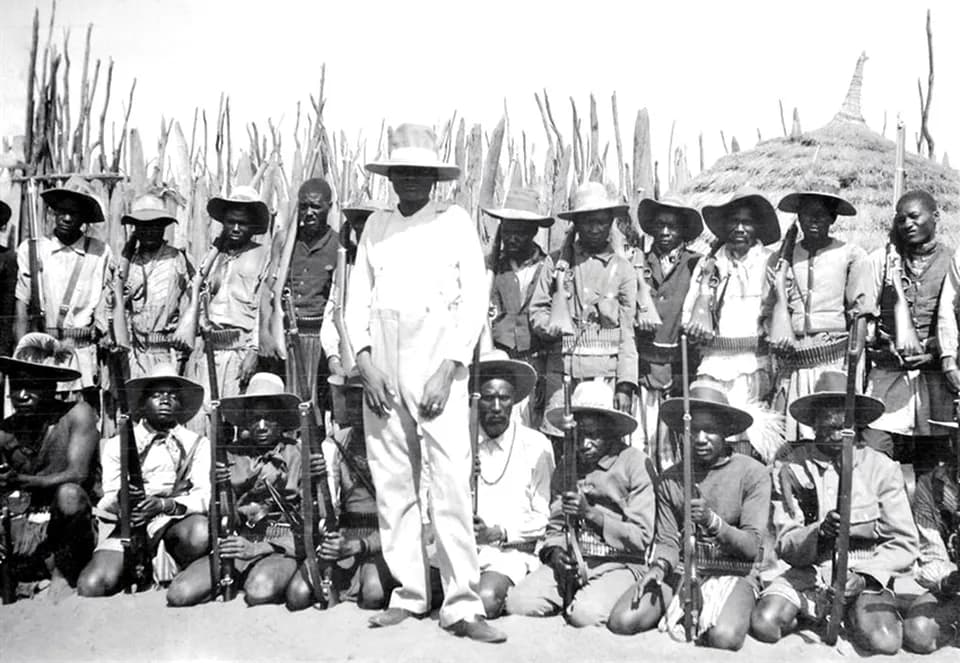
East of Cuamato lay the Kwanyama, the most powerful Ovambo kingdom, still unconquered. Its young king, Mandume ya Ndemufayo, ruled from 1911 at N'giva, today Ondjiva. Many Kwanyama men worked in German mines across the border, and the Portuguese were convinced that German traders and missionaries were arming them. The arbitrators later found no proof of that, though German officials did send Mandume some rifles as gifts in late 1914.
The war reached Portugal's colonies early. On 24 August 1914 a German post on the northern border of Mozambique attacked the Portuguese post of Maziua, its commander believing, wrongly, that the two countries were at war. In September South African troops invaded German South West Africa for the British Empire, and the colony's Schutztruppe, no more than 2,000 regular colonial soldiers in August 1914, faced invasion from the south.
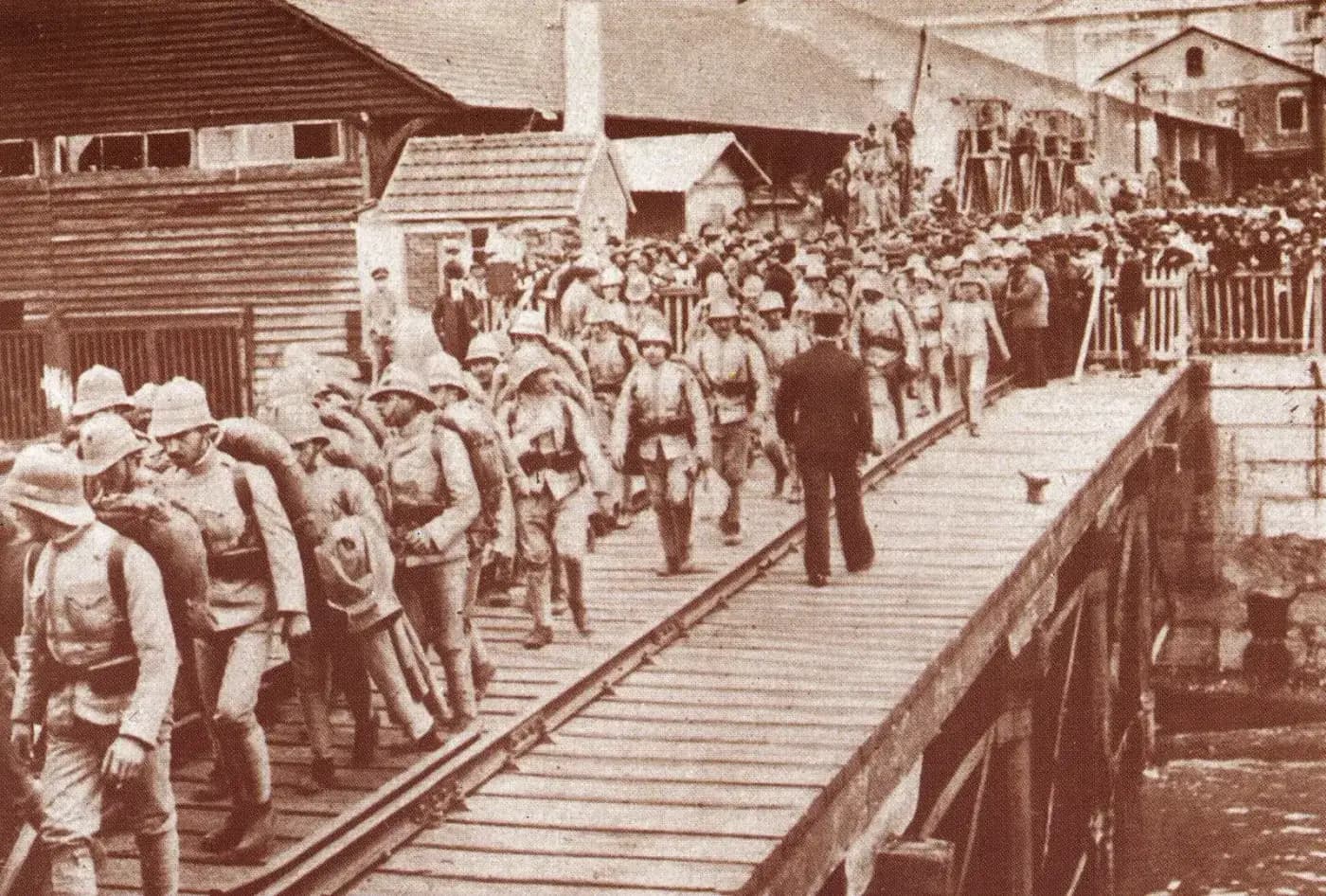
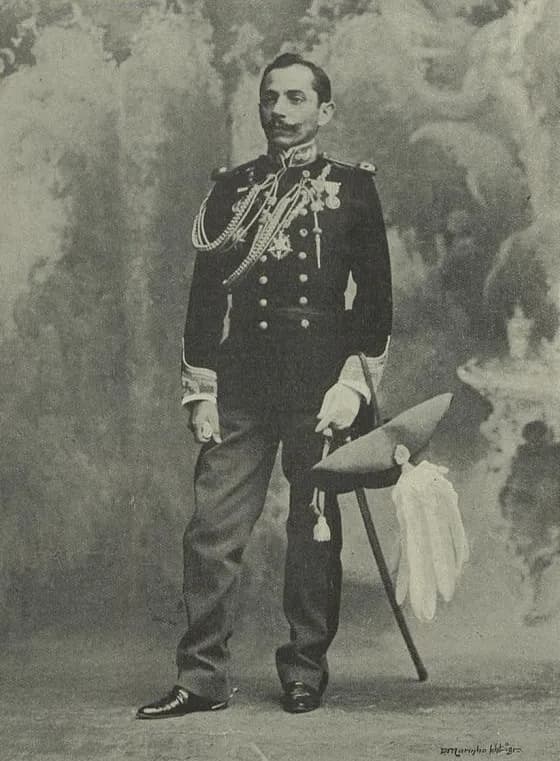
Lisbon decided to send troops to both colonies. On 18 August Roçadas was named to command the Angola expedition and govern the Huíla district, and on 11 September his men marched from the Rotunda to the quay through cheering crowds. The core, about 1,400 men, was a battalion of the 14th Infantry from Viseu with mountain artillery and engineers. His orders: secure the border, subdue the Kwanyama if needed, and avoid any international incident.
Three dead Germans and a bad interpreter
In October 1914 the German colony, cut off by the Royal Navy and short of food after a drought, depended on supplies brought in through southern Angola. Dr Schultze-Jena, head of the Outjo district, rode north with two officers, Lieutenant Roeder and First Lieutenant Lösch, and an interpreter, a Dane called Jensen, to arrange supplies and post. They camped near Eriksson's Drift and, the arbitrators later found, had crossed into Portuguese territory, probably without knowing it.
On 18 October Sereno, a Portuguese cavalry officer with the rank of alferes (second lieutenant), rode in with 15 European troopers and told the Germans to leave Portuguese territory. They talked, then dined together. Neither side spoke the other's language, and Jensen's Portuguese was poor. The Germans understood that the local commander, the capitão-mor of Cuamato, was at Naulila. Sereno had meant that he was at Cuamato, further north.
On the morning of 19 October the Germans rode with Sereno to the fort, expecting to be back in camp that day. When Sereno produced his commander's written order to bring them to Cuamato, Jensen mistook it for a letter that had supposedly just arrived, and Schultze-Jena met it with suspicion. He refused to go, and his African orderlies saddled the horses. Sereno, unarmed, grabbed his bridle. Every witness except Jensen said Schultze-Jena then pointed his carbine at Sereno and Roeder drew a pistol. Sereno ordered his men to fire.
Schultze-Jena died on the spot. Roeder died of his wounds inside the fort, and Lösch was shot down 300 or 400 metres outside it as he fled. Jensen and a soldier named Kimmel were interned. Neither colonial government told the other anything, and the Germans broadcast news of the “murder” in plain language between their own radio stations, messages the governor of Angola never received.
In Windhoek, Governor Theodor Seitz and his commander concluded that Portugal had joined Britain and laid a trap. Within days they ordered reprisals. On 31 October German troops destroyed the Portuguese fort at Cuangar on the Cubango, killing nine Portuguese and 14 African soldiers by Zollmann's count, and between 4 and 15 November they destroyed the posts of Bunga, Sambio, Dirico and Mucusso. A larger expedition under Franke was sent against Naulila itself.
Four hundred men against a fort
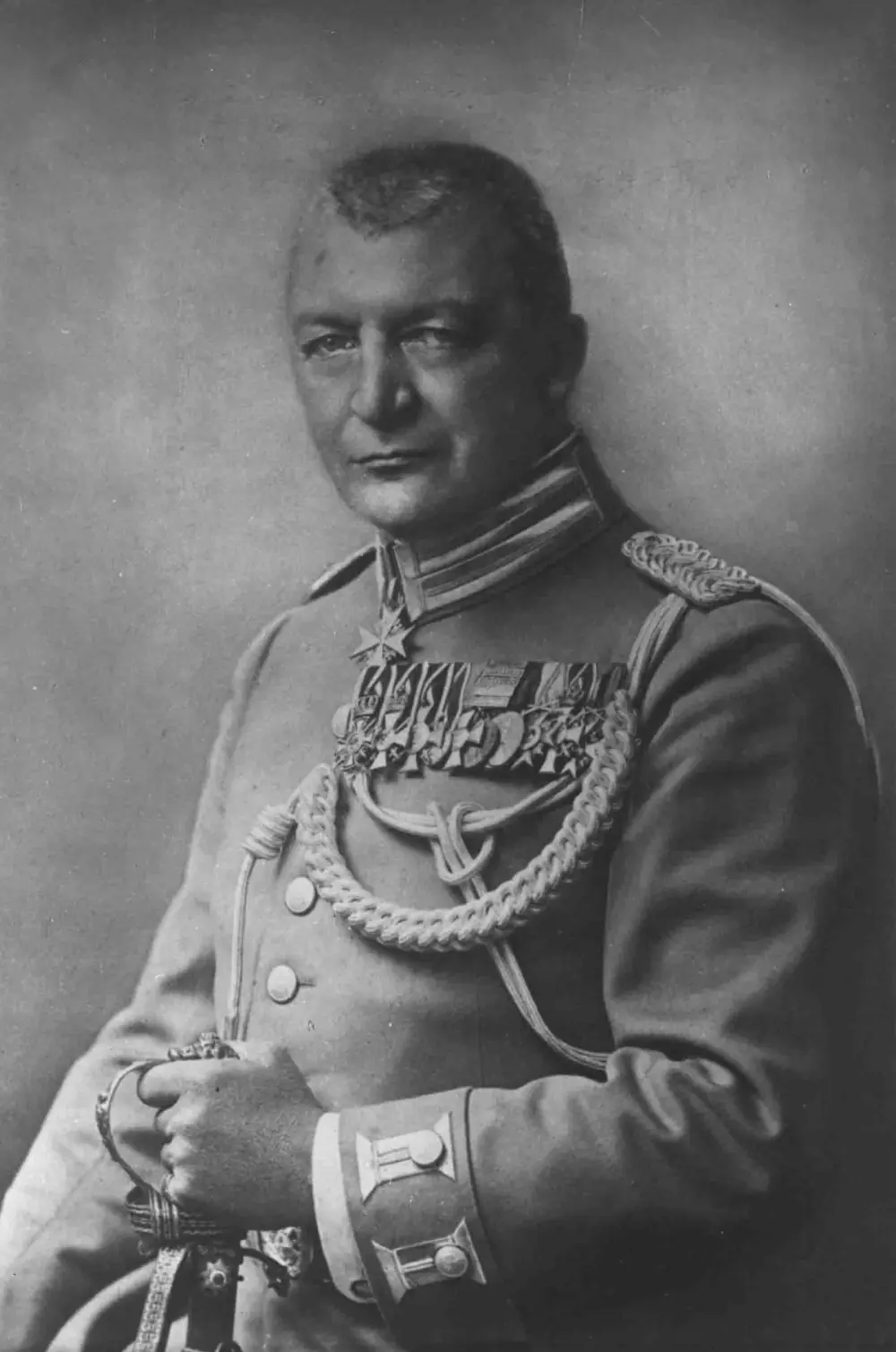
Franke's march north took six weeks. With the real danger in the south, his force was under a tenth of the colony's troops: two companies of about 90 and 150 men and a battery of 150 with six guns, plus four machine guns, hauled by 2,000 oxen through a drought that killed hundreds of them. When the colony's commander died in a grenade accident on 12 November, Franke took over the whole Schutztruppe.
Roçadas knew from mid-November that Franke was coming, but not where he would strike. He spread his men along 30 to 35 kilometres of the river to cover the fords and the road to Humbe. Lisbon did not help: on 25 November the Ministry of the Colonies reminded him that “we are not at war with Germany”, and he was forbidden to cross the border.
On 16 December the whole German column was camped about 25 kilometres west of Naulila. The next afternoon it marched east, away from the fords Roçadas was guarding, and round the weaker eastern flank of the fort. Barroso counts about 600 men in the fort, some 200 of them African soldiers; Zollmann counts some 800 in and around it, including 300 Mozambican infantrymen. Outside were Cuamato auxiliaries armed by the Portuguese.
- Date
- Friday 18 December 1914, from about 5 am to about 8.30 or 9 am (three hours by German accounts, four by Portuguese)
- Place
- Fort Naulila, south bank of the Kunene River, south-west of Humbe, southern Angola
- Portuguese commander
- Lieutenant-Colonel José Augusto Alves Roçadas
- German commander
- Major Victor Franke, then Captain Georg Trainer after Franke was wounded
- Forces
- 600 to 800 Portuguese in and around the fort, of 2,500 to 3,000 in the region; 400 to 500 Germans with six guns
- Result
- Fort taken and burned; Portuguese retreat; Germans withdraw on 19 December
Accounts of the battle split along national lines. Germans described Portuguese soldiers running back and forth without a plan and a cavalry counter-charge cut down by machine guns. The Lisbon daily O Século praised a charge by the cavalry squadron of Lieutenant Francisco Aragão, who was taken prisoner. Roçadas himself called most of his soldiers “a perfect flock” with a “complete absence of military solidity” and offered to resign. Norton de Matos refused.
The historian Luís Barroso, who worked from the Portuguese military archive, blames the dispersal of the Portuguese, the poor training of the conscripts, the decision to leave a whole flank to untrained African troops, and Roçadas's haste to order the retreat. Sereno, the officer at the centre of the October shooting, was among the Portuguese killed. After the fighting a German court-martial hanged seven Africans caught with rifles and no uniform; Portugal later said they were enlisted soldiers.
| Luís Barroso (2015) | Jakob Zollmann (2016), from German and Portuguese files | |
|---|---|---|
| Portuguese killed | 69: 3 officers, 54 European and 12 African soldiers | At least 68 (3 officers, 65 men); some claims of 200 |
| Portuguese wounded | 76 | 75 |
| Portuguese prisoners | 65: 3 officers and 62 men | 37, or 66 by other accounts, including 3 officers |
| German killed | Not given | 12: 9 in action, 3 died of wounds on the way home |
| German wounded | Not given | 30, including Franke |
In 1930 the arbitrators noted that Germany did not dispute Portugal's figure for its soldiers killed at Naulila. The often-quoted “some 70 dead” matches Barroso's count. A memorial put up at Outjo in 1933 honours 31 German soldiers killed at Naulila, far more than Zollmann's count.
A retreat driven by rumour
Franke's column had not come to conquer Angola. It pulled down the fort, collected a captured machine gun, rifles and 16 ox wagons, and on 19 December started home. Captain Trainer sent a captured Portuguese sergeant to Roçadas with a letter proposing joint action against an African rising he saw coming. The arbitrators found that it reached Roçadas at Dongoena at 6 pm, with the retreat already under way. He never answered.
Roçadas could not believe that 400 Germans had come all that way only to destroy Naulila. He took them for the vanguard of an invasion and fell back to Dongoena, then Humbe. On 19 December, on false reports that the Germans had crossed the river, the garrison of Fort Roçadas blew up its own ammunition store as ordered. The explosion was heard in Humbe and taken for a German bombardment, and Humbe was abandoned too.
The retreat ran on for ten days, through Cahama to Gambos, about 150 kilometres north of Naulila. Roçadas ordered all the southern forts evacuated. Garrisons left food and weapons behind; Fort Evale alone abandoned 40,000 cartridges. The Swiss arbitrators later accepted that falling back as far as Humbe had been a necessity after the defeat, but found that the retreat beyond it was Portugal's own free decision, taken under no German pressure.
The Cuamato, conquered only seven years before, read the retreat as the end of Portuguese rule. They looted the empty forts and took their weapons. King Mandume's men joined the Cuamato and Evale in an attack on Fort Kafima, east of Evale, whose garrison was wiped out. Settlers' farms were robbed and burned, and within days not one Portuguese fort was left between the Kunene and the border of Northern Rhodesia.
Pereira d'Eça's war against Mandume
Politics in Lisbon decided what came next. In late January 1915 Pimenta de Castro, who opposed entering the war, formed a government, and in February he sent Pereira d'Eça, the former war minister who had picked Roçadas, to Angola as governor-general and commander, away from Lisbon. His orders were to restore Portuguese prestige and crush the rising “with the utmost rigour”.
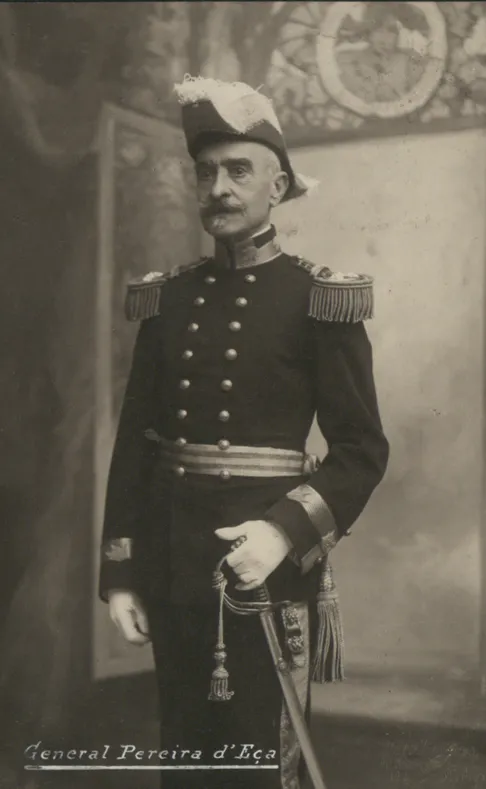
He arrived on 1 April 1915 to find some 11,000 men, badly trained and short of everything. He hoped to fight the Germans, but in July, soon after his column reached Humbe, he learnt that German South West Africa had surrendered to South Africa on 9 July. His report called it the most unpleasant news of the whole campaign: only the African enemy was left in the field.
In that dry country only about 5,000 soldiers and up to 1,000 African auxiliaries could be supplied beyond the Kunene. Pereira d'Eça led the main column of about 2,700 men east from Humbe on 12 August, aiming for Mandume's capital. On 18 August, at the waterholes of Mongua on the edge of Kwanyama country, Mandume's war leaders attacked the Portuguese square. Barroso, following Portuguese sources, dates the battle 19 to 21 August.
The battle lasted three days. The Kwanyama cut the road behind the column, seized supply wagons and fought for the water; the Portuguese, parched, dug trenches. Mandume came up with his guard on the evening of the 19th, and on the 20th his men attacked for ten hours, at times within 50 metres of the trenches, against field guns and machine guns. Then they broke off.
“I shall end, as is only just, by also praising the enemy, whose bravery was unsurpassed. To attack three days in a row a detachment made up of two batteries of field artillery, four batteries of machine guns and two infantry battalions, these forces being in square, and to close in on them with an insistence that, in the last fight, which lasted ten hours, brought them as near as fifty metres, shows a morale and a training in shooting and in the use of cover that would do honour to the best white troops.”
Portuguese records list 35 dead, four of them officers, and 57 wounded. Nobody counted the Kwanyama dead: Portuguese officers claimed 4,000 to 5,000, while Mandume told a missionary he had lost 25. The Portuguese occupied N'giva on 2 September.
Mandume escaped south across the border and kept fighting from Oihole, inside a neutral strip of disputed land. He died there in battle with South African troops on 6 February 1917. Officials reported that machine-gun fire killed him; Kwanyama oral history holds that, wounded, he shot himself rather than be taken.
Famine did more killing than guns. After years of drought the rains failed again, and war destroyed herds and harvests. Missionaries described refugees dying on the roads and too weak to bury the dead. After the rising was put down, a Portuguese commission, whose findings supported Portugal's claim against Germany, estimated that more than 150,000 Africans had died, more than 500,000 cattle had been lost and crops destroyed on more than 180,000 hectares. The arbitrators took these figures as a rough idea of the damage, not exact counts.
From Angola to the declaration of war
For the interventionists in Lisbon, Barroso argues, the African expeditions were a way to make war with Germany more likely while keeping public opinion on side, since defending the colonies was the one cause everyone accepted. By June 1915 an interventionist government was back in power in Lisbon, with Norton de Matos as war minister, and it was set on war. In February 1916, at Britain's request, Portugal seized the German merchant ships sheltering in its ports.
Germany declared war on 9 March 1916. Its declaration cited the expeditions to Africa as “directed against Germany” and said that, after the Naulila incident, its troops had attacked the Portuguese believing the two countries were already at war. The Portuguese Expeditionary Corps (CEP), whose vanguard reached France in January 1917, went on to send some 55,000 men to Flanders.
Share of Portuguese troops sent who died, by theatre
% of troops sent
Percentages as calculated by Luís Barroso: Angola, 885 dead (648 of disease, 237 in combat) of the 3,009 men of Roçadas's expedition, not the larger force of 1915; Mozambique, about 4,850 dead of some 11,961; Flanders, 2,086 dead of 55,165. Barroso warns that the sources are imprecise and the figures vary between them.
Show the data
| Deaths from combat and disease (and accidents, for Flanders) | |
|---|---|
| Angola 1914-15 (Roçadas expedition) | 29 |
| Mozambique 1914-17 | 40 |
| Flanders 1917-18 | 4 |
24 August 1914
Germans attack the Portuguese post of Maziua, Mozambique
11 September 1914
Roçadas's expedition marches through Lisbon to its ships
19 October 1914
A German district official and two officers shot at Fort Naulila
31 October 1914
German raid destroys Fort Cuangar; four more posts follow in November
18 December 1914
Battle of Naulila; Portuguese retreat begins
9 July 1915
German South West Africa surrenders to South Africa
18 to 20 August 1915
Battle of Mongua against King Mandume's Kwanyama
9 March 1916
Germany declares war on Portugal
6 February 1917
Mandume killed by South African troops near Oihole
31 July 1928
Lausanne award finds Germany liable
30 June 1930
Damages fixed at 48.2 million gold marks
16 February 1933
Tribunal rules the sum falls under Germany's general reparations
The Naulilaa case
The Treaty of Versailles let Portugal claim for damage done by Germany before 9 March 1916. In 1920 the Swiss lawyer Aloïs de Meuron was appointed arbitrator; the two sides argued the question of liability in Lausanne in September 1926, and in 1928 a law professor, Robert Guex, and a federal judge, Robert Fazy, both Swiss, joined him. Germany's defence was that its attacks were lawful reprisals for the killings of October 1914.
The award of 31 July 1928 rejected both national versions of the October incident. The German mission had not been preparing an invasion, and Sereno had not laid a trap. The shooting was “fortuitous”, the result of misunderstandings caused by an incompetent interpreter, some imprudence by Schultze-Jena, and a gesture that made Sereno believe he was acting in self-defence. No breach of international law by Portugal meant no ground for reprisals.
“There was an evident disproportion between the Naulilaa incident and the six acts of reprisal that followed it.”
Even with a valid grievance, the judges added, a reprisal is lawful only after an unanswered demand for redress, and never out of all proportion to the offence. Germany owed the direct damage of the raids and a limited share of the rising's cost, which it should have foreseen. It owed nothing for subduing the Kwanyama, who had resisted Portugal before the war; much of the rest flowed from Portugal's own retreat.
| Claim | Award (gold marks) |
|---|---|
| Damage in Belgium | 653,861.00 |
| Damage at sea | 572,607.30 |
| Direct damage in Africa (Maziua, Cuangar and the other posts, Naulila) | 22,000,000.00 |
| Indirect damage in Africa: a share of the cost of the rising, plus costs | 25,000,000.00 |
| Total | 48,226,468.30 |
Portugal also claimed two billion gold marks as a penalty for offences against its sovereignty. The arbitrators ruled that this was a punishment, not compensation, and lay outside both their powers and the Treaty of Versailles.
Portugal never collected the money as a separate debt: on 16 February 1933 another tribunal ruled that it fell under the Young Plan, Germany's general reparations settlement, and by then reparations had been ended. The award outlived the debt. Lawyers still cite the Naulilaa case, with the extra “a” the judges gave the fort's name, as a classic statement of the rule that a reprisal needs a prior wrong, a prior demand and proportion.
Why Naulila still matters
The battle settled where Angola ends. With the Kwanyama defeated, Portugal finally held the frontier agreed in 1886, and in June 1926 Portugal and South Africa, which now ran the former German colony, signed a border agreement starting the line at the Ruacana Falls. The provisional line of 1915 had already left about 70 per cent of the Kwanyama on the Angolan side, and the border still divides them between Angola and Namibia.
After the war Portugal named streets in Lisbon and Porto after Naulila and its “heroes”. Independent Angola tells the story through Mandume: Mongua was declared a historic site in 1994, a national memorial rose over his grave at Oihole in 2002, and Lubango's university bears his name. Namibia honoured him at its Heroes' Acre the same year.
FAQs
What happened at Naulila on 18 December 1914?
At dawn a German column of 400 to 500 men from German South West Africa, led by Major Victor Franke, attacked the Portuguese fort of Naulila on the Kunene River in southern Angola. After three to four hours the Portuguese under Lieutenant-Colonel Alves Roçadas abandoned the fort and retreated north; the Germans burned it and went home the next day.
How many Portuguese soldiers died at Naulila?
The historian Luís Barroso counts 69 dead (3 officers, 54 European and 12 African soldiers), 76 wounded and 65 prisoners. Jakob Zollmann gives at least 68 dead and notes claims of up to 200. By Zollmann's count the Germans lost 12 dead and 30 wounded.
Was Portugal at war with Germany in 1914?
No. Portugal sent troops to Angola and Mozambique in September 1914 but was not formally at war until Germany declared war on 9 March 1916, after Portugal seized German ships in its ports at Britain's request. The fighting in Africa in 1914 took place between two countries officially at peace.
What was the Naulilaa arbitration?
A case under the Treaty of Versailles in which three Swiss arbitrators ruled in Lausanne on 31 July 1928 that the German attacks on Angola in 1914 were not lawful reprisals: there had been no prior wrong by Portugal, no prior demand for redress and no proportion. In 1930 they awarded Portugal 48.2 million gold marks, but a 1933 ruling folded the sum into Germany's general reparations.
Who was Mandume ya Ndemufayo?
King of the Kwanyama from 1911, the strongest of the Ovambo kingdoms straddling the border between Angola and South West Africa, and the last of them to hold out against Portuguese rule. After Naulila he fought Pereira d'Eça's army at Mongua in August 1915, lost his capital and fled south, and died in battle with South African troops at Oihole on 6 February 1917. Angola and Namibia now honour him as a national hero.
On the timeline
Open the timelineNearby moments from the first republic (1910–1926).
Bernardino Machado becomes prime minister of the young Portuguese Republic. A Coimbra professor and veteran republican, he was later twice elected President of the Republic, and was forced from office both times by military coups, in 1917 and again in 1926.
Birth of Francisco da Costa Gomes in Chaves. Career soldier, Chief of Staff and a key figure in the 25 de Abril 1974 revolution, he would serve as President of the Republic from September 1974 to July 1976, steering Portugal through decolonisation and the most turbulent months of the transition to democracy.
Meeting in special session, the Portuguese Congress unanimously authorises the government to intervene in the First World War as Britain's ally whenever it judges necessary, a step on the road to the Portuguese Expeditionary Corps being sent to Flanders in 1917.
The Battle of Naulila
German troops from South West Africa attack the Portuguese post at Naulila in southern Angola. Some 70 Portuguese soldiers are killed and the garrison retreats — fighting in Africa more than a year before Portugal formally entered the First World War. The retreat set off uprisings in southern Angola that Portugal crushed in a bloody campaign in 1915.
A violent uprising in Lisbon, led by republicans including Álvaro de Castro, Sá Cardoso and Norton de Matos, topples the dictatorial government of General Pimenta de Castro and restores constitutional rule. One of the bloodiest episodes of the First Republic, it leaves between about 100 and more than 200 dead, depending on the estimate, and soon forces President Manuel de Arriaga to resign.
At Britain's request, Portugal begins seizing the German merchant ships, and two Austro-Hungarian ones, that had sheltered in its ports since 1914: between about 60 and 76 by different counts. Berlin answers by declaring war on 9 March, drawing Portugal into the First World War and, within a year, sending the Corpo Expedicionário Português to Flanders.
The German Empire declares war on Portugal, following Portugal's seizure of German and Austro-Hungarian ships sheltering in Portuguese ports. Portugal formally enters World War I on the side of the Allies.
Coming up in history
All long reads 20 December 1999The Macau handover: Portugal's last flag in China comes down, 1999
 21 December 1939Carlos do Carmo, born 21 December 1939: a life in Lisbon fado
 22 December 1761One treasury, one set of books: Pombal's Real Erário of 1761
 23 December 1534The Treaty of Bassein, 1534: how Portugal came to hold Bombay
9 sources
Archives, scholarship and reporting this article was checked against.
- 1
Naulila 1914: World War I in Angola and International Law (Jakob Zollmann)Nomos, Studien zur Geschichte des Völkerrechts 35, 2016 (open access)
- 2
Responsabilité de l'Allemagne à raison des dommages causés dans les colonies portugaises du sud de l'Afrique (sentence sur le principe de la responsabilité), Portugal contre Allemagne, Lausanne, 31 juillet 1928United Nations, Reports of International Arbitral Awards, vol. II, pp. 1011-1033
- 3
A Primeira Guerra Mundial em Angola: o ataque preemptivo a Naulila (Luís Barroso)Relações Internacionais 47 (2015), pp. 127-148, via Repositório ISCTE-IUL
- 4
A Grande Guerra em Angola: a expedição de Alves Roçadas e de Pereira D'Eça na estratégia intervencionista (Luís Barroso)Ler História 72 (2018), pp. 129-149
- 5
- 6
Warfare 1914-1918 (Portugal) (Filipe Ribeiro de Meneses)1914-1918-online. International Encyclopedia of the First World War, 2023
- 7O Aragão (Graça Andrade Ramos)RTP Notícias, Portugal na 1.ª Grande Guerra
- 8
Portugal: international resultsRSSSF (Rec.Sport.Soccer Statistics Foundation)
- 9
Desporto com História: 95 anos da primeira vitória de Portugal (César Rodrigues)Record, 2 August 2020
Image credits
- Portuguese soldiers in tropical kit embarking for Angola during the First World War. Neither the place nor the exact date of the photograph is recorded. Unknown author, Public domain, via Wikimedia Commons.
- Lieutenant-Colonel José Augusto Alves Roçadas, commander of the 1914 expedition to Angola, as printed by the Lisbon magazine O Occidente on 10 September 1914. Unknown author, Public domain, via Wikimedia Commons.
- Victor Franke, who led the German column at Naulila, in a portrait of around 1907. He had served in German South West Africa since 1896. Unknown author, Public domain, via Wikimedia Commons.
- General Pereira d'Eça, war minister in 1914 and commander in southern Angola in 1915, photographed in 1914. Vasques, Public domain, via Wikimedia Commons.
- Mandume ya Ndemufayo, king of the Kwanyama (centre, in white), with armed followers, probably at Oihole around 1916. The photograph is from the collection of C. H. L. Hahn, the South African officer in Ovamboland. C.H.L. Hahn - Hahn Collection - National Archives Namibia, CC BY-SA 4.0, via Wikimedia Commons.