

The Treaty of Bassein, 1534: how Portugal came to hold Bombay
Squeezed between a Portuguese fleet and the Mughal emperor, Sultan Bahadur of Gujarat signed away a stretch of the Konkan coast. A cluster of islands in the bargain grew into Mumbai.
At a glance
- On 23 December 1534, in the galleon São Mateus in the port of Bassein (Vasai), the governor of Portuguese India, Nuno da Cunha, and an envoy of Sultan Bahadur of Gujarat signed a treaty of peace.
- The sultan gave Portugal Bassein for ever, with all its lands, islands and seas. The islands of Bombay were part of that district and appear in its revenue rolls from 1535.
- Gujarati ships bound for the Red Sea had to take a Portuguese pass at Bassein, Gujarat could build no more warships, and Bahadur promised no help to the Ottoman Turks.
- Under pressure from the Mughal emperor Humayun, Bahadur went further in October 1535 and allowed a Portuguese fortress at Diu. He was killed there in February 1537.
- Bassein became the 'Court of the North' until the Marathas took it in May 1739. Bombay had already passed to England in 1661, in Catherine of Braganza's marriage treaty.
A contract signed in the São Mateus
In December 1534 the governor of Portuguese India was at sea, heading north from Goa with an armada against the sultanate of Gujarat. When Nuno da Cunha's fleet reached Baçaim, the port the English later called Bassein and India now calls Vasai, an ambassador from Sultan Bahadur came to meet him. He brought an offer: Bassein and all its lands, as a gift to the King of Portugal, in return for peace.
The envoy, whom the Portuguese called Xacoes, carried full powers from the sultan. On 23 December, in the galleon São Mateus, where the governor had his quarters, the Portuguese put forward seven conditions, which Xacoes accepted, and Xacoes put forward five of his own, which the governor granted. The acting secretary of the Estado da Índia, Gaspar Pires, wrote them down. The governor swore on the Gospels with his hand on the book. Xacoes promised that his master would swear too, as soon as a Portuguese captain reached his court.
“First, that the said King of Gujarat gives to the King of Portugal, from today and for ever, Baçaim, with all its lands, both mainland and islands, and sea, with all its jurisdiction, mero and misto império, and with all its revenues and royal rights.”
Diogo do Couto, the chronicler who later continued the official history of Portuguese Asia, says the peace was sworn by each man 'in his own manner' and recorded in Persian and Portuguese. Two copies were signed, one kept by the secretary and one taken by the ambassador.
The witnesses included Martim Afonso de Sousa, captain-major of the Indian sea, the chief judge of Portuguese India, Fernão Rodrigues de Castelo Branco, the governor's secretary Simão Ferreira, and two interpreters: Coje Percolim, a Persian Muslim, and Marcos Fernandes. The copy in Botelho's register was made from the secretary's original to replace the ambassador's, which Xacoes said had been lost in the sultan's camp.
The next day the governor went ashore with the ambassador, who handed the town over. Its leading men came to give their obedience, and criers went round the tanadarias, the revenue districts, ordering the local officials to obey the King of Portugal. Gaspar Correia, who was in India at the time, wrote that each tanadar presented a branch of a sweet-smelling plant to the Portuguese factor as a sign of allegiance.
- Date
- 23 December 1534 (Julian calendar)
- Place
- The galleon São Mateus, in the port of Baçaim (Bassein, now Vasai)
- For Portugal
- Nuno da Cunha, governor of India, for King João III
- For Gujarat
- The ambassador Xacoes, with full powers from Sultan Bahadur Shah
- Written by
- Gaspar Pires, acting secretary; two signed copies
- Text survives in
- Simão Botelho's Tombo do Estado da Índia (1554), in full; summarised in Diogo do Couto's Década IV
Portugal on the Indian coast
On 25 November 1510 Afonso de Albuquerque stormed Goa, and it became the capital of what the Portuguese called the Estado da Índia: a chain of fortresses, trading posts and fleets around the Indian Ocean, run by a governor or viceroy. Its strength was at sea; on land it held little.
The richest state on that coast was Gujarat, a Muslim sultanate whose merchants traded to Mecca and the Red Sea. Its island port of Diu commanded the Gulf of Cambay, and for years the Portuguese wanted a fortress there.
In February 1531 Nuno da Cunha led an armada against it: nearly 300 vessels by the count in the Tombo, more than 400 by Danvers's. On the way his men stormed the fortified island of Beth with great slaughter, and it was known afterwards as the Island of the Dead. Diu itself, strong in walls, guns and men, held out, and the governor went back to Goa.
The Portuguese turned on the smaller ports. Fleets burnt towns along the Gujarat coast, and on 20 January 1533, St Sebastian's day, Nuno da Cunha stormed the new fortifications at Bassein, held for the sultan by a captain the Portuguese called Meliqueliaz. His men took some 400 guns and razed the fort. Thana, Bandra, Mahim and the island of Bombay were made to pay tribute.
A sultan between two enemies
Bahadur Shah had come to the throne of Gujarat in 1526, aged about 20. He took Mandu, the fortress capital of Malwa, and in 1534 he was gathering every lord in his kingdom to attack Chitor, the great Rajput stronghold, whose king had died and left a small boy under his mother's regency.
To the north stood a new power. The Mughal emperor Babur had died, and his son Humayun now ruled from Agra. Bahadur sheltered princes who had rebelled against Humayun, among them Muhammad Zaman Mirza, and would not give them up. The letters between the two rulers, preserved in the Mirat-i-Sikandari, a Persian-language history of the Gujarat sultans, turned from courteous to threatening, and Humayun warned that he would march.
Simão Botelho, who compiled the records of Bassein twenty years later, thought Bahadur's motive was fear of Nuno da Cunha. The governor had sailed with all his men, and with the sultan's army away at Chitor he might take Diu and ravage the coast. Modern historians add the Mughals. Under pressure from the Portuguese at sea and from Humayun on land, Bahadur gave up the district the Portuguese had been raiding, to keep them away from Diu and to buy time until the war inland went better.
The sultan was not there to sign. Couto says that when the peace was made, Xacoes sent riders after his master, who was already on the march to Chitor, and then went back to Goa with the governor, to winter there as a hostage while a Portuguese envoy went to have the peace confirmed.
What Bahadur gave away
The treaty does not name Bombay. It handed over Bassein with all its lands, islands and seas, as the sultan's captains and tanadars had held them, and the islands of Bombay came as part of that district. Botelho's revenue rolls list Mahim, Mazagon and 'Monbaym', Bombay itself, among the lands the King of Portugal received, from the first full year of accounts.
| Subject | Bassein, 23 December 1534 | Diu, 25 October 1535 |
|---|---|---|
| Land | Bassein for ever, with its mainland, islands, seas, jurisdiction and revenues | Bassein confirmed, with the border forts of Aceira and Coeja; a site for a fortress at Diu and its sea bastion |
| Red Sea shipping | Ships for the Red Sea take a cartaz at Bassein and pay duties there on return, or are forfeit | Ships for Mecca use Diu as before; every ship still carries a cartaz |
| Other Gujarati ships | Cartaz needed, for a fee of one tanga; small coasting craft exempt | No change recorded |
| War at sea | No warships to be built in Gujarat; existing ones laid up | Portugal not to raid the Red Sea or Arabia unless an Ottoman fleet is there |
| The Ottoman Turks | No shelter, supplies or help for the Rumes | Friends of each other's friends, enemies of each other's enemies; the governor to help the sultan by land and sea |
| Horses from Arabia | Offered for sale at Bassein for three years after its fortress is finished, paying Goa duties; up to 60 for the sultan duty-free | Brought to Diu instead, paying Goa duties |
| Revenues of Diu | Not covered | Stay with the sultan; Portugal holds only its fortress |
| Religion | The 5,000 tangas long assigned to Bassein's mosques still paid from its revenues; no change to the mosques or their preaching | The governor not to let the sultan's Muslim subjects become Christians, nor the sultan any Christian become a Muslim |
Summarised from the 1534 contract in Botelho's Tombo and the 1535 contract in Biker's collection. A tanga was a small silver coin; the Rumes were the Ottoman Turks and the soldiers who served with them.
Some clauses protected the sultan's people and men. The 200 pardaos paid from Bassein's revenues to the garrisons of the two border forts between Bassein and the Rajput lands would still be paid. Ships bound for Gujarat from anywhere but the Red Sea were not to be seized once they were within the port of Bassein. Four Portuguese held prisoner at Champaner, among them Diogo de Mesquita, were to be released, and the governor would then send a captain to the sultan.
Bassein was worth having. Botelho says possession was taken in December 1534, halfway through the local revenue year, which began on 9 June, so the first year brought in only half. In 1535 the town of Bassein and its hamlets paid 158,475 fedeas, a small coin worth about twelve réis, counting the dues on its oil, cotton, fish and other trades. The island of Salsette, to the south, paid 285,725, and Bombay paid 17,000.
What some of the ceded lands paid Portugal in 1535
fedeas
Figures from Simão Botelho's Tombo do Estado da Índia (1554), year 1535. Bassein, Thana and Karanja are the revenue of the town (caçabe): for Bassein, 83,829 from its hamlets plus 74,646 from its market and trade dues, the total Botelho gives; Karanja includes its custom house. Mahim adds its town (36,057) and custom house (37,975). Thana's custom house (54,782) is left out, and Salsette is the island's own entry. A fedea was worth about 12 réis.
Show the data
| Revenue in the first full year | |
|---|---|
| Salsette island | 285,725 |
| Bassein town | 158,475 |
| Karanja | 80,000 |
| Thana town | 75,626 |
| Mahim | 74,032 |
| Bombay | 17,000 |
| Mazagon | 8,500 |
Diu at last
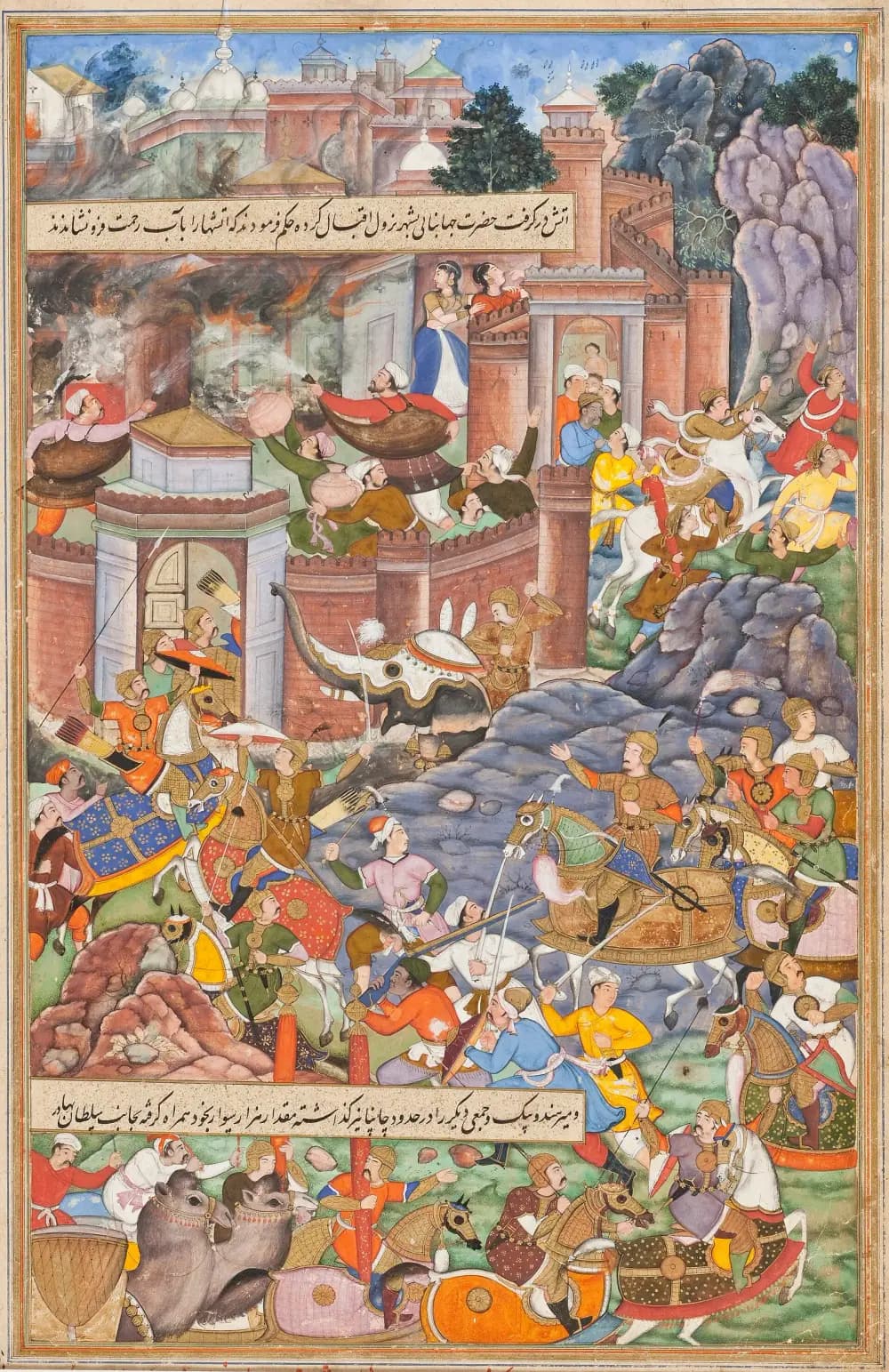
Then Bahadur's war inland went badly. In 1535 Humayun invaded. He drove the sultan out of Mandu, chased him to Cambay, which he reached on the day Bahadur left it, and besieged and took the fortress of Champaner. The sultan fled to Diu, the one place where, because it was an island, he could save himself and gather his men.
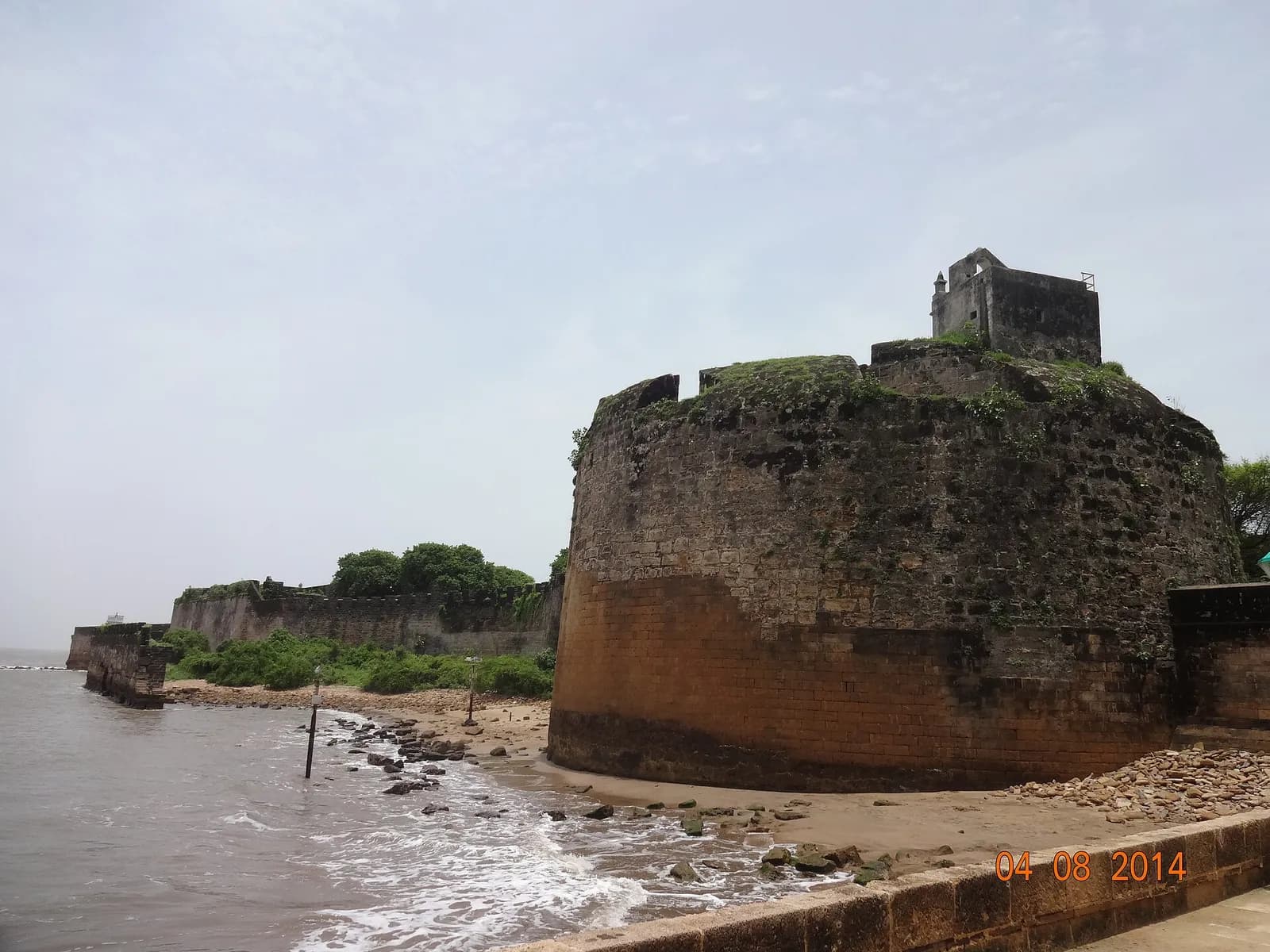
Now he needed the Portuguese. Martim Afonso de Sousa hurried to Diu in four light rowing boats, and the governor's envoy Simão Ferreira agreed terms with the sultan in September. On 25 October 1535, on the landward bastion of Diu, where Nuno da Cunha was lodged, Xacoes agreed a new contract in Bahadur's name, to be signed by the sultan and the governor. The sultan granted a fortress at Diu on any site the governor chose and confirmed the gift of Bassein.
The price was a change to the 1534 terms. Ships bound for Mecca no longer had to call at Bassein and could use Diu as before. The revenues and jurisdiction of Diu stayed with the sultan, and Portugal held only its fortress. In return the two kings became allies, and the governor promised to help Bahadur against his enemies by land and sea.
“To him the proud king of Cambay will give a fortress in rich Diu, so that against the mighty Mughal he may help him defend his kingdom.”
The fort went up quickly. Nuno da Cunha left Manuel de Sousa in command, with 900 Portuguese and 60 heavy guns. The governor also kept his side of the bargain: he persuaded the sultan of Ahmadnagar to make peace with Bahadur, and Martim Afonso helped recover lost territory with 500 men.
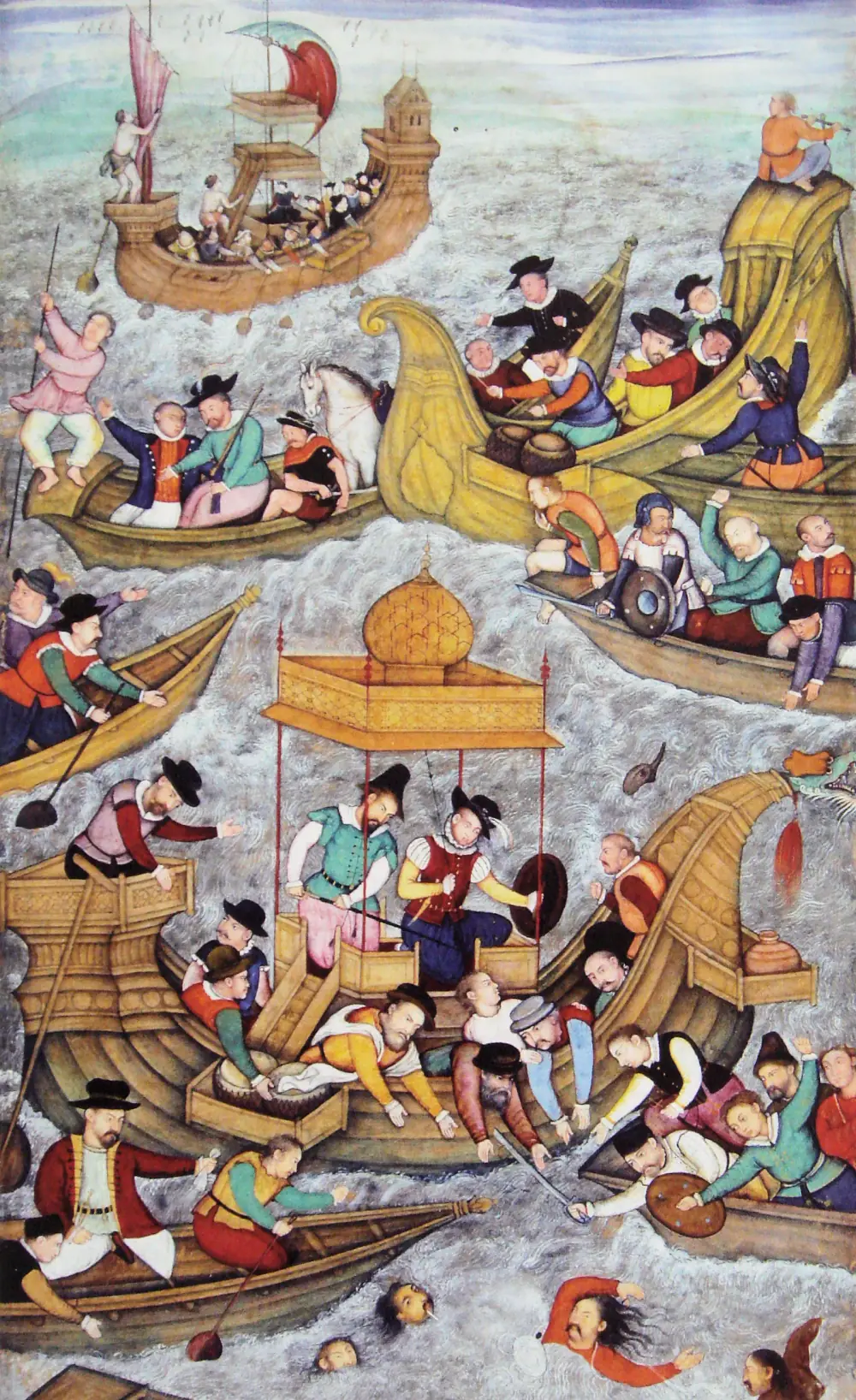
Once the Mughals had been called away and his kingdom was his again, Bahadur regretted the fort. In February 1537 he went out by boat to meet Nuno da Cunha off Diu.
The accounts disagree on who planned what. Portuguese writers say each side meant to seize the other, the Gujarati history says the sultan was also plotting, and the Mughal Akbarnama blames the Portuguese alone. A scuffle broke out as Bahadur tried to return, and he died in the water, drowned by one account and cut down with a sword by another. Manuel de Sousa was killed too.
“King of the Land, Martyr of the Sea.”
Among Bahadur's guns at Diu were three basilisks, cannon so large that Nuno da Cunha sent one to Portugal as a curiosity. According to Danvers it was kept at the fort of São Julião da Barra, at the mouth of the Tagus, and known as the Gun of Diu. In 1538 a Gujarati army and an Ottoman fleet besieged the new fortress. The garrison held, and the Ottoman commander sailed away on 5 November.
The Court of the North
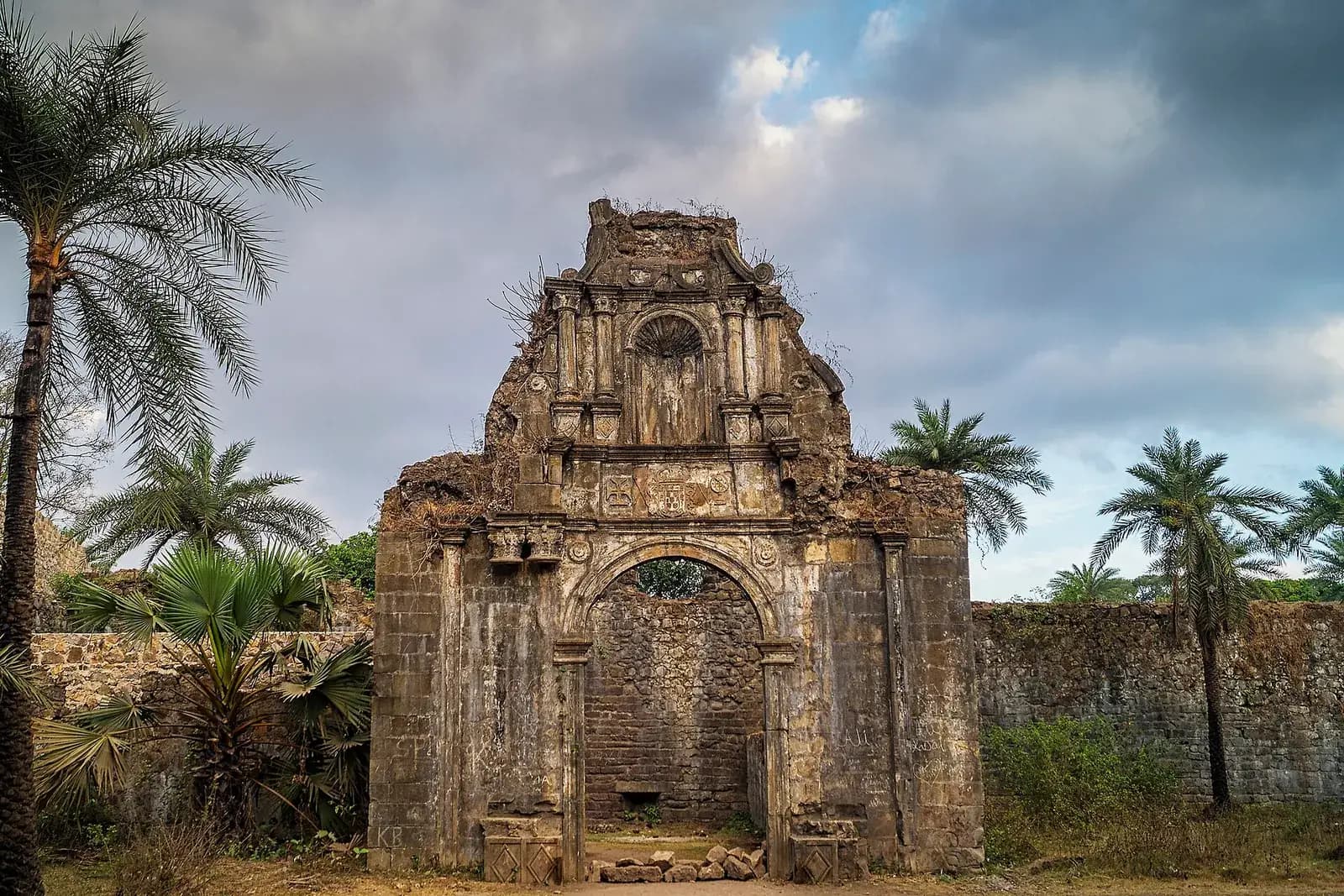
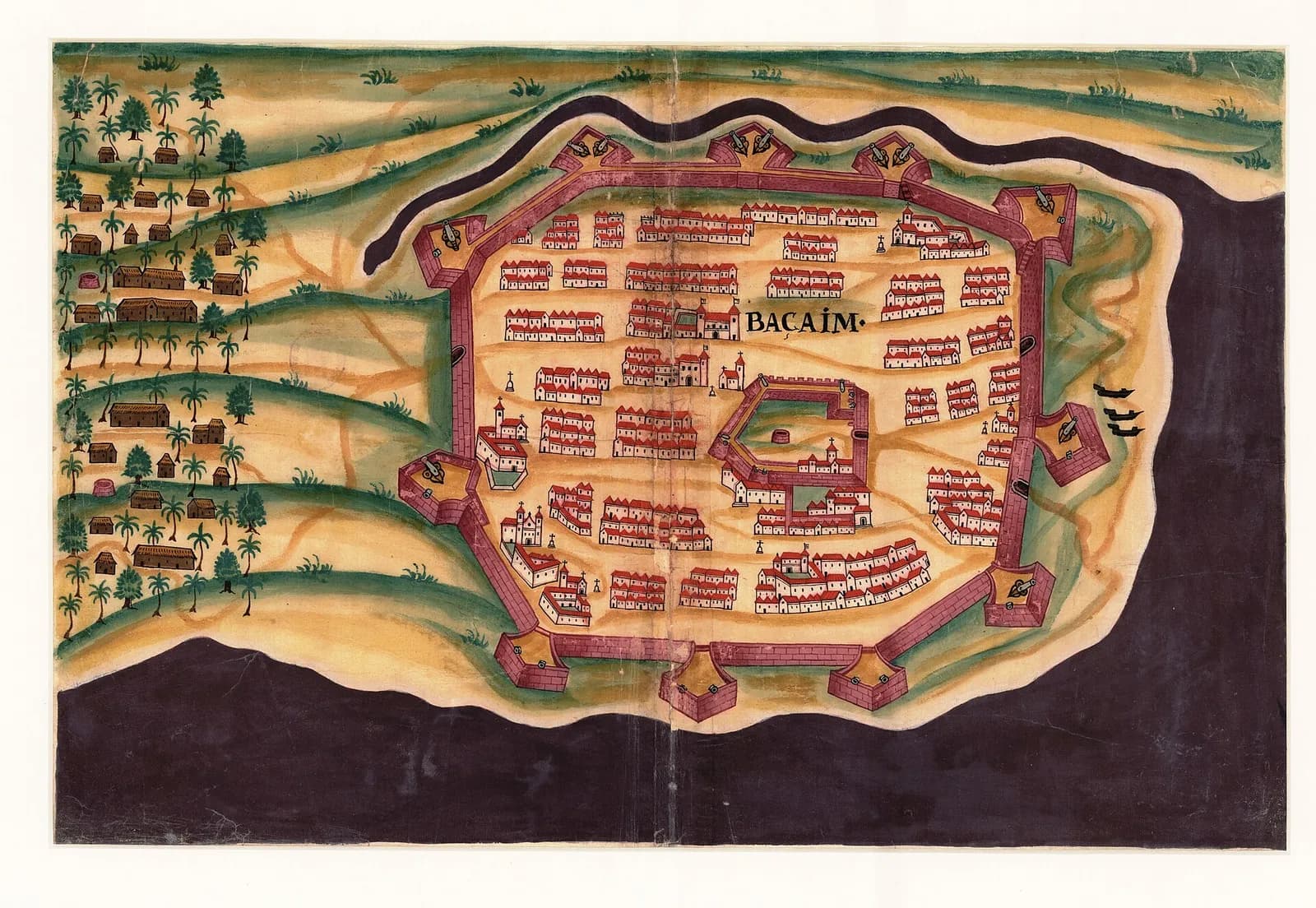
At first Bassein had only a weakly defended factory. In 1536, when a Mughal force approached, its commander thought of abandoning it; António Galvão argued against it, the Mughals withdrew without a shot, and Nuno da Cunha came to dig the foundations of a citadel, asking Galvão to lay the first stone. One of the oldest bastions carried an inscription that read, in translation: 'The first captain who built this fortress was Garcia de Sá, by command of the governor Nuno da Cunha in the year 1536.'
Bassein became the capital of what the Portuguese called the Province of the North. With the district of Daman, taken in 1559, it was a coastal strip between Bombay and Daman, from 7 to 30 kilometres wide. Unlike most Portuguese holdings in Asia it was farmland as well as harbours, and the crown granted out its villages and islands as manors to Portuguese tenants for a fixed yearly rent.
From about 1590 the town got a new ring of stone walls with eleven bastions. Only Portuguese of rank lived inside, among churches, squares and two-storey houses with covered balconies. There was a cathedral, five convents, thirteen churches and a Misericórdia, and the city was called the 'Corte do Norte', the Court of the North. A great man was proverbially called a 'fidalgo de Baçaim'.
The man who won Bassein and Diu got little thanks. His successor, the viceroy Garcia de Noronha, arrived on 11 September 1538 and pushed him aside. Nuno da Cunha left India in January 1539 in a hired merchant galleon, fell ill on the voyage and died off the Cape of Good Hope; at his own request he was buried at sea. Before he died he declared that the only things of the king's he carried were five gold medals from Bahadur's treasure.
“Strong Bassein shall be given to him, though not without blood, for Melique groans there, seeing his proud stockade taken by the sword alone.”
Bombay in a royal dowry
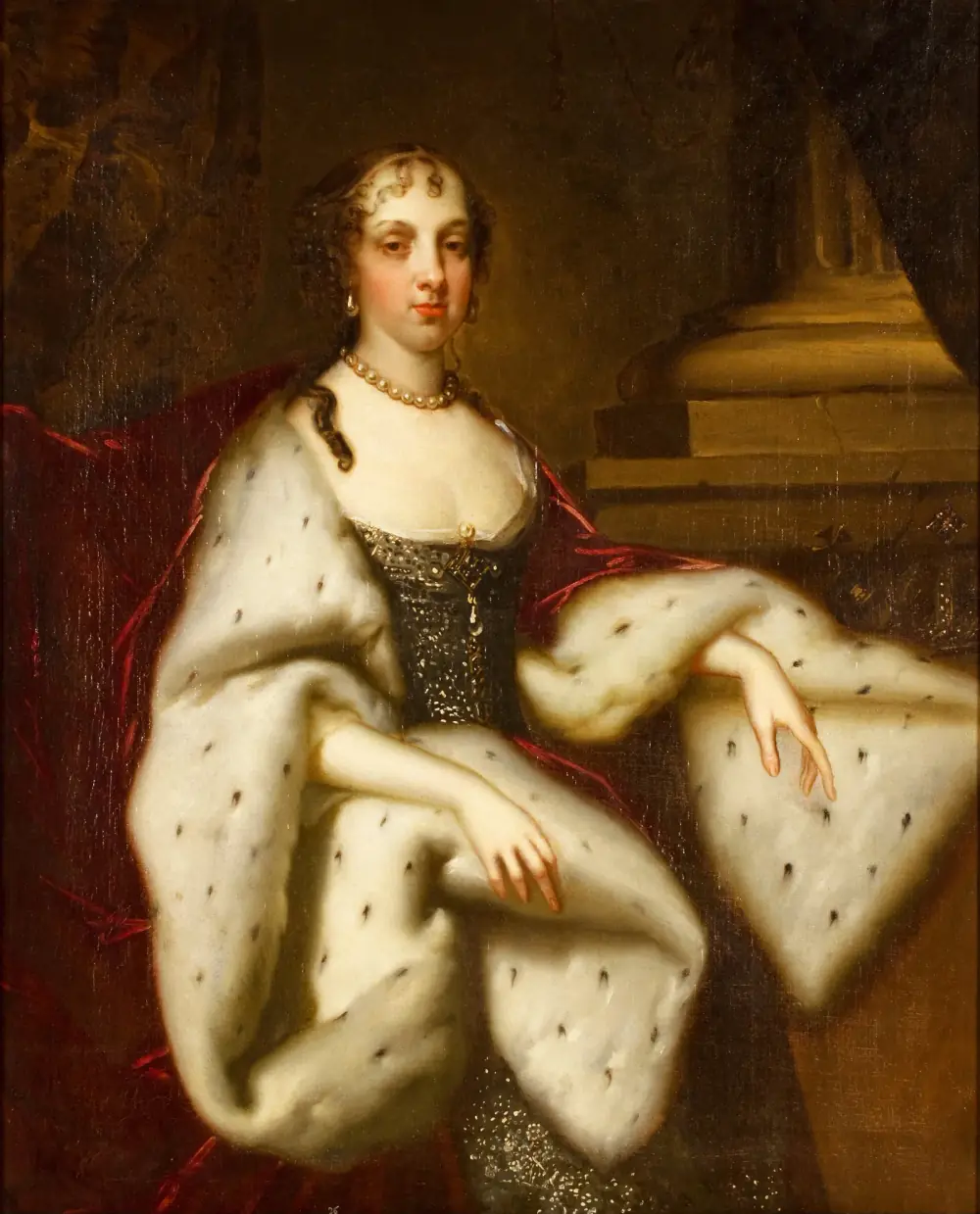
For more than a century Bombay was one of Bassein's lesser manors. The change came from Europe, where Portugal had broken away from Spain in 1640 and was looking for allies. The marriage treaty between Charles II of England and the Infanta Catherine of Braganza, sister of King Afonso VI, was signed at Whitehall on 23 June 1661.
Article V promised a dowry of two million Portuguese cruzados, half before the princess sailed. Another article gave England the city of Tangier. Article XI gave 'the port and island of Bombay' with all its rights, revenues and territories, for ever, so that England could better defend the Portuguese in the East against the Dutch. A secret article bound England to seek peace between Portugal and the Dutch and, failing that, to send forces to defend the Portuguese lands in the East Indies.
Handing it over took years. The Earl of Marlborough reached Bombay in September 1662 with five ships and 500 soldiers, and the Portuguese in India refused to give it up. The English found the island a much smaller prize than they had been told. The instrument of cession finally left Goa on 17 January 1665, and on 18 February Humphrey Cooke took possession, signing in the manor house of Dona Inês de Miranda, the lady of the island.
Charles II did not keep it long. By a royal charter of 27 March 1668 he passed the port and island to the East India Company for a rent of £10 a year. The rest of the Province of the North, Bassein included, stayed Portuguese.
The fall of Bassein, 1739
The end came from inland. The Marathas, whose power had been spreading along the Konkan coast since the later seventeenth century, attacked the Province of the North in the 1730s. In 1738 they took the fort of Arnala north of Bassein and closed the creeks around the city.
Goa, under attack itself, could send no help. The English at Bombay stayed officially neutral: the Thana gazetteer says they refused help, but Bombay's own records show them quietly sending munitions, supplies, workmen and money. On 17 February 1739 Chimaji Appa, brother of the Peshwa Baji Rao, began the siege.
The Maratha engineers dug mines under the walls. On 13 May they blew a breach wide enough for twenty men abreast at the bastion of Remédios and attacked it six times, and the bastion of São Sebastião fourteen times. Each assault was beaten back, but the garrison was small, its commander was dead and its powder was running out. Terms were signed on 16 May.
They were honourable. The troops marched out with loaded arms and colours flying, families could leave for Bombay, Daman or Chaul with their goods, and Christians who stayed could practise their religion, with three churches the Maratha commander undertook to maintain. The garrison left on 23 May. The Thana gazetteer of 1882, citing an earlier article in the Bombay Quarterly Review, put the Portuguese losses at about 800 and the Maratha dead and wounded at about 12,000. Danvers, working from Portuguese records, says only that the Portuguese losses were very heavy.
With the Mughals distracted by the Persian ruler Nadir Shah's capture of Delhi, the Marathas could take the whole district. The years 1739 and 1740 ended Portuguese rule over almost all of the Province of the North, 205 years after the contract in the São Mateus.
25 November 1510
Afonso de Albuquerque takes Goa
February 1531
Nuno da Cunha's armada fails to take Diu
20 January 1533
The Portuguese storm and raze the fort at Bassein
23 December 1534
Treaty signed in the galleon São Mateus: Bassein and its islands ceded
1535
Humayun overruns Gujarat; Bahadur takes refuge at Diu
25 October 1535
Diu contract: a Portuguese fortress and an alliance
1536
Garcia de Sá begins the fortress of Bassein
14 February 1537
Bahadur killed off Diu
23 June 1661
Marriage treaty gives Bombay to Charles II
18 February 1665
Humphrey Cooke takes possession of Bombay
16 May 1739
Bassein capitulates to the Marathas; the garrison leaves on 23 May
What is left
The islands that came with Bassein in 1534 were joined to each other over the following centuries by causeways and land reclaimed from the sea, and the single island that resulted is the old core of Mumbai. Mahim and Mazagon, both in the revenue rolls of 1535, are still the names of Mumbai neighbourhoods.
Bassein itself never recovered its old rank. Under the Marathas it was renamed Bajipur and served as a district headquarters, and in December 1802 it gave its name to a second, unrelated Treaty of Bassein, signed there between the British and the Peshwa Baji Rao II. The walls of the Portuguese city still stand, protected by the Archaeological Survey of India.
FAQs
Where was the Treaty of Bassein of 1534 signed?
On board the galleon São Mateus in the port of Bassein (Baçaim, now Vasai), where the Portuguese governor Nuno da Cunha had his quarters. The contract copied into Simão Botelho's Tombo do Estado da Índia is dated there on 23 December 1534. Sultan Bahadur was not present; his ambassador Xacoes signed with full powers.
Did the 1534 treaty give Bombay to Portugal?
Indirectly. The treaty ceded Bassein with all its lands, islands and seas, and the islands of Bombay belonged to that district. They appear, as Mahim, Mazagon and Monbaym, in the revenue the Portuguese collected from 1535.
Why did Sultan Bahadur give Bassein to the Portuguese?
He was under pressure from two sides. A Portuguese armada was on his coast and threatening Diu, while he was planning a campaign against Chitor and quarrelling with the Mughal emperor Humayun. Giving up a district the Portuguese had already raided bought peace at sea.
How did Bombay pass from Portugal to England?
Article XI of the marriage treaty between Charles II and Catherine of Braganza, signed on 23 June 1661, ceded the port and island of Bombay. The Portuguese delayed the handover until 18 February 1665, and in 1668 Charles II passed the island to the East India Company for £10 a year.
Is this the same as the Treaty of Bassein of 1802?
No. The 1802 treaty was signed at Bassein on 31 December 1802 between the British and the Maratha Peshwa Baji Rao II, who had fled there.
On the timeline
Open the timelineNearby moments from the age of discoveries (1415–1580).
The Treaty of Zaragoza is signed between Portugal and Spain, fixing a demarcation line in the Pacific 17 degrees east of the Moluccas. Charles V pledges Spain's claim to the Spice Islands to Portugal for 350,000 ducats, keeping a right to buy it back that Spain never used.
A powerful earthquake strikes Lisbon and the Tagus valley before dawn, bringing down more than 1,500 of the city's houses as the river draws back and surges. When friars in Santarém preached that it was God's wrath and New Christians fled in fear, the playwright Gil Vicente rebuked them.
In a chapel on the hill of Montmartre in Paris, Ignatius of Loyola and six companions — among them Simão Rodrigues, a young Portuguese nobleman from Vouzela — take vows of poverty and chastity, forming the nucleus of the Society of Jesus. Rodrigues went on to establish the Jesuits in Portugal, the springboard for their missions across the Portuguese empire.
The Treaty of Bassein (1534)
The Treaty of Baçaim (Bassein) is signed aboard the galleon São Mateus in Bassein harbour. Through his envoy, Sultan Bahadur of Gujarat cedes Bassein with its lands, islands and seas, among them the islands of Bombay, to make peace with Portugal while under Mughal pressure. Bombay later passed to England in Catherine of Braganza's dowry and is today the heart of Mumbai.
Pope Paul III issues the bull 'Cum ad nihil magis', establishing the Inquisition in Portugal at the insistence of King João III; the tribunal would shape Portuguese religious and cultural life for nearly three centuries.
Francis Xavier sails from Lisbon on his 35th birthday aboard the 'Santiago', sent east by João III as one of the first Jesuit missionaries to Portuguese Asia. He reached Goa 13 months later and went on to Malacca and Japan; his body still lies in Goa's Basilica of Bom Jesus.
Portuguese musketeers under Cristóvão da Gama, Vasco's son, storm a hillfort held by forces of the Adal Sultanate at the Battle of Baçente in northern Ethiopia, part of Portugal's military alliance with the Christian Ethiopian Empire.
Coming up in history
All long reads 25 December 1968Christmas 1968: RTP's second channel goes on air in Lisbon
 26 December 2022António Mega Ferreira and Expo '98: how Lisbon rebuilt its eastern riverside
 27 December 1703Cloth for wine: the Methuen Treaty, Lisbon, 27 December 1703
 28 December 1989Salvador Sobral and Portugal’s first Eurovision win, 53 years on
16 sources
Archives, scholarship and reporting this article was checked against.
- 1
Simão Botelho, Tombo do Estado da Índia (1554), in Subsídios para a história da Índia portugueza, ed. Rodrigo José de Lima FelnerAcademia Real das Sciencias, Lisbon, 1868 (Internet Archive scan, Wellcome Library copy)
- 2
- 3
As dissensões sobre o domínio da navegação no rio de Maim no contexto do relacionamento luso-britânico em Bombaim (1716-1722) (Pedro Nobre)Anais de História de Além-Mar XIII, CHAM, Universidade NOVA de Lisboa, 2012
- 4
- 5
- 6
- 7
- 8
- 9
- 10
- 11
Inter gravissimas (bull of Gregory XIII, 24 February 1582), English translationWikisource (translation by Wikisource contributors, CC BY-SA 3.0), from the Latin text in Christopher Clavius, Opera mathematica, vol. 5 (Mainz, 1612), pp. 13–15
- 12
Os Lusíadas (Luís de Camões, 1572)Project Gutenberg
- 13
A East India Company e a perda portuguesa da Província do Norte (Pedro Nobre)Tempo, vol. 21, no. 37, Universidade Federal Fluminense, 2015
- 14
- 15
- 16
Monuments of Maharashtra under Mumbai Circle: Bassein FortArchaeological Survey of India, Mumbai Circle (National Culture Fund, Ministry of Culture)
Image credits
- The ruined gateway of the citadel inside the fort of Vasai, the Portuguese Baçaim, in 2016. The Portuguese began the fortress in 1536, two years after the treaty that gave them the town. Gladson777, CC BY-SA 4.0, via Wikimedia Commons.
- Humayun's army takes and burns the fort of Cambay in 1535 as Sultan Bahadur flees, painted by Dharmdas around 1590 for the Akbarnama, the official history of Humayun's son Akbar. Los Angeles County Museum of Art. Dharmdas, Public domain, via Wikimedia Commons.
- Part of the sea walls of the fortress of Diu in 2014. The Portuguese began it after the treaty of October 1535, and Portugal held Diu until 1961. Aditya Mahar, CC BY-SA 4.0, via Wikimedia Commons.
- The death of Sultan Bahadur off Diu in February 1537, painted by the Mughal artist Lal for the Akbarnama around 1600. The sultan drowned or was cut down after a meeting with the Portuguese governor. Lal, Public domain, via Wikimedia Commons.
- Baçaim in 1635, drawn by Pedro Barreto de Resende for António Bocarro's Livro das Plantas de todas as fortalezas, cidades e povoações do Estado da Índia Oriental. The square in the middle is the citadel; the outer walls were rebuilt from about 1590. Pedro Barreto de Resende, Public domain, via Wikimedia Commons.
- Catherine of Braganza, painted by Sir Peter Lely in the third quarter of the seventeenth century; National Palace of Sintra. Her marriage treaty of 1661 handed the island of Bombay to her husband, Charles II. Peter Lely, Public domain, via Wikimedia Commons.