

The end of Portuguese India: Goa, Daman and Diu, December 1961
Salazar told his governor in Goa that there could be only victorious soldiers or dead ones. Outnumbered roughly ten to one, General Vassalo e Silva surrendered instead, and 451 years of Portuguese rule in Goa ended in about a day and a half.
At a glance
- Indian forces entered Goa, Daman and Diu, Portugal's last territories in India, in the early hours of 18 December 1961. The Portuguese surrendered on 19 December; India celebrates the day as Goa Liberation Day.
- Most estimates put the Indian force at 30,000 to 45,000 men against roughly 3,500 to 4,400 Portuguese soldiers, backed by about 1,000 police.
- Salazar had told Governor-General Manuel António Vassalo e Silva that there could be no truce and no Portuguese prisoners, only soldiers and sailors who were victorious or dead.
- Vassalo e Silva surrendered. More than 3,000 Portuguese soldiers were held as prisoners until May 1962, and on their return he and seven other officers were dismissed from the army.
- Portugal refused to recognise the loss until the dictatorship fell. A treaty signed on 31 December 1974 recognised Indian sovereignty over the former Portuguese territories.
Noon in Mormugão bay
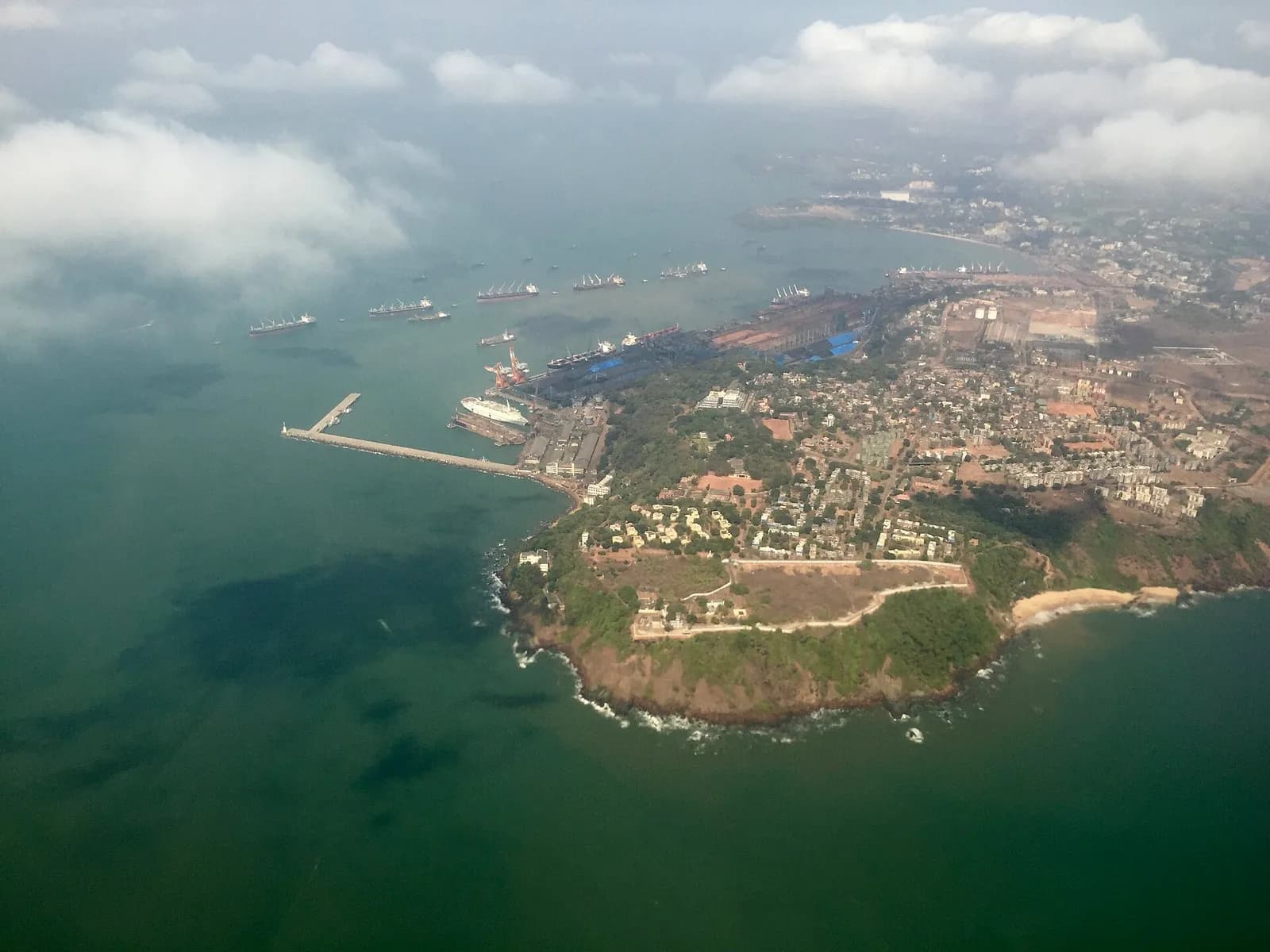
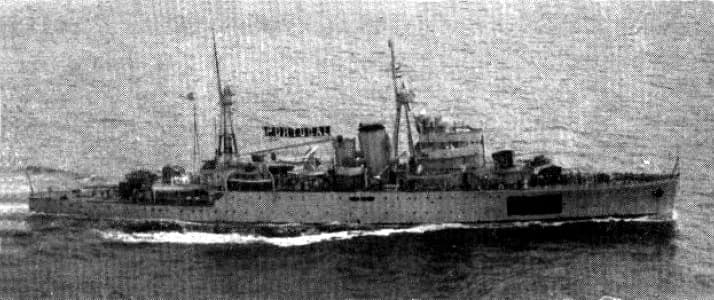
At noon on 18 December 1961 three Indian frigates turned towards the harbour of Mormugão at speed and opened fire. Inside the bay lay the Afonso de Albuquerque, a 27-year-old sloop built in Newcastle and the biggest Portuguese warship in India. Her captain, António da Cunha Aragão, ordered the anchor chain cut, opened fire and took the ship out of the harbour to meet them.
The Indians sounded a single word in Morse. In the noise of battle the Portuguese could not decode it at once; Aragão ceased fire, then resumed before the last two letters had come through. The word was “surrender”. The Indian account says the frigates fired warning shots and the sloop answered with her guns.
The fight was unequal. According to the Portuguese Navy's own account, Aragão's four 120 mm guns fired two rounds a minute, while each frigate had four 101 mm guns firing 60 rounds a minute, aimed by fire-control systems.
A shell hit the gunnery director, killing the junior telegraphist Rosário da Piedade and badly wounding the captain, who passed command to his second-in-command with an order not to surrender. Then the engineers, cut off from the bridge, mistook an order to flood the magazines for the start of the plan to scuttle the ship and wrecked her engines. She was run aground off Bambolim beach at about 12:35. By 12:50, after some 400 rounds, the crew began to abandon her, most of them swimming ashore. The flag stayed up.
Valentino Viegas, then a young Goan, watched from the hill at Nerul across the bay and could not understand why the ship had been beached. That evening he heard the tracks of Indian tanks rolling towards Panjim, the capital. The next day, after 451 years, Portuguese rule in Goa was over.
The last of the Estado da Índia
Afonso de Albuquerque, the conqueror the sloop was named after, stormed Goa on 25 November 1510, and Portugal won the right to a fortress at Diu in 1535. Goa became the capital of the Estado da Índia, the “State of India”, a chain of ports and forts that at its height reached from East Africa to Japan. By the twentieth century only Goa, the coastal town of Daman, the island of Diu and the inland enclaves of Dadra and Nagar Haveli were left.
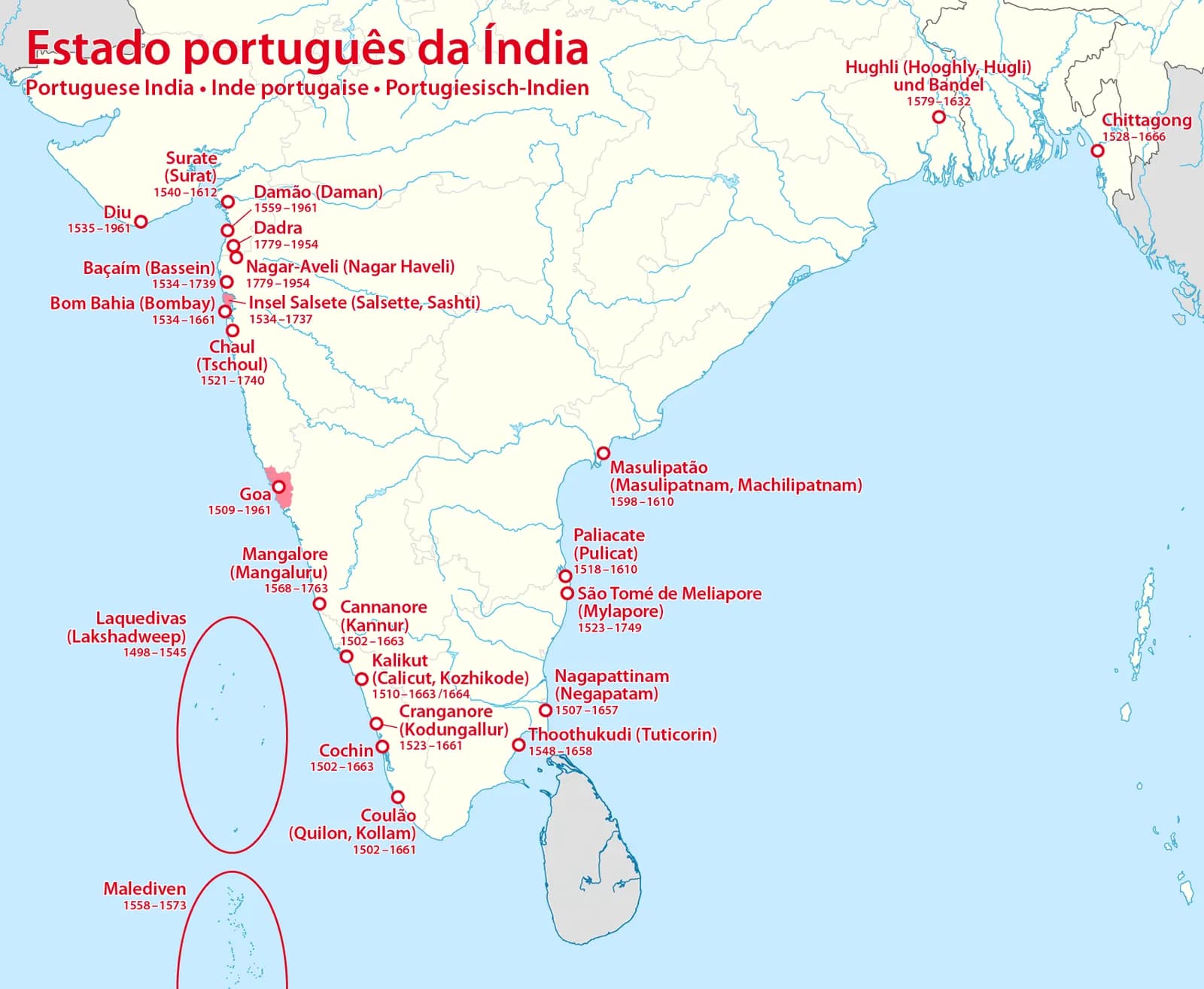
When Britain left India in 1947, the new Indian government asked Portugal to hand over its territories. Lisbon refused. Portugal was then ruled by the Estado Novo, the authoritarian “New State” led by António de Oliveira Salazar, which held that its territories were not colonies but provinces of Portugal itself, and therefore not open to negotiation. France gave up its small Indian possessions; Portugal kept its own.
India withdrew its diplomatic mission from Lisbon in June 1953 and then restricted travel through Indian territory to and from the Portuguese enclaves, which choked their trade. For Salazar, Goa's value was not economic. As he later told the National Assembly, it counted “above all as the landmark of one of the greatest happenings in the history of the world”, the meeting of East and West that the Portuguese voyages had begun.
Two enclaves, a march and a court case
The first territories went in 1954. In late July and early August activists overthrew Portuguese authority in Dadra and Nagar Haveli, two pockets of land surrounded by Indian territory inland from Daman. India would not let Portuguese troops cross its territory to take them back.
On 15 August 1955, the eighth anniversary of Indian independence, about 3,000 unarmed volunteers, or satyagrahis, tried to march into Goa, Daman and Diu. The first group to cross into Goa, carrying Indian flags at Patradevi, met machine-gun fire. An Indian military account gives 22 shot dead and 225 wounded; the Government of Goa counts around 74 satyagrahis killed over the whole campaign.
Portugal took the enclaves to the International Court of Justice in The Hague on 22 December 1955. In its judgment of 12 April 1960 the court found, by 11 votes to 4, that in 1954 Portugal had a right of passage through Indian territory for private persons, civil officials and goods. By 8 votes to 7 it found that the right did not cover armed forces, armed police, arms or ammunition, and by 9 votes to 6 it held that India had not breached its obligations by refusing passage.
Orders from Lisbon
Tension rose further after Portuguese troops on the island of Anjediva fired on the Indian passenger ship Sabarmati, wounding its chief engineer; by the Indian account several Indian fishermen were also killed. The Indian Navy began patrolling off Goa. The army gave the task to Major General K. P. Candeth's 17th Infantry Division, with the 50th Parachute Brigade, under the overall command of Lieutenant General J. N. Chaudhuri. The aircraft carrier Vikrant, two cruisers, a destroyer, frigates, Canberra bombers and Hunter and Mystère fighters were assigned.
Salazar knew Goa could not be held. His plan, as he explained it to the National Assembly afterwards, was to keep just enough troops there to force India into a large military operation that would shock the world, and to gain time to protest at the United Nations. On 11 December he asked Britain, Portugal's oldest ally, what help it could give. London replied that there would be “inevitable limitations” on any help against another member of the Commonwealth.
On 12 December Vassalo e Silva ordered the families of Portuguese soldiers evacuated by sea, and by 16 December a group of 250 women and children had reached Lisbon. On 14 December a message from Salazar reached the governor in Goa. On 15 December the UN secretary-general, U Thant, appealed to both governments to negotiate; Salazar replied the same day that he would talk wherever and however New Delhi wished.
“I do not foresee the possibility of a truce or of Portuguese prisoners, just as there will be no surrendered ships, for I feel that there can only be soldiers and sailors who are victorious or dead.”
Speaking three weeks later, Salazar made no secret of what he had asked for. “For me it was horrible to think that this might mean a total sacrifice but I recommended and expected it as the best service that could be rendered to the future of the Nation,” he told the Assembly. The governor, he added, had replied thanking him for his confidence.
Thirty-six hours, or forty-eight
The Portuguese defence plan, known as Plano Sentinela, was to fall back in stages from the borders to the coast, blowing up bridges and roads to slow the enemy, and to make a last stand around Mormugão and Vasco da Gama. Captain Carlos Azeredo, who commanded Goa's police, later called it a plan drawn up with ruler and set square in Lisbon by people who had no idea what Goa, Daman and Diu were like.
12 December
Vassalo e Silva orders soldiers' families evacuated by ship
14 December
Salazar's “victorious or dead” message reaches Goa
17 December
Indian troops take the border town of Maulinguem after a brief skirmish
18 December, 04:00
Main offensive begins against Goa, Daman and Diu; Radio Goa announces the invasion
18 December, c. 07:00
Indian aircraft bomb Dabolim airfield and the Bambolim radio station
18 December, 12:00 to 12:50
Afonso de Albuquerque fights three frigates, is beached and abandoned
18 December
UN Security Council meets; the Western ceasefire resolution is vetoed by the USSR
18 December, 20:00
A ceasefire offer reaches a squadron commander of the Indian 7th Cavalry
19 December
Indian troops enter Panjim; Anjediva island and Daman's airfield are taken
19 December, 14:00 to 20:30
Vassalo e Silva surrenders the Portuguese forces (sources differ on the hour)
20 December
Major General Candeth takes over as Military Governor
In Goa there was little fighting on land. Indian columns came in from the north and east; the Portuguese withdrew, blowing the bridge at Banastarim behind them. João Aranha, who commanded a police division in the north, remembered Indian aircraft flying over his men without firing: it was demoralising, he said, because they understood they had no chance. Correio da Manhã's account describes rifles dating from the First World War and ammunition so decayed that rounds often failed to fire.
There was more fighting at Diu and Daman, and at sea. At Diu, Lieutenant Jorge Oliveira e Carmo took the small patrol boat Vega out against an Indian cruiser; Indian jets strafed her, and he and two sailors were killed. On Anjediva, an Indian naval landing party lost seven dead and nineteen wounded when, by the Indian account, it was fired on after a white flag was shown.
By the morning of 19 December Panjim was surrounded, and the governor asked the bishop to seek terms from the Indian command. Sources place the surrender anywhere from 14:00, the hour Valentino Viegas gives, to 20:30 that evening, the Indian account's time. That account counts a 48-hour operation; Portuguese accounts, such as the Museu do Aljube's, speak of 36 hours.
How many men, and how many dead
Nobody agrees on the numbers. Salazar himself spoke of 3,500 soldiers from Portugal and 900 Indo-Portuguese against an Indian army of between 30,000 and 40,000. An Indian account in the journal of the United Service Institution of India lists 3,995 Portuguese combat soldiers, 1,040 police and 400 border guards, after a garrison of 12,000 in 1960 had been cut.
Estimates of the troops on each side, December 1961
men
Salazar's figure adds his 3,500 soldiers from Portugal to 900 Indo-Portuguese. The USI figure counts combat soldiers only, without 1,040 police and 400 border guards. The US figure is the State Department historians' estimate of the force that entered on 17 to 18 December. Lisbon's toponymy office gives a higher Indian figure still, about 50,000.
Show the data
| Estimated troops | |
|---|---|
| Portuguese (Salazar, 1962) | 4,400 |
| Portuguese army (USI Journal, 2013) | 3,995 |
| Indian (US State Department) | 30,000 |
| Indian (Museu do Aljube, 2020) | 40,000 |
| Indian (Correio da Manhã, 2011) | 45,000 |
| Figure | Source | |
|---|---|---|
| Indian troops | About 30,000 | US State Department editorial note |
| Indian troops | 30,000 to 40,000 | Salazar, speech of 3 January 1962 |
| Indian troops | 45,000, backed by warships, aircraft and hundreds of tanks | Correio da Manhã, 2011 |
| Indian troops | About 50,000 | Toponímia de Lisboa, 2017 |
| Portuguese forces | 3,500 from Portugal and 900 Indo-Portuguese | Salazar, 1962 |
| Portuguese forces | 3,995 soldiers, 1,040 police, 400 border guards | USI Journal, 2013, from Indian sources |
| Portuguese dead | 25 soldiers | Correio da Manhã, 2011; Toponímia de Lisboa, 2017 |
| Portuguese dead | 30 | Diário de Notícias, 2021 |
| Portuguese dead and wounded | 31 killed, 57 wounded | USI Journal, 2013 |
| Indian dead and wounded | 34 killed, 51 wounded | USI Journal, 2013 |
| Portuguese Navy dead | 5 (one on the Afonso de Albuquerque, three from the Vega, one at the Goa naval command) | Revista da Armada, 2012 |
| Prisoners | 4,669 | USI Journal, 2013 |
| Prisoners | More than 3,000 soldiers | Correio da Manhã, 2011 |
The Portuguese Navy says the Afonso de Albuquerque killed 5 and wounded 13 aboard the Indian ships; the Indian account reports damage to two ships and gives no casualties for that action. Correio da Manhã counts soldiers only; the Indian count of the Portuguese garrison also includes police and border guards.
Prisoners nobody wanted
The Indians held their prisoners in four camps set up in former Portuguese barracks, two at Ponda and others at Alparqueiros and Aguada. Veterans remembered black-eyed beans every day and cardboard to sleep on. Vassalo e Silva was kept apart in a house at Ponda with his two aides. There, according to Correio da Manhã's account, Salazar's special envoy Jorge Jardim visited him and left him a cyanide capsule, which he did not use.
The Museu do Aljube records that Nehru offered to free them without conditions, while Salazar, who wanted an example made of the defeated army, raised obstacle after obstacle to their return. “The Indians told us we were only there because the Portuguese government didn't want us back,” Carlos Azeredo said. “And they were right.”
Repatriation came only in May 1962, by an airlift from Goa to Karachi in Pakistan and then on three ships to Lisbon. Nuno Vassalo e Silva, the governor's grandson and a historian, says that when the men came ashore at Alcântara soldiers stood waiting with rifles, pointed but lowered. “It was a humiliation,” he said.
According to Correio da Manhã, eight officers, the governor-general among them, were dismissed from the army; five more were compulsorily retired and eight suspended for six months. Vassalo e Silva was expelled for disobeying Salazar and picked up a cruel nickname, “Vacila e Salva”, roughly “wavers and saves himself”. Lisbon's toponymy office records that he was reinstated after the revolution of 25 April 1974. He died in Lisbon on 11 August 1985.
Thirteen years of non-recognition
On 18 December, at Portugal's request, the UN Security Council met in New York. Portugal's representative, Vasco Vieira Garin, called it a fully premeditated and unprovoked aggression. India's, C. S. Jha, asked how Portugal had come by its “so-called sovereign rights” in India, which he said derived from “a naked, unabashed application of force”. A ceasefire resolution moved by the United States, Britain, France and Turkey won seven votes to four but fell to a Soviet veto.
“As I said earlier, we have been patient for fifteen years. We have tried our best to get the Portuguese to give up their colonial positions in India, to negotiate with us with regard to the transfer of these positions. They have turned a deaf ear.”
Salazar answered in the National Assembly on 3 January 1962, in a speech read out for him by the Assembly's president because his voice was failing. He called the loss of Goa one of the greatest disasters in Portuguese history and refused any treaty. He announced that the deputies elected for Goa, Daman and Diu would keep their seats in the Lisbon parliament.
“The Indian Union has been able to wage war on us but without us it cannot make the peace.”
In India, Goa, Daman and Diu were run by a military governor and then as a Union Territory, and a citizenship order in 1962 made Goans born before 20 December 1961 Indian citizens. Only after the Carnation Revolution of April 1974 overthrew the Estado Novo did Lisbon change course. On 31 December 1974 India and Portugal restored diplomatic relations and signed a treaty recognising Indian sovereignty over all the former territories, backdated to the day each had joined India. It came into force on 3 June 1975.
Goa after Portugal
Goa went its own way inside India. In an opinion poll on 16 January 1967, the first held in the country, Goans voted against merging with the neighbouring state of Maharashtra. On 4 February 1987 the legislative assembly made Konkani the official language, and on 30 May 1987 Goa became India's 25th state.
Some Portuguese law survives. In 2019 the Supreme Court of India confirmed that the Portuguese Civil Code of 1867, as applied in Goa and partly replaced in 2016 by a Goan succession act, still governs succession for people domiciled there, and its judges called Goa a shining example of a state with one civil code for all religions.
So does a door to Europe. Portuguese nationality law of 1975 lets Goans born before 20 December 1961, and their descendants to the third generation, claim Portuguese citizenship. Few did until Portugal joined what is now the European Union in 1986; then demand grew so much that Portugal opened a consulate in Goa in 1994. Under Indian law, those who register lose their Indian citizenship.
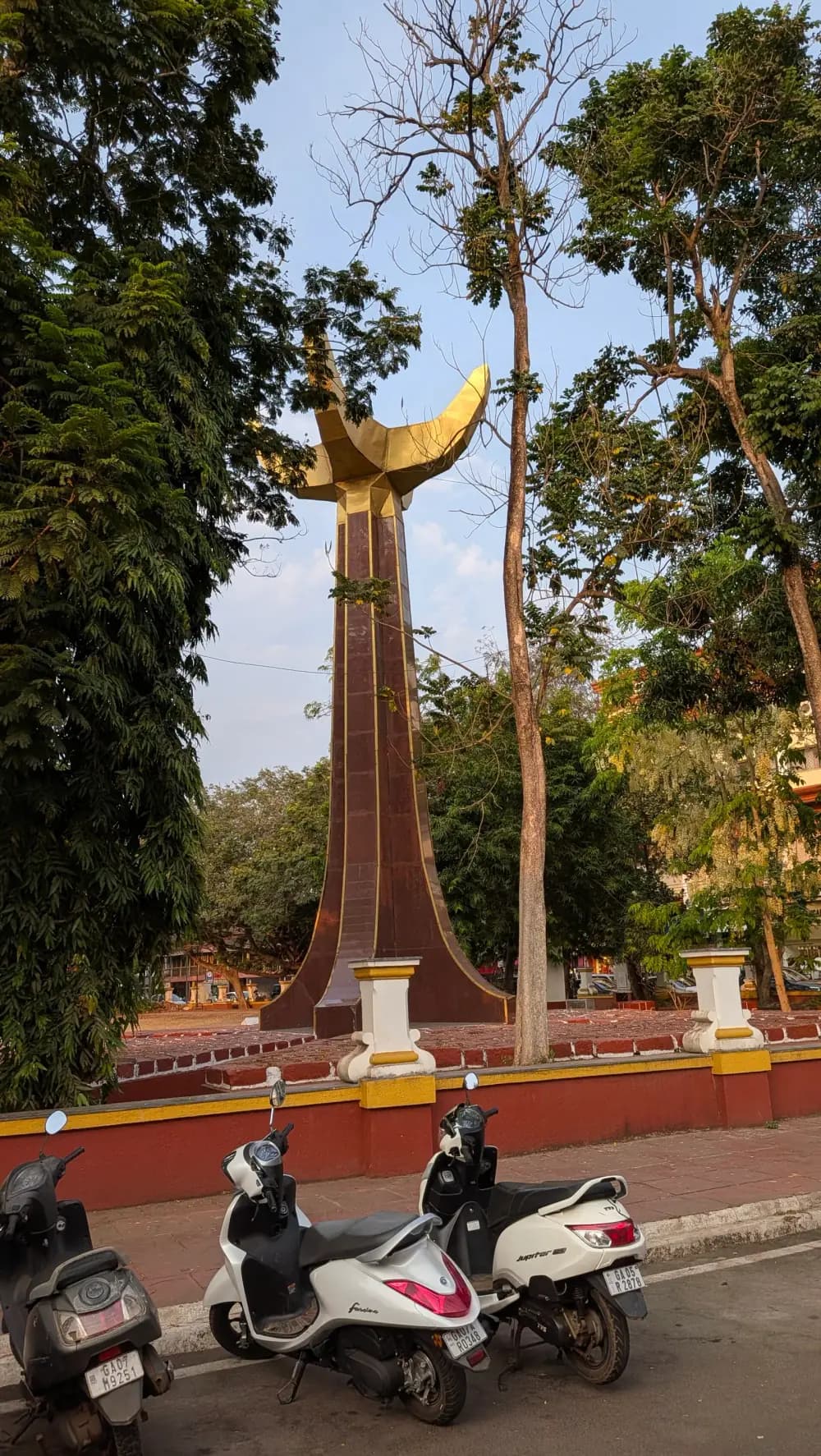
India marks the anniversary each year. On 26 August 2026 India's defence minister, Rajnath Singh, opened the redeveloped martyrs' memorial at Patradevi, where the satyagrahis of 1955 first crossed the border. Valentino Viegas suspects that few passers-by in Lisbon, or in Panjim, would now recognise the date. The governor's grandson, who first visited Goa in 1996 and was received in the old governor's palace with the furniture of Portuguese times still inside, warns his compatriots against nostalgia: Goa, he says, has a cosmopolitan identity of its own.
FAQs
When did Portugal lose Goa?
Indian forces entered Goa, Daman and Diu in the early hours of 18 December 1961, after a skirmish on the border the day before. Governor-General Vassalo e Silva surrendered on 19 December, the date India marks as Goa Liberation Day. Portugal formally recognised Indian sovereignty only in a treaty signed on 31 December 1974.
How many soldiers fought in the 1961 Goa operation?
The figures vary. Salazar spoke of 3,500 soldiers from Portugal plus 900 Indo-Portuguese; an Indian account lists 3,995 Portuguese soldiers plus police and border guards. Indian strength is put at about 30,000 by US State Department historians and at 40,000 to 50,000 in Portuguese accounts.
What happened to Governor-General Vassalo e Silva?
He disobeyed Salazar's order to fight to the death and surrendered. After being held as a prisoner he returned to Portugal in 1962 and was expelled from the army with seven other officers. He was reinstated after the revolution of 25 April 1974, died in Lisbon in 1985 and has had a Lisbon street named after him since 2014.
Did the International Court of Justice rule on Goa?
Not on Goa itself. In 1960 the court ruled on Portugal's claim to cross Indian territory to reach its enclaves of Dadra and Nagar Haveli, lost in 1954. It found Portugal had a right of passage for civilians, officials and goods, but not for troops, armed police or weapons.
Can Goans get Portuguese citizenship?
Under Portugal's 1975 nationality law, Goans born before 20 December 1961 and their descendants up to the third generation can claim Portuguese citizenship. Under Indian law, registering as Portuguese means losing Indian citizenship.
On the timeline
Open the timelineNearby moments from dictatorship and the estado novo (1926–1974).
After seeing off an attempted coup by his defence minister, Júlio Botelho Moniz, Salazar takes over the defence portfolio himself and, in a broadcast address, says the aim is to move 'rapidamente e em força' — rapidly and in force — to defend Angola, at the start of 13 years of colonial war.
Benfica win the European Cup for the first time, beating Barcelona 3–2 at the Wankdorf Stadium in Bern. It is the first final not won by Real Madrid, and Benfica would retain the trophy the following year.
Hermínio da Palma Inácio and fellow opponents of the Salazar regime hijack a TAP Super Constellation flying from Casablanca to Lisbon, throw thousands of anti-regime leaflets over Lisbon and other parts of the country, then make the crew fly on to Tangier, in Morocco. It was the first political hijacking of a plane in Portugal.
The fall of Portuguese India
Governor-General Manuel Vassalo e Silva surrenders Goa, Daman and Diu to the Indian army, which had crossed the borders on 17 and 18 December, ending 451 years of Portuguese rule in Goa. Salazar had ordered his roughly 3,500 soldiers to fight to the death against an Indian force put at 30,000 to 45,000 or more; Vassalo e Silva chose to save lives and was later expelled from the army.
In the early hours of New Year's Day, several dozen civilian and military rebels led by Captain João Varela Gomes and Manuel Serra storm the 3rd Infantry Regiment barracks in Beja, hoping to spark a rising against Salazar. General Humberto Delgado had slipped secretly into Portugal to lead it, but the assault fails and Varela Gomes is gravely wounded.
The Salazar regime bans the 'Dia do Estudante' (Students' Day) celebrations in Lisbon, setting off the 1962 academic crisis — months of strikes, protests and police charges that shaped a generation of opponents of the dictatorship. Portugal still marks 24 March as National Student Day.
Benfica retain the European Cup, beating Real Madrid 5–3 in the final at Amsterdam's Olympic Stadium. Despite a Puskás hat-trick for the five-time champions, two goals from the 20-year-old Eusébio seal Benfica's second consecutive title.
Coming up in history
All long reads 21 December 1939Carlos do Carmo, born 21 December 1939: a life in Lisbon fado
 22 December 1761One treasury, one set of books: Pombal's Real Erário of 1761
 23 December 1534The Treaty of Bassein, 1534: how Portugal came to hold Bombay
 24 December 1524Vasco da Gama dies in Cochin, three months into his viceroyalty
21 sources
Archives, scholarship and reporting this article was checked against.
- 1
Goa – 18 de Dezembro 1961; Diu – 18 de Dezembro 1961; Homenagem aos Mortos da Marinha na Índia em 1961Revista da Armada no. 459, Portuguese Navy, January 2012 (PDF)
- 2
Operation Vijay: The Liberation of ‘Estado da India’ – Goa, Daman and Diu (Brigadier A. S. Cheema)Journal of the United Service Institution of India, vol. CXLIII, no. 594, October–December 2013 (PDF)
- 3
The invasion and occupation of Goa by the Indian Union: speech delivered by the Prime Minister Prof. Doctor Oliveira Salazar during the session of the National Assembly on January 3rd, 1962Secretariado Nacional da Informação, Lisbon, 1962 (Biblioteca Nacional de Portugal, digital copy)
- 4
Right of Passage over Indian Territory (Portugal v. India): summary of the Judgment of 12 April 1960International Court of Justice
- 5
Security Council Official Records, 987th meeting, 18 December 1961 (S/PV.987)United Nations
- 6O fim trágico do Estado Português da ÍndiaCorreio da Manhã (Domingo), 11 December 2011
- 7
Foreign Relations of the United States, 1961–1963, vol. XIX, South Asia, document 76: Editorial NoteOffice of the Historian, U.S. Department of State
- 8
On Dual Citizenship (Eduardo Faleiro)Mainstream, vol. LII, no. 12, 15 March 2014
- 9
Efeméride: Aviso de 1ª Classe Afonso de Albuquerque aumentado ao efetivoMuseu de Marinha, Portuguese Navy
- 1018 de Dezembro de 1961 – Uma data histórica (Valentino Viegas)Diário de Notícias, 15 October 2021
- 11Portugal perdeu Goa há 60 anos e recebeu centenas de refugiadosAgência Lusa, in Observador, 16 December 2021
- 12
The Rise of Portuguese Power in India, 1497–1550 (R. S. Whiteway)Archibald Constable, Westminster, 1899 (Internet Archive scan)
- 13“A marca cultural que Portugal deixou no oriente é imensa, mas não foi uma marca militar” (Leonídio Paulo Ferreira)Diário de Notícias, 6 August 2021
- 14
Union Defence Minister Rajnath Singh to inaugurate Hutatma Smriti Smarak at Patradevi (press release 557)Department of Information and Publicity, Government of Goa, 24 August 2026 (PDF)
- 15
Milestones of GoaDepartment of Information and Publicity, Government of Goa
- 16
A Rua General Vassalo e Silva, que se rendeu na Índia em dezembro de 1961Toponímia de Lisboa (blog of the Núcleo de Toponímia, Câmara Municipal de Lisboa), 6 February 2017
- 17
Operation VijayMuseu do Aljube – Resistência e Liberdade, Lisbon, 18 December 2020
- 18
Security Council meetings in 1961United Nations Dag Hammarskjöld Library
- 19
India–Portugal RelationsEmbassy of India, Lisbon
- 20
No Attempt Made To Frame Uniform Civil Code Despite Judicial Exhortation, Says SC (Ashok Kini)LiveLaw, 13 September 2019
- 21
From Goa Liberation to Op Sindoor, India's resolve to defend its sovereignty remains unwavering: Raksha MantriOffice of Rajnath Singh, Defence Minister of India, press release, 26 August 2026
Image credits
- Mormugão, Goa's deep-water port, seen from the air in 2016. On 18 December 1961 the Portuguese sloop Afonso de Albuquerque fought three Indian frigates in this bay, and the Portuguese had planned their last stand around the port. Trinidade, CC BY-SA 4.0, via Wikimedia Commons.
- Places held by Portugal in India at different times, with the mapmaker's dates. By 1961 only Goa, Daman and Diu remained; Dadra and Nagar Haveli, inland from Daman, had been lost in 1954. Maximilian Dörrbecker (Chumwa), CC BY-SA 2.5, via Wikimedia Commons.
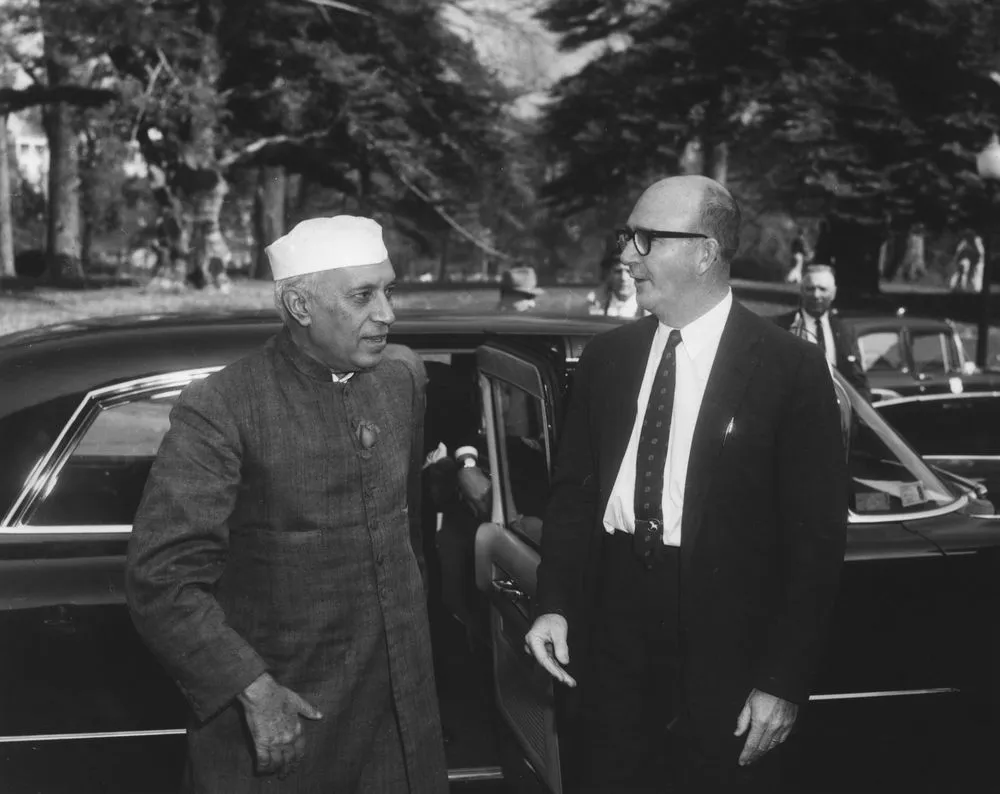
- Jawaharlal Nehru, India's prime minister, arrives at the White House for talks with President Kennedy on 7 November 1961, six weeks before Indian troops moved into Goa. He is met by Dave Powers, a special assistant to the president. Abbie Rowe, Public domain, via Wikimedia Commons.
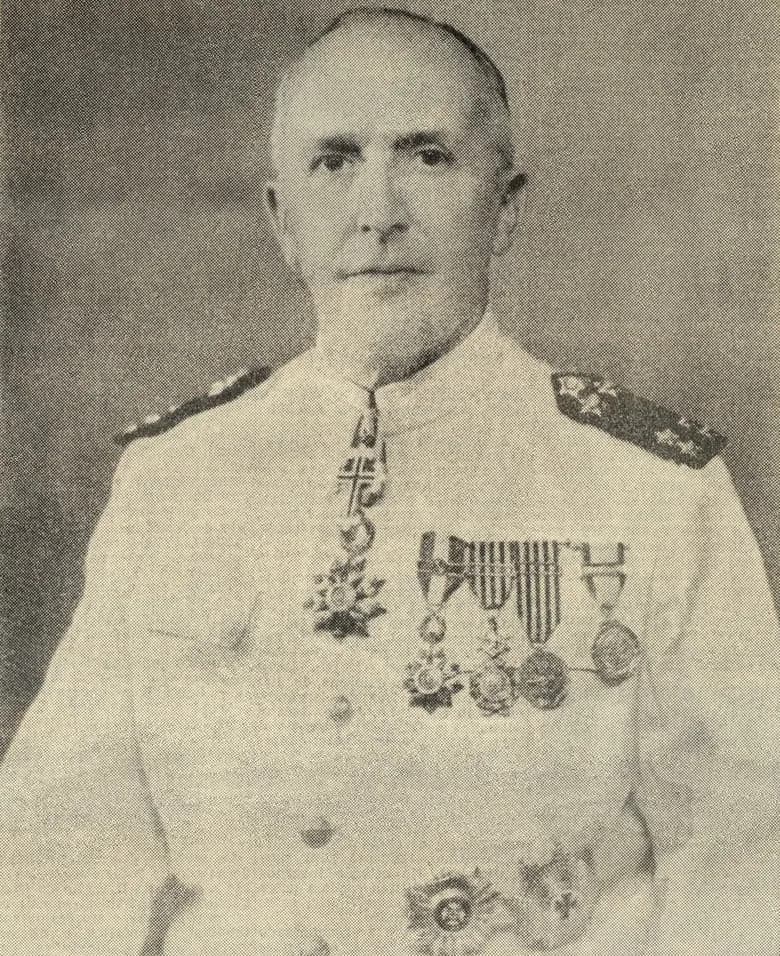
- General Manuel António Vassalo e Silva, Governor-General of Portuguese India, in a portrait published by the Lisbon daily O Século on 9 December 1960, a year before the surrender. Unknown author, Public domain, via Wikimedia Commons.
- The Martyrs' Memorial in Azad Maidan, a square in central Panaji, Goa's capital, photographed in 2026. SerChevalerie, CC BY-SA 4.0, via Wikimedia Commons.
- The sloop Afonso de Albuquerque at sea in the 1940s, as published in the US Navy's All Hands magazine in December 1948. She was run aground at Bambolim on 18 December 1961 after her fight with three Indian frigates. U.S. Navy, Public domain, via Wikimedia Commons.