

The death of Empress Leopoldina in Rio de Janeiro, 11 December 1826
She arrived in Rio with a shipload of naturalists, chaired the council that pushed Pedro towards independence and bore the future queen of Portugal. Her death at 29 was blamed on her husband. Scans of her skeleton in 2012 found no sign of the violence rumoured at the time.
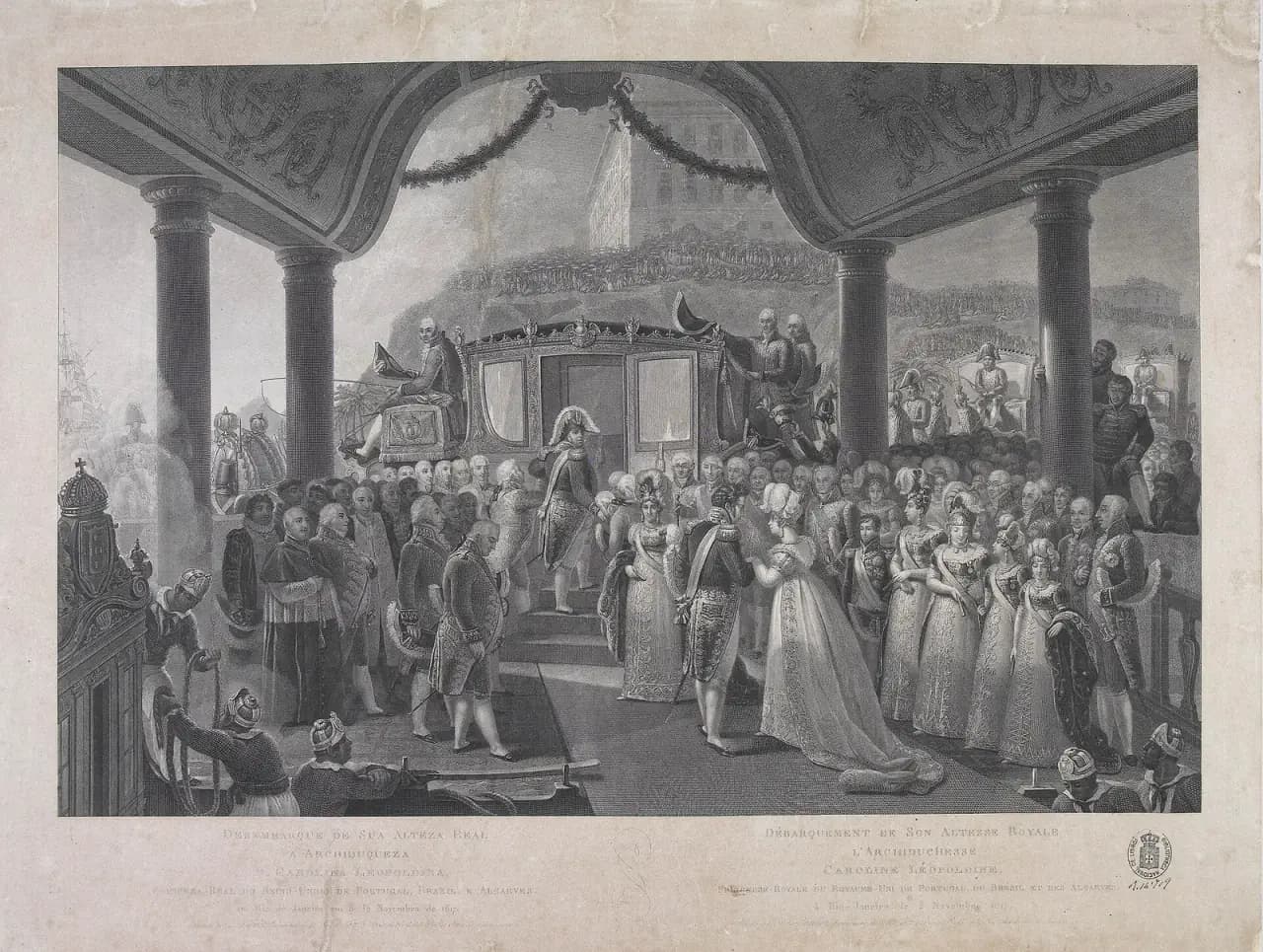
At a glance
- Leopoldina of Austria, Empress of Brazil, died at the palace of São Cristóvão in Rio de Janeiro at about 10.15 am on 11 December 1826, aged 29, nine days after a miscarriage.
- A daughter of the Austrian emperor, she married the Portuguese heir Pedro in 1817. Her wedding journey came with the largest research expedition Austria ever sent to the Americas.
- As acting head of government she chaired the council session of 2 September 1822 that sent urgent letters to Pedro in São Paulo. Five days later he declared Brazil independent.
- Her daughter became Maria II of Portugal and her son Pedro II, Brazil's last emperor. Her husband's open affair with Domitila de Castro overshadowed her last years.
- Rumours that Pedro kicked her or pushed her down the stairs spread at the time. CT scans of her skeleton in 2012 found no fractures, and a 2023 University of São Paulo thesis concluded she probably died of infection after the miscarriage.
A morning at São Cristóvão
At four in the morning of 8 December 1826, in the palace of São Cristóvão on the Quinta da Boa Vista outside Rio de Janeiro, the Empress of Brazil dictated a letter to her sister Marie Louise in Parma. Her friend the Marquesa de Aguiar wrote it down.
Leopoldina asked her sister to protect her children and to send money for her poor and for her debts. She complained bitterly of Domitila de Castro, who she said had seduced her husband, and named the Marquesa as her only friend.
Her husband was not there. Emperor Pedro I had sailed south in late November to the war in the Cisplatine province, today's Uruguay. In the room next to the sickroom, his ministers and the Austrian envoy kept watch, and when Domitila tried to visit, the navy minister, the Marquês de Paranaguá, made her leave the palace.
Leopoldina died at a quarter past ten on the morning of 11 December. She was 29. The ministers wrote to Pedro the same day, and they were worried: the people of Rio, they warned, put the Empress's illness down to moral causes, not physical ones.
A Habsburg daughter for the House of Bragança
Leopoldina was born in Vienna on 22 January 1797, a daughter of Francis, who took the title Emperor of Austria in 1804. Her elder sister Marie Louise was married off to Napoleon in 1810. Francis gave his children a scientific education, and Leopoldina grew up with a passion for the natural sciences, especially botany and mineralogy.
The marriage was agreed on 28 November 1816. For João VI it was a diplomatic coup, an alliance with one of Europe's great houses that loosened Portugal's dependence on Britain; for Vienna it was a link to the riches of Brazil. Leopoldina began learning Portuguese. In April 1817 a portrait of the groom reached her, and she wrote to Marie Louise about it.
“I have just received the portrait of my much beloved Dom Pedro. He is not exceptionally handsome, but he has wonderful eyes and a fine nose, though his lips are even thicker than mine.”
The wedding took place by proxy in Vienna on 13 May 1817, João VI's birthday. She sailed from Livorno in mid-August aboard the Portuguese ship D. João VI, first set foot on Portuguese soil at Madeira on 11 September, and reached Rio on 5 November. The marriage was blessed in the city's royal chapel the next day.
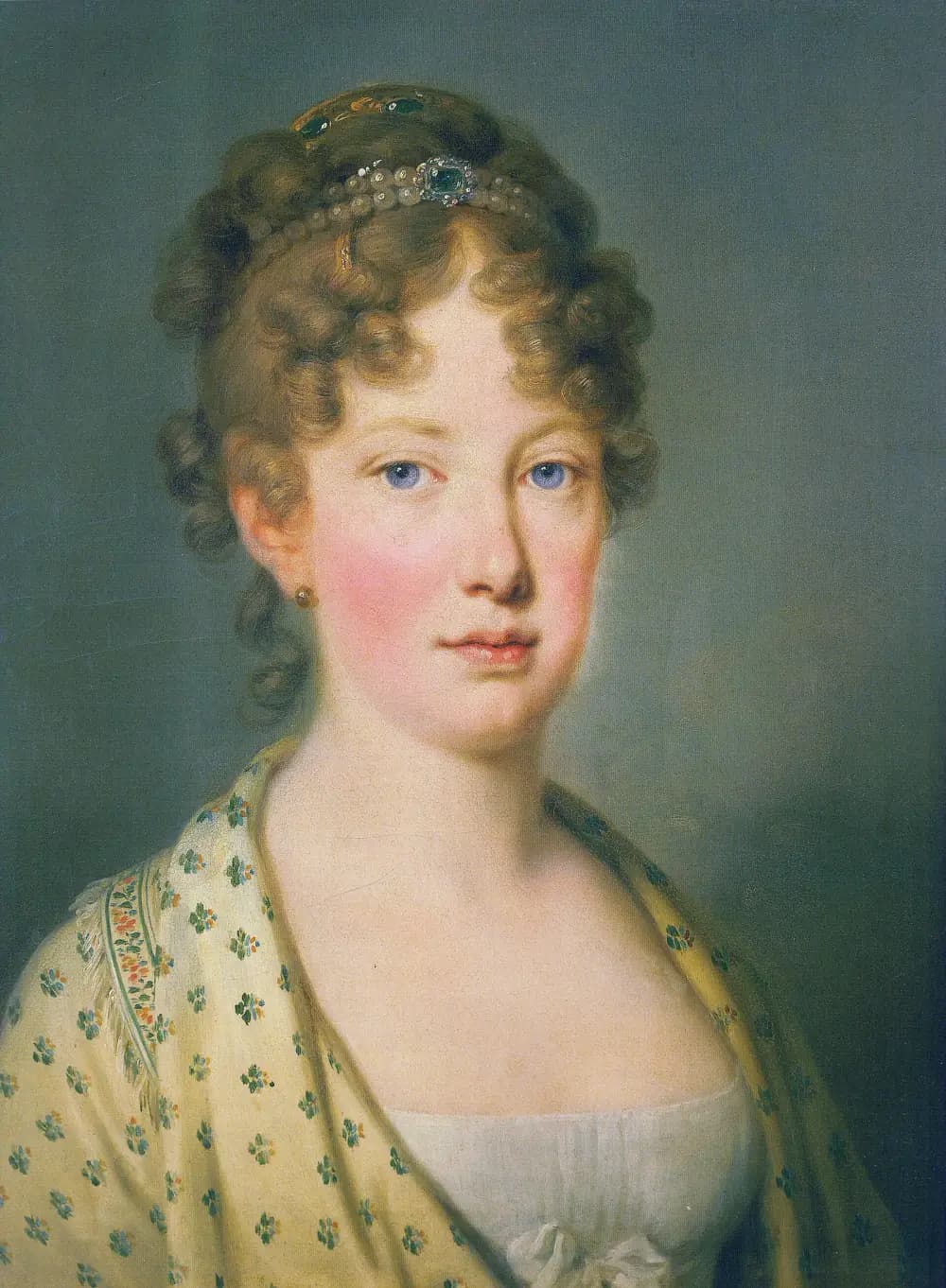
Naturalists in the wedding party
Emperor Francis turned his daughter's wedding into a scientific expedition. Prince Metternich, Austria's leading statesman, was in overall charge, and Karl von Schreibers, director of the imperial natural history cabinet, wrote the instructions. Two Austrian frigates, the Austria and the Augusta, carried scientists to Rio.
Fourteen researchers and painters took part, among them the expedition leader Johann Christian Mikan, a Prague professor, the mineralogist and botanist Johann Baptist Emanuel Pohl, the gardener Heinrich Schott, the landscape painter Thomas Ender and the taxidermist Johann Natterer. They had no limit on money or time, which the Vienna museum calls unique in the history of expeditions.
Three scientists from outside Austria went along: the Bavarian zoologist Johann Baptist von Spix, the Bavarian botanist Carl Friedrich Philipp von Martius and the Italian botanist Giuseppe Raddi. Spix and Martius wrote Reise in Brasilien, and the journey is known worldwide as the Spix and Martius expedition. The Vienna museum calls that an irony of fate, since the two came along as guests.
Natterer stayed 18 years, until 1835, much of it in the Amazon. More than 150,000 objects reached Vienna, where a Brazilian Museum opened in 1821 in the Johannesgasse to hold them. When it closed in 1835 most went to the natural history cabinet, forerunner of today's Naturhistorisches Museum; part went in 1928 to what is now the Weltmuseum.
Some of what Johann Natterer collected in Brazil, 1817 to 1835
specimens or objects
Figures as given in Valdirene Ambiel's 2023 thesis, citing Straube (2000). The Naturhistorisches Museum says he also sent almost 33,000 insects. They cover one collector only; the whole expedition sent more than 150,000 objects to Vienna, according to the museum.
Show the data
| Natterer collection | |
|---|---|
| Birds | 12,293 |
| Ethnographic objects | 1,934 |
| Mammals | 1,146 |
| Seed samples | 242 |
Leopoldina collected too. She rode out to the Corcovado and the Tijuca forest to gather and draw plants and animals, and sent parakeets, a monkey, seeds and animal skins to her sister. In June 1822, fearing revolution, she told her father that if the worst came she would go home with her daughters, and hoped for the post of mineralogist he had once promised her.
A court in the tropics
Her first letters from Rio were happy. Then came the heat, the insects and a court with little to do. It was easier, she told Marie Louise in December 1817, for a stone to turn into milk than to get permission to go to the theatre. Her mother-in-law, Carlota Joaquina, made her uneasy, and Pedro came to control the allowance her father sent her, so that she had to borrow to pay her servants.
She was pregnant almost without pause. Between 1819 and 1825 she bore six children who lived past birth and lost at least two pregnancies early. The heir she was expected to produce came last, on 2 December 1825.
| Child | Born in Rio | Died | What became of them |
|---|---|---|---|
| Maria da Glória | 4 April 1819 | 1853, aged 34 | Queen Maria II of Portugal; died of complications giving birth to her eleventh child |
| João Carlos | 6 March 1821 | 4 February 1822, aged 11 months | Heir to Portugal after Pedro; always frail |
| Januária | 11 March 1822 | 18 March 1901, in Nice, aged 79 | Princess of Brazil |
| Paula Mariana | 17 February 1823 | 15 or 16 January 1833, aged 9 | Sickly from childhood |
| Francisca | 1824 | 27 March 1898, in Paris, aged 73 | Princess of Brazil |
| Pedro | 2 December 1825 | 5 December 1891, in Paris, aged 66 | Emperor Pedro II of Brazil, 1831 to 1889 |
Leopoldina's letters also describe early miscarriages in December 1819 and March 1820; her biographer Carlos Oberacker held the second was a boy, Miguel, which Ambiel doubts at two months' gestation. A third miscarriage, on 2 December 1826, preceded her death. Ambiel gives both 15 and 16 January 1833 for Paula Mariana's death.
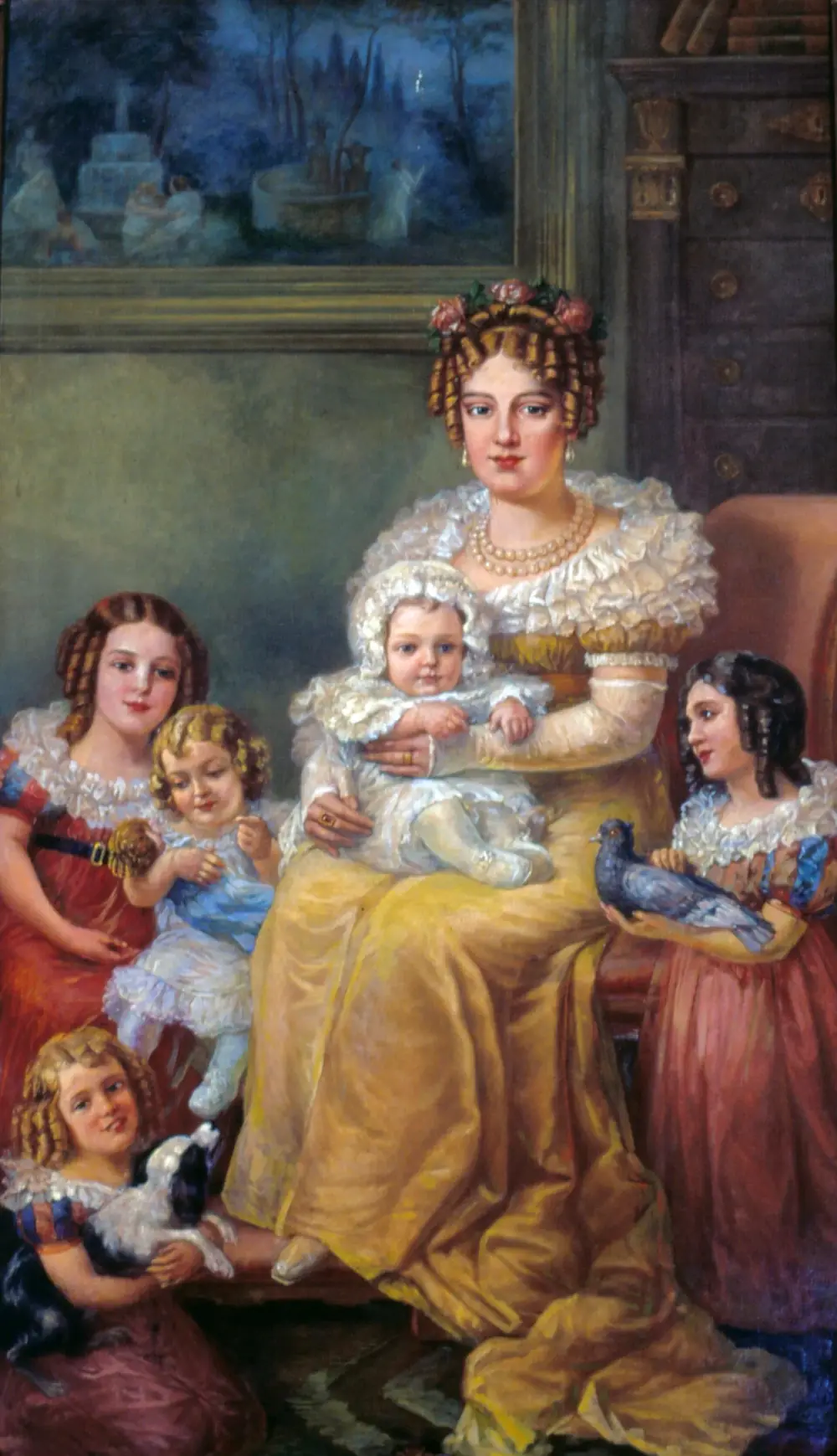
Regent in the summer of 1822
The liberal revolution in Porto in August 1820 demanded a constitution and the king's return. João VI first proposed to send Pedro to Lisbon and keep the pregnant Leopoldina and their daughter in Rio. Neither would accept the separation, so the king sailed himself in April 1821 and left Pedro as regent.
The Cortes in Lisbon then set about dismantling the Rio government and ordered Pedro home. Leopoldina, by her own conservative lights, saw sooner than her husband that the Bragança crown could only be kept in Brazil if he led the movement for autonomy. With her backing he refused to leave on 9 January 1822, the Dia do Fico. In May, 186 women from Bahia sent her a letter thanking her for her part in his decision.
In August Pedro rode to São Paulo to settle a quarrel in the provincial government. A decree dated 13 August set out her powers. At the council session of 14 August he proposed, and the councillors agreed, that the Princess Royal should preside over the council of ministers and state in his absence. She was 25.
On 2 September dispatches arrived from Lisbon: the Cortes planned to send more troops to Brazil and had insulted Pedro. Leopoldina called the council together and chaired the session. Lucas José Obes, the procurator for the Cisplatine province, read a speech, which the minutes summarise.
“That no time should be lost: that the Cortes had taken off the mask, demanding of His Royal Highness the most humiliating obedience, and of Brazil a humiliation such as had never been demanded of our forebears.”
The council ordered the funds of the Douro Wine Company seized in reprisal, called for defence plans and asked the military men for a plan of campaign. The minutes say nothing more, but according to the editor of the published minutes the session also decided, under José Bonifácio's influence, to send word to Pedro at once. Two couriers, Paulo Bregaro and António Ramos Cordeiro, rode for São Paulo with letters from Leopoldina and from the chief minister, José Bonifácio. They found Pedro on the afternoon of 7 September near the Ipiranga stream, outside São Paulo, and after hearing the letters read he declared the break with the Cortes. He was acclaimed emperor on 12 October, his 24th birthday, and crowned on 1 December.
22 April 1821
Pedro made regent
João VI hands him the government of Brazil and sails for Lisbon days later.
9 January 1822
Dia do Fico
Pedro refuses the Cortes' order to return to Europe.
13 May 1822
Letter of the women of Bahia
186 women thank Leopoldina for her part in keeping Pedro in Brazil.
14 August 1822
Leopoldina to preside
Before leaving for São Paulo, Pedro has the council agree she will chair it.
2 September 1822
Emergency session
Couriers ride to Pedro with letters from Leopoldina and José Bonifácio.
7 September 1822
Ipiranga
Pedro declares independence near São Paulo.
12 October 1822
Acclamation
Pedro is acclaimed Emperor of Brazil on his 24th birthday.
1 December 1822
Coronation
The new empress urged her father to accept an alliance with the empire, and told him where her loyalty would lie if he refused. Recent historians stress her conservatism. Andréa Slemian of the Federal University of São Paulo told Pesquisa FAPESP in 2022 that Leopoldina dreaded social upheaval and fought for a moderate independence that kept the prince on the throne, which is what happened in 1822. Others give her a smaller part. The historian Moacyr Flores found nothing in her published letters to show that she provoked the break, and saw her regency as closely guided by José Bonifácio.
“I shall remain Brazilian at heart, for that is what my obligations as wife and mother, and the gratitude of an honourable people, require.”
Domitila
On the same trip to São Paulo in 1822, Pedro met Domitila de Castro Canto e Melo, who had left her husband, an army officer, in 1819 after he attacked her with a knife. In 1823 Pedro brought her whole family to Rio. They had five children, of whom two daughters reached adulthood, and he made her a viscountess on 12 October 1825 and Marquesa de Santos a year later. Ambiel reads the title as another snub to José Bonifácio, whose family came from Santos.
Leopoldina had to accept Domitila as a lady of her household, which gave her the right to travel with the imperial couple. She did, on the visit to Bahia in early 1826. Her few friends had gone: the Andrada brothers had lost favour, and Maria Graham, her daughter's English governess, had left the court. In September 1826 she wrote that princesses were thrown like dice, their luck depending on how they fell.
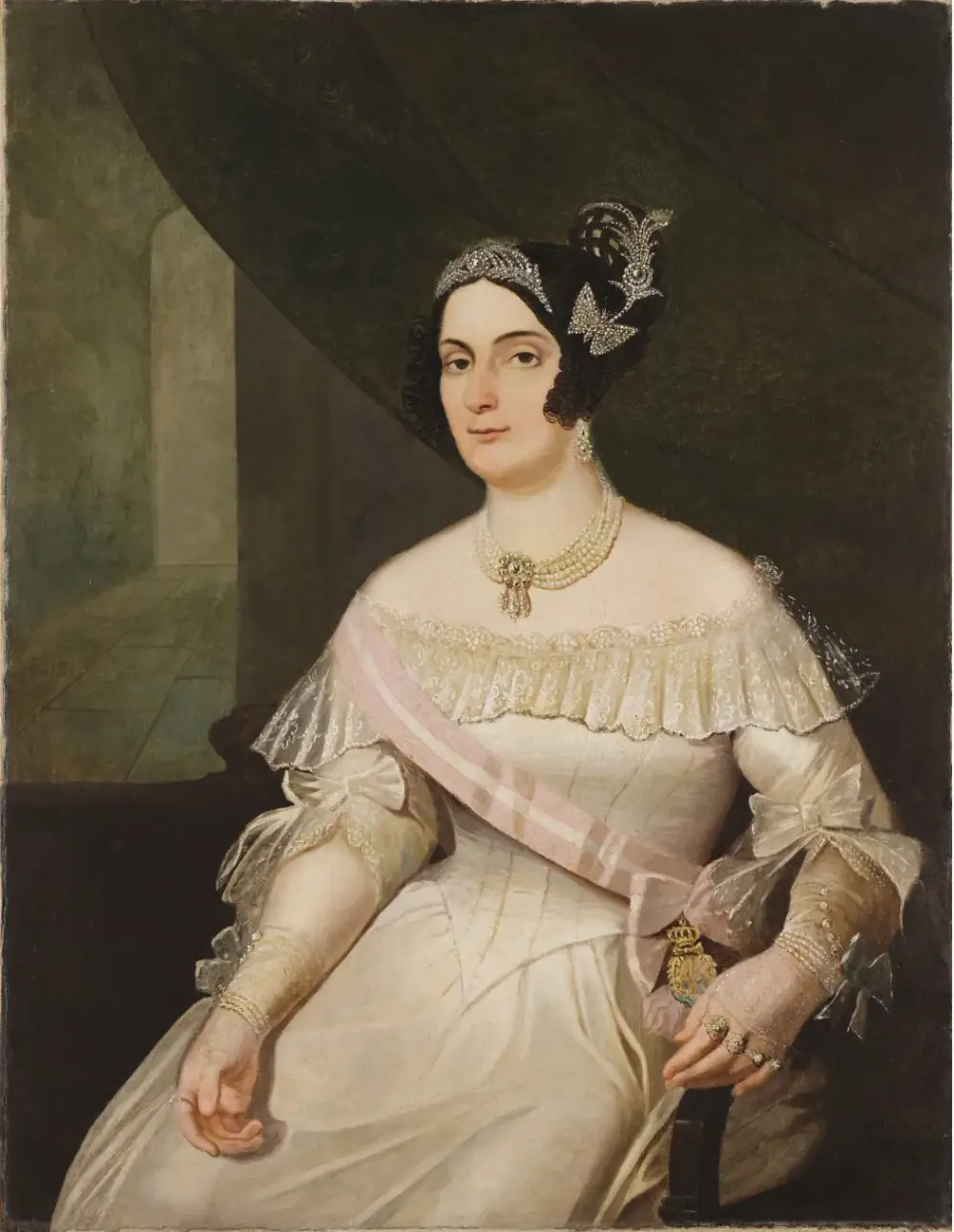
In 1826 Pedro also became, briefly, King of Portugal. João VI died on 10 March, and Pedro gave Portugal a constitutional charter and abdicated the Portuguese crown in favour of seven-year-old Maria da Glória, who was to marry her uncle Miguel.
The last weeks
In October 1826 Domitila's father fell ill, and Pedro spent almost a month at his bedside, away from home, which led to a fierce quarrel with Leopoldina. Around 8 November, pregnant again, she had a bout of what she called bilious fever.
Before Pedro left for the south there was a beija-mão, the royal hand-kissing ceremony. Leopoldina refused to attend, saying she was unwell. Pedro, who thought she was avoiding Domitila, was angry, and they argued. He sailed on 22 or 23 November, depending on the account, and she took over the regency again.
c. 8 November
Bilious fever
She tells her father of it in a letter of 20 November.
19 November
New symptoms
Pain in the lower back near the hip, a swollen leg and erysipelas.
22 or 23 November
Pedro sails south
Leopoldina becomes regent.
29 November
Chairs the ministers
Visibly weakened, according to the ministers' letters.
2 December
Miscarriage
In the early hours, at about twelve weeks; high fever and convulsions follow.
8 December
Last letter
Dictated at 4 am to the Marquesa de Aguiar for Marie Louise.
9 December
Bleeding returns
Haemorrhage controlled three days earlier starts again.
11 December
Death
At about 10.15 am at São Cristóvão.
15 January 1827
Pedro returns
He had heard the news at São José do Norte, in Rio Grande do Sul.
Her physician was Vicente Navarro de Andrade. Bulletins went to Pedro from the ministers, the Marqueses of Inhambupe, Baependi, Caravelas and Paranaguá, and the bulletin of 2 December noted that the foetus seemed to have died only very recently. She was treated in her own room, about forty years before doctors began to use antisepsis.
The rumours, and what the bones showed
While she lay ill, a story spread that Pedro had kicked his pregnant wife in the belly and caused the miscarriage. Another, a palace legend that Ambiel found in no published work, had him push her down the stairs so that she broke her thigh. People in Rio blamed the emperor and his mistress for her death, and word of his treatment of her reached Europe, where he struggled to find a second wife.
Not every historian believed it. Pedro Calmon, in his 1943 life of Pedro I, called the kick a mere rumour and put her death down to the miscarriage. Others repeated it, among them Isabel Lustosa's 2006 biography of Pedro I. The dates count against it: Pedro had left Rio more than a week before the miscarriage, and the bulletins describe it as spontaneous.
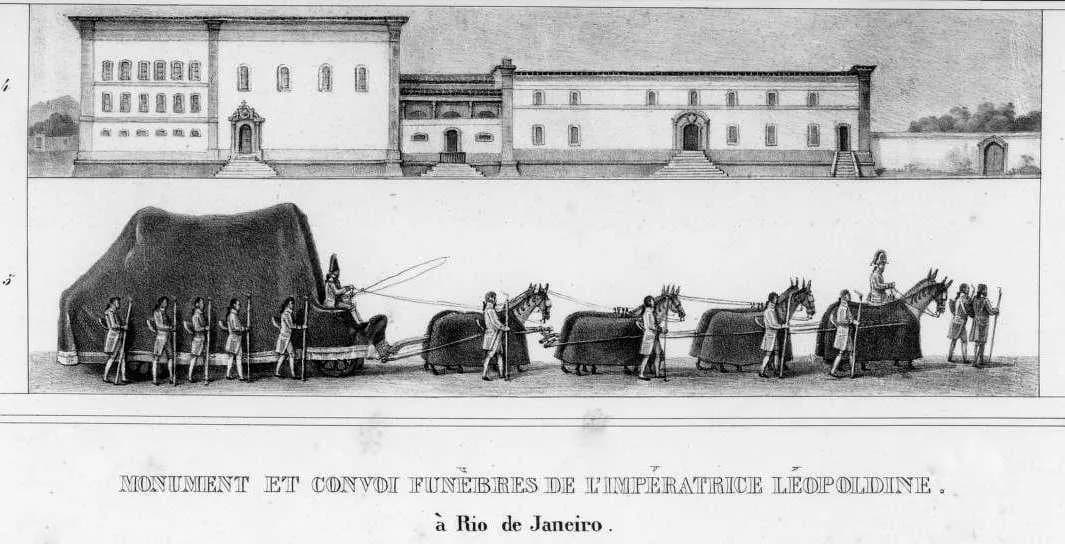
Leopoldina was buried in the Convent of Nossa Senhora da Ajuda in Rio. In 1911, when the convent was demolished, her remains went to the Franciscan convent of Santo Antônio, and in 1954 to the imperial crypt under the Independence Monument in São Paulo, later joined by Pedro and his second wife, Amélia.
In 2012, with the consent of the imperial family's descendants, the archaeologist Valdirene do Carmo Ambiel and doctors at the University of São Paulo studied all three. Leopoldina's skeleton went through a CT scanner. The report lists dislocated joints and a rib cage deformed after death, but no fractures in the skull, spine, pelvis, thigh bones or any other bone examined.
“There may have been a fall, but not one serious enough to cause death.”
- Died
- 11 December 1826, about 10.15 am, palace of São Cristóvão, Rio de Janeiro
- Age
- 29 (born Vienna, 22 January 1797)
- Immediate cause
- Probably puerperal sepsis after a spontaneous miscarriage on 2 December, as Ambiel's thesis concludes
- Other theory
- Intestinal infection by Salmonella, proposed by the physician Odorino Breda Filho in 1973
- Fractures found in 2012
- None
- Resting place
- Imperial crypt, Independence Monument, Ipiranga, São Paulo (since 1954)
Ambiel's doctoral thesis of 2023, supervised by the pathologist Carlos Augusto Pasqualucci, reads the bulletins alongside the scans. Bones cannot show an infection, so the diagnosis rests on the bulletins: a miscarriage at about twelve weeks, then bleeding, fever and convulsions, in a sickroom without antiseptic practice. Pasqualucci's conclusion is puerperal sepsis, the infection that killed many women after childbirth or miscarriage at the time, in line with part of the older literature.
Why it still matters
Leopoldina's death left seven-year-old Maria da Glória without a mother just as she became Portugal's queen in name. In 1828 her uncle Miguel was acclaimed king in her place. Her father gave up the Brazilian throne to his five-year-old son in 1831 and sailed to Europe to fight for her, and the civil war of 1832 to 1834 put Maria II on the throne. She reigned until her death in 1853.
Her son reigned in Brazil as Pedro II until the monarchy fell in 1889. Through Maria II and Pedro II, both Bragança crowns of the nineteenth century passed to Leopoldina's descendants.
Her letters, 315 of them in the 2006 edition, were gathered from archives in Brazil, Austria and Portugal. They record life at the court in Rio, the crisis of 1821 and 1822 as seen by a Habsburg, and a marriage that went wrong. In Vienna, the specimens from her wedding expedition are still used by researchers.
FAQs
When and how did Empress Leopoldina die?
She died at the palace of São Cristóvão in Rio de Janeiro at about 10.15 am on 11 December 1826, aged 29. She had miscarried at about twelve weeks on 2 December and then suffered fever, bleeding and convulsions. A 2023 University of São Paulo thesis concludes she died of puerperal sepsis.
Did Pedro I kill Leopoldina?
No evidence supports it. Rumours that he kicked her or pushed her down the stairs spread at the time, but he had left Rio more than a week before her miscarriage, her doctors described it as spontaneous, and CT scans of her skeleton in 2012 found no fractures.
What was Leopoldina's role in Brazil's independence?
As acting head of government while Pedro was in São Paulo, she chaired the council session of 2 September 1822, which sent couriers to him with letters from her and from José Bonifácio. He declared independence on 7 September. She did not sign a declaration of independence; the minutes record none.
Who were Leopoldina's children?
Six children were born alive: Maria da Glória (Queen Maria II of Portugal), João Carlos, Januária, Paula Mariana, Francisca and Pedro, who became Emperor Pedro II of Brazil. João Carlos died as a baby and Paula Mariana at nine.
What was the Austrian expedition to Brazil?
Emperor Francis I sent 14 researchers and painters to Brazil to mark Leopoldina's marriage in 1817. The zoologist Johann Natterer stayed until 1835, and more than 150,000 objects were sent to Vienna, where they formed the basis of collections now in the Naturhistorisches Museum and the Weltmuseum.
On the timeline
Open the timelineNearby moments from invasions, brazil and the liberal wars (1807–1851).
By the Treaty of Rio de Janeiro, mediated by Britain, Portugal formally recognises the independence of Brazil, ending the Brazilian war of independence.
King João VI dies in Lisbon under suspicious circumstances (possible arsenic poisoning), triggering a succession crisis between his sons Pedro (Emperor of Brazil) and Miguel, which would lead to the Portuguese Civil War.
In Rio de Janeiro, Pedro IV — also Emperor Pedro I of Brazil — grants Portugal the Constitutional Charter, a more conservative liberal constitution with a hereditary Chamber of Peers. With interruptions, it would remain in force until the fall of the monarchy in 1910.
The death of Empress Leopoldina
Death in Rio de Janeiro of Leopoldina of Austria, wife of Pedro I and Empress of Brazil, aged 29. A Habsburg archduchess with a passion for natural science, she played an important part in Brazil's independence, chairing the council that sent urgent letters to Pedro days before he declared it in September 1822; she was the mother of Portugal's Queen Maria II and of Brazil's last emperor, Pedro II.
The 'Belfastada': the steamer 'Belfast' lands a party of 29 exiled liberals led by the Marquis of Palmela at Matosinhos, near Porto, to take charge of the city's revolt against the absolutist Miguel I. With Miguelist troops closing in, they soon abandon the rebellion and flee aboard the same ship — a fiasco that gives the episode its mocking name and begins years of Liberal exile.
The Cortes of the Three Estates, summoned by Miguel of Braganza, close with a formal act ('assento') declaring him the rightful King Miguel I, in defiance of the Constitutional Charter granted by his brother Pedro IV and of the claim of Pedro's daughter Maria. The usurpation leads to the Liberal Wars, which pit absolutists against constitutionalists until 1834.
Félix de Avelar Brotero, Portugal's foremost botanist, dies in Belém, Lisbon. Having fled to Paris when he fell under suspicion of the Inquisition, he returned to teach botany at Coimbra, wrote the landmark 'Flora Lusitanica' (1804) and later directed the Ajuda Botanical Garden.
Coming up in history
All long reads 13 December 2007The Treaty of Lisbon: EU leaders sign at Jerónimos, 13 December 2007
 14 December 1918Murder at Rossio: the assassination of Sidónio Pais, 14 December 1918
 15 December 1885Fernando II, the King-Artist, dies in Lisbon: 15 December 1885
 16 December 1972Wiriyamu, 1972: the Mozambique massacre Portugal took 50 years to own up to
15 sources
Archives, scholarship and reporting this article was checked against.
- 1
Estudo de aspectos antropométricos e médicos dos primeiros imperadores do Brasil (Valdirene do Carmo Ambiel, doctoral thesis)Faculdade de Medicina, Universidade de São Paulo, 2023
- 2
Atas do Conselho de Estado, vol. 1: Conselho dos Procuradores Gerais das Províncias do Brasil, 1822–1823Senado Federal (Brazil)
- 3
Review of Bettina Kann and Patrícia Souza Lima (eds), D. Leopoldina: Cartas de uma imperatriz (André Nicacio Lima)Almanack Braziliense, no. 5, Universidade de São Paulo, May 2007
- 4
Symposium am NHM Wien: 200 Jahre österreichische Brasilien-Expedition von 1817 bis 1835Naturhistorisches Museum Wien, press release, 31 October 2017
- 5
Cartas de Dona Leopoldina (Moacyr Flores)Instituto Histórico e Geográfico do Rio Grande do Sul, 2008
- 6Exumação da família real brasileira desmente mitosDiário de Notícias, 19 February 2013
- 7
Sem medo de lutar (Ana Paula Orlandi)Revista Pesquisa FAPESP, no. 317, July 2022
- 8
Mission accomplished… (Gloria Kaiser)Die Welt der Habsburger (Schönbrunn Group)
- 9
Carta de Lei de 16 de Dezembro de 1815: eleva o Estado do Brasil à graduação e categoria de Reino (publicação original)Câmara dos Deputados (Brazil), Legislação Informatizada
- 10
- 11
Austria – Brazil: Prosperous natural science since the early 19th centuryNaturhistorisches Museum Wien, press release, 25 September 2020
- 12
BRASILIEN. 200 Jahre Beziehungsgeschichten (exhibition press kit)Naturhistorisches Museum Wien, June 2022, updated March 2023
- 13
- 14
- 15
Image credits
- The landing of Archduchess Leopoldina in Rio de Janeiro on 5 November 1817, where Pedro, João VI and Queen Carlota Joaquina received her: an engraving by Charles Simon Pradier after Jean-Baptiste Debret, about 1820. She had married Pedro by proxy in Vienna six months earlier. Jean-Baptiste Debret, Public domain, via Wikimedia Commons.
- Archduchess Leopoldina at about 18, painted by Joseph Kreutzinger in 1815, the year before her marriage was arranged. Joseph Kreutzinger, Public domain, via Wikimedia Commons.
- Leopoldina with her children, an imagined group portrait painted by Domenico Failutti in 1921, almost a century after her death. It hangs in the Museu Paulista in São Paulo. Domenico Failutti, Public domain, via Wikimedia Commons.
- Domitila de Castro Canto e Melo, Marquesa de Santos, in a portrait credited to Francisco Pedro do Amaral, about 1826. Francisco Pedro do Amaral, Public domain, via Wikimedia Commons.
- Monument et convoi funèbres de l'Impératrice Léopoldine: her funeral cortège in Rio, from a lithograph after Jean-Baptiste Debret published in 1839. Jean Baptiste Debret, Public domain, via Wikimedia Commons.