

Fernando II, the King-Artist, dies in Lisbon: 15 December 1885
A German prince married a girl queen, saved Portugal's great monasteries and built a palace in the clouds above Sintra. When he died after a fall at the opera, his will left that palace to a former singer, and Lisbon turned on them both.
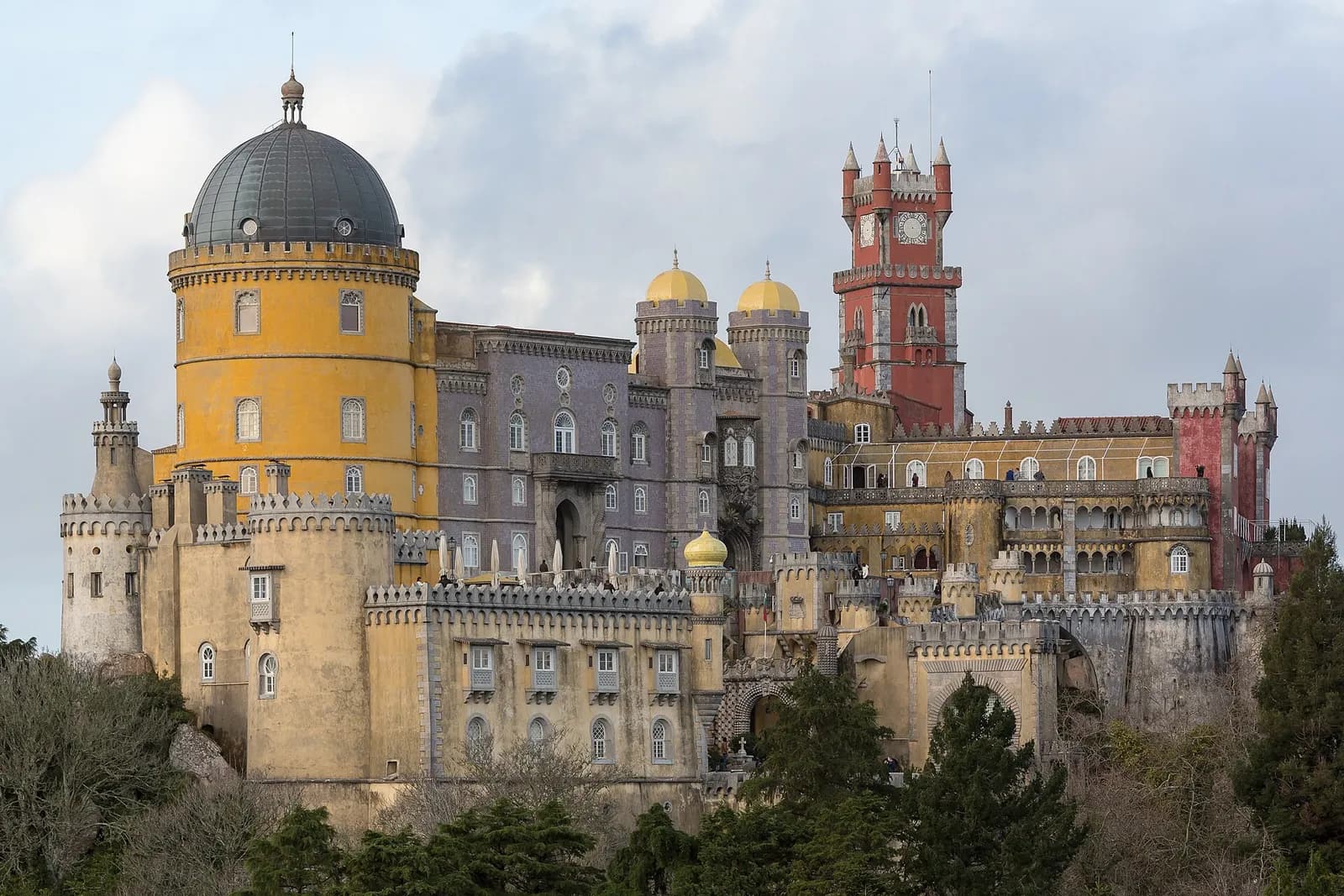
At a glance
- Fernando II, the German-born widower of Queen Maria II, died in Lisbon on 15 December 1885, aged 69, two days after a fall at the São Carlos opera house.
- Cancer of the face had left him seeing double. According to O Occidente, he took one step for two as he left the box during an interval, hit his face on a wall, and collapsed with a brain haemorrhage the next afternoon.
- Born a prince of Saxe-Coburg-Gotha in Vienna in 1816, he married Maria II in 1836, became king consort in 1837 and ruled as regent from 1853 to 1855.
- He bought the ruined Hieronymite monastery of Pena in 1838 with his own money and turned it into a Romantic palace with an arboretum around it, now the centre of the Cultural Landscape of Sintra, a UNESCO World Heritage site since 1995.
- His will, written in his own hand in January 1885, left all he could freely bequeath, including Pena, to his second wife, the former opera singer Elise Hensler, Countess of Edla. After a public outcry she sold Pena to the state in 1889 to 1890.
A step that was not there
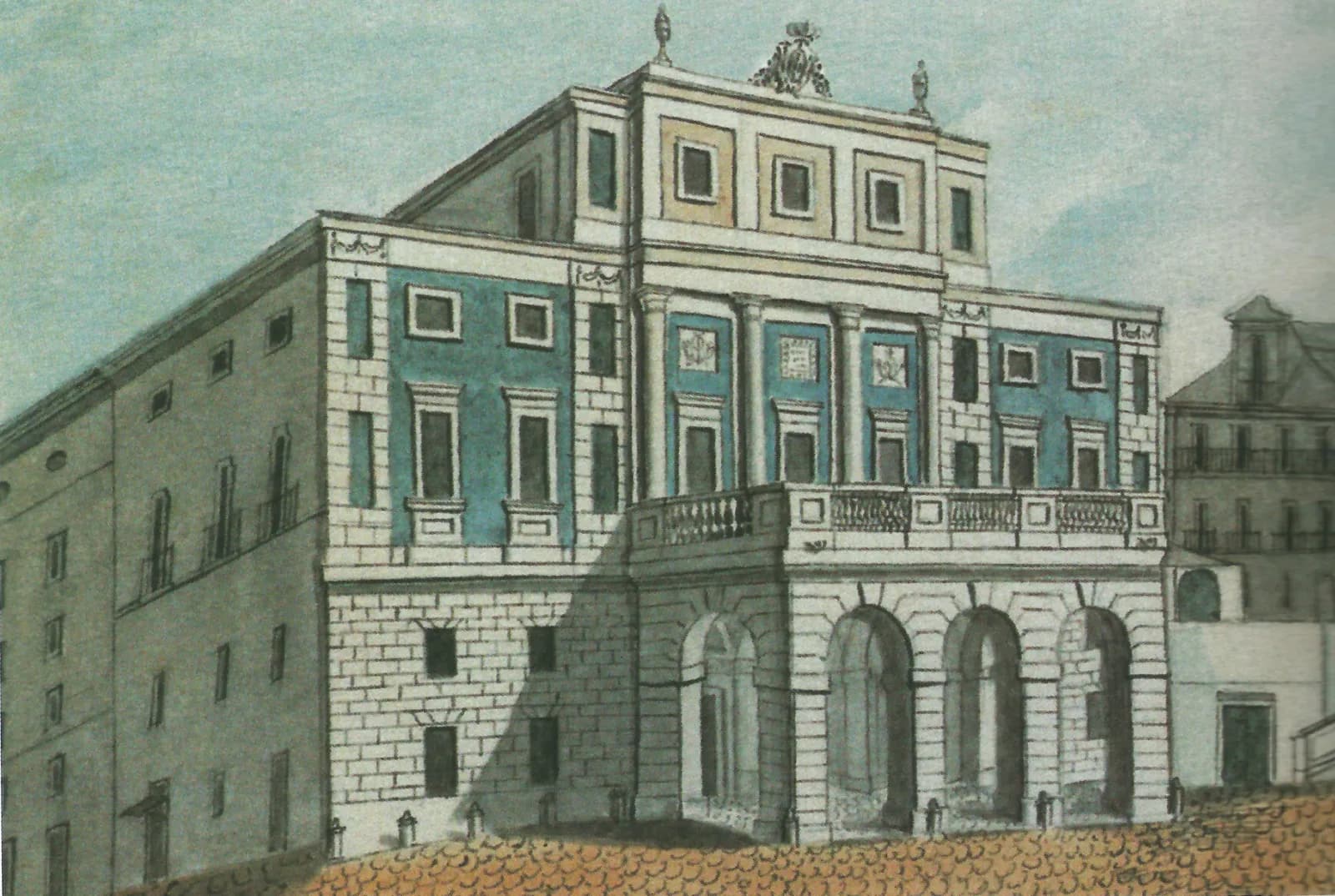
On Sunday 13 December 1885 the old king was at the opera. The Teatro de São Carlos, Lisbon's royal opera house, was giving Meyerbeer's Les Huguenots, and Fernando II was in a box. He was 69, and everyone in Lisbon knew he was gravely ill.
He had cancer of the face. The disease had damaged some of his muscles and, for some days, his sight: he saw everything twice. In one of the intervals he got up to leave the box and misjudged the way out.
“Imagining for that reason that there were two steps from the box, when there was only one, King D. Fernando fell, striking his face, ulcerated by the cancer, against a wall.”
At first it seemed nothing. He slept well, and Monday morning was one of the best he had had. Between four and five that afternoon, while taking a cup of broth, he suffered a haemorrhage of the meninges, the membranes around the brain. He lost consciousness and slipped into a coma.
That night, with the theatres full, a rumour that he was dead ran through the city. Few believed it until the bell of São Vicente de Fora, the church of the royal tombs, began to toll at an unusual hour. He was not yet dead. He died at a quarter past two on Tuesday 15 December, in his rooms at the Necessidades palace, with his family around him.
A Coburg prince for a girl queen
Ferdinand of Saxe-Coburg was born in Vienna in 1816. His father, Duke Ferdinand, was a brother of the reigning Duke of Saxe-Coburg, ruler of a tiny German duchy; his mother was a Hungarian princess whose father, Prince Koháry, owned a fabulous fortune. His first cousins included Victoria, the future British queen, and Albert, who would marry her, and as boys he and Albert spent months together at the Coburg castle of Rosenau. In his teens his uncle Leopold was elected the first King of the Belgians.
Portugal needed a husband for its queen. Maria II had first been proclaimed queen in 1826, aged seven, and the civil war that put her back on the throne ended only in 1834. Her first husband, Auguste de Beauharnais, died of diphtheria two months after the wedding. Her advisers wanted a Catholic, liberal prince from a family too minor to alarm Britain or France.
They married by proxy on 1 January 1836 and in person in Lisbon on 9 April. Fernando was 19. The marriage contract said he would become king only when a son was born, and he took the title in 1837, after the birth of the future Pedro V. He was the second and last king consort Portugal ever had.
His first year brought the September Revolution of 1836 and a failed palace coup against it, the Belenzada, in which he played an unhappy part. The next fifteen years were full of conspiracies, risings and a civil war. Fernando learned to stay in the background as the queen's adviser. Seven of their children survived infancy, and the couple took great care over their education.
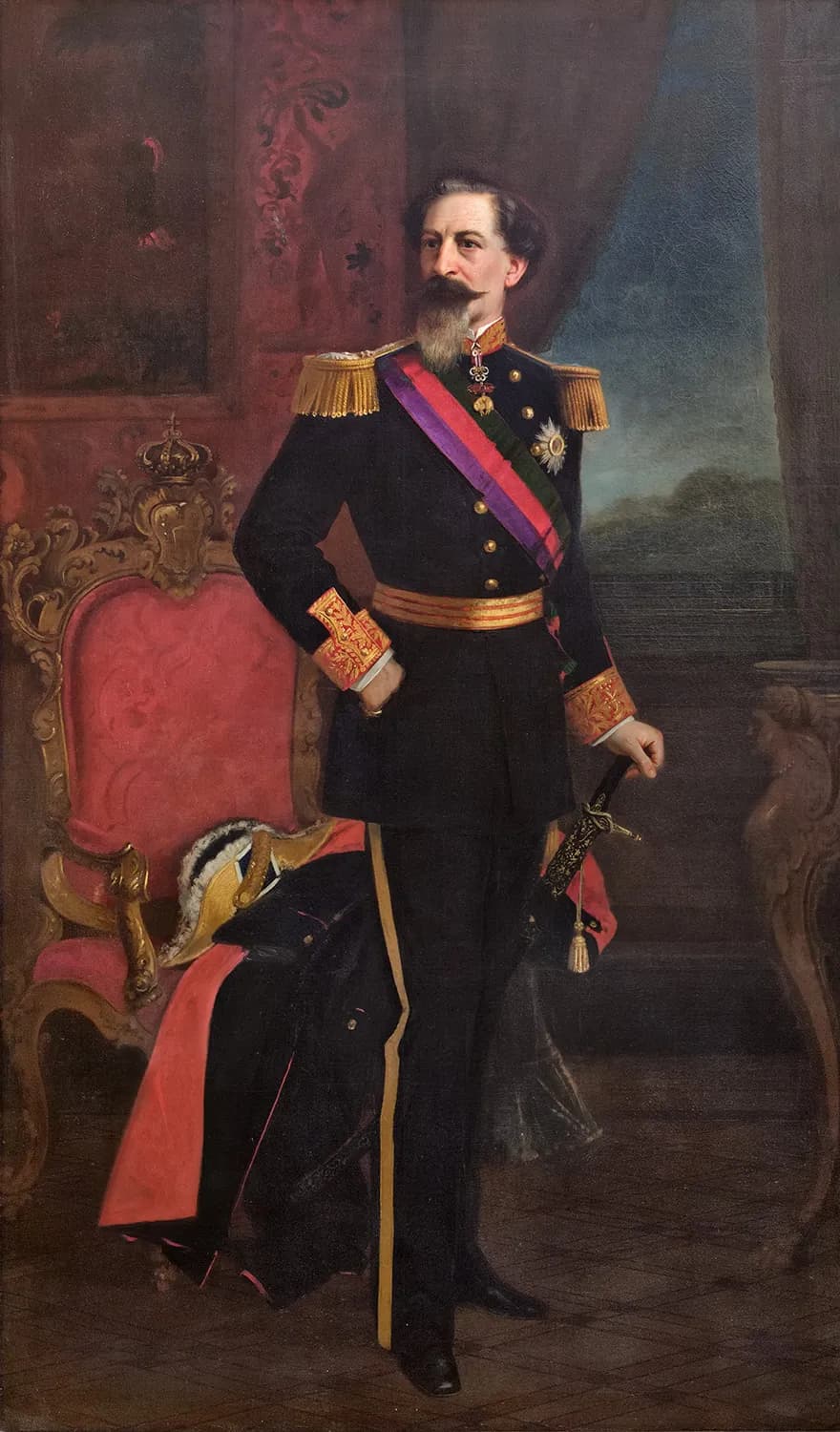
Maria II died in childbirth in November 1853, aged 34. Pedro was only 16, so his father ruled as regent until he came of age in 1855. “His regency was excellent,” his biographer Maria Antónia Lopes told Visão. “The country was at peace and, unless it was necessary, he did not intervene.”
After that he never held office again. In 1861, the year his biographer calls his dies irae, his day of wrath, the family fell apart: more of his children died, among them the young king, and his second son came to the throne as Luís I. Later Fernando turned down two crowns, those of Greece and Spain, and firmly rejected the idea of uniting Portugal with Spain.
The King-Artist
He had taken drawing lessons since the age of nine and carried a sketchbook everywhere. He etched, painted, decorated ceramics and sang, and he signed his work “Fernando Saxe-Coburgo fecit”. The Christmas tree was a Coburg custom he brought to Lisbon; he drew himself as Saint Nicholas handing out presents to his children beside it.
He collected all his life. He had started buying old prints as a boy, and by his death they filled 114 folders. In 1836, newly arrived in Lisbon, he bought a Limoges enamel that is now in the Metropolitan Museum in New York. His handwritten inventory of more than 200 pieces of goldsmiths' work, ivories and enamels ends almost every entry with “Propriedade minha”, my own property, to keep his things apart from the Crown's.
In a country with almost no art buyers, he bought paintings from the Romantic generation, among them Tomás da Anunciação, Cristino da Silva, Metrass and Resende, advised them and found them government money for their studies. Every Portuguese Romantic painter owed him much of his success, the art historian António Mourato writes. When Fernando died, Resende wrote in his diary: “The best of men has died!”
He also fought for buildings that were falling apart. Once the religious orders were abolished in 1834, Portugal's convents stood empty and neglected. After visiting Batalha in 1836, Fernando persuaded the government to pay for repairs to a monument for which, he admitted, he had “a kind of fanaticism”. Restoration began there in 1840 and went on for the rest of the century.
Mourato credits him with the rescue of the Jerónimos monastery in Belém and of the convents of Tomar and Mafra as well as Batalha. The public gave him his nickname: the Rei-Artista, the King-Artist.
A palace on a ruined monastery
On a peak in the hills above Sintra, between Lisbon and the Atlantic, King Manuel I had founded the monastery of Our Lady of Pena in 1503 and given it to the Hieronymite friars. The 1755 earthquake damaged it. The friars stayed until the orders were dissolved in 1834, and then the building was abandoned.
In 1838 Fernando bought the ruin at public auction with his own money, with all the land around it. Because he paid for it himself, Pena was his private property, unlike the Necessidades palace, which belonged to the Crown. That difference would matter in 1885.
He first meant to restore it as a summer house. Instead, under the direction of Baron Wilhelm Ludwig von Eschwege, a German mining engineer living in Portugal, the king and queen added a whole new palace between 1842 and 1857. It has lookout towers, a drawbridge, a tunnel, and Manueline and Moorish details. The monks' cloister became the family's private rooms; the New Palace held the state rooms. ICOMOS's 1995 evaluation names a different designer, the Portuguese architect Possidónio da Silva, but Parques de Sintra credits Eschwege.
Around it Fernando laid out a park of winding paths, lakes, lookouts and follies, and planted trees from every continent. Parques de Sintra, which manages it, gives the park 85 hectares. ICOMOS, assessing Sintra for UNESCO in 1995, gave 210 hectares, a figure that included the Tapada do Mocho and the Moorish Castle on the next hill, which Fernando also owned.
“The Pena Palace in Sintra, the prototype of European Romanticism and distinguished by its exuberant mixture of styles and its exotic and medieval echoes, is at least a quarter of a century earlier than anything comparable in Germany.”
The singer from Boston
Elise Hensler was born in Switzerland in 1836 and moved with her parents to Boston at the age of 12. She finished her training as a singer in Paris, had a daughter by an earlier relationship, and sang in Milan and Porto before reaching São Carlos in 1860. There she made a name as the page Oscar in Verdi's Un ballo in maschera, and she and the widowed king fell in love.
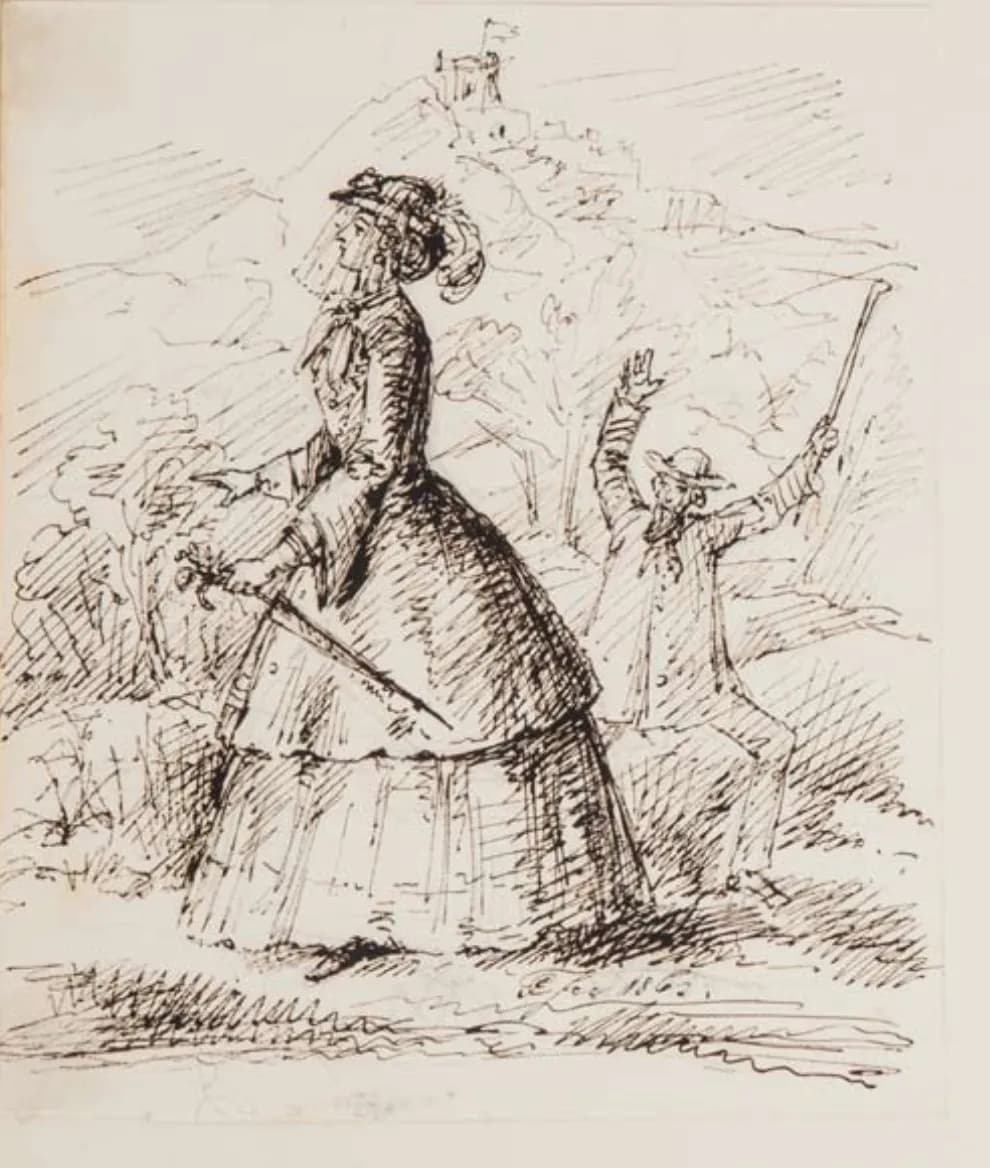
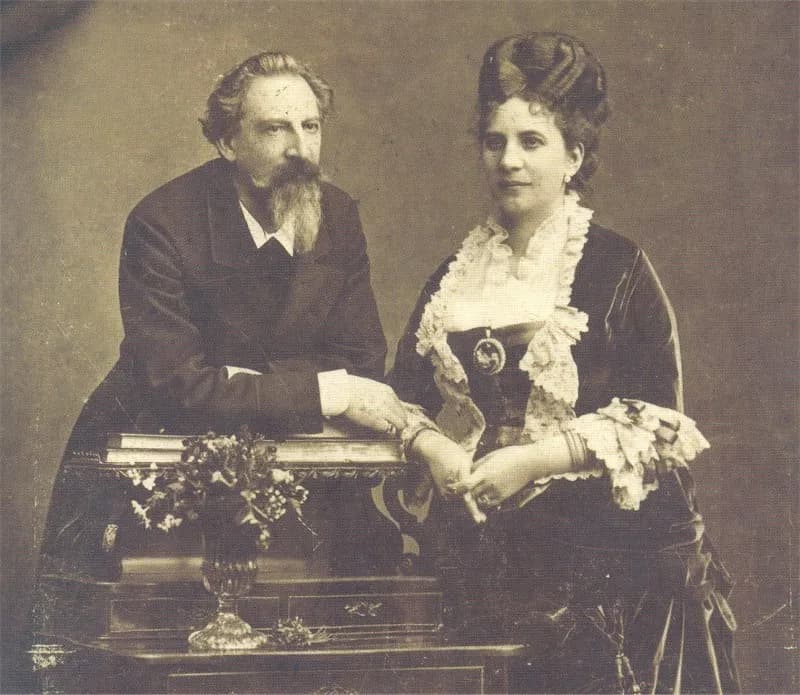
They married nine years later, on 10 June 1869, after Fernando's cousin Ernest II, Duke of Saxe-Coburg, made her Countess of Edla. The marriage was morganatic: she took none of her husband's rank and never became part of the Portuguese royal family.
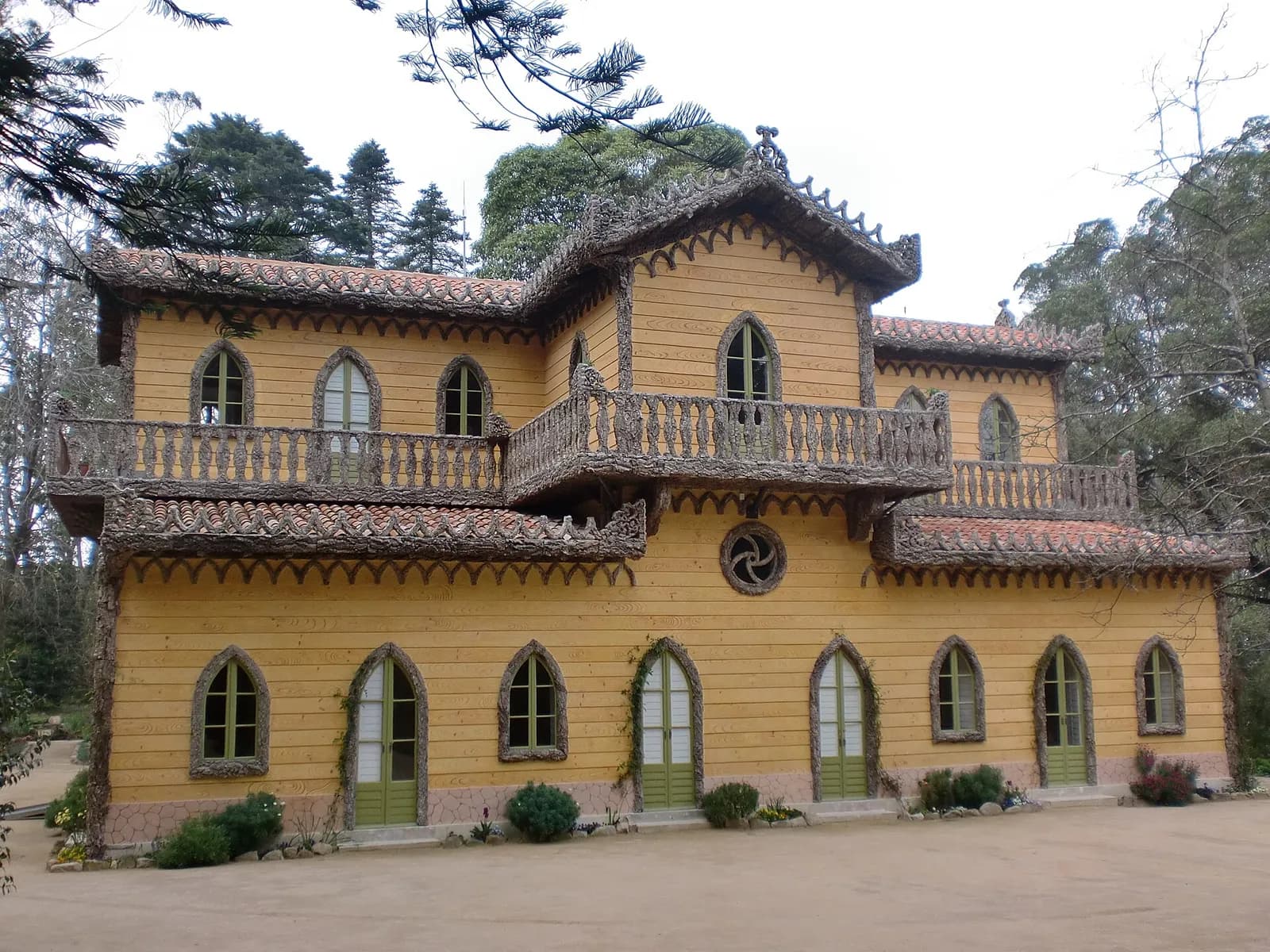
The marriage caused a scandal. “There were brutal campaigns against the couple, who were booed when they appeared in public,” Lopes told Visão. The pair retreated to Pena, where since 1864 they had been building an Alpine-style chalet that Elise designed, on the western edge of the park. Together they filled the park with plants from around the world.
The will that shocked Lisbon
Fernando had written his will by hand on 13 January 1885 and sealed it. He left his wife everything the law allowed him to dispose of freely, and named the Pena estate with all its dependencies as part of that bequest. He asked his son, the king, to protect her and to let her live at the Necessidades if she wished. The rest went in legacies to his household, his servants and the junior staff of his palaces in Lisbon and Sintra.
Pena was already treated as a national treasure, and people had assumed it would pass to the royal family. The king's grandson and godson, the future Carlos I, was an adult who needed to marry and had almost nothing of his own, while his father Luís had serious money troubles.
The Lisbon newspaper Novidades claimed the countess had guided the old man's hand as he wrote and called hers a “hooked claw”. The satirical weekly Pontos nos ii mocked the paper, joking that it all but wanted her caged at the zoo once she had been plucked of her Pena, a pun, since pena also means feather. The idea that Elise had manipulated a failing old man stuck. Lopes rejects it: “I know letters from the time of the will that show he was well. He really wanted to do it.”
One friend spoke up for him. The writer Ramalho Ortigão argued in O Occidente that, as the reigning king's father, Fernando had kept faithfully to his “political duty of being obscure”, and that in his will he had acted as an artist, on emotional impulse, not as a political king, a patriot king or a father of a family.
“And I conclude, sadly, that it is more merciful to throw a corpse to the dogs than to hand it over to the public to discuss.”
When his embalmed body was carried to lie in state, the countess walked in the procession with King Luís and the queen. On 18, 19 and 20 December the public filed past in great numbers. The funeral, on Monday 21 December, crossed Lisbon on a wet, blustery day, the hearse followed on foot by deputations of performers from every theatre in the city and by the management and some of the singers of São Carlos. That afternoon he was laid in the royal pantheon at São Vicente de Fora, beside the coffin of Maria II.
| Property | Under the will | What happened |
|---|---|---|
| Pena palace and park | To the Countess of Edla | Sold to the state in 1889 to 1890; a museum since 1911 |
| Moorish Castle, Sintra | To the Countess of Edla | Sold to the state with Pena |
| Chalet and garden of the Countess | To the Countess of Edla | She kept the use of them after the sale and gave it up in 1904 |
| Art collections | Shared among his heirs after an 18-volume probate inventory | Dispersed; his daughter Antónia took a large share to Germany |
The will also asked King Luís to let the countess live at the Necessidades palace if she wished. Sources differ on whether the sale of Pena is dated 1889 or 1890.
From private estate to World Heritage
The countess held out for four years against legal action and public pressure. Then she sold the palace, the park and the Moorish Castle to the state for more than 400 contos in government bonds (a conto was a million réis), keeping the use of her chalet and garden. Hugo Xavier, the curator of Pena, thinks the estate was a poisoned gift anyway: she could hardly have afforded to run it.
Carlos I and Queen Amélia spent summers at Pena from the 1890s. Amélia was there on 5 October 1910 when news came that the monarchy had fallen. The palace was classified a National Monument that year and opened as a museum in 1911. Elise died in 1929.
15 December 1885
Fernando II dies; Pena passes to the Countess of Edla under his will
1889 to 1890
The countess sells Pena and the Moorish Castle to the state
1904
She gives up the use of the chalet and garden
1910
Pena classified a National Monument
1911
The palace opens as a museum
1995
UNESCO lists the Cultural Landscape of Sintra as World Heritage
1999
Fire guts the Countess of Edla's chalet
2000 and 2007
Parques de Sintra takes over the park, then the palace
2011
The rebuilt chalet reopens; it wins a Europa Nostra award in 2013
Portugal's nomination of Sintra for the World Heritage List put Fernando at the centre of the case: the shaping of the Sintra landscape, it said, reached its height under this “artist-monarch”, who turned the Pena monastery into a fabulous palace, ringed it with a park of rare trees and replanted the forests. ICOMOS agreed, recommending the site in 1995 as a pioneering example of Romantic landscaping with an outstanding influence elsewhere in Europe.
Why it still matters
The palace Lisbon feared would be lost to the nation became one of its most visited places. In 2018 the Park and National Palace of Pena recorded 1,976,367 visits, second only to Lisbon's São Jorge Castle among Portugal's monuments. The Moorish Castle, which Fernando owned and left in the same will, came fifth.
Portugal's most visited palaces and monuments, 2018
visits
The two highlighted sites both belonged to Fernando II and were left to the Countess of Edla in 1885. The Clérigos Tower figure was an estimate made in December 2018.
Show the data
| Visits in 2018 | |
|---|---|
| São Jorge Castle | 2,021,242 |
| Pena Park and Palace | 1,976,367 |
| Clérigos Tower | 1,300,000 |
| Jerónimos Monastery | 1,079,459 |
| Moorish Castle | 592,578 |
Popularity brought its own trouble. In the 2019 high season the palace took up to 12,000 entries a day. By 2024 palace tickets were sold for a set date and time, with a maximum of 5,100 visitors a day spread over 17 slots, a cut of more than half.
His family reached across Europe. Of his eleven grandchildren, three became kings: Carlos I of Portugal, Frederick Augustus III of Saxony and Ferdinand I of Romania. The Portuguese royal line he founded with Maria II ended with the death of Manuel II in 1932. His many other descendants live mostly in Germany and Austria; as his biographer notes, none lives in Portugal.
FAQs
How did King Fernando II of Portugal die?
Cancer of the face had left him with double vision. At the São Carlos opera on 13 December 1885 he mistook one step for two as he left the box, fell and struck his face on a wall. He seemed well the next morning, but that afternoon he suffered a brain haemorrhage, fell into a coma and died on 15 December 1885.
Why is Fernando II called the King-Artist?
He drew, etched, painted, made ceramics and sang, collected art all his life, bought from and paid for young Portuguese painters, and pushed for the restoration of Batalha and other great monasteries. The public gave him the nickname Rei-Artista.
Who inherited the Pena Palace?
Fernando bought Pena with his own money, so it was his to leave. His will of January 1885 left it to his second wife, Elise Hensler, Countess of Edla. After legal action and a press campaign she sold Pena and the Moorish Castle to the state in 1889 to 1890 and kept the use of her chalet until 1904.
Who was the Countess of Edla?
Elise Hensler, a Swiss-born singer raised in Boston, who sang at São Carlos in 1860. She married the widowed Fernando II on 10 June 1869, after the Duke of Saxe-Coburg made her Countess of Edla. She designed the chalet in the Park of Pena and died in 1929.
Is Pena Palace a UNESCO World Heritage site?
Yes. Pena is the main monument of the Cultural Landscape of Sintra, inscribed on the World Heritage List in 1995. ICOMOS recommended it under criteria ii, iv and v and singled out Fernando II's palace and park.
On the timeline
Open the timelineNearby moments from regeneration and the last kings (1851–1910).
Birth of Aristides de Sousa Mendes at Cabanas de Viriato, Beira Alta. As Portuguese consul-general in Bordeaux in June 1940, he would defy Salazar's standing orders and issue thousands of visas to refugees — many of them Jews — fleeing the Nazi advance, an act of conscience that cost him his career and would later earn him the title 'Righteous Among the Nations'.
The Elevador da Glória opens in Lisbon, linking the Restauradores to the Bairro Alto. Designed by the engineer Raoul Mesnier du Ponsard and electrified in 1915, the funicular became one of the city's best-loved symbols; its derailment on 3 September 2025 killed 16 people.
Cosme Damião is born in Lumiar, Lisbon. A former Casa Pia pupil, he was the driving force among the young founders of Sport Lisboa in 1904, the club that became Benfica, and served it as captain, coach and journalist for two decades — yet always refused to become its president.
The death of Fernando II
Death in Lisbon of Fernando II, the 'King-Artist' and widower of Maria II, who turned a ruined monastery above Sintra into the fairy-tale Pena Palace. Seeing double from facial cancer, he had tripped on a step leaving his box at the São Carlos opera two days earlier; his will, leaving all he could, Pena included, to his second wife, the singer Elise Hensler, caused a scandal.
Crown Prince Carlos, the future King Carlos I, marries Amélie of Orléans at the Church of São Domingos in Lisbon; as Queen Amélia she would be the last queen consort of Portugal.
The upper deck of the Ponte Luís I over the Douro, designed by Théophile Seyrig and built by the Belgian Société de Willebroeck, is inaugurated in Porto on the king's birthday. The lower deck followed in 1888, and the two-tier iron arch became the enduring emblem of the city.
Birth in Lisbon of Luís Filipe, heir of King Carlos I. In 1907 he became the first heir to the throne to tour the African colonies; less than a year later, on 1 February 1908, he was shot alongside his father in the Lisbon Regicide and died moments after him.
Coming up in history
All long reads 17 December 1734Maria I, Portugal's first queen to reign in her own right, born 1734
 18 December 1914Naulila, 1914: Portugal's first battle with Germany, fought in Angola
 19 December 1961The end of Portuguese India: Goa, Daman and Diu, December 1961
 20 December 1999The Macau handover: Portugal's last flag in China comes down, 1999
21 sources
Archives, scholarship and reporting this article was checked against.
- 1
“Chronica Occidental” (Gervásio Lobato), O Occidente, no. 252, 21 December 1885Hemeroteca Digital, Câmara Municipal de Lisboa
- 2
D. Fernando II (Reis Consortes de Portugal), Maria Antónia Lopes: cover text, contents and introductionCírculo de Leitores, 2013; Estudo Geral, Universidade de Coimbra
- 3
Conheça o nosso rei alemão, avesso a beatos, mas que nos trouxe a árvore de Natal (J. Plácido Júnior, with Maria Antónia Lopes)Visão, 24 December 2021
- 4
History of the Park and National Palace of PenaParques de Sintra – Monte da Lua
- 5
- 6
Advisory Body Evaluation: Sintra (No. 723)ICOMOS for the UNESCO World Heritage Committee, September 1995
- 7
The Archival Sources of the Batalha Monastery (Portugal): Unique Collections for the Study of the Monument's Restoration Work in the 19th Century (Clara Moura Soares)Anales de Historia del Arte 32 (2022), Universidad Complutense de Madrid
- 8
- 9
- 10
- 11
Chalet da Condessa d'Edla: figuras que marcaram a sua históriaParques de Sintra – Monte da Lua, Sintra PH30
- 12
Arco-íris sobre o Sena: Francisco José Resende nas colecções do Museu da Faculdade de Belas-Artes da Universidade do Porto (António M. Vilarinho Mourato)Revista da Faculdade de Letras: Ciências e Técnicas do Património, Universidade do Porto, I série, vol. 2 (2003)
- 13
Parque e Palácio Nacional da Pena (visitor leaflet with chronology)Parques de Sintra – Monte da Lua
- 14
Aquele Saxe-Coburgo-Gotha a quem chamamos o Rei Artista (Mário Beja Santos), review of Maria Antónia Lopes's biographyArtciencia.com, no. 22-23 (2017-2018)
- 15Pintor e ilustrador. O lado artístico de D. Fernando IIDiário de Notícias, 1 November 2016
- 16Um mistério real com 70 anos: o que diz o inventário manuscrito de D. Fernando II? (Markus Almeida)Observador, 12 February 2022
- 17
O Real Theatro de S. Carlos de Lisboa (Francisco da Fonseca Benevides)Internet Archive (scan from the Getty Research Institute)
- 18
- 19Pena e Castelo de São Jorge: os monumentos recordistas onde os portugueses são raros (Pedro Sousa Tavares)Diário de Notícias, 23 April 2019
- 20
- 21
Image credits
- The Pena Palace above Sintra in 2012. The yellow and grey New Palace that Fernando II added in 1842 to 1857 wraps around the red-painted remains of the sixteenth-century monastery he bought in 1838. CEphoto, Uwe Aranas, CC BY-SA 3.0, via Wikimedia Commons.
- The Theatro Real de São Carlos in the first half of the nineteenth century. Fernando II had owned a proscenium box there since 1880, and it was here that he first saw Elise Hensler in 1860. Unknown author, Public domain, via Wikimedia Commons.
- Fernando II in military uniform, painted by Joseph-Fortuné Layraud in 1877. The portrait belongs to the Pena Palace. Joseph Layraud, Public domain, via Wikimedia Commons.
- Fernando II's own humorous drawing of his courtship of Elise Hensler, with a castle on a hill behind. It carries his initial and a date in the 1860s; the Commons file title gives 1862. Ferdinand II of Portugal, Public domain, via Wikimedia Commons.
- Fernando II and Elise Hensler, Countess of Edla, in a photograph dated 1882 on Commons, three years before his death. Unknown author, Public domain, via Wikimedia Commons.
- The Chalet of the Countess of Edla in the Park of Pena, photographed in 2012 after Parques de Sintra rebuilt it following the 1999 fire. Eduarda7, CC BY-SA 2.5, via Wikimedia Commons.