

The Estádio do Dragão opens, and a 16-year-old Messi comes off the bench
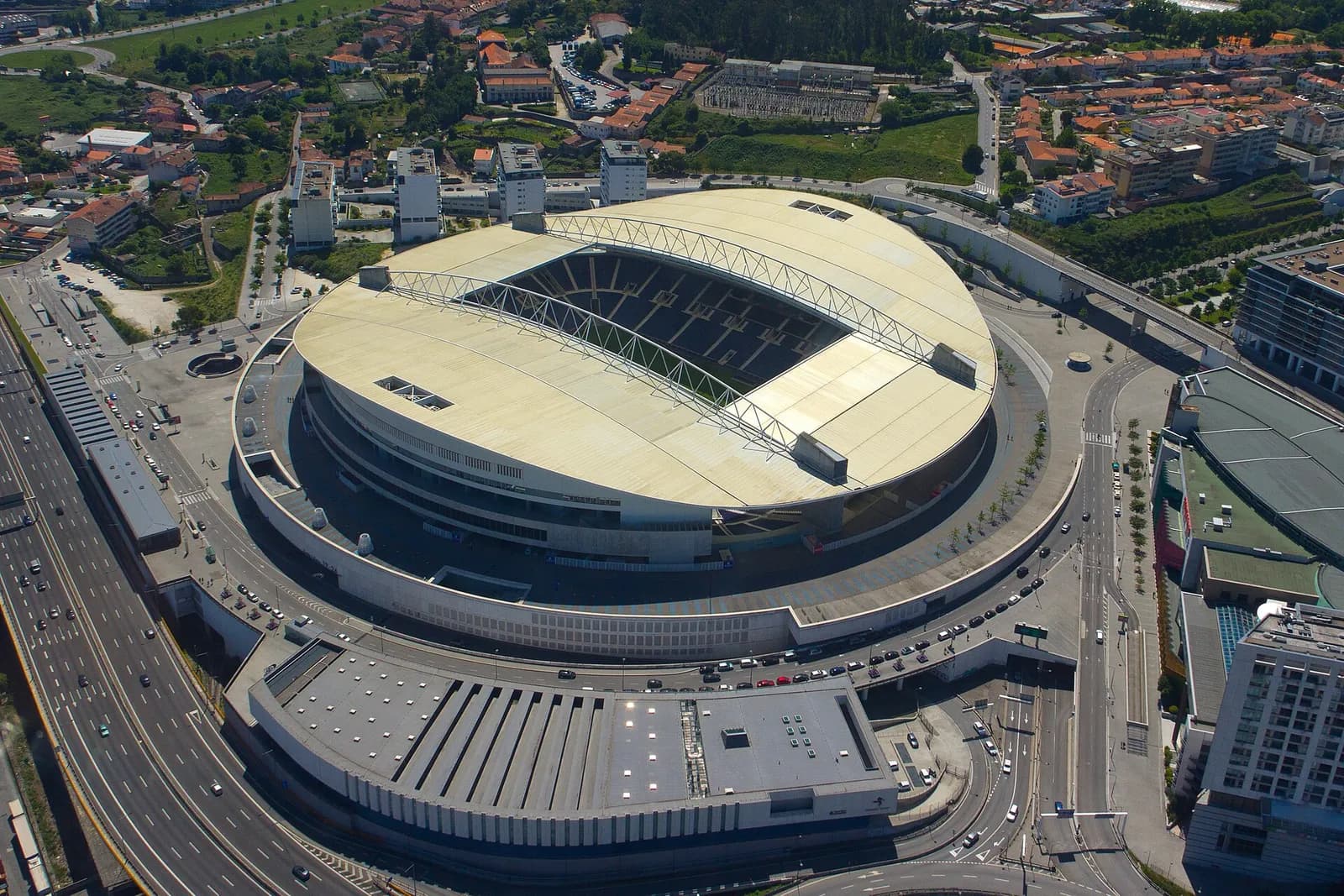
FC Porto christened their new stadium with a friendly against Barcelona, and a 16-year-old Lionel Messi played the last quarter of an hour. It was one of ten grounds Portugal built or rebuilt for Euro 2004, and some of the bills are still being paid.
At a glance
- On 16 November 2003 FC Porto opened the Estádio do Dragão, built to replace the Estádio das Antas and host Euro 2004, with a 2–0 friendly win over Barcelona in front of about 50,000 people.
- Lionel Messi, aged 16 years and 145 days, came on for Barcelona with about a quarter of an hour left, wearing number 14. It was his first game for the club's first team.
- Portugal built or rebuilt ten stadiums for Euro 2004, more than UEFA asked for. In May 2004 the Tribunal de Contas found the six municipal stadiums would cost more than twice the reference cost used for state aid.
- The tournament opened at the Dragão on 12 June 2004 with a 2–1 defeat for Portugal by Greece, and ended at Lisbon's Estádio da Luz on 4 July with Greece winning the final 1–0.
- Afterwards several municipal stadiums struggled. Leiria's failed to sell at auction in 2011 and is due to be paid off by 2028; the Algarve stadium's owners paid their last loan instalment in 2024.
A magician, a penalty and a teenager
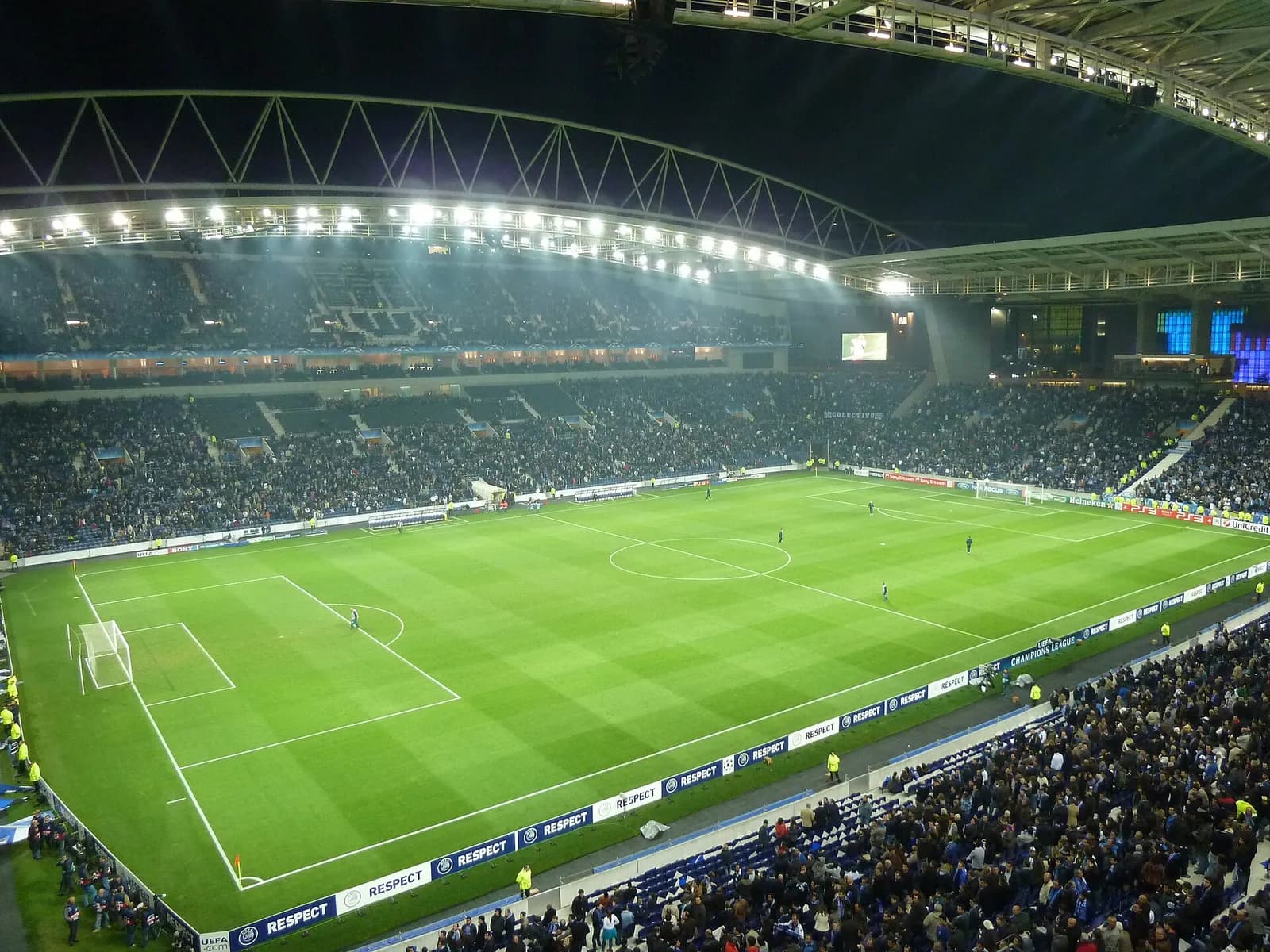
On the evening of Sunday 16 November 2003 the illusionist Luís de Matos came down by helicopter onto the grass of the Estádio do Dragão, in front of about 50,000 people, and FC Porto's new home was open. It was very cold and windy, the architect Manuel Salgado remembered.
UEFA's president, Lennart Johansson, was in the stands. FC Porto's president, Jorge Nuno Pinto da Costa, regretted aloud that the prime minister, José Manuel Durão Barroso, was not. Barcelona, the guests of honour, had come to play the inaugural friendly.
José Mourinho's Porto won 2–0. Derlei scored the stadium's first goal from a penalty after 55 minutes. The new turf was still poor, he said later: he slipped as he struck the ball and the goalkeeper got a hand to it, but it went in. Hugo Almeida added the second on 68 minutes. Fifteen years on, Derlei summed it up: “It was a penalty, and against Barcelona” (translated from Portuguese).
With about a quarter of an hour left, Frank Rijkaard, Barcelona's coach, sent on a 16-year-old from the club's youth teams in place of the defender Fernando Navarro. Rijkaard had brought several of his under-19 players to Portugal. The boy wore number 14, because it was the shirt to hand. His name was Lionel Messi.
He nearly scored: a few minutes after he came on, Porto's goalkeeper Nuno denied him a goal. Barcelona lost anyway. For Porto the night was about the new building. The European Championship it had been built for was seven months away.
Ten stadiums for one tournament
On the morning of 12 October 1999, in a hotel in the German town of Aachen, UEFA's president Lennart Johansson announced that Portugal would host the European Championship of 2004. The country promised ten stadiums, a number UEFA had not required.
Four of the ten belonged to clubs. Benfica's new Estádio da Luz and Sporting's Alvalade XXI went up in Lisbon, and in Porto the Dragão replaced FC Porto's Antas while Boavista rebuilt the Bessa. The other six belonged to town halls: new or rebuilt municipal stadiums in Braga, Guimarães, Aveiro, Coimbra and Leiria, and the Estádio Algarve, owned jointly by Faro and Loulé.
Counts of how many were new differ. Observador says six of the ten were built for the event; When Saturday Comes wrote in 2012 that nine were built from scratch.
Some people warned early. In May 2003 the English football magazine When Saturday Comes predicted that only the three big-club stadiums would be regularly full after the tournament. Aveiro, Coimbra and Leiria would each host two group games, it noted, and their clubs would then draw perhaps 5,000 fans. The Algarve ground, it added, would probably have no top-flight team at all.
“white elephants the country could really do without in these belt-tightening times”
From the Antas to the Dragão
Salgado's stadium was built to replace FC Porto's old ground, the Estádio das Antas, and the building was not smooth. Disputes between Pinto da Costa and the mayor of Porto, Rui Rio, stopped work several times and delayed it.
Names were floated: Estádio das Antas, Novo Estádio das Antas, even Estádio Pinto da Costa. The president turned down his own name and chose the dragon from the club's crest. As late as May 2003 When Saturday Comes was still calling the new ground the Antas, and expected it to stage the opening match and a semi-final.
A Bola puts the Dragão's total cost at €125 million; we found no audited figure. Because it was a private project, the Tribunal de Contas's May 2004 audit did not examine its costs. It did record what the state gave: €18.1 million towards the stadium and its car parks, and €20.4 million towards the access roads. In October 2014 FC Porto's football company took over half of the stadium company, EuroAntas, and with it millions in debt.
The ground filled up from the start. UEFA counted 52,004 spectators at the opening match and in 2011 still called it the stadium's record. A Bola's figures for the twentieth anniversary give the record instead as 50,818, at a goalless Champions League semi-final against Deportivo La Coruña in 2004, the season Mourinho's Porto won the competition. In July 2006 the Rolling Stones played there to 47,000 people.
Messi's quarter of an hour
- Date
- Sunday 16 November 2003
- Match
- FC Porto 2, Barcelona 0 (friendly, inauguration of the Estádio do Dragão)
- Goals
- Derlei (penalty, 55 minutes), Hugo Almeida (68)
- Coaches
- José Mourinho (Porto), Frank Rijkaard (Barcelona)
- Messi
- Aged 16 years and 145 days; shirt number 14; replaced Fernando Navarro
- Crowd
- About 50,000 (52,004 by UEFA's count)
Accounts differ by a few minutes on when Messi came on. FC Barcelona's English-language history gives the 71st minute; Diário de Notícias and A Bola give the 74th. Both goals had already been scored, so the score did not change while he was on the pitch.
His age is not in dispute: 16 years, four months and 23 days, or 16 years and 145 days, as Diário de Notícias put it. Barcelona count the Porto match as his debut for the first team, though it was a friendly and so not an official fixture.
“I was very nervous. But I really fancied going out to play for a bit.”
The man he replaced had his own career. Fernando Navarro went on to win the Spanish league with Barcelona in 2004–05, the European Championship with Spain in 2008, and two Europa Leagues with Sevilla, for whom he faced Messi several times.
What the stadiums cost
In May 2004, a month before the tournament, the Tribunal de Contas published a consolidated report on the six municipal stadiums. It found that the reference costs used to calculate state aid had been far too low. Put together, the six stadiums were expected to cost €291 million against a reference total of €140 million, an increase of 108 per cent.
Six municipal Euro 2004 stadiums: reference cost and estimated final cost
€ million
- Reference cost used for state aid
- Estimated final cost, May 2004
Stadium only, excluding car parks and access roads, in euros at the time, rounded to €0.1 million. Figures from the Tribunal de Contas's consolidated audit report of May 2004 (comparative analysis, section 4.1). The estimated costs include design, land, supervision, extra works, design errors and price revisions.
Show the data
| Reference cost used for state aid | Estimated final cost, May 2004 | |
|---|---|---|
| Braga | 29.9 | 83.9 |
| Guimarães | 16 | 25.9 |
| Aveiro | 29.9 | 49 |
| Coimbra | 15 | 38.5 |
| Leiria | 19.5 | 49.6 |
| Algarve | 29.9 | 44.1 |
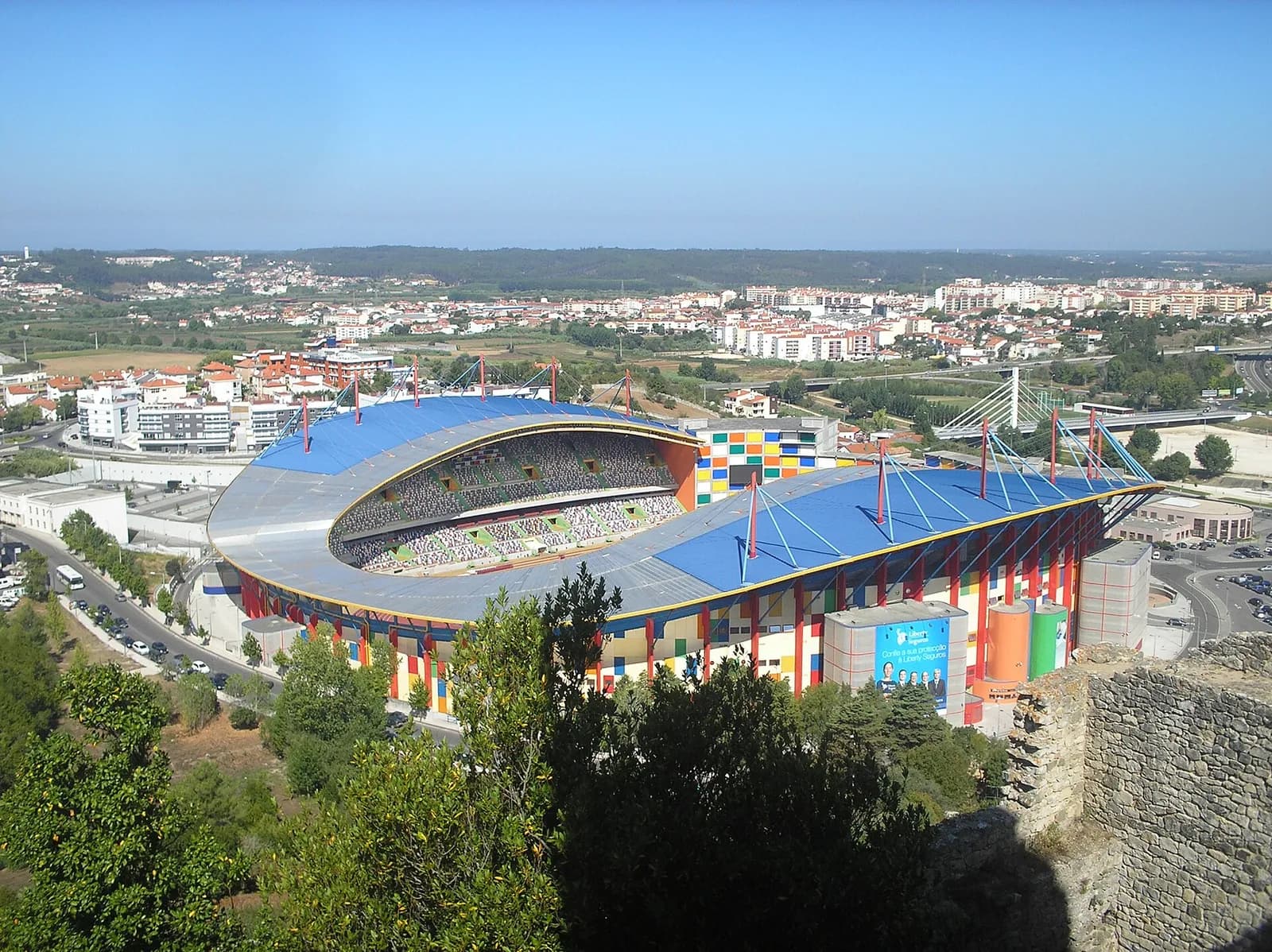
Braga's stadium stood out: about €84 million, 180 per cent over its reference cost and some €2,800 a seat. Guimarães, at €867 a seat, was the cheapest. The auditors also noted that Leiria's ground, a rebuild of an existing stadium, had cost more overall and per seat than the stadiums built from scratch in the Algarve and Aveiro.
| Stadium | Seats | Stadium cost (€m) | Cost per seat (€) | Whole project (€m) | Bank loans (€m) |
|---|---|---|---|---|---|
| Municipal de Braga | 30,359 | 83.9 | 2,765 | 90.1 | 80.2 |
| D. Afonso Henriques, Guimarães | 29,865 | 25.9 | 867 | 38.1 | 27.5 |
| Municipal de Aveiro | 31,498 | 49.0 | 1,556 | 64.6 | 50.0 |
| Cidade de Coimbra | 30,707 | 38.5 | 1,253 | 56.0 | 35.0 |
| Dr. Magalhães Pessoa, Leiria | 29,398 | 49.6 | 1,686 | 73.5 | 54.5 |
| Algarve (Faro and Loulé) | 30,305 | 44.1 | 1,455 | 66.5 | 43.9 |
| Total | 182,132 | 291.0 | 1,597 (average) | 388.9 | 291.1 |
Estimates made in spring 2004. “Whole project” adds car parks, access roads and other works. Later Tribunal de Contas figures quoted by Observador are higher for Aveiro (€68.1 million for the whole project, €51.1 million for the stadium) and Leiria (€83.2 million and €53.9 million). Lusa reported in 2024 a final construction cost of just over €38 million for the Algarve stadium. The seat total is our sum of the audit's figures.
Because the state's 25 per cent was calculated on the low reference costs, it covered on average only 13 per cent of what the six stadiums actually cost. The councils borrowed most of the rest. Bank loans paid for almost 75 per cent of the six projects, public grants for about 20 per cent and the councils' own money for about 5 per cent. In Coimbra, Euro 2004 loans made up 81 per cent of the city's total debt; in Braga, 78 per cent.
The court added up everything the public purse would carry, from central government grants to the councils' investments and the present value of 20 years of loan charges, and arrived at more than €600 million at 2004 prices. That total left out the cost of maintaining the grounds, which it could not yet estimate.
Other totals depend on what is counted. In 2005 the head of Portugal 2004, the state company that oversaw the works, put the state's final contribution to the ten stadiums at €103.5 million, RTP reported, within a total investment in Euro 2004 infrastructure of €964.4 million, of which €496.2 million was borrowed from banks. The court's final report put the access-road contracts at about €148 million, 13.3 per cent more than first contracted.
Ten years after the tournament, the sports paper Record put spending on the stadiums at about €650 million and the whole investment at more than €1 billion.
A summer of upsets
Euro 2004 began at the Dragão on 12 June 2004, and it began badly for the hosts. Greece, coached by the German Otto Rehhagel, scored through Giorgos Karagounis after seven minutes and through an Angelos Basinas penalty early in the second half. Cristiano Ronaldo headed in a Luís Figo corner in stoppage time. About 50,000 people watched Greece win 2–1.
“This is the biggest win of any Greek team ever,” Rehhagel said that night. There was more to come. Portugal, coached by Luiz Felipe Scolari, recovered and reached the final; so did Greece.
The final was played at the Estádio da Luz in Lisbon on 4 July 2004, before 62,865 people, by UEFA's count. In the 57th minute Angelos Charisteas headed in a corner, and Greece won 1–0. Twenty-two years later A Bola still called it one of the greatest disappointments of the Portuguese people.
12 October 1999
UEFA awards Euro 2004 to Portugal
Announced by Lennart Johansson in Aachen. Portugal offers ten stadiums.
16 November 2003
The Estádio do Dragão opens
FC Porto 2, Barcelona 0; Lionel Messi's first-team debut.
May 2004
Audit report
The Tribunal de Contas finds the six municipal stadiums 108 per cent over their reference cost.
12 June 2004
Opening match at the Dragão
Portugal 1, Greece 2.
4 July 2004
Final at the Estádio da Luz
Greece 1, Portugal 0.
2011
Leiria's stadium fails to sell
A public auction draws no bids.
2021
Leiria finds a role
The stadium starts hosting the final stages of the League Cup.
2024
Algarve stadium paid off
Faro and Loulé pay the last loan instalment.
2028
Leiria's debt due to be cleared
About €10 million was still owed in 2024.
The morning after: Aveiro, Leiria and the Algarve
Once the visitors had gone home, the 2003 prediction looked accurate. By 2012 When Saturday Comes reported that Guimarães and Braga could fill only about half their 30,000 seats, that Braga's 44 per cent occupancy the previous season was the best of any municipal ground, and that Leiria's was under ten per cent. Boavista, crippled by the cost of the rebuilt Bessa, had dropped to the third tier.
Aveiro's stadium hosted two Euro 2004 matches. By 2012 it cost the council about €650,000 a year to maintain and €2.5 million a year in bank repayments, and the council voted to hand its management to the local club, Beira-Mar, in exchange for permission to build training pitches beside it. At a conference in 2013 the Coimbra economist Francisco Pinheiro argued that it would be cheaper to knock it down than to keep paying for its upkeep.
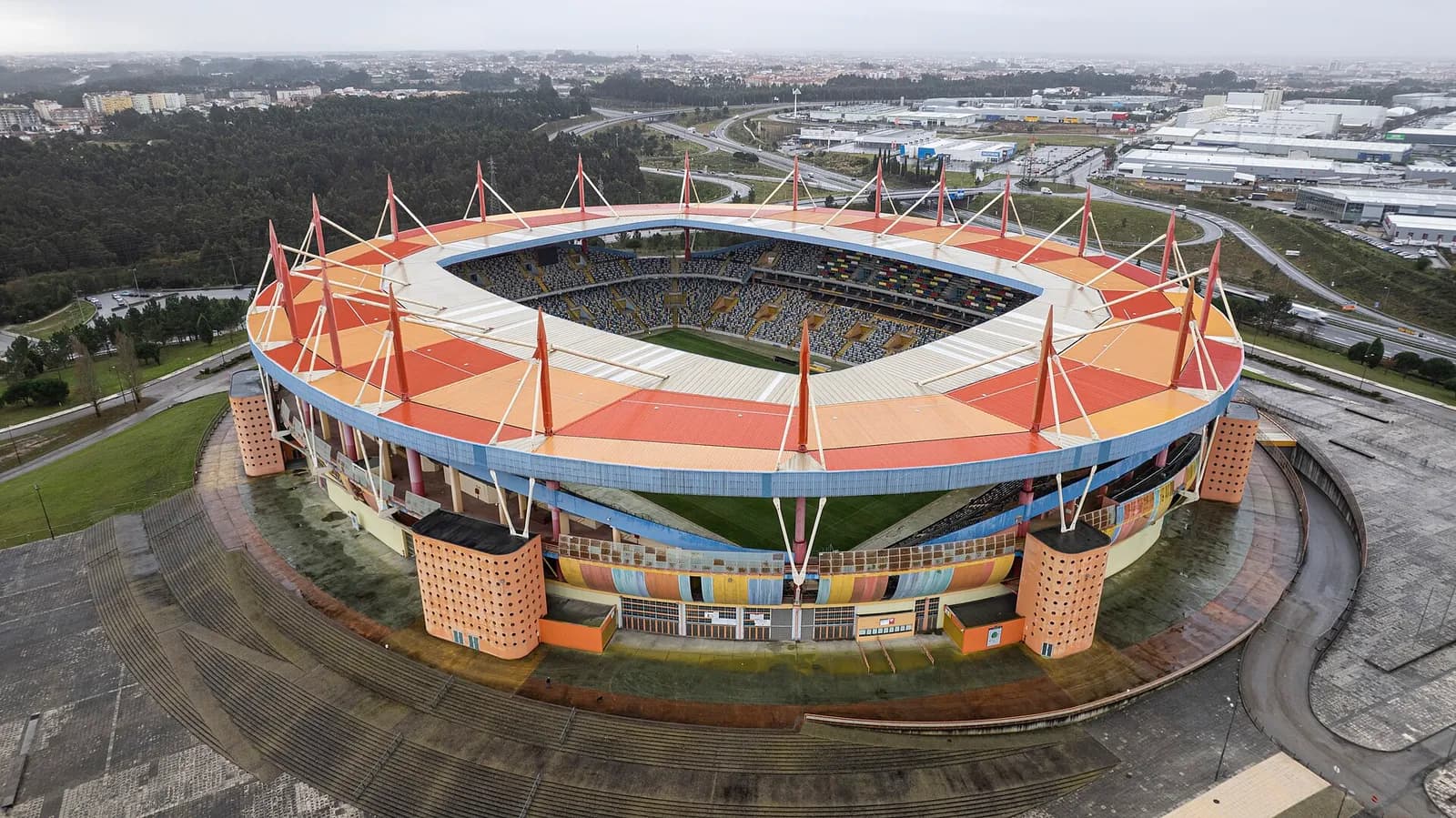
The stadium was not demolished. Observador found in 2023 that Aveiro's spending on it, counting running costs, investment and loan repayments, had stayed under €3 million a year between 2020 and 2022, peaking at €1.84 million in 2020.
Leiria fared worst. União de Leiria, paying €17,500 a match to use the stadium, left in 2011 and moved its home games to Marinha Grande. In October that year the council tried to sell the stadium at auction with a reserve price of €63 million, and nobody bid. In 2014 the councillor Gonçalo Lopes called it “an expensive and badly planned stadium” (translated from Portuguese).
Ten years on, Lopes was mayor. In 2024 he told Lusa that the city had been left “traumatised by the volume of investment” (translated from Portuguese), which had held back other projects for 20 to 30 years. About €10 million was still owed, to be paid by 2028, with debt payments of around €800,000 a year and maintenance of about €300,000. Demolition and sale were off the table. Since 2021 the stadium has hosted the final stages of the League Cup.
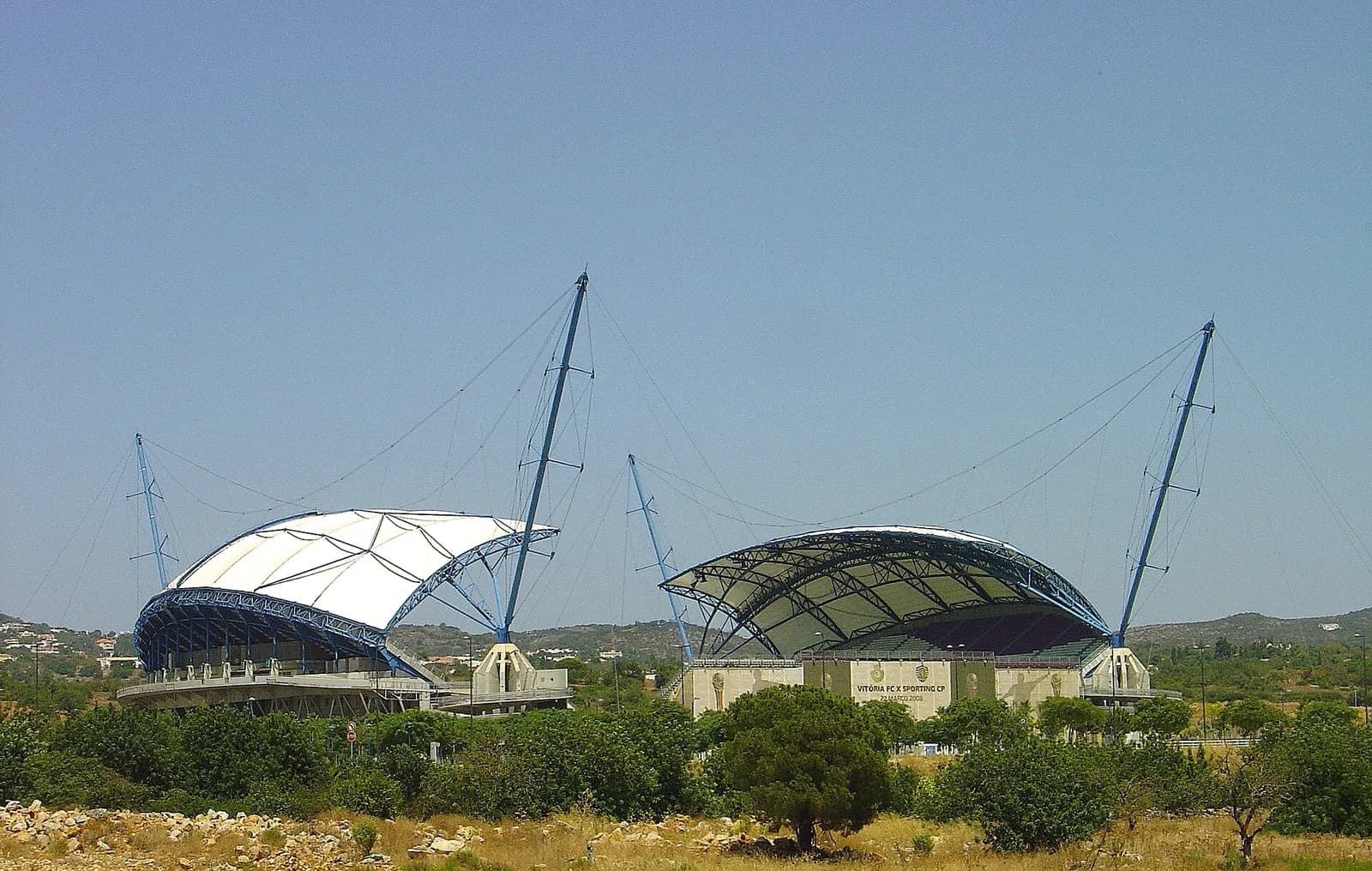
The Estádio Algarve, on the boundary between Faro and Loulé, hosted three Euro 2004 matches. Pinheiro noted that it had no local club to use it, and put its cost to the two councils at €2.1 million a year in loans and maintenance; When Saturday Comes had put it at €3 million a year in 2012. In 2014 Faro's mayor, Rogério Bacalhau, said a region of about 450,000 people “does not have the size for a facility of that kind” (translated from Portuguese).
“The stadium in Algarve was constructed in a no man's land, and there is no local football team to use the stadium.”
A decade later the same mayor told a different story. In 2024 Bacalhau said Faro and Loulé had just paid the last instalment of the construction loans. The stadium reported a profit of €142,207 in 2023, and Bacalhau said it hosted 150 to 200 events a year. Portugal's national team had played 19 matches there without losing, including a 9–0 win over Luxembourg in September 2023, and Gibraltar plays its home internationals there.
Why it still matters
The stadiums are still in use, and several are still being paid for. In 2012 When Saturday Comes estimated that the six councils needed about €20 million a year between them for maintenance and loan payments. Coimbra's council was paying €1.8 million a year in loan repayments on a stadium that cost €53 million, though its mayor later called it a profitable, self-sustaining investment.
Claims about the cost still circulate. In 2023 a viral post said the Aveiro and Leiria stadiums had cost €90 million each and €8 million a year between them in loans and upkeep; Observador rated it wrong, using the Tribunal de Contas's figures and the councils' own accounts.
The audit's lesson was about how the deals were written. The state capped its own share, set no limit on what councils could borrow, and based its aid on costs that turned out to be less than half the real ones. Leiria's mayor said in 2024 that the council now thinks twice before any large project.
The Dragão never lacked a tenant. It hosted matches in the final stages of the 2018–19 Nations League and the 2020–21 Champions League final, and by its twentieth birthday, in November 2023, more than 15.6 million spectators had been through its gates.
FAQs
How old was Messi when he made his Barcelona debut against Porto?
He was 16 years and 145 days old. He came on for Fernando Navarro with about a quarter of an hour left of the friendly that opened the Estádio do Dragão on 16 November 2003, wearing number 14. Barcelona lost 2–0.
Who scored when the Estádio do Dragão opened?
Derlei scored the first goal from a penalty after 55 minutes and Hugo Almeida added the second on 68, for a 2–0 FC Porto win over Barcelona. José Mourinho was Porto's coach.
How much did the Euro 2004 stadiums cost?
Totals vary with what is counted. In May 2004 the Tribunal de Contas estimated €291 million for the six municipal stadiums alone, or €389 million including car parks and access roads. Record later put all ten stadiums at about €650 million and the whole Euro 2004 investment at more than €1 billion. The state paid €103.5 million towards the stadiums.
Who won Euro 2004?
Greece. They beat Portugal 2–1 in the opening match at the Dragão on 12 June 2004 and again, 1–0, in the final at Lisbon's Estádio da Luz on 4 July, with a header by Angelos Charisteas.
What happened to the Leiria and Aveiro stadiums?
Both are still standing. Leiria's failed to sell at a 2011 auction, still had about €10 million of debt in 2024 and now hosts the League Cup final stages. Aveiro's council voted to hand its management to Beira-Mar, and has spent less than €3 million a year on the stadium in recent years, although an economist argued in 2013 that demolition would be cheaper than upkeep.
On the timeline
Open the timelineNearby moments from portugal in europe (1986–today).
Portugal crash out of the World Cup in Incheon, beaten 1–0 by co-hosts South Korea after finishing with nine men. Striker João Pinto, sent off for a lunge on Park Ji-sung, punches the Argentine referee Ángel Sánchez in the stomach and is banned by FIFA for four months — an inglorious end for the 'Golden Generation' at its first World Cup.
The first line of the Metro do Porto, running from Senhor de Matosinhos to Trindade, is inaugurated by Prime Minister Durão Barroso. Part metro, part street-running tram, the light-rail network has since grown to six lines and some 85 stations.
José Mourinho's FC Porto win the UEFA Cup, beating Celtic 3–2 in Seville with a silver-goal winner from Derlei late in extra time. It is the club's first European final win since the 1987 European Cup and launches Mourinho's rise to global fame.
The Dragão opens, Messi debuts
FC Porto inaugurate the Estádio do Dragão, built for Euro 2004, with a 2–0 friendly win over Barcelona. Coming on as a second-half substitute for the visitors was a 16-year-old Lionel Messi, making his first appearance for Barcelona's first team.
Lisbon's Yellow Line is extended north from Campo Grande to Odivelas with five new stations (Quinta das Conchas, Lumiar, Ameixoeira, Senhor Roubado and Odivelas), taking the Metro beyond the city of Lisbon's boundaries for the first time.
António de Sousa Franco, former finance minister and the Socialist Party's lead candidate for the European elections, dies of a heart attack in Matosinhos after a fraught campaign visit to the town's fish market, four days before the vote. Campaigning is suspended nationwide.
Death of Sophia de Mello Breyner Andresen in Lisbon, aged 84. The poet — first woman to receive the Camões Prize, in 1999 — was a luminous voice of 20th-century Portuguese literature, drawing on classical Greece, the sea and a deep ethical commitment to justice. Her remains are now interred in the National Pantheon.
Coming up in history
All long reads 18 November 1945Portugal's 1945 election: the MUD and Salazar's ‘free England’ vote
 19 November 1977TAP Flight 425: the night a Boeing 727 ran off Madeira's runway
 20 November 1511The wreck of the Flor de la Mar and the lost plunder of Malacca, 1511
 21 November 1857Columbano Bordalo Pinheiro, the painter of Portugal’s thinkers, born 1857
20 sources
Archives, scholarship and reporting this article was checked against.
- 1
Relatório intercalar de auditoria ao Euro/2004, n.º 19/2004 – 2.ª Secção (relatório global e consolidado)Tribunal de Contas, May 2004
- 2Estádio do Dragão faz 15 anos. Recorde aqui 15 momentos marcantesDiário de Notícias, November 2018
- 3
Do Dragão, where Leo Messi made his FC Barcelona debutFC Barcelona, 3 October 2023
- 4
Estádio do Dragão faz 20 anosA Bola, 16 November 2023
- 5
Investimento no estádio para o Euro2004 “traumatizou” LeiriaLusa, in DNotícias, 10 June 2024
- 6
Estádio Algarve está pago e é sucesso comercialLusa, in Record, 10 June 2024
- 7
- 8
- 9
- 10
17 years since Leo Messi's debutFC Barcelona, November 2020
- 11
Little to Luz (Phil Town)When Saturday Comes, issue 195, May 2003
- 12
- 13Fact Check. Estádios de Leiria e Aveiro tiveram custo de 180 milhões para construção e custam 8 milhões a manter?Observador, 15 March 2023
- 14
Barcelona e FC Porto com percursos distintosUEFA, 23 June 2011
- 15Comparticipação do Estado nos estádios ficou nos 103,5 MERTP Notícias, 16 February 2005
- 16Derrapagem de custos nos acessos aos estádiosRTP Notícias, 20 December 2005
- 17
Greece Spoil Portuguese Party With 2-1 Win in Euro OpenerReuters, in Arab News, 13 June 2004
- 18
- 19
Portugal 0–1 Greece, UEFA EURO 2004 finalUEFA
- 20
Understanding why taxpayers end up with the bill for white elephants (Kirsten Sparre)Play the Game, 30 October 2013
Image credits
- The Estádio do Dragão from the air in May 2015, with the motorways and housing of Porto around it. It replaced FC Porto's old Estádio das Antas and was one of the ten Euro 2004 venues. CaGeRaGe, CC BY-SA 4.0, via Wikimedia Commons.
- Inside the Dragão at half-time of a Champions League match on 6 December 2011, the night FC Porto went out of that season's competition. Edgar Jiménez from Porto, Portugal, CC BY-SA 2.0, via Wikimedia Commons.
- The Estádio Municipal de Aveiro, seen from the air in December 2021. It hosted two matches at Euro 2004. Arne Müseler, CC BY-SA 3.0, via Wikimedia Commons.
- Leiria's Estádio Dr. Magalhães Pessoa, seen from the castle walls in August 2009. The rebuilt stadium cost more per seat than the new grounds in Aveiro and the Algarve. tiago186703274, CC BY-SA 3.0, via Wikimedia Commons.
- The Estádio Algarve, between Faro and Loulé, in August 2008. It hosted three matches at Euro 2004, including the quarter-final between the Netherlands and Sweden. Vitor Oliveira from Torres Vedras, PORTUGAL, CC BY-SA 2.0, via Wikimedia Commons.