

Lost in the fog: Sacadura Cabral's last flight, 15 November 1924
Two years after he and Gago Coutinho made the first flight across the South Atlantic, Portugal's best-known airman took off from Amsterdam in a new seaplane and was never seen again. Only pieces of a float came back.
At a glance
- On 15 November 1924 three Fokker seaplanes bought for Portugal's naval aviation left Amsterdam for Lisbon in thick fog. Two came down safely at Brest and Cherbourg; the third, flown by Commander Sacadura Cabral with his mechanic, Corporal Pinto Correia, vanished.
- Three or four days later, by different accounts, a Belgian fishing boat brought in pieces of a float from his aircraft, picked up in the English Channel. Neither man's body was ever recovered.
- In 1922 Sacadura Cabral, as pilot, and Gago Coutinho, as navigator, had made the first flight across the South Atlantic, from Lisbon to Rio de Janeiro between 30 March and 17 June, to mark the centenary of Brazil's independence.
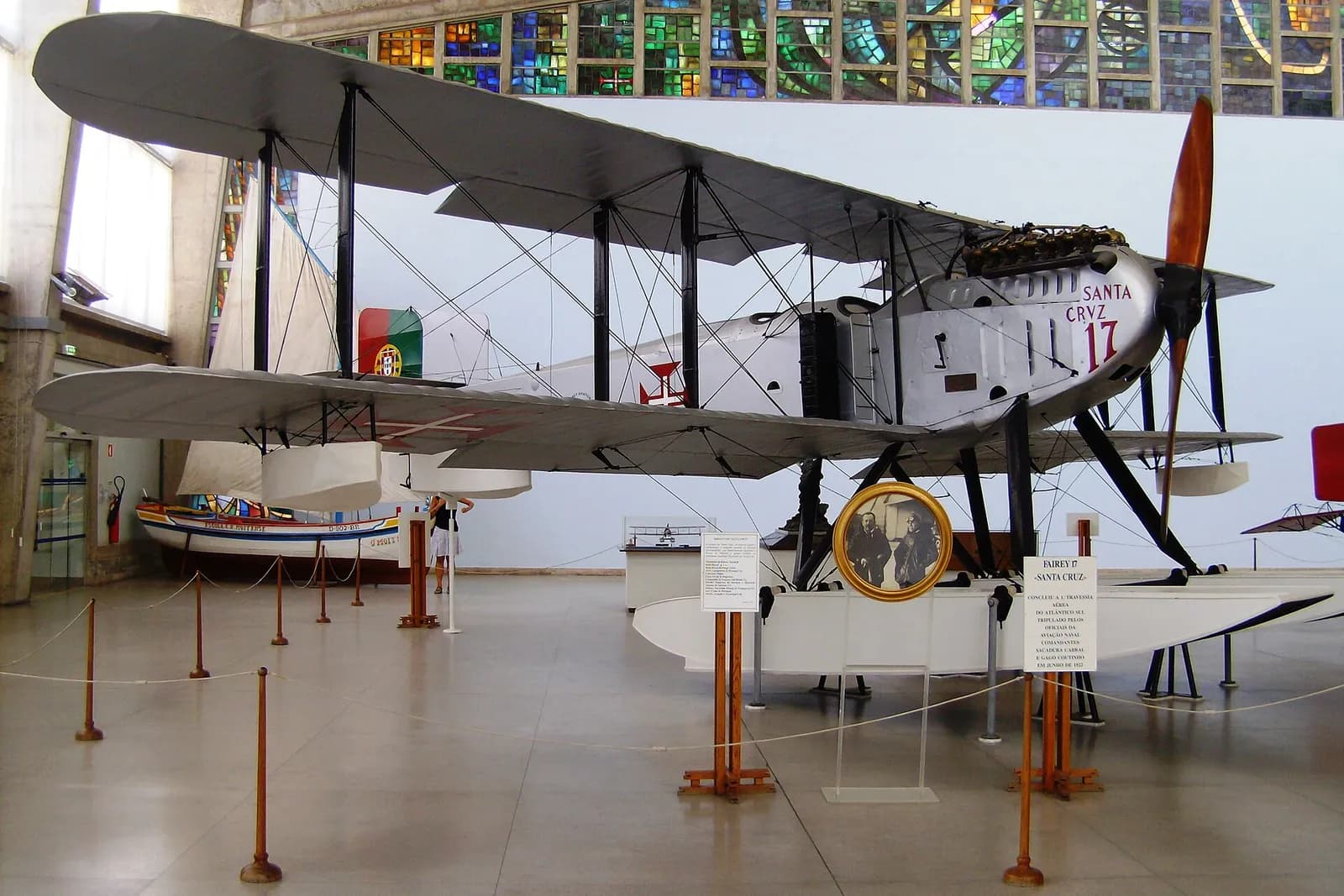
- They needed three Fairey IIID seaplanes: the Lusitânia sank at the Saint Peter and Saint Paul Rocks, the second ditched with engine failure, and the third, later named Santa Cruz, reached Rio. It is on show at the Museu de Marinha in Lisbon.
- Portugal declared national mourning on 15 December 1924. In July 2024, a century after he disappeared, Sacadura Cabral was promoted posthumously to rear admiral.
Three seaplanes leave Amsterdam
On Saturday 15 November 1924 the weather over the Netherlands was too poor for the three Portuguese seaplanes to fly as a group. So they left Amsterdam one after the other, at short intervals, for the first leg of a delivery flight to Lisbon by way of the French coast.
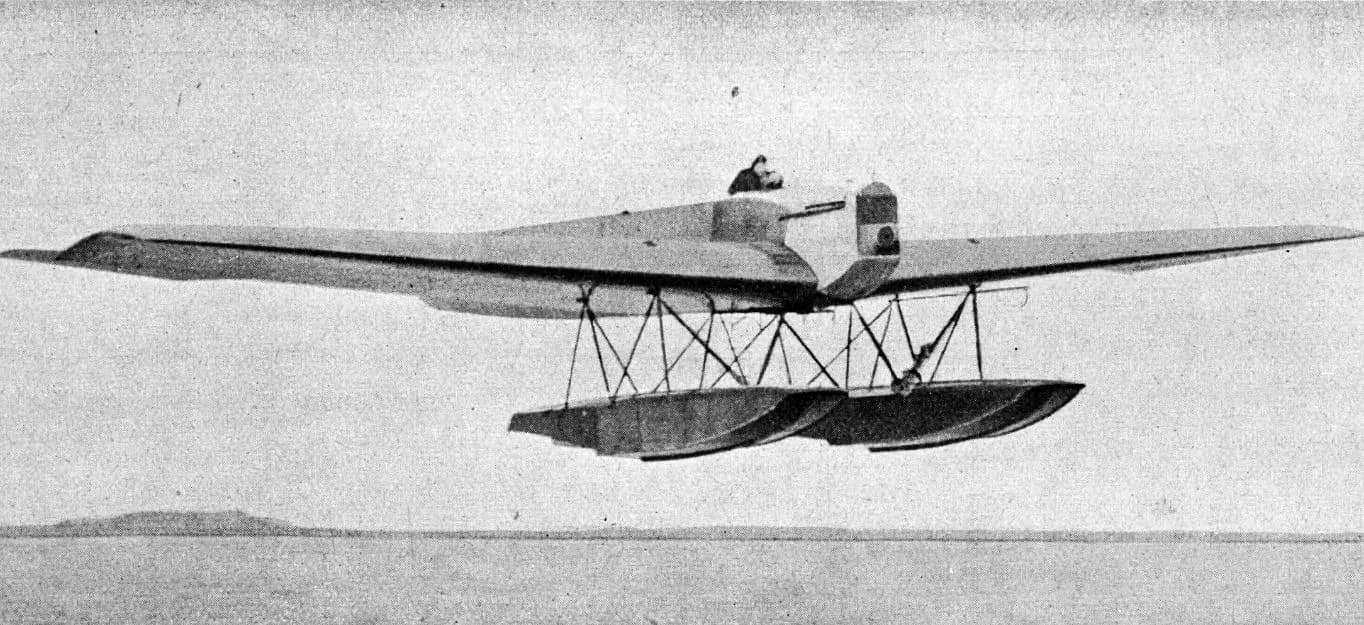
They were new Fokker monoplanes on floats, paid for by public subscriptions in Portugal and Brazil. Lieutenant Santos Mota flew one and Lieutenant Pedro Rosado another. The third, numbered 4146, carried Commander Artur de Sacadura Freire Cabral, aged 43 and the most famous airman in Portugal, with his mechanic, Corporal Pinto Correia.
Soon after take-off a dense fog closed in and the aircraft lost contact with one another. Santos Mota came down at Brest, in Brittany, and Rosado at Cherbourg, in Normandy. They waited the agreed time for their commander, and when he did not come they alerted the French and British authorities.
Sacadura Cabral never arrived. Neither he nor Pinto Correia was seen again.
Two and a half years earlier he and the navigator Gago Coutinho had flown from Lisbon to Rio de Janeiro, the first crossing of the South Atlantic by air. The flight had made them heroes in Portugal and Brazil. The man the country now searched the sea for had spent most of the time since trying to make a longer flight still.
A sextant without a horizon
The North Atlantic was crossed by air in May 1919, by the American flying boat NC-4, which flew in stages from New York to Plymouth by way of Lisbon. Sacadura Cabral was in the party that welcomed its commander, Albert Read, in Lisbon. The Americans had 68 ships posted along the route to guide them and pick them up if they came down. In June that year Alcock and Brown flew non-stop from Newfoundland to Ireland.
That June Brazil's president-elect, Epitácio Pessoa, visited Lisbon. Sacadura Cabral proposed to mark the centenary of Brazil's independence, in 1922, with a flight from Lisbon to Rio de Janeiro. The government authorised it that month. Unlike the Americans, the Portuguese would have no chain of ships marking the route and no radio on board.
That made navigation the problem. Over open sea, a navigator fixes his position by measuring the height of the sun or a star above the horizon with a sextant. From an aircraft the sea horizon is often hidden by haze or cloud, and its apparent height changes with altitude.
Gago Coutinho fitted a marine sextant with an artificial horizon: a bubble level, of the kind builders use, seen through an extra mirror. He called it a “precision astrolabe”, and Jorge de Castilho later added an electric lamp to light the bubble for night observations. With Sacadura Cabral he also devised a “course corrector”, a plotting board that worked out how far the wind was pushing the aircraft off its course.
To measure that drift, the pilot dropped to about 30 metres and the navigator threw smoke buoys of calcium phosphide, which caught fire when they hit the water and gave a fixed mark to sight on. The rest of the time they cruised at 200 to 300 metres.
They tested the method on 22 March 1921, when a Felixstowe F.3 flying boat left the Bom Sucesso naval air station in Lisbon at 10.25 in the morning for Funchal, in Madeira. Sacadura Cabral was pilot and commander, Gago Coutinho navigator, Ortins de Bettencourt second pilot and Roger Soubiran mechanic. They covered about 530 miles in seven and a half hours, or 7 hours 40 minutes by another account, and the Navy judged the navigation system proven.
For the long flight Sacadura Cabral chose a seaplane, because there were no airfields in Cape Verde or on the Brazilian island of Fernando de Noronha, and a single engine, because money was short. Fairey, in England, already had plans for a modified IIID with the Rolls-Royce engine he trusted. The aircraft, serial F 400, reached Lisbon in crates in January 1922, and he returned from England on 6 March.
Lisbon to Rio in three seaplanes
The Fairey left the Tagus at about seven in the morning of 30 March 1922, its wings extended and its fuselage stretched to carry extra fuel. It reached Las Palmas, in the Canary Islands, eight and a half hours later. The crew soon found the engine was burning more fuel than planned.
Storms held them in the Canaries and then at São Vicente, in Cape Verde, until 17 April. From Praia, on the island of Santiago, the sea was too rough to take off with full tanks, and Sacadura Cabral knew he could not reach Fernando de Noronha. He asked for the cruiser República to wait at the Saint Peter and Saint Paul Rocks, a cluster of bare islets in mid-ocean, so he could land there and refuel. By then the government had named the aircraft Lusitânia.
The leg of 18 April, 908 nautical miles, was the longest of the trip and took 11 hours and 21 minutes. The rocks were a speck in the ocean, and the aircraft would reach them at the limit of its fuel.
“For nine and a half hours I lived in constant uncertainty about whether or not we had enough fuel to reach the end of the stage.”
Gago Coutinho's sums were right, and the rocks appeared where he said they would, at about five in the afternoon. But the sea was heavy. As Sacadura Cabral landed, a wave broke one of the floats and the Lusitânia tipped nose-first into the water. The República's crew pulled the two men out, with their instruments, and the aircraft sank.
The Portuguese press followed every detail, and public opinion pressed the government to let the airmen carry on. On 27 April parliament promoted both men by distinction, and the government shipped a second Fairey, number 16, to Fernando de Noronha on the Brazilian ship Bagé. It arrived on 6 May. On 11 May the airmen flew back towards the rocks to close the gap in their route, but bad weather turned them round, and on the way back the engine failed and they came down on the open sea.
They drifted for about nine hours, into the night, until a British cargo ship that happened to be off its usual route found them. The República salvaged only the engine. Portugal sent the last Fairey its naval aviation had, number 17, on the cruiser Carvalho Araújo, and it reached Fernando de Noronha on 2 June.
| Aircraft | Name | What happened |
|---|---|---|
| F 400 (Fairey IIID Mark II, the “Transatlantic Load Carrier”) | Lusitânia, by government decree | Flew Lisbon to the Saint Peter and Saint Paul Rocks, 30 March to 18 April; a float broke on landing there and it sank |
| F 401, naval aviation no. 16 | Pátria or Portugal, by different accounts | Shipped on the Bagé to Fernando de Noronha; ditched with engine failure on 11 May and was lost |
| F 402, naval aviation no. 17 | Santa Cruz, named in Rio | Shipped on the Carvalho Araújo; flew Fernando de Noronha to Rio, 5 to 17 June; now in the Museu de Marinha |
Serials from the CTT stamp leaflet of 2022 and the Revista da Armada. The name of the second aircraft is Pátria in Pesquisa FAPESP and HistoryNet and Portugal in Air & Space Magazine; the Portuguese naval sources consulted give it only its number.
On 5 June they flew the 300 miles to Recife in four and a half hours. A reporter there asked Sacadura Cabral what had gone through his head to make such a journey.
“Nothing. If anything had, I wouldn't have done it.”
From Recife they hopped down the coast to Salvador, Porto Seguro and Vitória, cheered at every stop by Brazilians and by Portuguese living in Brazil. On 17 June 1922 they landed in Guanabara Bay at Rio de Janeiro. The wife of President Epitácio Pessoa named the aircraft Santa Cruz, and it stayed on show for almost a year at Rio's International Exposition.
| Date | Stage | Aircraft | Notes |
|---|---|---|---|
| 30 March | Lisbon to Las Palmas, Gran Canaria | Lusitânia | About 8½ hours |
| 2 April | Las Palmas to Gando Bay, Gran Canaria | Lusitânia | Short hop cut off by storms |
| Early April | Gando to São Vicente, Cape Verde | Lusitânia | Almost 11 hours over the ocean |
| 17 April | São Vicente to Praia, Santiago | Lusitânia | Short flight within Cape Verde |
| 18 April | Praia to the Saint Peter and Saint Paul Rocks | Lusitânia | 908 nautical miles in 11 h 21 min; sank on landing |
| 11 May | Fernando de Noronha towards the rocks and back | No. 16 | Turned back by weather; ditched after engine failure |
| 5 June | Fernando de Noronha to Recife | Santa Cruz | 300 miles in about 4½ hours |
| June | Recife to Salvador, Porto Seguro and Vitória | Santa Cruz | Stages down the Brazilian coast |
| 17 June | Vitória to Rio de Janeiro | Santa Cruz | Landed in Guanabara Bay |
HistoryNet gives distances in statute miles (1,045 miles for the Praia leg); the Revista da Armada uses nautical miles (908). The exact dates of the Gando and Brazilian coastal stages are not given in the sources used here.
Hours in the air on the longest stages of 1922
hours
Lisbon–Las Palmas (8½ hours) and Gando–São Vicente (“almost 11 hours”) from HistoryNet; Praia–Rocks (11 hours 21 minutes) and Noronha–Recife (4½ hours) from the Revista da Armada, May 2000.
Show the data
| Flying time | |
|---|---|
| Lisbon–Las Palmas | 8.5 |
| Gando–São Vicente | 11 |
| Praia–Saint Peter and Saint Paul Rocks | 11.4 |
| Fernando de Noronha–Recife | 4.5 |
The totals vary with the source. The Navy and the Biblioteca Nacional give 4,527 miles in 62 hours and 26 minutes of flying; Pesquisa FAPESP gives the same flying time and 8,383 kilometres, which is 4,527 nautical miles, though it counts them only as far as Recife. The Revista da Armada gives 4,367 miles in about 60 hours, and the 2022 CTT stamp leaflet 4,367 miles in 60 hours and 14 minutes, of which 36 hours and 29 minutes were over open ocean with nothing below to steer by. The whole journey took 79 days.
Fame, and a bigger plan
The two airmen toured Brazil and then Portugal. Lisbon gave them a huge welcome on 27 October 1922. Sacadura Cabral received honorary doctorates from the universities of Lisbon and Porto, and the colonial government of São Tomé renamed the Ilhéu das Rolas after Gago Coutinho and the channel beside it after Sacadura Cabral.
Sacadura Cabral wanted more. In April 1923 he gave the Navy Minister a detailed plan for a flight around the world, to start in March 1924. With money from public subscriptions in Portugal and Brazil he ordered five Fokker aircraft in the Netherlands, four with 380-horsepower Rolls-Royce Eagle IX engines and one with a 450-horsepower Napier Lion. Neves and his co-authors give 360 and 460 horsepower.
Parliament argued for months over the support ships he wanted, and the date passed. On 28 September 1924 American army airmen completed the first flight around the world instead. Sacadura Cabral had also clashed with the government over money for naval aviation and asked to resign his commission in February 1923; the request was turned down a year later.
He did not give up on the Fokkers. On 12 July 1924 he went to the Netherlands to take delivery, and on 30 August he flew the first one, fitted with wheels, to Amadora, outside Lisbon. On 28 October he went back for three more, this time seaplanes. They were ready to leave on 15 November.
The search, and what the sea gave back
Once the alarm was raised, French and British bases and the ships in the area were told to look out for the missing seaplane. For several days nothing was found.
Then a Belgian fishing boat, on its way home to Ostend, reported that it had picked up wreckage in the English Channel: pieces of a float with an aircraft number engraved on it. The Revista da Armada says this was three days after the flight and the Navy's library says four. Fernando Neves, Jorge Barata and André Silva, researchers at the Universidade da Beira Interior, date the find to 18 November and place it at 50°37'N, 1°10'E, in the eastern part of the Channel.
The news that reached the papers was confused. A despatch from Rotterdam on 19 November said fishing boats had found a seaplane identified as his, with no trace of a body. From Lisbon the next day came a report that his body had washed up on a beach near Ostend. It was never confirmed, and the Navy says only that the hope of finding the men grew ever smaller.
Nobody knows what brought the Fokker down. The float fragments suggest it ended in the sea, but no one saw it go, and neither body was ever recovered. Portugal declared national mourning on 15 December 1924, and on 6 January 1925 Sacadura Cabral was officially declared missing.
- Date
- Saturday 15 November 1924
- Route
- Amsterdam to Lisbon, first leg to Brest or Cherbourg
- Aircraft
- Fokker T.III W seaplane no. 4146, one of three flying together
- Crew
- Commander Sacadura Cabral, pilot; Corporal Pinto Correia, mechanic
- Weather
- Dense fog soon after take-off
- Found
- Fragments of a float, picked up in the English Channel by a Belgian fishing boat
- Bodies
- Never recovered
15 November 1924
Fokkers 4146, 4194 and 4197 leave Amsterdam
4194 lands at Brest and 4197 at Cherbourg; 4146 disappears in fog.
18 or 19 November 1924
Fragments of 4146's float are found
Picked up in the English Channel by a Belgian fishing boat bound for Ostend.
19 to 20 November 1924
Contradictory reports
Despatches from Rotterdam and Lisbon; a reported body near Ostend is never confirmed.
23 November 1924
Santos-Dumont writes to Gago Coutinho from Biarritz
15 December 1924
National mourning for the missing airmen
6 January 1925
Sacadura Cabral officially declared missing
July 2024
Posthumous promotion to rear admiral
How he is remembered
Sacadura Cabral had walked away from seven aircraft accidents, and he once told a friend he would die like everybody else, in his bed. The Brazilian aviation pioneer Alberto Santos-Dumont, who had been photographed with the two airmen in Brazil, wrote to Gago Coutinho from Biarritz, in France, eight days after the flight.
“Why didn't he follow my advice to rest after so great a feat as the Portugal–Brazil flight?”
In 1925 he received a posthumous official commendation for his work as director of naval aeronautics and for the mission in Fokker 4146 that ended in his disappearance. Towns in Portugal and its former colonies named villages, streets and avenues after him.
Gago Coutinho lived another 34 years. By 1927 the German instrument maker Plath was building an improved version of his sextant with the Portuguese Navy's permission, and in the early 1930s he flew to South America as co-navigator of the giant Dornier Do X flying boat, using the instrument. He was made a full admiral in 1958 and died in Lisbon in 1959, aged 90.
In July 2024, the centenary of his disappearance, President Marcelo Rebelo de Sousa approved Sacadura Cabral's promotion by distinction to rear admiral. The Navy's statement said that had he not disappeared, promotion to admiral's rank would have come naturally.
FAQs
What happened to Sacadura Cabral?
On 15 November 1924 he left Amsterdam for Lisbon in a new Fokker seaplane with his mechanic, Corporal Pinto Correia, as one of three aircraft. Dense fog separated them. The other two landed at Brest and Cherbourg; his aircraft disappeared, and neither man was found. He was officially declared missing on 6 January 1925.
Was any wreckage of Sacadura Cabral's plane found?
Yes, but very little. A few days after the flight, on 18 November in one account, a Belgian fishing boat brought into Ostend pieces of a float from his Fokker, picked up in the English Channel. A newspaper report that his body had been found near Ostend was never confirmed, and no remains of either man were ever recovered.
What was the first aerial crossing of the South Atlantic?
Between 30 March and 17 June 1922 the Portuguese naval officers Sacadura Cabral, as pilot, and Gago Coutinho, as navigator, flew from Lisbon to Rio de Janeiro in stages, by way of the Canaries, Cape Verde, the Saint Peter and Saint Paul Rocks and Fernando de Noronha. They used three Fairey IIID seaplanes and navigated by the stars and sun with Coutinho's sextant.
What was Gago Coutinho's sextant?
A marine sextant fitted with an artificial horizon, a bubble level reflected by an extra mirror, so the height of the sun or a star could be measured from an aircraft without seeing the sea horizon. It was tested on the Lisbon to Madeira flight of 22 March 1921, and by 1927 the German firm Plath was making an improved version.
Where can I see the Santa Cruz seaplane?
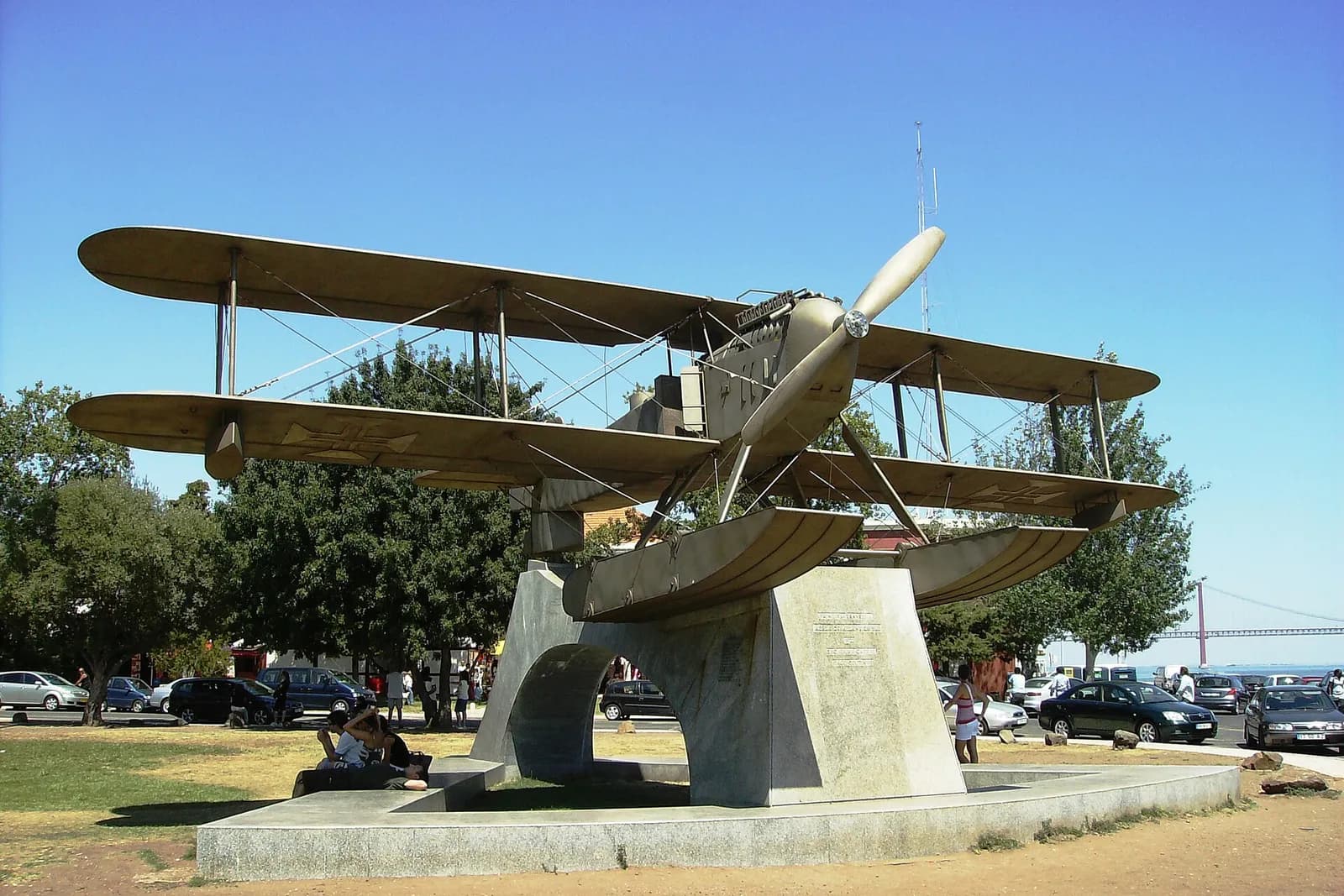
The original Fairey IIID Santa Cruz, which completed the 1922 flight, is in the Museu de Marinha in Belém, Lisbon. A full-size replica stands outdoors by the Tagus in Belém.
On the timeline
Open the timelineNearby moments from the first republic (1910–1926).
Birth in Lisbon of the novelist Urbano Tavares Rodrigues, son of Alentejo landowners from Moura. He taught Portuguese at Montpellier, Aix and Paris from 1949 to 1955, was barred from university teaching in Portugal for political reasons and, as an active opponent of the Estado Novo, was jailed in the Aljube in 1963 and arrested again later. After 1974 he taught at the Lisbon Faculty of Letters and became one of the most prolific Portuguese writers and critics of his generation.
After 74 days and two aircraft, army aviators Brito Pais and Sarmento de Beires reach Macau on the last leg of the first flight from Portugal to Macau, begun on 7 April in Vila Nova de Milfontes. Caught in a violent storm, they overshoot the colony and crash-land in Hong Kong's New Territories, having flown some 16,760 km.
The poet António Ramos Rosa is born in Faro. Jailed for three months for his part in the anti-Salazar MUD movement, he co-founded the influential poetry magazine 'Árvore' in 1951 while earning his living as an office clerk and translator, and won the Prémio Pessoa in 1988.
Sacadura Cabral's last flight
Sacadura Cabral, who with Gago Coutinho had made the first flight across the South Atlantic in 1922, vanishes in fog after taking off from Amsterdam for Lisbon in a Fokker seaplane with his mechanic, Corporal Pinto Correia. Pieces of a float were found in the Channel days later, but neither man was ever seen again.
The poet Alexandre O'Neill is born in Lisbon. A founder of the Lisbon Surrealist Group in the late 1940s, he wrote sharp, ironic verse about Portuguese life and, as an advertising copywriter, coined one of the country's best-known slogans: 'Há mar e mar, há ir e voltar' ('There's sea and sea, there's going and coming back').
Carlos Paredes is born in Coimbra. A virtuoso of the Portuguese guitarra, he freed the instrument from its role accompanying fado, and his instrumental pieces — above all 'Verdes Anos', written for Paulo Rocha's 1963 film — became part of the country's musical identity.
José Cardoso Pires, author of 'O Delfim' and 'Balada da Praia dos Cães', is born at São João do Peso in Vila de Rei; his sharp, ironic novels made him one of the leading Portuguese writers of the second half of the twentieth century.
Coming up in history
All long reads 17 November 1717A vow in stone: the first stone of Mafra is laid, 17 November 1717
 18 November 1945Portugal's 1945 election: the MUD and Salazar's ‘free England’ vote
 19 November 1977TAP Flight 425: the night a Boeing 727 ran off Madeira's runway
 20 November 1511The wreck of the Flor de la Mar and the lost plunder of Malacca, 1511
23 sources
Archives, scholarship and reporting this article was checked against.
- 1
97 anos do desaparecimento de Sacadura CabralBiblioteca Central de Marinha, Direção de História e Cultura Naval
- 2
Sacadura Cabral, by Vice-Admiral Abílio Cruz Júnior (second part), p. 10: resignation, medical board, the circumnavigation project and his deathRevista da Armada, no. 331, May 2000
- 3
- 4
Sacadura Cabral and the Dawn of Portuguese Aviation (Fernando M. S. P. Neves, Jorge M. M. Barata and André R. R. Silva)Open Journal of Applied Sciences 6 (2016), Universidade da Beira Interior
- 5
Coutinho, Carlos Viegas Gago (Lisboa, 1869 – Lisboa, 1959)Dicionário de Historiadores Portugueses, Biblioteca Nacional de Portugal
- 6
- 7
Um voo de 67 dias entre Lisboa e Recife (Carlos Fioravanti)Revista Pesquisa FAPESP, no. 312, 2022
- 8
The First South Atlantic Air Crossing: stamp issue leaflet (text by António Mimoso e Carvalho)CTT Correios de Portugal, 30 March 2022
- 9
- 10
- 11
- 12
- 13
- 14
- 15
Noite Sangrenta (outubro 1921)Assembleia da República
- 16
- 17
- 18
- 19
Forgotten First Flight Across the South Atlantic (Derek O'Connor)HistoryNet, 2019 (first published in Aviation History, May 2015)
- 20
Across the South Atlantic in 1922 (Tony Reichhardt)Air & Space Magazine, Smithsonian, 30 March 2009
- 21
“Find plane of Portuguese”, The Daily Worker (Chicago), 20 November 1924, p. 1Library of Congress, Chronicling America
- 22
- 23Sacadura Cabral promovido ao posto de contra-almirante a título póstumoObservador, 9 July 2024
Image credits
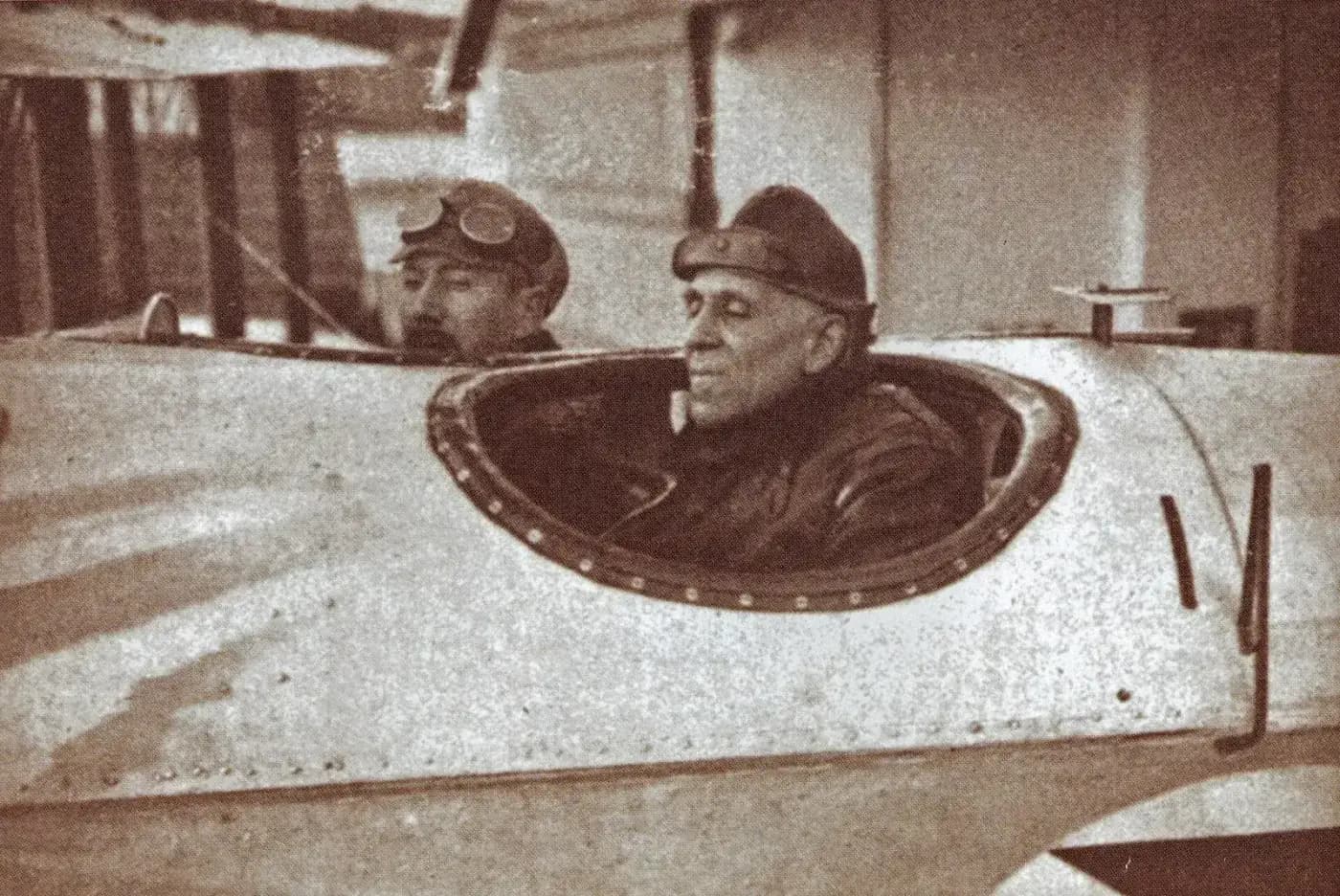
- Gago Coutinho (front) and Sacadura Cabral in the open cockpits of an aircraft; the photograph is undated and the photographer unknown. In 1922 the two men made the first flight across the South Atlantic. In 1924 Sacadura Cabral disappeared on a delivery flight from Amsterdam. The original uploader was João Carvalho at Portuguese Wikipedia, Public domain, via Wikimedia Commons.
- The restored Fairey IIID no. 17 Santa Cruz, the third aircraft of 1922 and the one that reached Rio, in the Museu de Marinha in Lisbon, photographed in July 2011. The Navy says it is the only Fairey IIID left in the world. Carlos Luis M C da Cruz, Public domain, via Wikimedia Commons.
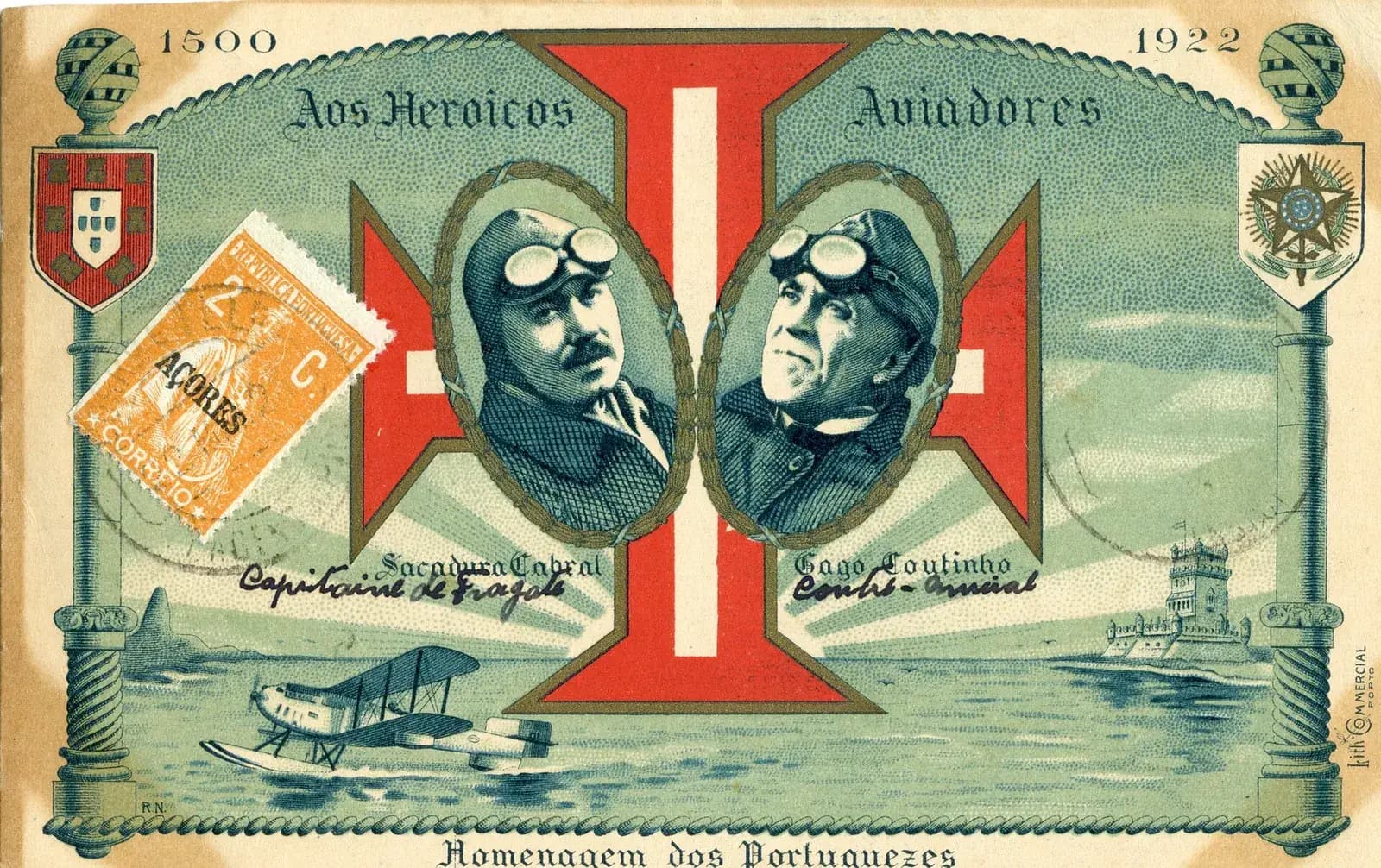
- A 1922 postcard, “To the heroic aviators: homage of the Portuguese”, with Sacadura Cabral and Gago Coutinho on the cross of the Order of Christ. The date 1500 recalls Pedro Álvares Cabral's arrival in Brazil, and the arms of Portugal and Brazil flank the cross. Unstated, Public domain, via Wikimedia Commons.
- A Fokker T.III W seaplane, photographed for the French magazine L'Aéronautique in August 1922. The aircraft Sacadura Cabral flew from Amsterdam in 1924 was a T.III W of this type. L'Aéronautique magazine, Public domain, via Wikimedia Commons.
- The steel replica of the Santa Cruz in Belém, Lisbon, near the waterfront the Lusitânia left on 30 March 1922. Photographed in 2009. Carlos Luis M C da Cruz, Public domain, via Wikimedia Commons.