

The wreck of the Flor de la Mar and the lost plunder of Malacca, 1511
Afonso de Albuquerque left Malacca with the plunder of the great market port of the Malay world packed into a leaking old ship. Off Sumatra she broke in two, and he reached safety on a raft. The treasure became a legend that has grown with every retelling.
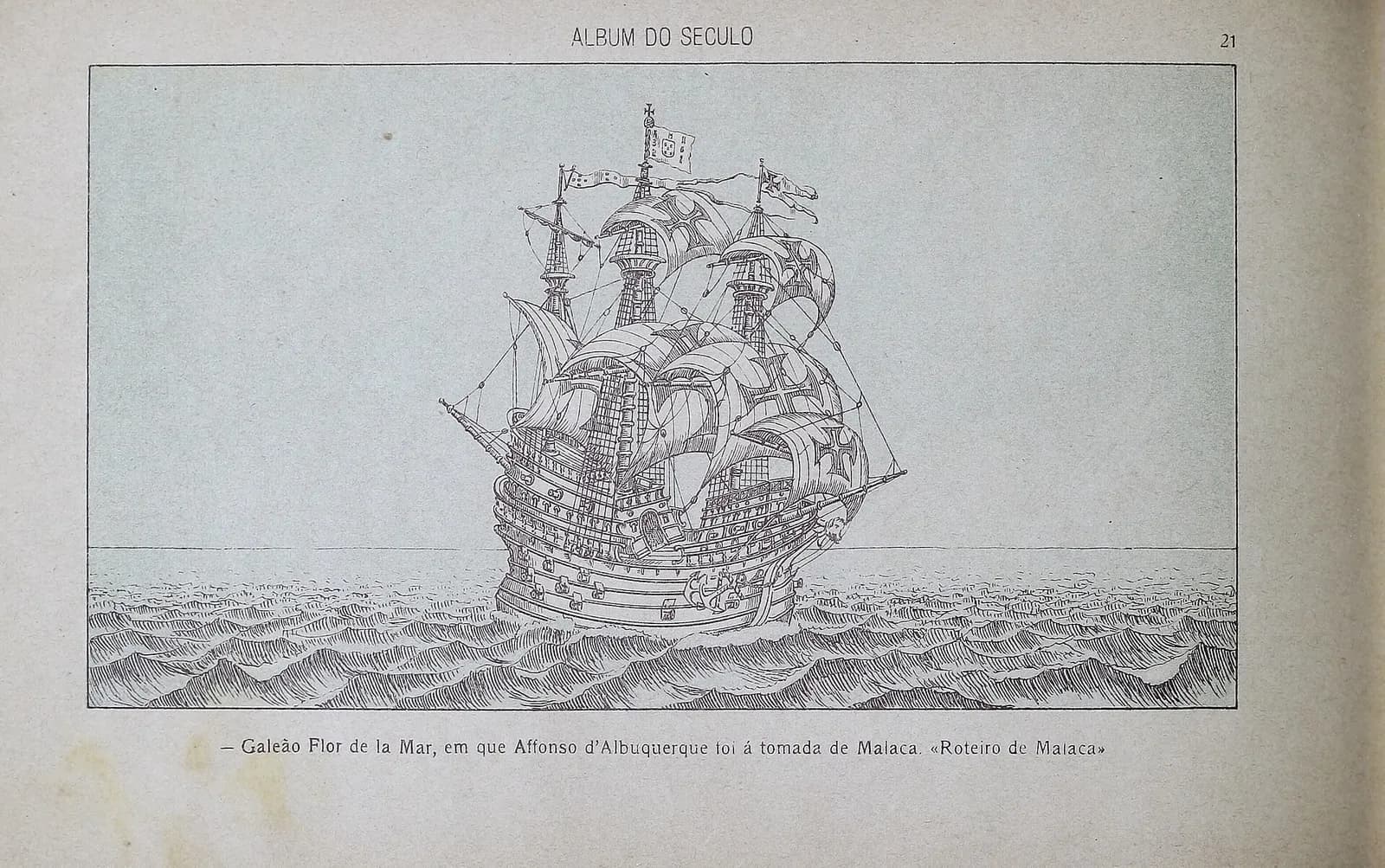
At a glance
- The Flor de la Mar, an old Portuguese carrack that had served in Asian waters since at least 1506, was wrecked on shoals off north-east Sumatra late in 1511 while carrying Afonso de Albuquerque from Malacca back to India.
- She carried much of the plunder of Malacca, the Malay trading port Albuquerque had stormed in August 1511, and the gifts he had chosen for King Manuel I and Queen Maria.
- Albuquerque escaped on a raft to the ship Trindade. The Flor de la Mar broke in two and sank, and a junk carrying more of the plunder was lost to mutiny or desertion, depending on the chronicler.
- The date usually given today, 20 November 1511, appears in no sixteenth-century source. Gaspar Correia says Albuquerque left Malacca on 1 December, and the survivors reached Cochin in January or February 1512.
- No chronicler made an inventory of the cargo or gave it a total, and they disagreed over whether Albuquerque's prized lions were of gold, bronze or iron. Modern figures in the billions of dollars, and a treasure hunter's claim to have found the wreck, rest on no published find.
A grey jacket and a rope
The Flor de la Mar struck in the dark. She was off the north-east coast of Sumatra, bound from Malacca for India with Afonso de Albuquerque, governor of Portuguese India, aboard. Her pilots had not been watching for the shoals off the kingdom of Aru, and she ran onto them in the night. She was very old, and she broke in two almost as soon as she struck.
In the version Gaspar Correia heard, a storm had forced the ship to anchor, and as the pumps lost the fight Albuquerque had the masts cut away and lashed into a raft. The sick went into the ship's boat. He would board the raft in his drawers and jacket, he told the crew, and nobody would board it any other way.
The Commentaries, compiled by Albuquerque's son from his papers, tell it more simply. The seas had staved in the ships' boats, so he had boards laid across some timbers and climbed on in a grey jacket, roped on so the waves would not wash him off. Two sailors rowed with planks towards the Trindade, which had ridden out the gale at anchor nearby, and her crew hauled him aboard with ropes tied to buckets.
Not everyone had a place. Correia says the governor let none of the slaves, men or women, onto the raft and had them thrown into the sea, where they clung to its sides. João de Barros, the official historian of Portuguese Asia, says the only thing Albuquerque saved was a small girl, the daughter of one of his slaves, who had caught hold of him. He held her in his arms, standing, until they were rescued.
“The ship broke in two pieces at the deck and went to the bottom, and with her was lost the greatest wealth of gold and precious stones that was ever lost anywhere in India, or ever will be.”
With the ship went most of what Albuquerque had taken at Malacca that August, including the presents he had chosen for King Manuel I and Queen Maria. Of everything aboard her and the junk sailing with her, the Commentaries say, nothing was saved except a gold sword and crown and a ruby ring sent to King Manuel by the King of Siam.
The great port and the old ship
Malacca, on the west coast of the Malay peninsula, commanded the narrows between Sumatra and the peninsula through which the trade of India and China passed. Founded in the early fifteenth century, it had broken away from Siam. The historian R. S. Whiteway wrote that it was not a trading city in the modern sense but, in season, the site of a vast fair where the goods of China and the Far East were bartered for those of the West.
In 1509 Diogo Lopes de Sequeira's squadron was attacked at Malacca after ignoring warnings: some 60 Portuguese were killed and 33 taken prisoner, among them the factor, Rui de Araújo. Freeing them was the first demand Albuquerque made when he arrived two years later.
The Flor de la Mar was one of the biggest ships the Portuguese had in Asia. In 1506 her captain, João da Nova, tried to take her home, but she sprang a leak at the foot of the mast off the Cape of Good Hope and limped back to Mozambique. When the next fleet from Lisbon, with Albuquerque aboard, found her there, her cargo went home in another ship and she joined the newcomers.
In 1507, off Arabia and at Hormuz, Albuquerque said she alone could destroy that whole coast, and Correia called her more powerful than all the rest. On 12 December 1508 the viceroy, Francisco de Almeida, sailed in her, with João da Nova still in command, at the head of 21 vessels by Correia's count (Whiteway says 18); that campaign ended with the defeat of the Egyptian fleet and its allies off Diu on 3 February 1509.
Under Albuquerque she fought at Goa in 1510, where the Commentaries call her and the Cirne two ships powerful enough on their own to hold off the army of Bijapur. On 4 August that year she stuck on the Goa bar; her crew were ready to abandon her, but Albuquerque went aboard and stayed until she floated off. In his letters she is simply “a capitaina”, the flagship.
- Name
- Flor de la Mar, “flower of the sea”; the documents usually spell it Frol de la Mar
- Type
- Nau (carrack), about 400 tons in modern accounts
- Known captains
- João da Nova (from about 1505 to at least December 1508); Albuquerque's flagship in 1510 and 1511
- Campaigns
- Hormuz 1507, the Diu campaign of 1508 to 1509, Goa 1510, Malacca 1511
- Lost
- On shoals off north-east Sumatra, late 1511
- Condition
- “Rotten and old”, in Albuquerque's own words, kept afloat by two pumps worked day and night
By 1511 she was worn out. Albuquerque later wrote that a single roll had torn a wale, one of the heavy planks along her side, out of her hull together with the chains of her shrouds. Sixty slaves worked her two pumps night and day. Castanheda says she leaked so badly that Albuquerque had meant to sail home in the Trindade, but when the men saw why he was leaving the flagship nobody would board her, so he went in her himself.
Two assaults on Malacca
Albuquerque sailed from India in April 1511 with 18 ships. By his own count he had about 700 Portuguese and 300 soldiers from Malabar, the south-west coast of India. He called at Pedir and Pase on Sumatra and anchored off Malacca on 1 July. When the release of the prisoners was put off, he burned houses along the waterfront and some ships, and the captives were handed over.
His plan was to take the bridge over the river that split the town in two. The first assault, on St James's Day, 25 July, won the bridge but could not hold it; men hit by poisoned arrows died, and the troops were taken back to the ships that evening. For the second, a tall junk loaded with barrels, beams and field guns was worked closer tide by tide until it lay against the bridge.
Castanheda dates the second assault to “Friday, 10 August”; Whiteway gives 8 August. Nine days of street fighting followed, or ten in the Commentaries. Whiteway reckons the defenders at 30,000 to 50,000 against about 1,100 men on the Portuguese side, slaves included. Hindu, Javanese and Burmese merchants who had helped the prisoners were given safe-conducts; the Malays, the Commentaries say, were to be put to death wherever they were found.
Then the Portuguese, split into squads, sacked the city. Castanheda says 35 marks of gold and 25 of silver were dug up from buried stores and more than 2,000 bronze guns were taken; the Commentaries count 3,000 guns, about 2,000 of them bronze. After the men had their shares, the King's portion came to more than 200,000 cruzados, besides many slaves.
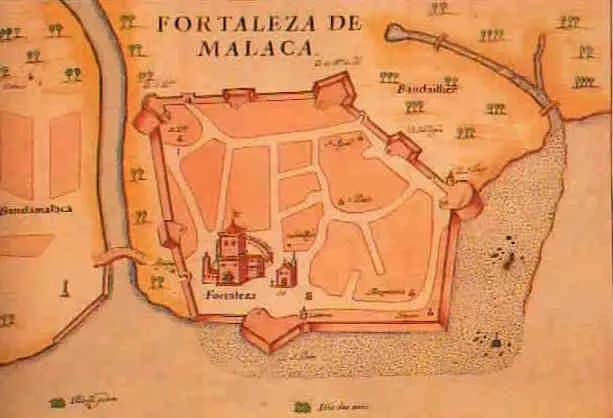
A fortress went up beside the river, built with forced labour, with Rui de Brito Patalim as its first captain. The chroniclers call it A Famosa, “the famous”; a list of the India fleets that Birch quotes gives its formal name as Nossa Senhora da Assunção. In November António de Abreu sailed with 120 men to find the clove islands of Maluku. The rest of the force was split between the fort and a squadron left to guard the sea.
Where the Portuguese went when Albuquerque left Malacca
Portuguese men
Gaspar Correia's figures. Castanheda and Whiteway give the same 300 for the fort and 200 for the fleet. Correia counts only 100 Portuguese in the ships sailing home and says many were sick or crippled by wounds.
Show the data
| Men | |
|---|---|
| Garrison of the new fort | 300 |
| Ships left to guard the sea | 200 |
| Abreu's voyage to Maluku | 120 |
| Sailing for India with Albuquerque | 100 |
Three ships and a junk
Malacca's merchants begged him to stay, the Commentaries say, but he answered that the fortress at Goa was unfinished and he had no news of it. He sailed in the Flor de la Mar; Pero de Alpoim, the ouvidor or chief judge of Portuguese India, commanded the Trindade; Jorge Nunes de Leão had the Enxobregas.
Simão Martins took a large junk laden with goods from the sack, with 13 Portuguese, 50 Malabar guards and 60 Javanese shipwrights travelling with their families to repair the king's ships at Cochin. The ships also carried embroiderers and young people of noble families whom Albuquerque was sending to Queen Maria.
Correia's crew list differs. In his account Jorge Nunes died of pleurisy just before the fleet sailed and Dom João de Lima took the Enxobregas, while Simão Martins quarrelled with a shipmate and stayed in Malacca, so Simão de Andrade took the junk. Correia also has the Javanese families bound for Goa, not Cochin.
Once Albuquerque was safe on the Trindade, the Commentaries say, he remembered his promise to the men still clinging to the wreck. The Trindade's crew begged him not to take the ship in over rocks in such a wind. He overruled them, crept in under sail as the tide turned, anchored in three and a half fathoms and pulled the second raft's crew aboard with ropes, buckets and empty barrels. A land breeze before dawn let them get clear.
Castanheda adds that the stern stayed lodged on the rock above the water, so its people were taken off by the Trindade's boat, while the bow sank at once. A few men swam ashore on chests and reached Pase. Correia says some of the rescued had wrapped a great deal of gold around their bodies.
What happened to the junk depends on whom you read. In the Commentaries and in Castanheda, its Javanese crew rose and killed the Portuguese aboard; the Commentaries let four escape in a boat to Pase. Barros says the Javanese ran it into the port of Aru, where it was looted and Simão Martins died. Correia tells a different story: the Javanese slipped away at night in its boat, and the few Portuguese left aboard sailed the junk, badly, to the Maldives, where it ran aground but its cargo was saved.
On the crossing to Ceylon the crowded Trindade ran short of water. They survived by capturing two Muslim merchant ships from Dabul and Chaul, laden with pepper, silk and aromatic woods from Sumatra.
They reached Cochin in January 1512 according to Correia, whom Birch follows in his notes to the Commentaries, or early in February according to Castanheda and Whiteway. Albuquerque's enemies had spread word that he was lost with all his fleet. He came ashore, the Commentaries say, in the same grey jacket he had worn on the raft, and was taken under a brocade canopy to give thanks in church.
1506
João da Nova's Flor de la Mar springs a leak off the Cape and returns to Mozambique
1507
She serves under Albuquerque at Hormuz
12 December 1508
Viceroy Almeida sails in her for the Diu campaign
3 February 1509
Battle off Diu
4 August 1510
She sticks on the Goa bar; Albuquerque stays aboard until she floats off
1 July 1511
Albuquerque's fleet anchors off Malacca
25 July 1511
First assault on the bridge
8 or 10 August 1511
Second assault; nine days of street fighting follow
November 1511
António de Abreu sails for Maluku
Late 1511
Albuquerque leaves Malacca (Correia: 1 December); the Flor de la Mar is wrecked off Sumatra
January or February 1512
The survivors reach Cochin
Which day, and where?
Modern accounts, and the On this day box on this site, date the wreck to the night of 20 November 1511. No sixteenth-century chronicle gives that date. Correia, who went to India in 1512 and became Albuquerque's secretary, writes that the governor left Malacca on 1 December. The Commentaries give no date, but place his departure after Abreu's ships had sailed in November, and Whiteway, working from the letters and the chronicles, says December.
So 20 November cannot be confirmed, and Correia's date would rule it out. The sources agree only on the order of events and on an arrival at Cochin in January or February 1512.
| Detail | Commentaries (1557) | Castanheda (1550s) | Barros (1553) | Correia (written by the 1560s) |
|---|---|---|---|---|
| Left Malacca | No date; after Abreu sailed in November | No date | No date | 1 December 1511 |
| Where | Shoals opposite the kingdom of Aru | Off the coast of Aru | Point of Timia, kingdom of Aru | Along the coast of Pedir |
| Cause | Pilots missed the shoals at night | A squall; the anchored ship dragged onto a rock | Ran onto a rock awash at night | A storm; anchored, masts cut, pumps failing |
| How Albuquerque was saved | On a raft, roped on, to the Trindade | By the Trindade's boat from the stern | A raft built by Dinis Fernandes de Melo; Pero de Alpoim's boat | On a raft of masts; found at dawn by Pero de Alpoim |
| The junk | Javanese mutiny; four Portuguese escape | Javanese mutiny; all Portuguese killed | Run into Aru and looted | Crew desert; junk reaches the Maldives |
| Reached Cochin | No date (Birch's notes: January 1512, after Correia) | Early February 1512 | No date | January 1512 |
Dates of writing are approximate. The Commentaries were compiled by Brás de Albuquerque from his father's papers; Correia went to India in 1512 and heard Albuquerque tell parts of the story himself.
The place is just as loose. Three chroniclers put the wreck off Aru, on Sumatra's north-east coast facing Malacca; Barros names the point of Timia. Albuquerque himself, writing to the king in August 1512, said only that the Flor de la Mar “took up lodging” near Pase, further north-west along the same coast, and survivors who swam ashore turned up there. Correia has the fleet sailing along the coast of Pedir, further on again towards the island's northern tip.
What went down with her
The Commentaries give the fullest list of the loss: the brocaded wooden castles that the King of Malacca's elephants carried, his gold-plated palanquins, a great store of jewels for King Manuel, and a table with legs overlaid in gold, a present for the king from Milrrhao, the Hindu lord to whom Albuquerque had handed the lands of Goa, which he had forgotten to leave at Cochin. The men lost most of their own shares too.
Correia, who heard Albuquerque describe the cargo, put prices on some of it. A four-legged seat at which the Queen of Malacca ate, which his captains had let him have for 80,000 cruzados, was set with stones that Malacca's merchants valued at 300,000. Four seated golden lions, hollow to hold perfume, with eyes, tongues, teeth and claws of precious stones, were valued at 200,000. Correia heard Albuquerque swear on his habit of the Order of Santiago that the king's presents, delivered in Lisbon, were worth “hum conto d'ouro”, a million in gold.
The lions show how unreliable those valuations are. In one chapter the Commentaries say Albuquerque kept six large bronze lions for his own tomb; in another, that they were iron and, as the translator reads the passage, of little value. Barros says there were two, cast in iron, a gift from the King of China that had stood at the door of the sultan's palace. Only Correia makes them gold.
| Source | How many | Made of | What it says about them |
|---|---|---|---|
| Commentaries, chapter 28 | Six | Bronze | Albuquerque took them for his tomb |
| Commentaries, chapter 43 | Not stated | Iron | Found on old royal tombs of Malacca; meant for his tomb at Goa; not of great value |
| Barros | Two | Cast iron | A gift from the King of China to the sultan, kept at his palace door |
| Correia | Four | Gold, set with precious stones | From the King of Malacca's chamber; valued at 200,000 cruzados |
The “not” in the Commentaries' second passage was supplied by the translator, Walter de Gray Birch, who thought it had dropped out of both Portuguese editions.
Albuquerque did not give up on them. Barros says he asked Jorge Botelho, captain of a caravel bound for Malacca, to find out whether local pearl divers could bring the lions up, at any cost: having lost the treasure, he did not mean to lose the honour. Whiteway says divers were employed and nothing was recovered.
Not every loss was gold. On 1 April 1512 Albuquerque sent the king part of a great chart drawn by a Javanese pilot, with names in Javanese script, which showed the Cape of Good Hope, Portugal and Brazil, the Red Sea and the Persian Gulf, the clove islands and the routes of the Chinese ships. He called it the best thing he had ever seen. The piece he sent had been traced by the pilot Francisco Rodrigues; “the main chart”, he wrote, “was lost in the Flor de la Mar”.
Albuquerque wasted few words on the disaster. Listing his fleet for the king on 20 August 1512, he wrote only that the Flor de la Mar “took up lodging near Pase”. To a friend at court he complained that he had left all the sound ships at Malacca and sailed in a rotten one.
“I left with only two men of mine and two slave boys in the Flor de la Mar, rotten and old; and so may Our Lord save me, there were sixty slaves and two pumps that never stopped working her, night or day.”
A legend in billions
The Commentaries already called the cargo the richest spoils seen since the Portuguese reached India. Five centuries later the claim has become a number. A Daily Beast headline in 2017 put the treasure at $2.6 billion and said the wreck was still waiting for a lucky diver.
No sixteenth-century writer made an inventory of the cargo or gave it a total. Castanheda's figure of more than 200,000 cruzados is the King's share of the whole sack, not the contents of one ship, and Correia's “million in gold” names no currency. Castanheda even says the King's goods went in the junk, because the flagship leaked so badly. A dollar figure would need a list of what was aboard, and none survives.
The American treasure hunter Robert Marx said he had found the wreck. A 2015 notice for one of his lectures called it “the richest treasure-laden ship ever lost, discovered and salvaged in history”, found by him in 1991, with part of its treasure excavated. His obituary in the diving newsletter Undercurrent says Indonesia called him in in 1992 and he located the wreck within three days, more than 100 miles from where the government had been searching.
Neither gives a precise position or names anything brought up from the site. They disagree on the year, and the lecture notice has the ship bound for Lisbon, not Cochin, and wrecked off the northern tip of Sumatra rather than off Aru. Two years after the lecture, the Daily Beast was still describing the treasure as lost.
What came after
The wreck cost Albuquerque his trophies, not his conquest. He found Goa under siege and, by his own account, several of the ships he had left in India lost, broken up or burned as rotten. He spent 1512 refitting and relieving Goa, and wrote to Duarte Galvão, a friend at court, that the men he had left at Malacca had routed a large Javanese fleet without him.
Portugal held Malacca for 130 years, until the Dutch took it in January 1641. Albuquerque died off Goa in December 1515, without the lions he had wanted on his tomb.
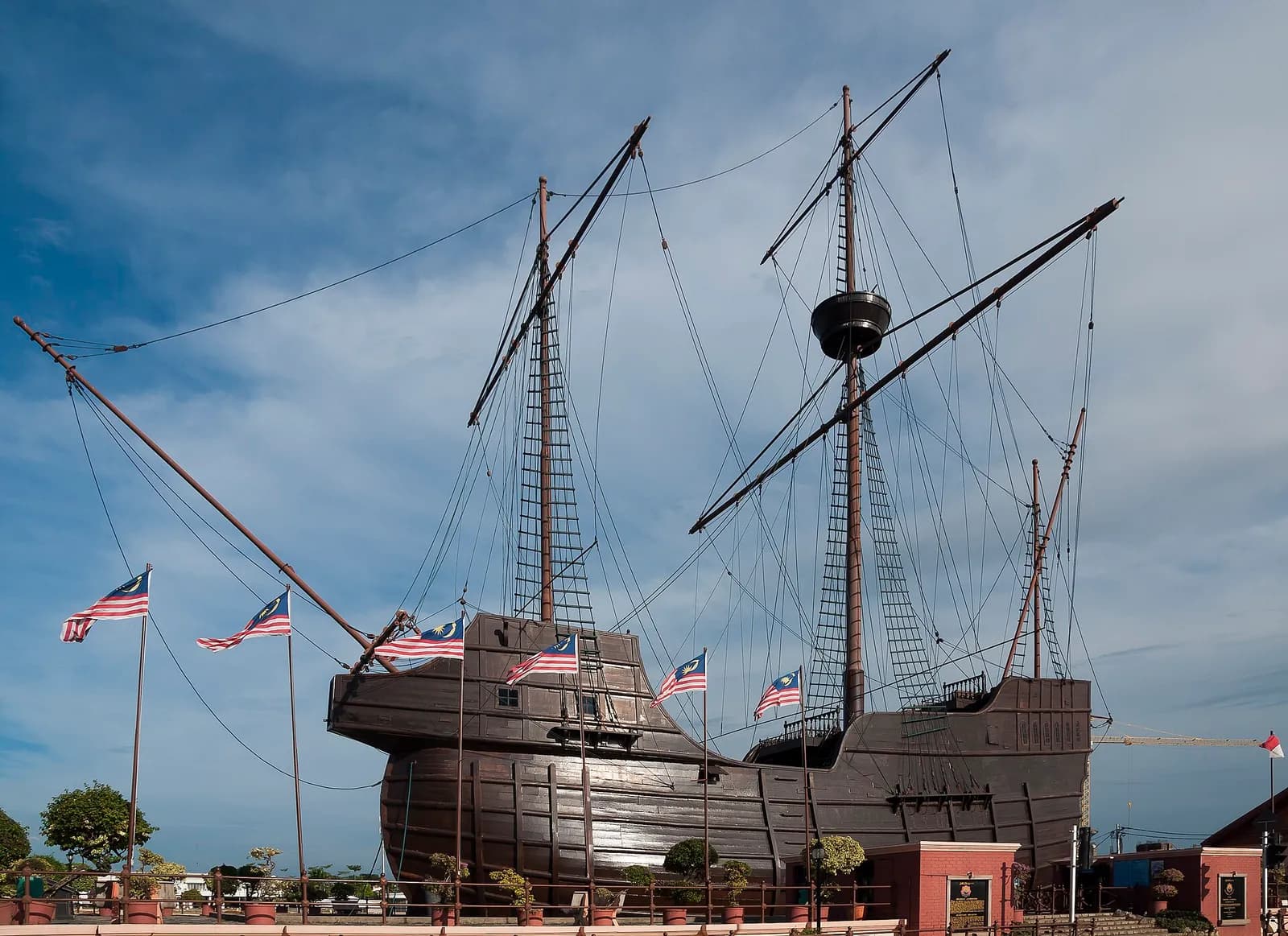
In Melaka, as the city is now called, the ship has a second life. The state's Maritime Museum, Muzium Samudera, is housed in a replica of the Flor de la Mar built from around 1990 and opened by the prime minister, Mahathir Mohamad, on 13 June 1994. Its displays follow the port from the sultanate through the Portuguese, Dutch, British and Japanese periods.
FAQs
Where did the Flor de la Mar sink?
Off the north-east coast of Sumatra, in what is now Indonesia. Most sixteenth-century accounts put the wreck on shoals off the old kingdom of Aru, and Barros names the point of Timia. Albuquerque himself said the ship was lost near Pase, further north-west along the same coast. The exact site is unknown.
When did the Flor de la Mar sink?
Late in 1511. The date usually given today, 20 November 1511, appears in no sixteenth-century source. Gaspar Correia says Albuquerque left Malacca on 1 December 1511, and the survivors reached Cochin in January or early February 1512.
Has the treasure of the Flor de la Mar been found?
Not in any way that has been shown publicly. Albuquerque asked for local pearl divers to search for his lions, and nothing was recovered. The treasure hunter Robert Marx later claimed to have found the wreck, in 1991 or 1992 depending on the account, but the accounts of his claim give no precise position and name no recovered object, and in 2017 the press still described the treasure as lost.
How much was the treasure worth?
Nobody knows. No inventory survives. Castanheda put the King's share of the whole sack of Malacca at more than 200,000 cruzados, and Correia heard Albuquerque swear that his presents for the king were worth a million in gold. Modern figures such as $2.6 billion have no documented basis.
Did Afonso de Albuquerque survive the wreck?
Yes. He escaped on a raft to the Trindade, commanded by Pero de Alpoim, went back for the men left on the wreck, and reached Cochin early in 1512. He governed Portuguese India until his death off Goa in December 1515.
On the timeline
Open the timelineNearby moments from the age of discoveries (1415–1580).
The Lisbon Massacre begins: urged on by Dominican friars, a mob attacks New Christians (forcibly converted Jews) at the Church of São Domingos. The killing lasts three days and leaves an estimated 1,000 to 4,000 dead — one of the darkest episodes in the history of Portugal's Jewish community, three decades before the Inquisition was established.
Days after his handful of ships destroyed the fleet of Hormuz, Afonso de Albuquerque has its young king, Seyf ad-Din, accept terms of submission: a yearly tribute of 15,000 xerafins, duty-free entry for goods from Portugal and a site for a fort. Mutiny among his own captains wrecked the plan within months, and Portugal only took the Gulf trading hub in 1515.
A Portuguese fleet under Viceroy Francisco de Almeida defeats the combined fleets of Mamluk Egypt, the Sultanate of Gujarat and the Zamorin of Calicut at the Battle of Diu, off western India, leaving Portugal the strongest naval power in the Indian Ocean.
The wreck of the Flor de la Mar
By the date usually given today, the 'Flor de la Mar', the old carrack carrying Afonso de Albuquerque and the plunder of Malacca, is wrecked off Sumatra, though no sixteenth-century source gives the day and Gaspar Correia has Albuquerque leave Malacca only on 1 December. He escaped on a raft, but almost all the cargo was lost, and no find of the wreck has ever been confirmed.
King Manuel I's embassy to Pope Leo X, led by Tristão da Cunha, parades through Rome to show off the riches of the East. The star is Hanno, a young white elephant who kneels before the Pope at Castel Sant'Angelo and lives on as his pet until he dies in 1516.
Ferdinand Magellan (Fernão de Magalhães), the Portuguese navigator sailing in the service of Spain, departs Seville with five ships on the expedition that would achieve the first circumnavigation of the globe.
Fernão de Magalhães, the Portuguese navigator sailing for Spain, reaches the cape at the eastern entrance of the strait that now bears his name, calling it the Cape of the Eleven Thousand Virgins for that day's feast. Three of his four ships reached the Pacific on 28 November; the San Antonio deserted.
Coming up in history
All long reads 22 November 1970Operation Green Sea: Portugal's secret night raid on Conakry in 1970
 23 November 1930Herberto Helder: the Funchal-born poet who said no
 24 November 1632Spinoza, born to Amsterdam's Portuguese Jews on 24 November 1632
 25 November 197525 November 1975: the paratroopers' revolt that ended the revolution
15 sources
Archives, scholarship and reporting this article was checked against.
- 1
The Commentaries of the Great Afonso Dalboquerque, Second Viceroy of India, vol. III (trans. Walter de Gray Birch)Hakluyt Society, London, 1880 (Internet Archive scan)
- 2
- 3
- 4
- 5
- 6
- 7
- 8
- 9
- 10
- 11
Farewell to a Top Treasure HunterUndercurrent, vol. 45, no. 8, August 2019
- 12
The $2.6 Billion Treasure Still Lost at the Bottom of the Sea (Allison McNearney)The Daily Beast, 8 January 2017
- 13
Discovery of the Richest Shipwreck in the World: Sir Robert Marx LectureWFIT, Florida Institute of Technology, 23 February 2015
- 14
- 15
Muzium & Galeri: Muzium SamuderaPerbadanan Muzium Melaka (PERZIM), Melaka state museums corporation
Image credits
- The Flor de la Mar as printed in the Album do Século, Lisbon, 1898, with the caption “the galleon Flor de la Mar, in which Afonso d'Albuquerque went to the taking of Malacca” and a credit to a “Roteiro de Malaca”. The source drawing's date and accuracy are unknown. Joaquim de Mello (book author), Public domain, via Wikimedia Commons.
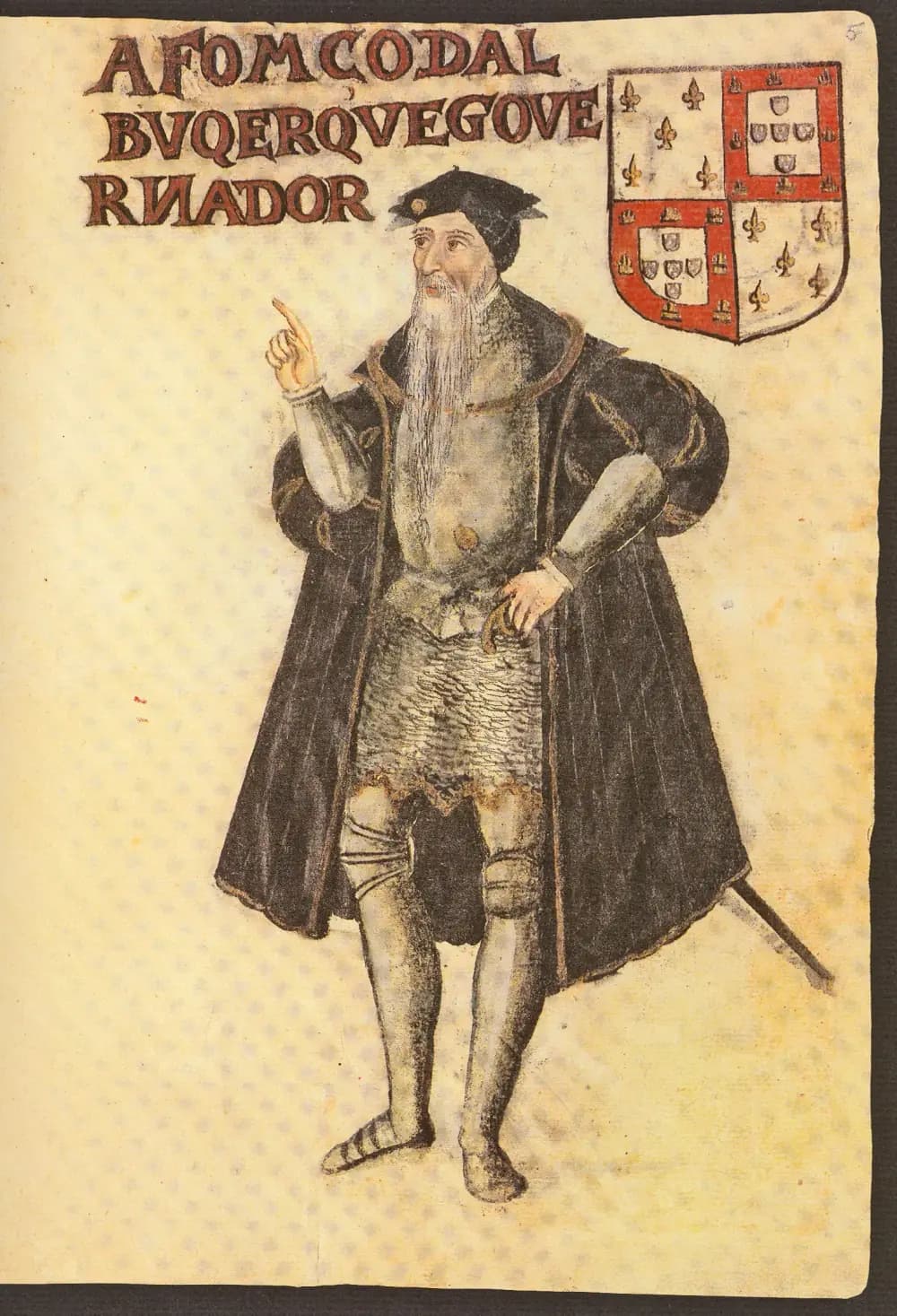
- Afonso de Albuquerque in the Livro de Lisuarte de Abreu, painted around 1560, some 45 years after his death. The lettering gives his name and the title “governador”, governor. Lisuarte de Abreu, Public domain, via Wikimedia Commons.
- The walled Portuguese town of Malacca in the 1630s, from António Bocarro's Livro das Plantas das Fortalezas. By then the fort begun in 1511 had grown into a fortified city beside the river. António Bocarro, Public domain, via Wikimedia Commons.
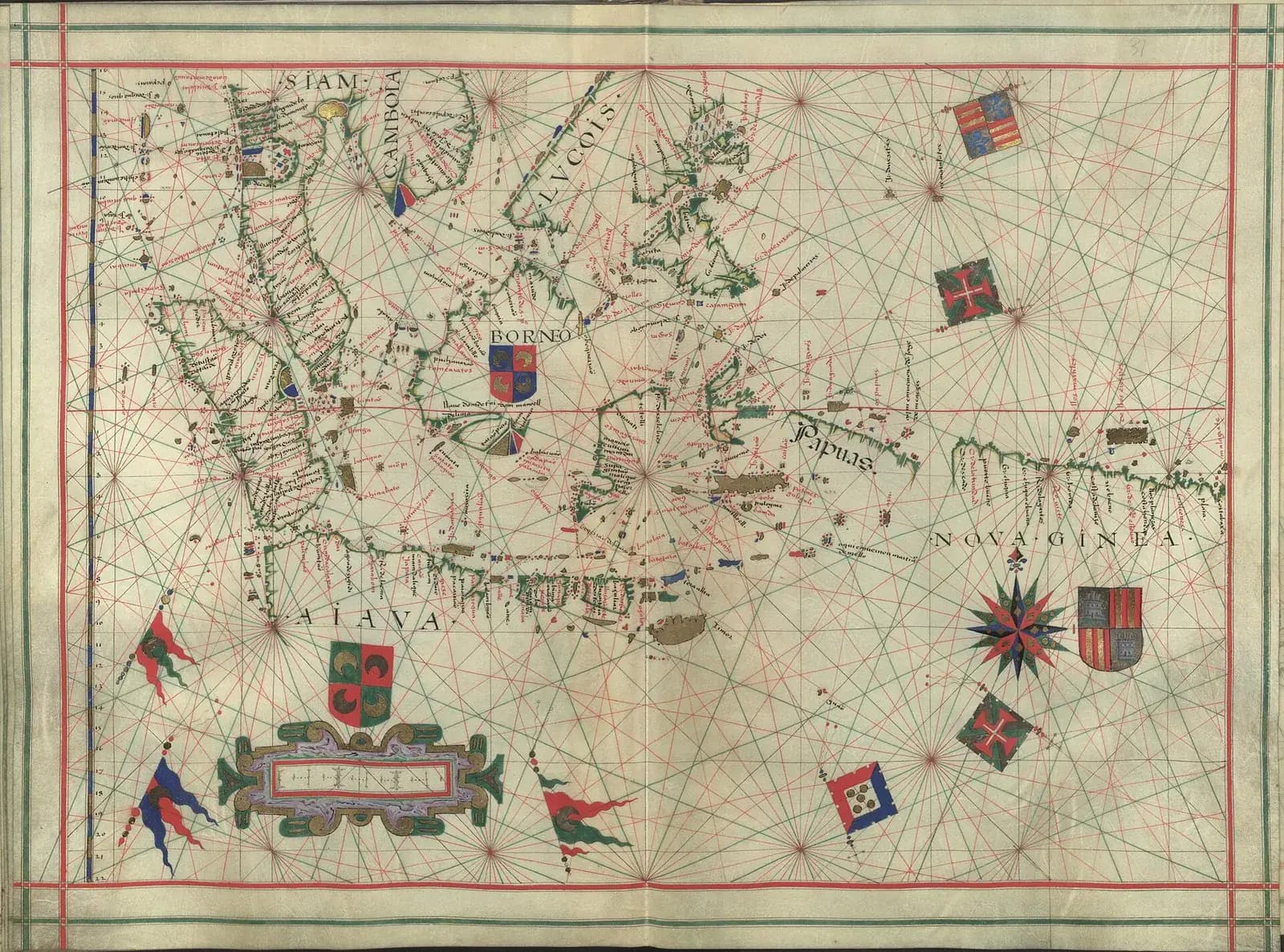
- South-East Asia in Fernão Vaz Dourado's atlas of 1576. The Malay peninsula runs down from Siam at top left; the long island crossing the red equator line at left is Sumatra, with Java (Aiava) beyond it along the bottom. The Strait of Malacca runs between Sumatra and the peninsula. Fernão Vaz Dourado (1520 — c. 1580), Public domain, via Wikimedia Commons.
- The replica Flor de la Mar that houses Melaka's Maritime Museum, photographed in 2009. It is a modern reconstruction, opened as a museum in 1994. CEphoto, Uwe Aranas, CC BY-SA 3.0, via Wikimedia Commons.