

Operation Green Sea: Portugal's secret night raid on Conakry in 1970
Six Portuguese warships crept up to the capital of a neighbouring African state in the dark, carrying commandos with Soviet-type weapons and Guinean exiles who meant to seize power. By dawn the prisoners were free and the coup had failed. Within hours Lisbon was denying everything.
At a glance
- In the early hours of Sunday 22 November 1970, a Portuguese naval task group of six ships landed between 300 and 400 men, by different counts, at Conakry, capital of the independent Republic of Guinea.
- The force, planned and led by Lieutenant-Commander Guilherme Alpoim Calvão, freed 26 Portuguese servicemen held by the PAIGC independence movement and set fire to the PAIGC's and Guinea's fast patrol boats.
- Its larger aim failed: the Guinean exiles it carried could not find President Sékou Touré, take the radio station or rouse the city, and the PAIGC leader Amílcar Cabral was abroad.
- Portugal denied any part in the raid, but on 8 December 1970 the UN Security Council strongly condemned it in Resolution 290, by 11 votes to none with four abstentions.
- In Guinea, Touré answered with a purge: some 3,500 people were arrested and at least 92 sentenced to death in January 1971. In Bissau, General Spínola concluded the war could not be won by arms.
Rubber boats in Conakry harbour
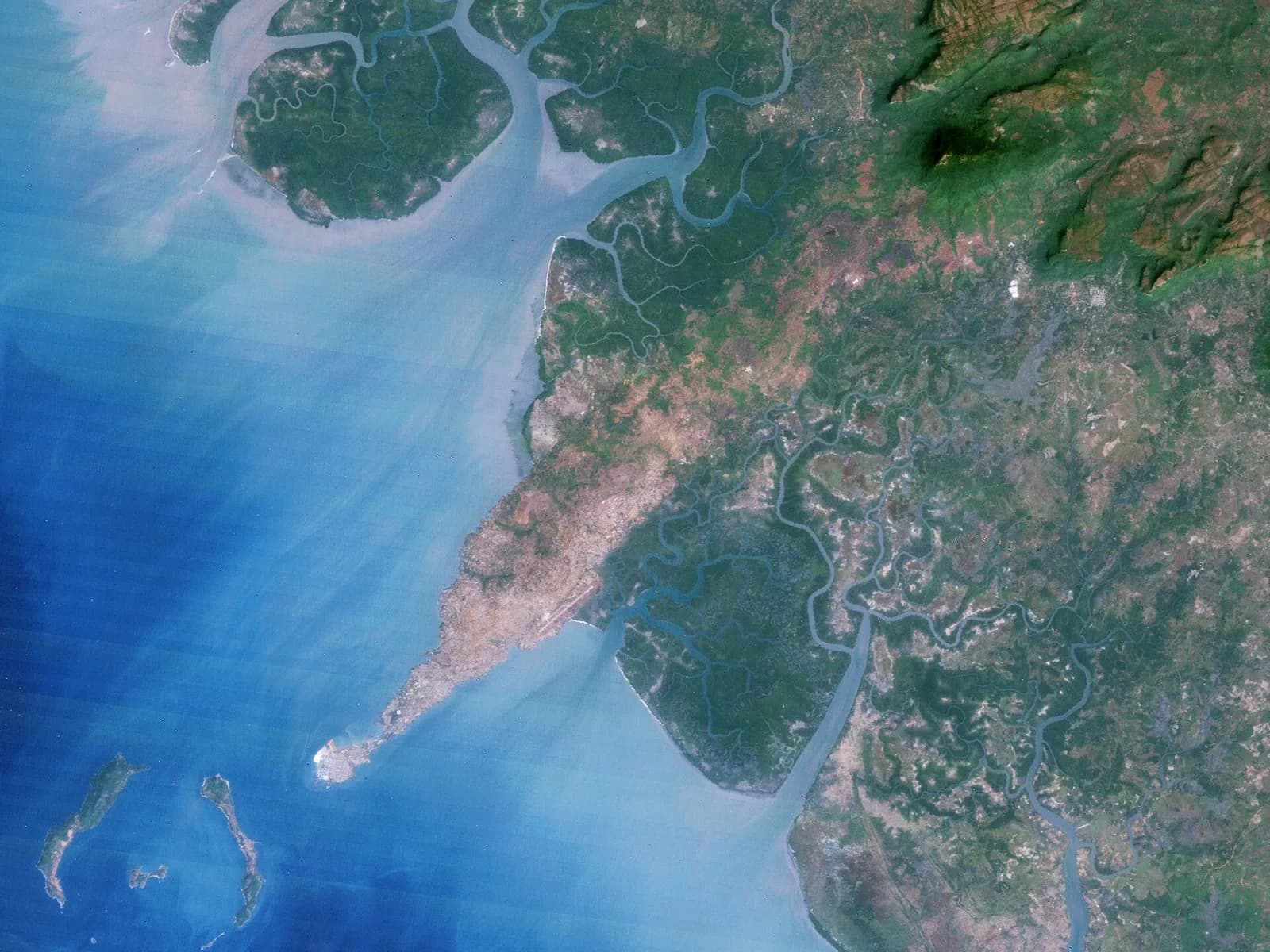
At a quarter to two on the morning of Sunday 22 November 1970, men dressed in copies of Guinean army uniforms climbed down from the patrol boat Orion into rubber dinghies. The Orion lay at anchor half a mile off the breakwater of Conakry, the capital of the Republic of Guinea. Most of the city was asleep; only the bars and nightclubs were still open.
The dinghies made for the pier where the PAIGC guerrillas' fast patrol boats were moored. The team killed the sentry, boarded the boats and dropped hand grenades through the hatches, starting fires. Then they ran along the pontoon and did the same to three Guinean navy boats tied up at the north wharf.
Most of the raiders were black African marines and commandos of the Portuguese forces, recruited in Portuguese Guinea, the colony next door that is now Guinea-Bissau. They carried Soviet-type weapons and nothing that could tie them to Portugal, and the few white men who went ashore had darkened their faces and hands. Other boats were carrying Guinean exiles who planned to overthrow their president before daybreak.
Elsewhere in the city, in a prison the Portuguese reports call La Montaigne, 26 Portuguese servicemen were being held. One of them, the air force sergeant pilot António Lobato, had been a prisoner since 22 May 1963, when his T-6 was hit on a mission over the island of Como, in Portuguese Guinea, and came down in a rice field: seven and a half years.
A colonial war with a sanctuary across the border
Portugal in 1970 was still a dictatorship, the Estado Novo founded by António de Oliveira Salazar and led since 1968 by Marcelo Caetano. It refused to give up its African colonies, and was fighting independence movements in Angola, Mozambique and Portuguese Guinea at the same time.
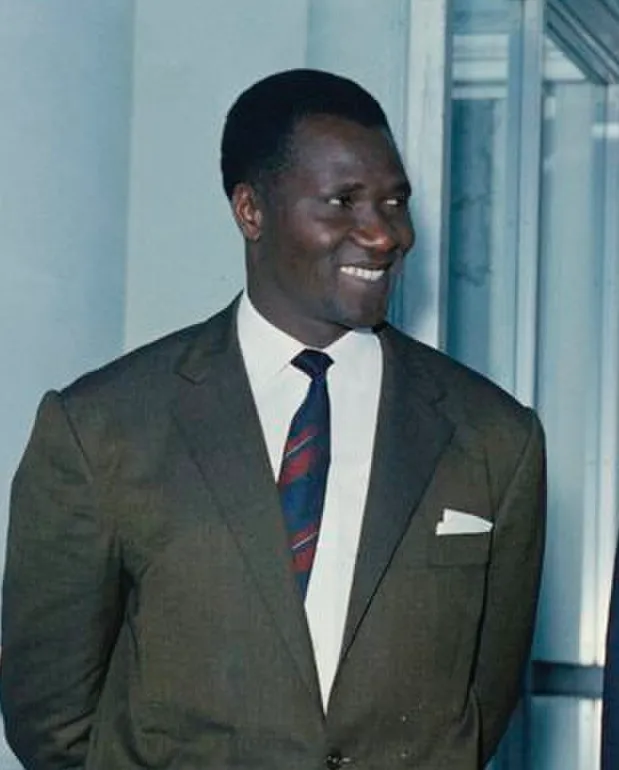
The Republic of Guinea mattered most. Its president, Ahmed Sékou Touré, let the PAIGC keep its headquarters, a prison and its boats in his capital, Conakry. The PAIGC's P6 patrol boats and the Guinean navy's Komar boats were much faster than the Portuguese navy's, though easy targets while tied up in port.
Since May 1968 the colony had been run by General António de Spínola, governor and commander-in-chief. He tried to win over the population with a policy he called “for a better Guinea”, held “people's congresses” in 1970 and asked Lisbon again and again for more aircraft and men. His officers had orders to cross the borders only in extreme situations, quickly, and as discreetly as possible, so that Portugal could never be blamed.
From a rescue raid to a coup d'état
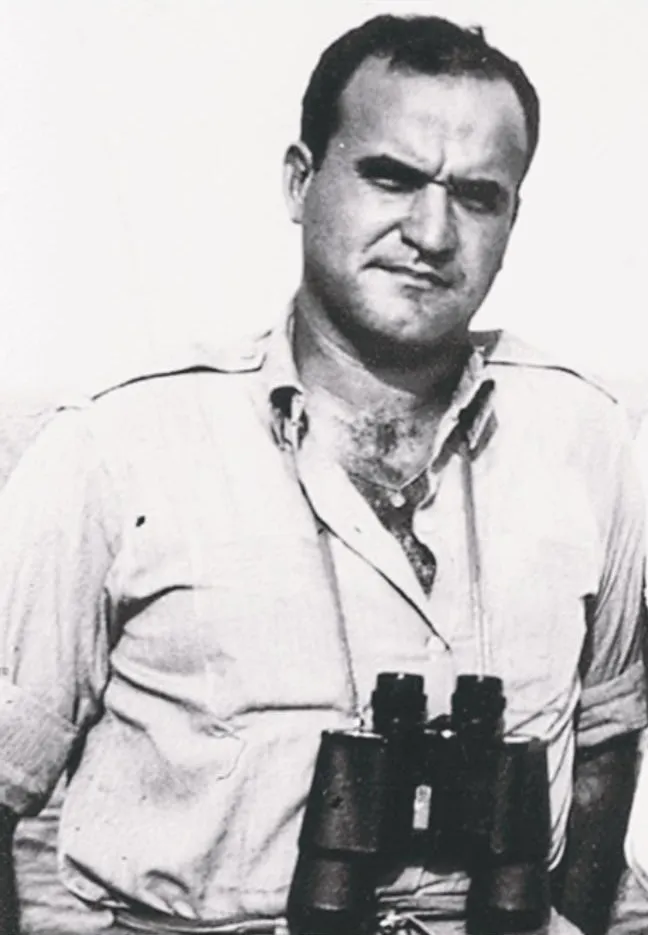
The idea began small. In August 1969 the command in Bissau first considered a raid to free the Portuguese prisoners of war held by the PAIGC in Conakry, and to sink the fast boats while they lay defenceless at their moorings. The man who proposed it and would lead it was Guilherme Alpoim Calvão, a naval officer from Chaves, 33 at the time of the raid, who had first commanded marines in Guinea in 1963 and whom the navy later called its most decorated officer.
By the end of 1969 Spínola learned that the government in Lisbon had been talking since the summer of 1968 to exiled opponents of Sékou Touré (José Matos's later research puts the first contacts in 1966), chief among them the Front National de Libération de la Guinée (FNLG). They wanted money and weapons for a coup. In return they offered diplomatic relations with Portugal and an end to the PAIGC's bases in their country. The raid became the military half of a plan to change the government of a sovereign state.
The declassified Portuguese report gives the mission in two parts: a coup in Conakry to bring to power a government favourable to the “high interests of the Nation”, and an attack on the PAIGC to cause casualties, destroy equipment and free the 26 prisoners. Portuguese planners also hoped to capture or kill PAIGC leaders; historians still disagree over whether Cabral himself was meant to be killed.
Calvão went to look for himself. On the night of 17 September 1969 the patrol boat Cassiopeia, disguised as a fishing boat, slipped into the channel between the Îles de Loos and Conakry and spent an hour mapping the new piers by radar. In January 1970 a secret training camp opened on Soga, an island in the Bijagós archipelago, and FNLG volunteers were collected by sea from Sierra Leone, the Gambia and Senegal. Their Soviet weapons were bought in Bulgaria.
Who went ashore: the landing force by group
men
Approximate strength of the four groups, as given by Afonso and Martelo from the Portuguese report: 150 FNLG fighters declared combat-ready, about 20 militiamen from Portuguese Guinea who knew the terrain, one African Commando company of 150 and a detachment of 80 African Marines. Other counts differ: Matos and Matos e Lemos give about 300 men in all and 200 exiles trained on Soga; the UN Special Mission found 350 to 400 men had landed; Guinea's ruling party spoke of 350; and an exile spokesman in Paris claimed 150 to 200 Guineans and no Portuguese.
Show the data
| Men | |
|---|---|
| FNLG exiles | 150 |
| Portuguese Guinea militia | 20 |
| African Commandos | 150 |
| African Marines | 80 |
Spínola staked his name on it. On 12 November 1970 he wrote to Caetano that he took full personal responsibility. Caetano approved the operation, on condition that nothing be left behind in Conakry that could compromise Portugal. His ministers of defence and of the overseas territories were against it, fearing the international fallout.
“Personally, I assume full responsibility for the operation, running the necessary risks, because I'm firmly convinced that, notwithstanding the unquestionable accomplishment in the scope of a social counter-revolution, we will irremediably lose Guinea if we do not neutralize the enemy abroad.”
Two and a half hours in Conakry
Spínola visited Soga on 19 November to speak to the troops. At eight the next evening Task Group 27.2 sailed: four Argos-class patrol boats, the Orion, Cassiopeia, Dragão and Hidra, and two large landing craft, the Montante and the Bombarda. A Portuguese air force patrol plane flew over to check the route. The ships reached the waters off Conakry unseen at about eight on the evening of 21 November and split up: the Orion anchored off the harbour, three ships took station north of the city's peninsula and two went to the south.
20 November, 20:00
Task Group 27.2 sails from Soga
21 November, c. 20:00
The six ships reach Conakry undetected and take up position
22 November, 01:45
Attack begins
Team Victor burns the patrol boats in the harbour.
c. 02:00 GMT
Time of the attack given by Guinea to the UN
02:15
Team Zulu lands
It frees the 26 Portuguese prisoners and wrecks the PAIGC headquarters.
Before dawn
Airport taken without a fight, but no MiGs are there
c. 04:30
Calvão orders everyone back to the ships
23 November, 16:25
The task group is back at Soga
Each objective had its own team, named with the phonetic alphabet. In the city centre most targets fell with little resistance, though the gendarmerie barracks held out at first. The power station was seized and the lights went out across Conakry, which threw the defenders into confusion. At the Republican Guard barracks the attackers won a hard fight and freed about 400 prisoners held there.
Guinea admitted part of this. On 23 November Radio Conakry said the invaders had taken the Camayenne prison and released political prisoners, among them Colonel Kaman Diaby, a former army chief of staff who had been sentenced to death in 1969, and had wrecked the PAIGC headquarters.
| Team | Target | Result |
|---|---|---|
| Victor | Patrol boats in the harbour | P6 boats and three Komar boats set on fire |
| Zulu | La Montaigne prison, PAIGC headquarters, militia camp and Villa Silly | 26 Portuguese prisoners freed; PAIGC buildings and vehicles destroyed; Touré not at Villa Silly |
| Alfa | Presidential palace | Taken, but Touré not there |
| Hotel | Radio Boulbinet | Never reached; the coup proclamation was not broadcast |
| India | Power station | Taken; the city blacked out |
| Oscar | Republican Guard barracks | Taken after heavy fighting; about 400 prisoners freed |
| Mike | Camp Samory barracks | Occupied without resistance |
| Sierra | Airport and MiG-17 fighters | Taken without resistance; no aircraft found |
Other teams were sent against the interior ministry, the gendarmerie, the post office, ministers' homes, a building used by Cubans and the isthmus joining the city to the mainland.
Team Zulu came ashore from the Dragão and Cassiopeia in ten rubber boats at 02:15 and split three ways. One group stormed La Montaigne prison and, after a short, violent fight with the guards, brought out all 26 Portuguese prisoners. A second group shot up the PAIGC headquarters. A third hit Villa Silly, Touré's other residence, but he was not there either.
At 09:10 that morning a secret signal from the force read, in translation from the Portuguese: “I have on board 26 prisoners including Sergeant Lobato.” Not every count agrees: on 30 November Lisbon was reported to have received 25 freed prisoners of war, and a Guinean account drawing on Portuguese officers' papers gives 23.
Almost everything else that mattered went wrong. Touré was not at the presidential palace. Amílcar Cabral was abroad, which the planners had not known. The Portuguese officer leading the radio team lost his way, so the exiles' proclamation was never broadcast. According to Matos and Matos e Lemos, one team went to the archbishop's residence in place of the house where it thought Touré was. The planners had struggled to find up-to-date maps of the city and had fallen back on magazines and tourist leaflets.
Then team Sierra reached the airport and found no MiG fighters there. Calvão now feared an air attack on his ships at first light. On the march to the airport a lieutenant of the African Commandos, named in the reports as Januário, went over to the Guineans with about twenty of his men. The exiles' promised uprising had not come either. At about 04:30 Calvão ordered his forces back on board.
Re-embarkation dragged on towards dawn. Portuguese military reports claim that a crowd on the shore applauded, believing Touré had fallen; the claim comes from the Portuguese side only. Some of the FNLG fighters stayed behind and fought on for days, without success.
| Source | Killed or casualties | Notes |
|---|---|---|
| Portuguese report (Afonso and Martelo) | 3 Portuguese dead and 9 wounded; about 500 Guineans killed | The Guinean figure is a Portuguese estimate, military and civilian |
| Reports from Dakar, 25 November 1970 | More than 300 killed | In three days of fighting |
| Unofficial reports from Conakry, 26 November 1970 | About 50 Guineans and 3 Europeans | Invaders' losses unknown |
| Observador, 2014 | About 400 Guinean casualties | Obituary of Calvão; may include wounded |
| Guinéenews, 2020 | About 500 Guineans and 3 commandos | Guinean dead include civilians, soldiers and militiamen |
| FNLG veteran quoted by Guinéenews, 2020 | About 100 exiles of the FNLG dead | Several more captured |
Among the dead were Siegfried Krebs, deputy consul at the East German embassy in Conakry, and Count Ulf von Tiesenhausen, who worked for a German firm in the city.
Lisbon denies, the Security Council condemns
That morning Guinea's ambassador to the United Nations asked for an emergency meeting of the Security Council. His letter said Portuguese forces had attacked at about 2 a.m. GMT and asked for UN airborne troops to help the Guinean army. Radio Conakry reported “mercenaries” landing from Portuguese Guinea, and Touré said he was directing the defence in person.
“We positively deny this accusation, which has not the slightest foundation. Portugal has enough trouble already in her African territories, because of its neighbours, and therefore has no interest in creating more.”
Spínola denied it in Bissau the same day. Yet on 30 November it was reported from Lisbon that 25 Portuguese prisoners of war freed during the invasion had arrived from Bissau and been placed in guarded seclusion.
When a Lieutenant Lopes, named by Keesing's as João Janeiro Lopes, was presented to the UN investigators as a leader of the invaders, the Bissau command said he had deserted in September after being accused of murdering a black soldier in his unit. The Portuguese operational report, declassified decades later, has the commando lieutenant Januário changing sides during the raid itself.
The Council moved quickly. Resolution 289, dated 23 November and adopted unanimously in the early hours of the 24th, demanded an end to the attack and the withdrawal of all foreign forces and mercenaries, without naming Portugal, and sent a special mission to Conakry. Its five members, chaired by a Nepalese general and including diplomats from Colombia, Finland, Poland and Zambia, arrived on 25 November and interviewed about a dozen captured attackers, all of them Africans, in a military prison.
Their report, published on 4 December, found that 350 to 400 men in Guinean uniforms with green armbands had landed from two troop transports and three or four smaller patrol boats. The ships had been manned mostly by white Portuguese crews under white Portuguese officers; the landing parties were mainly Africans from Portuguese Guinea under white officers, with dissident Guineans trained on Portuguese territory. The aims, it said, were to overthrow Touré, weaken the PAIGC and free the Portuguese prisoners.
On 8 December the Council adopted Resolution 290 by 11 votes to none. France, Spain, the United Kingdom and the United States abstained. It strongly condemned Portugal for the invasion, demanded full compensation, and declared that Portuguese colonialism in Africa was a serious threat to the peace and security of independent African states. It urged all states not to give Portugal military and material help that would let it continue its “repressive actions” in its colonies and against independent African states, and warned that any repeat would bring “appropriate effective steps or measures”.
The resolution also cited a second armed attack on 27 and 28 November. Radio Conakry had said about 200 “mercenaries” crossed the land border from Portuguese Guinea near Koundara, and that 30 were killed and 18 captured. That incursion is not part of the Portuguese accounts of Green Sea.
- Resolution 289
- Dated 23 November 1970, unanimous: stop the attack, withdraw, send a special mission
- Special Mission
- Reached Conakry 25 November, back in New York 29 November; report published 4 December
- Resolution 290
- 8 December 1970: 11 for, 0 against, 4 abstentions
- Abstained
- France, Spain, United Kingdom, United States
- OAU
- Council of Ministers in Lagos condemned Portugal on 11 December 1970
Portugal rejected the report on 7 December as “unilaterally made”, and on 9 December called the resolution an “incitement to acts of violence and unrest”. The resolution imposed no sanctions, although the Soviet delegate had demanded them. Touré, for his part, asked the UN not to send a mission to assess the damage, which he said could not be measured in money: the only acceptable reparation was immediate independence for Angola, Mozambique and Guinea-Bissau.
Purges in Conakry, second thoughts in Bissau
In Guinea the raid set off one of the largest waves of arrests of Touré's rule. Amnesty International later put the arrests after the attack at some 3,500, among them government ministers, provincial governors and most of the army's senior officers. Confessions extracted under torture were broadcast on the radio.
In January 1971 the National Assembly sat as a Supreme Revolutionary Tribunal and sentenced at least 92 people to death without hearing them. A “popular trial”, in which meetings across the country voted on the penalties, opened on 18 January and its sentences were read on 24 January. Public hangings followed: at dawn on 25 January four officials were hanged under a bridge in Conakry, and a spokesman for the victims' families speaks of more than 80 people hanged across Guinea.
Many others arrested in 1970 and 1971 simply disappeared. An association of the victims of Camp Boiro, the regime's political prison, has campaigned since 1985 for the return of their remains.
In Bissau, the failure changed Spínola's mind. At the Superior Council of National Defence on 7 May 1971 he argued that the war could not be won by arms.
“We must therefore rule out, once and for all, the illusion of winning militarily the war we face. … The problem can only be solved in the political field.”
The PAIGC kept its foreign backers and its bases, and the war grew harder for Portugal. Cabral was assassinated in Conakry on 20 January 1973. The PAIGC proclaimed independence at Madina do Boé on 24 September 1973, and Portugal recognised it on 10 September 1974, after the revolution of 25 April had ended the dictatorship.
Why it still matters
No Portuguese government has officially acknowledged the operation or apologised for it. Calvão said in 2012 that he had a letter from Spínola and Caetano's authorisation, but that Caetano would not take responsibility once the UN reacted. Spínola said in 1989 that the official file had been destroyed. The few surviving papers, the operational report among them, were declassified after 2000, and historians have filled the gaps from other archives and testimonies.
As a military operation it was a tactical success and a strategic failure. The prisoners came home and the patrol boats burned, at a cost of three Portuguese dead. But Touré stayed in power, the PAIGC kept its sanctuary, and Portugal's standing abroad sank to a new low.
Its people went on to shape what followed. Spínola later made his case for a political answer in public, in his book Portugal and the Future. Calvão, after the revolution, fled on foot to Spain and in 1975 helped found the MDLP, a far-right movement against the new revolutionary government; the Communist leader Álvaro Cunhal called him the “number one operative” of the counter-revolution's bombing network. He later divided his time between Cascais and Guinea-Bissau, where he had a cashew-processing factory, and died in Cascais in 2014.
Lobato flew again, published a memoir of his captivity at the end of 1995 and, in Praia in 1975, embraced former PAIGC guerrilla leaders who had held him prisoner.
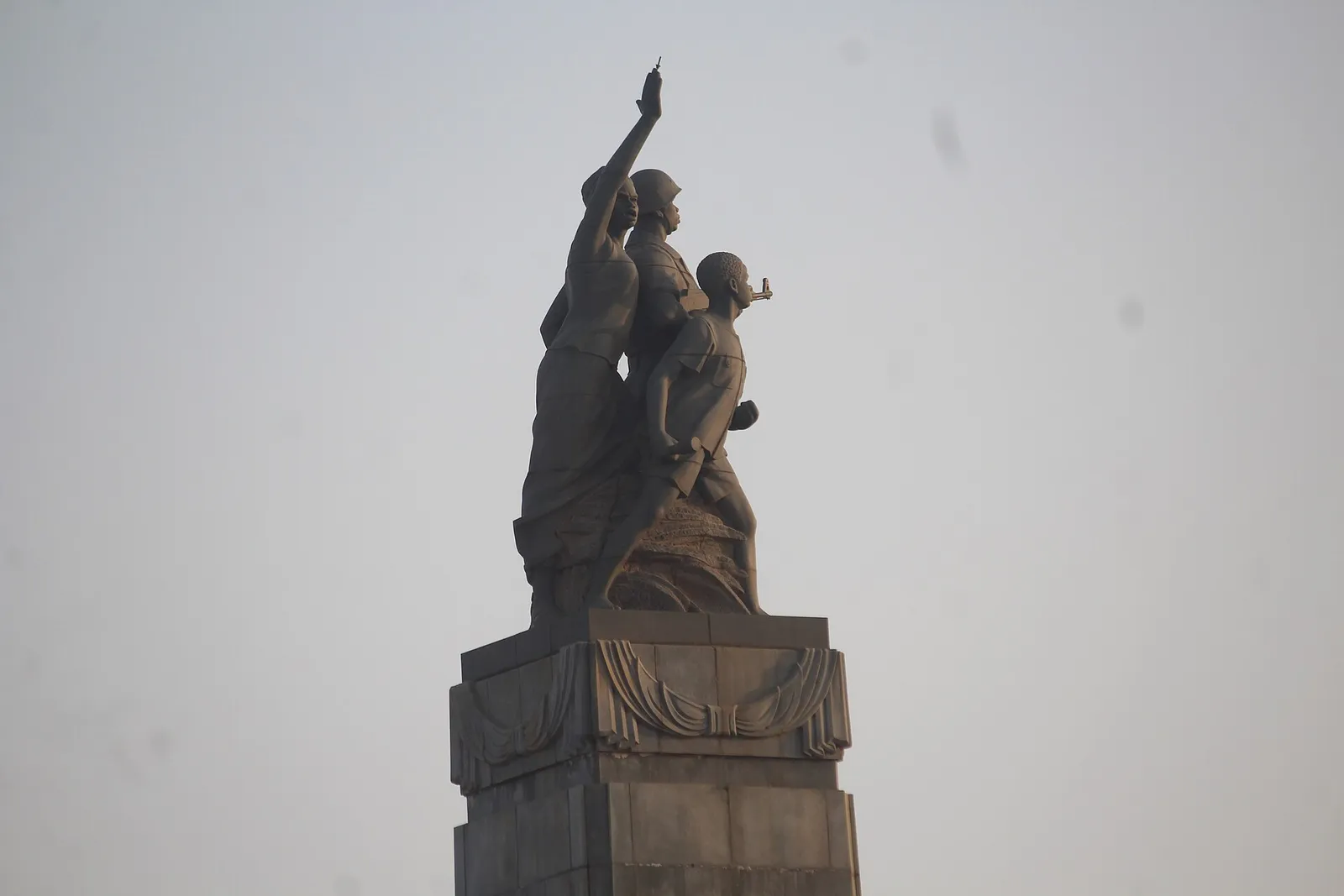
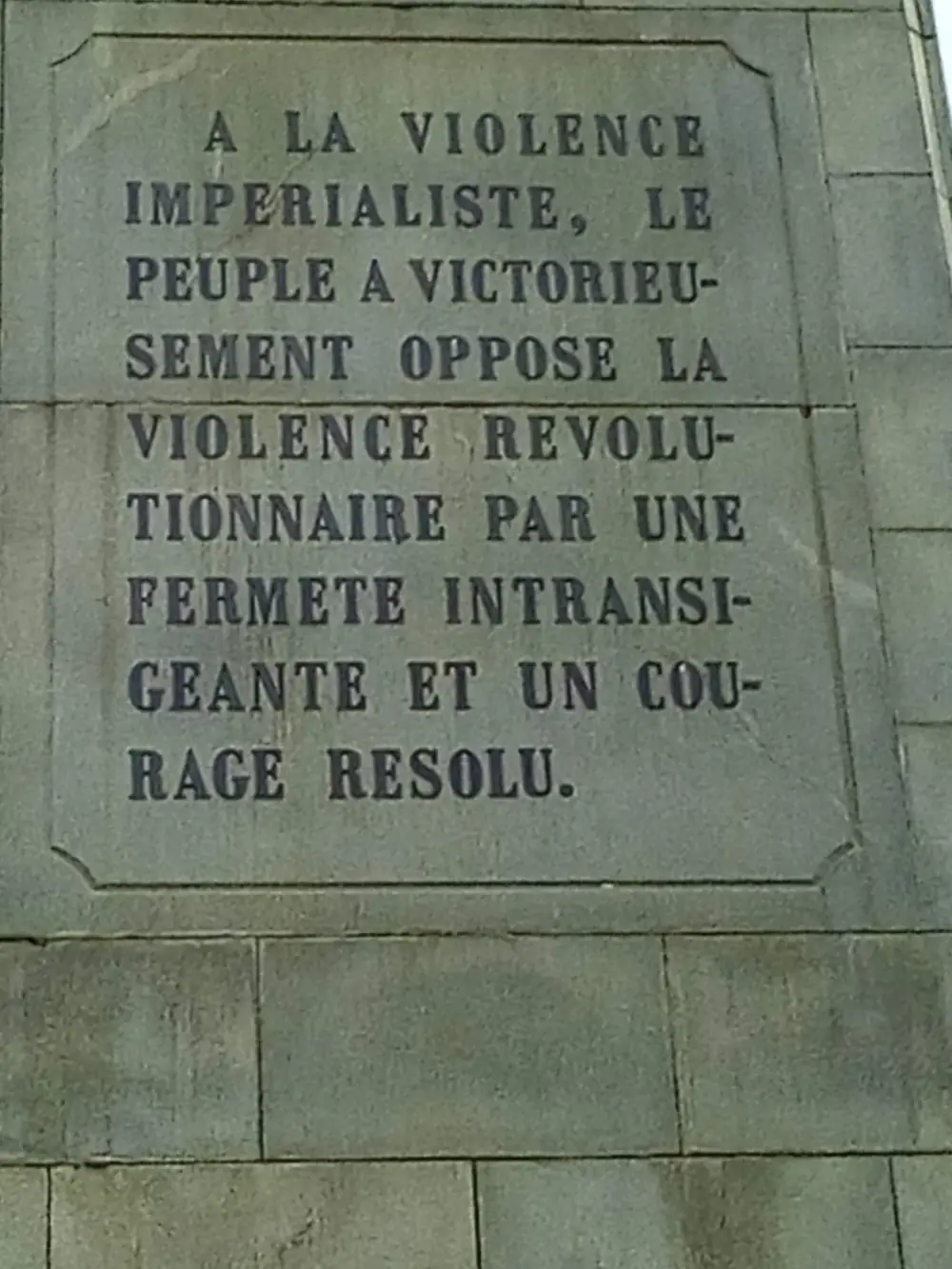
In Guinea the raid is remembered as “the aggression of 22 November 1970”. Each anniversary a public debate on it is held at the Palais du Peuple in Conakry, and families of those who vanished in Camp Boiro after the raid still ask what became of them. The Guinean historian Sidiki Kobélé Keita has argued that the attack and the repression cannot be judged apart, since it was the attack that radicalised the repression.
FAQs
What was Operation Green Sea?
Operation Green Sea (Operação Mar Verde) was a secret Portuguese amphibious raid on Conakry, capital of the Republic of Guinea, on the night of 21 to 22 November 1970. Between 300 and 400 men, by different counts, landed from six ships: African troops of the Portuguese forces and Guinean exiles. Their aims were to free Portuguese prisoners, destroy PAIGC boats and back a coup against President Sékou Touré.
Did Operation Green Sea succeed?
Only in part. It freed 26 Portuguese prisoners and destroyed the PAIGC's and Guinea's patrol boats, but it did not find Sékou Touré, seize the radio station or capture Amílcar Cabral, who was abroad. The coup failed and Touré stayed in power.
Who led the raid on Conakry?
Lieutenant-Commander Guilherme Alpoim Calvão of the Portuguese navy planned and commanded it, with the support of General António de Spínola, governor of Portuguese Guinea, and the approval of Prime Minister Marcelo Caetano.
How did the United Nations respond?
Resolution 289 of 23 November 1970 demanded an end to the attack and sent a special mission to Guinea. After it reported Portuguese involvement, Resolution 290 of 8 December 1970 strongly condemned Portugal and demanded full compensation. It passed by 11 votes to none, with France, Spain, the UK and the US abstaining.
Did Portugal ever admit to the attack?
No. Lisbon denied any involvement in November and December 1970, rejected the UN report and resolution, and has never officially acknowledged the operation. Its participants, including Calvão, later described it openly.
On the timeline
Open the timelineNearby moments from dictatorship and the estado novo (1926–1974).
Death of Cassiano Branco, one of the most inventive Portuguese architects of the Art Deco years, designer of Lisbon's Hotel Vitória on Avenida da Liberdade, the Coliseu do Porto and Coimbra's miniature park Portugal dos Pequenitos. An outspoken opponent of Salazar who worked mostly for private clients, he was detained by the PIDE in June 1958 for backing Humberto Delgado.
Death of José de Almada Negreiros in Lisbon. Born in São Tomé in 1893, painter, novelist, dramatist and provocateur, Almada was a co-founder of the magazine 'Orpheu' alongside Fernando Pessoa and Mário de Sá-Carneiro and is considered the most exuberant figure of Portuguese modernism. His murals at the Gare Marítima de Alcântara are among the great monuments of 20th-century Portuguese art.
Death of António de Oliveira Salazar at the São Bento residence in Lisbon, aged 81. Removed from office in September 1968 after suffering a brain haemorrhage, Salazar was nonetheless kept in the comforting illusion that he was still Prime Minister until his death. His passing closes the personal chapter of the Estado Novo, even as the regime would stagger on for almost four more years under Marcelo Caetano.
Operation Green Sea, Conakry
In Operation Green Sea (Operação Mar Verde), Portuguese commandos led by Alpoim Calvão land at Conakry, capital of the Republic of Guinea, and free 26 Portuguese soldiers captured by the PAIGC independence movement. The raid failed to topple President Sékou Touré and was condemned by the UN Security Council.
Death of António Silva, the irascible, bumbling star of the golden age of Portuguese film comedy. From 'A Canção de Lisboa' (1933) to 'O Pátio das Cantigas' (1942) and 'O Leão da Estrela' (1947), his films remain much-loved classics of Portuguese cinema.
Jorge Costa is born in Porto. Nicknamed 'Bicho', the tough centre-back captained FC Porto to the UEFA Cup in 2003 and the Champions League under José Mourinho in 2004, and died in August 2025, aged 53, after collapsing at the club's training ground while serving as its director of football.
Luís Figo is born in Almada. The winger starred for Sporting, Barcelona, Real Madrid and Inter Milan, won a then-record 127 caps for Portugal and is regarded as one of the finest players of his generation.
Coming up in history
All long reads 24 November 1632Spinoza, born to Amsterdam's Portuguese Jews on 24 November 1632
 25 November 197525 November 1975: the paratroopers' revolt that ended the revolution
 26 November 1967The Lisbon floods of November 1967: a night of rain and a censored toll
 27 November 2011Fado becomes world heritage: UNESCO's verdict in Bali, 27 November 2011
15 sources
Archives, scholarship and reporting this article was checked against.
- 1
Operation “Mar Verde”, by Aniceto Afonso and David Martelo, in Le Operazioni Interforze e Multinazionali nella Storia Militare, Acta of the XXXIX Congress of the International Commission of Military History, Turin 2013, vol. I, pp. 604–610Commissione Italiana di Storia Militare, Ministero della Difesa
- 2
Guinea: Repulse of Raids by “Mercenaries” and Guinean Exiles. U.N. Security Council Resolution. Report by Special U.N. Mission. Extraordinary Meeting of OAU Council of MinistersKeesing's Record of World Events, vol. XVII, December 1970, p. 24353
- 3
Security Council resolution 290 (1970): Complaint by GuineaUnited Nations Security Council
- 4
- 5Fracasso da “Mar Verde” (1970) levou Spínola a defender solução política para guerra na GuinéRTP Notícias (Lusa)
- 6
A operação Mar Verde, à luz das mais recentes investigações, by Mário Beja SantosPostal do Algarve, 24 November 2025
- 7
Republic of Guinea: Amnesty International's concerns since April 1984 (AFR 29/03/91)Amnesty International
- 8O sargento na cela 7: a história de António Lobato, o prisioneiro de guerra português que esteve mais tempo em cativeiroObservador
- 9Morreu Alpoim Calvão, o comandante da “operação Mar Verde” na GuinéObservador, 30 September 2014
- 10
Efeméride: Lancha de desembarque grande Bombarda aumentada ao efetivoMuseu de Marinha, Direção Cultural da Marinha
- 11
- 12Voar, escrever e abraçar os antigos carcereiros: o resto da vida do piloto António Lobato depois de 7 anos e meio em cativeiroObservador
- 13
Agression du 22 novembre 1970: 50 ans après, retour sur un épisode de notre passé récentGuinéenews, 23 November 2020
- 14Sobre a independência da Guiné-Bissau (II), by Francisco GeorgeDiário de Notícias
- 15
Operation “Mar Verde”Museu do Aljube Resistência e Liberdade, 21 November 2020
Image credits
- The monument to 22 November in Conakry, photographed in 2021. In Guinea the raid is remembered as “the aggression of 22 November 1970”. Aboubacarkhoraa, CC BY 4.0, via Wikimedia Commons.
- Ahmed Sékou Touré, president of Guinea from independence in 1958 until his death in 1984, photographed at the White House on 10 October 1962. Robert Knudsen, White House Photographs, John F. Kennedy Presidential Library and Museum, Public domain, via Wikimedia Commons.
- Alpoim Calvão as a first lieutenant, before 1965. He planned Operation Green Sea and commanded it from the patrol boat Orion. Unknown author, Public domain, via Wikimedia Commons.
- Conakry from the Landsat 5 satellite in January 1986. The old city fills the tip of the narrow Kaloum peninsula, the airport runway lies halfway along it and the Îles de Loos are offshore. In 1970 almost every target was a short walk from the sea. NASA image by Jesse Allen, using Landsat data provided by the United States Geological Survey, Public domain, via Wikimedia Commons.
- The inscription on the monument to 22 November 1970 in Conakry, photographed in 2018. It reads, in translation: “To imperialist violence, the people victoriously opposed revolutionary violence, with unyielding firmness and resolute courage.” Aboubacarkhoraa, CC BY-SA 4.0, via Wikimedia Commons.