

The Lisbon floods of November 1967: a night of rain and a censored toll
In a few hours of rain, streams that were dry most of the year swept through the shanty towns and villages around Lisbon. The regime froze the death toll at 462, and the students who dug out the mud saw a country they had never seen.
At a glance
- On the night of 25 to 26 November 1967 a storm dropped more rain on parts of the Lisbon region in about six hours than the city normally gets in all of November, and small streams rose into flash floods.
- The worst-hit places were the shacks and villages along the streams of Loures, Odivelas, Vila Franca de Xira and Alenquer. In the village of Quintas alone, between about 90 and more than 100 people died.
- The official count stopped at 462 dead on 5 December 1967, although flood victims were still being buried in February 1968. Scientists and historians put the real toll at more than 500, about 700 or 700 to 800.
- The censors told newspapers to shrink their headlines, drop the photographs of coffins and cut any mention of the students' relief work.
- Thousands of students, organised from the Instituto Superior Técnico, cleared mud, dug out bodies and vaccinated survivors. Some of them later traced their opposition to the regime to those two weeks.
A village in the dark
Quintas was a farming village in the parish of Castanheira do Ribatejo, in the municipality of Vila Franca de Xira, on the flat valley floor of a small river called the Rio Grande da Pipa. On the night of Saturday 25 November 1967 the rain swelled the river until trees and crops it had torn up blocked the Ponte do Cano bridge, and the water began to rise across the whole valley floor.
The noise of the rain woke some of the villagers in the early hours. Then they heard screams from the houses lower down. It was too dark to reach them. Some people escaped over roofs, others climbed trees and clung on, soaked, until daylight.
Luísa Silva Fajardo was 13. That night she lost her older sister, her grandparents and 27 cousins, uncles and aunts. Her father spent the whole night trying to get down to them in the lower part of the village. When morning came the valley was, in the words of the Vila Franca de Xira municipal museum, a sea of silver made of water, mud and sunlight.
“My sister was found that Sunday, my grandmother on the Monday and my grandfather nine days later.”
Nobody agrees on exactly how many people Quintas lost. The geographer Ilídio do Amaral, writing in 1968, said about 90 were reported dead, and the Lisbon medical faculty's newsletter gives 90 of 156 inhabitants. Diário de Notícias put it at about 100, more than a third of the village. The municipal museum says about two-thirds, and a 2023 flood-modelling study counts more than 100 dead, close to two-thirds of the population. No other place lost so many.
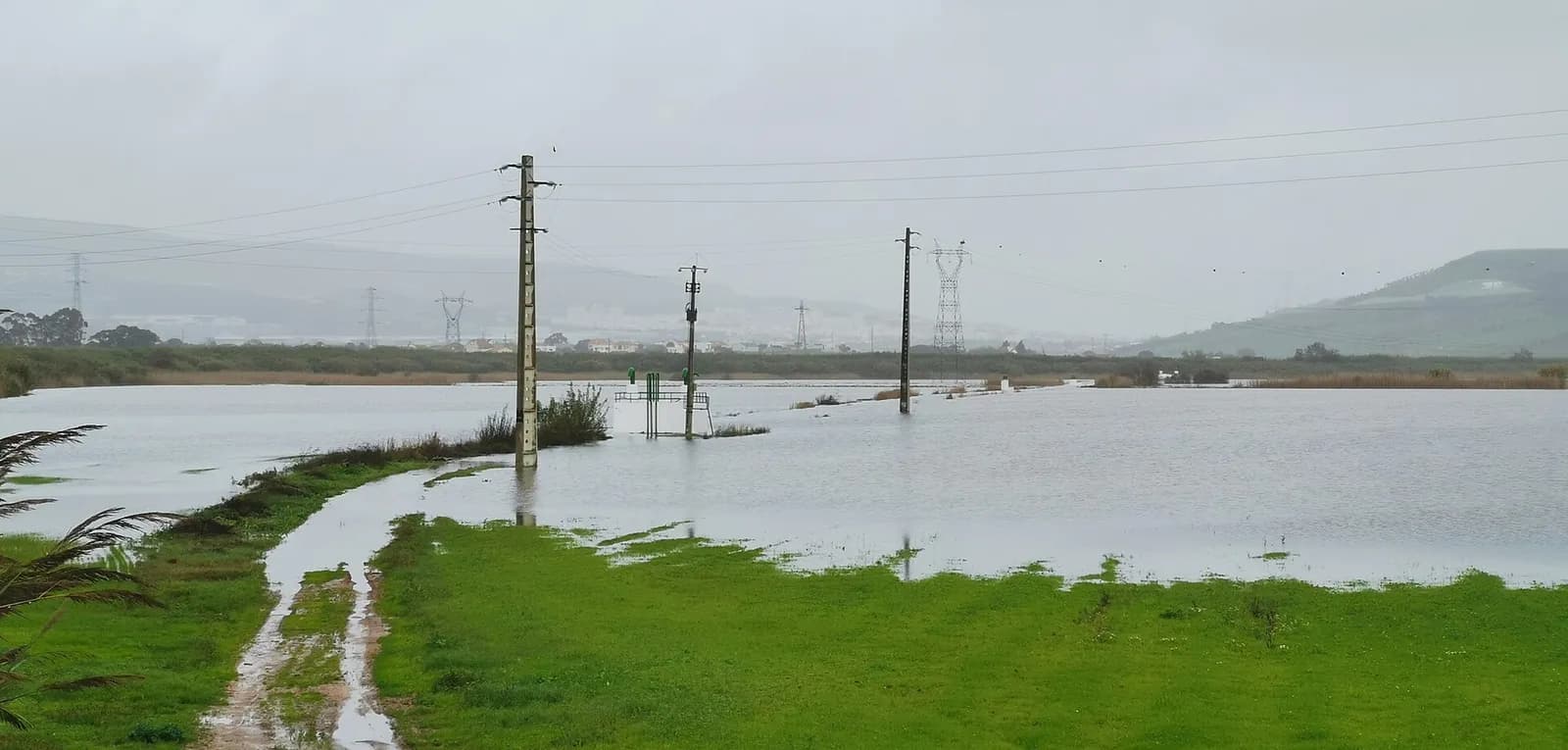
The same night, in a ring of shanty towns, villages and suburbs around Lisbon, streams that ran dry for most of the year turned into torrents within hours.
Scientists call it the deadliest storm to strike Portugal since at least the early nineteenth century. The Vila Franca de Xira museum and Diário de Notícias go further, calling it the worst natural disaster in Portugal since the Lisbon earthquake of 1755. The geographer Fernando Rebelo ranked it with that earthquake and the 1803 flood in Funchal, on Madeira, as the country's three great catastrophes of recent centuries.
A dictatorship, a war and a ring of shacks
In 1967 Portugal was a single-party dictatorship, the Estado Novo or “New State”, led by António de Oliveira Salazar. Newspapers could print nothing that had not first passed the censors. Since 1961 a colonial war in Africa had been taking ever more young men into the army. Less than a year after the floods, in September 1968, Salazar was replaced as head of government by Marcelo Caetano.
Lisbon was also growing fast. From the 1960s thousands of people moved from the interior of the country to the capital, and its outskirts spread without planning. Many newcomers built their own shacks beside the streams, for access to water, in shanty towns such as Urmeira, Olival de Basto, Romeira and Silvado.
Portugal had no national civil protection service. When disaster came, the first help came from neighbours and from the fire brigades, many of them volunteer corps. Many lost their own vehicles and equipment that night.
Six hours of rain
The storm began with a pool of cold air high over the Atlantic near Madeira, where a low-pressure system formed. A very active cold front coming from the Azores and a flow of warm air from the south-west converged on it, and from 24 November the low drifted north-east towards Lisbon. When it reached the coast the air pressure fell by about 5 millibars, and the rain was heaviest between 7 pm on the 25th and 1 am on the 26th.
In those six hours the weather station at Lisbon airport measured 77.5 mm of rain, Monte Estoril 129.7 mm and São Julião do Tojal, in Loures, 115.3 mm. Lisbon's normal rainfall for the whole of November was 92.6 mm. At Monte Estoril 60 mm fell in a single hour that evening.
Rainfall on 25 to 26 November 1967 at three weather stations
mm
- 7 pm on 25 Nov to 1 am on 26 Nov
- 10 am on 25 Nov to 10 am on 26 Nov
Measurements of the Serviço Meteorológico Nacional, published by Ilídio do Amaral in 1968. The November normal is the 30-year average he gives for Lisbon.
Show the data
| 7 pm on 25 Nov to 1 am on 26 Nov | 10 am on 25 Nov to 10 am on 26 Nov | |
|---|---|---|
| Lisbon (airport) | 77.5 | 109.4 |
| Monte Estoril | 129.7 | 158.7 |
| São Julião do Tojal (Loures) | 115.3 | 131.9 |
At Monte Estoril the 24-hour total was about a fifth of a normal year's rain, and one study put its return period at 500 years. A 2016 study led by Ricardo Trigo, of the University of Lisbon, found the rain most exceptional over periods of 4 to 9 hours, with return periods of 100 years or more. Those durations matched the time water took to run through the small river basins around the city.
The rain alone does not explain the deaths. The wettest places, Sassoeiros with 170 mm and Estoril with 158 mm, suffered the least damage. The killing happened where people lived in the stream beds. The flood also met a high tide of about 4 metres, and it struck at night, when most of its victims were asleep at home.
Walls of mud in the valleys
Neither the natural stream network nor the sewers could carry the water away. Amaral described how sheets of runoff poured off bare hillsides, abandoned farmland and newly paved ground, picked up mud and debris and gathered in the main stream beds into a fast-moving wave. It knocked down houses and bridges, rolled cars along for tens of metres and left enough mud to bury cars and fill ground floors.
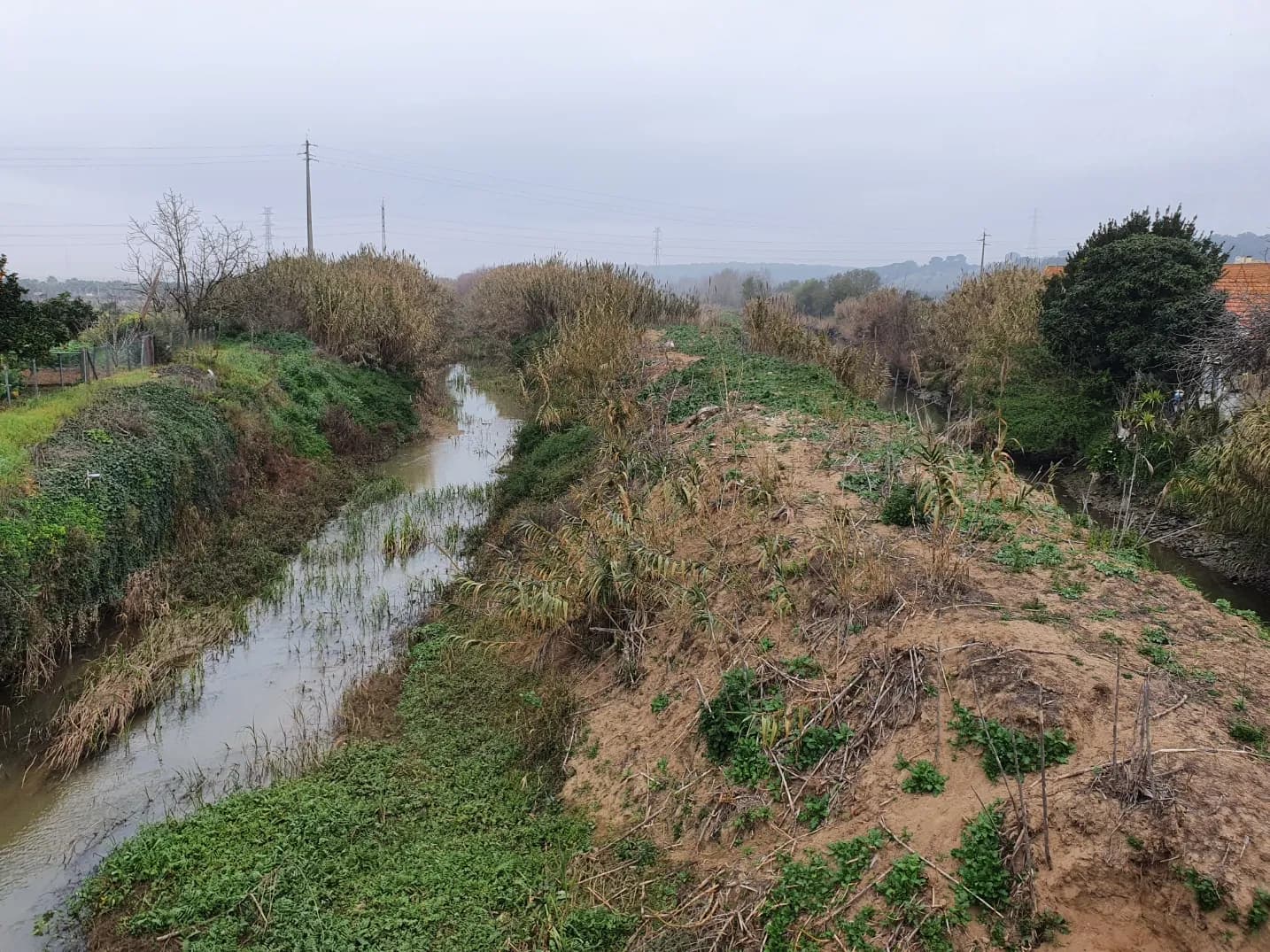
Among the most violent floods were those on the Jamor, the Odivelas stream, the Trancão and the Alenquer river. The rise lasted less than 12 hours. Where buildings hemmed in the streams, at Olival de Basto, lower Odivelas and Póvoa de Santo Adrião, the water stood 2 metres deep. The Trancão basin acted as a funnel: about 350 square kilometres of branching valleys drained into a single narrow outlet.
In Odivelas the water poured down from Caneças and Arroja, turned the market gardens out to Senhor Roubado into a lake and swept through the shacks of Silvado. A firefighter, Jaime Assunção, pulled 35 people out of one house in Silvado. Another, Guilherme Duarte Esteves, remembered that by the following night there were more than 200 dead lying in the Odivelas fire station.
In Alenquer a weir gave way upstream of a paper and cardboard factory, and a third of the factory building collapsed into the river. According to Alberto Santos, a local historian, ten people died in the town and 37 more along another stream, in villages across the valley from Quintas. In Alverca a 14-year-old firefighter was killed by a bare electric wire as he ran to answer the siren. At Alhandra a goods train standing outside the town held back a mass of mud with cars caught in it like toys.
Lisbon itself flooded. Avenida de Ceuta went under water, and in Praça de Espanha and on Avenida da Liberdade people could only get around by boat. At about 7.30 the next morning, water seeping into a gunpowder magazine at Linda-a-Velha set off an explosion that blew out windows in houses and factories nearby.
24 November
A low-pressure system near Madeira starts moving towards Lisbon
25 November, 7 pm
The heaviest rain begins
c. 9 pm
First calls to the fire brigades; power and telephone lines start to fail
c. 11 pm
Fire brigades overwhelmed; a high tide of about 4 metres
26 November, 1 am
The heaviest rain ends
c. 7.30 am
Explosion at the Linda-a-Velha gunpowder magazine
26 November, 11 am
About 176 bodies found
The Minister of the Interior, Santos Júnior, confirms 250 dead later that day.
27 November
President Américo Tomás tours the worst-hit areas
Catholic students go to the Instituto Superior Técnico to propose a joint relief effort.
28 November
Salazar chairs a Council of Ministers; the first student brigades go out
30 November
Salazar speaks in the library of the National Assembly about the war in Africa, not the floods
5 December
The official count is fixed at 462 dead
A death toll stopped at 462
By 11 am on the 26th about 176 bodies had been found. The government's count then climbed: 250 on 26 and 27 November, 316 on the 28th, 427 on the 29th. On 5 December it reached 462, and the government made that the final official figure.
The dead kept coming. Flood victims, some never identified, were buried in Vila Franca de Xira on 9 and 16 December, on 4 January and on 1 February 1968. The official count never moved. Diário de Notícias later wrote that the censors had ordered the counting of bodies stopped at 462.
Official death toll by municipality, 5 December 1967
deaths
The final official count of 462, as listed in the Vila Franca de Xira museum's chronology. Odivelas, Olival Basto, Pontinha and Póvoa de Santo Adrião were then part of Loures; in 1998 they were among the parishes that formed the new municipality of Odivelas.
Show the data
| Official dead | |
|---|---|
| Vila Franca de Xira | 221 |
| Loures | 125 |
| Alenquer | 54 |
| Oeiras | 33 |
| Arruda dos Vinhos | 14 |
| Sintra | 12 |
| Sobral de Monte Agraço | 3 |
The censors did not try to erase the disaster, the museum's researchers concluded, only to shrink it. On 27 November the Directorate of Censorship telegraphed its local offices.
“Pictures of the tragedy: it is advisable to start toning down the story. Coffins and similar things achieve nothing and are shocking. It is time to put an end to that. It is time to make the headlines smaller.”
Two days later the instructions were tighter: headlines on the floods could be no wider than half a page and had to go to the censor, the smell of the corpses was not to be mentioned, and the charitable activities of students were to be cut. Photographs cut from the magazine Século Ilustrado survive in the national archive at the Torre do Tombo. Within about six weeks the floods had gone from the papers.
Alice Vieira, then a reporter on the Diário de Lisboa, later recalled that an official phoned João Paulo Guerra, a journalist at Rádio Clube Português, with an order: “From this hour on, nobody else dies.” On 30 November Salazar gave a speech in the library of the National Assembly. Several newspapers had asked for national mourning. He spoke about the war in Africa and said nothing about the floods.
The political police, the PIDE, questioned the United Press International correspondent Edouard Khavessian over a report of student protests against the government's handling of the relief. According to the Vila Franca de Xira exhibition, foreign journalists were expelled and students arrested.
| Figure | Source | What it is |
|---|---|---|
| About 176 | Ilídio do Amaral (1968) | Bodies found by 11 am on 26 November |
| More than 200 | Diário de Lisboa, 26 November 1967 | Figure in the paper's first edition after the storm |
| 250 | Minister of the Interior, 26 November 1967 | Official figure on 26 and 27 November |
| 427 | Official count, 29 November 1967 | As printed in the press |
| 462 | Official count, 5 December 1967 | Final official figure, never revised |
| More than 500 | Trigo and colleagues (2016) | Scientific study of the storm |
| About 700 | Ramos and Reis (2001) | Geographers' estimate; the Vila Franca de Xira museum says more than 700 |
| 700 to 800 | José Luís Zêzere, DISASTER project (2012) | Estimate from fieldwork that included interviews with survivors |
Some later accounts give other official figures, such as 449. Most historians and museums today quote 462 as the official count and about 700 as the likely toll.
Six thousand students and a bulletin
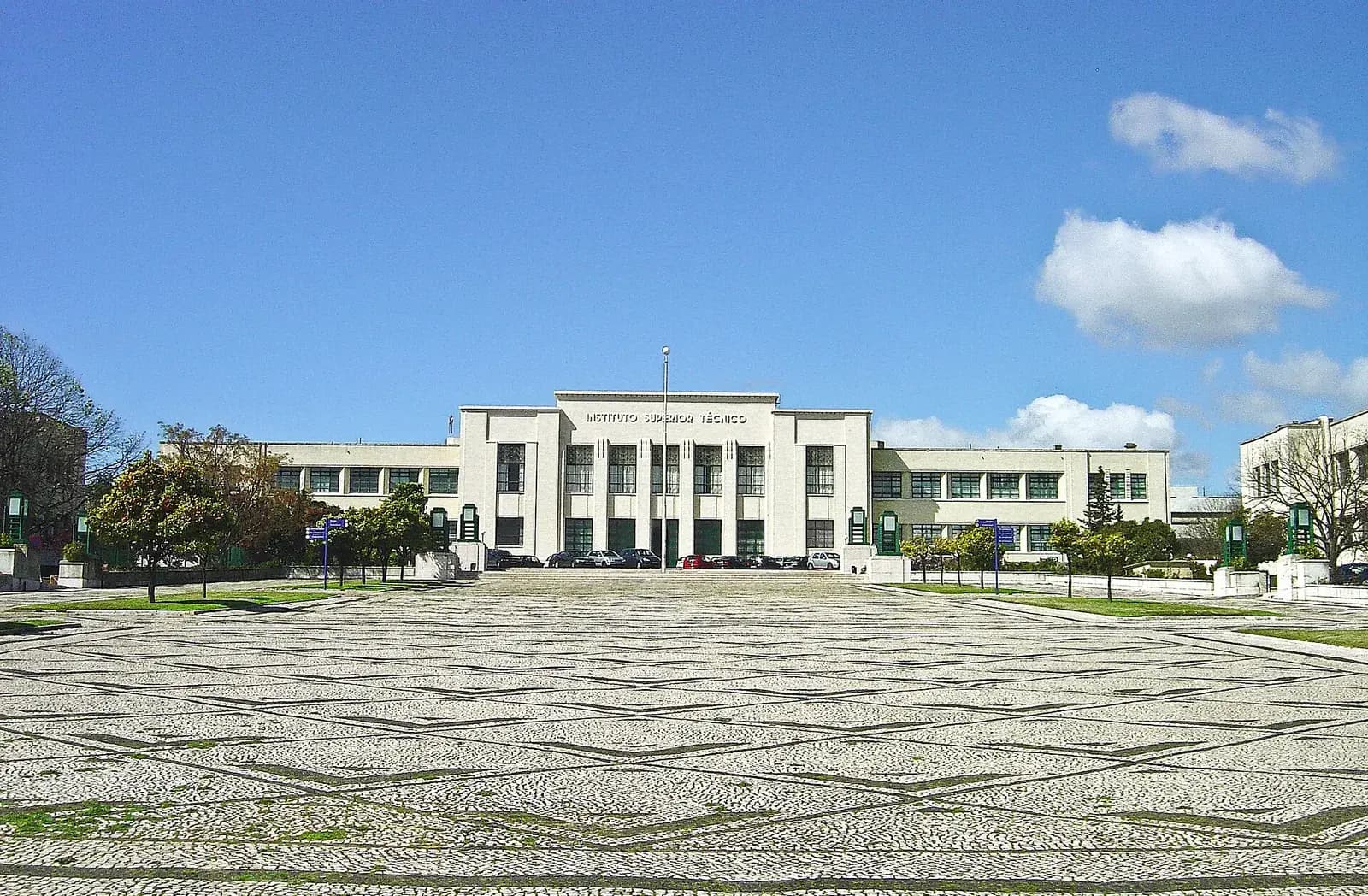
On the morning of 27 November members of the Juventude Universitária Católica (JUC), the Catholic university youth movement, went to the students' association of the Instituto Superior Técnico, Lisbon's engineering school, and proposed a joint relief effort. Helena Roseta, then a 19-year-old architecture student in the JUC, described it as the only organisation that was not banned. That day the university student associations of Lisbon met, and on the 28th the first 15 mobile brigades, with about 60 students, went out to survey the damage.
Técnico became the headquarters for two weeks. The students set up a command post with a planning service that read the field brigades' reports and set the next day's tasks, a transport service that arranged lifts to the shanty towns with companies and town halls, a dispatch service for supplies, and a bank of medicines run mostly by medical and veterinary students. Students in Coimbra and Porto collected money and sent volunteers.
About 400 university students were in the disaster areas on 29 November and about 1,000 on 1 December, joined by secondary school pupils from the Liceu Camões and the German School. A student publication later counted more than 6,000 volunteers in all, and the medical school estimates they worked about 44,000 hours.
They cleared roads and shovelled mud out of houses and shacks, helped dig out the bodies of people and animals, handed out food and clothes, helped at funerals and sat up at night with children and old people. Medical students set up field clinics and vaccination posts against typhoid. Técnico's own students worked for the people of Vala do Carregado.
“What I remember most is the smell of the dead.”
The students also wrote down what they saw. Their bulletin, Solidariedade Estudantil (Student Solidarity), came out in two issues, reached a print run of 10,000 copies and was one of the few bulletins of the time to escape the censors. Diana Andringa, a second-year medical student who wrote for it, later left medicine for journalism.
Roseta did not go out with the brigades; she stayed in Lisbon gathering their reports. Three months after the floods that work became a longer report, the Caderno de Reflexão, published with the JUC's newspaper and signed by Helena Roseta, António Cavaco, João Duarte Cunha and Pedro Roseta. It too went out without passing the censors. After that, Roseta said, the JUC's newspaper had to be submitted to censorship.
What the water exposed
Most of the students came from comfortable families. In the shacks of Fanhões, Odivelas and the Tagus valley many met, for the first time, the poverty in which a large part of the country lived, and the slowness of the authorities in the face of it.
Their Caderno de Reflexão listed among the causes of the disaster an “urbanistically marginal population, living largely in shacks”. On 29 November the central board of Portuguese Catholic Action told its members in an internal circular that poverty had magnified the calamity and that society had to be reformed to stop it happening again. In the Caderno the landscape architect Gonçalo Ribeiro Telles and the architect Nuno Portas blamed the disorderly use of land; the Aljube resistance museum also names the architect Nuno Teotónio Pereira among those who did.
Geographers agreed. Amaral listed cleared woods, abandoned fields, walls and embankments built across streams so that they acted as dams, debris from quarries, badly cut roads, streams forced into culverts, inadequate sewers, and large groups of buildings put up on unsuitable ground, some of them on top of watercourses. Ramos and Reis later wrote that most of the dead had lived in illegal housing on the flood beds, but that some licensed blocks of flats on the stream banks had also collapsed.
“We would not say: it was the floods, it was the rain. Perhaps it is fairer to say: it was poverty, poverty that our society did not neutralise, that caused most of the deaths. Even in death it is sad to be poor. Above all when you die for being so.”
The flood also broke the water supply. Water poured into the Águas Livres aqueduct and muddied the reservoir at Campo de Ourique, sewers burst, and dead livestock lay in the fields. The health authorities feared typhoid and ran a mass vaccination campaign; Spain flew in 100,000 doses of typhoid vaccine. Leptospirosis, a disease caught from animal urine or from water and soil it has contaminated, did appear: eight male patients aged 14 to 59 with a severe form of it were admitted to hospital 17 to 26 days after the flood.
A year later the Diário de Lisboa counted more than 1,000 houses destroyed, as many damaged and 400 kilometres of road affected. Other accounts put the houses destroyed at more than 20,000. The Calouste Gulbenkian Foundation built housing estates for the homeless with the state and the Vila Franca de Xira council, among them one at Quintas.
Why it still matters
Flash floods came back. On 18 and 19 November 1983 another storm hit Lisbon and Cascais, where the lower town is built over a stream running in a culvert, and 10 people died. In 2008 a third storm of similar intensity struck the Lisbon area. Both caused far fewer deaths and evacuations than 1967.
In 2001 Ramos and Reis warned that the unplanned building around Lisbon had continued as if nothing had been learned in 1967. Small streams can stay dry for years, they noted, so people living beside them do not see the danger. In 2012 José Luís Zêzere's DISASTER project at the University of Lisbon, which combed newspapers back to 1865 for deadly floods and landslides in mainland Portugal, found 1967 the deadliest flood in 149 years. Zêzere added that it was the only one of those floods in which censorship stepped in.
For a generation of students the floods were a political education. Silva Costa and his colleagues call them a landmark in the history of the Portuguese student movement. Eduardo Ferro Rodrigues, who cleaned houses in Fanhões at 18 and was President of the Assembly of the Republic when he told the story in 2017, called it “a kind of baptism of fire for my political activity”. The Vila Franca de Xira exhibition went further, linking the anger of those weeks to the revolution of 25 April 1974.
FAQs
How many people died in the 1967 Lisbon floods?
Nobody knows exactly. The official count was fixed at 462 on 5 December 1967 and never revised, although bodies were found for weeks afterwards. A 2016 scientific study says more than 500, the geographers Ramos and Reis about 700, and José Luís Zêzere's DISASTER project 700 to 800.
Which places were worst hit?
The shanty towns and villages along small streams north of Lisbon: Odivelas, Olival de Basto and Póvoa de Santo Adrião in what was then Loures, and Quintas, Alverca and Alhandra in Vila Franca de Xira, plus Alenquer. Vila Franca de Xira had the most official deaths, 221.
Why did the Estado Novo censor news of the floods?
The disaster exposed the poverty and unplanned building around the capital and the lack of any civil protection service. The censors told newspapers to shrink headlines, drop pictures of coffins, stop mentioning the smell of the dead and cut reports of the students' relief work.
What did students do after the floods?
Organised from the Instituto Superior Técnico, more than 6,000 students cleared mud, recovered bodies, distributed food and clothes and, in the case of medical students, vaccinated survivors against typhoid. They published the bulletin Solidariedade Estudantil, 10,000 copies, which escaped the censors.
How much rain fell?
Between 7 pm on 25 November and 1 am on 26 November, 77.5 mm fell at Lisbon airport, 115.3 mm at São Julião do Tojal and 129.7 mm at Monte Estoril. At the last two that was more than Lisbon's normal rainfall for the whole of November, 92.6 mm.
On the timeline
Open the timelineNearby moments from dictatorship and the estado novo (1926–1974).
The Salazar Bridge over the Tagus, linking Lisbon and Almada, is inaugurated as the longest suspension bridge in Europe at the time. After the Carnation Revolution it was renamed the Ponte 25 de Abril.
Birth in Praia da Vitória, on Terceira in the Azores, of Nuno Bettencourt, youngest of ten children of a family that emigrated to Massachusetts when he was four. As guitarist of Extreme he co-wrote the 1991 US number one 'More Than Words', and later played for Rihanna, including at the 2023 Super Bowl half-time show.
The Hotel da Penina opens near Alvor, on former rice fields outside Portimão, with a golf course designed by the British champion Henry Cotton — the Algarve's first grass course. The press of the day called it the region's largest and most luxurious hotel. Paul McCartney later made up a song, 'Penina', for its resident band.
The Lisbon floods of 1967
During the night of 25 to 26 November, torrential rain sets off flash floods across the Lisbon region, sweeping away shanty towns and villages in Loures, Odivelas, Vila Franca de Xira and Alenquer. The censored official count stopped at 462 dead, though historians estimate about 700, in Portugal's deadliest storm since at least the early nineteenth century. Students' relief work fuelled opposition to the regime.
António de Oliveira Salazar falls from a deckchair at his summer residence in Estoril, striking his head. The resulting brain injury led to his replacement as Prime Minister by Marcello Caetano the following month, ending his decades-long rule.
Marcelo Caetano takes office as President of the Council of Ministers, succeeding António de Oliveira Salazar, who had been incapacitated by illness. Caetano would be the Estado Novo's last leader, governing until the Carnation Revolution of 1974.
RTP's second channel, the 'Segundo Programa', goes on air on Christmas Day from a new UHF transmitter at Monsanto, reaching only the Lisbon area for a few hours each evening, mostly with repeats. It reached Porto in 1970; today it is RTP2.
Coming up in history
All long reads 28 November 1975Fretilin proclaims East Timor's independence, 28 November 1975
 29 November 1807The day the Portuguese court sailed for Brazil: 29 November 1807
 30 November 1935The death of Fernando Pessoa, the poet who was many, 30 November 1935
 1 December 1640Nine o'clock at the Paço da Ribeira: the Restoration of 1 December 1640
15 sources
Archives, scholarship and reporting this article was checked against.
- 1
As inundações de 25/26 de Novembro de 1967 na região de LisboaIlídio do Amaral, Finisterra, vol. III, no. 5, 1968, pp. 79-84
- 2
- 3
- 4
The deadliest storm of the 20th century striking Portugal: flood impacts and atmospheric circulationRicardo M. Trigo, Catarina Ramos, Susana S. Pereira, Alexandre M. Ramos, José L. Zêzere and Margarida L. R. Liberato, Journal of Hydrology, vol. 541, 2016, pp. 597-610
- 5
Cheias de 67: Jornal da ExposiçãoCâmara Municipal de Vila Franca de Xira, Museu Municipal (curator Joaquim Letria)
- 6
1967 FloodsMuseu do Aljube Resistência e Liberdade, 25 November 2020
- 7Cheias de 1967. O mar de lama e dor que mostrou o paísDiário de Notícias, 25 November 2017
- 8
A intervenção dos estudantes da FMUL nas cheias de Lisboa em 1967Lurdes Barata, News@FMUL no. 94, Faculdade de Medicina da Universidade de Lisboa, October 2019
- 9
- 10
Diário do Governo, I série, n.º 229, 27 September 1968: Decreto n.º 48 597Imprensa Nacional, via Diário da República Eletrónico
- 11
Lei n.º 84/98, de 14 de dezembro: criação do município de OdivelasDiário da República
- 12Cheias de 1967: 21 fotos do rasto de morte que Salazar quis ocultarMarta Leite Ferreira, Observador, 24 November 2017
- 13Base de dados de cheias para prevenir desastresDiário de Notícias, 21 November 2012
- 14
Episode 22: The “Student Solidarity” bulletinInstituto Superior Técnico, 110 anos do Técnico, 26 November 2021
- 15Cheias de 1967 fizeram mais de 500 mortos e mobilizaram seis mil estudantesLusa, via RTP Notícias, November 2017
Image credits
- The valley of the river Trancão at Frielas, Loures, under water in December 2022. In November 1967 the Trancão and the streams that feed it, north of Lisbon, carried some of the deadliest of the floods. Rúdisicyon, CC BY-SA 4.0, via Wikimedia Commons.
- The Alenquer river (left channel) and the Ota river (right) at Vila Nova da Rainha, Azambuja, in February 2022. On a normal day they are small streams; in 1967 the Alenquer was among the rivers that flooded most violently. GualdimG, CC BY-SA 4.0, via Wikimedia Commons.
- The central pavilion of the Instituto Superior Técnico in Lisbon, photographed in 2008. In late 1967 the students' association here ran the relief effort's command post for two weeks. Vitor Oliveira from Torres Vedras, PORTUGAL, CC BY-SA 2.0, via Wikimedia Commons.