

The death of Fernando Pessoa, the poet who was many, 30 November 1935
The day before he died, Lisbon's most elusive writer wrote one line in English in a hospital bed. He had published a single book in Portuguese. The trunk in his rented flat held the rest of his work, signed with dozens of names.
At a glance
- Fernando Pessoa died at the Hospital de São Luís dos Franceses, in Lisbon's Bairro Alto, at about 8 pm on Saturday 30 November 1935. He was 47.
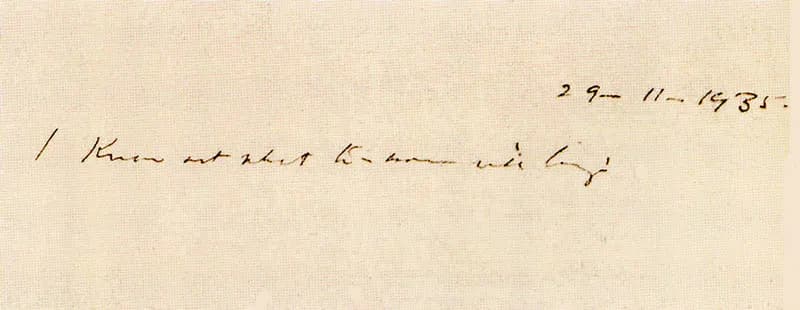
- On 29 November, the day he was admitted, he wrote his last known words in pencil, in English: “I know not what tomorrow will bring”.
- In his lifetime he published one book in Portuguese, Mensagem (1934), and a few smaller books and pamphlets; most of his work appeared in magazines or not at all.
- He wrote as Alberto Caeiro, Ricardo Reis, Álvaro de Campos and the “semi-heteronym” Bernardo Soares, among dozens of invented authors with their own lives and styles.
- The papers from his trunk, bought by the Portuguese state in 1979, are at the Biblioteca Nacional: 27,691 sheets with later additions. In 1985 his remains were moved to the Jerónimos Monastery.
A line in English, in pencil
On Friday 29 November 1935, a man of 47 was taken, against his wishes, to the Hospital de São Luís dos Franceses in the Bairro Alto, the old hilltop quarter above Lisbon's Chiado. The little hospital, in a former palace, had been set up for French sailors and residents of the city and was run by a French order of nuns, the Daughters of Charity.
The patient was Fernando Pessoa, who earned his living writing business letters in English and French. The doctors' diagnosis was hepatic colic linked to cirrhosis of the liver, which was put down to years of heavy drinking.
Some time that day he took a sheet of paper and wrote the date, 29-11-1935, and one sentence in pencil. It was in English, the language of his schooling in South Africa. They are the last words he is known to have written.
“I know not what tomorrow will bring.”
He died the next evening, Saturday 30 November, at about eight o'clock. According to his biographers, a nurse, a doctor and the hospital chaplain were with him at the end. The words he is said to have spoken last were a request: “Dá-me os óculos”, “Give me my glasses”.
Few outside Lisbon's literary circles knew his name. Respected in the city as an intellectual and a poet, he had published one book of Portuguese poems the year before. No one, his family included, realised how much writing was in the trunk in his rented flat in Campo de Ourique.
Durban, Lisbon and the business letters
Pessoa was born on 13 June 1888 in a flat on the Largo de São Carlos, in the centre of Lisbon. His father died of tuberculosis when he was five. His mother married again, to the Portuguese consul in Durban, then a town in the British colony of Natal, and the boy spent nine years there.
Durban gave him a traditional English education and an English that he wrote almost like a mother tongue. Shortly after his seventeenth birthday he sailed back to Lisbon alone, in 1905, to study arts and letters at university. He left after two years without sitting an exam and taught himself instead at the National Library.
He never had a career. He lived with relatives or in rented rooms and paid his way by drafting letters in English and French for Lisbon firms that traded abroad. In a biographical note written eight months before he died, he described his job himself.
“The most proper description would be “translator”, the most exact that of “foreign correspondent for commercial firms”. Being a poet and writer is not a profession but a vocation.”
In 1920 his widowed mother came back from South Africa, and Pessoa rented a first-floor flat at Rua Coelho da Rocha 16 for the reunited family. It was his eighteenth address in the city, and he lived there for his last fifteen years, sometimes with his mother, who died in 1925, sometimes with his half-sister's family, often alone.
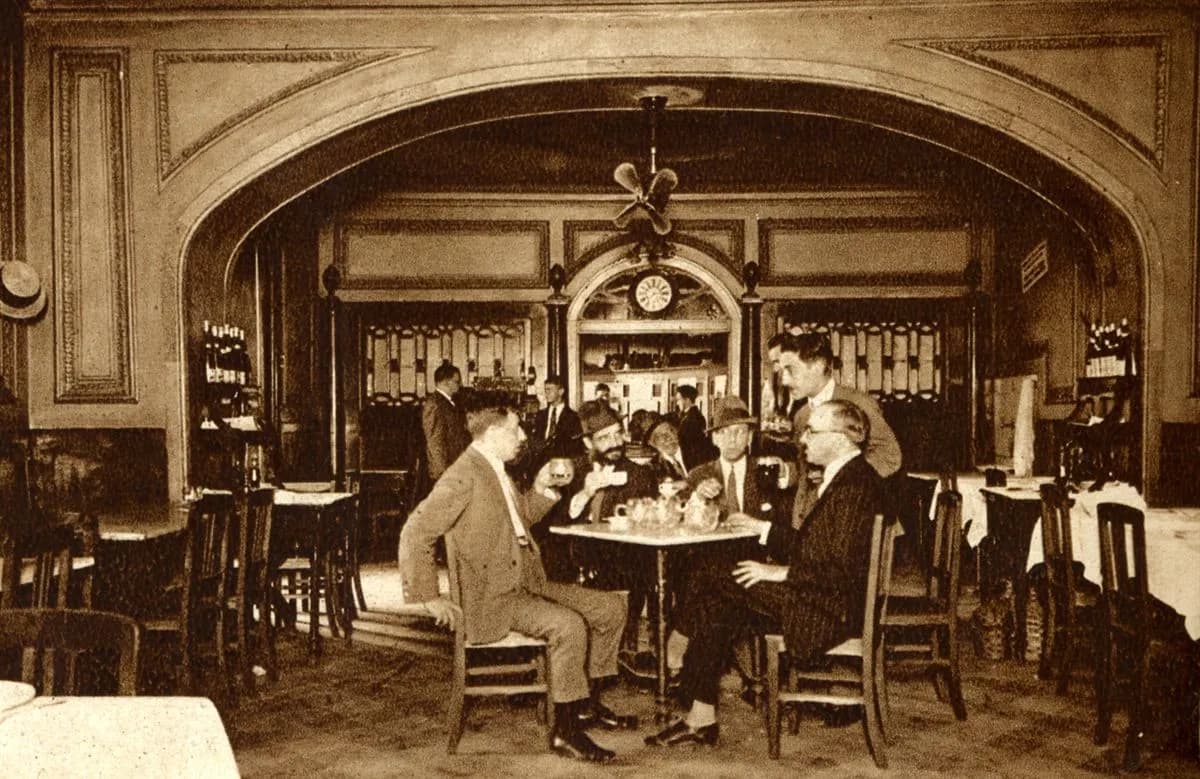
His days ran between the offices where he worked and the cafés, which he used as offices too; many of his texts are on café notepaper. From 1920 his friends could find him most afternoons at the Martinho da Arcada on the Praça do Comércio.
Orpheu and the “madhouse literature”
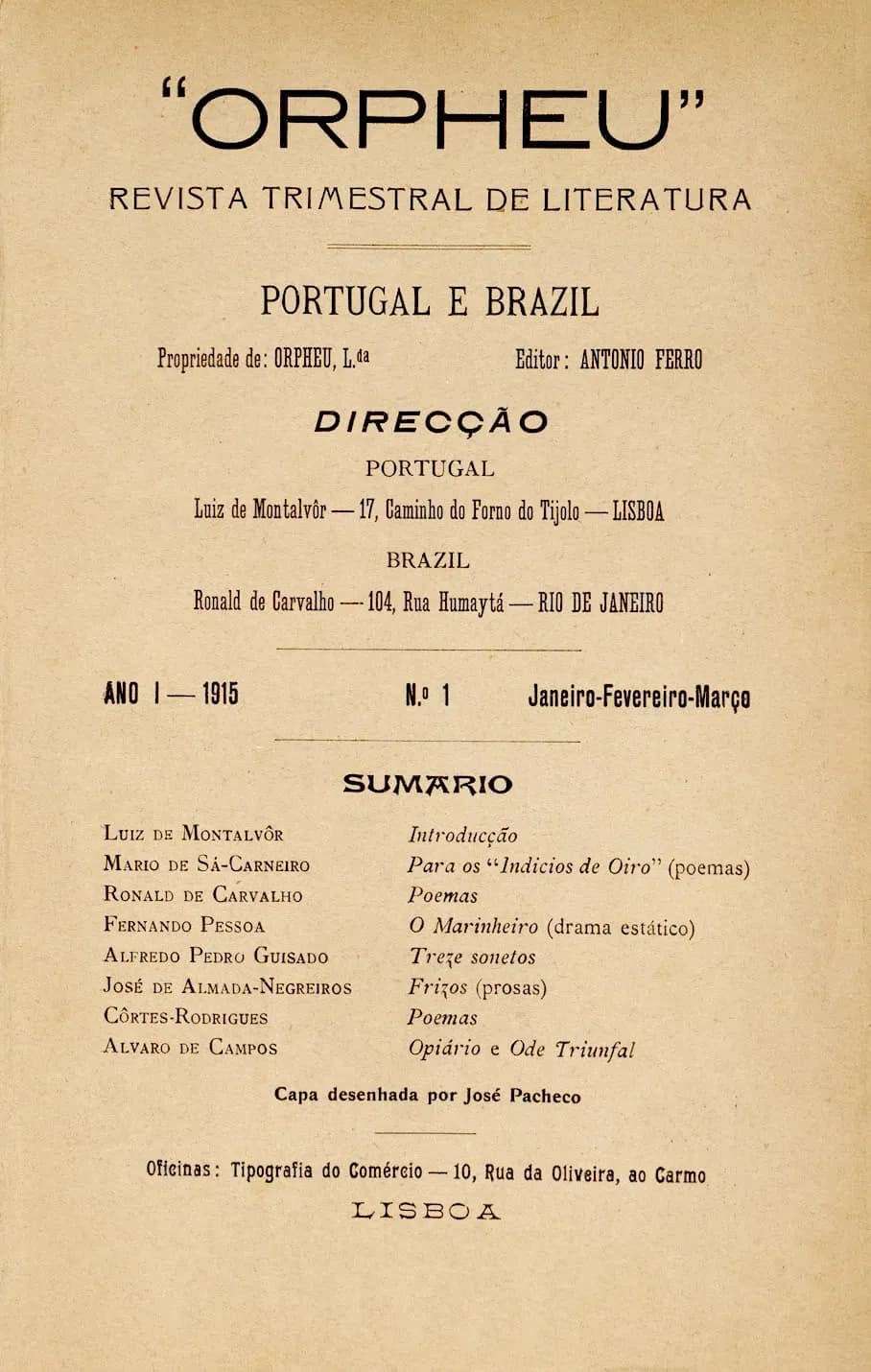
In his twenties Pessoa was at the centre of a small group of young writers and painters who met in the Chiado cafés. In February 1915 the poet Luís de Montalvor, just back from Brazil, proposed a modernist magazine. Its aim, as Pessoa put it, was to take in “everything that represents advanced art” (translated from Portuguese). Two months later it was ready, designed by José Pacheco, with contributions from Pessoa, Mário de Sá-Carneiro, José de Almada Negreiros and others.
Orpheu went on sale on 26 March 1915. The night before, extracts of the “Ode Triunfal”, signed Álvaro de Campos, were read aloud in the streets of the Chiado. Pessoa cast a horoscope for the launch, and the first copy was sold at seven in the evening, as it prescribed.
The press was delighted to be outraged. Days later the daily A Capital ran a piece headlined “Literatura de manicómio”, “Madhouse literature”, quoting doctors who thought the poets paranoid; other papers called them the lunatics of Rilhafoles, Lisbon's asylum. Orpheu was “the talk of the day in Lisbon”, Pessoa wrote to his friend Armando Côrtes-Rodrigues on 4 April. “I say this without exaggeration. The scandal is enormous.” (Both translated from Portuguese.)
A second issue appeared on 28 June, now edited by Pessoa and Sá-Carneiro. A third was set in proof but never came out: on 13 September Sá-Carneiro wrote that they would have to give up, because his father, who had paid the printer, would pay no more. Two issues were enough: for scholars such as Jerónimo Pizarro, 1915 is the moment modernism crystallised in Portugal.
One man, many poets
Orpheu printed Álvaro de Campos as a contributor in his own right. He was one of Pessoa's heteronyms, invented poets with their own biographies, looks, opinions and styles. Pessoa drew the line himself in 1928: a pseudonym is the author writing under another name; a heteronym is “the work of an individual completely fabricated by him” (in the Casa Fernando Pessoa's translation).
He told the story of their birth in a long letter to the writer Adolfo Casais Monteiro on 13 January 1935. He had wanted to play a trick on Sá-Carneiro by inventing a bucolic poet. Nothing came for days. Then, he wrote, on 8 March 1914 he went to a tall chest of drawers, “acerquei-me de uma cómoda alta”, and began to write standing up.
“I wrote 30 something poems in one stretch. That was the most triumphant day of my life and I will never experience another like it. I began with the title The Keeper of Flocks. And what followed was the birth of someone within me, whom I immediately named Alberto Caeiro.”
Earlier in the same letter he had offered a blunter, clinical explanation: “A origem dos meus heterónimos é o fundo traço de histeria que existe em mim”, the origin of his heteronyms was “the deep trace of hysteria that exists in me” (translated from Portuguese).
| Name | Pessoa's biography for him | How Pessoa said he wrote as him |
|---|---|---|
| Alberto Caeiro | Born in Lisbon in 1889, died in 1915; an orphan with only primary schooling who lived in the country with an old great-aunt; Pessoa called him “my master” | “In pure and unexpected inspiration, not knowing or guessing what he will write” |
| Ricardo Reis | Born in Porto in 1887; educated by Jesuits, a doctor and a monarchist, in exile in Brazil since 1919; writes classical odes | After “an abstract deliberation which immediately took the shape of an ode” |
| Álvaro de Campos | Born in Tavira on 15 October 1890; trained as an engineer in Scotland; wore a monocle | When he felt “a sudden impulse to write and didn't know what of” |
| Bernardo Soares | An assistant bookkeeper in Lisbon; the “semi-heteronym”, a “mutilation” of Pessoa's own personality; author of The Book of Disquiet | Whenever he was tired or sleepy, his reasoning and inhibitions “a little suspended” |
All from Pessoa's letter to Adolfo Casais Monteiro of 13 January 1935, as published and translated by the Casa Fernando Pessoa, except Soares's occupation, which comes from The American Scholar's review of Richard Zenith's biography (the Lisbon Hemeroteca dossier calls him simply a bookkeeper).
Those four were only the best known. Pessoa wrote English poems as Alexander Search and Charles Robert Anon, French essays as Jean Seul, philosophy as António Mora, and gave lives to an astrologer, a friar and a hunchbacked girl named Maria José. Counts differ with the criteria: Teresa Rita Lopes listed 72 figures in 1990; Jerónimo Pizarro and Patricio Ferrari collected 136 fictional authors in 2013.
He also wrote under his own name, which he called the orthonym. One of his best-known poems as himself, “Autopsicografia”, written in 1931, opens with four lines on pretending. In plain English: the poet is a faker who fakes so completely that he even fakes, as pain, the pain he truly feels.
“O poeta é um fingidor. / Finge tão completamente / Que chega a fingir que é dor / A dor que deveras sente.”
Mensagem and the propaganda prize
Pessoa published little and late. His first books were in English: 35 Sonnets and Antinous in 1918 and English Poems in 1921. The heteronyms appeared only in magazines: Campos in Orpheu in 1915, Reis and Caeiro in Athena in 1924 and 1925. His one book in Portuguese came out in 1934.
| Year | Title | Language | Publisher |
|---|---|---|---|
| 1918 | 35 Sonnets | English | Monteiro & Co., Lisbon |
| 1918 | Antinous | English | Monteiro & Co., Lisbon |
| 1921 | English Poems I-II and III | English | Olisipo, Lisbon (his own imprint) |
| 1928 | O Interregno: defeza e justificação da dictadura militar em Portugal | Portuguese | Núcleo de Acção Nacional, Lisbon |
| 1934 | Mensagem | Portuguese | Parceria A. M. Pereira, Lisbon |
The Lisbon Hemeroteca dossier and the Imprensa Nacional list these five, with the two English Poems booklets as one item; the dossier dates it 1921 in its text but 1918 in a footnote. The Casa Fernando Pessoa also counts five books, but lists English Poems I-II and III separately and leaves out the pamphlet O Interregno. Two further pamphlets of 1923, Álvaro de Campos's Aviso por Causa da Moral and Pessoa's Sobre um Manifesto de Estudantes, were printed on their own. Everything else he published in his lifetime appeared in magazines.
Mensagem (Message) is a sequence of 44 poems on Portugal's history, heroes and myths. Critics still argue over how nationalist it really is. For years Pessoa had called the project Portugal; he changed the title late on, after a friend, Alberto da Cunha Dias, remarked that the country's name was being used to sell shoes and hotels.
Its middle part, “Mar Português”, had appeared almost whole in the magazine Contemporânea in October 1922. The book was printed in October 1934, and Pessoa put it on sale, as he wrote, “purposely on 1 December” (translated from Portuguese: “propositalmente em 1 de Dezembro”).
He entered it for the poetry prize of the Secretariado de Propaganda Nacional (SPN), the regime's propaganda office, headed by António Ferro, the same man who had been Orpheu's editor in 1915. He had not published the book with the prize in mind, he told Casais Monteiro, but copies were ready by the October deadline. “O livro estava exactamente nas condições (nacionalismo) de concorrer. Concorri”: the book met the conditions, nationalism, so he entered (translated from Portuguese).
The rules offered a prize for a book of verse of at least 100 pages and a lesser one for a single poem or loose poems. The jury held that Mensagem fell into the second category and gave the main award to a priest, Vasco Reis, for Romaria. Ferro, who chaired the jury, then raised Mensagem's prize from 1,000 to 5,000 escudos, the same as the first category. Hence the talk, beginning in the magazine Presença, of Pessoa's “second prize”.
Cirrhosis, pancreatitis or something else
- Admitted
- Friday 29 November 1935, Hospital de São Luís dos Franceses, Bairro Alto, Lisbon
- Died
- Saturday 30 November 1935, at about 8 pm
- Age
- 47
- Official diagnosis
- Hepatic colic linked to cirrhosis of the liver
- Last written words
- “I know not what tomorrow will bring” (in English, 29 November)
- First burial
- Prazeres cemetery, Lisbon, beside his grandmother
The cause of death is still argued over. The official diagnosis was a liver crisis linked to cirrhosis, generally blamed on long, heavy drinking. Some medical studies argue that he died of acute inflammation of the pancreas instead. Richard Zenith, in his 2021 biography, concluded that he probably died of an intestinal obstruction.
He was buried in the Prazeres cemetery beside his grandmother Dionísia. She had lived with the family on the Largo de São Carlos when he was a child, suffering bouts of a mental illness. Zenith thinks she was part of the reason the boy grasped early that a single, stable self was a fiction.
What was in the trunk
Pessoa seems to have held on to most of what he wrote, in a large trunk. It held poetry, prose, plays, philosophy, criticism, translations, linguistic theory, political writing and horoscopes, in Portuguese, English and French, typed, handwritten or scrawled on notebooks, loose sheets, envelopes, handbills, office stationery and café notepaper.
Publication began in 1942, when Casais Monteiro edited a two-volume anthology and the publisher Ática started its Complete Works with a volume of poems, prepared by Luís de Montalvor and João Gaspar Simões. Campos followed in 1944, Reis in 1945 and Caeiro in 1946. The Book of Disquiet, the fragments credited to Soares, did not appear as a book until 1982, in two volumes edited by Maria Aliete Galhoz and Teresa Sobral Cunha.
The inventory of the trunk began only in 1968. In December 1979 the state bought the papers and deposited them at the Biblioteca Nacional in Lisbon, where they are catalogued as Espólio E3. Since 1988 a team of scholars has worked on a critical edition, and the library has kept buying papers that stayed with the family, including more than 300 documents in 2020.
| Figure | What it counts | Source |
|---|---|---|
| More than 25,000 | Sheets of writing left in the trunk | Casa Fernando Pessoa |
| More than 27,000 | Unpublished manuscripts in the trunk | Imprensa Nacional; Lisbon Hemeroteca dossier |
| 27,691 sheets, plus 251 documents | Today's Pessoa archive at the Biblioteca Nacional, in 58 boxes, including later acquisitions | Biblioteca Nacional de Portugal |
The Biblioteca Nacional stresses that its figure counts sheets, not documents, as is often said: a single text can run over many sheets.
Pessoa's work entered the public domain in 1985, fifty years after his death. In 1997, under an EU directive that set copyright at seventy years after death, the publisher Assírio & Alvim bought the publishing rights from his heirs. The work entered the public domain for good in 2005. In 2009 a government decree classified the archive as a national treasure.
From Prazeres to the Jerónimos
In 1985, the fiftieth anniversary of his death, Pessoa's remains were moved from Prazeres to the cloister of the Jerónimos Monastery in Belém, where the remains of Vasco da Gama and of the epic poet Luís de Camões had been laid in 1880. The sculptor Lagoa Henriques made the tomb.
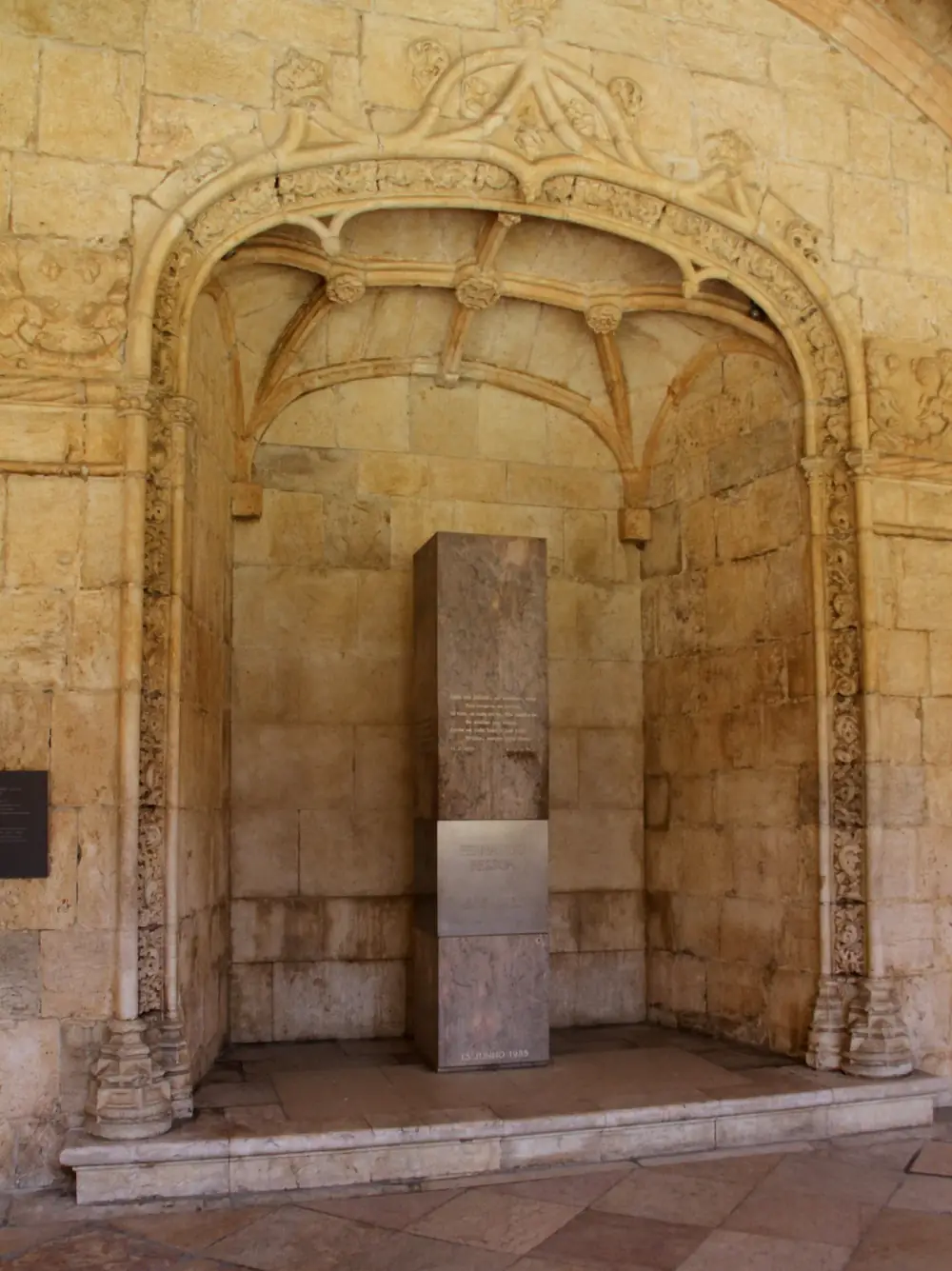
The move put the commercial correspondent who wrote under other names in the monastery that holds the tomb of Portugal's national poet. The year before, José Saramago had published O Ano da Morte de Ricardo Reis, a novel in which the dead Pessoa walks Lisbon in 1936 to talk with Reis, the heteronym who outlived him.
13 June 1888
Born on the Largo de São Carlos, Lisbon
1896 to 1905
Nine years in Durban, where his stepfather is Portuguese consul
8 March 1914
The “most triumphant day”: Alberto Caeiro appears, by Pessoa's account
26 March 1915
Orpheu no. 1 goes on sale
1920
Moves into Rua Coelho da Rocha 16, his home until 1935
1 December 1934
Mensagem goes on sale
29 November 1935
Admitted to the Hospital de São Luís dos Franceses; writes his last line
30 November 1935
Dies at about 8 pm, aged 47
1942
First posthumous editions
December 1979
The state buys the papers for the Biblioteca Nacional
1982
The Book of Disquiet is published
1985
Remains moved to the Jerónimos Monastery
1988
Lagoa Henriques's statue is unveiled outside A Brasileira
30 November 1993
Casa Fernando Pessoa opens
Pessoa's Lisbon today
In the late 1980s Lisbon City Council bought the run-down building on Rua Coelho da Rocha, which was at risk of demolition. It was rebuilt, keeping only the façade, the stairs to the first floor and two rooms of the family's flat, and opened as the Casa Fernando Pessoa on 30 November 1993, the anniversary of his death.
After a refit in 2019 and 2020 it won the Portuguese Museum Association's award for best museum in 2021. At its centre is his private library, classified as a national treasure and digitised in full. Of its 1,200 or so titles, more than half are language and literature; philosophy and psychology come a distant second.
Pessoa's private library at the Casa Fernando Pessoa, by subject
titles
The core of Pessoa's own books, about 1,200 titles, sorted by library classification in the Lisbon Hemeroteca's 2013 dossier.
Show the data
| Titles | |
|---|---|
| Language and literature | 664 |
| Philosophy and psychology | 174 |
| Social sciences and law | 94 |
| Geography, history, biography | 77 |
| Religion and theology | 76 |
| General works | 52 |
| Natural sciences and maths | 33 |
| Applied sciences and medicine | 15 |
| Arts and sport | 13 |
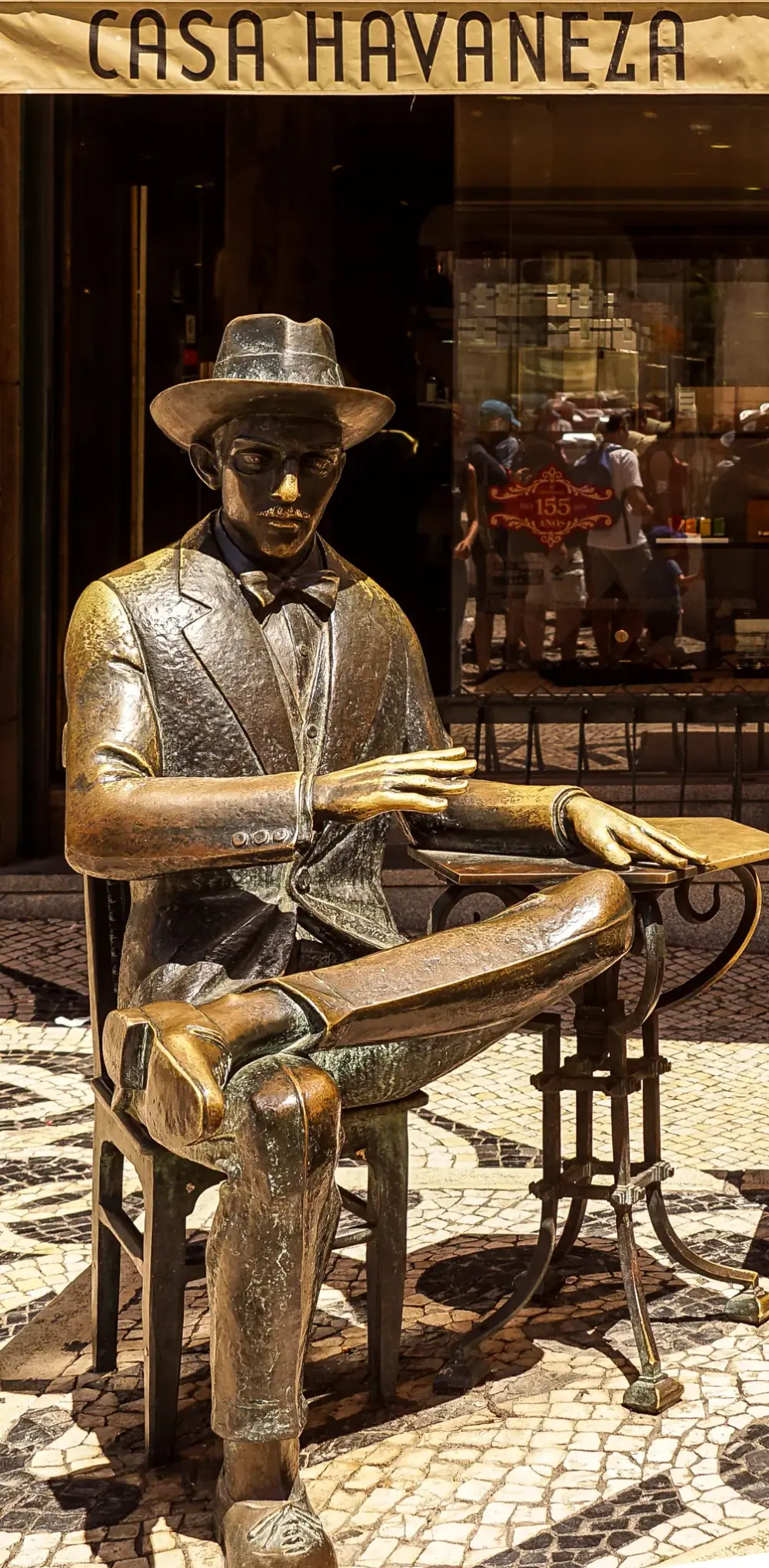
In the Chiado, a bronze Pessoa by Lagoa Henriques has sat at a café table outside A Brasileira since 1988. Pessoa was a regular there from his student years, as he was at the Brasileira on the Rossio and the Martinho da Arcada.
In February 2025 the hospital still occupied the buildings where he died, the former Palácio Cunhal das Bolas on Rua Luz Soriano. That month the city council approved plans to turn them into a five-star hotel with 68 rooms. One condition was that the plaque with Pessoa's inscription, which used to hang by the main gate, be put back.
FAQs
How did Fernando Pessoa die?
He died at the Hospital de São Luís dos Franceses in Lisbon on 30 November 1935, aged 47, a day after being admitted. The official diagnosis was hepatic colic linked to cirrhosis of the liver, usually blamed on heavy drinking. Some studies argue for acute pancreatitis, and his biographer Richard Zenith thinks an intestinal obstruction the likeliest cause.
What were Fernando Pessoa's last words?
His last written words, dated 29 November 1935 and written in pencil in English, were “I know not what tomorrow will bring”. The last words he is reported to have spoken, the next evening, were “Dá-me os óculos”, asking for his glasses.
What is a heteronym?
Pessoa's word for an invented author with a full biography and a style of his own, as opposed to a pseudonym, which is just another name for the real author. His three main heteronyms were Alberto Caeiro, Ricardo Reis and Álvaro de Campos; Bernardo Soares, author of The Book of Disquiet, was a “semi-heteronym”.
Where is Fernando Pessoa buried?
In the cloister of the Jerónimos Monastery in Belém, Lisbon, under a tomb by Lagoa Henriques. He was first buried in the Prazeres cemetery and moved in 1985, fifty years after his death.
Where are Pessoa's papers today?
The papers from his trunk were bought by the state in December 1979 and are at the Biblioteca Nacional de Portugal in Lisbon: 27,691 sheets and 251 further documents. His private library is at the Casa Fernando Pessoa.
On the timeline
Open the timelineNearby moments from dictatorship and the estado novo (1926–1974).
The Emissora Nacional, Portugal's new state radio, begins regular broadcasts from Lisbon, three days before its official inauguration on 4 August. For four decades a mouthpiece of Salazar's Estado Novo, it was folded into the new public broadcaster RDP after the 1974 revolution and is today part of RTP.
Alfredo Roque Gameiro, master of Portuguese watercolour, dies in Lisbon aged 71. His 'Lisboa Velha' series recorded the alleys, fountains and street life of the old city, and all five of his children became artists in their own right.
Adelaide Cabete, one of Portugal's foremost feminists and among the first Portuguese women to qualify as a physician, dies in Lisbon. An obstetrician, republican and abolitionist, she presided over the National Council of Portuguese Women for more than twenty years, campaigning tirelessly for women's rights and suffrage.
The death of Fernando Pessoa
Fernando Pessoa dies at the Hospital de São Luís dos Franceses in Lisbon, aged 47. His last written words, in English, were 'I know not what tomorrow will bring'. Little known at his death beyond 'Mensagem', he left a trunk of more than 25,000 papers that revealed one of the century's great poets.
The film director Paulo Rocha is born in Porto. His debut feature, 'Os Verdes Anos' (1963), about a young country boy adrift in Lisbon, is regarded as a founding work of Portugal's Novo Cinema, the 1960s new wave that broke with the cosy comedies favoured under the Estado Novo.
José Policarpo is born in Alvorninha, near Caldas da Rainha. A theologian, he served as Cardinal Patriarch of Lisbon from 1998 to 2013, the leading voice of the Portuguese Catholic Church through two papal conclaves.
Otelo Saraiva de Carvalho is born in Lourenço Marques (now Maputo), Mozambique. As chief strategist of the Armed Forces Movement he directed the 25 April 1974 coup from a command post at Pontinha; he later ran second in the 1976 presidential election and was tried over alleged links to the FP-25 armed group before a 1996 amnesty.
Coming up in history
All long reads 2 December 1964The night Lisbon's national theatre burned: 2 December 1964
 3 December 1944António Variações, the barber who sang between Braga and New York
 4 December 1980Camarate, 1980: the plane crash that killed Portugal's prime minister
 5 December 1496Manuel I orders the Jews and Muslims out of Portugal: Muge, 5 December 1496
32 sources
Archives, scholarship and reporting this article was checked against.
- 1
WorkCasa Fernando Pessoa (Lisbon City Council, EGEAC)
- 2
- 3
Espólios: PESSOA, Fernando, 1888-1935 (BNP Esp. E3)Biblioteca Nacional de Portugal, Arquivo de Cultura Portuguesa Contemporânea
- 4
Fernando Pessoa (efeméride), by João Carlos Oliveira, 7 June 2013Hemeroteca Digital, Câmara Municipal de Lisboa
- 5
A morte de Fernando Pessoa (Os Dias da História), by Paulo Sousa PintoRTP Ensina / Antena 2
- 6
As múltiplas vozes da Mensagem de Fernando Pessoa, by Júlia Telésforo OsórioREEL – Revista Eletrônica de Estudos Literários (UFES), s. 2, year 8, no. 11, 2012
- 7Orpheu: 100 anos da revista que escandalizou LisboaObservador, 25 March 2015
- 8
Who rests in the tombs of the monastery?Mosteiro dos Jerónimos, on Google Arts & Culture
- 9
Hospital St. Louis, where Fernando Pessoa diedTurismo de Lisboa (Visit Lisboa)
- 10
«I know not what tomorrow will bring»: 83 anos do desaparecimento de PessoaImprensa Nacional-Casa da Moeda
- 11
Fernando PessoaCasa Fernando Pessoa (Lisbon City Council, EGEAC)
- 12
Fernando Pessoa: chronologyArquivo Virtual da Geração de Orpheu (modernismo.pt), IELT, Universidade Nova de Lisboa
- 13
- 14
“Lisboa era a família de Fernando Pessoa”: Richard Zenith desvenda a relação do poeta com a cidade, by Ana da CunhaMensagem de Lisboa, 13 June 2022
- 15
O Estado Novo (1933-1974)Assembleia da República
- 16
- 17
- 18
- 19
- 20
- 21
- 22
Laureate of Lisbon, by Peter LaSalle (review of Richard Zenith, Pessoa: A Biography)The American Scholar, 26 July 2021
- 23
Catálogo da BNP: books edited by Patricio Ferrari, including Eu sou uma antologia: 136 autores fictícios, ed. Jerónimo Pizarro and Patricio Ferrari (Tinta-da-China, 2013)Biblioteca Nacional de Portugal, Open Data
- 24
Autopsicografia / Autopsychography, by Fernando PessoaPoetry International
- 25
Os destinatários dos panfletos pessoanos de 1923 (José Barreto)Pessoa Plural, no. 10 (2016), pp. 628-703, via the ULisboa repository
- 26Dos envelopes esquecidos à Mensagem: como se construiu a nova edição crítica do mais famoso livro de Fernando Pessoa, by Rita CiprianoObservador, 14 November 2020
- 27
António Ferro e a projeção atlântica de Portugal através do cinema (Carla Ribeiro, Aniki, vol. 1, no. 2, 2014)Aniki: Revista Portuguesa da Imagem em Movimento
- 28
«Apenas um hóspede de hotel»: O papel de Pessoa em O Ano da Morte de Ricardo Reis de José Saramago, by Eleonora RimoloRoma TrE-Press (Università Roma Tre), 2026
- 29Richard Zenith: “Fernando Pessoa era como um cientista, sempre a fazer experiências sobre o seu próprio ser”Observador
- 30
Fernando Pessoa (escultura de Lagoa Henriques)e-Chiado, Centro Nacional de Cultura
- 31Câmara de Lisboa aprova dois novos hotéis, incluindo um no hospital onde morreu Fernando PessoaObservador (Lusa), 20 February 2025
- 32
Image credits
- Fernando Pessoa (seated, right) at the Café Martinho da Arcada in Lisbon in 1928, with Raul Leal, António Botto, Augusto Ferreira Gomes and an unidentified man. From 1920 the Martinho was the café where he met his friends most afternoons. Unknown author, Public domain, via Wikimedia Commons.
- Pessoa's last known writing: the date 29-11-1935 and the line “I know not what tomorrow will bring”, written in his hospital bed the day before he died. Fernando Pessoa, Public domain, via Wikimedia Commons.
- Pessoa drinking at the counter of an Abel Pereira da Fonseca wine shop in Lisbon, 1929. Unknown author, Public domain, via Wikimedia Commons.
- The title page of Orpheu no. 1, January to March 1915. It names António Ferro as editor and lists Álvaro de Campos among the contributors as if he were a separate poet. Luís de Montalvor, Public domain, via Wikimedia Commons.
- Pessoa's tomb by Lagoa Henriques in the cloister of the Jerónimos Monastery, photographed in 2011. The base is dated 13 June 1985, the ninety-seventh anniversary of his birth. Gerd Eichmann, CC BY-SA 4.0, via Wikimedia Commons.
- Lagoa Henriques's statue of Pessoa, unveiled in 1988, on the terrace of A Brasileira in the Chiado, photographed in 2019 with the Casa Havaneza tobacconist's behind. Jens Cederskjold from København S, Danmark, CC BY-SA 2.0, via Wikimedia Commons.