

Camarate, 1980: the plane crash that killed Portugal's prime minister
On 4 December 1980 a light aircraft carrying Francisco Sá Carneiro and Adelino Amaro da Costa came down in Camarate about 38 seconds after take-off. Parliamentary inquiries have since concluded or presumed that a bomb brought it down. The courts found no evidence of a crime, and no one was ever tried.
At a glance
- On the evening of 4 December 1980 a Cessna 421 carrying Prime Minister Francisco Sá Carneiro and Defence Minister Adelino Amaro da Costa crashed in Camarate, about 38 seconds after leaving Lisbon airport. All seven people on board died.
- They were flying to a rally in Porto for General António Soares Carneiro, the government's candidate in the presidential election held three days later. The incumbent, Ramalho Eanes, won with 56.44 per cent.
- The civil aviation inquiry of March 1981 blamed a loss of power in the left engine after its fuel ran out, but said it could not exclude that fuel had gone missing.
- Parliament held ten inquiries between 1982 and 2015. The third found no reason to revise the accident finding; from the fourth, in 1991, the inquiries that reported concluded or presumed that a bomb brought the aircraft down.
- No case ever reached trial. A judge declined to send it to trial in 1998, the Court of Appeal upheld that in 2000, and the proceedings were declared time-barred in 2005 and 2006.
Thirty-eight seconds over Camarate
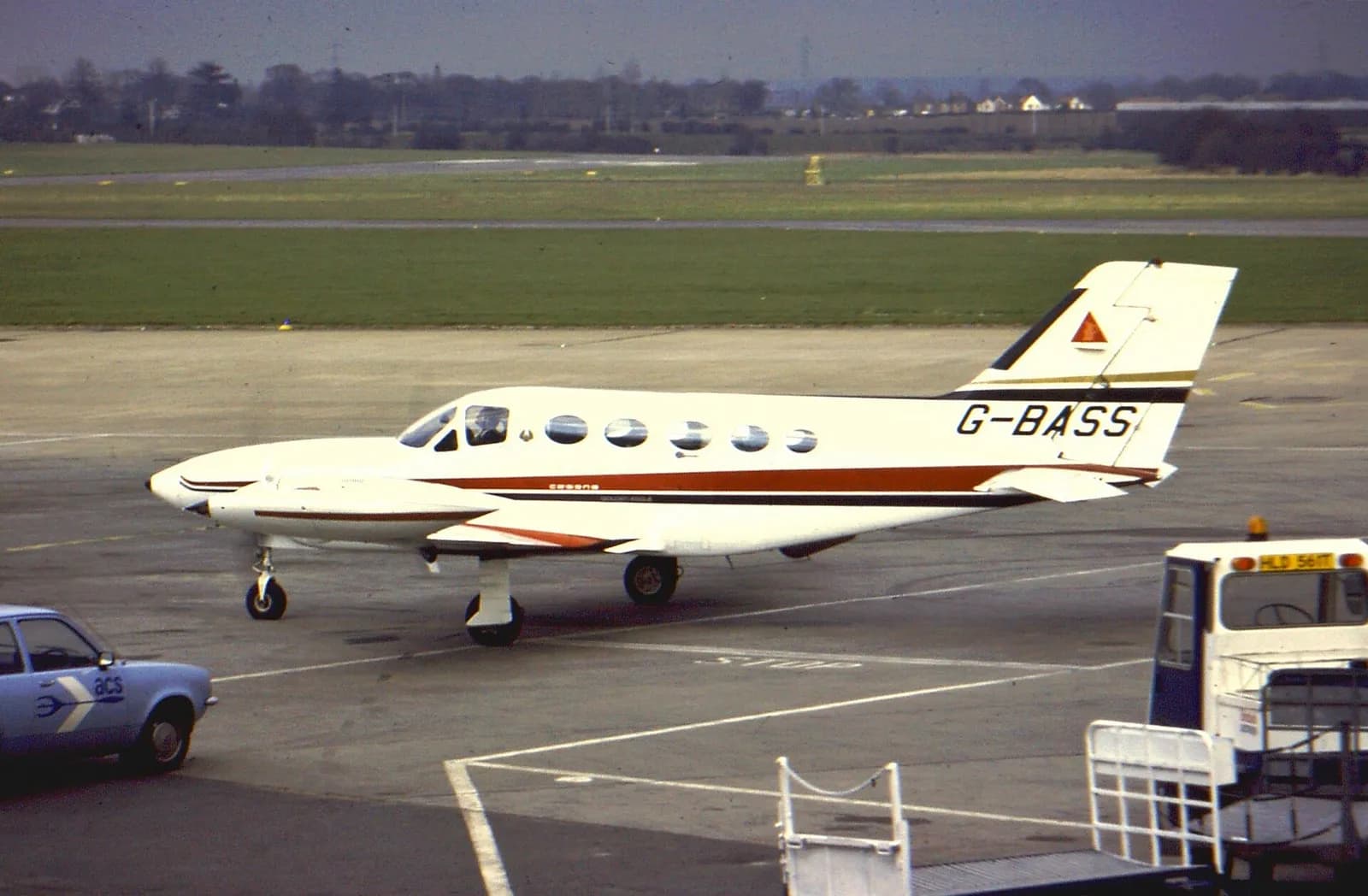
At about 8.14pm on Thursday 4 December 1980, a twin-engined Cessna 421 with the Venezuelan registration YV-314P left parking stand Delta at Lisbon's Portela airport, bound for Pedras Rubras, the airport of Porto. It carried two pilots and five passengers. Among them were the Prime Minister, Francisco Sá Carneiro, and the Minister of Defence, Adelino Amaro da Costa.
Portugal was three days from a presidential election, and the two ministers were due at a rally in Porto for General António Soares Carneiro, the candidate backed by their parties.
The flight was short. According to the reconstruction by the civil aviation authority's inquiry, the aircraft climbed to between 40 and 50 metres, levelled off, cut through the street-lighting cables on the road to the Bairro de São Francisco and hit several obstacles before coming down in a street of the Bairro das Fontainhas, in Camarate. It had flown about 1,700 metres in 38 seconds, and the crash site lay about 500 metres beyond the end of the stretch of runway it had used.
The fire caught several vehicles and parts of nearby houses. Airport fire crews attacked it within minutes, and it was out about 20 minutes later. All seven people on board were found dead in the burnt wreckage.
The night that followed became part of the dispute. Civil aviation investigators and officers of the Polícia Judiciária, the criminal police, began arriving between 10.30 and 11pm. The guard placed on the wreckage by the GNR and PSP police was evaded by unauthorised people who reached the debris, and bodies and wreckage were first moved without any method. Only at about 3am did the authorities gain a minimum of control. Eleven days later a member of the public handed in a piece of the aircraft he had picked up as a souvenir.
- Date
- Thursday 4 December 1980, take-off at about 8.17pm (20.20 in the fourth inquiry's report)
- Aircraft
- Cessna 421A, Venezuelan registration YV-314P
- Route
- Lisbon Portela to Porto Pedras Rubras
- Flight
- About 1,700 metres in 38 seconds, by the civil aviation inquiry's estimate
- Crash site
- Bairro das Fontainhas, Camarate, about 500 metres beyond the end of the runway used
- Dead
- Seven: five passengers and two pilots
A government in mid-campaign
Sá Carneiro led the Social Democratic Party (PSD) and had been prime minister since 1980, at the head of the Aliança Democrática (AD), an alliance of the PSD, the CDS and the PPM, the People's Monarchist Party. At the general election of 5 October 1980 the AD won 126 of the 250 seats in parliament, and the PSD, running alone in the Azores and Madeira, won 8 more.
Amaro da Costa, his defence minister, was a leader of the CDS. A friend, Júlio Castro Caldas, told the tenth inquiry that in late 1980 Amaro da Costa had talked to him about the unclear division of powers between the military chiefs and his ministry, and about how hard it was to get reliable information on Portugal's arms exports and the companies behind them. In November 1980 the military Council of the Revolution abolished a colonial-era armed forces fund by decree, and the government asked for the decree to be declared unconstitutional.
The presidential election of 7 December pitted the AD's candidate, Soares Carneiro, against the incumbent, General António Ramalho Eanes. Sá Carneiro raised the stakes himself. He had threatened to resign if Soares Carneiro lost, which The Christian Science Monitor called a subtle form of blackmail aimed at reluctant voters.
The trip itself had been decided some days earlier, according to Sá Carneiro's secretary, who told the tenth inquiry that he was first due to fly in another light aircraft and switched to the Cessna at Amaro da Costa's invitation. The Attorney General later recorded that the use of this aircraft for the two ministers was accepted only at about 12.20pm on the day and communicated after 4pm, to a small circle of people. The fourth inquiry drew the opposite lesson from a similar timetable: the eight hours or so between the booking at noon and take-off were, it argued, more than enough to sabotage the aircraft.
Besides the two ministers, the passengers were Sá Carneiro's partner, the Danish-born publisher Snu Abecassis, who had co-founded the Lisbon publishing house Dom Quixote in 1965; Amaro da Costa's wife, Maria Manuela Pires Amaro da Costa; and the prime minister's chief of staff, António Patrício Gouveia. The pilot was Jorge Albuquerque and the co-pilot Alfredo de Sousa.
The first verdict: an accident
Eight days after the crash, a government note of 12 December 1980 said there were no signs of any criminal act. The election had gone ahead in the meantime. On 7 December Eanes was re-elected with 3,262,520 votes, 56.44 per cent, against 2,325,481 for Soares Carneiro.
Presidential election, 7 December 1980: share of valid votes
% of valid votes
The vote held three days after the crash. Turnout was 5,840,332 of 6,920,869 registered voters. Figures from the official results map of the Comissão Nacional de Eleições.
Show the data
| Share of valid votes | |
|---|---|
| Ramalho Eanes | 56.4 |
| Soares Carneiro | 40.2 |
| Otelo Saraiva de Carvalho | 1.5 |
| Galvão de Melo | 0.8 |
| Pires Veloso | 0.8 |
| Aires Rodrigues | 0.2 |
The technical inquiry, set up by the civil aviation authority (DGAC) on the night of the crash, reported in March 1981. It found that the accident could have been avoided if the standard flight preparation, inspection and checklists had been followed, and might have been avoided or made less severe had the whole runway been used. It listed the pilot's mental strain, the hurried departure and fatigue as contributing factors.
“The probable cause of the accident was the loss of thrust from the left engine, owing to the unexpected exhaustion of fuel in the tanks on that side during the critical climb after take-off.”
Two loose ends were in the report itself. The commission said it could not exclude that fuel had disappeared from the left wing. It had found no sign of sabotage, but said only a deeper investigation, outside its remit, could judge whether sabotage was feasible. The criminal police reported in October 1981 that they had found no evidence of a crime, but recommended keeping the file open pending better evidence.
The Attorney General went further against the pilot. In an order of 12 October 1981 he listed faults he said Albuquerque knew about, from an inoperative wing tank to an engine that leaked oil, and wrote that the pilot would have been charged with manslaughter had he lived. In the same order he admitted doubt and opened what he called a public inquiry, asking anyone with information to come forward.
“The explanation of the accident drawn from the evidence gathered is not so conclusive that, in absolute terms, it rules out other causes having played a part.”
That phase brought in a team from the US National Transportation Safety Board, the exhumation of the pilots' bodies at their families' request, and two British experts hired by the broadcaster RTP to look for signs of an explosion. In 1983 the Attorney General suspended the criminal investigation pending new evidence.
Ten parliamentary inquiries
Between 1982 and 2015 the Assembleia da República set up ten commissions of inquiry into Camarate. Their names tracked the argument: the early ones examined the “accident” of Camarate, later ones the “disaster” and the last three the “tragedy”. José Ribeiro e Castro, the CDS deputy who wrote the ninth report, argued in 2022 that the number misleads, because several were cut short when parliament was dissolved. Only the fourth, fifth, sixth and tenth worked without abrupt interruption, and the seventh produced no report at all.
The first, set up in November 1982, was given a narrow task: to judge whether the government and public bodies had investigated with diligence. It did not rule on the cause. It did find what it called deficiencies, irregularities, omissions and contradictions, and accused the criminal police of negligence, including failing to question promptly the firemen who reached the wreck first and failing to test the accounts of eyewitnesses who said the plane was already burning before it hit anything against those of witnesses who did not.
The second ran out of time when parliament was dissolved in July 1985. The third, reporting in January 1987, concluded that it had found no evidence requiring a revision of the official findings. That verdict was contested inside the commission: the PSD members said their alternative position had been defeated, and two CDS deputies declared their personal conviction that it had been sabotage.
The fourth turned the official line round. Its report of May 1991 said the authorities had built an accident theory without a plausible technical basis, and held as proven a fire in flight, a trail of burnt fragments released through a rupture in the fuselage and metal splinters in the pilot's feet. Traces of barium sulphate, it said, pointed to an explosive of the Sismogel or Gelatina type, and the whole amounted to sabotage and “an attack”. Only the PSD and CDS voted for it; the other parties abstained, and the Socialists said it went too far for a parliamentary commission to conclude that there had been an attack.
The fifth, in June 1995, rested on new laboratory work. Samples from a piece of wreckage known as fragment 7 showed nitroglycerine, dinitrotoluene and trinitrotoluene, and national and foreign laboratories found the deposits on it identical in composition to those on the aircraft's fuselage. Its facts were approved unanimously; its conclusion, a “presumption” that an explosive device had caused the crash, passed with the Communists abstaining. The Socialists, who voted for it, stressed that this was a rebuttable and provisional presumption, useful for parliamentary oversight and nothing more.
The sixth, in 1999, confirmed that presumption, reported more foreign bodies in Amaro da Costa's remains and urged that the case go to trial. The eighth, in December 2004, called a fire on board before the crash proven and adopted the finding of a panel of experts it had hired: that the plausible explanation lay not in accidental causes but in the explosion of a device. Two of the panel's experts sent in dissenting positions. The tenth, in 2015, put it flatly.
“The fall of the aircraft at Camarate, on the night of 4 December, was due to an attack.”
| Inquiry | Sat | On the cause | Outcome |
|---|---|---|---|
| I | 1982–1983 | No ruling; its remit was how the authorities investigated | Report of 22 April 1983, critical of the police and government |
| II | 1984–1985 | No ruling; said the first inquiry's findings had not been contradicted | Cut short by the dissolution of parliament |
| III | 1986–1987 | No evidence requiring the official accident findings to be revised | PSD position defeated; two CDS deputies declared a conviction of sabotage |
| IV | 1988–1991 | Sabotage by explosion; “an attack” | Approved by PSD and CDS, other parties abstaining |
| V | 1993–1995 | “Presumption” that an explosive device caused the crash | Facts unanimous; presumption passed with PCP abstaining |
| VI | 1996–1999 | Confirmed the presumption; called for a trial | Report unanimous, two members abstaining on key points |
| VII | 2001–2002 | None | Closed by dissolution without a report |
| VIII | 2002–2004 | Fire on board proven; explosive device the plausible explanation | Report of 9 December 2004; work cut short by dissolution |
| IX | 2011 | Reproduced the eighth inquiry's conclusions; no new ones | Closed by dissolution after about ten weeks; report approved April 2011 |
| X | 2012–2015 | “Due to an attack” | Report of 23 June 2015; PCP abstained |
Inquiry numbers follow parliament's own. Dates are from the reports and the 2022 preface to the ninth report.
The evidence both sides point to
Much of the dispute turns on the same few pieces of evidence, read in opposite ways. Some witnesses described the aircraft in flames before it hit anything; others who followed its path said they saw no fire, and the third inquiry found nothing in the file to corroborate a fire on board.
Then there was a trail of burnt paper and fibreglass on the airport ground, under the flight path. A study by two professors of the Instituto Superior Técnico, commissioned by the third inquiry, found that release from the aircraft in flight was the only mechanism it examined that matched the trail. The third inquiry noted that every expert who had examined the wreck excluded a hole in the fuselage. For the fourth inquiry, the trail proved there had been one.
The splinters in the pilot's feet show how far the readings diverge. A British pathologist reported in November 1982 that they were aluminium residues from the aircraft's own structure. Later experts heard by the sixth inquiry said they were made of a material close to iron oxide, not the aircraft's aluminium alloy, which they found consistent with an explosion.
Fragment 7 is the main physical evidence for the bomb theory. The traces on it were found in 1995 by the criminal police's scientific laboratory and confirmed by Britain's Forensic Explosives Laboratory, which reported levels consistent with residue from a high explosive. The public prosecutor's office put them down to contamination; the sixth inquiry said it had heard testimony against that. On the other side, after the bodies were exhumed a second time in the reopened case, the forensic report found that there had probably not been an explosion on board, though it could not rule one out.
| Evidence | Read as sabotage | Read as accident |
|---|---|---|
| Fuel in the left wing tanks | Fourth inquiry: no basis to say it ran out | DGAC 1981: left engine lost power when its fuel ran out |
| Fire before impact | Fourth and eighth inquiries: proven | Third inquiry: nothing in the file to corroborate it; other eyewitnesses saw no fire |
| Trail of burnt fragments | Fourth inquiry: released through a rupture in the fuselage | Third inquiry: experts who examined the wreck excluded a hole in the fuselage |
| Splinters in the pilot's feet | Sixth inquiry's experts: iron-oxide-like material, consistent with an explosion | British pathologist, 1982: aluminium from the aircraft |
| Fragment 7 | Fifth inquiry: nitroglycerine, DNT and TNT detected | Public prosecutor: contamination; forensic report after the second exhumation: explosion probably did not occur |
If it was an attack, nobody has established who the target was. RTP summarised three theories: Soares Carneiro, who had used the Cessna and been receiving threatening phone calls; Sá Carneiro himself; or Amaro da Costa, said to be looking into the Fundo de Defesa Militar do Ultramar. That fund, created in 1937 to pay for Portuguese forces overseas, was still in use in 1980.
The later inquiries followed the money. The eighth found that the fund had kept unrecorded movements and that Amaro da Costa had blocked arms sales to Indonesia, Guatemala and Argentina and, on 2 December 1980, asked for more information on arms sales to Iran, then under a trade embargo. The tenth confirmed arms shipments to Iran in 1980 and 1981, and found that the fund, though formally abolished, lived on as a private fund of the armed forces general staff until 1993. It also wrote that it had not been possible to establish a causal link between the fund and the crash.
Men who say they took part have offered their own versions. Three of them, José Esteves, Fernando Farinha Simões and Carlos Miranda, told the tenth inquiry of a plot involving foreign intelligence services. The commission found their accounts incoherent and unproven, useful at most for judging their own responsibility and not that of the people they named. The CIA formally denied that a man they named had worked for it, and German authorities found nothing in the Stasi archives.
Twenty-five years in the courts, and no trial
The criminal case ran in the district of Loures under the old 1929 code of criminal procedure. Prosecutors closed it twice, in 1990 and 1991, after reading parliament's reports. In 1995, after the fifth inquiry, they reopened it, then decided on 10 November 1995 not to bring charges.
The victims' families brought a private prosecution against four people. Among them were José Esteves, who, the European Court of Human Rights noted, had apparently claimed to have blown up the aircraft, and a man the 1981 police report had cleared of suspicion. In 1996 a court declared the case time-barred for all but that second man, who according to the families was then detained in Brazil, which suspended the limitation period in his case. In April 1998 the judge declined to send the case to trial, saying the file pointed to an accident rather than a crime.
On 1 June 2000 the Lisbon Court of Appeal upheld that decision in an 803-page judgment. When the families tried to reopen the case with what they considered new evidence against him, the same court ruled in November 2005 that the proceedings were time-barred, and the Supreme Court confirmed that on 24 May 2006. No public prosecutor's charge was ever filed and the private charge was never accepted.
5 December 1980
Criminal police open a preliminary inquiry
4 October 1981
Police find no evidence of a crime; file kept open
12 October 1981
Attorney General orders a public phase of inquiry
1983
Investigation suspended pending new evidence
1990 and 1991
Prosecutors close the case after reading parliament's reports
1995
Case reopened; prosecutors decline to charge on 10 November
The families bring a private prosecution.
1996
Prosecution declared time-barred, except against Lee Rodrigues
16 April 1998
Judge declines to send the case to trial
1 June 2000
Lisbon Court of Appeal upholds the decision
18 November 2005
Court of Appeal rules the proceedings time-barred
24 May 2006
Supreme Court confirms; the case is closed
1 March 2011
European Court of Human Rights finds no violation
Five relatives of the victims took Portugal to the European Court of Human Rights, arguing that official delays had let the case lapse. In March 2011 the court ruled unanimously against them. It accepted that 25 years of proceedings might look excessive, but found them explained by the complexity of the case, with no substantial delays attributable to the authorities.
“The Court of Appeal had held, in a detailed 803-page ruling for which ample reasons had been given, that there was no evidence of any criminal act.”
What remains unproven
The Portuguese state has, in effect, given two answers. Parliament has said since 1991, in every inquiry that reported on the cause, that the crash was a criminal act or presumed to be one. The courts found no evidence of a crime, and the case expired without anyone being tried. The ninth inquiry noted that the state told the Strasbourg court it accepts and respects, within its own remit, the results of the successive inquiries.
Whichever answer is right, much is still unknown. If there was a bomb, nobody has shown who made it, who placed it, who paid or who the target was. The tenth inquiry could not link the military fund to the crash. Official correspondence on arms exports to Iran from 2 and 9 December 1980 and 22 January 1981, recorded in a register at the armed forces staff, has disappeared, and the inquiry asked the government to find out how.
The tenth inquiry also faulted the governments that followed, led first by Diogo Freitas do Amaral, deputy prime minister at the time of the crash, and then by Francisco Pinto Balsemão, for not acting on Amaro da Costa's concerns about the fund and the arms trade. It recommended that parliament put the whole Camarate archive online, and the reports of all the inquiries that produced one can now be read on parliament's website.
FAQs
Who died in the Camarate crash?
Seven people: Prime Minister Francisco Sá Carneiro; Defence Minister Adelino Amaro da Costa; Sá Carneiro's partner, the publisher Snu Abecassis; Amaro da Costa's wife, Maria Manuela Pires Amaro da Costa; the prime minister's chief of staff, António Patrício Gouveia; and the pilots Jorge Albuquerque and Alfredo de Sousa.
Was Camarate an accident or an attack?
It has never been settled. The 1981 civil aviation inquiry blamed fuel exhaustion in the left engine. From 1991 onwards, parliamentary inquiries concluded or presumed that a bomb caused the crash, and the tenth, in 2015, called it an attack. The courts found no evidence of a crime and the case was declared time-barred in 2005 and 2006 without a trial.
How many parliamentary inquiries were there into Camarate?
Ten, between 1982 and 2015. Several were cut short when parliament was dissolved, and the seventh produced no report. Only the fourth, fifth, sixth and tenth worked without interruption.
Was anyone ever tried for Camarate?
No. Prosecutors declined to bring charges in 1995. A private prosecution by the families was refused committal for trial in 1998, a decision upheld by the Lisbon Court of Appeal in 2000, and the proceedings were later declared time-barred, which the Supreme Court confirmed in May 2006.
Why were they flying to Porto?
To attend a rally for General António Soares Carneiro, the presidential candidate backed by their parties, three days before the election of 7 December 1980. The incumbent, Ramalho Eanes, won with 56.44 per cent of the vote.
On the timeline
Open the timelineNearby moments from revolution and democracy (1974–1986).
José Eduardo dos Santos, a Soviet-trained petroleum engineer, is sworn in as President of Angola, eleven days after the death of the country's first president, Agostinho Neto. He ruled for 38 years, through civil war and an oil boom, while his daughter Isabel became a major investor in Portuguese companies before facing corruption investigations.
Francisco Sá Carneiro is sworn in as prime minister at the head of the Aliança Democrática, the PSD–CDS–PPM coalition that had won the first outright parliamentary majority since the revolution. He governed for less than a year before dying in the Camarate plane crash on 4 December 1980.
Marcelo Caetano, last Prime Minister of the Estado Novo, dies of a heart attack in Rio de Janeiro aged 74, in exile in Brazil since the Carnation Revolution.
The Camarate crash
Prime Minister Francisco Sá Carneiro and Defence Minister Adelino Amaro da Costa are killed, with five others, when their Cessna crashes in Camarate seconds after taking off from Lisbon airport for an election rally in Porto. First ruled an accident, the crash has been the subject of ten parliamentary inquiries, some concluding it was a bomb — one of Portugal's most enduring political mysteries.
Death in Lisbon of Artur Paredes, aged 81. The Coimbra guitarist gave the 'guitarra de Coimbra' its own sound, distinct from the Lisbon guitar, and taught his son Carlos Paredes, who would become Portugal's most celebrated guitar virtuoso.
A Spanish traditionalist priest, Juan María Fernández y Krohn, lunges at Pope John Paul II with a bayonet at the Fátima shrine, where the Pope is marking the first anniversary of the 1981 Rome assassination attempt. The Pope continues the visit and Fernández y Krohn is convicted of attempted murder by a Portuguese court.
Adriano Correia de Oliveira, the Coimbra-trained singer whose ballads such as 'Trova do Vento que Passa' became anthems of resistance to the dictatorship, dies aged 40 in Avintes, Vila Nova de Gaia, the town where he grew up.
Coming up in history
All long reads 6 December 1185The death of Afonso Henriques, 1185: Portugal's first king and his legends
 7 December 2002Metro do Porto opens on old railway tracks: 7 December 2002
 8 December 1930Florbela Espanca dies in Matosinhos on her 36th birthday, 1930
 9 December 1868Padre Himalaya, the priest who took a solar furnace to St Louis
22 sources
Archives, scholarship and reporting this article was checked against.
- 1
Relatórios: reports of the ten parliamentary inquiries into CamarateAssembleia da República, X Comissão Parlamentar de Inquérito à Tragédia de Camarate
- 2
Relatório da Comissão Eventual de Inquérito sobre o Acidente de Camarate (first inquiry, 22 April 1983)Assembleia da República
- 3
- 4
- 5
- 6
- 7
Parecer do Conselho Consultivo n.º 75/2007 on the preservation of the Camarate case file (voted 14 February 2008)Procuradoria-Geral da República, via ITIJ/DGSI
- 8
“Camarate case”: the Portuguese courts were not negligent (Lacerda Gouveia and Others v. Portugal, application no. 11868/07)European Court of Human Rights, press release no. 168, 1 March 2011
- 9“Caso Camarate”: o mais longo processo judicial que (ainda) não chegou ao fimRTP Notícias, with Lusa
- 10
Mapa oficial: resultado das eleições para Presidente da República realizadas em 7 de Dezembro de 1980Comissão Nacional de Eleições, Diário da República, I série, n.º 297, 3.º suplemento, 26 December 1980
- 11
- 12
VI Governo Constitucional, 1980-1981Governo da República Portuguesa, Arquivo Histórico
- 13
- 14
Loss of Portugal's premier leaves ruling alliance in turmoil (Richard Timsar)The Christian Science Monitor, 8 December 1980
- 15
- 16Publicações D. Quixote criam Prémio de Poesia Nuno Júdice nos 60 anos da editoraRTP Notícias, with Lusa
- 17
- 18
- 19
Relatório da X Comissão Parlamentar de Inquérito à Tragédia de Camarate (speech by Jorge Machado, 3 July 2015)Partido Comunista Português
- 20
Livro de Barata-Feyo aponta “embuste” na investigação parlamentarLusa, via Notícias ao Minuto, 5 March 2013
- 21
Praças e jardins de Lisboa: os nomes verdadeiros que ninguém usa (Renata Lima Lobo)Time Out Lisboa, 7 May 2018
- 22Morreu o escultor que fez a Águia do BenficaDiário de Notícias, 9 December 2013
Image credits
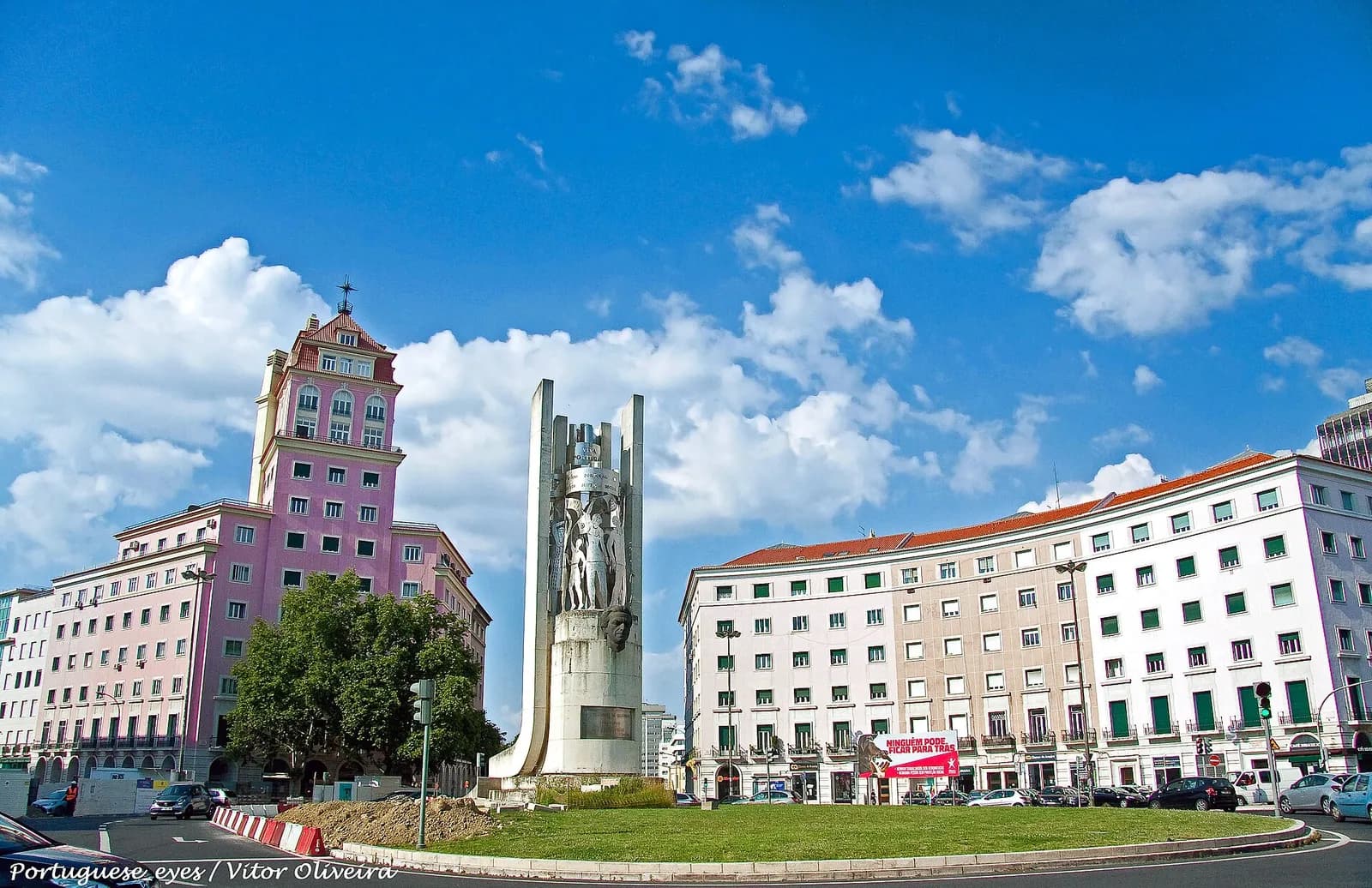
- The monument to Francisco Sá Carneiro in the Lisbon square that has carried his name since 1982, photographed in 2020. Vitor Oliveira from Torres Vedras, PORTUGAL, CC BY-SA 2.0, via Wikimedia Commons.
- A Cessna 421 at Birmingham airport, England, in May 1981. This is the same family of aircraft as the one that crashed at Camarate, not the aircraft itself. G B_NZ, CC BY-SA 2.0, via Wikimedia Commons.
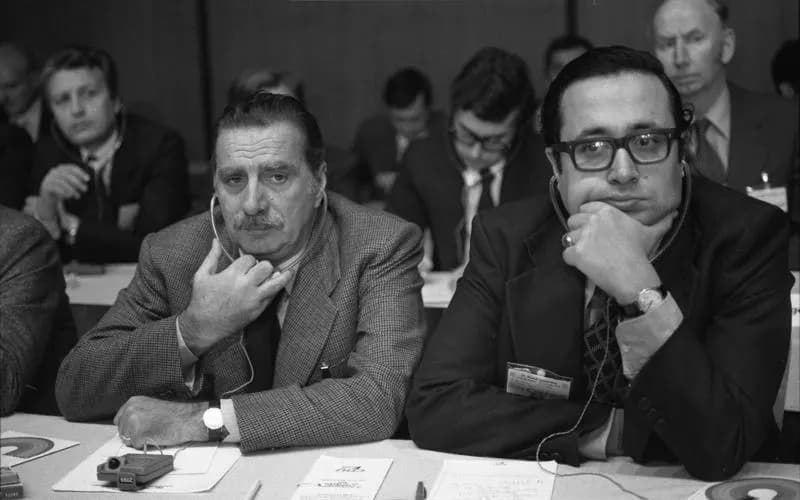
- Adelino Amaro da Costa (right, in glasses) beside the Italian politician Lorenzo Natali at the congress of Germany's CDU in Ludwigshafen, October 1978. Engelbert Reineke, CC BY-SA 3.0, via Wikimedia Commons.
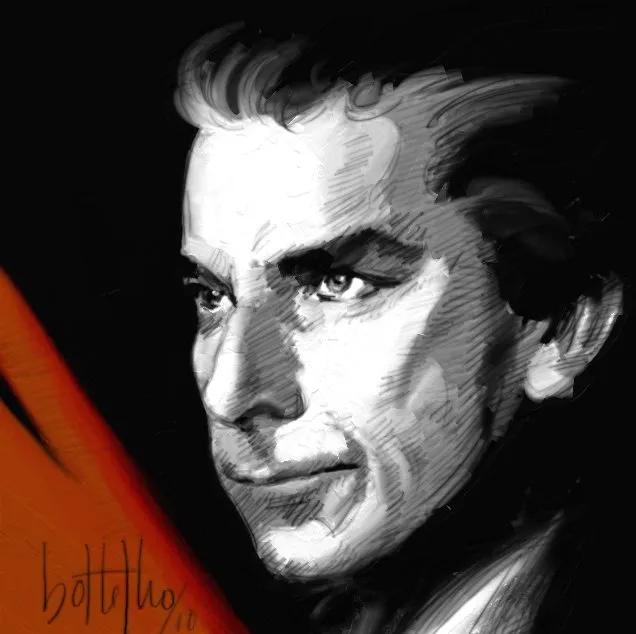
- Francisco Sá Carneiro in a 2010 painting by the artist Bottelho. Bottelho, CC BY-SA 2.0, via Wikimedia Commons.
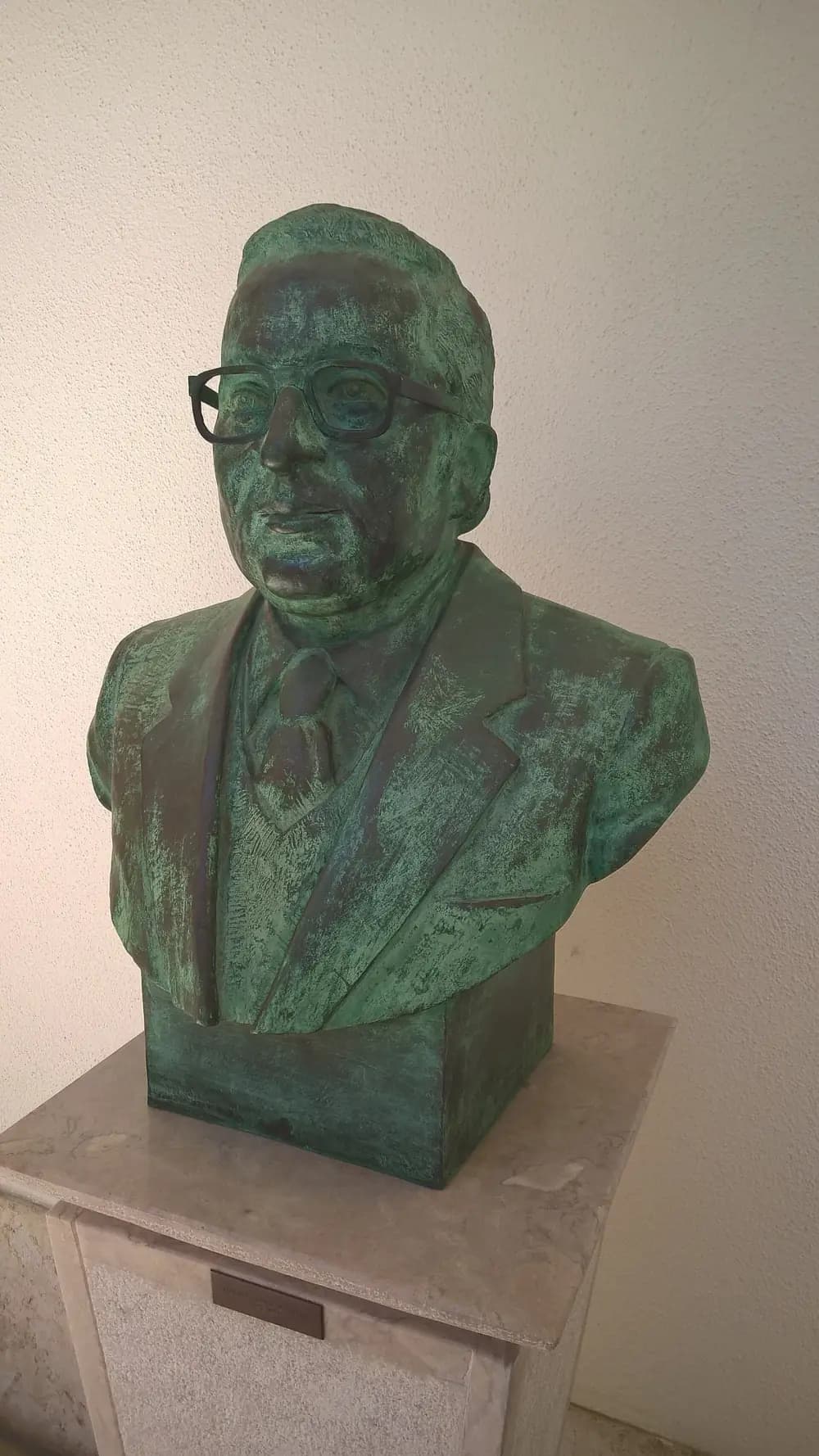
- Bust of Adelino Amaro da Costa by Domingos Soares Branco (2000) in the cloister of the Palácio de São Bento, the seat of parliament, photographed in 2019. GualdimG, CC BY-SA 4.0, via Wikimedia Commons.