

Florbela Espanca dies in Matosinhos on her 36th birthday, 1930
She published two slim books of sonnets in her lifetime and could not find a publisher for the third. It came out early the next year, after her death, and Portugal spent the next decades arguing over whether she deserved a statue.
At a glance
- Florbela Espanca died in Matosinhos, near Porto, in the night of 7 to 8 December 1930. The records give 8 December, her 36th birthday.
- Born in Vila Viçosa in 1894 and baptised with only her mother's surname, she was recognised by her father, João Maria Espanca, only in 1949, after her death.
- She studied law in Lisbon from 1917, married three times and published two books of sonnets in her lifetime: Livro de Mágoas (1919) and Livro de Sóror Saudade (1923).
- Her brother Apeles, a naval officer, died when his seaplane crashed into the Tagus on 6 June 1927. The loss left her in deep despair.
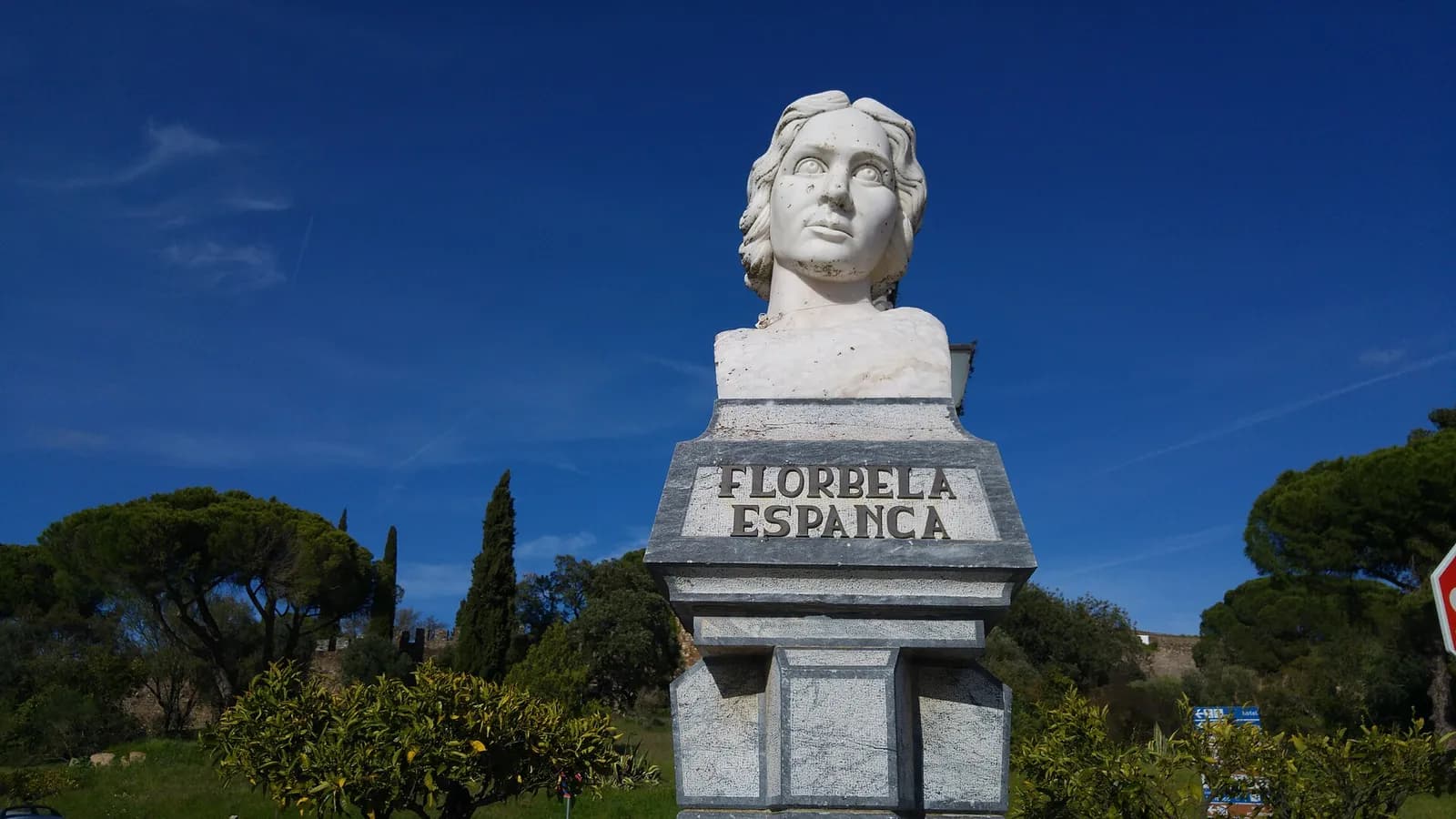
- Charneca em Flor, her best-known book, came out in 1931. A marble bust of her by Diogo de Macedo waited 18 years for a place in Évora, and her remains were moved to Vila Viçosa on 17 May 1964.
A purple notebook in Matosinhos
In 1930 Florbela Espanca kept a diary in a hard-backed notebook covered in purple damask silk. She filled only the first 14 pages, with entries for a few days of every month except June. In December there is a single entry, dated the 2nd.
She was living in Matosinhos, on the coast just north of Porto, on Rua 1.º de Dezembro, with her third husband, a doctor named Mário Lage. She was still writing: three sonnets in her hand, now in a collection in Vila Viçosa, are dated October 1930. Guido Battelli, an Italian professor at the University of Coimbra, had agreed to sponsor the book of sonnets she had been unable to get published, Charneca em Flor.
She did not live to see it. Florbela Espanca died by suicide in the night of 7 to 8 December 1930. The records give the date of death as 8 December, her 36th birthday. She had been ill for years and in crisis for months. The book came out early in 1931.
A daughter born out of wedlock
She was born in Vila Viçosa, a town in the Alentejo, on 8 December 1894, and baptised Flor Bela Lobo, with her mother's surname only. Her mother, Antónia da Conceição Lobo, was a maid. Her father, João Maria Espanca, was an antique dealer and photographer whose studio in the town was called the Phot. Calypolense.
João Maria was married to another woman, Mariana do Carmo Inglesa Espanca, who was also Florbela's godmother; a copy of Mariana's will, made before her death in 1925, is among Florbela's papers. In 1897 Antónia had a second child, Apeles, Florbela's only brother. Antónia died in 1908. Florbela lived with her father and his wife, who treated her as one of their own.
The girl soon renamed herself. As a child she was already signing Florbela d'Alma da Conceição Espanca, joining her mother's name to her father's, and she used that name on verses of 1904 dedicated to him, No dia d'Annos (On the Birthday). He recognised her as his daughter only in 1949, eighteen years after her death.
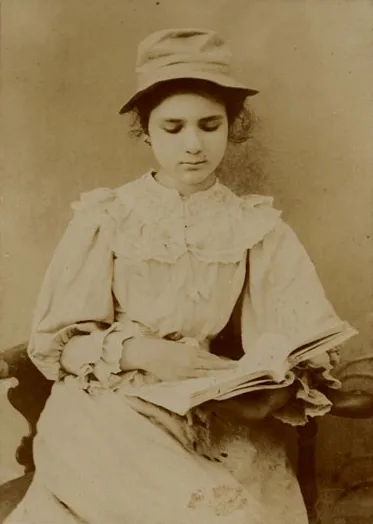
Few girls went to secondary school in Portugal then, and Florbela did, at the lycée in Évora, the regional capital. Apeles went to the same city's Liceu André de Gouveia and then to the Naval School. Brother and sister stayed close all their lives.
Law school, two books and two divorces
On her 19th birthday, 8 December 1913, she married a schoolfriend, Alberto de Jesus Silva Moutinho. The couple went to live in Redondo, a small Alentejo town, where she taught languages, and she began signing herself Florbela Moutinho. In 1916 she sent a stitched booklet of eleven poems, Primeiros Passos, to the writer Raul Proença, hoping for his approval; he corrected it.
In 1917 she finished her secondary studies, and in October she enrolled in law at the University of Lisbon. Only fourteen women had entered the law faculty at that time. In the capital she met other poets and a group of women writers trying to make their names, and the poet Américo Durão became a friend.
Her first book, Livro de Mágoas (Book of Sorrows), appeared in 1919: 32 sonnets, printed by the Tipografia Maurício in a run of 200 copies that sold out quickly. Critics hardly noticed it. Its tone of lament owed much to António Nobre, the fin-de-siècle poet she took as a model.
“Brothers in Sorrow, your eyes brimming with tears … reading my book, full of nothing but sorrows!”
The same year she suffered a miscarriage, and her health, physical and mental, began to fail. By 1920 she was living with António Guimarães, an artillery officer, while still married to Moutinho. The divorce came through in 1921, and she married Guimarães on 29 June 1921 in Porto.
Her second book, Livro de Sóror Saudade (The Book of Sister Saudade), followed in 1923. The title, Sister Saudade, came from her friend Américo Durão; saudade is the Portuguese word for longing. In November that year, ill again and after another miscarriage, she left her Lisbon home and Guimarães for good, perhaps in such haste that she left behind a bundle of manuscripts, letters and press cuttings. The state heritage institute, with the Gulbenkian Foundation, bought it in 1984, and it is now the Florbela collection of the Biblioteca Nacional.
Divorced from Guimarães, she married Mário Pereira Lage, a doctor, in Matosinhos in 1925. They settled there in 1926. She translated novels for the Porto publishers Civilização and Figueirinhas.
| Husband | Married | Ended | Where they lived |
|---|---|---|---|
| Alberto de Jesus Silva Moutinho, schoolfriend | 8 December 1913, her 19th birthday | Divorce, 1921 | Redondo; she studied in Lisbon from 1917 |
| António Guimarães, artillery officer | 29 June 1921, Porto | She left in November 1923; divorce followed | Lisbon |
| Mário Pereira Lage, doctor | 1925, Matosinhos | Her death, 1930 | Matosinhos, from 1926 |
The brother who fell into the Tagus
Apeles Demóstenes da Rocha Espanca graduated from the Naval School in 1917 and was promoted to first lieutenant in 1926. He sailed to Brazil and to the Belgian Congo, and in 1922 wrote to his sister from the cruiser Carvalho Araújo at Boma, in the Belgian Congo. He also painted in a modernist style, and some of his work appeared in the magazine Ilustração Portuguesa.
In 1927 he joined a pilots' course at the Naval Aviation Centre in Lisbon. On 6 June, during a training flight for his pilot's licence, his Hanriot seaplane crashed into the Tagus between Porto Brandão and Trafaria and sank. He was 30. His body was never found. Twenty-four days later Lisbon city council decided to name a street after him, Rua Tenente Espanca.
The loss left Florbela in deep despair. That year she wrote the eight stories of As Máscaras do Destino (The Masks of Fate), dedicated to him and opening with one called The Aviator. Death runs through all of them. She also wrote a sonnet for him, In memoriam, which ends with these lines.
“In life I was the sister of one Brother only, and now I am no one's sister any more.”
After her death, newspapers and gossip claimed that her love for Apeles had been incestuous. Scholars treat the rumour as part of the scandal that grew up around her name, not as established fact.
The last year
Parts of 1930 went well. In June the Portuguese Red Cross awarded “D. Bela Lage” a medal of thanks for her work at the Festa da Flor, a charity flower day in Porto, the year before. She met Battelli, who decided to sponsor Charneca em Flor, and she kept the diary.
The diary is less of a confession than it looks. Renata Soares Junqueira, who has written on Florbela's theatricality, reads it as one more performance: in the first entry Florbela admits that her portrait of her own “mysterious, intangible, secret” self owes much to her pleasure in making phrases.
Her health was failing. That year doctors diagnosed pulmonary oedema, fluid in the lungs. Her mental health was worse, and by the autumn she was in deep despair. In the night of 7 to 8 December she took an overdose of sedatives, and she died.
- Date
- Night of 7 to 8 December 1930; recorded as 8 December
- Place
- Matosinhos, where she lived on Rua 1.º de Dezembro
- Age
- 36 that day
- Official cause
- Pulmonary oedema
- First burial
- Matosinhos, in the town's second cemetery
- Reburial
- Vila Viçosa, 17 May 1964
The official cause of death was given as pulmonary oedema, and at least one reference work still calls the cause unclear. Most scholars, from the Camões Institute's essay to the Projeto Modernismo dictionary, describe it as suicide.
Charneca em Flor and a quarrel over a bust
Charneca em Flor (Heath in Bloom) was published by the Livraria Gonçalves. It was a commercial success, and a second edition came out in April 1931, with 28 unpublished sonnets added under the title Reliquiae. The same year the Porto house Marânus published As Máscaras do Destino.
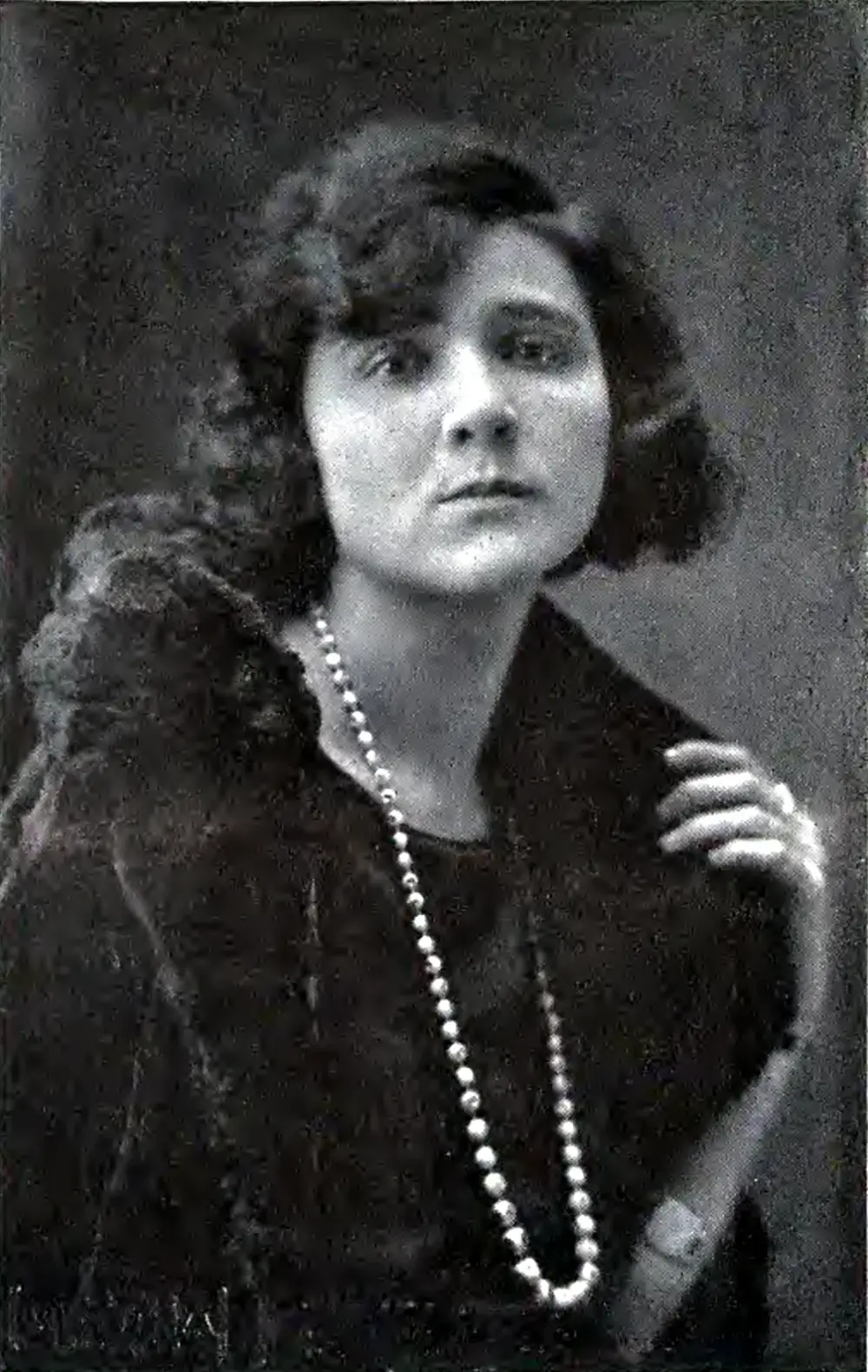
Battelli marketed the book on the back of her death. Maria Lúcia Dal Farra, the Brazilian scholar who has edited much of Florbela's work, says he used the suicide to draw readers and the press. It worked commercially, but newspapers began to dig into her private life, from her birth outside marriage to her bond with her brother. From then on, readers took her sonnets as autobiography.
That was a misreading, her modern critics argue. In each book she wore a mask: a princess waiting in a castle in Livro de Mágoas, a cloistered nun in Sóror Saudade, a sorceress in command of love in Charneca em Flor. The last book is also openly sensual about a woman's body, which was new in Portuguese poetry.
“She was one of the first to write about female desire in Portuguese literature.”
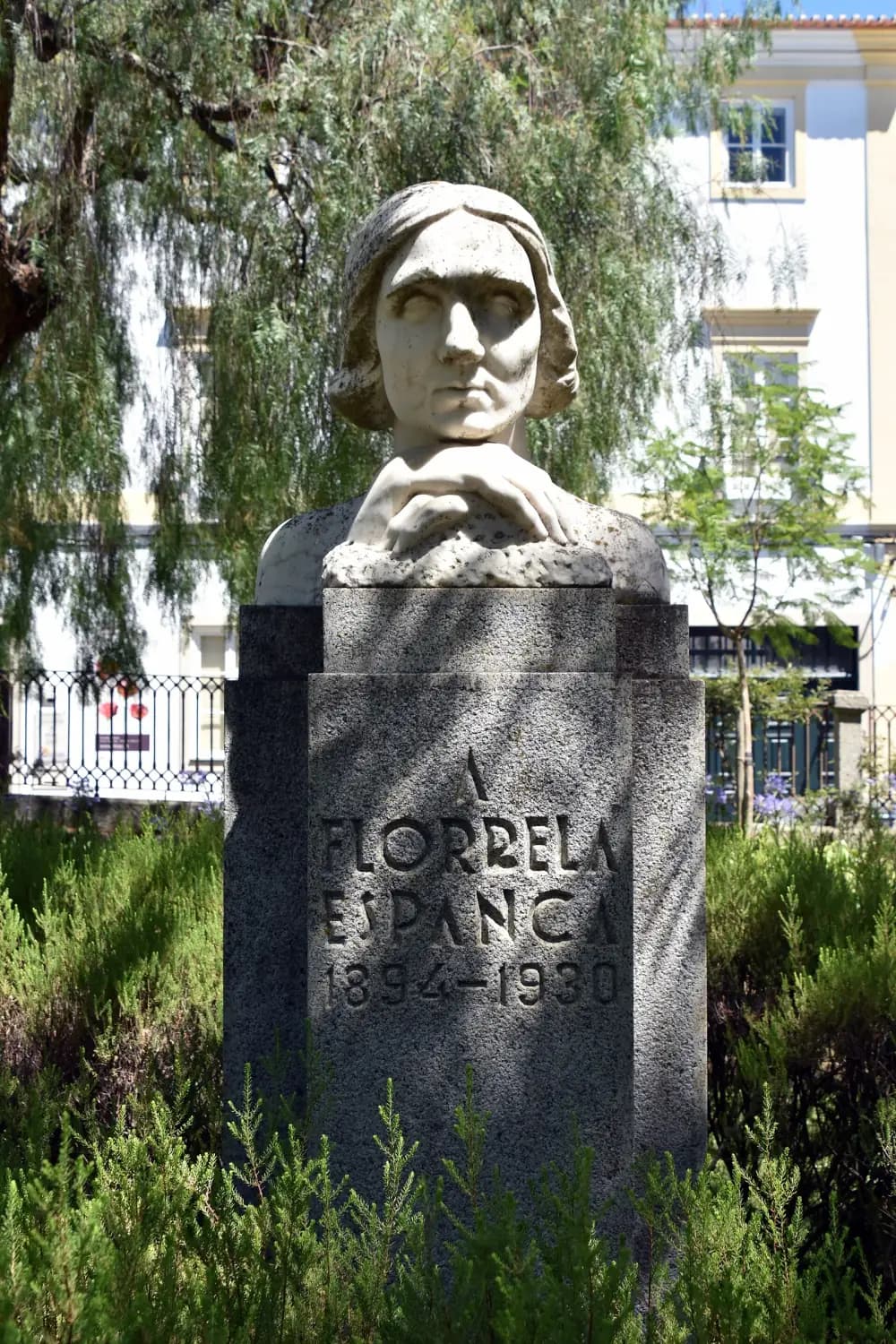
In the early 1930s a proposal to honour her with a bust in a public square set off a long, noisy argument in newspapers from north to south. The poet José Régio joined in, pointing to the originality of her verse. The sculptor Diogo de Macedo carved a marble bust in 1931.
It waited 18 years. Church and political authorities, local and national, refused it a public place until 1949, when it was finally set up in the Jardim Público of Évora. Dal Farra links the delay to the moral climate of the dictatorship, which held up the chaste, domestic woman as the ideal and branded Florbela a debauched one.
Home to Vila Viçosa, 1964
Florbela was buried in Matosinhos. Her return to Vila Viçosa was the work of a local association, the Grupo Amigos de Vila Viçosa, and of her widower. In July 1962 Mário Lage wrote from Lousada that he was willing to move her to a “worthy tomb” in her home town.
On 14 May 1964 the Porto police issued the permit to move her bones from Matosinhos's second cemetery to the cemetery of Vila Viçosa. Lage had written that he would be at the exhumation on the 16th. A black-bordered leaflet, apparently from Coimbra, asked the people of a “cultured city” to salute the coffin as it passed through.
On 17 May 1964 Vila Viçosa carried the urn to a mausoleum of its own in the municipal cemetery and unveiled a bust of her in the town park. The programme printed her poems beside tributes from writers including Mário Beirão, Américo Durão and Natércia Freire. Lage gave the association the papers and objects he had kept, which it still owns.
8 December 1894
Born in Vila Viçosa
Baptised Flor Bela Lobo, daughter of Antónia da Conceição Lobo.
10 March 1897
Her brother Apeles is born
8 December 1913
First marriage, to Alberto Moutinho
October 1917
Enrols in law at the University of Lisbon
1919
Livro de Mágoas
32 sonnets, 200 copies.
29 June 1921
Second marriage, to António Guimarães
1923
Livro de Sóror Saudade
1925
Third marriage, to Mário Lage
They move to Matosinhos in 1926.
6 June 1927
Apeles dies in a seaplane crash in the Tagus
8 December 1930
Dies in Matosinhos on her 36th birthday
1931
Charneca em Flor and As Máscaras do Destino published
1949
Her father recognises her; the Évora bust is set up
17 May 1964
Reburied in Vila Viçosa
From scandal to schoolbooks
Universities were slow to follow her readers. The first dissertation on her work was written in Lisbon in 1945, and the second only in 1959, in Coimbra. Cláudia Pazos Alonso, now at Oxford, says that when she began researching Florbela in the late 1980s the poet was practically forgotten in Portuguese universities.
The change came through biography and through Brazil. The novelist Agustina Bessa-Luís's biography of 1979 treated Florbela as a character rather than reading her poems as a diary. Dal Farra, teaching in Brazil, tracked down in Portugal an early notebook of Florbela's poems and stories, and published it in 1994 as Trocando Olhares. Brazil's thesis catalogue records 59 academic works on Florbela between 1992 and 2020.
Outside the universities she never went away. The Brazilian singer Fagner made a hit of her sonnet Fanatismo in 1981, a feature film, Florbela, came out in 2012, and in 2020 President Marcelo Rebelo de Sousa chose one of her poems to be read before the official speeches on 10 June, the Day of Portugal.
“Love! To love! And not love anyone!”
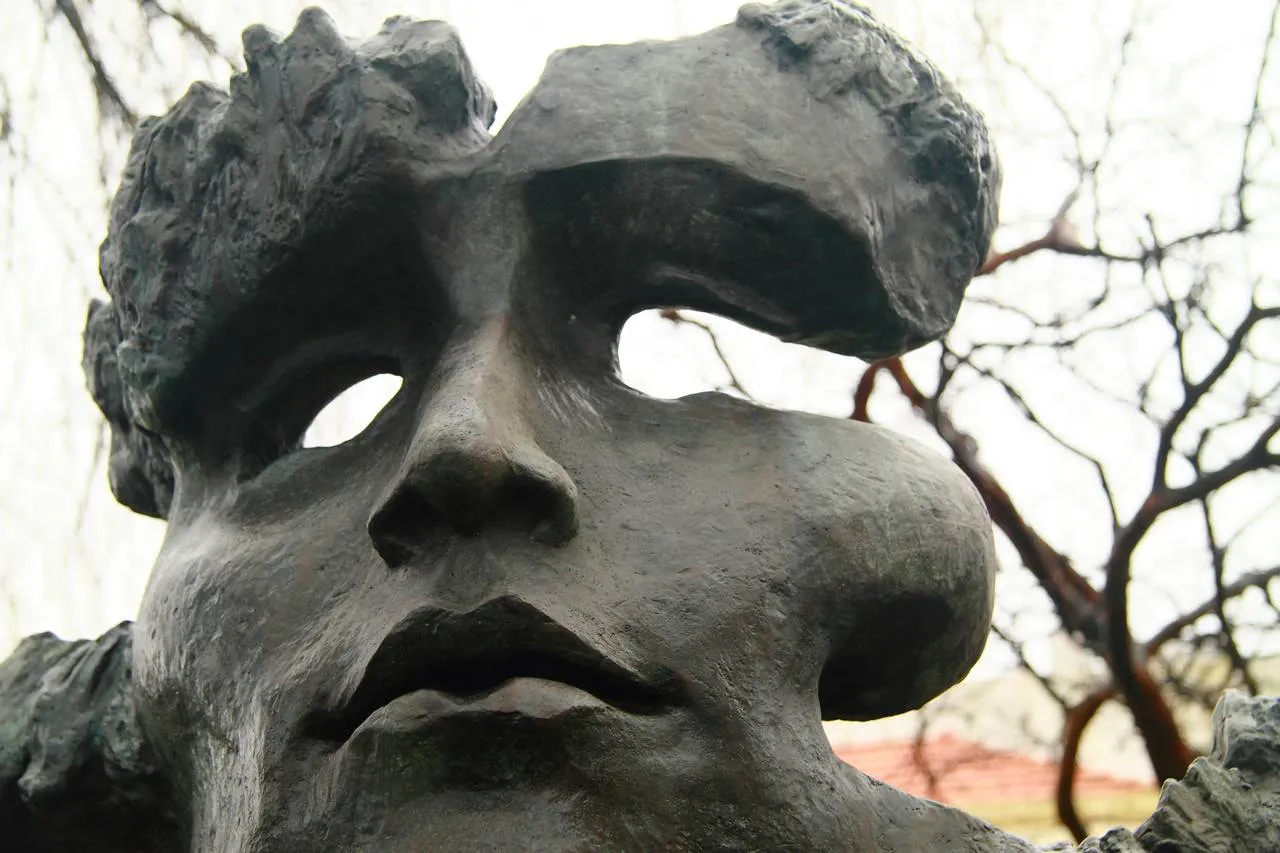
The towns she lived in have since honoured her. Matosinhos put up a bronze by Irene Vilar in 1981, and in 2025 Vila Viçosa added a statue in local marble by Francisco Simões, the start of a planned Florbela garden and trail that is to include her family's house.
FAQs
When and where did Florbela Espanca die?
In Matosinhos, near Porto, in the night of 7 to 8 December 1930. The records give 8 December 1930, her 36th birthday. The death certificate gave pulmonary oedema as the cause; most scholars describe her death as suicide.
What are Florbela Espanca's main books?
Two books of sonnets came out in her lifetime, Livro de Mágoas (1919) and Livro de Sóror Saudade (1923). Charneca em Flor and the stories of As Máscaras do Destino were published after her death, in 1931, and the stories of O Dominó Preto only in 1982.
Where is Florbela Espanca buried?
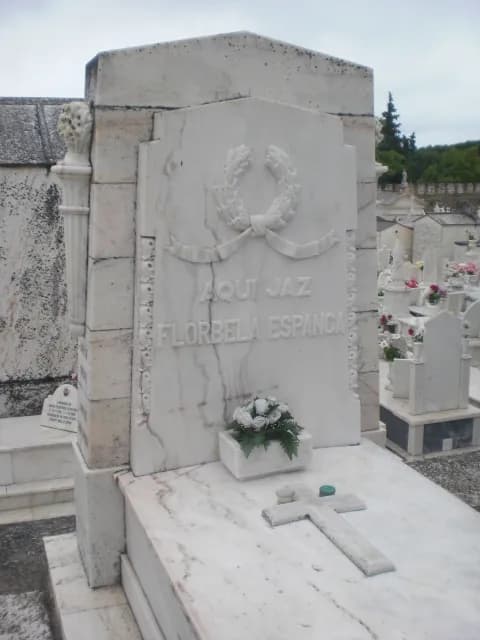
In the municipal cemetery of Vila Viçosa, her birthplace. She was first buried in Matosinhos; her remains were moved to a tomb in Vila Viçosa on 17 May 1964, at the initiative of the Grupo Amigos de Vila Viçosa and her widower, Mário Lage.
Did Fernando Pessoa write about Florbela Espanca?
There is no evidence that he did. A typed poem in memory of Florbela survives among Pessoa's papers at the Biblioteca Nacional, but the Projeto Modernismo entry on her says it is certainly by another poet, and that Pessoa's circle never mentioned her.
Who was Apeles Espanca?
Florbela's younger brother, born in 1897: a naval lieutenant and modernist painter who died on 6 June 1927 when his seaplane crashed into the Tagus during a training flight. His body was never found. Florbela dedicated As Máscaras do Destino to him.
On the timeline
Open the timelineNearby moments from dictatorship and the estado novo (1926–1974).
José Águas is born in Luanda. Spotted playing for Lusitano do Lobito, the centre-forward famed for his heading joined Benfica in 1950 and, as captain, lifted the European Cup in 1961 and 1962, finishing as top scorer of the first of those campaigns.
The poet Herberto Helder is born in Funchal, Madeira. Author of 'A Colher na Boca' and 'Photomaton & Vox', he became one of the most admired and most reclusive Portuguese poets of the century, refusing almost all interviews and turning down the Pessoa Prize in 1994.
Death in Lisbon of the writer Raul Brandão, aged 63. Born at Foz do Douro into a seafaring family, the former army officer wrote the anguished modernist novel 'Húmus' (1917) and luminous chronicles of the coast and the Atlantic islands such as 'Os Pescadores' and 'As Ilhas Desconhecidas', still read as some of the finest prose about Portugal's sea.
The death of Florbela Espanca
The poet Florbela Espanca dies in Matosinhos on her 36th birthday. Born in Vila Viçosa, thrice married and scandalous in her day, she wrote passionately sensual, defiantly feminine sonnets; her last book, 'Charneca em Flor', appeared weeks after her death, and a bust of her waited 18 years for a place in Évora.
The first issue of 'Avante!', the Portuguese Communist Party's newspaper, appears. For the next 43 years, until the 1974 revolution, it was printed on clandestine presses inside Portugal and passed from hand to hand under the dictatorship.
Death of Manuel II, the last King of Portugal, aged 42, at Fulwell Park in Twickenham, where he had lived in exile since the 1910 revolution, devoting himself to a scholarly catalogue of early Portuguese books. Salazar's government grants a state funeral, and crowds line Lisbon's streets as his coffin passes to the Braganza pantheon at São Vicente de Fora.
Poet Ruy Belo is born in São João da Ribeira, near Rio Maior. A law graduate who left the Opus Dei and spent years teaching Portuguese in Madrid, he became one of the great voices of 20th-century Portuguese poetry with books such as 'Homem de Palavra(s)', before dying at just 45.
Coming up in history
All long reads 10 December 1616Diogo do Couto: the soldier who helped Camões home and kept Goa's archive
 11 December 1826The death of Empress Leopoldina in Rio de Janeiro, 11 December 1826
 12 December 1976Portugal elects its town halls: the first free local elections, 1976
 13 December 2007The Treaty of Lisbon: EU leaders sign at Jerónimos, 13 December 2007
19 sources
Archives, scholarship and reporting this article was checked against.
- 1
Espólio Florbela Espanca: O Espólio (nota explicativa de Fátima Lopes)Biblioteca Nacional de Portugal, Arquivo da Cultura Portuguesa Contemporânea (BN Esp. N10)
- 2
Inventário do espólio de Florbela Espanca (propriedade do Grupo Amigos de Vila Viçosa)Universidade de Évora, project “Florbela Espanca: o espólio de um mito” (Ana Luísa Vilela and Fabio Mario da Silva)
- 3
Florbela Espanca, by Renata Soares JunqueiraProjeto Modernismo: Arquivo Virtual da Geração de Orpheu
- 4
A foreign perspective (Ana Paula Orlandi)Pesquisa FAPESP, issue 311, January 2022
- 5
Florbela Espanca, by Cecília BarreiraCamões, Instituto da Cooperação e da Língua, Centro Virtual (Figuras da Cultura Portuguesa)
- 6
A Rua do irmão de Florbela, o Tenente Espanca, no Bairro de LondresToponímia de Lisboa (Câmara Municipal de Lisboa), 23 August 2016
- 7
Florbela Espanca (1894-1930): Figuras de MatosinhosCâmara Municipal de Matosinhos
- 8
- 9
Florbela Espanca (Lynn Richardson)EBSCO Research Starters, 2024
- 10Linha de aconselhamento psicológico atendeu perto de meio milhão de chamadas em seis anosObservador / Lusa, 1 April 2026
- 11
- 12
- 13
“Uma simples separação de corpos onde há uma separação de almas” (1910)Assembleia da República
- 14
Um golpe na República: 28 de Maio de 1926, da Ditadura Militar ao Estado NovoMuseu da Presidência da República
- 15
- 16
Espanca, Florbela (1894–1930)Women in World History: A Biographical Encyclopedia, via Encyclopedia.com
- 17
- 18
Florbela Espanca: o mármore e a barbárieEncontros Universitários da UFC, vol. 6, no. 3 (2021), Universidade Federal do Ceará
- 19
O último “polimento de Florbela”. Domingo é dia de elevar os poetas em Vila ViçosaRádio Campanário, 28 March 2025
Image credits
- The monument to Florbela Espanca in Vila Viçosa, the Alentejo town where she was born in 1894 and where she has been buried since 1964. Photographed in 2018. Zopizarren, CC BY-SA 4.0, via Wikimedia Commons.
- Florbela at about 15, photographed around 1910 by her father's studio in Vila Viçosa, the Phot. Calypolense. The print is now in her papers at the Biblioteca Nacional de Portugal. “Phot. Calypolense” de J. M. Espanca, Public domain, via Wikimedia Commons.
- The portrait of Florbela printed as a plate in Charneca em Flor, published early in 1931, after her death. Unknown author, Public domain, via Wikimedia Commons.
- Diogo de Macedo's marble bust in the Jardim Público of Évora. Carved in 1931, it was set up only in 1949. Photographed in 2017. Retogenes, CC BY-SA 4.0, via Wikimedia Commons.
- Florbela Espanca's marble tomb in the cemetery of Vila Viçosa. The inscription reads “Aqui jaz Florbela Espanca”, here lies Florbela Espanca. Photographed in 2008. Kani, CC BY-SA 4.0, via Wikimedia Commons.
- Irene Vilar's bronze of Florbela Espanca, unveiled in Matosinhos in 1981, in the garden on Rua Ló Ferreira. Photographed in March 2010. José Moutinho from Leça da Palmeira, Portugal, CC BY 2.0, via Wikimedia Commons.