

António Variações, the barber who sang between Braga and New York
He left his village at 11 or 12 to work in Lisbon, trained as a hairdresser in Amsterdam and released his first record at 37. Two years later he was dead, and the songs he left on cassettes are still being sung.
At a glance
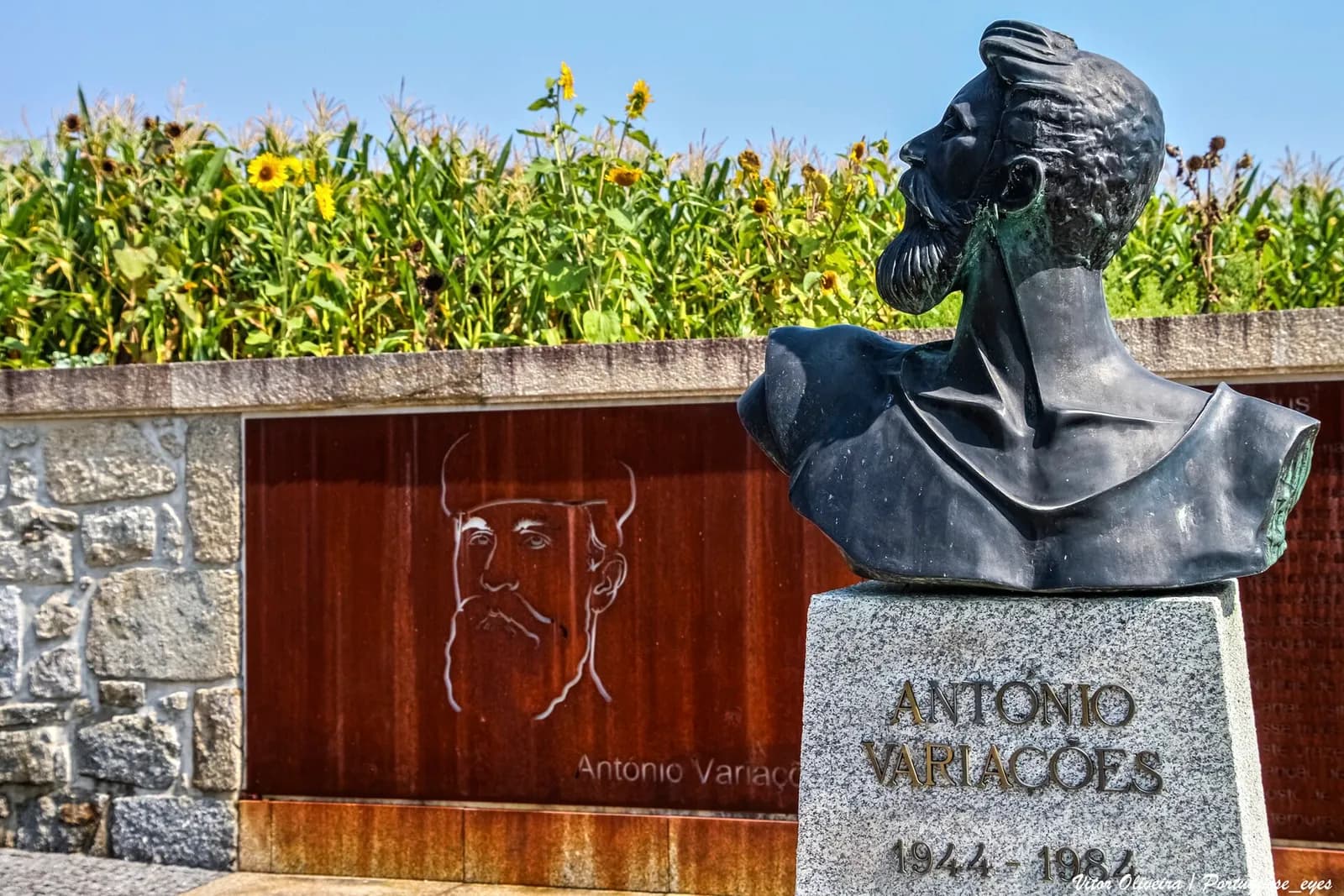
- António Joaquim Rodrigues Ribeiro, later António Variações, was born on 3 December 1944 in the hamlet of Pilar, in the parish of Fiscal, Amares, in the Minho.
- He left for Lisbon at 11 or 12 to work as a shop boy, did his military service in Angola, and in the mid-1970s lived in London and Amsterdam, where he trained as a hairdresser.
- Back in Lisbon he cut hair in some of the city's first unisex salons and then in his own barber's shop, while giving cassettes of his songs to anyone who would listen.
- He released one single (1982) and two albums, Anjo da Guarda (1983) and Dar & Receber (1984), before dying in Lisbon on 13 June 1984, aged 39. He died of bilateral bronchopneumonia; his earlier symptoms pointed to AIDS, but no official document names it.
- His unreleased songs became the hit album of Humanos in 2004, and João Maia's film Variações was the most-watched Portuguese film of 2019, with about 279,000 admissions.
A barber on Sunday television
Early in 1981, a 36-year-old barber walked onto the set of O Passeio dos Alegres, the most-watched programme in Portugal, broadcast live by the public broadcaster RTP on Sunday afternoons. He wore enormous checked trousers gathered tight at the ankle and sang a song called Toma o Comprimido, “Take the Pill”. Outside Lisbon's nightlife and a small rock scene, almost nobody had heard of him.
The presenter, Júlio Isidro, was one of his customers. The barber had asked him to listen to the songs he wrote and handed over a cassette, and Isidro liked it enough to invite him onto the next programme. He sang two of his own songs that afternoon, Toma o Comprimido and Não Me Consumas. Neither would appear on a record until 2006.
His name was António Joaquim Rodrigues Ribeiro, but he had started calling himself António Variações. Three years later he had two albums in the shops and was dead. Sources disagree on whether the broadcast was in January or February 1981; they agree that it introduced him to the whole country.
- Born
- 3 December 1944, Pilar, parish of Fiscal, Amares (district of Braga)
- Name
- António Joaquim Rodrigues Ribeiro
- Trade
- Barber
- Records in his lifetime
- One single (1982) and two albums (1983, 1984)
- Label
- Valentim de Carvalho, signed in 1978
- Died
- 13 June 1984, Lisbon, aged 39
A hamlet in the Minho
He was born at six in the morning of 3 December 1944 in Pilar, a hamlet in the parish of Fiscal, in the municipality of Amares, north of Braga. He was the fifth child of Jaime Ribeiro and Deolinda de Jesus. The family was large: one account gives him eleven brothers and sisters, two of whom died very young.
His childhood was happy but very humble, in the words of a 2023 programme note from the Cinemateca, Portugal's film museum. He loved Amália Rodrigues and folk music. He finished primary school, the quarta classe, and then went south to earn a living.
Manuela Gonzaga, his biographer, says he left Pilar at 11, on a train to Lisbon and a job as a marçano, a shop boy. Other accounts say he was 12. In Lisbon he also worked as an apprentice clerk in an office.
“I have been a bathroom singer, and it was not at all easy to get to the stage. I had to cross a very long corridor. I get the feeling I was born too early.”
Angola, London and Amsterdam
At the end of the 1960s he was called up and sent to Angola, where Portugal was fighting a colonial war. He came back unharmed and worked first as a clerk and then as a barber.
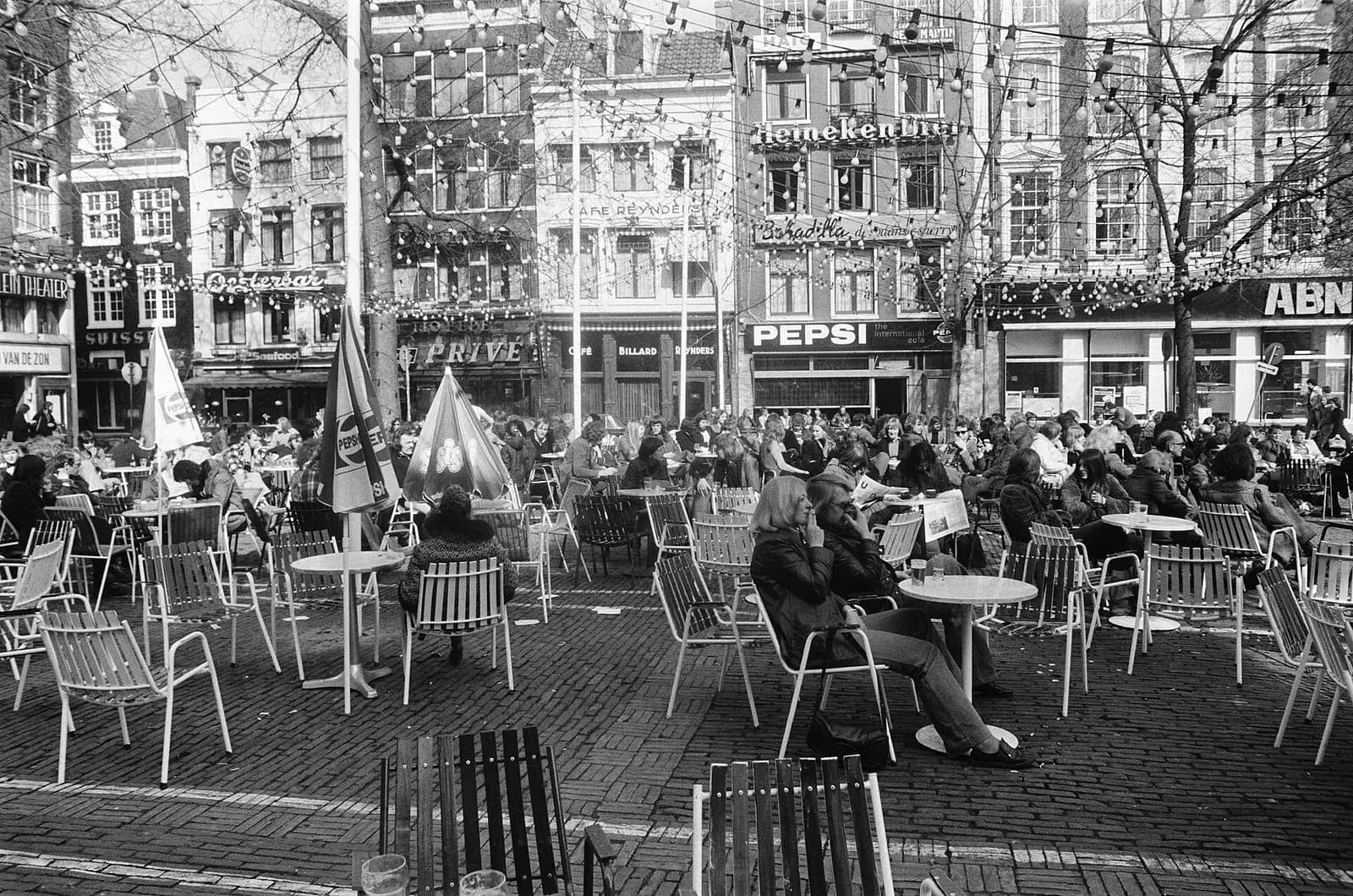
In the mid-1970s he left the country. He spent about a year in London, which he did not like, and then went to Amsterdam, which he loved. There he took up hairdressing, the trade that would later pay his bills in Lisbon, and absorbed the new fashions he would bring home.
“Variações’ biography (which mirrors the typical course of a portuguese male in the 20th century, from the province to the metropolis, the Colonial Wars and to emigration) seems to predicate a particular quest, from the humble origins in Minho to Lisbon and, afterwards, to London, Amsterdam, New York and so forth.”
Amsterdam also gave him a freedom that Portugal did not yet offer. In Gonzaga's account, summarised by The Guardian, the city's gay clubs and its political and sexual freedom were a world away from a country that was only beginning to open up after the revolution of 1974.
Scissors by day, songs by night
In 1976 he went to work at the salon of Isabel Queiroz do Valle, which Gonzaga describes as the first unisex salon in Lisbon. “He was strict, he did not come in late, he did not miss work,” the hairdresser remembered. “He was a gentle person, very simple, extremely well brought up, calm.”
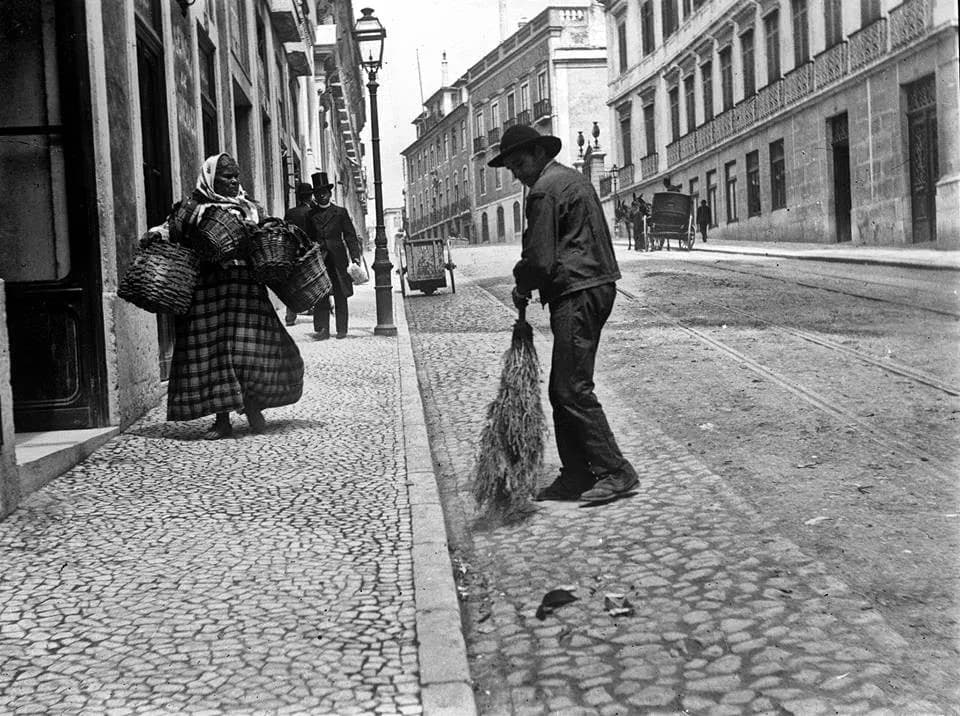
He also worked in a unisex salon in the Imaviz shopping centre, one of the first of its kind in Portugal, where people stopped at the door to stare at him and some pointed. Later he had a barber's shop of his own at number 70 Rua de São José, called É pró menino e prá menina, roughly “For the boy and for the girl”.
“I really like the sound of the scissors, but there is nothing that comes close to the sound of a viola, a guitar or a violin.”
He sang in public for the first time in the mid-1970s, at a song festival in the church of Nossa Senhora de Fátima on the Avenida de Berna, according to his friend Fernando Heitor. By 1976 he was performing at parties at the Scarlatty Club, and later on the stage of the Trumps nightclub. In 1977 and 1978 he had a garage band in Graça whose musicians changed every week. It was called António & Variações.
He could not read music and played no instrument. He recorded his songs on cassettes, often in the bathroom for the acoustics, with a drum machine for rhythm, and gave copies to friends and even to strangers. People noticed his clothes first: a beard dyed a different colour from his hair, balloon trousers, a beret, a leather waistcoat, chains.
“I never dressed the way I do to provoke other people, but as an act of freedom towards myself, for pleasure.”
Three records in three years
He signed with the record company Valentim de Carvalho in 1978. Nothing came of it for years. The label could not decide what arrangements suited his songs: classically trained musicians thought he sang out of tune, and popular musicians thought he had no political conscience.
In the offices of Valentim de Carvalho, Gonzaga writes, David Ferreira suggested dropping the ampersand from the band's name, and António Variações was born. In 1980 Rádio Renascença's alternative music programme Meia de Rock recorded a demo at his home and put O Corpo É Que Paga on the air. Pressure from his brother Jaime, a lawyer, and Júlio Isidro's backing finally pushed the label to record him.
The first record came out in 1982, when he was 37; rock musicians of the day were mostly in their twenties. It paired his song Estou Além with his own version of Povo Que Lavas no Rio, a fado made famous by Amália Rodrigues. Nuno Rodrigues of the Banda do Casaco and Ricardo Camacho produced it.
The album Anjo da Guarda followed in 1983, dedicated to Amália and played with Tóli César Machado and Vítor Rua of the rock band GNR. É P'ra Amanhã and O Corpo É Que Paga became hits, and that summer he was booked for concerts in villages across the country. During the sessions the producer asked him how he wanted the record to sound.
“Between New York and Braga Cathedral.”
He refused to be filed under any one style. “I've now been launched as a rocker,” he said in an interview, translated here from Portuguese. “I wasn't born in New York, I'm from the Minho, so it is much more natural for me to be a folk singer or a fado singer... I don't want labels, I want to be a singer.”
For the second album, Dar & Receber, he worked with the band Heróis do Mar: Carlos Maria Trindade and Pedro Ayres Magalhães produced it, with the accordionist Eugénia Lima and the guitarist Jorge Fontes. It came out in May 1984. Its best-known song, Canção de Engate, later became a huge hit in a version the Delfins recorded in 1987.
| Year | Record | Producers | Notable songs |
|---|---|---|---|
| 1982 | Single: Estou Além and Povo Que Lavas no Rio | Nuno Rodrigues, Ricardo Camacho | Estou Além; his version of Povo Que Lavas no Rio |
| 1983 | Album: Anjo da Guarda | Moz Carrapa; Tóli César Machado and Vítor Rua of GNR | É P'ra Amanhã; O Corpo É Que Paga; Visões-Ficções (Nostradamus) |
| 1984 | Album: Dar & Receber | Carlos Maria Trindade and Pedro Ayres Magalhães of Heróis do Mar | Canção de Engate; Dar e Receber |
RTP Memória lists Estou Além as the A-side of the 1982 single; Diário de Notícias describes Povo Que Lavas no Rio as his first single. Two songs from the 1981 television debut, Toma o Comprimido and Não Me Consumas, were first issued on a compilation in 2006.
Saint Anthony's Day, 1984
Variações did not drink or smoke and worried about his health. In May 1984, the month Dar & Receber came out, he was admitted to hospital in Lisbon. He died there after almost a month, on 13 June 1984, the feast of Saint Anthony. He was 39.
The immediate cause of death was severe bilateral bronchopneumonia. According to a summary published by Time Out Lisboa in 2019, his earlier symptoms pointed to HIV and AIDS, but because the disease was still largely unknown, no official document gives the virus as the underlying cause.
Writers since have handled the question differently. Gonzaga's biography does not settle the cause of death. Correio da Manhã and the Cinemateca's programme note state plainly that he died of AIDS, and Diário de Notícias, summarising The Guardian in 2020, repeated the story that his was the first public AIDS-related death in Portugal.
He was buried two days later in the cemetery of Amares, near the village where he was born. Few musicians came to the funeral.
3 December 1944
Born in Pilar, parish of Fiscal, Amares
Mid-1950s
Leaves for Lisbon, aged 11 or 12, to work as a shop boy
Late 1960s
Military service in Angola
Mid-1970s
Lives in London, then Amsterdam, where he takes up hairdressing
1976
Joins Isabel Queiroz do Valle's unisex salon in Lisbon
1977 to 1978
Sings with the garage band António & Variações
1978
Signs with Valentim de Carvalho
1980
Rádio Renascença's Meia de Rock plays his home demo
Early 1981
Television debut on O Passeio dos Alegres
1982
First single, Estou Além and Povo Que Lavas no Rio
1983
Album Anjo da Guarda
May 1984
Album Dar & Receber; he is admitted to hospital
13 June 1984
Dies in Lisbon, aged 39
15 June 1984
Buried in Amares
The songs that outlived him
Other singers took up his songs within three years. In 1987 the Delfins recorded Canção de Engate and Lena d'Água recorded Estou Além. In 1989 she dedicated her album Tu Aqui to him and included five songs he had never released. A tribute album in 1994 brought together Madredeus, Sérgio Godinho, Mão Morta, Delfins and others, and a best-of collection came out in 1997.
The cassettes did the rest. In 2004 a group of Portuguese musicians called Humanos, with Camané, David Fonseca and Manuela Azevedo of Clã as its voices, turned his unfinished home recordings into what was in practice a new album of originals. It went platinum, and Maria Albertina and Mudar de Vida were its hits.
His flat in Lisbon had been a kind of private museum, where he kept and displayed all sorts of objects. In 2009 some of them went to auction at the Centro Cultural de Belém, in 200 lots that also included cassettes of original recordings, manuscripts and clothes. Most of the lots sold.
Manuela Gonzaga's biography, António Variações: Entre Braga e Nova Iorque, appeared in 2006 and was reissued in an expanded edition in 2018. The University of Coimbra organised an international conference on him for December 2017, treating his work as a way of studying how Portuguese culture after 1974 fell in and out of step with the pop culture that came out of the 1960s.
The film took longer. The director João Maia began gathering material in 2001 or 2002 and won state funding from the Instituto do Cinema e do Audiovisual on his eighth application. He insisted that the actor sing: Sérgio Praia, the first actor to come to his casting, before 2008, performs every song himself, and the musicians play live.
Variações had its premiere in Amares on 19 August 2019 and opened across Portugal three days later. It topped the box office in its first weekend with 49,005 admissions, the first Portuguese film to do so that year. Filipe Duarte, who played Fernando Ataíde, the hairdresser and founder of Trumps whom Gonzaga counts among the great loves of Variações's life, died in 2020; it was his last role.
The most-watched Portuguese films released in 2019
admissions in Portugal in 2019
Admissions in Portuguese cinemas in calendar year 2019, from the European Audiovisual Observatory's LUMIERE database. The ICA's provisional count to 25 December 2019 gave Variações 278,182, eleventh among all films shown in Portugal that year.
Show the data
| Admissions | |
|---|---|
| Variações | 278,572 |
| Snu | 83,019 |
| A Herdade | 74,369 |
Not everyone in the family liked it. After the premiere in Amares, his brother Carolino Ribeiro said the film paid more attention to António's private life than to his work, and that, without meaning to, it fed the prejudice against him.
Why he still matters
In June 2020 The Guardian called him Portugal's first gay icon, while noting that he never came out publicly; his biographer describes him as discreet about his private life. In Portugal his name has become linked with the Pride month celebrations held every June. He is also simply popular: in 2019 a film about him drew more than three times the audience of any other Portuguese film.
Musicians keep returning to him. In 2019 the Festas de Lisboa closed with his songs arranged for the Orquestra Metropolitana de Lisboa in the gardens of the Torre de Belém, sung by Lena d'Água, Manuela Azevedo, Conan Osiris and others. The musical director, Luis Varatojo, counted almost four albums of songs: the two albums Variações released, Lena d'Água's Tu Aqui and Humanos.
From December 2025 to April 2026 the design museum MUDE, in Lisbon's Rua Augusta, showed Meu nome António, 85 photographs by his agent and friend Teresa Couto Pinto, taken between 1981 and 1983, with clothes and accessories he wore.
FAQs
When and where was António Variações born?
He was born António Joaquim Rodrigues Ribeiro on 3 December 1944 in Pilar, a hamlet in the parish of Fiscal, in the municipality of Amares, district of Braga, in the Minho region of northern Portugal.
What did António Variações die of?
He died in Lisbon on 13 June 1984, aged 39, after almost a month in hospital. The immediate cause was severe bilateral bronchopneumonia. His earlier symptoms pointed to AIDS, and several writers say plainly that he died of it, but no official document names HIV as the cause and his biographer does not settle the question.
What are António Variações's best-known songs?
O Corpo É Que Paga and É P'ra Amanhã from Anjo da Guarda (1983), Canção de Engate from Dar & Receber (1984), and Estou Além from his 1982 single. Maria Albertina and Mudar de Vida, recorded by Humanos in 2004, also come from his unreleased cassettes.
Why was he called Variações?
In 1977 and 1978 he sang with a garage band called António & Variações. When Valentim de Carvalho was looking for a stage name, David Ferreira is said to have proposed dropping the ampersand, joining his first name to the band's.
Who plays António Variações in the film Variações?
Sérgio Praia, who sings all the songs himself. João Maia's film opened in August 2019 and was the most-watched Portuguese film of the year, with about 279,000 admissions in Portugal.
On the timeline
Open the timelineNearby moments from dictatorship and the estado novo (1926–1974).
Manuel António Pina is born in Sabugal, in the Beira Alta. A Porto journalist who spent three decades at the 'Jornal de Notícias', he wrote spare, playful poetry and much-loved children's books, and in 2011 won the Camões Prize, the highest award in Portuguese-language literature.
Death in Porto, aged 93, of Bernardino Machado. Born in Rio de Janeiro — the only president of Portugal born outside the country — he was twice elected head of state of the First Republic, and both terms were cut short by military coups, in 1917 and 1926, each followed by exile.
The poet Eugénio de Castro, whose 1890 collection 'Oaristos' introduced Symbolism into Portuguese literature, dies in his native Coimbra at the age of 75.
António Variações is born
Birth of António Variações in Fiscal, Amares, in the Minho. A barber who worked in one of Lisbon's first unisex salons before opening his own shop, he became one of the most original voices of 1980s Portuguese pop, mixing Minho folk, fado and new wave in hits like 'O Corpo É Que Paga' and 'Canção de Engate'. He died in Lisbon in 1984, aged 39; AIDS was widely believed to be the cause, but no official document names it.
Portugal holds its first legislative election after the Second World War. The opposition Movimento de Unidade Democrática, formed in October amid hopes of liberalisation, had withdrawn a week earlier over the lack of free conditions, and Salazar's União Nacional takes all 120 seats in the National Assembly.
In Margão, the Indian socialist Ram Manohar Lohia and the Goan campaigner Julião Menezes defy the Portuguese colonial ban on public meetings, and Lohia is arrested. Goa still marks the date as Revolution Day, the start of the struggle that ended Portuguese rule when India took the territory in December 1961.
Birth of Xanana Gusmão in Manatuto, Portuguese Timor. Educated by Jesuits at Dare, he led the armed resistance to the Indonesian occupation that followed Portugal's hasty withdrawal in 1975, spent nearly seven years in Indonesian custody, and became the first President of independent East Timor in 2002.
Coming up in history
All long reads 5 December 1496Manuel I orders the Jews and Muslims out of Portugal: Muge, 5 December 1496
 6 December 1185The death of Afonso Henriques, 1185: Portugal's first king and his legends
 7 December 2002Metro do Porto opens on old railway tracks: 7 December 2002
 8 December 1930Florbela Espanca dies in Matosinhos on her 36th birthday, 1930
18 sources
Archives, scholarship and reporting this article was checked against.
- 1Entre Braga e Nova Iorque, relembrar VariaçõesDiário de Notícias, 13 June 2018
- 2António Variações, por João Carlos CallixtoRTP Memória, Gramofone
- 3
Festas de Lisboa encerram com homenagem a António VariaçõesTime Out Lisboa, June 2019
- 4
António VariaçõesMeloteca
- 5
International Conference: “Variações sobre António. Um colóquio em torno de António Variações”CESEM, NOVA FCSH, and Faculdade de Letras da Universidade de Coimbra, 2017
- 6Aquele que “silenciou a homofobia com a liberdade”. The Guardian lembra 36 anos sem VariaçõesDiário de Notícias, 29 June 2020
- 7
Variações / 2019, um filme de João Maia (programme note)Cinemateca Portuguesa-Museu do Cinema, 15 September 2023
- 8“Variações”: a saga do barbeiro que queria ser cantorObservador, 21 August 2019 (Eurico de Barros)
- 9
- 10Foram precisos 10 anos para recriar António Variações no cinema. Filme estreia-se hojeCorreio da Manhã, 22 August 2019
- 11
Homossexualidade deixou de ser crime há 40 anos mas “ainda há muito a fazer”DNoticias.pt (Lusa), 26 May 2022
- 12
- 13
Odette Ferreira. A mulher que diagnosticou António Variações e levou amostras de sangue no bolso da algibeiraMAGG, October 2018
- 14
Variações (2019): admissions by marketLUMIERE database, European Audiovisual Observatory (Council of Europe)
- 15Filme “Variações” foi o mais visto no fim de semana de estreia em PortugalObservador (Lusa), 26 August 2019
- 16
- 17
- 182019 foi o ano de “O Rei Leão”. É o filme mais visto de sempre em PortugalDiário de Notícias, 27 December 2019
Image credits
- The monument to António Variações in Fiscal, the parish in the municipality of Amares where he was born, photographed in August 2022. Vitor Oliveira from Torres Vedras, PORTUGAL, CC BY-SA 2.0, via Wikimedia Commons.
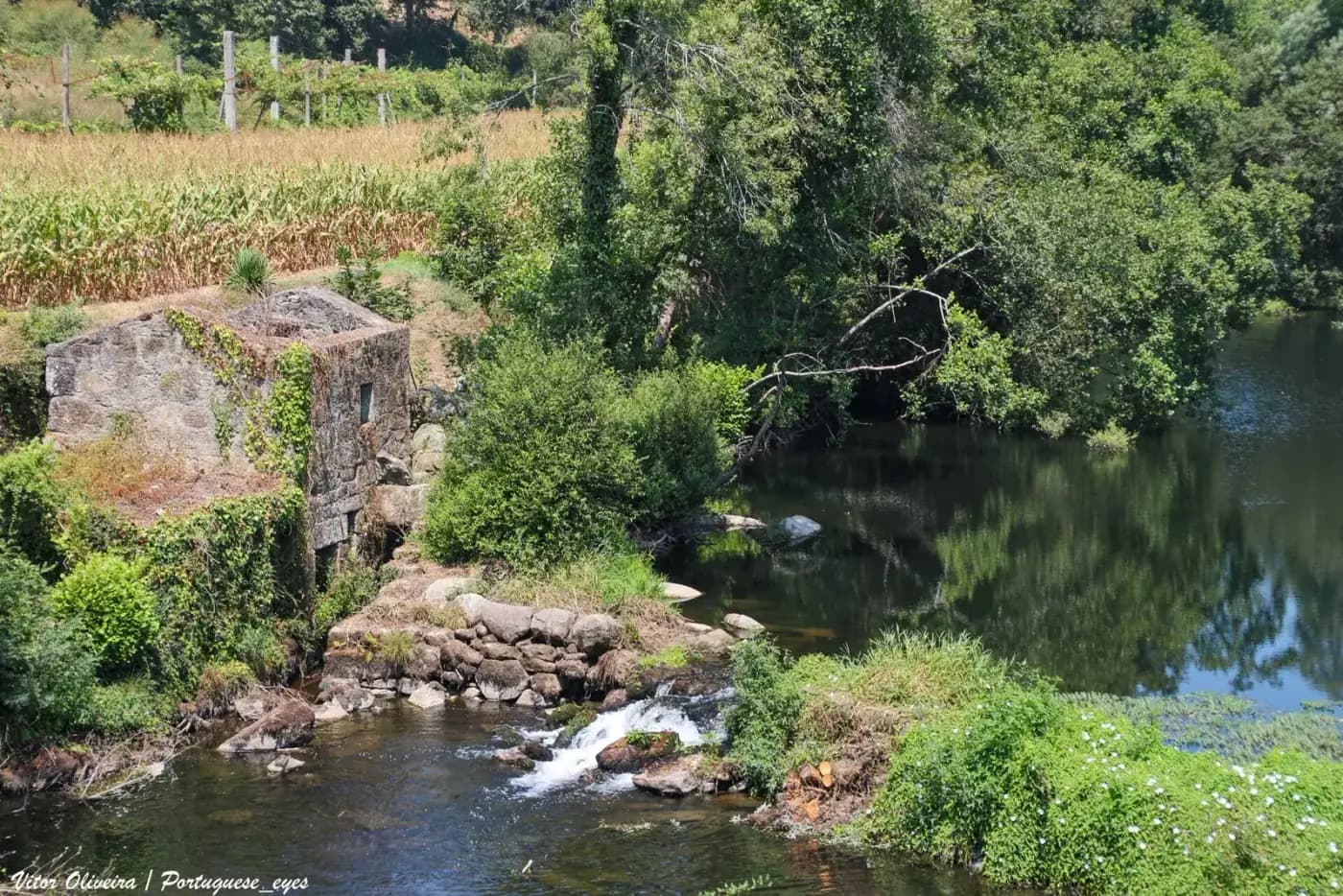
- The river Homem at Fiscal, the parish where Variações was born, in August 2022. He left this countryside for Lisbon as a boy. Vitor Oliveira from Torres Vedras, PORTUGAL, CC BY-SA 2.0, via Wikimedia Commons.
- Café terraces on the Leidseplein in Amsterdam on a spring day, 23 March 1975. Variações moved to the city after a year in London, in the mid-1970s. Hans Peters for Anefo, CC0, via Wikimedia Commons.
- Rua de São José in Lisbon in the 1900s, with the rails of the São Sebastião ascensor, a street funicular, still in the cobbles. Some seventy years later Variações had his barber's shop at number 70. Unknown author, Public domain, via Wikimedia Commons.
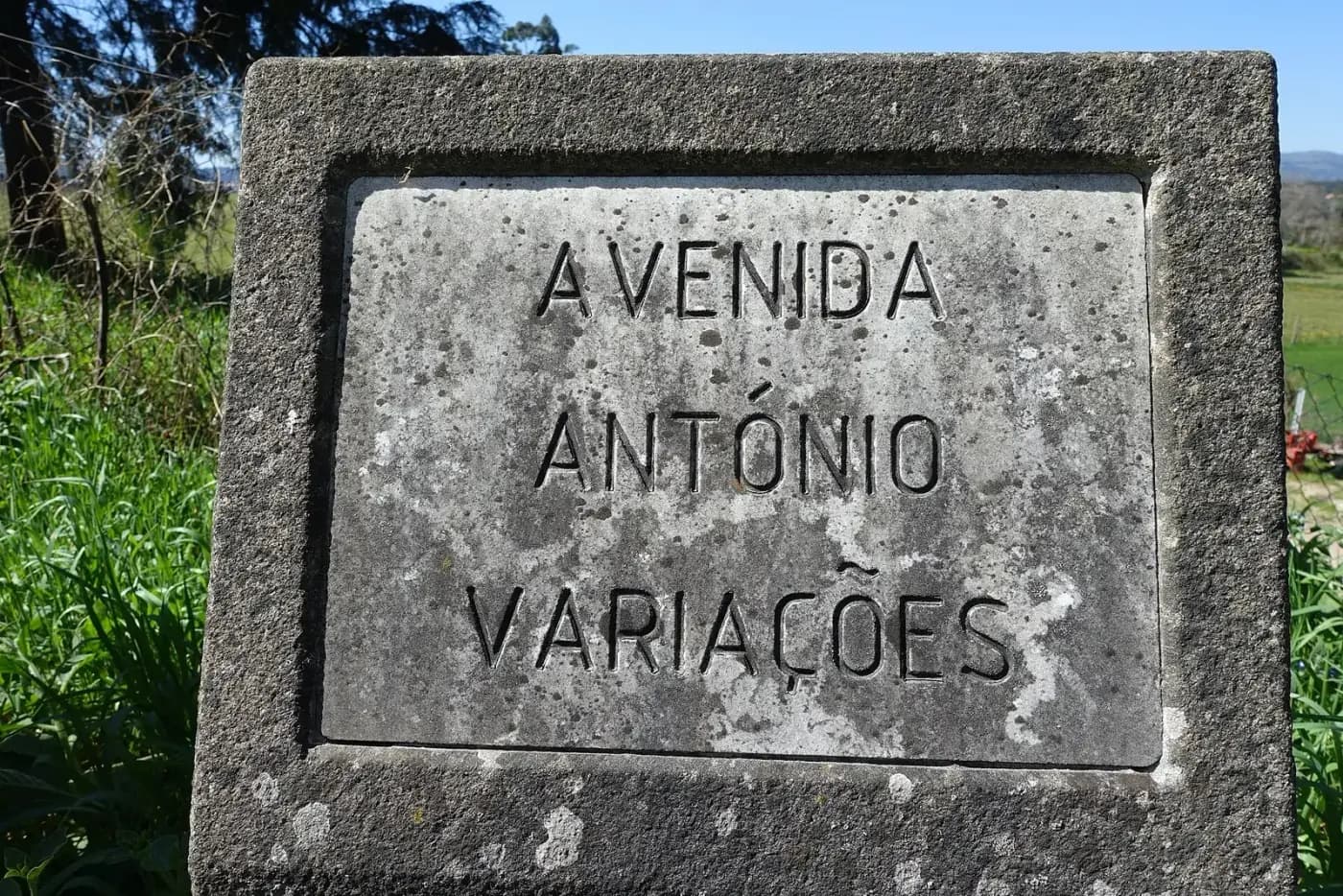
- The street sign of Avenida António Variações in Fiscal, Amares, photographed in March 2019. Joseolgon, CC BY-SA 4.0, via Wikimedia Commons.