

Nine o'clock at the Paço da Ribeira: the Restoration of 1 December 1640
After sixty years under the kings of Spain, a few dozen nobles waited in their carriages outside Lisbon's royal palace for the clock to strike nine. Three hours later the city had a new king and a war that would last until 1668.
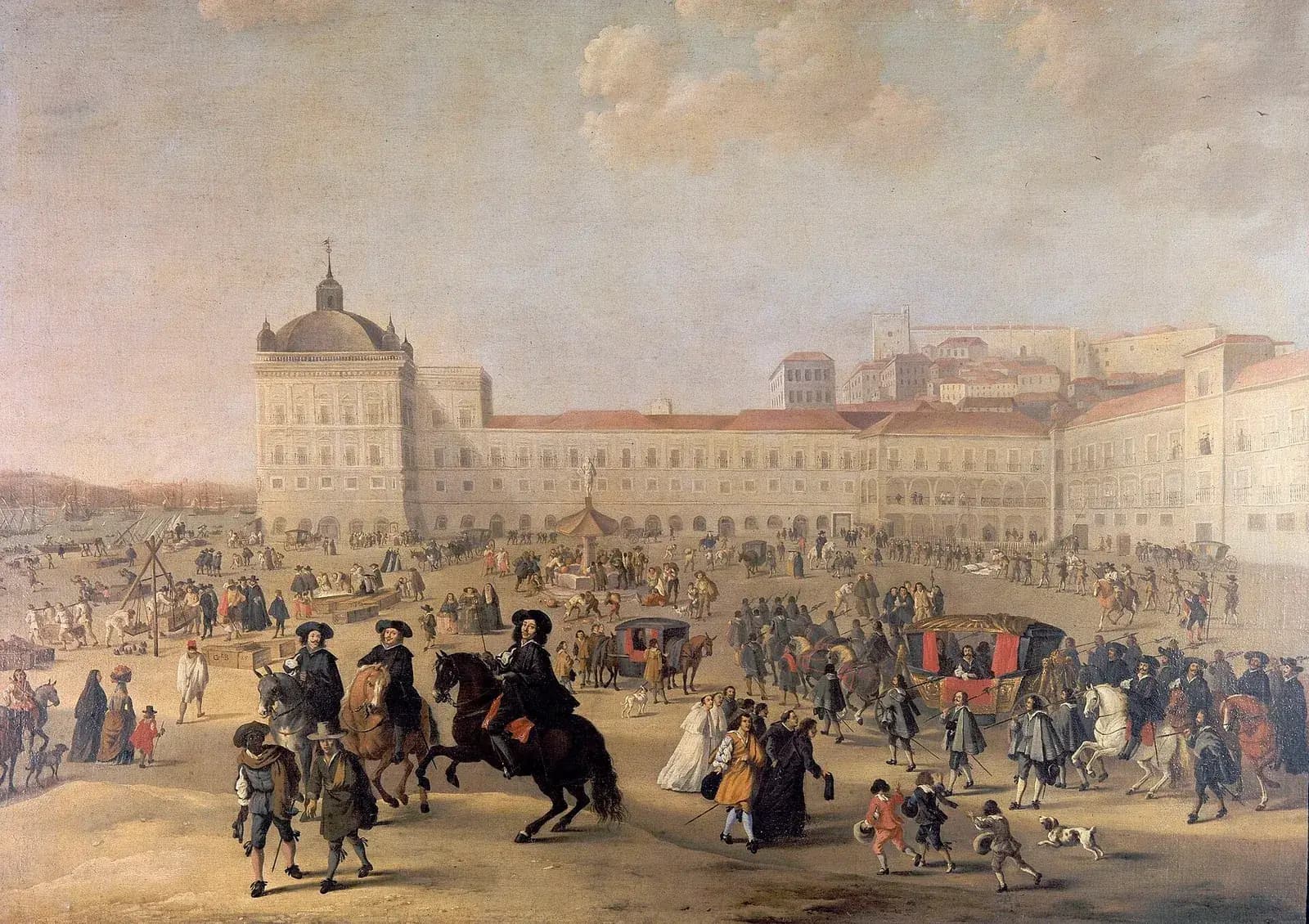
At a glance
- On the morning of Saturday 1 December 1640, a group of Portuguese nobles burst into the Paço da Ribeira, the royal palace on Lisbon's riverfront, at nine o'clock.
- They shot Miguel de Vasconcelos, the hated Secretary of State who ran Portugal for Madrid, threw him from a window into the square and confined the vicereine, Margaret of Savoy, Duchess of Mantua.
- The same morning they acclaimed João, 8th Duke of Braganza, as King João IV. He reached Lisbon on 6 December and was formally acclaimed in the Terreiro do Paço on 15 December.
- The coup ended sixty years in which the kings of Spain had also been kings of Portugal, since Philip II took the crown in 1580. Spain recognised Portugal's independence only in the peace of 1668.
- 1 December is a national holiday. It was dropped from 2013 to 2015, during the bailout years, and restored in 2016. In 1910 the new Republic chose the date for its first Flag Day.
Waiting for the clock to strike nine
On the morning of Saturday 1 December 1640, a string of closed carriages drew up at different points around the Terreiro do Paço, the great square on Lisbon's riverfront. The men inside were armed. They had confessed their sins the day before, and some of their mothers had helped them buckle on their weapons. They were waiting for the palace clock to strike nine.
So runs the fullest account of that morning, published in 1679 by Luís de Meneses, 3rd Count of Ericeira, a nobleman who later commanded the Portuguese artillery in the war and who wrote as a partisan of the new dynasty. In his telling the clock had never seemed so slow. At the first stroke, without waiting for the last, they jumped down and ran for the Paço da Ribeira, the royal palace where the vicereine, Margaret of Savoy, lived and where her Secretary of State, Miguel de Vasconcelos, kept his office.
One group pinned down the company of Castilian infantry on guard at the gate. Another climbed to the hall of the German halberdiers. There Miguel de Almeida, the oldest of the plotters, fired a pistol as the agreed signal and ran to the balconies with his sword in his hand, shouting to the square below: “Liberty, Portuguese! Long live King João the Fourth!”
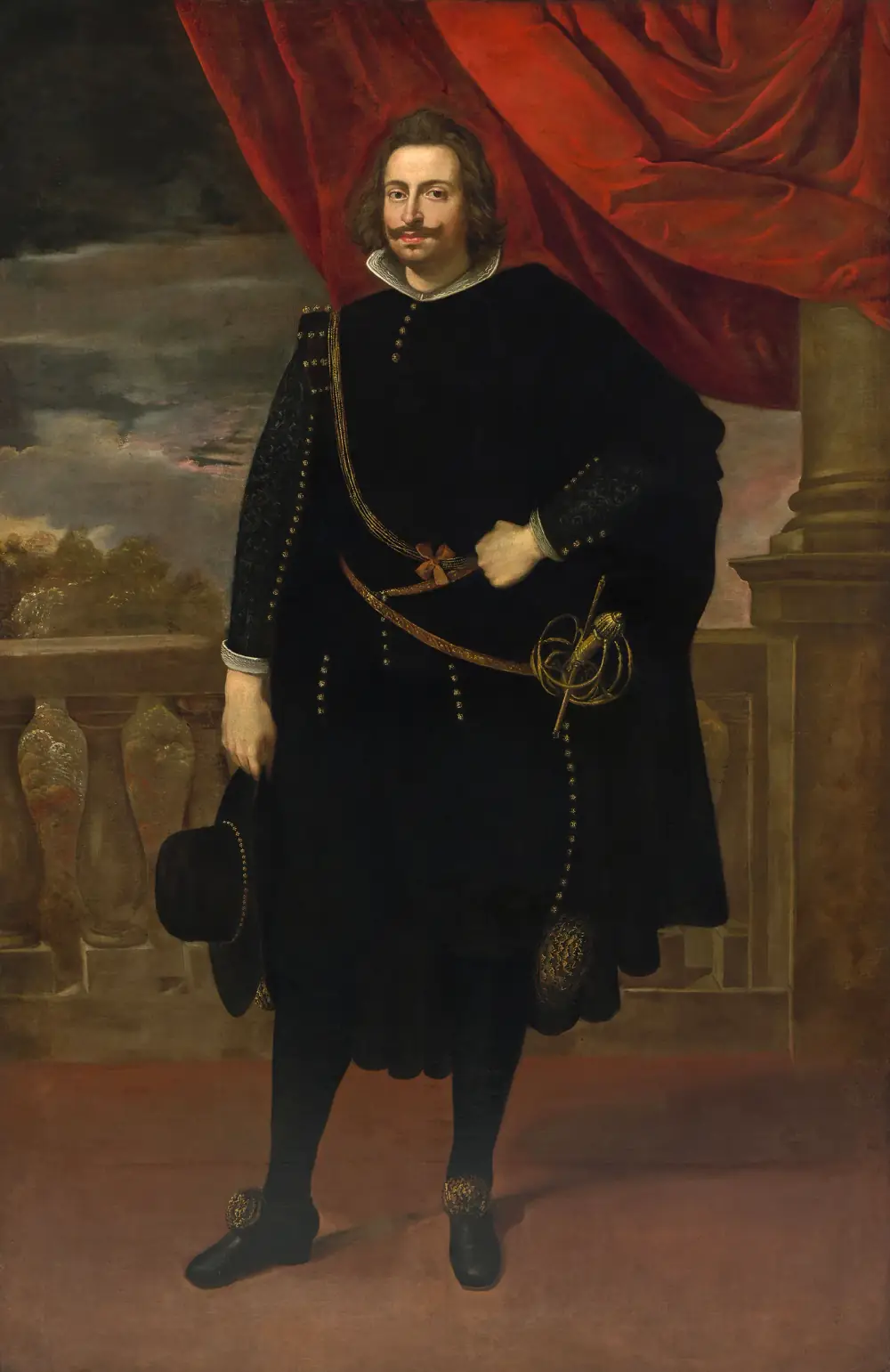
The king they were cheering for was João, 8th Duke of Braganza, a great-great-grandson of King Manuel I. He was far away at his palace in Vila Viçosa, in the Alentejo, and would not hear the news for two days.
Sixty years of Spanish kings
Portugal had not been conquered. It had been inherited. King Sebastião died in battle at Alcácer Quibir, in Morocco, in 1578 without an heir. His elderly great-uncle, Cardinal Henrique, became king and died without an heir in turn. Philip II of Spain claimed the throne, and his army under the Duke of Alba scattered the hastily raised force of the rival claimant, António, Prior of Crato, at Alcântara outside Lisbon on 25 August 1580. Ericeira puts that force at no more than 4,000 men; a modern account gives about 7,000.
At the Cortes of Tomar in 1581, the assembly of the kingdom's three estates, Philip promised that Portugal would keep its own laws, institutions and offices. For a generation the arrangement held. Portugal shared a king with Castile but remained a separate kingdom, which is why historians call the period a union of crowns, the Iberian Union, and not an annexation.
Things changed under Philip IV, who came to the throne in 1621 and ruled Portugal as Philip III. His chief minister, the Count-Duke of Olivares, needed money and men for wars across Europe. Orders came from Madrid for new taxes. According to Ericeira, the heaviest was a levy of 500,000 cruzados a year on top of the old ones, run by a special board that answered to Madrid, not Lisbon. Nobles were taxed on the pensions and offices the crown gave them, and the clergy were pressed for ever larger “gifts”.
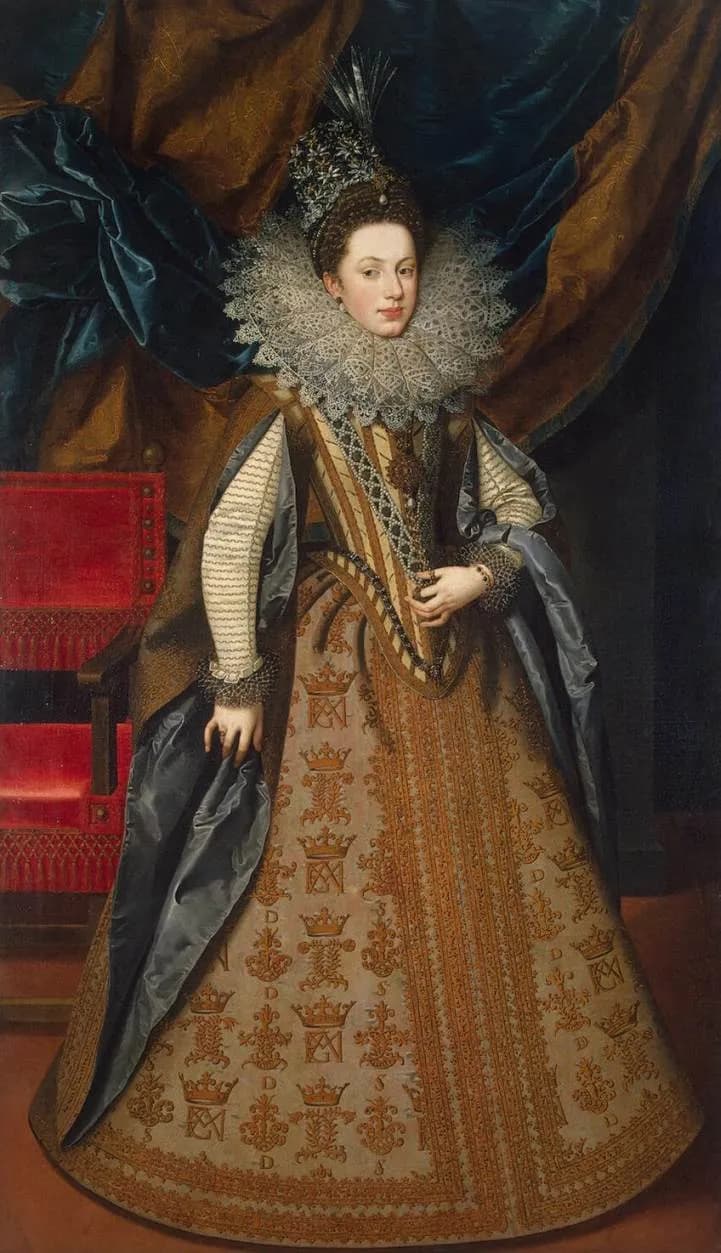
In late 1634 Philip sent his cousin Margaret of Savoy, the Duchess of Mantua and a granddaughter of Philip II, to govern Portugal as vicereine; by Ericeira's account she took office in January 1635. Real power sat with two Portuguese officials related by marriage: Diogo Soares, Secretary of State for Portugal in Madrid, and his father-in-law in Lisbon, Miguel de Vasconcelos. Ericeira, writing for the victors, called Vasconcelos proud, harsh and an enemy of the nobility, a man who obeyed only the royal orders that suited him.
The first explosion came in Évora in August 1637. Riots against the tax known as the real de água and a new levy on salt spread through the Alentejo and the Algarve. In Évora the crown's magistrate, André de Morais Sarmento, summoned the two men who spoke for the townspeople, Sesinando Rodrigues and João Barradas, demanded their consent to the tax and showed them the officers he had ready to hang them. Sesinando Rodrigues went to a window and called for help to the crowd in the square, which answered with one cry: death to the magistrate.
The revolt, remembered in Évora as the Revolta do Manuelinho, dragged on for months. Madrid massed two armies on the border, at Badajoz and Ayamonte, and the Portuguese nobility did little to help. When it was over, the only noble Olivares praised was the Duke of Braganza, for the “suma fidelidad”, utmost loyalty, with which he had helped calm it. The riots faded, but they showed how thin the loyalty of the kingdom had worn.
Then Catalonia exploded. On 7 June 1640, the feast of Corpus Christi, about five hundred reapers who had come to Barcelona for work rioted, burned the houses of royal officials and killed the viceroy. The Corpus de Sang, the “Bloody Corpus”, began the Reapers' War against Philip IV. Madrid ordered the Duke of Braganza and the Portuguese nobility to join the king's campaign against the Catalans. In Ericeira's account, it was that order which made up the Duke's mind.
1578
Sebastião killed at Alcácer Quibir
He leaves no heir. His great-uncle Cardinal Henrique becomes king.
25 August 1580
Battle of Alcântara
Philip II's army defeats António, Prior of Crato, outside Lisbon.
1581
Cortes of Tomar
Philip is accepted as Philip I of Portugal and promises to respect the kingdom's laws.
1621
Philip IV succeeds
With Olivares as chief minister, Madrid presses Portugal for money and men.
January 1635
Margaret of Savoy takes office
Miguel de Vasconcelos runs the government in Lisbon.
August 1637
Évora riots
Tax revolts spread through the Alentejo and the Algarve.
7 June 1640
Corpus de Sang in Barcelona
Catalonia rises against Philip IV.
1 December 1640
Coup in Lisbon
The Duke of Braganza is acclaimed as João IV.
A reluctant duke and a nervous plot
On 12 October 1640, Ericeira writes, a handful of nobles met at the house of Antão de Almada: Miguel de Almeida, the master of the royal hunt, Jorge de Melo, Pedro de Mendonça, António de Saldanha and João Pinto Ribeiro, the agent who managed the Duke of Braganza's affairs in Lisbon. They resolved to free the kingdom and to offer the Duke the crown.
The Duke had every reason to hesitate. His grandmother, Catarina, Duchess of Braganza, had claimed the throne herself in 1580, so his family's claim was a serious one, but he had a great deal to lose. Pedro de Mendonça carried the offer to Vila Viçosa, and later Pinto Ribeiro rode there himself. The answer he brought back was that Lisbon should begin, quickly, and bring in as many people as it could.
In the last days of November the plotters met at night in Pinto Ribeiro's rooms in the Duke's Lisbon palace, leaving their carriages in different streets and keeping the lights low. They fixed the day: Saturday 1 December. Through a priest they had sounded out the leaders of Lisbon's guilds, who promised support but, frightened by what had happened at Évora, would not move until the nobility had declared itself. The Archbishop of Lisbon, Rodrigo da Cunha, was told and approved.
Some wanted to seize the castle of São Jorge first, but it held more than five hundred soldiers. They chose the palace instead. One party would take the Castilian guard, one would hold the German halberdiers, one would proclaim the new king from the windows, and one would kill Vasconcelos, both to stop his orders and to give the crowd a sign.
The morning at the Paço da Ribeira
Inside the palace the plotters swept through the halberdiers' hall, knocking the guards' halberds to the floor before the soldiers could reach them. A party ran down the corridor towards the Secretary of State's rooms. At its end they met Francisco Soares de Albergaria, a senior city magistrate, coming out of the office. When they cried “Long live King João!”, he drew his sword and answered “Long live King Philip!” They shot him in the throat. He died within hours.
Vasconcelos had been warned that morning that nobles were gathering in the square. He brushed the warning aside, then got out of bed and locked himself in his office. The plotters broke down the door and found the room empty. They feared he had escaped into the neighbouring Casa da Índia until an enslaved woman of the household pointed to a cupboard full of papers.
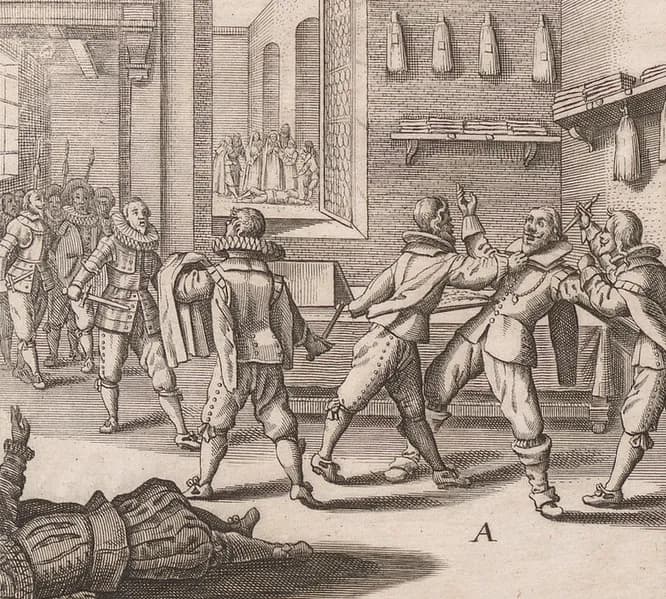
António Telo fired into it. Vasconcelos stumbled out wounded and was cut down, and the plotters threw him, still alive, from a window into the Terreiro do Paço. The crowd that had gathered at the noise fell on the body. In an instant, Ericeira wrote, the man everyone had feared became the object of everyone's contempt. He was later buried at the request of the clerk of the Misericórdia, Lisbon's charitable brotherhood.
Another party forced its way to the vicereine's apartments. They found Margaret of Savoy at a window, calling on the people below to rescue her. Respectfully, Ericeira says, they made her step back. She tried to go down to the square; they stopped her. Then she spoke to them.
“Enough, gentlemen: the guilty minister has paid for the crimes he committed. Let the fury go no further, for it does not deserve to enter breasts so noble. I promise that the Catholic King will not only pardon you but be grateful that this kingdom has been freed from the Secretary's excesses.”
They answered that they knew no king but the Duke of Braganza. When she kept insisting, Carlos de Noronha told her to withdraw before they lost their respect for her. “To me? And how?” she asked. By making Your Highness, he replied, leave by that window if she would not go through this door. She went to her oratory and signed the order they put before her, telling Luis del Campo, who commanded the castle, to make no move. He obeyed, though he suspected it had been forced from her, and the guns above the city stayed silent.
The streets had emptied at the first noise, and for a while the plotters feared the city would not follow. It did. The Archbishop came out from the cathedral, the city council's president opened his doors, and Álvaro de Abranches carried the city's banner through the streets. The prisons were opened. A galley in the river took three Castilian ships without a fight. Within three hours, Ericeira writes, the city was calm again, and by noon the shops were open as on any other day.
- Date
- Saturday 1 December 1640, from about 9 am
- Place
- Paço da Ribeira, the royal palace on the Terreiro do Paço, Lisbon
- Killed
- Miguel de Vasconcelos, Secretary of State; the magistrate Francisco Soares de Albergaria; at least one German guard
- Confined
- Margaret of Savoy, Duchess of Mantua, vicereine since the end of 1634
- Acclaimed
- João, 8th Duke of Braganza, as King João IV
- Duration
- About three hours, by Ericeira's account
A king arrives by boat
By noon the nobles had named governors, the archbishops of Lisbon and Braga among them, to rule until the king arrived, and sent couriers to every city and large town. Santarém acclaimed João before its letter arrived. Coimbra celebrated and Porto hesitated for a few hours. At Viana the townspeople had to storm the castle held by Castilian infantry, and at Setúbal the fort of São Filipe and the Outão tower held out for eight days. Cascais fell on 10 December and the fortress of São Julião, which guarded the mouth of the Tagus, on 12 December.
Pedro de Mendonça and Jorge de Melo carried the news to Vila Viçosa, arriving on Monday 3 December as the Duke was going in to hear a sermon. He set off for Lisbon by coach with a few companions and no troops. On Wednesday he reached Aldeia Galega on the south bank of the Tagus, and on the morning of Thursday 6 December he crossed the river and landed at nine at the quay of the Casa da Índia, next to the palace. The governors were not expecting him so soon.
On Saturday 15 December a stage was built in the Terreiro do Paço, level with the palace balconies. João came down to it wearing the royal insignia, with the court officers in their traditional places, and received the oath of obedience. The Cortes he summoned met in Lisbon from 28 January 1641. They confirmed the acclamation, swore in his son Teodósio as heir and agreed 1.5 million cruzados, shared among the three estates, to raise and keep an army of 14,000 men. The Fundação Batalha de Aljubarrota gives a higher target of 20,000 foot and 4,000 horse.
The Cortes also set down in writing why the kingdom had been entitled to throw off its king. The argument, borrowed from theologians and lawyers, was that power came from the people, who could withdraw it from a tyrant. Their Assento listed the charges against Philip.
“He afflicted and oppressed the people with unbearable taxes, not imposed in Cortes, forcing the town councils of the kingdom to consent to them. He spent the common revenues of the kingdom on foreign wars, and also on things that had nothing to do with its common good.”
Margaret of Savoy was moved to the palace at Xabregas and then to the convent of Santos, where she was treated with respect. In June 1641 João's government ordered her out of Lisbon, first to the castle of Montemor-o-Novo and then, on second thoughts, to Torres Vedras. In late August she crossed the border at the Caia bridge near Elvas and was received at Badajoz with an artillery salute, the last vicereine of Portugal.
| Person | Role |
|---|---|
| João, 8th Duke of Braganza (João IV) | Great-great-grandson of Manuel I; acclaimed king in his absence |
| Margaret of Savoy, Duchess of Mantua | Vicereine for Philip IV, her cousin, from the end of 1634 |
| Miguel de Vasconcelos | Secretary of State in Lisbon; killed in the palace |
| Diogo Soares | Secretary of State for Portugal in Madrid; Vasconcelos was his father-in-law |
| Count-Duke of Olivares | Philip IV's chief minister |
| João Pinto Ribeiro | Agent of the House of Braganza in Lisbon; go-between with the Duke |
| Miguel de Almeida | Oldest of the plotters; fired the signal shot |
| António Telo | Fired the first shot at Vasconcelos |
| Rodrigo da Cunha | Archbishop of Lisbon; backed the plot and led the city out in support |
Twenty-eight years of war
Taking Lisbon was the easy part. Keeping the crown took twenty-eight years. For the first two decades Spain was tied down in Catalonia and in its war with France, and the fighting along the border was mostly raids, sieges and plunder. The cost climbed fast: by 1642 the levy agreed in Cortes had risen to 2.4 million cruzados, for an army of 16,000. The fortresses on the main invasion route from Madrid, Elvas, Campo Maior and Olivença above all, had first call on the money.
Most of the big battles were fought in the Alentejo, on the road from Madrid to Lisbon. A Portuguese army under Matias de Albuquerque won at Montijo, across the border in Extremadura, on 26 May 1644. In January 1659 another broke the Spanish siege of Elvas. Once Spain was free of its wars in Europe and Catalonia, it turned its full weight on Portugal, and lost again at Ameixial in 1663, at Castelo Rodrigo in 1664 and at Montes Claros on 17 June 1665.
Army sizes at the main battles of the Restoration War
soldiers
- Portuguese army
- Spanish army
Figures as given by the historian Moisés Cayetano Rosado, who does not say where they come from, so treat them as rough traditional estimates. The Fundação Batalha de Aljubarrota gives 20,500 Portuguese and about 22,000 Spanish for Montes Claros, and 26,500 men for the Spanish army that invaded in 1663. Portugal won all five battles. The Count of Schomberg shared the Portuguese command at Ameixial and fought at Montes Claros.
Show the data
| Portuguese army | Spanish army | |
|---|---|---|
| Montijo 1644 | 7,000 | 9,000 |
| Elvas 1659 | 11,000 | 19,000 |
| Ameixial 1663 | 22,000 | 26,000 |
| Castelo Rodrigo 1664 | 3,000 | 5,000 |
| Montes Claros 1665 | 20,500 | 22,600 |
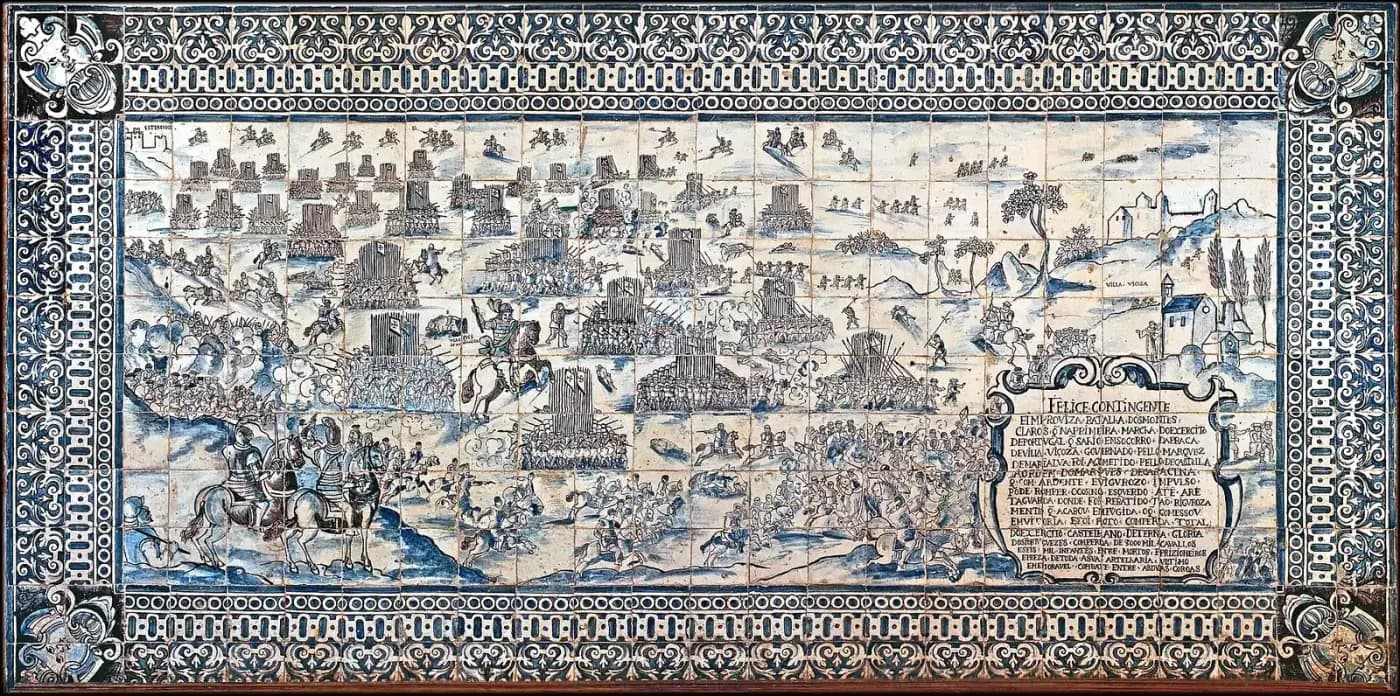
The war was also fought by diplomats. João IV died in 1656, and his widow, Luísa de Gusmão, ruling as regent, opened the talks that led to an alliance with England: on 21 May 1662 their daughter Catarina married Charles II of England, bringing Bombay and Tangier as her dowry. Charles also mediated the peace with Spain and stood as its guarantor. It was concluded in Lisbon on 13 February 1668; the Torre do Tombo dates the Spanish king's signature to 5 January, in Madrid. Spain recognised the independence of Portugal and its overseas possessions, except Ceuta, which stayed Spanish.
A holiday that came and went
The day was first officially commemorated in 1823, at a ceremony in Belém presided over by King João VI. The Sociedade Histórica da Independência de Portugal, founded in 1861, made it its cause, and in 1886 an obelisk to the Restorers was raised in the square in Lisbon that now bears their name.
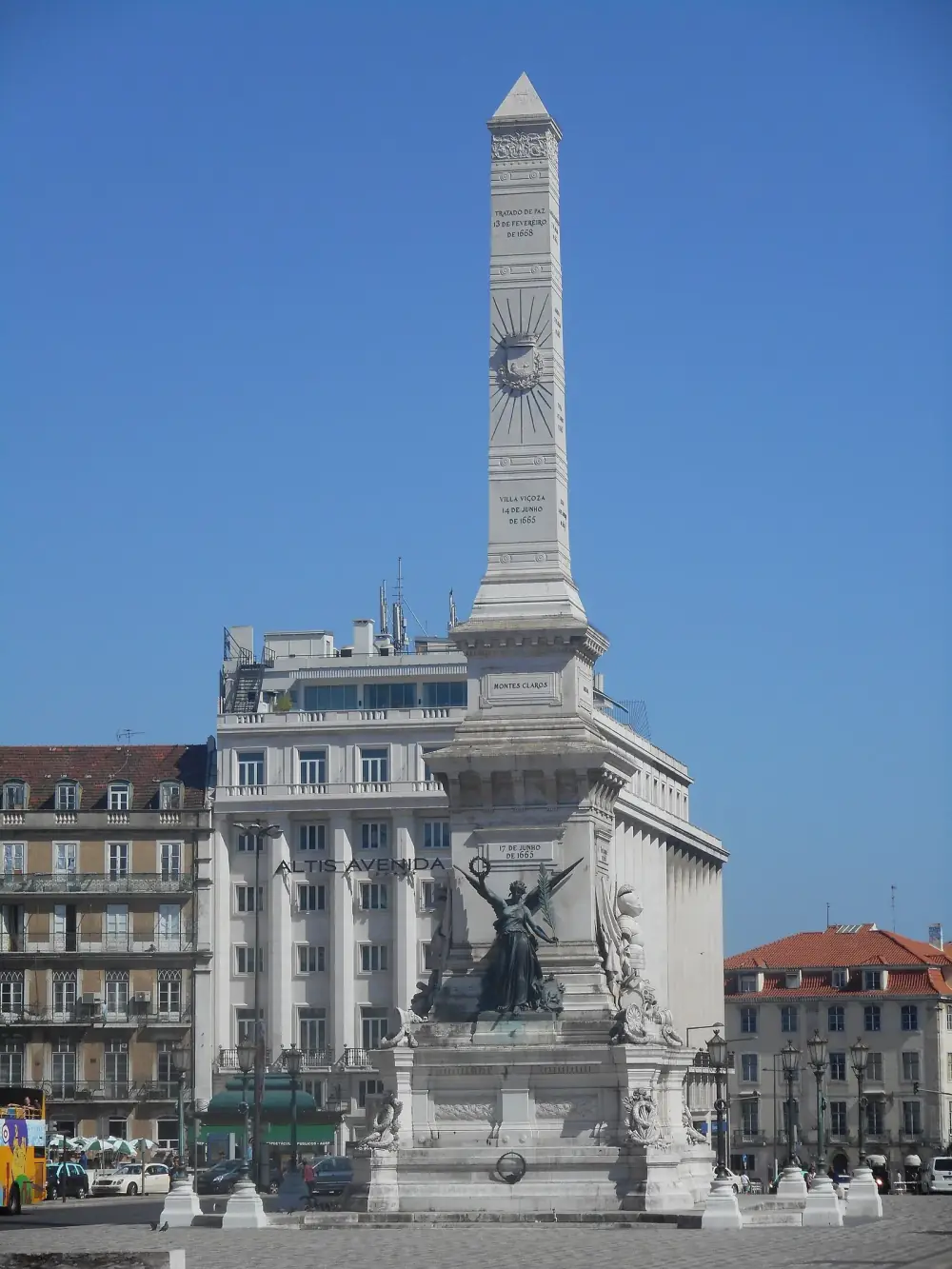
The Republic, proclaimed in October 1910, kept the date and gave it a new job. Its new green-and-red flag, approved on 29 November, was presented two days later on the first Flag Day, the 270th anniversary of the Restoration. Army cadets mounted a guard of honour over it outside City Hall. In torrential rain, schoolboys, clubs, sailors and cadets marched down the Avenida da Liberdade and around the Restauradores monument, where the new flag had been raised. Not everyone liked it: the poet Guerra Junqueiro had argued for keeping the old blue and white.
The Estado Novo dictatorship always preferred 1 December to the republican 5 October, and democracy kept it. Then, in 2012, with Portugal under its international bailout, a change to the Labour Code dropped four public holidays from 1 January 2013: 1 December, 5 October, Corpus Christi and All Saints' Day. The Church had agreed to give up two religious holidays only if two civil ones went too, and the law promised a review within five years.
The review came sooner. A new government restored all four holidays by Law 8/2016, published on 1 April 2016 and in force the next day, so 1 December was a day off again that year after three years as a working day.
FAQs
What happened on 1 December 1640 in Portugal?
A group of Portuguese nobles stormed the royal palace in Lisbon, killed the Secretary of State Miguel de Vasconcelos, confined the vicereine Margaret of Savoy and acclaimed the Duke of Braganza as King João IV, ending sixty years in which the kings of Spain had also ruled Portugal.
Who were the Forty Conspirators?
The name given to the nobles who planned and carried out the coup, among them Miguel de Almeida, Antão de Almada, Jorge de Melo, Pedro de Mendonça and António Telo, with João Pinto Ribeiro, the Duke's agent in Lisbon, as their link to him. Ericeira names more than forty people taking part, while a pamphlet for Philip IV's side claimed fewer than forty, so the number is symbolic.
When did Spain recognise Portugal's independence?
In the peace treaty concluded in Lisbon on 13 February 1668, with England's Charles II as mediator; the Torre do Tombo dates the Spanish king's signature to 5 January in Madrid. Spain kept Ceuta.
Is 1 December a public holiday in Portugal?
Yes. Restoration of Independence Day is a national holiday. It was suspended from 2013 to 2015 under a 2012 change to the Labour Code and restored by Law 8/2016, in force from 2 April 2016.
On the timeline
Open the timelineNearby moments from restoration and the gold of brazil (1640–1750).
The Restoration of 1640
The 'Forty Conspirators' storm the Ribeira Palace in Lisbon, arrest the Vicereine Margaret of Savoy and kill her hated secretary of state Miguel de Vasconcelos, whose body is thrown from a window to the crowd. The Duke of Braganza is proclaimed King João IV, ending 60 years of Spanish Habsburg rule. Now a national holiday, it was scrapped in the 2013–2015 bailout years and restored in 2016.
After a siege of more than five months, the Dutch East India Company and its ally Johor capture Malacca, ending 130 years of Portuguese rule over the strategic port that Afonso de Albuquerque had seized in 1511.
Miguel Luís de Menezes, Duke of Caminha, is beheaded in Lisbon's Rossio square for conspiring against King João IV in favour of the Spanish Habsburgs, less than a year after Portugal restored its independence.
Four years into the Restoration War, Matias de Albuquerque's Portuguese army clashes with Spanish forces at Montijo, near Badajoz in Spanish Extremadura (not the Portuguese town across the Tagus from Lisbon). After a chaotic fight both sides claim victory — a fitting start to a war of independence that drags on until 1668.
Coming up in history
All long reads 3 December 1944António Variações, the barber who sang between Braga and New York
 4 December 1980Camarate, 1980: the plane crash that killed Portugal's prime minister
 5 December 1496Manuel I orders the Jews and Muslims out of Portugal: Muge, 5 December 1496
 6 December 1185The death of Afonso Henriques, 1185: Portugal's first king and his legends
23 sources
Archives, scholarship and reporting this article was checked against.
- 1
História de Portugal Restaurado, Tomo I (Luís de Meneses, 3rd Count of Ericeira), Lisbon, 1679Internet Archive (scan of the first edition)
- 2
Narrativa e legitimidade na Restauração de Portugal: primeiras ações no âmbito da literatura justificativa (1641-1644) (Eduardo Sabioni Ribeiro)Passagens. Revista Internacional de História Política e Cultura Jurídica, vol. 14, no. 2, 2022, pp. 339-360
- 3
O Algarve tutelado: a intervenção do duque de Medina Sidonia na defesa do Sul de Portugal (1637-1640) (Luis Salas Almela)Edições CHAM, in Governo, política e representações do poder no Portugal Habsburgo (1581-1640), ed. Santiago Martínez Hernández
- 4
A short story of 1st December (José Miguel Sardica)Universidade Católica Portuguesa
- 5
Tratado de Paz de 1668 entre Portugal e EspanhaArquivo Nacional Torre do Tombo
- 6
Las fortificaciones de frontera del corredor Madrid-Lisboa en los dibujos de Pier Maria Baldi (Moisés Cayetano Rosado)Dialnet, Universidad de La Rioja
- 7
A festa da bandeira, Ilustração Portuguesa, no. 251, 5 December 1910, pp. 742-748Hemeroteca Digital, Câmara Municipal de Lisboa
- 8
Código do Trabalho, artigo 234.º (Feriados obrigatórios), with notes on Lei n.º 23/2012 and Lei n.º 8/2016Informador Fiscal
- 9
A Restauração de 1640: nomes e pessoas (Diogo Ramada Curto)Península. Revista de Estudos Ibéricos, no. 0, 2003, pp. 321-336 (Universidade do Porto)
- 10
1665: Battle of Montes ClarosFundação Batalha de Aljubarrota
- 11O dia em que Portugal perdeu a última batalha pela independênciaObservador
- 12
- 13
A Restauração (Avelino de Freitas de Meneses), Cê de CiênciaUniversidade dos Açores
- 14
La estancia de la última virreina de Portugal en Badajoz (1641) (Fernando Díaz Esteban)Coloquios Históricos de Extremadura
- 15
Documento do mês, agosto 2023: Alterações de ÉvoraCâmara Municipal de Évora, Biblioteca Pública de Évora
- 16
El Corpus de SangGran Enciclopèdia Catalana (enciclopedia.cat)
- 17
- 18
Sete coisas que não sabe sobre o Palácio da IndependênciaTime Out Lisboa
- 19Fact check: castelos na bandeira nacional representam localidades fortificadas que D. Afonso Henriques conquistou aos mouros?Observador
- 20CDS vai defender regresso dos feriados já em 2015Observador
- 21Quatro feriados voltam este ano: “justo, necessário e não facilitismo”Observador
- 22
Novidades laboral: reposição de feriados (Lei n.º 8/2016, de 1 de abril)Garrigues
- 23
The 1755 Lisbon Earthquake: The Catastrophe and the ReconstructionAna Cristina Araújo (University of Coimbra), Storicamente 17 (2021), peer reviewed
Image credits
- The Terreiro do Paço in Lisbon as it looked in 1662, painted by the Dutch artist Dirk Stoop while the war that followed the Restoration was still being fought; the picture is now in the Museu de Lisboa. The long building with the domed tower is the Paço da Ribeira, the royal palace stormed on 1 December 1640. Dirk Stoop, Public domain, via Wikimedia Commons.
- Margaret of Savoy in her wedding dress, painted by Frans Pourbus the Younger in 1608, when she married the heir to the Duchy of Mantua. She was in her mid-forties when she arrived in Lisbon as vicereine at the end of 1634. Frans Pourbus the Younger, Public domain, via Wikimedia Commons.
- João, 8th Duke of Braganza, about twelve years before he became João IV. The portrait, from the workshop of Peter Paul Rubens and dated 1628, is in the Royal Castle in Warsaw. Workshop of Peter Paul Rubens, Public domain, via Wikimedia Commons.
- The attack in the palace as imagined in a seventeenth-century German print. The panel marked A is one of four scenes on the sheet showing the killing of Vasconcelos and the accession and crowning of João IV. Unknown author, Public domain, via Wikimedia Commons.
- The Battle of Montes Claros, 17 June 1665, in seventeenth-century azulejo tiles in the Hall of Battles of the Palácio Fronteira, Lisbon. The inscription credits the victory to the army commanded by the Marquis of Marialva. Unknown author, Public domain, via Wikimedia Commons.
- The Monument to the Restorers in Lisbon's Praça dos Restauradores, raised in 1886, photographed in 2015. Its faces carry the names and dates of the war's battles and of the peace treaty of 13 February 1668. Ø11, CC BY-SA 4.0, via Wikimedia Commons.