

Fretilin proclaims East Timor's independence, 28 November 1975
With Indonesian troops already inside the territory and the last Portuguese governor waiting on an offshore island, Fretilin lowered Portugal's flag in Dili and raised its own. The republic it proclaimed had nine days before the full-scale invasion, and waited more than 26 years for the world to recognise it.
At a glance
- On the afternoon of 28 November 1975, Fretilin, the leading pro-independence party, proclaimed the Democratic Republic of East Timor in front of the Portuguese government building in Dili. Francisco Xavier do Amaral read the proclamation and was made president the next day.
- Portugal's administration had left Dili for the island of Ataúro on the night of 26 to 27 August 1975, during a short civil war between Fretilin and the UDT party in which the truth commission estimates 1,500 to 3,000 people were killed.
- Indonesian forces were already fighting inside the territory. They took Balibo on 16 October, killing five journalists working for Australian television, and Atabae in the last week of November, which pushed Fretilin to declare independence three days earlier than planned.
- On 29 November four pro-Indonesian parties signed the so-called Balibo Declaration asking for integration with Indonesia. Portugal recognised neither declaration, and on 7 December 1975 Indonesia launched a full-scale invasion by sea and air.
- The occupation lasted until 1999. Timor-Leste's truth commission puts the minimum number of conflict-related deaths between 1974 and 1999 at 102,800. Independence was recognised internationally on 20 May 2002, and the constitution names 28 November 1975 as the day it was proclaimed.
Five to six on a Friday in Dili
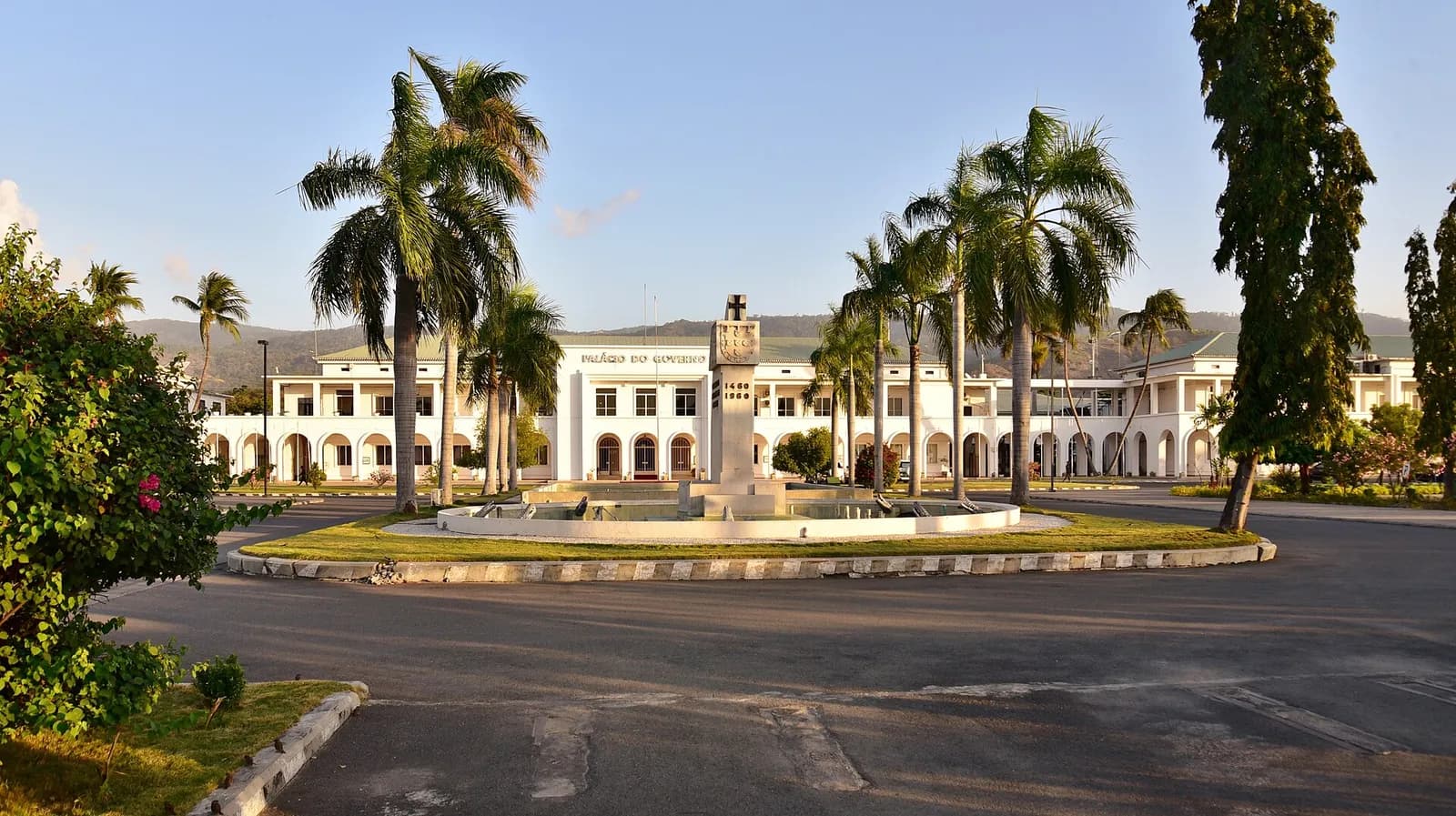
On the afternoon of Friday 28 November 1975, about 2,000 people gathered in front of the Portuguese government building in Dili. Falintil troops, the armed wing of the Fretilin party, paraded in camouflage with bandanas in the colours of their units. Francisco Xavier do Amaral, Fretilin's president, arrived in a black Mercedes-Benz that had been the Portuguese governor's official car.
At 5.55pm the Portuguese flag came down. In its place went a new one, red, black and yellow with a white star. The crowd kept a minute's silence for those who had died in the previous months and in Timor's anti-colonial wars, and a cannon fired 20 times. Then Amaral read a short text that had been written that same afternoon. The flag had been sewn that afternoon too.
“Stating the highest wish of the people of Timor-Leste and protecting the most legitimate national sovereignty, Fretilin Central Committee has unilaterally decided to proclaim the independence of Timor-Leste. As of midnight today, [we] declare the [birth of] the anti-colonial and anti-imperialistic nation of the Democratic Republic of Timor-Leste.”
Those present sang “Pátria! Pátria!” and declared it the national anthem, and the news went out to the world from the Marconi communications centre. Several Fretilin leaders were missing. José Ramos-Horta and the party's secretary general, Alarico Fernandes, were in Australia looking for support, and two other leaders, Juvenal Inácio and Vicente Reis, were fighting Indonesian troops on the border.
The Portuguese governor was missing too. Mário Lemos Pires and what remained of his administration had been on the small island of Ataúro, across the water from Dili, for three months. Nine days after the ceremony, Indonesian warships appeared off the city.
Portugal's most remote colony
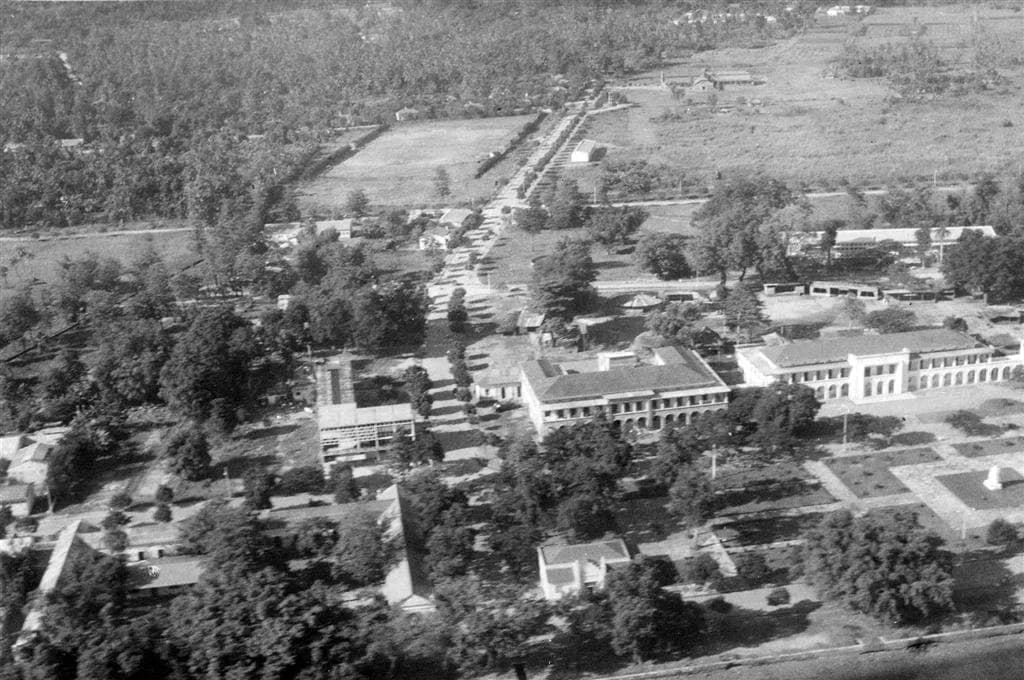
Timor lies at the eastern end of the Indonesian archipelago, north of Australia. Portuguese traders came for sandalwood in the 1500s, and an arbitration in The Hague fixed the border with Dutch Timor in 1913: Portugal kept the eastern half of the island and the enclave of Oecusse, while the west is now part of Indonesia. Under the Estado Novo, the dictatorship of António de Oliveira Salazar, Timor was the most remote of the Portuguese colonies, and it was largely neglected.
The numbers show how little had been built. In 1964 only ten East Timorese held university degrees. The 1970 census found literacy of about 10%, and by 1975 only 17 or 18 doctors worked in the Dili hospital and the regional clinics. During the Second World War, Allied landings and the Japanese occupation had cost between 40,000 and 60,000 Timorese lives.
The Carnation Revolution of 25 April 1974, the army coup that ended the dictatorship in Lisbon, opened the way to decolonisation. On 27 July 1974 the new government accepted independence as a possible outcome in the colonies, and the five African colonies became independent in 1974 and 1975. Timor came last in Lisbon's thoughts. The governor, Alves Aldeia, who had attacked the radicalism of the officers behind the coup two days before it happened, kept his post for three more months.
“What did the Portuguese people think about Timor-Leste in 1974, after the revolution? Nothing, not much, little. Nothing. Their thoughts were about the revolution and their relatives in the African territories.”
Three parties and a governor
Within weeks of the revolution, East Timorese formed political associations that were parties in all but name. The first was the Timorese Democratic Union (UDT), on 11 May 1974, led by Francisco Lopes da Cruz and conservative figures with ties to the colonial administration, among them the Carrascalão brothers. Nine days later younger intellectuals founded the Timorese Social Democratic Association (ASDT), with the older Xavier do Amaral as president and Nicolau Lobato, Mari Alkatiri and José Ramos-Horta among its leaders.
On 27 May came Apodeti, which wanted integration with Indonesia. Its founders had planned to call it the Association for the Integration of Timor into Indonesia, but thought the name too transparent. Indonesia's consul in Dili passed it advice and money. On 11 September 1974 ASDT renamed itself the Revolutionary Front for an Independent East Timor, Fretilin, and took a more radical line.
| Party | Founded | Aim in 1974-75 |
|---|---|---|
| UDT (Timorese Democratic Union) | 11 May 1974 | “Progressive autonomy” under Portugal; from August 1974, independence after a period of federation with Portugal |
| ASDT, renamed Fretilin on 11 September 1974 | 20 May 1974 | Independence; anti-colonial and nationalist |
| Apodeti (Timorese Popular Democratic Association) | 27 May 1974 | Autonomous integration with Indonesia |
| Trabalhista (Labour Party) | September 1974 | Independence through a transitional federation with Portugal |
| KOTA (Association of Timorese Warrior Sons) | 20 November 1974 | Monarchist party of the liurai, the traditional rulers |
Only UDT and Fretilin had support across the territory. A sixth group, which proposed joining Australia, disappeared in March 1975.
Lisbon appointed Mário Lemos Pires governor on 18 November 1974. With his encouragement UDT and Fretilin formed a coalition on 21 January 1975, committed to independence and opposed to integration with Indonesia. It lasted four months. UDT walked out on 27 May, alarmed by Fretilin's mass following and by what it saw as radical influence in the party, a fear that Indonesian broadcasts from Kupang worked to feed.
Portugal then called talks in Macau from 26 to 28 June 1975. Fretilin boycotted them because Apodeti and Indonesian observers were there. The result, Law 7/75 of 17 July 1975, set out a transitional government, elections in 1976 and the end of Portuguese sovereignty in 1978. Apodeti, meanwhile, had looked to Indonesia for arms: one of its leaders went to Indonesian West Timor for military training as early as August 1974.
Civil war, and a governor on an island
At about 1am on 11 August 1975, UDT's João Carrascalão told the governor that his party meant to remove communist elements from the colonial government and from Fretilin. UDT seized the police headquarters, the port, the airport and the radio, and detained hundreds of Fretilin supporters. Lemos Pires decided not to use force: he was unsure whether his East Timorese soldiers would obey him, and Portuguese troop numbers had been run down.
Fretilin withdrew to the hills at Aileu and won over most East Timorese soldiers in the colonial army. At 1am on 20 August it took the army headquarters in Dili. The fighting spread across the territory, often settling clan feuds and private grudges as much as political scores. Both sides killed prisoners. The truth commission estimates that 1,500 to 3,000 people died, most at the hands of Fretilin, though UDT also carried out massacres.
By 18 August the remaining Portuguese officials had gathered in Farol, a Dili neighbourhood declared a neutral zone and guarded by Portuguese paratroops. Fretilin rejected a ceasefire. On the night of 26 August, the administration boarded ship for Ataúro and never returned to Dili. Lusa and Radio Australia date the departure to 27 August.
“The problem was that I became alone in that moment. Portugal forgot East Timor because on the one hand it was the revolution, on the other it was African decolonisation, and so many Portuguese there in such bad conditions.”
By early September UDT and its allies had been driven to the border. Indonesian officials said 40,000 to 50,000 people crossed into West Timor; East Timorese who made the journey put it at 10,000 to 30,000. As the price of safe passage, their leaders signed petitions asking for integration with Indonesia, among them one at Batugade on 7 September.
Fretilin now ran the territory, and for weeks it behaved as if Portugal might come back. It kept the Portuguese flag flying in front of the governor's office, left the office empty, posted guards at the Portuguese-owned bank and called repeatedly for Lisbon to resume decolonisation. Portugal would not accept Fretilin as the sole representative of the Timorese, and Fretilin's last invitation, on 25 October, went unanswered.
Balibo: the invasion before the invasion
Indonesia did not wait for the civil war to end. On 31 August it handed its operations from the intelligence agency to a military task force, and in September special forces teams with East Timorese auxiliaries began crossing the border. Jakarta denied its troops were there, describing the fighting as East Timorese “partisans” beating back Fretilin.
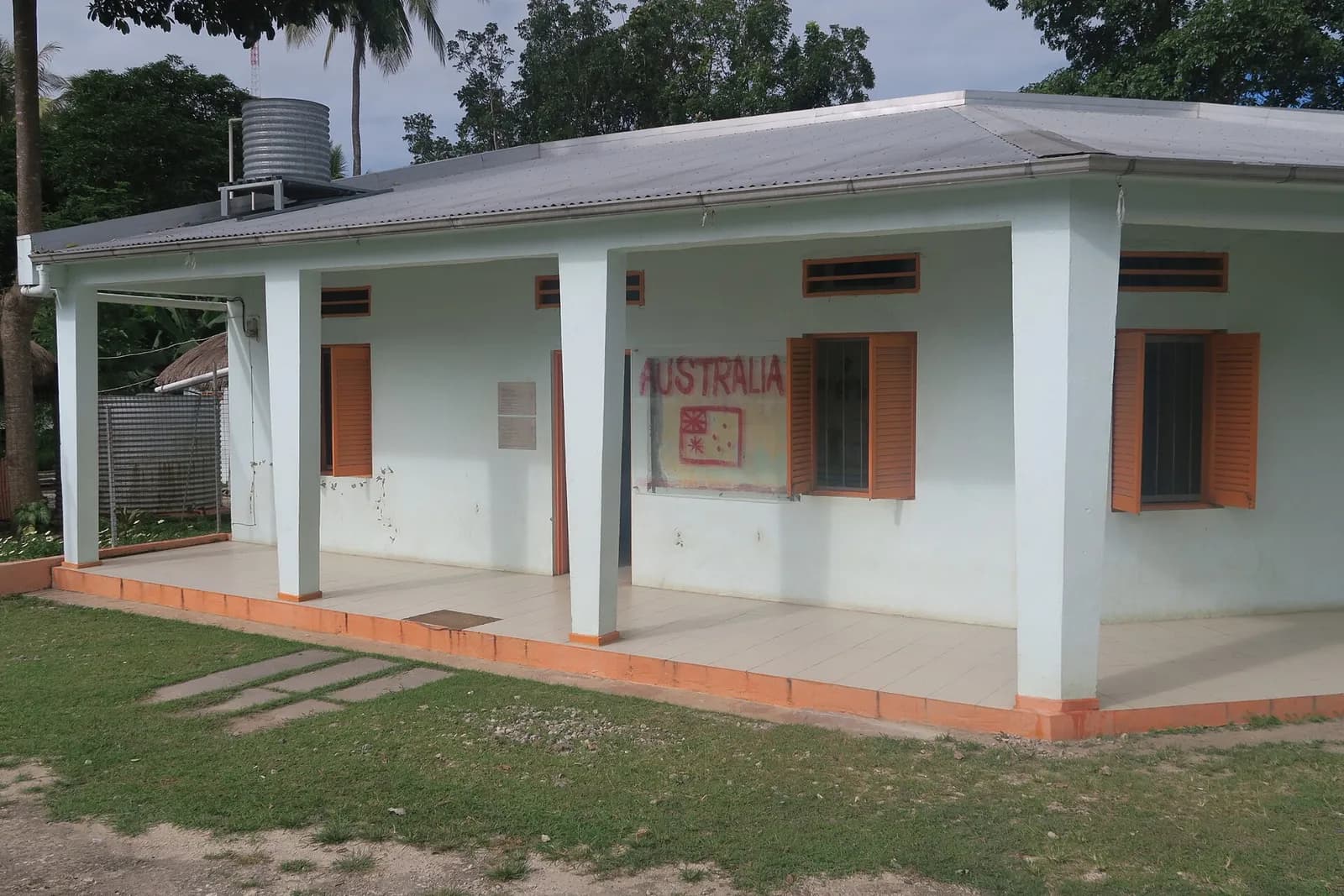
Early on 16 October 1975 a covert Indonesian force, some 700 men by one participant's estimate, attacked the border town of Balibo, after a bombardment from the coast and from Maliana. Five newsmen working for Australian television had been there since 13 October: the Australians Greg Shackleton and Tony Stewart, the New Zealander Gary Cunningham and the Britons Brian Peters and Malcolm Rennie. They had painted an Australian flag and the word “Australia” on the wall of the house they slept in, believing journalists would not be targets.
All five were killed that day. Their bodies were burnt, and what were said to be their remains were buried in a single coffin in Jakarta in December 1975. Timor-Leste's truth commission, which heard East Timorese witnesses to the attack, concluded that the five were not killed in crossfire. No one has been charged.
In 2007 a New South Wales coroner, Dorelle Pinch, found that they were shot or stabbed deliberately, “not in the heat of battle”, by Indonesian special forces on the orders of Captain Yunus Yosfiah, to stop them revealing Indonesia's part in the attack. Indonesia called the case closed and maintained that they died in crossfire. The Australian Federal Police opened a war crimes inquiry in 2009 and dropped it in 2014 for lack of evidence.
Balibo and Maliana fell, and the front moved to Atabae, near the coast. On 1 and 2 November the Portuguese and Indonesian foreign ministers met in Rome and spoke of orderly decolonisation, without mentioning the Indonesian troops inside the territory. For some in Fretilin, the Rome talks were the final blow. A delegation sent to Africa came back in the third week of November saying 25 countries had promised recognition.
Three days early
Fretilin's Central Committee chose 1 December for the declaration, the day Portugal celebrates the restoration of its independence from Spain in 1640. Then Atabae fell to Indonesian forces, after two weeks of bombardment from sea and air. The truth commission's report gives the date as 26 November in one passage and 27 November in another.
Mari Alkatiri later recalled the words of Nicolau Lobato, Fretilin's vice-president, to the committee: “If we wait until 1 December we might not have time to declare independence in Dili. So we'd better proclaim independence today.” Some members opposed the move, but the ceremony went ahead that afternoon.
On 29 November the Central Committee appointed Amaral president, and Rogério Lobato read out a 55-article constitution. On 1 December a council of ministers was sworn in at the governor's residence in Lahane, with Nicolau Lobato as prime minister. Mozambique, Angola, Guinea-Bissau, Cape Verde and São Tomé and Príncipe, all former Portuguese colonies themselves, recognised the new state. So did China, the only permanent member of the Security Council to do so.
Indonesia answered at once. On 29 November, UDT, Apodeti, KOTA and Trabalhista issued a “Proclamation of Integration” with Indonesia. The text ended “Done at Balibo”, but signatories told the truth commission it was drafted in Jakarta and signed in a hotel in Bali under the eye of Indonesian intelligence, after hours of argument. Indonesia's foreign minister, Adam Malik, accepted it on 1 December. In the commission's rendering he said: “Diplomacy is over. Now Timor-Leste issues shall be resolved on the battlefield.”
Portugal rejected both declarations. On 29 November its National Board for Decolonisation said Portugal still considered itself the “administering power” and condemned military intervention in the territory, though without naming Indonesia. Australia called Fretilin's move “provocative and irresponsible”, and the United States stayed out.
- Proclaimed
- 28 November 1975, about 6pm, in front of the government building in Dili
- State
- Democratic Republic of East Timor (República Democrática de Timor-Leste)
- President
- Francisco Xavier do Amaral, appointed 29 November
- Prime minister
- Nicolau Lobato, from 1 December
- Recognised by
- Mozambique, Angola, Guinea-Bissau, Cape Verde, São Tomé and Príncipe, and China
- Not recognised by
- Portugal, Indonesia, Australia, the United States
The seventh of December
On 6 December the American president, Gerald Ford, and his secretary of state, Henry Kissinger, were in Jakarta. President Suharto asked for understanding if he took “rapid or drastic action”. The US record of the meeting, released in full in 2001, shows the answer he got.
“We will understand and will not press you on the issue. We understand the problem you have and the intentions you have.”
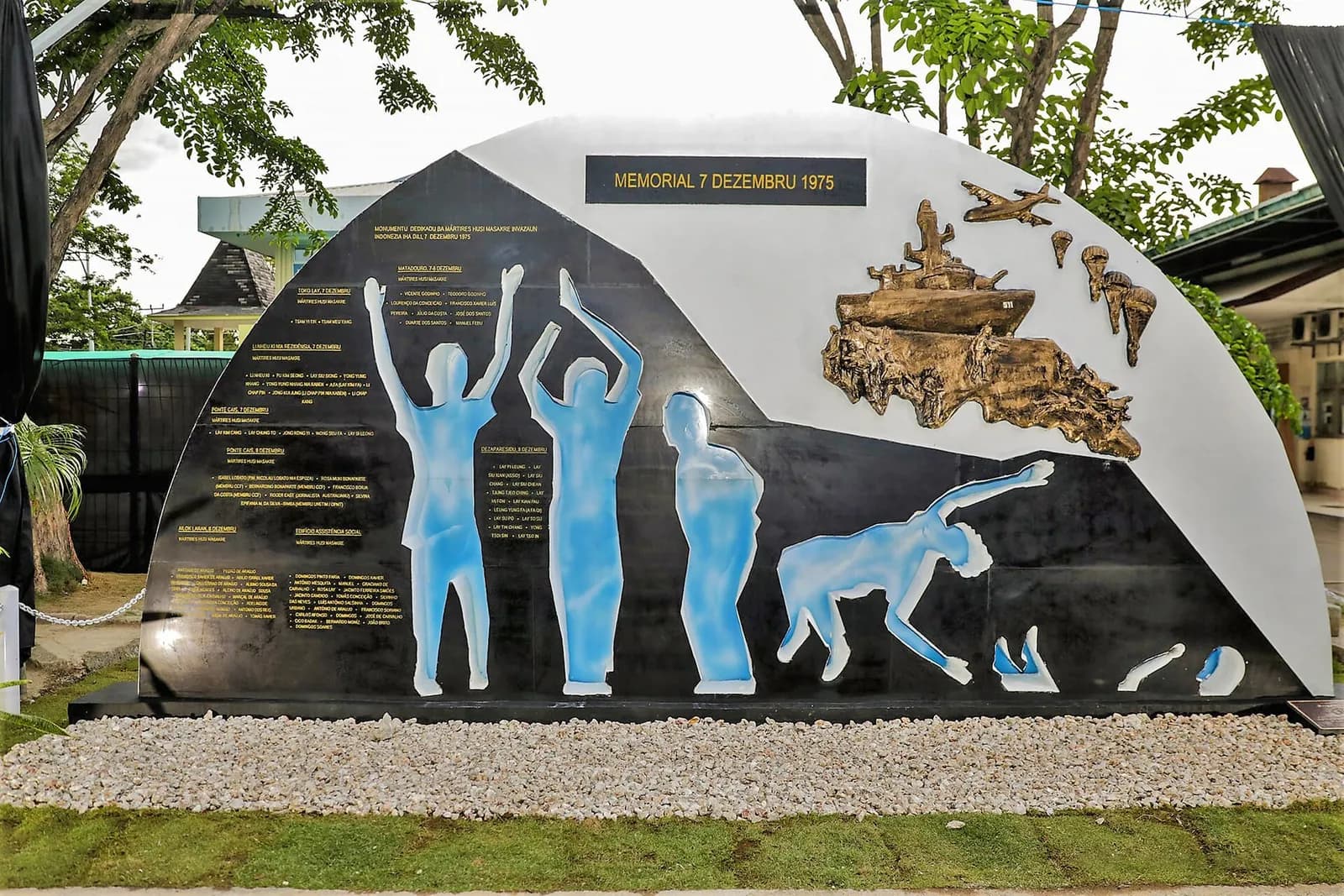
At 2am on 7 December, Indonesian warships arrived off Dili, a town of about 28,000 people. Fretilin cut the power. The navy shelled the town. At about 4.30am some 400 marines landed with light amphibious tanks at Kampung Alor on the western edge of the city, and from about 5.45am paratroopers dropped into the centre. Fretilin's leaders and large numbers of civilians fled to the hills towards Aileu. No war was declared.
The killing of civilians began the same day. Groups of civilians, members of Dili's Chinese community among them, were killed in the downtown district of Colmera, and on 8 December there were group executions at the harbour. Among the dead were Isabel Lobato, the prime minister's wife, the Fretilin activist Rosa Muki Bonaparte and Roger East, an Australian and the last foreign journalist in the territory. The truth commission's report dates East's death to 7 December in one passage and 8 December in another.
Portugal cut diplomatic relations with Indonesia and took the matter to the United Nations. The General Assembly deplored the invasion on 12 December in resolution 3485. On 22 December the Security Council unanimously passed resolution 384, calling on Indonesia to withdraw and affirming the East Timorese right to self-determination. A UN envoy reached the territory in January 1976, but was kept from meeting Fretilin's leaders.
25 April 1974
Carnation Revolution in Lisbon
The new regime opens the way to decolonisation.
May 1974
Parties founded
UDT on 11 May, ASDT on 20 May, Apodeti on 27 May.
11 September 1974
ASDT becomes Fretilin
18 November 1974
Mário Lemos Pires appointed governor
21 January 1975
UDT-Fretilin coalition
UDT leaves it on 27 May.
17 July 1975
Law 7/75
Elections in 1976, end of Portuguese sovereignty in 1978.
11 August 1975
UDT armed movement in Dili
20 August 1975
Fretilin counter-attack
26-27 August 1975
Portuguese administration withdraws to Ataúro
16 October 1975
Indonesian forces take Balibo
Five journalists are killed.
28 November 1975
Fretilin proclaims independence
29 November 1975
“Balibo Declaration” of integration
7 December 1975
Full-scale Indonesian invasion of Dili
22 December 1975
UN Security Council resolution 384
17 July 1976
Suharto signs the law annexing the territory as Indonesia's 27th province
Twenty-four years of occupation
Fretilin, retreating into the hills, took its UDT and Apodeti prisoners with it. As Indonesian troops closed on Aileu, members of the party massacred many of them there, and more were killed at Maubisse and Same in late December 1975 and January 1976.
On 17 July 1976 Suharto signed the law making East Timor Indonesia's 27th province. Portugal and the UN never recognised it, and on 1 December 1976 the General Assembly rejected the annexation. In the mountains the resistance split over whether civilians should surrender. In 1977 Fretilin arrested its own president, Xavier do Amaral, as a traitor; he escaped in 1978 and was captured by the Indonesian army. Nicolau Lobato, his successor, was killed in combat on 31 December 1978.
The worst years were the first five. From 1977 Indonesian campaigns destroyed crops and food stores in the interior to cut the guerrillas off from the civilians sheltering with them, and many thousands died of starvation and disease. The truth commission's minimum estimate for the whole period from 1974 to 1999 is 102,800 conflict-related deaths, most of them from hunger and illness. It said hunger and illness deaths alone could have reached 183,000, and totals of 200,000 or more are often quoted.
Conflict-related deaths in East Timor, 1974-1999: minimum estimates
deaths
Estimates by Timor-Leste's Commission for Reception, Truth and Reconciliation (CAVR): about 18,600 killings (plus or minus 1,000) and 84,200 deaths from hunger and illness above the pre-invasion rate (plus or minus 11,000), a total of 102,800 (plus or minus 12,000). The commission put the upper limit for deaths from hunger and illness at 183,000.
Show the data
| Minimum estimate | |
|---|---|
| Killings and disappearances | 18,600 |
| Deaths from hunger and illness | 84,200 |
The UN kept the question open. From 1982 the Secretary-General held talks with Portugal and Indonesia, which made little progress for years. The Santa Cruz massacre in Dili on 12 November 1991, filmed by the cameraman Max Stahl, brought the occupation back to world attention.
On 5 May 1999 Portugal and Indonesia signed agreements in New York for a UN-run vote. On 30 August 1999, 78.5% of voters rejected autonomy within Indonesia. Pro-Indonesian militias, at times backed by elements of the Indonesian security forces, answered with killings, looting and arson until an Australian-led multinational force arrived. Timor-Leste's independence was recognised internationally on 20 May 2002.
Why it still matters
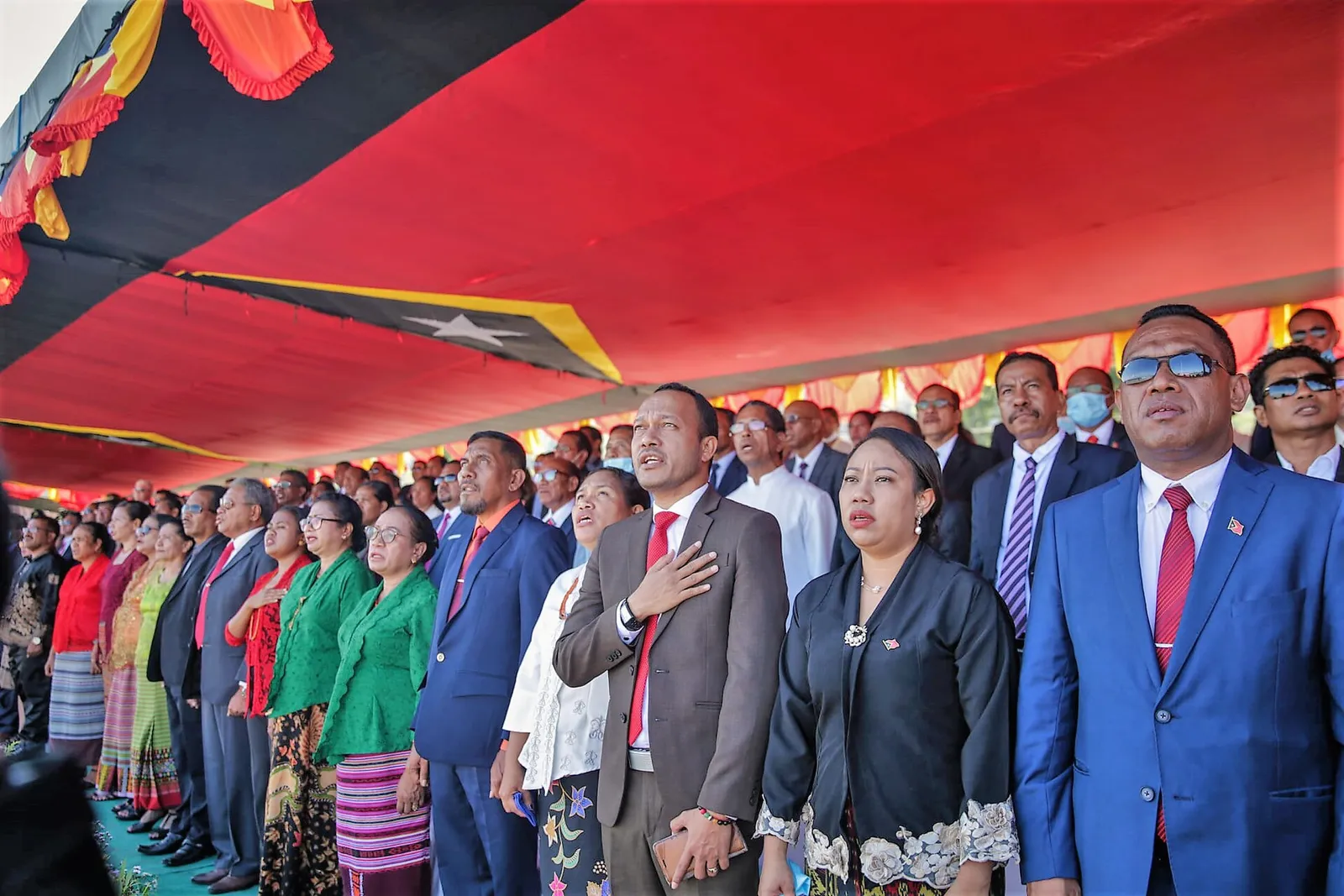
Timor-Leste's constitution keeps both dates. Its preamble says the independence “proclaimed on the 28th of November 1975” by Fretilin was “recognised internationally on the 20th of May 2002”, and dates the resistance from the invasion of 7 December. Its first section makes 28 November the Day of Proclamation of Independence. The flag the constitution describes is the red, black and yellow flag with a white star raised in Dili that evening.
For the 39th anniversary, on 28 November 2014, the government announced ceremonies in all 13 districts, with Mari Alkatiri, one of Fretilin's founders, reading the proclamation text at the flag-raising in Aileu. When Xavier do Amaral died on 6 March 2012, the government called him the “Proclamador” and declared three days of national mourning.
For Portugal, the withdrawal to Ataúro is still argued over. Some point to a Lisbon absorbed in its own revolution and sending no clear orders; others say leaving Dili shaped what came after. The truth commission found that Portugal mismanaged decolonisation in 1974 and 1975, and Lemos Pires told it that not asking the United Nations to be present had been “a mistake”. His son, Nuno Lemos Pires, now a senior Portuguese defence official, said in 2023 that his father did everything humanly possible.
What Portugal did afterwards is clearer. Its 1976 constitution, in an article on the independence of Timor, said that Portugal “continua vinculado” (remains bound) by its responsibilities under international law “to promote and guarantee the right to independence of Timor Leste” (translated from Portuguese). In UN eyes Portugal stayed the administering power, and it was Portugal that signed the 1999 agreements. Portuguese is one of Timor-Leste's two official languages, with Tetum.
FAQs
Why did Fretilin declare East Timor's independence on 28 November 1975?
Fretilin had planned to declare independence on 1 December 1975. When Indonesian forces took the town of Atabae in the last week of November, its leaders feared a full-scale invasion was imminent and brought the date forward, hoping a declared state would win international support.
Who recognised the Democratic Republic of East Timor in 1975?
Mozambique, Angola, Guinea-Bissau, Cape Verde and São Tomé and Príncipe recognised it, as did China. Portugal, Indonesia, Australia and the United States did not.
What was the Balibo Declaration?
A “Proclamation of Integration” with Indonesia issued on 29 November 1975 by UDT, Apodeti, KOTA and Trabalhista, the day after Fretilin's declaration. It was dated at Balibo, but signatories told the truth commission it was drafted in Jakarta and signed in Bali under pressure from Indonesian intelligence.
Why does Timor-Leste mark both 28 November and 20 May?
Its constitution treats 28 November 1975 as the day independence was proclaimed and 20 May 2002 as the day it was recognised internationally, after 24 years of Indonesian occupation and a UN transitional administration.
Where was the Portuguese governor when independence was declared?
Mário Lemos Pires and his administration had withdrawn from Dili to the island of Ataúro on the night of 26 to 27 August 1975, during the civil war. Portugal recognised neither Fretilin's declaration nor the pro-Indonesian one, and still called itself the administering power.
On the timeline
Open the timelineNearby moments from revolution and democracy (1974–1986).
At midnight in Luanda, Agostinho Neto of the MPLA proclaims the independence of the People's Republic of Angola, ending nearly five centuries of Portuguese rule, as the rival FNLA and UNITA declare their own states in Ambriz and Huambo. Neto becomes the country's first president.
Tens of thousands of demonstrators, most of them construction workers demanding a collective labour agreement, surround the Constituent Assembly at São Bento, keeping the deputies inside for some 36 hours and holding Prime Minister Pinheiro de Azevedo in his official residence next door until the government gives in to their demands. The siege marked the final phase of the revolution, ended by the events of 25 November.
Units loyal to the moderate wing of the Armed Forces Movement, with Lieutenant-Colonel Ramalho Eanes directing operations, put down an uprising by left-wing paratroopers who had seized air bases. A state of siege is declared in the Lisbon region, and the defeat of the radical left ends the revolutionary period and sets Portugal on course for parliamentary democracy.
East Timor's 1975 proclamation
Fretilin unilaterally proclaims the independence of the Democratic Republic of East Timor in Dili, with Francisco Xavier do Amaral as president. Nine days later Indonesia launched its full-scale invasion, and the territory regained its independence only in 2002, after a 24-year occupation.
Nine days after Fretilin declared East Timor's independence, Indonesia launches a full-scale invasion of the former Portuguese colony with an assault on Dili. The occupation lasted 24 years; East Timor's truth commission later documented at least 102,000 conflict-related deaths between 1974 and 1999, most from hunger and disease.
The Constituent Assembly approves the Constitution of the Portuguese Republic, founding the democratic regime that followed the Carnation Revolution. It enters into force on 25 April.
General Ramalho Eanes, Chief of Staff of the Army and architect of the 25 de Novembro 1975 intervention that ended the radical phase of the revolution, is elected first President of the Portuguese Republic under the new democratic constitution, winning more than 60% of the vote in the first round.
Coming up in history
All long reads 30 November 1935The death of Fernando Pessoa, the poet who was many, 30 November 1935
 1 December 1640Nine o'clock at the Paço da Ribeira: the Restoration of 1 December 1640
 2 December 1964The night Lisbon's national theatre burned: 2 December 1964
 3 December 1944António Variações, the barber who sang between Braga and New York
17 sources
Archives, scholarship and reporting this article was checked against.
- 1
Chega! Part 3: The History of the ConflictCommission for Reception, Truth and Reconciliation in Timor-Leste (CAVR), final report, 2005 (ETAN copy)
- 2
- 3
- 4
- 5
East Timor Revisited: Ford, Kissinger and the Indonesian invasion, 1975-76 (Electronic Briefing Book No. 62, ed. William Burr and Michael L. Evans)National Security Archive, George Washington University, 6 December 2001
- 6
Constitution of the Democratic Republic of East Timor (English version)Government of Timor-Leste
- 7
Constituição da República Portuguesa, texto original de 1976Assembleia da República
- 8
East Timor: Admission from last Portuguese Governor (Radio Australia transcript, 18 December 2003)Radio Australia, reproduced by the East Timor and Indonesia Action Network (ETAN)
- 9Nuno Lemos Pires regressa a Díli, 48 anos após a dor da saída como refugiadoRTP Notícias / Lusa, 2023
- 10
The house where five journalists ... known as the Balibo Five, lived prior to the Indonesian invasion of East Timor in 1975 (photograph P03408.003)Australian War Memorial
- 11
The Balibo Five and Roger EastBalibo House Trust
- 12
- 13
Australian media outraged by failure of justice to Balibo FiveInternational Federation of Journalists, 22 October 2014
- 14
- 15
East Timor: UNTAET backgroundUnited Nations Department of Public Information, May 2002
- 16
- 17
Image credits
- The Government Palace in Dili, photographed in late afternoon in 2023, with the square now named for the Proclamation of Independence in front of it. Fretilin lowered the Portuguese flag outside the government building at 5.55pm on 28 November 1975. Bahnfrend, CC BY-SA 4.0, via Wikimedia Commons.
- Dili, capital of Portuguese Timor, from the air in the 1960s. Unknown author, Public domain, via Wikimedia Commons.
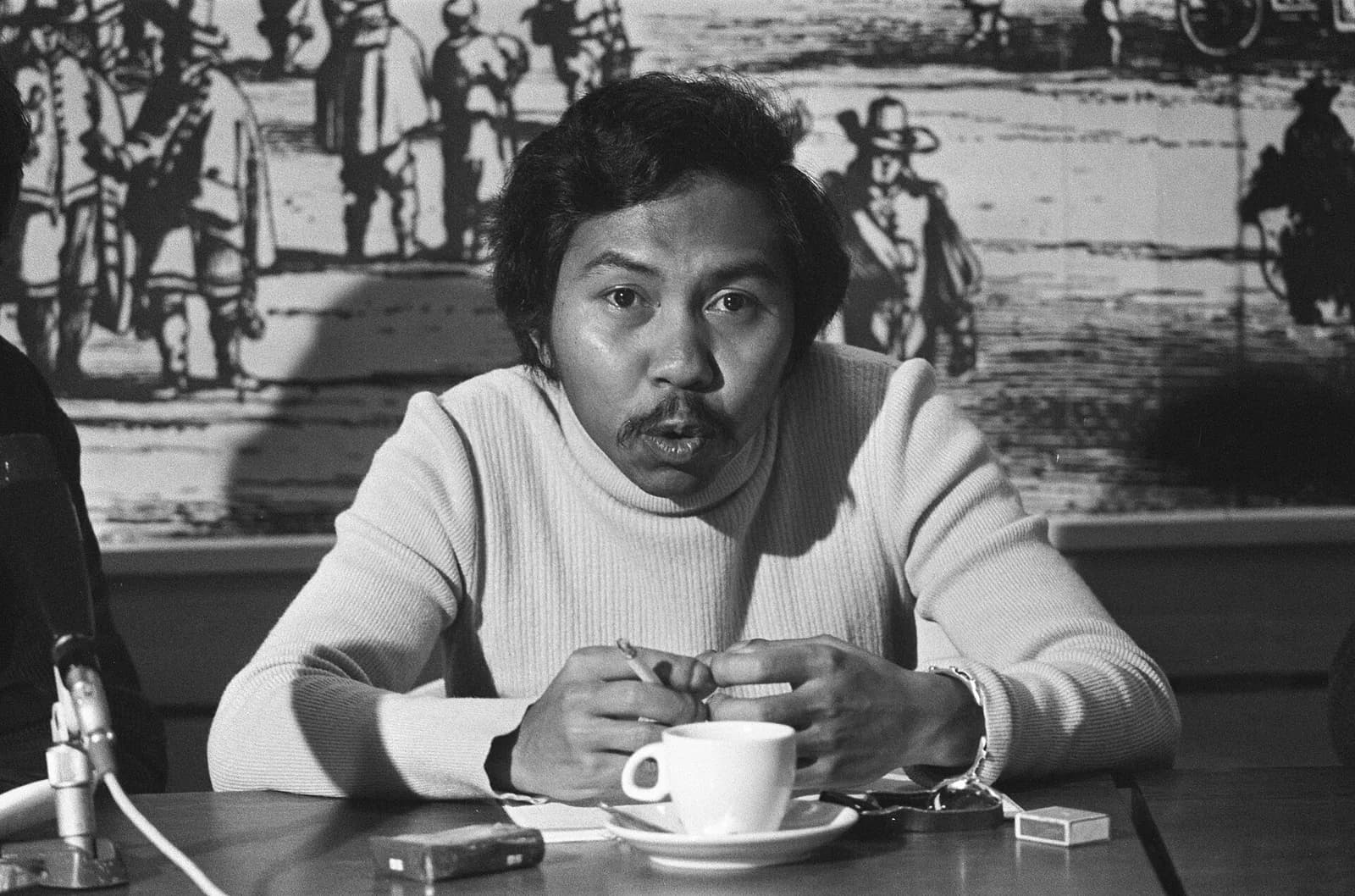
- Abílio Araújo, representing Fretilin, at a press conference at the Nieuwspoort press centre in The Hague on 21 October 1975, as the party sought support in Europe. Hans Peters for Anefo, CC0, via Wikimedia Commons.
- The house in Balibo where the five journalists stayed in October 1975, photographed in 2016. The flag and the word Australia were found under later paint when the building was restored in 2003. Felix Dance, CC BY 2.0, via Wikimedia Commons.
- The Memorial 7 Dezembru 1975 in Dili on the day it was unveiled, 7 December 2020. Its inscription dedicates it to the victims of the massacres during the Indonesian invasion of Dili, whose names it lists by place. Julião Fernandes, Presidency of East Timor, Public domain, via Wikimedia Commons.
- Officials sing the national anthem at Proclamation Day celebrations in Lauhata, Timor-Leste, on 28 November 2020. Presidency of East Timor, Public domain, via Wikimedia Commons.