

Herberto Helder: the Funchal-born poet who said no
He grew up on Madeira, drifted through Europe, reported from wartime Angola and became, for many critics, the finest Portuguese poet of his time. He stopped giving interviews, and when the country’s best-known cultural prize came his way, he asked for it to go to someone else.
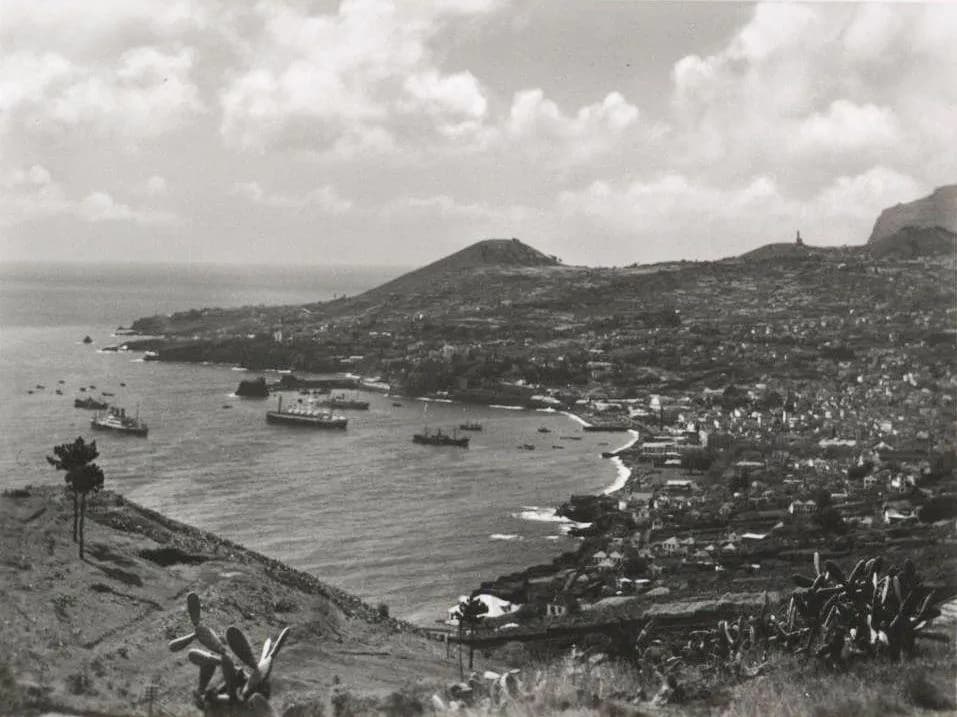
At a glance
- Herberto Helder was born in Funchal, Madeira, on 23 November 1930 and died at his home in Cascais on 23 March 2015, aged 84.
- His books include the poems of A Colher na Boca (1961), the stories of Os Passos em Volta (1963) and the prose and poems of Photomaton & Vox (1979).
- In 1968 the political police seized his autobiographical book Apresentação do Rosto and destroyed almost all of the roughly 1,500 copies printed.
- From April 1971 to June 1972 he wrote reports and columns in Luanda for the illustrated weekly Notícia, while Angola was at war.
- He gave almost no interviews in the last three decades of his life and in 1994 turned down the Prémio Pessoa, asking for it to go to someone else.
“Give the prize to someone else”
In 1994 the jury of the Prémio Pessoa chose a poet. The annual award, founded in 1987 by the weekly Expresso and now run with the state bank Caixa Geral de Depósitos, honours a Portuguese person for their part in the country’s cultural or scientific life. The prize came with 7,000 contos, seven million escudos. The poet did not want it.
The writer António Alçada Baptista later described how he and the journalist Clara Ferreira Alves, who used to visit the poet, tried to talk him round. They failed. As Alçada Baptista remembered it, the answer was short: “Don’t tell anyone, and give the prize to someone else.”
Alçada Baptista insisted there was no arrogance in it. “His refusal was not against anyone,” he wrote; it was a decision from the poet’s innermost self, and it at once earned their deepest respect. The refusal did not stay secret. Clara Ferreira Alves wrote about Helder in Expresso that December, soon after he turned the prize down, and three years later interviewers were quoting his words back to other writers.
The man who said no was Herberto Helder, born 64 years earlier in Funchal, on Madeira. By then many readers and critics thought him the finest Portuguese poet alive. He had also spent years refusing interviews, photographs and literary gatherings, and he treated silence as part of the work.
A boy from Funchal
- Born
- 23 November 1930, Funchal, Madeira
- Died
- 23 March 2015, at home in Cascais, aged 84
- Best-known books
- A Colher na Boca (1961), Os Passos em Volta (1963), Photomaton & Vox (1979)
- Other work
- Librarian, radio news writer, publisher's editor, reporter, translator
- Honours
- Turned down the Prémio Pessoa in 1994 and, by one scholar’s account, every prize awarded to him
Helder was born on 23 November 1930 and went to school in Funchal until he was sixteen. His mother died when he was eight, in a house on Rua Aspirante Mota Freitas with a window over the sea. After her death he became a boarder at a Funchal school, the Colégio Lisbonense. He remembered the dormitory on the top floor, with a view over the whole city.
In October the family went up to Monte, the hill village above Funchal. A neighbour from those holidays told the writer António Fournier that the teenage Helder always had a book under his arm and recited Fernando Pessoa and Cesário Verde to the younger boys. Half a century later the neighbour could still quote lines of Cesário he had only ever heard from Helder.
In 1946 he moved to Lisbon to finish secondary school. His first poems appeared in Funchal, in the anthology Arquipélago in 1952, when he was 21. He is said to have helped write a manifesto to the islanders published with Poemas Bestiais, which the censors seized. In 1956 he and his friends paid for Búzio, a literary magazine that lasted one issue; Helder wrote to the Madeiran poet Edmundo de Bettencourt, who sent three poems by return. That year he left Funchal for good.
“In the beginning there was an island. Then the knowledge of everything: childhood and adolescence. Then I come over the waters without sinking. I reach Lisbon.”
Coimbra, Antwerp and a first book
He started law and then Romance philology, and finished neither. Observador puts both courses in Coimbra; two later Lusa profiles put them in Lisbon. He went abroad and took poor, irregular jobs in France, the Netherlands and Belgium. In Antwerp, Observador’s obituary records, he lived clandestinely and worked as a guide for sailors looking for the port’s brothels.
Portugal was then ruled by António de Oliveira Salazar’s dictatorship, the Estado Novo, with censorship of the press and books and a political police, the PIDE. In 1958 Helder took part in the presidential campaign of General Humberto Delgado, the opposition candidate. The same year he published his first book, O Amor em Visita, a single poem of about 220 lines in free verse, in an edition of 500 copies brought out by the publisher Luiz Pacheco.
“Give me a young woman with her harp of shadow / and her shrubbery of blood, with her / I shall enchant the night.”
Three years later came A Colher na Boca, a substantial book of poems written between 1953 and 1960. Juliet Perkins of King’s College London, who began a doctorate on Helder in 1977, notes that fellow writers regularly cite it among their favourite and most influential books.
Librarian, broadcaster, suspect
Back in Portugal he ran one of the Gulbenkian Foundation’s travelling libraries, which took books to villages across the country. Several writers linked to the surrealists did the same job. Police files show that between 1960 and 1963 the PIDE and the public security police watched and reported on library staff and their friends, Helder among them, at Castro Verde in the Alentejo.
In 1963 he published Os Passos em Volta, short prose pieces drawn partly from his years of drifting through northern Europe. Observador credits it with much of his fame, and eleven editions came out in his lifetime. When Fournier pointed out that it had 23 stories, the number of letters in the Portuguese alphabet of the time, Helder confirmed that it was a kind of personal encyclopaedia from A to Z.
In 1964 he and the poet António Aragão edited the first Poesia Experimental anthology, which opened the way to Portugal’s experimental poetry movement. The same year his Electrònicolírica, later renamed A Máquina Lírica, used combinatorial rules to generate poems. Helder said it was influenced by the Italian poet Nanni Balestrini’s Tape Mark poems of 1961 and 1962, combinatorial experiments made with an electronic calculator.
He worked on the international news desk of the Emissora Nacional, the state radio. He lost the job over his part in publishing a Portuguese translation of the Marquis de Sade’s Philosophy in the Bedroom, which ended in court with a suspended sentence. In 1969 he became literary director of the publisher Estampa.
The worst blow was Apresentação do Rosto, a fictionalised self-portrait published by Ulisseia in 1968. The PIDE seized it straight away. The ban order of 22 July 1968 called it “the author’s autobiography, of leftist character” and cited passages “of great obscenity”. Almost all the roughly 1,500 copies were destroyed; Perkins, who owns one, puts the survivors at about a hundred. Helder later disowned the book and asked friends to destroy their copies.
A poet on the Luanda beat
In 1971, after travelling through Belgium, the Netherlands and Denmark, Helder went to Africa. Angola had been at war since 1961, when nationalist movements rose against Portuguese rule. In Luanda he wrote for Notícia, an illustrated weekly, from April 1971 to June 1972, signing his own name and a second byline, Luís Bernardes in one account and Luís Bernardo in others. His full name was Herberto Helder Luís Bernardes de Oliveira.
His son, Daniel Oliveira, was not yet two when his father left. In a preface written decades later he guessed that Helder, if asked, would have said he wrote for Notícia so that he could live in Angola, and that he was never a journalist because he was always something else.
The pieces were often ordinary assignments. He wrote about a Portuguese man cheated by a German company, the holes the rains left in Luanda’s streets and a local market. He described Sundays in the war at Nambuangongo. He interviewed the fado singer Carlos do Carmo and the Brazilian singer Nelson Ned, reviewed an exhibition of modern art and covered a Sporting–Benfica match. In one piece he admitted to reading a great deal in office hours.
In Angola he was also badly hurt in a car accident, which, in the words of the Brazilian scholar Bianca Dias, marked his body and his poetry. From Africa he went on to the United States, and he settled in Portugal for good only after the revolution of 25 April 1974 ended the dictatorship. He then worked for radio and magazines and edited the magazine Nova.
A practice for silence
After Cobra, O Corpo o Luxo a Obra and Photomaton & Vox, the books of the late 1970s, “came silence”, in the words of Observador’s obituary. For roughly the last thirty years of his life he gave almost no interviews, would not be photographed and kept away from literary gatherings. Accounts of his last interview differ: Lusa dated it to 1968, while Fournier quotes one published in the newspaper Público in December 1990.
He had explained himself in a letter of 1977 to the critic Eduardo Prado Coelho. What could be quoted from a book or an author, he asked. “Surely his death may be quotable. And, above all, his silence.” Two years later he put the idea into Photomaton & Vox.
“There is at times such vehemence in silence that it becomes urgent to ask whether poetry is not a practice for silence.”
A late poem in Servidões (2013) turns on a magazine’s invitation. Asked to send a poem to a magazine everyone wrote for, the speaker answers that he will send one if nobody else does, since “I collaborate only in my own death”. They leave, wishing the devil would take him, and he writes the poem, “as short as possible”, content with nothing and no one.
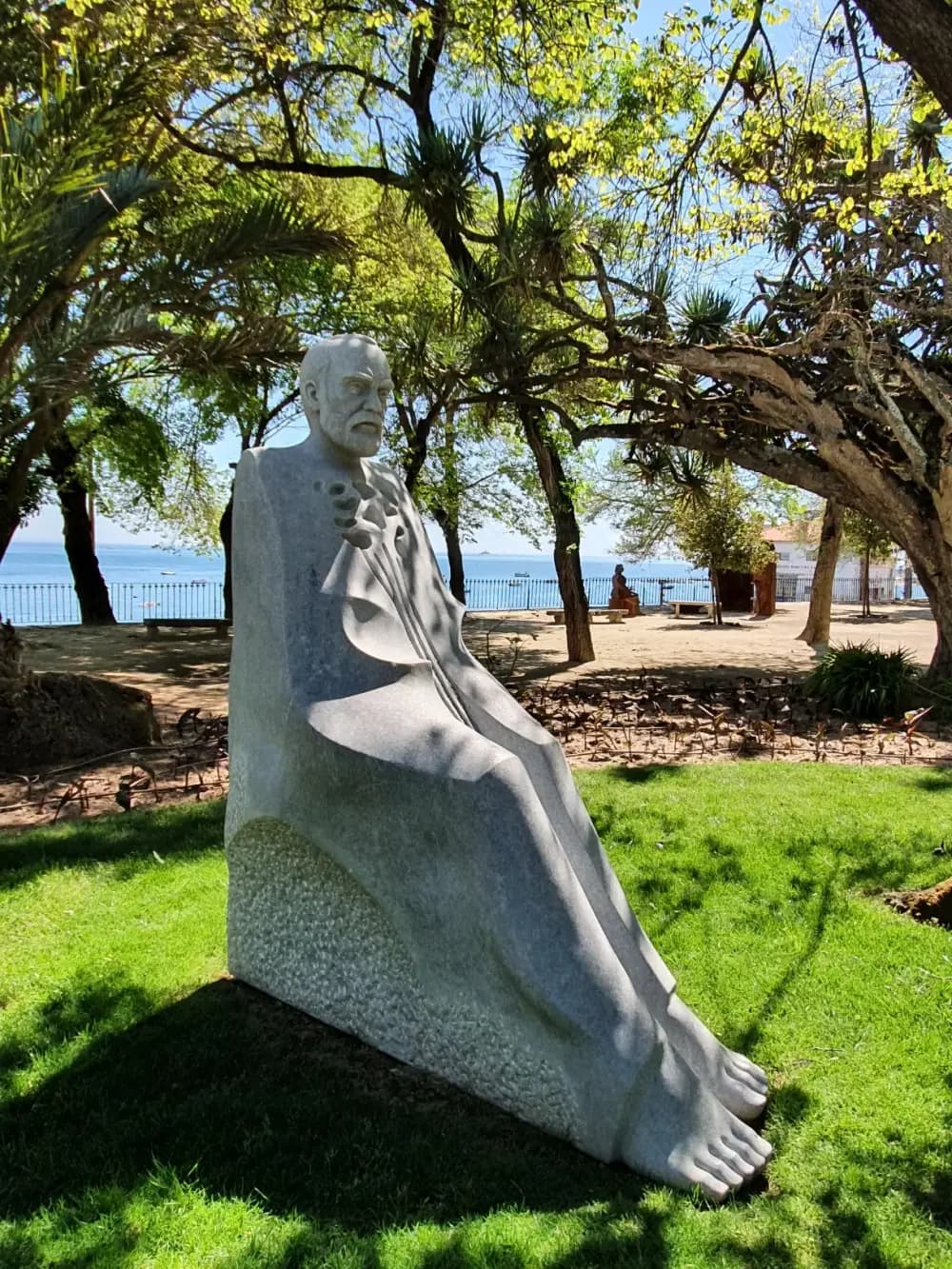
Around the time he turned seventy, the mayor of Oeiras, Isaltino Morais, was planning a Parque dos Poetas with statues of Portuguese poets by the sculptor Francisco Simões. Helder refused to be one of them. “The power of a poem concerns the world, and that is why poetry is considered a dangerous activity,” he wrote in a statement quoted by the critic Serafim Ferreira. “Politics is anodyne because its object is not the world but a fiction of the world.” The surrealist poet Mário Cesariny threatened to go to Oeiras with a bulldozer.
He also kept rewriting. Each new edition of his collected poems added books, cut others and changed individual poems, so that no edition was final. Perkins counted five versions by 2004; two more full collections followed, in 2009 and 2014.
| Year | Title | What changed |
|---|---|---|
| 1960s | Ofício Cantante 1953–1963 | An earlier gathering of his poems, called his first collection by Lusa; Observador dates it to 1965 |
| 1973 | Poesia Toda (two volumes) | First collected works under this title, described in its note as complete and definitive |
| 1981 | Poesia Toda (one volume) | Adds Cobra, O Corpo o Luxo a Obra, Flash and six poems from Photomaton & Vox |
| 1990 | Poesia Toda | Adds A Cabeça entre as Mãos, Última Ciência, As Magias and Os Selos; trims earlier books and drops Retrato em Movimento |
| 1996 | Poesia Toda | Takes in Do Mundo (1994), partly rewritten from Retrato em Movimento |
| 2001 | Ou o poema contínuo: súmula | A severely pruned selection |
| 2004 | Ou o poema contínuo | A full collected edition again |
| 2009 | Ofício Cantante: Poesia Completa | Collected poems |
| 2014 | Poemas Completos | Collected poems, the last in his lifetime |
Editions from 1973 to 2004 as described by Juliet Perkins (2007); Ofício Cantante 1953–1963 from Lusa and Observador; the 2009 and 2014 titles from Cascais council’s writers’ trail.
Saying no to the Pessoa Prize
The Prémio Pessoa had been awarded since 1987, and the list of winners still shows Herberto Helder under 1994. He was not making an exception for it. Perkins wrote that, unconvinced that literary prizes were fair, he turned down every one awarded to him. His name was put forward for the European Literary Prize in 1991, and in April 2007 Portugal’s PEN Club backed him, with the poet António Ramos Rosa, for the Nobel Prize in Literature.
Some fellow writers admired the refusal. In December 1997 the novelist José Cardoso Pires, who had just won the same prize, was asked whether he understood Helder’s position.
“I understand and admire it. He took an admirable stand towards literary opinion and literary consumerism, rejecting any and all exhibitionism … I consider him the living Portuguese poet I admire most.”
Last books and afterlife
Helder kept publishing to the end. In May 2014 came A Morte Sem Mestre, new poems in a limited edition with a CD of five poems read by the poet himself, the book that marked his move to the publisher Porto Editora. Poemas Completos followed the same year.
He died at home in Cascais, where he had lived for many years, on Monday 23 March 2015, aged 84. The cause was not made public. His last book, Poemas Canhotos, appeared two months later.
The critic Pedro Mexia said that Helder mattered as much to the second half of the twentieth century as Fernando Pessoa did to the first. Younger poets wrote about him: José Tolentino Mendonça, also from Madeira, called a poem “A infância de Herberto Helder”, Herberto Helder’s childhood. His experiments of the 1960s fed into the computer-generated poetry of Pedro Barbosa and Rui Torres.
He was a translator too, of an unusual kind. In 1997 he published three books of what he called “poems changed into Portuguese”, from Wolof, Amerindian and other traditions, worked up from existing translations in European languages. His own work travels less easily. Gallimard published an anthology in French, Le poème continu, in 2010, but Perkins called him notoriously difficult to translate into English and noted his scant exposure in Britain.
The books he hid have come back. Apresentação do Rosto was reissued in 2020 at the initiative of his widow, Olga Lima. In 2025, ten years after his death, the Buchholz bookshop in Lisbon showed 60 of his titles published between 1958 and 2018, and the sociologist João Pedro George published a biography, Se Eu Quisesse, Enlouquecia, after seven or eight years of work.
23 November 1930
Born in Funchal, Madeira
1946
Moves to Lisbon to finish secondary school
1952
First poems in the Funchal anthology Arquipélago
1958
O Amor em Visita; joins Humberto Delgado’s campaign
1961
A Colher na Boca
1963
Os Passos em Volta
1964
Poesia Experimental, edited with António Aragão; Electrònicolírica
22 July 1968
Ban order on Apresentação do Rosto, seized by the PIDE
April 1971 to June 1972
Writes for the weekly Notícia in Luanda
1973
Poesia Toda, his collected poems in two volumes
1979
Photomaton & Vox
1994
Do Mundo; turns down the Prémio Pessoa
2014
A Morte Sem Mestre, with a CD of his own readings
23 March 2015
Dies in Cascais, aged 84
FAQs
Why did Herberto Helder refuse the Pessoa Prize?
He never explained it in public. When friends tried to persuade him in 1994, he reportedly told them not to tell anyone and to give the prize to someone else. António Alçada Baptista said the refusal was not aimed at anyone, and the scholar Juliet Perkins wrote that he doubted literary prizes were fair and turned them all down.
Where was Herberto Helder born?
In Funchal, the capital of Madeira, on 23 November 1930. He went to school there until he was sixteen, moved to Lisbon in 1946 and left the island for good in 1956. Fournier records one short return, in 1984.
What did Herberto Helder do in Angola?
From April 1971 to June 1972 he wrote reports, columns and interviews for Notícia, an illustrated weekly in Luanda, during the colonial war. He was badly hurt in a car accident there. A selection of the pieces was published in 2018 as em minúsculas.
Which Herberto Helder books should I read first?
Os Passos em Volta (1963), short prose pieces, was the book that made his name and went through eleven editions in his lifetime. For the poems, Portuguese writers often name A Colher na Boca (1961) and the collected editions, the latest being Poemas Completos (2014).
On the timeline
Open the timelineNearby moments from dictatorship and the estado novo (1926–1974).
Maria de Lourdes Pintasilgo is born in Abrantes. A chemical engineer and progressive Catholic activist, she became Portugal's first and so far only woman prime minister on 1 August 1979, heading a five-month caretaker government; she was only the second woman to lead a Western European government, after Margaret Thatcher.
At a ceremony in the Council of State hall in Lisbon, Finance Minister António de Oliveira Salazar launches the União Nacional with his speech on the 'fundamental principles of the political revolution'. It becomes the sole legal party of the Estado Novo, renamed Acção Nacional Popular in 1970 and dissolved after the 25 April 1974 revolution.
José Águas is born in Luanda. Spotted playing for Lusitano do Lobito, the centre-forward famed for his heading joined Benfica in 1950 and, as captain, lifted the European Cup in 1961 and 1962, finishing as top scorer of the first of those campaigns.
Herberto Helder, poet of silence
The poet Herberto Helder is born in Funchal, Madeira. Author of 'A Colher na Boca' and 'Photomaton & Vox', he became one of the most admired and most reclusive Portuguese poets of the century, refusing almost all interviews and turning down the Pessoa Prize in 1994.
Death in Lisbon of the writer Raul Brandão, aged 63. Born at Foz do Douro into a seafaring family, the former army officer wrote the anguished modernist novel 'Húmus' (1917) and luminous chronicles of the coast and the Atlantic islands such as 'Os Pescadores' and 'As Ilhas Desconhecidas', still read as some of the finest prose about Portugal's sea.
The poet Florbela Espanca dies in Matosinhos on her 36th birthday. Born in Vila Viçosa, thrice married and scandalous in her day, she wrote passionately sensual, defiantly feminine sonnets; her last book, 'Charneca em Flor', appeared weeks after her death, and a bust of her waited 18 years for a place in Évora.
The first issue of 'Avante!', the Portuguese Communist Party's newspaper, appears. For the next 43 years, until the 1974 revolution, it was printed on clandestine presses inside Portugal and passed from hand to hand under the dictatorship.
Coming up in history
All long reads 25 November 197525 November 1975: the paratroopers' revolt that ended the revolution
 26 November 1967The Lisbon floods of November 1967: a night of rain and a censored toll
 27 November 2011Fado becomes world heritage: UNESCO's verdict in Bali, 27 November 2011
 28 November 1975Fretilin proclaims East Timor's independence, 28 November 1975
23 sources
Archives, scholarship and reporting this article was checked against.
- 1
Madeira: the poetry of Herberto Helder (Juliet Perkins, King's College London), Occasional Papers no. 16National University of Ireland, Maynooth, Department of Spanish and Portuguese, February 2007
- 2Morreu Herberto Helder (João Pedro Pincha and Rita Cipriano)Observador, 24 March 2015
- 3
A ilha de todos os mitos (António Fournier)Relâmpago 36/37, April to October 2015, pp. 201-209 (author's copy, Università di Torino repository)
- 4
José Cardoso Pires: escritor, lisboeta e bissexto (interview by Isabel Lucas and Pedro Teixeira Neves)Semanário, 27 December 1997, via Hemeroteca Digital de Lisboa
- 5
Apresentação do Rosto, livro de Herberto Helder proibido pela ditadura, chega às livrariasDiário de Notícias (Madeira), 30 May 2020
- 6
A Porto Editora vai editar as reportagens de Herberto HelderSábado, 10 January 2018
- 7
Herberto HelderMuseu do Aljube: Resistência e Liberdade, 23 November 2020
- 8
Lídia Jorge vence Prémio Pessoa 2025Notícias ao Minuto (Lusa), 11 December 2025
- 9
Mort du poète portugais Herberto Helder (Vincy Thomas, with AFP)Livres Hebdo, 24 March 2015
- 10João Pedro George: “O Herberto Helder é o representante de uma civilização perdida” (Maria João Martins)Diário de Notícias, 21 May 2025
- 11
Herberto Helder, um dos grandes nomes da literatura portuguesa do século 20, permanece pouco difundido no Brasil (Bianca Dias and Sabrina Sedlmayer)Estado de Minas, Pensar supplement, 5 January 2018
- 12Livro inédito de Herberto Helder tem o título em minúsculas e é publicado a 4 de maioObservador, 18 April 2018
- 13Exposição inédita celebra Herberto Helder e assinala dez anos da morte do poetaRTP Notícias (Lusa), March 2025
- 14
«Só colaboro na minha morte»: Herberto Helder (1930-2015) (Adriana Nogueira)Cultura.Sul, 10 April 2015, Universidade do Algarve repository
- 15
As bibliotecas da Fundação Gulbenkian e a leitura pública em Portugal (1957-1987), Análise Social XL (174), 2005, pp. 65-86Daniel Melo, Instituto de Ciências Sociais da Universidade de Lisboa
- 16
'Electrònicolírica' by Herberto Helder and PO.EX Combinatorics (Álvaro Seiça)I ♥ E-Poetry, 24 March 2015
- 17Inéditos para descobrir Herberto Helder pessoaDiário de Notícias, 2 May 2018
- 18
O Estado Novo português e a reforma do Estado colonial em Angola: o comportamento político das elites brancas (1961-1962) (Fernando Tavares Pimenta)História (São Paulo), vol. 33, n.º 2, 2014, pp. 250-272
- 19Sempre letras grandes (review of em minúsculas)Diário de Notícias, 10 June 2018
- 20
Herberto Helder e Ernesto Cardenal, bons vizinhos e bons aliados (Marco André Fernandes da Silva)Diadorim, vol. 21, no. 1, 2019, Universidade Federal do Rio de Janeiro
- 21
Herberto Helder, ou a súmula poética de uma vida (Serafim Ferreira), review of Ou o poema contínuo (2001)A Página da Educação
- 22
Rota Escritores em CascaisCâmara Municipal de Cascais
- 23Biografia de Herberto Helder publicada a 22 de maioObservador, 24 March 2025
Image credits
- The bay of Funchal, Madeira, around 1930, the year Herberto Helder was born in the city. The photograph was probably taken from Neves, in São Gonçalo, before the harbour's regional quay was extended. Unknown author, Public domain, via Wikimedia Commons.
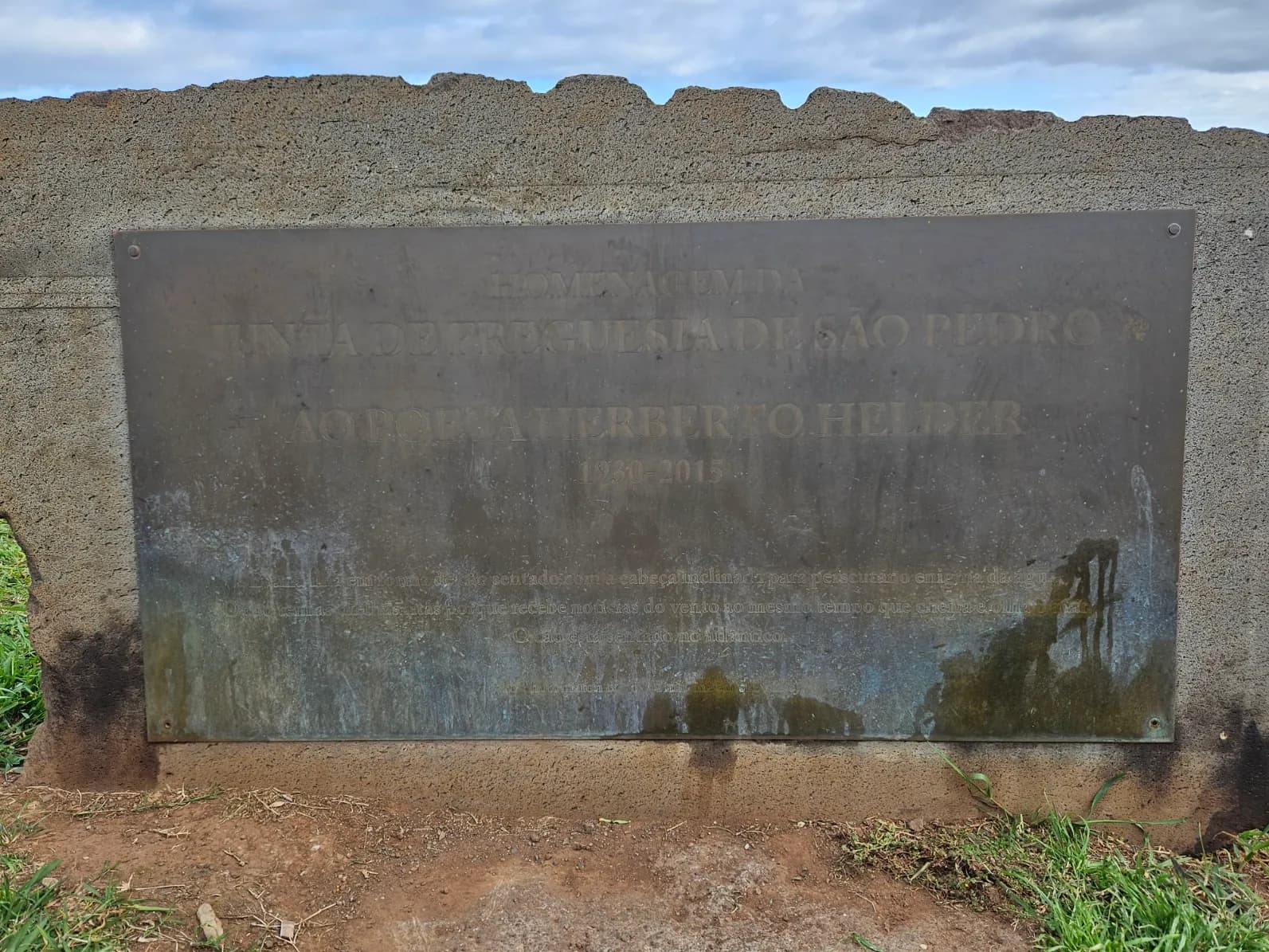
- The tribute of the parish council of São Pedro, Funchal, to Herberto Helder, at the Forte de São João Baptista above the city, photographed in 2024. GualdimG, CC BY-SA 4.0, via Wikimedia Commons.
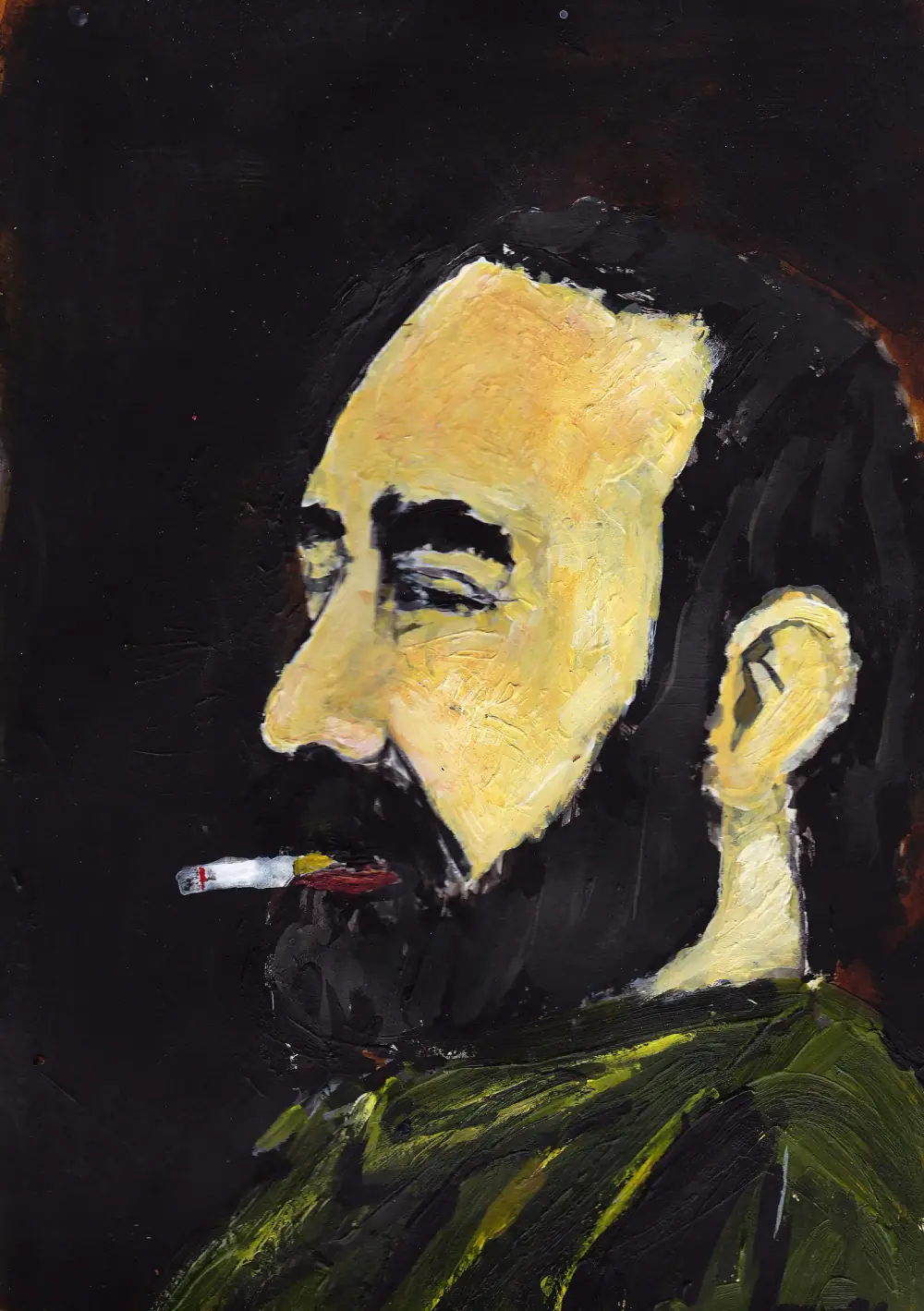
- Herberto Helder as painted by Frederico Penteado in 2010. Few photographs of the poet were published in his later decades. Frederico Penteado, CC BY-SA 3.0, via Wikimedia Commons.
- A seated figure of Herberto Helder by Francisco Simões, the sculptor whose statue of him for Oeiras’s Parque dos Poetas he had refused, in the garden of the Palácio dos Arcos, Paço de Arcos, photographed in 2022. GualdimG, CC BY-SA 4.0, via Wikimedia Commons.
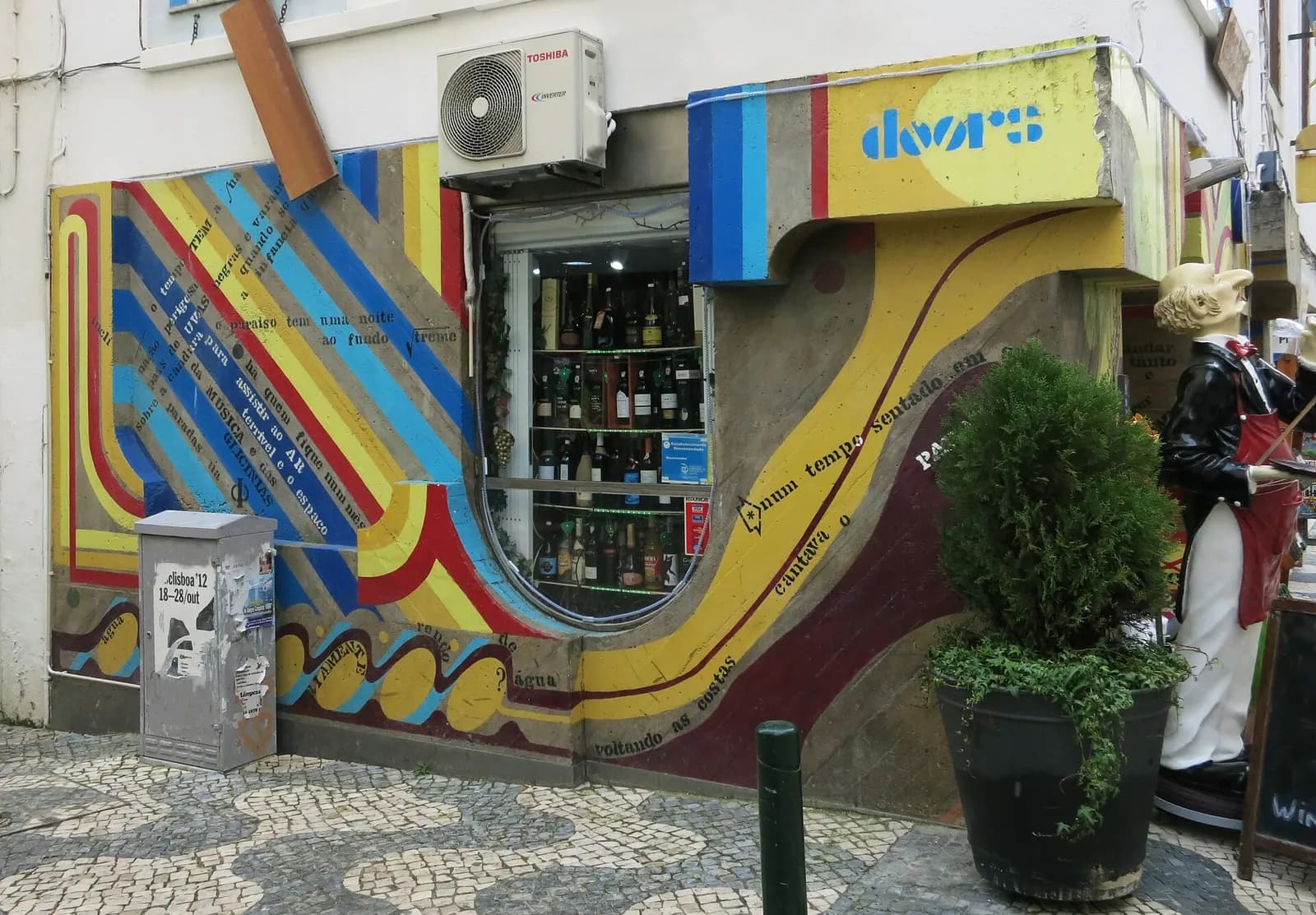
- Sá Nogueira’s mural on the former Valentim de Carvalho record shop in Cascais, painted in the late 1960s with lines of a poem by Herberto Helder, photographed in 2014. Manuelvbotelho, CC BY-SA 4.0, via Wikimedia Commons.