

Amadeo de Souza-Cardoso: Portugal's lost modernist, born 1887
A landowner's son from the hills near Amarante sold seven paintings at New York's Armory Show, came home when war broke out and scandalised Porto. Two years later he was dead, and for decades his work was barely seen.
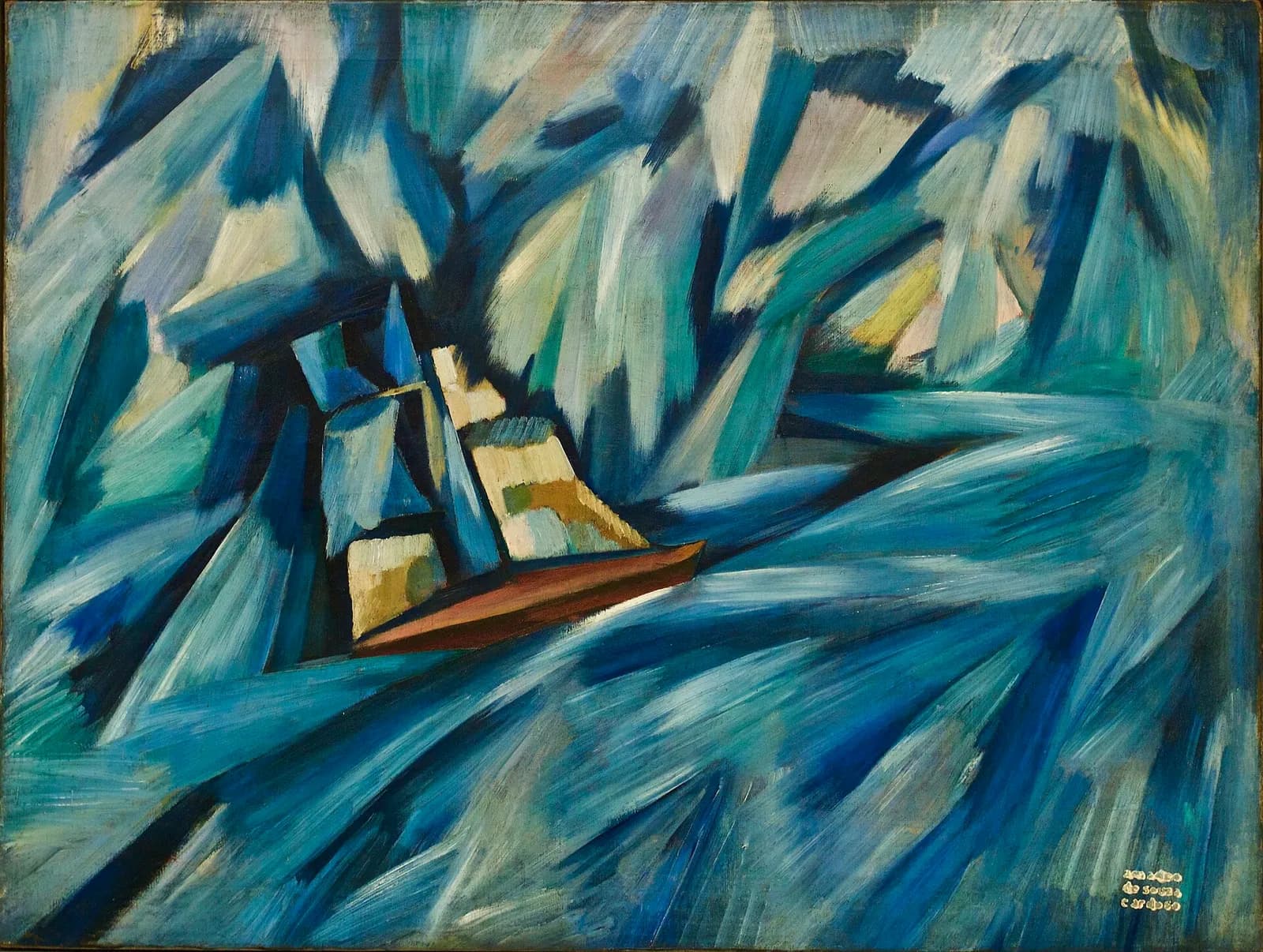
At a glance
- Amadeo de Souza-Cardoso was born on 14 November 1887 at Manhufe, in the parish of Mancelos near Amarante, into a family of wealthy rural landowners.
- He moved to Paris in 1906, met Amedeo Modigliani in 1909 and showed with him in 1911. In 1913 he sent eight paintings to the Armory Show in New York and, by the Gulbenkian's count, sold seven.
- Stuck in Portugal by the First World War, he held solo exhibitions in Porto (1 to 12 November 1916) and Lisbon (4 to 18 December 1916), which split critics and drew large crowds.
- He died in Espinho on 25 October 1918, aged 30, during the flu pandemic, and his work was little seen for decades.
- Most of his surviving work belongs to the Gulbenkian in Lisbon; the municipal museum in Amarante, the Art Institute of Chicago and the Centre Pompidou hold others. A Grand Palais retrospective in 2016 drew about 73,000 visitors.
A bizarre exhibition in a Porto pleasure garden
On the evening of Wednesday 1 November 1916, guests with invitations filed into the Salão de Festas of the Jardim Passos Manuel in Porto. The garden was a place for a night out: it had opened in 1908 with a cinematograph and put on variety shows and concerts. That night its function room was hung with 114 paintings, watercolours and drawings by a 28-year-old from Amarante, priced from 10,000 to 600,000 réis.
The catalogue called the show Exposição de Pintura (Abstracionismo). Most of the pictures were not abstract at all. They showed dark heads of madmen, mechanised men, gaudy masks, still lifes of fruit and musical instruments, houses in the countryside, dolls and village crafts.
The next morning O Primeiro de Janeiro ran a front-page piece by its editor-in-chief, headed “Quadros de Sousa Cardoso: uma exposição bizarra”. It called the paintings aberrant examples of the eccentricities of the Paris boulevards, which shocked eyes used to balanced and normal art. The Jornal de Notícias was friendlier, and noted how curious the bright colours looked at night under electric light.
The crowds came anyway. Stories kept in the family tell of visitors spitting on the canvases. His younger brother António recalled a stranger who stopped the painter in the street, asked if he was the author of “those mad works” and punched him in the face. António took him to the Hospital de Santo António with a bleeding nose.
“It is the first exhibition of modern painting in Portugal.”
From Manhufe to Montparnasse
Amadeo de Souza-Cardoso was born on 14 November 1887 on his parents' estate at Manhufe, in the parish of Mancelos, in the municipality of Amarante in northern Portugal. His father, José Emygdio de Souza-Cardoso, was a big landowner and wine grower; his mother was Emília Cândida Ferreira Cardoso. He grew up with eight siblings, between the house at Manhufe and summers at the beach at Espinho, south of Porto.
He drew caricatures early, encouraged by his mother's brother Francisco, “Uncle Chico”, and by Manuel Laranjeira, an older friend from Espinho who became a doctor and writer. His biographer Luís Damásio found that at 14 he failed a school year, and his father sent him to work at the family's Confiança factory in Porto before enrolling him in architecture.
In 1905 he went to Lisbon for the preparatory architecture course at the Academia de Belas-Artes. He was not a good student and did not like the capital. On his 19th birthday, 14 November 1906, he left for Paris with Francisco Smith, a painter born in Portugal, meaning to prepare for the entrance exam of the École des Beaux-Arts. His parents paid. By 1907 he had given up architecture to paint.
- Born
- 14 November 1887, Manhufe, parish of Mancelos, Amarante
- Died
- 25 October 1918, Espinho, aged 30
- Parents
- José Emygdio de Souza-Cardoso and Emília Cândida Ferreira Cardoso
- Wife
- Lucie Meynardi Pecetto (born 1890), married 1914
- In Paris
- November 1906 to summer 1914
- Output
- More than 500 works in about 14 years
Paris, Modigliani and the salons
He settled near Montparnasse, visited the Louvre often and admired the early Renaissance painters known as the primitives. In 1908 he rented a studio at 14 Cité Falguière, where Portuguese artists in Paris gathered, and met Lucie Pecetto, a young woman of Italian origin who would become his wife. He never sought an official art education.
In 1909 he began attending the Académie Viti, run by the Spanish painter Anglada Camarasa, and moved his studio to the rue des Fleurus, next to Gertrude Stein's apartment. The Amarante museum dates his meeting with the Italian painter and sculptor Amedeo Modigliani to that year; Damásio says they met in 1908, through the poet Max Jacob. In 1909 he also changed the spelling of his first name from Amadeu to Amadeo, which Damásio links to the friendship.
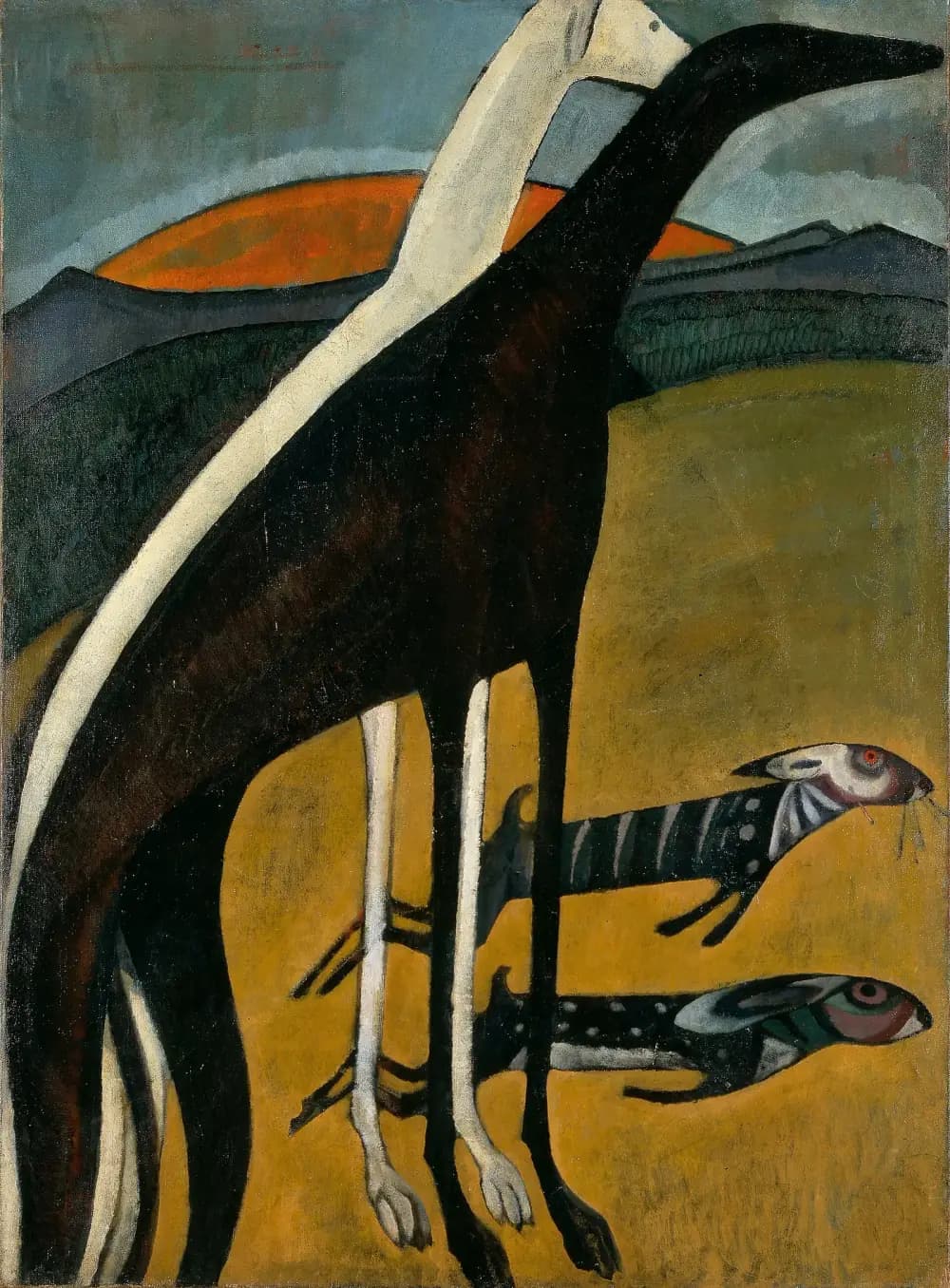
In 1911 he and Modigliani showed together in Amadeo's new studio in the rue du Colonel Combes, a few months after he had sent six works to the Salon des Indépendants. He moved in a wide circle: the Romanian sculptor Constantin Brancusi, the Mexican painter Diego Rivera, Robert and Sonia Delaunay. In 1912 he published an album of drawings, XX Dessins, showed at the Salon d'Automne and met the Italian Futurists Umberto Boccioni and Gino Severini.
Critics then and since have struggled to file him. The Art Institute of Chicago describes his Paris style as a mix of Art Nouveau, Cézanne, Léon Bakst's costume designs for the Ballets Russes and Iberian tilework. The critic Alexandre Pomar argues that labelling him a minor Cubist made him look like a follower and undersold him.
Seven sales in New York
The International Exhibition of Modern Art opened at the armoury of the 69th Infantry on Lexington Avenue, New York, on 17 February 1913 and ran until 15 March. Known ever since as the Armory Show, it was the first big exhibition to show American audiences the European avant-garde. Amadeo sent eight paintings. The CAM says Walter Pach invited him; Damásio says the invitation came through Gertrude Stein.
The show moved to the Art Institute of Chicago from 24 March to 16 April, then to Boston. On 10 April, through the American painter and critic Walter Pach, the Chicago lawyer and collector Arthur Jerome Eddy bought three of Amadeo's paintings. They went to the Art Institute in 1931 and are still there. The Gulbenkian Foundation and Damásio both say he sold seven of his eight pictures.
| Catalogue no. | Title in the 1913 catalogue | Where it is now |
|---|---|---|
| 462 | Marine | Not identified in the sources used here |
| 463 | Chateau fort | Art Institute of Chicago, as The Stronghold (bought by Eddy) |
| 464 | Le Prince et la Muete | Not identified in the sources used here |
| 465 | Avant la Corrida | Calouste Gulbenkian Foundation, Lisbon |
| 466 | Return from the Chase | Not identified in the sources used here |
| 467 | Saut du Lapin | Art Institute of Chicago, as The Leap of the Rabbit (bought by Eddy) |
| 468 | Paysage | Art Institute of Chicago, as Landscape (bought by Eddy) |
| 469 | Pecheur | Not identified in the sources used here |
Titles as printed in the New York catalogue. The Chicago titles and purchases come from the Art Institute's records; Avant la Corrida from the Gulbenkian.
“My art has caused a lot of noise.”
In September 1913, on Robert Delaunay's proposal according to the historian José-Augusto França, he showed at the first Herbstsalon, the autumn salon organised in Berlin by the gallery and magazine Der Sturm. In April 1914 he sent three works to a London salon. The Amarante museum and the CAM say it was cancelled because of the war; another Gulbenkian text says he did show in London that year.
Stranded at home by the war
In the summer of 1914 Amadeo and Lucie left Paris for his usual summer in Portugal, stopping in Barcelona, where he met the architect Antoni Gaudí. The Amarante museum says the First World War caught them in Madrid; the CAM says he was already back at Manhufe. Either way he could not return. He had been passed fit for military service in 1907, and once war began he was barred from leaving the country in case of mobilisation.
The couple married in Porto that year and settled at the Casa do Ribeiro in Manhufe, a house belonging to his uncle Francisco. He split his time between Manhufe and Espinho.
He was not cut off. In 1915 Robert and Sonia Delaunay, also escaping the war, settled at Vila do Conde on the coast north of Porto, and the couples stayed close. In Lisbon he got to know José de Almada Negreiros and the young writers and artists around the magazine Orpheu. In 1916 Fernando Pessoa, writing to the poet Armando Côrtes-Rodrigues, called him “the most celebrated advanced Portuguese painter”.
Some critics think the work of these years, with its collage and its borrowings from village crafts, is his most interesting. In 1916 he published a portfolio, 12 Reproductions, in Porto, and in the autumn he booked the hall at the Jardim Passos Manuel. Shortly before the show opened, an army medical board in Vila Real exempted him from military service for “lack of robustness”.
Porto, then Lisbon: the two exhibitions of 1916
The Porto show was open from two to five in the afternoon for twelve days. According to Damásio, Amadeo told Walter Pach that more than 30,000 people came; Marta Soares reads his letters as giving 25,000 to 30,000, an estimate based on the number of catalogues handed out. On the last day, he told his uncle, people were still arriving when he had the doors shut. Both figures come from his own letters.
The scandal is the part people remember, but the art historian Marta Soares, who went through the press cuttings Amadeo kept, found the coverage mostly favourable. Of 17 Porto cuttings, only two were clearly hostile, both in A Montanha, a republican paper. Several critics disliked the Futurist tendencies yet praised him as a colourist.
From 4 to 18 December he showed in Lisbon at the Liga Naval Portuguesa, then housed in the Palácio Calhariz-Palmela. It was a fashionable nautical club whose members included naval officers, aristocrats and intellectuals, and King Carlos I's oceanographic collection was on permanent display. Amadeo got only the reading room, and crammed 113 works into it.
Almada Negreiros, signing himself “futurist poet”, wrote a pamphlet for it dated 12 December 1916. It mocked José de Figueiredo, whose views, Almada claimed, were the only opinion on art in Portugal, lamented the “incompetence” of Portugal's part in the war and claimed the exhibition for the twentieth century.
“Amadeo de Souza-Cardoso is the first Discovery of Portugal in Europe in the twentieth century. The limit of Discovery is infinite because the meaning of Discovery changes its substance and grows in interest, which is why the Discovery of the Sea Route to India is less important than the Exhibition of Amadeo de Souza-Cardoso at the Liga Naval de Lisboa.”
Lisbon was calmer. Nobody hit him and nobody spat on the paintings. The Diário de Notícias followed the show from opening through sales and an extension to closing. In an interview with the paper O Dia, Amadeo refused every label: “I follow no school. The schools are dead. We, the young, now look only for originality.”
14 November 1887
Born at Manhufe, Amarante
1905
Studies architecture in Lisbon
November 1906
Moves to Paris with Francisco Smith
1909
Starts at the Académie Viti; friendship with Modigliani
1911
Shows with Modigliani; six works at the Salon des Indépendants
1912
Publishes XX Dessins; Salon d'Automne
17 February 1913
Armory Show opens in New York with eight of his paintings
September 1913
First Herbstsalon, Berlin
Summer 1914
War breaks out; returns to Manhufe and marries Lucie
1 to 12 November 1916
Solo exhibition at the Jardim Passos Manuel, Porto
4 to 18 December 1916
Exhibition at the Liga Naval, Lisbon
1917
Three works in the magazine Portugal Futurista
25 October 1918
Dies in Espinho during the flu pandemic
Death in Espinho, October 1918
In April 1917 a Futurist session at the Teatro da República in Lisbon led to the magazine Portugal Futurista, which printed three of his works; in its pages Almada called him a genius. Almada also dedicated his book K4 O Quadrado Azul to him.
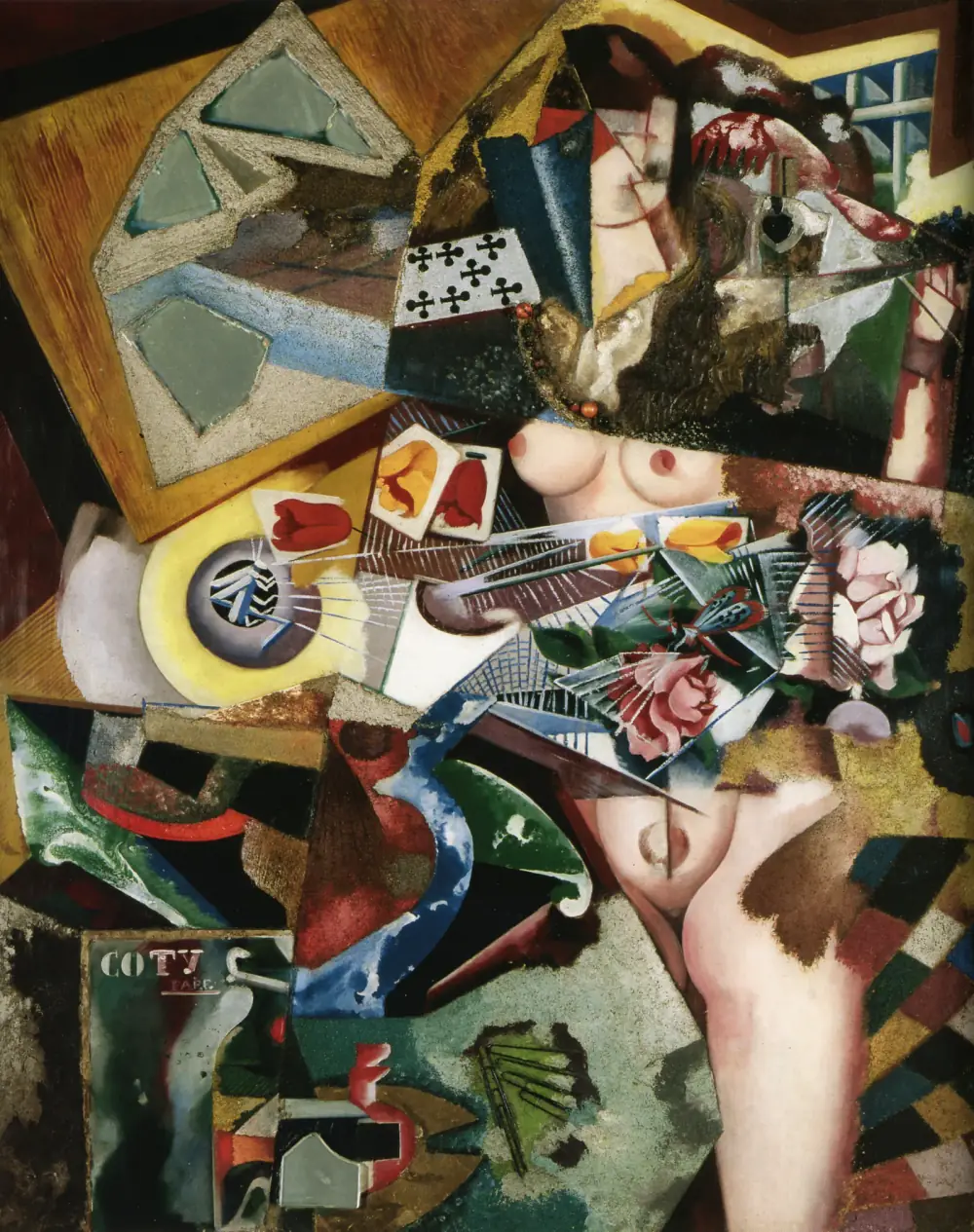
In 1918 a skin disease stopped him painting. A 2014 paper in the journal Acta Médica Portuguesa describes it, from the surviving accounts, as an eczema of the hands and face, for which a Dr Martins treated him at the Taipas spa in northern Portugal. The authors think it was probably an allergic reaction to his paints or other materials, but the cause was never established.
That autumn the flu pandemic, called the pneumónica in Portugal, was in its second wave. The official Portuguese toll for the epidemic was more than 60,000 dead.
In his last letter to his brother António he mentioned “some symptoms of malaise”. He died in Espinho on 25 October 1918, less than three weeks before his 31st birthday. Damásio's account of the day is brief: after a night of great distress, he died.
Decades of silence, then a rediscovery
Lucie kept most of the estate and never put it on the market. The critic Alexandre Pomar regrets that there was no sale after his death: artists hold their place, he argues, when their work circulates and museums compete for it. For several decades his work was hardly seen.
The Estado Novo, the authoritarian regime of the Salazar years, eventually took him up. An exhibition at the Casa de Portugal in Paris in 1958 was, in Freitas's words, part of a diplomatic strategy and a folkloric presentation. It did produce one sale: the curator Jean Cassou bought Cavaleiros (The Horsemen), of 1913, for the national modern art museum, now the Centre Pompidou. A show at the regime's propaganda office in Lisbon followed in 1959.
The turn came through the Calouste Gulbenkian Foundation. From the mid-1960s the family sold and gave it paintings, drawings, photographs and letters; the architect José Sommer Ribeiro and the painter Paulo Ferreira are credited with persuading Lucie. Today its Centro de Arte Moderna (CAM) holds about 200 of his works. “The Gulbenkian bought almost everything,” says Pomar.
Retrospectives followed at the Gulbenkian in 1987, in Washington in 1999 and in Chicago in 2000. The breakthrough was Diálogo de Vanguardas, opened at the Gulbenkian on 14 November 2006, his birthday, with about 260 works by him and 36 of his contemporaries. In its last weekend the museum stayed open through the night and visitors queued for over two hours.
The Foundation has also published his catalogue raisonné. In 2016, for the 50th anniversary of its Paris office, it took his work to the Grand Palais from 20 April to 18 July: about 200 pieces by the Foundation's count (the Soares dos Reis museum in Porto says about 250), alongside works by Brancusi, Modigliani and the Delaunays. A plaque was due to be unveiled on 19 November 2016 at 20 rue Ernest Cresson, where he lived from late 1912 to early 1914.
Visitors to major Amadeo exhibitions since 2006
visitors
Gulbenkian 2006: 100,117, the Foundation's figure via Lusa (Observador later gave “more than 75,000”). Grand Palais: about 73,000, according to the curator. Porto: about 43,000 (the museum says more than 40,000). Chiado: 30,066 counted a week before it closed. The Porto and Lisbon shows of 2016 and 2017 rebuilt the 1916 exhibitions.
Show the data
| Visitors | |
|---|---|
| Lisbon, Gulbenkian, 2006 | 100,117 |
| Paris, Grand Palais, 2016 | 73,000 |
| Porto, Soares dos Reis, 2016 | 43,000 |
| Lisbon, Chiado, 2017 | 30,066 |
In Porto and Lisbon in 2016 and 2017, the Museu Nacional Soares dos Reis and the Museu do Chiado rebuilt the 1916 exhibitions, each with more than 80 of the original works. The American art historian Robert Loescher once called him “one of the best kept secrets in modern art”. After the Paris show, Freitas said that in the French art world Amadeo was no longer an unknown.
Where to see Amadeo today
Most of his surviving work belongs to the Gulbenkian, so little of it reaches the art market. In 2018, by Observador's count, only three institutions outside Portugal owned his paintings: the Centre Pompidou had one, the Art Institute of Chicago three and a museum in Michigan one. The historian José-Augusto França called him the greatest, or the only, “modern” painter of the 1910s born in Portugal.
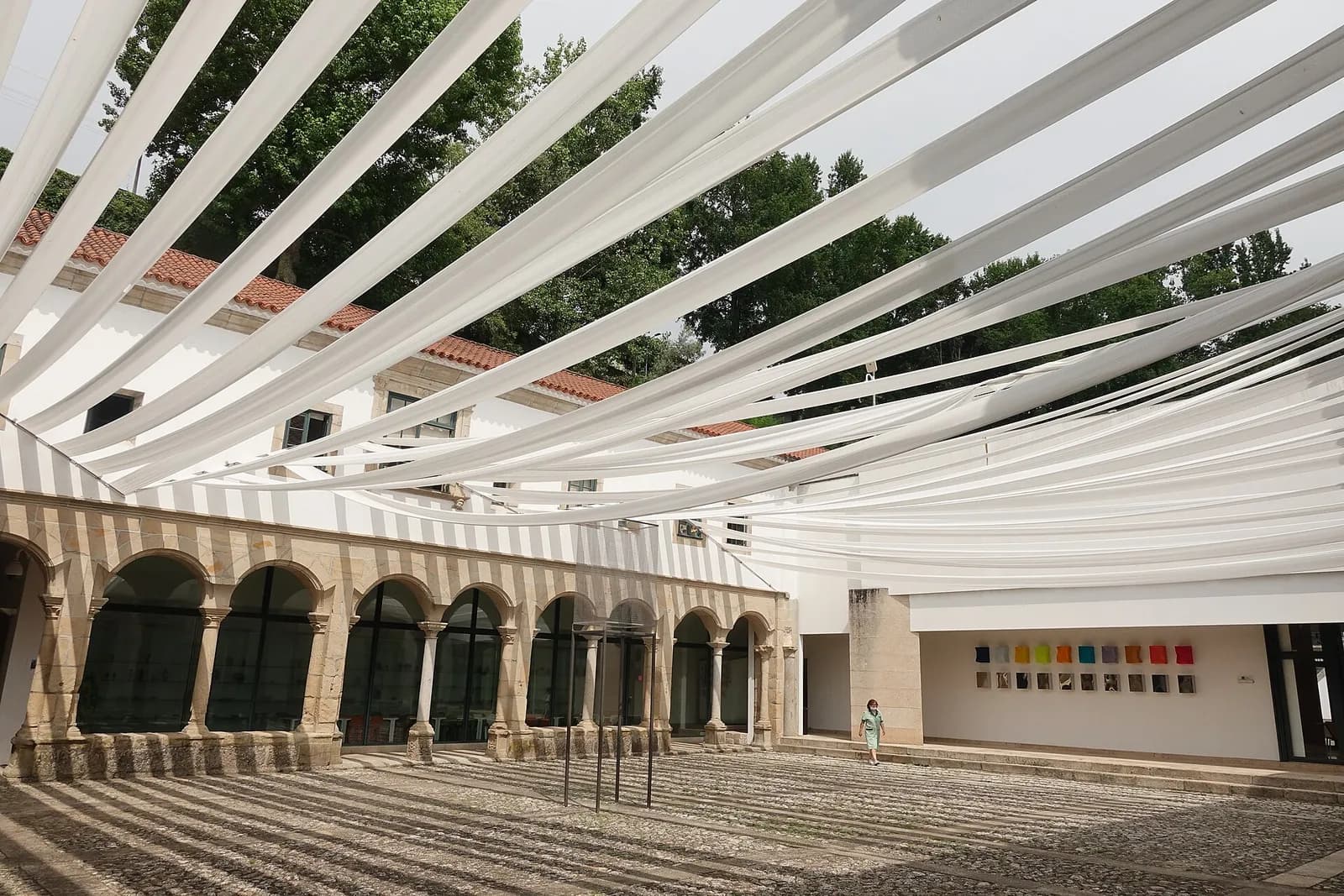
In Amarante, the municipal museum that bears his name occupies part of the sixteenth-century convent of São Gonçalo, beside the church. The architect Alcino Soutinho converted the convent's second cloister into a library and museum, adding a new wing, in a project that ran from 1970 to 1987. The museum reopened on 5 December 2025 after refurbishment and new climate control.
FAQs
Who was Amadeo de Souza-Cardoso?
A Portuguese painter, born at Manhufe near Amarante on 14 November 1887, who worked in Paris from 1906 to 1914 alongside Modigliani, Brancusi and the Delaunays. He showed at the Armory Show in New York in 1913. The historian José-Augusto França called him the greatest, or the only, modern painter of the 1910s born in Portugal.
How did Amadeo de Souza-Cardoso die?
He died in Espinho on 25 October 1918, aged 30, during the flu pandemic that killed more than 60,000 people in Portugal. Sources describe his death as caused by the pneumónica, the Portuguese name for that flu, and a 2014 medical paper also gives “pneumonic fever”. Earlier in 1918 a skin disease, probably a reaction to his materials according to that paper, had stopped him painting.
Was Amadeo de Souza-Cardoso friends with Modigliani?
Yes. They met in Paris, in 1909 according to the Amarante museum or in 1908 through the poet Max Jacob according to his biographer Luís Damásio, and exhibited together in Amadeo's studio in 1911. Damásio links Amadeo's change of first name from Amadeu to Amadeo to that friendship.
What did Amadeo show at the 1913 Armory Show?
Eight paintings, catalogue numbers 462 to 469, including Chateau fort, Avant la Corrida and Saut du Lapin. By the Gulbenkian's count he sold seven. The Chicago collector Arthur Jerome Eddy bought three, which are now in the Art Institute of Chicago.
Where can I see paintings by Amadeo de Souza-Cardoso?
Mainly at the Centro de Arte Moderna Gulbenkian in Lisbon, which holds about 200 of his works, and at the municipal museum named after him in Amarante. Abroad, the Art Institute of Chicago has three paintings and the Centre Pompidou in Paris one.
On the timeline
Open the timelineNearby moments from regeneration and the last kings (1851–1910).
The upper deck of the Ponte Luís I over the Douro, designed by Théophile Seyrig and built by the Belgian Société de Willebroeck, is inaugurated in Porto on the king's birthday. The lower deck followed in 1888, and the two-tier iron arch became the enduring emblem of the city.
Birth in Lisbon of Luís Filipe, heir of King Carlos I. In 1907 he became the first heir to the throne to tour the African colonies; less than a year later, on 1 February 1908, he was shot alongside his father in the Lisbon Regicide and died moments after him.
The Associação Académica de Coimbra is founded, the oldest students' union in Portugal. Every student of the University of Coimbra automatically becomes a member, and its football team, Académica, became one of the country's best-loved clubs.
Amadeo de Souza-Cardoso
Amadeo de Souza-Cardoso is born at Manhufe, near Amarante. In Paris he befriended Modigliani and in 1913 showed at the Armory Show in New York; his fusion of Cubism, Futurism and Portuguese folk motifs makes him the great pioneer of modern painting in Portugal.
The newspaper 'Jornal de Notícias' publishes its first edition in Porto. The daily has outlived every regime since to become one of Portugal's longest-running and most widely read papers.
Birth of Fernando Pessoa in Lisbon. Educated in Durban and steeped in English-language literature, he would invent dozens of 'heteronyms' — Alberto Caeiro, Ricardo Reis, Álvaro de Campos and others — and is now considered one of the most significant literary figures of the 20th century. His masterwork 'Livro do Desassossego' was published only decades after his death.
Death of Eduardo Coelho, the Coimbra-born typesetter turned journalist who in December 1864 co-founded the 'Diário de Notícias' with the printer Tomás Quintino Antunes. He ran it until his death; still published today, the 'DN' is regarded as Portugal's newspaper of record.
Coming up in history
All long reads 16 November 2003The Estádio do Dragão opens, and a 16-year-old Messi comes off the bench
 17 November 1717A vow in stone: the first stone of Mafra is laid, 17 November 1717
 18 November 1945Portugal's 1945 election: the MUD and Salazar's ‘free England’ vote
 19 November 1977TAP Flight 425: the night a Boeing 727 ran off Madeira's runway
23 sources
Archives, scholarship and reporting this article was checked against.
- 1
History of Amadeo de Souza-CardosoMuseu Municipal Amadeo de Souza-Cardoso, Câmara Municipal de Amarante
- 2
Amadeo de Souza-Cardoso (artist biography and works in the collection)CAM – Centro de Arte Moderna Gulbenkian
- 3
A primeira exposição de pintura moderna em Portugal (Luís Damásio)1.º Congresso Internacional Amadeo de Souza Cardoso, Faculdade de Letras da Universidade do Porto
- 4
- 5
Exposição Amadeo de Souza Cardoso, Liga Naval de Lisboa (José de Almada Negreiros, 12 December 1916)Project Gutenberg, from the 1916 pamphlet
- 6
Catalogue of International Exhibition of Modern Art, New York, 17 February to 15 March 1913Association of American Painters and Sculptors (Internet Archive scan)
- 7Amadeo de Souza-Cardoso morreu há 100 anos. O que vale hoje o pintor genial? (Bruno Horta)Observador, 20 October 2018
- 8
- 9Amadeo, o pintor que não gostava de Picasso, morreu há cem anosDiário de Notícias, 25 October 2018
- 10
Amadeo de Souza Cardoso, The Leap of the Rabbit, 1911Art Institute of Chicago
- 11
- 12
- 13
Mais de 30 mil pessoas foram ao Museu do Chiado ver a exposição de AmadeoSAPO 24 (Lusa), 21 February 2017
- 14Um século depois, no Chiado, Amadeo regressa a LisboaObservador, 11 January 2017
- 15
A Medicina na obra de Amadeo de Souza-Cardoso (Ana Rita Travassos, Luís Soares-de-Almeida, Rui Tato Marinho)Acta Médica Portuguesa 27(2), 2014, pp. 277–280 (PubMed record and abstract)
- 16A epidemia que veio de Espanha e matou mais de 60 mil portuguesesDiário de Notícias
- 17
105th anniversary of the death of Amadeo de Souza-CardosoMuseu Nacional Soares dos Reis
- 18
- 19Exposição sobre Amadeo de Souza-Cardoso recebeu 100.117 visitantesRTP Notícias (Lusa)
- 20Uma placa em Paris para homenagear Amadeo de Souza-CardosoObservador, 10 November 2016
- 21
Museu Amadeo de Souza Cardoso (Alcino Soutinho)Heritage Atlas Porto, Faculdade de Arquitectura da Universidade do Porto
- 22
Museum reopened to the public with two exhibitionsMuseu Municipal Amadeo de Souza-Cardoso, January 2026
- 23
CAM – Centro de Arte Moderna Gulbenkian reopenedDocomomo Portugal
Image credits
- A Chalupa (The Sloop), painted around 1914 to 1915. It belongs to the Gulbenkian's modern collection and was photographed at the Museu do Chiado in January 2017, during the exhibition that rebuilt his 1916 Lisbon show. Pedro Ribeiro Simões, CC BY 2.0, via Wikimedia Commons.
- Os Galgos (The Greyhounds), painted in Paris around 1911. Amadeo de Souza Cardoso, Public domain, via Wikimedia Commons.
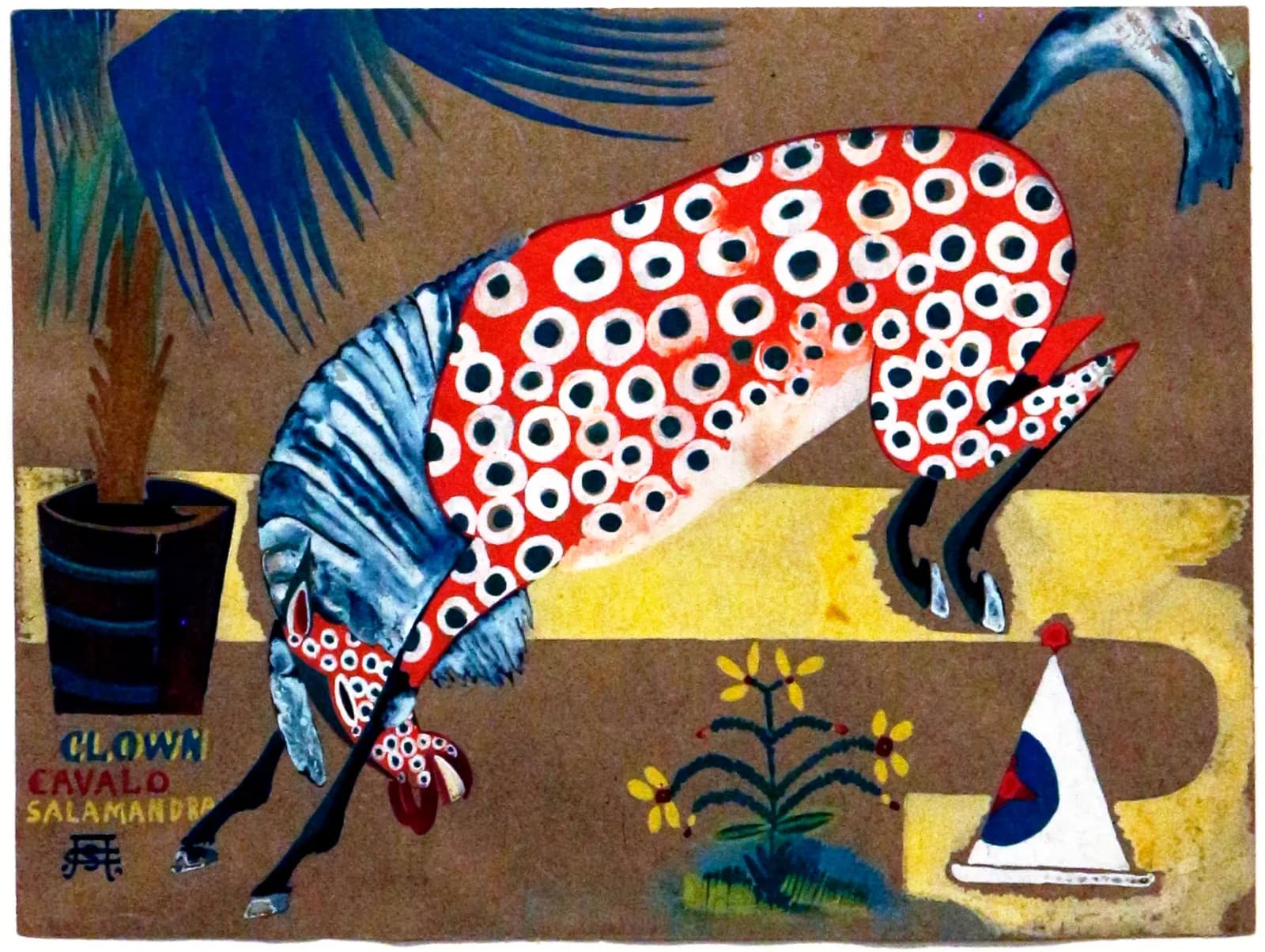
- An untitled gouache on paper of about 1911 to 1912, known from the words painted on it as Clown, cavalo, salamandra (clown, horse, salamander). Amadeo de Souza Cardoso, Public domain, via Wikimedia Commons.
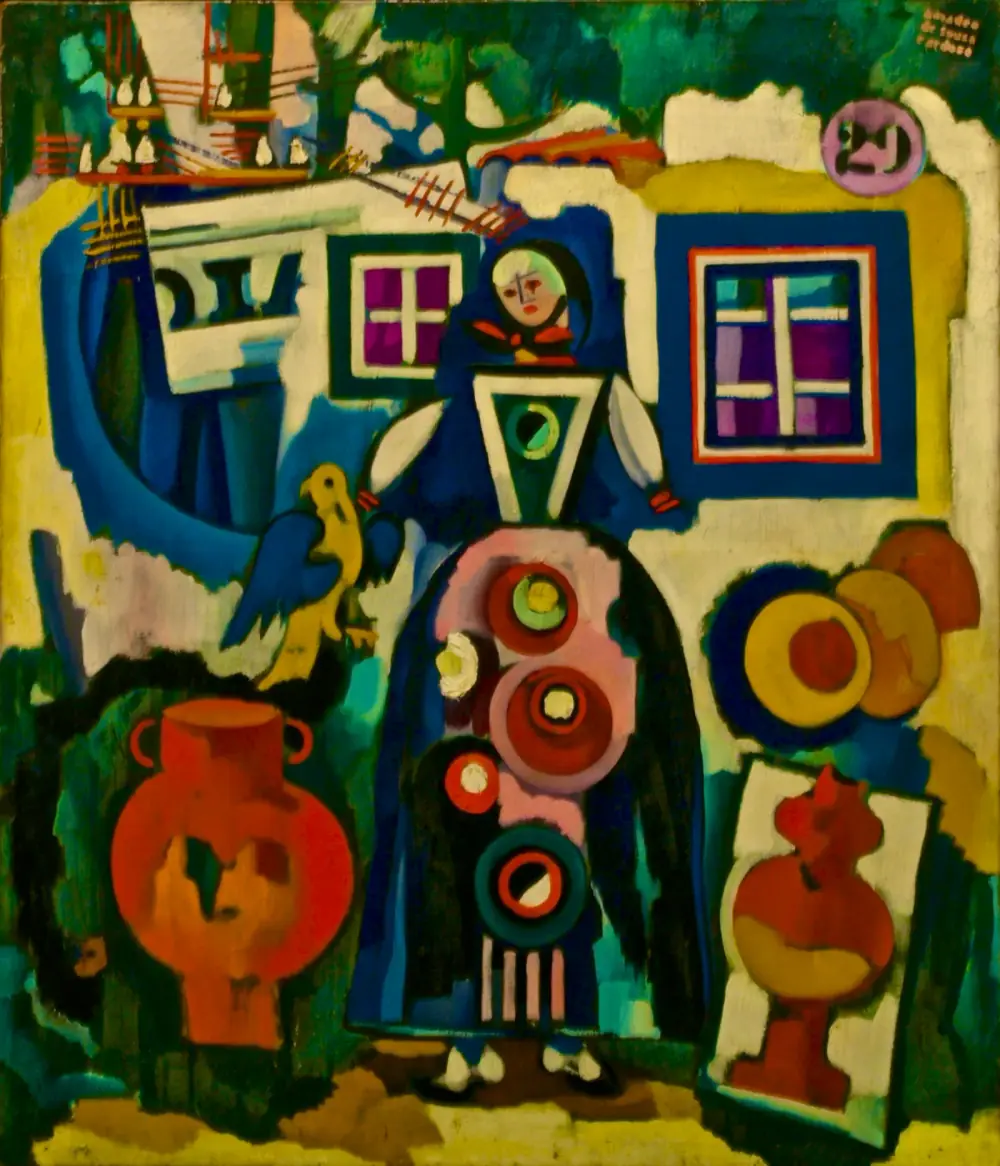
- Popular Song and Bird from Brazil, 1916: a painting from his years back in Portugal, with the clay pots, doll-like figure and whitewashed house of village life. Amadeo de Souza Cardoso, Public domain, via Wikimedia Commons.
- Untitled (Coty), 1917, oil and collage on canvas, 94 by 76 centimetres. The word Coty, stencilled at the lower left, is the name of the Paris perfume house. Amadeo de Souza Cardoso, Public domain, via Wikimedia Commons.
- The courtyard of the Museu Municipal Amadeo de Souza-Cardoso in Amarante, in the former convent of São Gonçalo, in July 2021. Joseolgon, CC BY-SA 4.0, via Wikimedia Commons.