

Henry the Navigator dies at Sagres, 13 November 1460
Infante Henrique never commanded a voyage of discovery and there was no school at Sagres. He paid for and directed the voyages that took Portuguese ships past Cape Bojador, and he took his fifth of the first African captives sold at Lagos.
At a glance
- Infante Henrique, a younger son of King João I and Philippa of Lancaster, died on 13 November 1460 at his Vila do Infante on the Sagres headland, aged 66. One Navy account says Lagos instead.
- He fought at Ceuta in 1415 and led the failed attack on Tangier in 1437, and from 1420 he ran the wealthy Order of Christ, whose income helped pay for his ships.
- His captains passed Cape Bojador in 1434, after twelve years of trying, and his men settled Madeira from about 1425 and the Azores from 1439.
- On 8 August 1444 he watched 235 African captives divided in a field outside Lagos and took 46 as his fifth. By 1448 the chronicler Zurara counted 927 captives brought to Portugal.
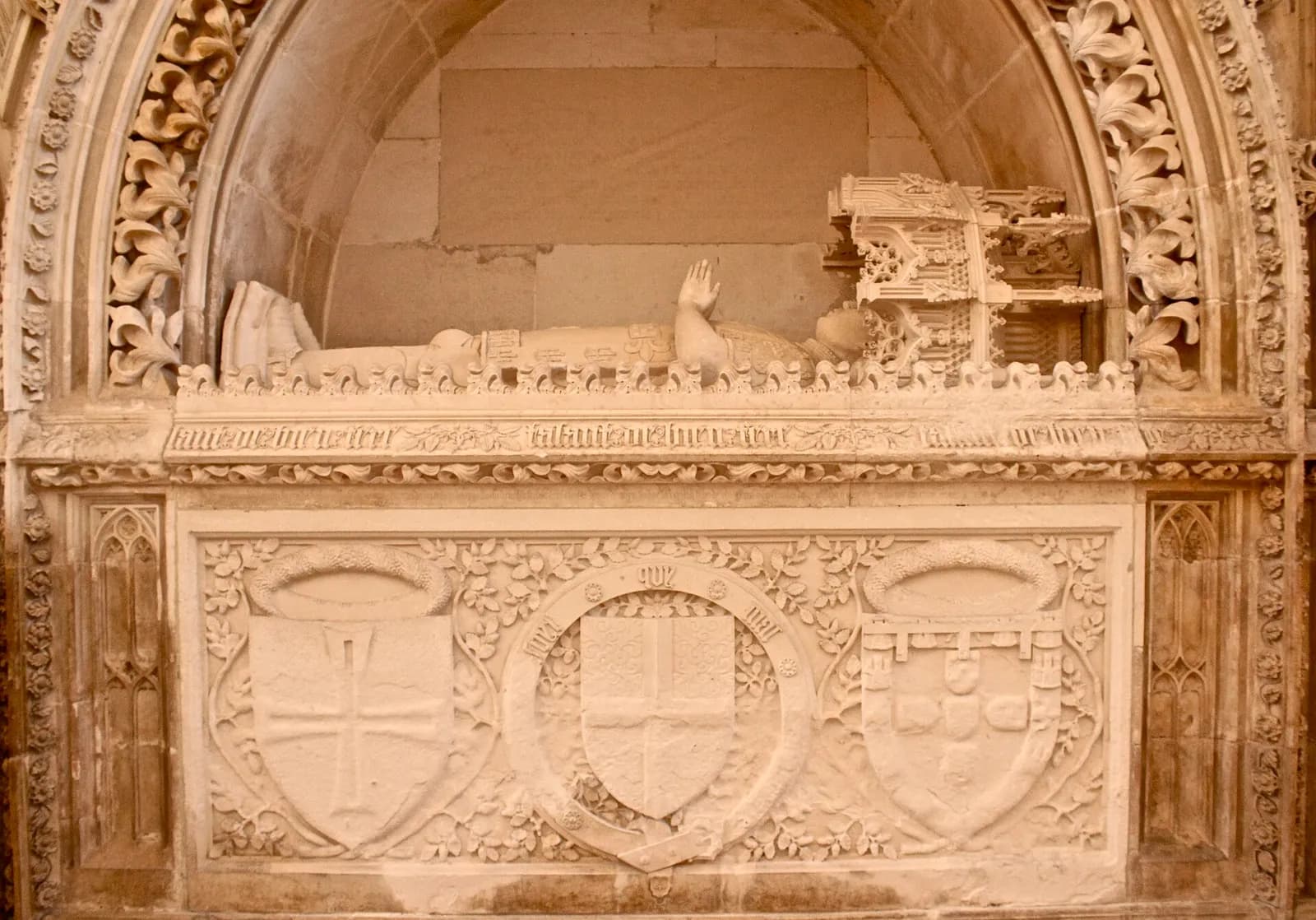
- He never sailed on a voyage of discovery, and no document shows a navigation school at Sagres. He lies in the Founder's Chapel at Batalha.
A will at the end of the land
On 28 October 1460 an old prince signed his will on a bare headland at the south-western tip of Portugal. It ended with the words, here translated from Portuguese, “signed by me and sealed with the seal of my arms, made in my town of the Infante”. The town was his own creation: a walled settlement on the Sagres promontory, a few kilometres from Cape St Vincent, where ships rounding the corner of Europe could shelter.
Infante Henrique was 66. He had been ill, and sixteen days later he was dead. Diogo Gomes, a sea captain who had sailed to West Africa in his service and seems to have attended him in his last illness, left a short account of what happened next.
“In the year of the Lord 1460 the Lord Infante Henrique fell ill in his town, and of that illness he died on 13 November of the same year, on a Thursday. And on the night he died they carried him to the church of Santa Maria in Lagos, where he was honourably buried.”
The English-speaking world knows him as Henry the Navigator, the prince who sat at Sagres with his charts and sent caravels into the unknown. Most of that picture was added after his death. The real man was a crusading nobleman, a businessman with monopolies and debts, and the patron of the first Portuguese slave raids in Africa.
A younger son of a new dynasty
Henrique was born in Porto on 4 March 1394, the fourth son of King João I and his English queen, Philippa of Lancaster. His father was the hero of Aljubarrota, the battle of 1385 that secured his crown against Castile after the succession crisis that followed King Fernando's death in 1383.
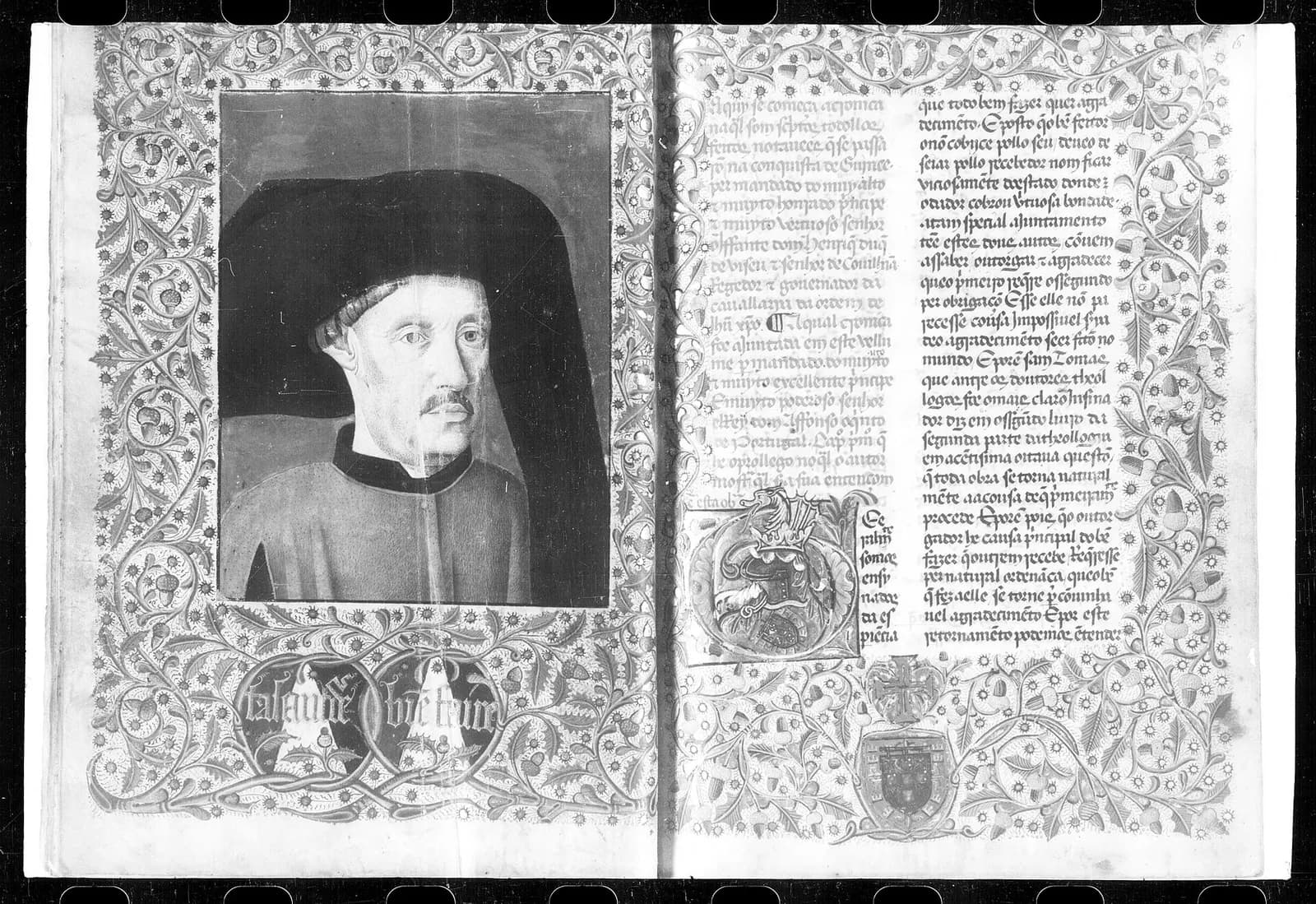
Gomes Eanes de Zurara, the royal chronicler who wrote his life while he was still alive, described a man of good height and strong build whose fair skin had darkened in the sun, who never married, gave up wine and spent nearly half the year fasting. Zurara admired him without reserve. He was writing for Henrique's nephew, King Afonso V, and finished his Chronicle of Guinea in the royal library on 18 February 1453.
A crusader in Morocco
Henrique's career began in war. On 21 August 1415 a Portuguese fleet took Ceuta, a Muslim port on the African side of the Strait of Gibraltar. Zurara says Henrique commanded a large part of the fleet, fought for five hours and saw his banner go first through the gates; his father knighted him there on the day the city's new cathedral was consecrated. Three years later he sailed back to relieve Ceuta from a siege, and he went on governing it for the crown for 35 years.
Ceuta brought prestige rather than profit. Running it was costly, and the caravan trade simply went elsewhere. In 1437 Henrique pressed for a second conquest, Tangier, and led the army that besieged it for 22 days. The attack failed. His younger brother Fernando was left as a hostage, and because Henrique refused to hand back Ceuta in exchange, Fernando died a prisoner in Morocco in 1443.
Zurara listed five reasons why Henrique sent ships south along Africa: to know what lay beyond Cape Bojador, to find Christians to trade with, to measure the strength of the Moors, to look for a Christian ally against them, and to save souls. He then added a sixth, which he called the root of the others: Henrique's horoscope. His ascendant was Aries, the chronicler wrote, which inclined him to “seeking out things that were hidden from other men”.
His own sea journeys, as far as the record goes, were all to Morocco: Ceuta in 1415 and 1418, Tangier in 1437, and at 64 the capture of Alcácer Ceguer with Afonso V in 1458. None of them was a voyage of discovery.
The money: a military order, islands and monopolies
Ships cost money, and Henrique found much of it in the Church. In 1420 Pope Martin V made him administrator of the Order of Christ, the military order that had inherited the Portuguese property of the Templars, in bulls dated 25 May and 24 November 1420. Its revenues were meant for the fight against the infidel. Henrique gave the Order the church revenues of the new islands and built two cloisters at its mother convent.
The islands came first. Between about 1418 and 1420 two of his captains, João Gonçalves Zarco and Tristão Vaz Teixeira, reached Porto Santo and Madeira. The dates are disputed: Zurara wavers between 1418 and 1419, while a letter of Henrique's from 1460 implies that settlement began 35 years earlier, in 1425. The documents of 1419 to 1425 speak of settling, never of discovering, and an island called Legname, “wood”, already appears on fourteenth-century charts.
By the time Zurara wrote, Madeira was sending Portugal wheat, sugar, wax, honey and timber. Henrique granted it out in captaincies: Machico to Tristão Vaz Teixeira in 1440, Porto Santo to Bartolomeu Perestrelo in 1446 and Funchal to Zarco in 1450. A royal pilot seems to have been sent to the Azores in 1427, and Gonçalo Velho Cabral explored there in 1431 and 1432. On 2 July 1439 Afonso V licensed Henrique to people the seven islands then known.
Madeira's population after settlement
inhabitants
From Table 2 in Pinto and Rodrigues (2013). The 1455 figure is their estimate from the 800 households the Venetian Cadamosto reported, at 5.7 people per household; Zurara counted 150 households in 1453. The 1500 and 1572 totals include about 2,000 and 3,000 enslaved people.
Show the data
| Estimated inhabitants | |
|---|---|
| 1455 | 4,560 |
| 1500 | 18,000 |
| 1552 | 20,000 |
| 1572 | 22,172 |
| 1598 | 29,028 |
Henrique also held monopolies, from soap-making to the right to license every voyage south of Bojador. Even so, his spending outran his income. In 1448 he owed his half-brother, the Duke of Braganza, 19,394½ gold crowns, secured on his lands, and the debt later grew by 16,084 crowns. His heirs were still paying it off after his death.
Past Cape Bojador
Cape Bojador, on the coast of what is now Western Sahara, was the limit of known sailing. For twelve years Henrique's captains turned back before it, frightened by stories of currents and shoals. In 1433 he sent Gil Eanes, a squire from Lagos, who got only as far as the Canaries. The next year Henrique sent him again with orders to pass the cape, whatever else he did.
“You cannot find a peril so great that the hope of reward will not be greater.”
In 1434 Gil Eanes doubled the cape. He landed, found no people, and brought back a handful of plants that the Portuguese called roses of Saint Mary. Then Eanes and Afonso Gonçalves Baldaia sailed 50 leagues beyond the cape and saw tracks of men and camels, and on a further voyage Baldaia went 120 leagues past it, to the inlet the Portuguese called the Rio do Ouro. Beazley dates these voyages to 1435 and 1436. Later surveys found no unusual reefs or currents at Bojador. What had held sailors back was fear and the lack of any reason to go.
4 March 1394
Born in Porto
21 August 1415
Ceuta taken; Henrique knighted there
c. 1418–1420
Zarco and Tristão Vaz Teixeira reach Porto Santo and Madeira
25 May 1420
Papal bull makes him administrator of the Order of Christ
c. 1425
Organised settlement of Madeira begins
1434
Gil Eanes passes Cape Bojador
1437
Failed attack on Tangier; his brother Fernando held hostage
2 July 1439
Licence to people seven islands of the Azores
1443
Regent Pedro grants the site of the Vila do Infante at Sagres
8 August 1444
235 captives divided at Lagos
1448
Zurara's count reaches 927 captives
1458
Fights at the capture of Alcácer Ceguer
28 October 1460
Signs his will at the Vila do Infante
13 November 1460
Dies; buried that night in Lagos
Lagos, 8 August 1444
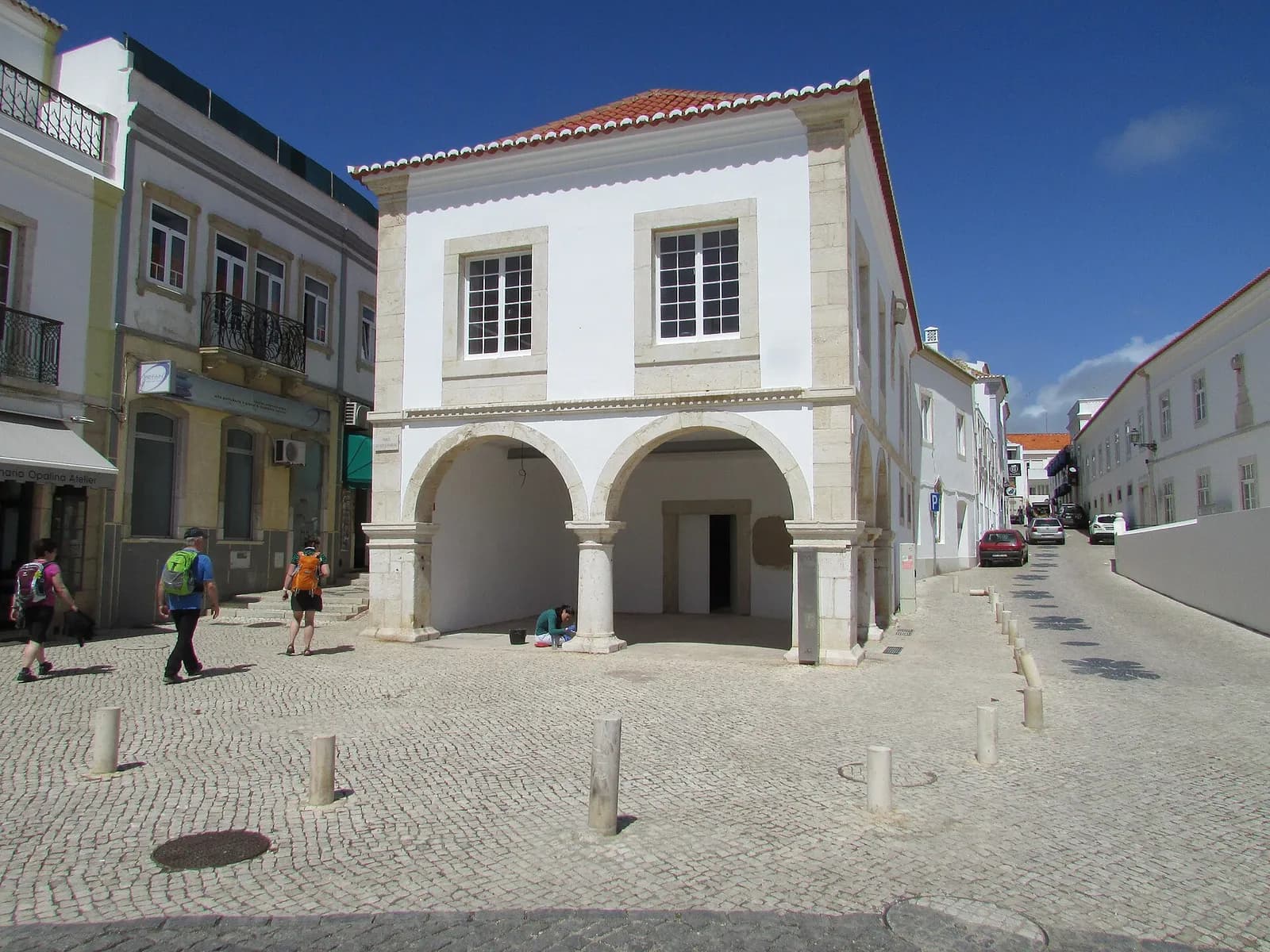
Past Bojador there was little gold, but there were people. In 1441 one of Henrique's captains, Antão Gonçalves, brought the first captives and gold dust home from beyond the cape. In 1444 Lançarote, a squire raised in Henrique's household who was now the king's tax collector at Lagos, was the first to ask the prince for a licence, since no one could sail there without one. He led six armed caravels from the town. They came back with 235 captives. Lançarote reminded the prince that he was owed a fifth of everything, and proposed that the captives be taken ashore at dawn to a field outside the town gate and divided there.
On 8 August, early because of the heat, the sailors brought them out. Crowds came from the town and the villages around to watch. Zurara broke off his narrative with a prayer: it was the captives' humanity, not their religion, he wrote, that made him weep.
“then was it needful to part fathers from sons, husbands from wives, brothers from brothers. No respect was shewn either to friends or relations, but each fell where his lot took him.”
Mothers clutched their children and threw themselves on the ground, taking blows rather than be parted. Henrique watched on horseback with his retinue and took his fifth, 46 people, which he quickly gave away. Zurara praised him for caring more about the captives' souls than about profit. He also wrote that the families were split up afterwards, a father staying in Lagos, a mother sold to Lisbon and the children somewhere else.
- Captives landed at Lagos, 1444
- 235
- Henrique's fifth
- 46 people
- Brought to Portugal to 1448, by Zurara's count
- 927
- Fort built on Arguin island
- 1448
Zurara ended his chronicle in 1448 with a total of 927 captives, most of whom, he claimed, became Christians. After that year, he wrote, the business of these parts was carried on “more by trafficking and bargaining of merchants than by bravery and toil in arms”. A trading fort went up on the island of Arguin in 1448. In 1455 the papal bull Romanus Pontifex confirmed the exclusive right of Portugal, and of Henrique, to sail south of Cape Bojador.
The medieval Mediterranean had long known slave markets, run above all by Genoese merchants. What changed at Lagos was the source and the scale: a sea route to West Africa, licensed and taxed by a prince. For that reason historians such as Peter Russell, Henrique's most thorough modern biographer, count him a founder of the Atlantic slave trade.
The school that never was
Henrique did build at Sagres, but late. The fortress's own history dates the grant from his brother Pedro, then regent, to 1443. When Zurara wrote ten years later the place had strong walls and a few houses, and work was still going on. He described it as a port for merchants, where ships passing between the Mediterranean and the Atlantic could take bearings, provisions and pilots. The Genoese, he heard, had offered a good price for it.
Over the following centuries the town grew in the telling. What C. R. Beazley, who edited Zurara for the Hakluyt Society in 1899, called the older view rested mainly on the sixteenth-century historian João de Barros and was taken up by nineteenth-century writers such as Richard Henry Major and Oliveira Martins. It placed Henrique at Sagres from 1418, with a palace, a chapel, a study, the first observatory in Portugal, an arsenal and a dockyard, where cartography and astronomy were taught to pilots. Beazley himself called pictures of a geographical university on the headland “quite beyond any known means of verification”.
The tradition rests on thin evidence. Barros wrote that Henrique brought a Master Jacome from Majorca, skilled in navigation and the making of maps and instruments, to teach Portuguese pilots. That would be a hired specialist, not a school, and the passage does not mention Sagres; Russell doubts the Jacome story too. Many of the voyages sailed from Lagos, where the captains landed their cargoes and whose townsmen were the first to ask Henrique for licences.
| What is often said | What the evidence shows |
|---|---|
| He was a navigator | He sailed only on campaigns to Morocco. Men of his household, such as Gil Eanes and Afonso Gonçalves Baldaia, made the voyages. |
| He ran a school of navigation at Sagres | No document mentions one. In 1453 Zurara described a fortified port for passing ships, still being built. |
| He lived at Sagres from 1418 | The site was granted in 1443. His last letters and his will were written there. |
| Sagres had his palace, observatory and shipyard | Little of his town survives. The fortress is mostly later, and its guide says the claim about his house there has no foundation. |
| He discovered Madeira and the Azores | Documents of 1419 to 1425 speak of settling, not discovering, and Madeira already appears on fourteenth-century charts. |
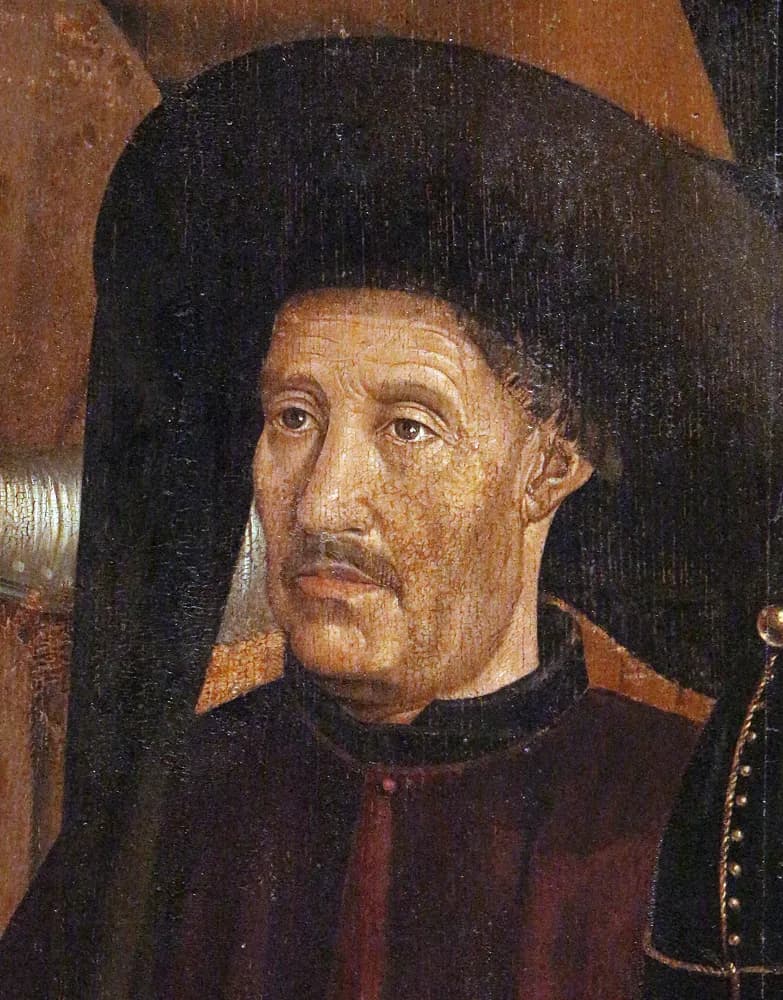
| The São Vicente panels show his face | A tradition, not a proven identification. Peter Russell is sceptical of it. |
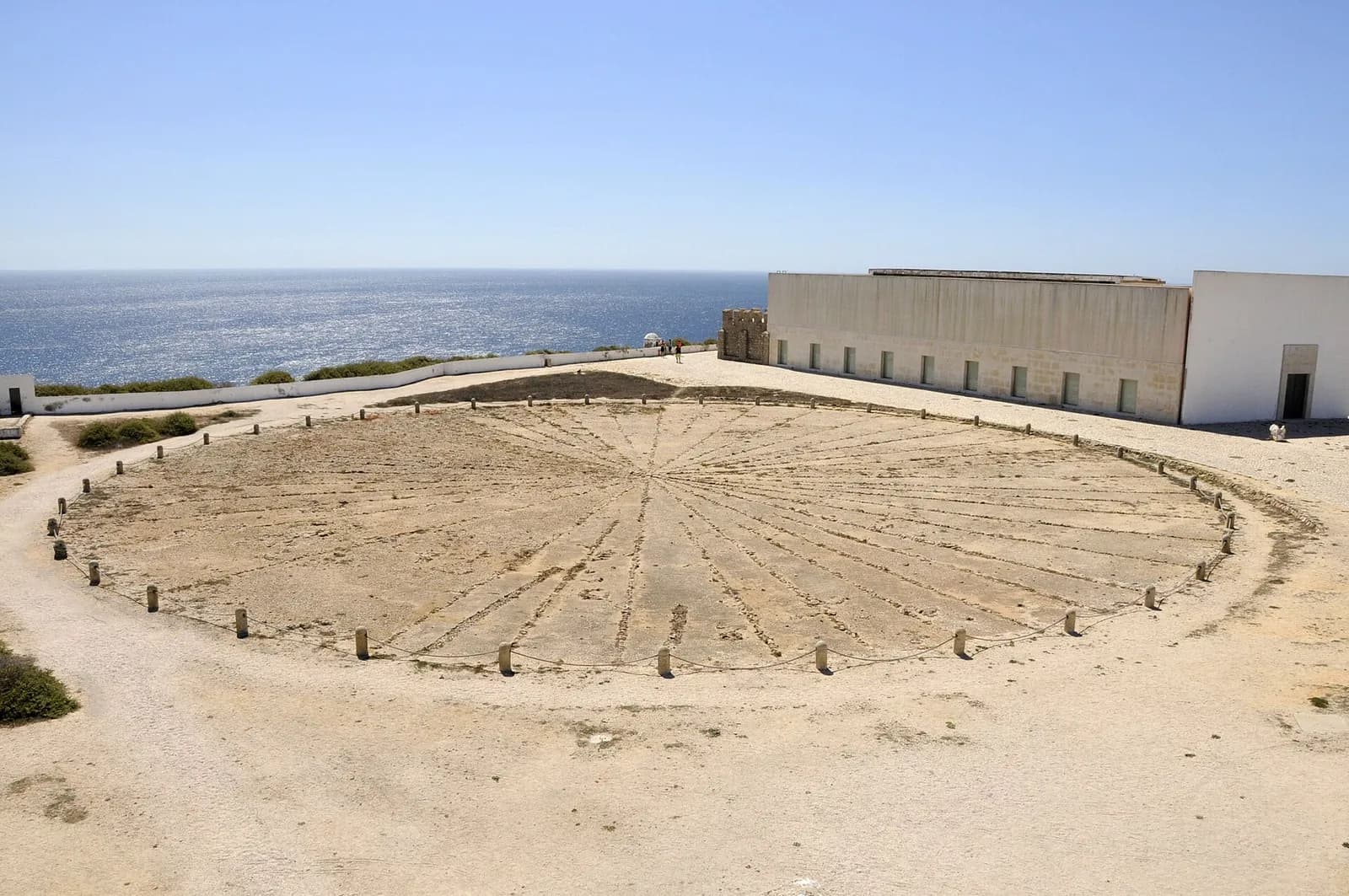
Today the Sagres fortress itself says only a few traces go back to the Infante's town: stretches of a zigzag wall, a cistern tower, the foundations of a windbreak and the stone wind rose. The bastioned walls were remodelled in the late eighteenth century, and the suggestion that a reconstructed building marks the site of Henrique's house is, in the guide's words, “sem fundamento”, without foundation.
Death, burial and Batalha
Henrique died at the Vila do Infante on 13 November 1460. That is what the Sagres fortress and Diogo Gomes say; a Portuguese Navy commemoration gives Lagos instead. His body was taken that same night to the church of Santa Maria in Lagos and buried there.
He had no children. Before the Tangier campaign he had adopted his nephew Fernando, a younger son of King Duarte, who inherited most of his lands and offices and succeeded him at the head of the Order of Christ. Fernando, and later Fernando's son Manuel, were left to settle the debts.
His remains were later moved to the Monastery of Santa Maria da Vitória at Batalha, which his father had begun in 1387, two years after Aljubarrota. There he lies in the Founder's Chapel, the square hall João I began around 1415 as a pantheon for himself, his queen and their sons. Master Huguet finished it in 1435.
- Born
- 4 March 1394, Porto
- Died
- 13 November 1460, Vila do Infante, Sagres
- Age
- 66
- First burial
- Church of Santa Maria, Lagos
- Tomb
- Founder's Chapel, Monastery of Batalha
- Motto
- Talant de bien faire
His parents share the tomb in the centre of the chapel. Along the south wall, under carved arches, are four of their sons: Fernando, the hostage of Tangier; João; Henrique; and Pedro, the regent who had granted him Sagres and who was killed in 1449 at Alfarrobeira fighting the army of Afonso V, the side Henrique took.
The chapel has not come down untouched. Its tall spire collapsed in the earthquake of 1755, and when religious orders were abolished in 1834 and the Dominican friars left, it was stripped of everything used for worship. In the late nineteenth century three neo-Gothic tombs were added on the west wall for Afonso V, João II and Prince Afonso.
Why it still matters
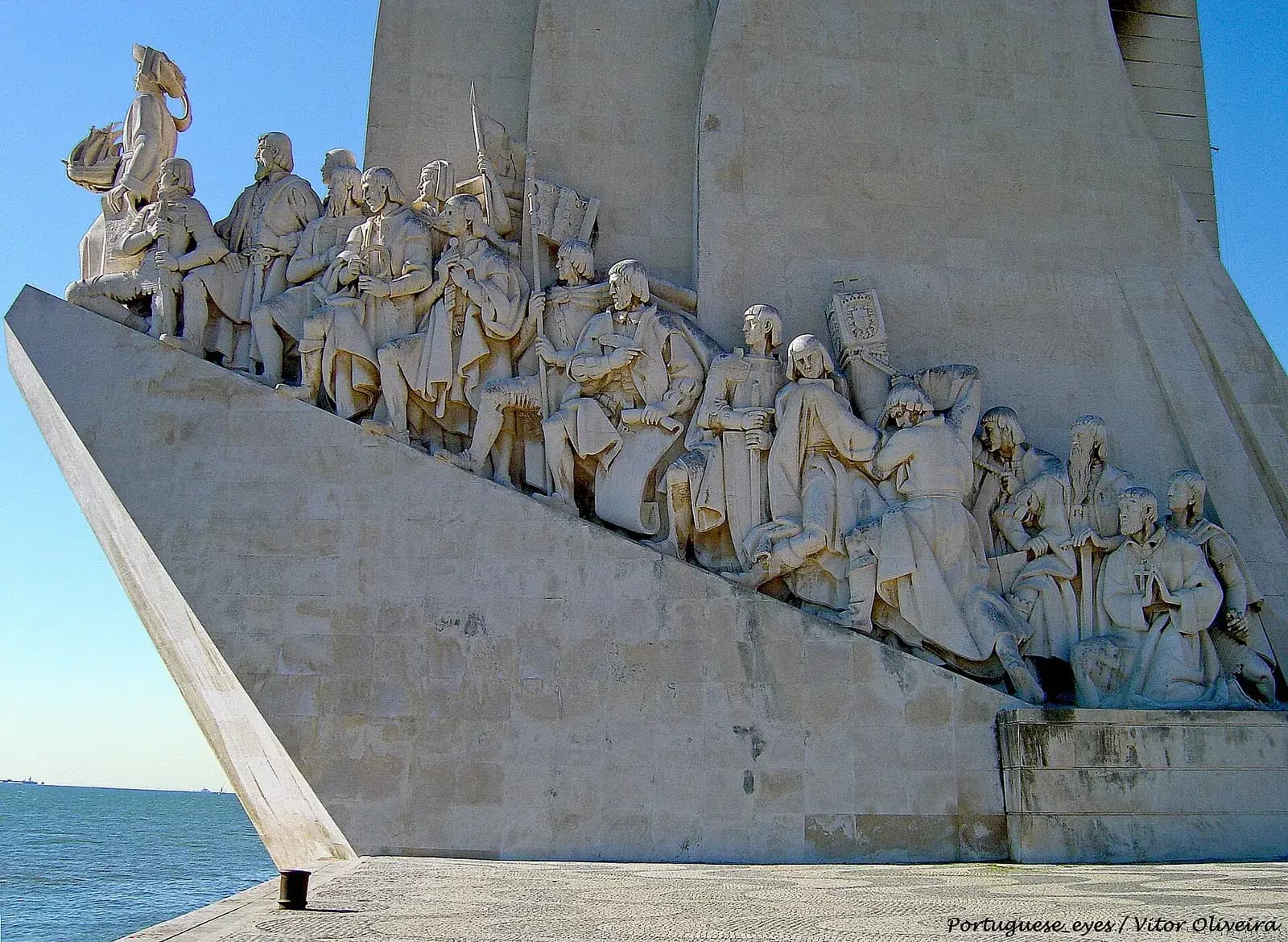
Portuguese nationalism later turned Henrique into a visionary man of science, and the Estado Novo dictatorship made the most of him. For the 500th anniversary of his death the Padrão dos Descobrimentos, first put up in plaster for the regime's 1940 Exposição do Mundo Português, was rebuilt in concrete and stone. Its designers were the architect Cottinelli Telmo and the sculptor Leopoldo de Almeida; Cottinelli had died in 1948, and the rebuilding followed his design under António Pardal Monteiro. The new monument was inaugurated on 9 August 1960.
The Padrão is 56 metres tall. A nine-metre Henrique stands at the prow of a stylised caravel, followed by 32 other figures, each about seven metres tall. The Portuguese Navy took his motto, talant de bien faire, “the will to do well”, as its own, and in 1936 made him the first patron of the Naval School's courses.
Lagos tells a different part of the story. In 2009, digging for an underground car park outside the old walls at Vale da Gafaria, archaeologists found more than 150 human skeletons in an early modern rubbish dump. Studies showed they were Africans brought to Lagos as merchandise, sick or dying, and thrown away with the town's refuse. The town museum now has a section on the slave route in the building on the Praça do Infante known as the slave market.
The two places hold the two halves of the same record. The Padrão celebrates the voyages Henrique paid for. The Lagos museum remembers the people his captains brought back, starting with the 235 divided in the field outside the town gate in 1444.
FAQs
Did Henry the Navigator actually sail on voyages of discovery?
No. His own voyages were military expeditions to Morocco: Ceuta in 1415 and 1418, Tangier in 1437 and Alcácer Ceguer in 1458. He organised and paid for the voyages down the African coast, which were sailed by captains of his household such as Gil Eanes.
Was there really a school of navigation at Sagres?
No document from Henrique's time mentions one. He received the site in 1443, and in 1453 Zurara described a walled port for passing ships that was still being built. The idea of a school with an observatory grew up in later centuries, and modern historians such as Peter Russell reject it.
Where and when did Henry the Navigator die?
On 13 November 1460, at his Vila do Infante on the Sagres headland in the Algarve, aged 66, according to the Sagres fortress and the account of Diogo Gomes. A Portuguese Navy commemoration gives Lagos.
Where is Henry the Navigator buried?
He was buried first in the church of Santa Maria in Lagos, the night he died. His remains were later moved to the Founder's Chapel of the Monastery of Batalha, where his tomb is on the south wall beside those of his brothers.
What was Henry the Navigator's role in the slave trade?
His captains began seizing Africans on the Saharan coast from 1441. On 8 August 1444 he took 46 of 235 captives divided at Lagos as his fifth, and he licensed and taxed the voyages that followed. The chronicler Zurara counted 927 captives brought to Portugal by 1448.
On the timeline
Open the timelineNearby moments from the age of discoveries (1415–1580).
Pope Nicholas V issues the bull 'Romanus Pontifex', granting the Portuguese crown exclusive rights to conquest, trade and navigation along the African coast south of Cape Bojador and sanctioning the enslavement of non-Christians — a papal charter for Portugal's overseas expansion.
Birth of King João II ('The Perfect Prince') in Lisbon. He would become one of Portugal's most important monarchs, sponsoring Bartolomeu Dias's voyage around the Cape of Good Hope and negotiating the Treaty of Tordesillas.
Cardinal Jaime of Portugal, a grandson of King João I and archbishop of Lisbon, dies in Florence in his mid-twenties on his way to a papal congress at Mantua. His funerary chapel at San Miniato al Monte, with a tomb by the Rossellino brothers and decoration by Luca della Robbia and the Pollaiuolo brothers, is one of the great monuments of the Florentine Renaissance.
Death of Henry the Navigator
Infante Henrique — Prince Henry the Navigator — dies at his Vila do Infante near Sagres, aged 66. Patron of the voyages down the African coast that opened the Age of Discovery, he lies in the Founder's Chapel of the Monastery of Batalha.
By tradition, Portuguese navigators Pêro Escobar and João de Santarém sight the island of Príncipe in the Gulf of Guinea on 17 January, the feast of Santo Antão. The date rests on the saints' calendar rather than a surviving record: historians place the first Portuguese arrival only somewhere between 1471 and 1480, and give the island's first name as Santo António. It was later renamed Ilha do Príncipe in honour of the heir to the Portuguese throne.
Isabel of Portugal, Duchess of Burgundy, dies at Aire-sur-la-Lys aged 74. The only surviving daughter of João I and Philippa of Lancaster, she governed the Burgundian Low Countries in her husband's absence, negotiated trade deals with England and was the mother of Charles the Bold.
Portugal and Castile sign the Treaty of Alcáçovas, ending the War of the Castilian Succession; Castile keeps the Canaries while Portugal's possession of Madeira, the Azores, Cape Verde and Guinea is recognised — the first treaty to divide the Atlantic world between European powers.
Coming up in history
All long reads 15 November 1924Lost in the fog: Sacadura Cabral's last flight, 15 November 1924
 16 November 2003The Estádio do Dragão opens, and a 16-year-old Messi comes off the bench
 17 November 1717A vow in stone: the first stone of Mafra is laid, 17 November 1717
 18 November 1945Portugal's 1945 election: the MUD and Salazar's ‘free England’ vote
14 sources
Archives, scholarship and reporting this article was checked against.
- 1
The Chronicle of the Discovery and Conquest of Guinea, vol. I (chapters I–XL)Gomes Eanes de Zurara, translated by C. R. Beazley and Edgar Prestage (Hakluyt Society, 1896), Project Gutenberg
- 2
- 3
Review of Peter Russell, Prince Henry 'the Navigator': A Life (Yale University Press, 2000)David Abulafia, Reviews in History, no. 144, Institute of Historical Research, 2000
- 4
História do Promontório de SagresFortaleza de Sagres (Museus e Monumentos de Portugal)
- 5
História do Mosteiro da BatalhaMosteiro da Batalha (Museus e Monumentos de Portugal)
- 6
O povoamento das ilhas da Madeira e do Porto Santo nos séculos XV e XVIMaria Luís Rocha Pinto and Teresa Ferreira Rodrigues, in A Demografia das Sociedades Insulares Portuguesas, CITCEM, 2013 (Universidade do Porto repository)
- 7
A Ordem de Cristo ao tempo de AlfarrobeiraIsabel L. Morgado de Sousa e Silva, in Livro de Homenagem ao Professor Doutor Humberto Carlos Baquero Moreno (via medievalistas.es)
- 8
O mito e a sombraRamiro Santos, Postal do Algarve, 5 March 2021
- 9
Efeméride: Morte do Infante D. HenriqueDireção de Cultura da Marinha (Portuguese Navy), 13 November 2020
- 10
Review of Peter Russell, Prince Henry “The Navigator”: A LifeBill M. Donovan, The Journal of Economic History 62:1 (2002), Cambridge University Press
- 11
A Batalha de AljubarrotaFundação Batalha de Aljubarrota, Centro de Interpretação da Batalha de Aljubarrota
- 12
Monument to the DiscoveriesPadrão dos Descobrimentos (EGEAC, Lisbon)
- 13
Núcleo Rota da Escravatura – Mercado de EscravosCâmara Municipal de Lagos
- 14
Image credits
- Henry's tomb in the Founder's Chapel of the Monastery of Batalha, on the south wall beside the tombs of his brothers, photographed in 2011. His body was first buried at Lagos. André Luís from Lisbon, Portugal, CC BY 2.0, via Wikimedia Commons.
- The opening of the Paris manuscript of Zurara's Chronicle of Guinea, with a portrait of Henry and his motto, talant de bien faire, beneath it. The copy was found in Paris in 1837 and is now in the Bibliothèque nationale de France. Unknown author, Public domain, via Wikimedia Commons.
- The building on Lagos's Praça do Infante known as the Mercado de Escravos, now part of the town museum, in 2016. Zurara says the captives of 1444 were divided in an open field outside the town gate. Kolforn, CC BY-SA 4.0, via Wikimedia Commons.
- The so-called wind rose at the Fortaleza de Sagres, photographed in 2008. It was uncovered by chance in 1921, and nobody knows what it was for; the fortress's own history calls it enigmatic. CTHOE, CC BY-SA 3.0, via Wikimedia Commons.
- Detail of the third São Vicente panel, attributed to Nuno Gonçalves and usually dated about 1470. This figure is traditionally identified as Henry, who had been dead for about a decade, but the identification is disputed. Nuno Gonçalves, Public domain, via Wikimedia Commons.
- The Padrão dos Descobrimentos in Belém, Lisbon, with Henrique at the prow. The permanent monument was inaugurated on 9 August 1960 for the 500th anniversary of his death. Vitor Oliveira from Torres Vedras, PORTUGAL, CC BY-SA 2.0, via Wikimedia Commons.