

Portugal's 1945 election: the MUD and Salazar's ‘free England’ vote
Salazar called an early election to reassure the victors of the Second World War. An opposition movement gathered tens of thousands of signatures in a few weeks, withdrew a week before polling day, and saw its lists of supporters turned into police files.
At a glance
- On 6 October 1945, months after the end of the Second World War in Europe, Salazar dissolved the National Assembly and called an election for 18 November, a year early.
- On 8 October opposition figures met in Lisbon, with the government's permission, and founded the Movimento de Unidade Democrática (MUD), which asked for legal parties, a new electoral roll and a six-month postponement of the vote.
- The government refused, and on 10 and 11 November the MUD called on voters to abstain. Every opposition candidate withdrew, and the regime's União Nacional won all 120 seats.
- In an interview on the front page of the Diário de Notícias on 14 November, four days before the vote, Salazar said he considered the coming elections “as free as in free England”.
- The MUD's lists of supporters, 57,131 signatures on 2,605 sheets in the surviving dossiers, were handed to an official inquiry and passed to the new political police, the PIDE, which made a card for every signatory.
A meeting the government allowed
On Monday 8 October 1945, a group of opposition republicans met at the Centro Escolar Republicano Almirante Reis, a republican club in Lisbon's Rua do Benformoso. Like other republican centres, it had a back door onto another street, Rua do Terreirinho, so that members could slip away if the police came. This time there was no need. Their leader, the lawyer Mário de Lima Alves, had asked the government for permission to hold the meeting and got it without delay.
Two days earlier, Salazar's government had dissolved the National Assembly and called an election for 18 November, a year ahead of schedule. The people in the hall, among them Barbosa de Magalhães, soon a member of the new movement's central commission, had to decide whether the opposition could take part. No opposition candidate had stood in any of the three elections for the Assembly so far, in 1934, 1938 and 1942.
The meeting approved a report setting out the conditions under which opposition lists would stand. Among them were permission to form political parties, a new electoral roll and a postponement of the vote. The organisers sent the report around the country, and messages of support poured in. Out of that meeting came the Movimento de Unidade Democrática, the Movement of Democratic Unity, known as the MUD.
“It is very hard today to understand how a pompous and solemn meeting, in which people addressed one another as Your Excellency, stuffed with motions and petitions written in dense legal language, turned out to be the decisive meeting that shaped post-war politics.”
A dictatorship among the victors
António de Oliveira Salazar had headed the Portuguese government since July 1932, when President Óscar Carmona appointed him. Under the Constitution of 1933 he built a civilian dictatorship, the Estado Novo or New State, which rejected parliamentary democracy and the idea of popular sovereignty.
Portugal had stayed neutral in the Second World War. When Germany surrendered on 8 May 1945, crowds celebrated the Allied victory in the streets of Lisbon and other cities, and the National Assembly met in a special session to welcome the end of the war. Salazar gave a speech titled “At the End of the War”.
“Let us bless peace! Let us bless victory!”
The victory was a problem for him. The fascist and Nazi regimes had fallen, and opposition figures began at once to seek support from the Allied governments to end his rule and restore democratic freedoms. Many in Portugal believed the victorious powers would not tolerate the regime for long. In fact, the political scientist José Adelino Maltez notes, the Western Allies doubted the non-communist opposition and preferred to keep Salazar.
Salazar calls an early vote
Salazar moved first. In September the electoral rules were rewritten: instead of a single national list, deputies would be elected in constituencies based on the administrative districts, and the Assembly would grow from 90 to 120 seats. On 6 October the Assembly was dissolved, and the election that was due in 1946 was set for 18 November 1945.
The next day, in a room of the Assembly's library, Salazar explained himself. The dissolution and the new vote were to be seen “in the light of our internal conveniences”, though “without forgetting the indications of the international moment”. They had nothing to do, he said, “closely or remotely”, with the electoral contest into which Europe had “so busily thrown itself”.
“that there will be enough freedom of the press for the acts of the government to be judged without restriction, and for political ideas and the candidates put to the vote to be promoted.”
Other gestures followed. A decree of 18 October gave a partial amnesty to prisoners held for crimes against the security of the state. The government eased censorship and police pressure and allowed some freedom of assembly, association and the press. One limit was explicit: Salazar banned any link with the Communist Party in a movement that put up candidates.
Few Portuguese could vote. Men who could read and write qualified; illiterate men had to pay at least 100 escudos in certain taxes. Women had had the vote since 1931 only with secondary or higher education. Registered voters made up no more than 12 per cent of the population. A decree of 31 December 1945, after the vote, listed the school courses that qualified a woman to vote.
- Election day
- Sunday 18 November 1945
- Body elected
- National Assembly (Assembleia Nacional), 120 seats, up from 90
- Called
- 6 October 1945, a year early
- Electorate
- Registered voters no more than about 12% of the population
- Opposition
- 17 candidates in 8 constituencies by Mário Matos e Lemos's count, all withdrawn before polling day
- Result
- União Nacional won all 120 seats
Fifty thousand signatures in under three weeks
The MUD grew faster than Salazar had expected. It brought together republicans, monarchists, Catholics, socialists and, a little later, communists. In Lisbon the Diário de Lisboa and República, and in Porto the Jornal de Notícias and O Primeiro de Janeiro, printed news of its meetings, the names of new supporters and its statements. Its rallies drew thousands of people, and opponents met in the big cities of Angola and Mozambique too.
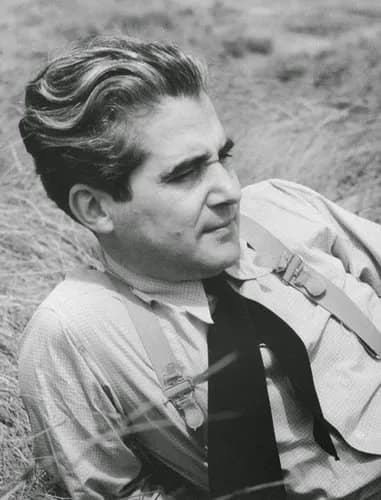
A central commission led the movement. Its members included Barbosa de Magalhães, Bento de Jesus Caraça, Mário de Lima Alves, Manuel Mendes, Adão e Silva, Alves Redol and Pedro Pitta. A women's commission followed, with Maria Lamas and Maria Isabel Aboim Inglês.
Supporters signed lists backing the resolutions of 8 October, collected by the MUD's district committees. On 24 October the MUD told a press conference it had 2,149 lists with 50,145 signatures. The surviving dossiers hold more: 2,605 numbered sheets and 57,131 signatures.
The government says no
The answer came within days. On 16 October the government turned down the opposition's requests, including the postponement. The next day President Carmona told a MUD delegation that the government would not delay the vote by six months. The MUD appealed to the Supreme Administrative Court, which rejected the appeal on 9 November; from then on, opposition meetings were no longer authorised.
Meanwhile the state prepared. Parish councils were elected on 21 October without the MUD, after the Minister of the Interior had replaced all the civil governors. On 22 October Decree-Law 35 046 replaced the old political police with the Polícia Internacional e de Defesa do Estado, the PIDE. On 26 October Salazar took personal charge of the União Nacional's campaign.
Then the government went after the lists. The day after the press conference, the Ministry of the Interior opened an inquiry into how the signatures had been collected. On 1 November it ordered the lists to be seized, alleging irregularities. In Lisbon they were handed to the commission of inquiry; in Porto the MUD refused to hand them over.
Mário Matos e Lemos, who compiled a dictionary of the opposition's candidates, writes that after the refusal of 16 October the opposition resolved not to go to the polls, though the formal call to abstain came only in November. A few people filed candidacies anyway. Lists had to name a candidate for every seat in a constituency, so lone candidates were turned away. The most outspoken candidacies came from Africa, inspired by the MUD.
| Constituency | Candidates | What happened |
|---|---|---|
| Lisbon | José de Arruela | Wanted to stand alone; apparently refused because a list had to fill every seat |
| Vila Real | José Daniel Carvalho Branco, lawyer | Refused: the list had to name all four deputies |
| Portalegre | José Luís Augusto das Neves, Manuel Hermenegildo Lourinho, Ernesto Amaro Lopes Subtil, Ruy de Andrade | Accepted, but did not go to the vote. A second list, adding the landowners José Pequito Rebelo and Jorge da Fonseca Bastos, was refused on a technicality. Lourinho, Subtil and Andrade were elected on the União Nacional list |
| Cape Verde | Álvaro de Paiva Lereno | Withdrew |
| Guinea | Sebastião José Barbosa | Withdrew quietly, “for lack of a favourable environment”, an official report presumed |
| Angola | Francisco Pinto da Cunha Leal, António Videira, António Durães, mayor of Benguela | Withdrew at a meeting in Angola on 5 November, with a manifesto explaining why |
| Mozambique | Ismael Costa, Paulino dos Santos Gil, Delfim Costa | Withdrew; Delfim Costa handed in his renunciation on 22 October |
| Horta (Azores) | Leonel de Melo Furtado, teacher | Withdrew, citing “the general recognition of the merits” of the União Nacional candidate, yet still received 1,525 votes |
| Angra do Heroísmo (Azores) | José Sebastião de Castro da Cunha Silveira | Listed in the dictionary with no further details |
Mário Matos e Lemos heads his account of 1945 with 17 opposition candidates in eight constituencies, but his list by constituency names 18 people in nine. The table follows that list, including both lists filed in Portalegre.
At a rally on 10 November the MUD urged voters to abstain, citing the lack of guarantees such as control of the electoral rolls. The next day it formally called for abstention, saying the conditions for even a minimally fair vote did not exist. RTP's history explainer adds that the opposition pulled out at the last minute to avoid the arrest of many of its members.
6 October
Assembly dissolved
Election set for 18 November, a year early.
7 October
Salazar's speech
He says he hopes for enough press freedom for candidates to campaign.
8 October
The MUD is born
Meeting at the Centro Escolar Republicano Almirante Reis, Lisbon.
16–17 October
Requests refused
Carmona rejects a six-month postponement; the MUD appeals to the courts.
18 October
Partial amnesty
For prisoners held for crimes against state security.
22 October
PIDE created
Decree-Law 35 046 replaces the PVDE.
24 October
Lists announced
The MUD claims 2,149 lists with 50,145 signatures.
1 November
Lists seized
The government orders the lists handed over, alleging irregularities.
9 November
Appeal rejected
Supreme Administrative Court rules against the MUD.
10–11 November
Call to abstain
The MUD withdraws from the election.
14 November
“As free as in free England”
Salazar's interview in the Diário de Notícias.
18 November
Election day
The União Nacional takes all 120 seats.
As free as in free England
On Wednesday 14 November, four days before the vote, the Diário de Notícias ran an interview with Salazar across its front page. Below the headline, in a block of capital letters, came his verdict on the campaign. RTP's history explainer says O Século carried the interview too.
“I consider the coming elections as free as in free England. Whoever wanted to register did so, and whoever wants to will vote. The roll shows 70 per cent more voters than in 1925. Not all our enemies are registered yet? I admit it. But neither are many of our friends. The oppositions were not only free to go to the polls, they were given complete freedom to defend their candidacies and to criticise the work of the government.”
Sunday 18 November was a day of heavy rain. With no opposition list left in the race, the União Nacional elected all 120 of its candidates. In Horta, in the Azores, 1,525 voters still chose a candidate who had withdrawn. In Portalegre, three men who had appeared on the opposition list were elected on the União Nacional's list instead. The chairman of the União Nacional's electoral committee had asked the Minister of the Interior for permission to add them as early as 13 October.
Fifty-seven thousand names for the police
The lists ended up with the police. After the inquiry, the dossiers went to the PIDE, which recorded the details of every signatory and opened thousands of individual files. Every completed sheet was stamped and numbered. The sheets still carry the stamp “Fichas Feitas”, cards done, with officials' initials and underlining under people and professions the police found especially interesting.
| Dossier | Numbered sheets | Signatures |
|---|---|---|
| 10390.001 | 399 | 9,365 |
| 10391.001 | 399 | 8,882 |
| 10392.001 | 399 | 11,138 |
| 10393.001 | 399 | 9,174 |
| 10394.001 | 399 | 8,006 |
| 10395.001 | 399 | 6,975 |
| 10396.001 | 211 | 3,591 |
| Total | 2,605 | 57,131 |
Counts as catalogued by the archive, which holds the seven original dossiers under the name Emílio Ricon Peres / Listas do MUD. On 24 October 1945 the MUD itself had announced 2,149 lists and 50,145 signatures.
RTP's explainer puts it bluntly: through the election, Salazar identified his opponents at home, and the PIDE pursued them once it was over and the foreign press had gone. Persecution of the MUD began in 1946, with arrests and dismissals; Bento de Jesus Caraça lost his university chair. After the movement was banned, RTP adds, many teachers lost their jobs.
The historian Irene Flunser Pimentel writes that the PIDE's main target from 1945 to the late 1960s was the Communist Party. When front organisations such as the MUD appeared, the police tried to show they were offshoots of the party, or at least to find out who the communists inside them were. A reorganisation in 1947 gave the PIDE an establishment of 541 directing and investigating staff and 150 clerks.
Not every signatory stayed in opposition. Adriano Moreira, who signed a MUD list in 1945, later became a minister of the Estado Novo. The inquiry itself was largely forgotten: when Mário Matos e Lemos launched a book about it in 2019, the Biblioteca Nacional described the subject as practically forgotten, even by historians, and almost ignored even in memoirs.
From the MUD to Norton de Matos
The movement did not disappear at once. In August 1946 its young supporters formed the MUD Juvenil, which outlived the parent movement by many years. A new central commission formed in June 1946 included Mário Soares.
An order dated April 1947 declared the MUD illegal, accusing it of working with the Communist Party. The movement was notified through the PIDE and answered defiantly on 1 March 1948: “Nothing is lost!” Its imprisoned members included Manuel Tito de Morais, held in the Aljube.
Banned, the MUD still launched General Norton de Matos as the opposition candidate for President in April 1948. He withdrew on the eve of the vote in February 1949, and the opposition split into rival groups. In the legislative election of November 1949 the communist-inspired Movimento Nacional Democrático, which called itself the continuation of the democratic movements of 1945 to 1949, put up no candidates at all.
Opposition candidates in National Assembly elections, 1945 to 1973
candidates
Candidates counted by Mário Matos e Lemos in his dictionary of opposition candidates, which counts people who filed candidacies even if they later withdrew. The Assembly had 120 seats in 1945, 130 in 1969 and 150 in 1973.
Show the data
| Opposition candidates | |
|---|---|
| 1945 | 17 |
| 1949 | 12 |
| 1953 | 35 |
| 1957 | 45 |
| 1961 | 86 |
| 1965 | 42 |
| 1969 | 182 |
| 1973 | 112 |
The pattern of 1945 lasted for decades. Every four years the opposition could speak for a few weeks. In 1953 and 1969 its lists went all the way to the vote; in 1961, 1965 and 1973 they withdrew before it, as in 1945. The broadest attempt came in 1969, under Marcelo Caetano, when 182 opposition candidates stood and the União Nacional still took every seat.
Why it still matters
For a few weeks in 1945 the MUD brought the scattered opponents of the Estado Novo together in public, from monarchists to communists. Mário Matos e Lemos lists the attempts at a common front that came before and after it, from 1931 to 1969, and concludes that a united opposition never really existed.
The lists are the other legacy. Tens of thousands of people signed what they took for a lawful petition, and the state turned it into a police register. The seven dossiers, with their police stamps, are now in the archive of the Fundação Mário Soares e Maria Barroso, and their catalogue is online at Casa Comum.
FAQs
What was the MUD?
The Movimento de Unidade Democrática (Movement of Democratic Unity) was an opposition movement founded in Lisbon on 8 October 1945, with the government's permission, to fight the National Assembly election of 18 November. It united republicans, monarchists, Catholics, socialists and communists. It was declared illegal by an order of April 1947, notified in March 1948.
Why did the opposition withdraw from the 1945 election?
The government refused its conditions: legal parties, a new electoral roll and a six-month postponement of the vote. The courts rejected its appeal, meetings were banned from 9 November and the government seized its lists of supporters. On 10 and 11 November the MUD called on voters to abstain.
Did Salazar really say the elections would be “as free as in free England”?
Yes. The front page of the Diário de Notícias of 14 November 1945, four days before the vote and after the MUD had withdrawn, quotes him: “Considero as próximas eleições tão livres como na livre Inglaterra” (I consider the coming elections as free as in free England). Some accounts date the line to the calling of the election on 6 October, and RTP gives a looser wording, “tão livres como as da livre Inglaterra”.
What happened to the people who signed the MUD lists?
The lists were handed to an official inquiry, in Lisbon at least, and then passed to the PIDE, which made a card for every signatory. Arrests and dismissals followed from 1946; Bento de Jesus Caraça, a member of the MUD's central commission, lost his university chair. The seven surviving dossiers hold 57,131 signatures.
Who won the 1945 Portuguese election?
The União Nacional, the regime's own organisation, won all 120 seats in the National Assembly, because every opposition candidate had withdrawn. Registered voters made up no more than about 12 per cent of the population.
On the timeline
Open the timelineNearby moments from dictatorship and the estado novo (1926–1974).
Death in Porto, aged 93, of Bernardino Machado. Born in Rio de Janeiro — the only president of Portugal born outside the country — he was twice elected head of state of the First Republic, and both terms were cut short by military coups, in 1917 and 1926, each followed by exile.
The poet Eugénio de Castro, whose 1890 collection 'Oaristos' introduced Symbolism into Portuguese literature, dies in his native Coimbra at the age of 75.
Birth of António Variações in Fiscal, Amares, in the Minho. A barber who worked in one of Lisbon's first unisex salons before opening his own shop, he became one of the most original voices of 1980s Portuguese pop, mixing Minho folk, fado and new wave in hits like 'O Corpo É Que Paga' and 'Canção de Engate'. He died in Lisbon in 1984, aged 39; AIDS was widely believed to be the cause, but no official document names it.
The 1945 election and the MUD
Portugal holds its first legislative election after the Second World War. The opposition Movimento de Unidade Democrática, formed in October amid hopes of liberalisation, had withdrawn a week earlier over the lack of free conditions, and Salazar's União Nacional takes all 120 seats in the National Assembly.
In Margão, the Indian socialist Ram Manohar Lohia and the Goan campaigner Julião Menezes defy the Portuguese colonial ban on public meetings, and Lohia is arrested. Goa still marks the date as Revolution Day, the start of the struggle that ended Portuguese rule when India took the territory in December 1961.
Birth of Xanana Gusmão in Manatuto, Portuguese Timor. Educated by Jesuits at Dare, he led the armed resistance to the Indonesian occupation that followed Portugal's hasty withdrawal in 1975, spent nearly seven years in Indonesian custody, and became the first President of independent East Timor in 2002.
TAP (Transportes Aéreos Portugueses) opens its first commercial route, between Lisbon and Madrid, flown with a Douglas DC-3. The airline had been created the year before on the orders of Humberto Delgado, then head of civil aviation and later the 'fearless general' who challenged Salazar.
Coming up in history
All long reads 20 November 1511The wreck of the Flor de la Mar and the lost plunder of Malacca, 1511
 21 November 1857Columbano Bordalo Pinheiro, the painter of Portugal’s thinkers, born 1857
 22 November 1970Operation Green Sea: Portugal's secret night raid on Conakry in 1970
 23 November 1930Herberto Helder: the Funchal-born poet who said no
16 sources
Archives, scholarship and reporting this article was checked against.
- 1
Candidatos da Oposição à Assembleia Nacional do Estado Novo (1945-1973): Um DicionárioMário Matos e Lemos, Assembleia da República and Texto Editores, 2009
- 2
1945-1959: O pós-guerra e o início da aventura europeia (chronology by Maria Fernanda Rollo)CVCE.eu, University of Luxembourg, from the Faculdade de Ciências Sociais e Humanas, Universidade Nova de Lisboa
- 3
Listas de adesão ao Movimento de Unidade Democrática (MUD), 1945: archive descriptionCasa Comum, Fundação Mário Soares e Maria Barroso
- 4
O Essencial sobre a PIDE (Irene Flunser Pimentel)Imprensa Nacional, 2023
- 5
A vitória aliada obrigou o Estado Novo a organizar eleiçõesRTP Ensina, with the Associação de Professores de História, 2021
- 6
“Tão livres como na livre Inglaterra”Comissão Comemorativa 50 Anos 25 de Abril (exhibition Haverá Eleições. 1975)
- 7
Illegalization of the MUDMuseu do Aljube Resistência e Liberdade, 3 March 2026
- 8
1945José Adelino Maltez, Respublica (ISCSP, Universidade de Lisboa)
- 9Imigrantes aprendem português no centro criado para ensinar migrantes nacionaisDiário de Notícias, 23 July 2021
- 10
- 11
- 12Adriano Moreira, de ministro do Estado Novo a líder do CDSRTP Notícias, 23 October 2022
- 13
Lançamento: 1945 – Estado Novo e Oposição. O Movimento de Unidade Democrática e o inquérito às suas listasBiblioteca Nacional de Portugal, 2019
- 14
- 15
Portugal: elections of 28 October 1973 (Chronicle of Parliamentary Elections)Inter-Parliamentary Union, PARLINE archive
- 16
Image credits
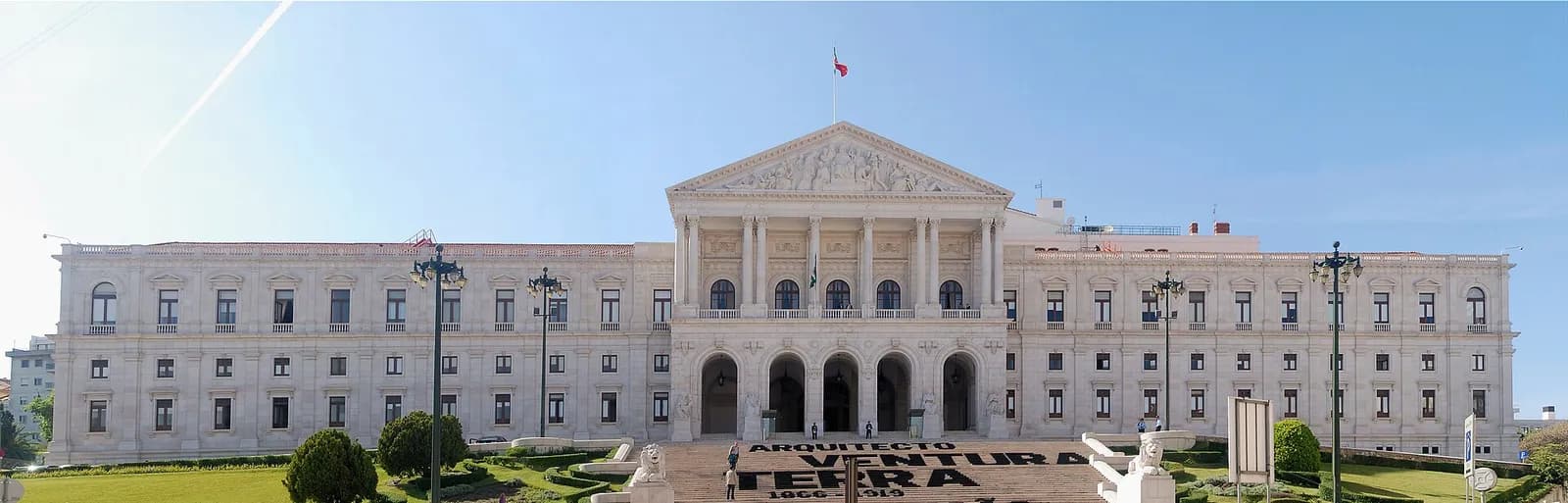
- The Palácio de São Bento in Lisbon, where the National Assembly elected in November 1945 sat. Photographed in April 2009, when it housed the Assembleia da República. Alvesgaspar, CC BY-SA 3.0, via Wikimedia Commons.
- Bento de Jesus Caraça (1901–1948), mathematician and economist, a member of the MUD's central commission in 1945. He later lost his university chair. Unknown author, Public domain, via Wikimedia Commons.
- The sign of the Museu do Aljube Resistência e Liberdade on Rua de Augusto Rosa, Lisbon, in May 2017. The building was a prison for political detainees under the dictatorship. Ardfern, CC BY-SA 4.0, via Wikimedia Commons.