

Costa Gomes, the general who kept the revolution in one piece
He was the officer the April captains wanted, and he handed the presidency to someone else. Five months later it came back to him, and for 21 months he held a revolution together by talking to everyone.
At a glance
- Marshal Francisco da Costa Gomes died at the Military Hospital in Lisbon on 31 July 2001, a month after his 87th birthday. The government declared two days of national mourning.
- A cavalry officer with a mathematics degree, he took part in the failed 1961 generals' plot against Salazar, held senior commands in Mozambique and Angola, and became chief of the armed forces general staff in 1972.
- He was dismissed in March 1974 with António de Spínola. The young officers who made the revolution of 25 April wanted him as President, but according to the Museu da Presidência the post went to Spínola at his own suggestion.
- He became President on 30 September 1974, after Spínola resigned, and held office until 14 July 1976. He insisted on the elections of 25 April 1975 and promulgated the 1976 Constitution.
- On 25 November 1975 he declared a state of siege in the Lisbon Military Region and let the moderates' operation go ahead, which ended the revolutionary period without a civil war.
A general at the hospital
While the coup of 25 April 1974 was unfolding in Lisbon, the general the rebel captains wanted as their leader was at the Military Hospital. Francisco da Costa Gomes was keeping his wife company; she had been admitted as a patient.
He went to the rebels' command post at the engineering barracks in Pontinha only late in the afternoon, after the prime minister, Marcelo Caetano, had surrendered. The officers named to the new Junta de Salvação Nacional were telephoned and came in one by one. Costa Gomes was the first to arrive.
The captains of the Armed Forces Movement (MFA) had agreed that he would be President of the Republic. That night the junta chose General António de Spínola instead, and the Museu da Presidência records that it did so on Costa Gomes's own proposal. Spínola took office as President on 15 May. Five months later the presidency came to Costa Gomes anyway.
He died in the Military Hospital in Lisbon on 31 July 2001, aged 87. By then he was a marshal, a peace campaigner and a man who had held no political office for 25 years. The decree of national mourning, signed that day, called him “a distinguished soldier and an exemplary citizen”.
- Born
- 30 June 1914, Chaves
- Died
- 31 July 2001, Military Hospital, Lisbon (aged 87)
- Arm
- Cavalry; degree in mathematics, University of Porto, 1944
- President
- 30 September 1974 to 14 July 1976
- Predecessor and successor
- António de Spínola; António Ramalho Eanes
- Buried
- Alto de São João cemetery, Lisbon
A soldier of the old regime who doubted its wars
Costa Gomes was born in Chaves, near the northern border, on 30 June 1914, one of eight children by the Museu da Presidência's count (another account says eleven, seven of whom survived). His father, an infantry captain, died on the eve of the boy's eighth birthday, and at ten Francisco was sent to the Colégio Militar in Lisbon. Like his father and three of his brothers, he became a soldier. He later said he would not have chosen the army if the choice had been his.
He joined the cavalry in 1931 and rose steadily. In 1944, the year he became a captain, he finished a degree in mathematics at the University of Porto with distinction. In 1952 he married Maria Estela Veloso de Antas Varejão in the cathedral of Viana do Castelo; he had fallen for her, the museum says, after seeing a portrait of her by his friend the painter Henrique Medina.
Postings abroad shaped his views. As deputy chief and then chief of staff in Macau from 1949 he began to question Salazar's colonial policy. From 1954 he served at NATO's Atlantic command in Norfolk, Virginia, and came to know the alliance thoroughly. “I am a special admirer of the United States, having spent two years in Norfolk,” he told President Gerald Ford twenty years later.
In 1958 he became under-secretary of state for the army, toured Angola, Mozambique, Guinea, São Tomé and Cape Verde, and drew up a reorganisation of the forces overseas. In April 1961, after war broke out in Angola, he joined the defence minister Júlio Botelho Moniz's failed attempt to push Salazar out and was dismissed. That April he also argued in public, in a letter to the Lisbon daily Diário Popular, that the military side of any solution in Africa was far from the most important. He was sent to run a recruiting district in Beja.
The regime still needed him. Promoted to brigadier in 1964, he went to Mozambique in 1965 as second-in-command of the military region, a year after the liberation war began there. From 1970 to 1972 he commanded in Angola, where he reorganised the command and pushed for a military understanding with UNITA, one of the three independence movements. On 12 September 1972 Caetano made him chief of the general staff of the armed forces, the top post in the military.
| Years | Post |
|---|---|
| 1949 to 1951 | Deputy chief, then chief, of staff in Macau |
| From 1954 | Staff officer at NATO's Supreme Allied Command Atlantic, Norfolk, Virginia |
| 1958 to 1961 | Under-secretary of state for the army; dismissed after the Botelho Moniz plot |
| 1961 to 1963 | Head of the recruiting district in Beja; moved to Elvas in 1963 |
| From 1965 | Second-in-command of the Mozambique military region |
| 1970 to 1972 | Commander-in-chief in Angola |
| 12 September 1972 to 14 March 1974 | Chief of the general staff of the armed forces (CEMGFA); dismissed |
| From 30 April 1974 | CEMGFA again, and member of the Junta de Salvação Nacional |
| 30 September 1974 to 14 July 1976 | President of the Republic; from March 1975 also chairman of the Council of the Revolution |
| 1981 | Promoted to marshal |
Dates from the Museu da Presidência biography. The Presidency's own page puts the Norfolk posting in 1945–46, before NATO existed. For Mozambique the museum says he rose to commander in 1967, while the Presidency's page has him as second-in-command for four years. His term ended when Eanes was sworn in on 14 July 1976; ELO gives 13 July, and the Presidency's page 27 June, the date of the election. The Portugal Resident column dates the marshal's baton to 1982; the museum and ELO give 1981.
Sacked, then recalled by the revolution
In January 1974 Costa Gomes suggested Spínola, the former governor of Guinea, as his deputy. That month the defence minister asked him to assess Spínola's book Portugal e o Futuro, which argued for the colonies' right to self-determination. On 11 February he signed an opinion approving its publication.
Days later Caetano called both generals in to warn them of the consequences. When he summoned the military chiefs to a public show of loyalty in March, the ceremony mocked as the Brigada do Reumático, Costa Gomes and Spínola refused to attend. Their dismissals were announced on 14 March.
After 25 April he sat on the seven-man junta and was reinstated as chief of the general staff on 30 April. On the night of the coup he and Spínola had forced the MFA to soften its programme, and the explicit recognition of the colonies' right to self-determination and independence was dropped. Over the summer he moved between Spínola, who wanted a gradual decolonisation settled by referendums, and the MFA's coordinating committee, which wanted a quick break, and drifted away from the President.
Spínola lost that contest. After the failed move by his “silent majority” supporters on 28 September 1974, he resigned on the 30th. With four of the junta's seven members gone, the junta voted for Costa Gomes. He was 60. He named his priorities as free elections, completing decolonisation and keeping Portugal's international commitments.
President in a revolution
Within three weeks he was in New York. On 17 October 1974 he addressed the United Nations General Assembly, the first Portuguese head of state to do so.
“I am the Head of State of a country which, after suffering the humiliation of a half century of dictatorship, initiated ... a bloodless revolution which outsiders have called the purest that has occurred in this century.”
The next day he and his foreign minister, the Socialist leader Mário Soares, met Ford and Henry Kissinger in the Oval Office. That morning Kissinger suggested a line Ford could give a senator: “We want to help, but only if they don't slide.” Costa Gomes told the Americans that anyone who knew the Portuguese knew they were “very anti-Communist in sentiment”, and promised elections in March in which all parties would be represented.
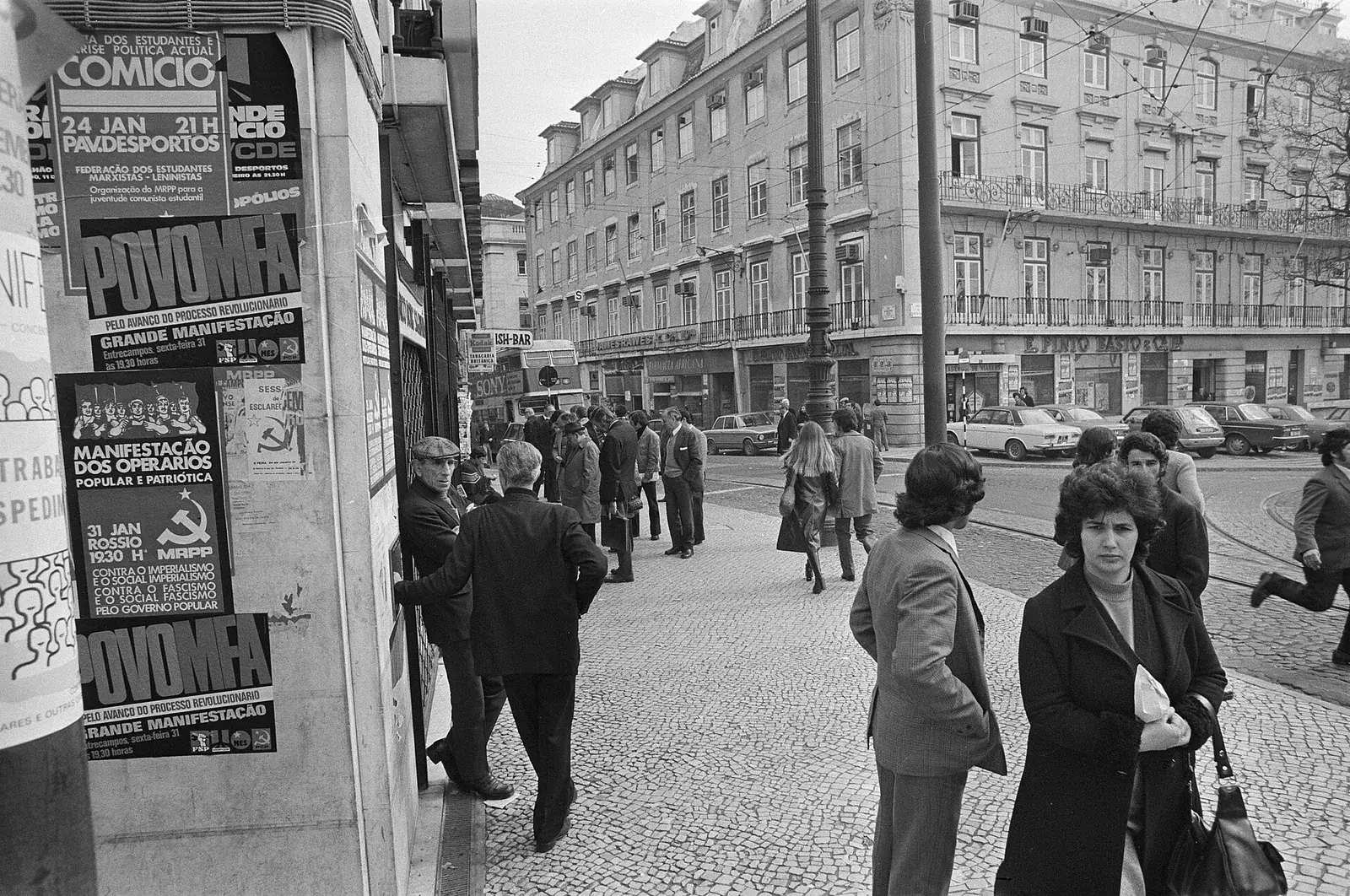
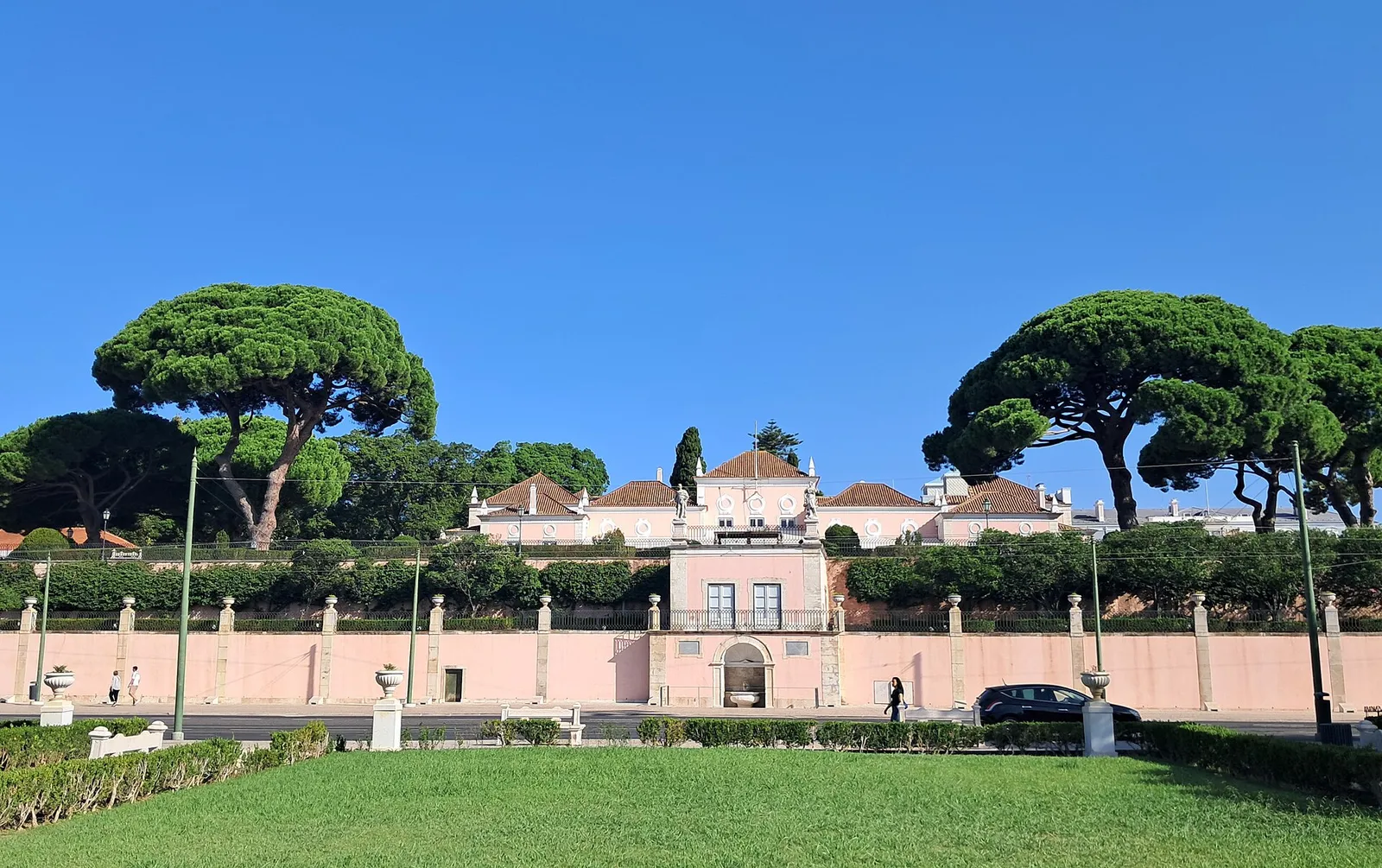
At home the revolution moved left. He kept the army officer Vasco Gonçalves as prime minister, and in November 1974 he was advised to move into the Belém Palace for his safety. In January 1975 he endorsed the Alvor agreement, which set Angola's independence for 11 November. After the failed coup of 11 March 1975 the MFA created the Council of the Revolution, with the President in the chair.
After 11 March the Communists and the officers around Gonçalves gained ground and the MFA grew more divided. Costa Gomes insisted that the elections for a Constituent Assembly go ahead. On 11 April 1975 he signed, for the Council of the Revolution, the pact with the parties that guaranteed the council wide powers, and on 25 April 1975 Portugal held its first elections by universal suffrage.
The “hot summer” of 1975 followed, with bombs at Communist Party offices and talk of civil war. Costa Gomes was present at almost every crisis, watching and conciliating, which earned him the nicknames “o rolha” and “cortiça”: the cork, which always floats. At the start of August he went to the Helsinki summit of the Conference on Security and Co-operation in Europe, where other European leaders pressed him to consolidate a pluralist democracy.
On 8 August he swore in Gonçalves's fifth government despite objections, saying that nobody owned the revolution and that the government was provisional. The Socialists, the centre-right PPD and the moderate officers of the Group of Nine attacked the decision, and within weeks he let Gonçalves go. Admiral José Pinheiro de Azevedo's Sixth Provisional Government took office on 19 September. In October Costa Gomes paid state visits to Poland and the Soviet Union, where he met Leonid Brezhnev.
30 September 1974
Becomes President after Spínola resigns
17 October 1974
First Portuguese head of state to address the UN General Assembly
January 1975
Endorses the Alvor agreement on Angola's independence
14 March 1975
Chairs the new Council of the Revolution
11 April 1975
Signs the first pact between the MFA and the parties
25 April 1975
Constituent Assembly elections, the first by universal suffrage
8 August 1975
Swears in Gonçalves's fifth government
19 September 1975
Sixth government under Pinheiro de Azevedo takes office
25 November 1975
Declares a state of siege in the Lisbon Military Region
2 April 1976
Promulgates the Constitution
14 July 1976
Hands over to Ramalho Eanes
The cork holds: 25 November 1975
The autumn brought rumours of coups almost daily. On 19 November Pinheiro de Azevedo's government, days after protesters had held the prime minister and the Constituent Assembly under siege, went on strike. The next day, the Museu da Presidência records, the prime minister demanded military guarantees from the President, including the removal of Otelo Saraiva de Carvalho as commander of COPCON, the MFA's operational force. Otelo also commanded the Lisbon Military Region, and Lusa calls the appointment of Vasco Lourenço to replace him there the fuse of what followed.
On 25 November paratroopers from Tancos occupied air bases and the air region command at Monsanto. The story of that day has its own article. Costa Gomes's part in it was to play for time. From Belém he negotiated with every side, pressed the Communist Party not to send its supporters into the streets and kept Otelo with him at the palace, cut off from his headquarters.
The moderates, with Lieutenant-Colonel António Ramalho Eanes as their operational commander, had a plan ready but needed a chief to cover it. The historian Maria Manuela Cruzeiro, author of a book on him, Costa Gomes, o Último Marechal, put it bluntly: “That chief could only be Costa Gomes.” Once he backed them, she wrote, they were acting inside a fully institutional chain of command, restoring order rather than overturning it. That afternoon he declared a state of siege in the Lisbon Military Region.
Rui Ramos notes that at first nobody was quite sure whose side the President would take. Costa Gomes later called the day a “dramatic adventure”. Three men died in the fighting on 26 November; the civil war many had feared did not come.
“In politics you always have to have a great deal of patience, and know how to listen.”
Handing over
On the night of 2 April 1976 Costa Gomes went to the Constituent Assembly at São Bento and promulgated the new Constitution. That year he also promulgated Decree-Law 43/76 on servicemen disabled in the armed forces, which their association, the ADFA, still called its “bible” in 2001.
From the start of 1976 he had ruled out standing in the presidential election due that June. He said he was too worn down by the previous two years, and that he had been pushed into the post without ever wanting it. On 14 July 1976 he handed over to Eanes at the Assembly of the Republic.
The marshal of peace
He never held political office again. From 1977 he worked with the World Peace Council, a Soviet-backed disarmament movement founded in 1950, of which he became a vice-president, and chaired its Portuguese committee. He went to its conferences against the neutron bomb in Geneva in 1978 and in solidarity with the Arab world in 1979.
In 1981 he joined the Generals and Admirals for Peace and Disarmament and was promoted to marshal. In 1986 the UN Secretary-General named him a Messenger of Peace, the honour he said he valued most. In 1990 he co-wrote a book on eco-socialism with Carlos Antunes and Isabel do Carmo. The next year his and Estela's only son, Francisco, died unexpectedly at 35.
Death and reputation
He had been in the Military Hospital since early May 2001, with a respiratory illness, according to news reports, and died there on Tuesday 31 July. The government of António Guterres declared two days of national mourning from 1 August. The decree credited him with a decisive part in the first free elections and in the drafting and free approval of the Constitution.
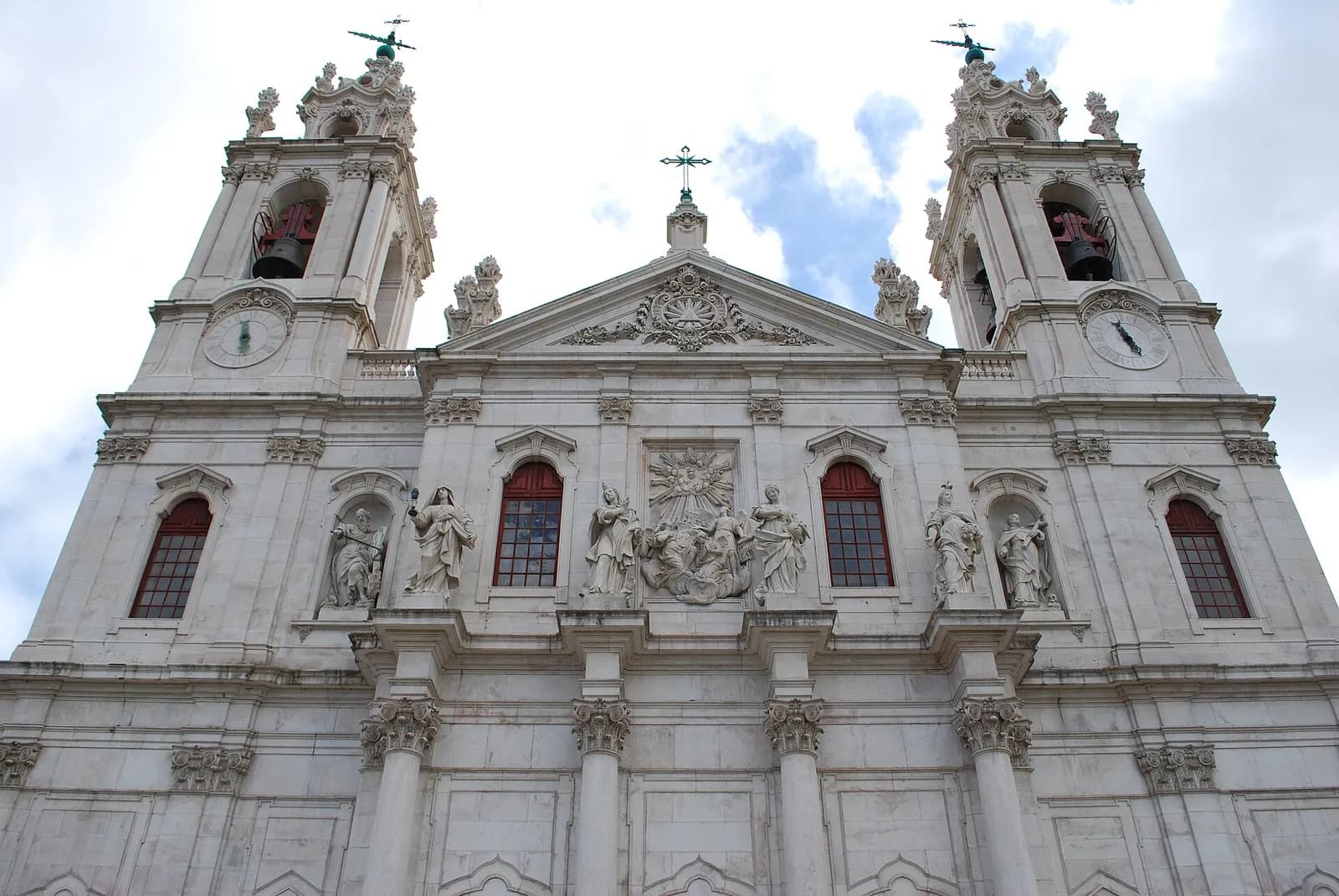
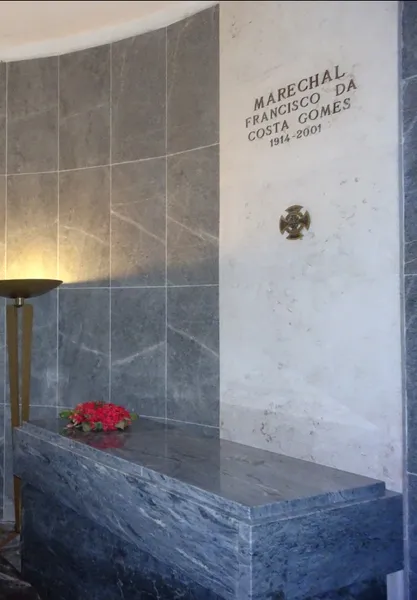
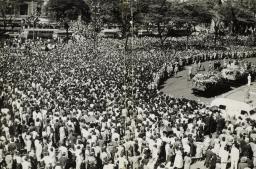
His body lay in state in the Basílica da Estrela and he was buried in the Alto de São João cemetery. The disabled veterans' association lowered its flag to half mast for two days and laid a wreath by the coffin.
His reputation rests on what did not happen. The Museu da Presidência credits him with a decisive part in avoiding civil war. Cruzeiro called him “phlegmatic” and described him as the fireman on duty at every blaze of late 1975, whose career was “a true manual of political survival”.
The same caution made him hard to read. The Socialists, the PPD and the Group of Nine attacked him in August 1975 for keeping Gonçalves in office, and Rui Ramos writes of his “unfathomable” skills. He called himself a poor politician, because he was a soldier.
Official honours came late. In July 2023 President Marcelo Rebelo de Sousa gave him, posthumously, one of the two top grades of the Order of Liberty, on the same day as Spínola: the Grand Collar, according to the press, or the Grand Cross, according to the Presidency's statement. The award was published only in the Diário da República, and the newspaper Público brought it to light in April 2024.
FAQs
When and where did Costa Gomes die?
Marshal Francisco da Costa Gomes died at the Military Hospital in Lisbon on 31 July 2001, aged 87. The government declared two days of national mourning, his body lay in state in the Basílica da Estrela and he was buried in the Alto de São João cemetery.
Why did Costa Gomes not become President on 25 April 1974?
The MFA captains had chosen him, but when the Junta de Salvação Nacional met that night it named António de Spínola, on Costa Gomes's own proposal according to the Museu da Presidência. He stayed on the junta as chief of the general staff and became President when Spínola resigned on 30 September 1974.
What did Costa Gomes do on 25 November 1975?
From the Belém Palace he negotiated with all sides, pressed the Communist Party not to call its supporters out, and gave the moderate officers' operation, run by Ramalho Eanes, the cover of his authority. That afternoon he declared a state of siege in the Lisbon Military Region.
Did Costa Gomes stand in the 1976 presidential election?
No. From early 1976 he ruled out standing, saying he was worn out by two years in office. Ramalho Eanes won the election of 27 June 1976 and Costa Gomes handed over to him on 14 July.
Is Costa Gomes the same person as Gomes da Costa?
No. Manuel Gomes da Costa (1863 to 1929) was the general who led the coup of 28 May 1926 against the First Republic. Francisco da Costa Gomes (1914 to 2001) was President after the 1974 revolution that ended the dictatorship. Both became marshals.
On the timeline
Open the timelineNearby moments from portugal in europe (1986–today).
SATA Air Açores Flight 530M, a turboprop on the inter-island route from Ponta Delgada to Horta and Flores, flies into the slopes of Pico da Esperança on São Jorge in heavy rain and cloud, killing all 35 people on board. It remains the deadliest accident involving the BAe ATP and the worst in SATA's history.
At midnight, in a temporary pavilion beside the Macao Cultural Centre, Portugal hands Macau over to China, ending Portuguese administration of a settlement traditionally dated to 1557, 442 years earlier. Macau becomes a Special Administrative Region of China, promised its own system and way of life for 50 years under 'one country, two systems'.
Death in Lisbon of José Águas, aged 70. Born in Luanda and spotted in Lobito, he became Benfica's prolific centre-forward and captain, five times the league's top scorer. He scored Benfica's first goal in both European Cup finals, 1961 and 1962, and lifted the trophy each time; Eusébio joined him for the second.
Death of Costa Gomes
Death of Marshal Francisco da Costa Gomes in Lisbon, aged 87. Career soldier, Chief of Staff of the Armed Forces and President of the Portuguese Republic from 1974 to 1976, he was — alongside António de Spínola — the senior military figure of the Carnation Revolution and the man who guided Portugal through the most turbulent phase of decolonisation and the transition to democracy.
UNESCO inscribes the Alto Douro Wine Region on its World Heritage List as an 'evolving, living cultural landscape'. Its steep schist terraces, carved by hand over centuries along the Douro and its tributaries, produce port wine in a region demarcated in 1756, often called the world's first officially demarcated wine region.
Portugal's banks and shops open for the first full business day of the euro. Notes and coins had gone into circulation at midnight on New Year's Day, and the escudo, the currency of the Republic since 1911, was withdrawn from use at the end of February.
The floodgates of the Alqueva dam on the Guadiana are closed, and the reservoir begins to fill. Covering some 250 square kilometres when full, it is often called the largest artificial lake in Western Europe. Its water brought irrigation and olive and almond groves to the parched Alentejo, and it drowned the old village of Luz, rebuilt nearby.
Coming up in history
All long reads
26 sources
Archives, scholarship and reporting this article was checked against.
- 1
Francisco da Costa Gomes (biography)Museu da Presidência da República
- 2
Francisco da Costa Gomes (former President of the Republic)Presidência da República Portuguesa
- 3
25 de Novembro: quantos golpes afinal? (Maria Manuela Cruzeiro)Centro de Documentação 25 de Abril, Universidade de Coimbra
- 4
General Assembly, 29th session, 2269th plenary meeting, 17 October 1974: address by General Francisco da Costa Gomes, President of the Republic of Portugal (A/PV.2269)United Nations, Official Records of the General Assembly
- 5
Memorandum of conversation, Ford, Kissinger, Costa Gomes and Soares, Oval Office, 18 October 1974 (FRUS 1969-1976, vol. E-15, part 2, doc. 140)Office of the Historian, US Department of State
- 6
Decreto n.º 28/2001, de 7 de Agosto: declares two days of national mourning for Marshal Francisco da Costa GomesDiário da República, I série-B, n.º 182, 7 August 2001
- 7
- 8
MFA: the members of the Junta de Salvação Nacional arrive (chronology entry)Associação 25 de Abril
- 9
- 10
- 11
Diário da Assembleia da República, I série, n.º 6, 15 July 1976: sitting of 14 July (posse de S. Ex.ª o Presidente da República)Assembleia da República, Debates Parlamentares
- 12Francisco da Costa Gomes (1914-2001): 15th President of the Republic (Algarve History Association column)Portugal Resident
- 13
- 14
Conselho da Revolução, in Textos Históricos da Revolução (organised by Orlando Neves, 1975)Marxists Internet Archive, Portuguese section
- 15
- 16
- 17
- 18
A “dramática aventura” do 25 de Novembro que ditou o fim da RevoluçãoLusa, in DNOTICIAS.PT, 24 November 2019
- 19
Tomada de posse do VI Governo ProvisórioRepública Portuguesa, Arquivo Histórico do Governo
- 20Carlucci, o conspirador anti-Moscovo (José Jorge Letria)Diário de Notícias, 6 June 2018
- 21
- 22Eanes, o Presidente do 25 de Novembro (Rui Ramos)Observador, 25 November 2017
- 23
- 24
A Rua General Vassalo e Silva, que se rendeu na Índia em dezembro de 1961Toponímia de Lisboa (blog of the Núcleo de Toponímia, Câmara Municipal de Lisboa), 6 February 2017
- 25
July 31, 2001: Former Portuguese military ruler Costa Gomes diesGulf News (news-agency report, republished in its On this day series)
- 26Marcelo Rebelo de Sousa condecorou Spínola sem divulgar no site da Presidência. Marcelo admite falhaObservador, 10 April 2024
Image credits
- Posters in downtown Lisbon on 11 February 1975, four months into Costa Gomes's presidency. “Povo MFA” calls a rally “for the advance of the revolutionary process”; two others advertise January meetings of the Maoist MRPP and its student federation. Rob Mieremet / Anefo, CC0, via Wikimedia Commons.
- The Belém Palace in Lisbon, the presidency's seat, photographed in 2026. Costa Gomes was advised to move in for security reasons in November 1974, and spent 25 November 1975 negotiating there. Ruipmartins, CC0, via Wikimedia Commons.
- The Basílica da Estrela in Lisbon, where Costa Gomes's body lay in state before his funeral in 2001. Concierge.2C, CC BY-SA 3.0, via Wikimedia Commons.
- Costa Gomes's tomb in the Alto de São João cemetery, Lisbon, photographed in 2021. António Fragoso, CC BY 2.0, via Wikimedia Commons.