

Guilhermina Suggia, the cellist from Porto, dies at home: 30 July 1950
She learned the cello from her father in Matosinhos, lived for six years as Pablo Casals's unmarried “wife” in Paris and became one of the most admired musicians in Britain. Dying of cancer, she went home to Porto and left her Stradivari to pay for young cellists' training.
At a glance
- Guilhermina Suggia died at her home in Porto on the night of Sunday 30 July 1950, aged 65, weeks after surgeons in London found inoperable cancer.
- Born in Porto on 27 June 1885, she was taught by her father, a cellist, played in public at seven and took lessons from Pablo Casals at Espinho in 1898.
- A scholarship arranged with Queen Amélia's help took her to Julius Klengel in Leipzig, and on 26 February 1903, aged 17, she played a concerto with the Gewandhaus Orchestra under Arthur Nikisch.
- She lived with Casals in Paris from about 1907 to 1913 without marrying him, then moved to England in 1914 and became one of the best-known musicians in Britain; Augustus John's portrait of her, painted from 1920 to 1923, belongs to Tate.
- Her will left her Stradivari cello to London's Royal Academy of Music to be sold for a scholarship for young cellists, and her British money founded the Suggia Gift, which helped pay for Jacqueline du Pré's lessons. Porto's main concert hall bears her name.
A last journey home
On 31 May 1950 Guilhermina Suggia gave a recital in Aveiro, a small city on the coast south of Porto. It was her last. For some years she had been troubled by pains in her abdomen, and a tour of the United States, planned for that spring with the help of Rudolf Bing of the Metropolitan Opera, had already been called off.
In June she went to London, the city that had made her famous, for an operation at the London Clinic. The surgeons found cancer in her liver, gall bladder and appendix and could not remove it. Queen Elizabeth, the wife of George VI, sent her a note and flowers. Suggia, by her biographer's account, took the news calmly and arranged to be taken back to Portugal.
She died at home in Porto on the night of Sunday 30 July 1950. She was 65. Her husband, her parents and her only sister had all died before her. “I am alone, without a single relative in the world,” she had written not long before.
Three months earlier she had written to Pablo Casals, the great Catalan cellist she had lived with in Paris almost forty years before, asking for tickets to his festival at Prades for the 200th anniversary of Bach's death. They had not played together since 1913.
“I should not wish to die before hearing you, cher maître, and seeing you again… Remember me always as your devoted admirer — do you forget the little eleven-year-old who came to take lessons with you at Espinho?”
Casals never replied. In the letter Suggia made herself younger than she had been: when she first played for him, in the summer of 1898, she was 13.
A prodigy in Porto
Guilhermina Xavier de Medim Suggia was born on 27 June 1885 in the parish of São Nicolau, in Porto. Her father, Augusto, was a professional cellist from Lisbon who had played in the orchestra of the São Carlos opera house and taught at the Lisbon Conservatory before moving north in the early 1880s. Her sister Virgínia, three years older, became a fine pianist.
Augusto taught his younger daughter solfège before she could say her letters properly and put a three-quarter-size cello, ordered from Paris, in her hands when she was five. By then the family lived in Matosinhos, the town next to Porto. In 1892 the two girls gave their first concert at the Matosinhos Club, and the Jornal de Notícias described the seven-year-old cellist, dressed in blue on a tiny chair, as “an enchanting little doll” whose bowing was “strong and secure”.
Porto in the 1890s had a busy musical life, led by the violinist and conductor Bernardo Moreira de Sá, whose Orpheon Portuense brought chamber and orchestral music rarely heard in Portugal to the city. Suggia made her debut at the Teatro Gil Vicente in the Crystal Palace in May 1896 and became first cellist of the Orpheon's orchestra. By 1901 she was the cellist of Moreira de Sá's string quartet.
In the summer of 1898 a young Catalan, Pau or Pablo Casals, took a job in a septet at the casino in Espinho, a resort about 16 kilometres south of Porto, and gave weekly recitals that caused a stir in Porto. Augusto took Guilhermina to play for him. Casals agreed to teach her, and she went down by train for a lesson every week until he went home at the end of the summer.
In 1901 the sisters were invited to play at the Necessidades Palace in Lisbon before King Carlos and Queen Amélia. A few weeks later the queen sent them gold bracelets hung with heart-shaped charms of rubies and diamonds. After the concert she had asked Guilhermina what she most wanted, and the girl said she wanted to study abroad. The queen promised to help.
Leipzig and Klengel
With the queen's help Suggia was given a government scholarship for three years of study in Leipzig. After her fiftieth and last concert with the Moreira de Sá quartet she left Porto with her father on 15 November 1901. She was 16. Her mother and Virgínia stayed at home, and Virgínia's piano lessons paid for her father's keep.
Her teacher was Julius Klengel, principal cellist of the Gewandhaus Orchestra from 1881 to 1924 and the teacher, over his career, of Emanuel Feuermann and Gregor Piatigorsky. He was a genial man who let pupils play a piece to the end while he smoked a cigar. Within days of arriving Suggia also played for Arthur Nikisch, the Gewandhaus conductor, who received her at the Gewandhaus rather than at home and accompanied her himself.
“She is a cellist with the highest artistic merit, who has no reason to fear comparison with cellists of the masculine sex.”
By the second year the money from Lisbon had stopped coming. In January 1903 Augusto wrote to his friend Michel'angelo Lambertini that no money had come for over six months, that Virgínia was keeping them both and that Klengel, told of their plight, had taken nothing for his lessons for two months. Suggia stayed in Leipzig through the summer of 1902 to keep studying.
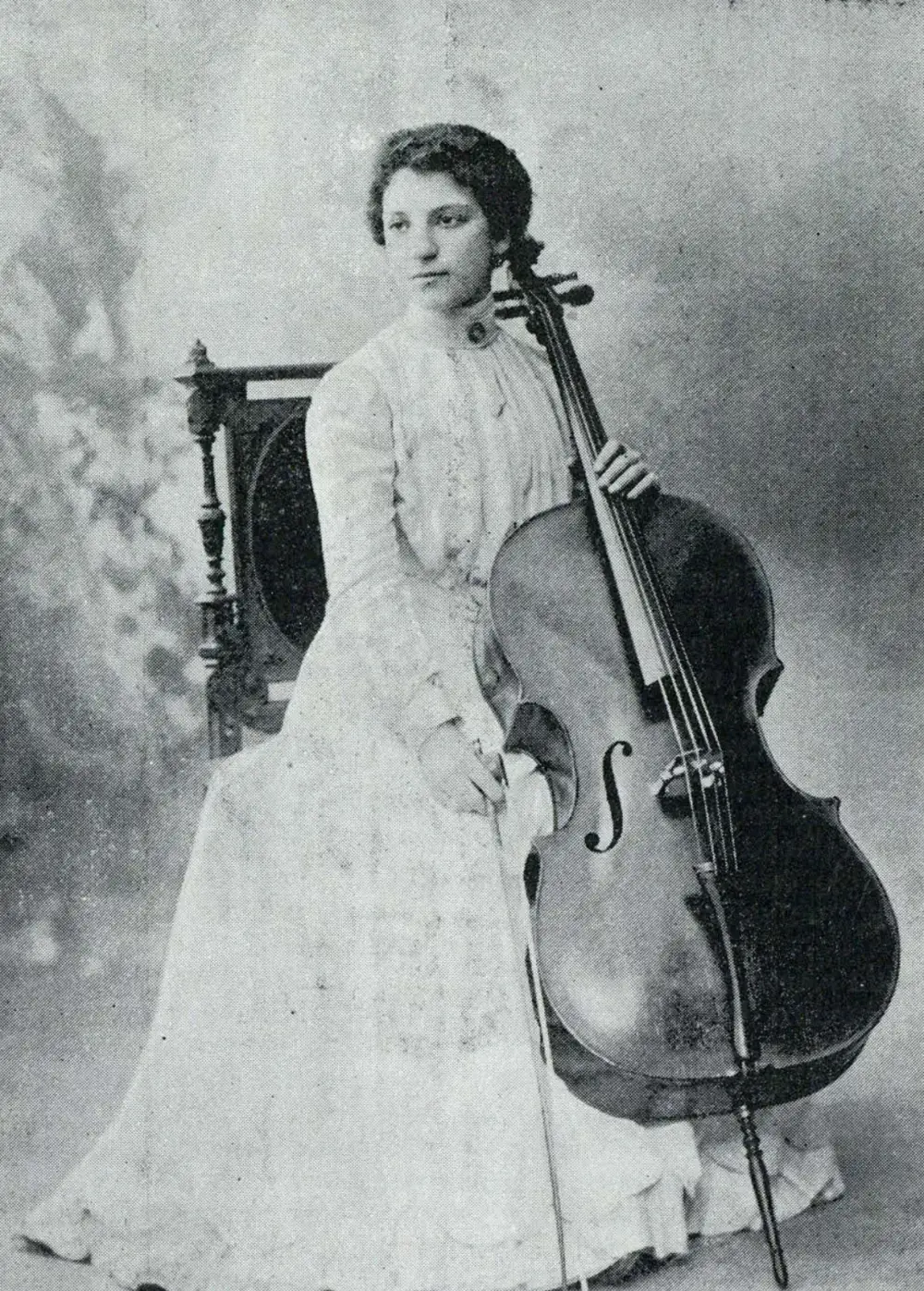
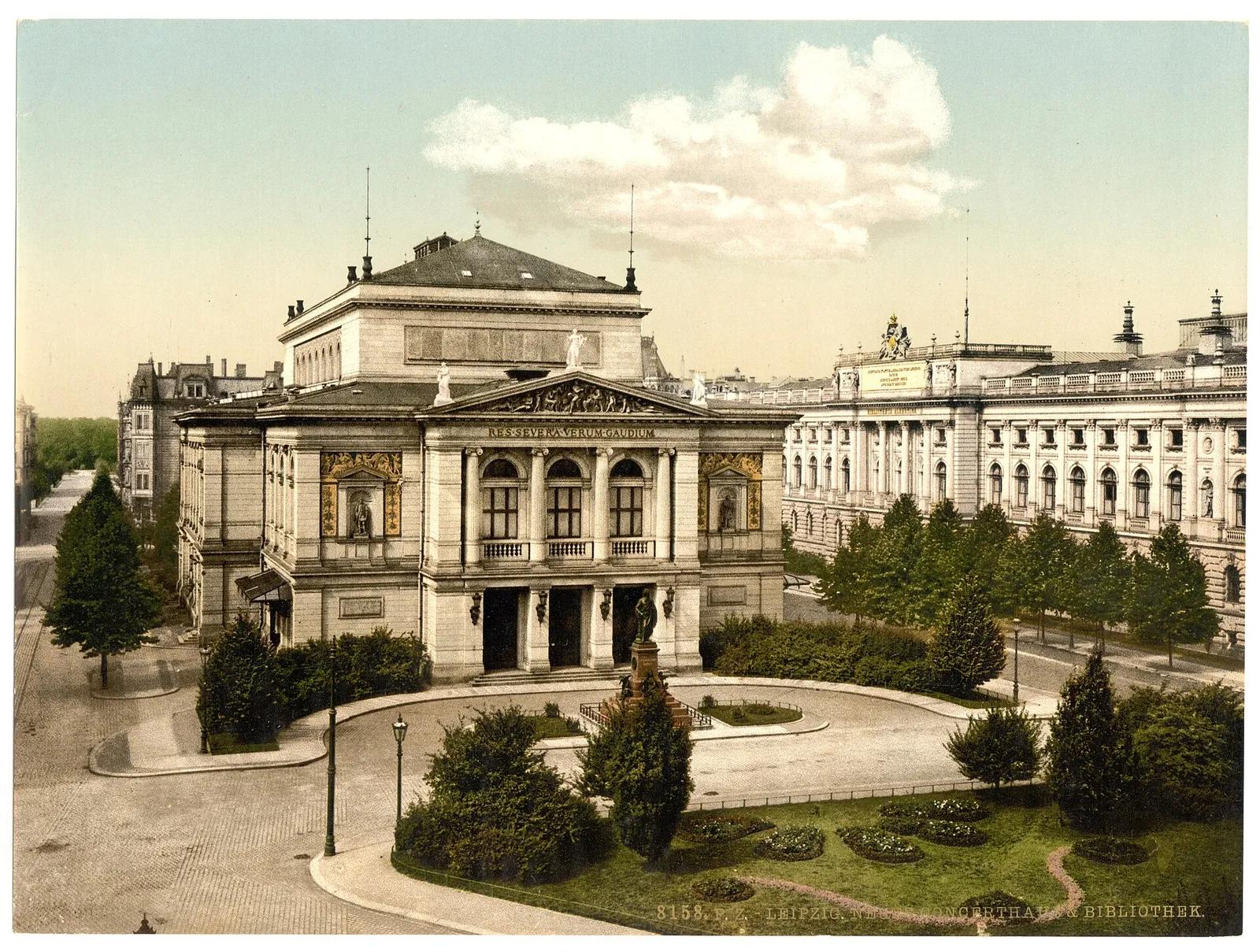
On Thursday 26 February 1903 she played Robert Volkmann's cello concerto with the Gewandhaus Orchestra under Nikisch. The audience called her back to repeat her solo encore in full. At the second, chamber concert Klengel gave his 17-year-old pupil the first cello part in a duet with him, and told colleagues who thought it unseemly that she would go “so high that no one will be able to reach her”. Mercier's account makes her 18 at the debut, but she was four months short of that birthday.
Her stay had lasted about sixteen months, less than half the time planned. Between 1903 and 1906 she toured from Porto to Dresden, Berlin, Hamburg, Budapest, Brussels, Stockholm and London, where she played at the Bechstein Hall in 1905. In Karlsbad the cellist David Popper wrote in her autograph book: “To the greatest of living cellists”.
“Madame Casals” in Paris
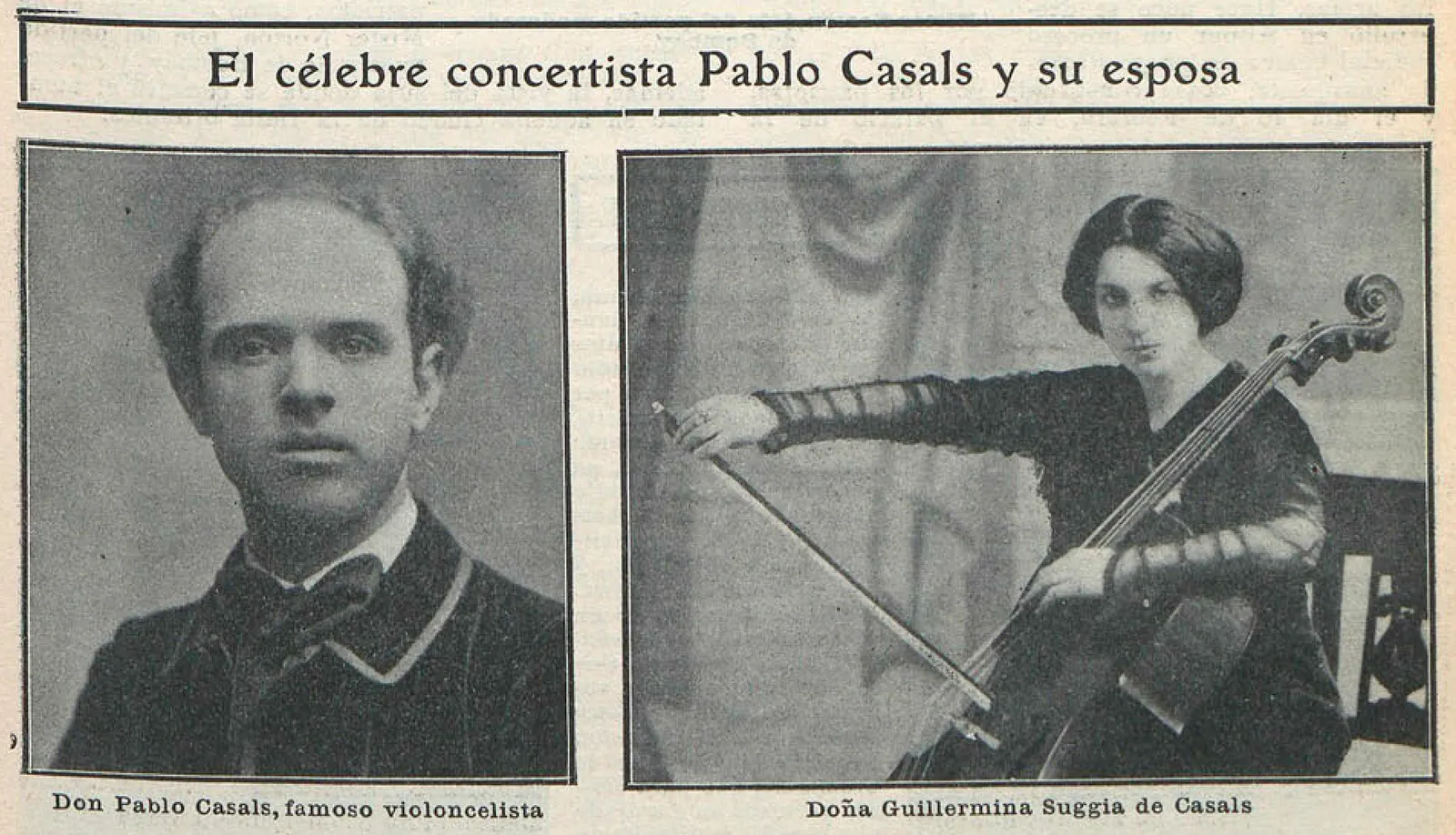
In 1906 Suggia went to Paris and probably took lessons again from Casals. By 1907 she was living in the house he rented in Auteuil, the Villa Molitor, and early in 1908 she told friends in Porto she would marry him that spring.
No record of a marriage or a divorce has ever been found. From 1908 they behaved as husband and wife all the same: concert programmes billed her as Guilhermina Suggia-Casals, and in letters to family and friends they referred to each other as husband and wife. They played together across Europe, travelled to St Petersburg in 1908, and spent summers at the beach house Casals built at San Salvador, in Spain.
Their house was full of musicians, among them Alfred Cortot, Fritz Kreisler and Eugène Ysaÿe. The composer Emanuel Moór wrote a double concerto for both of them and gave her the first cello part. Both were strong-willed, and neither liked to give way. Rumour had it that Casals, jealous of her success, hid her cellos.
The break came at San Salvador in September 1912, when the Scottish composer Donald Tovey arrived with a new sonata for two cellos. The details are unclear, but Casals flew into a jealous rage and the holiday ended. They made it up briefly in 1913, but in July Casals left for San Salvador alone. Suggia moved to England early in 1914. They never played together again, and Casals later called his years with her “the most cruelly unhappy episode” of his life.
“La Suggia” in London
Suggia arrived in England far from famous, known mainly as Casals's “wife”, as a war began that cut the number of concerts. Programmes survive from the Queen's Hall in 1915 and 1917. Within ten years she was one of the most celebrated women in the country, and critics often named her, with Casals, as one of the two greatest cellists alive.
She dressed grandly on stage, wore make-up that accentuated her large brown eyes and banned flowers from the platform in case the damp harmed her instruments. The accompanist Gerald Moore, who played with her in the 1930s, thought the fire was partly show: her playing, he wrote, was “calculated, correct, and classical”, and she was “far from being the fiery prima donna she appeared”.
In 1919 she became engaged to Edward Hudson, a wealthy, much older director of the company that published the magazine Country Life, who owned a house in Queen Anne's Gate in London and a sixteenth-century castle on an island off the Northumberland coast. According to Mercier he gave her a Stradivari cello of 1717. She broke off the engagement and kept the cello.
Women soloists were still rare. In the 1930s the London Symphony, the Hallé and the Philharmonic employed no women, and the BBC orchestra, which did, would not take women cellists. The cellist Emanuel Feuermann dismissed her as a “drawing-room player”. Yet on 26 May 1932 Suggia was one of the soloists before 10,000 people at the Royal Albert Hall for Queen Mary's 65th birthday; Edward Elgar opened the programme conducting Pomp and Circumstance.
She disliked recording and made only three sets of discs: short pieces in 1924, a Haydn concerto and a Bach suite in 1928 with John Barbirolli conducting, and Lalo's concerto in 1946 under the Portuguese conductor Pedro de Freitas Branco.
Three years with Augustus John
The painter Augustus John began painting Suggia in 1920 at Hudson's suggestion, in his studio in Mallord Street, Chelsea. The commission lapsed, and John carried on for himself. He started again twice, each time on a larger canvas, with a dress of a different colour and a pose in more extreme profile.
The sittings went on for three years. Tate's catalogue says over seventy were reported; Country Life gives 80. John chose bright days for the sittings, and Suggia sat facing a well-lit window and played Bach as he worked. He repainted the right arm again and again and struggled with the dress, which went from old gold to white to the final wine red. A first version in a blue sequinned gown was abandoned because it was too small.
“I played Bach chiefly because, being classical music, it suited with the attitude required by the artist.”
The painting was the sensation of the season when it was shown at the Alpine Club Gallery in London in March 1923. William P. Clyde Jr, the American owner of the Clyde Steamship Company, bought it, according to Mercier for £5,000, and sent it round American museums; it won first prize at the Carnegie Institute's international exhibition in Pittsburgh in 1924. British papers lamented the loss. In 1925 the dealer Sir Joseph Duveen, later Lord Duveen, bought it back and gave it to the Tate Gallery through the National Art Collections Fund.
- Title
- Madame Suggia (John himself called it “La Suggia”)
- Painted
- 1920 to 1923, Mallord Street, Chelsea
- Medium and size
- Oil on canvas, about 186 × 165 cm
- First shown
- Alpine Club Gallery, London, March 1923
- Prize
- First prize, Carnegie Institute, Pittsburgh, 1924
- Owner
- Tate, presented by Lord Duveen through the Art Fund, 1925 (N04093)
- On view?
- Not on display at Tate as of October 2026
Even the cello in the picture is disputed. Tate's label says Hudson had given her the Montagnana cello she plays in it; Mercier says his gift was the Stradivari. Because John died in 1961 the portrait is still in copyright, so it cannot be shown here. For the rest of her life reviewers introduced her as the subject of the famous painting.
A doctor's wife in the Rua da Alegria
Suggia never cut her ties with Porto. In 1924 she bought a house there so that her parents, who often lived apart, could be together again. Her mother's physician was José Casimiro Carteado Mena, a respected radiologist she had met in 1923. They married in a civil ceremony on 27 August 1927, when she was 42 and he 51, and set up house in the Rua da Alegria, near her parents.
Letters from her mother and sister show that she hesitated, and it was an amicable rather than a passionate marriage. Suggia kept a home at Queen Anne's Gate in London and went on touring Britain, Spain and Portugal. In Porto she played tennis, sailed, fished and doted on her dogs. Portugal made her an officer of the Order of Santiago in 1923 and a commander in 1937, and Porto gave her its gold medal in 1938.
The Second World War kept her in Portugal for most of seven years. She taught, did volunteer work for British soldiers and almost stopped performing until 1943, when the British conductor Malcolm Sargent played a series of concerts with her in Lisbon. In the late 1940s she led the cello section of the new Porto Conservatory Symphony Orchestra.
She returned to the British stage in 1946, now in her sixties. The Scottish Daily Mail called her appearance at the Edinburgh Festival in August 1949 “the outstanding personal recital of the Festival”. Her last concert in Britain was at Bournemouth on 22 October 1949.
27 June 1885
Born in São Nicolau parish, Porto
1892
First concert, at the Matosinhos Club, aged seven
Summer 1898
Weekly lessons with Pablo Casals at Espinho
15 November 1901
Leaves for Leipzig to study with Julius Klengel
26 February 1903
Debut with the Gewandhaus Orchestra under Arthur Nikisch
c. 1907 to 1913
Lives with Casals at the Villa Molitor in Paris
Early 1914
Moves to England
1920 to 1923
Augustus John paints her portrait
27 August 1927
Marries José Casimiro Carteado Mena
22 October 1949
Last concert in Britain, at Bournemouth
31 May 1950
Last recital, in Aveiro
30 July 1950
Dies at home in Porto, aged 65
Three cellos and a will
Suggia had no children, and she gave much of what she had to young cellists. The will, published by the Portuguese scholar Fátima Pombo, disposed of her three instruments separately. Sources agree on what became of two of them and differ on the third.
| Instrument | How she got it | What the will said | What happened |
|---|---|---|---|
| Antonio Stradivari, Cremona, 1717 | Gift of Edward Hudson, about 1919 (Mercier) | With two bows, to the Royal Academy of Music in London, to be sold for a scholarship for young cellists | Sold by W. E. Hill & Sons in 1951 to the cellist Edmund Kurtz for £8,000; Hill's took no commission |
| Montagnana (dated c. 1700 by Mercier) | Bought by Suggia (Mercier); Tate says it was Hudson's gift | Mercier: to the Porto Conservatory. Casa da Música: like the Stradivari, to be sold to fund prizes for the best cello students | Mercier: kept by the conservatory, which lends it to players in the Porto Symphony Orchestra |
| Attributed to Henry Lockey Hill, London | Inherited from her father, Augusto | To the National Conservatory in Lisbon, in her father's memory | Now in the Museu Nacional da Música |
Mercier says Suggia bought the Montagnana and the Lockey Hill herself and dates the Lockey Hill to the end of the eighteenth century; the Museu Nacional da Música says it came from her father and dates it to the first half of the nineteenth.
Her money in Britain, about £10,000 according to Mercier, went into a trust for young cellists, the Guilhermina Suggia Gift. Its trust deed, dated 23 November 1955, set it up “for the advancement of the musical education of the young in relation to the cello”, and it was run as a charity linked to the Arts Council of Great Britain. The Stradivari money went to the Royal Academy of Music for a Suggia prize of its own.
The most famous winner was Jacqueline du Pré. As a child in the mid-1950s she won a Suggia award that paid for six years of lessons with William Pleeth, and further Suggia money later sent her to Casals's master classes at Zermatt in 1960 and to Paul Tortelier in Paris in 1962.
Porto remembered her with music. On 25 November 1950 the Porto university centre of the Mocidade Portuguesa, the youth movement of Salazar's dictatorship, which had recently named her adviser for its musical activities, held a tribute in which teachers from the Porto Conservatory played after speeches by two professors.
Why she still matters
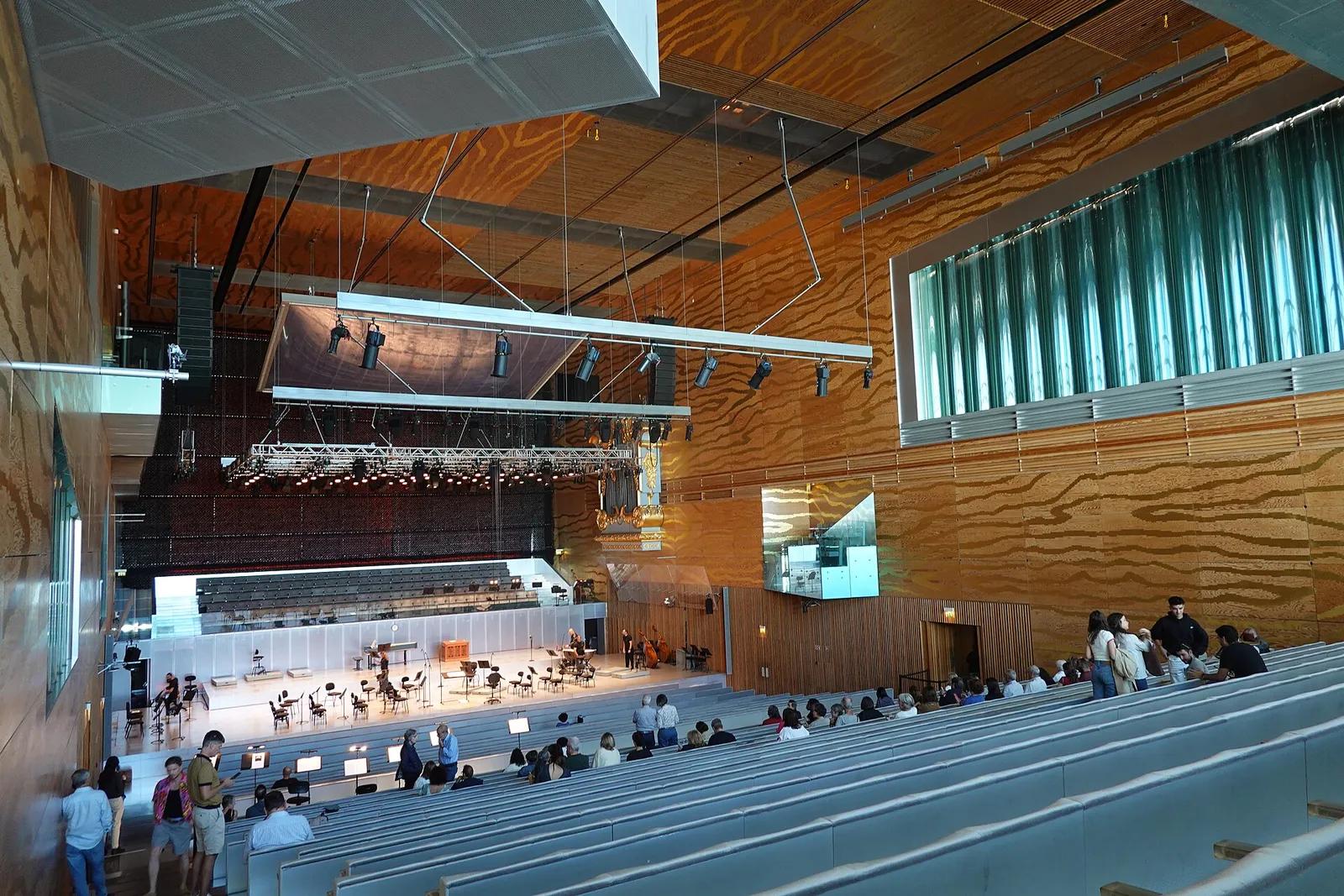
When Casa da Música, Porto's concert hall designed by Rem Koolhaas, opened in April 2005, its main auditorium, with about 1,200 seats, was named the Sala Suggia. Since 2009 the house has also run the Suggia International Prize, which it describes as a biennial competition for cellists up to the age of 26. At the ninth edition, in 2026, the winner was offered €8,000 and a concert with the Porto Symphony Orchestra.
Her life was hard to piece together. Before she died she destroyed many of her papers; Casals refused to talk about her. Many English reference books gave her birth year as 1888, and some her death as 31 July. Most of what survives is in the municipal library and archive of Matosinhos, where her father first taught her, and a research project running from 2024 to 2026 is cataloguing it.
She made a solo career on an instrument many thought unfit for her, at a time when Britain's leading orchestras would not hire women cellists. Milly Stanfield, a cellist who had studied with Casals, wrote in her obituary in The Strad that hearing Suggia made young women feel they were right to want to become professional cellists.
FAQs
When and where did Guilhermina Suggia die?
She died at her home in Porto on the night of 30 July 1950, aged 65, of cancer found during an operation in London in June. Some reference books give 31 July.
Was Guilhermina Suggia married to Pablo Casals?
No record of a marriage has been found. They lived together in Paris from about 1907 to 1913 and were billed as husband and wife. Her only legal marriage was to the Porto radiologist José Casimiro Carteado Mena in 1927.
Where is Augustus John's portrait of Suggia?
Madame Suggia (1920 to 1923) belongs to Tate in London, which received it in 1925 from the dealer Sir Joseph Duveen, later Lord Duveen. Tate's record showed it as not on display in October 2026.
What happened to Suggia's Stradivari cello?
She left the 1717 Stradivari to the Royal Academy of Music in London to be sold for a scholarship for young cellists. It was sold in 1951 to Edmund Kurtz for £8,000. Her other money in Britain founded the Suggia Gift, a trust for young cellists set up in 1955.
Why is the main hall of Casa da Música called the Sala Suggia?
It was named after the Porto-born cellist when the building opened in 2005. Casa da Música also runs the biennial Suggia International Prize for cellists up to 26.
On the timeline
Open the timelineNearby moments from dictatorship and the estado novo (1926–1974).
The plane carrying the 'Grande Torino' football team home from a friendly against Benfica in Lisbon crashes into the Superga hill above Turin, killing all 31 people on board. The disaster wipes out the side that dominated Italian football and leaves a lasting bond between the two clubs.
António Egas Moniz is awarded the Nobel Prize in Physiology or Medicine, shared with Walter Hess, for the prefrontal leucotomy. He remains Portugal's only Nobel laureate in the sciences, though the operation is now discredited.
José Ramos-Horta is born in Dili, Portuguese Timor, to a Portuguese father and a Timorese mother. A founder of Fretilin, he spent 24 years in exile as the voice of East Timor's resistance to the Indonesian occupation, sharing the 1996 Nobel Peace Prize with Bishop Ximenes Belo; he survived being shot in 2008, was President from 2007 to 2012 and was elected again in 2022.
The death of Guilhermina Suggia
Death in Porto of Guilhermina Suggia, aged 65, the cellist who studied with Pablo Casals and Julius Klengel, shared Casals's life and stage in Paris for about six years and became one of the most celebrated musicians in Britain. Augustus John's portrait of her belongs to Tate in London.
Salazar and President Óscar Carmona inaugurate the Castelo do Bode dam on the River Zêzere near Tomar, then the largest hydroelectric scheme in Portugal. Its 115-metre concrete wall holds back a reservoir of more than a billion cubic metres that still supplies much of Lisbon's drinking water.
Francisco Craveiro Lopes, a military aviator, is sworn in as President of the Republic, succeeding the late Óscar Carmona while Salazar keeps real power as head of government. Dropped by the regime in 1958, the former loyalist drew close to the opposition and was linked to the failed Botelho Moniz coup of 1961.
Death of the painter Mário Eloy, aged 51, at the Casa de Saúde do Telhal near Sintra, where Huntington's disease had confined him since 1945. A leading figure of Portugal's second modernist generation, he absorbed German Expressionism in Berlin; his surviving paintings include haunted self-portraits and 'Bailarico no Bairro', a Lisbon neighbourhood dance.
Coming up in history
All long reads
15 sources
Archives, scholarship and reporting this article was checked against.
- 1
Guilhermina Suggia (Anita Mercier)Internet Cello Society
- 2
Guilhermina Suggia: Cellist (Anita Mercier)Ashgate, 2008; now Routledge
- 3
Augustus John, Madame Suggia, 1920–3 (N04093)Tate
- 4
8.º Prémio Internacional Suggia/Casa da Música: prova final, 5 July 2024 (programme)Casa da Música, Porto
- 5
Guilhermina Suggia Gift (charity 313039-1)Charity Commission for England and Wales, Register of Charities
- 6
Cello (Henry Lockey Hill), that belonged to Guilhermina SuggiaMuseu Nacional da Música, on Google Arts & Culture
- 7
My favourite painting: Douglas Boyd (with a comment by John McEwen on Madame Suggia)Country Life
- 8
Madame Suggia, Augustus JohnArt Fund
- 9
A memória de Guilhermina Suggia foi homenageada, ante-ontem, durante uma sessão-concerto (O Comércio do Porto, 27 November 1950)Universidade do Porto, Arquivo Digital (press cuttings)
- 10
- 11
- 12
Suggia, GuilherminaBaker's Biographical Dictionary of Musicians, via Encyclopedia.com
- 13
Music and memory: the musical collection of the Florbela Espanca Municipal LibraryINET-md (Instituto de Etnomusicologia, Centro de Estudos em Música e Dança)
- 14Museu Nacional da Música reabre na sua morada definitiva, em Mafra, no dia 22 de novembroDiário de Notícias, 2025
- 15
Museu Nacional da MúsicaMuseu Nacional da Música / Museus e Monumentos de Portugal
Image credits
- “The celebrated concert artist Pablo Casals and his wife”: the Madrid weekly La Actualidad of 25 March 1909 presents Suggia as “Doña Guillermina Suggia de Casals”. The two lived together in Paris and called themselves husband and wife, but no record of a marriage has ever been found. Unknown author, Public domain, via Wikimedia Commons.
- Suggia in a portrait published by the Portuguese music magazine Arte Musical on 1 May 1903, when she was 17, two months after her debut with the Gewandhaus Orchestra in Leipzig. Unknown author, Public domain, via Wikimedia Commons.
- The Neues Gewandhaus, home of the Gewandhaus concerts, with the university library beside it, in a photochrom print of the 1890s. Suggia made her debut with the orchestra in February 1903. Unknown author, Public domain, via Wikimedia Commons.
- The Sala Suggia, the main hall of Casa da Música in Porto, named after the cellist when the building opened in 2005. Joseolgon, CC BY 4.0, via Wikimedia Commons.