

Maria de Lourdes Pintasilgo, first woman PM, 1979
A chemical engineer and Catholic lay leader, she was asked by President Eanes to run the country until an early election. Her caretaker government lasted five months and passed a stream of social laws.
At a glance
- President António Ramalho Eanes appointed Maria de Lourdes Pintasilgo prime minister by a decree signed on 31 July 1979; her government took office on 1 August 1979.
- She was 49, a chemical engineer and a leader of Catholic lay movements. As of 2026 she is still the only woman to have led a Portuguese government.
- Hers was the third government in a row formed on the President's initiative, with a mandate to govern until an early general election on 2 December 1979.
- In five months it decreed a minimum social protection scheme for all resident Portuguese citizens and equal treatment for women at work, among many other measures.
- Sá Carneiro's Democratic Alliance won the election and replaced her on 3 January 1980. She ran for president in 1986 and won 7.38 per cent; she died in Lisbon on 10 July 2004.
Two signatures in the Diário da República
On Wednesday 1 August 1979 a supplement to the Diário da República, Portugal's official gazette, named sixteen new ministers, all of them men, from a lieutenant-colonel at internal administration to a university professor at finance. Two signatures stood under the decree. The first was that of the President, António Ramalho Eanes. The second belonged to a 49-year-old chemical engineer, Portugal's ambassador to UNESCO in Paris.
Maria de Lourdes Pintasilgo had signed as prime minister. That day her government took office, and Portugal had a woman at the head of its government for the first time. It has not had another since.
Her own appointment had appeared the day before, on Tuesday 31 July, in a decree of a few lines in a second supplement to the gazette. Eanes had signed it that day, having heard the Council of the Revolution and the parties in parliament, and taking account of the election results.
“The engineer Maria de Lurdes Ruivo da Silva Matos Pintasilgo is appointed Prime Minister.”
That is why two dates circulate. The Fundação Cuidar o Futuro, which keeps her legacy, counts her term from 31 July, the day of the decree, and the government archive's list of members puts her alone under that date. The same archive, RTP and most accounts date the government itself from 1 August, when the ministers took office.
- Appointed
- Decree 74-A/79, signed 31 July 1979
- Government took office
- Wednesday 1 August 1979
- Left office
- 3 January 1980, after 155 days
- Age on taking office
- 49
- Government
- V Constitutional Government, the third formed on President Eanes's initiative
- Ministers
- 16, all men; 2 women among the secretaries of state
What you need to know first: the President's governments
Five years after the revolution of 25 April 1974, Portugal's new democracy could not keep a government. Under the 1976 Constitution the President appointed the prime minister, but a government needed parliament to let its programme pass. No party had a majority, and in July 1978 the second government of the Socialist Mário Soares fell when its coalition partner, the conservative CDS, withdrew its support and President Eanes dismissed Soares on 27 July.
The soldiers who had made the revolution still had a say. The Council of the Revolution, a body of officers chaired by the President, had to be heard before a prime minister was appointed or parliament dissolved, and both of Eanes's decrees of 1979 say that it was.
Eanes, an army general elected President in 1976, then tried governments of his own choosing, led by independents. Alfredo Nobre da Costa's lasted less than three months: parliament rejected his programme on 14 September 1978. Carlos Mota Pinto lasted longer, but the first version of his budget was rejected and he resigned in June 1979, accusing the Assembly of obstruction.
On 6 July 1979 Eanes announced that he would dissolve parliament and call an early election. Until then, he said, a new government with full constitutional powers would run the country. He chose Pintasilgo to lead it.
“I accepted almost spontaneously, as if my acceptance followed a logic I could not escape.”
Ernesto Melo Antunes, an officer of the revolution and an adviser to Eanes, explained to the weekly Expresso in September 1979 why she fitted, in an interview Susana Mota quotes. He wanted a government that would do more than technical caretaking and would reflect, symbolically, the spirit and ideals of 25 April, with exemplary measures in the economy and social affairs. Mota adds that, unannounced at the time, she set two conditions: that her programme be debated in parliament, and that her government have full executive powers.
| Government | Prime minister | Took office | Ended | How it ended |
|---|---|---|---|---|
| III | Alfredo Nobre da Costa | 29 August 1978 | 22 November 1978 | Programme rejected by parliament on 14 September 1978 |
| IV | Carlos Mota Pinto | 22 November 1978 | 7 July 1979 | Mota Pinto resigned in June 1979 |
| V | Maria de Lourdes Pintasilgo | 1 August 1979 | 3 January 1980 | Replaced after the early election of 2 December 1979 |
End dates are those of the government's official archive, which gives 7 July 1979 for the end of the IV government's term.
An engineer from Abrantes
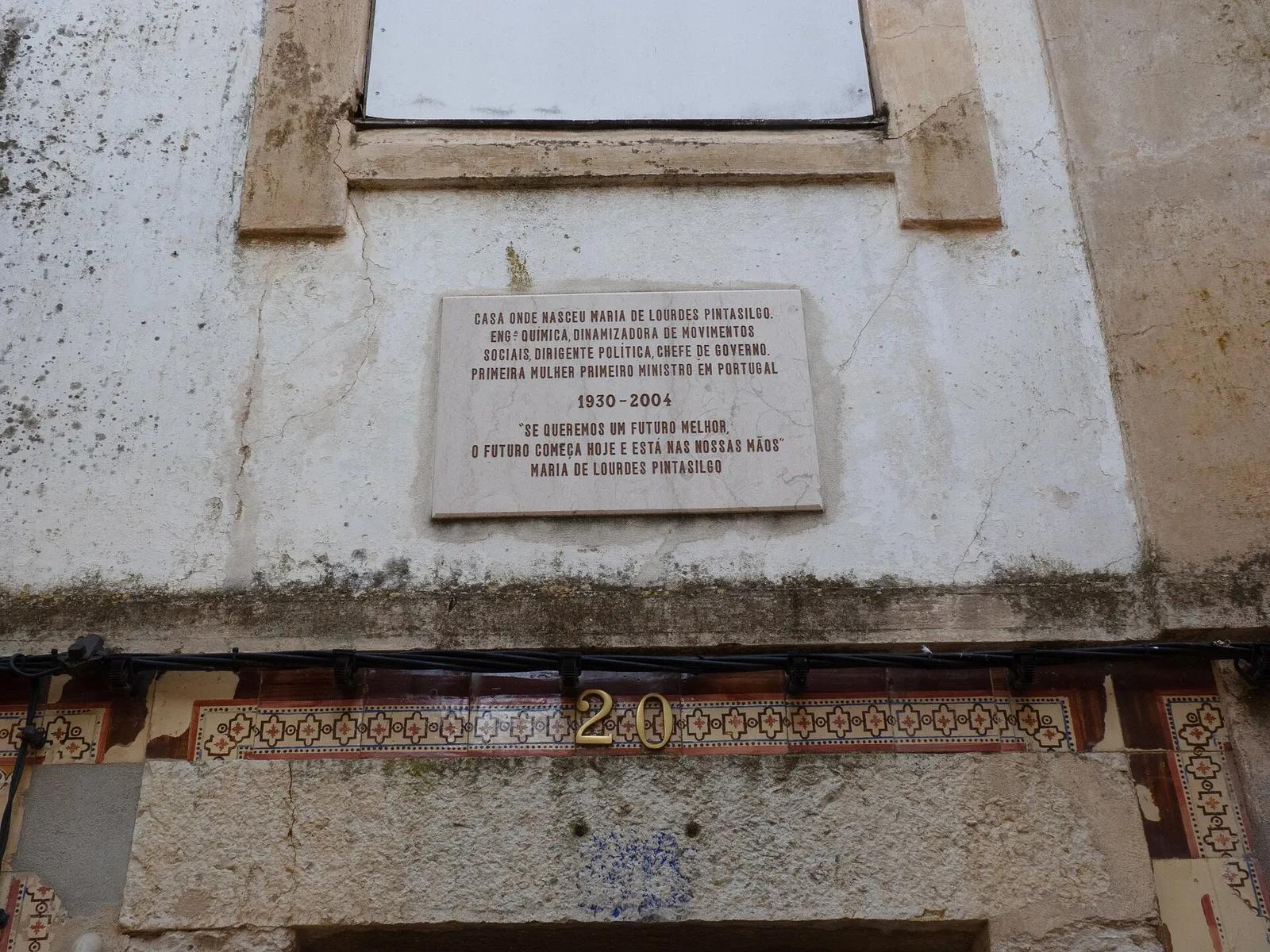
She was born in Abrantes, on the Tagus, on 18 January 1930, and moved to Lisbon with her family at the age of seven. In 1953 she graduated in industrial chemical engineering from the Instituto Superior Técnico, at a time when few women went to university in Portugal.
She went first to the Junta de Energia Nuclear on a research grant, then to the Companhia União Fabril (CUF), the industrial group, which had never before taken a woman into its senior technical staff. She worked in its factories at Barreiro and rose to direct its documentation centre.
Her other career was in the Church. From 1952 to 1956 she led the women's branch of the Catholic university students' movement, and from 1956 to 1958 she led Pax Romana, the worldwide Catholic students' movement; Mota says she was the first woman to hold its presidency. She then brought the Grail, an international movement of Catholic laywomen founded in the Netherlands, to Portugal, and in 1961 left her engineering job to work for it. Mota dates the decision to open the first Grail centre in Portugal to the end of 1957; the parliament's biographical note says she introduced it in 1962.
The late Estado Novo, the dictatorship founded by Salazar and led from 1968 by Marcelo Caetano, also called on her. From 1969 she sat in the Corporative Chamber, the regime's advisory assembly, and signed its opinions on matters such as the press law, religious freedom and amendments to the Constitution. In 1970 she chaired a working group on women in economic and social life, and in 1973 the commission on social policy for women that later became today's Commission for Citizenship and Gender Equality.
After the revolution she was Secretary of State for Social Security in the first provisional government of 1974, then Minister of Social Affairs in the second and third. Esquerda.net calls her the first woman to be a minister in Portugal. At the end of 1975 she went to Paris as Portugal's ambassador to UNESCO and was elected to its Executive Board in 1976.
The government of a hundred days
Her programme described a transitional government whose first duty was to prepare a fair election, with "total impartiality" towards the parties. It spoke of a horizon of 100 days, but it also refused to stand still. A responsible government, it said, could not stop governing in the present, even at the risk of measures that some would call unpopular or politically naive.
Parliament had not yet been dissolved, so the programme went to the Assembly in August. According to Susana Mota's 2015 study, some deputies heckled her with lines such as "go home and darn socks", and a motion to reject the programme failed for want of the votes the Constitution required. Leaders of the parties that formed the right-wing Aliança Democrática called her "Vasco Gonçalves in a skirt", after the pro-communist prime minister of 1974 and 1975, according to Esquerda.net; Observador records the same jibe during her 1985 presidential campaign.
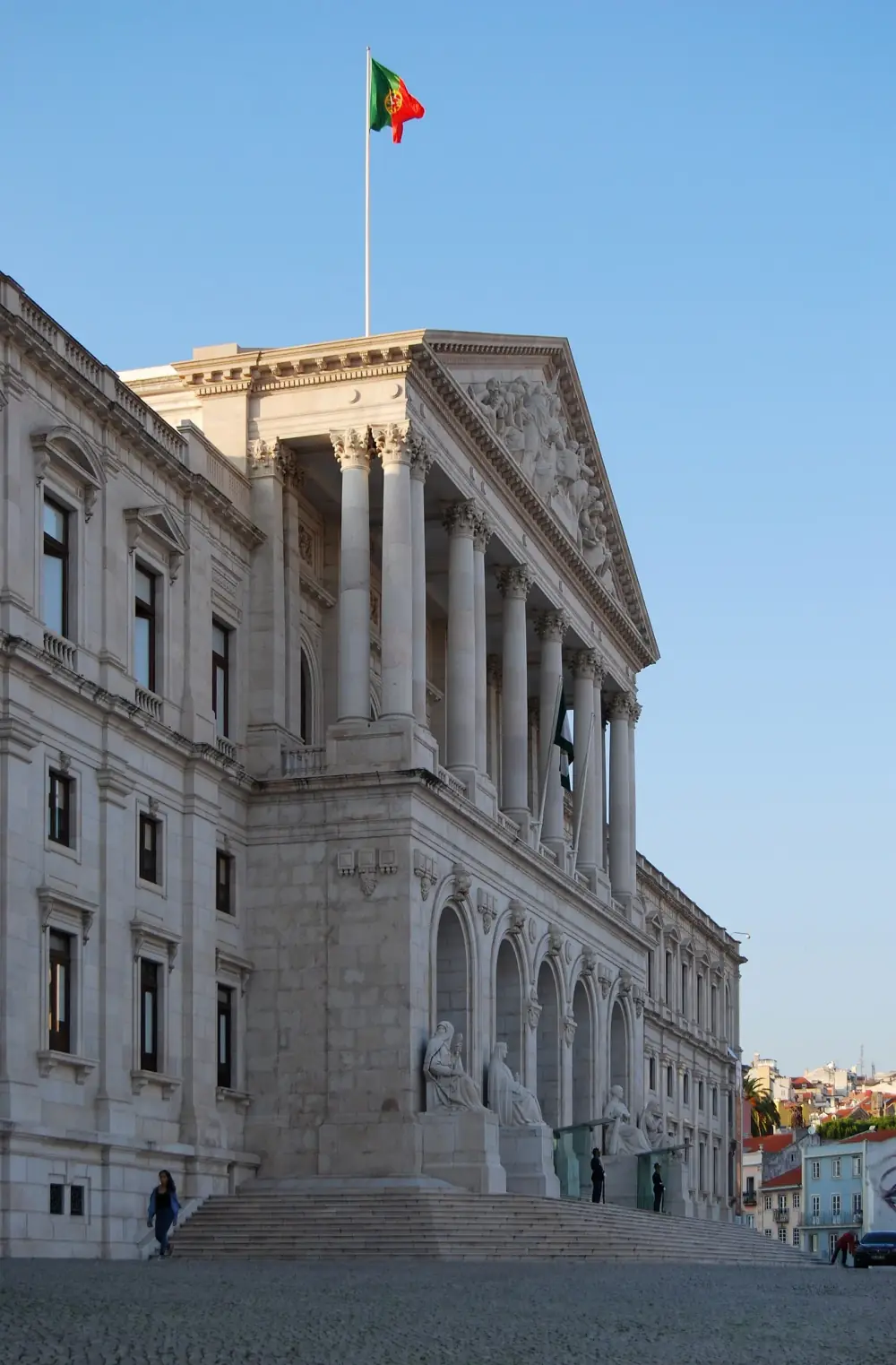
Eanes signed the dissolution on Tuesday 11 September 1979. The decree fixed the election for 2 December and said the new Assembly would only complete the current legislature, so another general election would follow in 1980.
The government was built around three coordinating ministers: Alfredo Bruto da Costa for social affairs, Carlos Corrêa Gago for the economy and planning, and Adérito Sedas Nunes for culture and science. António de Sousa Franco held finance. Two women joined as secretaries of state. One of them, Teresa Santa Clara Gomes, became her deputy; Mota writes that the two had founded the Grail in Portugal together.
The decrees came quickly. On 20 September one guaranteed women equal opportunities and treatment with men at work and in employment. The heaviest batch came at the end of December, in the government's last days: on 26 December a decree created a minimum social protection scheme, and the gazette of Saturday 29 December alone ran to at least sixteen supplements.
“A minimum scheme of social protection that covers all resident national citizens, regardless of their employment or of any previous contribution, and includes health and social security benefits.”
| Published | Law | What it did |
|---|---|---|
| 15 September 1979 | Lei 56/79 | Created the Serviço Nacional de Saúde, the national health service (passed by parliament in June) |
| 20 September 1979 | Decreto-Lei 392/79 | Guaranteed women equal opportunities and treatment at work and in employment |
| 26 December 1979 | Decreto-Lei 513-L/79 | Set up a minimum social protection scheme for all resident Portuguese citizens |
| 26 December 1979 | Decreto-Lei 513-M/79 | Raised the minimum old-age, invalidity and survivors' pensions and the social pension |
| 29 December 1979 | Decreto-Lei 519-C1/79 | New legal regime for collective labour relations |
| 29 December 1979 | Decreto-Lei 519-N1/79 | Created a general practice branch in the doctors' career and reorganised the public health branch |
Dates are those of the Diário da República issue that carried each law.
João Cravinho, a Socialist economist, called it one of the governments that legislated most in Portugal. It is his judgement; Mota, who quotes him, gives no count of decrees to back it. Her ministers met local authorities in eight regions, and parts of the Church were hostile, some seeing her as a communist sympathiser.
The election of 2 December 1979
The PSD, the CDS and the small monarchist PPM ran together as the Aliança Democrática (AD), led by Francisco Sá Carneiro. On Sunday 2 December 1979, 6,007,453 of the 7,249,346 registered voters cast a ballot, a turnout of 82.86 per cent in the official map.
The AD took 2,554,458 votes, 42.52 per cent. The Socialists came second with 27.33 per cent and 74 seats, and the APU, the alliance around the Communist Party, third with 18.80 per cent and 47 seats.
| List | Votes | Share | Seats |
|---|---|---|---|
| Aliança Democrática (PSD, CDS, PPM) | 2,554,458 | 42.52% | 121 |
| PSD alone (Azores and Madeira) | 141,227 | 2.35% | 7 |
| Partido Socialista | 1,642,136 | 27.33% | 74 |
| Aliança Povo Unido (PCP and allies) | 1,129,322 | 18.80% | 47 |
| UDP | 130,842 | 2.18% | 1 |
The AD did not run as a coalition in the Azores and Madeira, where the PSD and the CDS stood separately; together the AD parties won 128 of the 250 seats, a majority, and the CDS won no seat standing alone in the islands. Figures from the Comissão Nacional de Eleições' official map; shares are of all 6,007,453 voters, including blank and spoilt ballots, and lists with less than 2 per cent are left out. The map prints turnout as 82.86 per cent; its own totals give 82.87.
With 121 seats, plus seven for the PSD in the islands, the AD parties had a majority.
Sá Carneiro's government took office on Thursday 3 January 1980. Pintasilgo's had served 155 days.
The new government, Mota writes, suspended or reversed a number of its predecessor's decisions, and Freitas do Amaral, the new foreign minister, removed her from her UNESCO post.
After office: Belém, Strasbourg and the UN
Her dismissal from UNESCO caused a row. Mota describes how the AD government told Portuguese missions abroad that she no longer had its confidence and removed her as ambassador, although she still sat on UNESCO's Executive Board, to which she had been elected in her own name. The organisation's director-general, Amadou-Mahtar M'Bow, made that point publicly in April 1980, according to the Lisbon paper O Diário as cited by Mota.
She stayed close to Eanes and, Mota writes, helped with his re-election campaign in 1980. In July 1985 she launched her own candidacy for the presidency at the Hotel Ritz in Lisbon, as an independent with no party machine. For months the polls had her level with Diogo Freitas do Amaral, the right's candidate, and far ahead of Soares.
She had counted on Eanes. Instead, in September 1984, his advisers tried in his presence to talk her out of running, and in the end he blessed the candidacy of the Socialist dissident Francisco Salgado Zenha. On 26 January 1986 she came fourth and last, with 418,961 votes, or 7.38 per cent. Observador argues that by staying in the race she helped Soares, because many of her voters would otherwise have backed Zenha, and Zenha, not Soares, might then have reached the run-off that Soares went on to win. The 1986 election has its own article.
From 1987 to 1989 she sat in the European Parliament, elected on the Socialist list. From 1992 she chaired the Independent Commission on Population and Quality of Life, set up with UN backing, whose report was called Caring for the Future. In 2001, out of the Grail movement, she set up the Fundação Cuidar o Futuro to carry on that work.
Maria de Lourdes Pintasilgo died in Lisbon on Saturday 10 July 2004, aged 74.
18 January 1930
Born in Abrantes
1953
Graduates in industrial chemical engineering at the Instituto Superior Técnico
1956–1958
Leads Pax Romana, the international Catholic students' movement
1973
Chairs the commission on social policy for women
1974–1975
Secretary of State for Social Security, then Minister of Social Affairs
1975–1979
Ambassador to UNESCO in Paris
31 July 1979
Appointed prime minister by presidential decree
1 August 1979
The V Constitutional Government takes office
11 September 1979
Parliament dissolved; election set for 2 December
3 January 1980
Hands over to Sá Carneiro
26 January 1986
Wins 7.38 per cent in the presidential election
1987–1989
Member of the European Parliament
10 July 2004
Dies in Lisbon
Why it still matters
The commission on women she chaired from 1973, renamed the Comissão da Condição Feminina in 1975, survives as the CIG, the Commission for Citizenship and Gender Equality. It describes her as the first and only woman prime minister in Portugal. Susana Mota, in a 2015 study of Pintasilgo, counts her as the second in Europe, after Margaret Thatcher, who had become British prime minister earlier in 1979.
Her government was also the last of its kind. No president has since chosen a cabinet of independents, as Eanes did three times in 1978 and 1979. Since the AD victory, every Portuguese government has rested on a party or coalition in parliament, and the 1982 revision of the Constitution abolished the Council of the Revolution.
Her name has moved into institutions. Since 2016 the Instituto Superior Técnico gives a yearly Maria de Lourdes Pintasilgo Award to two women engineers it trained. In 2022 the Museu da Presidência da República gave her an exhibition, Mulher de um Tempo Novo, which drew more than 25,000 visitors.
FAQs
Who was Portugal's first woman prime minister?
Maria de Lourdes Pintasilgo, a chemical engineer and Catholic lay leader. President Ramalho Eanes appointed her on 31 July 1979 and her government took office on 1 August 1979. She is still the only woman to have held the office.
How long was Pintasilgo prime minister?
Just over five months. Her government took office on 1 August 1979 and handed over to Francisco Sá Carneiro's on 3 January 1980, after the early election of 2 December 1979. It became known as the government of a hundred days, after the horizon its programme set itself, although it lasted about 150.
Why did President Eanes choose her?
After two governments fell, Eanes decided in July 1979 to dissolve parliament and call an early election, and he wanted a government of his own choosing to run the country until then. Pintasilgo had been a minister in 1974–1975 and was Portugal's ambassador to UNESCO.
What did her government do?
Among other measures, it decreed equal opportunities and treatment for women at work (Decreto-Lei 392/79), a minimum social protection scheme for all resident citizens (Decreto-Lei 513-L/79) and higher minimum pensions, and it countersigned and published the law creating the national health service.
Did Pintasilgo run for president?
Yes. She stood as an independent in January 1986 and, despite strong early polls, came fourth with 418,961 votes, or 7.38 per cent. Mário Soares went on to win the run-off.
On the timeline
Open the timelineNearby moments from revolution and democracy (1974–1986).
TAP Flight 425, a Boeing 727 arriving from Brussels via Lisbon, overruns the short, rain-soaked runway at Funchal in Madeira and plunges onto the beach below, killing 131 of the 164 people on board. It remains the worst accident in TAP's history; the runway was later lengthened twice, in 1986 and in 2000, the second time on pillars over the sea.
Formal negotiations for Portugal's accession to the European Economic Community open, some eighteen months after the application lodged by Mário Soares's government in March 1977. They concluded with the signing of the accession treaty in June 1985.
Nicolau Lobato, president of Fretilin and first prime minister of the short-lived Democratic Republic of East Timor, is killed by Indonesian forces in the mountains south of Dili. Born in Portuguese Timor in 1946, he is honoured today as a national hero, and Dili's international airport bears his name.
Pintasilgo becomes prime minister
Maria de Lourdes Pintasilgo's fifth constitutional government takes office. Appointed by President António Ramalho Eanes the day before, she is Portugal's first female Prime Minister and remains the only woman to have held the office.
José Eduardo dos Santos, a Soviet-trained petroleum engineer, is sworn in as President of Angola, eleven days after the death of the country's first president, Agostinho Neto. He ruled for 38 years, through civil war and an oil boom, while his daughter Isabel became a major investor in Portuguese companies before facing corruption investigations.
Francisco Sá Carneiro is sworn in as prime minister at the head of the Aliança Democrática, the PSD–CDS–PPM coalition that had won the first outright parliamentary majority since the revolution. He governed for less than a year before dying in the Camarate plane crash on 4 December 1980.
Marcelo Caetano, last Prime Minister of the Estado Novo, dies of a heart attack in Rio de Janeiro aged 74, in exile in Brazil since the Carnation Revolution.
Coming up in history
All long reads
33 sources
Archives, scholarship and reporting this article was checked against.
- 1
Decreto n.º 74-A/79, de 31 de Julho: nomeia a engenheira Maria de Lurdes Ruivo da Silva Matos Pintasilgo Primeiro-MinistroDiário da República, I série, n.º 175, 2.º suplemento, 31 July 1979
- 2
Tomada de Posse do V Governo ConstitucionalGoverno da República Portuguesa, Arquivo Histórico
- 3
- 4
Maria de Lurdes Ruivo da Silva Matos Pintasilgo: nota biográfica (Os Procuradores da Câmara Corporativa, 1935-1974)Assembleia da República
- 5
Mapa oficial com o resultado das eleições intercalares para a Assembleia da República em 2 de Dezembro de 1979Comissão Nacional de Eleições, Diário da República, I série, n.º 295, 2.º suplemento, 24 December 1979
- 6
- 7
Maria de Lourdes Pintasilgo e a sociedade portuguesa (Susana Mota)E-Revista de Estudos Interculturais, n.º 3, CEI–ISCAP, Politécnico do Porto, May 2015
- 8
Maria de Lourdes Pintasilgo faleceu há quinze anosComissão para a Cidadania e a Igualdade de Género (CIG), 10 July 2019
- 9
- 10
- 11Governos de PortugalRTP Notícias
- 12
Maria de Lourdes PintasilgoFundação Cuidar o Futuro
- 13
- 14
- 15
- 16
- 17
- 18
- 19
Maria de Lourdes Pintasilgo AwardInstituto Superior Técnico, Universidade de Lisboa
- 20Um candidato improvável à direita, três à esquerda. A história da “eleição mais louca de sempre” (Miguel Santos Carrapatoso)Observador, 4 October 2025
- 21
9 de dezembro de 1985: Maria de Lourdes Pintasilgo formaliza candidatura presidencial (Mariana Carneiro)Esquerda.net
- 22
- 23
- 24
- 25
- 26A vida de Soares, parte V. “Soares é fixe”: os anos em Belém (João Ferreira)Observador, 7 January 2017
- 27
- 28
Past Prime Ministers: Margaret ThatcherGOV.UK
- 29
Breve História do Tribunal ConstitucionalTribunal Constitucional
- 30
- 31
- 32
- 33
Image credits
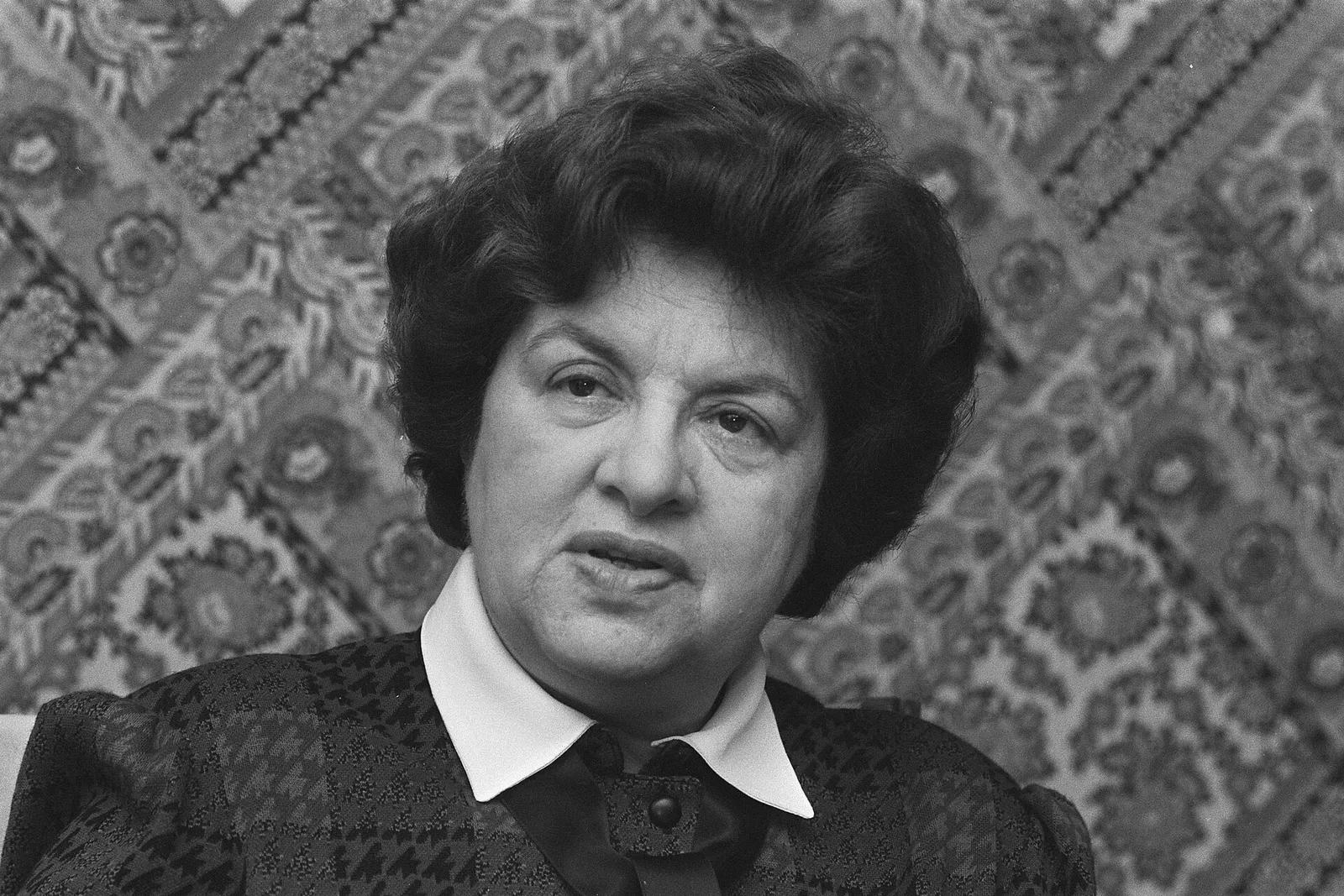
- Maria de Lourdes Pintasilgo at a press conference in Amsterdam on 7 November 1986, seven years after she led Portugal's fifth constitutional government. Roland Gerrits / Anefo, CC0, via Wikimedia Commons.
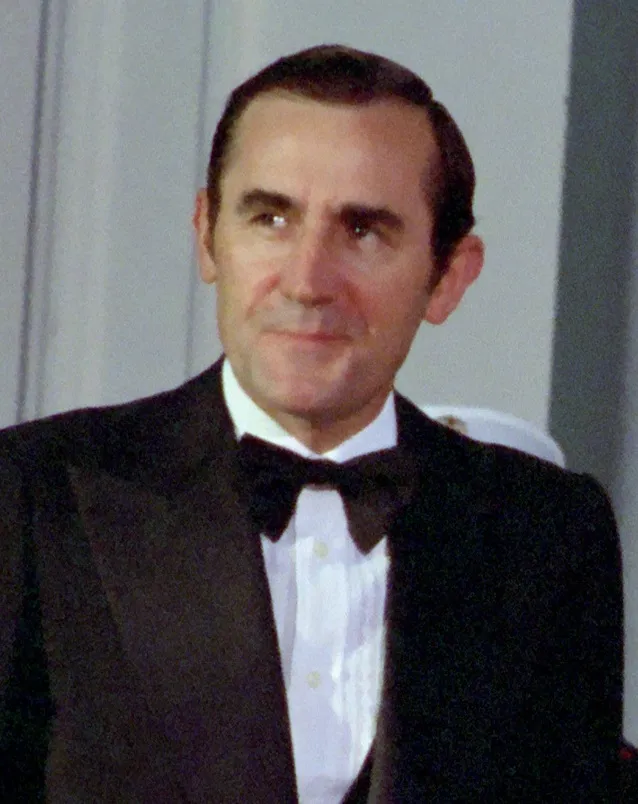
- President António Ramalho Eanes at the White House in September 1983. In 1978 and 1979 he formed three governments on his own initiative; Pintasilgo's was the last. White House Photographic Office. 1981-1989, Public domain, via Wikimedia Commons.
- The plaque on the house in Abrantes where she was born, photographed in 2022. It calls her the first woman prime minister of Portugal. Romain D C, CC BY-SA 4.0, via Wikimedia Commons.
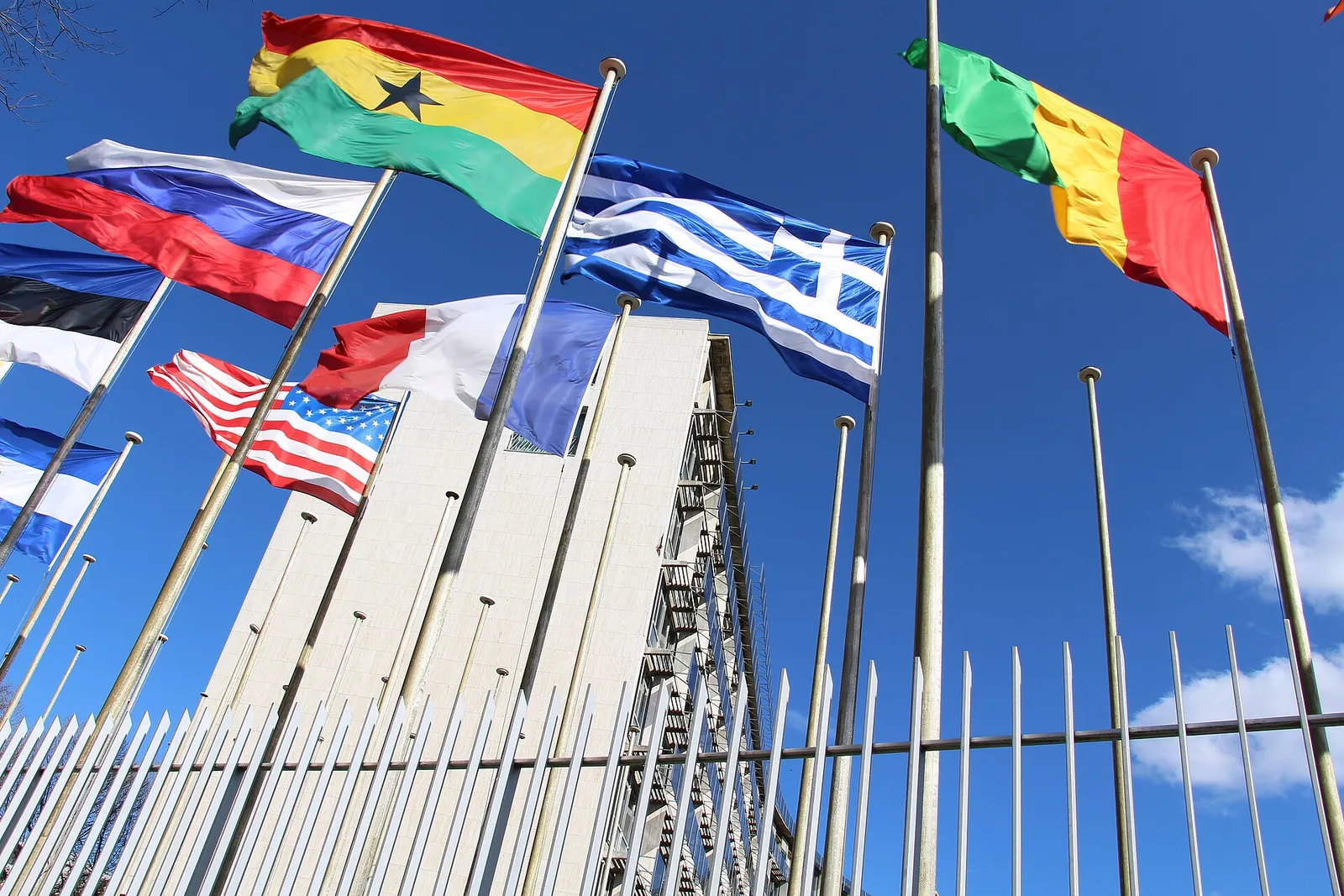
- Flags outside UNESCO's headquarters on the Place de Fontenoy in Paris, in 2016. Pintasilgo represented Portugal there from the end of 1975 until she became prime minister. Fred Romero from Paris, France, CC BY 2.0, via Wikimedia Commons.
- The Palácio de São Bento in Lisbon, seat of the Assembleia da República, in 2014. The Assembly debated Pintasilgo's programme in August 1979 and was dissolved on 11 September. Felix König, CC BY 3.0, via Wikimedia Commons.