

The Chiado fire, 1988: Lisbon's shopping quarter burns
Before dawn on 25 August 1988 a fire broke out in the Grandella store and swept through four blocks of Lisbon's most famous shopping streets. It killed two men, cost about 2,000 jobs and left the architect Álvaro Siza to put the Chiado back together.
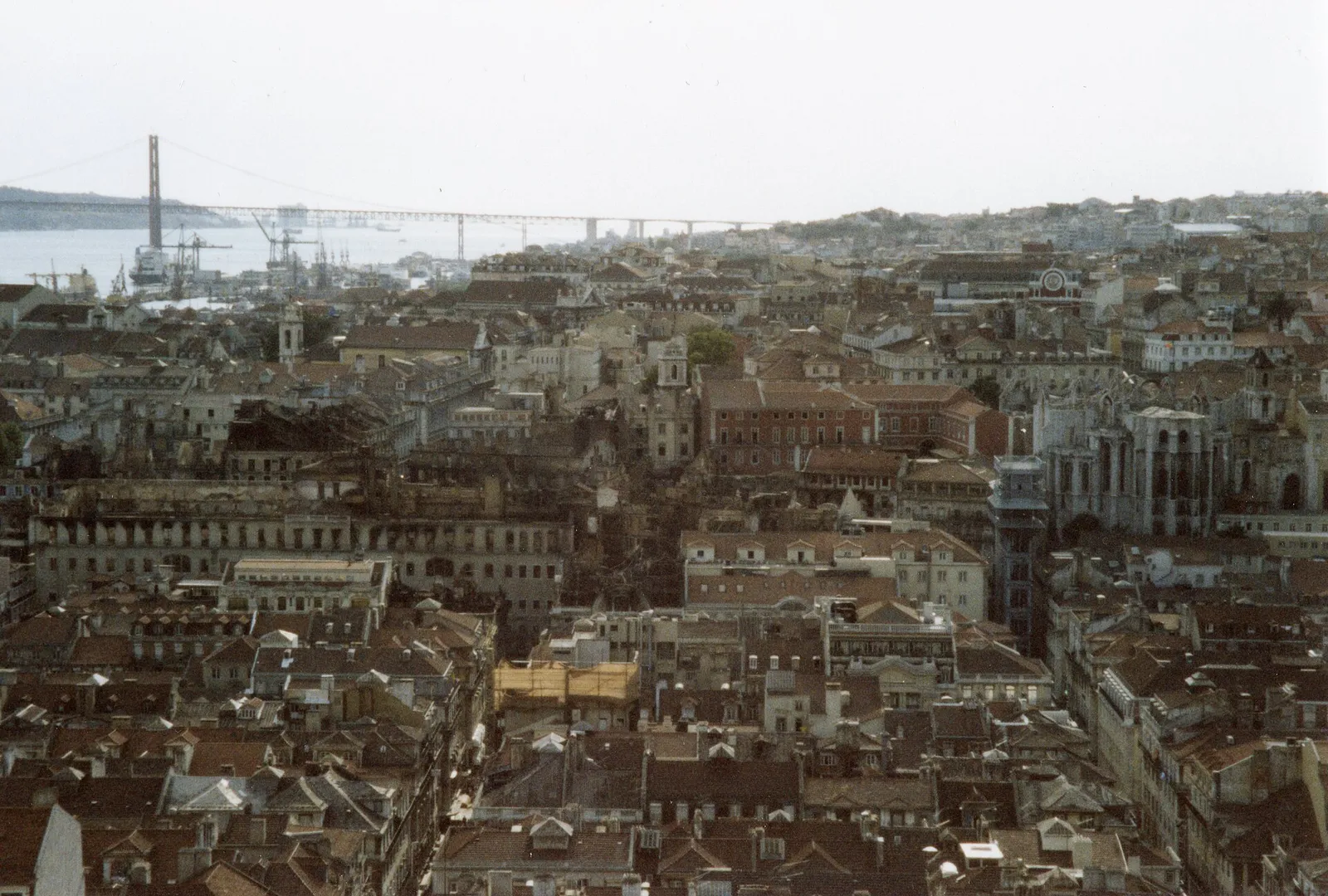
At a glance
- In the early hours of Thursday 25 August 1988 a fire broke out in the Grandella department store on Rua do Carmo, in Lisbon's Chiado district, and spread to the neighbouring Grandes Armazéns do Chiado and across the street.
- It destroyed or gutted 18 buildings in Rua do Carmo, Rua Garrett and Rua Nova do Almada before it was brought under control around 11 am; it was declared out at about 4 pm.
- Two men died, the firefighter Joaquim Ramos and an elderly resident. More than 50 people were hurt, about 73 by one count, most of them firefighters. About 2,000 people lost their jobs.
- The cause was never established. Arson was suspected, but the Polícia Judiciária closed its inquiry in July 1992 without charging anyone.
- The city chose the Porto architect Álvaro Siza to rebuild the area. He kept the old street fronts, opened courtyards and passages to the public and designed the Baixa-Chiado metro station; the last piece of his plan, the Terraços do Carmo, opened in 2015.
Sparks over Rua Garrett
Fernando Corrêa dos Santos was asleep in his flat on Rua Garrett when, at about half past five on the morning of 25 August 1988, he sensed that something was wrong in the street. He was about 54, a press photographer for the evening paper Diário Popular. From his window he saw huge sparks flying past the front of the Grandes Armazéns do Chiado, coming from Rua do Carmo. A police car was parked on the pavement outside the Eduardo Martins shop, and that was all.
He dressed, grabbed a camera and ran down to the corner. The Grandella department store was lit up by a sea of flames, and he could feel the heat from a distance. He counted three or four firefighters and a single hose.
When he went back to Rua Garrett to warn one of the few firemen there that the flames were jumping to the next buildings, the reply was a curse that meant, roughly, “we're done for”.
By lunchtime the heart of the Chiado, the quarter of department stores, bookshops and cafés between the Baixa and the Bairro Alto, was a shell. The newspapers and television called it the worst disaster in Lisbon since the earthquake of 1755.
Two department stores and a quarter in decline
The Chiado sits on the slope between the flat Baixa, the grid of streets rebuilt under the Marquis of Pombal after 1755, and the hill of the Bairro Alto. Most of its buildings followed Pombal's rules: uniform stone fronts, shops on the ground floor and, above them, floors carried on a frame of timber called the gaiola, or cage, which was designed to ride out earthquakes.
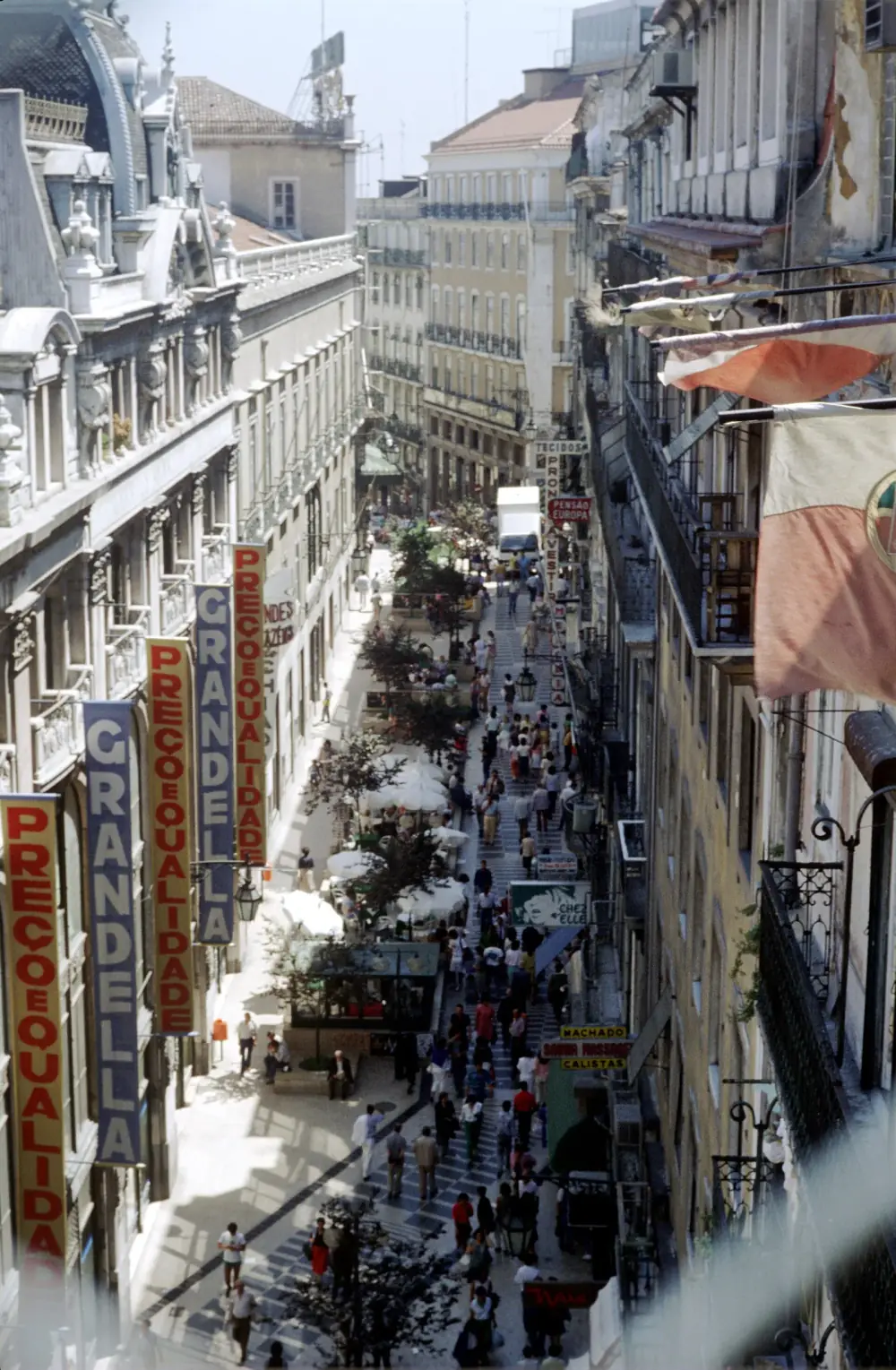
Two big stores broke the pattern. The Grandes Armazéns do Chiado opened in 1894 in the old Barcelinhos palace. Francisco de Almeida Grandella, who had come to Lisbon at 11 as a shop boy and built a retail empire, answered with a store on Rua do Carmo, backing onto the Rua do Ouro building, bought in 1890, that had housed a first version of his store. Designed by the French architect Georges Demay, the Grandes Armazéns Grandella opened on 7 April 1907, with a grand staircase and an electric lift.
By the 1980s the glamour had faded. Families moved out of the upper floors and offices and storerooms moved in, often with extra floors and illegal extensions that closed off the back courtyards. New shopping centres elsewhere in the city drew customers away. At night the quarter was nearly empty, and the Armazéns do Chiado were close to bankruptcy. Both stores then belonged to the same business group.
Rua do Carmo, the short street that climbs from the Rossio to the Chiado, had been made pedestrian. Shortly before the fire, with the approval of the mayor, Nuno Krus Abecasis, the city had put large concrete planters with flowers and benches down the middle. They took up one of the lanes a fire engine would need.
Five hours in the narrow streets
Nobody knows exactly when the fire started. Accounts put the first flames anywhere between 1 am and 4.30 am. The alarm came late: few people lived in the area at night and the buildings had few or no automatic alarms. The first call reached the firefighters at around 5 am.
The first crews arrived within minutes with two engines and found the store already lost. The planters on Rua do Carmo kept the engines and ladders away. The hydrants failed, some hoses leaked, and at dawn a water main burst and the pressure dropped. Overhead cables got in the way of the ladders, and commanders on the ground shouted orders, because few fire brigades had radios.
“With those constructions in the middle of the street it was easy to fight a fire in a rubbish bin, but never in a building.”
A strong wind carried burning embers over the rooftops. The old timber floors and staircases fed the flames, and gas cylinders, air-conditioning units and computers exploded as the fire reached them. It crossed into the Armazéns do Chiado and over the street, and by about 7 am it had reached the Eduardo Martins building. Firefighters feared it would climb to the Bairro Alto, or to the ammunition store of the Republican National Guard (GNR) barracks at the Carmo.
Downhill, the fire threatened the Boa Hora court, full of case files, and the Veiga Beirão commercial school. The acting mayor, the councillor Pedro Feist, had the most important files carried out of the City Hall; Abecasis was on holiday. A new concrete building of the Montepio Geral bank, on the Baixa side, stopped the flames from spreading further.
At the Veiga Beirão school, firefighters laid a plank from the playground wall to a back window of a building on Rua do Carmo and pulled elderly residents across. Two women made it. The third, a man the Correio da Manhã later named as Mário Ramires Vidal, aged 77, missed the hand of the firefighter José Rijo Abrantes and fell into the light well behind the building.
1.00 to 4.30 am
The fire starts in the Grandella
Estimates vary; the Lusa agency gives about 3.30 am.
About 5 am
First alarm
RTP gives 5.19 am. By then smoke was coming through the roofs.
Soon after 5 am
First crews arrive
Two engines arrive within minutes. The fire has already reached the Grandes Armazéns do Chiado and crossed the street.
About 7 am
Eduardo Martins building alight
Air support is requested; the authorities later advise against it for fear of bringing down the shells.
About 11 am
Fire brought under control
Contained within a perimeter formed by Rua Garrett, Rua do Carmo, Rua do Ouro and Rua Nova do Almada.
About 1 pm
Airport fire engine arrives
Its long-range water cannon, placed near the Bertrand bookshop, helps knock down the main blaze.
About 4 pm
Declared extinguished
Damping down went on for 11 days; firefighters stayed on site until October.
More than 60 fire brigades from Lisbon and its suburbs came, and they cooperated as best they could without a joint plan. What turned the fight, by several accounts, was the fire engine from Lisbon airport, which arrived around lunchtime with a cannon that could throw water a long way. Volunteers from Alverca spent hours ferrying water to it from a hydrant in the Largo do Calhariz.
Crowds and reporters walked freely among the hoses. RTP, then Portugal's only television broadcaster, covered it all day; its reporter Manolo Bello and cameraman Guilherme Lima got inside the gutted Armazéns do Chiado and filmed twisted steel beams and hot water running down Rua Nova do Almada. Bello later said it was five years before he could bring himself to walk through the Chiado again.
Two dead and a quarter in ruins
Joaquim Ramos, a 31-year-old firefighter of Lisbon's Regimento de Sapadores Bombeiros, the city's professional fire brigade, was caught by a tongue of fire and superheated gases while fighting the blaze on Rua do Carmo. He was burned over 85 per cent of his body.
He did not survive. A volunteer firefighter from Alverca remembered hearing that day that a colleague, Joaquim Catana Ramos, had been killed in an explosion.
The second victim was the resident who fell at the back of Rua do Carmo, a retired electrician from the Navy Arsenal, aged about 70 by Lusa's account and 77 by the Correio da Manhã's. His body was found more than a month later, as firefighters cleared the rubble.
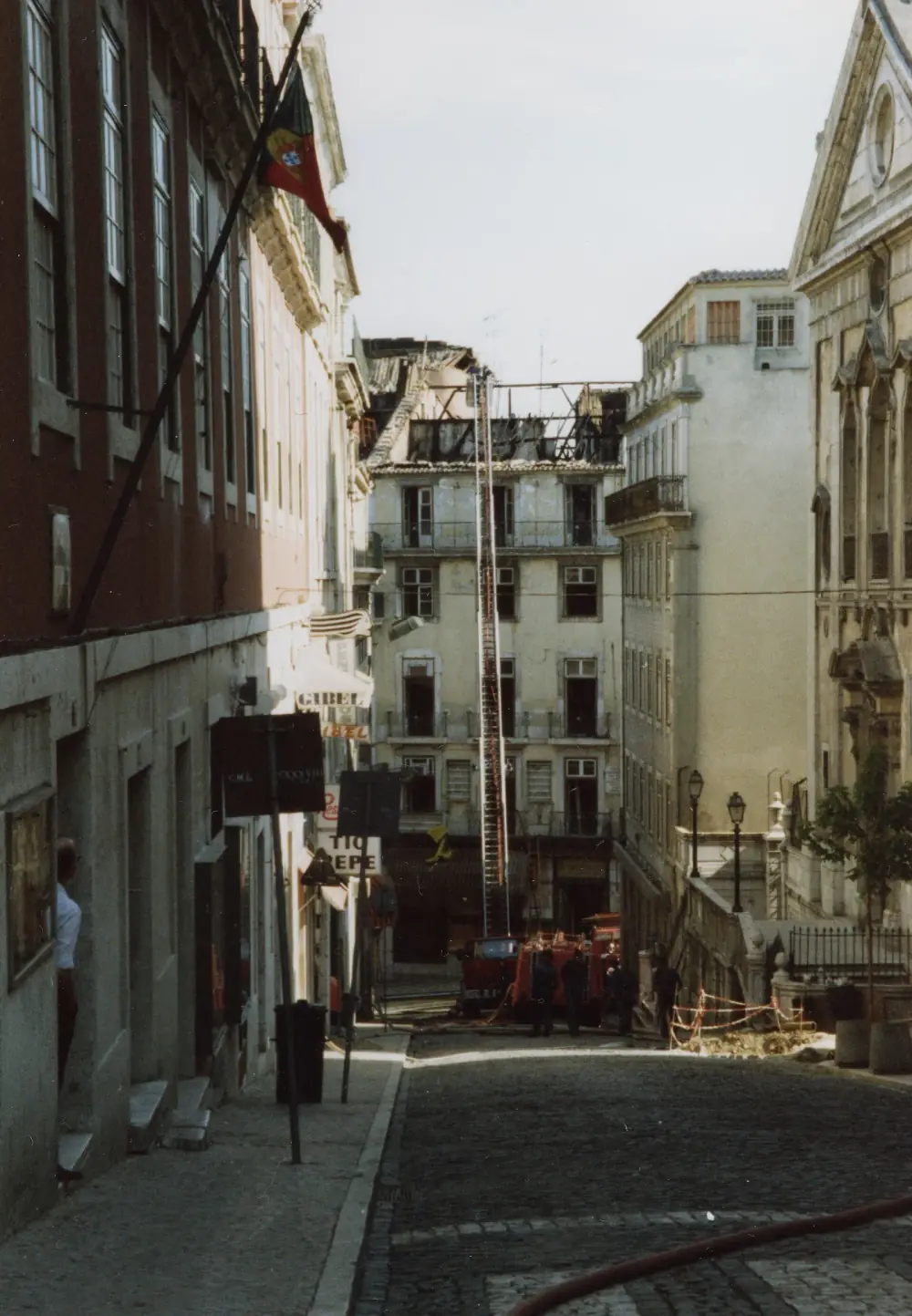
Few people still lived in the burned blocks; Lusa counted five families made homeless. Some 40 businesses were destroyed and about 2,000 people lost their jobs. One estimate puts the direct damage at the equivalent of €80 million.
Some of the oldest shops in Lisbon went with them. Casa Batalha traced its origins to 1635. Martins & Costa, a luxury grocer of 1792, supplied the diplomatic corps. The music and book firm Valentim de Carvalho lost an archive of 78 rpm records and original cover art. The Pastelaria Ferrari burned, and so did the Perfumaria da Moda, whose carved interior had appeared in the 1941 film O Pai Tirano.
| Item | Figure | Source |
|---|---|---|
| Buildings destroyed or damaged | 18 | Lusa, RTP, Fernandes and Fidalgo |
| Buildings destroyed or damaged | 17, partly or totally | CCA finding aid to Siza's archive |
| Deaths | 2: a firefighter and a resident | All sources |
| Injured | More than 50 | Lusa, RTP |
| Injured | About 73, mostly firefighters | Fernandes and Fidalgo, citing the city council |
| Homeless | 5 families, 21 people | Lusa |
| Homeless | 300 | Delaney (1988) and others, cited by Fernandes and Fidalgo |
| Vehicles | 191 | RTP |
| Vehicles | 275, including 22 tankers and 6 ladders | Fernandes and Fidalgo |
| Jobs lost | About 2,000 | Lusa, RTP, Fernandes and Fidalgo |
Fernandes and Fidalgo (2020) set out the disagreements and attribute each figure to its sources. RTP gives the homeless as five families and 20 other people. Lusa, and Fernandes and Fidalgo, also say about eight football pitches' worth of ground burned; that is left out here, because Torricelli describes the damaged area as four city blocks, which is much smaller.
How many fought the fire? Estimates by source
people
RTP says “more than 1,100 firefighters”; the Diário de Notícias standfirst “1,200 men”; Lusa “more than 1,500 operatives”, including police and gas and electricity workers; Fernandes and Fidalgo “about 1,680 firefighters”, citing the city council, and note that the real number is not clear.
Show the data
| Estimated firefighters or responders | |
|---|---|
| RTP (2018) | 1,100 |
| Diário de Notícias (2018) | 1,200 |
| Lusa (2018) | 1,500 |
| Fernandes and Fidalgo (2020) | 1,680 |
A cause never found
The Polícia Judiciária, the criminal investigation police, were on the scene that morning looking for signs of arson. Suspicion grew quickly. The Armazéns do Chiado were nearly bankrupt, a warehouse belonging to the same owners in Tavira had been burned by arsonists three years earlier, and on the same night a deliberately set fire in another of their buildings, in the Bairro Alto, was quickly put out. A white van was reportedly seen shortly before the Chiado fire began.
None of it could be proved. When firefighters opened the store doors the blaze flared so violently that any trace of how it began was lost. Nobody was ever charged, and the inquiry was closed in July 1992. Other explanations, such as a short circuit, were also aired.
The public argument was mostly about the city. Critics blamed the council for the planters on Rua do Carmo, for having no disaster plan and for the mayor's absence, though the fire brigade had given a favourable opinion on the planters before they went in. A survey commissioned by the parish shortly before the fire had estimated that there were nearly 2,000 gas cylinders in that small area.
Siza's plan: change the inside, keep the face
Abecasis gave the rebuilding to Álvaro Siza, an architect from Porto, without a competition, which drew objections. Siza was known for social housing in Porto and Évora and for projects in Berlin and The Hague. A municipal technical office was set up to work with him.
Accounts of his timetable differ. The Canadian Centre for Architecture, which holds his archive, has him starting in January 1989 and presenting the plan to the city in April 1990; the architectural historian Carlotta Torricelli has the city instructing him a few days after the fire, the first part presented eight months later and the whole completed in July 1990.
“This commission, as would have happened to anyone, frightened me a little. I knew there would be many difficulties.”
Architects argued over whether to rebuild the old fronts or design something new. Siza went back to Pombal's own rules. The street façades were restored, more uniform in height and rhythm than before, with instructions down to individual decorative elements, while owners could hire their own architects for the interiors. Behind the fronts he cleared the extensions that had filled the courtyards, opened some of them to the public and added stairs and passages, among them a stepped passage restored between Rua do Crucifixo and Rua Nova do Almada.
He also wanted people living in the Chiado again, and a hotel in the old Armazéns do Chiado to keep the street busy after the shops closed. The new owners wanted a shopping centre. In 1996 they settled on 41 hotel rooms on the top two floors and 41 shops below, with the shopping centre's interior by Eduardo Souto de Moura. The building reopened as the Armazéns do Chiado shopping centre in 1999. The Grandella was rebuilt behind its restored façade for shops, offices and other uses.
A station under the ruins
The plan also tied the Chiado to the Metro. Siza designed Baixa-Chiado station, with one exit rising inside the rebuilt Armazéns do Chiado. The Green Line extension from Rossio to Cais do Sodré, through the new station, opened on 18 April 1998, and the Blue Line arrived from Restauradores on 8 August, making Baixa-Chiado a place to change between the two lines.
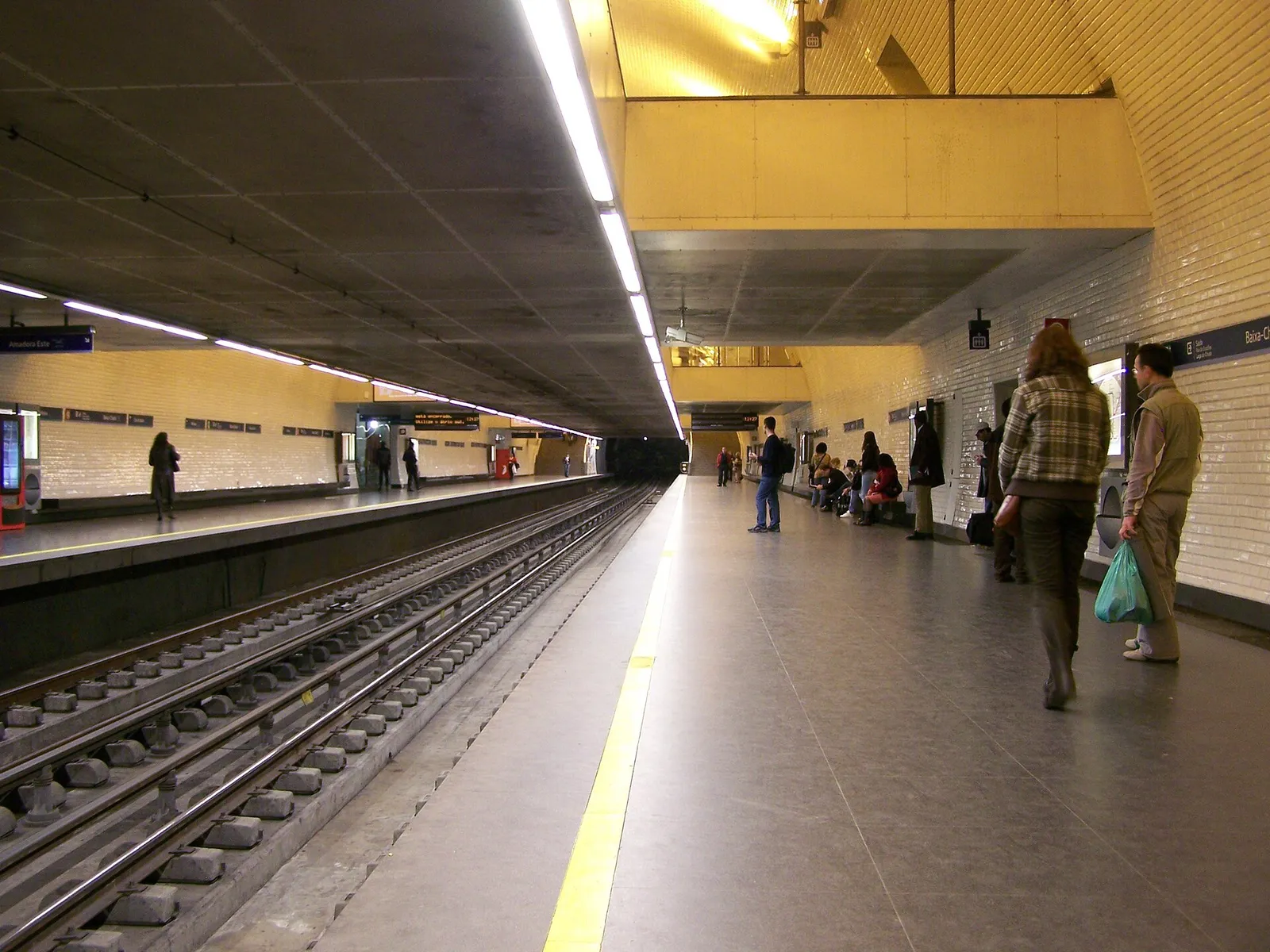
The rest took much longer. In 1998 the Armazéns do Chiado were still the one unfinished building. The last piece, a hanging garden and viewpoint linking Rua Garrett with the Largo do Carmo beside the ruins of the Carmo convent, designed by Siza with Carlos Castanheira, was begun in September 2009 and opened in June 2015 as the Terraços do Carmo, at a cost of about €2 million. The mayor, Fernando Medina, said it completed the Chiado plan almost 27 years after the fire.
What the fire changed
When the city fire brigade inspected the Baixa, the Chiado and the streets around them, it found areas in as bad a state as the Chiado, or worse, with old wiring, large amounts of combustible material, no fire doors and no extinguishers. A 1978 government resolution on fire safety in buildings had produced little.
New rules followed. Decree-Law 426/89 of 6 December 1989 set precautionary fire-safety measures for old urban centres and made town councils responsible for carrying them out, and a 1990 decree covered housing. The scattered rules were later merged into one fire-safety code for buildings in 2008. In 1992 the Lisbon brigade opened its own training school, and firefighters got proper protective kit; photographs from 1988 show men fighting the fire in short sleeves.
“The Chiado fire was without doubt a decisive milestone in the development of the whole system of fire safety in buildings.”
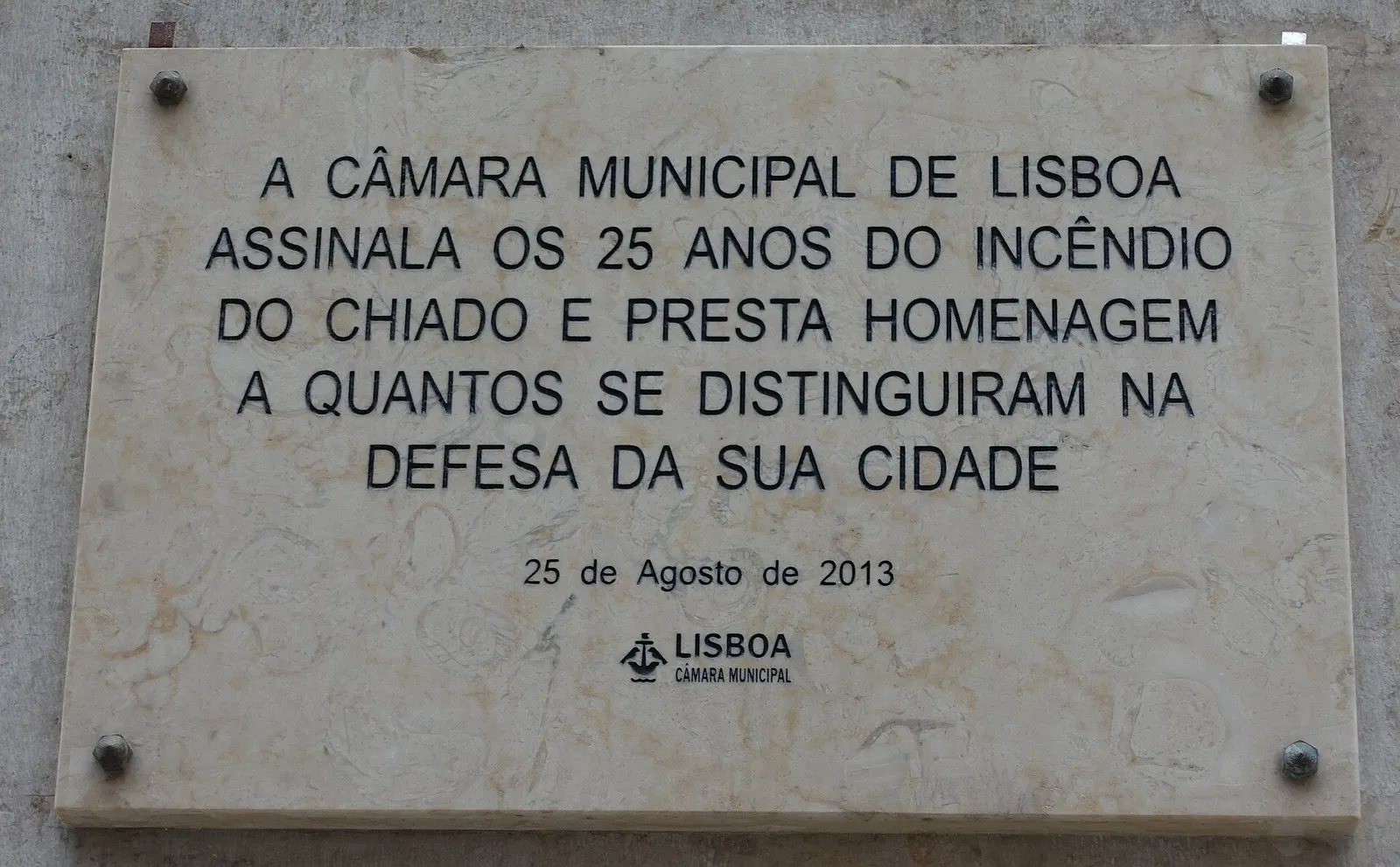
Thirty years on, Lusa reported that access was still the firefighters' worst enemy in the old quarters: narrow streets, heavy traffic and chaotic parking. Lisbon now holds its Municipal Firefighters' Day ceremony beside the plaque to the fire on Rua do Carmo. On 25 August 2022, the 34th anniversary, the mayor, Carlos Moedas, laid a wreath there and recalled the fire's two victims.
FAQs
What caused the Chiado fire of 1988?
Nobody knows. The fire started in the Grandella department store in the early hours of 25 August 1988. Arson was suspected, but the investigation found no proof, nobody was charged and the inquiry was closed in July 1992.
How many people died in the Chiado fire?
Two: Joaquim Ramos, a 31-year-old firefighter of Lisbon's professional fire brigade, and an elderly resident who fell during a rescue and was found more than a month later in the rubble. More than 50 people were injured, about 73 by one count, most of them firefighters.
Which buildings burned in the Chiado fire?
Eighteen buildings between Rua do Carmo, Rua Garrett and Rua Nova do Almada were destroyed or gutted, including the Grandella and Grandes Armazéns do Chiado department stores and old shops such as Casa Batalha, Martins & Costa and the Pastelaria Ferrari.
Who rebuilt the Chiado after the fire?
The Porto architect Álvaro Siza, chosen by the mayor Nuno Krus Abecasis. His plan restored the old street fronts, opened courtyards and passages to the public and included the Baixa-Chiado metro station, opened in 1998. The Armazéns do Chiado reopened in 1999, and the last part of the plan, the Terraços do Carmo, opened in 2015.
On the timeline
Open the timelineNearby moments from portugal in europe (1986–today).
Admiral Américo Tomás, the last President of the Estado Novo regime, who was deposed in the Carnation Revolution of 1974, dies aged 92.
TSF begins regular broadcasts in Lisbon as a news radio run by a cooperative of journalists. Private local stations were not yet licensed, so it went out as a pirate until unlicensed stations went silent in December; its live coverage of the Chiado fire that August made its name.
Rosa Mota wins the Boston Marathon for the second year running; she would take it a third time in 1990. Five months later the runner from Porto added Olympic gold in Seoul, becoming the first Portuguese woman to win an Olympic title.
The Chiado fire of 1988
A fire breaks out in the Grandella department store and sweeps through the Chiado, Lisbon's historic shopping district, gutting eighteen buildings and killing two people. The press called it the city's worst disaster since the 1755 earthquake; Álvaro Siza Vieira later led the rebuilding.
Singer-songwriter Carlos Paião, a qualified doctor who represented Portugal at Eurovision in 1981 with the playful 'Play-back', dies in a road accident on the old Lisbon–Porto road near Rio Maior, aged just 30.
Rosa Mota wins the Olympic marathon in Seoul by thirteen seconds, becoming the first Portuguese woman to win an Olympic gold medal.
Salvador Sobral is born in Lisbon. In 2017 his gentle ballad 'Amar pelos dois', written by his sister Luísa, won the Eurovision Song Contest in Kyiv with a record 758 points. It was Portugal's first win since its 1964 debut, ending the longest losing run in the contest's history. Months later he underwent a heart transplant.
Coming up in history
All long reads
20 sources
Archives, scholarship and reporting this article was checked against.
- 1
Relembrar o grande incêndio de Lisboa 30 anos depois (Ana Sá Fernandes, António Fidalgo)Territorium 27 (II), 2020, pp. 143-158, Imprensa da Universidade de Coimbra
- 2Um fogo no coração de Lisboa. O incêndio do Chiado foi há 30 anos (Andreia Martins, Sara Piteira)RTP Notícias, 25 August 2018
- 325 de agosto de 1988. O dia em que ficaram só as paredes do velho ChiadoDiário de Notícias, 24 August 2018 (Lusa report)
- 4O dia em que o coração de Lisboa ardeu (Fernanda Cachão)Correio da Manhã, Domingo magazine, 19 August 2018
- 5
Reconstrução do Chiado [Reconstruction of the Chiado area], Lisbon, Portugal (1988-1998)Canadian Centre for Architecture, Álvaro Siza fonds
- 6
The reconstruction of the Chiado in Lisbon. Álvaro Siza and the artifice of heteronomy (Carlotta Torricelli)FAMagazine 55 (2021), pp. 68-79, DOI 10.12838/fam/issn2039-0491/n55-2021/726
- 7
Living among ruins: Alvaro Siza and the rebuilding of Portugal's historic neighborhoods (Margarette Leite)ACSA International Conference proceedings, 1998
- 8A história de Francisco Grandella: maçon, boémio e visionárioDiário de Notícias, 26 August 2018
- 9
Chiado: renascer das cinzasJornal de Negócios, Weekend, August 2013
- 10
Lisboa antiga: o roteiro pela cidade que já só existe em fotografiasTime Out Lisboa, December 2019
- 11
- 12
- 13
Jury citation: Alvaro Siza (1992)The Pritzker Architecture Prize
- 14
- 15
Estação Baixa-ChiadoMetropolitano de Lisboa
- 16
- 17Já é possível visitar os Terraços do CarmoObservador, 10 June 2015
- 18
Decreto-Lei n.º 426/89, de 6 de dezembro: Medidas Cautelares de Segurança contra Riscos de Incêndio em Centros Urbanos AntigosDiário da República, I série, no. 280, 6 December 1989, pp. 5309-5313
- 19Câmara de Lisboa destaca “determinação” para que incêndio do Chiado não se repitaDiário de Notícias (Lusa), 5 September 2018
- 20Lisboa assinala 34 anos do incêndio do Chiado com compromisso de “mais apoios” aos bombeirosDiário de Notícias (Lusa), 25 August 2022
Image credits
- The burnt-out Chiado blocks seen from across the Baixa, photographed on 28 August 1988, three days after the fire. On the right are the Santa Justa lift and the ruins of the Carmo convent; the 25 de Abril bridge is in the distance. JopkeB, CC BY-SA 4.0, via Wikimedia Commons.
- Rua do Carmo seen from the walkway of the Santa Justa lift on 20 July 1988, five weeks before the fire. The Grandella store, with its “price and quality” banners, is on the left; the planters and café tables stand in the middle of the street. Jean-Pierre Bazard, CC BY-SA 3.0, via Wikimedia Commons.
- A gutted building in the Chiado on 28 August 1988, with a fire engine's ladder still raised against it. JopkeB, CC BY-SA 4.0, via Wikimedia Commons.
- Platforms at Baixa-Chiado station, designed by Siza, in April 2007. Jcornelius, CC BY-SA 3.0, via Wikimedia Commons.
- The city council's plaque on Rua do Carmo for the 25th anniversary of the fire, dated 25 August 2013 and photographed in 2017. It pays tribute to all who distinguished themselves in defending their city. Joseolgon, CC BY-SA 4.0, via Wikimedia Commons.