

Almeida, 1810: the night the fortress blew up
Wellington expected the frontier fortress to hold Masséna's army for weeks. After one day of bombardment a spark found the powder store in the old castle, and by the following night the Portuguese garrison had surrendered.
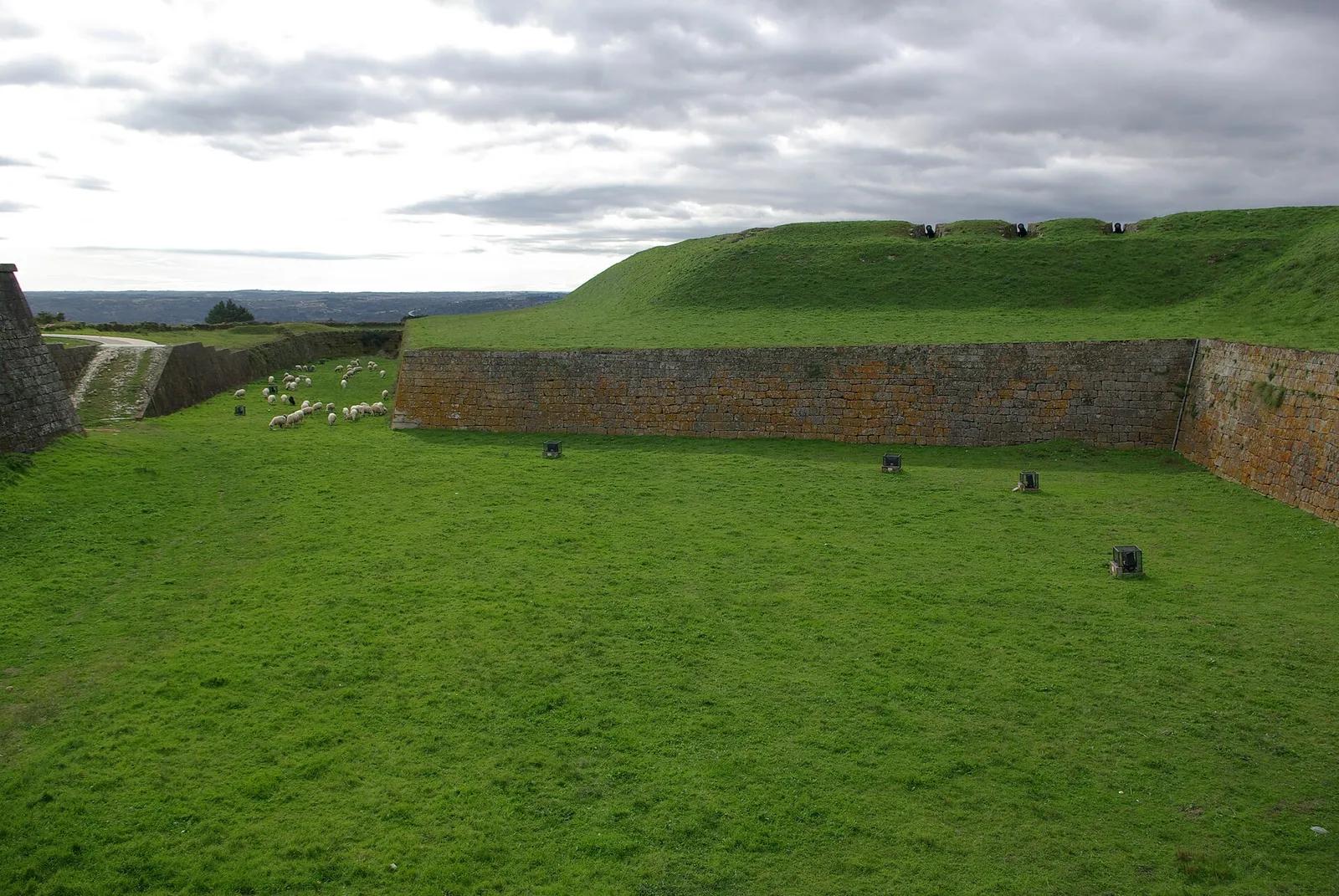
At a glance
- Almeida, a star-shaped fortress on Portugal's border with Spain, was besieged by Marshal Masséna's French Army of Portugal in August 1810, at the start of the third French invasion.
- Its garrison of about 4,000 to 5,000 men was Portuguese, regulars and militia, under a British officer in Portuguese service, Colonel William Cox.
- At about seven in the evening of Sunday 26 August 1810, the first day of the bombardment, a French shell set off the main magazine in the medieval castle, by one survivor's account through a trail of spilled powder. The explosion wrecked the town centre.
- Sources put the dead at about 500 (Napier, Oman) to 600 (Marbot), most of them soldiers on the walls; more than half the gunners were lost, with almost all the powder.
- Cox capitulated late on 27 August after Portuguese officers undermined him. Most of the regular troops then joined the French to avoid prison and deserted back to the allies within days.
Sunday evening in the castle yard
The French guns had been firing since six that morning. On Sunday 26 August 1810, more than fifty heavy pieces in eleven new batteries hammered the south-eastern bastions of Almeida, a walled town on a bare granite plateau a few kilometres from the Spanish border. By the afternoon several quarters were burning. The Portuguese gunners answered as best they could, and the walls themselves had taken little harm.
In the middle of the town stood an old castle, long since turned into a store for arms and munitions. It held the garrison's main stock of gunpowder. Towards seven in the evening the magazine door was open, because the gunners on the southern ramparts needed more powder. A leaking barrel was carried out and left a thin trail of powder on the ground as it went. Men were strapping it to a pack donkey when a French shell landed in the courtyard.
The shell burst and lit the trail. The flame ran back to another barrel standing at the open door, and from there into the store.
In a second or two the castle, the main church beside it and the whole centre of Almeida were gone.
“The earth trembled, and we saw an immense whirlwind of fire and smoke rise from the middle of the place. It was like the bursting of a volcano… Enormous blocks of stone were hurled into the trenches, where they killed and wounded some of our men. Guns of heavy calibre were lifted from the ramparts and hurled down far outside them.”
This version of the cause goes back to a single survivor, by this account the only man in the castle yard to escape. He saw the train catch, jumped into an oven-hole behind him and lived. An artillery officer, José Moreira, later passed his story on to the Portuguese historian Simão José da Luz Soriano, and Oman took it from him.
A gate into Portugal
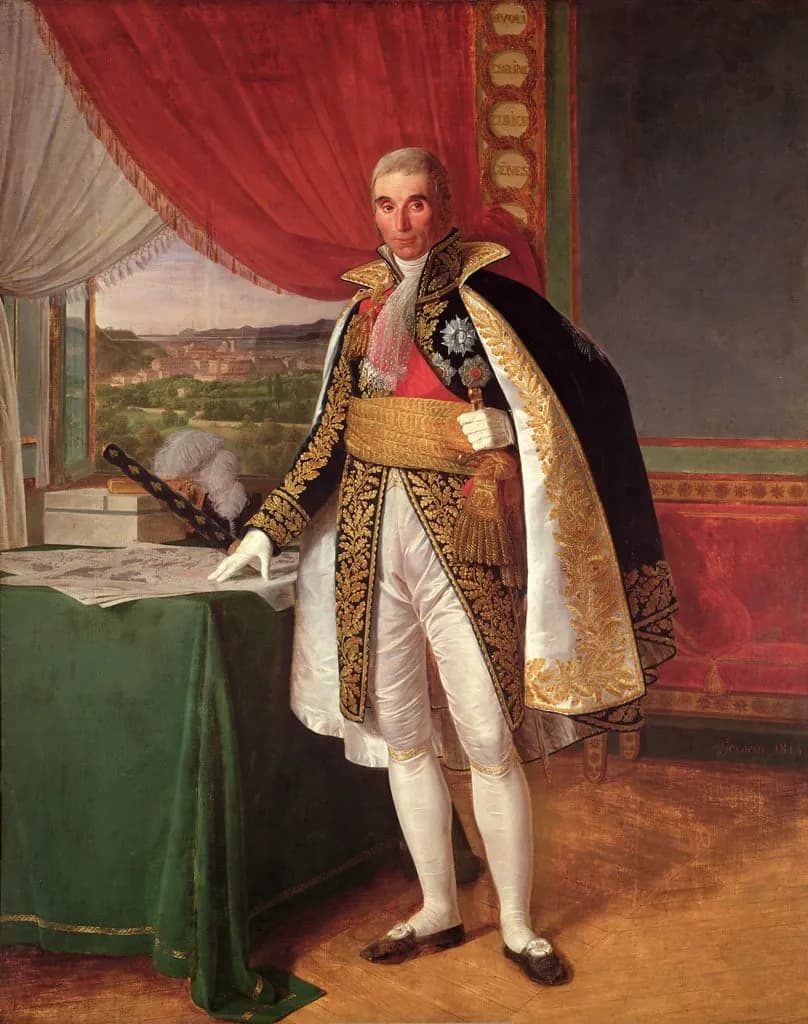
Portugal had been fighting Napoleon since 1808, in what the British call the Peninsular War. Two French invasions had already been thrown out. In April 1810 Napoleon gave Marshal André Masséna, Prince of Essling, command of a new Army of Portugal, three army corps sent to conquer the country. Masséna reached Salamanca at the end of May.
His road ran past two fortresses that faced each other across the frontier: Spanish Ciudad Rodrigo and Portuguese Almeida, about 34 kilometres (21 miles) apart. Ciudad Rodrigo surrendered on 10 July after a siege. On 24 July Marshal Ney's corps caught the British Light Division outside Almeida and pushed it back across the River Côa, and Almeida was cut off.
Wellington, who commanded the British and Portuguese armies, chose not to fight for the border. He meant to make his stand further west on ground of his own choosing, and behind that on the fortified lines he was building north of Lisbon. Every week Almeida held out would bring the autumn rains closer and make the invasion harder. He expected it to hold out at least as long as Ciudad Rodrigo, and hoped for six weeks or two months.
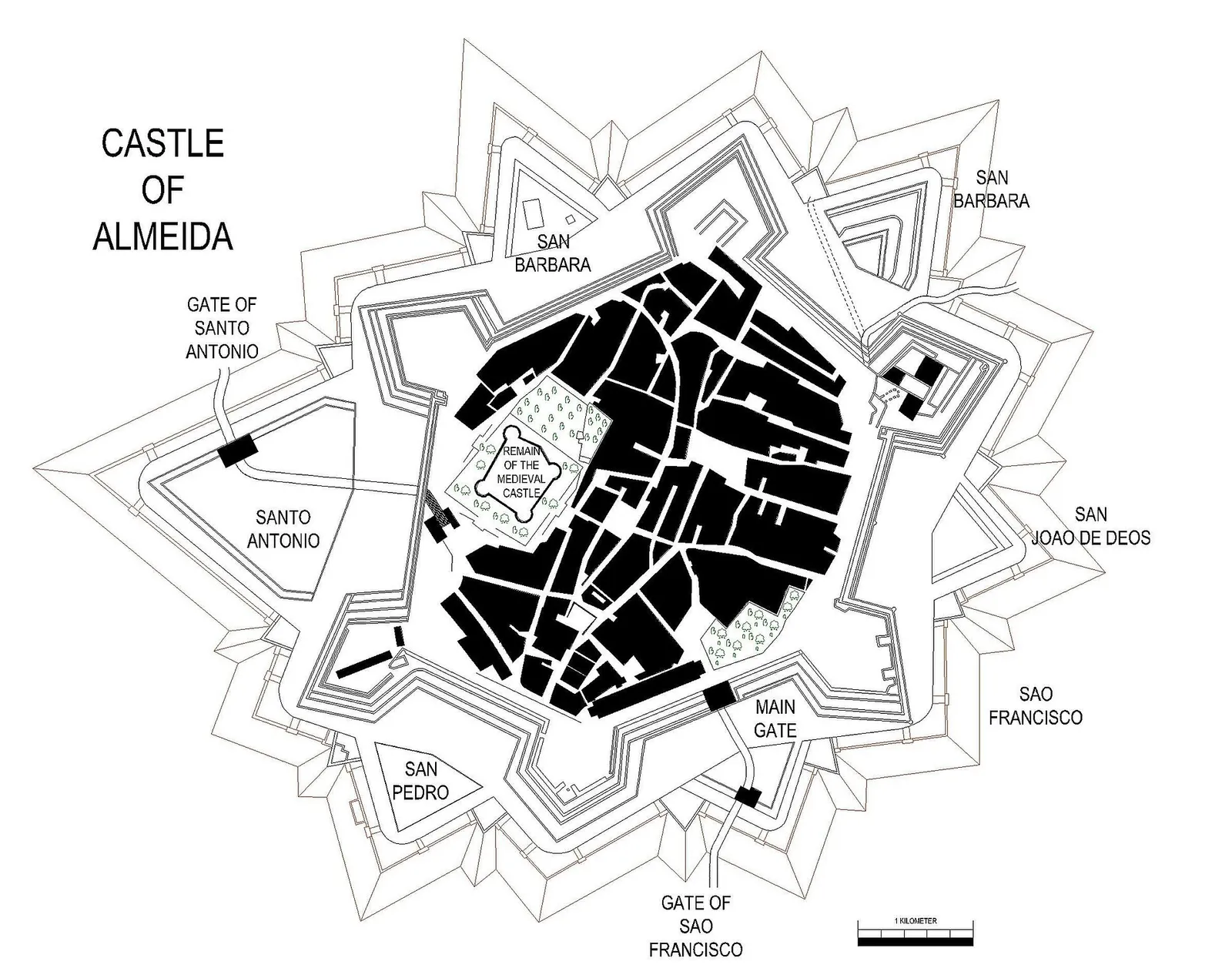
Oman judged Almeida in far better repair than Ciudad Rodrigo, with no higher ground overlooking it. It was almost circular, with six bastions, outworks and a dry ditch cut into solid rock. More than a hundred guns stood on its walls, forty of them 18-pounders or heavier, and its vaulted, bomb-proof casemates could shelter the whole garrison.
It had two weaknesses. The glacis, the sloping bank in front of the walls, was too low and left too much of them exposed, and the main magazine sat in a flimsy medieval castle, less well protected than it should have been. Napier, working from Cox's own narrative, judged the place extremely defective: the castle's three bomb-proof stores had doors that were not secure, and there was nowhere else to keep the powder.
“A single Englishman”
The governor was William Cox, an English colonel holding a Portuguese brigadier's rank. Since 1809 the Portuguese army had been rebuilt under the British general William Beresford, and British officers served in many of its units. Cox commanded the 24th Infantry Regiment and the fortress, with five other British officers. Every other soldier in Almeida was Portuguese.
| Unit | Oman (1908) | Nunes (2009) |
|---|---|---|
| 24th Infantry Regiment (regulars) | Over 1,200 | About 1,500 |
| Militia regiments | Arganil, Trancoso and Viseu | Arganil, Trancoso and Guarda, about 2,100 |
| Artillery | 400 gunners | Detachment of the 4th Artillery, 400 |
| Cavalry | A squadron of the 11th Cavalry | A company of the 12th Cavalry |
| Total | Some 4,000 infantry, plus gunners and cavalry | About 5,000 |
Oman names the militia as Arganil, Trancoso and Viseu, as Beresford's staff officer Benjamin D'Urban did; the Coimbra thesis, following Portuguese historians, gives Guarda for Viseu. At the end of the winter the three regiments had fewer than 2,000 muskets between them (Oman adds that numbers were somewhat higher by August), and D'Urban called them 'the very worst' troops. Napier puts the whole garrison at about 4,000, with two militia regiments.
Masséna tried words first. On 1 August he issued a proclamation to the Portuguese, saying the French came as friends and that Britain was using Portuguese blood to fight its own war. It singled out Almeida, where Britain had sent just one man of its own.
“More recently still, have they thrown any of their own into Almeida, except a governor charged with drawing you into a defence as ill-judged as that of Rodrigo? Have they not insulted you by putting a single Englishman in the balance against six thousand of your nation?”
The garrison stayed loyal. On 28 July some 1,200 men with four guns had marched out to bring in grain from the threshing floors near the walls, and lost most of their carts and guns to the French. Ney had already sent in a summons to surrender after the fight on the Côa, and Cox had refused it.
Trenches in the rock
After the Côa, Ney's 6th Corps closed round the town, but it had to wait until mid-August for its siege train, slowed by a shortage of draught animals. On the night of 15 August, Napoleon's birthday, the French broke ground about 500 yards from the bastion of São Pedro.
The digging was hard. Almeida sits on granite under two or three feet of soil, so the sappers built their parallel with gabions and sandbags and blasted away outcrops where the rock broke the surface. Between the 17th and the 24th they raised ten or eleven batteries, depending on whose count is followed. On the 24th the defenders' fire drove off the working parties trying to open a second parallel closer to the walls.
Wellington's army was waiting to the west, on the road to Celorico. He had a telegraph link to the governor, a semaphore on the western ramparts, but on the Sunday and much of the Monday the weather was too poor to use it. He was still weighing a surprise attack over the Côa to bring the garrison off when the magazine exploded.
17 April 1810
Masséna appointed
An imperial decree creates the Army of Portugal under his command.
10 July
Ciudad Rodrigo falls
The Spanish garrison marches out after a siege of more than a month.
24 July
Combat of the Côa
Ney drives the Light Division back over the river; Almeida is cut off.
28 July
Sortie for grain
About 1,200 men go out for the harvest and lose most of their carts and guns.
15 August
Trenches opened
The French break ground facing the bastion of São Pedro (18 August in Napier).
26 August, 6 a.m.
Bombardment begins
The French batteries open fire on the bastion of São Pedro and its neighbours.
26 August, about 7 p.m.
The magazine explodes
The castle and the centre of the town are destroyed.
27 August, morning
Summons
Masséna's envoys are led in blindfold to demand surrender.
27 August, about 9 p.m.
Firing resumes
Talks break down and the bombardment starts again.
27 August, about 10 to 11 p.m.
Capitulation
Cox signs after his Portuguese officers threaten to open the gates.
28 August
The garrison marches out
The French take possession of the ruined town.
Counting the dead
Fearing an assault in the dark, Cox ran to the walls and, with a Portuguese artillery officer, fired the few guns on the southern front that could still be worked. He kept the whole garrison under arms all night. The attack never came.
The morning showed what had happened. The ramparts and the casemates had held, but inside them almost nothing stood. Only five or six houses still had roofs, the castle was a crater, and the streets were so choked with rubble that the only way round the town was along the walls.
The ammunition was gone. Cox reported that all his artillery powder and musket cartridges had gone up, apart from a few made-up rounds in the small magazines on the ramparts and 39 barrels kept in the laboratory, the workshop where cartridges were made. Oman reckoned that was less than a day's firing for the guns, though he says the infantry still had 600,000 musket cartridges in their regimental stores. In his later defence Cox put the great magazine's stock at 2,500 barrels of powder.
Nobody counted the dead with any precision, and the figures in print differ. Most of the townspeople had gone down into the casemates when the bombardment began, so the soldiers on the walls took the worst of it. Oman puts the explosion's toll at 500, including almost all of the 200 gunners serving the guns on the front under attack.
| Source | Killed | Other losses |
|---|---|---|
| William Cox, letter to Beresford, 30 August 1810 | No total: more than half the artillery detachment, a great number of infantry, several inhabitants | All artillery powder except 39 barrels; many guns dismounted |
| Colonel of the Arganil militia, as reported by Wellington, 31 August 1810 | Killed or wounded: the greater part of the gunners | A breach in the walls; all guns but three thrown into the ditch; 10 or 12 barrels of powder left |
| Napier, 1831 | 500 people struck dead at once | 40 besiegers hurt by flying stones; only six houses left standing |
| Marbot, Masséna's aide-de-camp, memoirs | 600 of the garrison | Many wounded; 50 French in the siege works hit by stones |
| Laure Junot, Duchess of Abrantes, memoirs | No total | Says forty families sheltering in the casemates were killed |
| Oman, 1908 | 500 of the garrison | Some 600 lost over the whole siege; French siege losses 58 killed and 320 wounded |
The Duchess was with Junot at San Felices, in Spain, not in Almeida; her claim that the casemates were hit conflicts with Oman, who says the casemates stood firm. The often-quoted figure of 600 killed in the blast matches Marbot, and Oman's total for the whole siege.
A bluff, a deserter and a mutiny
Cox knew the town could not defend itself without powder. He hoped Wellington, who must have heard the blast, might try to break through, and he set out to buy time. When Masséna's envoys came in on the morning of the 27th to demand surrender, Cox had them blindfolded and brought to him in a casemate, so they could not see the damage. The walls were intact, he said, and the accident had not seriously weakened him. Oman names the envoy as Masséna's aide-de-camp, Colonel Pelet; Cox's own account says Pelet came later, with the written terms.
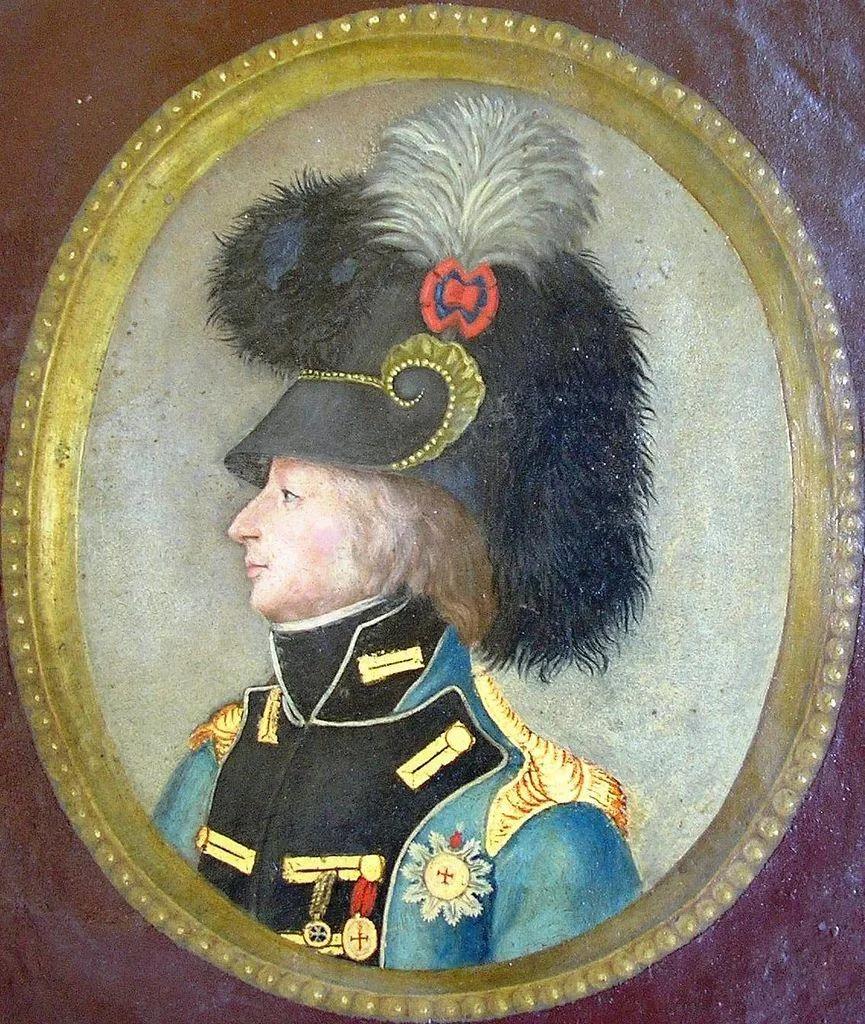
Outside, the bluff was coming apart. While the two men talked, the Marquis of Alorna and other Portuguese officers serving on Masséna's staff walked up to the foot of the walls and called to the men on the ramparts, urging them to take the generous terms on offer. Alorna recognised old acquaintances among the regulars and promised them an assault was coming. The officers on the walls listened and argued back instead of driving them off.
Cox sent out his chief of artillery, Major Fortunato José Barreiros, with Captain José Pedro Melo to negotiate. Melo came back. Barreiros told Masséna the real state of the garrison, that it had no ammunition left, and stayed in the French camp; in his later defence he claimed he went back into the town before the French entered. Masséna refused Cox's conditions. Oman says he ordered the bombardment to start again at seven in the evening; Wellington, watching from the west, saw the firing resume at about nine.
It settled the matter. According to Oman, the lieutenant-governor, Colonel Francisco Bernardo da Costa e Almeida, led a deputation of officers to Cox and told him that if he did not raise the white flag they would open the gates themselves. Beresford later reported that Da Costa had shut himself in the bomb-proofs once the French opened fire.
Cox gave in, late on the night of the 27th.
- Signed
- Camp before Almeida, 27 August 1810, by Masséna and Cox
- Regular troops
- Prisoners of war, marching out with the honours of war and laying down their arms on the glacis
- Militia
- Free to go home after laying down their arms, on condition of not serving against France or her allies for the rest of the war
- Officers
- To keep their swords and baggage; soldiers their baggage only
- Townspeople
- To keep their property and not be troubled for their opinions
- Handed over
- Artillery, military stores, magazines, and the plans and papers of the fortress
The garrison that changed sides twice
The garrison marched out on the morning of 28 August, about 4,000 strong by Oman's count; Cox put the infantry fit for duty at some 3,000. Masséna did not keep the terms as written. Instead of sending the regulars to France and the militia home, he held them together and set Alorna and another Portuguese general in French service, Pamplona, to persuade them to change sides. Almost all the regulars agreed, and a three-battalion brigade was formed as a second Portuguese Legion for Napoleon.
On 31 August Wellington wrote that the whole of the 24th, apart from its major and the British officers, had gone into the French service. It was said, he added, that they had joined only to get a chance to desert, which was well enough for the private soldiers but highly disgraceful for the officers. Of Barreiros he added that Masséna had made him a colonel.
The rumour proved right. Left unguarded for three days, they slipped away in bands of 200 or 300, officers and all; D'Urban's diary counted 450 men and 18 officers of the 24th reaching the Portuguese general Silveira's posts between 2 and 4 September. The French disarmed the few who were left and sent them to France, where Cox and the half-dozen officers who had refused Alorna's offer were already going. Masséna let Cox leave on parole to sail home from France, but Napier records him later as a prisoner at Verdun.
The militia's story is disputed. Oman says 600 militiamen also agreed to enlist. Beresford, in a letter Wellington sent on to London, said the French had kept seven officers and 200 men of each militia regiment by force, to make a corps of pioneers, and that the militia had refused to a man. The Regency in Lisbon approved the returning deserters, and Wellington had the 24th re-formed at Bragança, arguing that the French had broken the capitulation first.
The officers paid. A special court for treason in Lisbon, the Junta de Inconfidência, condemned Alorna, the Portuguese officers on Masséna's staff, Barreiros and Da Costa to death on 22 December 1810. Only two sentences were carried out. João de Mascarenhas, one of Alorna's aides, was caught carrying Masséna's dispatches and garrotted. Da Costa was arrested in 1812 and shot, Oman says for cowardice and mutiny rather than treason. Barreiros stayed abroad and in 1815 published a defence of his conduct at Bourges, in France. Oman judged the attempts to clear him inadequate.
The road to Buçaco
Almeida had fallen twelve days after the trenches were opened. Wellington told the Earl of Liverpool, the British Secretary for War, that the loss had disappointed him much. Even so, Masséna could not move at once. His men found the country ahead emptied of people and food on Wellington's orders, the armed peasant levies, the Ordenança, attacking his foragers, and the captured stores smaller than reported: 120,000 rations of biscuit instead of 300,000.
The French march on Lisbon began on 15 September 1810, with about 65,000 men. Twelve days later Wellington stood and fought them on the ridge of Buçaco, then fell back to the Lines of Torres Vedras. The French left a garrison in Almeida, and when it broke out on the night of 10 to 11 May 1811 it blew up much of the eastern and northern walls behind it.
A town that never filled its walls again
When Charles Oman, the historian of the war, described Almeida in 1908, it had not recovered. The town did not fill the space inside its walls, the governor's palace stood in ruins, the main church had never been properly rebuilt, and many houses had flimsy upper floors on old stone ground floors where the blast had torn the tops away. The railway passed about 19 kilometres (twelve miles) to the south, and the town had no chance to recover.
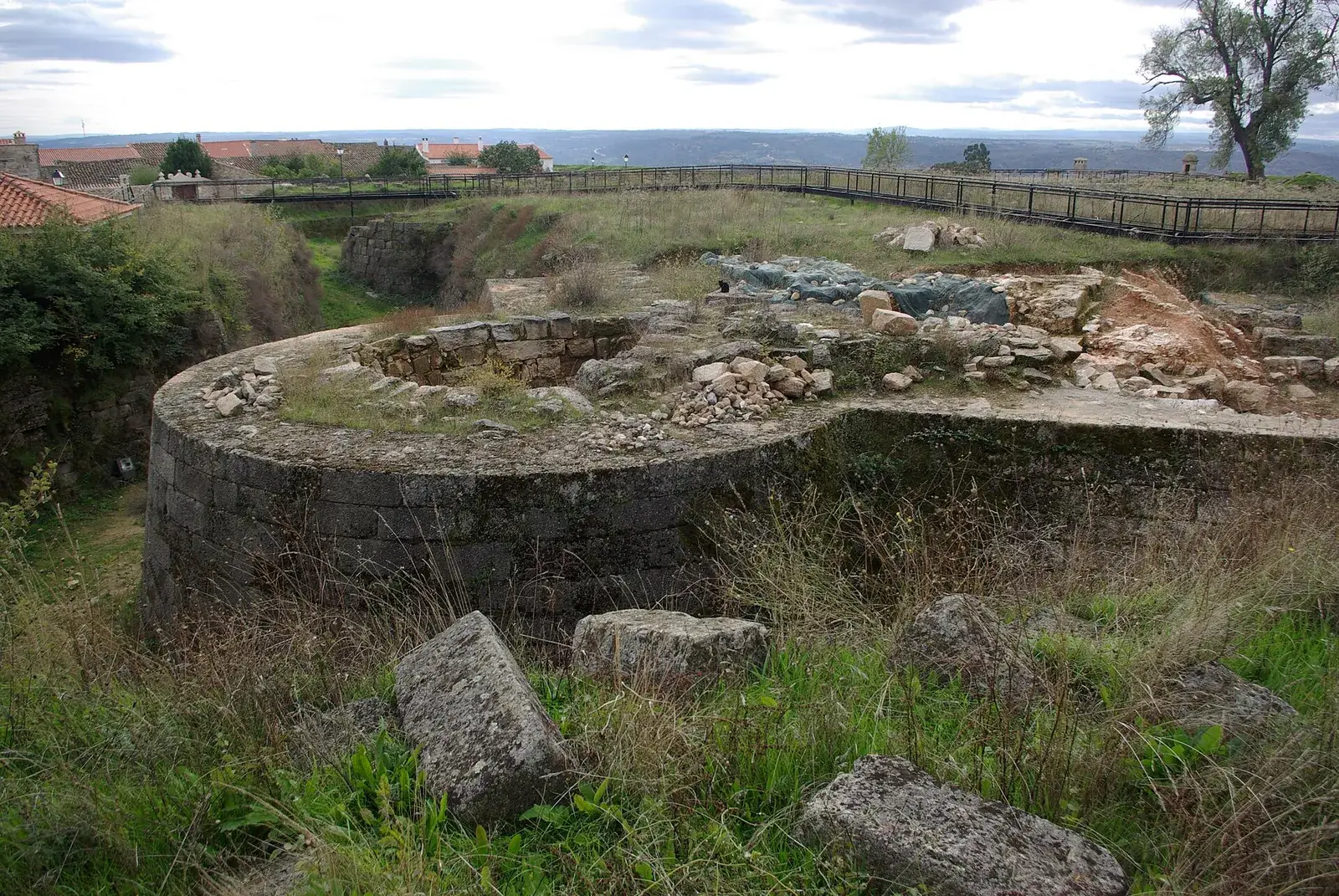
The castle has stayed a ruin. It and the bastioned walls are National Monuments, under decrees of 1928 and 1938. The state's monuments service consolidated what was left in the twentieth century, and a team led by archaeologists of Nova University of Lisbon dug there between 2007 and 2012. They found the base of the medieval keep, recorded as 23 metres tall in the early sixteenth century, reduced to two courses of stone, and many artillery projectiles lying on the surface, which they read as traces of 1810.
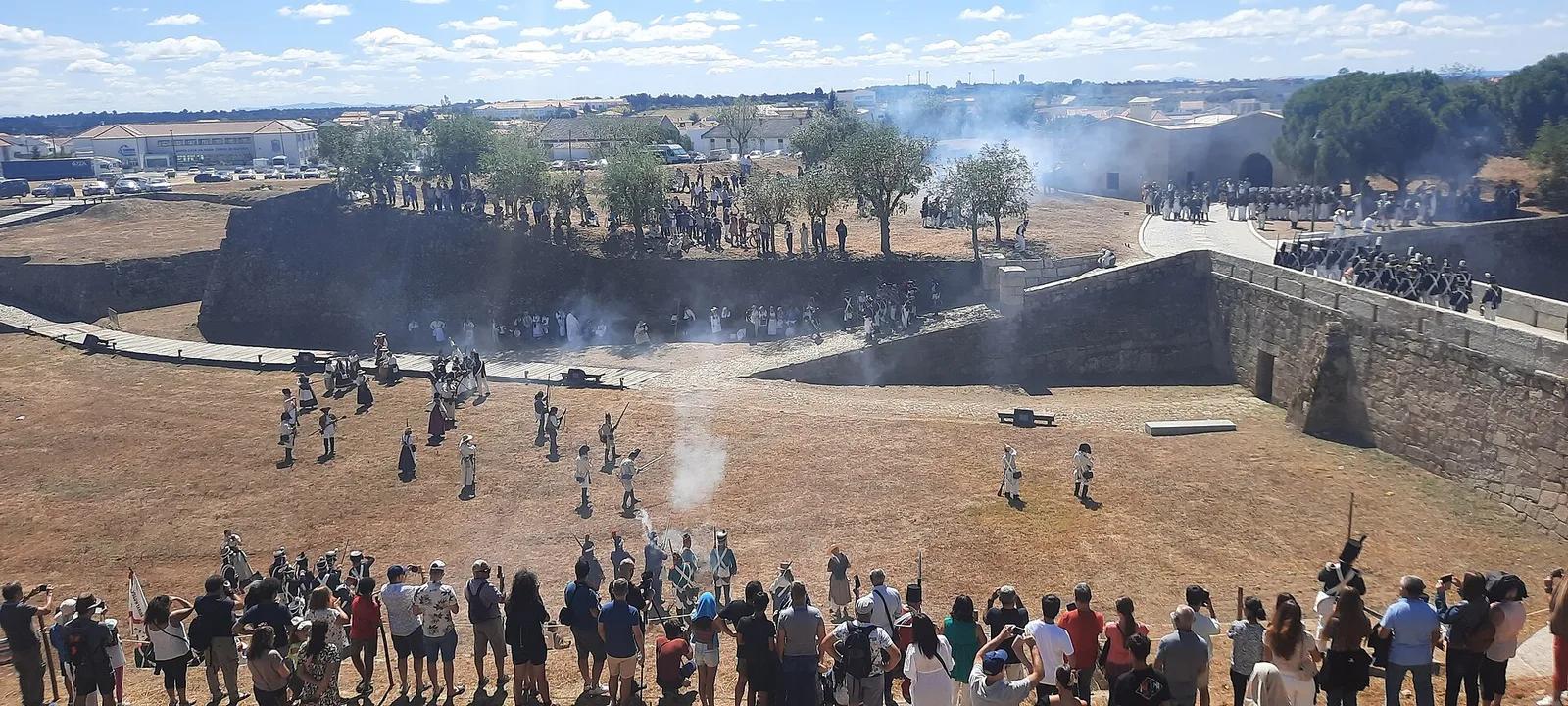
The siege has become Almeida's festival. At the end of August re-enactors of several nationalities stage the Cerco de Almeida; the 22nd edition, from 28 to 30 August 2026, was planned with about 450 to 500 of them and a night battle on the Saturday. Some of the eighteenth-century casemates, the bomb-proof vaults of the kind that sheltered townspeople in 1810, now hold the town's history and military museum.
FAQs
What caused the explosion at Almeida in 1810?
On the evening of 26 August 1810 a French shell landed in the castle yard while powder was being carried out of the main magazine. It lit a trail of powder spilled from a leaking barrel, and the flame ran into the open magazine. This account comes from a single survivor. Cox, who insisted that no powder had been left in the open, thought a shell had probably broken through the beams over the magazine door. The artillery commander, Barreiros, was later accused of laying the trail himself, a charge the Coimbra historian Maria do Céu Nunes rejects.
How many people died in the Almeida explosion?
No exact count exists. Napier and Oman give about 500 killed, Marbot 600; Oman puts the garrison's loss over the whole siege at about 600. Cox reported losing more than half his artillery detachment, a great number of infantry and several townspeople, but gave no total.
When did Almeida surrender?
Cox signed the capitulation late on the night of 27 August 1810: at ten o'clock by his letter of 30 August, at eleven by his later defence and by Oman. The garrison marched out and the French took possession on 28 August.
Who was William Cox?
An English colonel serving as a brigadier in the Portuguese army, which the British general Beresford had been rebuilding since 1809. He commanded the 24th Infantry Regiment and was governor of Almeida. Wellington and the returning militia praised his conduct. After the surrender Masséna let him leave on parole by way of France, but he was later held as a prisoner at Verdun.
On the timeline
Open the timelineNearby moments from invasions, brazil and the liberal wars (1807–1851).
In a daring surprise attack, Arthur Wellesley — the future Duke of Wellington — ferries his troops across the Douro in commandeered wine barges and drives Marshal Soult's French army out of Porto in the Second Battle of Porto. The defeat ends Napoleon's second invasion of Portugal.
In Rio de Janeiro, the exiled Portuguese court signs the Strangford Treaty with Britain, its protector against Napoleon. British goods were to enter Brazil at a duty of just 15 per cent, less than the 16 per cent then charged on goods from Portugal itself; the two rates were equalised almost a year later, but Britain kept its low tariff in Brazil until the 1840s.
Birth of Alexandre Herculano in Lisbon, who would become one of Portugal's greatest historians and novelists. His monumental 'History of Portugal' and historical novels helped define Portuguese national identity and historiography.
The siege of Almeida, 1810
During the French siege of Almeida, a shell sets off the main powder magazine in the town's old castle; the explosion kills some 500 to 600 people, most of them soldiers of the Portuguese garrison, and forces its surrender the next night, opening the way for Masséna's invasion of Portugal.
At the Battle of Buçaco, Wellington's Anglo-Portuguese army repels repeated assaults by Marshal Masséna's invading French forces on the Buçaco ridge in central Portugal, inflicting some 4,500 casualties before withdrawing in good order to the Lines of Torres Vedras.
Masséna's invading French army comes up against the Lines of Torres Vedras near Sobral de Monte Agraço: a secret chain of forts and redoubts built on Wellington's orders to shield Lisbon. Unable to break through in a land stripped bare by scorched-earth tactics, the starving French held on for a month before falling back to Santarém.
Marshal Masséna's starving French army abandons its lines at Santarém and begins its retreat from Portugal, pursued through central Portugal by Wellington's Anglo-Portuguese forces in a month of running rearguard fights.
Coming up in history
All long reads
10 sources
Archives, scholarship and reporting this article was checked against.
- 1
A History of the Peninsular War, vol. III: September 1809–December 1810 (Charles Oman)Clarendon Press, Oxford, 1908; Project Gutenberg edition
- 2
Dispatch from Viscount Wellington, Gouvea, 5 September 1810, enclosing Marshal Beresford's letter and Colonel William Cox's report on the surrender of Almeida, with the articles of capitulationThe London Gazette, issue 16410 (2 to 6 October 1810), pp. 1558–1559
- 3
The Dispatches of Field Marshal the Duke of Wellington, vol. VI (compiled by John Gurwood)John Murray, London, 1837; digitised by the Internet Archive from a University of Toronto copy
- 4
- 5
A terceira invasão francesa e o cerco de Almeida em 1810 (Maria do Céu Frota Antunes Bastos Nunes, MA dissertation in Modern History)Faculdade de Letras da Universidade de Coimbra, 2009
- 6
O castelo de Almeida: origem medieval, reformas manuelinas e reutilização moderna (André Teixeira and Luís Serrão Gil)Arqueologia em Portugal: 150 Anos, Associação dos Arqueólogos Portugueses, Lisbon, 2013, pp. 1129–1135
- 7
- 8
- 9
Almeida brings the 1810 siege back to lifeDestination Napoléon, European Federation of Napoleonic Cities
- 10
Almeida History and Military MuseumTurismo Centro de Portugal
Image credits
- The dry ditch and grassed ramparts of Almeida, seen from the São Francisco gate in 2013. The bastioned walls went up after 1640 and were reworked through the seventeenth and eighteenth centuries. David Perez, CC BY 3.0, via Wikimedia Commons.
- Marshal André Masséna, Prince of Essling, commander of the French Army of Portugal in 1810, in a full-length portrait by Louis Hersent. Louis Hersent (1777-1860), Public domain, via Wikimedia Commons.
- A modern plan of Almeida. The French attack of 1810 was aimed at the bastion of São Pedro, at the bottom left; the remains of the medieval castle, where the magazine stood, are left of the centre. Dennisbluie, CC BY 3.0, via Wikimedia Commons.
- What is left of Almeida's castle, photographed in 2013: the base of one of the round towers of its outer wall, with excavated footings behind. Archaeologists working here between 2007 and 2012 found many artillery projectiles on the surface, traces of 1810. David Perez, CC BY 3.0, via Wikimedia Commons.
- A portrait of about 1800 by an unknown painter, catalogued as the Marquis of Alorna in the cavalry uniform of the Legion of Light Troops; a lithograph of it is inscribed with his name. In 1810 Alorna rode with Masséna's staff. Unidentified painter, Public domain, via Wikimedia Commons.
- Re-enactors fight in the ditch by the São Francisco gates during the Cerco de Almeida on 27 August 2023. MarceloFonsecaFerreira, CC BY-SA 4.0, via Wikimedia Commons.