

The Convention of Sintra, 1808: the French sail home
Nine days after losing at Vimeiro, Junot's army secured a passage home in British ships, with its guns and its baggage. Portugal was free of the French and furious, and Britain demanded an inquiry.
At a glance
- The Convention of Sintra (Cintra in older English) was signed in Lisbon on 30 August 1808 by Lieutenant-Colonel George Murray for the British army and General Kellermann for the French. It ended the first French invasion of Portugal.
- It followed the Anglo-Portuguese victory at Vimeiro on 21 August and a suspension of arms agreed the next day, which Arthur Wellesley, the future Duke of Wellington, signed on his commander's orders.
- Junot's army was not made prisoner. It was shipped to France in British vessels with its arms, baggage and French guns, and was free to fight again; about 25,700 soldiers embarked, by Charles Oman's count.
- No Portuguese authority signed or ratified the convention, and the Junta of Porto, General Bernardim Freire and Lisbon crowds protested. In Britain the uproar led to a Court of Inquiry, which split four to three on the convention and cleared all three generals.
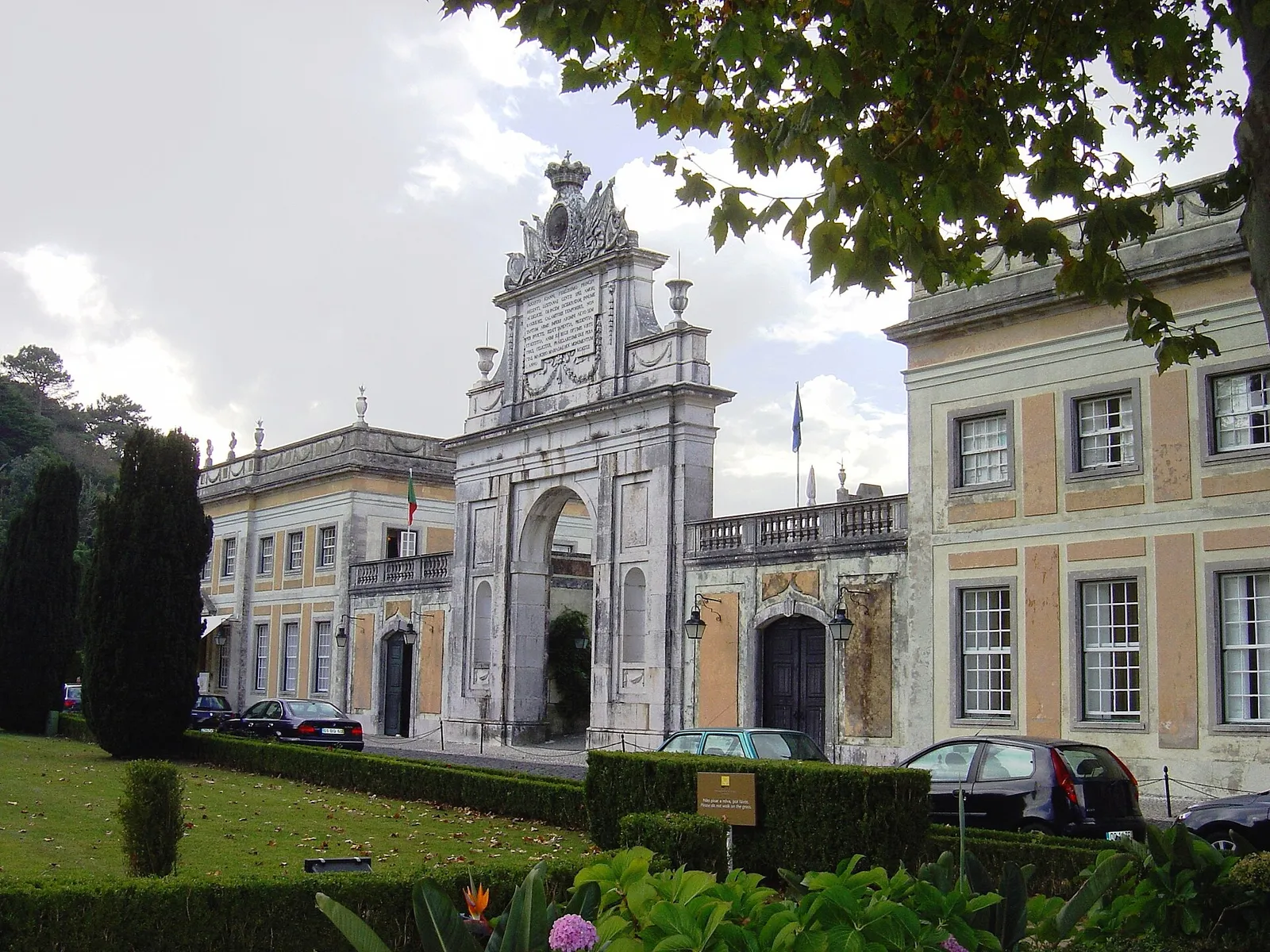
- Its name comes from Sir Hew Dalrymple's dispatch, dated at Sintra on 3 September. The convention was signed in Lisbon and ratified by Dalrymple at Torres Vedras; the story that it was signed at the Palácio de Seteais is a legend.
Out of the mousetrap
Between ten and eleven on the morning of Monday 22 August 1808, General Kellermann rode out of Torres Vedras under a white flag, with two squadrons of dragoons as escort. The French army of Portugal had been beaten at Vimeiro the day before, and its stragglers were still coming in. As he passed the rearguard in the pass four miles outside the town, Kellermann told the officer in charge that he was going to see the English, to get the army out of the mousetrap.
His approach set off a false alarm. A Portuguese cavalry officer saw French horsemen in the distance and reported an army on the move, and the British camp at Vimeiro ran to arms. By two in the afternoon Kellermann was in front of the British commander. He had expected Sir Arthur Wellesley, who had beaten the French the day before. He found Sir Hew Dalrymple, who had stepped ashore that morning.
Dalrymple made no secret of his pleasure at the offer. After a short discussion in an inner room, he, Wellesley and Sir Harry Burrard agreed to let the French leave Portugal by sea, on British ships, without surrendering. Then they invited Kellermann to dinner.
The agreement that grew out of that afternoon was signed in Lisbon eight days later, and within weeks public meetings in Britain were demanding that all three generals be punished.
An occupied kingdom and three British generals
General Jean-Andoche Junot had occupied Portugal since November 1807, when the Prince Regent João and the court sailed for Brazil a day ahead of his army. In the summer of 1808 the country rose against him. Juntas took power in the provinces, the strongest at Porto under its bishop, and the French pulled back towards Lisbon.
Britain sent an army. Wellesley landed it at Mondego Bay at the start of August and beat Junot's general Delaborde at Roliça on 17 August. But Wellesley was the most junior lieutenant-general in the British army, and London had given the command of its growing force to two of his seniors, who were on their way.
Vimeiro, 21 August
Wellesley had camped on the heights around the village of Vimeiro, above the valley of the little river Maceira and close to the sea, to cover the landing of reinforcements. Junot, who had left some 6,500 men to hold down Lisbon, attacked on the morning of Sunday 21 August. His columns went at the hill in front of the village and tried to turn the British left at Ventosa. By about noon all of them had been thrown back.
| Charles Oman (1902) | João Paulo Ferreira Silva (2015) | |
|---|---|---|
| Allied troops present | 16,778 British and about 2,000 Portuguese under Trant: 18,800 | 19,000 |
| French troops present | About 13,000 (French accounts give 9,200 to 12,500) | 14,000 |
| British and Portuguese losses | 720 British: 135 killed, 534 wounded, 51 missing | About 700 British (130 dead); 2 Portuguese dead and about six wounded |
| French losses | At least 1,800, the figure Foy and Thiébault admit, including 300 to 400 unwounded prisoners | 450 dead, 1,200 wounded, 300 prisoners |
| French guns captured | 13 of 23 | 14 |
Oman's British losses are four officers and 131 men killed, 37 officers and 497 men wounded, two officers and 49 men missing. He notes that Wellesley put the French at 14,000. Ferreira Silva's figure for the French army is misprinted in the source as “14.0000”.
Burrard had reached the field while the fighting was on. As the last French column fell back, Wellesley rode up to him with a plan to cut the French off from Lisbon. Colonel Torrens, who was beside them, later told the inquiry what he said.
“Sir Harry, now is your time to advance, the enemy are completely beaten, and we shall be in Lisbon in three days.”
Burrard refused.
The army had done enough for one day, he said, and he would wait for Sir John Moore's division, then off the coast. The British marched back to camp with bands playing and the captured guns in tow, and Junot's army retired unmolested to Torres Vedras.
A suspension of arms
Early on the 22nd Junot held a council of war at Torres Vedras. The army was in no state to fight again. A retreat on Lisbon would trap it in a hostile city; a march across the Tagus and through Spain would destroy it. The generals chose to try for terms, and sent Kellermann, who understood some English.
The suspension of arms drafted that day set the Sizandro river as the line between the armies, left Torres Vedras unoccupied and committed the British to bring the Portuguese armies into the truce. The French were not to be treated as prisoners of war. The Russian squadron of Admiral Siniavin, trapped in the Tagus, was to be treated as if in a neutral port. Either side could end the truce on 48 hours' notice.
The document was signed by Kellermann and, on Dalrymple's orders, by Wellesley, who protested about several of its points. The French also slipped in a title London had never recognised: the first article spoke of “His Imperial and Royal Majesty, Napoleon I”. Because Wellesley's name was on the paper, the British public later took him for its author.
“I did not negotiate that agreement, that it was negotiated and settled by his Excellency in person, with General Kellerman, in the presence of Lieut. General Sir Harry Burrard and myself, and I signed it by his Excellency's desire.”
Eight days of bargaining
The truce suited Junot better than Dalrymple. On the 23rd the French fell back to strong positions at Mafra and Montechique to cover Lisbon, while Dalrymple moved his headquarters only as far as Ramalhal, just north of Torres Vedras, and waited for Moore's men to struggle ashore through the surf.
Two objections nearly wrecked the deal. General Bernardim Freire, commanding the Portuguese army, rode into Ramalhal to protest that nobody had asked him before promising his neutrality. Admiral Sir Charles Cotton, whose squadron had blockaded the Tagus for months, refused to let the Russian ships go free. Junot answered with threats: he would defend Lisbon street by street and burn what he could not hold.
The detailed terms were settled in Lisbon, where Lieutenant-Colonel George Murray, Dalrymple's quartermaster-general, negotiated with Kellermann. The Russian article was dropped, and Siniavin later made his own agreement with Cotton: his nine ships of the line and a frigate went to Britain as a deposit, and his crews were sent home.
21 August
Vimeiro
Junot is beaten; Burrard stops the pursuit.
22 August
Suspension of arms
Dalrymple lands and takes command; Kellermann and Wellesley sign the truce.
23 August
Lines drawn
The French leave Torres Vedras; Dalrymple moves to Ramalhal.
25 August
Moore lands
Sir John Moore's division begins to come ashore at Maceira.
29 August
Draft discussed
A draft treaty of the 28th, already ratified by Junot, is debated by the British lieutenant-generals at Ramalhal and sent back with changes.
30 August
Signed in Lisbon
Murray and Kellermann sign the definitive convention; Junot ratifies it the same day.
31 August
Ratified
Murray brings it to Torres Vedras, where Dalrymple ratifies it.
2 September
Forts handed over
British troops take over the forts of Cascais, São Julião and Bugio at the mouth of the Tagus.
3 September
Dispatch from Sintra
Dalrymple sends the convention to London from his headquarters at Sintra.
13 to 30 September
Embarkation
Junot sails on the 13th, his first division on the 15th and the rest by the end of the month.
What the convention gave the French
The definitive convention had 22 articles and three additional ones. Its heart was simple: the French would hand over Lisbon and every fortress they held, and in return would go home as an army, not as prisoners.
| Article | What it said |
|---|---|
| I | All places and forts held by the French to be handed to the British army in their present state. |
| II | The French to leave with their arms and baggage, not as prisoners of war, and free to serve on arriving in France. |
| III | Britain to provide the ships and land the army at a French port between Rochefort and Lorient. |
| IV to VI | The French to take their artillery of French calibre with its horses and 60 rounds a gun, their military chest and all that came “under the name of property of the army”, and to embark up to 800 cavalry and staff horses. |
| XIV | Any doubt over the meaning of an article to be “explained favourably to the French army”. |
| XV | Unpaid French levies and claims on the Portuguese cancelled, and seized property returned to its owners. |
| XVI | French residents and allies protected, free to leave or stay, with a year to sell their property. |
| XVII | No Portuguese to be held to account for political conduct under the occupation; those who had served the French placed under British protection. |
| XVIII | Spanish troops held prisoner on ships in Lisbon to be handed to the British. |
Paraphrased from the English text printed in the Proceedings and by Oman. The Russian fleet, covered by article VII of the 22 August truce, is not mentioned in the convention.
Charles Oman, in the first volume of his history of the war (1902), thought the military bargain defensible: it recovered Lisbon, its arsenals and its shipping intact, and saved weeks of campaigning. He thought articles XV to XVII indefensible. A British general had no power to pardon Portuguese collaborators or to guarantee French property in Portugal, and Dalrymple never put those clauses to any Portuguese authority.
Wellesley, who disliked many details, defended the principle. Without a convention, he wrote two days after the signing, Junot could have slipped across the Tagus to the fortresses of Elvas and Almeida, and the campaign would have been spent besieging them. “If I were in his situation I would have 20,000 men at Madrid in less than a month from this time,” he added of Dalrymple.
Portuguese anger and the French departure
No Portuguese signed the convention. Dalrymple argued that it was a purely military agreement, and that Britain had not yet recognised the Junta of Porto as the government of Portugal. He told the Junta's agent and General Freire what he was doing and invited their comments, but treated neither as a party whose consent he needed.
Protests came from every side: from Freire, from the Junta of Porto, from the court in Rio de Janeiro. The Bishop of Porto had his envoy in London complain to the British government. The Monteiro-Mor, commanding the Alentejo insurgents opposite the mouth of the Tagus, appealed to Admiral Cotton to repudiate the agreement.
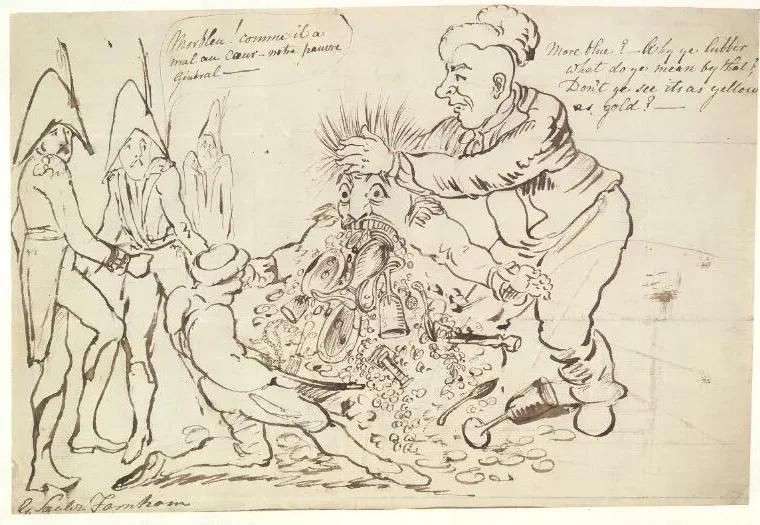
Lisbon's anger was rawer. Lists of houses to be sacked and people to be hanged appeared on walls, and French soldiers who strayed from their units were killed. A commission of Kellermann, General Beresford and Lord Proby searched the departing baggage and found church plate in many officers' trunks. Junot himself had broken open the Depósito Público, the court deposit, and taken £25,000, which was recovered only with difficulty.
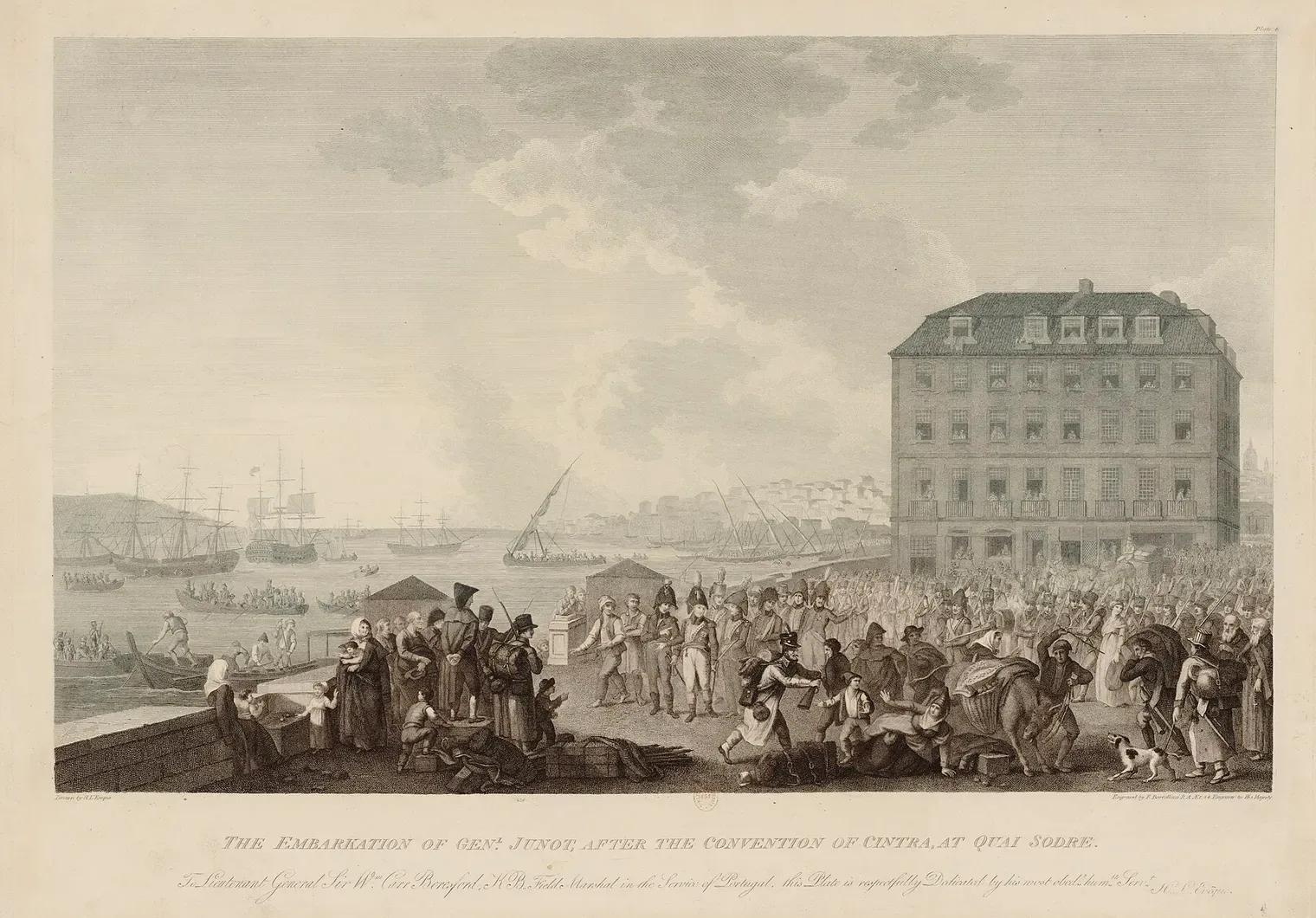
Junot sailed on 13 September and his army followed over the next fortnight, guarded by British bayonets from the crowds at the quays. The Portuguese flag went back up in Lisbon on the 15th. Oman counts 25,747 French soldiers embarked; with the civilians who feared to stay, Ferreira Silva puts the total at almost 30,000 people. At Porto a crowd nearly lynched the garrison of Almeida as it boarded its transports.
The last to go was the garrison of Elvas, held up by a Spanish general who refused to recognise the convention. Accounts differ on when the last French left: 9 October by Oman's account, 2 December by Ferreira Silva's. On 18 September a proclamation by Dalrymple restored the regency that the Prince Regent had left behind, and the Junta of Porto dissolved itself.
“Britannia sickens”: the storm in Britain
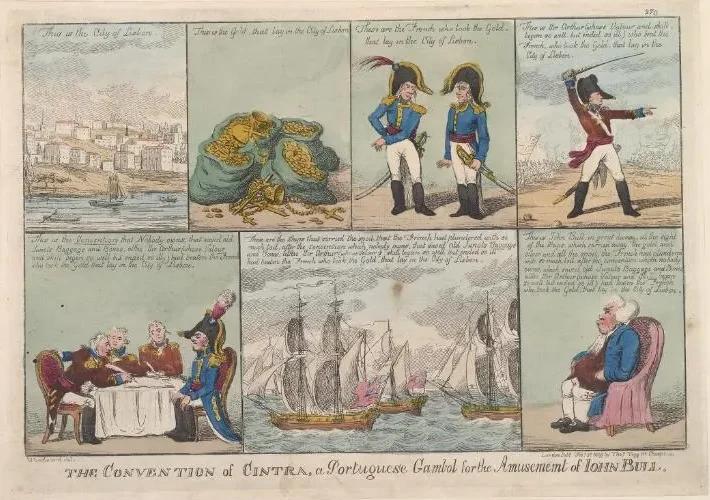
Dalrymple sent no report of the armistice home and dated his dispatch with the convention 3 September. For nearly a fortnight the only news London had was the Bishop of Porto's protest. When the terms arrived, the public had expected Junot's surrender and read instead that British ships would carry his army and its plunder to France. Some newspapers appeared with black borders, and caricatures showed the three generals hanging from gibbets.
On 12 October the Corporation of London petitioned George III to punish those responsible for a “dishonourable and unprecedented transaction”. The king replied that judgement without trial was hardly British justice, and later that month he ordered an inquiry. Seven generals under Sir David Dundas sat in the great hall of Chelsea Hospital from 14 November to 22 December, questioning Dalrymple, Burrard, Wellesley and many of the officers who had fought.
Their report found that no further military proceedings were needed and praised the zeal of all three generals. Pressed by the Commander-in-Chief to say plainly whether the agreements had been advisable, the members voted individually on 27 December.
How the Court of Inquiry voted, 27 December 1808
members of the board
- Approve
- Disapprove
Lord Moira alone opposed the armistice. Dundas, Lord Heathfield, Craig and Nugent approved the convention; Moira, the Earl of Pembroke and Nicolls voted against it. The question put to the board dated the convention by its ratification.
Show the data
| Approve | Disapprove | |
|---|---|---|
| Armistice of 22 August | 6 | 1 |
| Convention (ratified 31 August) | 4 | 3 |
The government accepted the military verdict but had Dalrymple rebuked for articles XV to XVII and for his silence. Neither he nor Burrard commanded in the field again. Wellesley, cleared and praised, was back in command at Lisbon in April 1809.
In the Commons on 21 February 1809, Lord Henry Petty moved that the convention had “disappointed the hopes and expectations of the country”, and blamed ministers for sending the army out badly equipped. Ministers moved the “previous question”, a device for setting a motion aside without voting on it, and carried it by 203 votes to 153.
William Wordsworth began writing about the convention in November 1808, printed two instalments in the Courier in December and January, and finished a pamphlet dated 20 May 1809. He called the convention one of the most important events of the age.
“The first pledge of amity given by them was the victory of Vimiera; the second pledge (and this was from the hand of their Generals,) was the Convention of Cintra.”
“And ever since that martial synod met, / Britannia sickens, Cintra, at thy name; / And folks in office at the mention fret, / And fain would blush, if blush they could, for shame.”
Lisbon, Torres Vedras or Sintra?
The documents are clear. The convention ends “Done and concluded at Lisbon this 30th day of August 1808”, over the signatures of Murray and Kellermann, and Junot's ratification is dated at his Lisbon headquarters the same day. The board of inquiry's report says Murray brought the treaty to Torres Vedras on the 31st, where Dalrymple ratified it with the approval of the lieutenant-generals present, and the king's warrant for the inquiry dates the convention 31 August. Dalrymple's own dispatch is looser: it says the ratifications were exchanged on the 30th.
Sintra entered the story four days later. Dalrymple's dispatch enclosing the convention was headed “Head Quarters, Cintra, Sept. 3, 1808”, and London named the treaty after it. Napier complained that everything was done some 30 miles from Sintra, “with which place they had not the slightest connexion, political, military, or local”. Oman, writing in 1902, placed the ratification at Lisbon; the board's report and the Portuguese historian João Paulo Ferreira Silva put it at Torres Vedras.
Why it still matters
The convention ended the first French invasion within nine days of Vimeiro, and it left Lisbon and its port undamaged. Defending it in the House of Commons in February 1809, Wellesley argued that, given where the armies stood, it was no disgrace to let the French embark, and that gaining time mattered for the campaign in Spain. The price was paid in Spain: Junot's corps went back there to serve Napoleon, still about 22,000 strong.
Portugal's fate had been settled by British and French officers, and its government was put back in place by a British general's proclamation. In March 1809 the regency gave command of the Portuguese army to a British officer, William Carr Beresford. In an opinion column for Observador in August 2026, the economist João A. B. da Silva argued that the episode showed how far Portugal had lost the power to decide for itself.
“We call it the Convention of Sintra because a British general dated a letter.”
FAQs
Where was the Convention of Sintra signed?
In Lisbon, on 30 August 1808, by Lieutenant-Colonel George Murray and General Kellermann; Junot ratified it there the same day and Dalrymple ratified it at Torres Vedras on 31 August. It is named after Sintra because Dalrymple's dispatch to London was dated there on 3 September. The story that it was signed at the Palácio de Seteais is a legend.
Why was the Convention of Sintra so controversial?
Junot's army had just been beaten at Vimeiro, yet the convention let it go home in British ships with its arms, baggage and guns, free to fight again. It also protected French residents and Portuguese collaborators without consulting any Portuguese authority. Portuguese leaders protested, and the British public, expecting a surrender, called it a disgrace.
Did Portugal sign the Convention of Sintra?
No. It was agreed between the British and French armies. Dalrymple informed the Junta of Porto and General Bernardim Freire but did not ask for their consent, and both protested against it.
Was Wellington blamed for the Convention of Sintra?
At first, because he had signed the armistice of 22 August on Dalrymple's orders. The Court of Inquiry of November to December 1808 cleared all three generals and praised Wellesley's campaign. Dalrymple and Burrard never commanded in the field again, while Wellesley returned to command in Portugal in April 1809.
How many French soldiers left Portugal under the convention?
Charles Oman counts 25,747 soldiers embarked between mid-September and October 1808; Murray's Handbook for Portugal of 1875 gave a lower 24,035. With civilians who chose to leave with them, the Portuguese historian João Paulo Ferreira Silva puts the total at almost 30,000 people.
On the timeline
Open the timelineNearby moments from invasions, brazil and the liberal wars (1807–1851).
French troops under General Loison crush a Portuguese-Spanish force outside Évora and then brutally sack the city. Loison, who had lost an arm, was known as 'o Maneta' ('the one-handed'), and popular tradition ties his name to the Portuguese expression 'ir para o Maneta', to be done for.
An Anglo-Portuguese force under Sir Arthur Wellesley, the future Duke of Wellington, defeats General Delaborde's French troops at the Battle of Roliça — the first battle fought by the British army in the Peninsular War, on Portuguese soil north of Lisbon.
At the Battle of Vimeiro, Wellesley's Anglo-Portuguese army defeats General Junot's French forces, a victory that leads directly to the French evacuation of Portugal under the Convention of Sintra.
The Convention of Sintra
The Convention of Sintra is signed, by which the defeated French army under General Junot agrees to evacuate Portugal following the Battle of Vimeiro, ending the first French invasion — though its generous terms caused outrage in Britain.
As Marshal Soult's French army storms Porto during the second French invasion, crowds fleeing across the Ponte das Barcas, the bridge of boats over the Douro, are pushed into a gap in its middle, and hundreds or thousands drown. A shrine on the Ribeira quay still recalls the disaster.
In a daring surprise attack, Arthur Wellesley — the future Duke of Wellington — ferries his troops across the Douro in commandeered wine barges and drives Marshal Soult's French army out of Porto in the Second Battle of Porto. The defeat ends Napoleon's second invasion of Portugal.
In Rio de Janeiro, the exiled Portuguese court signs the Strangford Treaty with Britain, its protector against Napoleon. British goods were to enter Brazil at a duty of just 15 per cent, less than the 16 per cent then charged on goods from Portugal itself; the two rates were equalised almost a year later, but Britain kept its low tariff in Brazil until the 1840s.
Coming up in history
All long reads
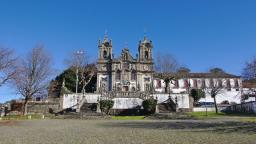
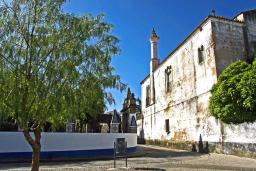
12 sources
Archives, scholarship and reporting this article was checked against.
- 1
The Proceedings on the Enquiry into the Armistice and Convention of Cintra, and into the Conduct of the Officers Concerned (ed. John Joseph Stockdale)Stockdale, London, 1809; Internet Archive (University of Toronto copy)
- 2
A History of the Peninsular War, vol. I: 1807–1809, from the Treaty of Fontainebleau to the Battle of Corunna (Charles Oman)Clarendon Press, Oxford, 1902; Project Gutenberg edition
- 3
- 4
- 5
Primeira Invasão Francesa 1807-1808: a invasão de Junot e a revolta popular (João Paulo Ferreira Silva)Academia das Ciências de Lisboa, 2015 (paper first given in 2011); RCAAP repository
- 6
- 7Agosto de 1808: Portugal não assinou (João A. B. da Silva, opinion)Observador, 17 August 2026
- 8
Convention of Cintra, House of Commons debate, 21 February 1809 (HC Deb vol 12 cc897-974)UK Parliament, Hansard 1803–2005
- 9
- 10
- 11
Centro de Interpretação da Batalha do VimeiroTurismo de Portugal
- 12
Palácio de Seteais: history and cultureValverde Sintra Palácio de Seteais (hotel)
Image credits
- “The Embarkation of Genl. Junot, after the Convention of Cintra, at Quai Sodre”: French troops leave from Cais do Sodré in September 1808. Drawn by Henri L'Évêque, engraved by Francesco Bartolozzi and published in London in January 1813, with a dedication to Beresford, by then marshal of the Portuguese army. Henri L'Évêque (drawing) and Francesco Bartolozzi (engraving), Public domain, via Wikimedia Commons.
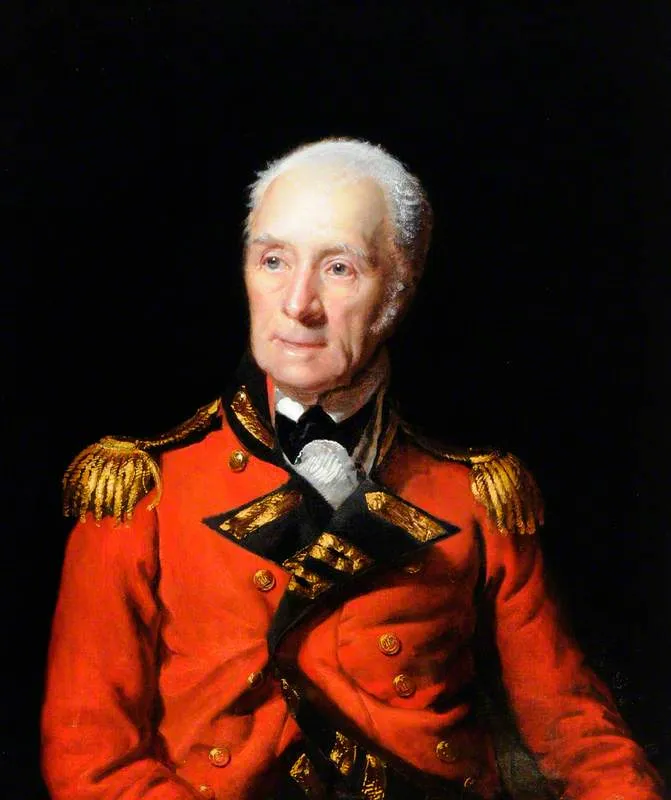
- Sir Hew Dalrymple (1750 to 1830), who took command on 22 August 1808 and ratified the convention, painted by John Jackson. Guernsey Museum and Art Gallery. John Jackson, Public domain, via Wikimedia Commons.
- “Junot disgorging his booty”: a sketch by G. Saulez of Farnham, posted to the London print-seller Ackermann on 7 October 1808. John Bull shakes Junot by the hair and the general spews out stolen gold. Rowlandson etched a print from it later that month. G. Saulez, of Farnham, CC BY 4.0, via Wikimedia Commons.
- “The Convention of Cintra, a Portuguese gambol for the amusement of John Bull”, by George Moutard Woodward, published in London in February 1809. Its panels follow the rhyme “This is the house that Jack built”, from the gold in Lisbon to the ships that carried the French home. George Moutard Woodward, Public domain, via Wikimedia Commons.
- The Palácio de Seteais in Sintra, the Marialva family's palace in 1808 and now a hotel. Legend, spread by Byron, places the signing of the convention here; the documents place it in Lisbon. Husond, CC BY-SA 3.0, via Wikimedia Commons.
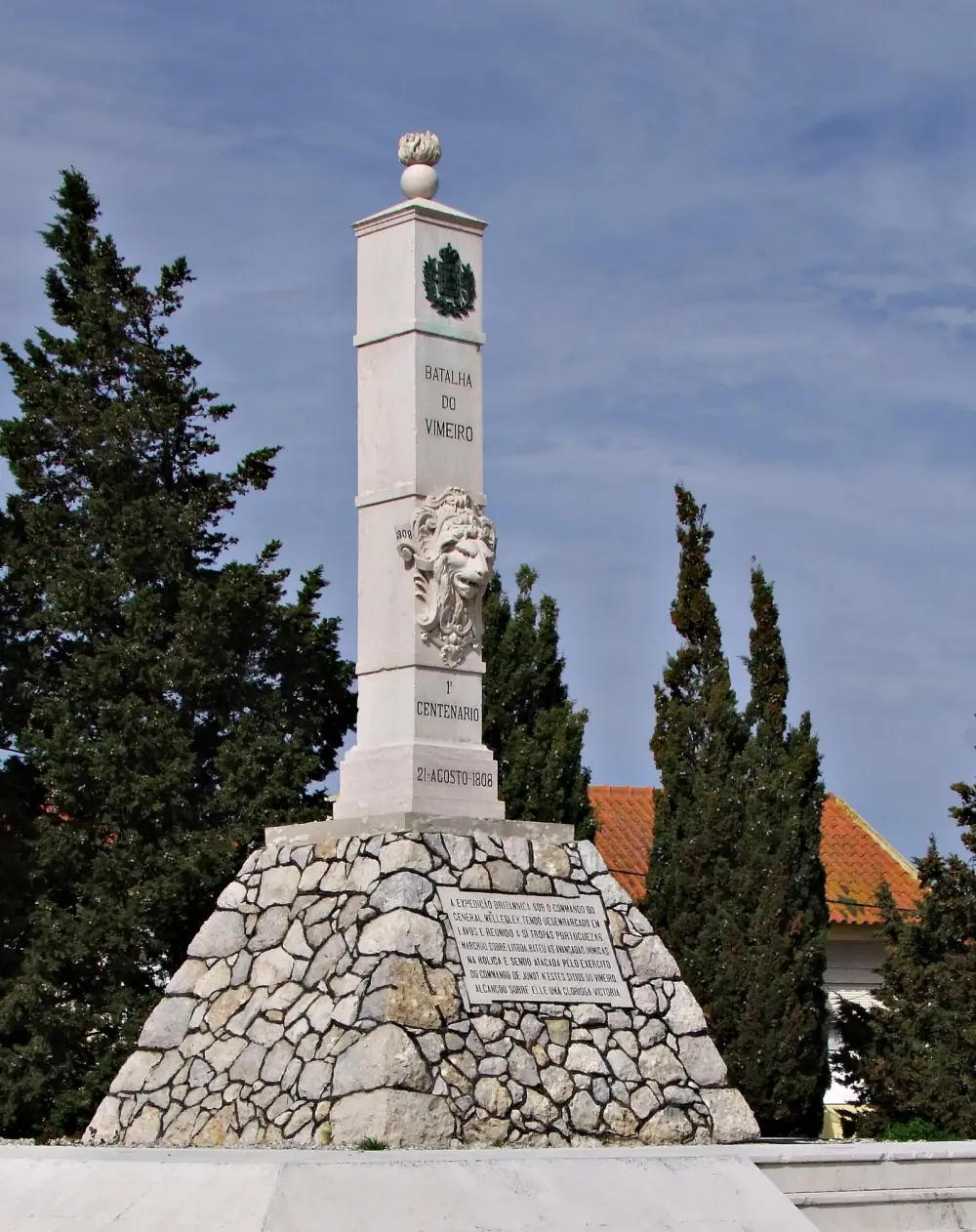
- The monument to the battle of Vimeiro, put up for its first centenary in 1908. Its plaque credits the British expedition under Wellesley, joined by Portuguese troops, with the victory. Photographed in 2017. Alta Falisa, CC BY-SA 4.0, via Wikimedia Commons.