

The PVDE: Salazar's political police is created, 1933
A two-page decree in the official gazette merged two small police forces into one. Under three names, it watched, arrested and tortured the Estado Novo's opponents for almost 41 years.
At a glance
- Decree-Law 22:992, published in the Diário do Governo on Tuesday 29 August 1933, created the Polícia de Vigilância e Defesa do Estado (PVDE).
- It merged the Polícia de Defesa Política e Social, set up in January 1933, with the Polícia Internacional Portuguesa, which watched the borders and foreigners.
- Its director for more than two decades was Captain Agostinho Lourenço, who later served as President of Interpol from 1956 to 1960.
- The force was renamed PIDE in 1945 and DGS in 1969, and its methods included beatings, the “statue” and days of enforced sleeplessness.
- A decree dated 25 April 1974, the day of the revolution, abolished the DGS; its Lisbon headquarters surrendered on the morning of 26 April, after agents had shot four people dead the evening before.
A decree among the wheat duties
Issue 195 of the Diário do Governo, Portugal's official gazette, cost 90 centavos on Tuesday 29 August 1933. Its contents list included a correction to a ministerial order, a decree suspending the board of the Companhia Nacional de Navegação, a light and water service for Luanda and the duty on imported colonial wheat, fixed at five centavos a kilo.
Under the Ministry of the Interior sat one line: Decree-Law 22:992, “creates the police of vigilance and defence of the State”. The text took eighteen articles over two pages. It was signed at the Paços do Governo by President Óscar Carmona, by António de Oliveira Salazar, the head of government, and by ten ministers.
Nothing in it spoke of prisons or interrogations. Within a year the new Polícia de Vigilância e Defesa do Estado, or PVDE, had its own prisons. Renamed PIDE in 1945 and DGS in 1969, it was the Estado Novo's instrument against its opponents until the morning of 26 April 1974, when its last director surrendered his headquarters in Lisbon.
- Date
- 29 August 1933 (signed and published the same day)
- Law
- Decree-Law 22:992, Diário do Governo, I série, n.º 195
- Ministry
- Interior
- Merged
- Polícia de Defesa Política e Social (1933) and Polícia Internacional Portuguesa (1928, revived 1931)
- First director
- Captain Agostinho Lourenço
- Later names
- PIDE (1945 to 1969), DGS (1969 to 1974)
Fifteen years of political police
Portugal had been a republic since 1910 and a military dictatorship since the coup of 28 May 1926. Political police were nothing new. The historian Irene Flunser Pimentel traces a line from the Polícia Preventiva of 1918, under the president Sidónio Pais, through several renamings in the 1920s. The officers of 1926 dissolved the last of these, then created their own in December 1926.
1918
Polícia Preventiva created under Sidónio Pais
Renamed Polícia de Segurança do Estado the next year, later Polícia de Defesa Social and Polícia Preventiva e de Segurança do Estado.
16 December 1926
Polícia Especial de Informações set up in Lisbon
A second one followed in Porto on 26 February 1927; the two merged in 1928.
21 August 1928
Polícia Internacional Portuguesa (PIP) created
Led by Captain Agostinho Lourenço, it watched borders and foreigners. It was wound up two years later for lack of money.
28 July 1931
The PIP is revived
Lourenço returns as its head.
23 January 1933
Polícia de Defesa Política e Social (PDPS)
Created by the interior minister, Albino dos Reis, under a judge, Rodrigo Vieira de Castro.
24 July 1933
Albino dos Reis resigns
29 August 1933
Decree-Law 22:992 creates the PVDE
Salazar became head of government in July 1932. That year, in interviews with the journalist António Ferro, he was asked about prisoners beaten by the police. The people mistreated, he said, were always or almost always dangerous bomb-throwers who only told the truth after violence had been used.
“Are not the lives of some children and some defenceless people well worth, do they not amply justify, half a dozen timely shoves at these sinister creatures?”
The PDPS of January 1933 lasted seven months. It displeased Lourenço, then head of the rival PIP, and Salazar's secretary, Lieutenant Horácio Assis Gonçalves, sent Salazar two reports against Albino dos Reis. The minister, distrusted by the army officers of the dictatorship, resigned on 24 July 1933, and the PDPS's director left with him. Five weeks later his police was merged out of existence.
What the decree said
The preamble argued from tidiness. The political police and the international police did the same job of “political and social vigilance”, one inside the country and mostly over Portuguese citizens, the other at the borders and over foreigners. That difference, the government wrote, did not justify two services.
“It is therefore plainly convenient to place the vigilance of foreigners on the land and sea frontiers under the same body, and to give the two police forces a single command directly subordinate to the Minister of the Interior.”
The new force answered to the interior minister and acted across the whole territory of the republic. It had two sections. The political and social defence section was charged with “the prevention and repression of crimes of a political and social nature”. The international section checked passports at the borders, kept a register of foreigners and fought espionage. It was also told “to carry out the repression of communism”, above all the links between Portuguese activists and “foreign agitators”.
Three clauses mattered more than they looked. Every authority, including Portugal's diplomats and consuls abroad, had to help the PVDE when asked. Its reports and investigations were to be trusted in court and to count as evidence of the offence. And apart from its senior officers, the director could hire, suspend or dismiss any of its staff by a simple order, “independently of any formality”.
The director could be a graduate or an army officer. The job went to Captain Agostinho Lourenço, born in 1886, a former civil governor of Leiria who had run the PIP. His secretary-general was Lieutenant José Ernesto Catela, also from the PIP. People went on calling the PVDE “the Internacional” after its predecessor. Its political section began in the Rua Serpa Pinto in Lisbon, its international section in the Rua António Maria Cardoso, and its Porto delegation in the Rua do Heroísmo, with a jail of its own.
Arrest, prison and torture
In September 1933 new corporatist laws brought the trade unions under state control, and a revolutionary general strike on 18 January 1934 was put down. From then on the Portuguese Communist Party was the PVDE's main target. Decree-Law 23 995 of 12 June 1934 gave it powers over prisons, and in 1935 it caught the communist leaders Bento Gonçalves, José de Sousa and Júlio Fogaça.
A political prisoner's path was usually the same. After arrest came the Aljube prison or the Caxias fort in Lisbon, then interrogation at the headquarters in the Rua António Maria Cardoso. The pre-trial inquiry was the PVDE's own, held in secret with no lawyer and no examining judge present. Those sent for trial went to the Tribunal Militar Especial until 1945, then to the Tribunais Plenários of Lisbon and Porto. Many never got that far: of the political prisoners traced in one rural municipality, Mafra, 81% were never tried.
In the 1930s and 1940s the PVDE relied mostly on beatings and the estátua, the “statue”: the prisoner had to stand for hours, or face the wall without touching it, arms outstretched like Christ on the cross. Those who fell were kicked. Álvaro Cunhal, the future communist leader, described being beaten in a ring of agents, struck on the soles of his feet and made to march on them until he lost consciousness.
On paper the police could hold a suspect without charge for eight days. In practice detention for inquiries had no limit, and prisoners who had served their sentences could be kept indefinitely on a new order from the PVDE's director or the interior minister. A national network of informers, known as bufos, fed the files.
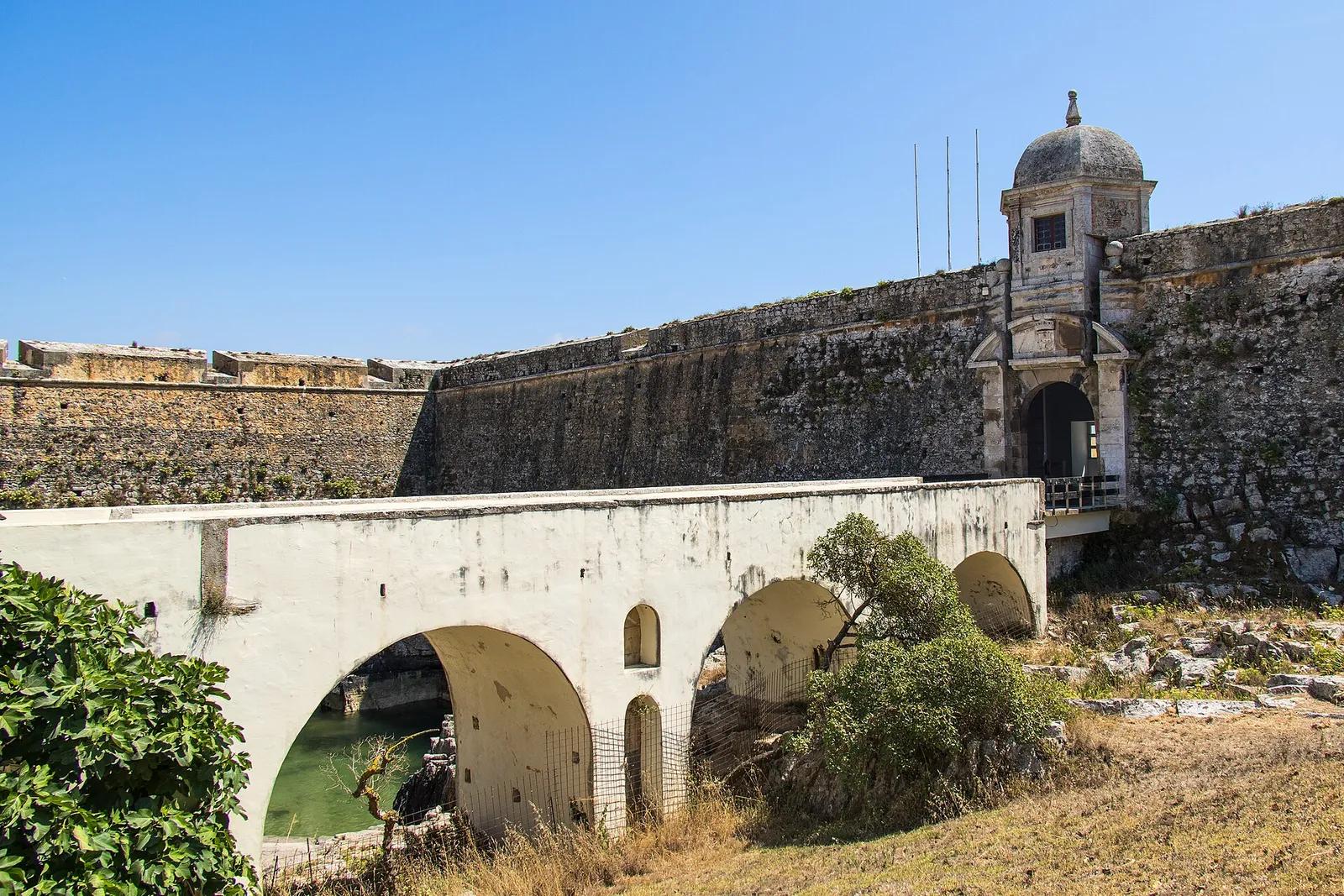
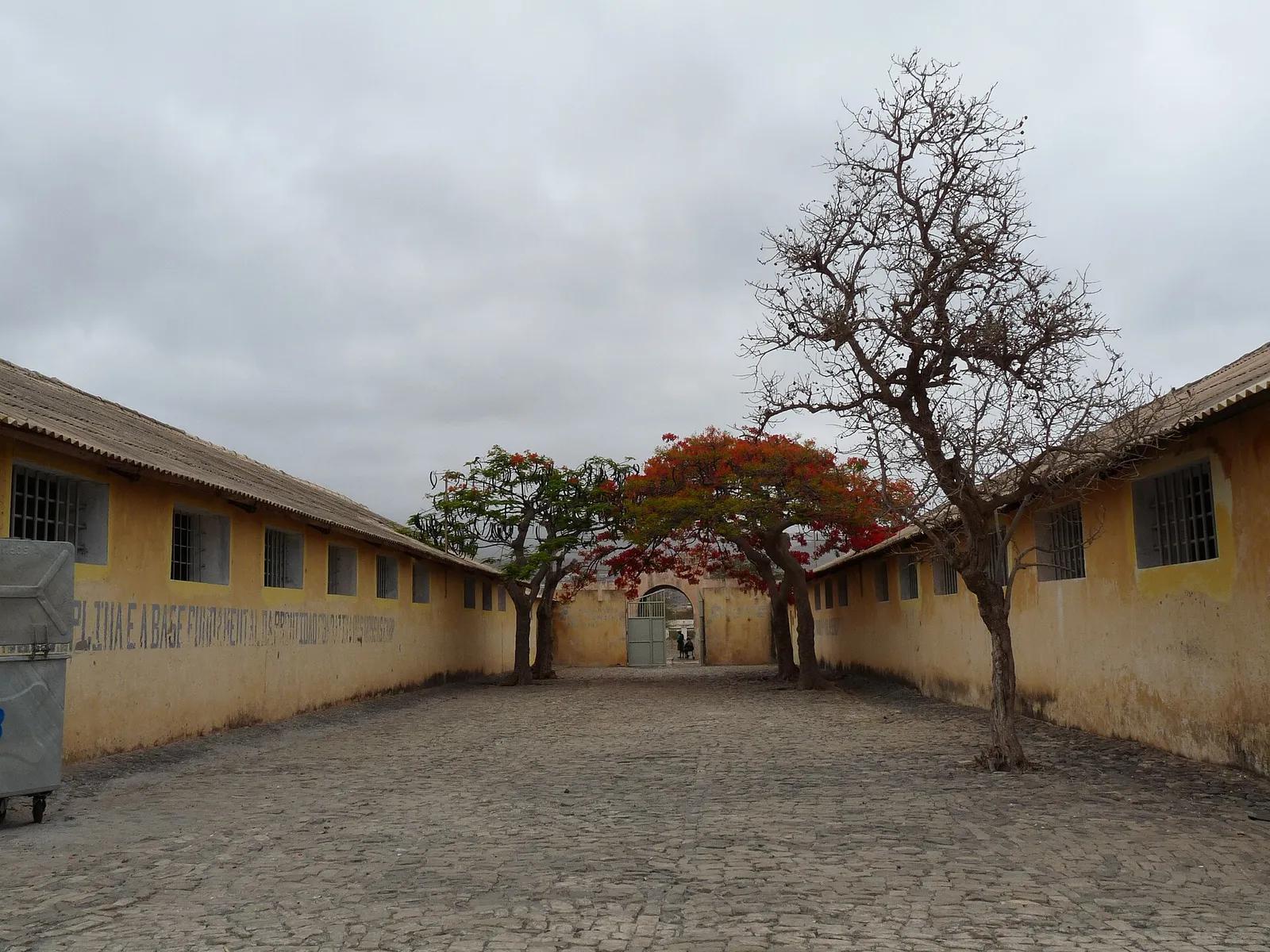
The furthest of those prisons was the penal colony at Tarrafal, on Santiago island in Cape Verde, where the first prisoners, about 150 of them, arrived on 29 October 1936. Its story has its own article. Counts of the dead there differ: 31 deported prisoners before 1945 in Pimentel's account, 33 between 1937 and 1948 on the Museu do Aljube's list of the dictatorship's dead. By the PVDE's own records, at least ten more political prisoners died in its mainland jails and in the Azores fortress of Angra do Heroísmo between 1939 and 1945.
| Period | Arrests | Average a year |
|---|---|---|
| 1933 to 1939 | at least 9,950 | about 1,420 |
| 1936 to 1939 | 9,575 | about 2,390 |
| 1940 to 1945 | 4,952 | about 825 |
| Total given by Pimentel | 16,891 | about 1,300 over 13 years |
Pimentel attributes the second, third and fourth rows to the commission; the 1933 to 1939 figure is from her text. She reports peaks in 1936 and 1937, when arrests reached almost 6,000. They do not add up: the two periods in her table (1936 to 1939 and 1940 to 1945) sum to 14,527, and 1933 to 1939 plus 1940 to 1945 to 14,902, not 16,891. She describes the total as covering 1936 to 1945 but averages it over 13 years. The 1936 to 1939 average is our calculation.
Rome, Berlin and Madrid
The political police has often been called Gestapo-trained. Pimentel compares it with Mussolini's OVRA and Hitler's Gestapo and finds real likenesses before the Second World War: all three arrested “habitual enemies” before any crime and ran their own pre-trial inquiries, and the PVDE, like the Italian police, used a wide network of informers. But the PVDE always answered to a minister and to Salazar, and its repression, though at times very wide, was aimed at political and social opponents, not at racial enemies. She calls it a national product, shaped above all by the police of the military dictatorship.
The Italian link is documented. After a bomb narrowly missed Salazar on 4 July 1937, the PVDE blamed the communists, and the criminal investigation police had to find the real authors, anarcho-syndicalists. The Italian police official Leone Santoro spent 1938 to 1940 in Portugal. Salazar rejected his plan for a single national police command, but the PVDE and the Italian police signed a technical agreement to exchange information on “politically dangerous” people.
The closest partner was Spain. From the outbreak of the civil war in July 1936 the PVDE worked with Franco's side, and the cooperation with his Dirección General de Seguridad lasted into the 1970s. During the Second World War the PVDE also controlled the refugees who crossed Portugal; Salazar made consuls submit visas to its approval, the rule the consul Aristides de Sousa Mendes broke in 1940. From 1943, as neutral Portugal leaned towards the Allies, it turned on the German spy networks in the country.
PIDE and DGS
By the end of the Second World War the Fascist and Nazi police forces had gone with the regimes that made them. Salazar's survived under a new name. Decree-Law 35:046 of Monday 22 October 1945 replaced the PVDE with the Polícia Internacional e de Defesa do Estado, or PIDE, a judicial police body under the interior ministry with the same powers as the Polícia Judiciária. The preamble offered a British model.
“A system similar to the one adopted in England is thus followed, where identical functions are carried out by a special branch, with autonomy, of the Criminal Investigation Department, commonly known as Scotland Yard.”
Pimentel reads the reform as legalising what the PVDE had done without law. Pre-trial detention, unlimited until then, now ran for three months plus two extensions of 45 days, and the police sometimes freed a prisoner at the gate only to arrest him again. In 1947 the PIDE's establishment was set at 541 directing and investigating staff and 150 clerks. Lourenço handed over to Captain António Neves Graça, on an interim basis in 1955 and formally on 27 November 1956. In 1956 he became President of Interpol, a post he held until 1960.
After 1945 the main method of interrogation became the tortura do sono, sleep deprivation, with or without the statue. The communist Octávio Pato was kept awake for eleven days and nights at a stretch in 1961. The PIDE also killed in the open: the communist artist José Dias Coelho in 1961, and General Humberto Delgado and his companion, Arajaryr Campos, in 1965.
From 1961 Portugal fought colonial wars in Africa, starting in Angola, and the police grew with them. When Decree-Law 48 794 reorganised it on 26 December 1968, after Marcello Caetano had replaced Salazar, more of its staff served in Angola and Mozambique together than in Portugal itself.
| Territory | Staff |
|---|---|
| Mainland Portugal and the islands | 1,187 |
| Angola | 1,116 |
| Mozambique | 662 |
| Guinea | 101 |
| Cape Verde | 40 |
| India | 28 |
| São Tomé and Príncipe | 26 |
| Macau | 8 |
| Timor | 4 |
Pimentel gives an official total of 3,202 staff, but the territories she lists add up to 3,172. India had been annexed by the Indian Union in December 1961; the posts are as she reports them.
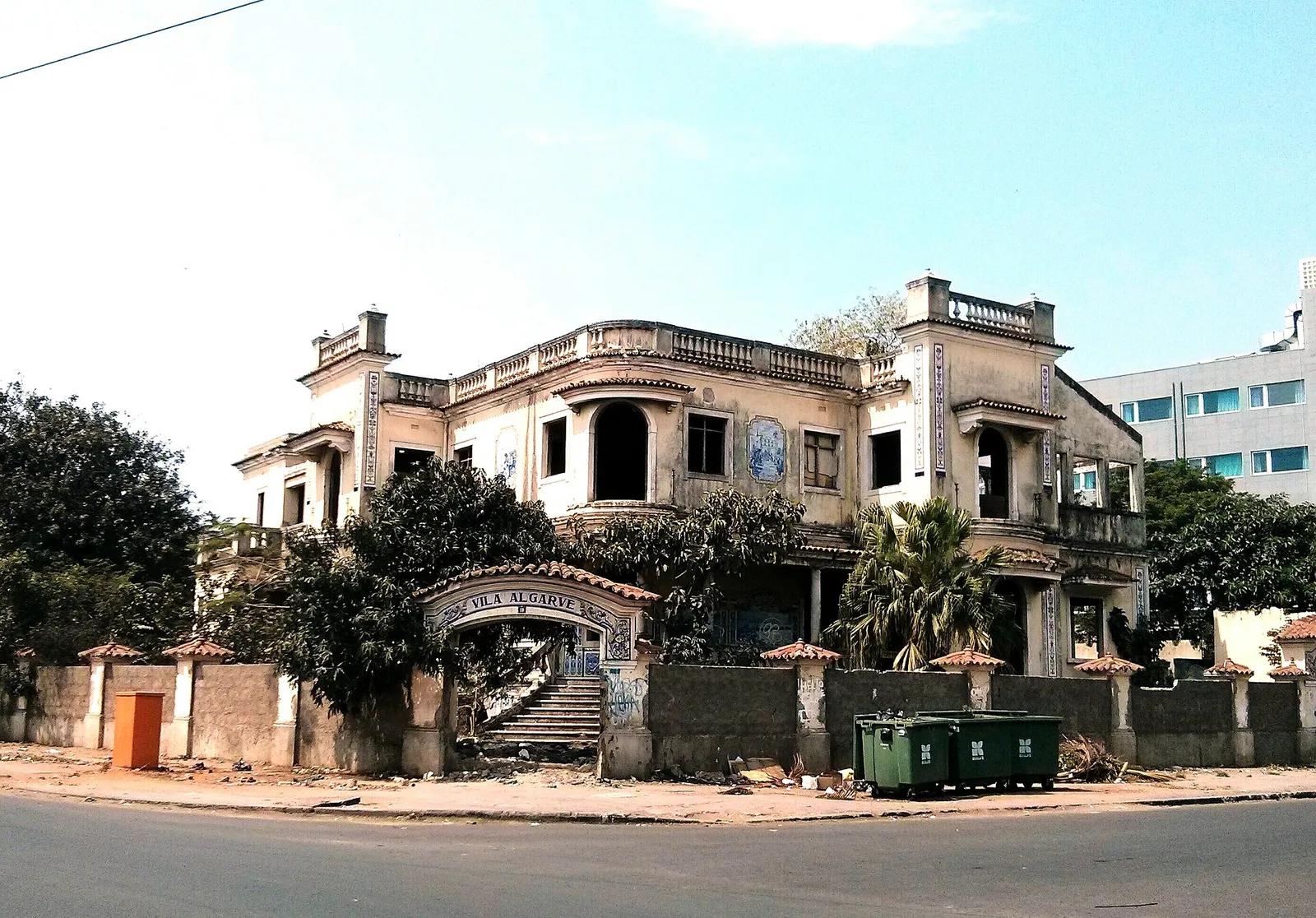
Caetano's government renamed the force the Direcção-Geral de Segurança, or DGS, by Decree-Law 49 401, promulgated on 19 November and published on 24 November 1969. Its methods did not change. The head of the Porto delegation assured Caetano in writing that “the nights of vigil are unfortunately a sad reality”. In 1971 interrogations moved to the fort of Caxias, and a reorganisation of 30 September 1972 gave the DGS 3,638 posts, most of them overseas.
The end in the Rua António Maria Cardoso
On 25 April 1974 the Armed Forces Movement overthrew Caetano. About 200 DGS agents were shut inside the headquarters as crowds gathered outside.
Shortly after 8pm agents fired on the people in the street. Forty-five were hit, four of them fatally: Fernando Carvalho Giesteira, 18, José James Harteley Barneto, 38, João Guilherme Rego Arruda, 20, and Fernando Luís Barreiros dos Reis, 23.
The Associação 25 de Abril calls these four the revolution's only victims. Pimentel adds a fifth: during the night the cavalry surrounding the building shot dead António Lage, a junior DGS employee who had fled it in panic.
Marines and cavalry from Estremoz surrounded the building. The director, Major Fernando da Silva Pais, surrendered on the morning of Friday 26 April; the newspaper República timed the troops' entry at 9.46, the Associação 25 de Abril puts the occupation at about 9.00. Hours earlier the senior inspector Álvaro Pereira de Carvalho had ordered papers destroyed, among them the files on informers.
The new junta's Decree-Law 171/74, dated 25 April, abolished the DGS in its first article. Overseas, where the wars went on, it was to be purged and reorganised as a military intelligence police. Investigation of crimes against the state passed to the Polícia Judiciária, and the borders to the Guarda Fiscal until a new service existed.
The first head of the body set up to wind the police up, Commander Guilherme Conceição e Silva, said the DGS had 2,162 staff and 20,000 informers. Law 8/75 of 25 July 1975 sent its members before military courts, and was softened after November 1975. By February 1986 those courts had judged 2,755 people. They acquitted 175, and most of the rest received six months or less.
Sentences passed on PIDE/DGS staff and informers by military courts, to February 1986
people
Totals for all 2,755 people tried by the Tribunais Militares Territoriais up to February 1986, from the figures in Irene Flunser Pimentel's O Essencial sobre a PIDE: 42 directing staff, 274 inspectors and brigade chiefs, 2,033 agents, drivers and trainees, and 406 informers. Informers account for 164 of the 175 acquittals.
Show the data
| People sentenced | |
|---|---|
| Acquitted | 175 |
| Political rights suspended | 107 |
| Up to 1 month | 1,014 |
| 1 to 6 months | 847 |
| 6 months to 1 year | 172 |
| 1 to 2 years | 397 |
| 2 years or more | 43 |
Why it still matters
Most of those convicted got sentences equal to the time they had already spent in custody and walked free on the day of judgment. Service with the armed forces overseas after 25 April counted in mitigation in 56.6% of the cases tried, and by 1986 the great majority had been tried and either taken back into the civil service or pensioned off.
Pimentel heads her account of those trials with the question of whether Portugal ever had a process of transitional justice, a reckoning with the people who had run the repression.
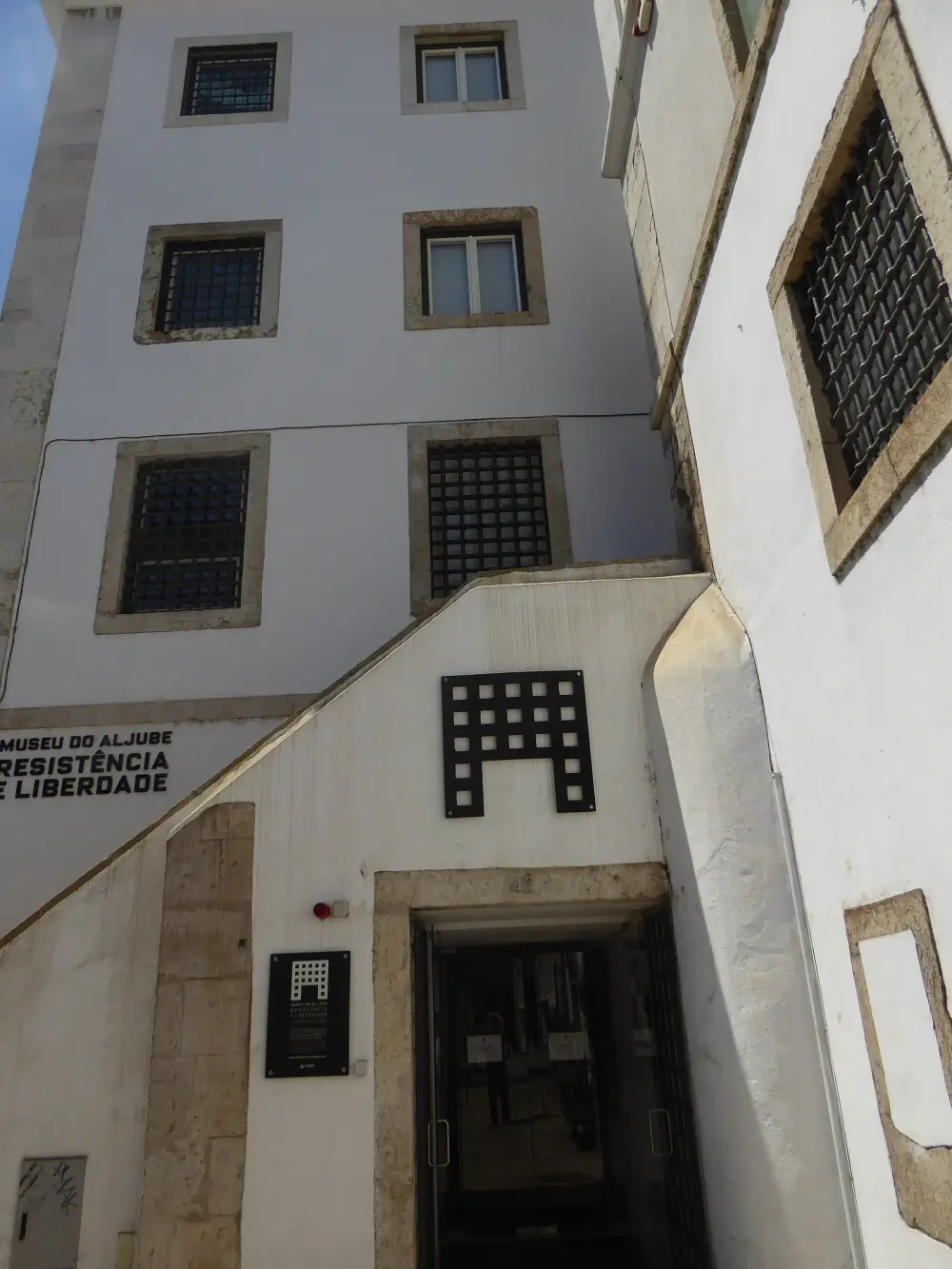
Luís Farinha, the museum's director in 2017, wrote that about 30,000 political prisoners passed through the Aljube alone, and that much of the prison's own record disappeared after it closed in 1965.
FAQs
What did PVDE, PIDE and DGS stand for?
They were three names for the same political police. The PVDE was the Polícia de Vigilância e Defesa do Estado (1933 to 1945), the PIDE the Polícia Internacional e de Defesa do Estado (1945 to 1969) and the DGS the Direcção-Geral de Segurança (1969 to 1974).
When and how was the PVDE created?
By Decree-Law 22:992, signed and published in the Diário do Governo on 29 August 1933. It merged the Polícia de Defesa Política e Social and the Polícia Internacional Portuguesa under the interior minister, with Captain Agostinho Lourenço as director.
Was Portugal's political police trained by the Gestapo?
The sources cited here give no evidence that the Gestapo built it. The PVDE shared some features with the Gestapo and the Italian OVRA, had contacts with German agents from the Spanish Civil War onwards, and signed an information-sharing agreement with the Italian police, but the historian Irene Flunser Pimentel describes it as a national product that grew out of earlier Portuguese police forces.
What happened to the political police after 25 April 1974?
Decree-Law 171/74, dated 25 April 1974, abolished the DGS, and its Lisbon headquarters surrendered on 26 April. Many agents were arrested and tried by military courts under Law 8/75; by February 1986 they had judged 2,755 people, acquitting 175 and giving most of the rest six months or less.
Where can you learn about the PIDE in Lisbon?
At the Museu do Aljube Resistência e Liberdade, Rua de Augusto Rosa 42, in a building used as a political prison from 1928 to 1965. Its exhibition covers interrogation, torture and the tiny isolation cells.
On the timeline
Open the timelineNearby moments from dictatorship and the estado novo (1926–1974).
Birth in Lisbon of Celeste Caeiro, the restaurant worker who gave the Carnation Revolution its name. On 25 April 1974 her restaurant cancelled its first-anniversary party, for which it had bought carnations; she took the metro to Rossio and walked up to the Chiado, where a soldier on an armoured car asked her for a cigarette. She gave him a carnation instead, which he slipped into the barrel of his rifle.
Birth of Álvaro Siza Vieira in Matosinhos. Portugal's most celebrated architect and winner of the 1992 Pritzker Prize, his works — from the Boa Nova Tea House to the rebuilt Chiado and the Portuguese Pavilion at Expo '98 — define modern Portuguese architecture.
The historian A. H. de Oliveira Marques, author of landmark histories of Portugal and pioneering studies of daily life in the Middle Ages, is born in São Pedro do Estoril, near Lisbon.
The PVDE is created
A decree-law creates the PVDE (Polícia de Vigilância e Defesa do Estado), the Estado Novo's political police and forerunner of the PIDE, which would enforce the dictatorship's repression for four decades.
'A Canção de Lisboa', the first sound feature film made entirely in Portugal, premieres at the São Luiz theatre in Lisbon. Directed by José Cottinelli Telmo and starring Vasco Santana, Beatriz Costa and António Silva, its comedy of a medical student fooling his rich aunts left lines and songs the Portuguese still quote.
An insurrectionary general strike against the Estado Novo's corporatist labour laws is attempted across Portugal, most dramatically in Marinha Grande, where glassworkers cut roads, telephone lines and the railway and seize the post office and GNR post; some accounts add the town hall and a short-lived “soviet”. The revolt is crushed within hours and followed by mass arrests, and the regime uses it to justify deeper repression of the labour movement.
Paula Rego is born in Lisbon. Settling in London, she became one of the great figurative painters of her time, known for unsettling fairy-tale scenes and her 'Abortion' series; the Casa das Histórias in Cascais is dedicated to her work.
Coming up in history
All long reads
18 sources
Archives, scholarship and reporting this article was checked against.
- 1
Decreto-lei n.º 22:992, cria a polícia de vigilância e defesa do EstadoDiário do Governo, I série, n.º 195, 29 August 1933 (Ministério do Interior), via Diário da República
- 2
O Essencial sobre a PIDE (Irene Flunser Pimentel)Imprensa Nacional, 2023
- 3
O relacionamento policial entre as ditaduras de Portugal e Espanha (Irene Flunser Pimentel)Cuadernos Iberoamericanos, vol. X, n.º 3 (2022), pp. 37 to 54
- 4
- 5
- 6
Long-term ExhibitionMuseu do Aljube Resistência e Liberdade (EGEAC)
- 7
- 8
- 9
- 10
Portuguese intelligence service: an overview (Sofia Tzamarelou)Research Institute for European and American Studies (RIEAS), 22 June 2014
- 11
- 12
Former PresidentsINTERPOL
- 13
- 14
Sede da PIDE/DGS, Rua António Maria Cardoso (Lugares de Abril)Associação 25 de Abril
- 15
- 16
Fernando Carvalho Giesteira (Vítimas do 25 de Abril)Museu do Aljube Resistência e Liberdade
- 17
- 18
Aljube Museum: musealization of a “difficult heritage” (Luís Farinha)European Memories (EUROM), 15 November 2017
Image credits
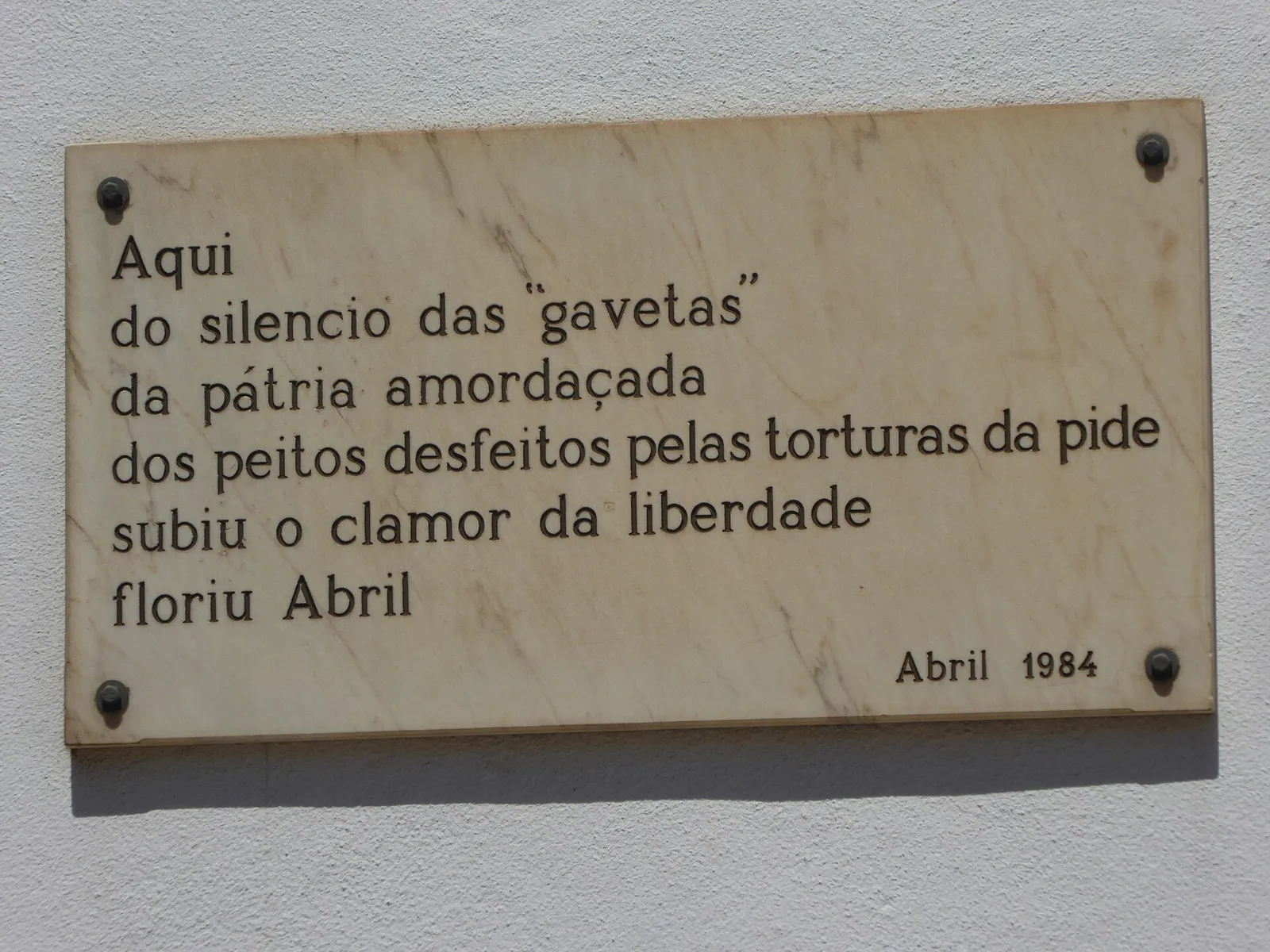
- A plaque of April 1984 at the former Aljube prison in Lisbon: “Here, from the silence of the ‘drawers’ of the gagged homeland, from the breasts torn by the PIDE's tortures, rose the clamour of freedom, April blossomed” (translated from Portuguese). The drawers were its isolation cells. Photographed in May 2017. Ardfern, CC BY-SA 4.0, via Wikimedia Commons.
- The entrance to the fortress of Peniche, on the coast north of Lisbon, one of the prisons the PVDE and its successors controlled. Photographed in July 2026. Alexkom000, CC BY 4.0, via Wikimedia Commons.
- Inside the former Tarrafal camp on Santiago island, Cape Verde, with the gate at the far end, in June 2009. Gagum, CC BY 2.0, via Wikimedia Commons.
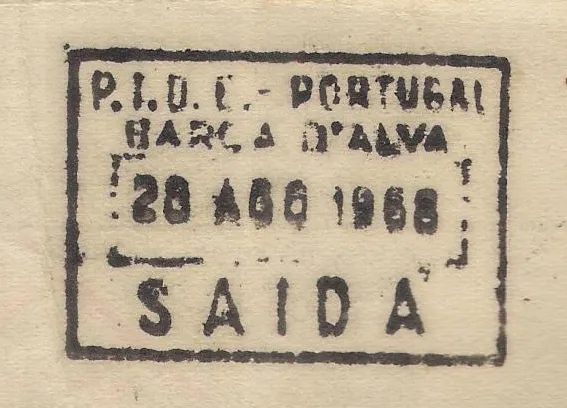
- A PIDE exit stamp in a passport from the Barca d'Alva border post on the Douro, dated 28 August 1968. Border and passport control stayed with the political police until 1974. Xicodaponte, CC BY-SA 4.0, via Wikimedia Commons.
- Vila Algarve in Maputo, the PIDE's headquarters in Mozambique when the city was Lourenço Marques, photographed in December 2013. Cornelius Kibelka from Berlin, Germany, CC BY-SA 2.0, via Wikimedia Commons.
- The entrance to the Museu do Aljube in the Rua de Augusto Rosa, Lisbon, in May 2017. Ardfern, CC BY-SA 4.0, via Wikimedia Commons.