

The Liberal Revolution of Porto: 24 August 1820
With the king in Rio and a British marshal running the army, a dinner club of Porto judges and merchants planned a revolution. On a summer morning the garrison carried it out, and no blood was shed.
At a glance
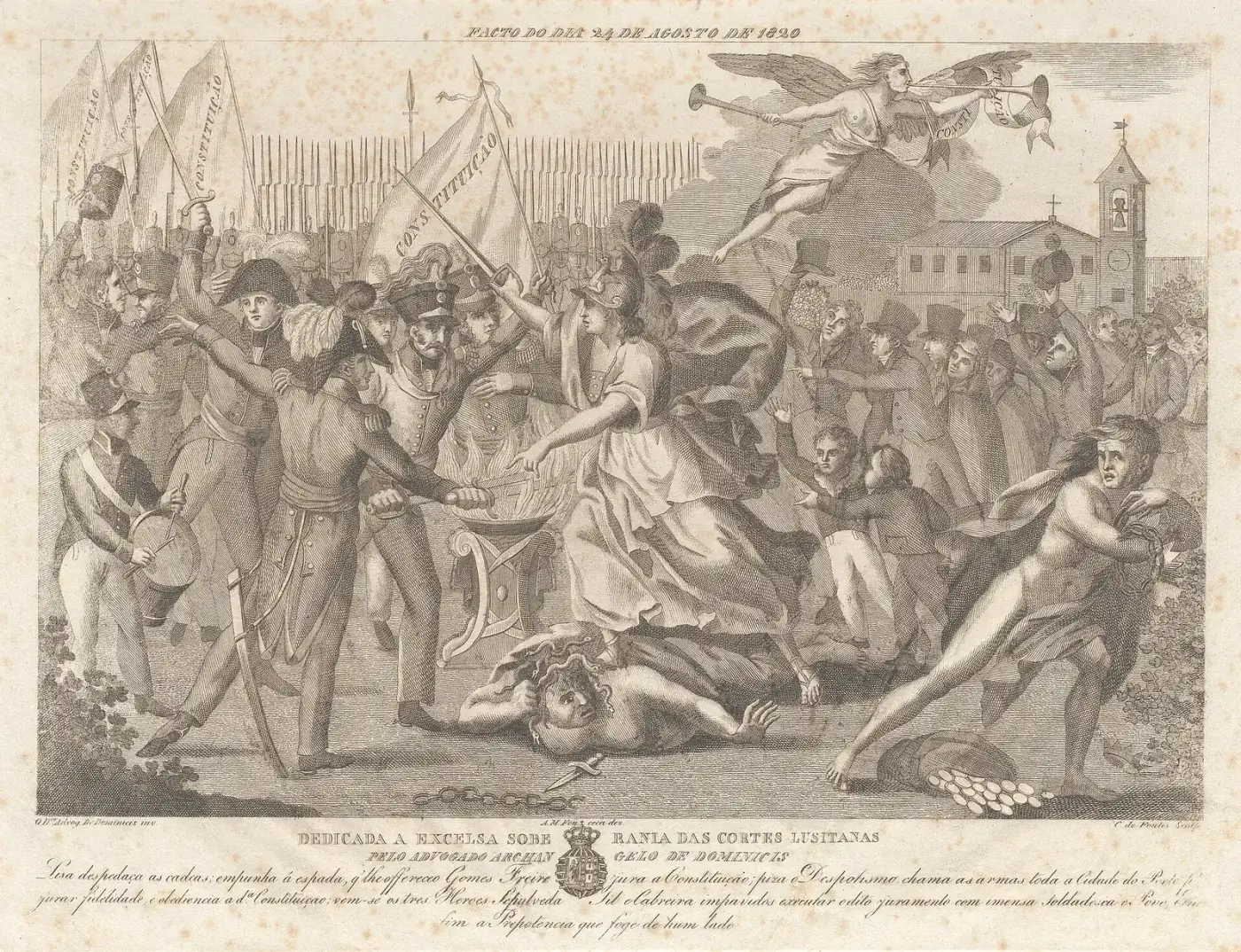
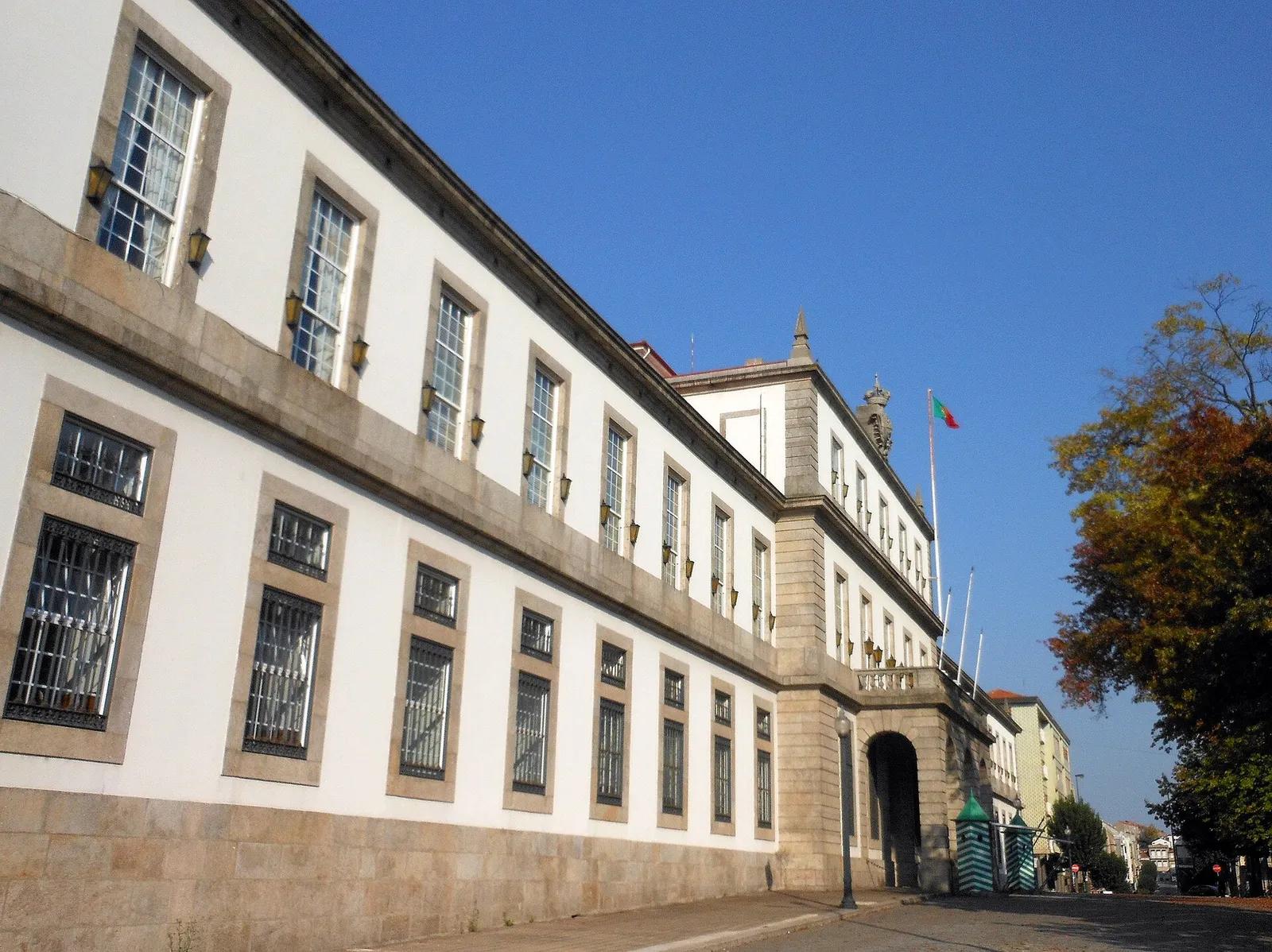
- On Thursday 24 August 1820 the Porto garrison gathered at the Campo de Santo Ovídio, now the Praça da República, heard a field mass and a 21-gun salute, and declared for a constitution without a shot fired in anger.
- The rising was planned by the Sinédrio, a secret society of Porto magistrates and merchants founded on 22 January 1818 by Manuel Fernandes Tomás and three friends; it never had more than 13 members.
- A meeting at Porto's town hall that morning named a Provisional Junta of the Supreme Government of the Kingdom to govern in the name of João VI, who had lived in Brazil since 1808, until elected Cortes wrote a constitution.
- Lisbon's garrison and people deposed the regency on 15 September 1820, the two governments merged at Alcobaça on 27 September, and the junta entered Lisbon on 1 October.
- Elected Cortes opened in Lisbon on 26 January 1821, João VI landed on 4 July 1821 and swore to their principles, and the Constitution was approved on 23 September 1822; it fell to the Vilafrancada in 1823.
A morning at Santo Ovídio
In the early hours of Thursday 24 August 1820, soldiers, militiamen and police of the Porto garrison formed up beside the artillery barracks on the Campo de Santo Ovídio, an open parade ground that is now the city's Praça da República. Bernardo Correia de Castro e Sepúlveda, colonel of the 18th Infantry, read a proclamation to the ranks. He called for a provisional government.
“A Provisional Government, which will call the Cortes to make the Constitution, the lack of which is the origin of all our ills.”
A second colonel, Sebastião Drago Valente de Brito Cabreira, who commanded the 4th Artillery Regiment, read another, calling for Cortes “that are the organ of the Nation” to prepare a constitution. Both texts were the work of a Porto lawyer, José Ferreira Borges. The day also brought a field mass and a salute of 21 guns.
No shot was fired in anger that day.
The troops then marched through cheering streets to the Praça Nova, today's Praça da Liberdade. The leaders had summoned officers, magistrates, councillors and clergy to the town hall there for eight o'clock. That morning the meeting named a Provisional Junta of the Supreme Government of the Kingdom, to rule in the name of King João VI until elected Cortes could give Portugal a constitution.
The historian José Luís Cardoso calls it a quiet rising of discontented troops who had been persuaded by the magistrates and merchants of Porto. Thirty-eight days later the government it created entered Lisbon.
- Date
- Thursday 24 August 1820, from the early hours
- Where
- Campo de Santo Ovídio (now Praça da República), then the town hall on the Praça Nova (now Praça da Liberdade), Porto
- Officers
- Colonel Sepúlveda (18th Infantry), Colonel Cabreira (4th Artillery), Brigadier António da Silveira Pinto da Fonseca
- Planners
- The Sinédrio, a secret society founded in Porto on 22 January 1818
- Demands
- Cortes to write a constitution, loyalty to João VI and the House of Braganza, the Catholic religion kept
- Casualties
- None: no resistance and no blood shed, in Cardoso's account
A kingdom run from Rio
Portugal had been without its king for almost 13 years. In November 1807, with a French army marching on Lisbon, the royal family sailed for Brazil, and Rio de Janeiro became the seat of the monarchy. In December 1815 Brazil was raised to a kingdom, united with Portugal and the Algarve, which settled that the court would stay in Rio.
In Lisbon a regency of governors ruled in the king's name. The army, with British officers in many of its commands, was run by William Carr Beresford, a British general serving as a Portuguese marshal, who in the words of the British Historical Society of Portugal was effectively in charge of the country until 1820. The army took about three-quarters of the budget, by one estimate, and still its soldiers were paid months late.
Trade suffered too. Early in 1808, days after landing in Bahia, the prince regent opened Brazil's ports to friendly nations, ending Lisbon's monopoly of the colony's trade, and treaties with Britain in 1810 confirmed British merchants' access. Cardoso argues that the loss of the Brazil trade is what drew merchants with Atlantic interests to the plotters of 1820.
Open dissent was dangerous. In October 1817 the regency put to death General Gomes Freire de Andrade and 11 other men for an alleged plot to seize Beresford, and on 30 March 1818 a royal decree banned all secret societies on pain of death.
In 1820 two things changed. In Spain the liberal Constitution of Cádiz of 1812 was restored, and the news crossed the border. And Beresford sailed to Rio to ask João VI for more power, leaving the army's command without a firm hand.
The Sinédrio: a dinner club of conspirators
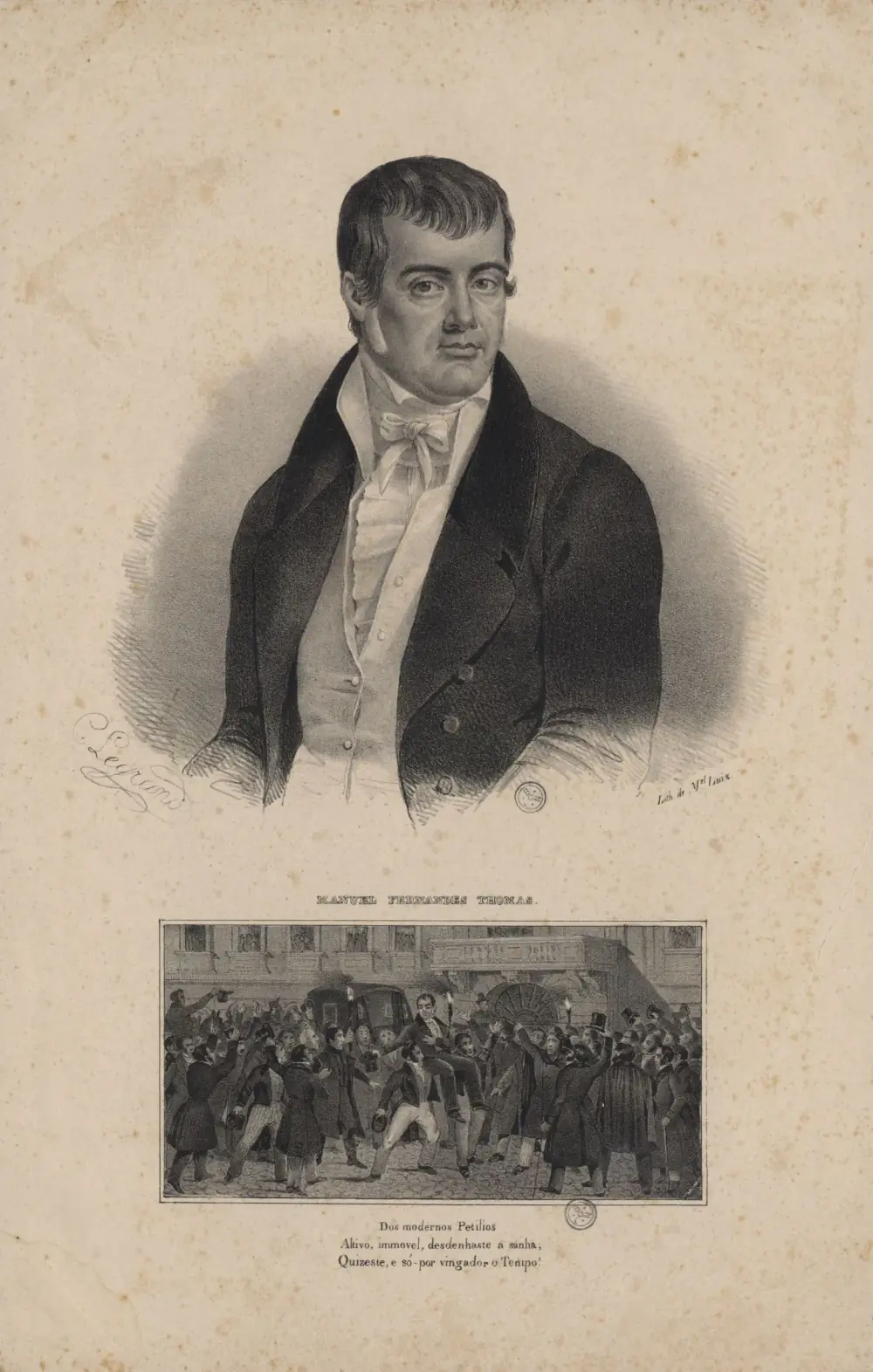
The plot began with a walk. On the night of 27 December 1817, according to the memoirs of members, two judges strolled at Foz do Douro, where the river meets the sea at Porto. Manuel Fernandes Tomás, 46, sat on Porto's court of appeal; José da Silva Carvalho, 35, was a judge for orphans' affairs in the city. The older man had a refrain.
“This state of things cannot hold; there are bound to be revolts and anarchy. Let us prepare for that and form a compact body that will appear at that moment to lead the movement for the good of the country and its freedom.”
On 22 January 1818 the two judges called on the lawyer José Ferreira Borges, and that night, with the merchant João Ferreira Viana, they adopted short statutes drafted by Fernandes Tomás. The name came later: the Sinédrio, after the Sanhedrin, the council of judges of ancient Israel. Its aims were the king's return, Beresford's removal and a thorough political reform.
Members agreed to dine at Foz on the 22nd of each month to compare notes, though the dinners lapsed after April 1818. Recruitment was slow: the society reached 13 members in all, five of them admitted between May and August 1820. Several were or became Freemasons, but members' own memoirs denied that the lodges had any part, and historians still argue the point.
Lisbon was a disappointment. Silva Carvalho, who moved there in 1819, found its liberals “inert, timid and servile”, as a British magazine later summed up his report. In late July 1820 Fernandes Tomás went himself, noticed police agents following him and hurried home. He reported that Lisbon would not start a revolution but would follow one begun in Porto.
The soldiers were the hard part. Colonel Sepúlveda joined the society on 19 August 1820, five days before the rising. Brigadier António da Silveira Pinto da Fonseca and Colonel Cabreira, by Rui de Albuquerque's account, led a separate officers' faction that wanted to head the revolution and any government it produced.
The junta and its manifesto
The junta named that morning was a careful balance. Its president was Silveira and its vice-president Cabreira, two officers Cardoso describes as no lovers of the revolutionary cause, put there, he argues, by Fernandes Tomás to keep the army on side. The others sat for the clergy, the nobility, the magistracy, commerce and the Minho. Six of the 11 names belonged to the Sinédrio, including all three secretaries. The junta later grew to 18 members.
| Role | Member | In the Sinédrio? |
|---|---|---|
| President | Brigadier António da Silveira Pinto da Fonseca | No |
| Vice-president | Colonel Sebastião Drago Valente de Brito Cabreira | Disputed |
| For the clergy | Luís Pedro de Andrade e Brederode, dean | No |
| For the nobility | Pedro Leite Pereira de Melo | No |
| For the magistracy | Manuel Fernandes Tomás | Founder |
| For commerce | Francisco José de Barros Lima | No |
| For the province of Minho | José Maria Xavier de Araújo | Yes, from June 1820 |
| For the province of Minho | João da Cunha Sotto Maior | Yes, from May 1820 |
| Secretary | José Ferreira Borges | Founder |
| Secretary | José da Silva Carvalho | Founder |
| Secretary | Francisco Gomes da Silva | Yes, from May 1820 |
Names and roles as printed under the junta's address of 24 August 1820, with spelling modernised. Membership of the Sinédrio follows Rui de Albuquerque's list of its 13 members. Cardoso counts Cabreira as a member in his text but leaves him out of his own list of Sinédrio men on the junta.
The junta's address “to the Portuguese”, dated that day at the “Palace of the Government” in Porto, blamed a reckless administration for the decay of trade, industry, farming and the navy, and lamented the country's “orphanhood” since its king had left. It promised to respect the monarchy, religion, property and every office, and declared that “no one will be troubled for his opinions or past conduct”.
“Let us have, then, that Constitution, and we shall be fortunate again.”
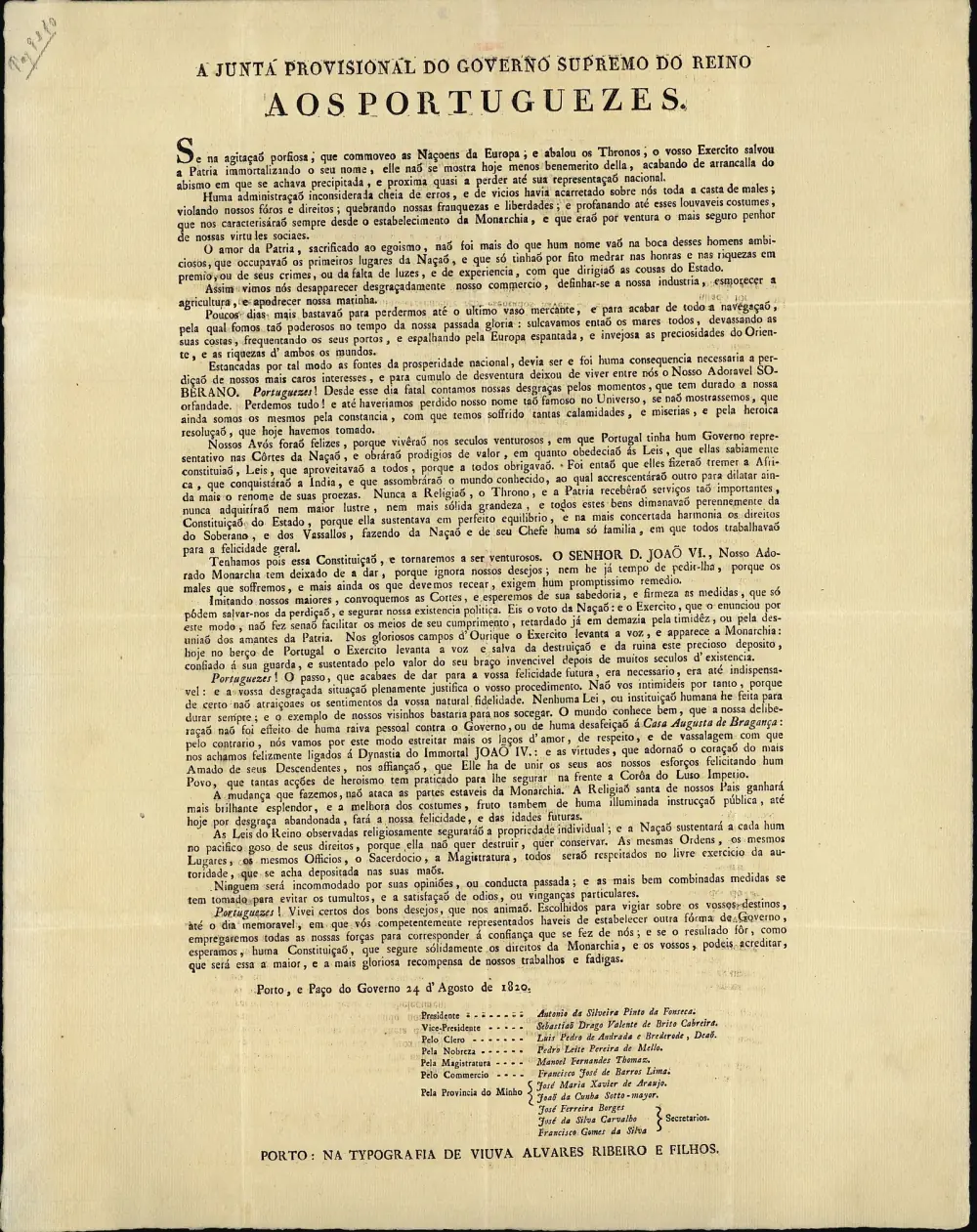
Officials, magistrates, town councils and clergy were made to swear obedience to the junta, which would govern “in the name of the King Our Lord” until the Cortes met, and to the constitution the Cortes would make, “keeping the Roman Catholic religion and the dynasty of the House of Braganza”. On Saturday 26 August the Diário Nacional appeared in Porto with the junta's permission. Until then Portugal's liberal press had been printed abroad, mostly by exiles in London.
Lisbon follows
The regency answered with proclamations, from 29 August, denouncing a “horrendous crime of rebellion”. Posted in Lisbon's streets, they were found torn down or smeared with filth, and the police reported people openly approving of Porto in shops and squares.
Resistance in the provinces melted away. In Trás-os-Montes the Count of Amarante, the junta president's own brother, called him a “madman”, but his brief counter-rising failed. On 9 September the regency changed course and summoned the old three-estate Cortes for 15 November. Its envoy found the junta at Coimbra, where Fernandes Tomás and a fellow junta member refused to accept the regency's letter or hear what it said.
Lisbon rose on Friday 15 September, the day of the annual parade in the Rossio for the defeat of Junot's French army in 1808. Fearing that soldiers and townspeople were too friendly, the regency cancelled the parade the day before. Officers of the 16th Infantry at the Vale de Pereiro barracks had already agreed to cheer “our comrades in Porto” at parade time, and that afternoon Lieutenant-Colonel Sarriá marched the regiment to the Rossio.
Older histories gave the credit to a junior officer of the regiment, Lieutenant Aurélio José de Morais, who called himself the saviour of Lisbon. Cordeiro shows that the plan was his fellow officers', who had left him out of their talks.
Other units joined, and so did the crowd, led by the juiz do povo, the elected spokesman of the city's trades. By popular acclamation in the square the regency was replaced by an interim government. Its members at first called the Porto junta merely the government “proclaimed in that city”; the junta replied that more than two-thirds of the nation backed it, and Lisbon gave way.
On 27 September, at Alcobaça, the two governments merged into a new Provisional Junta of the Supreme Government, to run the country, and a Preparatory Junta to organise the Cortes. On Sunday 1 October the men from Porto entered Lisbon. When Beresford came back from Rio, the new government would not let him land, and he sailed on to England. His British officers had been treated carefully: on 26 August the junta promised they would keep their honours and their pay until the Cortes met.
22 January 1818
The Sinédrio is founded in Porto
19 August 1820
Colonel Sepúlveda joins the Sinédrio
24 August 1820
The Porto garrison rises
A junta is named at the town hall the same morning.
26 August 1820
First issue of the Diário Nacional in Porto
29 August 1820
The regency condemns the “rebellion”
9 September 1820
The regency calls the old three-estate Cortes
They never meet.
15 September 1820
Lisbon rises in the Rossio
The regency is replaced by an interim government.
27 September 1820
The Porto and Lisbon governments merge at Alcobaça
1 October 1820
The junta enters Lisbon
11 November 1820
The Martinhada
10 December 1820
Elections to the Cortes begin
26 January 1821
The Constituent Cortes open in Lisbon
9 March 1821
The Cortes approve the Bases of the Constitution
26 April 1821
João VI sails from Rio
4 July 1821
João VI lands in Lisbon and swears to the Bases
From junta to Cortes
The coalition of 24 August nearly broke within weeks. The first electoral instructions, issued on 31 October, gave the officers around Silveira and Cabreira a pretext to turn on Fernandes Tomás, who ran the kingdom's internal affairs and finances. Their move came to a head on 11 November, St Martin's Day, and is remembered as the Martinhada. It failed, and Fernandes Tomás came out stronger, allied with Sepúlveda.
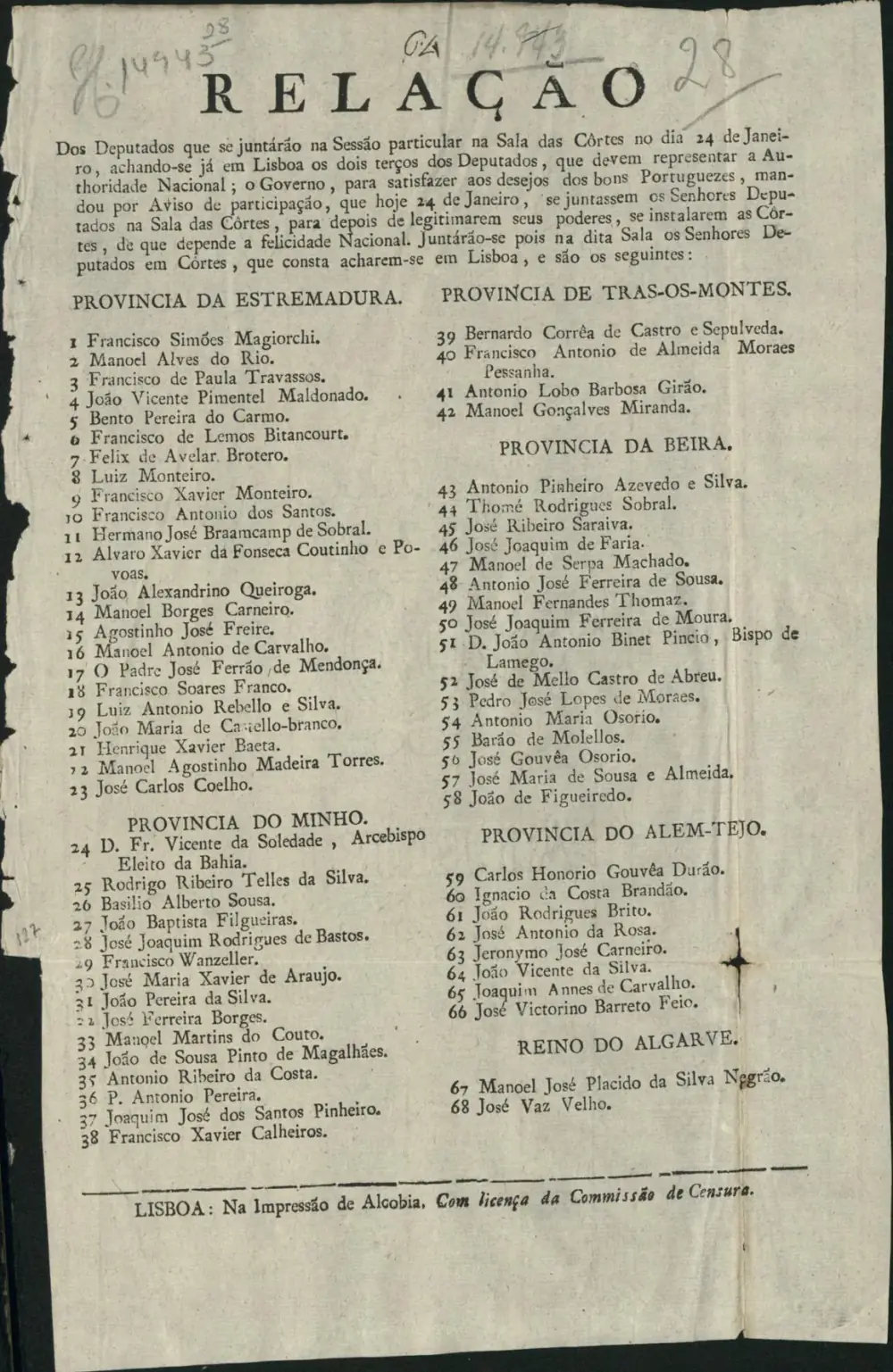
New instructions on 22 November followed the indirect, multi-stage elections of the Cádiz Constitution, and voting began on 10 December. On 24 January 1821 the deputies already in Lisbon met to check one another's credentials, and on 26 January, after an oath in Lisbon Cathedral, the Cortes opened with 74 deputies in the library of the Oratorian convent of Necessidades, refitted as an amphitheatre. An amnesty published that day let home those exiled for opposing the old regency.
Deputies in Lisbon for the preparatory session of 24 January 1821, by province
deputies
Counted from the printed list of the 68 deputies who met in the Cortes hall on 24 January 1821, which says two-thirds of the deputies due were then in Lisbon. The session's minutes, as the Assembleia da República summarises them, record 64 deputies whose credentials were checked that day. Sepúlveda sat for Trás-os-Montes, Fernandes Tomás for the Beira and Ferreira Borges for the Minho.
Show the data
| Deputies listed | |
|---|---|
| Estremadura | 23 |
| Beira | 16 |
| Minho | 15 |
| Alentejo | 8 |
| Trás-os-Montes | 4 |
| Algarve | 2 |
On 9 March 1821 the Cortes approved the Bases of the Constitution, signed by Fernandes Tomás as their president. They defined the Portuguese nation as “the union of all the Portuguese of both hemispheres”, but bound for now only Portugal and the Algarve, until deputies from overseas declared their will. On 31 March the Cortes voted to abolish the Inquisition.
“Sovereignty resides essentially in the Nation. It is free and independent, and cannot be the patrimony of anyone.”
João VI accepted what he could not stop. On 22 April 1821 he made his son Pedro regent of Brazil, and on 26 April he sailed from Rio. His ship entered the Tagus on 3 July, and the next day he landed and swore to the Bases. The Constitution itself, 240 articles, was approved on 23 September 1822 and has its own article on Lisboeta. By then Pedro had declared Brazil independent.
Why it still matters
On 27 May 1823 Prince Miguel led a rising at Vila Franca de Xira, the Vilafrancada; the king took it over, dissolved the Cortes and abolished the Constitution, which had been in force for only eight months. By Rui de Albuquerque's account, Silveira and Sepúlveda went over to the absolutists, and of the three officers of 24 August only Cabreira stayed a liberal.
The monuments planned for the Campo de Santo Ovídio and the Rossio were abandoned after 1823. The struggle the rising began, between a constitution and the old monarchy, ended only with the civil war of 1832–34. The 1822 text came back after the September Revolution of 1836 and stayed in force from 10 September 1836 to April 1838.
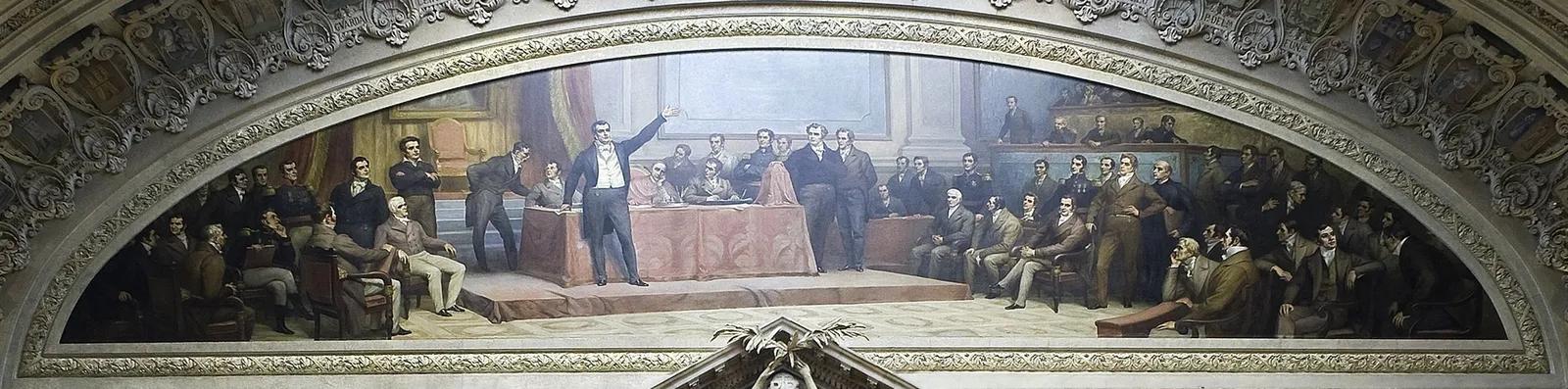
The Bases of 1821 placed sovereignty in the nation, gave deputies immunity for their opinions and reserved the initiative of laws to the nation's elected representatives. The Assembleia da República's record of parliamentary debates begins in 1821, and the painting above its presidential tribune shows the Constituent Cortes of that year.
Its ideas reached the stage within a year. In September 1821 Almeida Garrett's tragedy Catão, about the Roman republican who chose death over Caesar's rule, opened at Lisbon's Teatro do Bairro Alto.
For the bicentenary in 2020 Porto City Council held an exhibition at the Casa do Infante from February 2020 to January 2021. Pedro Baptista, the commissioner of the commemorations, died on 20 February 2020, the day it was due to open.
FAQs
What was the Liberal Revolution of 1820 in Portugal?
It was a bloodless military rising in Porto on 24 August 1820, planned by a secret society called the Sinédrio. The garrison declared for a constitution, a junta took power in the name of King João VI, Lisbon followed on 15 September, and elected Cortes met in January 1821 to write Portugal's first constitution.
Why did the revolution start in Porto and not Lisbon?
Porto had merchants hit by the loss of the Brazil trade, the appeal-court judges who led the Sinédrio, and regiments whose colonels joined the plot. In Lisbon, the regency's seat, the 1817 executions and the police had cowed the liberals; Fernandes Tomás reported in July 1820 that the capital would follow a rising but not start one.
Who was Manuel Fernandes Tomás?
A judge of Porto's court of appeal who founded the Sinédrio in January 1818 and drafted its statutes. He sat on the junta of 24 August for the magistracy, ran internal affairs and finances, survived the Martinhada and, as president of the Cortes, signed the Bases of the Constitution in March 1821. He died in 1822.
When did King João VI return to Portugal?
He made his son Pedro regent of Brazil on 22 April 1821 and sailed from Rio on 26 April. His ship entered the Tagus on 3 July 1821, and on 4 July he landed and swore to the Bases of the Constitution.
How long did the liberal regime of 1820 last?
Less than three years. The Constitution approved on 23 September 1822 was abolished after the Vilafrancada rising of May 1823. The conflict between liberals and absolutists was settled only by the civil war of 1832–34, and the 1822 text was briefly restored after the September Revolution of 1836.
On the timeline
Open the timelineNearby moments from invasions, brazil and the liberal wars (1807–1851).
Two years after the death of Queen Maria I, João VI is acclaimed King of the United Kingdom of Portugal, Brazil and the Algarves in Rio de Janeiro, home of the court since 1808. A temporary triumphal arch, a Greek temple and an obelisk, put up for days of festivities, marked Rio's new role as a royal capital.
Birth of Queen Maria II (Maria da Glória) at the Palace of São Cristóvão in Rio de Janeiro, the only Portuguese monarch born outside Europe. Named queen in 1826, she was displaced by her uncle Miguel in 1828 and reigned in person 1834–1853; she is remembered as 'the Educator'.
Birth in Lisbon of Maria Severa Onofriana, the Mouraria singer regarded as the first great legend of fado. Her voice and her affair with the aristocratic Count of Vimioso made her a figure of popular myth; she died at 26, of tuberculosis by tradition (her death record says apoplexy), and countless fados, a novel, a play and Portugal's first sound film, 'A Severa' (1931), tell her story.
The Liberal Revolution of 1820
The Liberal Revolution begins in Porto, where army officers and citizens demand a constitution and the return of King João VI from Brazil — the uprising that leads to Portugal's first constitutional monarchy.
The Liberal Revolution begun in Porto on 24 August reaches Lisbon, where soldiers and townspeople in the Rossio depose the regency and rally the capital to the constitutional cause, paving the way for Portugal's first constitution in 1822.
King João VI, back from Brazil, lands at the Terreiro do Paço and at five that afternoon, in the Cortes at the Necessidades palace, swears to uphold the Bases of the new liberal constitution. The Cortes then declare the Regency extinct. Portugal's first liberal regime would unravel within two years.
On the 'Dia do Fico' (the 'I'm Staying' Day), Prince Regent Pedro defies orders from the Cortes in Lisbon to return to Portugal, reportedly declaring 'Diga ao povo que fico' — 'Tell the people I'm staying'. Eight months later he proclaimed Brazil's independence and became its first emperor.
Coming up in history
All long reads
19 sources
Archives, scholarship and reporting this article was checked against.
- 1
A Revolução Liberal de 1820: guião de uma revolução inacabada (José Luís Cardoso)Almanack 30 (2022), Universidade Federal de São Paulo
- 2
A Revolução Liberal de 1820 (José Luís Cardoso)CTT Correios de Portugal, 2020 (bilingual edition, preview)
- 3
A constituição do Sinédrio e a implantação do liberalismo em Portugal (Rui de Albuquerque)1820: Revista de Ciência Política 1 (2019), Universidade Lusófona do Porto, pp. 9–26
- 4
Lisboa e a Revolução Liberal de 1820 (José Manuel Lopes Cordeiro)A Construção da(s) Liberdade(s): Congresso Comemorativo do Bicentenário da Revolução Liberal de 1820, Faculdade de Letras da Universidade do Porto
- 5
A Junta Provisional do Governo Supremo do Reino aos Portuguezes (Porto, 24 August 1820)Printed by the widow Alvares Ribeiro e Filhos, Porto; scan on Wikimedia Commons
- 6
Cronologia: da Monarquia Constitucional à atualidadeAssembleia da República
- 7
Decreto de 10 de Março de 1821: dá as Bases da Constituição Política da Monarquia Portuguesa (publicação original)Câmara dos Deputados (Brazil), Legislação Informatizada
- 8
- 9
The Portuguese Constitution of 1822 (Ron B. Thomson)British Historical Society of Portugal
- 10
- 111821, O Regresso do Rei: a história de uma viagem estratégica “à frente do seu tempo” (Andreia Martins, interview with Armando Seixas Ferreira)RTP Notícias, 2021
- 12
- 13
4 July 1821: João VI disembarks in Lisbon and swears an oath to the Constitutional basesParques de Sintra, Palácio Nacional de Queluz: King Pedro IV chronology
- 14
Relação dos deputados que se juntárão na Sessão particular na Sala das Côrtes no dia 24 de JaneiroBiblioteca Nacional de Portugal, Biblioteca Nacional Digital (printed sheet, Lisbon, Impressão de Alcobia, 1821)
- 15
- 16
- 17
- 18
Parliament Sessions HallReverbData, Instituto Politécnico de Lisboa
- 19
Catão (Almeida Garrett)Infopédia, Porto Editora

Image credits
- “Facto do dia 24 de agosto de 1820”: an allegory of the Porto rising designed by the lawyer Archangelo de Dominicis, drawn by António Maria da Fonseca and engraved by Constantino de Fontes. The print is undated, probably 1820 or soon after. Its legend has Lusitania breaking her chains and trampling Despotism while Sepúlveda, Gil and Cabreira take the oath with soldiers and people. António Maria da Fonseca (engraved by Constantino de Fontes), Public domain, via Wikimedia Commons.
- Manuel Fernandes Tomás, the judge who founded the Sinédrio and ran the new government's home and financial affairs, in a print by Charles Legrand dated 1841, nineteen years after his death. Charles Legrand, Public domain, via Wikimedia Commons.
- The junta's address to the Portuguese, dated Porto, 24 August 1820, and printed in the city by the widow Alvares Ribeiro and sons. The signatories are listed at the foot, from the president, Silveira, to the three secretaries. Junta Provisional do Governo Supremo do Reino, Public domain, via Wikimedia Commons.
- The printed list of deputies who met in the Cortes hall on 24 January 1821, issued in Lisbon by the Impressão de Alcobia with the censorship commission's licence. It is the source of the chart above. Impressão de Alcobia (printer), Public domain, via Wikimedia Commons.
- The Constituent Cortes of 1821 in the library of the Necessidades convent, painted by Veloso Salgado in the early 1920s for the session hall of the Portuguese parliament. The speaker on the dais is Manuel Fernandes Tomás. Veloso Salgado, Public domain, via Wikimedia Commons.
- The Santo Ovídio barracks on Porto's Praça da República in 2011. In 1820 the square was the Campo de Santo Ovídio, where the garrison gathered by the artillery barracks on the morning of 24 August. Manuel de Sousa, CC BY-SA 3.0, via Wikimedia Commons.