

From 8 per cent to Belém: Mário Soares wins the 1986 run-off
Three months before the vote, the Socialist founder was polling in single figures and thinking of quitting. He scraped into the run-off, won it with 51.18 per cent and became Portugal's first civilian president in sixty years.
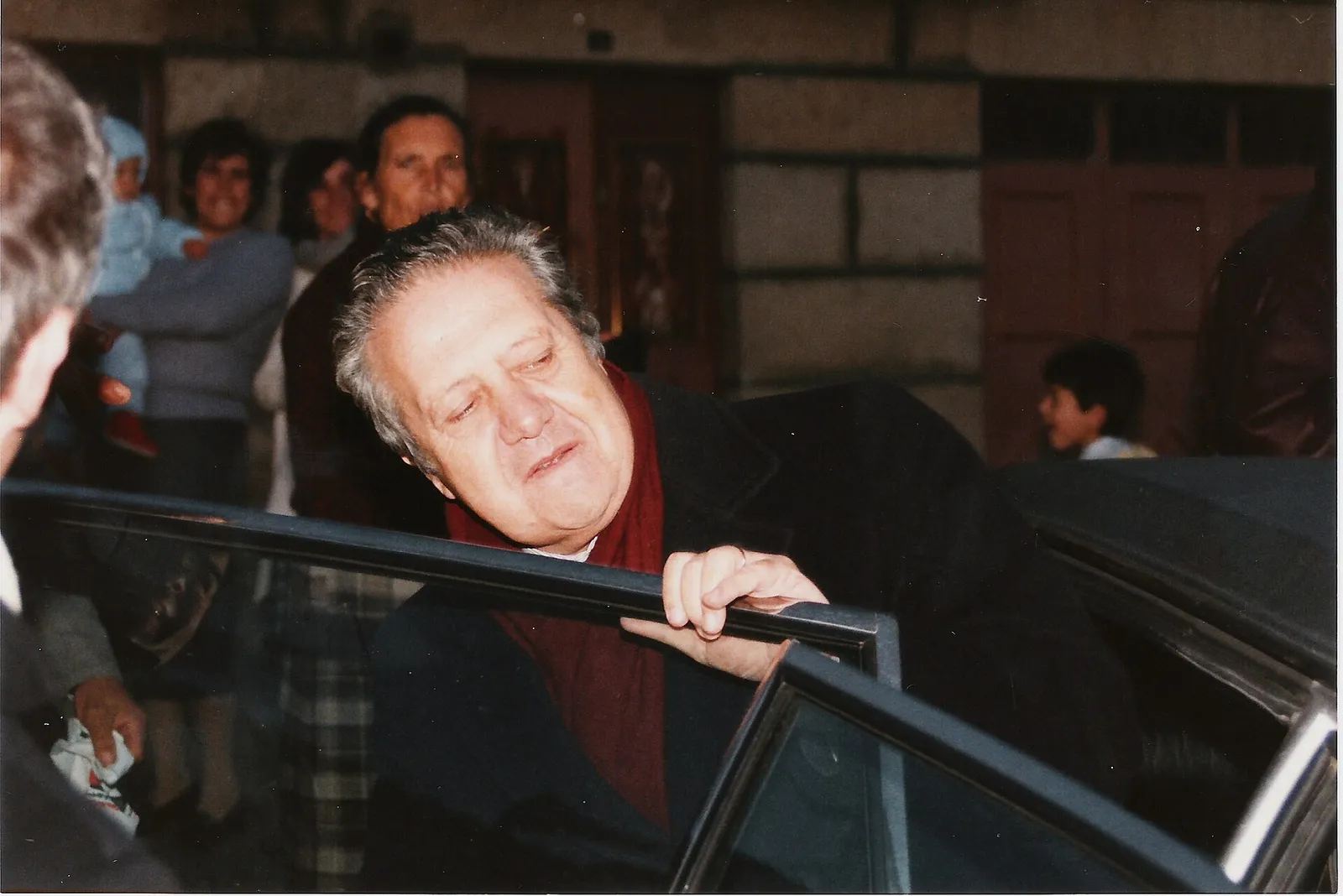
At a glance
- Portugal's 1986 presidential election was the first, and for forty years the only, to need a second round. The first round was held on 26 January 1986 and the run-off on 16 February.
- Diogo Freitas do Amaral, founder of the conservative CDS and backed by the whole right, took 46.31 per cent in the first round. The left split three ways: Mário Soares 25.43, Francisco Salgado Zenha 20.88 and Maria de Lourdes Pintasilgo 7.38 per cent.
- In the autumn of 1985 polls had put Soares, the outgoing prime minister who had imposed an IMF austerity programme, at between 5 and 8 per cent.
- In the run-off Soares won 3,010,756 votes (51.18 per cent) to Freitas do Amaral's 2,872,064 (48.82 per cent), a margin of 138,692. Turnout, calculated from the official figures, was 77.99 per cent.
- Soares took office on 9 March 1986 as the first civilian president in sixty years, was re-elected in 1991 with 70.35 per cent and left Belém on 9 March 1996.
A balcony in Saldanha
On the night of Sunday 16 February 1986, Mário Soares spoke from a balcony above the Praça do Saldanha in Lisbon. The building housed his campaign movement, the MASP, or National Movement of Support for Soares for the Presidency. Three months earlier the polls had written him off. Now he had beaten Diogo Freitas do Amaral by fewer than 140,000 votes and would be the next President of the Republic.
“This is the victory of tolerance, this is the victory of freedom!”
He promised to be “President of all the Portuguese” and said he would hand in his Socialist Party membership card until he left office. He also pointed out that he would be the first civilian president in sixty years. The campaign had split the country down the middle, and the speech was meant to calm it down.
His rival had been just as confident. Freitas do Amaral closed his campaign with a rally that filled the Restauradores and the Avenida da Liberdade, and he told his wife that if that did not mean 50 per cent of the vote, he did not know what would. In the end it meant 48.82 per cent.
What you need to know first
The Constitution of 1976, written after the Carnation Revolution of 25 April 1974 ended the dictatorship, created a president elected directly by the voters for five years. The only one so far was General António Ramalho Eanes, who had directed the operation that put down the left-wing military revolt of 25 November 1975. He was elected in 1976 and re-elected in December 1980 with 56.44 per cent, and the Constitution barred him from a third consecutive term.
Soares was the obvious Socialist candidate and one of the most unpopular politicians in the country. He had led the Socialist Party (PS) since its founding in 1973, when he was in exile in Paris, and had been prime minister from 1976 to 1978. From June 1983 he led the “central bloc” government of the PS and the centre-right Social Democrats (PSD), which turned to the International Monetary Fund for the second time and imposed two years of austerity. Unemployment rose, wages went unpaid, and inflation ran at around 20 per cent.
In May 1985 the PSD chose Aníbal Cavaco Silva as its leader, and he pulled the party out of the coalition. On 12 June Soares signed Portugal's treaty of accession to the European Economic Community in the Jerónimos Monastery, and the next day he handed his resignation to Eanes. In the general election of 6 October 1985 the PS, with António de Almeida Santos at its head, fell to 20.8 per cent, its worst result. Cavaco's PSD won with 29.9 per cent, and a new party inspired by Eanes, the Democratic Renewal Party (PRD), took 17.9 per cent.
One candidate on the right, three on the left
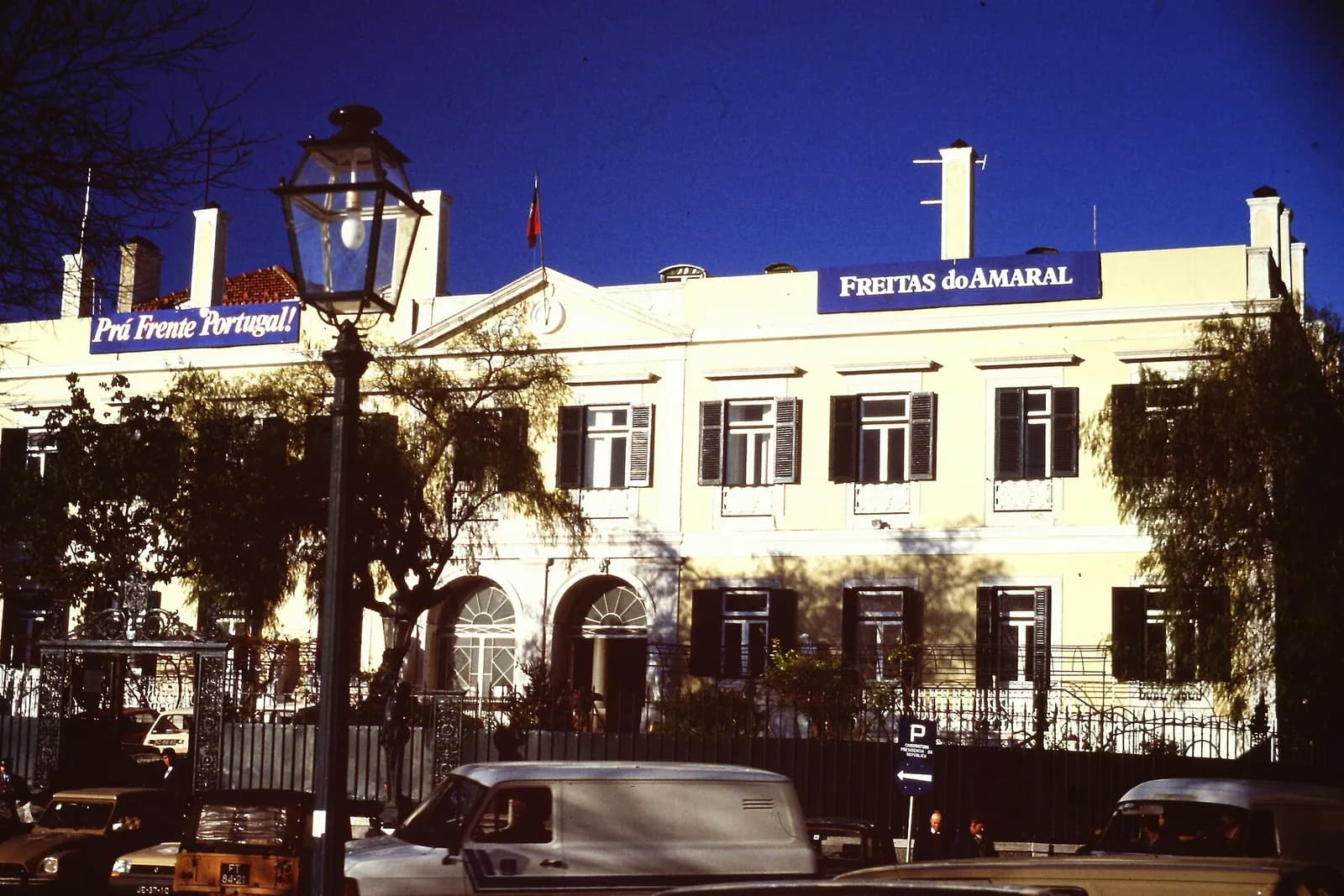
The right settled early on one man. Diogo Freitas do Amaral, a law professor and the founder of the conservative CDS, announced his candidacy on 26 April 1985 with a book, Uma Solução para Portugal. Once Cavaco took over the PSD, the two main parties of the right were behind him, and he ran a campaign modelled on American political marketing: white hats, the slogan “Prá Frente Portugal!” (“Forward, Portugal!”) and his trademark green-grey loden coat.
The left could not agree on anyone. Maria de Lourdes Pintasilgo, a chemical engineer and Catholic activist who had been Portugal's first woman government minister and, in 1979, its only woman prime minister, presented her candidacy at the Hotel Ritz in Lisbon on 27 July 1985. She ran as an independent, with help from the small far-left UDP. On 9 December she lodged about 15,000 signatures with the Constitutional Court, and for months the polls had her level with Freitas do Amaral and well ahead of Soares.
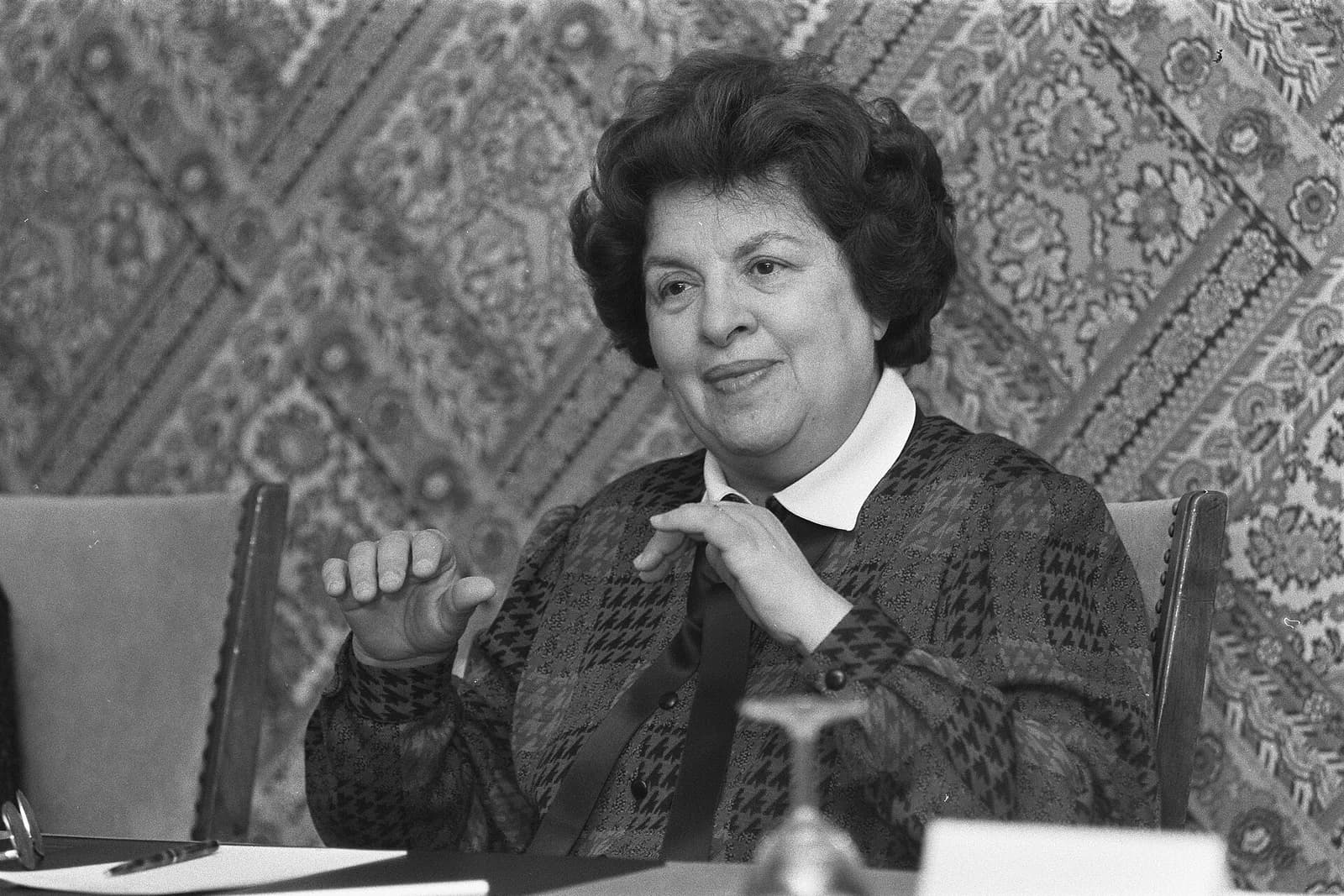
The same day, 27 July, a PS convention in Lisbon adopted Soares as its candidate by acclamation. He later wrote that he had no illusions: for some in the party it was “a kind way of getting rid of me”. He did not stand in that autumn's general election.
The last to enter, on 15 November 1985, was Francisco Salgado Zenha. He had shared a prison cell with Soares in 1947, co-founded the PS with him and was godfather to his daughter, but the two had drifted apart since 1976. Zenha came down from suite 708 of the Hotel Tivoli promising a “new Republic”. Eanes's PRD backed him, after the President's first choice, Manuel da Costa Braz, failed to get a campaign going. The Communist Party (PCP) put up its own man, Ângelo Veloso, who later withdrew in Zenha's favour.
| Candidate | Background | Main backing |
|---|---|---|
| Diogo Freitas do Amaral | Law professor; founder of the CDS | CDS and PSD |
| Mário Soares | Founder of the PS; prime minister 1976–1978 and 1983–1985 | PS |
| Francisco Salgado Zenha | Co-founder of the PS; for decades Soares's closest ally | PRD, Eanes and, after Ângelo Veloso withdrew, the PCP |
| Maria de Lourdes Pintasilgo | Chemical engineer; prime minister 1979–1980 | Independent; helped by the UDP |
Ângelo Veloso, the PCP's candidate, filed accounts with the CNE for the first round but withdrew three days before polling day, so he does not appear in the official result.
The man at 8 per cent
The first poll of the race, published on the front page of the weekly Expresso on 12 October 1985, gave Soares 5 per cent. Weeks later, with the campaign under way, he was on 7.9 per cent while every rival was in double figures. Voters described him as incoherent and opportunistic, and his advisers discussed how to persuade him to quit. In the diary he kept, Soares considered it himself.
“Should I give up, then? That is my temptation and, at the same time, my anguish. I certainly want to! But I can't: it would be a weakness nobody would understand. (…) It is not tragic, in a democracy, to lose an election. What is tragic is to give up, letting yourself be intimidated.”
He stayed in. His slogan borrowed a word of Portuguese slang: “Soares é fixe!” (“Soares is cool!”). He toured the country from north to south, offering his famous cheeks to be pinched and kissing children, once by mistake a dwarf he took for a child.
The fight on the left turned personal. In a television debate moderated by Miguel Sousa Tavares, Zenha said Soares would be a bad president. Soares called Zenha's candidacy “fratricidal”, and Zenha answered that Soares was not his brother: “He is not, never was and never will be.” Soares later described the line as a punch in the stomach.
Then came Marinha Grande, a glassmaking town in the district of Leiria and a Communist stronghold, where many factories owed their workers months of wages. On 14 January Soares arrived to visit the Stephens glass factory school and was attacked at the gate by counter-demonstrators. He said later that he took a punch to the face, another to the head and a blow from a stick. The head of his convoy, António Carneiro Jacinto, had his head split open.
Accounts of the violence differ: a glassworkers' union leader told Lusa in 2017 that, by some versions, the famous slap never landed. Soares blamed supporters of Zenha, saying he had seen Zenha stickers on their coats. The television pictures shocked the country, and his campaign put them at the start of its next broadcast. His reply became one of his best-known lines: “Marinha Grande belongs to the people, not to Moscow.”
Declared first-round campaign spending
contos (thousand escudos)
Spending declared to the National Elections Commission (CNE) for the first round, rounded to the nearest conto. The CNE found that Zenha's campaign had exceeded the 25,000-conto limit set by Law 143/85 by about 583 contos. His accounts included a separate caravan for Manuela Eanes, the President's wife.
Show the data
| Declared spending | |
|---|---|
| Zenha | 25,583 |
| Soares | 24,626 |
| Freitas do Amaral | 24,551 |
| Veloso (withdrew) | 4,404 |
| Pintasilgo | 3,160 |
26 January: the primaries of the left
On 26 January 1986, 5,742,151 of the 7,617,257 registered voters cast a ballot, a turnout of 75.4 per cent. Freitas do Amaral came close to winning outright with 2,629,597 votes. Soares came second with 1,443,683, about 258,000 ahead of Zenha. Pintasilgo, the early favourite, finished last with 418,961.
| Candidate | Votes | Share of valid votes |
|---|---|---|
| Diogo Freitas do Amaral | 2,629,597 | 46.31% |
| Mário Soares | 1,443,683 | 25.43% |
| Francisco Salgado Zenha | 1,185,867 | 20.88% |
| Maria de Lourdes Pintasilgo | 418,961 | 7.38% |
| Valid votes | 5,678,108 | 100.00% |
| Blank ballots | 17,709 | |
| Spoilt ballots | 46,334 | |
| Voters / registered | 5,742,151 / 7,617,257 | Turnout 75.38% |
Published by the CNE on 6 February 1986 in the Diário da República of 14 February. Turnout calculated from the official figures.
First round, 26 January 1986
% of valid votes
Freitas do Amaral fell 3.7 points short of the absolute majority needed to win in one round. Official CNE figures.
Show the data
| Share of valid votes | |
|---|---|
| Freitas do Amaral | 46.3 |
| Soares | 25.4 |
| Zenha | 20.9 |
| Pintasilgo | 7.4 |
Soares called the first round the primaries of the left, and he had won them. Observador's account of his presidency argues that Pintasilgo's decision to stay in the race helped him: had she withdrawn, many of her voters, to the left of the PS, would have gone to Zenha and could have kept Soares out of the run-off. She felt betrayed by Eanes, whose support she had counted on before he backed Zenha instead.
Three weeks and a toad
The run-off left the Communists with a choice they hated. Soares had been their main opponent since the revolution, when he rallied the forces that set out to stop the PCP from taking power in 1975. But the alternative was the founder of the CDS. On election night Zenha endorsed Soares, and Soares sent emissaries to secret meetings with the PCP leadership.
Álvaro Cunhal, the PCP's leader, called an extraordinary congress, the party's eleventh, in Amadora on the edge of Lisbon. Delegates were elected in less than a week, and on Sunday 2 February the congress dropped an earlier resolution ruling out support for Soares. Cunhal told Communist voters to “swallow the toad”, a Portuguese phrase for accepting something distasteful, and vote for him.
“If need be, don't read Soares's name, don't look at his picture. But mark the cross in the box in front of that name and that picture.”
Soares turned his fire on the right and spoke of an anti-fascist front. In his last television broadcast he accused Freitas do Amaral of letting wages go unpaid at the Porto newspaper O Primeiro de Janeiro, a charge Freitas's side denied. Freitas also lost some support on his own side: the former prime minister Francisco Pinto Balsemão did not formally back him, and Helena Roseta found his campaign too conservative.
On Thursday 6 February the two men met for a 90-minute television debate in RTP's studios at Lumiar, moderated by Margarida Marante and Miguel Sousa Tavares. Freitas's team had been split over whether he should accept. His campaign's executive director, José Ribeiro e Castro, later called it a mistake: “From the debate on, he levelled the game.” Freitas's political director, Daniel Proença de Carvalho, said the campaign resisted supporters who wanted harder attacks on Soares, because it did not want to be identified with the far right.
16 February: 138,692 votes
The run-off was held on 16 February, the twenty-first day after the first round and the last the Constitution allowed. More people voted than three weeks before: 5,937,100, or 77.99 per cent of the electorate. Soares won 3,010,756 votes and Freitas do Amaral 2,872,064.
| Mário Soares | Diogo Freitas do Amaral | |
|---|---|---|
| Votes, second round | 3,010,756 | 2,872,064 |
| Share of valid votes | 51.18% | 48.82% |
| Votes, first round | 1,443,683 | 2,629,597 |
| Gain between rounds | +1,567,073 | +242,467 |
Valid votes 5,882,820; blank 20,436; spoilt 33,844; voters 5,937,100 of 7,612,733 registered. The CNE declared Soares elected on 27 February 1986. Turnout (77.99%), the margin and the gains between rounds are calculated from the two official results.
The arithmetic is plain. Freitas do Amaral added fewer than 250,000 votes to his first-round total. Soares added more than 1.5 million, close to the 1.6 million that Zenha and Pintasilgo had won between them. The margin, 138,692 votes out of nearly six million, made it the closest presidential election Portugal has held.
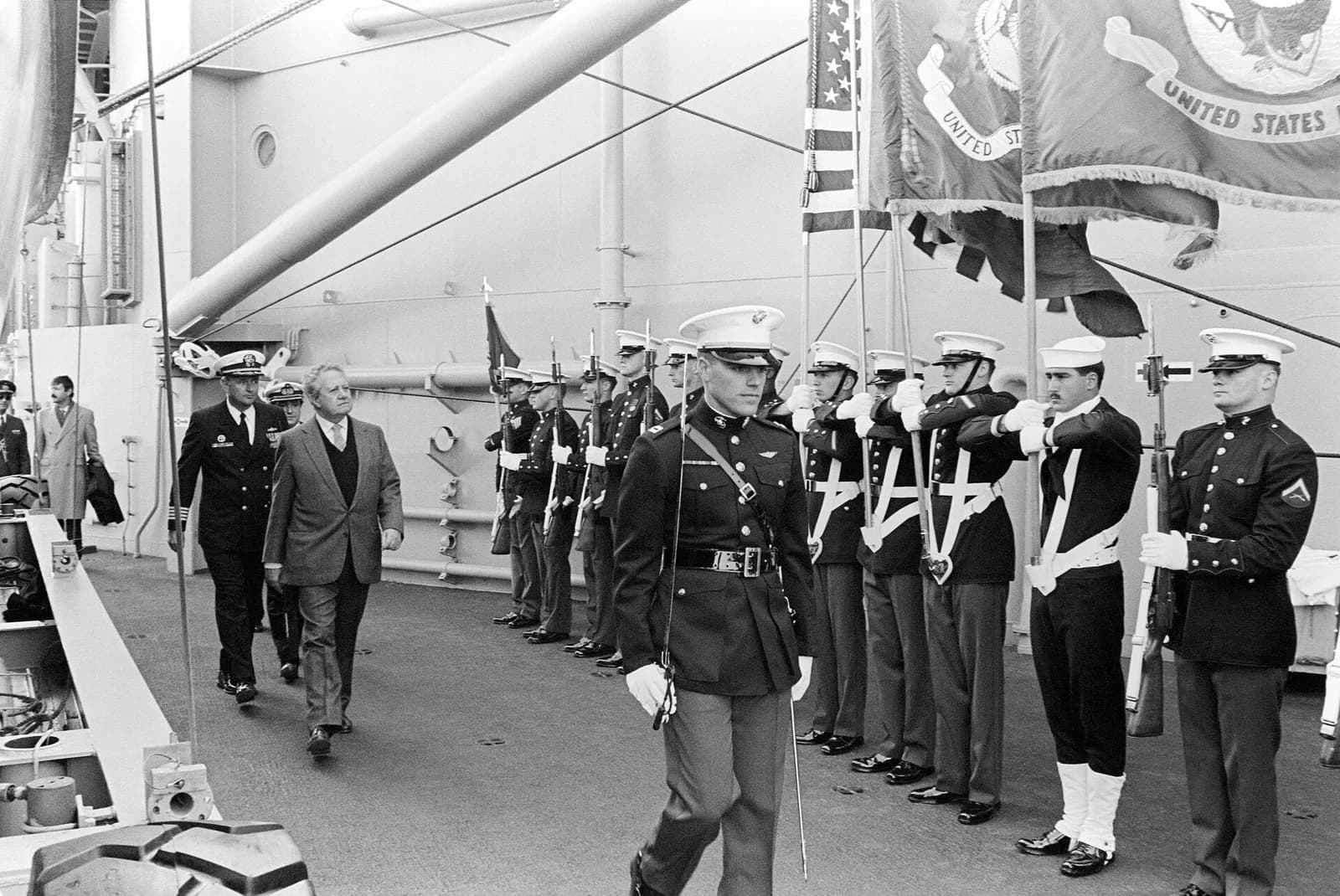
Soares was sworn in on 9 March 1986, the first civilian president since the military coup of 28 May 1926 that ended the First Republic. He chose the motto “Unite the Portuguese, serve Portugal” and, as promised, handed in his party card at the PS headquarters in the Largo do Rato.
Ten years in Belém
Soares spent almost all of his ten years at the Palácio de Belém alongside one prime minister, Cavaco Silva, who had backed his opponent. The first term was mostly calm. When a PRD censure motion brought down Cavaco's minority government on 3 April 1987, Soares refused to install a PS government with PRD and Communist support and called an election instead. On 19 July Cavaco won the first of his two absolute majorities.
He invented the “Presidência Aberta”, the open presidency: for days at a time he moved his staff, ministers and a crowd of reporters to one region, starting with Guimarães in September 1986. The Fundação Mário Soares lists 46 state visits between December 1986 and January 1996.
In 1991 the PSD put up no candidate against him. On 13 January he was re-elected with 3,459,521 votes, 70.35 per cent, against Basílio Horta of the CDS, the Communist Carlos Carvalhas and Carlos Marques of the UDP. The second term was stormier. Soares vetoed or sent to the Constitutional Court a string of government bills, and in November 1992 Cavaco complained of “blocking forces” that were stopping him from governing.
| Election | Votes | Share | Outcome |
|---|---|---|---|
| 26 January 1986, first round | 1,443,683 | 25.43% | Second of four |
| 16 February 1986, run-off | 3,010,756 | 51.18% | Elected |
| 13 January 1991 | 3,459,521 | 70.35% | Re-elected in the first round |
| 22 January 2006 | 785,355 | 14.31% | Third of six; Cavaco Silva elected |
All figures from the CNE's official results maps in the Diário da República.
26 April 1985
Freitas do Amaral announces his candidacy
12 June 1985
Soares signs the EEC accession treaty; his government resigns the next day
27 July 1985
The PS adopts Soares as its candidate; Pintasilgo launches hers
6 October 1985
General election: PS falls to 20.8 per cent
12 October 1985
First poll puts Soares at 5 per cent
15 November 1985
Salgado Zenha enters the race
14 January 1986
Soares attacked by counter-demonstrators in Marinha Grande
26 January 1986
First round: Freitas do Amaral 46.31, Soares 25.43 per cent
2 February 1986
Extraordinary PCP congress in Amadora backs Soares
16 February 1986
Run-off: Soares wins with 51.18 per cent
9 March 1986
Soares sworn in
13 January 1991
Re-elected with 70.35 per cent
9 March 1996
Hands over to Jorge Sampaio
Why it still matters
For forty years 1986 was the only Portuguese presidential election to go to a second round. The next came in 2026, when the Socialist António José Seguro faced André Ventura, leader of Chega, and was elected on 8 February with 66.84 per cent. The Presidency says Seguro's 3,502,613 votes were the most any presidential candidate has received, more than Soares's 3,459,521 in 1991.
Soares also set the style of the office. The Presidency's own biography says he left with the PS in government after the 1995 general election and a fellow Socialist, Jorge Sampaio, as his successor. Sampaio took over much of his way of doing the job: a moderating, arbitrating president above the parties, fond of consensus and ritual.
He never quite left politics. He headed the PS list in the 1999 European elections and won, ran for president again at 81 in 2006 and came third with 14.31 per cent, and died in Lisbon on 7 January 2017. At his 2006 concession speech, half the room stood up and the old slogan rang out again: “Soares é fixe”.
FAQs
Who won the 1986 Portuguese presidential election?
Mário Soares, founder of the Socialist Party. He came second in the first round on 26 January 1986 with 25.43 per cent and beat Diogo Freitas do Amaral in the run-off on 16 February with 3,010,756 votes (51.18 per cent) to 2,872,064 (48.82 per cent).
Why was 1986 the only presidential run-off for forty years?
A candidate needs more than half the valid votes, and in every other election until 2026 someone reached that in the first round. In 1986 the right united behind Freitas do Amaral, who reached 46.31 per cent, while the left split between three candidates and nobody got a majority. The next run-off, between António José Seguro and André Ventura, came in 2026.
Was Soares really on 8 per cent in the polls?
Roughly. The first poll, in Expresso on 12 October 1985, gave him 5 per cent, and a later one 7.9 per cent; the Presidency's biography says the first polls gave him about 8 per cent. Three months later he won 25.43 per cent in the first round.
Why did the Communists vote for Soares?
Their own candidate had withdrawn in favour of Salgado Zenha, who was eliminated. Faced with a choice between Soares, their old rival, and Freitas do Amaral of the conservative CDS, Álvaro Cunhal called an extraordinary congress in Amadora, which on 2 February 1986 decided to back Soares. Cunhal told PCP voters to “swallow the toad” and vote for him.
How long was Mário Soares president?
Two five-year terms, from 9 March 1986 to 9 March 1996. He was re-elected on 13 January 1991 with 70.35 per cent and was succeeded by Jorge Sampaio.
On the timeline
Open the timelineNearby moments from portugal in europe (1986–today).
Portugal and Spain join the European Economic Community (today's European Union) — a historic turning point for a country that had shed its dictatorship and its African empire barely a decade earlier.
Soares wins the 1986 presidency
Mário Soares beats Diogo Freitas do Amaral in the presidential run-off by just over two points, becoming Portugal's first civilian president in six decades. The founder of the Socialist Party would serve two terms, until 1996.
José 'Zeca' Afonso dies in Setúbal of amyotrophic lateral sclerosis, aged 57. The singer-songwriter's 'Grândola, Vila Morena', broadcast on the radio as a signal to the rebel troops on 25 April 1974, made him the voice of the Carnation Revolution.
Prime Minister Cavaco Silva and Premier Zhao Ziyang sign the Sino-Portuguese Joint Declaration in Beijing, agreeing that Macau is Chinese territory under Portuguese administration and that sovereignty would pass to China on 20 December 1999, under the 'one country, two systems' principle.
FC Porto win the European Cup, coming from behind to beat Bayern Munich 2–1 at Vienna's Praterstadion with Rabah Madjer's famous back-heel and a Juary volley — the first European Cup for a Portuguese club since Benfica's in 1962.
Coming up in history
All long reads 18 February 1899António Aleixo, the lottery seller who became the Algarve's poet
 19 February 1649The Second Battle of Guararapes: the rout that doomed Dutch Brazil
 20 February 2010Mud in the streets of Funchal: the Madeira floods of 20 February 2010
 21 February 2009Lagoa Henriques, the sculptor who sat Pessoa down in the Chiado
28 sources
Archives, scholarship and reporting this article was checked against.
- 1
Mapa com o resultado das eleições para Presidente da República realizadas em 26 de Janeiro de 1986Comissão Nacional de Eleições, Diário da República, I série, n.º 37, 14 February 1986
- 2
- 3
Mário Soares: biografiaPresidência da República Portuguesa
- 4A vida de Soares, parte V. “Soares é fixe”: os anos em Belém (João Ferreira)Observador, 7 January 2017
- 5Um candidato improvável à direita, três à esquerda. A história da “eleição mais louca de sempre” (Miguel Santos Carrapatoso)Observador, 4 October 2025
- 6
- 7
Constituição da República Portuguesa, texto original de 1976Assembleia da República
- 8
Mário Soares. O Presidente dos 8% até aos 70% e a unanimidade nacional (Ana Sá Lopes)Sol, 7 January 2017
- 9“Esta é a vitória da liberdade”: 45 frases marcantes de Mário SoaresObservador, 7 January 2017
- 10
A história é cíclica. 40 anos depois, Portugal está a caminho de uma segunda volta?24 Notícias (SAPO), 9 January 2026
- 11Eanes, o Presidente do 25 de Novembro (Rui Ramos)Observador, 25 November 2017
- 12
- 13
- 14A vida de Soares, parte III. O feroz combate contra o PCP (Luís Naves)Observador, 7 January 2017
- 15
- 16
9 de dezembro de 1985: Maria de Lourdes Pintasilgo formaliza candidatura presidencial (Mariana Carneiro)Esquerda.net
- 17
Chefes do Governo desde 1821República Portuguesa, portugal.gov.pt
- 18As histórias da campanha mais marcante de Freitas do Amaral (Ana Kotowicz)Observador, 20 March 2018
- 19Soares e Zenha. A luta entre irmãos que mudou para sempre a esquerda (Miguel Santos Carrapatoso)Observador, 18 October 2025
- 20
Autarca e sindicalista da Marinha Grande convergem sobre Mário SoaresLusa, via Notícias ao Minuto, 7 January 2017
- 21
A brief history of Party CongressesPartido Comunista Português
- 22
- 23
- 24
- 25
- 26Presidenciais: Ventura foi dos candidatos com maior exposição mediática na primeira volta, afirma ERCObservador, 8 July 2026
- 27A vida de Soares, parte VI. E depois da Presidência? Mais política, claro (Margarida Peixoto)Observador, 7 January 2017
- 28
Image credits
- Mário Soares getting into his car in the village of Muxagata during the presidential campaign, January 1986. Aires Almeida from Portimão, Portugal, CC BY 2.0, via Wikimedia Commons.
- Maria de Lourdes Pintasilgo at a press conference in Amsterdam on 7 November 1986, nine months after her presidential bid. Roland Gerrits / Anefo, CC0, via Wikimedia Commons.
- Freitas do Amaral's campaign headquarters in Lisbon in 1986, with his slogan “Prá Frente Portugal!” on the roof. Fernando Moital from Évora, Portugal, CC BY 2.0, via Wikimedia Commons.
- President Mário Soares inspects a US Marine Corps honour guard aboard an American battleship in Lisbon on 28 November 1986, eight months after taking office. Beside him is the ship's commanding officer, Captain Larry R. Seaquist. Department of Defense. American Forces Information Service. Defense Visual Information Center. 1994, Public domain, via Wikimedia Commons.