

The Second Battle of Guararapes: the rout that doomed Dutch Brazil
On the hills south of Recife, a Dutch army that had waited all day in the sun turned to march home and was caught on the move. It never took the field again, and five years later the West India Company gave up Brazil.
At a glance
- On Friday 19 February 1649, about 2,600 Luso-Brazilian troops under Francisco Barreto de Menezes routed a Dutch West India Company army of some 3,500 on the Guararapes hills, about two leagues south of Recife.
- The Dutch commander, Colonel Brinck, was killed. Dutch reports put their losses at 1,045 men, against about 45 dead and 200 wounded on the Luso-Brazilian side.
- It was the second Dutch defeat on the same ground in ten months, after the battle of 19 April 1648. The Company's troops never again took the field in strength and stayed behind the walls of Recife.
- Recife capitulated on 26 January 1654. In the Treaty of The Hague of 6 August 1661 the Dutch Republic gave up Brazil in return for 4 million cruzados, paid over 16 years.
- Brazil's Army Day, created in 1994, falls on 19 April, the date of the first battle. Historians point out that neither Brazil nor its army existed in 1648.
A day in the sun on the Guararapes
By noon on 19 February 1649, the Dutch soldiers on the Guararapes hills had barely slept in two nights. They had marched out of Recife on the night of the 17th with food for eight days, and they had spent the night of the 18th on the alert behind hasty trenches after a false alarm. Now they stood on bare heights with no water, under the tropical sun.
Below them, in the cane fields and scrub by the marshes, the Luso-Brazilian army rested in the shade. Its commander, Francisco Barreto de Menezes, had slipped round to the south in the dark, so the Dutch had to turn their whole line to face him at dawn. For hours, neither side moved.
The ground already had a history. Ten months earlier, on 19 April 1648, a larger Dutch army had been beaten in the same place. Johan Nieuhof, a West India Company official in Recife, wrote that the fields were still covered with the bones of the dead.
In the early afternoon the Dutch commander, Colonel Brinck, called his senior officers together. They wanted to march that night, either south to the Cabo de Santo Agostinho or inland to the Várzea, to cut the enemy off. Brinck and Michiel van Goch, the member of the Company's governing council who rode with the army, overruled them. The army would fall back to the Barreta, on the road to Recife, at once and in daylight, so that nobody could say it had crept away in fear.
At about three o'clock the first regiment came down off the heights, followed by the guns. Barreto saw the strong positions empty and gave the order to attack.
What you need to know first: Dutch Brazil
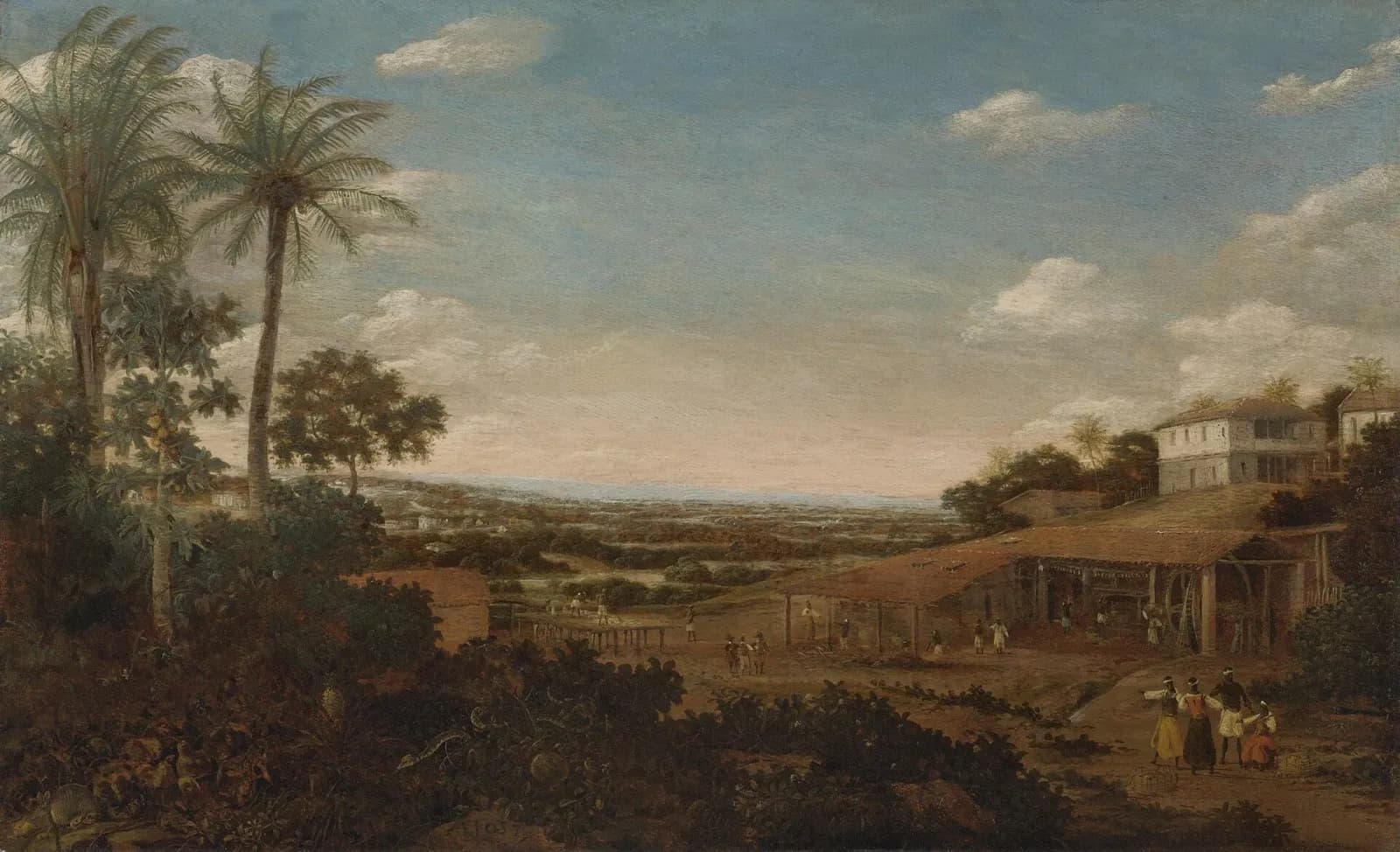
In 1649 the Dutch had held Pernambuco, the heart of Portuguese Brazil's sugar country, for nineteen years. The West India Company (WIC) was chartered by the Dutch Republic in 1621 with a 24-year monopoly of Dutch trade with America and Africa and the right to appoint governors, make treaties and build forts. It went after Brazil to control the production and trade of sugar, made in a slave society that ran on the forced labour of enslaved Africans.
Portugal could not easily defend its colony. From 1580 to 1640 its crown belonged to the kings of Spain, and the Company was founded in the year the Dutch truce with Spain ran out. A Company fleet appeared off Salvador, the capital of Brazil, on 8 May 1624 and took it within two days. Its garrison surrendered on 1 May 1625. Then, on 14 February 1630, 56 Dutch ships appeared off Recife, and the next afternoon about 3,000 men landed on the beaches of Pau Amarelo, north of Olinda.
Over the next years the Company spread its rule along the coast. Johan Maurits of Nassau-Siegen, its governor from January 1637, ran the colony from Recife until he went home in 1644. As late as 1653 the Dutch still held some 30 forts in Pernambuco, Itamaracá, Paraíba, Rio Grande and Ceará, with 319 guns between them.
Everything changed in Lisbon on 1 December 1640, when a group of nobles proclaimed the Duke of Braganza king as João IV and ended sixty years of Spanish rule. Portugal now needed the Dutch as allies against Spain. On 12 June 1641 the two countries signed a ten-year truce at The Hague, but it only took effect overseas once it had been published there. Before that happened, the Dutch seized Sergipe, Luanda in Angola, São Tomé and Maranhão.
1621
The Dutch West India Company is chartered
May 1624
A Company fleet takes Salvador da Bahia
A Spanish and Portuguese armada retakes it on 1 May 1625.
14 to 15 February 1630
Dutch fleet of 56 ships off Recife; troops land north of Olinda
23 January 1637
Johan Maurits of Nassau arrives in Recife as governor
1 December 1640
Restoration in Lisbon: João IV is proclaimed king
12 June 1641
Ten-year Luso-Dutch truce signed at The Hague
1644
Nassau sails home to the Netherlands
13 June 1645
The Pernambuco planters' rising begins
The rising of 1645 and the men who led it
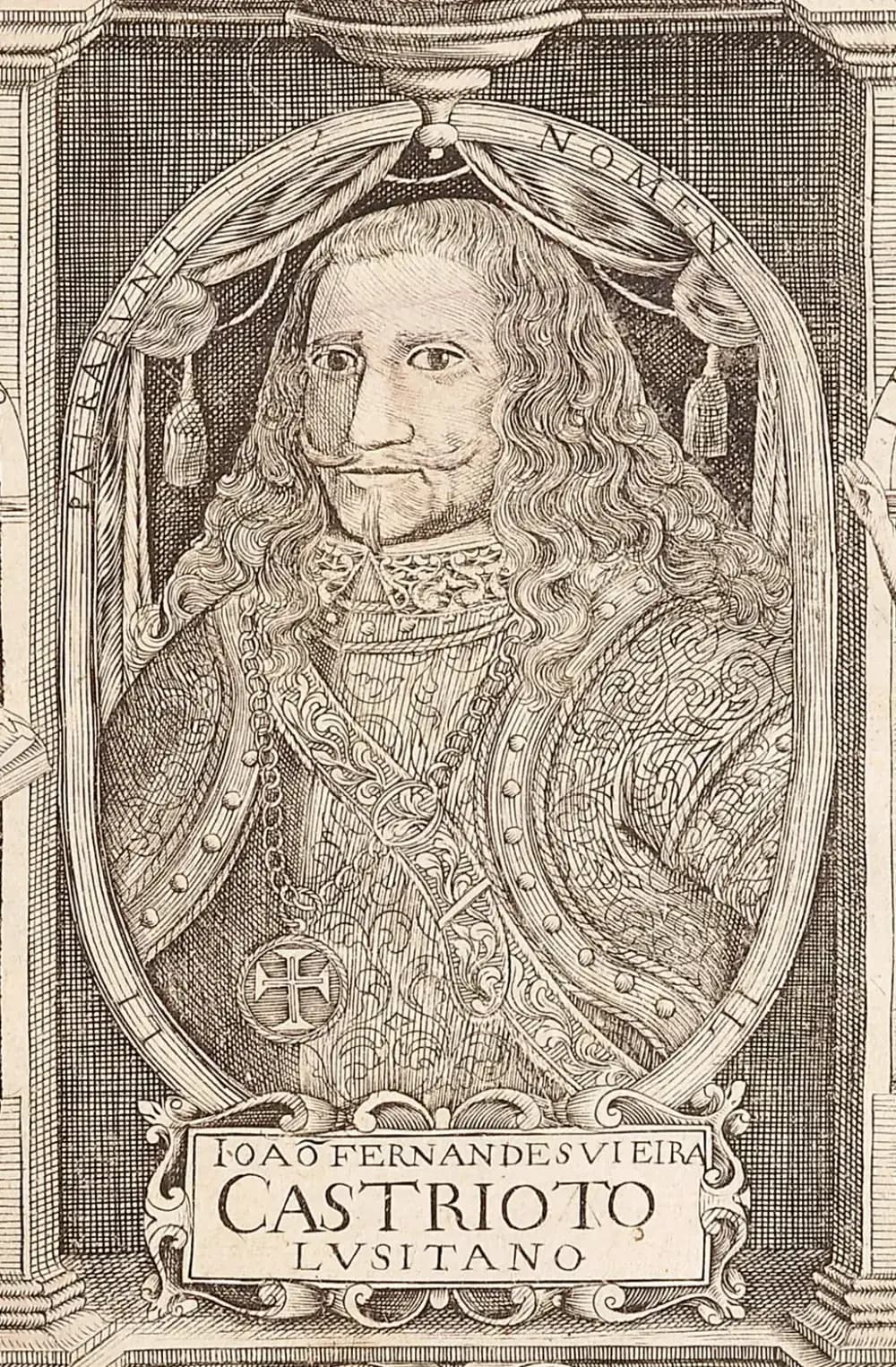
The revolt began among the Portuguese planters of Pernambuco. When the Dutch council in Recife learned of the plot and sent men to arrest its leaders, the conspirators met on 13 June 1645, the feast of Saint Anthony, at a sugar mill and took to the forest with their servants and many enslaved people. Their leader, João Fernandes Vieira, styled himself captain-major and governor of the war, sometimes of “divine liberty”.
Officially, Lisbon had nothing to do with it. João IV could not risk a Dutch alliance with Spain, so the rising had to look like a local rebellion, although letters captured by the Dutch showed that the crown approved. Troops nonetheless came from Bahia, the seat of the governor-general, with André Vidal de Negreiros among their officers. The first victories came in August 1645, at Monte das Tabocas and Casa Forte.
Two of the most famous commanders were not white. Henrique Dias, a freed Black man from Pernambuco, had fought the Dutch since 1633, when he led just twenty men. By 1636 he held the title of governor of the companies of Creoles, Blacks and mulattos, and in 1647 his regiment, or terço, numbered around 300 men. Service could mean freedom: Vieira freed a number of his own slaves who fought.
Antônio Filipe Camarão was a Potiguara, educated by the Jesuits; modern scholars give his birth as 1600 or 1601, though Varnhagen thought him nearer seventy when he died. He became captain-major of the Indians in 1633 and a knight of the Order of Christ in 1635. The Potiguara were split: some of Camarão's kin, such as Pedro Poti and Antônio Paraupaba, had lived in the Netherlands, become Calvinists and fought for the Dutch. In 1645 they wrote to each other in Old Tupi across the lines.
In 1648 the crown sent a professional soldier to take overall command. Francisco Barreto de Menezes had been captured by the Dutch on his way out and held in Recife for nine months. He escaped and reached the rebel camp on 23 January 1648, replacing Vieira and Vidal at the head of the war, which embarrassed both.
The first battle, April 1648
In March 1648 a relief fleet reached Recife, and on 18 April the Dutch commander, Sigismund von Schkoppe, marched south out of the town. The next day, Low Sunday, Barreto met him at the Guararapes, low hills where the coast road squeezed between the slopes and the marshes. Barreto put Vieira in the centre and Henrique Dias and Camarão on the flanks; when the line wavered, Vidal led a fresh attack that broke the Dutch.
Schkoppe was wounded in the leg. Barreto reported that of Schkoppe's six colonels only Van den Brande and Brinck escaped; Varnhagen adds that Brinck had not been at the battle in person. The victory did not end the war, but it mattered in Lisbon. Together with the victories in Angola the same year, it helped bury a proposal at court to hand northern Brazil to the Dutch in exchange for peace. Camarão died of illness in the camp around the end of August 1648.
Men engaged at Guararapes, as reported
men
- Dutch West India Company army
- Luso-Brazilian army
April 1648: Schkoppe's report to the States General of 12 May 1648 (4,000) and Barreto's own report (2,200, with 300 more left in the siege lines). February 1649: the Dutch figure of 3,510, which included some non-combatants, and about 2,600 for Barreto, both as given by Varnhagen. Other counts differ: Barreto listed the 1648 Dutch army as 1,500 infantry, 500 sailors and 300 Tapuia (2,300 in all, our sum), and Portuguese chroniclers put the 1649 one at 5,000.
Show the data
| Dutch West India Company army | Luso-Brazilian army | |
|---|---|---|
| April 1648 | 4,000 | 2,200 |
| February 1649 | 3,510 | 2,600 |
19 February 1649: the second battle
Ten months later the Company tried again. Its generals advised against another sortie and proposed a raid on Rio de Janeiro instead, but the council in Recife had been reproached by the directors in the Netherlands for doing nothing, and the residents wanted the siege lifted. Schkoppe was still recovering from his wound, so command went to Brinck. He filled his ranks with sailors and trained some of his strongest men with halberds and partisans.
On the night of 17 February a force of 3,510 men marched out past Afogados, crossed the river at low tide and reached the Guararapes the next day. This time the Dutch took the heights and the pass that Barreto had held in 1648. Barreto, with about 2,600 men, came up at four in the afternoon and in the night moved round to the Guararapes sugar mill, south of the hills.
“Our forces marched towards evening as far as Guerapes, a place fatal to us the year before by the defeat of our people, the fields thereabouts being as yet covered with their bones.”
When the Dutch began to withdraw on the afternoon of the 19th, their rearguard of five companies under Captain Tenbergen met the first attack. Colonel Hautijn charged on the right and was driven back, wounded, by Luso-Brazilian horsemen. He rallied his men and joined the regiment of Lieutenant-Colonel Claes, a turncoat, as Varnhagen calls him, but by then the attackers held the road.
“The enemy then attacked with such impetus that the Dutch troops began to flee, and soon the confusion was such that those who fled could be held back neither by words nor by force.”
Two more regiments came down from the hills to help and only added to the crush. Brinck was killed. Southey's account, drawn from the Portuguese chroniclers, has the fighting last from two in the afternoon until eight at night, and so close that the Dutch halberdiers had no room for a second blow.
Varnhagen, working from Schkoppe's letter of 10 March 1649, put the Dutch loss at 1,045 men, among them four lieutenant-colonels and 35 captains, with five field guns and five colours. Nieuhof wrote of above 1,100 men, 19 colours and all the guns, and said it was five days before the Dutch were allowed to bury their dead. The Luso-Brazilians lost about 45 dead and 200 wounded; Southey gives 47 dead, and admits that the gap in losses may be exaggerated.
| 19 April 1648 | 19 February 1649 | |
|---|---|---|
| Dutch commander | Sigismund von Schkoppe (wounded) | Colonel Brinck (killed) |
| Luso-Brazilian commander | Francisco Barreto de Menezes | Francisco Barreto de Menezes |
| Dutch strength | 4,000 (Schkoppe); 1,500 infantry, 500 sailors and 300 Tapuia (Barreto; 2,300 in all, our sum) | 3,510 including some non-combatants (Dutch records); 5,000 (Portuguese chroniclers) |
| Luso-Brazilian strength | 2,200 (Barreto) | About 2,600 (Varnhagen); 2,500 picked men and 150 horse (Nieuhof) |
| Dutch losses | 515 dead and 523 wounded (Dutch name list); Barreto counted 900 dead and took 33 colours | 1,045 men (Schkoppe, via Varnhagen); above 1,100 and 19 colours (Nieuhof) |
| Luso-Brazilian losses | 80 dead, 40 of them killed at the Barreta outpost the day before; nearly 400 wounded (Barreto) | About 45 dead and 200 wounded (Varnhagen); 47 dead and more than 200 wounded (Southey) |
Varnhagen gives Barreto's 1648 report in full and takes the Dutch figures from the council's letter of 22 April 1648 and Schkoppe's letters of 12 May 1648 and 10 March 1649. All figures are the commanders' or chroniclers' own and were not checked independently; the one total we added up ourselves is marked.
The pursuit was merciless. Southey wrote that the victors pursued their advantage with an appetite for vengeance, that the Dutchmen who pretended to be dead were luckier than those who begged for mercy, and that for days afterwards Indigenous and Black soldiers hunted down stragglers in the woods.
Five more years: the fall of Recife
Guararapes did not give the insurgents Recife, which the Dutch held for five more years. What it did was end the Dutch army as a field force. Nieuhof called it the last effort they were likely to make in the field; from then on all their care went into holding Recife until help came from home. He left Brazil that same year.
The help never came in strength. In Lisbon, an alvará of 6 February 1649 created the Companhia Geral de Comércio do Brasil, a chartered trading company whose statutes bound it to help recover the ports held by the enemy. Its fleet, under Pedro Jacques de Magalhães, appeared off Recife on 20 December 1653.
With the fleet blocking the sea, Barreto's army attacked the outer forts. The Rego fort fell on 15 January 1654 and Altena on the 19th. On the afternoon of the 23rd, Walter van Loo came out of the Cinco Pontas fort with a letter asking for talks. The two sides met in tents on the field facing the fort, the Campina do Taborda, named after a fisherman who had lived there.
The capitulation was signed on the night of 26 January 1654. Barreto promised to forget the war. He pardoned the Indigenous, Black and mixed-race soldiers who had served the Dutch, naming the captain Antônio Mendes, but denied them the honour of marching out with their arms; they were drafted into his own ranks. The text later published by the writer Francisco Manuel de Melo also pardons every nation and religion and, as far as Barreto could, the Jews of Recife and Mauritsstad. On the 28th he received the keys of the town from Schkoppe.
More than a thousand Dutch soldiers were sent to Olinda to wait for ships. The inventory of what they handed over listed 464 houses, about 300 cannon, 38,000 cannonballs and more than 5,000 muskets. André Vidal de Negreiros carried the news to Lisbon, arriving on 19 March 1654, and the next morning João IV had a Te Deum sung in the Royal Chapel.
19 April 1648
First Battle of Guararapes
6 February 1649
Alvará creating the Companhia Geral de Comércio do Brasil
19 February 1649
Second Battle of Guararapes; Colonel Brinck is killed
20 December 1653
The Companhia's fleet arrives off Recife
26 January 1654
Capitulation signed at the Campina do Taborda
19 March 1654
Vidal brings the news to Lisbon
1657 and 1658
Dutch fleets blockade the mouth of the Tagus
6 August 1661
Treaty of The Hague
14 December 1662
Ratifications exchanged
30 July 1669
Further treaty leaves Cochin and Cannanore to the Dutch
The price of peace
The Dutch Republic did not accept the loss. Months after Recife fell it made peace with England and turned on Portugal. In 1657 a Dutch fleet sailed into the mouth of the Tagus with two envoys, one of them Gysbert de With, who had signed the capitulation of Recife. They demanded the return of Brazil, Angola and São Tomé and a large payment, and when Portugal refused to give up territory they left a declaration of war.
Dutch squadrons, for a time under Michiel de Ruyter, blockaded the Tagus in 1657 and again in 1658 and seized ships of the Brazil fleet. England settled the matter. Charles II's marriage treaty with João IV's daughter Catarina, ratified on 23 June 1661, brought English mediation, and peace was signed at The Hague on 6 August 1661.
- Signed
- The Hague, 6 August 1661, in Latin
- Indemnity
- 4 million cruzados, the equivalent of 8 million Dutch guilders
- Payment
- 250,000 cruzados a year for 16 years, in money, sugar, salt or tobacco
- Brazil's share
- 120,000 cruzados a year, raised by special taxes
- Also
- Return of Dutch-marked artillery left in Brazil; trading rights for Dutch merchants in Portugal and Brazil
- Ratified
- Portugal 24 May 1662, the Dutch Republic 4 November 1662; exchanged 14 December 1662
The delay was costly. The treaty took effect overseas only once it had been published there, and while ratification dragged on the Dutch took Quilon, Cranganore, Cannanore and Cochin on the Malabar coast of India. A further treaty of 30 July 1669 left them in Dutch hands.
Brazil paid almost half of each instalment through special taxes, and Varnhagen complained that these were still being collected in the nineteenth century, long after the sixteen years were up. Vieira and Vidal were rewarded with commanderies of the Order of Christ and governorships, and both died in 1681. Barreto became governor-general of Brazil in 1656. Henrique Dias, given a small raise and a house, died in Recife in June 1662.
A battle and a birth certificate
The fight over who had won the war started at once. A Spanish-language account of the second battle, printed in 1649, made Barreto the sole author of the victory, and the reports of 1654 gave the credit to the king and the generals he had sent. Vieira's circle answered with histories of its own, from O Valeroso Lucideno (1648) to the Castrioto Lusitano, and by the eighteenth century Vieira stood at the centre of the war's pantheon of heroes.
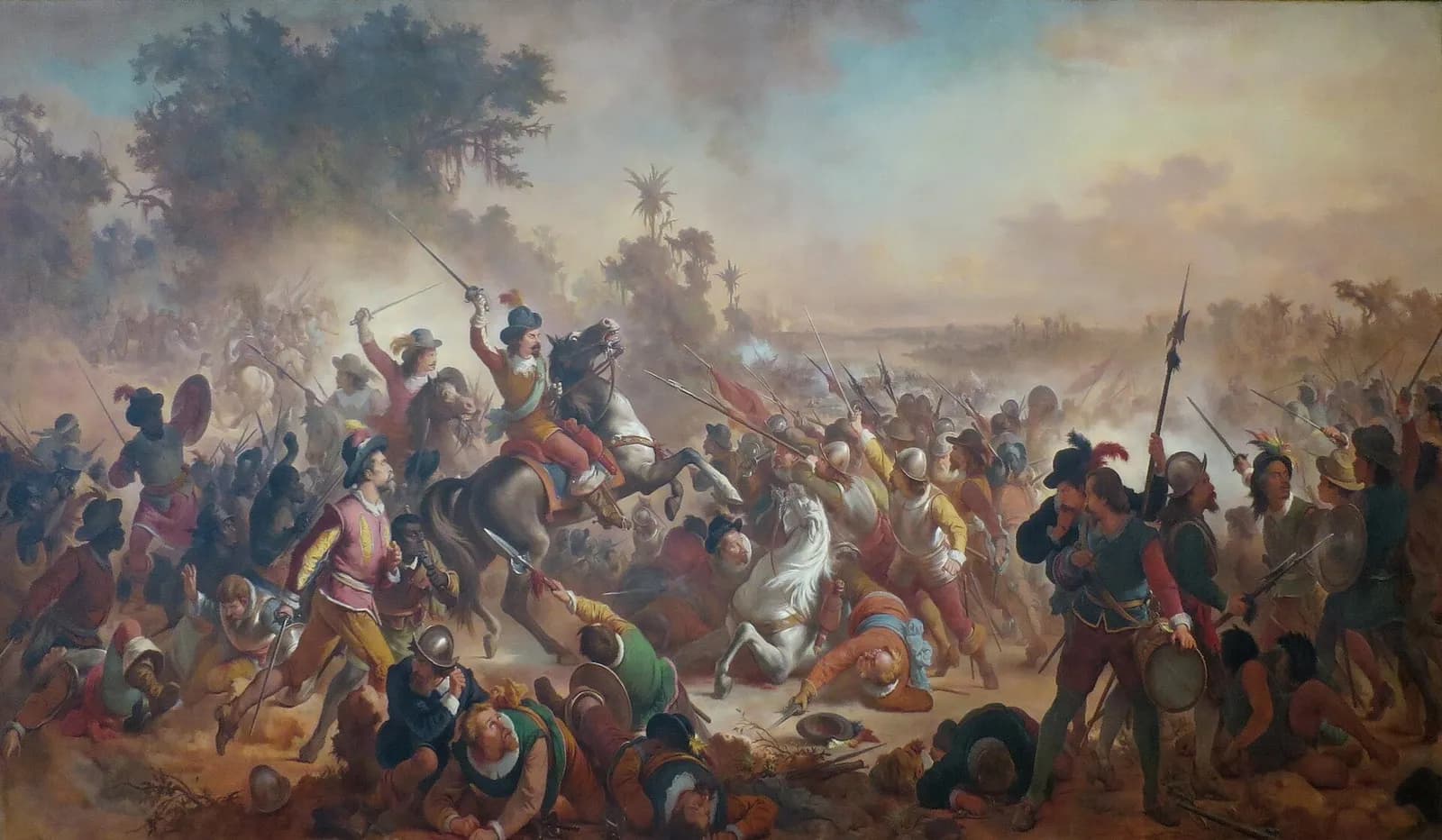
In the nineteenth century, Brazilian writers recast Guararapes as the moment when white, Black and Indigenous people joined to expel a foreign invader. The historian Marcelo Cheche Galves calls this the idea of Guararapes as the battle that gave birth to the Brazilian nation. Between 1875 and 1879 Victor Meirelles painted it on a canvas 5 metres high and 9.25 metres wide.
Henrique Dias's name lived on in uniform. After his death, Black regiments called the Henriques were raised in several captaincies, and Varnhagen remembered seeing two of them march in Corpus Christi processions in Rio when he was a boy. Historians now also stress the other side of the story: Black soldiers who sided with the Dutch, and Black soldiers on the Portuguese side who, as Regina Costa writes, fought within a slave society whose sugar paid for the war.
The Brazilian Army dates its own birth to Guararapes. In 1994, on the initiative of the army minister, General Zenildo, it created an Army Day on 19 April, the date of the first battle. The army's order of the day for 2025 says the battle symbolised its birth and counts 377 years of existence.
See it today
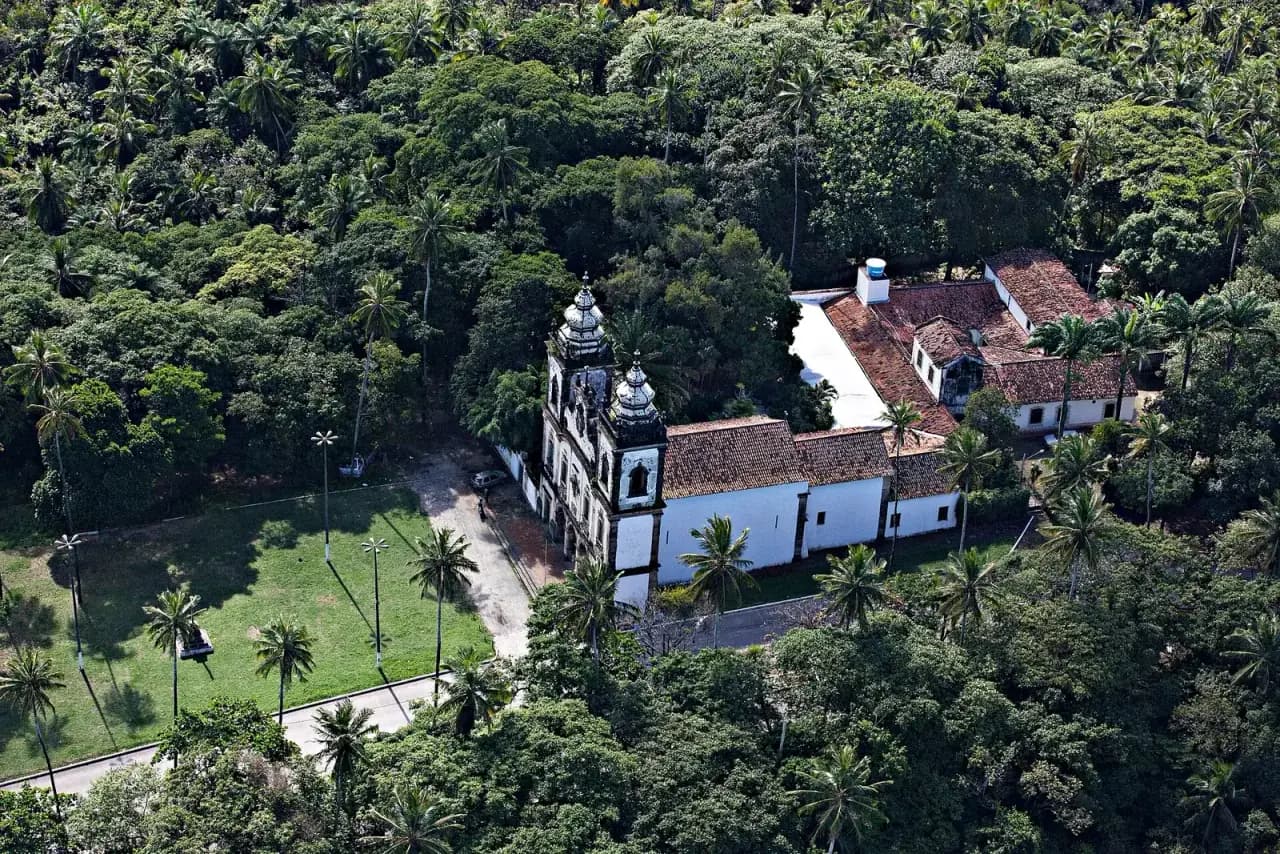
After the war Barreto paid for a chapel on the hills to Our Lady of the Pleasures, whose feast had fallen on the day after the first battle, and handed it to the Benedictines. A stone set in it in 1656 records both victories, but dates each a day early, the second to 18 February; Varnhagen pointed out that 18 February 1649 was a Thursday, not the Friday the stone names. The chapel grew into the present church.
FAQs
When was the Second Battle of Guararapes?
On Friday 19 February 1649, on the Guararapes hills in today's Jaboatão dos Guararapes, south of Recife. The Dutch had marched out of Recife on the night of 17 February and reached the hills on the 18th. A stone in the church on the site gives 18 February, which Varnhagen showed was a mistake.
Who won the Second Battle of Guararapes?
The Luso-Brazilian army of Francisco Barreto de Menezes, with João Fernandes Vieira and Henrique Dias among its officers, beat the Dutch West India Company's army under Colonel Brinck, who was killed. Dutch reports put their losses at 1,045 men; the Luso-Brazilians lost about 45 dead and 200 wounded.
Did Filipe Camarão fight in the second battle?
No. Camarão, the Potiguara commander who led a flank in the first battle of April 1648, died of illness in the camp around the end of August 1648, almost six months before the second battle.
When did the Dutch leave Brazil?
Recife capitulated on 26 January 1654 and Barreto took the keys on the 28th; the last Dutch posts in the north surrendered or were abandoned in the following months. The Dutch Republic gave up its claims in the Treaty of The Hague of 6 August 1661, in exchange for 4 million cruzados.
Why is Guararapes linked to the Brazilian Army?
In 1994 the army made 19 April, the date of the first battle of 1648, its Army Day, presenting Guararapes as the moment when white, Black and Indigenous fighters first defended the land together. Historians note that Brazil was then a Portuguese colony and that its army was formed after independence in 1822.
On the timeline
Open the timelineNearby moments from restoration and the gold of brazil (1640–1750).
Miguel Luís de Menezes, Duke of Caminha, is beheaded in Lisbon's Rossio square for conspiring against King João IV in favour of the Spanish Habsburgs, less than a year after Portugal restored its independence.
Four years into the Restoration War, Matias de Albuquerque's Portuguese army clashes with Spanish forces at Montijo, near Badajoz in Spanish Extremadura (not the Portuguese town across the Tagus from Lisbon). After a chaotic fight both sides claim victory — a fitting start to a war of independence that drags on until 1668.
Manuel Bernardes, Oratorian priest and author of 'Nova Floresta', is born in Lisbon. His devotional prose made him one of the great classics of the Portuguese language.
Second Battle of Guararapes
Portuguese and Brazilian forces defeat the Dutch at the Second Battle of Guararapes in Pernambuco, a decisive victory in the Pernambucan insurrection that helped end Dutch ambitions in colonial Brazil.
During the Portuguese Restoration War, a Spanish army under the Marquis of Viana defeats Portuguese forces led by the Count of Castelo Melhor at the Battle of Vilanova, near the River Minho, going on to capture Monção and other Portuguese strongholds in the months that followed.
Battle of the Lines of Elvas — Portuguese forces under António Luís de Meneses, Count of Cantanhede (later Marquis of Marialva), defeat the Spanish army besieging Elvas, a decisive victory in the Restoration War.
Portugal and the Dutch Republic sign the Treaty of The Hague, under which the Netherlands recognises Portuguese sovereignty over Brazil (formerly Dutch-held New Holland) in exchange for a substantial indemnity, ending decades of colonial conflict.
Coming up in history
All long reads 21 February 2009Lagoa Henriques, the sculptor who sat Pessoa down in the Chiado
 22 February 1943The Yankee Clipper crash: when a wartime flying boat fell into the Tagus
 23 February 1987Zeca Afonso, the singer of ‘Grândola’, dies in Setúbal: 23 February 1987
 24 February 1843Teófilo Braga, the Azorean scholar who led the Republic’s first government
13 sources
Archives, scholarship and reporting this article was checked against.
- 1
Historia das lutas com os Hollandezes no Brazil desde 1624 a 1654 (Francisco Adolfo de Varnhagen)Vienna, 1871 (digitised by the Internet Archive, University of Toronto copy)
- 2
A Guerra Holandesa nas relações de sucessos seiscentistas (Kleber Clementino)Topoi (Rio de Janeiro), vol. 20, no. 41, 2019, pp. 490-514
- 3
- 4
- 5
- 6
Como batalha do século 17 acabou ressignificada como fundação do Exército brasileiroBBC News Brasil, republished by A Gazeta, 19 April 2023
- 7
- 8
Parque Histórico Nacional dos Guararapes: preservação e luta pela memória (Marcos Antonio Tavares da Costa, undergraduate dissertation in museology)Universidade Federal de Pernambuco, 2022
- 9
A short story of 1st December (José Miguel Sardica)Universidade Católica Portuguesa
- 10
Casamento de D. Catarina de Bragança com Carlos II de InglaterraArquivo Nacional Torre do Tombo
- 11
Ordem do Dia: Dia do Exército, 19 de abril de 2025Exército Brasileiro
- 12
Tombamentos IPHAN em Pernambuco (list of federally listed heritage in Pernambuco)Secretaria de Cultura de Pernambuco, 2025
- 13
Portaria IPHAN nº 16, de 4 de abril de 2022 (master plan for the Parque Histórico Nacional dos Guararapes)Instituto do Patrimônio Histórico e Artístico Nacional (IPHAN)
Image credits
- Victor Meirelles's Batalha dos Guararapes, painted between 1875 and 1879 and now in the Museu Nacional de Belas Artes in Rio de Janeiro. It is an imagined scene made more than two centuries after the battles, when Guararapes was being recast as a founding moment of the Brazilian nation. Victor Meirelles, Public domain, via Wikimedia Commons.
- A sugar mill (engenho) with its owner's house, painted around 1664 by Frans Post, who had travelled to Dutch Brazil with Johan Maurits of Nassau. Sugar made by enslaved Africans was what the Dutch and the Portuguese were fighting over. Frans Post, Public domain, via Wikimedia Commons.
- João Fernandes Vieira, leader of the 1645 rising, on the frontispiece of Castrioto Lusitano (1679), a history of the war by Frei Rafael de Jesus written in praise of Vieira. Unknown author, Public domain, via Wikimedia Commons.
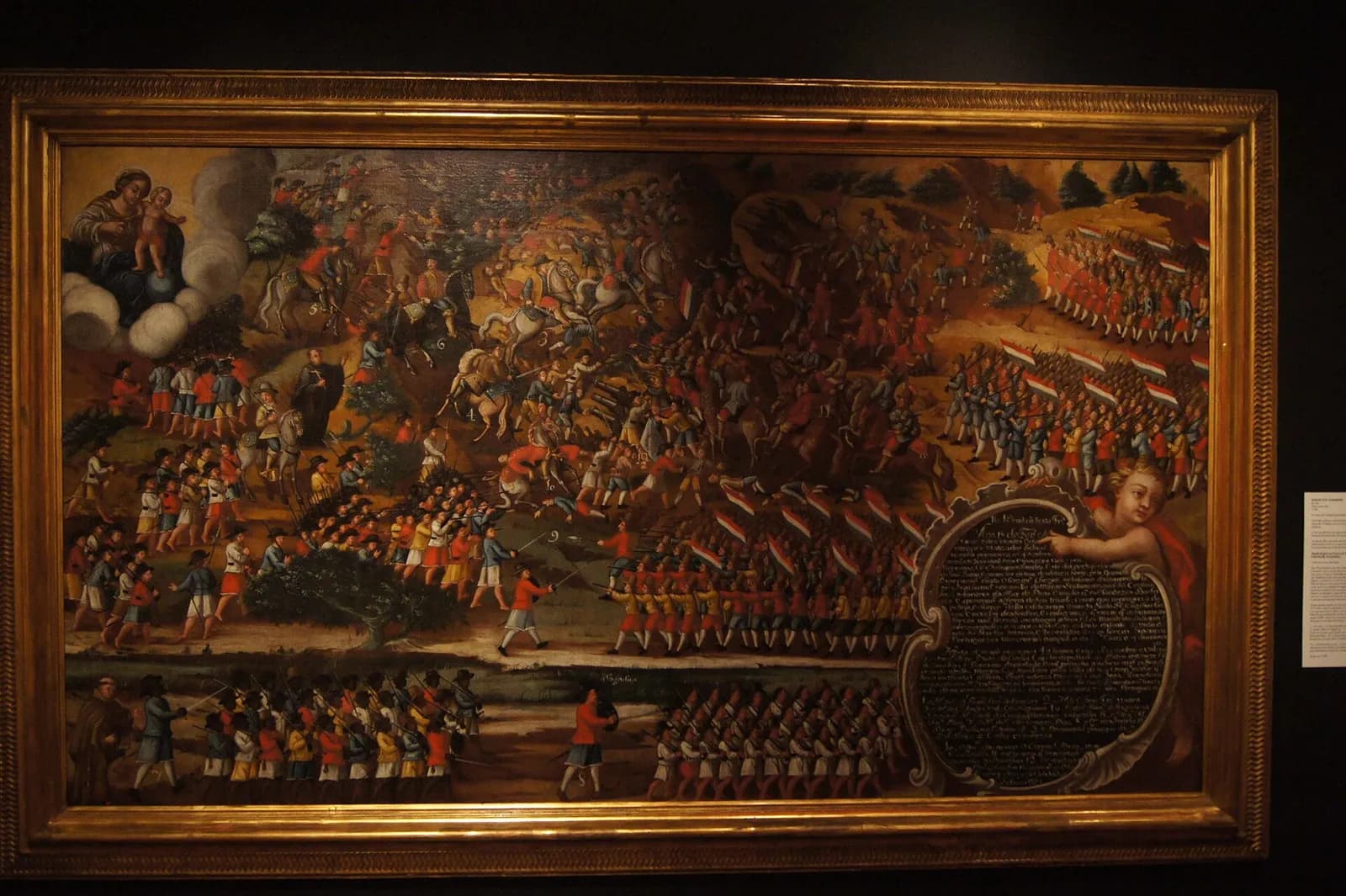
- An eighteenth-century ex-voto painting of the Battle of Guararapes, with the Virgin and Child watching from the clouds, in the Museu Histórico Nacional in Rio de Janeiro. Barreto credited both victories to Our Lady of the Pleasures (Nossa Senhora dos Prazeres). Jonas de Carvalho from Rio de Janeiro, Brasil, CC BY-SA 2.0, via Wikimedia Commons.
- The church of Nossa Senhora dos Prazeres on the Guararapes hills, in the Parque Histórico Nacional dos Guararapes at Jaboatão dos Guararapes, photographed from the air in 2013. Portal da Copa/ME, CC BY 3.0, via Wikimedia Commons.