

António Aleixo, the lottery seller who became the Algarve's poet
He could barely write, so a schoolteacher took down his verses for him. The four-line poems of an Algarve lottery seller are still quoted across Portugal like proverbs.
At a glance
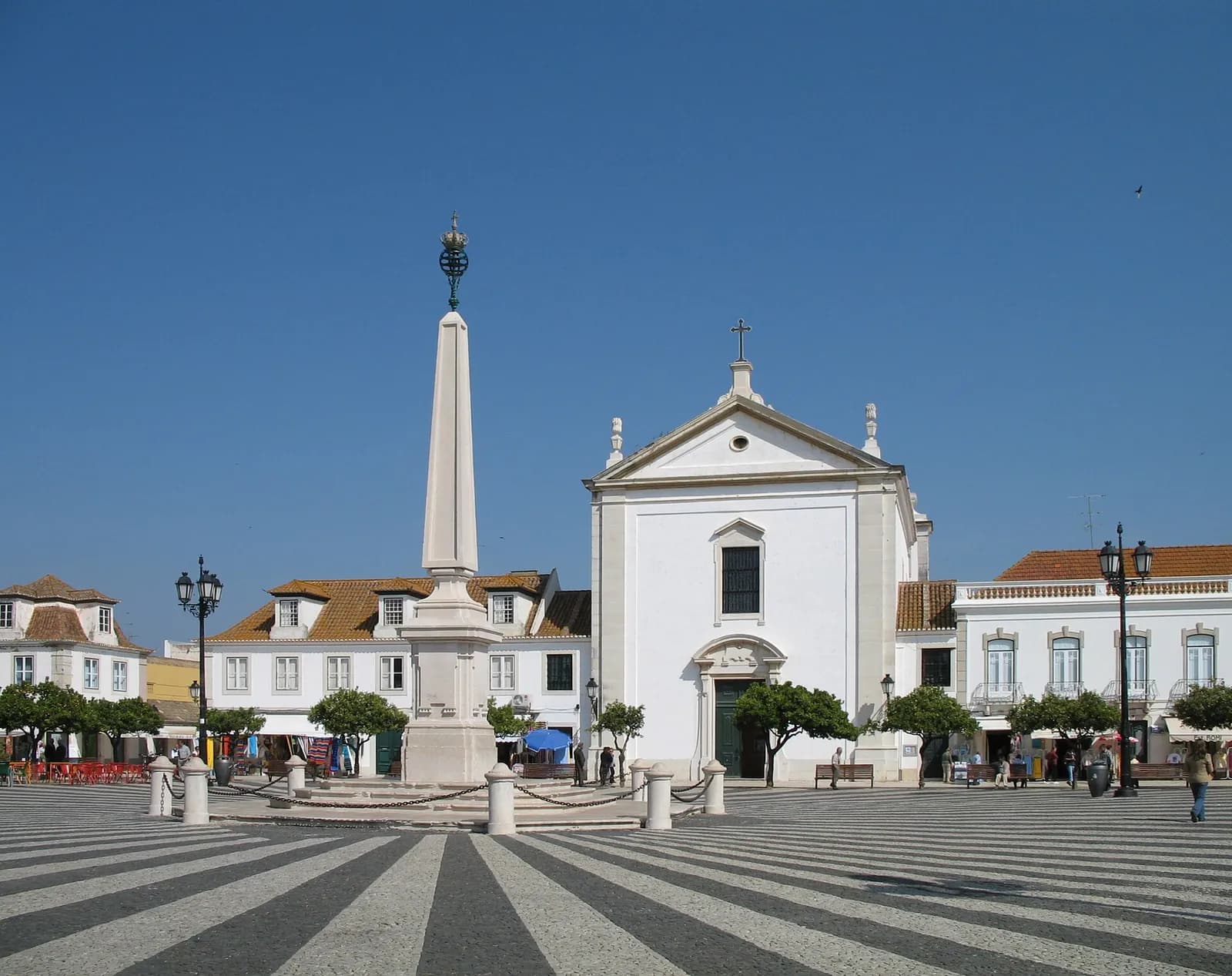
- António Aleixo was born in Vila Real de Santo António, on the Algarve's border with Spain, on 18 February 1899, and grew up in Loulé, where his family moved in 1906.
- He left school before finishing the third year and worked as a weaver, army bugler, policeman in Faro, builder's labourer in France and lottery-ticket seller, making up verses as he went.
- Joaquim Magalhães, a teacher at the liceu in Faro, met him in 1937 and became his “secretary”, collecting his quadras and correcting their spelling and punctuation.
- His first book, Quando começo a cantar, went on sale in Loulé on 25 April 1943; its 1,100 copies sold out in under two months.
- Ill with tuberculosis, he spent six years in a sanatorium in Coimbra and died in Loulé on 16 November 1949. His son published the larger collection Este Livro que Vos Deixo in 1969.
A new book on Easter Sunday
On Easter Sunday, 25 April 1943, at the Ateneu Comercial e Industrial de Loulé, a spring poetry contest held its closing party, and a man of 44 began selling copies of a book with his name on the cover. António Aleixo had sold lottery tickets for a living. Now he was selling Quando começo a cantar, “When I begin to sing”, at 7$50 a copy (seven and a half escudos, then the price of three one-kilo loaves).
The book had come off the press of the Tipografia União in Faro eleven days earlier. It held 113 quadras, the four-line verses Aleixo made up in his head, plus a handful of longer pieces. A teacher had written them down, fixed the spelling and added the commas. Within two months all 1,100 copies were gone.
Aleixo had been born 44 years before, on 18 February 1899, at the far eastern end of the Algarve. He could read but barely write. Until that spring his verses had reached print only on loose sheets, in the programmes of poetry contests and in a few local newspapers.
A weaver's son on the Spanish border
António Fernandes Aleixo was born in Vila Real de Santo António, a small town on the Algarve's border with Spain. He was baptised there on 24 June 1899. His father, José Fernandes Aleixo, born in Loulé in 1870, was a weaver who could read and write.
José was also a labour organiser. He helped found weavers' associations in Faro in 1902, in Vila Real de Santo António in 1903 and in Loulé in 1915. In 1906 he took the family back to his home town of Loulé.
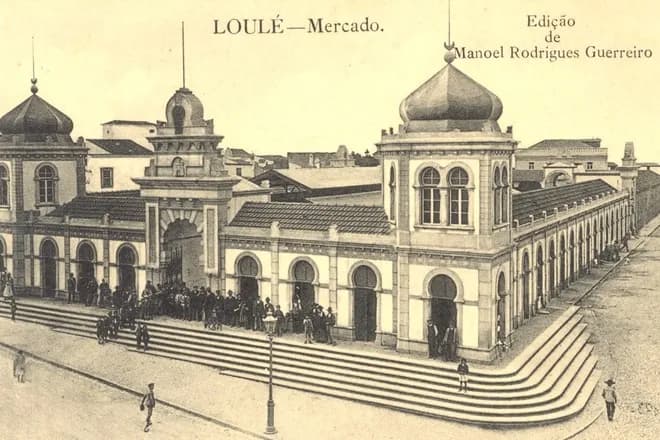
The boy went to school in Loulé but left during his third year, because, according to the historian João Romero Chagas Aleixo, the family had run out of money. Joaquim Magalhães, his later editor, also remembered “an incomplete third year”. The Brazilian scholar Robertson Frizero Barros, author of one of the few academic studies of his work, has him leaving before finishing the second. From 1912 to 1919 he worked beside his father as an apprentice weaver in the factory of Manuel de Sousa Ignez.
According to Barros, his first verses were sung for coins. At Christmas and New Year children in the south of Portugal went from door to door singing janeiras, short songs that praised the owner of the house in return for a coin or a gift. When his group ran out of verses, ten-year-old António began inventing new ones.
Policeman, soldier, emigrant
After the loom came the army. Aleixo served mostly in Faro and Tavira as a bugler in the 5th Company of Infantry Regiment No. 4, first as an apprentice and then as a corporal. Barros writes that it was in the army that he properly learned to read and write, if only roughly.
On 7 July 1922 he joined the civil police in Faro. He never settled into the job and resigned on 8 January 1924. Two months later, in March 1924, he married Maria Catarina Martins, who worked in the same factory. They had seven children, one of whom died young.
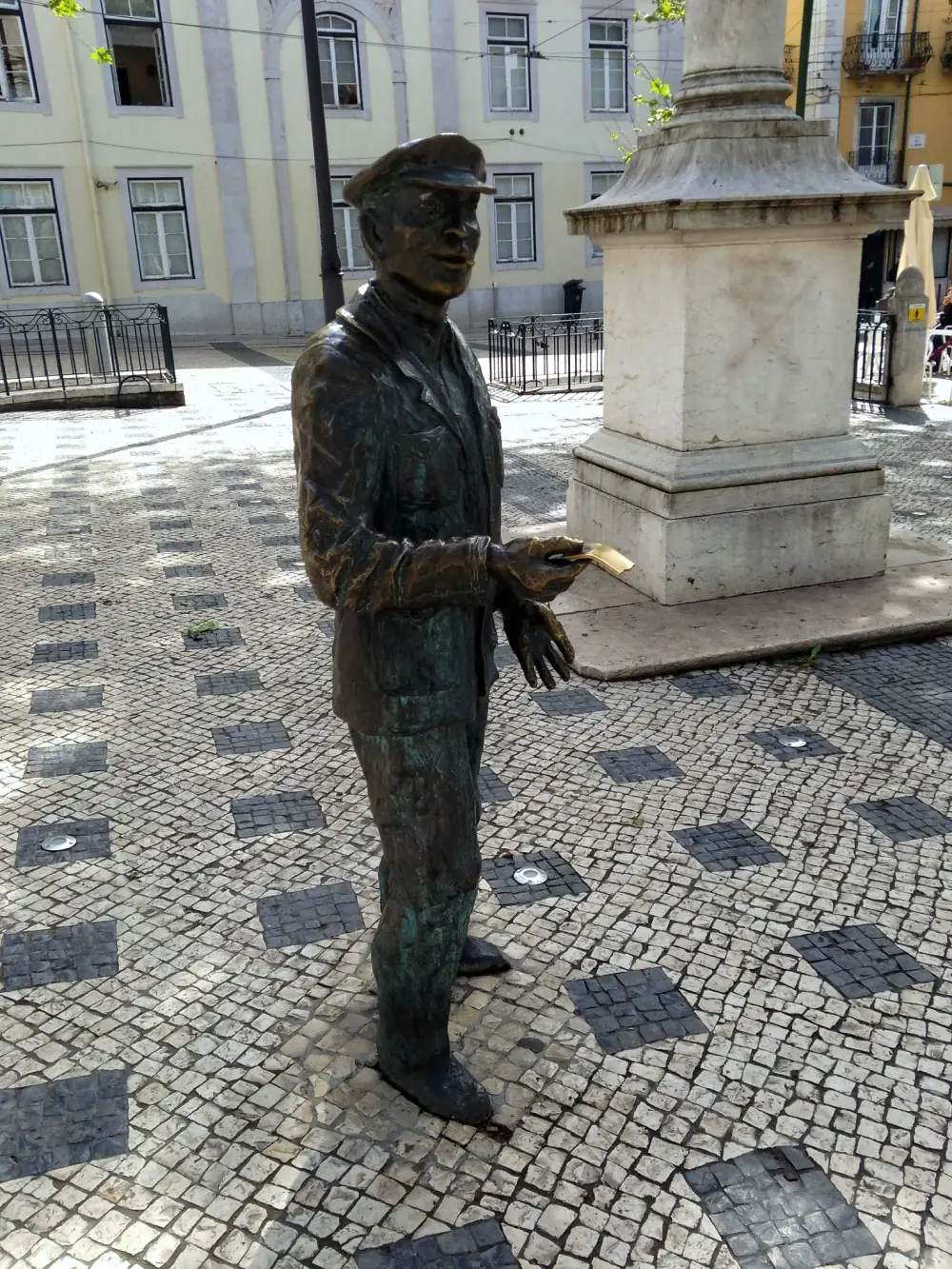
In 1928 he emigrated to France and worked as a builder's labourer in Marseille, Lyon, Toulouse and Paris. He came home in 1931 and, until 1933, sold lottery tickets and ties. Selling cautelas, fractions of lottery tickets, was the trade people remembered him by: he became known as the poeta cauteleiro, the lottery-seller poet.
For a time he also kept goats. Back from France with a stomach ulcer, Magalhães recalled, he had an operation and could drink nothing but milk, so he borrowed money from friends to buy a few and fed his ulcer on their milk.
“I've been a policeman, a soldier, / I've lived outside the nation, / I sell the lottery, I've kept livestock, / all I lack is being a thief.”
18 February 1899
Born in Vila Real de Santo António
Baptised there on 24 June.
1906
The family moves to Loulé
1912 to 1919
Apprentice weaver with his father
After 1919
Army bugler in Faro and Tavira
July 1922 to January 1924
Civil police officer in Faro
March 1924
Marries Maria Catarina Martins
1928 to 1931
Builder's labourer in France
1931 to 1933
Sells lottery tickets and ties
1937
Meets Joaquim Magalhães at a poetry contest in Faro
25 April 1943
Quando começo a cantar goes on sale in Loulé
June 1943 to July 1949
Patient at a tuberculosis sanatorium in Coimbra
1945 and 1948
Intencionais and Auto da Vida e da Morte published
16 November 1949
Dies in Loulé
1969
Este Livro que Vos Deixo published
The poet at the fair
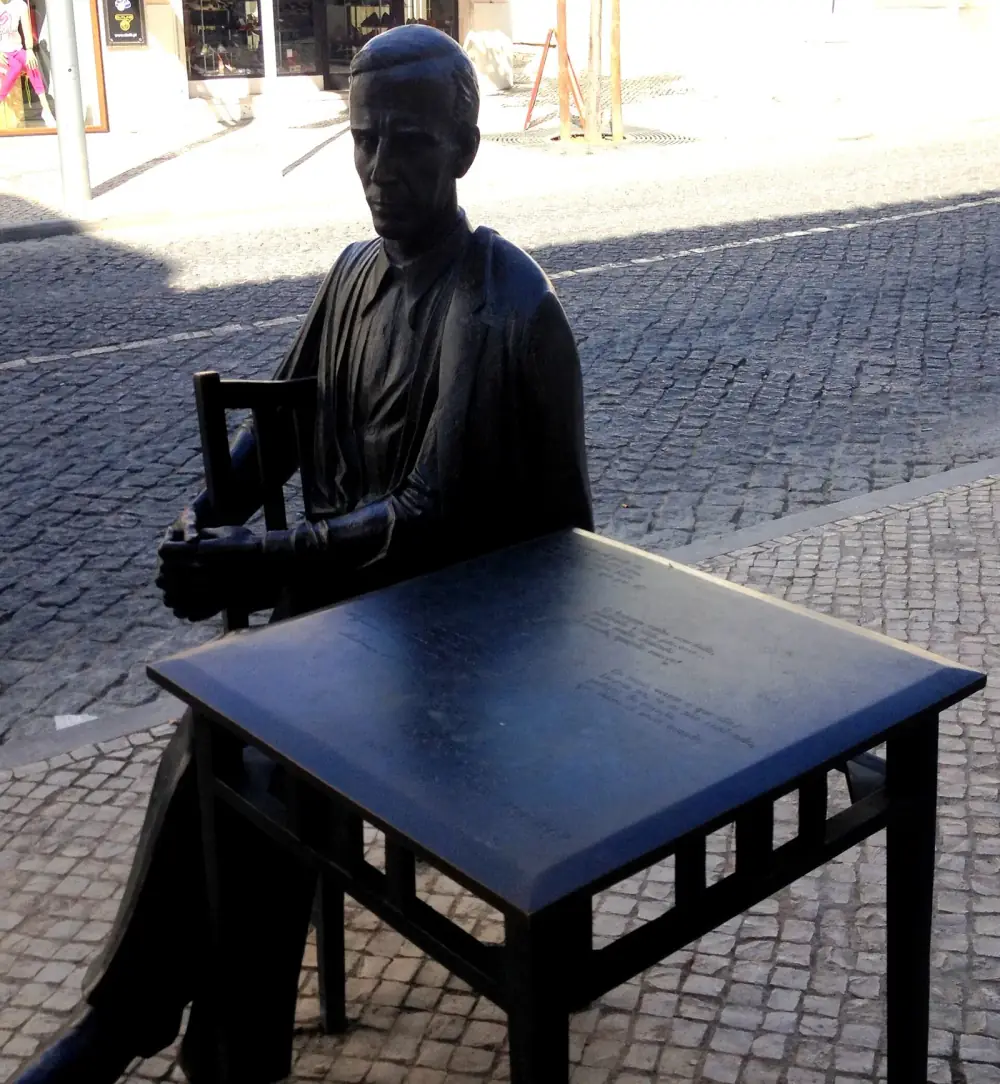
Aleixo improvised in public, at village festas and romarias, the pilgrimage fairs held on saints' days, and the habit became a second income. As Magalhães described it, Aleixo would say his verses, someone wrote them down, a printer set them in type and the poet sold the sheets from fair to fair. In Loulé he was a regular at the Café Calcinha, opened in the late 1920s, where he wrote many of his quadras.
His themes were social injustice, the misery of a poor man's life and the small events of the day. Barros points out that there is almost nothing in his work about love, or about the saudade so common in the Portuguese poetry before him. What there is, again and again, is irony, sometimes turned on himself.
“I am neither clever nor coarse, / neither well nor badly bred; / I am simply the product / of the world I was raised in.”
The teacher who became his secretary
Joaquim Magalhães was born in Porto in 1909 and studied Romance philology before arriving in the Algarve before dawn on 17 October 1933. From 1935 to 1974 he taught Portuguese and French at the liceu, the state secondary school, in Faro, and he was its rector from 1968. He married a teacher from Loulé.
He first came across Aleixo in 1937, at a poetry contest, the Jogos Florais, held by the Ginásio Clube de Faro. Aleixo took fourth prize under the pen name “cantador algarvio”, the Algarve singer. The two became friends for life.
Magalhães remembered that Aleixo had borrowed a suit for the prize-giving from Othman da Franca, son of the Algarve poet Cândido Guerreiro. The next day, back in his own clothes, he made a quadra of it.
“Yesterday a king, today without a throne, / here I am back on the street; / I've given the suit back to its owner / and the misery goes on.”
Barros adds a step. In 1942, he writes, a watchmaker in Loulé who was a friend of the poet had about two dozen of his quadras typed up and printed as a single sheet. A copy reached Magalhães, who offered to collect enough verses for a book and to act as Aleixo's secretary while he did it. The essayist Guilherme d'Oliveira Martins also names a Loulé watchmaker, José Rosa Madeira, with Magalhães as the first two people to take notice of the poet.
“Illiterate? Not as much as people suppose. He was able to read, and he read. He did an incomplete third year [of school], but he never learned to write with correct spelling. That was my role, to put in the correct spelling and the punctuation.”
Aleixo made up many verses on the spot. Magalhães recalled walking down a street in Loulé with him in the rain, past a man with a hoe who was turning the running water aside. Aleixo answered with a quadra: whoever dams running water fools himself, because the stream does not die, it runs off somewhere else. He also turned their partnership into a verse.
“There's not a millionaire / as happy as I am: / I have for my secretary / a liceu teacher.”
When I begin to sing
The book was Magalhães's idea, made with Aleixo's agreement in the spring of 1943. It was published by the Círculo Cultural do Algarve, a cultural society Magalhães had helped found and would preside over until 1970. The title is the first line of a six-line poem in the book.
- Title
- Quando começo a cantar… (“When I begin to sing…”)
- Publisher
- Círculo Cultural do Algarve, Faro
- Printed
- Tipografia União, Faro, finished 14 April 1943
- On sale
- 25 April 1943, Ateneu Comercial e Industrial de Loulé
- Print run and price
- 1,100 copies at 7$50 each
- Costs
- 1,650$00 in all (1,600$00 in the same historian's 2018 account), with a 1,000$00 subsidy from the Junta de Província, the provincial council
- Sales
- Sold out in under two months
What was in Quando começo a cantar (1943)
poems
The first edition held 113 quadras, four quintilhas, five sextilhas and two compositions in ten-line décimas, as counted by the historian João Romero Chagas Aleixo.
Show the data
| Poems by verse form | |
|---|---|
| Quadras (4 lines) | 113 |
| Quintilhas (5 lines) | 4 |
| Sextilhas (6 lines) | 5 |
| Décima compositions | 2 |
Magalhães wrote a three-page preface, which he called an “indispensable explanation”. He was frank about his friend's schooling and generous about his talent, praising the “concise and original expression of a bitter philosophy, learned in the pitiless school of life”.
“Although not entirely illiterate (he can read and has read half a dozen good books), he is not, however, able to write correctly, and his intellectual preparation certainly does not qualify him to be considered an educated poet.”
“This fellow is capable / of making a thousand promises, / but he does everything the wrong way round / from the promises he makes.”
Barros writes that Faro's booksellers waived their commission to help the poet. In January 1944 the Jesuit review Brotéria praised the “surprising ease of rhythm” and “very considerable poetic depth” of this “poor lottery seller”. Drawing on the preface, the reviewer also mentioned his poverty, with a wife and children to feed and a daughter wasting away with tuberculosis. A second edition came out in Coimbra in 1948 and a third in Lisbon in 1960.
Six years in a Coimbra sanatorium
Aleixo's health had been failing for some time. In March 1941 he had an operation at the Santa Marta hospital in Lisbon for a stomach ulcer and a hernia. Early in 1943 he was found to have pulmonary tuberculosis, the disease that was already killing one of his daughters; Magalhães remembered a lesion appearing on his lungs that summer.
Magalhães sent the book to Tóssan, the artist António Fernando dos Santos, who came from Vila Real de Santo António too and was then in Coimbra. Tóssan took it to Armando Gonçalves, director of the Hospital Sanatório da Colónia Portuguesa do Brasil at Covões, on the edge of the city. Gonçalves put the case to the Coimbra medical professor Bissaya Barreto, together with one quadra from the book: if he asked in song, it ran, people listened, but if he asked in tears no one would pity him.
Aleixo was admitted. He stayed at Covões as an in-patient from June 1943 to July 1949, more than six years.
In Coimbra he met writers, actors and doctors, among them the writer Miguel Torga and the poets Afonso Duarte and Joaquim Namorado. Tóssan saw him every day at the sanatorium from June 1943 and drew him that year; it is the best-known portrait of Aleixo.
Tóssan also told Paulo Quintela, a Coimbra professor and theatre director, that Aleixo had it in him to be a great author of popular theatre. Aleixo then wrote the Auto da Vida e da Morte, an allegory of life and death in the old Portuguese form of the auto, a short verse play of the kind Gil Vicente wrote in the sixteenth century. With Tóssan's help he also wrote the Auto do Curandeiro, a satire on the healers he had known who claimed to cure people with prayers and home remedies.
In the sanatorium, for the first time, Aleixo began writing his verses down himself; Magalhães said the 1943 book had given him the push. A second book of verse, Intencionais, came out in 1945, and the Auto da Vida e da Morte in 1948, both from the Círculo Cultural do Algarve.
“In your saddest hours / of sorrow and disillusion, / think that you no longer exist, / that you died many years ago.”
Home to Loulé
The treatment did not work. In July 1949 Aleixo went home to his family in Loulé, to a house at number 11, Rua Bernardo Passos. His wife and six children, four daughters and two sons, had been struggling to get by.
In his last days Aleixo sent for his friend Fernando Laginha, who had written a preface for the Auto do Curandeiro that August. Laginha described the visit in a letter to Magalhães, probably written a day or two before the end. Aleixo was “dreadfully wasted” and had not eaten for two days. He wanted to cancel the book and spend the money set aside for it on feeding his family; Laginha talked him out of it, arguing that the book would bring the family an income later.
António Aleixo died in Loulé on the morning of 16 November 1949, aged 50. According to Barros, neighbours who had looked after him in his last days, afraid of contagion and not knowing what they were, burned some of the many notebooks in which he had written his verses.
The Auto do Curandeiro was printed in Faro early in 1950, a few months after his death, and reissued in 1964.
This book I leave you
In 1969, twenty years after his death, his son Vitalino Martins Aleixo published a larger collection in Lisbon, prepared with Joaquim Magalhães: Este Livro que Vos Deixo, “This book I leave you”. It gathered his quadras and three autos: the Auto da Vida e da Morte, the Auto do Curandeiro and a third, the Auto do Ti Jaquim.
It came out a year after a fall had left Salazar incapacitated and Marcelo Caetano had taken his place. Barros writes that the book topped the bestseller lists for several weeks in 1969, and that the censors, who saw only the folk verses of a poor man, let it pass.
“You who, up there in your empire, / promise a new world, / be quiet, for the people may / want a new world for real.”
| Year | Title | What it is | Notes |
|---|---|---|---|
| 1943 | Quando começo a cantar… | Quadras and other short verse | Círculo Cultural do Algarve, Faro; 1,100 copies sold out in under two months; reissued 1948 (Coimbra) and 1960 (Lisbon) |
| 1945 | Intencionais | Verse | Círculo Cultural do Algarve, Faro |
| 1948 | Auto da Vida e da Morte | Verse play | Círculo Cultural do Algarve |
| 1950 | Auto do Curandeiro | Verse play | Printed in Faro after his death; reissued 1964 |
| 1969 | Este Livro que Vos Deixo | Collected verse and three autos, including the Auto do Ti Jaquim | Published in Lisbon by his son, Vitalino Martins Aleixo, with Joaquim Magalhães; third, corrected edition 1975 |
| 1978 | Inéditos | Previously unpublished verse | Published in Loulé |
Open Library records the first edition of Este Livro que Vos Deixo as Lisbon, 1969, 313 pages. The Penn catalogue records a third, corrected edition published in Lisbon by V. Martins Aleixo in 1975, with prefaces by Fernando Laginha and Joaquim Magalhães.
Why he is still quoted
Aleixo's quadras are short, rhymed and easy to say aloud, and many Portuguese know a few by heart without knowing his name; Barros notes that people recite them as if they were anonymous folk verse. Academic attention has been thinner. The journalist António de Sousa Duarte observed in 1999 that Portuguese encyclopaedias said “significantly little” about him.
Magalhães said Aleixo's popularity exploded after the revolution of 25 April 1974, which ended the dictatorship. Before that, the singer José Afonso and others had already sung and recorded his verses, and the actor João Villaret had been the first to read one of his quadras on television.
In 2022 the historian João Romero Chagas Aleixo counted 55 editions of the four books and three autos. He also writes that Miguel Torga, in his published diary, judged Aleixo's quadras better than the “quadras in the popular style” of Fernando Pessoa, Portugal's best-known modern poet. In 2019, the 120th anniversary of his birth, Loulé named a street after him in the parish of Quarteira, and the council's announcement called him “unquestionably the greatest Portuguese popular poet”.
“No one would go without bread / if this duty were fulfilled: / that we should be paid in proportion / to what we produce.”
He also knew what he was not. One of his best-known quadras opens with an apology: “I beg the learned authorities' pardon, for I can barely read.” Barros took the line for the title of his study.
FAQs
When and where was António Aleixo born?
He was born in Vila Real de Santo António, in the eastern Algarve, on 18 February 1899, and baptised there on 24 June 1899. His family moved to Loulé in 1906, and he lived there for most of his life.
Could António Aleixo read and write?
He could read, but he wrote with difficulty. He left school before finishing the third year and, according to Barros, learned to read and write properly only in the army. Joaquim Magalhães said Aleixo did not write his verses down until he entered the Coimbra sanatorium in 1943; before that Magalhães wrote them down and corrected the spelling and punctuation.
Who was Joaquim Magalhães?
A teacher of Portuguese and French at the liceu in Faro from 1935 to 1974, born in Porto in 1909. He met Aleixo at a poetry contest in Faro in 1937, collected his quadras, edited his first book in 1943 and, with the poet's son, published Este Livro que Vos Deixo in 1969. Aleixo called him his secretary.
What is Este Livro que Vos Deixo?
“This book I leave you” is the collected edition of Aleixo's verse and plays, published in Lisbon by his son in 1969, twenty years after his death. It includes his quadras and three autos. According to Barros it topped the bestseller lists for several weeks; a third, corrected edition followed in 1975.
How did António Aleixo die?
Of tuberculosis. He was diagnosed in 1943 and spent June 1943 to July 1949 in a sanatorium at Covões, in Coimbra. He went home to Loulé and died there on 16 November 1949, aged 50.
On the timeline
Open the timelineNearby moments from regeneration and the last kings (1851–1910).
The architect José Ângelo Cottinelli Telmo is born in Lisbon. He designed the modernist Sul e Sueste ferry station on the Terreiro do Paço, directed the hit comedy 'A Canção de Lisboa' and was chief architect of the 1940 Exposição do Mundo Português. As architect to the regime's prison-building commission from 1934, he is also credited with plans for the Tarrafal prison camp in Cape Verde.
Birth in Lisbon of Amélia Rey Colaço, a towering figure of 20th-century Portuguese theatre. With her husband Robles Monteiro she ran a company that held the concession of the Teatro Nacional D. Maria II from 1929 to 1974, staging Lorca and Tennessee Williams despite the censors and training actors such as Eunice Muñoz.
Birth of novelist José Maria Ferreira de Castro in Ossela, near Oliveira de Azeméis. Emigrating to Brazil at the age of 12, he spent almost four years on an Amazon rubber estate on the Madeira river, the experience behind his novel 'A Selva' (1930). A pioneer of Portuguese social realism, he was nominated seven times for the Nobel Prize.
António Aleixo, folk poet
António Aleixo is born in Vila Real de Santo António. A barely literate weaver's son who sold lottery tickets and sang his verses at Algarve fairs, he became one of Portugal's best-loved popular poets, his ironic four-line 'quadras' written down and published by a friend, Joaquim de Magalhães.
In a secret declaration signed in London by Lord Salisbury and Portugal's minister Luís de Soveral, Britain and Portugal reaffirm their ancient alliance, including the treaties of 1642 and 1661. Portugal undertakes to stop arms reaching the Boers through its territory and not to declare neutrality, while Britain's old pledge to defend Portugal's colonies is restated.
The poet António Nobre dies of tuberculosis at Foz do Douro, aged just 32. His book 'Só' (1892), with its homesick, saudade-steeped verses about his native north, later made him one of the defining voices of Portuguese symbolist poetry.
José Maria Eça de Queirós, master novelist of Portuguese realism and author of 'Os Maias' and 'O Crime do Padre Amaro', dies near Paris, where he was serving as Portuguese consul.
Coming up in history
All long reads 20 February 2010Mud in the streets of Funchal: the Madeira floods of 20 February 2010
 21 February 2009Lagoa Henriques, the sculptor who sat Pessoa down in the Chiado
 22 February 1943The Yankee Clipper crash: when a wartime flying boat fell into the Tagus
 23 February 1987Zeca Afonso, the singer of ‘Grândola’, dies in Setúbal: 23 February 1987
13 sources
Archives, scholarship and reporting this article was checked against.
- 1
“Perdão, porque mal sei ler”: apresentando António Aleixo, poeta popular português (Robertson Frizero Barros)Nau Literária, vol. 3, no. 2 (2007), Universidade Federal do Rio Grande do Sul
- 2
António Aleixo, um homem singular (João Romero Chagas Aleixo)Barlavento, 18 February 2022
- 3
- 4
Especial Faro: Joaquim Magalhães, o professor e o poetaPostal do Algarve, 10 September 2020 (interview recorded by Ramiro Santos for the Emissor Regional do Sul, 7 September 1984)
- 5
- 6Com Tóssan, no Algarve (Guilherme d'Oliveira Martins)Diário de Notícias, 9 August 2021
- 7
- 8
Café CalcinhaHistoric Cafés Route
- 9
- 10
Este livro que vos deixo… (Lisbon: Vitalino Martins Aleixo, 1969), edition recordOpen Library (Internet Archive)
- 11
Este livro que vos deixo: poesia e teatro, 3rd corrected edition (Lisbon: V. Martins Aleixo, 1975), catalogue recordUniversity of Pennsylvania Libraries
- 12
- 13
Image credits
- Praça do Marquês de Pombal in Vila Real de Santo António, the Algarve town on the Spanish border where António Aleixo was born on 18 February 1899. Photographed in 2007. Marc Ryckaert (MJJR), CC BY 3.0, via Wikimedia Commons.
- Loulé's municipal market on a postcard published by Manoel Rodrigues Guerreiro some time after 1908. Aleixo grew up in Loulé after his family moved there in 1906. Unknown author, Public domain, via Wikimedia Commons.
- Lisbon's monument to the cauteleiro, the street lottery seller, by Fernanda de Assis, unveiled in 1987 and photographed in 2016. Selling lottery tickets was the trade that gave Aleixo his nickname. Brian Dooley, CC0, via Wikimedia Commons.
- The bronze of António Aleixo by Lagoa Henriques outside the Café Calcinha in Loulé, where he wrote many of his quadras. Photographed in 2014. Benoît Prieur, CC0, via Wikimedia Commons.