

The 1941 cyclone: the February storm that wrecked Portugal’s coast and forests
A winter depression that deepened explosively off the Azores hit Portugal on a Saturday afternoon in February 1941. By nightfall the sea had broken into the fishing towns and the forests were down, and by the next day Lisbon had lost touch with the rest of the country.
At a glance
- On the afternoon of Saturday 15 February 1941 a rapidly deepening Atlantic depression crossed mainland Portugal from the south-west, bringing what may have been the strongest winds recorded there since measurements began in the late nineteenth century.
- Gusts of 129 km/h were measured in Lisbon and 133 km/h in Coimbra. At Serra do Pilar, in Porto, the anemometer failed during the storm; IPMA gives its last reading as 167 km/h, while two published studies give 130 km/h.
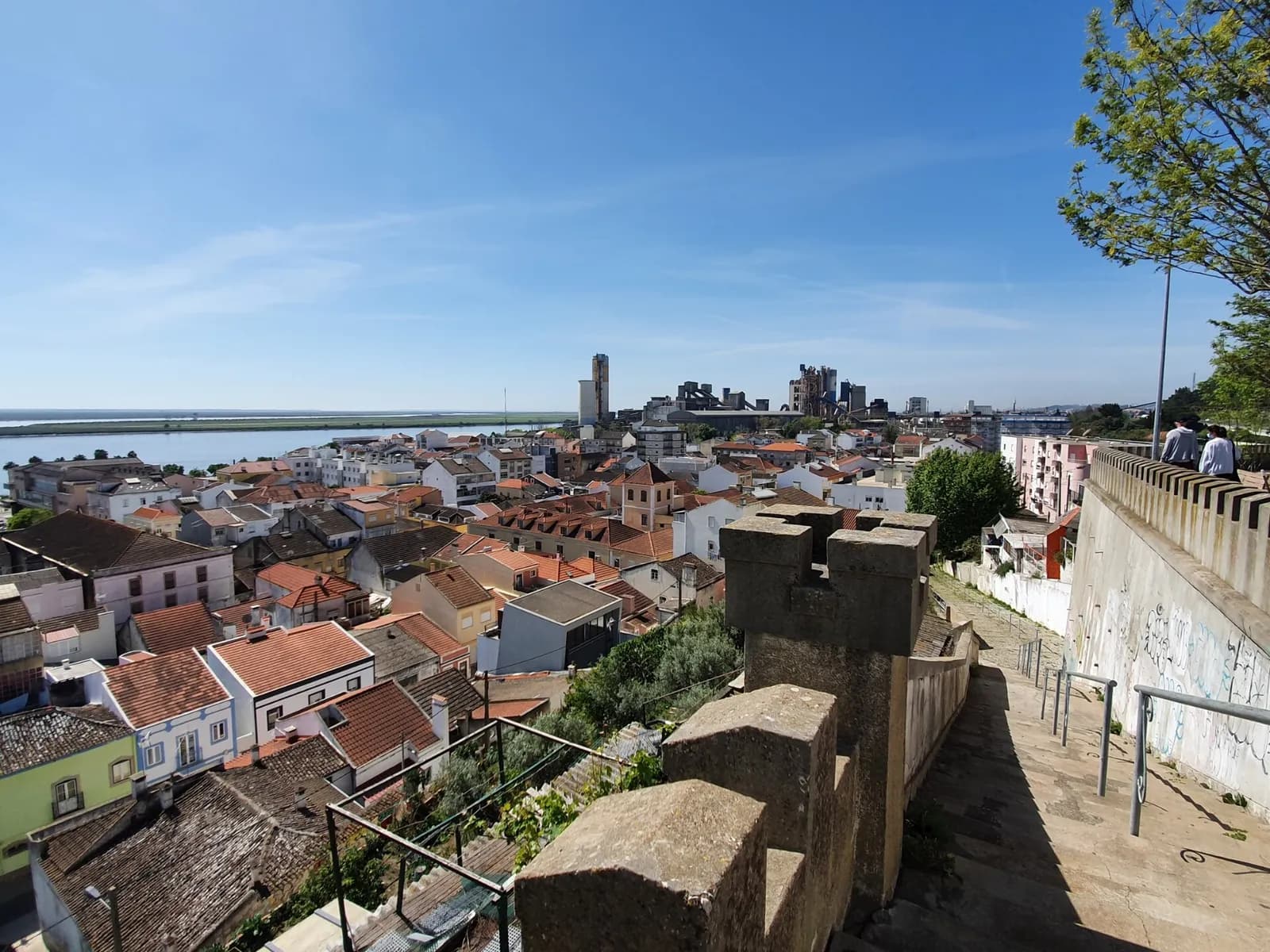
- A storm surge drove the sea into Sesimbra, where 309 boats were destroyed, and up the Tagus estuary, where 25 people drowned at Alhandra.
- Newspaper reports compiled by Coimbra researchers add up to just over 100 deaths in Portugal; a reconstruction that includes northern Spain counts at least 130.
- Damage was put at about 1 million contos, around half the state budget. Pressure at Coimbra fell 48.5 hPa in 24 hours, which meteorologists now classify as explosive cyclogenesis.
The sea comes into Sesimbra
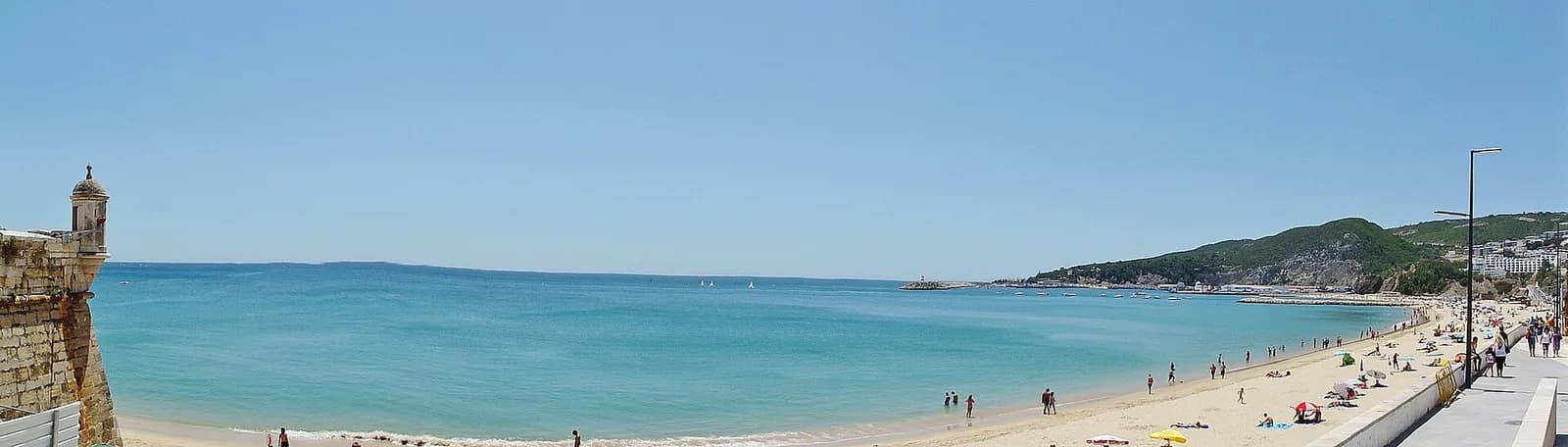
In the middle of the morning of 15 February 1941, José Rosa, aged 11, was minding a pot of salt-cod stew for the crew of the fishing boat Santa Rita. He was in the boat's store by the Arco dos Pintos, on the seafront at Sesimbra, a fishing town south of Lisbon. The night had been rough and a big storm was expected, so he was not alarmed as the sea grew wilder, until a wave came through the half-open door and swept the room.
He held on to the posts of the bunks and was not carried off. When he climbed the stairs to the street, the whole waterfront was wrecked. Waves as high as the fortress were breaking over the sea wall and dragging out the boats that the fishermen had hauled up into the streets for safety. Seventy years later he still remembered one wave lifting a boat into the air and breaking it in two.
At the eastern end of the beach, Joaquim Silva, known as Canário, was 15. At lunchtime his father, a fireman, burst in shouting at him to get out, grabbed him and pulled him up the slope behind their house. Within minutes the sea had taken the house, and the family had nothing left but the clothes they were wearing.
The sea attacked Sesimbra for most of the day. By evening 309 boats had been destroyed, four people were dead in the town and a woman had been killed at Quinta do Conde. The next morning the waves had scoured so much sand from under the Fortaleza de Santiago that a man could stand upright beneath it, among the wooden piles it was built on.
What hit Sesimbra hit the whole country that afternoon. In a few hours a storm with no name, remembered simply as o ciclone, the cyclone, blew roofs and chimneys off houses from the Algarve to the Minho, flattened forests, sank boats along the coast and cut Lisbon's telegraph and telephone lines to the rest of Portugal.
Portugal in 1941
In 1941 Portugal was a dictatorship. António de Oliveira Salazar, the President of the Council of Ministers, had drafted the constitution of 1933 that founded the Estado Novo, or New State, a one-party regime in which free speech, assembly and association were left to special laws and in practice restricted. Newspapers were read by censors before they could be printed.
The 1940 census counted 7,722,152 people. There was about one car for every 149 inhabitants, 54,700 in all. The electricity grid was small, and the storm damaged it badly; a national electrification policy only began in 1944.
Weather observations came from the stations of the state meteorological service, then part of the Ministry of Economy, and from university observatories such as the Instituto Geofísico in Coimbra. Synoptic information, the reports from ships and distant stations that forecasters plot on their charts, was scarce, and the storm arrived without proper warning.
A storm born near the Azores
The set-up began far to the north. On 13 February a huge low-pressure system lay a thousand kilometres south of Iceland, covering much of the north-east Atlantic. By midday on the 14th its centre, at about 980 hPa, was off Ireland, and a jet stream blowing at 230 to 240 km/h high above the Azores ran along its southern flank, where polar air met air from the tropics.
Along that boundary a new depression formed. Reanalysis charts, rebuilt in recent decades from the old observations, show a small secondary centre of about 990 hPa between the Azores and Portugal at midnight on 14–15 February. Then it deepened very fast: 35 hPa in the 24 hours to midday on the 15th, as it raced east towards the coast at around 90 km/h.
The barometer at Coimbra recorded the fall. At 3 pm on 14 February it read 987.0 hPa; at 3 pm on the 15th, 938.5 hPa, a drop of 48.5 hPa in a day. These are station-level readings, not corrected to sea level. IPMA, the Portuguese weather service, cites the fall as the mark of an explosive storm.
Rain was not the main problem. IPMA's note mentions heavy rain, but the totals that Nunes, Pinho and Ganho give for the day are modest, from 7.8 mm in Coimbra to 16.5 mm in Lisbon. The damage came from the wind, which peaked as a very active cold front swept across the country after midday, and from the sea, which the wind and the low pressure piled up against the coast.
13 February
A vast low lies 1,000 km south of Iceland, its southern flank reaching the Azores
14 February, midday
The main low, about 980 hPa, sits off Ireland; a strong jet stream blows over the Azores
14 February, 3 pm
The Coimbra barometer reads 987.0 hPa
15 February, midnight
A secondary low of about 990 hPa forms between the Azores and Portugal
15 February, morning
The new depression, 250 km east of the Azores, races east at about 90 km/h; the sea begins to break into Sesimbra
15 February, after midday
A violent cold front crosses Portugal
Coimbra's pressure reaches 938.5 hPa at 3 pm. One reconstruction puts the strongest gusts at around 4 pm and the end of the worst winds by about 5 pm.
15 February, evening
The centre, at about 960 hPa, lies over north-west Portugal and Galicia
Spanish analyses put it near 950 hPa between Galicia and Asturias.
16 February, midnight
The storm, filling fast at about 975 hPa, is near Brittany
16 February
Reports say all communication between Lisbon and the rest of the country has been lost
20 February
Some telegraph links to the capital restored; the government orders building-material prices back to pre-storm levels
How strong were the winds?
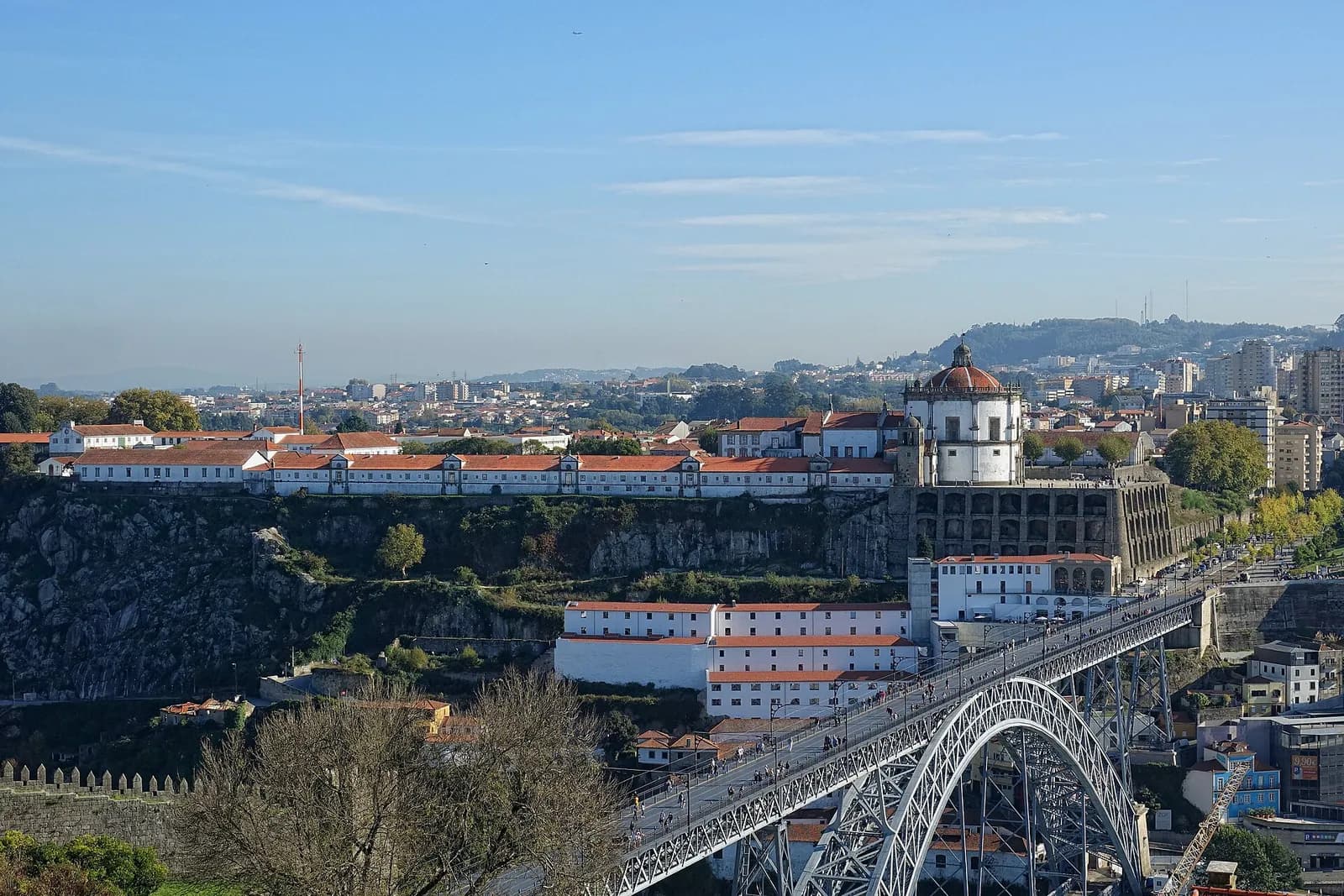
Nobody knows exactly. The anemometers of 1941 were not calibrated or sited to modern standards, and at least one broke. At the Serra do Pilar weather station, on the hill above the Douro opposite Porto, the instrument failed during the storm. The figures for its last reading differ.
| Station | IPMA (2017) | Nunes, Pinho and Ganho (2012) | Muir-Wood (2011) |
|---|---|---|---|
| Porto (Serra do Pilar) | 167, then the anemometer failed | 130, before the anemometer failed | 130 |
| Coimbra | 133 | 133 | 133 |
| Lisbon | 129 | 127 | 127 |
| Penhas Douradas (Serra da Estrela) | Not given | 148 | 148 |
| Portimão | Not given | 150 (Portimão/Tavira) | 150 |
| Praia da Rocha (Algarve) | Not given | Not given | 130 |
| Guarda | Not given | Not given | 126 |
| Santiago do Cacém | Not given | Not given | 119 |
Muir-Wood also lists 180 km/h at San Sebastián in Spain. He notes reports of 200 km/h at Sintra, Ericeira and Montalegre and in Santander, and judges them likely exaggerations, since no exact measurement above 150 km/h survives from Portugal.
The broken trees give another measure. In the worst-hit places up to a fifth of mature trees were snapped or uprooted. Robert Muir-Wood of RMS, a firm that models natural catastrophes for insurers, reconstructed the storm in 2011. In the worst of the great European windstorms of recent decades, losses of about a quarter of mature trees went with gusts of 150 to 170 km/h, so he took 1941's damage as a sign of winds approaching that range. The worst damage, and so the strongest winds, lay between Lisbon and Porto.
Flood tide on the Tagus
Low pressure lifts the sea: in theory each hectopascal less raises it by about a centimetre, and strong onshore winds pile more water against the coast. Together they produce a storm surge. On 15 February it ran up the Tagus estuary with south-westerly gales driving waves behind it. Water in the port of Lisbon was reported a metre higher than usual.
Along Lisbon's riverfront the sea wall was destroyed from Alcântara to the Tower of Belém. More than 150 boats sank in the estuary near the city. At the Cabo Ruivo seaplane base, by Muir-Wood's account, a plane sank and the English airport manager drowned. Downriver at Cascais the waves broke into the lower town and destroyed a sea wall protecting the casino.
The worst came upriver. At Alhandra, a riverside town in the municipality of Vila Franca de Xira, the water rose more than a metre inside the houses. Waves smashed the front row of houses and threw the wreckage into the houses behind. More than 100 people got away at the height of the storm, but 25 drowned. It was said that some hesitated to leave their homes and others tried to cross the flood at the wrong moment.
Eight people drowned in the surge at Setúbal, and salt works along the Tagus were destroyed. The Navy's historical archive holds damage reports from Almada, Setúbal and Sines, where ports, boats and the fishing communities that depended on them were hit hard.
On the Algarve coast, the sandy barrier islands of the Ria Formosa took the full force of the waves. According to the local historian Lynne Booker, every house on the Praia de Faro and in the fishing village of Culatra was destroyed, and east of Tavira the sea cut a new inlet through the dunes. Joana Gaspar de Freitas and João Alveirinho Dias, who studied the storm's effects on the coast, describe how the surge favoured overwash, the sea washing right over the shore.
Salt spray from the breaking waves was carried up to 40 kilometres inland and scorched the vegetation, as at Grândola. In the mountains the storm brought a blizzard. Villages in the Serra da Estrela were cut off by drifts for three days.
Trees, roofs and wires
Inland, the wind took roofs. Tiles flew off houses across the country, chimneys fell by the hundred, and factories, warehouses, barracks and aircraft hangars were badly damaged. A cement works at Maceira, near Leiria, and a factory in Guimarães were destroyed. At Malveira, north of Lisbon, the wind blew lorries off a railway line.
In Lisbon the fire brigade logged about 1,000 calls, and some 450 chimneys came down. Schools were damaged, and 300 large cypresses fell in the Prazeres cemetery and hundreds of trees in the Botanical Garden. At the Imprensa Nacional, the state printing works, the wind lifted part of the roof over the type workshops on to the power station. The printers kept working until a neighbour's chimney fell on the electrical switchboard.
In Coimbra the university hospital was badly damaged. The city's parks were stripped: many trees fell in the Mata do Choupal, the riverside wood, and in the Parque de Santa Cruz. Across the municipality's parishes about 230,000 trees were damaged, mostly maritime pines, followed by olive trees, which many families depended on.
There was no national survey of fallen trees. The figures that survive are local ones, collected by the newspapers and by parish councils, and they are large. Muir-Wood estimated that tens of millions of trees fell across Portugal, perhaps 2 to 3 per cent of the total at the time. On 20 February the Diário de Notícias led with the incalculable damage to the nation’s trees.
| Place | Reported loss | Source |
|---|---|---|
| Nisa (Portalegre) | 375,000 trees damaged | Nunes et al., from the press |
| Pinhal de Leiria (state forest) | More than 300,000 trees affected; more than 150,000 felled | Nunes et al.; Pinhal do Rei |
| Proença-a-Nova | 300,000 trees blown down | Muir-Wood, from the press |
| Coimbra municipality | About 230,000 trees damaged | Nunes et al., from the parish returns |
| Abrantes | More than 200,000 trees | Nunes et al., from the press |
| Vila Nova de Gaia | 40,000 trees | Muir-Wood, from the press |
| Évora, Mata Nacional das Virtudes | 10,000 eucalyptus and 20,000 pines | Nunes et al.; Muir-Wood |
| Lisbon, Prazeres cemetery | 300 large cypresses | Muir-Wood, from the press |
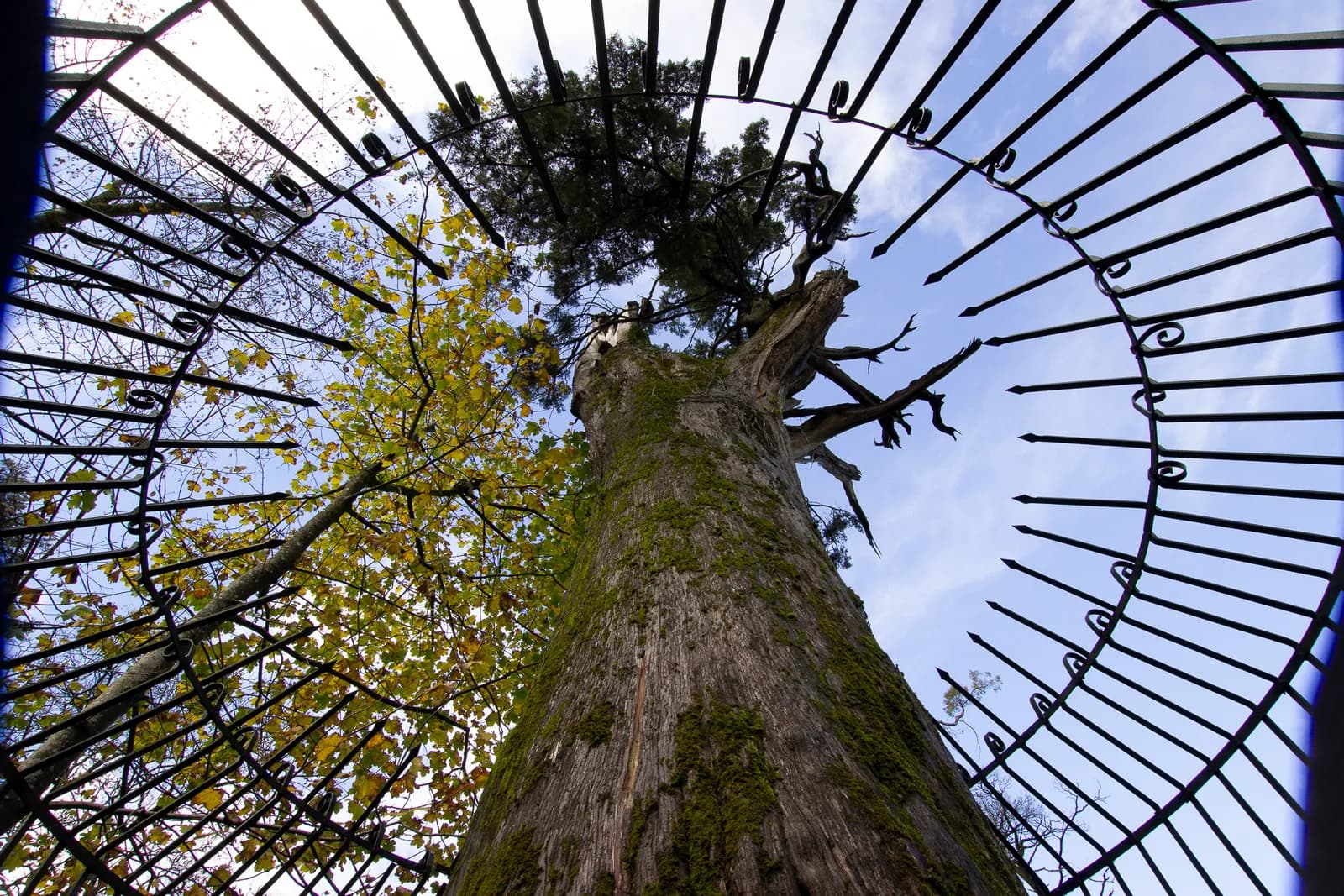
| Mata do Buçaco | 285 large acacias | Muir-Wood, from the press |
Press figures from 1941, not a survey. Tremês, near Santarém, reported losing 80 per cent of some 100,000 olive trees.
In the Pinhal de Leiria, the state pine forest by Marinha Grande, so much timber came down at once that it could not all be used. Much of it ended up as fuel for the furnaces of the glass factories of Marinha Grande. In Barcelos, in the north, the local weekly mourned the long trunks lying across the pinewoods: thousands of tonnes of timber that would lie idle unless something was done to use it.
Fallen trees blocked roads and railways for days. Alcoentre, in the Ribatejo, was cut off for three days by eucalyptus trunks across the roads. Two people died when trains collided at Lamarosa, near Coimbra, and three in an accident caused by a fallen tree on the Minho line between Travagem and Leandro. More than 100 km of telegraph line came down.
“It was a cyclone, a typhoon / Wind and rain, a gale / It threw the trees to the ground / On the roofs it was fatal.”
Counting the dead
There is no official death toll. The newspapers of the following days reported deaths town by town, and historians have added them up since. The Coimbra geographers Adélia Nunes and Nuno Ganho and the local historian João Pinho, writing in 2012, found more than a hundred, with an unknown number injured. Many drowned in the riverside towns of the Tagus estuary and at Sesimbra.
Deaths reported in the Portuguese press, by place
deaths
The tally of Nunes, Pinho and Ganho (2012) from newspapers of 1941, which they offer as an indication only; Lisbon is given as about twenty. The places add up to about 101. It is incomplete: other accounts add, for example, a woman killed at Quinta do Conde, near Sesimbra, and deaths from exposure in the mountains.
Show the data
| Deaths reported | |
|---|---|
| Alhandra | 25 |
| Lisbon | 20 |
| Aveiro | 12 |
| Setúbal | 8 |
| Alcácer do Sal | 8 |
| Portalegre | 4 |
| Abrantes | 4 |
| Sesimbra | 4 |
| Évora | 3 |
| Coimbra | 3 |
| Torres Novas | 3 |
| Guarda | 2 |
| Alhos Vedros | 2 |
| Castelo Branco | 1 |
| Leiria | 1 |
| Serra da Estrela | 1 |
Other counts run higher. Muir-Wood found at least 130 deaths across the Iberian peninsula, including 20 at Zumaia in Spain, where three carriages of an electric train were blown off a viaduct over the River Urola. In Portugal, by his count, falling chimneys killed 32 people and falling trees 15. At least ten died of exposure after being caught by the blizzard while walking between mountain villages.
Accounts of Lisbon differ most. The press tally and Muir-Wood both give about 20 dead in the capital, killed by falling trees, chimneys, tiles and other debris. Lynne Booker, writing in the Portugal Resident, says 78 were reported dead in Lisbon alone. Muir-Wood argued that the timing made things worse: the storm struck on a Saturday afternoon with little warning, when many people were out of doors, and casualties in daytime storms typically run five to six times higher than at night.
News, cost and relief
With the telegraph down, news reached Lisbon slowly. The capital's papers, O Século and the Diário de Notícias, and the Jornal de Notícias in Porto filled their pages for days with the effects of the storm: the dead, the trees, the roads blocked, the villages cut off, the roofs gone, the power and telephone lines down. Some districts only got their telegraph links back on 20 February.
Newspapers then went to the censors before publication. The regional weekly Notícias de Barcelos printed the line “Este número foi visado pela Comissão de Censura”, this issue was seen by the Censorship Commission, in its issue of 27 February. The same issue carried an article on the felled pinewoods and a wire report from London.
“As for Portugal, the disaster assumed the proportions of a national catastrophe, the damage being calculated at half the value of the State budget.”
The Times went on to praise the fire brigades, sailors, soldiers and civilians who had saved lives at the risk of their own, and remarked that Londoners now knew, unhappily, the suffering caused by the sight of demolished buildings. In Lisbon, workshop staff at the state printing works were called in on Sunday 16 February for urgent repairs, and others came in voluntarily. The Diário do Governo, the official gazette, came out on Monday morning.
The damage was put at about 1 million contos, a conto being 1,000 escudos. Estimates for Lisbon alone exceeded 200,000 contos, with 80,000 for Madeira, 30,000 for the Algarve and 25,000 each for the Porto area and the towns of the Tagus estuary. In its monthly bulletin, the meteorological service wrote of enormous losses, some irreparable, that seriously damaged the national economy.
The government answered with price controls and a relief inquiry. On 20 February the Ministry of Economy ordered that the prices of tiles, glass, windows and cement go back to their levels before the storm. A national commission for aid to the victims of the cyclone, under the Ministry of the Interior, asked local authorities, priests and private people across the country to list families who had lost their breadwinner, their only house or the boats and nets they lived by.
Coimbra's returns survive in the municipal historical archive. They value private losses in the municipality at more than 5,600 contos, most of it in trees. The Coimbra list set the sum to be claimed for each damaged tree: 80 escudos for an olive, 40 for a walnut, 20 for a eucalyptus and 7 for a pine.
What meteorologists say now
In a note on the storm's 76th anniversary in 2017, IPMA described a cyclone that swept the country very violently and classified its growth as explosive cyclogenesis. Muir-Wood ranked it among the five most severe windstorms in Europe in the twentieth century.
- Date
- Saturday 15 February 1941, worst in the afternoon
- Pressure fall at Coimbra
- 48.5 hPa in 24 hours (987.0 to 938.5 hPa, station level)
- Last gust at Porto before the anemometer failed
- 167 km/h (IPMA) or 130 km/h (other studies)
- Deaths
- More than 100 in Portugal; at least 130 with Spain
- Boats destroyed at Sesimbra
- 309
- Damage
- About 1 million contos, around half the state budget
Direct comparison with later storms is hard, because instruments and their siting have changed. When storm Kristin crossed central Portugal on 28 January 2026, the highest gust in IPMA's own network was 156.2 km/h at Leiria, and a station at the Monte Real air base, outside that network, recorded 175.9 km/h. Several stations stopped transmitting during the storm, so the record of that night is incomplete too.
Nunes, Pinho and Ganho point to the country such a storm would hit today, with far more people, homes and cars in its path. Newer buildings are sturdier, but tall blocks and light, wide modern materials catch more wind.
| Measure | 1940 | 2011 |
|---|---|---|
| Population | 7,722,152 | 10,561,614 |
| Dwellings | 2,118,033 | 5,520,681 |
| Cars | 54,700 (1 per 149 people) | 5,727,100 (1 per 1.8 people) |
| Road network | 16,900 km | About 90,000 km of municipal roads plus 13,100 km of motorways, trunk and regional roads |
Population and dwellings from the census (INE); cars from ACAP, the car trade association; as compiled by Nunes, Pinho and Ganho (2012).
Freitas and Dias concluded in 2013 that a storm like 1941 would do even more damage at Sesimbra and in the Ria Formosa today: urbanisation is much higher, and both are as vulnerable as they were then, or more so. They also wrote that the people living on the shore have no memory of the risk, and that recalling events like 1941 is one way to prepare them for the next one.
Sesimbra drew its own lesson. The storm put the working conditions of its fishermen on the agenda, and at the end of the 1940s work finally began on the sheltered harbour the town had lacked in 1941.
FAQs
When did the 1941 cyclone hit Portugal?
On Saturday 15 February 1941. The sea was already breaking into Sesimbra in the morning, and the strongest winds crossed the country in the afternoon with a cold front. By the evening of the 15th the centre of the storm was over north-west Portugal and Galicia, and by midnight it was near Brittany.
How many people died in the cyclone of 1941?
There is no official figure. Newspaper reports compiled by researchers at the University of Coimbra add up to just over 100 deaths in Portugal, with many drowned in Lisbon, Alhandra, Alhos Vedros and Sesimbra. A reconstruction by Robert Muir-Wood counts at least 130 across Portugal and Spain, including about 20 in a train blown off a viaduct at Zumaia.
How strong were the winds?
Measured gusts reached 129 km/h in Lisbon and 133 km/h in Coimbra, according to IPMA. At Serra do Pilar in Porto the anemometer failed: IPMA gives its last reading as 167 km/h, while two published studies give 130 km/h. Robert Muir-Wood judged from the tree damage that gusts in the worst-hit areas approached 150 to 170 km/h.
Was the 1941 storm a hurricane?
No. It was an extratropical cyclone, a winter Atlantic depression, that deepened explosively: pressure at Coimbra fell 48.5 hPa in 24 hours. Portuguese newspapers called it a ciclone, and the Notícias de Barcelos even a furacão, a hurricane.
Has Portugal had a stronger storm since 1941?
Modern instruments have recorded higher gusts, for example 175.9 km/h at the Monte Real air base during storm Kristin on 28 January 2026. Readings from 1941 are too few and too unreliable for a direct comparison of wind speeds.
On the timeline
Open the timelineNearby moments from dictatorship and the estado novo (1926–1974).
Carlos do Carmo is born in Lisbon, the son of the fadista Lucília do Carmo, and grows up around his parents' fado house, O Faia. His 1977 album 'Um Homem na Cidade' became a landmark of modern fado, and in 2014 he became the first Portuguese artist to receive the Latin Grammy lifetime achievement award.
Portugal and the Holy See sign a Concordat and a Missionary Agreement in the Vatican. Settling the conflict opened by the First Republic's 1911 separation of Church and State, the deal recognised the Church's legal personality and gave it a central role in the empire's missions. It also barred couples married in church from civil divorce, a rule changed only in 1975.
The Exposição do Mundo Português opens in Belém, Lisbon, marking eight centuries of independence and three of the Restoration. Its original Padrão dos Descobrimentos and colonial 'villages' — some peopled with men, women and children brought from Africa and Asia to be put on display — stage the Estado Novo's vision of a pluricontinental empire as war rages across Europe.
The cyclone of 1941
A violent cyclone sweeps across mainland Portugal, uprooting trees by the thousands, tearing roofs from buildings and wrecking boats in the Tagus and along the coast. Remembered simply as 'o ciclone de 1941', it remains one of the most destructive storms ever recorded in the country.
Birth in Póvoa de Varzim of Diogo Freitas do Amaral, founder and first leader of the Christian-democratic CDS after the Carnation Revolution. He lost the 1986 presidential run-off to Mário Soares by barely two points and remains the only Portuguese to have presided over the United Nations General Assembly, in 1995–96.
Cesária Évora, the 'barefoot diva' of Cape Verdean morna, is born in Mindelo on the island of São Vicente, then a Portuguese colony. Singing in Creole, she found international fame only in her late forties and won a Grammy in 2004.
Eusébio da Silva Ferreira is born in Lourenço Marques (today Maputo), in Portuguese Mozambique. The Benfica striker would become the first global star of Portuguese football and one of the best players the world has seen.
Coming up in history
All long reads 17 February 1843The Ponte Pênsil: Porto's first fixed bridge over the Douro, 1843
 18 February 1899António Aleixo, the lottery seller who became the Algarve's poet
 19 February 1649The Second Battle of Guararapes: the rout that doomed Dutch Brazil
 20 February 2010Mud in the streets of Funchal: the Madeira floods of 20 February 2010
15 sources
Archives, scholarship and reporting this article was checked against.
- 1
1941 cycloneInstituto Português do Mar e da Atmosfera (IPMA), 16 February 2017
- 2
O “Ciclone” de fevereiro de 1941: análise histórico-geográfica dos seus efeitos no município de Coimbra (Adélia Nunes, João Pinho and Nuno Ganho)Cadernos de Geografia 30/31 (2011/12), Faculdade de Letras da Universidade de Coimbra
- 3
The 1941 February 15th Windstorm in the Iberian Peninsula (Robert Muir-Wood, RMS Risk Management Solutions)Trébol 56 (2011), MAPFRE Re
- 4
- 5
O Ciclone de 1941 (Sesimbr’Acontece no. 58, January–February 2011)Câmara Municipal de Sesimbra
- 6
Notícias de Barcelos, year IX, 27 February 1941Notícias de Barcelos, digitised by the Comunidade Intermunicipal do Cávado (Aqualibri)
- 7
O Estado Novo (1933-1974)Assembleia da República
- 8
Efeméride: o ciclone de 15 de fevereiro de 1941Direção Cultural da Marinha, Biblioteca Central de Marinha (15 February 2025)
- 9Catastrophic windstorm hits the Iberian Peninsula (Lynne Booker, Algarve History Association)Portugal Resident, 2020
- 10
Ventos ciclónicos e oficinas renovadasImprensa Nacional-Casa da Moeda
- 11
Ciclone de 1941Pinhal do Rei (pinhaldorei.net)
- 12
La ruta del incendio: Santander conmemora el 75 Aniversario del Incendio que asoló la ciudadLa Razón, 17 March 2016 (PDF hosted by the Ayuntamiento de Santander)
- 13
- 14
- 15
Image credits
- Alhandra and the Tagus estuary from the parish church in 2022. On 15 February 1941 the storm surge flooded the riverside houses here and 25 people drowned. GualdimG, CC BY-SA 4.0, via Wikimedia Commons.
- Sesimbra's beach seen from the Fortaleza de Santiago in 2012. On 15 February 1941 waves broke over the sea wall along this front and destroyed 309 of the town's boats. Jose Manuel, CC BY-SA 4.0, via Wikimedia Commons.
- The Serra do Pilar, on the Gaia bank of the Douro opposite Porto, seen in 2021 with the Luís I bridge below. The Porto weather station on this hill measured a gust of 167 km/h, or 130 km/h by other accounts, before its anemometer failed. Bjørn Christian Tørrissen, CC BY-SA 4.0, via Wikimedia Commons.
- The Cedro de São José in the Mata Nacional do Buçaco, considered the oldest Buçaco cedar (a Mexican cypress) in the forest, photographed in 2023. Press reports of 1941 counted 285 large acacias blown down in the Buçaco forest. Soniapampa, CC BY-SA 4.0, via Wikimedia Commons.