

Alcafache, 1985: the uncounted dead of a rail crash
A late international train full of emigrants, a regional train from Guarda and a crossing moved by telephone: on 11 September 1985 two stations sent them towards each other on one track. The official toll of 49 was never a verified count.
At a glance
- At 18:37 on Wednesday 11 September 1985 the international train known as the Sud-Express, carrying hundreds of emigrants back to France, hit a regional train from Guarda head-on near Moimenta-Alcafache, between Mangualde and Nelas, on the single-track Beira Alta line.
- Fuel from the wreck caught fire and carriages burned for hours. Most victims are thought to have died in the fire rather than in the impact.
- CP's official toll was 49 dead, the figure used at the trial. Other figures have ranged from 35 to 400, and about 150 is the number most often given today; most bodies were never identified.
- CP's inquiry blamed human error: the crossing point had been moved by telephone from Mangualde to Nelas, and the station staff at Nelas and Alcafache each sent their train onto the same stretch of track. Four railway workers were tried in Mangualde and acquitted.
- Unidentified remains lie in a grave at the site, beside a memorial first built in 1986. A chapel was added for the 40th anniversary in 2025.
Smoke over the pine wood
Luís Abreu was 22, a volunteer firefighter from Aguiar da Beira spending his summer holidays on patient transport. Late on the afternoon of Wednesday 11 September 1985 he and his father, the ambulance's driver, were taking a patient along the main road between Nelas and Mangualde, in the hills of the Beira Alta, less than 100 metres from the railway line, when he saw smoke. It was September, and his first thought was a forest fire.
He reached for the radio to report it. Before he could, dozens of people with head wounds and cuts came running out of the pine wood towards the ambulance. As many as could fit climbed in. The message he sent instead was heard by every fire brigade nearby: send many ambulances to the road between Nelas and Mangualde. And it went on: send tankers, the carriages are on fire.
A few kilometres away, the staff of two small stations already knew. Minutes earlier they had realised that they had sent two passenger trains towards each other on the same single track, and there was no way to reach the drivers. All they could do was wait.
At 18:37 the trains met head-on near Moimenta-Alcafache.
It was the worst railway accident in Portugal's history, and CP, the state railway, still calls it that. How many people it killed has never been settled.
A single track and a telephone
The Beira Alta line runs from Pampilhosa, near Coimbra, east through Viseu district and Guarda to the Spanish border at Vilar Formoso. It opened in 1882, and from 1895 it carried the Sud-Express, the international train that linked Portugal with Paris. In 1985 it was still single track for most of its length, so trains running in opposite directions could only pass each other at stations with a second track.
Only the Norte line between Lisbon and Porto and the Lisbon suburban lines to Sintra and Cascais had automatic signalling. Everywhere else, including the Beira Alta, trains were kept apart by telephone. A station master had to phone the next station and ask for “avanço”, permission to send a train forward. A regulating post in Coimbra could change where two trains would cross, for example when one was running late, and it passed its decisions to the stations by fixed telephone.
In September the Sud-Express was an emigrants' train. Most of its passengers on 11 September were Portuguese who had emigrated, many of them between the 1960s and the mid-1970s, and were going back to work in France and other countries after the summer at home. They came from the districts of Viseu, Coimbra, Aveiro, Viana do Castelo, Braga and Vila Real.
Two trains, one track
The international train, number 315, left Porto Campanhã at 15:57, a quarter of an hour or so late (accounts give 15 and 17 minutes). At 16:55 the regional train 1324 left Guarda for Coimbra on time. The two were timetabled to cross at Mangualde, where the regional would wait in the loop for the international to pass.
| International (Sud-Express) | Regional | |
|---|---|---|
| Train number | 315 | 1324 |
| Route | Porto Campanhã to Paris-Austerlitz, via the border at Vilar Formoso | Guarda to Coimbra |
| Left | 15:57, about 17 minutes late | 16:55, on time |
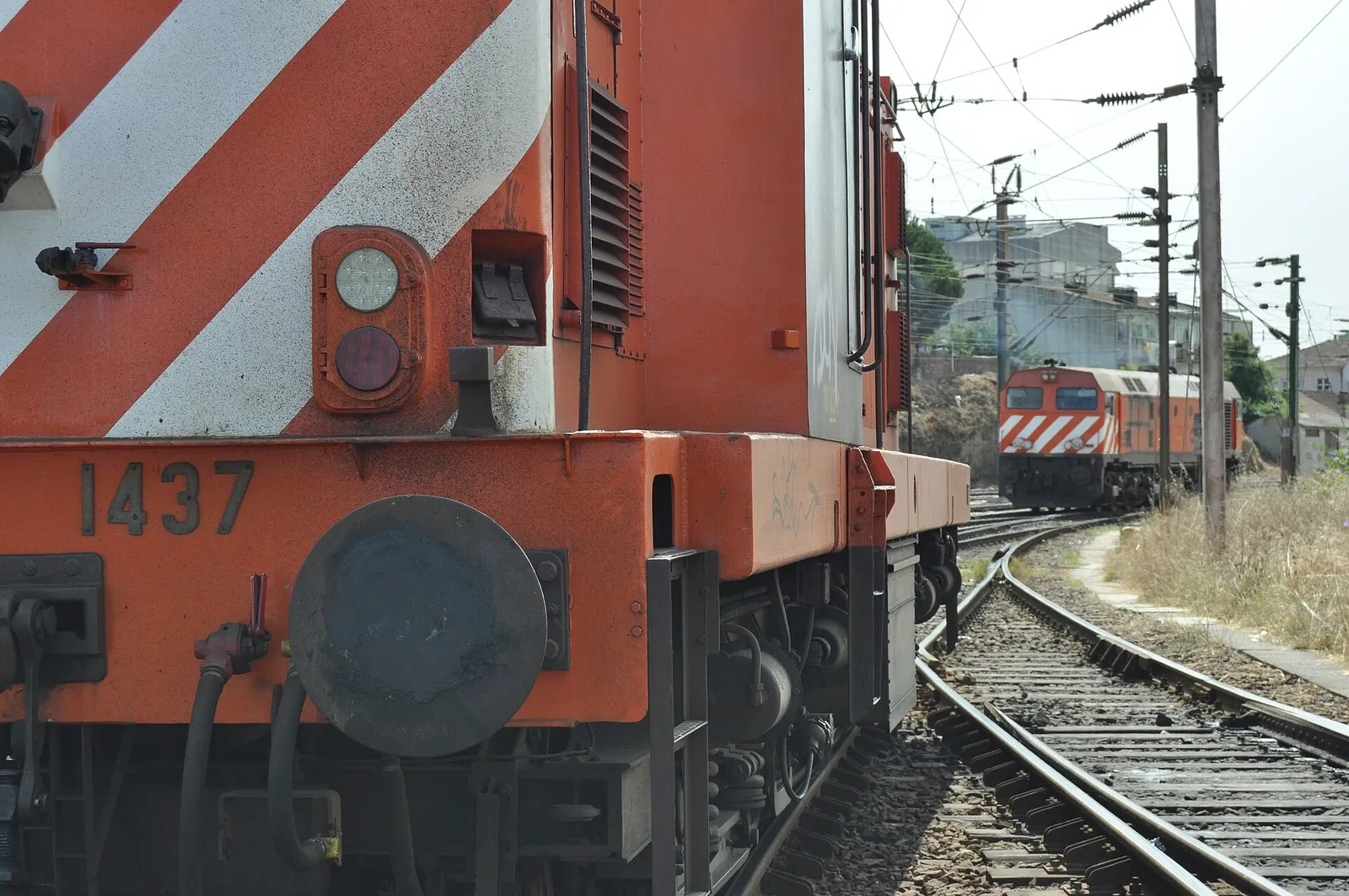
| Locomotive | Class 1960 diesel, No. 1961 | Class 1400 diesel, No. 1439 |
| Passengers (estimates) | 200 to 350 (forensic source); about 400 or “more than 400” (press) | 30 to 40 (forensic source); about 200 (LusoJornal) |
| Carriages (UPI, 1985) | Eight | Four |
Times and destination from National Geographic Portugal (2024), as reported by Notícias ao Minuto; Público (2025) gave the destination as Hendaye, on the French border. Passenger figures from a source at the Instituto de Medicina Legal do Porto quoted by Observador, from National Geographic Portugal, from José Augusto Sá to Lusa (RTP) and from LusoJornal; no passenger list existed. Locomotive numbers from the European Traction enthusiasts' blog, which cites a 1991 stock book; no official source was found.
Because the international was late, the regulating post in Coimbra moved the crossing to Nelas. Now the international was to wait at Nelas while the regional ran on from Mangualde, through Moimenta-Alcafache, to meet it. The change broke the day's routine, and the message did not reach everyone in the form it should have.
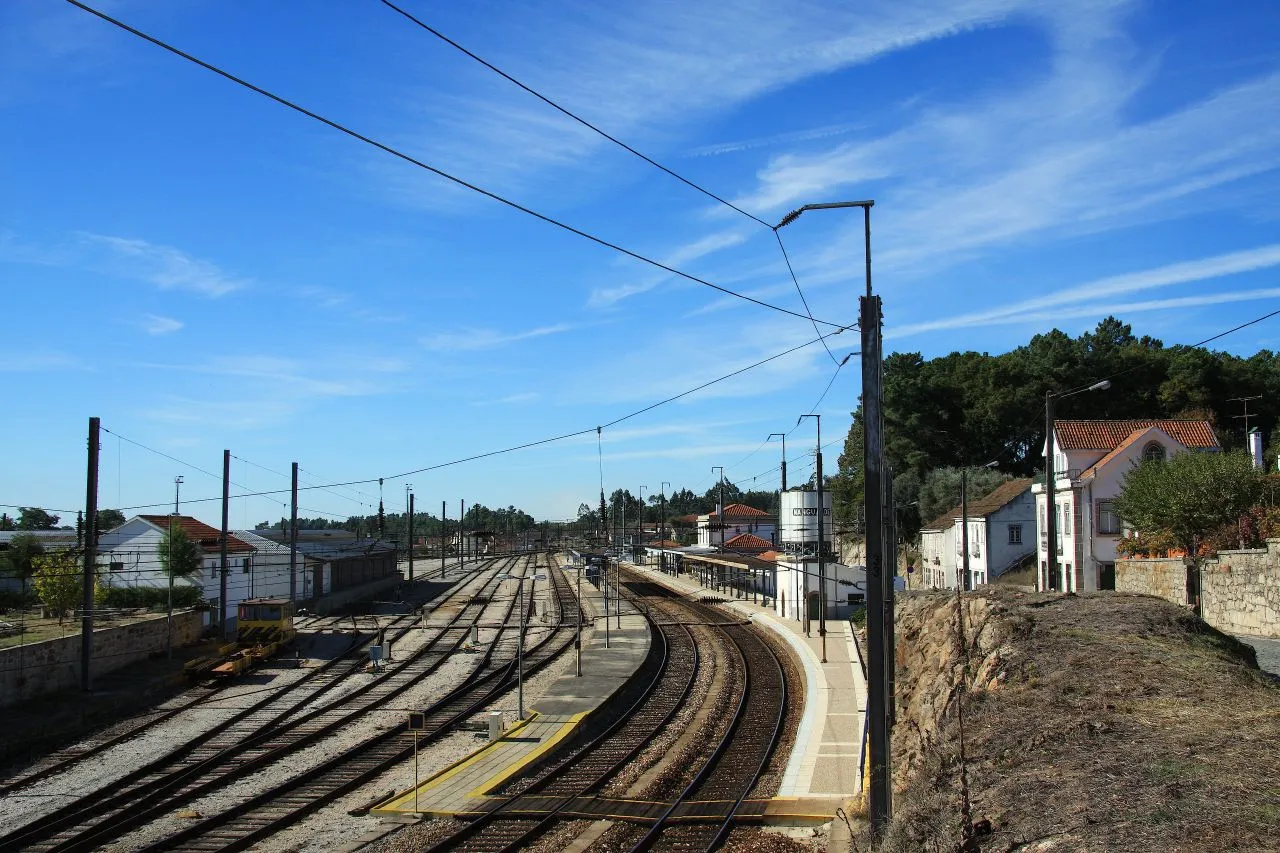
The international reached Nelas at 18:19, and the regional reached Mangualde four minutes later. Público, which obtained reports from the time, described what followed in 2025. The staff on duty at Nelas and at Alcafache each asked for the section between them and sent their train into it. They swapped times, reference numbers and train numbers without using the mandatory technical language that would have shown them the mistake.
The Nelas station master phoned Moimenta-Alcafache to report that the international had left and was told that the regional was already on its way. He then tried to reach the keeper of a level crossing between the two stations, so that she could stop the train with a flag or detonators on the rails. The train had already passed her.
“Human error permitted the two trains to leave practically simultaneously from two stations on opposite sides. Conditions for circulation and security were not met.”
Fire in the carriages
The two trains met at speed. UPI reported 60 miles an hour, about 97 kilometres an hour, for the international; Portuguese accounts say both trains were doing about 100. The impact destroyed both locomotives and threw four carriages into a pine wood beside the line.
Diesel from the locomotives and the carriages' heating systems caught fire almost at once. The materials inside the carriages were not fire-resistant, and flames and thick smoke spread fast. Three carriages of the international and two of the regional were engulfed, by UPI's count. Some burned for hours; Américo Borges, the doctor who commanded the volunteer firefighters of Canas de Senhorim, put the heat at about 600 degrees.
“First there was a huge shock, then flames everywhere. Then everyone began shouting and we tried to open the doors and windows, but we couldn't. One man broke a window and began throwing his children out. I carried the baby and I crawled out.”
Borges had sent out all five of his ambulances, thinking at first that a bus had crashed, and followed in the brigade's tanker when he heard about the burning carriages. Firefighters later described parents holding their children, twisted metal and bodies burned beyond recognition. Many people who survived the impact were trapped in the wreckage and died of burns or smoke.
“The tears fell with every body I found. Mine and the other firemen's.”
The injured were spread across the hospitals of Nelas, Santa Comba Dão, Mortágua, Carregal do Sal, Viseu and Mangualde, where a morgue was improvised. The most serious cases went on to Porto or Coimbra, some flown by the air force and the army, and people queued to give blood. By 9 pm the next day officials counted more than 150 injured, 87 of them in hospital; later accounts give more than 170.
President Ramalho Eanes went to the scene that night and to the injured in Viseu. The prime minister, Mário Soares, toured the charred wreckage in silence. The government declared three days of national mourning and ordered an inquiry, separate from CP's own, and Pope John Paul II sent a message to the local bishop. Work crews spent the night cutting the carriages apart, and CP hoped to reopen the line within a day.
11 Sept, 15:57
The international train leaves Porto Campanhã, about 17 minutes late
11 Sept, 16:55
Regional 1324 leaves Guarda for Coimbra on time
11 Sept, 18:19
The international reaches Nelas; the crossing has been moved there from Mangualde
11 Sept, 18:23
The regional reaches Mangualde
11 Sept, 18:37
Head-on collision near Moimenta-Alcafache; fire breaks out
11 Sept, night
President Eanes visits the site and the injured in Viseu
12 Sept
CP blames human error; officials put the dead at 49 and the injured at more than 150
13 Sept
Unidentifiable remains are buried in eight coffins in Mangualde cemetery
A death toll nobody could count
Counting the dead was impossible from the start. There was no passenger list for either train, so nobody knew who had been aboard or how many. In forensic terms it was an “open” disaster, a source at the Instituto de Medicina Legal do Porto, the forensic institute, told Observador: unlike a plane crash, there was no list of names to check the bodies against.
The only identification method then in use was fingerprints, and the fire had burned many bodies beyond that. Fingerprints could only be matched against Portugal's civil identity files, which did not cover children born in France to emigrant parents. One daughter identified her parents by her father's clothes and the date inside her mother's wedding ring. Two faces were reconstructed at the Porto institute and printed in the Diário de Lisboa on 14 September; nobody knows whether those two were ever named.
Water from the fire hoses washed some remains into the ground among the debris. On 13 September, two days after the crash, remains that could not be identified were buried in eight coffins in Mangualde cemetery. Others were buried in a trench at the crash site, five metres long and four deep, where the memorial now stands. A few charred fragments stayed in the refrigerators of the Porto institute until a prosecutor had them buried in a common grave some 15 years later.
CP's figure was 49 dead, the number officials gave on 12 September and the one used at the trial; its first report also listed 64 people as missing. Accounts differ widely beyond that. Estimates made at the time by newspapers and eyewitnesses ran from 40 to 200, and Observador found figures from 35 up to 400, the last of which was considered exaggerated.
Borges, who carried bodies out of the carriages, estimates 120 to 130 “without great scientific rigour”; the fire commander at Nelas spoke of 300. About 150 is the figure most often given now.
Figures given for the Alcafache dead, by source
people
Each bar is one figure from one source, not a measurement. Recognisable bodies: “about 14 complete and recognisable” according to some sources quoted by Observador. CP official toll: 49 (Observador, UPI). Some later sources: 90 (Observador, 2025). Borges: 120 to 130, upper end shown (LusoJornal). Usual estimate: about 150 (Observador, O Minho, BBC). Top of 1985 range: the upper end of the 40 to 200 given at the time by newspapers and eyewitnesses (Lusa, via RTP and 24 Notícias). Nelas fire commander: 300 (Notícias de Coimbra). Called exaggerated: 400, a figure Observador says was considered exaggerated.
Show the data
| Deaths | |
|---|---|
| Recognisable bodies | 14 |
| CP official toll | 49 |
| Some later sources | 90 |
| Borges (upper) | 130 |
| Usual estimate | 150 |
| Top of 1985 range | 200 |
| Nelas fire commander | 300 |
| Called exaggerated | 400 |
The inquiry and the trial
An inquiry concluded quickly that the crash was caused by human error. CP held four railway workers responsible: the two station masters, the agent at the Coimbra regulating post and the keeper of the level crossing. Their penalties ranged from demotion to dismissal.
The four were then tried in the court at Mangualde, and all were acquitted. With no written or electronic records of the calls, it was each defendant's word against the others', and the judge could do no more than acquit, National Geographic Portugal wrote. Notícias ao Minuto puts the trials at four years.
CP's report was never made public. It was first presented in 2025, in the third episode of “Alcafache”, a radio series by Antena 1 and Público, which also interviewed the man who chaired the 1985 investigation, Eanes and the son of one of the level-crossing keepers.
What changed on the railway
Alcafache sped up the modernisation of the Beira Alta line and of Portugal's railways generally. Automatic speed control was installed, which brakes a train that ignores a signal or speed limit, along with ground-to-train radio, so that drivers could talk to each other and to control centres. Materials that spread flames were banned from passenger carriages.
The line itself was rebuilt only decades later. Infraestruturas de Portugal, which now manages the network, closed it between Pampilhosa and Guarda in April 2022 for a full rebuild of about 190 kilometres of track. Services returned in stages. When trains ran again over the whole line to Vilar Formoso, on Sunday 28 September 2025, it had electronic signalling, modern telecommunications, passing loops where 750-metre trains can cross, and no level crossings left.
A grave beside the line
When Observador chose six great tragedies of Portugal's democracy in 2017, Alcafache was one of them, with the two Madeira air crashes of 1977 and the collapse of the Entre-os-Rios bridge in 2001. Many families had no grave to visit. José Augusto Sá lost his father and sister in the crash; their bodies were never found.
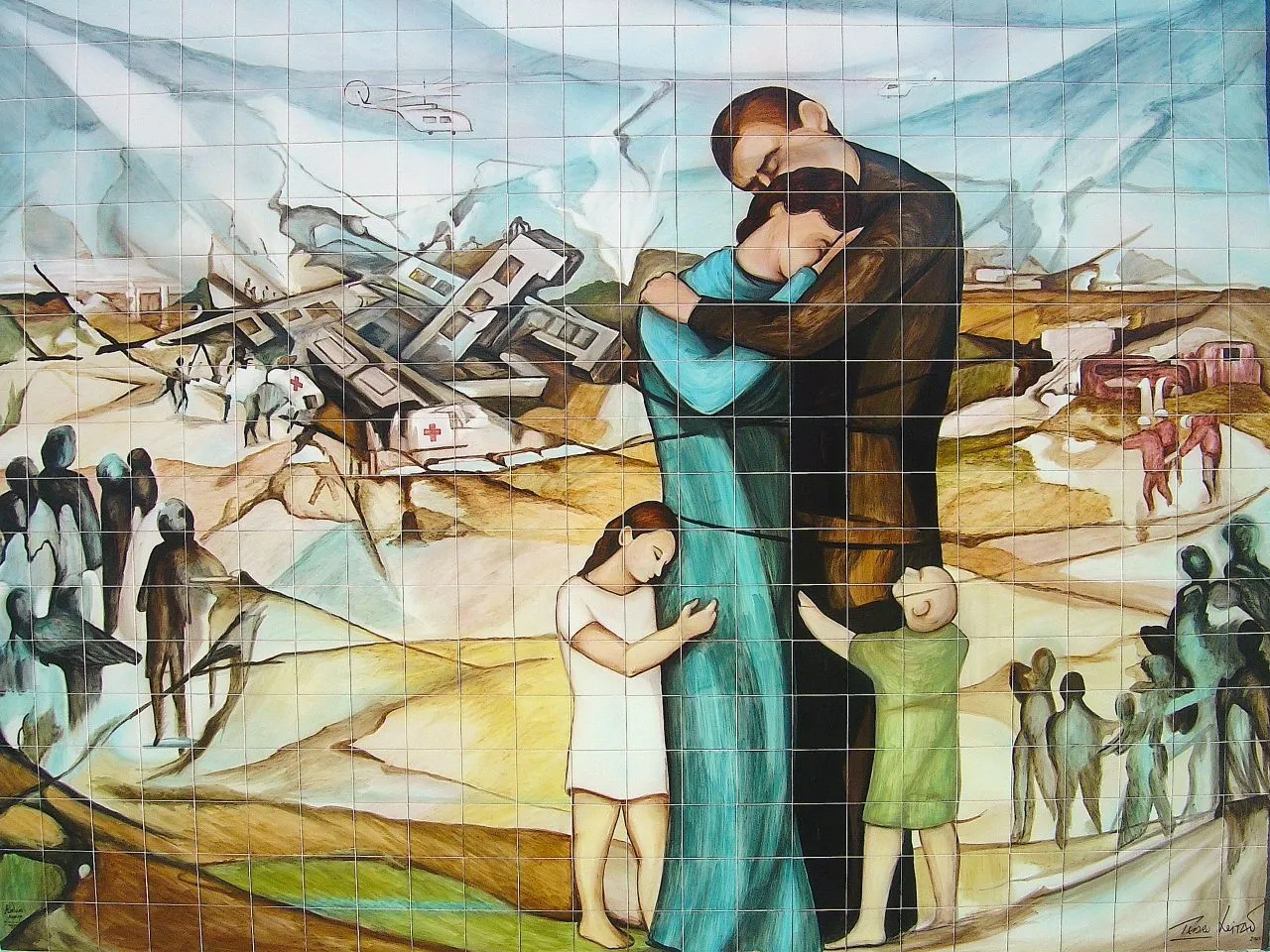
A first monument went up beside the line in 1986, over the grave of the unidentified. Until 2002 the site was, as LusoJornal put it, “practically abandoned and neglected”. That year it was tidied, a panel of 432 tiles telling the story of the accident was added, and José Augusto Sá began the annual ceremony that his commission still organises.
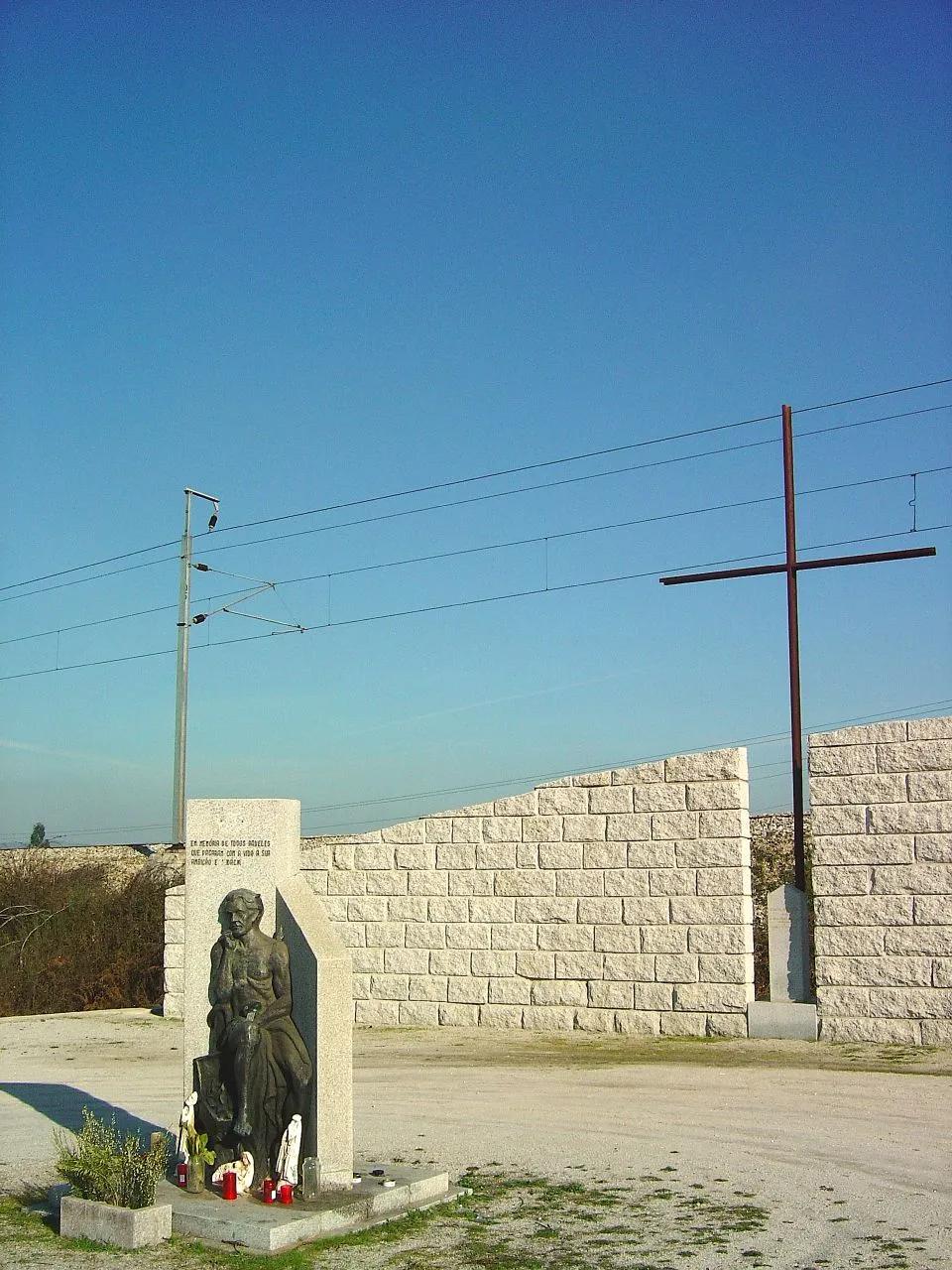
For the 40th anniversary, on Sunday 14 September 2025, a small chapel to Nossa Senhora dos Emigrantes, Our Lady of the Emigrants, was opened beside the memorial. Her image is modelled on Our Lady of the Navigators, with a globe where the ship's prow would be. Eanes attended, as did a survivor, Carlos Ramos, the head of CP and the Bishop of Viseu, who said Mass. CP gave a bogie built at its Entroncamento workshops, and a street sign now names the lane Travessa do 11 de Setembro de 1985.
FAQs
How many people died in the Alcafache train crash?
Nobody knows. CP's official figure was 49, and that number was used at the trial, but there was no passenger list and most bodies were burned beyond identification. Other figures have ranged from 35 to 400; about 150 is the figure most often given.
What caused the Alcafache disaster?
Human error under a telephone-based signalling system. The international train was late, so the crossing with the regional was moved from Mangualde to Nelas. The staff at Nelas and Moimenta-Alcafache each sent their train onto the same single-track section, and there was no radio to warn the drivers.
Was anyone convicted?
No. CP punished four railway workers, from demotion to dismissal, but the court in Mangualde acquitted all four: with no written or electronic records of the calls, it was one defendant's word against another's.
Where is the Alcafache memorial?
Beside the Beira Alta railway near Moimenta-Alcafache, in the municipality of Mangualde. It stands over the grave of unidentified victims and since 2025 has a chapel to Our Lady of the Emigrants. A ceremony is held there every September.
On the timeline
Open the timelineNearby moments from revolution and democracy (1974–1986).
Ayrton Senna takes the first of his 41 Formula One victories in a torrential downpour at the Portuguese Grand Prix in Estoril, driving a Lotus and lapping every rival except second-placed Michele Alboreto.
In the cloister of the Jerónimos Monastery in Lisbon, Prime Minister Mário Soares signs Portugal's treaty of accession to the European Communities; Spain signs its own in Madrid the same day. Both countries join on 1 January 1986, closing a decade of transition from dictatorship and opening the way to billions in structural funds.
The Multibanco network goes live in Lisbon and Porto with nine cash machines, by SIBS's count today. Portugal got cash machines 18 years after London, but its single interbank network, run by SIBS, grew to offer more than 90 operations, from withdrawals to paying bills, taxes and phone top-ups.
The Alcafache rail disaster
Two trains collide head-on near Alcafache, on the single-track Beira Alta line, and burst into flames. The official toll is 49 dead, but most victims were never identified and the usual estimate is about 150, making it the worst railway disaster in Portuguese history.
The Social Democrats under Aníbal Cavaco Silva win the legislative election with 29.9 per cent of the vote, beginning a decade of PSD government; on the same date in 1991 Cavaco Silva renewed his absolute majority, the first time a single Portuguese party had done so.
Telma Monteiro is born in Lisbon. The most decorated judoka in Portuguese history, she won six European titles and four world silver medals before finally taking Olympic bronze in the -57 kg category at Rio 2016, at her fourth Games.
Coming up in history
All long reads
20 sources
Archives, scholarship and reporting this article was checked against.
- 1
“Railway officials held responsible: 49 dead in crash in Portugal” (United Press International)University Daily Kansan, 13 September 1985, digitised by the University of Kansas Libraries
- 2Tragédia de Alcafache deixou vítimas por identificar. 40 anos depois, seria “impensável”Observador (Carolina Branco), 11 September 2018, updated September 2025
- 3
Alcafache. Pior acidente ferroviário do país foi há 40 anos e desde então tudo mudou nas linhas ferroviárias24 Notícias (SAPO), 11 September 2025
- 4
“Tragédia de Alcafache”. Pior acidente ferroviário do país foi há 40 anosNotícias ao Minuto, 11 September 2025
- 5
Sud-Express com destino a Paris chocou há 32 anos em AlcafacheLusoJornal (Carlos Pereira), 11 September 2017
- 6Alcafache: o maior acidente ferroviário de Portugal, episode 3 (25 September 2025)Antena 1 and Público, on RTP Play
- 7
40 anos Alcafache: cerimónia em memória das vítimas do maior acidente ferroviário de sempre em PortugalCP – Comboios de Portugal, 15 September 2025
- 8
Witness History: Portugal’s worst train disasterBBC World Service
- 9
Alcafache: 30 anos depois (ed. Luciano Lourenço, série Riscos e Catástrofes)Imprensa da Universidade de Coimbra, 2018
- 10
Gazeta dos Caminhos de Ferro, n.º 1652 (16 October 1956): centenary issue of the Portuguese railwaysGazeta dos Caminhos de Ferro, digitised by the Hemeroteca Municipal de Lisboa
- 11
Portuguese border link partially reopenedRailway Gazette International, November 2024
- 12
A tragédia ferroviária de Alcafache (1985): A via única foi a única via para a tragédiaO Minho (Rui Maia), 17 September 2026
- 13
11 de setembro de 1985: Quando ocorreu uma das maiores tragédias nacionaisNotícias de Coimbra, 13 September 2024
- 14Capela inaugurada em Alcafache 40 anos após o maior acidente ferroviário de PortugalRTP Notícias (Lusa), September 2025
- 15
33 years since the Sud-Express disasterEuropean Traction (railway enthusiasts' blog), 11 September 2018
- 16
Mangualde recordou hoje as vítimas da tragédia ferroviária de AlcafacheDiário de Viseu, 13 September 2026
- 17Acidentes de avião, autocarro e comboio: as maiores tragédias em Portugal desde 1954Observador, 4 September 2025
- 18
Linha da Beira Alta reabre totalmente modernizada e com novas ligações estratégicasInfraestruturas de Portugal, September 2025
- 19
Linha da Beira Alta reabre em toda a sua extensão com melhoria do traçado e mais segurançaXXV Governo Constitucional (portugal.gov.pt), September 2025
- 20As seis grandes tragédias da democracia portuguesaObservador, 18 June 2017
Image credits
- The painted tile panel added to the Alcafache memorial in 2002: a family embraces in front of the wrecked carriages while rescuers work behind them. Photographed in March 2008. Vitor Oliveira from Torres Vedras, PORTUGAL, CC BY-SA 2.0, via Wikimedia Commons.
- Mangualde station in October 2008. The two trains were due to cross here on 11 September 1985 until the crossing was moved to Nelas. Vitor Oliveira from Torres Vedras, PORTUGAL, CC BY-SA 2.0, via Wikimedia Commons.
- Locomotives of the two types involved, at the Devesas yard in Vila Nova de Gaia in 2010: class 1400 No. 1437 in front, a sister of the regional's 1439, and a class 1960 diesel, the type that hauled the international, behind it. Tiago Miranda from Valongo, Portugal, CC BY 2.0, via Wikimedia Commons.
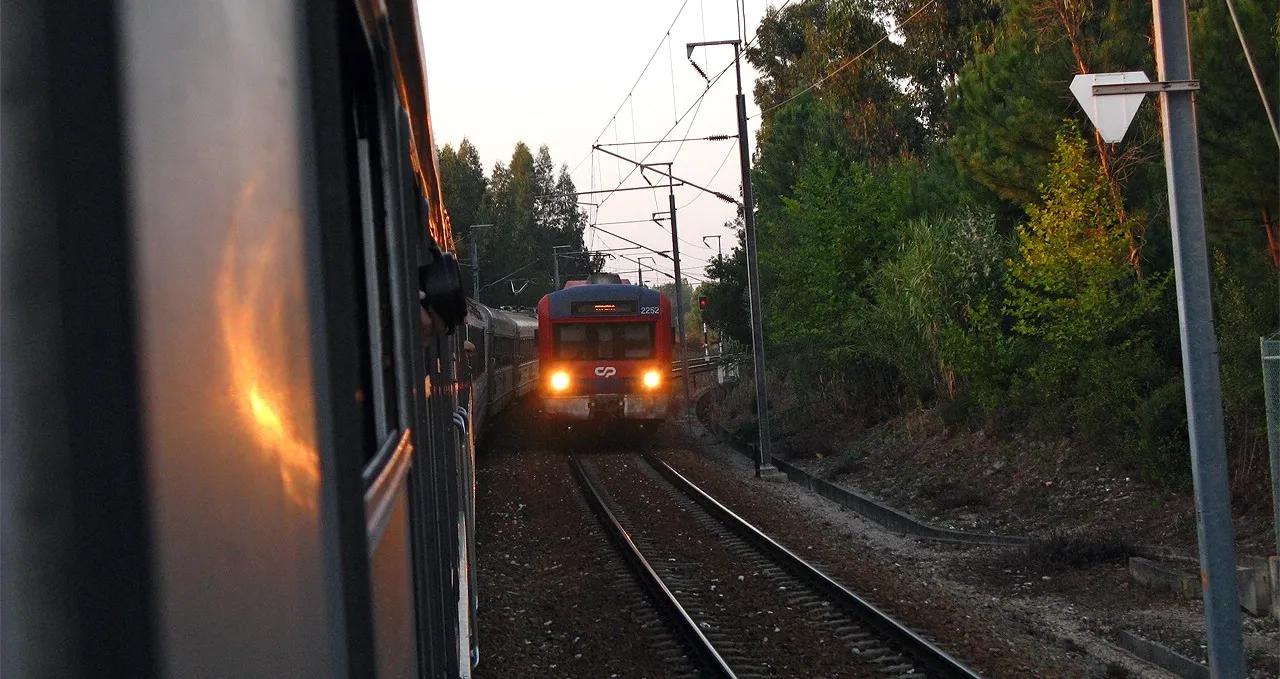
- A regional train from Guarda to Coimbra passes the Sud-Express near Pampilhosa, at the western end of the Beira Alta line, in October 2009, photographed from a carriage window. Antero Pires from Corroios, Portugal, CC BY-SA 2.0, via Wikimedia Commons.
- The Alcafache memorial in March 2008, with the overhead wires of the Beira Alta line behind it. Vitor Oliveira from Torres Vedras, PORTUGAL, CC BY-SA 2.0, via Wikimedia Commons.