

Natália Correia, the poet the dictatorship put on trial
Natália Correia wrote poetry, plays and polemics that the dictatorship banned again and again. She was convicted over an anthology of erotic verse, ran a famous Lisbon bar and, in democracy, answered a fellow deputy with a poem.
At a glance
- Natália de Oliveira Correia was born on 13 September 1923 in Fajã de Baixo, on São Miguel in the Azores, and moved to Lisbon with her mother and sister in 1934.
- Her Antologia de Poesia Portuguesa Erótica e Satírica came off the press in November 1965 and was banned the next month; she, her publisher and four poets were tried by Lisbon's Tribunal Plenário in March 1970.
- The court records show she was given 90 days in prison converted into a fine; many accounts call it a suspended prison sentence.
- She opened the Botequim bar on Lisbon's Largo da Graça in 1971 and sat in parliament for the PSD (1979-1983) and, as an independent, for the PRD (1987-1991).
- She wrote the words of the Azorean anthem, adopted in 1980, and died in Lisbon on 16 March 1993; her ashes now lie in the garden of the public library in Ponta Delgada.
A sleepless night in April
In the small hours of 25 April 1974, Natália Correia came home from her bar in Graça, on one of Lisbon's hills, and could not sleep. She picked up the verses of Ibn Ammar, an eleventh-century poet born in Silves, in the Algarve. Soon the telephone rang: troops were moving on Lisbon, and tanks were already in the Baixa, the downtown where the ministries stood.
She began a diary on the spot, unsure whether the day would bring liberation or a spasm of the far right. Then, at around seven, a radio station played her poem Queixa das Almas Jovens Censuradas (“Complaint of the young censored souls”), which José Mário Branco had set to music and recorded in 1971. In the account of the journalist Maria João Martins, that was when she knew the dictatorship was ending.
She was 50. Since 1959 the Estado Novo had seized her books, banned her plays and put her in the dock over an anthology of erotic poetry. The diary she started that morning became Não Percas a Rosa (“Don't lose the rose”), published in 1978. Eight years after the revolution she would make the country's new parliament laugh at one of its own members.
An island childhood
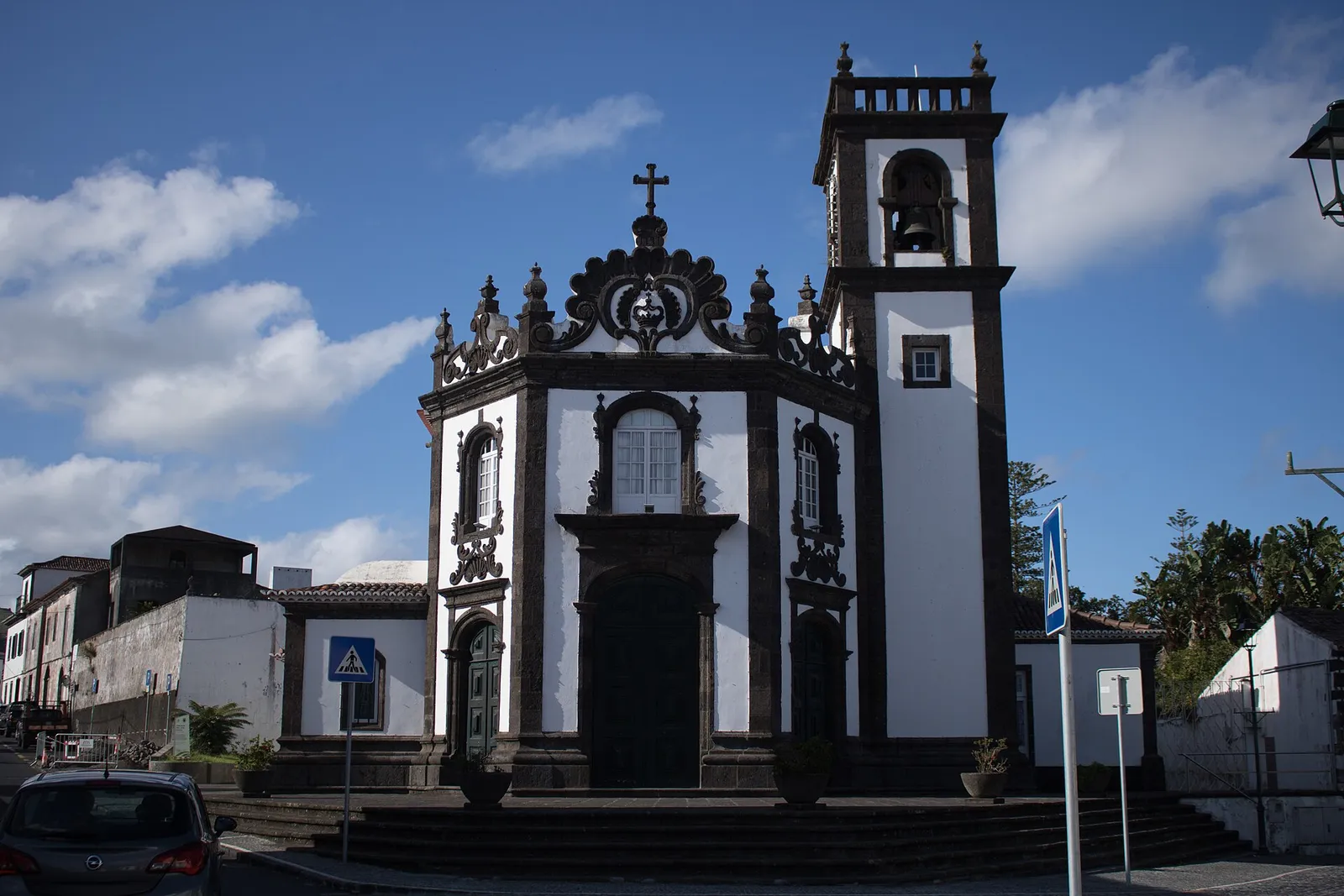
Natália de Oliveira Correia was born on 13 September 1923 in Fajã de Baixo, a parish of Ponta Delgada on São Miguel, the largest island of the Azores. Her father emigrated to Brazil, and she and her sister Cármen, two years older, were taught by their mother, Maria José de Oliveira, a schoolteacher and writer.
In 1934 her mother obtained a transfer to Lisbon and took both girls with her. Natália was about 11. “There was no man in the house to set the hands of our lives,” she wrote later. In Lisbon she went to the Liceu Filipa de Lencastre and then to a private school her mother opened in 1938.
The island stayed with her. She remembered sitting on the bench of the poet Antero de Quental in Ponta Delgada and the feasts of the Holy Spirit, the Azorean festivals at which children are crowned. In a self-portrait styled as her identity card, she said she came from “the island of the tongues of fire”, the Pentecostal flames of that cult.
She started work as a journalist at Rádio Clube Português in 1944. Her first book, a children's story, came out in 1945 by the Azores government's chronology, or 1946 by parliament's. In 1946 she published the novel Anoiteceu no Bairro and, in the paper Portugal, Madeira e Açores, her first poem, a sonnet called Manhã Cinzenta (“Grey morning”). Her first book of poems, Rio de Nuvens (“River of clouds”), followed in 1947.
The most banned woman writer
She was active in the opposition from her early twenties. In 1945 she joined the MUD, the Movement of Democratic Unity, the opposition front of that year. She backed the opposition presidential candidates General Norton de Matos in 1949 and General Humberto Delgado in 1958, and the opposition electoral committee CEUD in 1969. The PIDE's files called her an “adversary of the institutions”.
From 1953 until her death she lived on the fifth floor of number 52, Rua Rodrigues Sampaio, in central Lisbon. Her flat became a salon for writers, artists and politicians. In 1955 Jean-Paul Sartre's Huis Clos, in her translation, had a clandestine premiere there.
The censors kept finding work of hers to ban. Parliament's centenary profile calls her the Portuguese woman writer with the most censored works. They included books of poems and several plays, among them O Homúnculo, a satire that a 2023 revival billed as a portrait of a Portugal “moribund in spirit” sending its young men to the colonial war.
| Year | Work | Genre | What happened |
|---|---|---|---|
| 1959 | Comunicação | Poems | Seized by the censorship |
| 1961 | Cântico do País Emerso | Poems | Seized |
| 1965 | O Homúnculo | Play (satire) | Seized |
| 1965 | Antologia de Poesia Portuguesa Erótica e Satírica | Anthology | Banned in December 1965; editor and publisher tried |
| 1966 | O Vinho e a Lira | Poems | Banned and seized |
| 1967 | A Pécora | Play | Publication forbidden; printed in 1983 |
| 1969 | O Encoberto | Play | Circulation forbidden; staged in 1977 |
Years are those of publication or, for A Pécora, of the ban. The Azores government's chronology dates the anthology to 1966, the year of its legal deposit; parliament's profile says it came off the press in November 1965. Parliament's list of her banned works omits Cântico do País Emerso, which the Azores chronology says was seized.
She married four times: Álvaro dos Santos Dias Pereira in 1942, William Creighton Hylen in 1949, Alfredo Machado in 1950 and, in 1990, the writer and film-maker Dórdio Leal Guimarães.
The anthology
In November 1965 the printers delivered a book of 547 pages: the Antologia de Poesia Portuguesa Erótica e Satírica, “from the medieval songbooks to the present day”. Natália Correia had chosen the poems, written the preface and the notes, and updated the language of the medieval texts. The publisher was the young Fernando Ribeiro de Mello, under his imprint Afrodite, and the painter Cruzeiro Seixas drew the illustrations.
It gathered 94 poets, 90 men and four women. Next to the cantigas de escárnio e maldizer, the mocking and insulting songs of the medieval troubadours, it printed clandestine verse attributed to Bocage and Guerra Junqueiro and new work by living writers, among them Mário Cesariny, Luiz Pacheco, Ary dos Santos, E. M. de Melo e Castro, Eugénio de Andrade, David Mourão-Ferreira and Herberto Helder. A paper band promised “the revelation of eroticism in Fernando Pessoa”.
The book reached the shops in the weeks before Christmas 1965, and later accounts say the police began seizing copies within three days. The censorship banned it that December. On 30 December a reader at the SNI, the regime's propaganda and information office, filed a report proposing its “rigorous prohibition”.
“Despite the pretentious preface by the author of the selection, riddled with Sartrean tendencies and the intentions that derive from them, it is not possible to accept that this book could circulate in Portugal, given its pornographic character.”
The same reader called the book the communists' “contribution” to the official celebrations of the bicentenary of Bocage's birth. He also pointed out that one “unpublished” poem credited to António Botto was, he knew for certain, by Vasco de Matos Sequeira, a satirist who never published his verse. Francisco Topa, a University of Porto professor who has studied the court file, reads a note of pride in this: the censor belonged to the same clandestine circuit of such poems that he proposed to punish.
Some writers rallied to her. Eugénio de Andrade wrote to Natália on 29 December 1965 that her preface was “the only civilised text I know written by a Portuguese about eroticism” and that the anthology was “before anything else, an act of love and courage”. She put his letter in the court file.
Seven years in the courts
On 17 January 1966 an order opened criminal proceedings for an “evident outrage to public morals”, and the Polícia Judiciária questioned Natália the next day. The charge was abuse of press freedom. The case would be heard by Lisbon's Tribunal Plenário, and Topa notes its political overtones at a time when defence lawyers were themselves often persecuted.
Eight people were charged: Natália, Ribeiro de Mello, the poets Cesariny, Pacheco, Ary dos Santos and Melo e Castro, and two men accused of passing her unpublished poems by writers who had died. Eighteen of the 23 anthologised poets still alive were left alone. Luiz Pacheco wrote to her that it was “a political trial disguised as a literary one”.
The defence lawyers were opposition figures. Manuel João da Palma Carlos represented Natália and her publisher; Francisco Salgado Zenha, later a minister of justice, defended Melo e Castro. In 1967 a prosecutor noticed that nobody had proved the book was ever offered for sale, and the case went back to the police. The PIDE then reported seizing 24 copies at Natália's flat and 13 at the printers, and a new charge sheet followed in February 1968.
November 1965
The anthology comes off the press
December 1965
The censorship bans the book
The SNI reader's report proposing its “rigorous prohibition” is dated 30 December.
17 January 1966
Criminal proceedings ordered
9 July 1966
First charge sheet
10 May 1967
Prosecutor finds the charge flawed
The case returns to the Polícia Judiciária.
6 July 1967
PIDE reports seizing 37 copies
1 February 1968
Second charge sheet
3 June 1969
Trial due to open, then postponed
17 March 1970
First hearing at the Tribunal Plenário
21 March 1970
Sentence: all six convicted
12 May 1973
The DGS burns the 37 seized copies
27 June 1973
The court's copy is destroyed and the file closes
While she waited, Natália wrote A Defesa do Poeta (“The poet's defence”), meaning to read it in court. Her lawyer advised her not to. It opens: “I am a poet / a many-petalled howl a defect”.
After repeated postponements the hearings began on 17 March 1970, behind closed doors according to parliament's profile. Natália was 46.
On 21 March the court found the charges proved: “conscious and public offence against modesty, decency and public morality”.
| Defendant | Role | Sentence |
|---|---|---|
| Natália Correia | Editor of the anthology | 90 days' prison converted into a fine, plus 15 days' fine at 50 escudos a day |
| Fernando Ribeiro de Mello | Publisher | 90 days' prison converted into a fine, plus 15 days' fine at 50 escudos a day |
| Mário Cesariny | Poet | 45 days' prison converted into a fine, plus 7 days' fine |
| Luiz Pacheco | Poet | 45 days' prison converted into a fine, plus 7 days' fine; later turned back into prison when he did not pay |
| Ary dos Santos | Poet | 45 days' prison converted into a fine, plus 7 days' fine |
| E. M. de Melo e Castro | Poet | 45 days' prison converted into a fine, plus 7 days' fine |
Court costs were added in every case, and the daily rate for the four poets varied with income. Read as 105 days at 50 escudos, the fine for Natália and her publisher came to 5,250 escudos each before costs (our calculation). Arrest warrants were issued against Ary dos Santos and Ribeiro de Mello when they were late in paying. Of the two men accused of supplying poems, one died in 1967 and the other was acquitted.
On 12 May 1973 the DGS, as the PIDE was now called, burned the 37 seized copies. The inspector in charge, Agostinho Tienza, was the man who, by his former superior Rosa Casaco's account, had killed Humberto Delgado's secretary, Arajaryr Campos, near Badajoz in February 1965.
The court's own copy went into the fire last, in June 1973, nearly seven and a half years after the case began.
The Botequim and the Three Marias
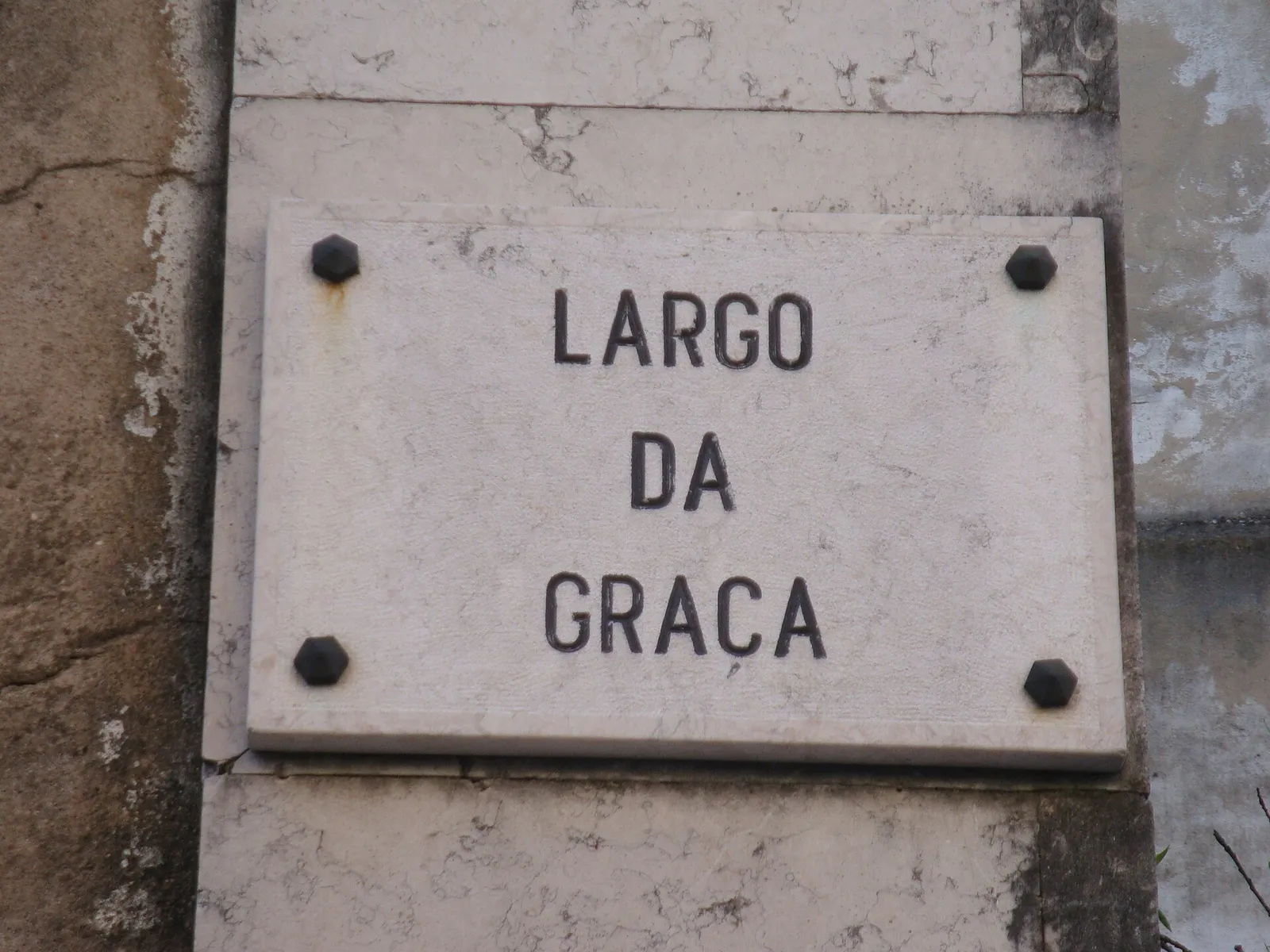
In 1971 she opened the Botequim at number 79, Largo da Graça, with Isabel Meyrelles, Júlia Marenha and Helena Roseta. Most sources give 1971; Time Out Lisboa says 1968. The bar took over from the salon of Rua Rodrigues Sampaio and has been called “the last great tertúlia of Lisbon”: a standing circle of talkers around one star.
The former minister of justice Álvaro Laborinho Lúcio, a regular, recalled that the worst news at the door was the barman saying that “Dona Natália is not coming today”. People argued politics, traded gossip and plotted. Late in the night she recited, and sometimes sang Azorean folk songs.
In 1971 she also became literary director of the publisher Estúdios Cor. In April 1972 it brought out Novas Cartas Portuguesas (New Portuguese Letters), by Maria Isabel Barreno, Maria Teresa Horta and Maria Velho da Costa, a book about women's lives that other publishers had turned down. She was warned to cut it and printed it whole. The regime prosecuted the “Three Marias”, and the Museu do Aljube records that Natália was also sued as the editor responsible.
Poems in parliament
After the revolution she worked as an adviser on internal cultural affairs at the Secretariat of State for Culture, from 1976 by parliament's account or July 1977 by the Azores government's. In party politics, to the surprise of many on the left, she joined the Social Democrats, the PPD (later PSD), drawn by its leader Francisco Sá Carneiro and by distrust of the Communist Party. She was elected for Lisbon on its lists in 1979 and again in 1980, and served until 1983.
“I never opened my mouth in parliament to talk about politics. I talk about culture.”
In 1982 the Communist Party tabled the first bill to decriminalise abortion, which was then banned outright, and parliament held its first debate on the subject. In that debate the CDS deputy João Morgado told the Communist deputy Zita Seabra that the Catholic Church forbade abortion because the sexual act was for having children. The press reduced it to “the sexual act is for making children”, words he denied using.
Natália answered on parliament's headed paper with a satirical poem in the manner of the medieval mocking songs, and passed it round the chamber. It begins: “Since coitus, says Morgado, / has as its crystalline end” (our translation). Taking Morgado to be the father of a single child, the poem worked out what that implied about how often he had made love. It ends with Morgado gelded.
Accounts differ on the date: parliament's dates the exchange to the plenary of 2 March 1982, with the poem printed in the Diário de Lisboa on 5 March; a study in the journal Faces de Eva has her reading it in parliament on 5 April. The poem got the laughs, but in the vote on 11 November 1982 the bill was defeated. Natália was the only PSD deputy to vote for it.
“I think of those many thousands of women who, painfully driven by circumstances that rule out a healthy motherhood, risk their lives in the dark back rooms of backstreet abortionists.”
A law of 1984 allowed abortion in a few cases only. Abortion on request up to ten weeks came only after the 2007 referendum, fourteen years after her death.
She returned to parliament in 1987 as an independent on the list of the Democratic Renewal Party (PRD) and left in 1991, saying she had become unnecessary there. Her last campaign, in 1992, was a Frente Nacional pela Defesa da Cultura (National Front for the Defence of Culture), launched with José Saramago, Urbano Tavares Rodrigues and others against the Cavaco Silva government's policy on books, including VAT on them.
Woman, island, Mátria
In 1968 (1967 in one study) she published Mátria, a book of poems whose title turned pátria, fatherland, into a motherland. Scholars read in it a female mythology in which woman is neither angel nor demon but both at once, and flesh and blood. The researchers António Vilhena and Deolinda Adão sum her up as “feminine and not feminist”; Maria Teresa Horta spoke of a “covert feminism, which she never owned”.
Horta also remembered her insisting on the feminine form of the word poet. “We are poetisas and not poetas, Teresa, never forget it,” Natália told her. “To write good poetry we don't need to take for ourselves what belongs to the masculine.” Others who knew her say she preferred to be called a poeta.
When the new Azorean regional government wanted words for its anthem, it asked her. The music, by the band conductor Joaquim Lima in an arrangement by Teófilo Frazão, was adopted by a regional decree of 18 May 1979. Her text was adopted by Regional Regulatory Decree 49/80/A of 21 October 1980. Pupils of the Colégio de São Francisco Xavier in Ponta Delgada sang it in public for the first time on 27 June 1984.
Her poems kept going back to the island. In 1979 she followed the filming on São Miguel of her film Santo Antero, directed by Dórdio Guimarães, who became her fourth husband. Her Sonetos Românticos (1990), with its sequence Mãe Ilha (“Mother island”), won the Grande Prémio de Poesia of the Portuguese Writers' Association in 1991.
Death and what she left
Natália Correia died at dawn on 16 March 1993, in Lisbon, aged 69. That year her collected poems came out in two volumes, O Sol nas Noites e o Luar nos Dias (“The sun in the nights and the moonlight in the days”). Her ashes went into the Portuguese Writers' mausoleum in the Prazeres cemetery in Lisbon.
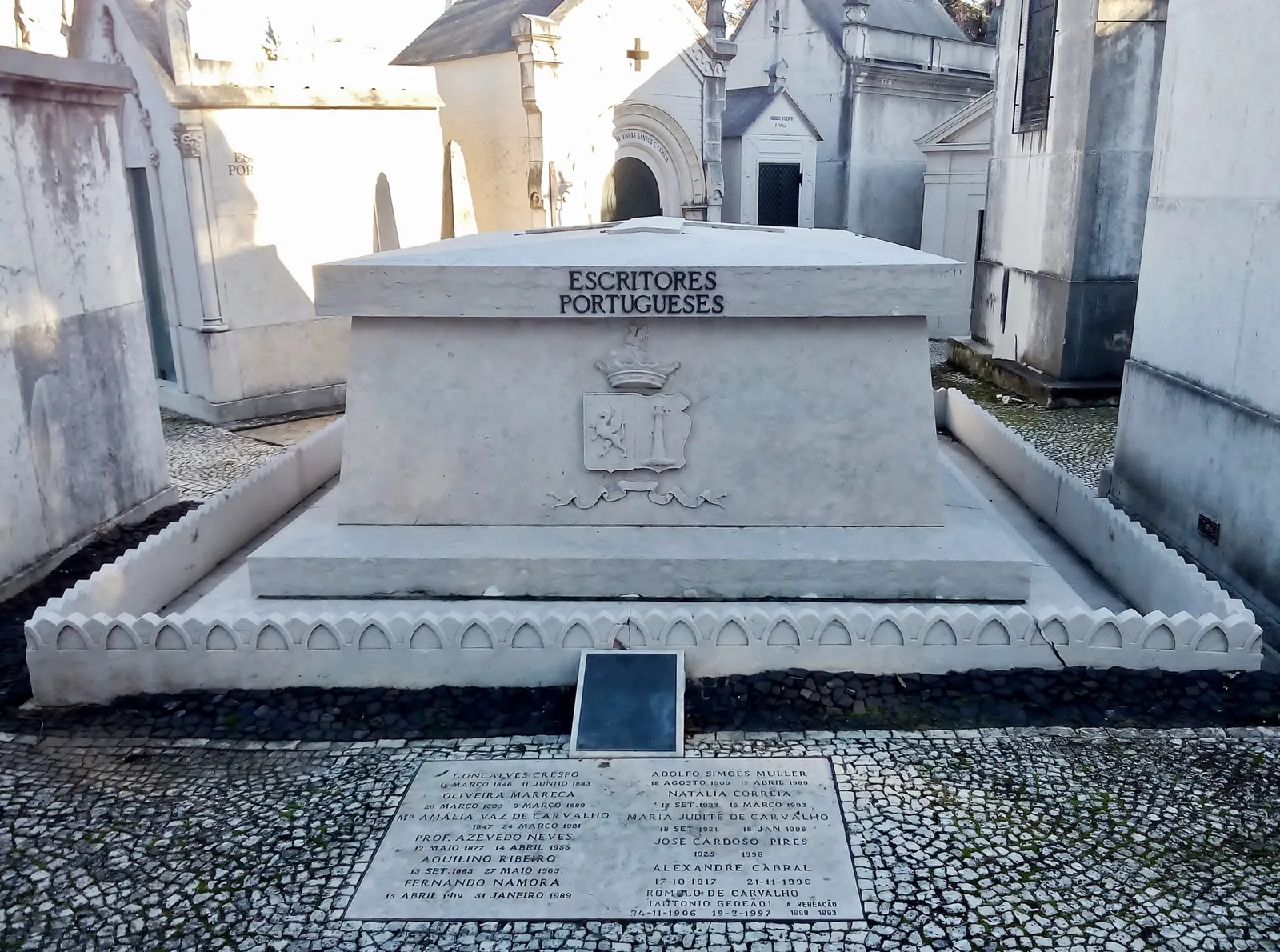
Dórdio Guimarães, her only heir, died in 1997 and left the contents of her flat to the Azores government. His will covered paintings and sculpture, manuscripts and a library of 10,164 books from her collection and 2,283 from his. In October 2015 the ashes of both were taken to São Miguel, to be laid in the inner garden of the Public Library and Regional Archive in Ponta Delgada, which keeps her papers.
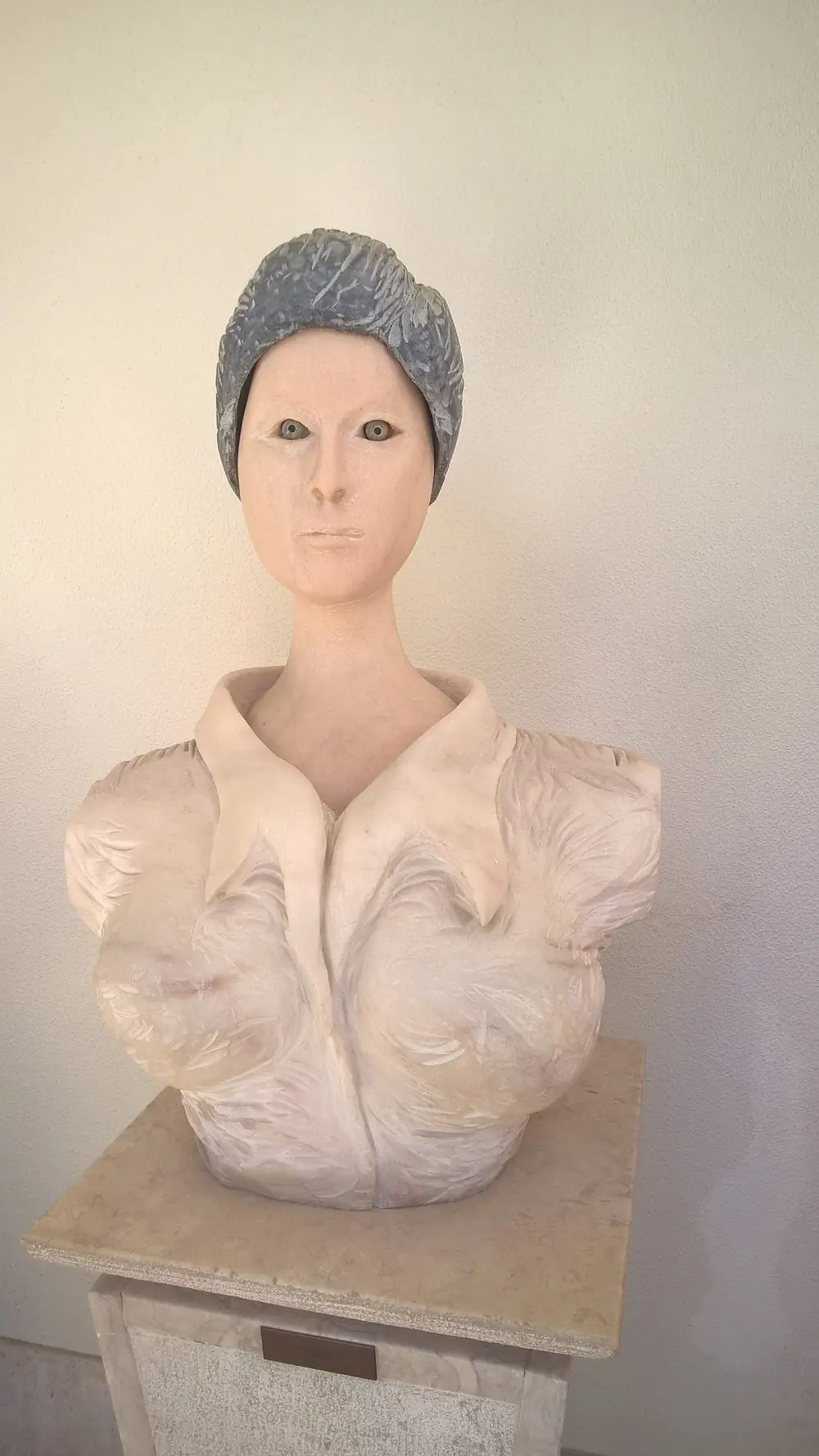
Her centenary year, 2023, brought exhibitions in Ponta Delgada, a tribute in a plenary sitting of parliament, a revival of O Homúnculo and a new biography by Filipa Martins, Dever de Deslumbrar. The parish of São Vicente unveiled a statue of her in Graça.
In April 2026 vandals drew swastikas on that statue's face and tried to wrench off the bust. The parish council found the damage the next morning, repaired it the same day, and its president said that Natália Correia “taught us not to be afraid”.
FAQs
Who was Natália Correia?
A Portuguese poet, playwright, novelist, essayist and editor, born on São Miguel in the Azores on 13 September 1923 and dead in Lisbon on 16 March 1993. She opposed the Estado Novo dictatorship, was tried over an anthology of erotic poetry, ran the Botequim bar in Lisbon and sat in parliament between 1979 and 1991.
Was Natália Correia sent to prison?
No. On 21 March 1970 the Tribunal Plenário in Lisbon sentenced her to 90 days in prison, converted into a fine of the same length, plus a further 15 days' fine, for the Antologia de Poesia Portuguesa Erótica e Satírica. Many accounts describe it as a suspended sentence.
What was the poem about João Morgado?
During the 1982 parliamentary debate on decriminalising abortion, the CDS deputy João Morgado said, in the press's version, that the sexual act was for making children. Natália Correia replied with a mocking poem, written on parliament's paper and passed round the chamber, which concluded that a father of one had used his organ only once.
Did Natália Correia write the Azorean anthem?
She wrote the words. The regional government commissioned them, and they were adopted by Regional Regulatory Decree 49/80/A of 21 October 1980. The music is by Joaquim Lima, arranged by Teófilo Frazão, and was adopted in 1979.
Where is Natália Correia buried?
Her ashes were first placed in the Portuguese Writers' tomb in the Prazeres cemetery in Lisbon. In October 2015 they were taken to São Miguel, with those of her husband Dórdio Guimarães, for the inner garden of the Public Library and Regional Archive in Ponta Delgada.
On the timeline
Open the timelineNearby moments from the first republic (1910–1926).
Birth of Eduardo Lourenço in São Pedro de Rio Seco, near Almeida. One of Portugal's most influential essayists and thinkers of the 20th century, he examined how the Portuguese see themselves in 'O Labirinto da Saudade' (1978).
Death of Abílio Manuel Guerra Junqueiro in Lisbon, aged 72. Poet, journalist and Republican militant, he mocked the Church in A Velhice do Padre Eterno and turned on the monarchy after the 1890 British Ultimatum, and the Republic gave him a national funeral.
Mário Cesariny de Vasconcelos, poet and painter regarded as the leading figure of Portuguese surrealism, is born in Lisbon.
Natália Correia, born 1923
Birth in Fajã de Baixo, on São Miguel in the Azores, of Natália Correia, poet, playwright and firebrand of Portuguese letters. An Estado Novo court fined her in 1970 over an anthology of erotic and satirical verse; in 1971 she co-founded Lisbon's Botequim bar, and after 1974 she sat in parliament and wrote the words of the Azorean anthem.
Birth in Lisbon of the novelist Urbano Tavares Rodrigues, son of Alentejo landowners from Moura. He taught Portuguese at Montpellier, Aix and Paris from 1949 to 1955, was barred from university teaching in Portugal for political reasons and, as an active opponent of the Estado Novo, was jailed in the Aljube in 1963 and arrested again later. After 1974 he taught at the Lisbon Faculty of Letters and became one of the most prolific Portuguese writers and critics of his generation.
After 74 days and two aircraft, army aviators Brito Pais and Sarmento de Beires fly over Macau at the end of the first flight from Portugal to Macau, begun on 7 April at Vila Nova de Milfontes. A violent storm stops them landing, and they crash-land in a Chinese cemetery near Shum Chun, just outside Hong Kong, having covered some 16,760 km.
The poet António Ramos Rosa is born in Faro. Jailed for three months for his part in the anti-Salazar MUD movement, he co-founded the influential poetry magazine 'Árvore' in 1951 while earning his living as an office clerk and translator, and won the Prémio Pessoa in 1988.
Coming up in history
All long reads
19 sources
Archives, scholarship and reporting this article was checked against.
- 1
Natália Correia (Fajã de Baixo, 1923 – Lisboa, 1993)Assembleia da República, Comunicar no. 92, October 2023
- 2
O processo judicial contra a «Antologia de Poesia Portuguesa Erótica e Satírica» (Francisco Topa)Ordem dos Advogados (PDF)
- 3
Cultural routes of the Azores, personalities: Natália CorreiaRegional Government of the Azores (PDF)
- 4Natália Correia: a poeta que se jogou aos dados (Maria João Martins)Diário de Notícias, 12 September 2023
- 5Cinzas de Natália Correia trasladadas para os AçoresDiário de Notícias / Lusa, 19 February 2016
- 6
Regulamento do concurso “Jovem Autonomia” (Hino dos Açores)Governo dos Açores, Direção Regional da Juventude, April 2021 (PDF)
- 7
Natália Correia entre a ilha e a utopia (António Vilhena and Deolinda Adão)Faces de Eva, no. 41, pp. 131-142, NOVA FCSH (PDF)
- 8José Mário Branco (1942-2019): professor, amante de música, subversivo, “muito mais vivo do que morto”Observador, 19 November 2019
- 9
Celebremos Natália CorreiaComissão para a Cidadania e a Igualdade de Género (CIG), 13 September 2023
- 10
Voto de saudação pelo centenário de Natália CorreiaGrupo Parlamentar do PS, Assembleia Legislativa da Região Autónoma dos Açores, 2023 (PDF)
- 1130 anos sem Natália Correia, a mulher da língua de fogoObservador (first published 16 March 2018)
- 12Iniciativas em todo o país celebram Natália Correia no centenário da escritoraObservador / Lusa, 11 September 2023
- 13
Natália Correia (#inthisday)Museu do Aljube Resistência e Liberdade
- 14
Botequim da GraçaTime Out Lisboa
- 15
A descriminalização do aborto em Portugal: Estado, movimentos de mulheres e partidos políticos (Rosa Monteiro)Análise Social 204, vol. XLVII (2012), Instituto de Ciências Sociais da Universidade de Lisboa (PDF)
- 16
Lei n.º 16/2007, de 17 de Abril: exclusão da ilicitude nos casos de interrupção voluntária da gravidezDiário da República, 1.ª série, n.º 75, 17 April 2007 (PDF)
- 17
- 18Estátua de Natália Correia em Lisboa vandalizada com símbolos nazisObservador, 18 April 2026
- 19Junta condena ataque: estátua de Natália Correia em Lisboa vandalizadaRTP Notícias / Lusa, 18 April 2026
Image credits
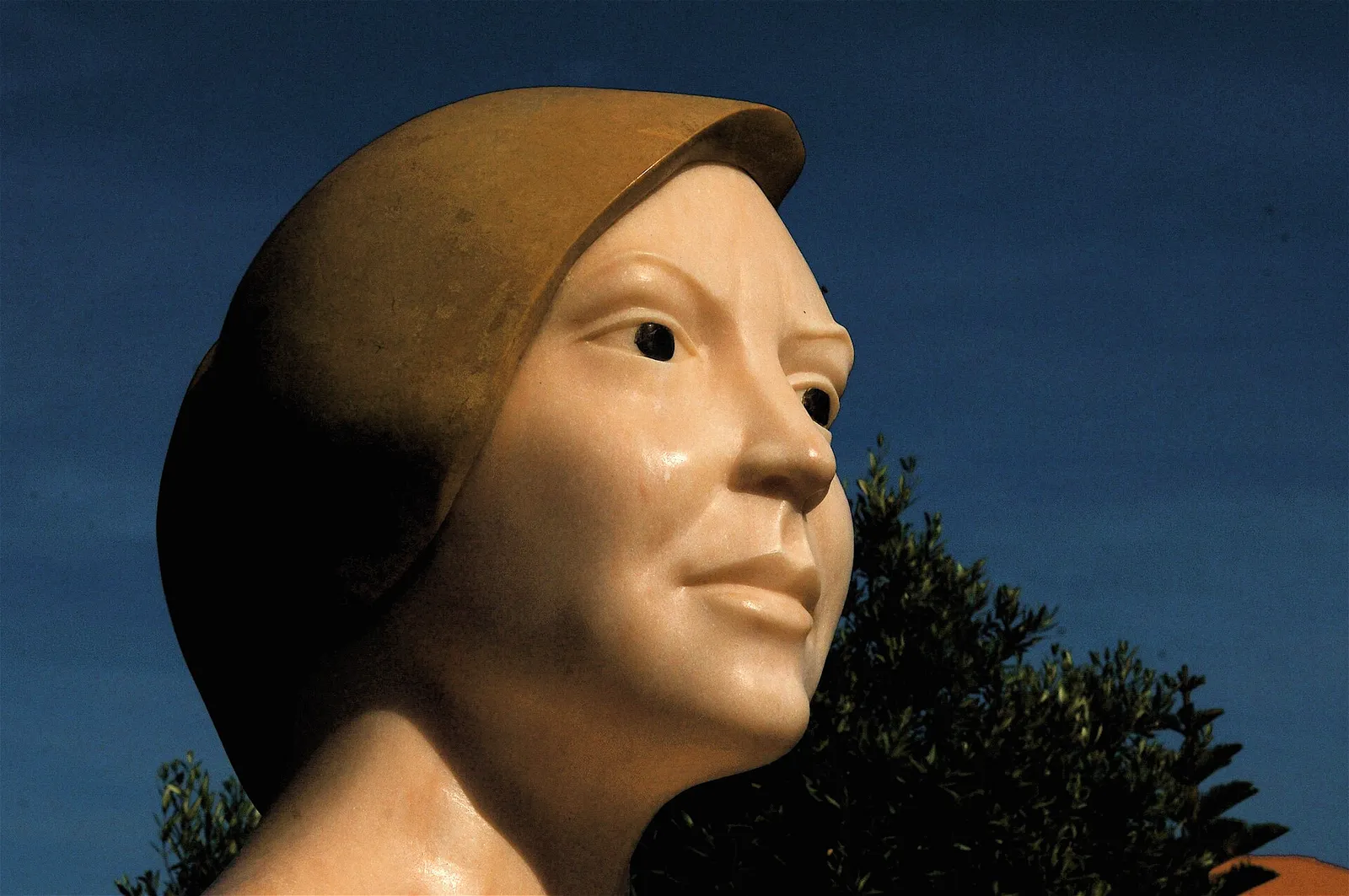
- The statue of Natália Correia by Francisco Simões in the Parque dos Poetas, Oeiras, photographed in 2006. Pedro Ribeiro Simões from Lisboa, Portugal, CC BY 2.0, via Wikimedia Commons.
- The parish church of Nossa Senhora dos Anjos in Fajã de Baixo, Ponta Delgada, the parish where Natália Correia was born, photographed in 2020. NunoSalgueiro96, CC BY-SA 4.0, via Wikimedia Commons.
- Street sign of the Largo da Graça in Lisbon, the square where Natália Correia opened the Botequim in 1971. Photographed in 2010. Lijealso, CC BY 3.0, via Wikimedia Commons.
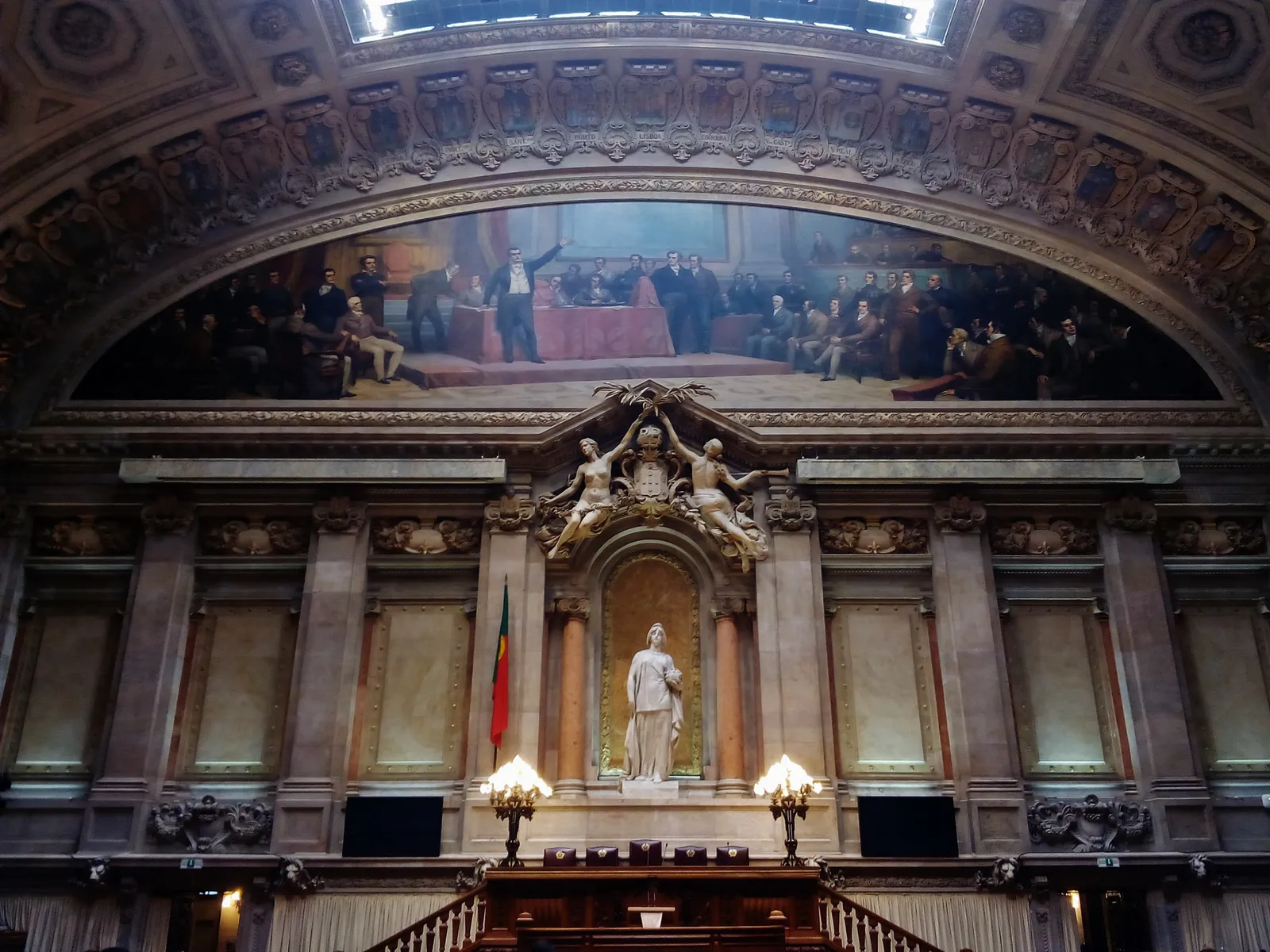
- The Sala das Sessões of the Assembleia da República in the Palácio de São Bento, Lisbon, where Natália Correia sat as a deputy. Photographed on 25 April 2017. RickMorais, CC BY-SA 4.0, via Wikimedia Commons.
- Bust of Natália Correia by João Cutileiro (2000) in the cloister of the Palácio de São Bento, the seat of parliament, photographed in 2019. GualdimG, CC BY-SA 4.0, via Wikimedia Commons.
- The Portuguese Writers' tomb in the Prazeres cemetery, Lisbon, in 2017. Natália Correia's name is on the slab; her ashes were moved to São Miguel in 2015. RickMorais, CC BY-SA 4.0, via Wikimedia Commons.