

Jorge Sampaio, from student rebel to President
He led the students who defied Salazar in 1962, defended the regime's prisoners in court and governed Lisbon. As President he lobbied the world for East Timor and brought down a government with a majority in parliament.
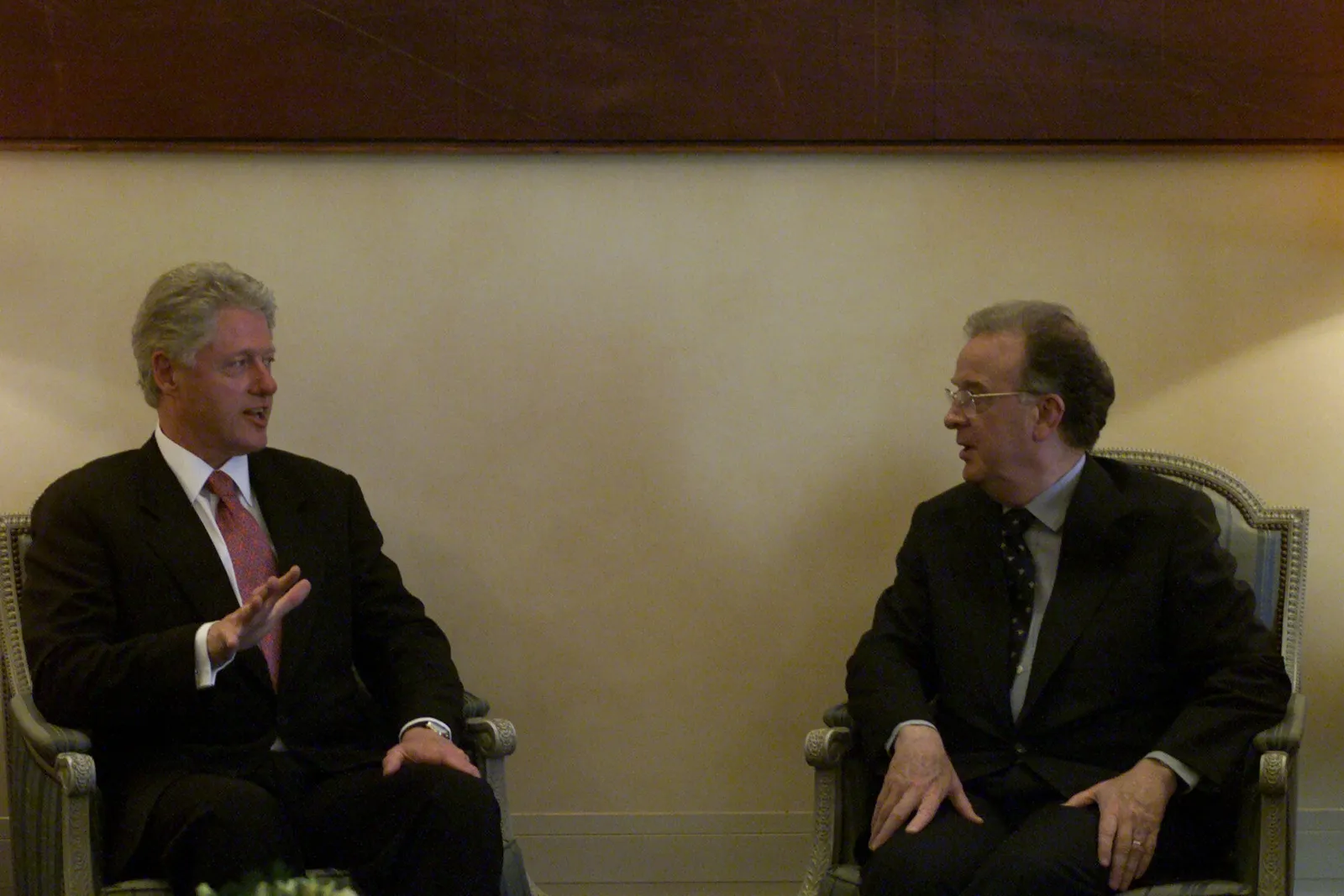
At a glance
- Jorge Fernando Branco de Sampaio was born in Lisbon on 18 September 1939, the son of a public-health doctor, and studied law at the University of Lisbon.
- In 1962 he was secretary-general of the RIA, the body that coordinated Lisbon's student associations during the academic crisis; as a lawyer he then defended opponents of the Estado Novo before the Plenário, the court for political crimes.
- After the revolution of 25 April 1974 he helped found the MES, left it the same year, joined the Socialist Party in 1978, led it from 1989 and was mayor of Lisbon from 1990 to 1995.
- He was President of Portugal from 9 March 1996 to 9 March 2006, elected twice in the first round. He pressed for international action in East Timor in 1999 and dissolved parliament in 2002 and again in December 2004.
- Afterwards he was the UN's first Special Envoy to Stop Tuberculosis and first High Representative for the Alliance of Civilizations, and in 2013 he founded a platform that brought Syrian students to Portuguese universities. He died on 10 September 2021, aged 81.
New York, 20 September 1999
On Monday 20 September 1999 Jorge Sampaio, President of Portugal, rose to address the United Nations General Assembly in New York. He had turned 60 two days earlier. That same day, half a world away, the first troops of an Australian-led multinational force, INTERFET, began to deploy in East Timor, a former Portuguese colony that Indonesia had invaded in 1975 and annexed without UN recognition.
Three weeks before, on 30 August, the East Timorese had voted in a UN-run ballot. Some 98 per cent of registered voters turned out, and 78.5 per cent rejected autonomy within Indonesia. Pro-Indonesian militias, at times backed by elements of the Indonesian security forces, answered with killings, looting and arson, and as many as 500,000 people were driven from their homes.
Sampaio spoke of the pictures of Timorese queuing to vote with their registration cards and of the “barbaric acts of revenge” that followed. The reaction of the Security Council, he said, had not been “as prompt as the Timorese deserved and Portugal would have wished”.
“Much of what has happened is irreparable and cannot be forgotten. I say this with great bitterness, and may I add that in this as well as in other cases, we cannot encourage a culture of impunity.”
Sampaio had come a long way to that rostrum. He had opposed the Estado Novo dictatorship as a student leader and as a lawyer, and after the revolution of 1974 he had been a deputy, a party leader and the mayor of Lisbon. He would end his career running a scholarship scheme for students fleeing war.
A Lisbon boyhood under the dictatorship
Jorge Fernando Branco de Sampaio was born in Lisbon on Monday 18 September 1939, seventeen days after Germany invaded Poland. Portugal was ruled by António de Oliveira Salazar's Estado Novo, or New State, a dictatorship that the students of his generation would challenge in the open.
His father, Arnaldo Sampaio, was a doctor who specialised in public health; his mother, Fernanda Bensaude Branco de Sampaio, gave private English lessons. Because of his father's career the boy spent long periods in the United States and in England, which marked him for life, and he spoke fluent English. He studied music from childhood and went to two Lisbon state secondary schools, the Liceu Pedro Nunes and the Liceu Passos Manuel.
He read law at the University of Lisbon and was elected president of the Law Faculty's student association for 1960 to 1961. Accounts of when he graduated differ: 1961 in the official biography, while a Correio da Manhã profile of 2012 has him still a sixth-year law student in 1962.
The students of 1962
In 1961 to 1962 Sampaio was secretary-general of the RIA, the Reunião Inter-Associações, which coordinated the student associations of Lisbon. In March 1962 the government banned Students' Day, a student festival, and riot police broke up the students gathered at the Cidade Universitária on 24 March. The RIA's leaders, Sampaio and Eurico Figueiredo among them, declared “academic mourning”, a boycott of classes.
Three months of strikes, plenaries, a hunger strike and arrests followed; the full story is told in this site's article on the 1962 academic crisis. Correio da Manhã's 2012 anniversary feature placed Sampaio among the students who negotiated with the rector, Marcelo Caetano, and recorded that he was held at one point in Caxias prison. José Medeiros Ferreira succeeded him at the head of the RIA.
The crisis set off student protest that lasted until 25 April 1974, and Sampaio was one of its protagonists. When he died, the Council of Ministers' statement declaring national mourning described him first as “one of the leaders of the academic crisis of 1962” (translated from Portuguese). Fifty years on he told Correio da Manhã that the crisis had been “a democratic leaven” and a forewarning of the end of the regime.
Lawyer for the regime's prisoners
From 1963 Sampaio practised as a lawyer and took on political cases. Opponents of the regime were tried before the Tribunal Plenário, a special criminal court for crimes against the security of the state, and he played a prominent part in defending political prisoners there. He also sat on the governing bodies of the Ordem dos Advogados, the Portuguese bar.
Two of his cases became well known. One was the defence of the men accused over the failed assault on the Beja infantry barracks in the early hours of 1 January 1962, a revolt against the regime told in this site's article on it. The other was the Capela do Rato case: on 30 December 1972 Catholics began a vigil against the colonial wars at the chapel in Lisbon, and the next day the police broke in and made arrests.
In 1969, when Marcelo Caetano had succeeded Salazar and allowed a little more room for the opposition, Sampaio stood for the National Assembly on the lists of the CDE, the Comissão Democrática Eleitoral, which brought together Communists, Catholic progressives and independent socialists. The regime's União Nacional took every seat.
Mayor of Lisbon, 1990 to 1995
On 6 July 1989 Sampaio announced that the Socialist candidate for mayor of Lisbon would be himself. He headed a coalition with the Portuguese Communist Party and smaller parties of the left, called Por Lisboa, against the PSD's Marcelo Rebelo de Sousa, the future President of the Republic. On Sunday 17 December 1989 the coalition won 49.1 per cent, seven points ahead of its rival.
As mayor he commissioned a strategic plan for the city, drawn up by the urbanist Fonseca Ferreira and described in 2020 as the first plan of its kind in Portugal; Fonseca Ferreira also helped draft the city's master plan, the Plano Diretor Municipal. In 2020 the then mayor, Fernando Medina, credited Sampaio with tackling Lisbon's housing problems, the shanty neighbourhoods in particular.
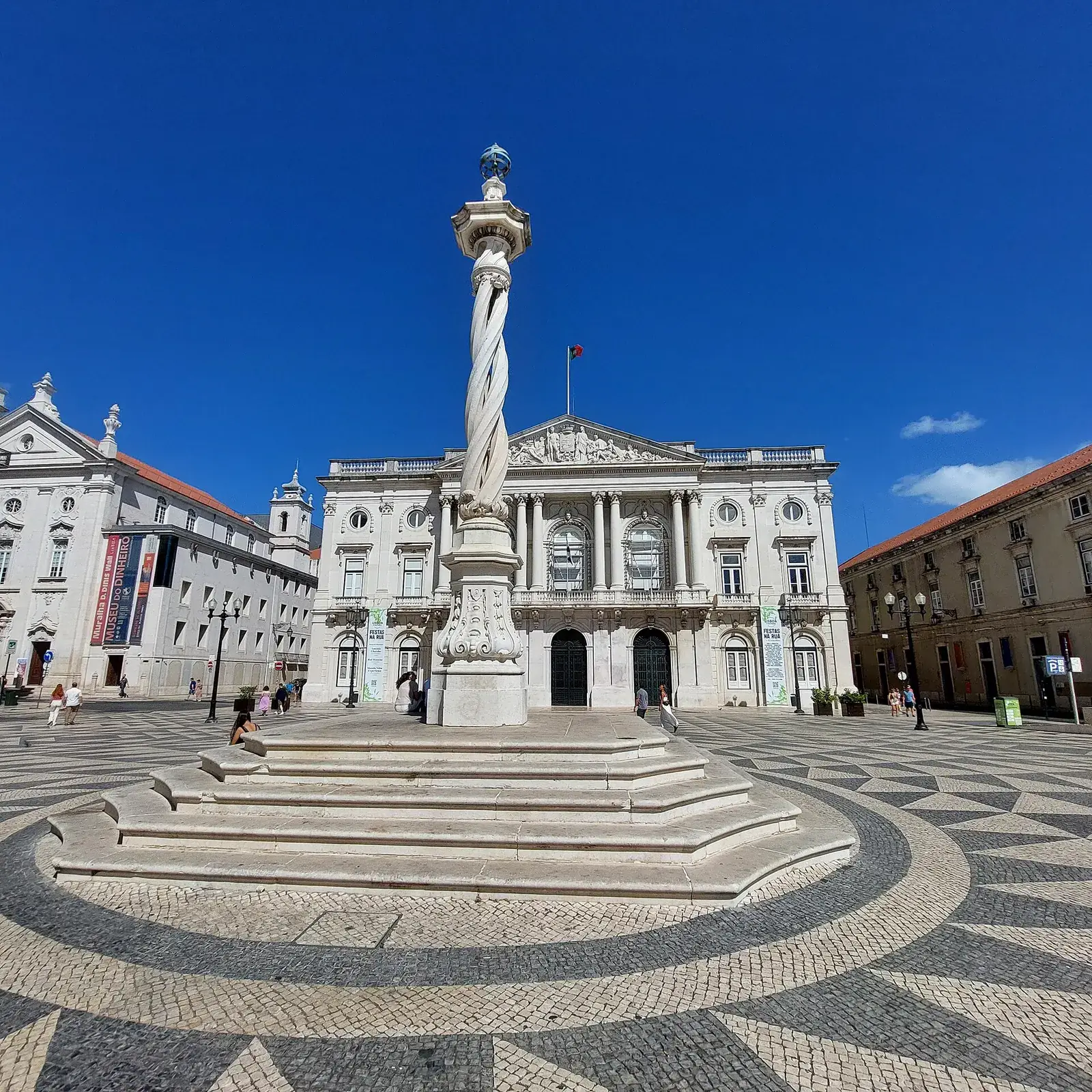
In 1993 his coalition, renamed Com Lisboa, beat the PSD's Macário Correia easily. Sampaio announced in February 1995 that he would run for President, and in November the city hall passed to the Socialist João Soares.
President of the Republic, 1996 to 2006
On Sunday 14 January 1996 Sampaio beat Cavaco Silva, the former prime minister, in the first round, with 3,035,056 votes against 2,595,131. He was sworn in on 9 March 1996. “There are no presidential majorities,” he said in his first speech. “I will be the President of all the Portuguese. Of all of them, without exception” (translated from Portuguese).
Sampaio's two presidential elections
% of valid votes / % turnout
- Jorge Sampaio
- Runner-up
- Turnout
Official results of 14 January 1996 and 14 January 2001. The runner-up was Aníbal Cavaco Silva in 1996 and Joaquim Ferreira do Amaral in 2001; three other candidates shared 9.75 per cent in 2001.
Show the data
| Jorge Sampaio | Runner-up | Turnout | |
|---|---|---|---|
| 1996 | 53.9 | 46.1 | 66.3 |
| 2001 | 55.6 | 34.7 | 49.7 |
The Portuguese President is elected directly but does not run the government. The office is usually ceremonial, and its heaviest weapon is the power to dissolve parliament. Sampaio's first term was, in Reuters' word, uneventful. In December 1999 he stood beside China's president, Jiang Zemin, as Macau passed to Chinese sovereignty.
East Timor became the cause his presidency is best remembered for. Portugal remained the territory's administering power in UN eyes, and it was Portugal and Indonesia that signed the New York agreements of 5 May 1999 for the ballot. After the violence of September Sampaio told the General Assembly that Portugal had offered troops “from the first hour” but had agreed to join the force later so as not to delay it.
- Agreements
- Signed by Portugal and Indonesia in New York, 5 May 1999
- Ballot
- 30 August 1999; 451,792 registered, some 98 per cent voted
- Result
- 344,580 (78.5%) rejected autonomy; 94,388 (21.5%) accepted it
- UN response
- Resolution 1264, 15 September 1999; INTERFET began deploying on 20 September
- INTERFET
- 22 contributing countries, more than 11,000 personnel at its peak
- Independence
- Recognised internationally on 20 May 2002
In February 2000 he made the first visit by a Portuguese head of state to East Timor. At the Santa Cruz cemetery in Dili, where Indonesian troops had fired on a procession in 1991, he walked between the resistance leader Xanana Gusmão and Bishop Carlos Ximenes Belo, then lifted his glasses and wiped his eyes. At Becora he told Portuguese troops serving with the peacekeepers that their mission had a very special meaning for Portugal.
On the last day of the three-day visit word came that his mother, aged 92, had died in Lisbon. He finished the programme before flying home.
On 14 January 2001 he was re-elected in the first round with 55.55 per cent, on a turnout of under half the electorate. When he died twenty years later, Marcelo Rebelo de Sousa, by then President, listed the independence of East Timor among the fights of his life.
The “atomic bomb”: two dissolutions
The President's power to dissolve parliament is known in Portugal as the “atomic bomb”. Sampaio used it twice in his second term. The first time was uncontroversial. After the Socialists lost the local elections of 16 December 2001, Guterres resigned as prime minister, saying he wanted to avoid a political “swamp”. Every party wanted early elections, the Council of State agreed unanimously, and Sampaio dissolved parliament; the PSD won the election of 17 March 2002 and formed a coalition with the CDS-PP under José Manuel Durão Barroso.
The second grew out of a decision that angered his own side. In 2004 Durão Barroso left to become President of the European Commission. The left wanted new elections. On 9 July Sampaio told the country on television that the PSD and CDS-PP majority could still guarantee stability, and he asked the PSD to form a new government. It took office on 17 July under Pedro Santana Lopes. The Socialist leader, Eduardo Ferro Rodrigues, resigned, calling the decision a personal and political defeat.
What followed, in Sampaio's later words, were four months of “successive incidents and statements, contradictions and lack of coordination” (translated from Portuguese). At the end of November Henrique Chaves, moved to the sports ministry in a reshuffle, resigned within days, accusing the prime minister of a “grave inversion of the values of loyalty and truth” (translated from Portuguese).
On 30 November Sampaio announced that he would dissolve parliament.
He then heard the parties and the Council of State, and he held back the decree so that parliament could pass the budget for 2005 first.
9 July 2004
Sampaio declines to call elections
He says the existing majority can guarantee stability
17 July 2004
Santana Lopes's government takes office
30 November 2004
Sampaio announces that he will dissolve parliament
6 December 2004
Final vote on the 2005 budget
10 December 2004
After hearing the parties and the Council of State, he confirms the dissolution and sets elections for 20 February
13 December 2004
Sampaio accepts Santana Lopes's resignation
The government stays on as caretaker until the election
22 December 2004
Decree dissolving parliament
20 February 2005
PS wins 121 of 230 seats
Its first absolute majority; José Sócrates becomes prime minister
“I concluded, in conscience, that only a dissolution of parliament represented a way out.”
At the election of 20 February 2005 the PS took 45.03 per cent and 121 of the 230 seats, its first absolute majority, and José Sócrates became prime minister. Reuters later called him the only President to have used that power while a government with a parliamentary majority ruled. Ramalho Eanes, President from 1976 to 1986, had dissolved a parliament with a majority in 1983, but only after the prime minister, Francisco Pinto Balsemão, had resigned.
In 2017, in the second volume of José Pedro Castanheira's biography of him, he admitted he had grown “fed up” with Santana Lopes as prime minister, said he still held him in esteem and denied any link between the appointment in July and the dissolution in December. “Today I would do the same,” he said, “because it was necessary” (translated from Portuguese).
After Belém: tuberculosis, dialogue and Syrian students
Sampaio handed over to Cavaco Silva on 9 March 2006. In May the UN Secretary-General, Kofi Annan, made him his first Special Envoy to Stop Tuberculosis, a disease that then killed some 5,000 people a day. His task was to push governments to fund the Global Plan to Stop TB 2006-2015, which aimed to treat 50 million patients and save 14 million lives.
Over six years he lobbied the leaders of the G8 and campaigned on tuberculosis among people with HIV. WHO credits his efforts with putting that co-infection on the agenda of the UN General Assembly's special session on AIDS in 2011. Ban Ki-moon extended his mandate to the end of 2012.
In April 2007 Ban also named him the first UN High Representative for the Alliance of Civilizations, an initiative set up in 2005 to promote reconciliation between religions, cultures and nations. Portugal's foreign minister later recalled Ban's remark that Sampaio was the only person in the UN system to hold two posts at once.
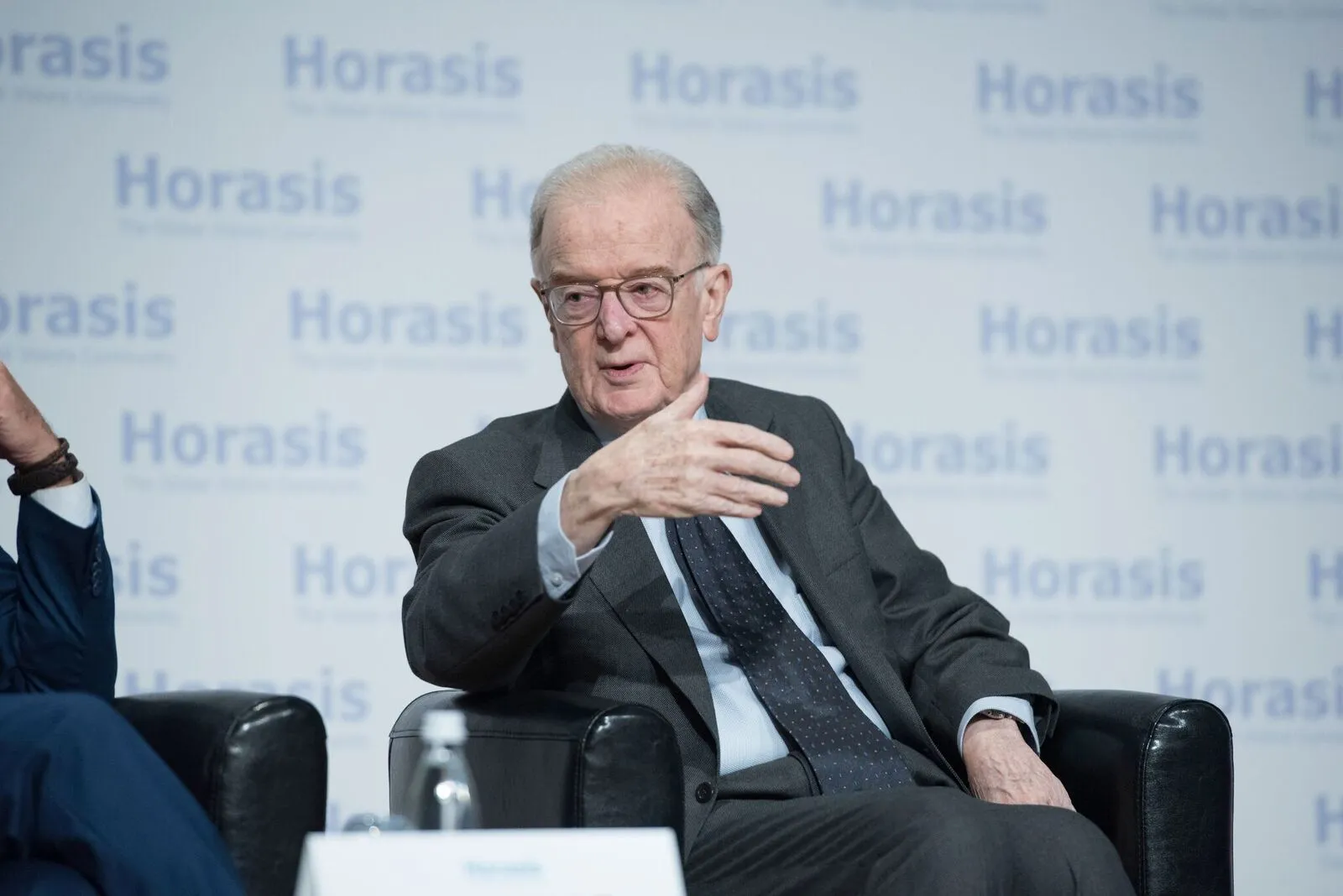
In July 2013, at the Museu do Oriente in Lisbon, he launched the Global Platform for Syrian Students. Syria's civil war had created an “academic emergency”, and he took as his model the scheme under which Portuguese families had taken in thousands of Austrian children in the 1940s. The first group of students arrived in March 2014.
One of them was Hazem Hadla, an electrical engineer whose parents lived in Homs and who had been stranded in Cairo after several countries refused him a visa. On 4 January 2019 he defended a doctorate at the University of Coimbra, the first Syrian refugee supported by the platform to earn one in Portugal. By 2021 the government counted 750 students helped by the platform's scholarships since 2014.
| Years | Post | How he came to it |
|---|---|---|
| 2006-2012 | UN Secretary-General's Special Envoy to Stop Tuberculosis | Appointed by Kofi Annan; extended by Ban Ki-moon |
| 2007-2013 | UN High Representative for the Alliance of Civilizations | Appointed by Ban Ki-moon |
| From 2012 | Member, Global Commission on Drug Policy | Joined the commission |
| 2013-2021 | Chairman, Global Platform for Syrian Students | Founded it |
In 2015 he and Helena Ndume of Namibia were the first winners of the UN's Nelson Mandela Prize.
In August 2021, after the Taliban returned to power, he announced support for Afghan women students.
Taken ill in the Algarve, he was flown by helicopter to the Hospital de Santa Cruz on 27 August with breathing difficulties, and he died there on Friday 10 September 2021, eight days before his 82nd birthday.
Why he still matters
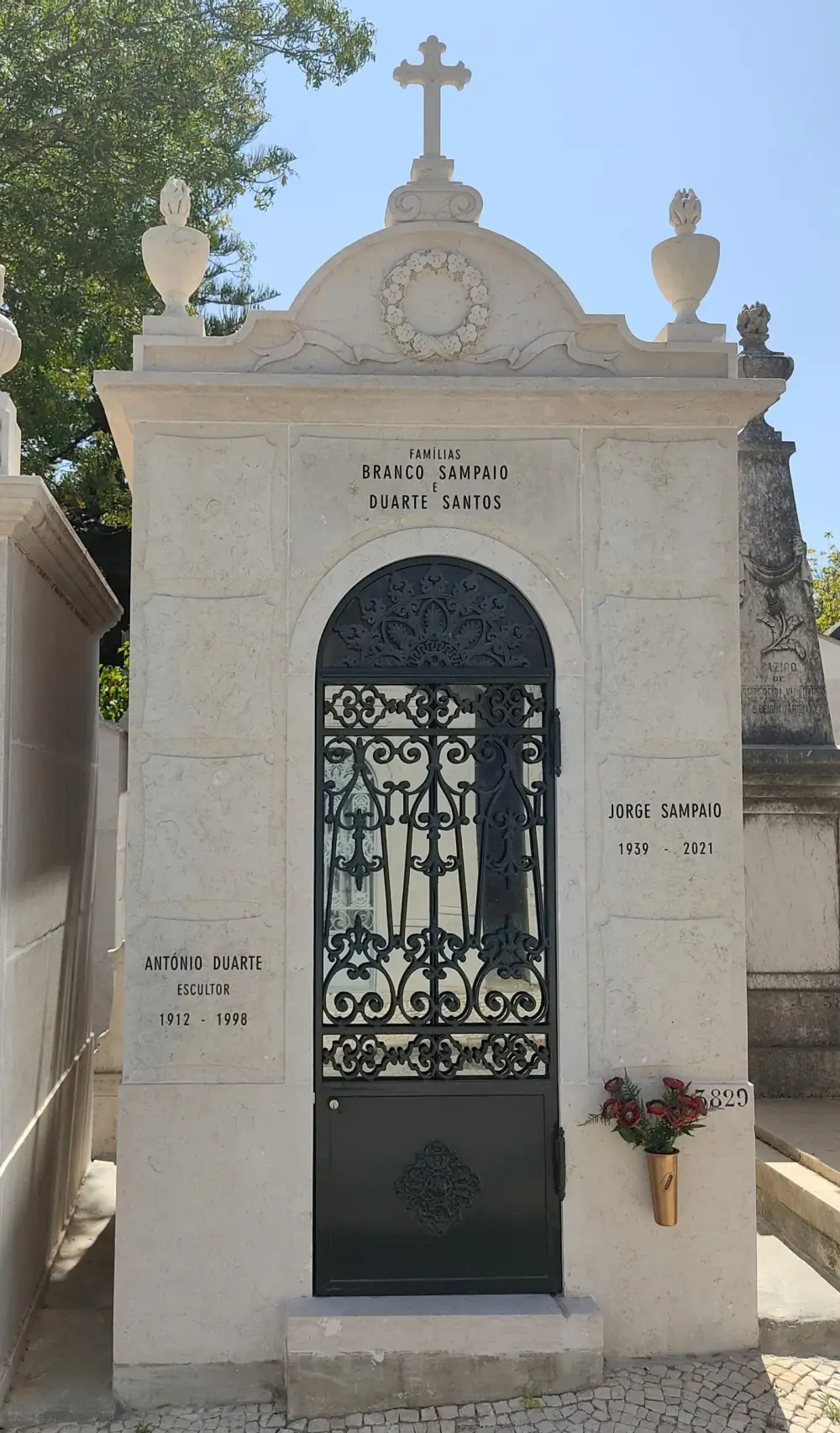
The government declared three days of national mourning and a state funeral. On 12 September 2021 a ceremony at the Jerónimos Monastery heard his son André say that his father had been “popular without being populist”; Marcelo Rebelo de Sousa said he “never wanted to be a hero, but was” (both translated from Portuguese). The coffin was then taken to the Alto de São João cemetery.
The dissolution of December 2004 remains a reference point when a President weighs the “atomic bomb”. In November 2023, as Marcelo Rebelo de Sousa decided whether to dissolve parliament, Observador presented Sampaio's delay of the decree to save the budget as an example for him.
In December 2021 the foreign minister, Augusto Santos Silva, told a UN tribute in New York that Portugal would keep it going. It now calls itself the Global Platform for Higher Education in Emergencies, and among its results it counts 72 students who completed master's degrees and four who completed doctorates.
FAQs
When and where was Jorge Sampaio born?
In Lisbon, on 18 September 1939. His full name was Jorge Fernando Branco de Sampaio; his father, Arnaldo Sampaio, was a public-health doctor.
What did Jorge Sampaio do in the 1962 academic crisis?
He was secretary-general of the RIA, which coordinated Lisbon's student associations, and one of the leaders who declared academic mourning after police broke up Students' Day on 24 March 1962.
Why did Sampaio dissolve parliament in 2004?
He had let Pedro Santana Lopes form a government in July 2004 after Durão Barroso left for the European Commission. After four months of incidents and resignations he concluded that the government had lost credibility, announced the dissolution on 10 December 2004 and called elections for 20 February 2005, which the Socialists won with an absolute majority.
What was Sampaio's role in East Timor's independence?
As President during the 1999 ballot and the violence that followed, he campaigned for UN action and told the General Assembly on 20 September 1999 that the response had been slower than the Timorese deserved. In February 2000 he became the first Portuguese head of state to visit the territory.
When did Jorge Sampaio die?
On 10 September 2021, aged 81, at the Hospital de Santa Cruz, where he had been treated since 27 August. He received a state funeral on 12 September and was buried at the Alto de São João cemetery in Lisbon.
On the timeline
Open the timelineNearby moments from dictatorship and the estado novo (1926–1974).
Film-maker João César Monteiro is born in Figueira da Foz. The great provocateur of Portuguese cinema, he won a Silver Lion at Venice for 'Recordações da Casa Amarela' (1989), playing his own lecherous alter ego, João de Deus, and later scandalised audiences with 'Branca de Neve', a film that is largely a black screen.
Portugal and Spain sign the Treaty of Friendship and Non-Aggression (Iberian Pact) in Lisbon, each promising to respect the other's borders and not to help an attacker. Salazar later used it to press Franco's Spain to stay out of the Second World War.
As Germany invades Poland, António de Oliveira Salazar writes a government note saying that the duties of Portugal's centuries-old alliance with Britain do not oblige it to abandon neutrality, a stance agreed with London that Portugal officially kept throughout the Second World War.
Jorge Sampaio (1939–2021)
Jorge Sampaio, lawyer, opponent of the Estado Novo dictatorship and later Mayor of Lisbon and President of Portugal from 1996 to 2006, is born in Lisbon.
Carlos do Carmo is born in Lisbon, the son of the fadista Lucília do Carmo, and grows up around his parents' fado house, O Faia. His 1977 album 'Um Homem na Cidade' became a landmark of modern fado, and in 2014 he became the first Portuguese artist to receive the Latin Grammy lifetime achievement award.
Portugal and the Holy See sign a Concordat and a Missionary Agreement in the Vatican. Settling the conflict opened by the First Republic's 1911 separation of Church and State, the deal recognised the Church's legal personality and gave it a central role in the empire's missions. It also barred couples married in church from civil divorce, a rule changed only in 1975.
The Exposição do Mundo Português opens in Belém, Lisbon, marking eight centuries of independence and three of the Restoration. Its original Padrão dos Descobrimentos and colonial 'villages' — some peopled with men, women and children brought from Africa and Asia to be put on display — stage the Estado Novo's vision of a pluricontinental empire as war rages across Europe.
Coming up in history
All long reads
37 sources
Archives, scholarship and reporting this article was checked against.
- 1
Jorge Sampaio (1996-2006): biografiaPresidência da República Portuguesa
- 2O dia em que o regime perdeu o futuro (with “A Universidade contra o regime” by José Medeiros Ferreira and a chronology of 1962)Correio da Manhã, Domingo magazine, 18 March 2012
- 3
Statement by Jorge Fernando Branco de Sampaio, President of Portugal, General Assembly, 54th session, 5th plenary meeting, 20 September 1999 (A/54/PV.5)UN Project (text of the official UN record)
- 4As oito anteriores dissoluções da Assembleia da RepúblicaObservador, 9 November 2023
- 5O momento em que Sampaio adiou um despacho para salvar o OrçamentoObservador, 8 November 2023
- 6
Global health leaders honour UN Secretary-General Special Envoy to Stop TuberculosisWorld Health Organization, 16 April 2013
- 7
Jorge Sampaio’s legacy remains an inspiration for the United NationsGovernment of Portugal, December 2021
- 8
Mapa Oficial n.º 1/96: resultado das eleições para Presidente da República realizadas em 14 de Janeiro de 1996Comissão Nacional de Eleições, Diário da República, I série-A, n.º 31, 6 February 1996
- 9
Alocução do Primeiro-Ministro Kay Rala Xanana Gusmão: INTERFET, reflexões sobre a crise de Timor-Leste em 1999 (Melbourne, 20 September 2014)Governo de Timor-Leste
- 10
- 11
East Timor: UNTAET backgroundUnited Nations Department of Public Information, May 2002
- 12Morreu Jorge SampaioRTP Notícias, 10 September 2021
- 13
Jorge Sampaio, who showed extent of Portuguese presidential powers, dies at 81Reuters, 10 September 2021 (via The Star)
- 14
- 15Jorge Sampaio. Presidente, socialista, paciente e conciliadorRTP Notícias, 10 September 2021
- 16Ensaio para o 25 de Abril. Completam-se 60 anos da Revolta de BejaRTP Notícias
- 17
Os dilemas da renovação na continuidade e o legado de Marcello Caetano: do outono ao invernoPedro Emanuel Mendes, Revista Tempo e Argumento, vol. 12, no. 29, 2020
- 18
As eleições legislativas de 1969Assembleia da República (text by Ricardo Revez)
- 19
Portugal: elections of 26 October 1969 (Chronicle of Parliamentary Elections)Inter-Parliamentary Union, PARLINE archive
- 20
- 21Jorge Sampaio. A história de duas derrotas que fizeram o candidato a BelémRTP Notícias, 10 September 2021
- 22Jorge Sampaio propõe elaboração de plano estratégico para Lisboa 2050Correio da Manhã (Lusa), 28 January 2020
- 23
- 24
Portugal returns Macau to Chinese control (Associated Press)Deseret News, 20 December 1999
- 25Jorge Sampaio, o Presidente que acabou com um governo ao fim de quatro mesesDiário de Notícias, 10 September 2021
- 26
Portuguese president pays respects to East Timor dead; East Timor: Sampaio ends visit urging Timorese unityAgence France-Presse, 13 and 14 February 2000 (East Timor Action Network archive)
- 27
Portugal's President Accepts Prime Minister's ResignationVoice of America, 13 December 2004
- 28
- 29Jorge Sampaio reconhece que estava “farto” de Santana em 2004 apesar de o estimarRTP Notícias (Lusa), 14 March 2017
- 30
- 31Portugal vai acolher cem estudantes síriosDiário de Notícias, 16 July 2013
- 32Hazem, o primeiro refugiado sírio do grupo apoiado por Sampaio a doutorar-se em PortugalDiário de Notícias (Lusa), 27 January 2019
- 33
- 34
AchievementsGlobal Platform for Syrian Students (now Global Platform for Higher Education in Emergencies)
- 35
A última homenagem a Jorge SampaioSábado, 12 September 2021
- 36
- 37
Image credits
- Jorge Sampaio, right, with the US President, Bill Clinton, at a bilateral meeting in the Palácio de Belém, the Portuguese President's official seat in Lisbon, on 30 May 2000, during Clinton's visit to Portugal. William Vasta, Public domain, via Wikimedia Commons.
- Lisbon's city hall, the Paços do Concelho, behind the pillory on the Praça do Município, in 2024. Sampaio governed the city from here from 1990 until November 1995. Threeohsix, CC BY-SA 4.0, via Wikimedia Commons.
- Sampaio speaking on Nelson Mandela's legacy at the Horasis Global Meeting in Cascais in May 2018, aged 78. Three years earlier he had been one of the first two winners of the UN's Nelson Mandela Prize. Richter Frank-Jurgen, CC BY-SA 2.0, via Wikimedia Commons.
- The family vault at the Alto de São João cemetery in Lisbon where Jorge Sampaio was buried, photographed in 2022. It also holds the sculptor António Duarte. António Fragoso, CC BY 2.0, via Wikimedia Commons.