

TAP's first route: Lisbon to Madrid, 1946
Eighteen months after Humberto Delgado signed the order creating it, Portugal's state airline flew its first paying route in a converted wartime Dakota. Three months later it set off for Angola and Mozambique.
At a glance
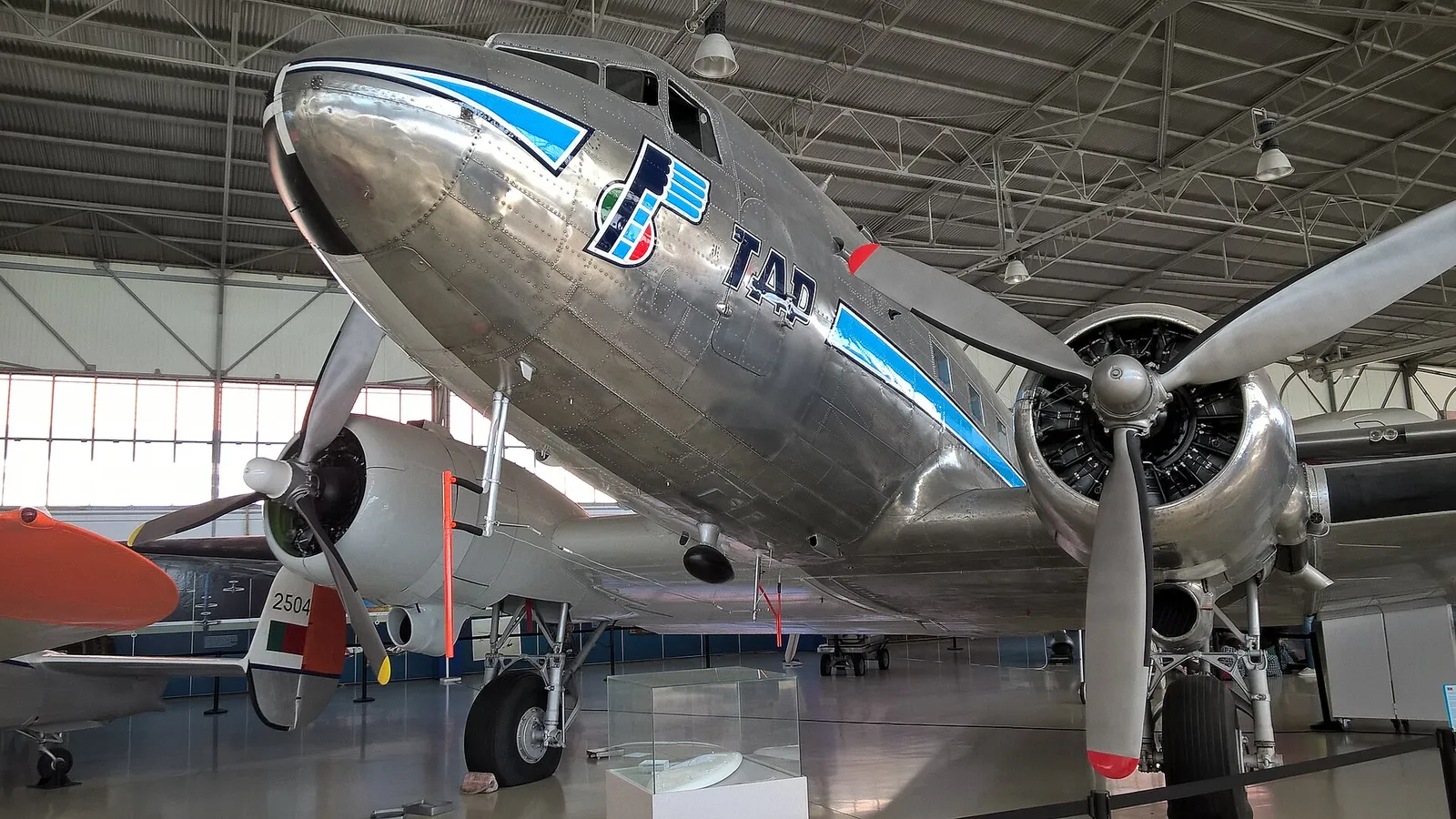
- On Thursday 19 September 1946 a TAP Douglas DC-3 Dakota, registered CS-TDF, flew from Lisbon to Madrid in just under two hours, opening the airline's first commercial route.
- TAP was created on 14 March 1945 by Service Order no. 7 of the Secretariado da Aeronáutica Civil, a government department headed by Humberto Delgado, who in 1958 challenged the Salazar regime as an opposition presidential candidate.
- On 31 December 1946 TAP opened the Linha Aérea Imperial to Luanda and Lourenço Marques (now Maputo): a DC-3 with 12 stops that took six days to reach Mozambique.
- The airline became a limited company with private shareholders in 1953 and was nationalised on 16 April 1975 by Decree-Law 205-E/75. It was partly privatised in 2015 and has been wholly state-owned again since 2021.
- On 14 October 2026 the government chose Lufthansa to buy 44.9% of TAP for about €1.2 billion; the sale still needs regulatory approval, and the state is to keep 50.1%.
A Thursday flight to Madrid
On Thursday 19 September 1946 a silver Douglas Dakota, registered CS-TDF, took off from Lisbon for Madrid. In the cockpit were Commander Abel Rodrigues Mano and his co-pilot, Eduardo Viegas Ferreira de Almeida. Behind them sat a radio operator and a flight engineer.
The flight took just under two hours: 1 hour 56 minutes by TAP's later count, 1 hour 50 by the newspaper Correio da Manhã. It was the first commercial service of Transportes Aéreos Portugueses, TAP, the airline that Portugal's dictatorship had set up 18 months earlier.
The Dakota had seats for 21. Nobody agrees how many of them were filled. TAP's website says 11 passengers flew besides the crew, and that is the figure usually repeated. A history the airline itself published in the early 1980s says there was one: a clerk from the civil aviation department, sent along so that the aircraft would not leave empty.
“so that the aircraft would not go empty on that first flight, the Secretariado da Aeronáutica Civil had assigned one of its employees, who in this way became TAP passenger no. 1”
- Date
- Thursday 19 September 1946
- Route
- Lisbon to Madrid
- Aircraft
- Douglas DC-3 Dakota (a converted C-47A), CS-TDF, 21 seats
- Crew
- Abel Rodrigues Mano (commander), Eduardo Viegas Ferreira de Almeida (co-pilot), a radio operator and a flight engineer
- Flight time
- 1 h 56 min (TAP) or 1 h 50 min (Correio da Manhã)
- Passengers
- 11 according to TAP's website; 1 according to a TAP history of c. 1982
An empire without an airline
In 1945 Portugal was a dictatorship under António de Oliveira Salazar, whose regime called itself the Estado Novo (New State). It still held colonies in Africa and Asia, among them Angola, Guinea and Mozambique in Africa and Goa in India.
What it lacked was a flag carrier to link them. Commercial flying in Portugal had been on a small scale: the Serviços Aéreos Portugueses, set up in 1929, had flown between Lisbon, Madrid and Seville, ran into difficulties with Spain over air traffic in 1930 and folded in 1945. Salazar came to see, as the historian Frederico Delgado Rosa tells it, that Portugal was the only power with territory on several continents and no airline to connect them.
The man chosen to build one was Humberto Delgado, an air force officer born in Torres Novas in 1906. He had backed the 1926 coup that brought the military to power, served in the regime's youth movement and its militia, and during the war took part in the secret talks with Britain that gave the Allies bases in the Azores. In 1944 he was appointed director of the new Secretariado da Aeronáutica Civil (Civil Aviation Secretariat), which answered directly to Salazar.
Delgado Rosa, the general's biographer, gives three reasons for the choice: Delgado's capacity for work, the fact that a post reporting straight to Salazar might soothe his resentment at being passed over for promotion, and Salazar's wish to keep him away from a military command. The secretariat began in borrowed rooms in the Rua do Arsenal and on 8 July 1945 moved to a mansion on the Avenida da Liberdade.
Service Order no. 7
TAP was born as a piece of office paperwork. On 14 March 1945, Service Order no. 7 of the Secretariado da Aeronáutica Civil, signed by Delgado, created a Secção de Transportes Aéreos, an air transport section inside the department. It was a branch of government, wholly owned by the state, and not yet a company. The original order is kept in the TAP Museum, and the airline still names Delgado as its founder.
It needed aircraft and pilots. In May 1945 the department bought three Douglas Dakotas from the United States, military transports that the Canadian firm Canadair converted for passengers and that reached Lisbon in 1946. Two more came from Portugal's military aviation. TAP's own chronology says its first two Dakotas arrived in 1945.
The first pilots, men with military flying experience, were trained by the British Overseas Airways Corporation. Delgado brought in a civilian, Manuel Maria Rocha, a pilot from Mozambique who had flown for the Belgian airline Sabena between Europe and the Congo, as chief pilot. The military men were not pleased. João Graça, one of the first group of pilots TAP trained, joined in September 1946 and flew his first Madrid service in April 1947.
Roque Brás de Oliveira, who began as an air traffic control student in 1944 and later flew for TAP, remembered Delgado as “austere and enterprising”. He recalled that Delgado flew often to the United States to keep up with aviation, and that it was Delgado who brought the Dakotas to Portugal.
Six days to Lourenço Marques
Madrid was a short hop. The route that mattered to the regime was Africa. On Tuesday 31 December 1946, three months after the Madrid service, a Dakota registered CS-TDE left Lisbon on the first flight of the Linha Aérea Imperial (Imperial Air Line), named after Britain's prewar Imperial Airways. Its crew were Manuel Maria Rocha as commander, Rui de Barros Brito as second pilot and Abel Rodrigues Mano, who had flown the Madrid service, as navigator.
Marcelo Caetano, then minister for the colonies, backed the line. TAP flew three trial trips over nine months, against the 12 that some had urged, skipped test flights across the desert and dropped intermediate stops in the Portuguese colonies, because only Luanda and Lourenço Marques had airfields that could take twin-engined aircraft all year round.
| Stop (name in 1946) | Today | Ruled by in 1946 |
|---|---|---|
| Casablanca | Casablanca, Morocco | France (protectorate) |
| Villa Cisneros | Dakhla, Western Sahara | Spain |
| Bathurst | Banjul, The Gambia | Britain |
| Robertsville (Roberts Field) | Liberia | Independent |
| Accra | Accra, Ghana | Britain (Gold Coast) |
| Libreville | Libreville, Gabon | France |
| Luanda | Luanda, Angola | Portugal |
| Leopoldville | Kinshasa, DR Congo | Belgium |
| Luluabourg | Kananga, DR Congo | Belgium |
| Elizabethville | Lubumbashi, DR Congo | Belgium |
| Salisbury | Harare, Zimbabwe | Britain (Southern Rhodesia) |
| Lourenço Marques | Maputo, Mozambique | Portugal |
Stops as listed by Belo (2019) after Frederico Delgado Rosa's biography of Delgado, which gives the Liberian stop as Robertsville; it was presumably Roberts Field airport. Present-day names and 1946 rulers added by Lisboeta. TAP counts the route as 12 stopovers.
The flight to Lourenço Marques took six days, with five nights on the ground. Crews wore khaki shorts, skirts and shirts against the heat. By ship the voyage to Africa's east coast took about a month. The Dakota was back in Lisbon on Thursday 16 January 1947, an arrival Lisbon city council recorded in its annals.
TAP gives the route as 24,540 kilometres and 15 days there and back, and calls it the longest route in the world flown with the DC-3. That distance must be the round trip: in straight lines the stops above add up to about 11,500 kilometres each way, so the 25,000 kilometres that a 2019 history thesis by Virgílio da Luz Belo puts between Lisbon and Lourenço Marques cannot be right one way.
The line lost money from the start. The Dakota's 21 seats could not all be sold, because fuel had to take their weight: one captain, Alberto Silva Pereira, said he could take only 12 passengers to Africa, and a TAP history puts it at eight to ten.
“The first days of the service were economically unsuccessful. National backbiting did not forgive the shortcomings of the operation. Most people were not in the habit of travelling by air: only the daring ventured it.”
By the time the inaugural flight came home, Delgado was on his way out.
While the flight was still under way, Salazar abolished the secretariat and replaced it with a Direcção-Geral da Aeronáutica Civil, a move Delgado took as a demotion, and he asked to be relieved. In 1947 he went to Montreal as Portugal's representative on the council of the International Civil Aviation Organization.
Brás de Oliveira flew the Africa line for 20 years, from 1952 to 1972, and remembered it as seven days each way in a plane that “only had room for ten, the rest was cargo”.
From Dakotas to jets
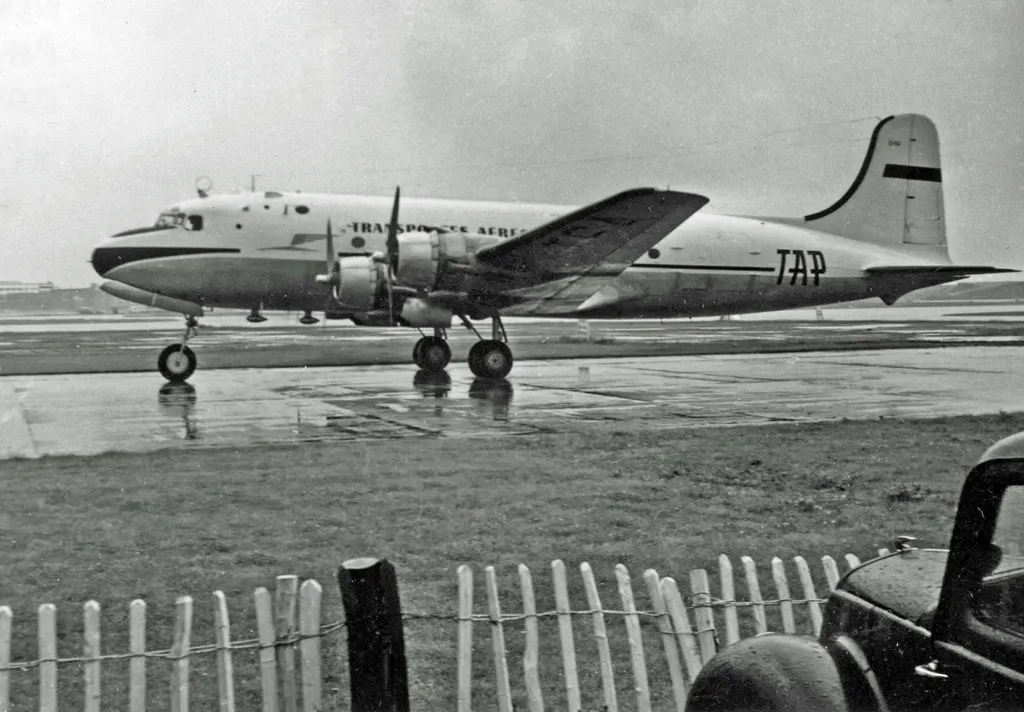
Bigger aircraft soon followed. In 1947, the year TAP opened its first domestic route, Lisbon to Porto, four-engined Douglas DC-4 Skymasters joined the fleet and cut the flight to Luanda to 17 hours. Lines to Paris, Seville and London followed, dated anywhere from 1947 to 1949 depending on the source. In 1953 TAP stopped being a government department and became a limited company with private shareholders, though the state kept about 65% of the capital.
Lockheed Super Constellations, named after figures such as Vasco da Gama and Gago Coutinho, took over the Africa line in November 1955 and brought Lourenço Marques within 22 hours of Lisbon. The regular service to Brazil, the Voo da Amizade (Friendship Flight), opened in 1961, the year the last DC-4 left the fleet.
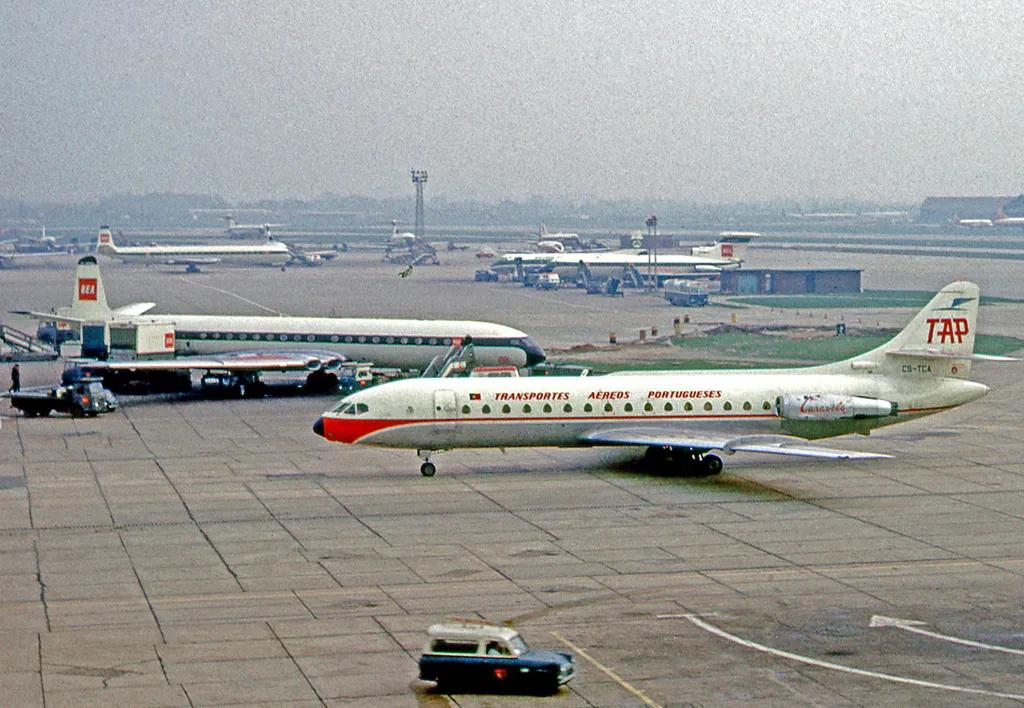
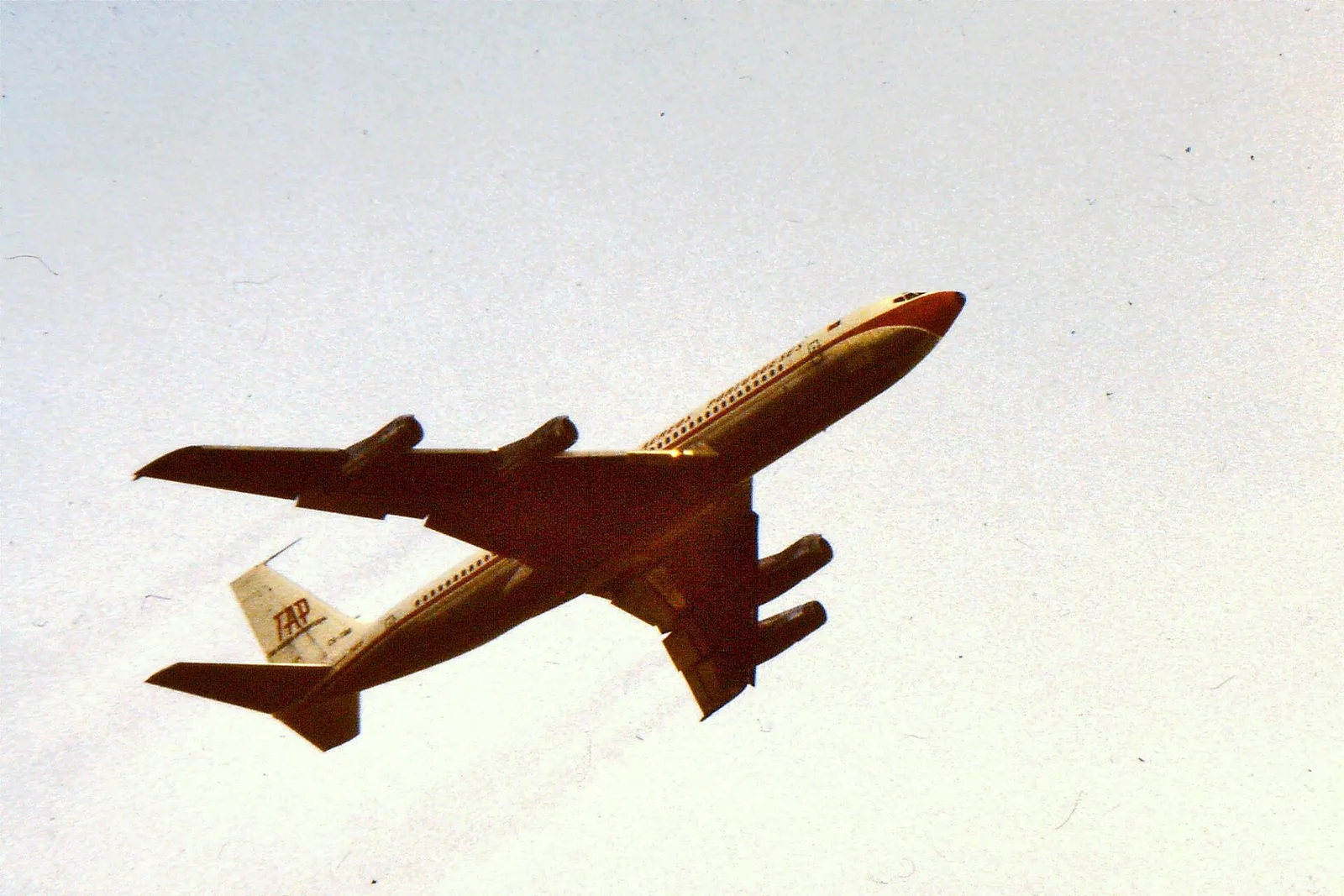
In 1962 TAP entered the jet age with three French Sud Aviation Caravelles. They were named Goa, Damão and Diu after the Portuguese territories in India that Indian forces had taken in December 1961. The first Boeing 707, Santa Cruz, arrived in 1965, and in 1972 the airline took delivery of two Boeing 747s.
When the colonial wars began in Angola in 1961, TAP had to link Lisbon faster with Angola, Guinea and Mozambique, and the African routes stayed busy until the revolution of 1974.
Salazar disliked flying. By Belo's account he flew only once, on 27 May 1966, on a TAP Super Constellation from Lisbon to Porto, on his way to Braga for the 40th anniversary of the 1926 coup. According to the blog Belo cites, he told the captain, António Abel Rodrigues Mano, “Não gostei” (I didn't like it), and went back to Lisbon by train.
14 March 1945
TAP created
Service Order no. 7, signed by Delgado, sets up an air transport section.
19 September 1946
First commercial route
DC-3 CS-TDF flies Lisbon to Madrid.
31 December 1946
Linha Aérea Imperial
DC-3 CS-TDE leaves for Luanda and Lourenço Marques.
1947
Lisbon–Porto
The first domestic route; DC-4 Skymasters join the fleet.
1953
Becomes a limited company
Private shareholders come in; the state keeps control.
November 1955
Super Constellations
Lisbon to Lourenço Marques in 22 hours.
1961
Brazil service
The Voo da Amizade to Brazil, via Sal and Recife, begins.
1962
First jets
Three Caravelles: Goa, Damão and Diu.
1965
Boeing 707
The first, Santa Cruz, arrives.
1972
Boeing 747
Two Jumbo jets join the fleet.
16 April 1975
Nationalised
Decree-Law 205-E/75.
Revolution and nationalisation
The Carnation Revolution of 25 April 1974 ended the dictatorship. A year later, on 16 April 1975, during the wave of nationalisations that followed the failed coup of 11 March, the government nationalised TAP by Decree-Law 205-E/75, on the same day as the oil refiners, the railways and the electricity companies. It became a wholly state-owned enterprise.
One of its last big jobs in Africa was the airlift home. In the evacuation from Luanda in 1975, Vanessa Rato of Público estimates that 905 flights carried about 250,000 people in four months, and that TAP flew 451 of them. Then the African routes, the airline's main source of income, shrank. TAP sold its two 747s to Pakistan International Airlines and turned to Europe, the Americas and Portuguese emigrants. In 1979 it took the name TAP Air Portugal.
Who owns TAP
Privatisation has been on the table for more than 30 years. In 1991 TAP became a public limited company with the state as sole shareholder, the first step towards privatisation. A sale of 34% to the Swiss group SAir was approved in 2000 but fell through as Swissair collapsed. In 2012 a bid by the businessman Germán Efromovich was turned down over financial guarantees.
In 2015, under the bailout programme Portugal had signed with its creditors in 2011, 61% of the holding company TAP SGPS went to Atlantic Gateway, a consortium of the businessmen Humberto Pedrosa and David Neeleman. The next government renegotiated, and from 2016 the state held 50%.
The pandemic grounded the fleet in 2020. To keep TAP alive the state lent it up to €1.2 billion and agreed to pay the private shareholders €55 million. On 2 October 2020 it took control of 72.5%, and David Neeleman left the board. The European Commission approved a restructuring plan on 21 December 2021 with €2.55 billion in aid, close to €3.2 billion counting pandemic compensation. During 2021 the state became TAP's sole shareholder.
| Date | Change | State's share |
|---|---|---|
| 14 March 1945 | Air transport section of a government department | 100% |
| 1953 | Becomes a limited company (SARL) | About 65% |
| 16 April 1975 | Nationalised by Decree-Law 205-E/75 | 100% |
| 1991 | Public limited company, Decree-Law 312/91 | 100% |
| 12 November 2015 | 61% of TAP SGPS sold to Atlantic Gateway | 39%, including 5% reserved for staff |
| 2016 to 2017 | State buys back control of TAP SGPS | 50% |
| 2 October 2020 | State buys out Neeleman's side of Atlantic Gateway | 72.5% |
| 2021 | Restructuring; state becomes sole shareholder of the airline | 100% |
| 14 October 2026 | Lufthansa chosen to buy 44.9%; up to 5% for staff | 50.1% after the sale (not completed) |
Percentages refer to the holding company TAP SGPS for 2015 to 2020 and to the airline, TAP SA, otherwise. In 2017 the state's 50% carried only 5% of the economic rights, Atlantic Gateway's 45% carried 90%, and staff and other shareholders held 5%. The 1953 figure is approximate. The IBA authors give the 1975 decree as 205-E/75; Ricardo Noronha refers to that day's nationalisations as Decree-Law 205/75.
On 10 July 2025 the government of Luís Montenegro approved a new sale of up to 49.9%: 44.9% to an airline group and up to 5% to staff. It wanted to recover part of the more than €3.2 billion the state had put in. Decree-Law 92/2025 followed on 14 August.
As of early November 2026, a buyer has been chosen but the sale has not been completed. On 14 October 2026 Montenegro announced that Lufthansa had won with €1.201 billion for the first phase, 16% more than Air France-KLM's offer. The state is to keep 50.1%, and the government talks of a second phase by 2028 in which it could swap the rest for shares in the Lufthansa group. Final negotiation and regulatory approval still lie ahead.
Passengers carried by TAP, 2019 to 2025
million passengers
TAP's annual results as reported by ECO (2019), Diário de Notícias (2020, 2021, 2024), Forbes Portugal (2023) and Observador (2025). The 2022 figure is derived from the 2023 report, which gave 2.1 million more passengers and growth of 15.2%.
Show the data
| Passengers | |
|---|---|
| 2019 | 17.1 |
| 2020 | 4.7 |
| 2021 | 5.8 |
| 2022 | 13.8 |
| 2023 | 15.9 |
| 2024 | 16.1 |
| 2025 | 16.7 |
Why it still matters
TAP carried 16.7 million passengers in 2025 and had 99 aircraft at the end of the year. The ties of the 1940s still shape it: the privatisation terms of 2025 ask the buyer to keep the TAP brand and its headquarters in Lisbon, and to keep up direct links with Portuguese-speaking countries, communities abroad and countries with historic ties to Portugal.
Delgado's own story took a different turn. In 1958 he stood for president against the regime's candidate and became known as the “General sem Medo” (fearless general).
In February 1965 agents of the political police, the PIDE, murdered him at Villanueva del Fresno in Spain, near Olivença and the Portuguese border. On 15 May 2016, the 110th anniversary of his birth, Lisbon's airport was renamed Aeroporto Humberto Delgado.
FAQs
When was TAP's first commercial flight?
On Thursday 19 September 1946, when a Douglas DC-3 Dakota registered CS-TDF flew from Lisbon to Madrid in just under two hours. TAP had been created 18 months earlier, on 14 March 1945.
Who founded TAP?
Humberto Delgado, head of the Secretariado da Aeronáutica Civil, signed Service Order no. 7 of 14 March 1945, which created TAP as an air transport section of his department. He later ran against the Salazar regime in the 1958 presidential election and was murdered by the PIDE in 1965.
What was the Linha Aérea Imperial?
TAP's route from Lisbon to Luanda in Angola and Lourenço Marques (now Maputo) in Mozambique, opened on 31 December 1946. A DC-3 made 12 stops and took six days to reach Mozambique; the round trip took about 15 days.
Who owns TAP now?
As of early November 2026, the Portuguese state owns all of the airline, as it has since 2021. On 14 October 2026 the government chose Lufthansa to buy 44.9% for about €1.2 billion, with up to 5% for staff and 50.1% kept by the state, but the sale had not been completed.
Why is Lisbon airport named after Humberto Delgado?
Delgado founded TAP in 1945 as head of civil aviation and later became the best-known opponent of the Estado Novo. The airport took his name on 15 May 2016, the 110th anniversary of his birth.
On the timeline
Open the timelineNearby moments from dictatorship and the estado novo (1926–1974).
Portugal holds its first legislative election after the Second World War. The opposition Movimento de Unidade Democrática, formed in October amid hopes of liberalisation, had withdrawn a week earlier over the lack of free conditions, and Salazar's União Nacional takes all 120 seats in the National Assembly.
In Margão, the Indian socialist Ram Manohar Lohia and the Goan doctor Julião Menezes defy the Portuguese colonial ban on public meetings and are arrested with ten others. Goa marks the date as Goa Revolution Day, the start of a civil-liberties campaign; Portuguese rule ends only when India takes the territory in December 1961.
Birth of Xanana Gusmão in Laleia, Manatuto, Portuguese Timor. Educated by Jesuits at Dare, he led the armed resistance to the Indonesian occupation that followed Portugal's hasty withdrawal in 1975, spent nearly seven years in Indonesian custody, and in 2002, as independence was restored, became East Timor's first elected president.
TAP's first route, Lisbon–Madrid
TAP (Transportes Aéreos Portugueses) opens its first commercial route, between Lisbon and Madrid, flown with a Douglas DC-3. The airline had been created the year before on the orders of Humberto Delgado, then head of civil aviation and later the 'fearless general' who challenged Salazar.
Carlos Lopes is born in Vildemoinhos, near Viseu. A late bloomer, he won the Olympic marathon in Los Angeles at 37 — Portugal's first Olympic gold medal — and the following year set a world marathon record of 2:07:12 in Rotterdam.
Birth in Lisbon of Marcelo Rebelo de Sousa, law professor, member of the assembly that drafted the 1976 Constitution, co-founder of the weekly 'Expresso' and for years Portugal's best-known TV political commentator. Elected President in 2016 and re-elected in 2021, he became known for his ubiquitous presence, hugs and selfies, leaving office in March 2026.
The plane carrying the 'Grande Torino' football team home from a friendly against Benfica in Lisbon crashes into the Superga hill above Turin, killing all 31 people on board. The disaster wipes out the side that dominated Italian football and leaves a lasting bond between the two clubs.
Coming up in history
All long reads
22 sources
Archives, scholarship and reporting this article was checked against.
- 1
Imagens de Portugal: o serviço de bordo da TAP (das origens a 2017), by Virgílio da Luz BeloFaculdade de Letras, Universidade de Lisboa (master's thesis in History), 2019
- 2
Our history: timeline (1940s)TAP Air Portugal
- 3
9/19/1946: TAP flies its first commercial service, Lisbon to Madrid, by Helwing VillamizarAirways Magazine
- 4
TAP: a history of control, to be or not to be state owned, by Manuel Santos Vitor and António Frusoni GonçalvesInternational Bar Association, Aviation Law Committee (2020)
- 5
Decreto-Lei n.º 92/2025, de 14 de agosto (first phase of the reprivatisation of TAP)Diário da República, 1.ª série, n.º 156, 14 August 2025 (copy published by Parpública)
- 6Governo anuncia Lufthansa como vencedora na privatização da TAPDiário de Notícias, 14 October 2026
- 7
Humberto Delgado: biografia, by Rita CorreiaHemeroteca Municipal de Lisboa
- 8TAP. 70 anos de história contados por quem pôs a companhia a voar, by Ana Margarida PinheiroDinheiro Vivo, 8 March 2015
- 9O piloto que viu Humberto Delgado criar a TAPDiário de Notícias, 15 May 2016
- 10
Operation Vijay: The Liberation of ‘Estado da India’ – Goa, Daman and Diu (Brigadier A. S. Cheema)Journal of the United Service Institution of India, vol. CXLIII, no. 594, October–December 2013 (PDF)
- 11
“A Banca ao Serviço do Povo”: Política e Economia Durante o PREC (1974-75) (Ricardo Noronha)Imprensa de História Contemporânea, NOVA FCSH, 2018 (open access)
- 12
O mistério das estátuas de jade e outras incógnitas (Vanessa Rato, Portugal em Fuga, part VII)Público, 22 March 2020 (press copy published by the Fundação Calouste Gulbenkian)
- 13Estado tem a partir de hoje 72,5% da TAPRTP Notícias, 2 October 2020
- 14Como vai ficar a TAP? 10 respostas sobre o plano aprovado pela Comissão EuropeiaObservador, 22 December 2021
- 15“A melhor escolha para o futuro”. Lufthansa é a vencedora da privatização parcial da TAPRTP Notícias, 14 October 2026
- 16
Governo apresenta pressupostos da 1.ª fase de privatização da TAPGovernment of Portugal, 10 July 2025
- 17Número de passageiros transportados pela TAP sobe 8,2% para 17 milhões em 2019ECO, 7 January 2020
- 18TAP encerrou 2021 com 1.599 milhões de prejuízosDiário de Notícias, 11 April 2022
- 19
TAP transportou 15,9 milhões de passageiros em 2023, mais 15,2% do que em 2022Forbes Portugal, 12 January 2024
- 20Lucros da TAP recuam 70% para 54 milhões de euros em 2024Diário de Notícias, 26 March 2025
- 21Lucro da TAP cai mais de 90% para 4,1 milhões de euros em 2025Observador, 9 April 2026
- 22
Marcelo Rebelo de Sousa afirma que Museu do Ar é prova da pujança e da maturidade da Força AéreaLusa, via 24notícias, 21 November 2018
Image credits
- A Douglas DC-3 Dakota painted in TAP's early colours at the Museu do Ar, the Portuguese Air Force museum at Sintra air base, photographed in 2019. TAP opened its first route with this type of aircraft. GualdimG, CC BY-SA 4.0, via Wikimedia Commons.
- TAP's Douglas DC-4 Skymaster CS-TSA, one of the airline's four DC-4s, at London Heathrow in June 1954. RuthAS, CC BY 3.0, via Wikimedia Commons.
- TAP's Sud Aviation Caravelle CS-TCA, named Goa, at London Heathrow on 13 March 1966. The word Caravela, the Portuguese spelling, is painted on the engine. RuthAS, CC BY 3.0, via Wikimedia Commons.
- A TAP Boeing 707 climbing out of London Heathrow for Lisbon in the 1970s. TAP took delivery of its first 707, Santa Cruz, in 1965. G B_NZ, CC BY-SA 2.0, via Wikimedia Commons.