

The death of Pedro IV at Queluz, 24 September 1834
He had founded an empire in Brazil and won a civil war in Portugal. Four months after the peace he lay dying in the room where he was born, while parliament declared his 15-year-old daughter old enough to rule.
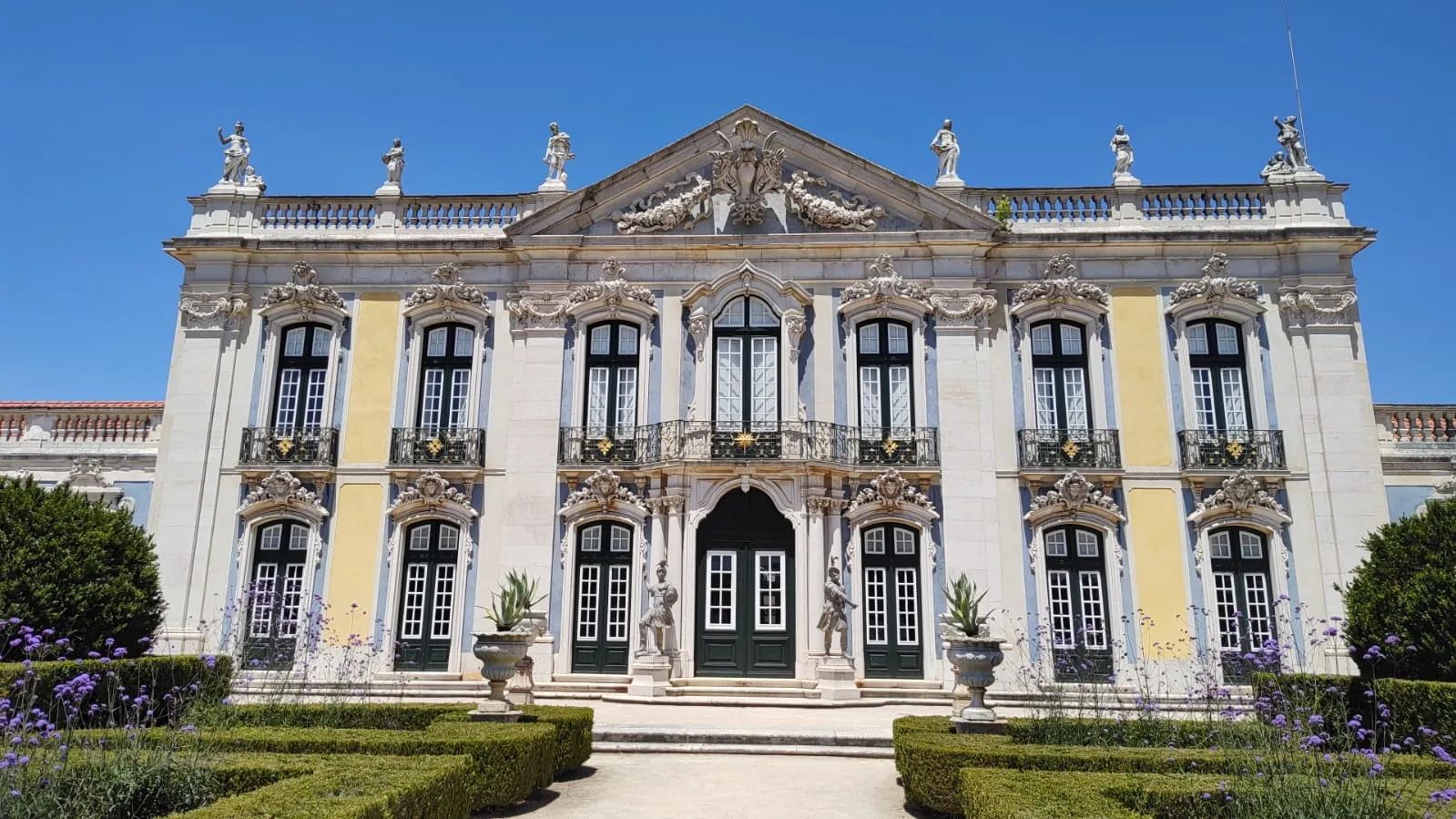
At a glance
- Pedro IV, King of Portugal and, as Pedro I, first Emperor of Brazil, died at the Palace of Queluz at about a quarter past two in the afternoon of Wednesday 24 September 1834, aged 35.
- He died in the Dom Quixote Room, where he had been born on 12 October 1798, four months after the Convention of Evoramonte ended the civil war he had fought for his daughter, Maria II.
- Too ill to go on as regent, he asked parliament to release him; the Cortes declared Maria of age on 18 September, and she swore to the Constitutional Charter on the 20th, aged 15.
- The official cause of death was pulmonary tuberculosis. The autopsy of 25 September found a lung almost without air and fluid in the chest, and a 2023 study of his medical records and skeleton agreed with the diagnosis.
- His heart, left to Porto in his will, has been kept in the Lapa church since February 1835. His body lay in the Braganza pantheon in Lisbon until 1972, when it was taken to the imperial crypt at the Ipiranga in São Paulo.
A quarter past two at Queluz
On the afternoon of Wednesday 24 September 1834, the Dom Quixote Room at the Palace of Queluz was crowded. Around the canopied bed stood the dying man's wife, Amélie of Leuchtenberg, his daughters, Queen Maria II, aged 15, and Princess Maria Amélia, not yet three, with his generals, aides-de-camp, servants and a confessor.
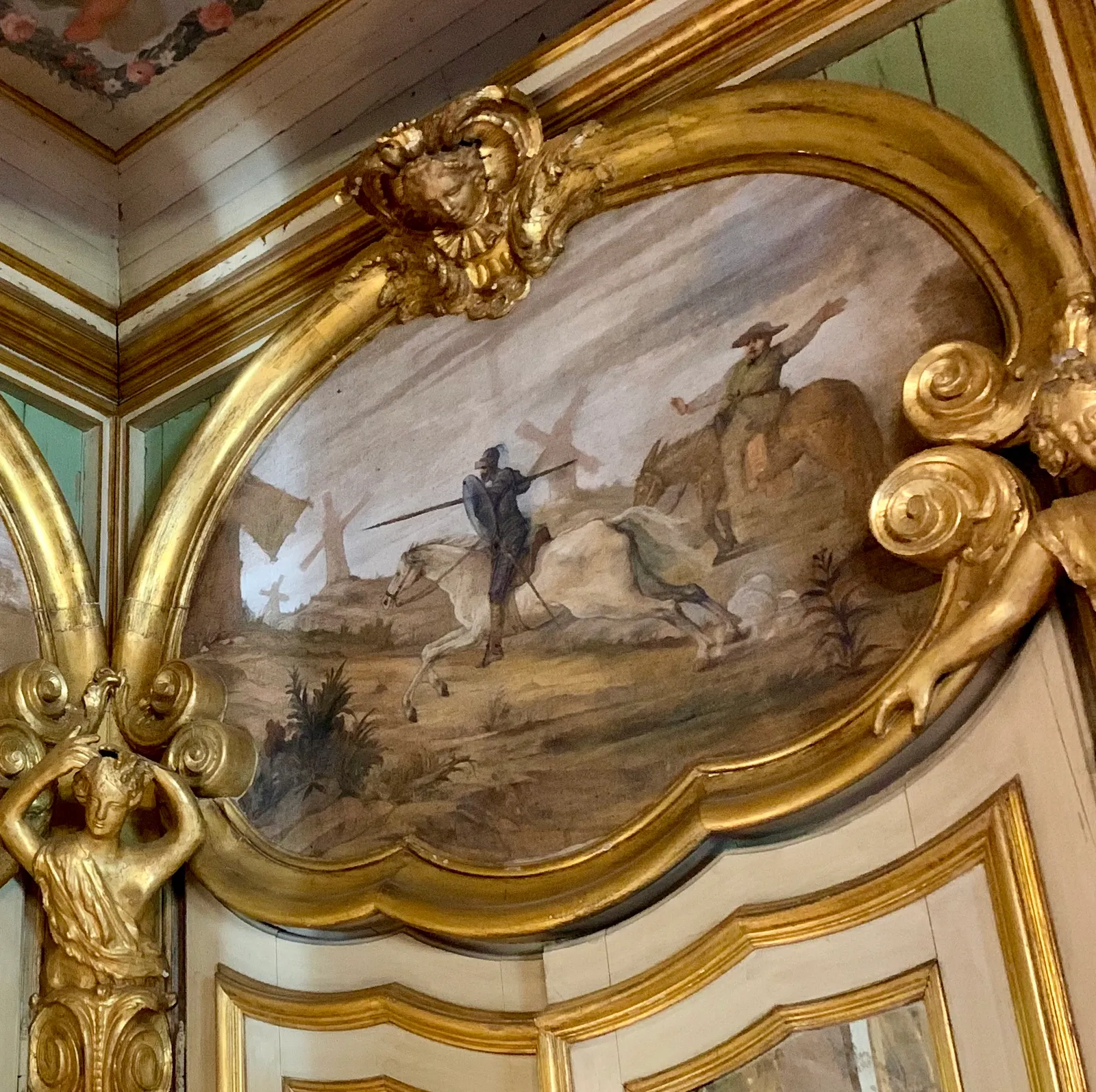
The man in the bed was Pedro de Alcântara of Bragança. He had been Emperor of Brazil and King of Portugal, and for the past two years he had been a general in a civil war. Painted scenes from Don Quixote, which gave the room its name, decorated the cornice and the spaces above the doors. He had been born in this room 35 years before.
He had asked to see one of the soldiers who had fought beside him. A private named Manuel Pereira was brought in, and Pedro embraced him. Pereira served in the 5th Caçadores, a light infantry battalion, according to the Queluz chronology and the historian Valdirene do Carmo Ambiel; Charles Napier, the British admiral who had commanded Pedro's fleet, puts him in the 6th, Pedro's “own regiment”.
“Come, let me embrace you and thank you for your noble services. Tell your comrades that I regret I cannot hold them all to my heart, to prove to them how much I love and esteem them, and how honoured I am to have fought with them to save the fatherland.”
He died at about a quarter past two. Napier wrote that he breathed his last in the arms of his wife, who had not left his side.
Emperor, king and regent
Pedro was born at Queluz on 12 October 1798, the son of the future João VI. When Napoleon's armies invaded Portugal in 1807 the royal family sailed for Brazil, and Pedro grew up in Rio de Janeiro. In 1822 he broke Brazil away from Portugal and became its emperor, a story told in its own article.
When João VI died in 1826, Pedro inherited Portugal as well. He gave it a constitution, the Constitutional Charter, signed in Rio on 29 April 1826, and on 2 May abdicated the Portuguese crown in favour of his seven-year-old daughter, Maria da Glória. His younger brother Miguel was to marry her and act as regent. Instead, in 1828, Miguel had himself proclaimed absolute king.
In 1831 Pedro abdicated the Brazilian crown in favour of his five-year-old son, Pedro II, sailed for Europe and raised an army for his daughter's cause. He landed near Porto on 8 July 1832 and held the city through a siege of 13 months. His forces took Lisbon in July 1833, and after its defeat at Asseiceira, Miguel's army surrendered to his generals at Evoramonte on 26 May 1834.
A victory that cost him his health
Peace did not make Pedro popular. The terms of Evoramonte gave Miguel's men a general amnesty and Miguel himself a pension, and radical liberals wanted punishment. On 27 May, the day after the surrender, Pedro was jeered and heckled by some of them at the São Carlos opera house in Lisbon, in one of his last public appearances. (That is the Queluz chronology's date; Ambiel's thesis gives April in one place and May in another.)
He was already ill. Since 1833 he had suffered from breathlessness, coughing up blood, sleeplessness and swollen legs, and at the theatre he coughed blood in front of the audience. Napier says his only medical adviser was a Brazilian; the palace bulletins name the doctors Tavares and Francisco Soares Franco.
Napier, returning to Lisbon that summer after a few weeks in England, found him “evidently declining”. Pedro had taken the empress and the queen to Porto by sea, and the voyage and the welcome had worn him out. He had taken up residence at Queluz, hoping that quiet would restore him.
Parliament and a queen of fifteen
The Cortes, the two-chamber parliament set up by the Charter, met on 15 August 1834 for the first time since Miguel had dissolved it in 1828. The Chamber of Peers had only 16 members, since Miguel's supporters were excluded. Pedro read the speech from the throne in the Chamber of Deputies, with a long account of the war.
“For myself, I reserve only the glory of having placed myself at the head of so brave and honoured a people, and of the national army, and of having co-operated with them to maintain the rights of a daughter whom I love and esteem so highly.”
He put two questions to the deputies and peers: whether the regency should continue for the rest of the queen's minority, and how she should marry a foreign prince. On his doctor's advice he spent a few days taking the waters at Caldas and came back, Napier wrote, “decidedly worse”. Both chambers voted to keep him as regent and commander of the army.
The oath as regent was meant to be taken in the Chamber of Deputies. Pedro was too ill to go, so the members came to him, in the throne room of the Ajuda palace. The palace bulletin of 30 August, the day set for the ceremony, said he repeated the oath aloud and clearly. Napier wrote that he was so short of breath that he got through it only with evident pain.
He named 24 new peers on 1 September and left Ajuda for Queluz on the 10th. A week later he sent a message to the Cortes asking to give up the regency; the bulletin printed the next day said he had spent the night badly.
On 18 September the Cortes declared Maria of age, at 15. The next day she presided over her first council of ministers at Queluz, and on the 20th she swore to the Charter as reigning queen.
Her first act as a ruling queen was to give her father the grand cross of the Order of the Tower and Sword, the military order he had refounded during the war and never awarded himself. Four days later, on the day he died, the Duke of Palmela took office as the first President of the Council of Ministers. Napier doubted that Pedro approved of the choice.
26 May
Convention of Evoramonte
Miguel's army surrenders; the civil war ends.
27 May
Jeered at São Carlos
Radical liberals barrack Pedro at the Lisbon opera house.
15 August
Cortes open
Pedro's speech from the throne asks whether the regency should continue.
30 August
Oath as regent
Taken in the throne room at Ajuda because he is too ill to go to parliament. Napier gives the 29th.
1 September
24 new peers
Pedro adds them to a Chamber of Peers of 16.
10 September
Move to Queluz
He settles in the Dom Quixote Room.
17 September
Asks to resign
A message to the Cortes asks to give up the regency.
18 September
Maria II declared of age
She is 15; she chairs her first council the next day.
20 September
The queen's oath
She swears to the Charter and gives her father the grand cross of the Tower and Sword.
24 September
Death at Queluz
About 2.15 pm. Palmela becomes President of the Council of Ministers the same day.
25 September
Autopsy
Doctors open the body and set the heart aside, embalmed.
28 September
Funeral
The coffin is carried by torchlight to São Vicente de Fora in Lisbon.
Death in the Dom Quixote Room
Parques de Sintra, which runs the palace today, reads Pedro's choice to die at Queluz, which it calls the bastion of the old order, as his last political act: the liberal victor ending his life where absolutism had kept court, in the room where he was born. The room is in the wing of private royal apartments designed in the second half of the eighteenth century by the French architect Jean-Baptiste Robillion.
Napier described the illness as an inflammation of the lungs that had “settled into a decided consumption”, the old word for tuberculosis, with dropsy, the swelling of the body with fluid, on top. The doctors' treatments, he wrote, were “violent and torturing” and did not help. Pedro knew he was dying, called for the queen and, in the version printed in Paris two years later, urged her to hold to the Charter as her only safe anchor.
The next day, 25 September, his doctors opened the body. Their signed report, a copy of which is in the Torre do Tombo national archive, records what had killed him slowly.
| Organ | Finding (summarised from the report) |
|---|---|
| Right side of the chest | Two and a half pounds (libras) of cloudy, bloody fluid in the pleural sac around the lung |
| Left lung | Stuck to the chest wall over a large area, blackened, almost entirely airless: only a small upper part still held air and floated, while the rest sank |
| Heart | A little larger than normal, flabby and pale; valves normal. Not examined further, because it was to be embalmed |
| Liver and spleen | Liver enlarged and darker; spleen very soft, almost falling apart |
| Kidneys | Whitish, with softened tissue; a stone in the left kidney |
| Abdomen and bladder | No fluid in the abdomen; bladder unchanged |
Transcribed by Valdirene do Carmo Ambiel (2023) from the copy in the Arquivo Nacional Torre do Tombo (PT-TT-GAV-16-3-12). The report is dated 25 September 1834.
The official cause was pulmonary tuberculosis. Not everyone has accepted it. In 1904 the physician Ricardo Jorge, consulted by the historian Barbosa Colen, argued that Pedro died of kidney disease, with bronchitis behind the blood he coughed up. Because the heart was kept for Porto, it was never fully examined. Ambiel's 2023 doctoral study at the University of São Paulo, weighing the bulletins, the autopsy and his skeleton, concluded that tuberculosis was the likely cause.
A general's funeral and a heart for Porto
On the night of 28 September the coffin left Queluz by torchlight for the monastery of São Vicente de Fora in Lisbon, burial place of the Bragança kings. At his own request Pedro was buried with the honours of a general, not of a king. Saldanha, Terceira and Napier walked as chief mourners through streets lit up and lined with troops and national guards, and, Napier wrote, “few dry eyes” were seen among the women at the windows.
His heart went elsewhere. In his will he left it to Porto, the city that had held out for him through the siege. It was kept in the chapel of the Necessidades palace in Lisbon until February 1835. On the 7th, by order of Maria II dated 23 January, it was entrusted to the Brotherhood of Our Lady of Lapa for its church, the brotherhood's minutes record; Ambiel dates Amélie's handover to the 4th.
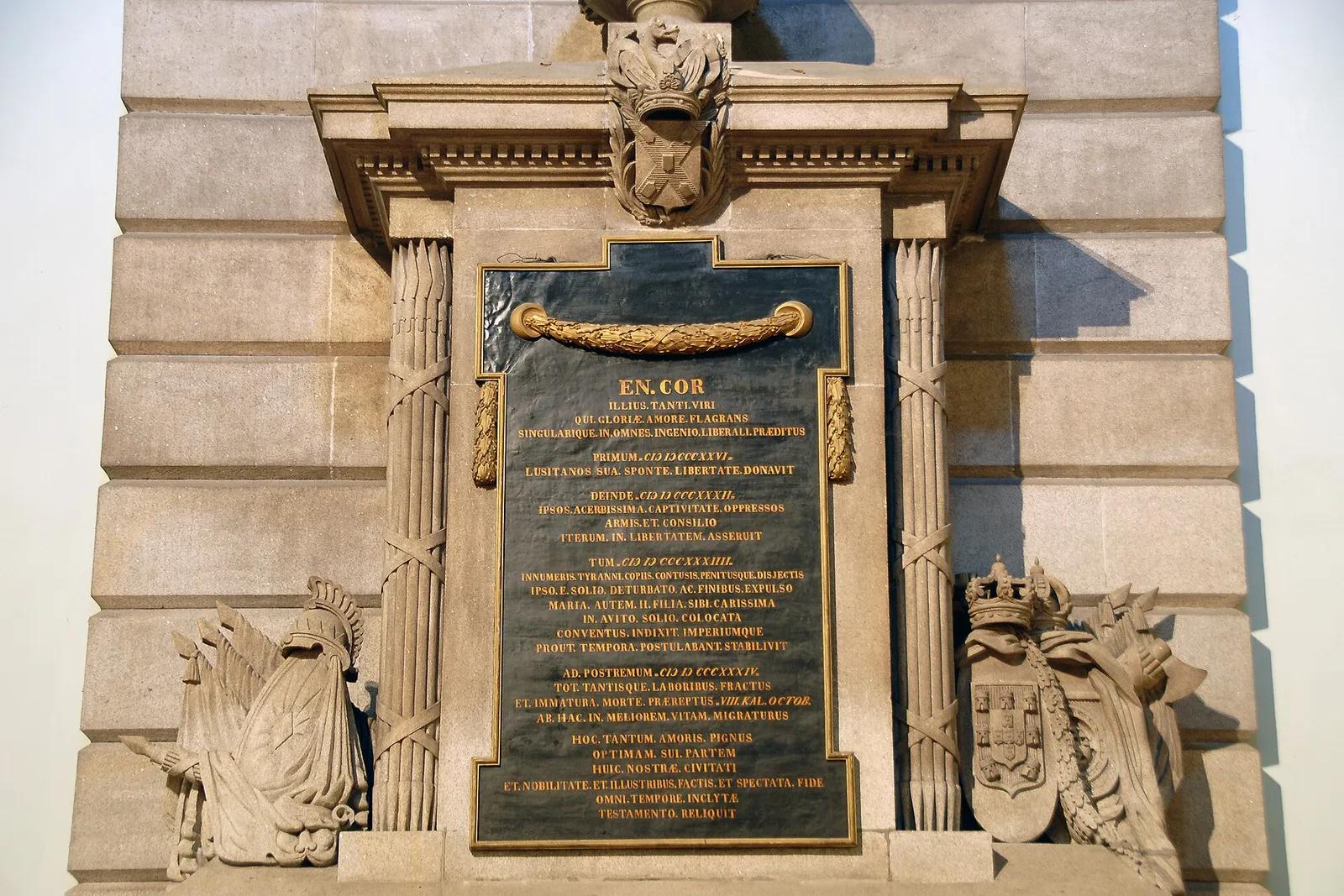
From 1835 until 1925, every 24 September, the brotherhood and the city council held funeral rites for him in the Lapa church, with a sermon in his praise. The historian Francisco Ribeiro da Silva calls the church Porto's “temple of the pedagogy of Liberty”. Enthusiasm was uneven, and from 1909 some invited bodies sent apologies instead of attending. The fund that paid for the ceremony was held in shares of the Banco Comercial do Porto. When the bank failed in 1925 the full rites stopped; a plain mass was said for a time, and then not even that.
The heart is kept in the Lapa church's mausoleum; five keys were needed to take it out. In August 2022 it went on public show for the first time, in the brotherhood's hall. The national forensic institute advised that it could travel if kept in a pressurised environment, and it was flown to Brasília for the bicentenary of Brazilian independence. It was due back in Porto on 9 September, to be shown on the 10th and 11th before being locked away again.
Back to Brazil in 1972
Pedro's body stayed at São Vicente de Fora for 138 years. In 1972 Brazil marked 150 years of independence, and both countries were ruled by authoritarian governments: the Estado Novo dictatorship in Portugal and a military regime in Brazil. After an agreement between them, the coffin crossed the Atlantic with a delegation led by Portugal's president, Admiral Américo Tomás, and reached Brazil on 22 April 1972, the day after Tiradentes Day, which honours the executed hero of an early independence plot.
In Rio, Tomás handed the remains to Brazil's president, General Emílio Garrastazu Médici, at the monument to the Brazilian dead of the Second World War, while Brazilian air force planes performed aerobatics. From 25 April the coffin was taken round the state capitals, starting at Porto Alegre. On 6 September it reached the imperial crypt beneath the Independence Monument at the Ipiranga in São Paulo, where Leopoldina, his first wife, already lay. The coffin turned out to be bigger than the granite sarcophagus made for it, and in 1975 it still stood in the middle of the chapel. His second wife, Amélie, joined them in 1982.
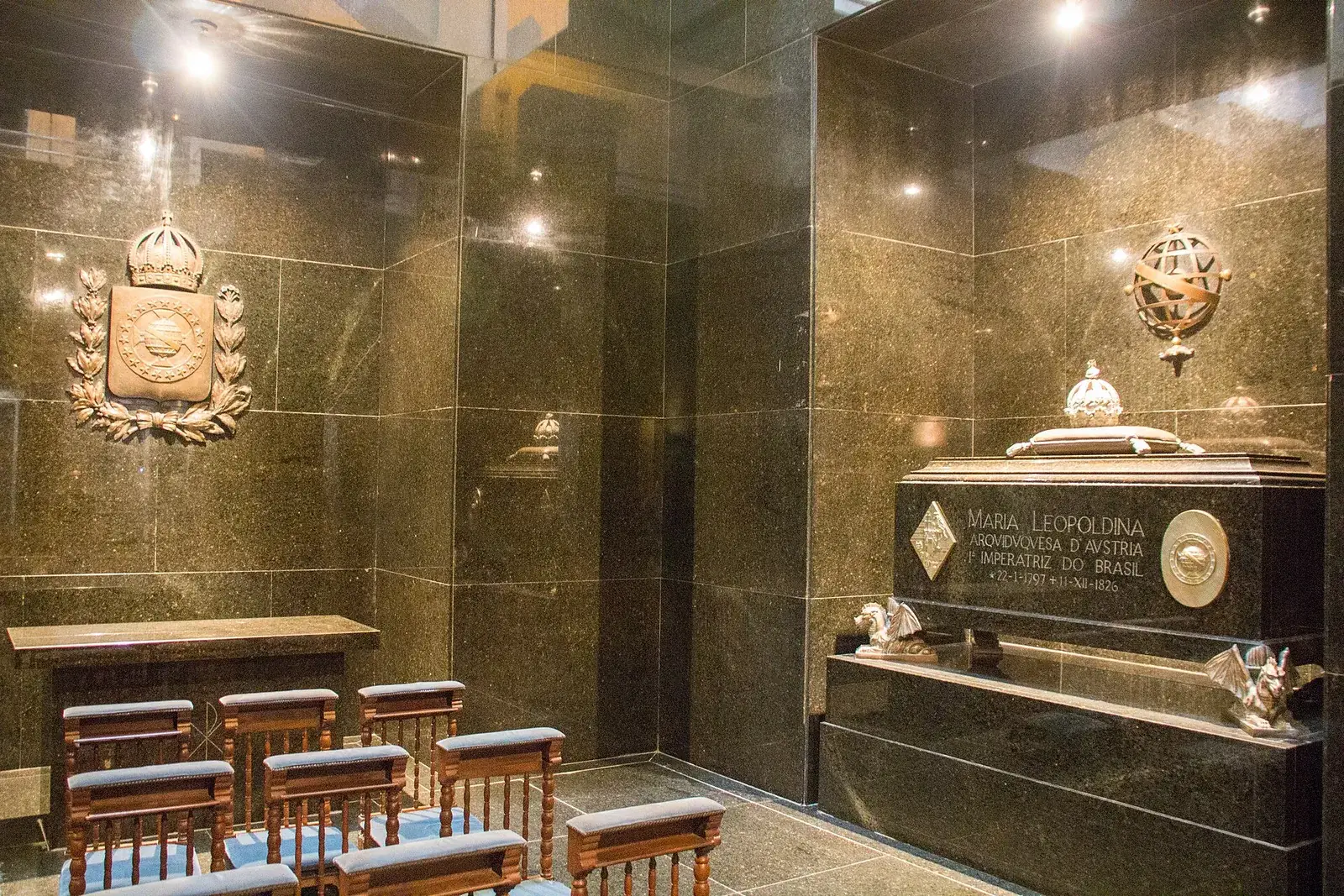
Historians Cristina Ferreira and Evander da Silva, studying how the magazines O Cruzeiro and Manchete covered the tour, argue that the military regime used Pedro's body to give itself a heroic founding myth, with soldiers carrying the coffin past military monuments.
Forty years later the coffin was opened. Between February and September 2012, the archaeologist Valdirene do Carmo Ambiel and doctors at the University of São Paulo examined the remains of Pedro and both empresses. They found him dressed as a Portuguese general, in cavalry boots. None of the five decorations on him was Brazilian; the grand cross of the Tower and Sword his daughter had given him four days before his death was among them. The only mention of Brazil was on the lead lid of one of his three coffins: “Primeiro Imperador do Brasil”, beside “Rei de Portugal e Algarves”.
- Born
- Friday 12 October 1798, Dom Quixote Room, Queluz
- Died
- Wednesday 24 September 1834, same room, about 2.15 pm
- Age
- 35
- Official cause
- Pulmonary tuberculosis
- Heart
- Igreja da Lapa, Porto, since 7 February 1835
- Body
- São Vicente de Fora, Lisbon, 1834 to 1972; imperial crypt, Ipiranga, São Paulo, since 1972
Why it still matters
Maria II reigned until 1853. Palmela, who took office the day her father died, is the first President of the Council of Ministers in the government's official list of heads of government since 1821; most of those before him were ministers of the kingdom. The young queen's marriages followed quickly: to Amélie's brother Auguste of Leuchtenberg in January 1835, who died that March, and in 1836 to Fernando of Saxe-Coburg-Gotha.
Without Pedro, the liberals soon fell out among themselves. Napier, writing in 1836, believed that had Pedro lived Portugal would have been spared the misrule that followed. In September 1836 a revolution in Lisbon replaced the Charter with the Constitution of 1822, a story told in its own article; the Charter came back only in 1842.
In Porto a statue of him went up in the Praça da Liberdade in 1866, 32 years after his death. The heart was in the city's coat of arms until 1940, when it was removed under the Estado Novo, and it survives in the badge of FC Porto. In Lisbon he stands on the column in the Rossio, the Charter in his hand.
Later monarchs kept away from Queluz, and the Dom Quixote Room was preserved as Pedro left it. His bed was lost in a fire on the night of 4 to 5 October 1934, during restoration work; Parques de Sintra completed a recreation, made from old inventories, an 1850 watercolour and early photographs, on 24 September 2025.
“After my father's death, I never saw that palace again. I remembered nothing at all, absolutely nothing, except the room where my father died!”
FAQs
Where and when did Pedro IV die?
At the National Palace of Queluz, near Lisbon, at about a quarter past two in the afternoon of 24 September 1834, in the Dom Quixote Room where he had been born on 12 October 1798. He was 35.
What did Pedro IV die of?
The official cause was pulmonary tuberculosis. The autopsy of 25 September 1834 found fluid in the right side of the chest and a left lung almost without air. A physician argued in 1904 that kidney disease was to blame, but a 2023 University of São Paulo study of his records and skeleton concluded that tuberculosis was the likely cause.
Why is Pedro IV's heart in Porto?
He left it in his will to Porto, the city that held out for him through a 13-month siege in 1832 and 1833. It was handed to the Brotherhood of Our Lady of Lapa on 7 February 1835 and is kept in the Lapa church. It was shown to the public for the first time in August 2022, before a trip to Brazil.
Where is Pedro IV buried?
His body lay in the Bragança pantheon at São Vicente de Fora in Lisbon from 1834 to 1972. For the 150th anniversary of Brazilian independence it was taken to Brazil, arriving on 22 April 1972, and laid in the imperial crypt under the Independence Monument at the Ipiranga in São Paulo.
Who ruled Portugal after Pedro IV died?
His daughter, Maria II. The Cortes declared her of age on 18 September 1834, six days before his death, and she swore to the Constitutional Charter on the 20th, aged 15. She reigned until her death in 1853.
On the timeline
Open the timelineNearby moments from invasions, brazil and the liberal wars (1807–1851).
The Convention of Evoramonte is signed, ending the Portuguese Civil War (Liberal Wars). Miguel's army lays down its arms and he agrees to leave Portugal for good, securing the throne of the young Queen Maria II and the constitutional monarchy.
The decree of 30 May, as the Liberal government cited it, abolishes all male religious orders in Portugal. Drafted by justice minister Joaquim António de Aguiar, it hands hundreds of monasteries and friaries to the state — which is why so many of Lisbon's old convents now house parliament, museums and barracks. It earns Aguiar the nickname 'Mata-Frades' ('Friar-Killer').
Following his defeat in the Liberal Wars and the Convention of Evoramonte, the former King Miguel I embarks at Sines aboard a British warship bound for exile in Genoa. His departure ends absolutism in Portugal and consolidates the constitutional monarchy of his niece, Queen Maria II.
The death of Pedro IV, 1834
Pedro IV of Portugal, who had also reigned as Pedro I, first Emperor of Brazil, dies of tuberculosis at the Palace of Queluz aged 35, in the very room where he was born. His death came only months after the liberal victory in the Portuguese Civil War secured the throne for his daughter Maria II.
Queen Maria II, just turned 17, marries Prince Ferdinand of Saxe-Coburg and Gotha in Lisbon Cathedral, after a proxy wedding in Coburg. On the birth of their first son he became King Fernando II. Remembered as the 'artist king', he would rescue a ruined monastery above Sintra and turn it into the Pena Palace.
The September Revolution breaks out in Lisbon: crowds welcome the opposition deputies elected for the Douro, and that night National Guard battalions proclaim the Constitution of 1822 in the Rossio. The army refuses to stop them and Queen Maria II restores the 1822 text, opening the era of Setembrismo.
A decree issued under minister Passos Manuel creates Portugal's National Pantheon to honour the country's most distinguished figures. It was eventually installed in Lisbon's Church of Santa Engrácia, begun in 1682 and finished only in 1966 — hence 'obras de Santa Engrácia', Portuguese for a job that never ends.
Coming up in history
All long reads
35 sources
Archives, scholarship and reporting this article was checked against.
- 1
24 September 1834: Pedro, Duke of Bragança, dies in the Don Quixote Room of the Palace of QueluzParques de Sintra, Palácio Nacional de Queluz (D. Pedro IV chronology)
- 2
An Account of the War in Portugal between Don Pedro and Don Miguel, vol. II (Charles Napier, 1836), chapters X and XI and appendix nos. XXIX to XXXIIT. & W. Boone, London; digitised by the Internet Archive
- 3
Estudo de aspectos antropométricos e médicos dos primeiros imperadores do Brasil (Valdirene do Carmo Ambiel, doctoral thesis)Faculdade de Medicina, Universidade de São Paulo, 2023
- 4
Recreation of the bed of Pedro IV of Portugal, I of Brazil (1798-1834)Parques de Sintra
- 5
A pedagogia da liberdade na Igreja da Lapa do Porto: as orações fúnebres nas exéquias anuais por D. Pedro IV (Francisco Ribeiro da Silva)A Construção da(s) Liberdade(s): Congresso Comemorativo do Bicentenário da Revolução Liberal de 1820, Faculdade de Letras da Universidade do Porto
- 6
O retorno do Imortal: D. Pedro I mitificado pelos militares nas representações imagéticas das revistas O Cruzeiro e Manchete no Sesquicentenário da Independência (1972) (Cristina Ferreira and Evander Ruthieri Saturno da Silva)Revista Tempo e Argumento, vol. 6, no. 11 (2014), pp. 355-385, Universidade do Estado de Santa Catarina
- 7
- 8
- 9
- 10
- 11
- 12
- 13
- 14
A «causa» de D. Maria II (1826-1834) (M. Fátima Bonifácio)Análise Social, vol. XXXIX (172), 2004
- 15
- 16O coração portuense de D. Pedro IVDiário de Notícias, 19 August 2022
- 17Rota pelo Porto liberal que fez a cidade InvictaDiário de Notícias, 25 July 2017
- 18
- 19
- 20
- 21
- 22
- 23
- 24
Chefes do Governo desde 1821República Portuguesa, Governo de Portugal
- 25
Cientistas exumam corpo de D. Pedro IGazeta do Povo (Agência Estado), 18 February 2013
- 26Exumação da família real brasileira desmente mitosDiário de Notícias, 19 February 2013
- 27Como é feita a transladação do coração de D. Pedro para o BrasilDiário de Notícias, 20 August 2022
- 28Coração de D. Pedro recebido no Brasil com honras de chefe de EstadoDiário de Notícias, August 2022
- 29
O cinema ficcional histórico nas comemorações do Sesquicentenário da Independência (Lidiane Macedo Cosmelli)ANPUH, Anais do Simpósio Nacional de História
- 30
Monumento à Independência (Adote uma obra artística)Prefeitura de São Paulo, Departamento do Patrimônio Histórico
- 31
- 32
- 33
- 34
A Carta Constitucional portuguesa de 1826 (José Miguel Sardica)Historia Constitucional, no. 13 (2012), pp. 527-561, Universidad de Oviedo
- 35
O pátio das antigas: a estátua de D. Pedro IV em construçãoTime Out Lisboa
Image credits
- The National Palace of Queluz, outside Lisbon, photographed in October 2024. Pedro was born in one of its rooms in 1798 and chose to die in the same room in 1834. Hernandez Piras, CC BY-SA 4.0, via Wikimedia Commons.
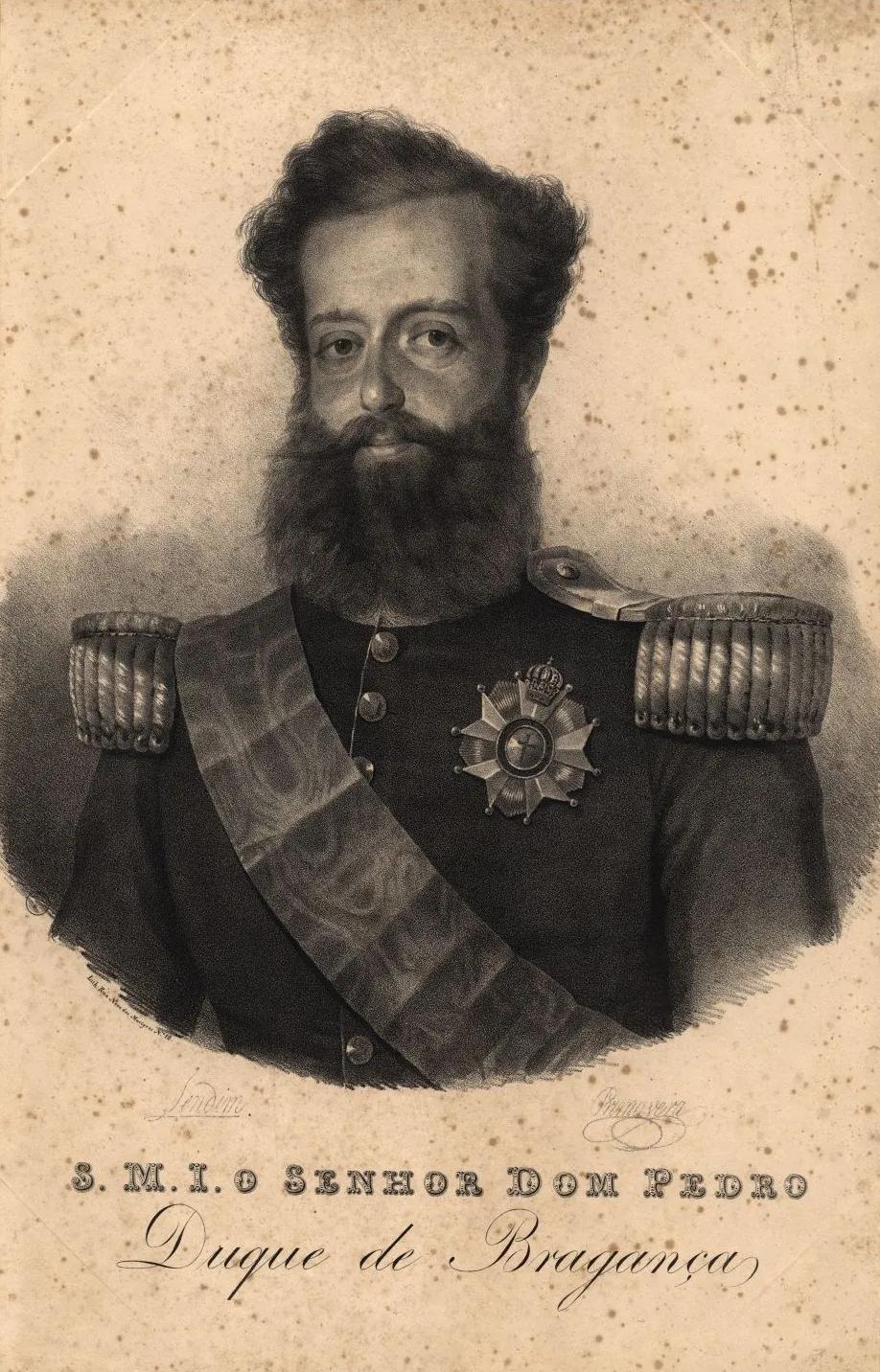
- Pedro as Duke of Bragança, the title he used after giving up the Brazilian crown, in a portrait by Maurício José do Carmo Sendim dated 1833, during the civil war. He had grown the beard in the field and kept it. Maurício José do Carmo Sendim, 1786-1870, Public domain, via Wikimedia Commons.
- Don Quixote charging the windmills, with Sancho Panza behind, in one of the painted panels of the Dom Quixote Room at Queluz, photographed in 2019. Pedro was born and died in this room. MollySVH, CC BY 2.0, via Wikimedia Commons.
- The monument to Pedro's heart in the Lapa church in Porto, built in 1835 to 1837 to a design by the architect Joaquim da Costa Lima Júnior, photographed in 2007. The Latin inscription begins “En cor”, “Behold the heart”, gives his death as the eighth day before the Kalends of October (24 September) 1834, and records that he left this pledge of love, “the best part of himself”, to the city in his will. António Amen, CC BY-SA 3.0, via Wikimedia Commons.
- Leopoldina's tomb in the imperial crypt under the Independence Monument at the Ipiranga, São Paulo, in 2017. Pedro's tomb, where his body has lain since 1972, is in the same chapel. Photograph by Mike Peel (www.mikepeel.net), CC BY-SA 4.0, via Wikimedia Commons.