

Carlos I, the king who studied the sea, born 1863
The first child of Luís I and his fifteen-year-old queen grew up with palace tutors and summers at Cascais. As king he trawled the deep canyons off Sesimbra, won medals for his pastels and watched much of the country turn against him.
At a glance
- Carlos I was born at the Ajuda palace in Lisbon on Monday 28 September 1863, the first child of King Luís I and Queen Maria Pia of Savoy, who was 15.
- He became king on 19 October 1889, aged 26. Less than three months later his government gave way to a British ultimatum over Africa, and much of the country turned against him.
- Between 1896 and 1907 he led twelve oceanographic campaigns off the Portuguese coast on four successive yachts named Amélia, and published studies of the Algarve tuna and of Portugal's sharks.
- He was a prize-winning painter in pastel and watercolour and a keen photographer; about 3,000 of his photographs are kept at Vila Viçosa.
- In 1906 he made João Franco prime minister and in 1907 let him govern without parliament. On 1 February 1908 Carlos and his heir were shot dead in Lisbon. He was 44.
A prince at the Ajuda
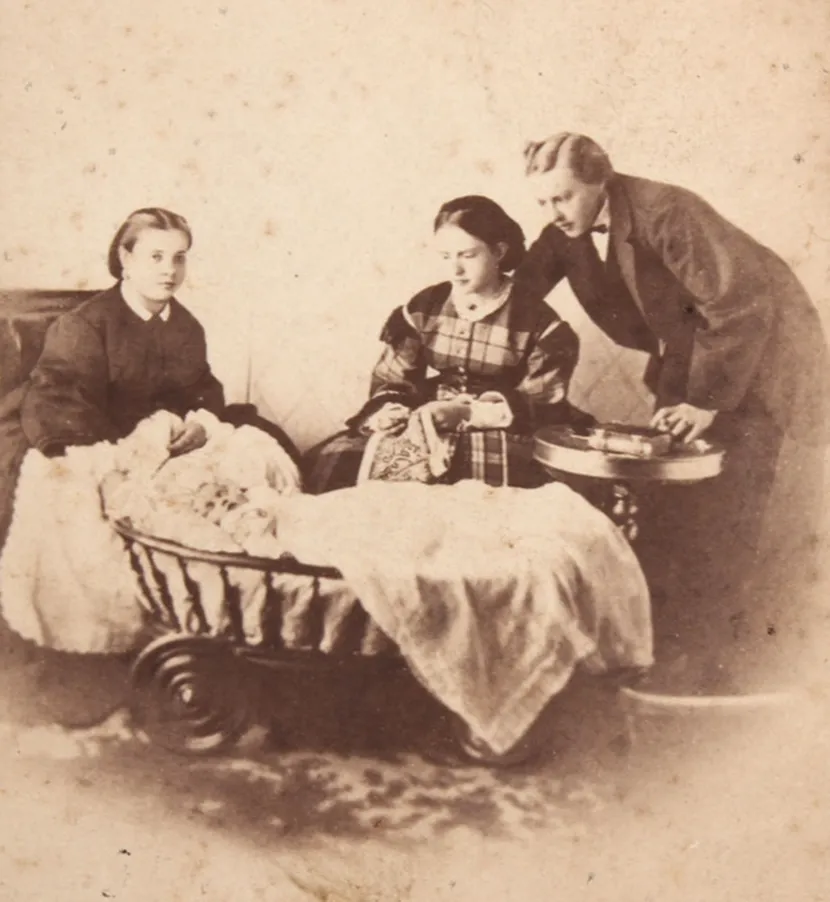
The queen was fifteen. Maria Pia of Savoy, a daughter of the first king of united Italy, had married Luís I of Portugal the year before. On Monday 28 September 1863, at the Ajuda palace in Lisbon, she gave birth to her first child. It was a boy, and so the heir to the throne his father had held since 1861.
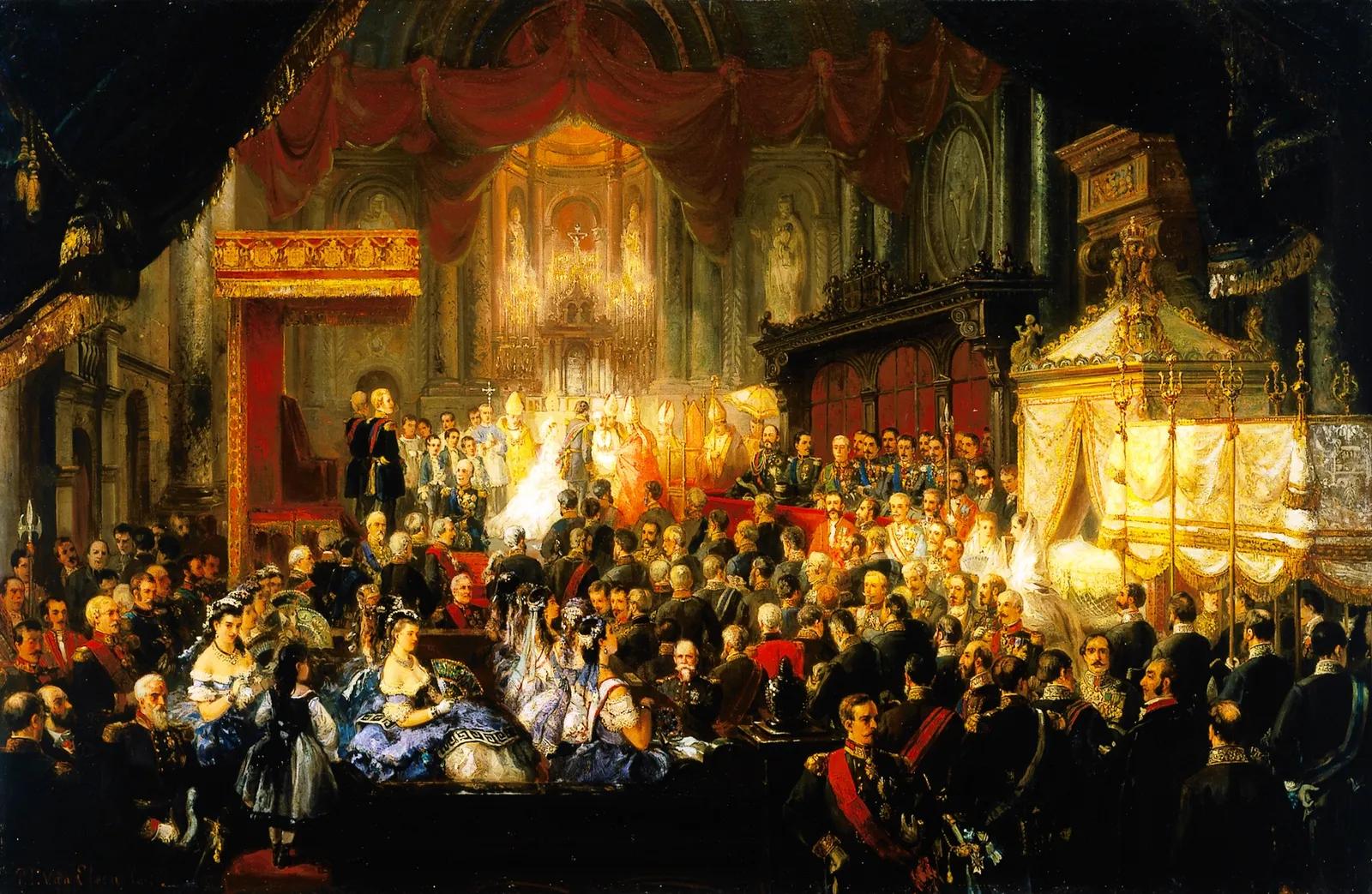
Three weeks later, on 19 October, he was baptised in the church of São Domingos and given the names Carlos Fernando Luís Maria Vítor Miguel Rafael Gabriel Gonzaga Xavier Francisco de Assis José Simão. A brother, Afonso, followed on 31 July 1865. For half a century the Ajuda was the family's home, and both princes were born there.
Carlos would reign for eighteen years, from 1889 until he was shot dead in Lisbon in 1908, less than three years before the monarchy fell. His reign is remembered for its political crises. He is also remembered for twelve seasons of scientific cruising off the Portuguese coast, which led the marine biologist Luiz Saldanha to call him the father of Portuguese oceanography.
- Born
- Monday 28 September 1863, Ajuda palace, Lisbon
- Parents
- King Luís I and Queen Maria Pia of Savoy
- Baptised
- 19 October 1863, church of São Domingos, Lisbon
- Married
- Amélie of Orléans, 22 May 1886
- Reigned
- 19 October 1889 to 1 February 1908
- Died
- 1 February 1908, Lisbon, aged 44
Tutors, cartoons and the sea at Cascais
Portuguese princes did not go to school. The royal house educated its heirs privately, in palaces and with tutors, when other European dynasties had begun to use public schools. João Franco, who became Carlos's last prime minister, later regretted that it left princes growing up apart from the classes he called the nerve and muscle of the nation.
The court set out to make Carlos an enlightened, liberal prince, writes his biographer Rui Ramos. One of his tutors was António Augusto de Aguiar, a scientist and a leading man of the left, and in 1883 the court chose Aguiar to go with him on a tour of the main cities of Europe. Alberto Girard, who later worked beside him for years, praised his extraordinary memory and his command of several languages.
Summers meant the sea. From 1870 the royal family spent the season at Cascais, in a modest palace made from the governor's house in the citadel. Luís and Maria Pia bathed at the Praia da Ribeira in the mornings while the boys were taken to a more sheltered beach, and Luís passed his love of the sea to his elder son. For Carlos's fifteenth birthday, in 1878, his father gave him a schooner, the Nautilus.
The same birthday was marked at the citadel with what Cascais's heritage service calls the first trial of electric public lighting in Portugal. Carlos later wrote that he had had a passion for the sea since childhood.
The cartoonist Rafael Bordalo Pinheiro drew him as a beardless boy in 1879, as a dandy in 1882 and in 1886 as a lovesick prince in search of a bride. Carlos stood in as regent while his father travelled abroad in 1882, 1886 and 1888.
The bride was Amélie of Orléans, eldest child of the Count of Paris, whom French monarchists looked to as their king. They married in Lisbon on 22 May 1886, a day told in our article on the royal wedding. Their sons, Luís Filipe and Manuel, were born on 21 March 1887 and 15 November 1889.
A king at twenty-six
Luís I died on 19 October 1889 and Carlos, aged 26, became king. He was acclaimed with the traditional ceremony on 28 December.
The crisis came within three months. On 11 January 1890 Britain demanded that Portugal withdraw its forces from the Shire valley and the Makololo and Mashona lands, part of the belt between Angola and Mozambique that Lisbon had coloured pink on its maps. That night the Council of State met under the new king and agreed to give way, a story told in our article on the British Ultimatum.
The anger fell on Carlos. In newspapers, meetings and student marches his name was the favourite target. The poet Guerra Junqueiro mocked him in O caçador Simão, Simão the hunter, which Bordalo illustrated, and the student António José de Almeida wrote an article titled Bragança, o último, Bragança the last, after the royal house, for a small Coimbra student paper, O Ultimatum. Privately, the Prince of Wales asked Carlos to understand that the British too had to deal with a public opinion that, though better educated, was just as demanding.
There was worse to come. Republicans rose in Porto on 31 January 1891, and a financial crash left the state unable to pay its foreign creditors in full. In 1892 the royal family accepted a cut of a fifth in its civil list, the allowance the state paid it. That year Carlos made the independent José Dias Ferreira prime minister at the head of a government above the parties; reshaped in May, it lasted until February 1893.
In those first two years the king made no speeches and gave no interviews. He saw his main duty, Ramos writes, as changing governments, not taking their place. From February 1893 the rotation returned, with Hintze Ribeiro as prime minister and the combative João Franco as his second in command.
“Dom Carlos always lived trapped between the charge of passivity and the slander of despotism.”
Abroad, his governments secured Portugal's hold on Angola and Mozambique. The campaign of 1895 against Gaza, an African kingdom in southern Mozambique, ended with the capture of its ruler, Gungunhana, and counted among the reign's few successes. City people, though, saw such victories as small compensation for the humiliation of 1890.
Twelve seasons at sea
“The numerous oceanographic investigations that foreign nations have carried out in recent years, with such fruitful results, the importance of these studies for the fishing industry, one of the main industries of our country, and the exceptional variety of bathymetric conditions in the sea that washes our coasts suggested to us last year the idea of exploring our sea scientifically ...”
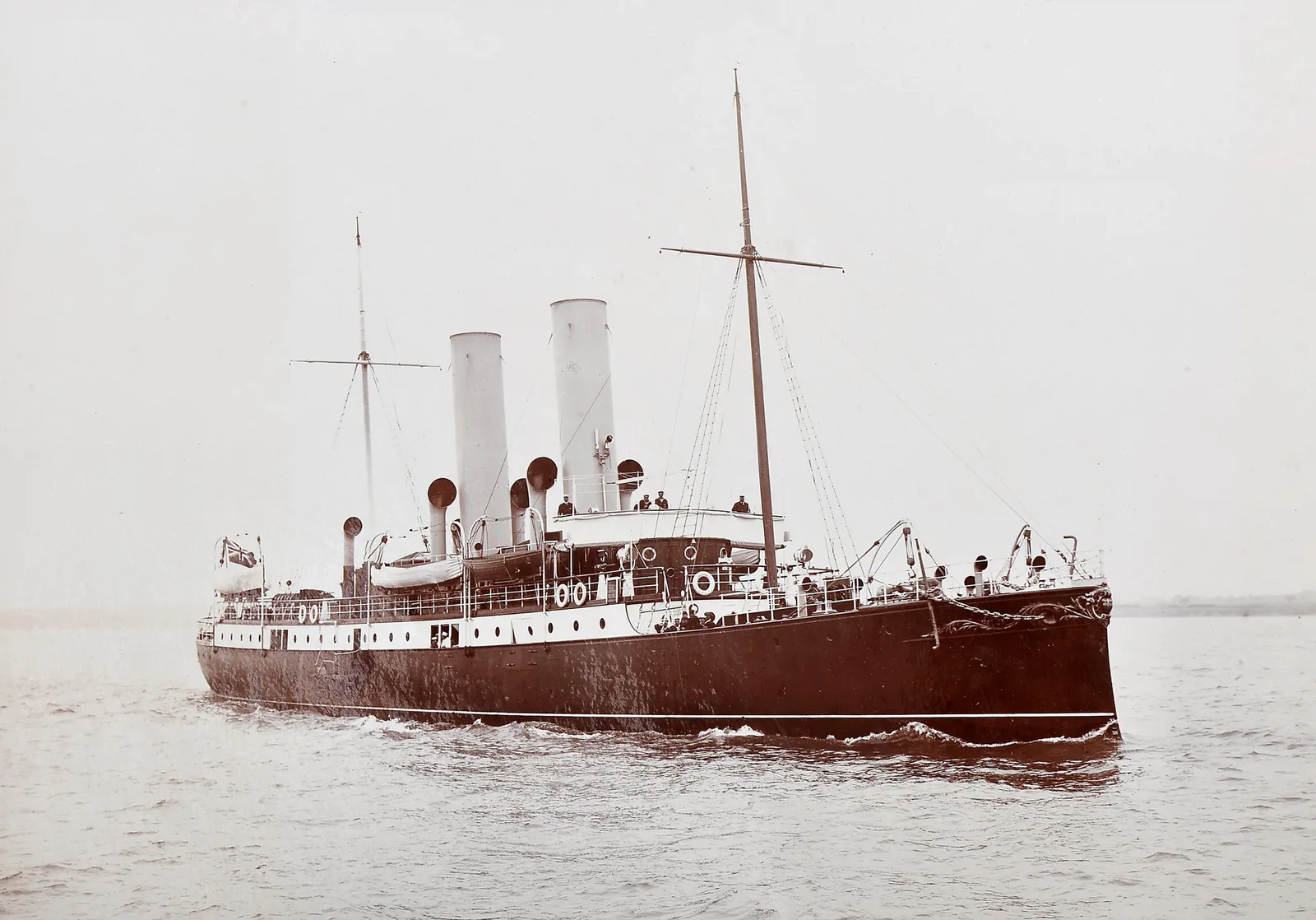
With those words Carlos opened his report on his first oceanographic cruise. After trials in the bay of Cascais in late August, he began the cruise on 1 September 1896 aboard the royal yacht Amélia, named after the queen. In July, weeks before, Prince Albert I of Monaco, one of the leading oceanographers of the day, had come by chance on an undersea bank south of the Azores, in Portuguese waters. Saldanha thinks national pride played a part: Carlos wanted Portuguese seas studied by Portuguese scientists on Portuguese ships.
Albert became a friend and something of a teacher; the two men wrote to each other about science and hunting, and their wives were close. Carlos had a single scientific partner, Alberto Girard, a naturalist born in New York to a French family, who looked after the royal collections at the Necessidades palace, studied the catches and prepared the results for print.
Carlos preferred to know a small sea well. Most of his work was done between Cabo da Roca and Sines, above all off Cascais, Cabo Espichel and Sesimbra, where deep submarine canyons come within a few miles of the shore. The Algarve he visited mainly to study tuna.
He borrowed the espinhel, a long line with many hooks that Setúbal and Sesimbra fishermen used to catch deep-water sharks. On 26 October 1898, off Espichel, his sailors set one at 2,001 metres and hauled it back by hand for more than two hours; it brought up eleven rare dogfish. The deepest trawl, in 1899, also off Espichel, reached 1,856 metres. In twelve years the yachts worked at 290 stations, each begun with a sounding of the depth and the sea floor.
The first two yachts had no laboratory, so Carlos set one up in the citadel at Cascais, with tanks to keep animals alive. Catches were carried there from the boat in buckets of sea water, and big fish went to a taxidermy workshop at the Necessidades. The third yacht was the first with a laboratory on board.
| Yacht | Length | Used for the cruises of | Notes |
|---|---|---|---|
| Amélia | 35 m | 1896 | Rolled badly in open sea; no room for a laboratory |
| Amélia II | 45 m | 1897 and 1898 | Still no laboratory, and too few berths for the crew |
| Amélia III | 55 m | 1899 to 1901 | Harpoon gun for whales; a laboratory that doubled as a darkroom |
| Amélia IV | 70 m | 1902 to 1907 | Bought in 1901; no record of a laboratory |
Lengths and uses from Luiz Saldanha. He gives the years of use for the first, second and fourth yachts; those of the third follow from them.
The cruises produced four publications: the report on 1896 (1897), a study of the Algarve tuna fishery in 1898 (1899), a bulletin of the campaigns in French (1902) and a monograph on the sharks caught off Portugal from 1896 to 1903 (1904). The shark book recorded the frilled shark and the goblin shark in Portuguese waters for the first time, the second under a name, Odontaspis nasutus, that Carlos took to be a new species.
In 1900 an international congress on agriculture and fisheries in Paris voted, as its first resolution, for tuna research like his to be continued off Portugal, Algeria, Spain, France, Italy and Tunisia. In 1903 the Paris paper Le Petit Parisien asked Carlos and Albert whether French sardines had moved to Portugal. Carlos replied that nobody could yet say, and that nothing showed more sardines in Portuguese waters.
His collections went on show: at the Polytechnic School in Lisbon in 1897, at the new Aquário Vasco da Gama, opened on 20 May 1898, in Porto in 1902 and 1903 to 1904, at the Geographical Society in 1904 and at Milan in 1906, where a room was named after him. According to Girard, Albert had the name of the yacht carved on the front of his museum in Monaco.
The science, he told Albert, was his rest and his recreation. Yet the early years were the busiest at sea. On the fourth Amélia the work fell away sharply, Saldanha suggests because of the political troubles that weighed on the king.
Pastels, photographs and birds
Carlos painted all his adult life. He studied with the painter Henrique Casanova and worked mostly in watercolour and pastel: the sea and boats off Cascais and the plains and cork oaks of the Alentejo, where he spent long weeks hunting partridge. The Museu Nacional de Arte Contemporânea in Lisbon, which holds three of his pictures, counts him among the Portuguese naturalists.
From 1888 he exhibited, mostly at the Grémio Artístico and the Sociedade Nacional de Belas-Artes in Lisbon, and won medals at both. A pastel of a tuna net being hauled up took a silver medal at the Paris Universal Exhibition of 1900. The Museu Nacional de Arte Contemporânea says he also won a gold medal at St Louis in 1904; the National Library's biographical note is more cautious and says he reportedly did.
| Year | Picture (all pastels) | Where shown | Award |
|---|---|---|---|
| 1892 | Marinha (seascape) | Grémio Artístico | Third medal |
| 1895 | Marinha (seascape) | Grémio Artístico | Second medal |
| 1897 | Pôr do sol (Sunset) | Grémio Artístico | Medal of honour |
| By 1900 | Raising a tuna net | Grémio Artístico; Paris Universal Exhibition, 1900 | Medal of honour; silver medal in Paris |
| 1904 | Estudo (Study) | Sociedade Nacional de Belas-Artes | Diploma of honour |
| 1905 | Paisagem alentejana (Alentejo landscape) | Sociedade Nacional de Belas-Artes; Barcelona, 1907 | Diploma of honour |
| 1906 | Arribas da Guia à tarde, Cascais (Cliffs at Guia, evening) | Sociedade Nacional de Belas-Artes | None listed |
From the list of exhibited pictures in the tribute volume of 1908. The year printed for the tuna picture is garbled in the scanned copy, so only its exhibition date is given. By 1908 the 1904 study belonged to the King of England.
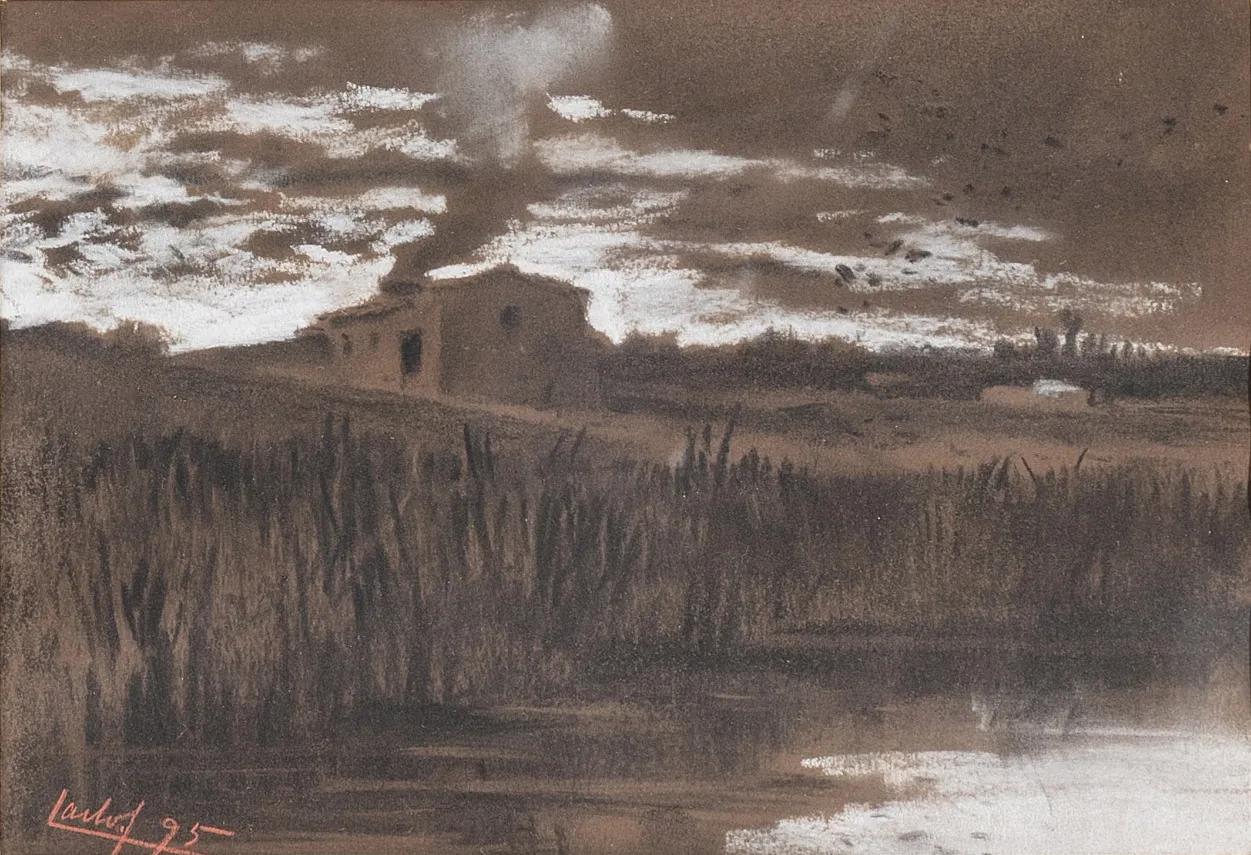
Opinion split along political lines. The republican press called him a bad painter and a dilettante oceanographer, among much else, while a tribute volume published after his death listed his exhibited pictures and their medals one by one.
A keen amateur photographer, he left photographs of which about 3,000 are kept in the photographic archive of the ducal palace at Vila Viçosa. He published an illustrated catalogue of the birds of Portugal in two volumes, in 1903 and 1907.
The bet on João Franco
By 1905 Carlos was, in Franco's words, the most discussed public man in his country. Cartoonists drew him fat, with cigar, sash and slouch hat. Tomás Leal da Câmara, pursued by the police, left for Madrid and then Paris, where he drew him for L'Assiette au Beurre as ready for the slaughterhouse.
Money made it worse. In 1900 the royal household still lived on an allowance fixed in 1822, and governments had lent the king money to make up the shortfall. In 1906 these advances, the adiantamentos, were used to accuse him of plundering the treasury.
In May 1906 Carlos broke the rotation and made Franco prime minister. Franco had left the Regeneradores to found his own party in 1901; he held rallies, gave interviews and seemed to be the one monarchist politician who understood mass politics. When he lost his majority in both chambers in May 1907, the king kept him in office against every other party. Parliament was dissolved and Franco governed by decree, a period contemporaries called the dictatorship.
Carlos knew the risk. Governing behind Franco, he wrote to Albert of Monaco in February 1907, meant being permanently on the catwalk, never leaving the helm for a minute. In June he warned Franco against settling the advances by decree, because public opinion was too easily inflamed. Then he gave an interview to Joseph Galtier of the Paris daily Le Temps, published on 11 November, in which he praised Franco's character.
“I know my country; I know my electoral chessboard ... I understand, because I go everywhere, that my people are with me.”
The opposition read it as an insult. The Progressista paper Correio da Noite complained that the king had mocked the old monarchist parties, ridiculed their leading men and called parliament a gâchis, a mess. Elections were called for 5 April 1908. On 28 January republicans and dissident monarchists tried to rise in Lisbon and failed, and on 31 January a decree that Carlos had signed at Vila Viçosa allowed the government to deport to the colonies anyone judged a threat to the security of the state.
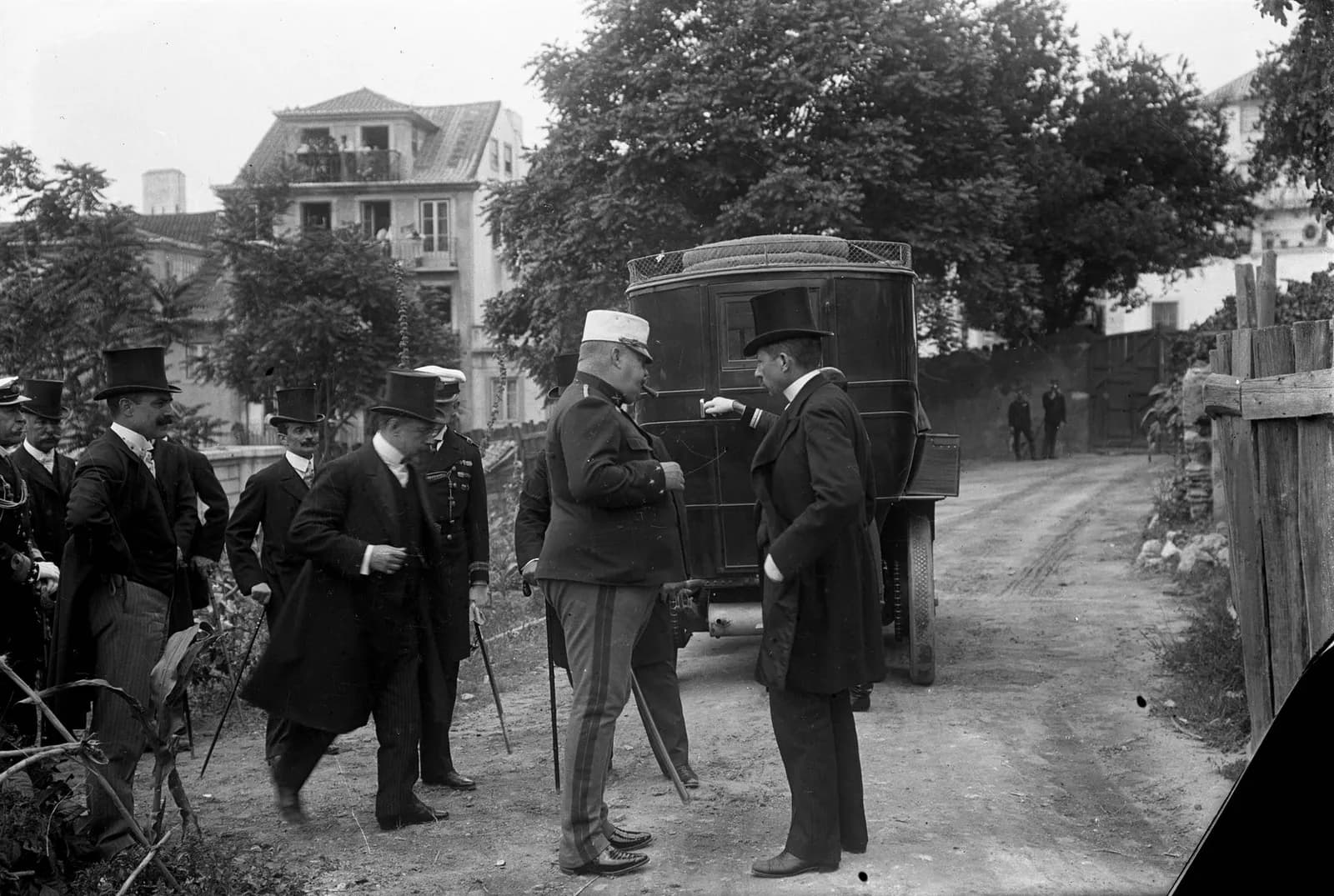
It was said that Carlos liked to remark that he was king of a monarchy without monarchists. Ramos judges that he was realistic and prudent and almost always showed skill, but that in the end his luck ran out.
The king came back to Lisbon on 1 February. Shortly after five that afternoon, as the royal family crossed the Terreiro do Paço in an open carriage, two gunmen killed him and the crown prince, Luís Filipe, as told in our article on the regicide.
Carlos was 44. The monarchy fell on 5 October 1910.
What he left
After he became king the court's season at Cascais opened each year on 28 September, his birthday and also Queen Amélia's. The town's sea museum, the Museu do Mar Rei D. Carlos, has had a permanent room on his oceanography since July 2009.
Carlos kept his collection at the Necessidades palace and meant it to become an oceanographic museum. In February 1910 it was handed to the Portuguese Naval League, and only part of it survived the upheaval after the monarchy fell. In 1935 a formal deed transferred what remained to the Aquário Vasco da Gama, run by the navy since 1901.
The invertebrates, which could have shown what lived on the sea floor he had sampled, were lost.
The aquarium keeps the rest as the collection of the Museu Oceanográfico D. Carlos I, and Girard's draft chart of the soundings from 1896 to 1907 is in its archive. The navy has put the king's books, the yachts' logbooks and his manuscripts online on a platform called Tesouros do Rei, the King's Treasures.
In 2026, 130 years after the first cruise, the Portuguese Institute for the Sea and Atmosphere (IPMA) marked the anniversary by sending its research ship Mário Ruivo to take water and sediment samples off Oeiras.
28 September 1863
Born at the Ajuda palace, Lisbon
19 October 1863
Baptised at São Domingos
1878
Given the schooner Nautilus for his fifteenth birthday
1883
Tours Europe's main cities with his tutor Aguiar
22 May 1886
Marries Amélie of Orléans in Lisbon
19 October 1889
Becomes king on the death of Luís I
Acclaimed on 28 December.
11 January 1890
The British Ultimatum; Portugal gives way
31 January 1891
Republican revolt in Porto
1 September 1896
First oceanographic cruise, off Cascais
20 May 1898
The Aquário Vasco da Gama opens
1904
Publishes his monograph on Portugal's sharks
May 1906
Makes João Franco prime minister
11 November 1907
Le Temps publishes his interview backing Franco
1 February 1908
Shot dead with Luís Filipe in the Terreiro do Paço
FAQs
When and where was King Carlos I of Portugal born?
Carlos was born on Monday 28 September 1863 at the Ajuda palace in Lisbon, the first child of King Luís I and Queen Maria Pia of Savoy. He was baptised in the church of São Domingos on 19 October 1863.
Why is Carlos I called an oceanographer?
Between 1896 and 1907 he led twelve scientific campaigns off the Portuguese coast on four yachts named Amélia, sounding, dredging and fishing at 290 stations. He published studies of the Algarve tuna fishery and of Portugal's sharks, and what survives of his collection is in the Aquário Vasco da Gama.
Was King Carlos I a painter?
Yes. He worked mainly in pastel and watercolour, studied with Henrique Casanova, and won medals at Lisbon exhibitions and a silver medal at the Paris Universal Exhibition of 1900. The Museu Nacional de Arte Contemporânea in Lisbon holds three of his pictures.
How did King Carlos I die?
He was shot dead with his heir, Luís Filipe, on 1 February 1908, as the royal family crossed Lisbon's Terreiro do Paço in an open carriage. The gunmen were the republican conspirators Manuel Buíça and Alfredo Costa. He was 44.
On the timeline
Open the timelineNearby moments from regeneration and the last kings (1851–1910).
Death in Lisbon of Queen Estefânia, the German-born wife of King Pedro V, from diphtheria two days after her 22nd birthday and 14 months after her wedding. In 1858 she had planned a hospital for sick children; the grieving king commissioned one, and the Hospital de Dona Estefânia, opened in 1877, still bears her name.
Portugal and the Tokugawa Shogunate sign a Treaty of Peace, Amity and Commerce in Edo (present-day Tokyo), establishing formal diplomatic relations and reopening trade more than two centuries after the Portuguese were expelled from Japan in 1639.
King Pedro V dies of typhoid fever at the Necessidades Palace in Lisbon, aged just 24, after a reign of eight years. Two of his brothers, the infantes Fernando and João, also died that year, plunging the country into mourning.
The birth of King Carlos I
The future King Carlos I of Portugal is born at the Ajuda Palace in Lisbon, son of Luís I and Maria Pia of Savoy. A noted oceanographer, he reigned from 1889 until his assassination in Lisbon in 1908.
Portugal and Spain sign the Treaty of Lisbon, fixing their frontier from the mouth of the Minho to the confluence of the Caia and Guadiana rivers and handing Spain the three villages of the Couto Misto, whose people had long chosen their own nationality and paid almost no tax.
The 'Diário de Notícias' appears in Lisbon for the first time, with a specimen issue. Founded by the journalist Eduardo Coelho and the printer Tomás Quintino Antunes, it grew into one of the country's leading newspapers and is still published today.
The army doctor José António Marques founds the Portuguese Commission for Relief of Wounded and Sick Soldiers in Time of War, the body that became the Portuguese Red Cross, months after representing Portugal at the 1864 Geneva conference.
Coming up in history
All long reads 30 September 1974Spínola resigns as President, 30 September 1974
 1 October 1777The Treaty of San Ildefonso: Portugal and Spain redraw South America, 1777
 2 October 1969Mr Five Per Cent's museum: the Gulbenkian opens in Lisbon, 1969
 3 October 1910Miguel Bombarda: the shooting at Rilhafoles on the eve of the Republic
29 sources
Archives, scholarship and reporting this article was checked against.
- 1
D. Carlos de Bragança, pai da oceanografia portuguesa (Luiz Saldanha)Instituto Camões, Ciência em Portugal: episódios (2006), translated from Saldanha and Ré (eds), One Hundred Years of Portuguese Oceanography (1997); Internet Archive copy
- 2
O poder visível: D. Carlos, a imprensa e a opinião pública no final da monarquia constitucional (José Miguel Sardica)Análise Social, vol. XLVII (203), 2012, pp. 344–368
- 3
S. M. El-Rei D. Carlos I e a sua obra artística e scientífica (texts by Ramalho Ortigão, Alberto Girard and others)Lisbon: António Palhares, 1908 (Internet Archive, from the Getty Research Institute)
- 4
D. Carlos I (Lisboa, 1863 – Lisboa, 1908)Biblioteca Nacional de Portugal, TECOP biographical dictionary (updated October 2019)
- 5D. Carlos e o fim da monarquia em Portugal (Rui Ramos)Observador, 1 February 2018
- 6
Carlos I (D.), 32.º rei de PortugalPortugal: Diccionario Historico, Chorographico, Biographico... vol. II (João Romano Torres, 1904–1915), electronic edition by O Portal da História
- 7
1908: do Regicídio à ascensão do Republicanismo (exhibition catalogue, with an essay by Jorge Couto and a chronology of January 1908)Biblioteca Nacional de Portugal, 2008
- 8
Uma nosografia de D. Carlos I no centenário do regicídio (José Barata)Medicina Interna: Revista da Sociedade Portuguesa de Medicina Interna, vol. 15, no. 2 (2008), pp. 141–145
- 9Rainha portuguesa nasceu na cidade da JuventusDiário de Notícias, 24 August 2018
- 10
Report on the visit to the Palácio Nacional de AjudaBritish Historical Society of Portugal
- 11
D. Carlos em Cascais, cenas do quotidiano da família real portuguesa (ficha de conteúdos)Câmara Municipal de Cascais, Recursos educativos: história e património
- 12
- 13
Prince Philippe, Comte de Paris (Leone Botes)The Elmbridge Hundred (Elmbridge Borough Council)
- 14
- 15
- 16
António José de Almeida (biography)Hemeroteca Digital, Câmara Municipal de Lisboa
- 17
«Moçambique»: as campanhas de pacificação nas emissões do BNUCaixa Geral de Depósitos, Património Histórico
- 18Portugal assinala 130 anos de primeira campanha oceanográfica com missão ao largo de OeirasRTP Notícias (Lusa), 2026
- 19Alberto I do Mónaco e D. Carlos: dois soberanos, a mesma paixão pelo mar (Helena Tecedeiro)Diário de Notícias, 13 October 2022
- 20
O caso de D. Carlos de Bragança, Rei de Portugal de 1889 a 1908, um oceanógrafo (HIPST case study; Cláudia Faria, Gonçalo Barreiro, Mónica Chagas)Instituto de Educação, Universidade de Lisboa, for the EU HIPST project (hosted by Universität Hamburg)
- 21
The Royal Yacht «Amelia» (London, 1900), lot 324Cabral Moncada Leilões, auction 209, 14 December 2020
- 22
História do Aquário Vasco da GamaMarinha Portuguesa, Aquário Vasco da Gama
- 23
D. Carlos de BragançaMuseu Nacional de Arte Contemporânea do Chiado
- 24
King D. Carlos and Oceanographic ScienceMuseu do Mar Rei D. Carlos, Cascais
- 25
- 26
- 27
Aquário Vasco da GamaTurismo de Lisboa (Visit Lisboa)
- 28
São Vicente de Fora na História: documentos do Arquivo Histórico do Patriarcado de LisboaAgência Ecclesia, 13 July 2010
- 29Luís Filipe de Bragança, o herdeiro que reinou por minutos e que a história esqueceu (Sâmia Fiates)Observador, 7 September 2025
Image credits
- The baptism of the infant Carlos in 1863, painted by Tetar van Elven. The painting belongs to the Palácio Nacional da Ajuda, the palace where the prince was born. Tetar Van Elven (1828-1908), Public domain, via Wikimedia Commons.
- Luís I and Maria Pia with their newborn son in his cradle, in a carte de visite photograph taken by F. A. Gomes, photographer to the royal family, in 1863. The woman on the left is the prince's nurse. F.A. Gomes, Public domain, via Wikimedia Commons.
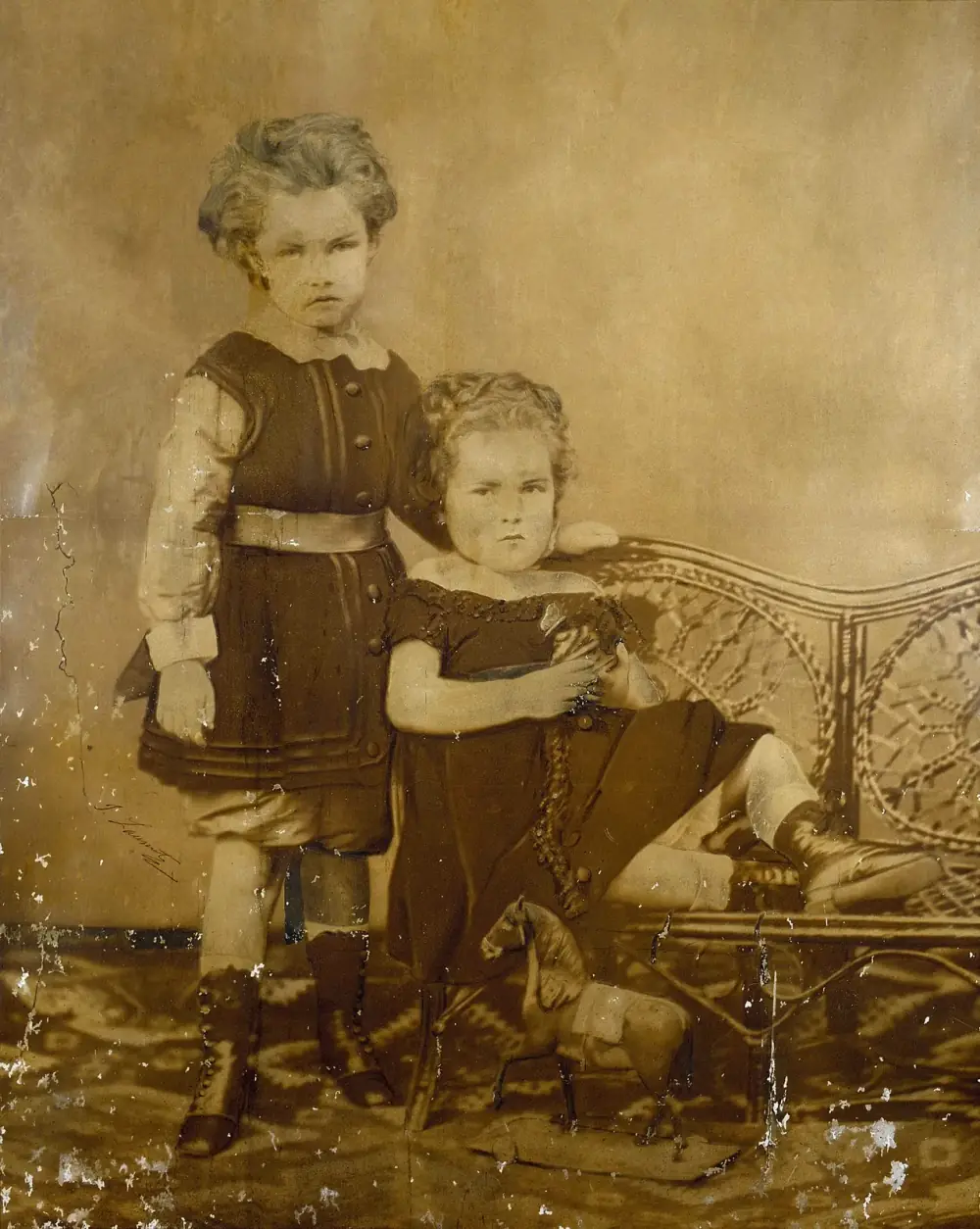
- Prince Carlos and his younger brother Afonso, photographed by Jean Laurent in 1869. The print is in the collection of the Palácio Nacional da Ajuda. Jean Laurent, Public domain, via Wikimedia Commons.
- The royal yacht Amélia in a photograph by Arthur William Debenham from an album made in 1900 by her London designers, Cox & King. Carlos bought his fourth and largest Amélia in 1901. Arthur William Debenham, Public domain, via Wikimedia Commons.
- Herdade do Roquete, a landscape signed by Carlos and dated 1895. Carlos I of Portugal, Public domain, via Wikimedia Commons.
- Carlos, in uniform, with his prime minister João Franco and officials on the site of the future Passos Manuel lyceum in Lisbon, 1907. Photograph by Alberto Carlos Lima. Alberto Carlos Lima, Public domain, via Wikimedia Commons.