

Chai, 1964: how Mozambique's war of independence began
A dozen guerrillas fired on a colonial outpost in northern Mozambique, and FRELIMO declared a general armed insurrection. The war lasted ten years. What happened at Chai that night is still argued over.
At a glance
- On the evening of Friday 25 September 1964, by FRELIMO's account, a group of 12 men under Alberto Chipande fired on the Portuguese administrative post at Chai, in Cabo Delgado, in the far north of Mozambique.
- The same day FRELIMO's Central Committee proclaimed a “general armed insurrection” against Portuguese rule. Mozambique still marks 25 September as the start of its liberation war.
- FRELIMO's official history says the post chief and a sentry were killed; oral testimony gathered later says nobody died. Other armed groups, and FRELIMO itself in Niassa, had fired earlier.
- The roots of the revolt lay on the Makonde plateau, where the shooting of a crowd at Mueda on 16 June 1960 killed between 9 and 36 people by one archival count, not the 600 of FRELIMO's later account.
- The war spread from Cabo Delgado and Niassa to Tete, cost about 3,250 Portuguese military lives, counting deaths from accidents and disease, and ended with a ceasefire on 8 September 1974, after the Carnation Revolution.
Eight in the evening at Chai
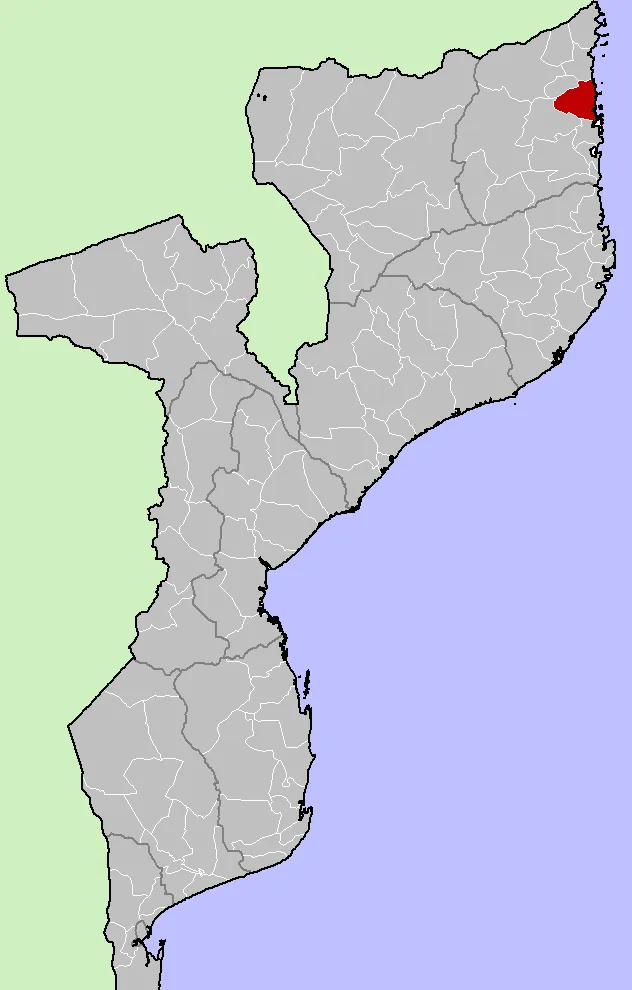
Chai was barely a place. It stood on the dirt road from Macomia to Mueda, near the Messalo river, in Cabo Delgado, the district in the far north-east of the Portuguese colony. It had little more than half a dozen buildings: an administrative office, the house of the chefe do posto, the house of the manager of the Sagal cotton company, two shops, a small infirmary, a jail, and quarters for the white policemen and the African police auxiliaries, the cipaios.
The men in the bush outside, by the account of their commander, Alberto Chipande, a man in his mid-twenties, did not know the ground, so they sent a scout ahead. Chipande gave the order.
There were 12 of them, armed with repeating rifles and pistols. They opened fire on the house of the chefe do posto.
“It happened that on 25 September I fought the battle at Chai. I was the commander. Precisely at 20 hours on 25 September 1964.”
Chai had not been the plan. Chipande later said the first target was meant to be Porto Amélia, now Pemba, the district capital, where an attack would have made far more noise. Conditions did not allow it. The shots fired at a small administrative post on a bush road became the official beginning of a war that lasted ten years.
An empire that would not let go
Portugal in 1964 was a dictatorship, the Estado Novo (New State) of António de Oliveira Salazar. Its creed treated the overseas territories conquered since the age of the Discoveries as sacred national heritage, and the regime was determined to resist decolonisation, by force if necessary.
Mozambique was the third colony to take up arms. Fighting had begun in Angola in 1961 and in Guinea in 1963. In Mozambique the authorities saw it coming: on 15 April 1964 they declared a state of emergency north of the Zambezi and sent 2,500 more soldiers. In July and August the President of the Republic, Américo Tomás, toured the colony to show that all was calm.
The north was the weak point. The Makonde people lived on both sides of the Rovuma river, the border with Tanganyika, which joined Zanzibar in April 1964 to form Tanzania under Julius Nyerere. Many Makonde had emigrated there, and they wanted the conditions they found on the other bank, where there was no forced labour.
The shooting at Mueda
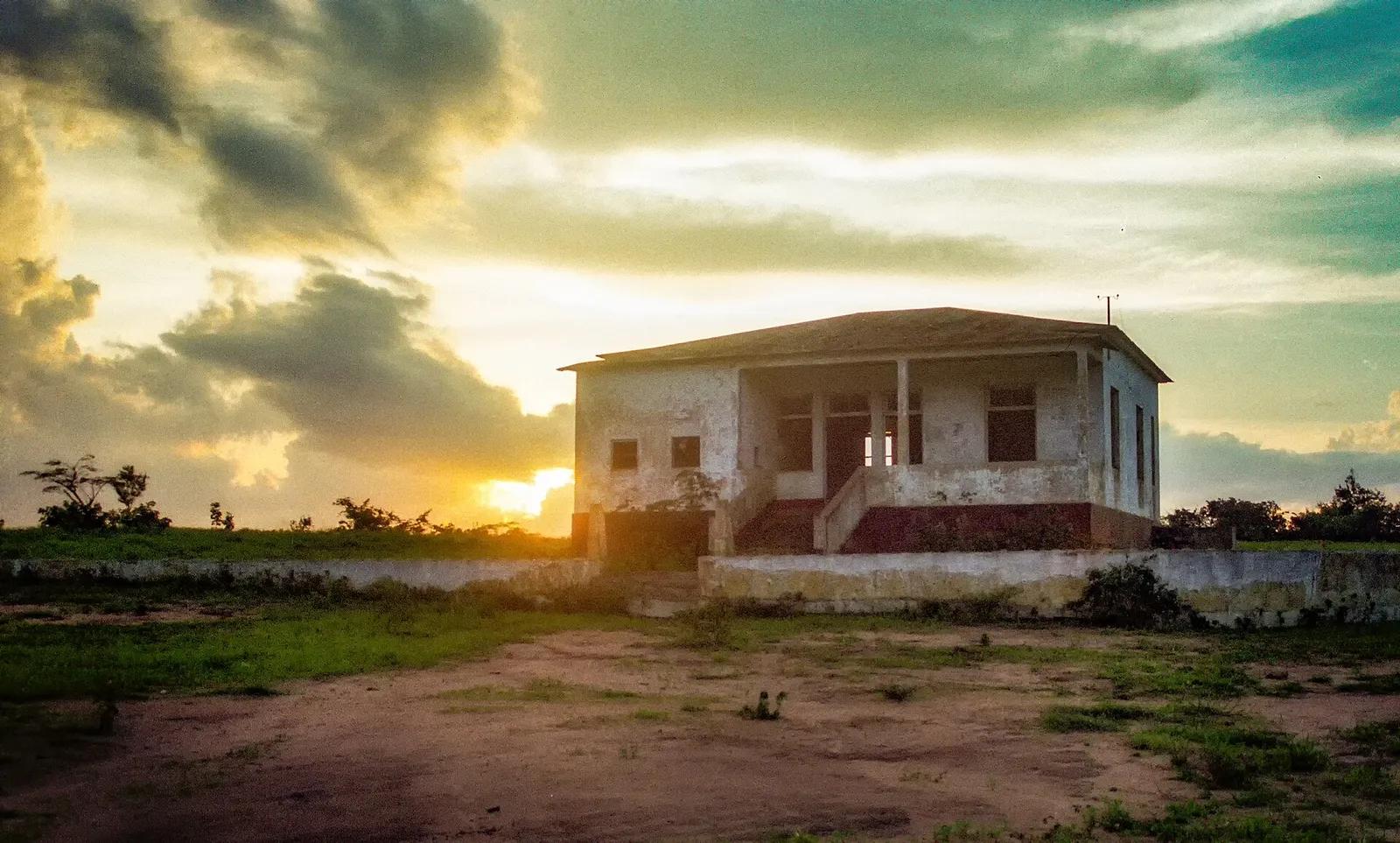
On Thursday 16 June 1960 the governor of Cabo Delgado, Commander Teixeira da Silva of the navy, came to Mueda, the administrative centre of the Makonde plateau. He had asked for a banja, an official public meeting, and about 5,000 people came, many by bicycle. He wanted to speak to the Makonde who had arrived from Tanganyika with a delegation led by Faustino Vanombe and Quibirite Divane.
The governor talked about prices and roads. The delegation asked for uhuru, freedom. He had Vanombe and Divane arrested and handcuffed in front of the crowd. When people surged forward, an administrative cadet shot a man who went for the governor, the cipaios fired, and two jeeps with an infantry platoon came up and joined in. Others were crushed as the crowd fled.
Accounts of the soldiers' part differ. Cahen writes that the governor had refused a military escort and that the district intendant sent the two jeeps after him in defiance of that order. The confidential inquiry report of November 1960 says the governor himself had the platoon brought close to Mueda and then sent word for it to advance.
How many died has been argued ever since. FRELIMO's version, told by Chipande, who presented himself as a survivor, put the dead at 600 and was repeated for decades, including in a play performed at Mueda each year. The historian Michel Cahen, working in the Portuguese archives, found between 9 and 36 dead, and doubted that Chipande was even in Mueda that day.
| Source | Figure |
|---|---|
| Eyewitnesses (one of them) | 16 dead |
| Portuguese military report | About 20 dead |
| Portuguese administration report | 30 dead and wounded |
| Michel Cahen, from Portuguese archives (1999) | 9 to 36 dead |
| FRELIMO newspaper published in Algiers, about 1965 | 150 dead |
| Alberto Chipande, in Eduardo Mondlane's book The Struggle for Mozambique (1969) | 600 dead |
The Associação 25 de Abril's history concludes that about twenty probably died. Cahen also found that the delegation came to negotiate the return of Makonde emigrants, not to demand independence, and belonged to a rival of MANU.
Even Cahen, who cut the toll, called it the most serious military incident in Mozambique since the end of the Barué revolt in 1921. For the Makonde, he wrote, it was the answer to their request, and it showed that war would be needed.
One front, several armies
FRELIMO, the Mozambique Liberation Front, was founded in Dar es Salaam on 25 June 1962 by merging three exile groups: UDENAMO, MANU, which was mostly Makonde and close to Nyerere's ruling party, and the small UNAMI. Its first president was Eduardo Mondlane, a southerner who had worked for the United Nations. A congress in September 1962 committed it to independence by any means.
The front was quarrelsome from the start. MANU's leaders were expelled in May 1963, impatient with Mondlane's slowness to start fighting. A rebuilt MANU under Lucas Fernandes struck first in Cabo Delgado, with muzzle-loaders, Lee Enfield rifles and shotguns. On 14 August 1964 it killed an auxiliary police guard near Mueda, and on 24 August it raided the Catholic mission at Nangololo and killed a Dutch priest, Daniel Boormans.
The killing backfired. The missions turned against MANU and helped the authorities, and the Portuguese mopped up the group with little trouble; Fernandes was caught and tried by a military court. Cahen argues that the priest's death destroyed MANU on the plateau and let FRELIMO be the first to wage war in earnest.
FRELIMO was preparing too. Its fighters had trained in the Soviet Union and China, and on 1 July 1964 the leadership split its military wing from the political one. In the second half of August three groups crossed from Mtwara, in Tanzania, into Cabo Delgado, aiming for Macomia, Mueda and Montepuez. Only the Mueda group, under Raimundo Pachinuapa, took root. By FRELIMO's own count the whole movement then had just 250 armed and equipped men.
Three nights in September
MANU's raids had made the guerrillas look like bandits, and villagers were reporting them to the Portuguese. FRELIMO wanted a military act that would mark it out. On Thursday 24 September its men blocked roads in northern Cabo Delgado with felled trees and trenches, broke bridges and cut telephone lines, and fired, without hitting anyone, on the administrative post of Cobué, by Lake Niassa.
Chai came the following night. The difference, the Associação 25 de Abril's history notes, is that the official report on Cobué recorded no Portuguese casualties, while the report Chipande wrote on Chai claimed some. That, it argues, is why FRELIMO set the start of the war 24 hours later than its first shots: it wanted the war to begin with a heroic act.
- Date
- Friday 25 September 1964, about 20:00 by Chipande's account
- Place
- Chai administrative post, on the Macomia to Mueda road near the Messalo river, Cabo Delgado
- Attackers
- 12 FRELIMO guerrillas under Alberto Chipande
- Weapons
- Repeating rifles and pistols
- Target
- The house of the chefe do posto
- Dead
- At least 2 in FRELIMO's official history; none in later oral testimony
FRELIMO's official history says the attack killed at least two people, the chefe do posto and the sentry at his house. Research based on oral testimony says nobody was killed that night and that the first death came a week later, in an ambush between the Messalo and Chai. Chipande himself gave different versions over the years, with different numbers of victims.
FRELIMO's Central Committee issued a proclamation dated 25 September. It said FRELIMO had tried peaceful means for two years and that Portugal had refused to recognise the right to independence.
“FRELIMO today solemnly proclaims the general armed insurrection of the Mozambican people against Portuguese colonialism for the attainment of the complete independence of Mozambique.”
16 June 1960
Crowd shot at Mueda after the arrest of the Tanganyika delegation
25 June 1962
FRELIMO founded in Dar es Salaam, with Eduardo Mondlane as president
May 1963
MANU's leaders expelled from FRELIMO
15 April 1964
State of emergency north of the Zambezi; 2,500 more troops
1 July 1964
FRELIMO separates its military and political structures
14 August 1964
MANU kills an auxiliary police guard near Mueda
24 August 1964
MANU raids Nangololo mission and kills Father Daniel Boormans
24 September 1964
FRELIMO cuts roads in Cabo Delgado and fires on Cobué, Niassa
25 September 1964
Chipande's group attacks Chai; FRELIMO proclaims armed insurrection
26 September 1964
Guerrillas fire on the launch Castor on Lake Niassa
The war in Cabo Delgado and Niassa
The incidents multiplied. In October guerrillas burned two shops near the Messalo and destroyed an Indian trader's shop at Namulumba. In November FRELIMO struck a military post at Mutarara, in Tete. In December the PIDE, the political police, rounded up suspected sympathisers in the capital, Lourenço Marques, among them the poet José Craveirinha and the painter Malangatana Valente.
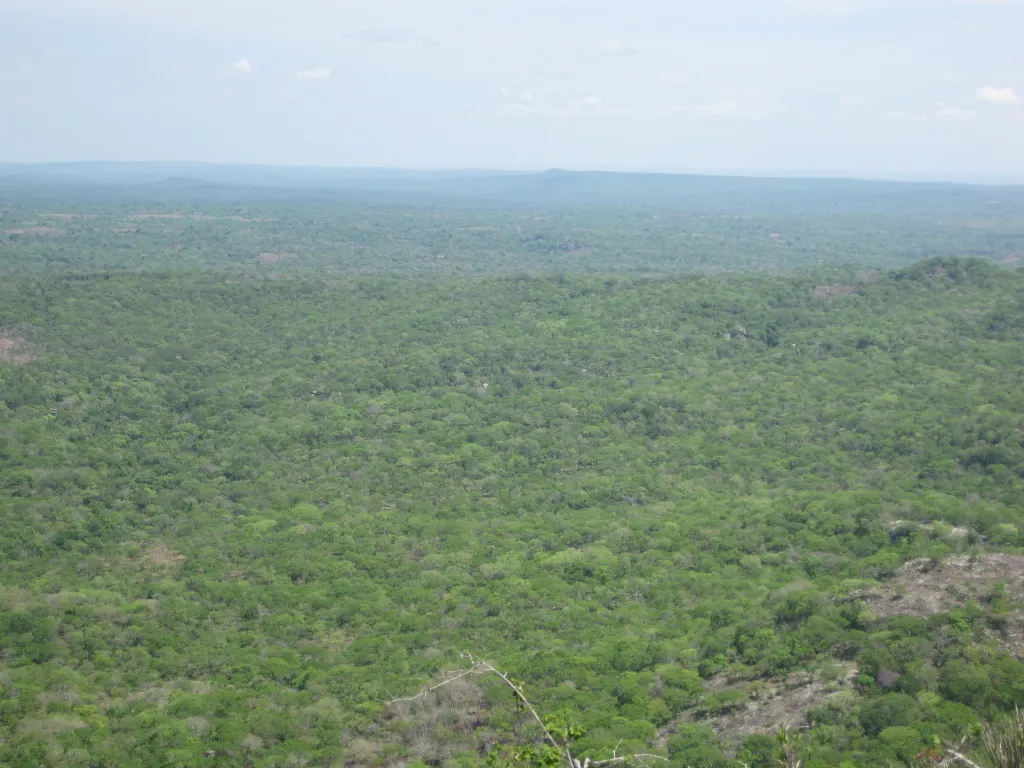
The army's first big answer was Operation Águia (Eagle), from 2 July to 6 September 1965: two battalions and an artillery battery sweeping the plateau between the Rovuma and the Messalo. Ambushes and attacks between early June and the end of July 1965 killed 10 Portuguese soldiers and wounded 45. When it ended, the Portuguese held only the people living near their barracks at Mueda, Nangololo and a few other old Makonde villages.
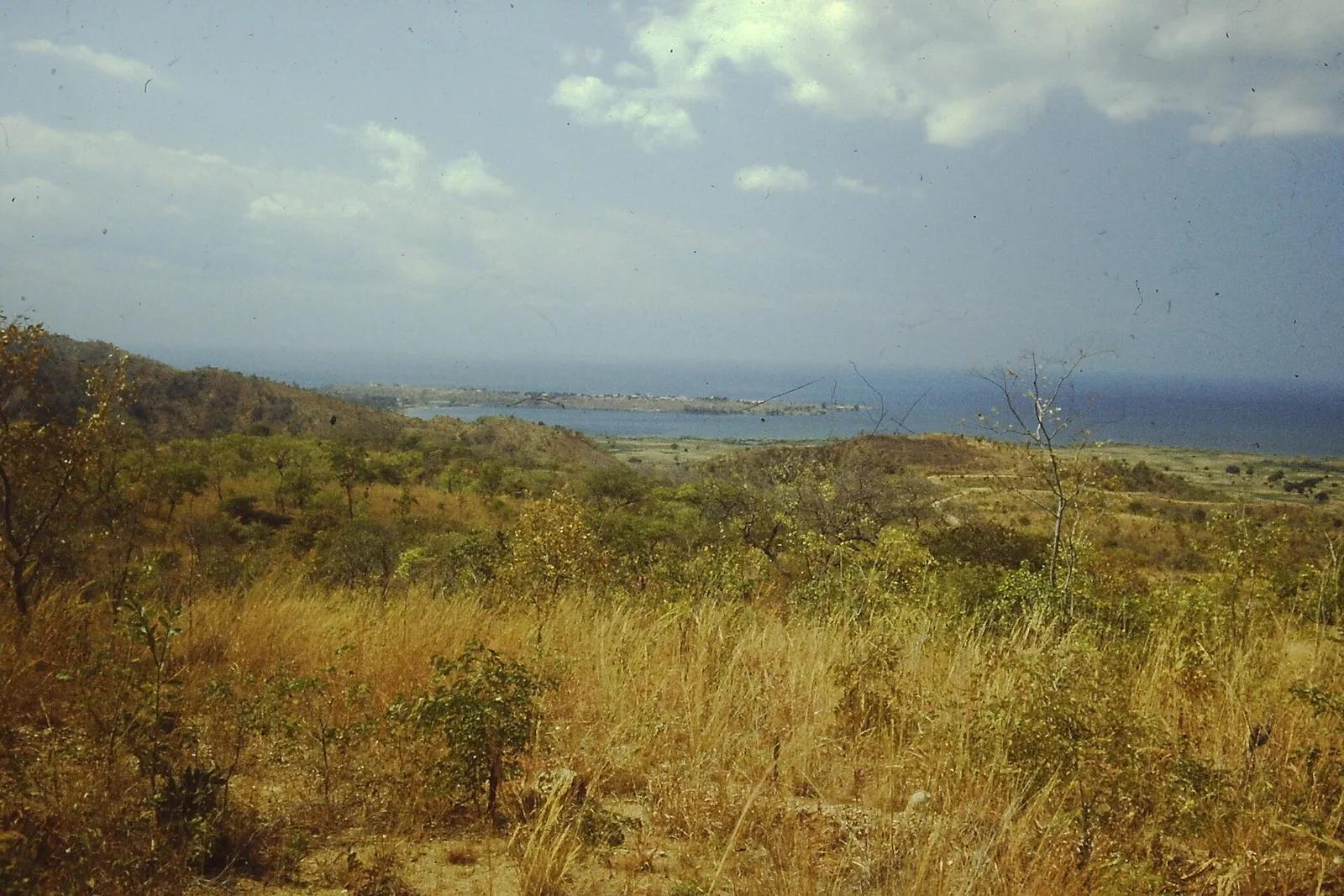
Mines arrived in 1965 and became the main killer of Portuguese soldiers. Sousa writes that from 1964 to 1966 the guerrillas were active only in Niassa and Cabo Delgado, and that from 1967 FRELIMO carried the war into Tete, though the Associação 25 de Abril's history dates a first FRELIMO attack in Tete, at Mutarara, to November 1964. On Lake Niassa, which the navy considered the centre of its war in Mozambique, a command for the lake's patrol boats was set up at Metangula in 1965.
Portugal answered with numbers. When the war began in 1964 the army had 18,049 men in Mozambique, 43.9 per cent of them recruited locally. By 1973 it had 51,463, and men recruited in the colony were the majority, 53.6 per cent. The army's companies in the territory went from 48 to 116, the biggest reinforcement of any of the three fronts.
Portuguese army strength in Mozambique, 1961 to 1973
soldiers
- Recruited in Portugal
- Recruited in Mozambique
Army only (not the navy or air force), from Portuguese army figures published by Pedro Marquês de Sousa (2021), who gives no figures for 1962 or 1966 to 1972. Counting all three services, Portugal had 56,932 men in Mozambique at the end of the war. His 1963 total for all three fronts is 8 less than the sum of its parts; the Mozambique figures are shown as printed.
Show the data
| Recruited in Portugal | Recruited in Mozambique | |
|---|---|---|
| 1961 | 8,209 | 3,000 |
| 1963 | 9,243 | 5,003 |
| 1964 | 10,132 | 7,917 |
| 1965 | 13,155 | 9,701 |
| 1973 | 23,891 | 27,572 |
In 1970 General Kaúlza de Arriaga took command. Unlike his predecessors, he believed that destroying FRELIMO's bases inside Mozambique could bring a decisive victory, and from 1 July 1970 he sent more than 8,000 men, by the Associação 25 de Abril's account the largest Portuguese force ever used in a single operation, against FRELIMO's bases on the Makonde plateau in Operation Gordian Knot (Nó Górdio). The commandos who stormed the main base, Gungunhana, on 6 July found it abandoned.
The guerrillas pulled back rather than defend ground. The historians Bruno Cardoso Reis and Pedro Aires Oliveira argue that the offensive in the north sped up FRELIMO's shift to Tete, where Portugal had begun building the Cahora Bassa dam and troops were scarce because they had been concentrated in the north. From 1970 the centre of the country, not Cabo Delgado, was the main theatre, and it was there, at Wiriyamu in December 1972, that Portuguese commandos massacred villagers.
How the war ended
FRELIMO nearly broke apart in the meantime. On 3 February 1969 Mondlane was assassinated in Dar es Salaam.
In March that year Lázaro Kavandame, the Makonde cotton cooperative leader who had become FRELIMO's chairman in Cabo Delgado, gave himself up to the Portuguese. Samora Machel, the commander of the guerrilla army, emerged as leader.
The war ended in Lisbon, with the coup of 25 April 1974, the Carnation Revolution. In the Lusaka Accord of 7 September 1974 Portugal agreed to hand power to FRELIMO; a ceasefire took effect at midnight on 8 September, and Machel proclaimed independence on 25 June 1975. That story is told in our article on Mozambique's independence.
| Angola (1961-74) | Guinea (1963-74) | Mozambique (1964-74) | Total | |
|---|---|---|---|---|
| Portuguese military dead (army, air force, navy) | 4,079 | 3,082 | 3,248 | 10,409 |
| Civilian dead (estimate) | 3,700 | 1,400 | 1,100 | 6,200 |
| Dead in the independence movements (estimate) | 13,226 | 7,000 | 8,000 | 28,226 |
Military deaths are the sums of Sousa's table by rank and service and include deaths from accidents and disease, which with other causes made up about 46 per cent of army deaths in Mozambique (accidents 31.4 per cent, disease 11.2 per cent). Only deaths after September 1964 count for Mozambique. The civilian and guerrilla figures are his estimates, not counts.
Why it still matters
Mozambique still marks 25 September as the start of its armed struggle for national liberation and honours its armed forces on that day. In September 2025 the country marked the 61st anniversary of the start of the armed struggle with ceremonies in Matola, where the former president Filipe Nyusi paid tribute to the young people who began the armed struggle in 1964.
Chipande became the independent country's first defence minister and a member of FRELIMO's Political Commission. In 2020 Pemba's municipal assembly voted, with only FRELIMO in favour, to raise a statue to him; the opposition Renamo said he was not a consensual figure. In December 2024, during riots that followed the general election, the statue was pulled down and dragged through the streets.
Since 2017 an armed insurgency has hit Cabo Delgado. In February 2024 insurgents attacked the headquarters of the Chai administrative post, in Macomia district, and killed two people.
For Portugal, Chai opened the third front of a war in which some 800,000 servicemen, about 30 per cent of them recruited in Africa, served in Angola, Guinea and Mozambique between 1961 and 1974. The ten years in Mozambique cost more than 3,000 Portuguese military lives, counting deaths from accidents and disease.
FAQs
When did the Mozambican War of Independence start?
Mozambique dates it to 25 September 1964, when FRELIMO proclaimed a general armed insurrection and a group under Alberto Chipande attacked the Portuguese post at Chai in Cabo Delgado. Other groups had fired earlier, from July 1964, and FRELIMO itself fired on the Cobué post in Niassa on 24 September.
Who fired the first shot of the war in Mozambique?
FRELIMO's official history credits Alberto Chipande, who led the 12 men at Chai. Historians point out that MANU, a rival group, killed a guard and a priest in August 1964, and that Chipande gave differing accounts of the Chai attack.
What was the Mueda massacre?
On 16 June 1960 Portuguese police auxiliaries and soldiers fired on a crowd of about 5,000 at Mueda, on the Makonde plateau, after the governor of Cabo Delgado had two delegates from Tanganyika arrested. FRELIMO later spoke of 600 dead; archival research puts the toll between 9 and 36.
How many people died in the war in Mozambique?
Pedro Marquês de Sousa's count from army, air force and navy figures gives 3,248 Portuguese military deaths in Mozambique from September 1964 to 1974, including accidents and disease. He estimates about 8,000 deaths among the guerrillas and 1,100 among civilians.
How did the war end?
After the Carnation Revolution of 25 April 1974, Portugal signed the Lusaka Accord with FRELIMO on 7 September 1974. A ceasefire began on 8 September, and Mozambique became independent on 25 June 1975.
On the timeline
Open the timelineNearby moments from dictatorship and the estado novo (1926–1974).
Birth in Beira, Mozambique, of José Rodrigues dos Santos, who became one of Portugal's best-known television journalists as an RTP news anchor and, alongside it, one of the country's best-selling novelists.
Sporting CP win the European Cup Winners' Cup, beating MTK Budapest 1–0 in a replay in Antwerp after a 3–3 draw in Brussels two days earlier. The winner is João Morais's celebrated goal scored direct from a corner.
Death in Lisbon, aged 70, of Marshal Francisco Craveiro Lopes, President of the Republic from 1951 to 1958. His cool relations with Salazar and his sympathy for opponents of the regime cost him a second term, and he was later linked to the failed Botelho Moniz coup attempt of April 1961.
The attack on Chai, 1964
FRELIMO guerrillas under Alberto Chipande attack the Portuguese administrative post at Chai in Cabo Delgado, the act Mozambique marks as the start of its War of Independence. The conflict lasted a decade, ending only after the Carnation Revolution opened the way to Mozambican independence.
Fire guts the Teatro Nacional D. Maria II on Lisbon's Rossio in the early hours, sparing little more than the outer walls, entrance hall and Salão Nobre; Columbano Bordalo Pinheiro's painted ceiling and the company's wardrobe are lost. Superstition blames 'Macbeth', performed there that evening. Rebuilt behind its neoclassical façade, the national theatre only reopened in 1978.
General Humberto Delgado, the most prominent opponent of the Salazar dictatorship, is lured by the PIDE to a fake meeting of conspirators in Spain and murdered near Olivenza with his Brazilian secretary, Arajaryr Campos. Their bodies are found near Villanueva del Fresno in April.
Actress and director Maria de Medeiros is born in Lisbon. She played Anaïs Nin in 'Henry & June' and Fabienne, Bruce Willis's girlfriend, in 'Pulp Fiction', and directed 'Capitães de Abril' (2000), a film about the Carnation Revolution screened at Cannes.
Coming up in history
All long reads
21 sources
Archives, scholarship and reporting this article was checked against.
- 1
FRELIMO, o início da luta armadaGuerra Colonial (guerracolonial.pt), Associação 25 de Abril
- 2
- 3
The Mueda case and Maconde political ethnicity: some notes on a work in progress (Michel Cahen)Africana Studia 2 (1999), pp. 29-46, author's copy on HAL
- 4
- 5
Proclamation to the Mozambican People (FRELIMO Central Committee, 25 September 1964)Marxists Internet Archive, FRELIMO documents
- 6
Os números na primeira fase da guerra de África (1961-1965) (Pedro Marquês de Sousa)Revista Portuguesa de História Militar 1 (December 2021), Comissão Portuguesa de História Militar; copy via Semantic Scholar
- 7
Cutting Heads or Winning Hearts: Late Colonial Portuguese Counterinsurgency and the Wiriyamu Massacre of 1972 (Bruno Cardoso Reis and Pedro Aires Oliveira)Civil Wars, vol. 14, no. 1 (2012), pp. 80–103; copy in the digital library of the Centro de Documentação 25 de Abril, Universidade de Coimbra
- 8Autor do “primeiro tiro” contra o colonialismo português em Moçambique narra façanhas da guerraDiário de Notícias / Lusa, 20 September 2018
- 9
Mozambique: Municipality of Pemba to erect statue in honour of Alberto ChipandeClub of Mozambique / AIM, 6 October 2020
- 10
- 11
7-10 de Setembro de 1974 em Lourenço Marques (Moçambique): uma tentativa de independência branca? (Michel Cahen)Estudos do Século XX 24 (2024), Imprensa da Universidade de Coimbra
- 12
- 13
- 14
Samora MachelSouth African History Online
- 15
O Essencial sobre a Descolonização Portuguesa (António Duarte Silva)Imprensa Nacional-Casa da Moeda, 2026
- 16
- 17
Declaração de Independência de Moçambique, de 25 de Junho de 1975: mensagem da proclamação da independência proferida pelo Presidente Samora Machel no Estádio da MachavaCEDIS, Faculdade de Direito da Universidade Nova de Lisboa
- 18
Personalidades enaltecem FADM pela defesa da soberania nacionalAIM (Agência de Informação de Moçambique), 25 September 2025
- 19
- 20
- 21
Combatant's Museum in Forte do Bom SucessoVisit Lisboa (Turismo de Lisboa)
Image credits
- A colonial-era government building at Mueda, on the Makonde plateau, in February 1995. The photographer describes it as the site of the shooting of 16 June 1960, when a crowd gathered at the administration was fired on. 4wallz, CC BY 3.0, via Wikimedia Commons.
- Macomia district, in red, in the north-east of Mozambique. Chai is today an administrative post of this district in Cabo Delgado province; in 1964 Cabo Delgado was itself a district of the colony. Rarelibra, adapted by Himalayan Explorer, CC BY-SA 4.0, via Wikimedia Commons.
- Wooded country in Ancuabe district, Cabo Delgado, in January 2011. Ton Rulkens from Mozambique, CC BY-SA 2.0, via Wikimedia Commons.
- Metangula and its bay on Lake Niassa, seen from the road down from the Niassa plateau, photographed in 1988 or 1998 (the file gives both dates). The Portuguese navy based its Lake Niassa patrol command here from 1965. Lichinga, CC BY-SA 4.0, via Wikimedia Commons.