

Portugal joins the Council of Europe: 22 September 1976
For a quarter of a century the Council of Europe had no place for Portugal's dictatorship. Five months after a democratic constitution took effect, a 34-year-old foreign minister signed the country in.
At a glance
- On 22 September 1976 Portugal became the 19th member of the Council of Europe, the organisation of European democracies founded in London in 1949.
- The foreign minister, José Medeiros Ferreira, signed the accession and, on the same day, the European Convention on Human Rights.
- Under Salazar and Caetano, Portugal had joined NATO, the OEEC and EFTA but was never invited into the Council, whose Statute requires the rule of law and respect for human rights.
- The process took 41 days: a letter of 12 August 1976, a favourable Assembly opinion on 16 September and an invitation from the Committee of Ministers on 21 September.
- Portugal ratified the Convention on 9 November 1978 and accepted, from that day, the right of individuals to complain to Strasbourg.
A signature in Strasbourg
In 1968 José Medeiros Ferreira, a student leader of the 1962 university crisis, left Portugal for exile in Switzerland. On Wednesday 22 September 1976 he was in Strasbourg as his country's foreign minister, aged 34 and two months into the job, with two documents to sign.
The first made Portugal a member of the Council of Europe. The second was the European Convention on Human Rights.
“That's right, I was the one who signed.”
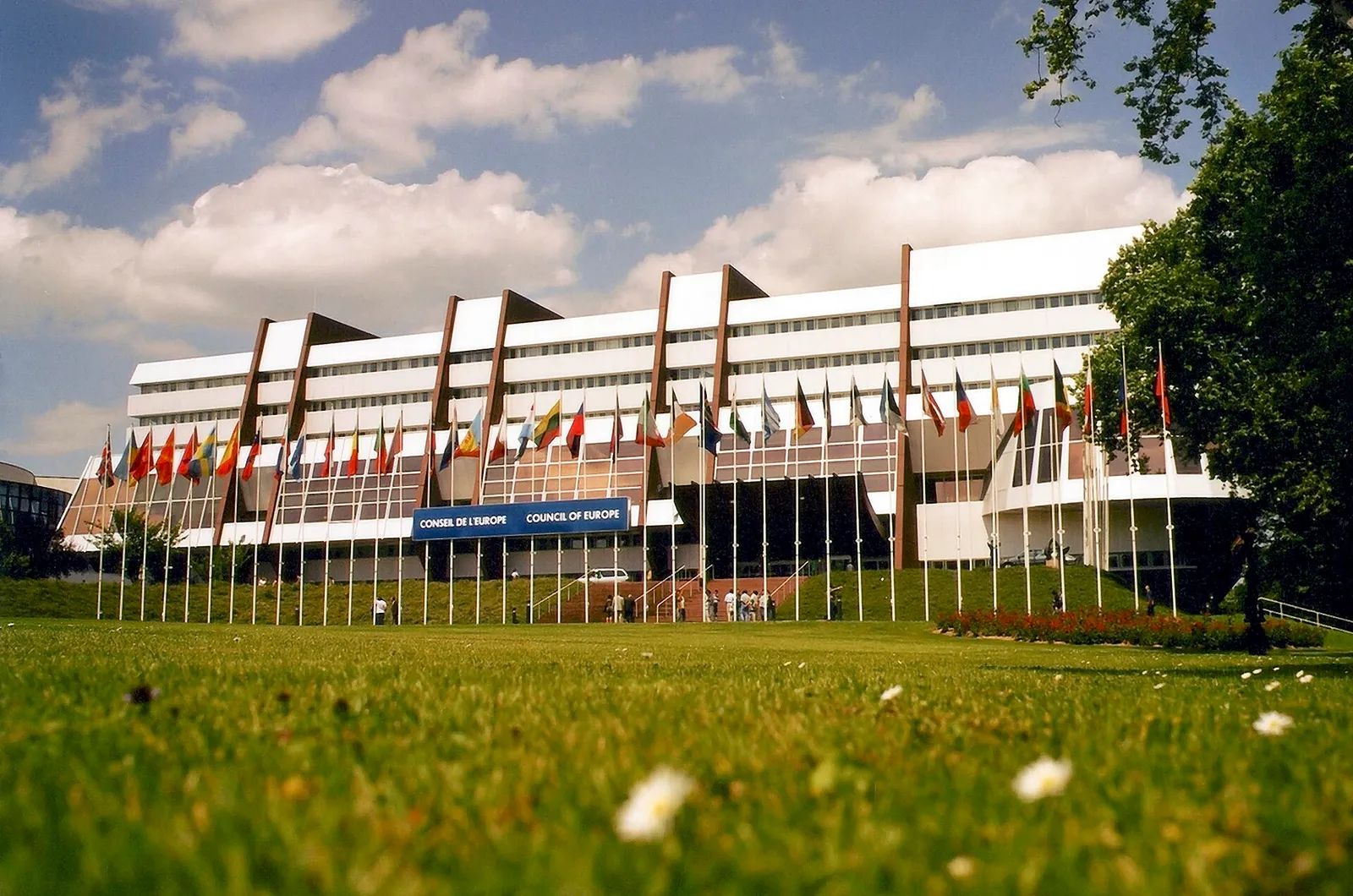
The Secretary General, Georg Kahn-Ackermann, had asked him to come in person. He had hoped to receive the instrument of accession on 21 September, at the meeting where the ministers' deputies formally invited Portugal to accede to the Council's Statute. The handover came a day later, and Portugal became the organisation's 19th member state.
Less than two and a half years after the revolution of 25 April 1974, the country Medeiros Ferreira had left was accepted into the club of Western European democracies that had kept it out under the dictatorship.
- Date
- Wednesday 22 September 1976
- Place
- Strasbourg, seat of the Council of Europe
- Signed by
- José Medeiros Ferreira, Minister for Foreign Affairs
- Member number
- 19th
- Seats in the Assembly
- 7
- Share of the ordinary budget
- 1.86%, from 1 January 1977
- Also signed that day
- The European Convention on Human Rights
A club with entry rules
The Council of Europe was created by a treaty signed in London on 5 May 1949. Its ten founders were the United Kingdom, France, Italy, Belgium, Luxembourg, the Netherlands, Ireland, Norway, Sweden and Denmark. Greece, Iceland, Turkey and West Germany soon followed. It has two main bodies: a Committee of Ministers representing the member governments, and a parliamentary Assembly, then called the Consultative Assembly.
Membership has conditions. Article 3 of the Statute says that every member must accept the principles of the rule of law and of the enjoyment of human rights and fundamental freedoms by everyone within its jurisdiction. Under Article 4 the Committee of Ministers decides which states to invite, and under a rule of 1951 it consults the Assembly first.
The Council's best-known work is the European Convention on Human Rights, signed in Rome on 4 November 1950 and in force since 3 September 1953. It set up the first international system for protecting human rights, with a court in Strasbourg that can rule against member states.
Outside the door: the Estado Novo and Strasbourg
Salazar's Estado Novo, the authoritarian regime set up in 1933 and continued from 1968 by Marcelo Caetano, was not shut out of post-war Europe. Portugal was a founding member of the Organisation for European Economic Co-operation (OEEC) in 1948 and, after first declining it, accepted Marshall Plan aid in the plan's second year. Thanks to the strategic value of the Azores bases it was a founding member of NATO in 1949, despite its dictatorship, and in 1960 it helped found the European Free Trade Association (EFTA).
The Council of Europe was different. Portugal was not invited to join in 1949, because its anti-democratic regime made membership impossible, the historian Pedro Cantinho Pereira writes. At the Hague Congress of May 1948, a former Portuguese diplomat, Narciso Freire de Andrade, was reportedly told he could not represent Portugal even as an observer, so he attended on behalf of the Cardinal Patriarch of Lisbon instead.
Lisbon was not keen anyway. Salazar's government doubted that the new body would matter, disliked a system in which small countries had fewer votes than large ones, objected to giving national representatives individual votes and was wary of the socialist parties' stance on the new body. In the Assembly's first years the Portuguese regime was not openly attacked, and there were several calls for bringing Portugal closer.
“Despite the extreme tolerance that other bodies showed towards the Iberian dictatorships, the Council of Europe never showed that same kind of tolerance.”
Medeiros Ferreira, by then a history professor, said the Council of the Cold War years existed partly to show that pluralist, representative democracies were superior to dictatorships. That, he said, explained why Portugal joined NATO for strategic reasons and EFTA for trade, but stayed outside the Council of Europe until 1976, as Spain did until after Franco.
From revolution to invitation, 1974 to 1976
Strasbourg reacted fast to the military coup of 25 April 1974, the Carnation Revolution, which ended 48 years of dictatorship. Within a fortnight the Assembly had welcomed the end of censorship and of the political police and said it looked forward to Portugal joining. It also asked member governments for economic aid, warning that unresolved economic problems would endanger the new freedom.
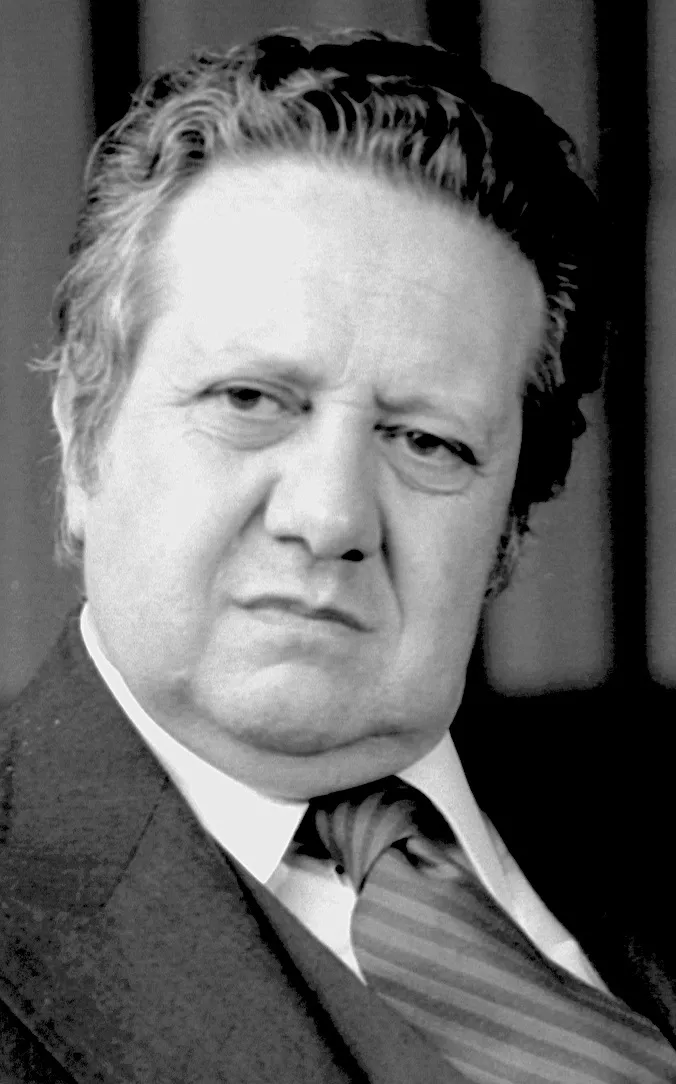
On 28 September 1974 Portugal's foreign minister, the Socialist leader Mário Soares, told the Assembly that his government wanted closer technical co-operation and would seek full membership once a parliament had been elected. The Assembly named its price the following April: the original programme of the Armed Forces Movement (MFA), with supreme power for an elected assembly, carried out in full, and a democratic constitution.
The constitution came first. Approved by the Constituent Assembly on 2 April 1976, it took effect on 25 April, when Portugal elected its first Assembly of the Republic. Its text abolished the death penalty in all cases, made international treaties part of Portuguese law once ratified and published, and required fundamental rights to be read in harmony with the Universal Declaration of Human Rights.
In May 1976 the Assembly welcomed a constitution guaranteeing all the rights listed in the European Convention, and the release of almost all political prisoners, former regime officials among them. The Portuguese, it noted, had voted overwhelmingly, in 1975 and again in 1976, for parties that accepted democratic principles. One step remained: an elected President had to draw the consequences of the legislative election.
General António Ramalho Eanes was elected President on 27 June and took office on 14 July. Soares, now Socialist prime minister, formed the first constitutional government on 23 July and won a vote of confidence in the Assembly of the Republic on 11 August.
The next day his foreign minister wrote to Strasbourg.
Forty-one days
Medeiros Ferreira's letter of 12 August 1976 to Kahn-Ackermann was short. It reported that the President and the Assembly of the Republic had both been elected, that the government had won the confidence of parliament and that the transition, with its double goal of democratisation and decolonisation, was over. Portugal therefore met the requirements of Article 3.
“I have therefore the honour to inform you that Portugal would be very happy to be invited to become the nineteenth member country of the Council of Europe.”
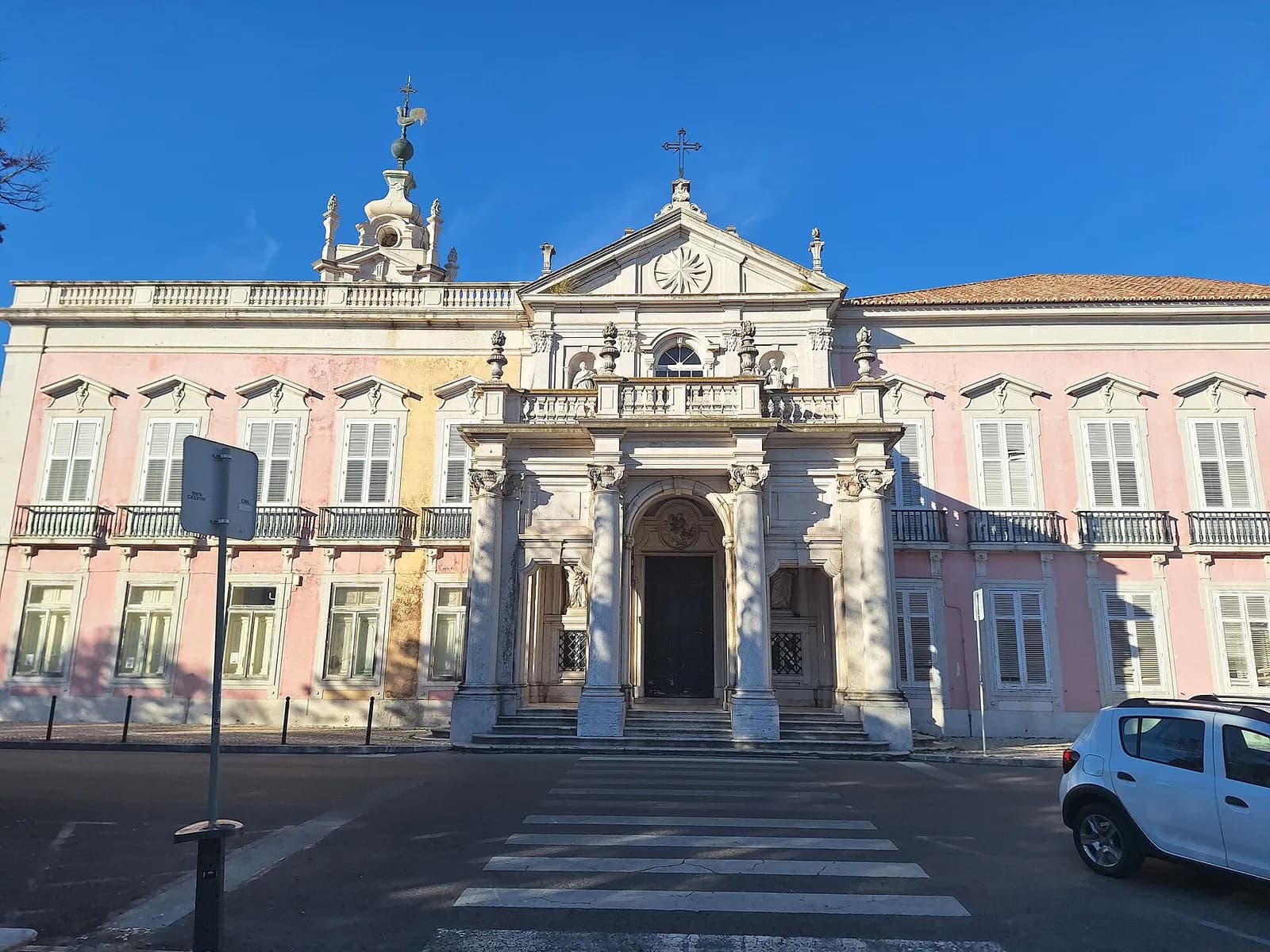
Kahn-Ackermann replied on 20 August that he felt a sense of real European pride in acknowledging the letter, and set out the timetable. The Assembly would give its statutory opinion around 16 September. The ministers' deputies would issue the invitation on 21 September, and Portugal would become a member as soon as an instrument of accession to the Statute was handed to the Secretary General.
The timetable held, give or take a day. The Assembly declared that Portugal fully met the conditions and welcomed its intention to become a party to the Convention. The Committee of Ministers issued the invitation and set Portugal's contribution to the ordinary budget at 1.86%.
| Date | Body | Document | What it said |
|---|---|---|---|
| 9 May 1974 | Assembly | Resolution 563 | Welcomed the end of dictatorship and looked forward to Portugal joining |
| 25 April 1975 | Assembly | Resolution 593 | Membership would follow a democratic constitution |
| 7 May 1976 | Assembly | Resolution 627 | Membership would follow once an elected President had acted on the election results |
| 12 August 1976 | Portuguese government | Letter to the Secretary General | Asked to be invited as the 19th member |
| 20 August 1976 | Secretary General | Reply to Lisbon | Proposed the timetable for September |
| 16 September 1976 | Assembly | Opinion 78 | Portugal fully met the conditions; seven seats |
| 21 September 1976 | Committee of Ministers | Resolution (76) 37 | Formal invitation to accede to the Statute |
| 22 September 1976 | Portuguese government | Instrument of accession | Portugal became the 19th member state |
In 1976 the Parliamentary Assembly was still officially called the Consultative Assembly. Resolution (76) 37 was adopted by the Ministers' Deputies at their 260th meeting. Spain's foreign ministry calls Spain, which joined on 24 November 1977, the 19th member; the 1976 correspondence, the Portuguese government and Medeiros Ferreira count Portugal as 19th and Spain as 20th.
Medeiros Ferreira later called the negotiation purely political. It lasted about a month and a half, he recalled, from August to September, and the hardest part was the human rights convention, which Lisbon wanted to sign at the moment of accession. He believed Portugal was one of the few countries that did so.
The Convention and its reservations
Signing the Convention was a promise; ratification made it binding. Parliament approved it by Lei n.º 65/78 of 13 October 1978, and the instrument of ratification was deposited with the Secretary General on 9 November 1978, the day the Convention took effect for Portugal.
Portugal attached reservations where the Convention clashed with the revolution's unfinished business. One kept military disciplinary detention under Portugal's military regulations. Another protected Article 309 of the Constitution, which kept in force the law of 1975 for trying agents and officials of the PIDE/DGS, the dictatorship's political police. Reservations to Articles 4, 10 and 11 were withdrawn in 1987.
The constitutional lawyer Vital Moreira listed other clashes with the original 1976 text: the state monopoly of television, which the Constitution said could not be privately owned, and expropriation without compensation. Those reservations were lifted later, as the Constitution was revised or the provisions lost their force. Medeiros Ferreira said the reservations dealt with dismantling the dictatorial state while some trials were still under way.
In 1978 the right of individual petition was still optional. Portugal declared on ratification that it accepted, for two-year periods from 9 November 1978 renewed automatically, the European Commission of Human Rights' power to hear complaints from individuals, groups and NGOs, and the compulsory jurisdiction of the European Court of Human Rights. Protocol 11, in force from 1 November 1998, replaced that system and let individuals take complaints directly to the Court.
“In joining the Council of Europe and acceding to the ECHR, Portugal was choosing its side unequivocally.”
Portugal had a seat on the Court before it had ratified. João de Deus Pinheiro Farinha was its first judge in Strasbourg, from 1977 to 1991.
The next door: Brussels
Medeiros Ferreira said the two European memberships he worked on could not be compared. For the Council of Europe, Portugal only had to show that it was a democracy. Joining the European Communities, the Common Market and its two sister communities, took negotiations that ran from 1978 to 1985.
Portugal already had a free-trade agreement with the European Economic Community, in force since 1973. Six months after Strasbourg, on 28 March 1977, the Soares government applied to join all three Communities. Negotiations opened on 17 October 1978, the treaty was signed in Lisbon on 12 June 1985, and Portugal became a member on 1 January 1986, the day after it left EFTA. Spain, the other Iberian dictatorship of the post-war years, had joined the Council of Europe on 24 November 1977.
Medeiros Ferreira did not see it through. He left the government in 1977, broke with the Socialists in 1978 and later rejoined them. He served in the European Parliament, chaired the European Affairs Committee of the Assembly of the Republic from 1995 to 1999, and from 1995 to 2005 sat in the Portuguese delegation to the Council of Europe's Assembly, the body that had backed Portugal's entry. He died in Lisbon on 18 March 2014.
5 May 1949
Ten states sign the Council of Europe's Statute in London
4 November 1950
The European Convention on Human Rights is signed in Rome
It enters into force on 3 September 1953.
25 April 1974
The Carnation Revolution ends the dictatorship
9 May 1974
The Assembly looks forward to Portugal joining
2 April 1976
The Constituent Assembly approves the Constitution
It takes effect on 25 April 1976.
12 August 1976
Medeiros Ferreira asks for an invitation
22 September 1976
Portugal joins as the 19th member and signs the Convention
28 March 1977
Portugal applies to join the European Communities
24 November 1977
Spain joins the Council of Europe
9 November 1978
Portugal ratifies the Convention
1 January 1986
Portugal joins the European Communities
1 November 1998
Protocol 11 gives individuals direct access to the Court
30 September 2026
President Seguro addresses the Assembly for the 50th anniversary
Why it still matters
Under the Constitution, a ratified treaty applies directly in Portuguese courts. Vital Moreira notes that the Convention can be invoked by anyone it protects, binds the courts and, in the near-unanimous view of lawyers, prevails over ordinary legislation. Portugal has repeatedly been found in breach in Strasbourg, he wrote in 2018, notably for slow justice and failures of criminal procedure.
Most complaints never reach a judgment. In 2025 the Court dealt with 272 applications concerning Portugal and declared 266 of them inadmissible or struck them out. It delivered five judgments, four of which found at least one violation.
Applications concerning Portugal decided by the European Court of Human Rights
applications
- Declared inadmissible or struck out
- Decided by judgment
From the Court's press country profile for Portugal (July 2026). Inadmissible or struck out combines decisions by a single judge, a committee and a chamber (118, 60 and 3 in 2024; 191, 74 and 1 in 2025). One judgment can cover several applications: the 6 applications of 2025 were decided in 5 judgments.
Show the data
| Declared inadmissible or struck out | Decided by judgment | |
|---|---|---|
| 2024 | 181 | 23 |
| 2025 | 266 | 6 |
Some cases have tested the system itself. In Duarte Agostinho and Others, six young Portuguese argued that Portugal and 32 other states were failing to protect them from climate change, which they linked to heat and wildfires at home. The Grand Chamber declared the case inadmissible on 9 April 2024.
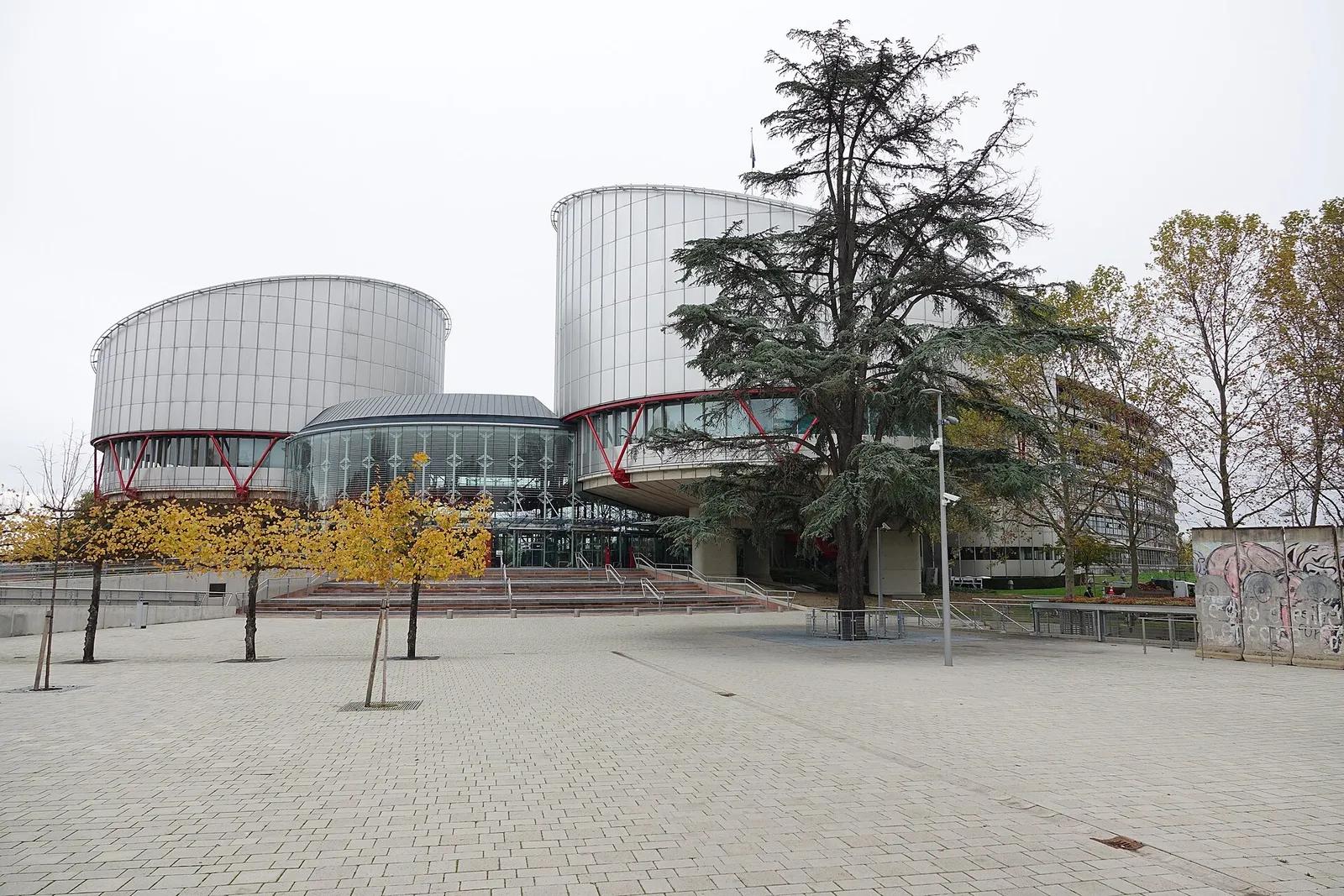
On 30 September 2026, fifty years on, President António José Seguro addressed the Parliamentary Assembly in Strasbourg, met the Secretary General, Alain Berset, and visited the Court. He had come, he said the day before, to reaffirm Portugal's commitment to peace, democracy and human rights at a time when they were under threat. The Council now has 46 member states.
FAQs
When did Portugal join the Council of Europe?
On 22 September 1976, when the foreign minister, José Medeiros Ferreira, signed Portugal's accession to the Council's Statute in Strasbourg. Portugal became the 19th member state, a day after the Committee of Ministers formally invited it.
Why was Portugal not a member of the Council of Europe under Salazar?
The Council's Statute requires members to accept the rule of law and respect human rights, and the Estado Novo dictatorship did not qualify. Portugal was not invited in 1949, although it joined NATO, the OEEC and EFTA. Salazar's government was also wary of the new body.
When did Portugal ratify the European Convention on Human Rights?
Portugal signed the Convention on 22 September 1976, the day it joined the Council of Europe, and deposited its ratification on 9 November 1978 after parliament approved it by Lei n.º 65/78. It accepted individual complaints and the Court's jurisdiction from the same day.
Is the Council of Europe part of the European Union?
No. The Council of Europe is a separate organisation founded in 1949, based in Strasbourg, with 46 member states including every EU country. Its court is the European Court of Human Rights. Portugal joined it in 1976, more than nine years before it joined the European Communities in 1986.
On the timeline
Open the timelineNearby moments from revolution and democracy (1974–1986).
General Ramalho Eanes, Chief of Staff of the Army and architect of the 25 de Novembro 1975 intervention that ended the radical phase of the revolution, is elected first President of the Portuguese Republic under the new democratic constitution, winning more than 60% of the vote in the first round.
General António Ramalho Eanes, aged 41, is sworn in as President of the Republic after winning 61.6% of the vote in the first round — the first head of state elected by universal suffrage after the Carnation Revolution. The career soldier would serve two terms until 1986, overseeing the end of military tutelage over Portugal's new democracy.
The first Regional Government of the Azores, led by João Bosco Mota Amaral, takes office in Ponta Delgada, inaugurating the autonomous government of the archipelago under Portugal's new democratic constitution.
Portugal joins the Council of Europe
Portugal becomes the 19th member state of the Council of Europe, with Foreign Minister José Medeiros Ferreira signing the instrument of accession in Strasbourg, a club the dictatorship had never been invited to join.
Portugal holds its first democratic local elections, choosing 304 mayors and thousands of councillors and parish representatives. The Socialists win the most votes, about a third, and take Lisbon and Porto, though they tie with the PPD at 115 mayors each; abstention, at around 35%, is more than double that of the parliamentary election held that April.
Mário Soares's government formally applies for Portugal to join the European Economic Community, less than three years after the Carnation Revolution. Seen as the anchor of the young democracy, membership would follow on 1 January 1986.
TAP Flight 425, a Boeing 727 arriving from Brussels via Lisbon, overruns the short, rain-soaked runway at Funchal in Madeira and plunges onto the beach below, killing 131 of the 164 people on board. It remains the worst accident in TAP's history; the runway was later lengthened twice, in 1986 and in 2000, the second time on pillars over the sea.
Coming up in history
All long reads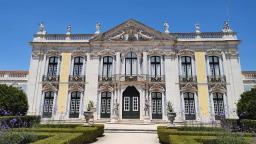

26 sources
Archives, scholarship and reporting this article was checked against.
- 1
Letter from José Medeiros Ferreira to Georg Kahn-Ackermann (Lisbon, 12 August 1976)CVCE.eu (University of Luxembourg), from the Historical Archives of the Council of Europe
- 2
- 3
Opinion 78 (1976): Accession of Portugal to the Council of Europe (adopted 16 September 1976)Parliamentary Assembly of the Council of Europe (copy held by the Ministério Público, GDDC)
- 4
Resolution (76) 37 of the Committee of Ministers: invitation to Portugal to become a Member of the Council of Europe (21 September 1976)Committee of Ministers of the Council of Europe, via CVCE.eu (copy held by the Ministério Público, GDDC)
- 5
- 6
Convenção para a Protecção dos Direitos do Homem e das Liberdades Fundamentais: dados de vinculação de PortugalMinistério Público, Departamento de Cooperação Judiciária e Relações Internacionais (GDDC)
- 7
Portugal e o início da construção europeia (1947-1953) (Pedro Cantinho Pereira)Nação e Defesa, no. 115, 2006, Instituto da Defesa Nacional
- 8Portugal e a Convenção Europeia dos Direitos Humanos, 40 anos depois (Vital Moreira)Diário de Notícias, 9 November 2018
- 9O dia em que o regime perdeu o futuro (with “A Universidade contra o regime” by José Medeiros Ferreira and a chronology of 1962)Correio da Manhã, Domingo magazine, 18 March 2012
- 10Perfil: um dos homens que levou Portugal à CEEDiário de Notícias, 18 March 2014
- 11
- 12
Intervenção na Sessão Plenária da Assembleia Parlamentar do Conselho da EuropaPresidência da República Portuguesa, 30 September 2026
- 13
Portugal celebra hoje 45 anos como Membro do Conselho da EuropaGoverno da República Portuguesa, 22 September 2021
- 14
Breve recorrido histórico (Consejo de Europa)Representación Permanente de España ante el Consejo de Europa, Ministerio de Asuntos Exteriores
- 15
Seguro discursa hoje no Conselho da Europa nos 50 anos da adesão de PortugalDNoticias.pt (Lusa), 30 September 2026
- 16
- 17
- 18
- 19
Constituição da República Portuguesa, texto original de 1976Assembleia da República
- 20
- 21
Chefes do Governo desde 1821República Portuguesa, portugal.gov.pt
- 22
Press country profile: Portugal (last updated July 2026)European Court of Human Rights
- 23
- 24
- 25
- 26
Image credits
- The Palais de l'Europe in Strasbourg, designed by Henry Bernard, the headquarters of the Council of Europe, with the flags of its member states. Portugal has been one of them since 22 September 1976. Council of Europe, CC BY 3.0, via Wikimedia Commons.
- Mário Soares, prime minister of the first constitutional government, photographed in 1978. As foreign minister in 1974 he told the Assembly in Strasbourg that Portugal would seek membership once it had an elected parliament. Photo Claude TRUONG-NGOC, CC BY-SA 3.0, via Wikimedia Commons.
- The Palácio das Necessidades in Lisbon in 2024. The foreign ministry has occupied the former palace and convent since about 1950, and Kahn-Ackermann addressed his reply of 20 August 1976 to Medeiros Ferreira here. JnpoJuwan, CC0, via Wikimedia Commons.
- The European Court of Human Rights in Strasbourg in November 2019. Portugal has accepted its jurisdiction since 9 November 1978. Gzen92, CC BY-SA 4.0, via Wikimedia Commons.