

Gabriel Malagrida burned by the Inquisition, 1761
He spent thirty years preaching in Brazil and was at João V's deathbed. After the 1755 earthquake he told Lisbon its sins had brought the disaster, and six years later the Inquisition sent him to the garrotte as a heretic.
At a glance
- Gabriel Malagrida, an Italian Jesuit born at Menaggio in 1689, was a missionary in Brazil for some thirty years. He founded houses for women there and won João V's backing for six seminaries.
- In 1756 he published a pamphlet arguing that the Lisbon earthquake of 1 November 1755 was God's punishment for the city's sins, not the work of natural causes. Sebastião José de Carvalho e Melo, the future Marquis of Pombal, had him banished to Setúbal.
- After shots were fired at King José I in 1758 he was arrested with other Jesuits, accused of encouraging the Távora plot. He was never tried for it: the Inquisition, run by the minister's brother, tried him for heresy instead.
- His sentence was read at an auto-da-fé in the cloister of the São Domingos convent that began at 7 am on Sunday 20 September 1761. In the early hours of 21 September he was garrotted in the Rossio and his body burned.
- Voltaire wrote that 'the excess of the ridiculous and the absurd was joined to the excess of horror'. Historians still disagree over whether Malagrida wrote the prison texts used to condemn him.
A gag and a paper mitre
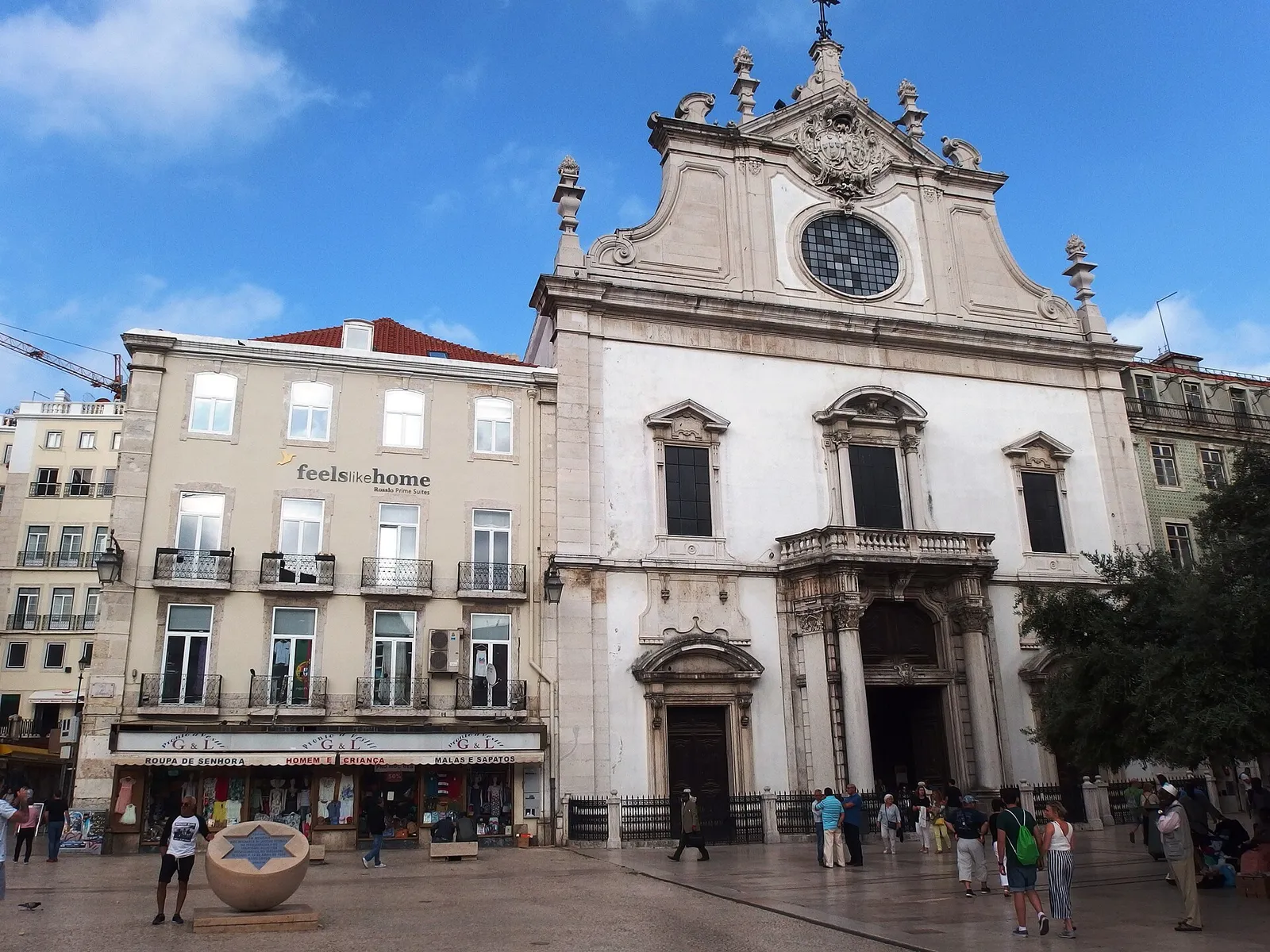
The ceremony began at seven in the morning on Sunday 20 September 1761, in the cloister of the Dominican convent of São Domingos, at the corner of Lisbon's great square, the Rossio. Fifty-seven names were on the Inquisition's list that day, among them bigamists, people accused of pacts with the devil, and men who had carried consecrated hosts as charms.
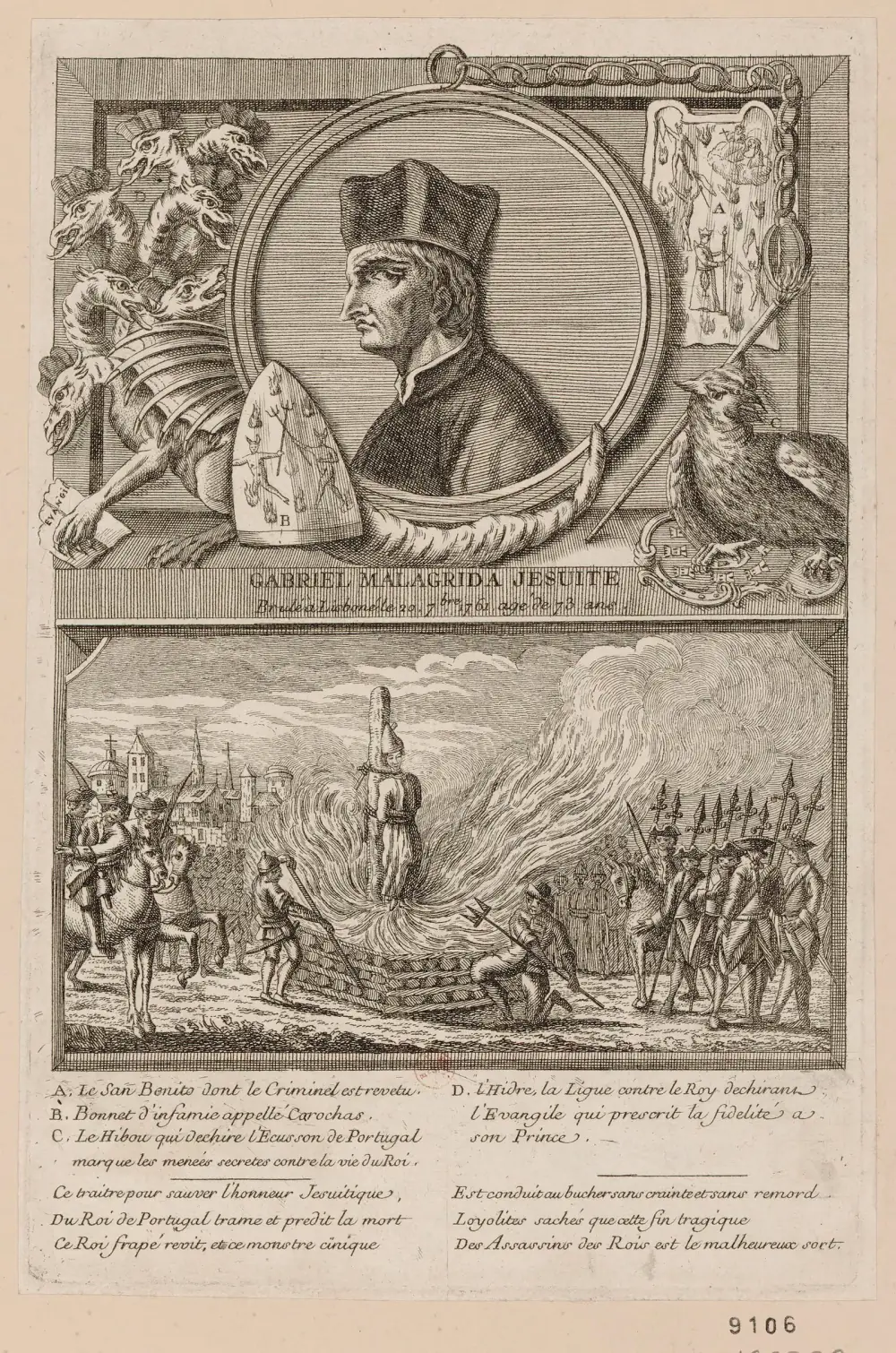
One prisoner drew the crowd. Gabriel Malagrida was about 72, a Jesuit who had once been revered as a living saint at court. He came out with a gag in his mouth and a carocha on his head, the tall paper cap of the condemned, with two Benedictine monks as his confessors and two noblemen, the Duke of Cadaval and the Count of Vila Nova, beside him as his sponsors, as custom required.
His sentence took two hours to read. When it ended he asked to be heard again by the tribunal, but nothing he said changed the judges' minds. A titular archbishop stripped him of his priestly orders, and he was handed to a royal judge. Around midnight the Church's part was over, and the High Court, the Relação, gave its own ruling.
“that with halter and crier he be led through the public streets of this city to the square of the Rocio, and that there he die a natural death by the garrotte, and that once dead his body be burned and reduced to dust and ash, so that there be no memory of him or of his grave.”
The executioner did as ordered in the Rossio, a few steps from the convent.
The auto-da-fé did not end until four in the morning of Monday 21 September. Malagrida was the only person put to death that night. Accounts differ on the ashes: scattered to the wind, thrown into the river, or into the sea.
- Condemned
- Gabriel Malagrida SJ, born at Menaggio, near Como, in 1689
- Crime
- Heresy, false prophecy and feigned sanctity; never tried for the attack on the king
- Auto-da-fé
- Cloister of São Domingos, Lisbon, from 7 am on Sunday 20 September 1761 to about 4 am the next day
- Execution
- Garrotted in the Rossio in the early hours of 21 September; body burned
- Trial file
- Inquisition of Lisbon, process 8064, about 2,033 folios, in the Torre do Tombo
A missionary with a saint's reputation
Malagrida was born at Menaggio, on Lake Como, in 1689: on 18 September according to his Jesuit biographer, though another date, 6 December, is also given. He joined the Society of Jesus at Genoa in 1711, sailed from Lisbon in 1721 and landed in Maranhão, in Portugal's northern Brazilian colony, at the end of that year.
He taught at the Jesuit colleges of São Luís and Belém do Pará and worked among Indigenous peoples. From 1735 he walked the backlands towards Bahia, preaching 'in the Italian manner': a week or two in each town, sermons all day, processions, mass confessions and open-air masses. He reached Salvador in 1736 after a journey of some seventeen months, and crowds followed him from town to town.
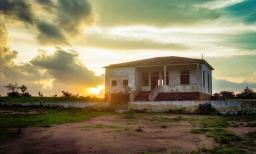
He was a builder as well as a preacher. In Salvador he founded a house of retreat for women at Soledade in 1739, which became a convent in 1752, and he started others at Igarassu in Pernambuco and at São Luís. His superiors in Rome told him to leave such houses to the bishops and not to accept alms in the heat of a mission.
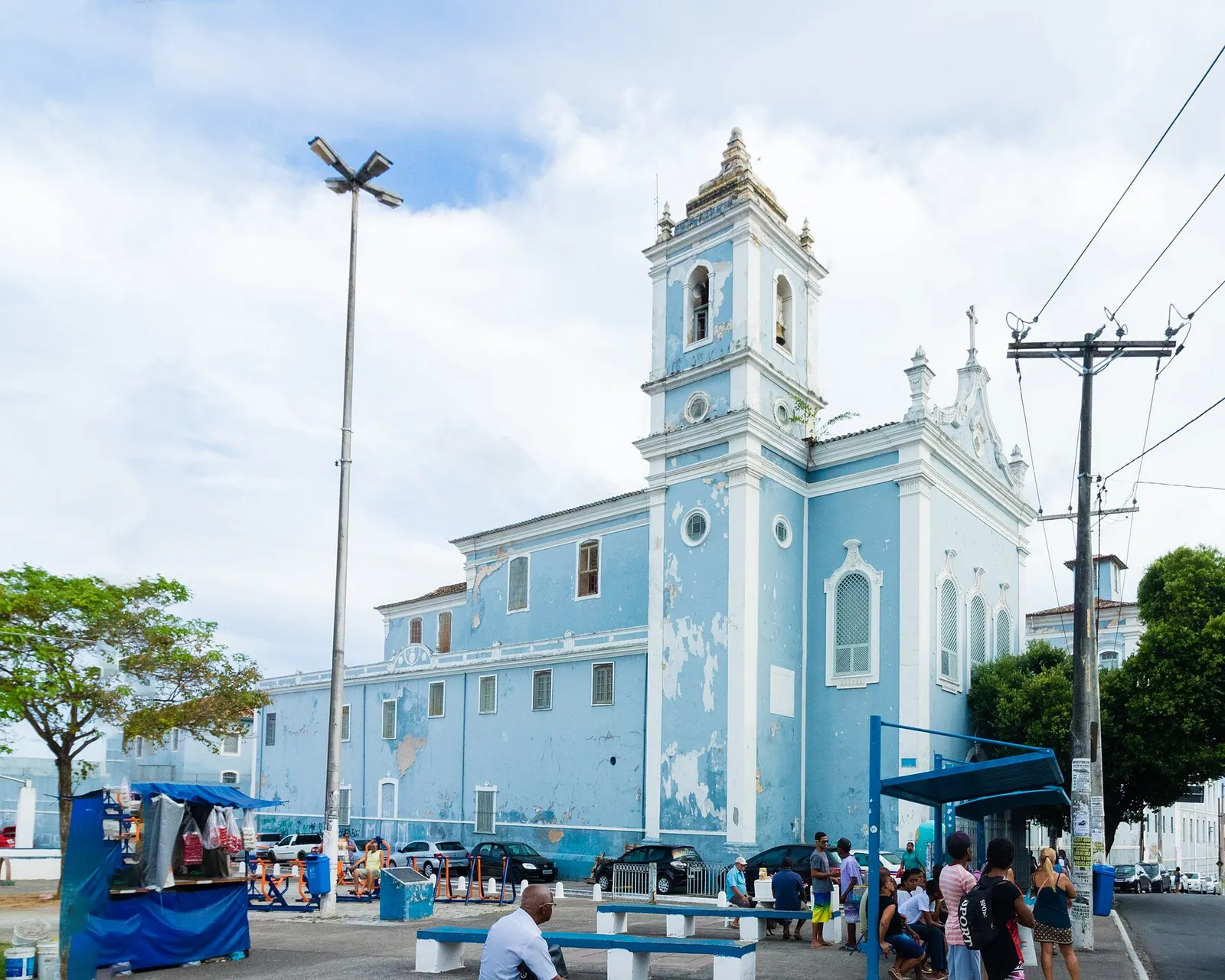
Needing money for his foundations, he sailed for Lisbon in December 1749. The ailing João V put himself in his hands and the court took up the spiritual exercises he prescribed. The king died in July 1750 with Malagrida beside him, having approved six seminaries and sent him 30,000 cruzados in alms. On 2 March 1751 the new king, José I, confirmed the grants by royal charter.
“I truly live in the midst of excesses. Everything is excess: excess of journeys, of occupations, excess of labours, of persecutions, of daring in taking on so many works so out of the ordinary and so costly, such as churches, seminaries, convents and monasteries of nuns and retreat houses.”
Back in Brazil from 1751, he found the governor of Grão-Pará, Francisco Xavier de Mendonça Furtado, blocking his plans in Pará. The governor was the brother of the king's new Secretary of State. In 1754 Malagrida was called back to Lisbon to attend the dying queen mother, Mariana of Austria, and never saw Brazil again.
The minister and the Jesuits
The Lisbon he returned to was run by Sebastião José de Carvalho e Melo, José I's chief minister, who became Count of Oeiras in 1759 and Marquis of Pombal in 1770. He had owed his rise partly to the Jesuits, but by the mid-1750s he was at odds with them over the missions of Paraguay and Brazil, where the fathers protected Indigenous villages from settlers who wanted their labour.
The great earthquake of 1 November 1755 (told in our article on the earthquake) made Carvalho e Melo the man in charge of clearing the ruins and rebuilding. It also handed the pulpits a subject. Lisbon lived in fear of new shocks, and predictions spread that the city would be destroyed again on the anniversary.
'Know, O Lisbon': the 1756 pamphlet
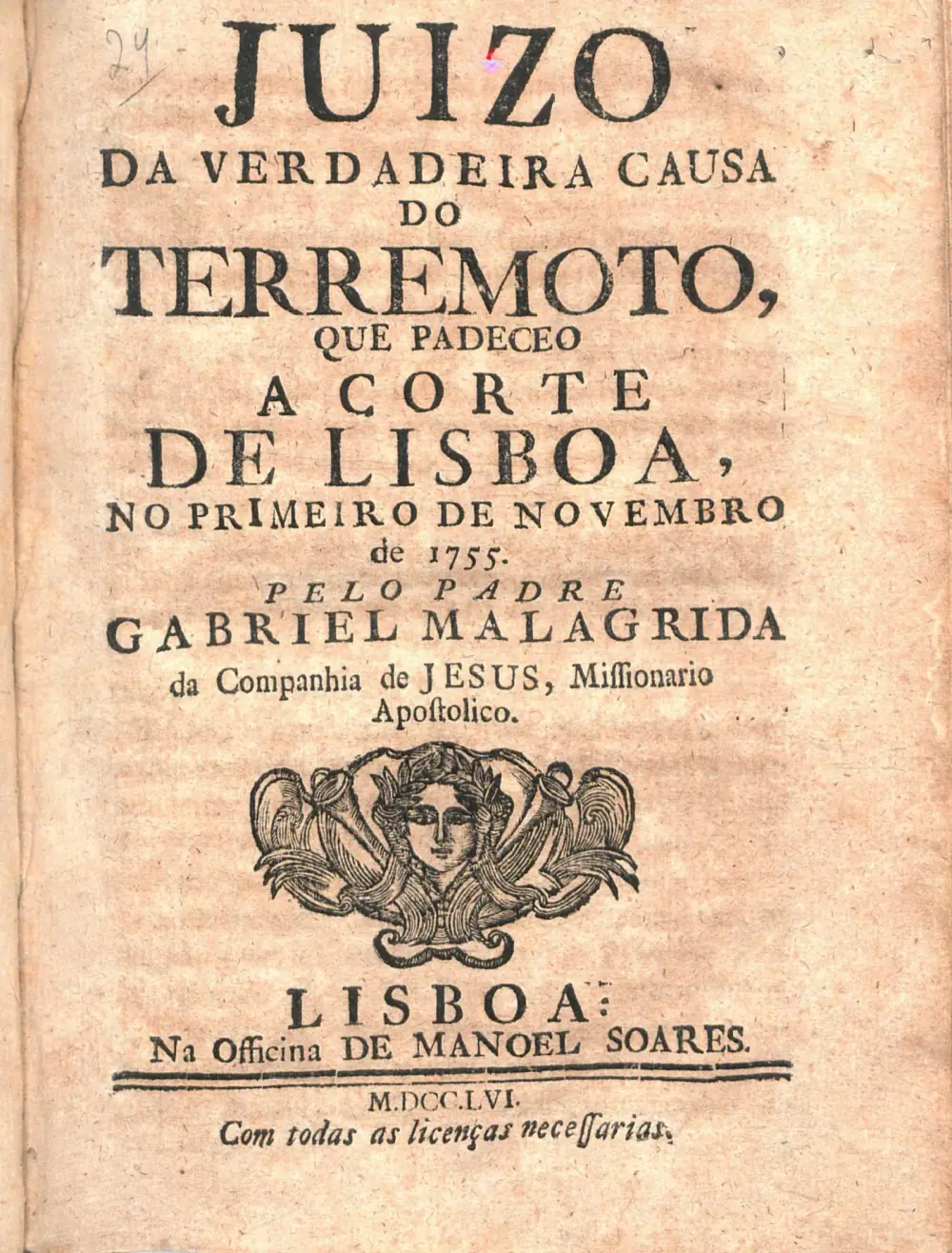
In the autumn of 1756 Malagrida published a 31-page pamphlet, Juízo da verdadeira causa do terremoto, 'An opinion on the true cause of the earthquake'. It was printed 'with all the necessary licences'. The Inquisition allowed it to be printed on 22 June. A church judge, Amaro Duarte Silva, praised it on 22 July, and on 2 August a priest of the Oratory, reading it for the crown, found nothing in it against the rights of the kingdom.
“Know then, O Lisbon, that the only destroyers of so many houses and palaces, the wreckers of so many churches and convents, the killers of so many of your inhabitants, the fires that devoured so many treasures [...] are not comets, are not stars, are not vapours or exhalations, are not phenomena, are not chance or natural causes; they are solely our intolerable sins.”
The pamphlet called those who blamed natural causes 'politicians' and hinted that they were atheists. It listed Lisbon's sins: theatres, dances, bullfights and gaming houses full while churches stood empty, and convent choirs where a handful of nuns gabbled the office. A nun who died in 1755, it said, had been warned in a revelation of God's anger with the kingdom.
Its remedy was penance, not reconstruction. Malagrida complained that he saw more zeal for 'putting up shacks and raising dwellings' than for repentance, and he offered to excuse the whole court from public penance if everyone spent six days in a house of spiritual exercises.
He handed a copy to the king and another to Carvalho e Melo. The minister took it as a personal challenge. Through the papal nuncio he had the Jesuit provincial send Malagrida away from Lisbon, and in November 1756 the old missionary went into exile at Setúbal, across the Tagus estuary.
“now feigning public sins, which did not in fact exist, so as to attribute that most sorrowful phenomenon to punishment for them [...] now, assailing the sacred mysteries of divine omnipotence so as to terrify the people further, threatening them with other future, supposed and greater punishments.”
Setúbal, the Távoras and the fort of Junqueira
Exile made Malagrida more popular. At Setúbal he opened retreat houses for men and women, and Lisbon's nobility crossed the river to make the exercises with him. 'What a spectacle this house of retreat is,' he wrote, 'where the most illustrious ladies of society spend whole days shut away like nuns.' Government spies watched the meetings.
Whether Leonor de Távora, Marchioness of Távora, was among them is disputed. Mury, his Jesuit biographer, names her as the most distinguished of the ladies at Setúbal. Lúcio de Azevedo found that she never went there while Malagrida was in exile, though her squire testified that she once met him in the Arrábida hills and that the two wrote to each other. Her son José Maria did make the exercises at Setúbal.
He also began to warn that a great punishment hung over the king. On the night of 3 September 1758 shots were fired into José I's carriage at Belém and the king was wounded (told in our article on the Távora executions). In the months that followed Malagrida wrote from Setúbal to the judge investigating the attack, saying he had grave matters to report, and Carvalho e Melo had him brought before him.
According to Lúcio de Azevedo, the Jesuit told the minister that an inner voice had warned him of danger to the king, and that public misfortunes would go on until the laws on Brazil's Indians and the other measures against the Jesuits were revoked. Then he walked out.
On 11 January 1759 he was arrested and taken to the fort of Junqueira, on the river west of Lisbon, where political prisoners were held. The next day the special court's sentence on the Távoras and the Duke of Aveiro named him among the Jesuits said to have encouraged the plot, and on 13 January ten people died on the scaffold at Belém.
A law of 3 September 1759, the first anniversary of the attack, expelled the Society of Jesus from Portugal and its empire. Foreign Jesuits and those under suspicion were kept in prison. Malagrida could not simply be hanged for treason: a royal court needed Rome's consent to put a priest to death, and after a year of pressure it had not come.
1689
Birth
Born at Menaggio, in the Duchy of Milan; 18 September or 6 December.
1711
Jesuit
Enters the Society of Jesus at Genoa.
1721
Brazil
Sails from Lisbon and lands in Maranhão at the end of the year.
1735 to 1736
To Bahia
Preaches his way through the backlands and reaches Salvador.
1739
Soledade
Founds a retreat house for women in Salvador; a convent from 1752.
1749 to 1751
Lisbon
At João V's court and deathbed; the king's grants are confirmed on 2 March 1751.
1754
Last return
Called back to Lisbon to attend the queen mother.
1 November 1755
Earthquake
Lisbon is destroyed by earthquake, tsunami and fire.
1756
Pamphlet and exile
Publishes the Juízo; banished to Setúbal in November.
3 September 1758
Attack on the king
José I is wounded at Belém.
11 January 1759
Arrest
Taken to the fort of Junqueira.
3 September 1759
Expulsion
The Jesuits are banished from Portugal and its empire.
January 1761
Inquisition
Moved to the Inquisition's cells on the Rossio.
20 to 21 September 1761
Execution
Sentenced at São Domingos; garrotted and burned in the Rossio.
Heresy instead of treason
The Inquisition offered another way. In July 1760 its head, the Inquisitor-General José de Bragança, an illegitimate son of João V and so the king's half-brother, was banished to Buçaco, and the minister's own brother, Paulo de Carvalho e Mendonça, came to preside over the tribunal. Then came what Lúcio de Azevedo called 'an incredible thing': the Count of Oeiras denounced Malagrida to the Inquisition himself and signed the denunciation in his own hand.
The other witnesses included Pedro Gonçalves Cordeiro Pereira, the judge of the court that had tried the Távoras, and its secretary, who was also a jailer at Junqueira; the Inquisition's own jailers; and Mendonça Furtado, who described Malagrida's preaching in Pará. Paulo de Carvalho was among the councillors who signed the arrest warrant, and so was another accuser, Nuno Álvares Pereira de Melo, who thus acted as both witness and judge.
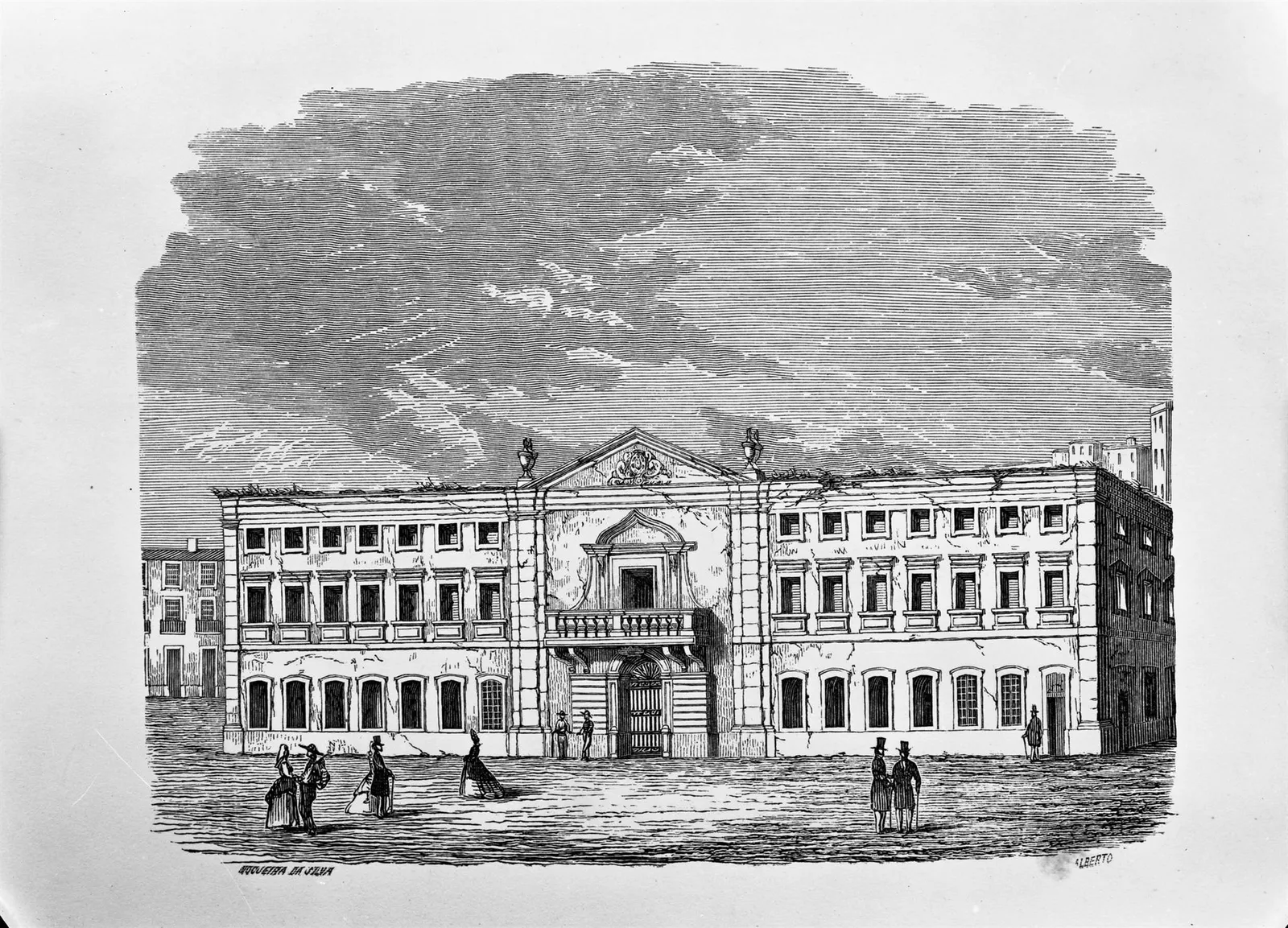
In January 1761 Malagrida was moved from Junqueira to the Inquisition's cells on the Rossio. One judge suspected of leniency was removed by being made bishop of Angola, a move the Austrian envoy reported in April. A cellmate placed by the Inquisition reported his night-time arousals, and the inquisitors questioned the old man about them at length.
The case rested on two texts found with him in prison: a Heroic and admirable life of the glorious Saint Anne, which he said had been dictated to him from on high, and a Treatise on the life and empire of Antichrist. Lúcio de Azevedo, writing in 1909, accepted that Malagrida wrote them as his mind gave way. Jesuit writers denied it.
Pedro Homem, a Jesuit who shared his cell and was freed in 1777, later testified that Malagrida had written a life of St Anne but not the one in the file. Homem blamed the Antichrist treatise on Norbert Platel, a former Capuchin who wrote pamphlets for Carvalho e Melo. In 2022 the legal historian Guilherme Marchiori de Assis concluded that only the earthquake pamphlet could be safely attributed to Malagrida.
| Statement | Where it came from |
|---|---|
| St Anne was sanctified in her mother's womb, as Mary was in Anne's | Life of St Anne |
| Still in the womb, Anne made vows of poverty, obedience and chastity, one to each Person of the Trinity | Life of St Anne |
| The three Persons of the Trinity held consultations on how Anne should be treated and agreed to place her above all angels and saints | Life of St Anne |
| The boy Jesus was lost in the Temple because he had gone to be present at Anne's death | Life of St Anne |
| There will be three Antichrists, father, son and grandson; the last will be born in Milan of a friar and a nun in 1920 and marry Proserpina, one of the Furies | Treatise on Antichrist |
| The Jesuits will found a new empire for Christ by discovering new nations of Indians | Treatise on Antichrist |
| The executed Marchioness of Távora appeared to him and said his prayers had eased her pains in Purgatory | His statements to the inquisitors |
Paraphrased from the Inquisition's sentence as printed in Lisbon in September 1761. Paul Mury's Jesuit biography gives the Antichrist's birth year as 2920; the printed sentence reads 1920. The sentence also accused him of feigning visions and miracles, and of extorting large sums from the people of Portugal's dominions.
The inquisitors declared him 'a heretic and inventor of new heretical errors, convicted, feigning, false, confessing, revoking, obstinate and professing the same errors'. They ordered him degraded from holy orders and relaxed to the secular arm wearing a gag and a carocha labelled 'Heresiarch', with the usual request that the court spare his life and shed no blood. Four members of the tribunal signed it.
Sunday at São Domingos
Carvalho e Melo wanted a grand ceremony. Soldiers threw a cordon round the Rossio and the streets nearby, and recruiting parties used the crowd to seize men for the army. Several foreign diplomats came to watch. The king, it seems, did not.
Three people were burned in effigy. One was Francisco Xavier de Oliveira, the Cavaleiro de Oliveira, a Portuguese gentleman living in London. Like Malagrida he had read the earthquake as a punishment, but from the opposite side: for him, God was punishing Portugal for idolatry. The other effigies were of two women who had died in the cells, Rosa Maria of Alter do Chão and Rita Felizarda of Arronches.
| Group | Men | Women | Total |
|---|---|---|---|
| Named on the list | 37 | 20 | 57 |
| Absent (in London; burned in effigy) | 1 | 0 | 1 |
| Died in the Inquisition's cells | 2 | 4 | 6 |
| Present in person | 32 | 16 | 48 |
| Of whom accused of superstition or pacts with the devil | 4 | 9 | 13 |
Figures from Isaías da Rosa Pereira's study of the 1761 auto, as given by Guilherme Marchiori de Assis. The women's figures add up (20 minus 4 is 16), but the men's do not: 37 minus 3 is 34, not 32, so either the list or the count of men present is off by two, and the grand total with it (57 minus 7 is 50, not 48). Malagrida, the only person executed, is presumably counted among the men present. The Jesuit Paul Mury wrote of 52 others sentenced with him.
A letter describing the execution, attributed to Platel, claimed among other falsehoods that the king had watched and had invited the foreign envoys. The government answered by printing the sentence and an account of the auto in French. The episode and Platel's boasting cost him the minister's favour, and he left Lisbon in 1763.
Voltaire and the verdict of Europe
The execution caused a sensation abroad. Voltaire, who had mocked Lisbon's post-earthquake autos-da-fé in Candide, had no sympathy for the Jesuits, but he was appalled that a man accused of plotting to kill a king had been burned for a book about St Anne.
“Thus the excess of the ridiculous and the absurd was joined to the excess of horror. The guilty man was tried only as a prophet, and burned only for having been mad, and not for having been a parricide.”
José Oscar de Almeida Marques points out what bothered Voltaire: less that Malagrida died than that he died for the wrong reasons. Marques sees the case as Carvalho e Melo's personal revenge. In the earthquake debate the mystic who preached divine punishment ended on the scaffold, and the executioner served the champion of natural causes.
For the Jesuits, Malagrida became a martyr. Their histories said Clement XIII called him one, and a letter defending him, perhaps forged, passed from hand to hand in Portugal until the royal censors had it burned by the executioner. On 8 May 1771 the copies of his earthquake pamphlet that had been seized or handed in were burned in the Praça do Comércio, ten years after their author.
Why it still matters
The tribunal that condemned Malagrida was presided over by the minister's brother, and one of his accusers, Nuno Álvares Pereira de Melo, also acted as his judge. Assis, who studied the trial file, judges that it was competent but partial: its posts were filled by men who expected a conviction before the case began. Drawing on Isaías da Rosa Pereira, he writes that this was the last Portuguese auto-da-fé at which anyone was handed over to be put to death.
When José I died in 1777, Carvalho e Melo fell from power and the new queen, Maria I, freed the surviving prisoners, Pedro Homem among them. In 1887 a monument to Malagrida was put up in the parish church of Menaggio. His foundations in Brazil outlived him too: the convent of Soledade still stands in Salvador.
FAQs
Why was Gabriel Malagrida executed?
He was condemned by the Lisbon Inquisition for heresy, false prophecy and feigned sanctity, on the strength of two visionary texts found with him in prison. He had been arrested in January 1759 as a suspect in the attack on King José I, but was never tried for it. Historians from Lúcio de Azevedo to José Oscar de Almeida Marques see the case as Carvalho e Melo's revenge on the Jesuit who had blamed the 1755 earthquake on Lisbon's sins.
Where and when did Malagrida die?
His sentence was read at an auto-da-fé in the cloister of the São Domingos convent in Lisbon, which began on Sunday 20 September 1761 and ran until about 4 am the next day. After the High Court's ruling around midnight he was garrotted in the Rossio and his body burned, so most accounts give 21 September 1761.
What did Malagrida say about the 1755 earthquake?
In his 1756 pamphlet Juízo da verdadeira causa do terremoto he argued that the disaster was God's punishment for Lisbon's sins, attacked those who blamed natural causes and urged the city to do penance and spiritual exercises before rebuilding. The pamphlet had been licensed by the censors, but it led to his banishment to Setúbal.
Was Malagrida involved in the Távora plot?
No proof was ever produced. The Marchioness of Távora was his devotee, he had predicted danger to the king, and the sentence of January 1759 named him among Jesuits said to have encouraged the plotters. But he was never tried for it, and Voltaire and later historians noted that he was burned as a heretic, not as a regicide.
On the timeline
Open the timelineNearby moments from earthquake and enlightenment (1750–1807).
Gomes Freire de Andrade is born in Vienna, son of Portugal's ambassador to the Austrian court. A soldier of fortune who fought for Catherine the Great against the Turks and marched into Russia with Napoleon, he was hanged in 1817 as the alleged leader of a liberal plot against the British-dominated regency; Lisbon's Campo dos Mártires da Pátria honours the conspirators.
King José I survives an assassination attempt when horsemen ambush his carriage outside Lisbon, wounding him in the arm and shoulder; the affair leads to the trial and brutal execution of the Távora family, strengthens the hand of the future Marquês de Pombal and paves the way for the expulsion of the Jesuits a year later.
The Duke of Aveiro and leading members of the Távora family, condemned for the September 1758 attempt on King José I's life, are executed on a scaffold at Belém, most of them broken on the wheel. Many historians doubt the Távoras' guilt, and some suspect the future Marquis of Pombal of using the case to break the old aristocracy.
The execution of Malagrida
The Jesuit priest Gabriel Malagrida is garrotted in Lisbon's Rossio square and his body burned, hours after his sentence was read at an Inquisition auto-da-fé in the cloister of São Domingos. He had been condemned as a heretic at the instigation of Carvalho e Melo, the future Marquis of Pombal, whom he had enraged by preaching that the 1755 earthquake was God's punishment for Lisbon's sins.
A charter law of King José I, countersigned by the future Marquis of Pombal, creates the Real Erário (Royal Treasury), abolishing the medieval Contos do Reino e Casa and channelling all crown revenue into a single treasury kept by double entry. Portugal's Court of Auditors, the Tribunal de Contas, counts it among its direct ancestors.
Birth in Lisbon of Marcos Portugal, the most internationally successful Portuguese composer of his age. He premiered at least 21 operas in Italian theatres in the 1790s, then joined the exiled court in Rio de Janeiro in 1811 and stayed on in Brazil until his death in 1830.
The Treaty of Paris ends the Seven Years' War. Britain, France and Spain sign it and Portugal accedes the same day. Spain, which had invaded Portugal in 1762, must hand back its conquests, among them Almeida and the colony of Sacramento on the River Plate.
Coming up in history
All long reads
20 sources
Archives, scholarship and reporting this article was checked against.
- 1
Sentença proferida contra Gabriel de Malagrida (printed certified copy, Lisbon, 24 September 1761)Francisco de Magalhães e Brito, clerk of the Correição do Crime da Corte e Casa; Biblioteca Nacional de Portugal copy digitised by Éditions Ismael, Internet Archive
- 2
- 3
O auto de fé de 1761: aspectos da sentença de condenação do Padre Gabriele Malagrida (Guilherme Marchiori de Assis)Diálogos sobre a Modernidade 4, 2022, Universidade Federal do Espírito Santo
- 4
- 5
Voltaire e um episódio da história de Portugal (José Oscar de Almeida Marques)Mediações: Revista de Ciências Sociais 9 (2), 2004, pp. 37-52, Universidade Estadual de Londrina
- 6
- 7
Précis du siècle de Louis XV, chapter 38: Assassinat du roi de Portugal. Jésuites chassés du Portugal et ensuite de la France (Voltaire)Œuvres complètes de Voltaire, Garnier, 1878, vol. 15, pp. 395-400, on Wikisource
- 8
- 9
Gabriel Malagrida (Michael Ott)The Catholic Encyclopedia, vol. 9, Robert Appleton Company, New York, 1910 (New Advent transcription)
- 10
- 11
Roteiro da Inquisição em Lisboa: uma possibilidade cultural?João Miguel Cabral Borges Capela, master's dissertation, Iscte – Instituto Universitário de Lisboa, 2021
- 12
História de Gabriel Malagrida (Paul Mury, translated and prefaced by Camilo Castelo Branco), preview of the 2021 editionImprensa Nacional-Casa da Moeda, Lisbon, 2021
- 13
- 14
- 15
D. João de Almeida Portugal e a revisão do processo dos Távoras: conflitos, intrigas e linguagens políticas em Portugal nos finais do Antigo Regime (c. 1777-1802) (Patrícia Woolley Cardoso Lins Alves, PhD thesis)Universidade Federal Fluminense, Niterói, 2011
- 16
A sinistra conduta de um ex-jesuíta na colônia: religiosidade e antijesuitismo no império português, 1759-1763 (Fabricio Lyrio Santos)Revista Brasileira de História das Religiões 16 (46), 2023, ANPUH
- 17
- 18
Voltaire and the Jews (Stéphane Lojkine)Utpictura18, Aix-Marseille Université
- 19
Igreja de São DomingosVisit Lisboa (Turismo de Lisboa)
- 20
HistóriaTeatro Nacional D. Maria II
Image credits
- The church of São Domingos, beside the Rossio, in 2017. Malagrida's sentence was read in the cloister of its Dominican convent on 20 September 1761. The stone in the foreground is the memorial to the victims of the 1506 massacre. Palickap, CC BY-SA 4.0, via Wikimedia Commons.
- The church and convent of Nossa Senhora da Soledade in Salvador, Bahia, in 2017. Malagrida founded a retreat house for women here in 1739, and João V allowed it to become a convent in 1752. Paul R. Burley, CC BY-SA 4.0, via Wikimedia Commons.
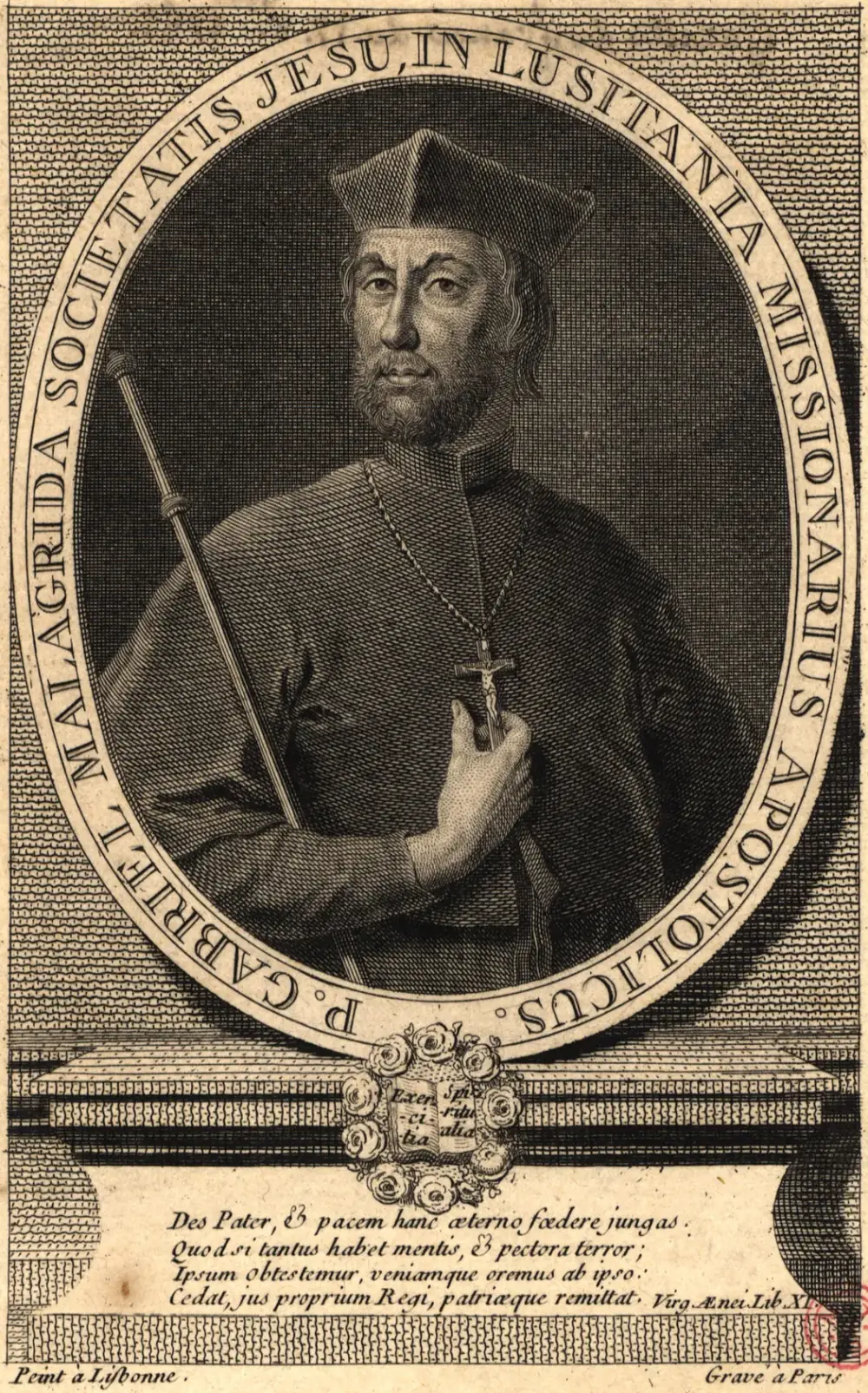
- 'P. Gabriel Malagrida, of the Society of Jesus, apostolic missionary in Portugal': an engraving of about 1760, marked as painted in Lisbon and engraved in Paris. Unknown author, Public domain, via Wikimedia Commons.
- The title page of Malagrida's pamphlet on the 'true cause' of the earthquake, printed in Lisbon by Manoel Soares in 1756 'with all the necessary licences'. Gabriel Malagrida (1689-1761), Public domain, via Wikimedia Commons.
- The Inquisition's palace on the north side of the Rossio, rebuilt after the 1755 earthquake, in a nineteenth-century engraving signed by Nogueira da Silva and Alberto. Malagrida spent his last months in the Inquisition's cells on the square. The Teatro Nacional D. Maria II has stood on the site since 1846. Nogueira da Silva and Alberto, Public domain, via Wikimedia Commons.
- A French print hostile to the Jesuits, made after his death and now in the Bibliothèque nationale de France. It says he was 'burned at Lisbon on 20 September 1761, aged 73', and shows him tied to a stake in the flames. He was garrotted before his body was burned, and was no older than 72. Unknown author, Public domain, via Wikimedia Commons.