

José Régio, poet of Vila do Conde and Portalegre
José Maria dos Reis Pereira signed his poems José Régio, helped found Presença and spent three decades teaching in a small Alentejo city. He wrote of the war between God and the Devil and opposed the dictatorship until the year he died.
At a glance
- José Régio was the pen name of José Maria dos Reis Pereira, born in Vila do Conde, north of Porto, on 17 September 1901. He died in the same town on 22 December 1969, aged 68.
- At Coimbra he wrote a 1925 thesis defending the Orpheu poets, published Poemas de Deus e do Diabo, which contains his best-known poem, “Cântico Negro”, and in March 1927 co-founded the literary magazine Presença.
- From October 1929 to 1962 he taught at the liceu, the state secondary school, in Portalegre, in the Alentejo, where he wrote most of his work and built a large collection of popular religious art.
- His first novel, Jogo da Cabra Cega (1934), was confiscated by the censors; his play Benilde ou a Virgem-Mãe was staged at the national theatre in 1947 and filmed by Manoel de Oliveira in 1975.
- He joined the opposition MUD in 1945 and appeared with the socialist CEUD in October 1969. His houses in Portalegre (opened 1971) and Vila do Conde (opened 1975) are now museums.
A table by the sea
On the morning of Monday 9 December 1968 José Régio dated a letter to his brother Apolinário with the place and the time. He wrote “Vila do Conde”, his home town, and then corrected himself in brackets: in reality he was at the Diana-Bar in Póvoa de Varzim, the neighbouring town, and it was a little after ten.
The Diana-Bar stands on the Avenida dos Banhos, Póvoa's seafront. The writer Joaquim Pacheco Neves recalled how people in Vila do Conde watched him board the bus almost every day at fixed hours, a notebook under his arm or a book in his hand. At a café table over the sea he worked, rolled his own cigarettes and looked out over the sand. In winter, he told his brother in 1964, the sun turned the glazed room into a kind of greenhouse, and the rest of the bar was empty.
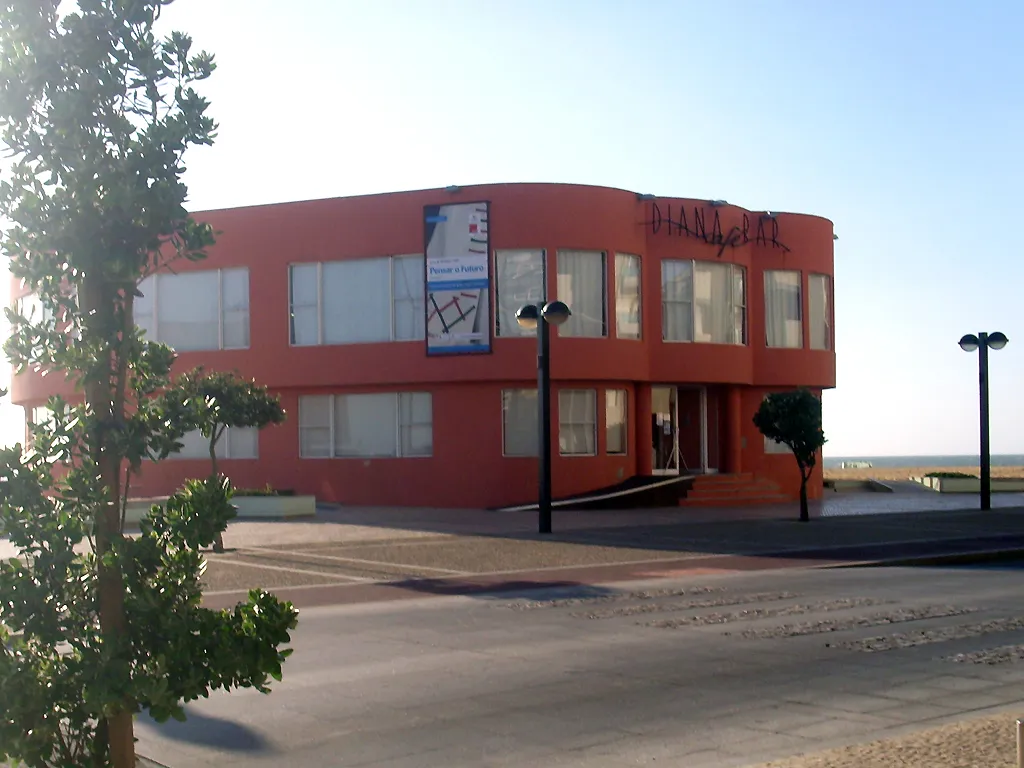
Much of his late writing was done in Póvoa's cafés, above all his polemical articles, and a large part of Confissão dum Homem Religioso (Confession of a Religious Man), the memoir published after his death, was written at the Diana-Bar. He was 67, and had taught for more than thirty years at a provincial secondary school. Just over a year later he died a few kilometres away, in the town where he was born.
Born in Vila do Conde, 1901
José Maria dos Reis Pereira was born on Tuesday 17 September 1901 in Vila do Conde, then a small rural town in the north of Portugal. The country was a constitutional monarchy under King Carlos. The Republic replaced it in 1910, a military coup in May 1926 ended the Republic, and from 1933 António de Oliveira Salazar ruled through the regime he called the Estado Novo.
Collecting ran in the family. His grandfather, António Maria Pereira, known in town as “Antoninho ourives”, the little goldsmith, made some jewellery himself and collected antiques, and Régio said in a 1962 interview that the habit “was in my blood”. Of his brothers, Júlio became a painter who signed his poems Saúl Dias, Apolinário was an artist and an army officer, and João Maria owned the house next to his in Vila do Conde.
He went to school in Vila do Conde and spent two years in Porto finishing the liceu. In his memoir he recalls how badly he wanted to go on to Coimbra, the university town: he dreamed of the Coimbra of the poet António Nobre, of its bohemian life and its romantic myths.
- Real name
- José Maria dos Reis Pereira
- Born
- 17 September 1901, Vila do Conde
- Degree
- Romance Philology, Coimbra, 1925
- Teaching
- Liceu Mouzinho da Silveira, Portalegre, 1929 to 1962
- Died
- 22 December 1969, Vila do Conde, aged 68
- Books in his lifetime
- 8 of poems, 10 of fiction, 5 of plays, 5 of essays
Coimbra, a thesis and a magazine
At Coimbra he read Romance philology at the Faculty of Letters and lodged in the Rua das Flores, the street where Presença would later be founded. He wrote for the little Coimbra magazines Bizâncio and Tríptico, and met friends such as João Gaspar Simões every week at the Café Central.
His degree thesis of 1925 was called As Correntes e as Individualidades na Moderna Poesia Portuguesa (Currents and individualities in modern Portuguese poetry). The Centro de Estudos Regianos, the research centre devoted to him in Vila do Conde, says it was the first work to make the case for the poets of Orpheu, the 1915 Lisbon magazine of Fernando Pessoa and Mário de Sá-Carneiro. The critic Paula Morão notes that it was far from obvious, at the time, for a Coimbra thesis to deal with recent poetry at all.
In March 1927, with João Gaspar Simões and Branquinho da Fonseca, he launched Presença, a “sheet of art and criticism” that lasted thirteen years and became the voice of what critics call Portugal's second modernism. How it championed Pessoa is told in our article on the magazine. Régio wrote its opening essay, “Literatura Viva”, and became its chief theorist.
“Living literature is the literature into which the artist has breathed his own life, and which for that very reason comes to live a life of its own.”
Poems of God and the Devil
His first book of poems came out in Coimbra the year after he graduated. Poemas de Deus e do Diabo (Poems of God and the Devil) was the first he signed José Régio, its bold graphic design was by his brother Júlio, and it opened with an epigraph from The Imitation of Christ, the fifteenth-century book of devotion.
The poems set the terms for much of what he wrote afterwards: a speaker caught between God and the Devil, shadowed by a double he cannot shake off. Reviewers called him strange and highly original. Régio went on arguing with the book for the rest of his life. From the second edition, in 1943, to the seventh, in 1969, he kept rewriting the long self-critical essay printed with it.
One of its best-known poems is “Cântico Negro” (Black Canticle), in which the speaker refuses every road that others hold out to him. In the penultimate stanza he declares that he was born of the love between God and the Devil. Paula Morão calls it perhaps one of Régio's best-received poems, and notes that it leaves the conflict unresolved and sharper. It is much recited, and an anthology of his poetry published in 2000 took its title from the refrain.
“I don't know which way I am going, / I don't know where I am going, / I know I am not going that way!”
Thirty years in Portalegre
To make a living, Régio became a teacher. After the teacher-training course of the Escola Normal and a short spell as a temporary master at the Liceu Alexandre Herculano in Porto, he left for Portalegre, an Alentejo city near the Spanish border, on Friday 4 October 1929, to teach at the Liceu Mouzinho da Silveira. He was given a permanent post there in 1930 and stayed until he retired in 1962.
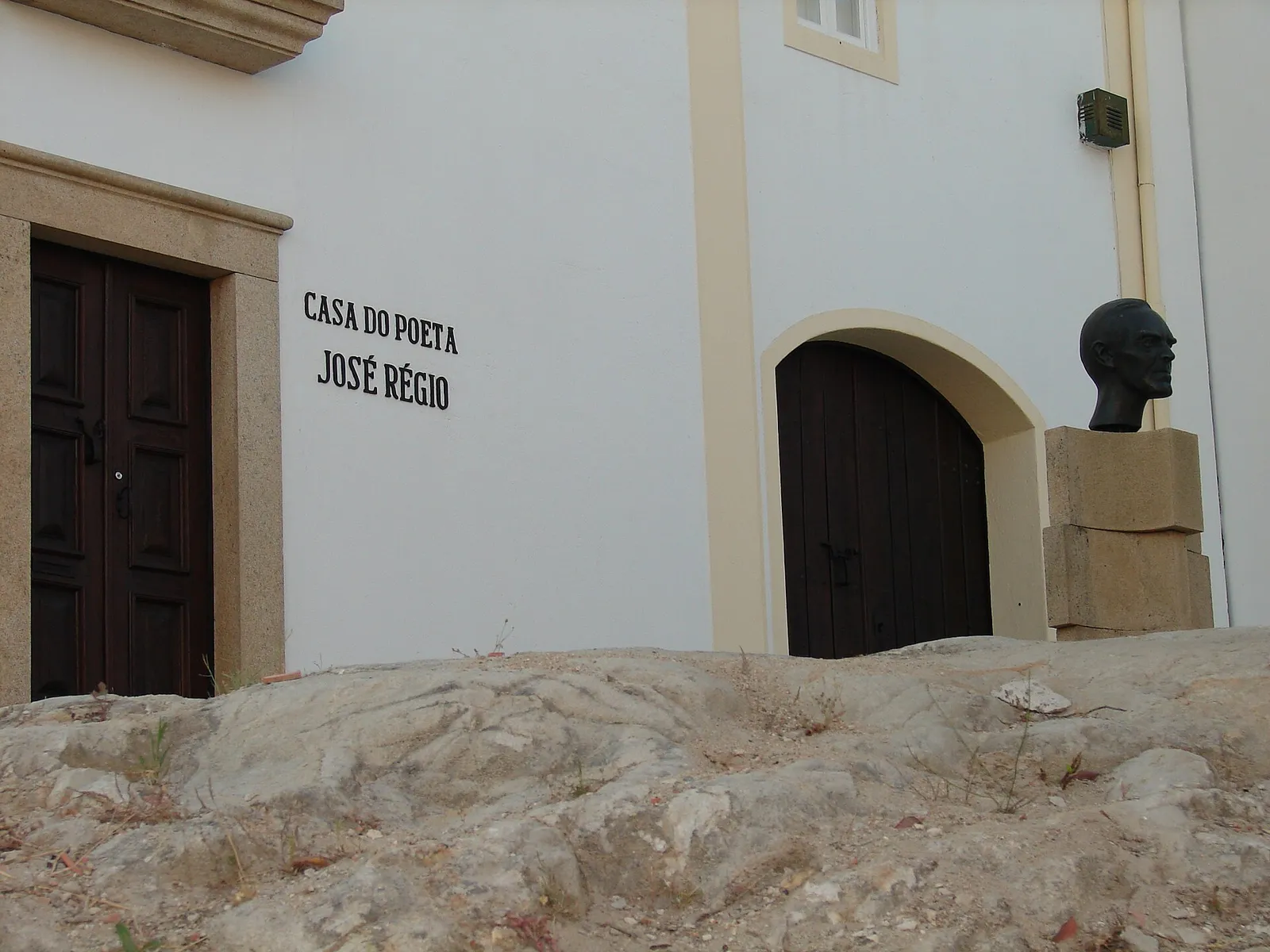
He took a room in the annex of a boarding house, the Pensão 21, on the Rua da Boa Vista. Over the years he rented each room as it fell vacant, and also a house across the way, at no. 17 Largo da Boavista, to hold his collections. In “Toada de Portalegre”, in his 1941 collection Fado, he called his lodging an old, old house, “big, rough and beautiful”.
The city gave him solitude, and he used it. Apart from his first two books of poems, the council's guide notes, most of his work was written in Portalegre. In “Fado Alentejano” he called the Alentejo a homeland he had chosen by force. His diary describes being shut away in his “den” with his books, papers and antiques, with a happiness, he wrote, like a miser's, an old man's or a mystic's.
José Régio's books by decade of first publication, in his lifetime
books
- Poetry
- Fiction
- Theatre
- Essays
Counted from the list of first editions kept by the Centro de Estudos Regianos: 28 books from 1925 to 1968. Posthumous volumes, anthologies and letters are left out; As Encruzilhadas de Deus (1935-36) and António Botto e o Amor (1937-38) are counted in the 1930s. Régio taught in Portalegre from 1929 to 1962, and eleven of the 28 appeared in the 1940s.
Show the data
| Poetry | Fiction | Theatre | Essays | |
|---|---|---|---|---|
| 1920s | 2 | 0 | 0 | 1 |
| 1930s | 1 | 1 | 0 | 1 |
| 1940s | 2 | 5 | 3 | 1 |
| 1950s | 1 | 1 | 2 | 0 |
| 1960s | 2 | 3 | 0 | 2 |
He had bought three or four antiques as a student. In Portalegre, he said, a city that must once have been rich, good old pieces sold at prices even a teacher could afford. He dealt with antique sellers from the region and from Lisbon and came to specialise in popular religious art: figures of the crucified Christ, and the painted clay saints that he and Júlio, after an exhibition of 400 Alentejo clay pieces in Évora in 1962, were the first to call “barros de Portalegre”.
Novels, stories and plays
His first novel, Jogo da Cabra Cega (Blind Man's Buff), came out in Coimbra in 1934. The censors confiscated it as soon as it appeared.
Its narrator, Pedro Serra, falls under the spell of a friend, Jaime Franco, who tests and slowly corrupts his sense of who he is; the scholar Cátia Sever reads the sexual tension between them as the start of the narrator's lasting conflict with himself. Years later Régio still wrote of the “material and moral” harm the book had done him.
Portalegre went into the fiction too: the novella Davam Grandes Passeios aos Domingos (They Went for Long Walks on Sundays, 1941) sends an orphan, Rosa Maria, to live with relatives in the city, whose people it does not flatter.
His longest project was A Velha Casa (The Old House), a cycle of autobiographical novels about Lelito, a boy from a town called Azurara, which stands for Vila do Conde, who goes to study in Coimbra. Régio started it around 1934 and published five volumes between 1945 and 1966. He was working on the sixth when he died, some 35 years after he began. Real people are thinly disguised: Lelito's godmother, Libânia, keeps the name of Régio's own.
He thought his plays “the most original, and consequently the most misunderstood, part” of his work. They are religious and philosophical dramas about the conflict of matter and spirit, which the ARTCENA theatre dictionary sets beside the European drama of Claudel, Yeats, Lorca and Montherlant. Getting them on stage meant years of letters to theatre managers, cuts he regretted and trouble with the censors.
| Play | Published | First staged |
|---|---|---|
| Jacob e o Anjo (Jacob and the Angel) | Dated 1937; in book form 1940 | Paris, in French, 1952; Portugal 1968, by the Companhia de Teatro Popular |
| Benilde ou a Virgem-Mãe (Benilde or the Virgin Mother) | 1947 | 25 November 1947, Teatro Nacional D. Maria II |
| El-Rei Sebastião (King Sebastião) | 1949 | First seen by a Portuguese audience in 1985 |
| A Salvação do Mundo (The Salvation of the World) | 1954 | 1956, by a law students' company; barred from the national theatre |
| Três Peças em um Acto (Three One-Act Plays) | 1957 | Not given in these sources; the volume includes O Meu Caso, later filmed by Manoel de Oliveira |
Régio offered El-Rei Sebastião to the company at the national theatre in October 1949 and A Salvação do Mundo in October 1951; neither was staged by it. Sources differ on the date of Jacob e o Anjo: the ARTCENA dictionary gives 1937, the Centro de Estudos Regianos lists the first book edition of 1940.
Benilde is about a young woman in an old family house who is expecting a child and whose virginity the play leaves in doubt. Amélia Rey Colaço's company opened it at the Teatro Nacional D. Maria II in Lisbon on Tuesday 25 November 1947, with the young Maria Barroso in the title role. Régio, who had laid down strict conditions about cuts and casting, wrote afterwards to praise the production and the actors, although the critics were divided and only part of the public took to it.
Manoel de Oliveira, who admired Régio more than any other writer, filmed the play word for word in 1975 and cast Barroso, who had played Benilde in 1947, as the servant Genoveva. It opened at the Apolo 70 cinema in Lisbon on 21 November 1975, four days before the political crisis of 25 November, and passed almost unnoticed. Yet it was this film, once shown in Italy, that won Oliveira his international reputation, the critic João Bénard da Costa wrote.
A writer against the regime
In Presença Régio defended an art that answered to the artist's personality and nothing else, and he quarrelled with the neo-realists, the young writers of the left who wanted literature to serve a social cause. Álvaro Cunhal, later leader of the Communist Party, wrote that poetry such as As Encruzilhadas de Deus (1936) should be not only fought but passed over, because it showed the crowds no political path.
That did not make him a friend of the dictatorship. The Centro de Estudos Regianos describes him as firm and outspoken in his socialist ideals under a repressive regime, and as politically engaged whenever he thought the state of the country demanded it. In 1945 he joined the Movimento de Unidade Democrática (MUD), the opposition front founded on 8 October that year when Salazar called early elections. The MUD's lists of supporters later went to the political police.
The politics went into the fiction too. Manuel José Matos Nunes reads A Velha Casa as carrying much of Régio's social and political thinking, and points to a militant pamphleteer, Henrique Dordio, who appears in the fifth volume and in the drafts for the sixth. The censors read him closely as well: besides the 1934 novel, A Salvação do Mundo was barred from the national theatre from 1954, although students played it in 1956.
His last public appearance was political. On Wednesday 8 October 1969 he sat beside the poet Sophia de Mello Breyner Andresen at a press conference in Porto, at the Associação de Jornalistas e Homens de Letras, held by the CEUD, the socialist-led opposition lists that ran in Lisbon, Porto and Braga, with Mário Soares among their candidates, in that month's National Assembly election.
Return to Vila do Conde
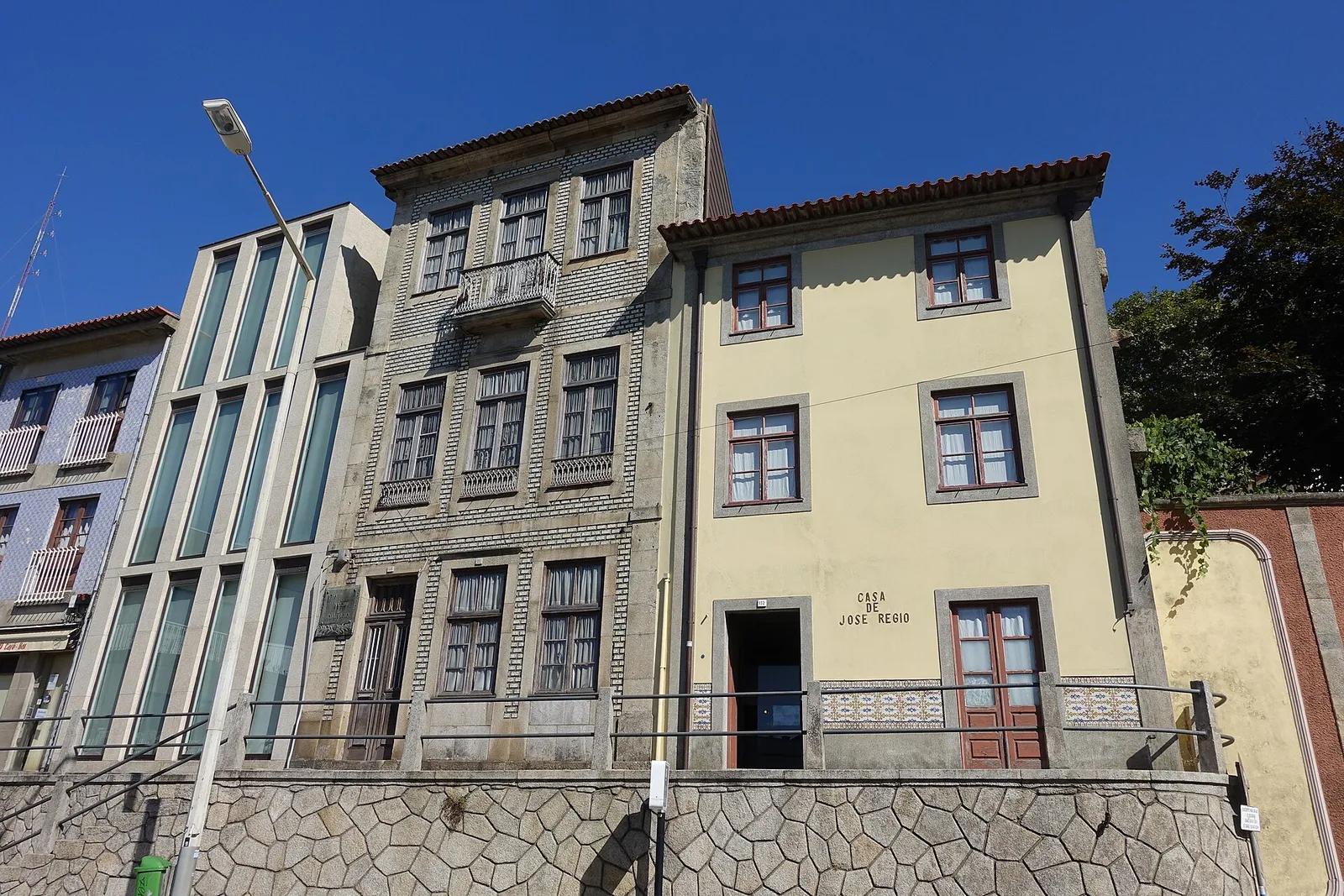
After he retired in 1962 Régio divided his time between Portalegre and Vila do Conde, and in 1966 he settled for good in Vila do Conde, in the house that had belonged to his aunt and godmother, Libânia. He brought some of the best pieces of his collection with him and adapted the house to suit his age.
His standing was argued over to the end. In 1965, at a time when his work was being run down, the novelist Vergílio Ferreira said in public:
“Régio is today the greatest of us all.”
His last book of poems in his lifetime, Cântico Suspenso, came out in 1968. In 1969 he had a heart attack while working on the sixth volume of A Velha Casa.
He died of heart disease in Vila do Conde on Monday 22 December 1969, aged 68, and was buried in his home town. Two more books of poems, Música Ligeira and Colheita da Tarde, and the memoir Confissão dum Homem Religioso appeared in 1970 and 1971.
17 September 1901
Born in Vila do Conde
As José Maria dos Reis Pereira.
1925
Degree at Coimbra
Thesis on modern Portuguese poetry, defending the Orpheu poets.
1926
Poemas de Deus e do Diabo
First book, the first signed José Régio.
March 1927
Presença
Founded in Coimbra with Gaspar Simões and Branquinho da Fonseca.
4 October 1929
Portalegre
Leaves for the Liceu Mouzinho da Silveira; permanent post from 1930.
1934
Jogo da Cabra Cega
First novel, confiscated by the censors.
1945
Joins the MUD
First volume of A Velha Casa published the same year.
25 November 1947
Benilde on stage
At the Teatro Nacional D. Maria II.
1962
Retires
Divides his time between Portalegre and Vila do Conde.
1966
Back in Vila do Conde
Settles in the house of his godmother Libânia.
8 October 1969
Last public appearance
CEUD press conference in Porto.
22 December 1969
Dies
In Vila do Conde, aged 68.
Two houses, two museums
Régio wanted his Portalegre collection to stay in the region where most of it had been bought. In 1964, faced with the prospect of it going to Vila do Conde, the council reopened talks. He sold it to the town in 1965 on condition that the council buy the whole building, restore it under his direction and turn it into a museum, while he kept the use of it for life and decided who came in.
The Casa-Museu José Régio in Portalegre opened on 23 May 1971, during the celebrations of the city's day, seventeen months after his death. It shows his sculpture, painting, faience, furniture, metalwork and textiles, and above all his figures of Christ, many of them barros de Portalegre; conservators have found that almost all of his barros were repainted at some point after they were made.
The Casa de José Régio in Vila do Conde opened on 17 September 1975, the day he would have turned 74. The town presents it as a home rather than a conventional museum. Except for a room of modern painting that Júlio arranged at his request, the rooms are as Régio laid them out. The house next door belonged to his brother João Maria; the one beyond was home to the family's maid, Benilde. Since 2007 that “Casa da Benilde” has held the museum's reception and the Centro de Estudos Regianos.
| Portalegre | Vila do Conde | |
|---|---|---|
| Name | Casa-Museu José Régio | Casa de José Régio |
| What it was | A boarding house where he rented a room in 1929 and slowly took over the building | The house of his aunt and godmother Libânia, his home from 1966 |
| How it became a museum | Collection sold to the council in 1965, on condition it buy and restore the house | Run by the town council as part of its museum network |
| Opened | 23 May 1971 | 17 September 1975 |
| Highlights | Figures of Christ and barros de Portalegre, faience, furniture | Rooms as he arranged them, and a room of modern painting arranged by Júlio |
Why Régio still matters
In Presença Régio named Pessoa, Sá-Carneiro and Almada Negreiros the masters of his generation, and his criticism helped give the Orpheu poets, Pessoa first among them, their place at the head of Portuguese modernism. Counting posthumous volumes as well, Enrico Martines lists eight collections of poems in his lifetime and three after it, in 45 editions, twelve volumes of fiction in 36 editions, six of plays and ten of non-fiction.
The two towns that claim him marked the fiftieth anniversary of his death in 2019 and 2020 with readings, talks and screenings, and in 2021 the Museu Nacional Soares dos Reis in Porto gave him an exhibition, José Régio: [Re]visits to the Ivory Tower.
His poems also found their way into music and film. Alain Oulman set them for Amália Rodrigues, who recorded his “Fado Português”, and Fado Português was the title of her 1965 LP. Manoel de Oliveira kept returning to him, from a 1965 film about Júlio's paintings to O Quinto Império in 2004.
FAQs
Who was José Régio?
José Régio was the pen name of José Maria dos Reis Pereira (1901-1969), a Portuguese poet, novelist, playwright and critic. He co-founded the Coimbra magazine Presença in 1927, taught for more than thirty years at the liceu in Portalegre and is best known for the poem “Cântico Negro”.
When and where was José Régio born?
He was born in Vila do Conde, in the north of Portugal, on 17 September 1901. He died in the same town on 22 December 1969, aged 68, and is buried there.
What is “Cântico Negro”?
“Cântico Negro” (Black Canticle) is a poem from Régio's first book, Poemas de Deus e do Diabo, published in Coimbra in 1926. Its speaker refuses every path others offer, with the refrain “I know I am not going that way!”, and says he was born of the love between God and the Devil.
Was José Régio an opponent of Salazar?
Yes. He joined the opposition Movimento de Unidade Democrática in 1945 and in October 1969, weeks before his death, appeared at a press conference of the socialist CEUD list in Porto. His first novel was confiscated by the censors in 1934, and his play A Salvação do Mundo was kept off the national stage.
Can you visit José Régio's houses?
Both are museums. The Casa-Museu José Régio in Portalegre, opened in 1971, holds his collections of religious and popular art. The Casa de José Régio in Vila do Conde, opened on 17 September 1975, keeps the rooms as he arranged them.
On the timeline
Open the timelineNearby moments from regeneration and the last kings (1851–1910).
The poet António Nobre dies of tuberculosis at Foz do Douro, aged just 32. His book 'Só' (1892), with its homesick, saudade-steeped verses about his native north, later made him one of the defining voices of Portuguese symbolist poetry.
José Maria Eça de Queirós, master novelist of Portuguese realism and author of 'Os Maias' and 'O Crime do Padre Amaro', dies near Paris, where he was serving as Portuguese consul.
Lisbon's first electric trams enter commercial service, running west along the river to Algés. The Carris Museum starts the line at Cais do Sodré, a Carris stamp brochure at the Terreiro do Paço; its descendant is today's route 15E.
José Régio is born
The writer and poet José Régio, a central figure of Portuguese modernism and co-founder of the influential literary magazine Presença, is born in Vila do Conde.
Joaquim Mouzinho de Albuquerque, the cavalry officer hailed as a national hero for capturing the Gaza emperor Gungunhana at Chaimite in Mozambique in 1895, takes his own life in Lisbon at the age of 46.
Birth in Aveiro of Fernando Pessa. As a BBC announcer in wartime London he brought uncensored news to Portuguese listeners, and decades later he was still filing wry TV street reports for RTP, signed off with the catchphrase 'E esta, hein?' ('How about that, eh?'). He died in 2002, days after turning 100.
Former Casa Pia pupils led by Cosme Damião meet at the Farmácia Franco in Belém and found Sport Lisboa. A 1908 merger with Grupo Sport Benfica created Sport Lisboa e Benfica, which grew into Portugal's record league champion and one of the world's best-supported clubs.
Coming up in history
All long reads
31 sources
Archives, scholarship and reporting this article was checked against.
- 1
José Régio: dados biográficosCentro de Estudos Regianos, Vila do Conde
- 2
José Régio: cântico sem tempo (ed. Barbara Gori, Enrico Martines and Dionísio Vila Maior)Centro de Estudos Regianos; proceedings of the congress “50 Anos – José Régio”, Università di Padova, November 2019 (PDF in the Padua research repository)
- 3
- 4
“Barros de Portalegre”: características identitárias e intervenções posteriores à produção (Francesca Paba, Sara Mariano and Maria José Maçãs)ARTis ON, no. 3, 2016, Faculdade de Letras da Universidade de Lisboa
- 5
Portalegre: visita guiada / guided tour (Domingos Bucho)Câmara Municipal de Portalegre
- 6
O drama do teatro de José Régio (Francisco Maciel Silveira)Via Atlântica (Universidade de São Paulo), no. 7, October 2004
- 7
House of José Régioviladoconde.com, Vila do Conde visitor guide
- 8
Portalegre e Vila do Conde assinalam 50 anos da morte de José RégioNotícias ao Minuto (Lusa), 2019
- 9
José Régio e o Diana-Bar (leaflet)Biblioteca Municipal Rocha Peixoto, Câmara Municipal da Póvoa de Varzim, June 2020
- 10
José Régio a par de Pessoa (Adelto Gonçalves)Revista do CESP (UFMG), v. 22, n. 31, July-December 2002
- 11
A Monarquia Constitucional (1820-1910)Assembleia da República
- 12
Um golpe na República: 28 de Maio de 1926, da Ditadura Militar ao Estado NovoMuseu da Presidência da República
- 13
- 14
O Essencial sobre a PIDE (Irene Flunser Pimentel)Imprensa Nacional, 2023
- 15
Acta da assembleia geral de apuramento dos resultados do Plebiscito Nacional de 19 de Março de 1933; Decretos-Leis n.º 22:465 a 22:470Diário do Governo, I série, n.º 83, 11 April 1933 (Diário da República Eletrónico)
- 16
47.º aniversário do 25 de Abril: relembrando os livros proibidosCeiED, Universidade Lusófona
- 17
João Gaspar Simões (by Eugénio Lisboa)Camões, Instituto da Cooperação e da Língua, Figuras da Cultura Portuguesa
- 18
José Régio na Presença: arte viva, modernismo e crítica (Julio Cesar Rodrigues Cattapan)Boletim de Pesquisa NELIC, Universidade Federal de Santa Catarina, v. 13, n. 20, 2013, pp. 58-77
- 19
José Régio: no centenário do seu nascimento (Serafim Ferreira)a Página da Educação, 2001
- 20
“A tristeza de nunca sermos dois”: uma leitura de Jogo da Cabra Cega de José Régio (Cátia Sever)Iberic@l, Revue d'études ibériques et ibéro-américaines, no. 16, autumn 2019 (Sorbonne Université)
- 21
Régio, José (G. dos Santos), Dictionnaire des théâtres du mondeARTCENA, from the Dictionnaire encyclopédique du théâtre à travers le monde (Bordas, 2008)
- 22
Da vida pelo teatro: a atriz e empresária Amélia Rey Colaço (Joana d'Eça Leal)Historiæ, vol. 8, no. 2, pp. 219-237, Universidade Federal do Rio Grande, 2017
- 23
Benilde ou a Virgem Mãe / 1975 (programme note by João Bénard da Costa)Cinemateca Portuguesa-Museu do Cinema, 16 March 2026
- 24
1945José Adelino Maltez, Respublica (ISCSP, Universidade de Lisboa)
- 25
1945-1959: O pós-guerra e o início da aventura europeia (chronology by Maria Fernanda Rollo)CVCE.eu, University of Luxembourg, from the Faculdade de Ciências Sociais e Humanas, Universidade Nova de Lisboa
- 26
Listas de adesão ao Movimento de Unidade Democrática (MUD), 1945: archive descriptionCasa Comum, Fundação Mário Soares e Maria Barroso
- 27
- 28
54º Anniversary of death of José RégioMuseu Nacional Soares dos Reis, 22 December 2023
- 29
House of José RégioiPorto, Área Metropolitana do Porto
- 30
- 31
Alain OulmanMuseu do Fado, Lisbon
Image credits
- The Casa de José Régio on the Avenida José Régio in Vila do Conde, photographed in 2018. Régio settled here for good in 1966 and died here in 1969; it opened as a museum on 17 September 1975. Joseolgon, CC BY-SA 4.0, via Wikimedia Commons.
- The Diana-Bar on the seafront at Póvoa de Varzim in 2008, by then a branch of the town's library. In his last years Régio wrote at its tables most mornings. PedroPVZ, CC BY-SA 3.0, via Wikimedia Commons.
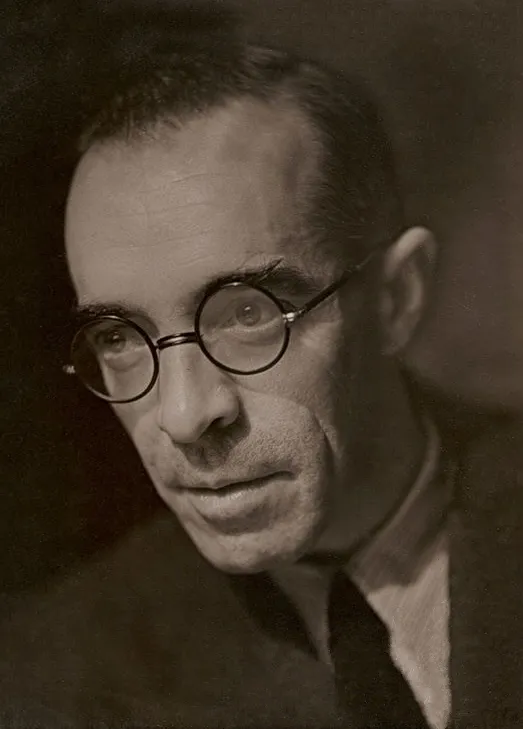
- José Régio in a portrait by an unknown photographer, undated but thought to be from about 1947, the year Benilde ou a Virgem-Mãe was staged in Lisbon. Unknown author, Public domain, via Wikimedia Commons.
- The Casa do Poeta José Régio in Portalegre, with a bronze bust of the poet, photographed in 2006. Régio lodged here from 1929 and slowly took over the whole building with his collections. Carlasfonseca, CC BY-SA 4.0, via Wikimedia Commons.
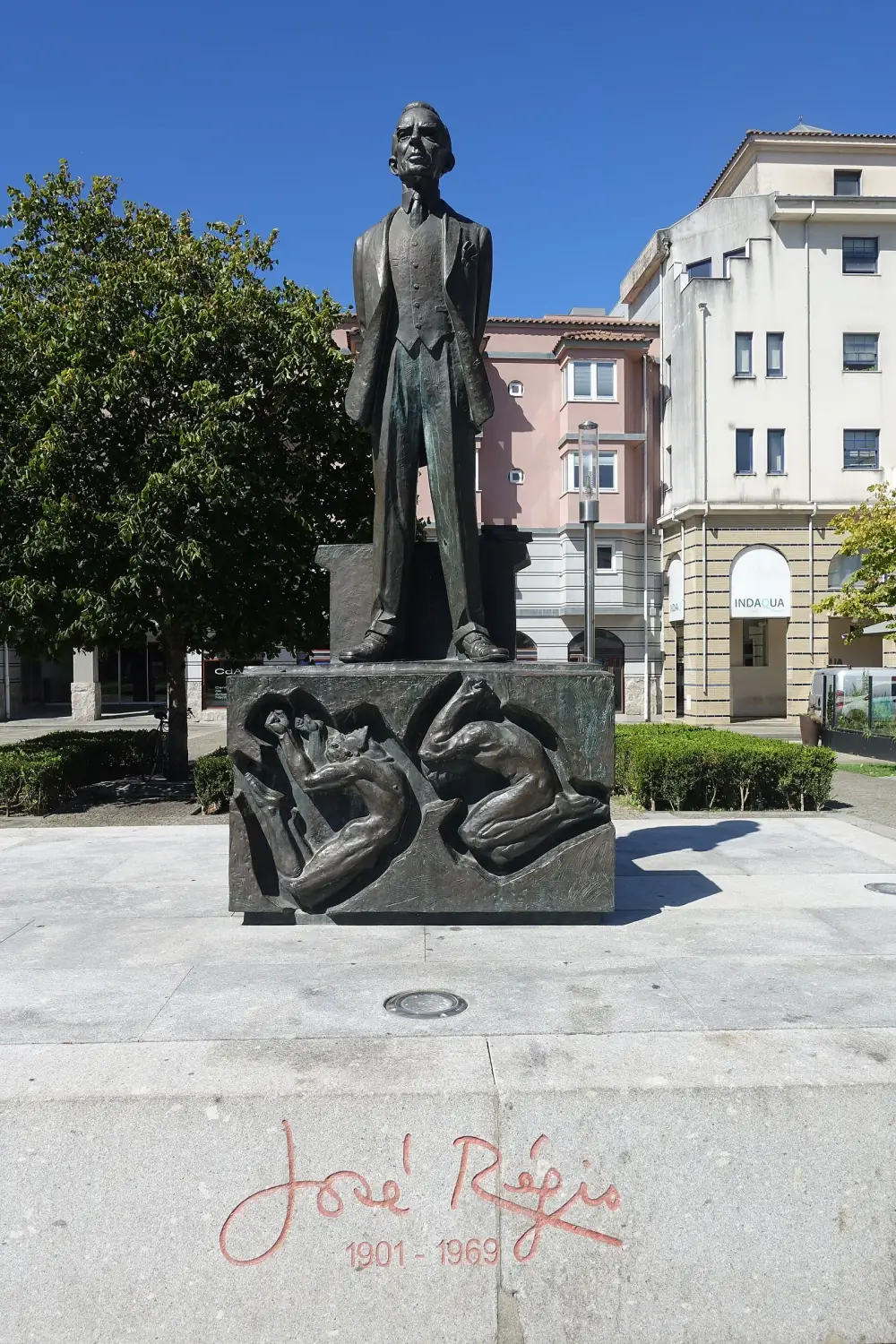
- A statue of José Régio in Vila do Conde, photographed in 2024. His signature and dates are set into the paving below it. Joseolgon, CC BY 4.0, via Wikimedia Commons.