

Bocage, Setúbal's rebel poet, born 1765
Manuel Maria Barbosa du Bocage sailed to India and China, wrote some of the best sonnets in Portuguese and spent months in the Limoeiro prison and the Inquisition's cells. Two centuries on, he is also the hero of jokes he never told.
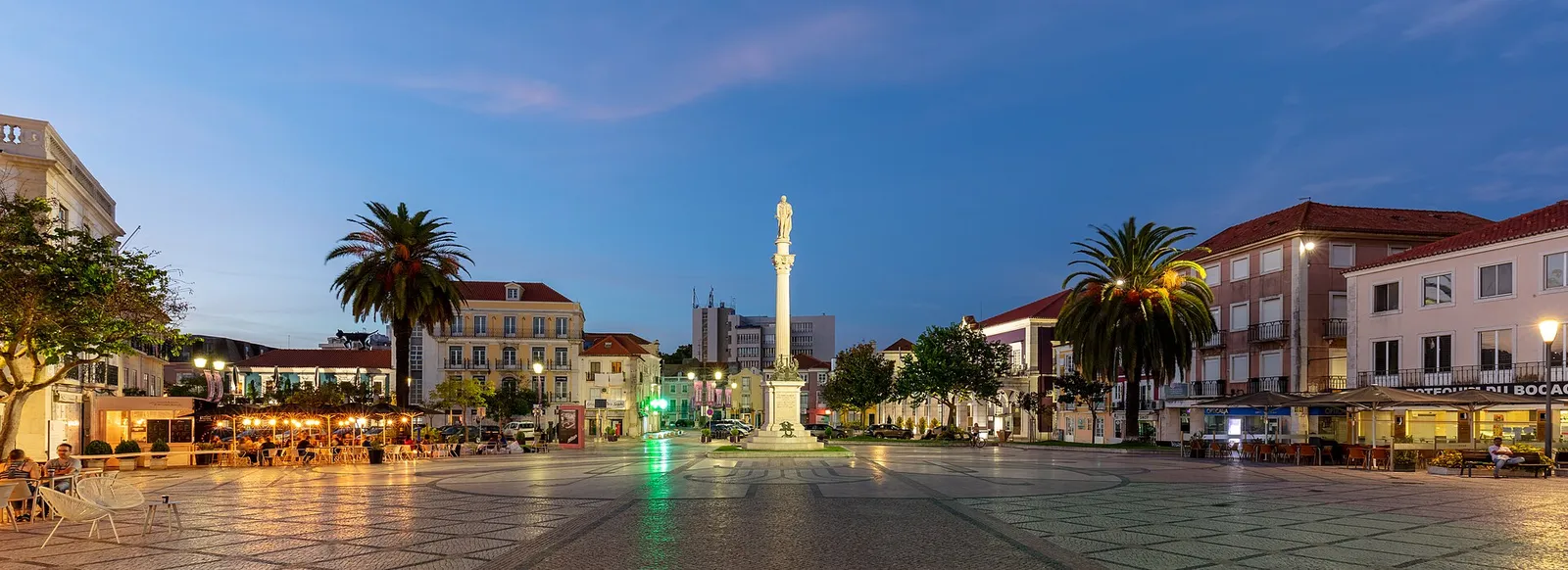
At a glance
- Manuel Maria Barbosa du Bocage was born in Setúbal on 15 September 1765, the son of a lawyer and of a mother of French descent; he died in Lisbon on 21 December 1805, aged 40.
- He went to India as a naval cadet in 1786, deserted from his post at Damão in April 1789, reached Macau by way of Surat, and was back in Lisbon in August 1790.
- As Elmano Sadino he joined the Nova Arcádia, a Lisbon literary society, in 1790, published the first volume of his Rimas in 1791 and was expelled in 1794 after a war of satirical verse with its members.
- Arrested on 7 August 1797 on the police chief Pina Manique's charge of writing “impious, seditious and critical papers”, he passed through the Limoeiro prison, the Inquisition's cells, a Benedictine monastery and an Oratorian house before he was freed in 1798.
- His erotic and satirical poems spent much of the next two centuries in clandestine editions, banned again under the dictatorship of 1926 to 1974, and from the early twentieth century his name was attached to books of dirty jokes he did not write. Setúbal holds its municipal holiday on his birthday.
A name in the prison book
In August 1797 a thin, blue-eyed poet of 31 climbed the steps of the Limoeiro, Lisbon's main jail. He later turned the moment into verse. The heavy doors slid their bolts, a guard led him to the registry, and he watched the clerk write his name in the book: Manuel Maria. In the margin the clerk added one word, Segredo. It meant he would be held in isolation.
“For the hateful register casting my eyes in fear, I see them set down Manuel Maria, and at once in the margin, Secret.”
The order had come from Diogo Inácio de Pina Manique, Intendant-General of Police, whose informers sat in Lisbon's cafés. Bocage was one of the most popular poets in the city. He improvised verse on demand in the cafés, mocked the clergy, men of the regime and fellow poets, and was said to be the author of poems against religion and the throne that passed from hand to hand in manuscript.
He had been born on 15 September 1765 in Setúbal, a port on the Sado river south of Lisbon. In a short, disorderly life he deserted twice, wandered from Goa to Macau, filled three volumes of verse, translated Ovid and Voltaire and died at 40. Portugal remembers him twice over: as a great sonneteer, and as the hero of a long tradition of jokes.
- Born
- Sunday 15 September 1765, Setúbal
- Died
- 21 December 1805, Travessa de André Valente, Lisbon, aged 40
- Arcadian name
- Elmano Sadino (Elmano from Manoel, Sadino from the river Sado)
- Main collection
- Rimas, three volumes: 1791, 1799 and 1804
- In custody
- August 1797 to 1798: Limoeiro, Inquisition, São Bento, Necessidades
- Statue in Setúbal
- Unveiled 21 December 1871
A Setúbal childhood
Setúbal was still rebuilding when he was born. The earthquake of 1755, its tsunami and fires had wrecked much of the town ten years earlier, and its recovery was slow. His father, José Luís Soares de Barbosa, was a lawyer trained at Coimbra who wrote verse himself. His mother, Mariana Joaquina Xavier l'Hedois du Bocage, came from a French family, and it was her surname that the poet made famous.
Her father, Gil l'Hedois du Bocage, was an officer of the Portuguese navy, later a vice-admiral, remembered in the family as a hero of the Battle of Matapan. The boy grew up speaking French; a Spanish priest taught him Latin.
In the 1770s the family fell apart. In 1771 his father, a former crown magistrate in Beja, was jailed in the Limoeiro for misusing public money and served almost six years. His mother died in 1774, and the children passed to relatives. His father came out in 1777, in the Viradeira, the reversal that followed King José I's death and the fall of his chief minister, the Marquis of Pombal, and set up as a lawyer in Setúbal.
Soldier, cadet, deserter
His elder brother, Gil Francisco, went to Coimbra to study law. Manuel Maria joined the army. In 1781 he enlisted as a volunteer in the infantry regiment garrisoned in Setúbal, and in 1783 he transferred to the navy to train as a cadet at the new Academy of Naval Cadets in Lisbon.
In Lisbon's taverns and coffee houses he began to be known as a satirist and a repentista, a poet who could improvise verse on any theme thrown at him. In mid-1784, for reasons no one has found, he left the cadet company and was struck off as a deserter.
A royal pardon saved him. On 1 April 1786 the Gazeta de Lisboa announced his appointment as a naval cadet for India, and at 20 he sailed on the Nossa Senhora da Vida, Santo António e Madalena, with 84,000 réis from the crown. On the way he spent time in Rio de Janeiro, where he lived in the Rua das Violas and won the friendship of the viceroy, Luís de Vasconcelos e Sousa.
| When | Where | What happened |
|---|---|---|
| 1 April 1786 | Lisbon | The Gazeta de Lisboa announces his appointment as a naval cadet for India |
| June 1786 | Rio de Janeiro | A stay ashore on the way out |
| September 1786 | Mozambique Island | A further stop |
| End of October 1786 | Goa | Arrives at the capital of Portuguese India |
| February to March 1789 | Goa | Promoted second lieutenant of infantry and posted to Damão |
| 6 April 1789 | Damão | Arrives at his new post |
| 8 April 1789 | Damão | Deserts with an ensign, Manuel José Dionísio |
| 1789 | Surat, then southern China | Travels on, possibly in a British ship |
| September or October 1789 to early 1790 | Macau | Lives on the charity of patrons |
| August 1790 | Lisbon | Back home after four years away |
Dates from Rogério Puga's study of the Macau years and Daniel Pires's chronology for the Biblioteca Nacional. Puga gives the rank as lieutenant; the Biblioteca Nacional and Setúbal museum chronologies say second lieutenant. Bocage's verse mentions Canton, which Puga notes may stand for the Macau region. Puga suggests he may have left Macau in early January 1790 in the Marquês de Angeja; the stay is usually given as lasting until about March 1790.
Goa, Damão and the road to Macau
Goa, the capital of Portuguese India, was half in ruins, and he found its society pretentious and corrupt. He became the friend of a judge who wrote poetry, Sebastião José Ferreira Barroco, and Puga writes that he helped put down the so-called Pintos conspiracy of 1787. He also wrote one of his best-known satires on the colony.
“Of all lands you are the worst, O Goa; you seem more a wilderness than a city, yet you harbour more vanity than London, than Paris or than Lisbon.”
In February 1789 he was promoted second lieutenant of infantry and sent to Damão, a Portuguese enclave on the coast north of Bombay. He arrived on 6 April.
Two days later he deserted for the second time, with an ensign, and the two men made their way to Surat and from there to southern China. Puga warns that some adventures he later described in verse may be invention.
He reached Macau, the Portuguese trading city at the mouth of the Pearl River, in September or October 1789. Penniless, he lived on the generosity of local notables. The interim governor, Lázaro da Silva Ferreira, overlooked his desertion, and Ferreira and a merchant, Joaquim Pereira de Almeida, helped him get home. Bocage thanked both in verse, and mocked the city in a sonnet that begins “Um governo sem mando, um bispo tal”, “a government without command, a bishop such as this”.
He saw his own life through Camões, the author of Os Lusíadas, who had also been a soldier, poor and unlucky in love, and had also served in the East. “Camões, great Camões, how alike I find your fate to mine when I compare them,” he wrote.
Elmano Sadino and the war of the poets
Lisbon in August 1790 was talking about the revolution in France. In the Botequim das Parras and the Café Nicola in the Rossio, Pina Manique's informers, the moscas or flies, listened. With Queen Maria I losing her reason, much power lay with the Intendant, who banned the books of Voltaire, Rousseau and Diderot and watched the ports for them.
Bocage was invited at once to join the Academia de Belas-Letras, better known as the Nova Arcádia, a newly founded society of poets in the spirit of the older Arcádia Lusitana and protected by Pina Manique. Members took pastoral names, and he became Elmano Sadino. Elmano rearranges the letters of Manoel, the old spelling of his first name, and Sadino means “of the Sado”, the river of Setúbal. In 1791 he published the first volume of his Rimas.
The peace did not last. From 1793 Bocage and the other members traded insults in verse, and the quarrel became known as the guerra dos vates, the war of the poets. Its president, the Brazilian poet and modinha singer Domingos Caldas Barbosa, accused him of something close to heresy.
“Of everyone he speaks ill, the impious Manuel Maria; and if he has not spoken ill of God, it is because he does not know Him.”
Bocage answered that it was a great wonder to see a dog bite a man. A sonnet attributed to him, “Preside o neto da rainha Ginga”, ridiculed the society, its host the Count of Pombeiro and its president, whose African ancestry its first line mocks. In 1794 he was expelled. The quarrels made him more famous, and the police watched him more closely.
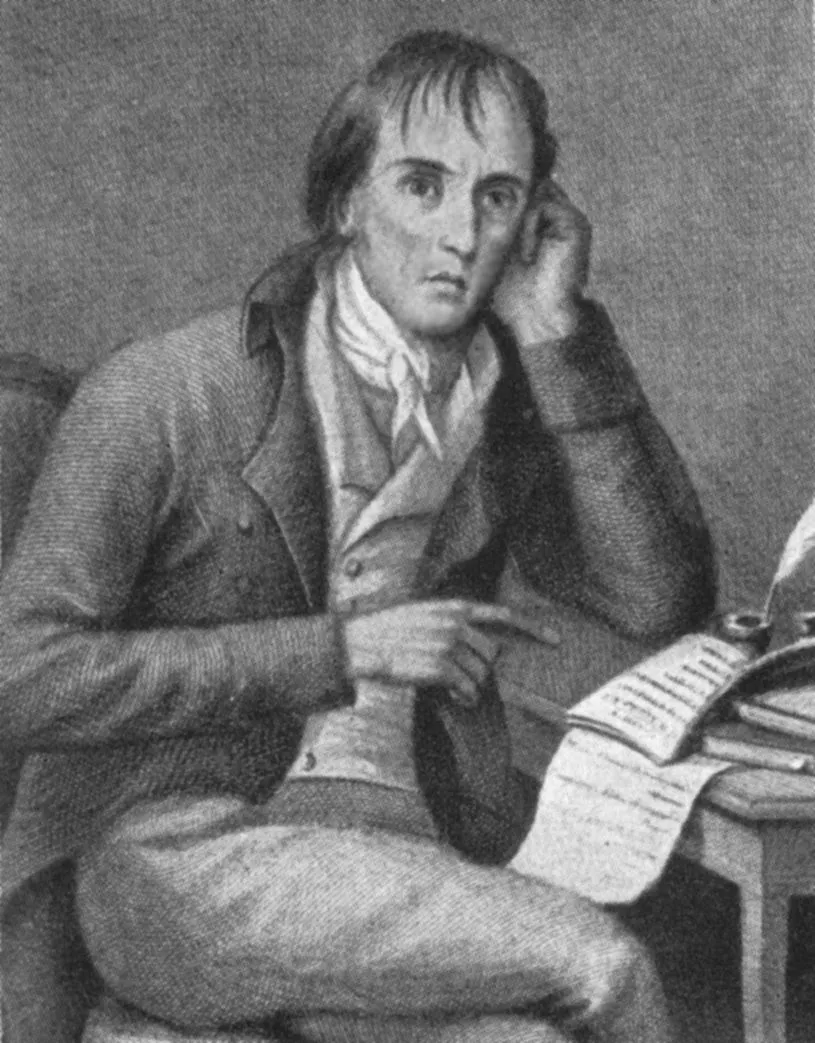
He also left a self-portrait in a sonnet. He was, he wrote, thin, blue-eyed and dark-faced, middle height, with a high nose, “more prone to fury than to tenderness”, devoted to “a thousand goddesses (I mean, a thousand girls)” and loving friars only on the altar.
Pina Manique's prisoner
What brought the police to his door were poems he never printed. The most notorious was the Epístola a Marília, also known by its first words, Pavorosa ilusão da Eternidade, “dreadful illusion of eternity”. It attacked the idea of a punishing God and the hypocrisy of the clergy, and invited a woman to love outside marriage. Daniel Pires, his modern editor, adds poems praising liberty and Napoleon.
“It is known at this Intendancy that Manoel Maria Barboza de Bocage is the author of some impious, seditious and critical papers which have lately been spread through this Court and Kingdom; that he is disorderly in his habits, that he does not know the obligations of the Religion he has the fortune to profess, and that for many years he has not fulfilled his duty to the Sacraments.”
The police went after Bocage, a friend named André da Ponte do Quental and their papers. They missed the poet, but among his friend's papers they found a copy of the Pavorosa under the title Verdades duras, “hard truths”. Warned by friends, Bocage tried to escape to Brazil. A few days later, Pina Manique reported, he was caught aboard a ship sailing in the convoy for Bahia.
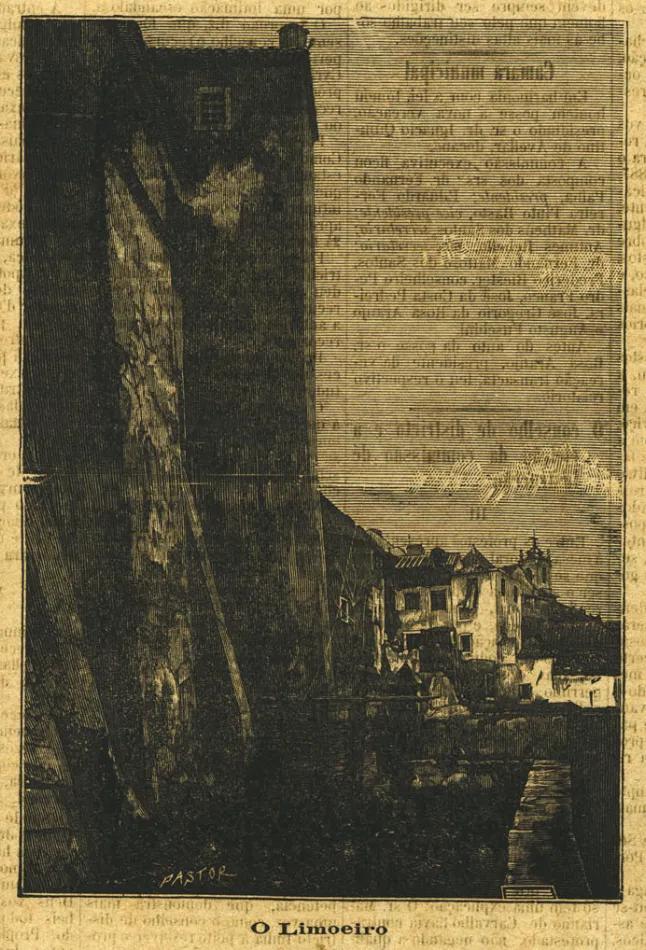
On 7 August 1797, by the Setúbal museum's chronology, he was put in irons in the Limoeiro, where his father had served his sentence. From his cell he appealed to powerful friends, among them José de Seabra da Silva, a minister and an old fellow student of his father's.
Late in 1797 he was handed to the Inquisition. The Holy Office, Portugal's church court for heresy since 1536, had lost much of its power under Pombal, whose rules of 1774 ended its secret procedure. A monk's note of 1798 says that Bocage himself had appealed to it. Teófilo Braga, his nineteenth-century biographer, read this as a move to escape the Intendant, who might have kept him in prison indefinitely or sent him to Angola.
“On the 17th of this month of February the Tribunal of the Holy Office sent to this monastery the celebrated poet Manoel Maria de Bocage, well known at this Court for his poems and no less for his learning. He had been arrested by the Intendancy, and he appealed to the Holy Office.”
The Holy Office sent him on to be re-educated. The Benedictines of São Bento treated him so gently that Pina Manique had him moved in March 1798 to the Hospício das Necessidades, the house of the Oratorian fathers near Alcântara. He was not to leave or see anyone from outside. The prince, the future João VI, hoped that “with these corrections” he would come to his senses and give up “all the vices and prostitutions in which he lived scandalously”.
He read and translated in the Oratorians' large library. Tradition, recorded by Braga, has him enduring the learned verses of Father Joaquim de Foyos, appointed to instruct him, and exclaiming that it was a pity Father Foyos had studied so much, for a great fool had been lost.
| Place | In | Out | Source |
|---|---|---|---|
| Limoeiro prison | 7 August 1797 | November or December 1797 | Braga (early November); Chitas (about three months); Pires (December) |
| Cells of the Lisbon Inquisition | November or December 1797 | 17 February 1798 | Braga; Pires; Dietário of São Bento |
| Monastery of São Bento da Saúde | 17 February 1798 | 22 or 24 March 1798 | Dietário, as printed by Braga |
| Hospício das Necessidades (Oratorians) | 22 or 24 March 1798 | April 1798, or 31 December 1798 | Pires gives April; Chitas gives 31 December |
Braga counts three months and ten days in the Inquisition before 17 February 1798, which puts the transfer in early November 1797, when Pina Manique wrote to the Inquisitor General about the case. Pina Manique's transfer order is dated Thursday 22 March 1798, and the São Bento Dietário says it took effect on the 24th. Daniel Pires's chronology for the Biblioteca Nacional has Bocage free in April 1798; António Chitas's chronology for the Setúbal museum gives 31 December 1798. Teófilo Braga, reading a sonnet Bocage wrote at 33, has him already free by September 1798.
The translator's last years
Freed, he needed a living. From 1799 to 1801 he worked as an editor and translator for the Arco do Cego press in Lisbon, run by the naturalist Friar José Mariano da Conceição Veloso and known for its fine engravings. His translations include Delille's poem on gardens and Castel's on plants, Lesage's Gil Blas, Florian, Arnaud and the Latin verse of a Brazilian teacher, as well as Ovid and Voltaire.
The priest José Agostinho de Macedo, a former friend, attacked his translations in verse, and Bocage replied with the satire Pena de Talião, “an eye for an eye”. They were reconciled shortly before he died.
The Inquisition came back once more. In 1802 Maria Teodora Severiana Lobo, the daughter of an acquaintance, denounced him as a freemason. He had probably been initiated between 1795 and 1797 in the Loja Fortaleza, a Lisbon lodge, under the name Lucrécio. The case was shelved, for want of proof and perhaps because he was already ill; its file survives in the Torre do Tombo, the national archive.
The third volume of the Rimas appeared in 1804. By then the illness that killed him was showing, and in 1805 he fell gravely ill with an aneurysm of the carotid artery. He kept writing and published his Improvisos de Bocage na sua mui perigosa enfermidade, improvisations made during his illness.
He died on 21 December 1805 in the Travessa de André Valente, Lisbon, aged 40, and was buried at the church of the Mercês.
15 September 1765
Born in Setúbal
1771
His father is jailed in the Limoeiro
1774
His mother dies
1781
Enlists in the infantry at Setúbal
1783
Naval cadet in Lisbon; deserts in 1784
1786
Sails for India; reaches Goa in October
8 April 1789
Deserts at Damão
1789 to 1790
Canton and Macau
August 1790
Back in Lisbon; joins the Nova Arcádia as Elmano Sadino
1791
Rimas, volume one
1794
Expelled from the Nova Arcádia
7 August 1797
Arrested and taken to the Limoeiro
1798
Inquisition, São Bento and Necessidades; freed
1799
Rimas, volume two; translator for the Arco do Cego press
1802
Denounced to the Inquisition as a freemason
1804
Rimas, volume three
21 December 1805
Dies in Lisbon, aged 40
The forbidden book and the statue
Much of what made him dangerous stayed unprinted. Editions after his death came from Desidério Marques Leão from 1812 and from his fellow mason Nuno Álvares Pato Moniz in 1813 and 1814. In 1853 the bibliographer Inocêncio Francisco da Silva published his works in six volumes; knowing they were incomplete, he brought out the rest the next year, anonymously, as Poesias eróticas, burlescas e satíricas, with Brussels on the title page. It was set from a manuscript notebook that also held poems by other writers, and some of them are still printed as his.
The false imprint became a habit: most later editions were printed in Lisbon under invented places of publication, as French libertines had done to dodge censors. Pires calls the book the most forbidden in Portuguese literature. The Cartas de Olinda e Alzira, letters in which a young woman describes her sexual awakening, appeared from a Lisbon publisher in 1915, under the Republic, though the Setúbal museum's catalogue dates the first free edition to 1979.
Censorship returned after the coup of 1926 and the poems went back underground. Hernâni Cidade's complete works, sold in instalments, slipped them past the censors at the end of the 1960s.
Places named on the title page of the Poesias eróticas, 1854 to 1908
editions
Counted from Daniel Pires's list, written in 1995 and reproduced in the Biblioteca Nacional's 2005 exhibition: the first edition of 1854 and the 17 later ones he names, all printed in Portugal. His list may not be complete. Brussels: 1854, 1860, 1870, 1879, 1884, 1899, 1900; Paris: 1901, 1902 and two of 1908; Bahia: 1860, 1861; Rio de Janeiro: 1861; Cochinchina: 1885; London: 1900; Amsterdam and Leipzig: 1907.
Show the data
| Editions naming each place | |
|---|---|
| Brussels | 7 |
| Paris | 4 |
| Bahia | 2 |
| Rio de Janeiro | 1 |
| Cochinchina | 1 |
| London | 1 |
| Amsterdam | 1 |
| Leipzig | 1 |
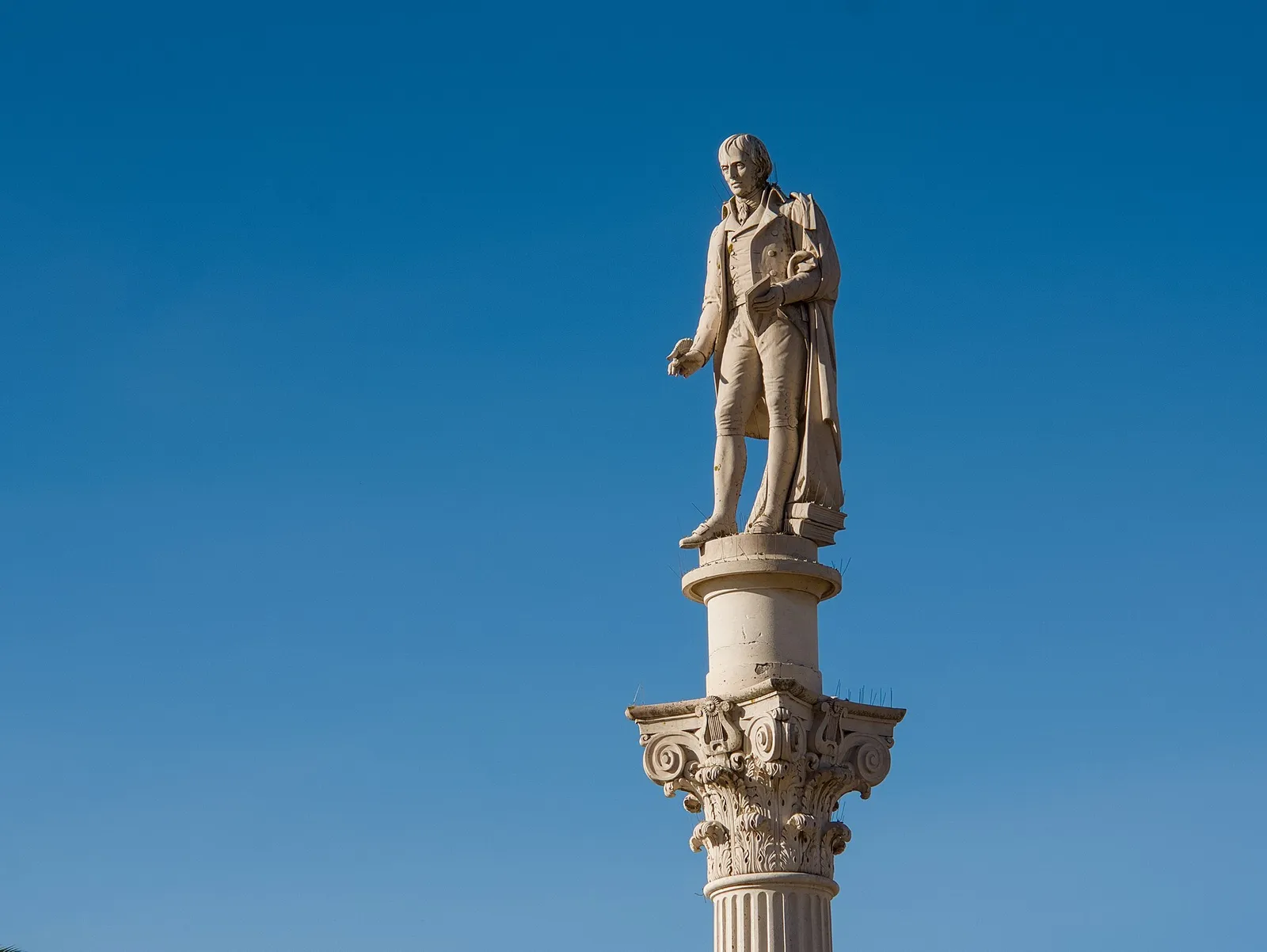
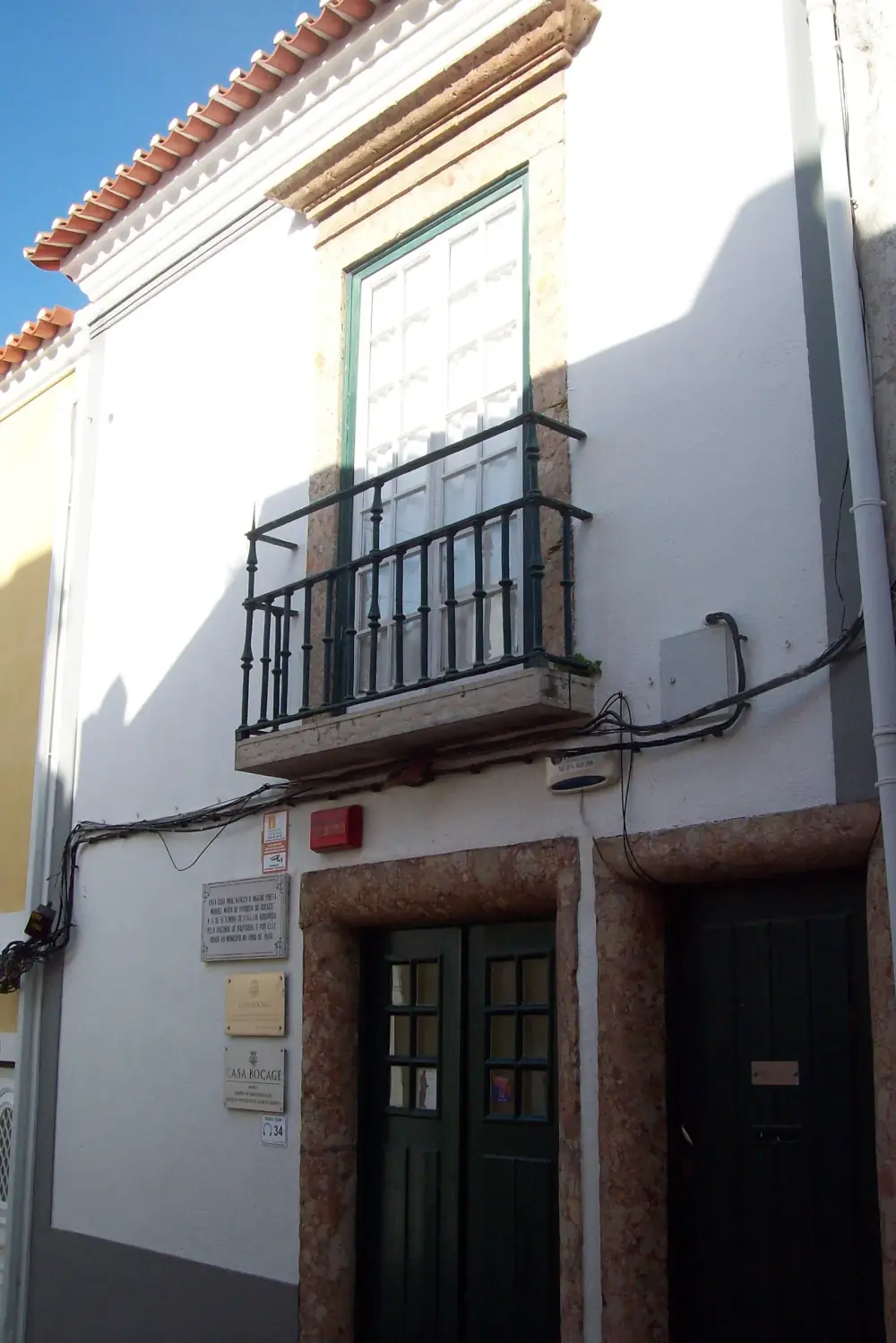
A plaque went up in 1864 on the house in Setúbal that tradition names as his birthplace. For the centenary of his birth, on 15 September 1865, José Feliciano de Castilho, brother of the poet António Feliciano de Castilho, proposed a subscription in Brazil, where he lived, to pay for a statue. They raised 8,427,640 réis, most of it lost when the bank holding it failed; what was left paid for the monument.
It was unveiled in Setúbal's main square on 21 December 1871, 66 years to the day after his death, with António Feliciano de Castilho and the young Eça de Queirós among the guests. The Setúbal museum's catalogue calls it the second statue to a poet in Portugal.
The Bocage of the jokes
In the popular imagination Bocage became the foul-mouthed hero of the anedotas do Bocage, the Bocage jokes, always ready with a quick and often obscene answer. Nothing of the kind survives in his own hand.
Pires traces the first book of jokes attributed to him to the early twentieth century, around the centenary of his death in 1905. Publishers, he argues, then sold obscenity under the name of a poet who had become a symbol of popular mockery of the powerful. The heyday of the joke books ran until 1974; an exhibition in Setúbal in 1995, catalogued by Pires, showed thirty of them.
The legend travelled. In Brazil he is the hero of cordel chapbooks, a cunning Portuguese with an answer for everything, and the folklore of the north-east has a figure called Camonge, a blend of Camões and Bocage. In Macau, where he spent a few months, the local Portuguese patois has a word, bocagem, meaning a joke.
Setúbal's poet today
In a choice that dates from the revolution of 25 April 1974, Setúbal's municipal holiday, the Day of the City and the Municipality, falls on 15 September, his birthday. The Setúbal museum's catalogue calls this unique in Portugal and rare anywhere else.
The critics never doubted his sonnets. António Feliciano de Castilho held that the Portuguese sonnet reached its peak with him, a claim Pires calls delicate, given Camões and Antero de Quental, while granting that Bocage wrote the form in masterly fashion. Pires also points to long poems such as Leandro e Hero and À morte de Inês de Castro, to the translations, and to the Cartas de Olinda e Alzira, which he calls the first feminist manifesto in Portuguese literature.
Teófilo Braga wrote his biography in 1902, and leading republicans joined the centenary celebrations of 1905. Hernâni Cidade led the bicentenary of 1965 and edited a complete works between 1968 and 1973. Daniel Pires's critical edition appeared from the Imprensa Nacional in 2017 and 2018, and RTP made an eight-part drama series about him in 2006.
FAQs
When and where was Bocage born?
Manuel Maria Barbosa du Bocage was born in Setúbal, south of Lisbon, on 15 September 1765. He died in Lisbon on 21 December 1805, aged 40.
Why was Bocage arrested?
On 7 August 1797 the police chief Pina Manique had him jailed in the Limoeiro as the author of “impious, seditious and critical papers”, among them the anticlerical Epístola a Marília. He was later handed to the Inquisition and then confined in a monastery and an Oratorian house to be re-educated, and was freed in 1798.
What does Elmano Sadino mean?
It was Bocage's pastoral name in the Nova Arcádia, the Lisbon poetry society he joined in 1790. Elmano is an anagram of Manoel, his first name in the old spelling, and Sadino means “of the Sado”, the river of his home town, Setúbal.
Did Bocage really go to Macau?
Yes. After deserting from his post at Damão in April 1789 he travelled by way of Surat to Macau, where he lived for some months from September or October 1789 on the charity of the interim governor and local merchants, before returning to Lisbon in August 1790.
Are the Bocage jokes by Bocage?
No. The anedotas do Bocage are folk jokes attached to his name, mostly through joke books published from the early twentieth century. He did write satirical and erotic verse, which circulated in clandestine editions until 1974, but none of the jokes comes from his writings.
On the timeline
Open the timelineNearby moments from earthquake and enlightenment (1750–1807).
A charter law of King José I, countersigned by the future Marquis of Pombal, creates the Real Erário (Royal Treasury), abolishing the medieval Contos do Reino e Casa and channelling all crown revenue into a single treasury kept by double entry. Portugal's Court of Auditors, the Tribunal de Contas, counts it among its direct ancestors.
Birth in Lisbon of Marcos Portugal, the most internationally successful Portuguese composer of his age. He premiered at least 21 operas in Italian theatres in the 1790s, then joined the exiled court in Rio de Janeiro in 1811 and stayed on in Brazil until his death in 1830.
The Treaty of Paris ends the Seven Years' War. Britain, France and Spain sign it and Portugal accedes the same day. Spain, which had invaded Portugal in 1762, must hand back its conquests, among them Almeida and the colony of Sacramento on the River Plate.
Bocage, the rebel poet
The poet Manuel Maria Barbosa du Bocage, a master of the sonnet and a celebrated satirist and improviser, is born in Setúbal.
Nicolau Nasoni, the Tuscan-born architect whose Baroque works include Porto's Clérigos Church and its landmark tower, dies in poverty in the city aged 82 and is buried in the Clérigos Church he designed.
King José I dies in Lisbon after a 27-year reign. Within weeks his daughter and successor, Maria I, removed the all-powerful Marquis of Pombal and freed many of his political prisoners — the change of course remembered as the 'Viradeira'.
Portugal and Spain sign the preliminary Treaty of San Ildefonso on South American borders: Portugal cedes Colónia do Sacramento and drops its claim to the Sete Povos mission lands, while Spain returns the island of Santa Catarina and recognises Portuguese rule in Rio Grande de São Pedro, today's southern Brazil.
Coming up in history
All long reads

21 sources
Archives, scholarship and reporting this article was checked against.
- 1
Cronologia da vida e obra de BocageBiblioteca Nacional de Portugal, online exhibition Bocage 1765-1805 (2005)
- 2
- 3
Bocage entre nós: a construção da memória nos 150 anos do monumento a Bocage (exhibition catalogue, with António Chitas's chronology)Museu de Arqueologia e Etnografia do Distrito de Setúbal (MAEDS) and União das Freguesias de Setúbal, 2022
- 4
A carnavalização hiperbólica da Macau setecentista num soneto de Bocage (c. 1789) (Rogério Miguel Puga)Revista de Cultura, no. 49 (2015), Instituto Cultural de Macau
- 5
Bocage, sua vida e época literária (Teófilo Braga)Livraria Chardron, Porto, 1902 (Internet Archive)
- 6
- 7
- 8
- 9
- 10
- 11
- 12
- 13
- 14
- 15
Memórias literárias de Camões em Macau (Sara Augusto)Moderna Språk, vol. 119, no. 2 (2025), pp. 258-270
- 16
Italy; with Sketches of Spain and Portugal (William Beckford), vol. 2Richard Bentley, London, 1834 (Project Gutenberg)
- 17
Roteiro da Inquisição em Lisboa: uma possibilidade cultural?João Miguel Cabral Borges Capela, master's dissertation, Iscte – Instituto Universitário de Lisboa, 2021
- 18
Notas sobre a Inquisição portuguesa: história e historiografiaGrayce Mayre Bonfim Souza, Politeia: História e Sociedade (Uesb), v. 20, n. 1, 2021
- 19
- 20Bocage (television series, 2006)RTP
- 21
Casa BocageSetúbal Bay
Image credits
- The Praça do Bocage in Setúbal on a September evening in 2021. The statue of the poet on its column was unveiled on 21 December 1871. Diego Delso, CC BY-SA 4.0, via Wikimedia Commons.
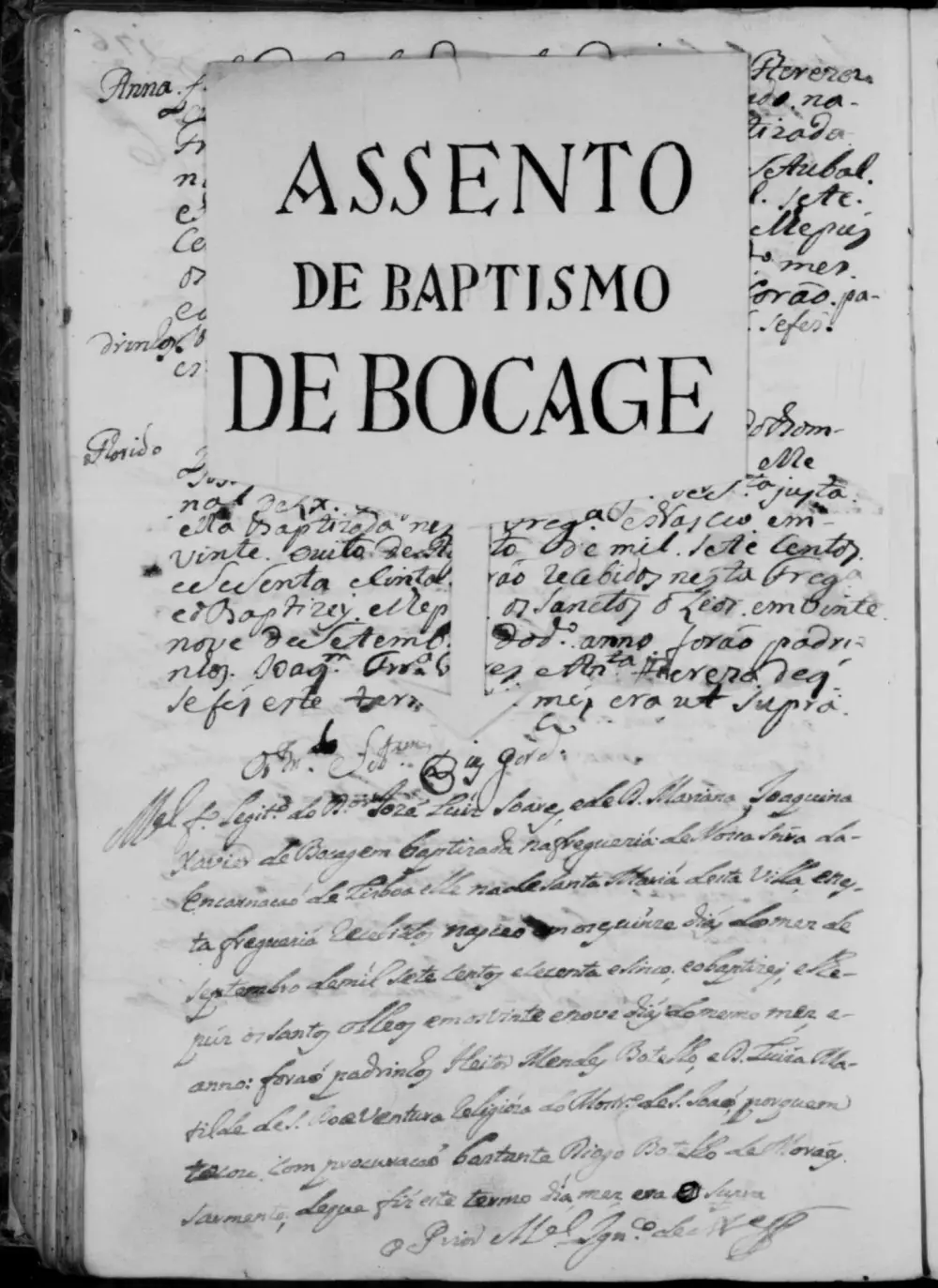
- Bocage's entry in the baptism register of the parish of São Sebastião, Setúbal, dated 29 September 1765, with a later label marking it. Unknown author, Public domain, via Wikimedia Commons.
- Bocage at his writing table, in a nineteenth-century engraving by Joaquim Pedro de Sousa (1818 to 1878). Joaquim Pedro de Souza, Public domain, via Wikimedia Commons.
- The Limoeiro prison in Lisbon, engraved by Francisco Pastor for the Diário Ilustrado of 3 January 1886. Francisco Pastor Muntó, Public domain, via Wikimedia Commons.
- The statue of Bocage on its column in the Praça do Bocage, Setúbal, photographed in November 2023. Šarūnas Burdulis, CC BY-SA 2.0, via Wikimedia Commons.
- The Casa Bocage in Setúbal, the house that tradition names as the poet's birthplace, in April 2015. It is now a small museum. Viet-hoian2, CC BY-SA 4.0, via Wikimedia Commons.