

Adelaide Cabete, doctor who led Portugal's feminists
She learned to read on her own, qualified as a doctor at 33 and led the National Council of Portuguese Women for 21 years. In 1933, in Luanda, she voted in the plebiscite on the constitution that founded the Estado Novo.
At a glance
- Adelaide Cabete, a gynaecologist who led Portugal's main feminist association for 21 years, died suddenly of a heart attack at her home in Lisbon on 14 September 1935, aged 68.
- Born in Elvas in 1867 to farm workers, she taught herself to read, sat her primary exam at 22 and qualified in medicine in Lisbon in 1900, at 33, with a thesis on protecting poor pregnant women.
- She helped found the Republican League of Portuguese Women in 1908–09 and in 1914 founded the National Council of Portuguese Women, which she led until her death.
- As its president she opened Portugal's first feminist congress in May 1924 and represented the country at international women's congresses in Rome (1923) and Washington (1925).
- In 1929 she left for Angola. In 1933, in Luanda, she voted in the plebiscite on the Estado Novo constitution, as the first woman voter there by João Esteves's account.
The anatomy book by the bucket
Her admirers liked to tell a story from the 1890s: a married woman of about 30, studying anatomy on a kitchen floor. Her husband, an army sergeant, had given her a Latin grammar as his first present, and he shared the housework so that she could study. A century later the Diário de Notícias printed the scene:
“Often, scrubbing the flagstones of the big kitchen on her knees, she would prop the anatomy book against the bucket and go over her lessons as she worked.”
The woman was Adelaide Cabete. From that kitchen she went on to qualify as a doctor, to join the republican movement that overthrew the monarchy in 1910, and to lead Portuguese feminism for two decades.
On Saturday 14 September 1935 a heart attack killed her at her home in Lisbon. She was 68.
She was a gynaecologist with more than thirty years of practice and still the president of the National Council of Portuguese Women, the country's main feminist association, and she had come back from five years in Angola the year before. She died under the Estado Novo, the dictatorship of António de Oliveira Salazar, which closed the council she had founded twelve years later.
Plums, a Latin grammar and a sergeant
Adelaide de Jesus Damas Brazão was born on 25 January 1867 in the parish of Alcáçova in Elvas, a fortress town on the Spanish border. Her parents, Ezequiel Duarte Brazão and Balbina dos Remédios Damas, were farm workers. Her father died when she was small, and there was no money for school: she helped her mother in the plum harvest and around the house, and worked as a maid for richer families.
She taught herself to read and write. On 10 February 1886, aged 19, she married Manuel Ramos Fernandes Cabete, a republican army sergeant born in 1849 who also served in the Guarda Fiscal, the customs guard. He was a freethinker and a believer in women's emancipation, and she took his name.
With his help she caught up fast. She passed the primary-school exam in 1889, at 22, and finished the lyceum course with distinction in 1894, at 27. One account says she was the only woman among the 120 students in her year. In 1895 she took the preparatory exams in physics and chemistry at the Escola Politécnica in Lisbon, and her husband sold land he owned to pay for her studies.
A doctor at 33
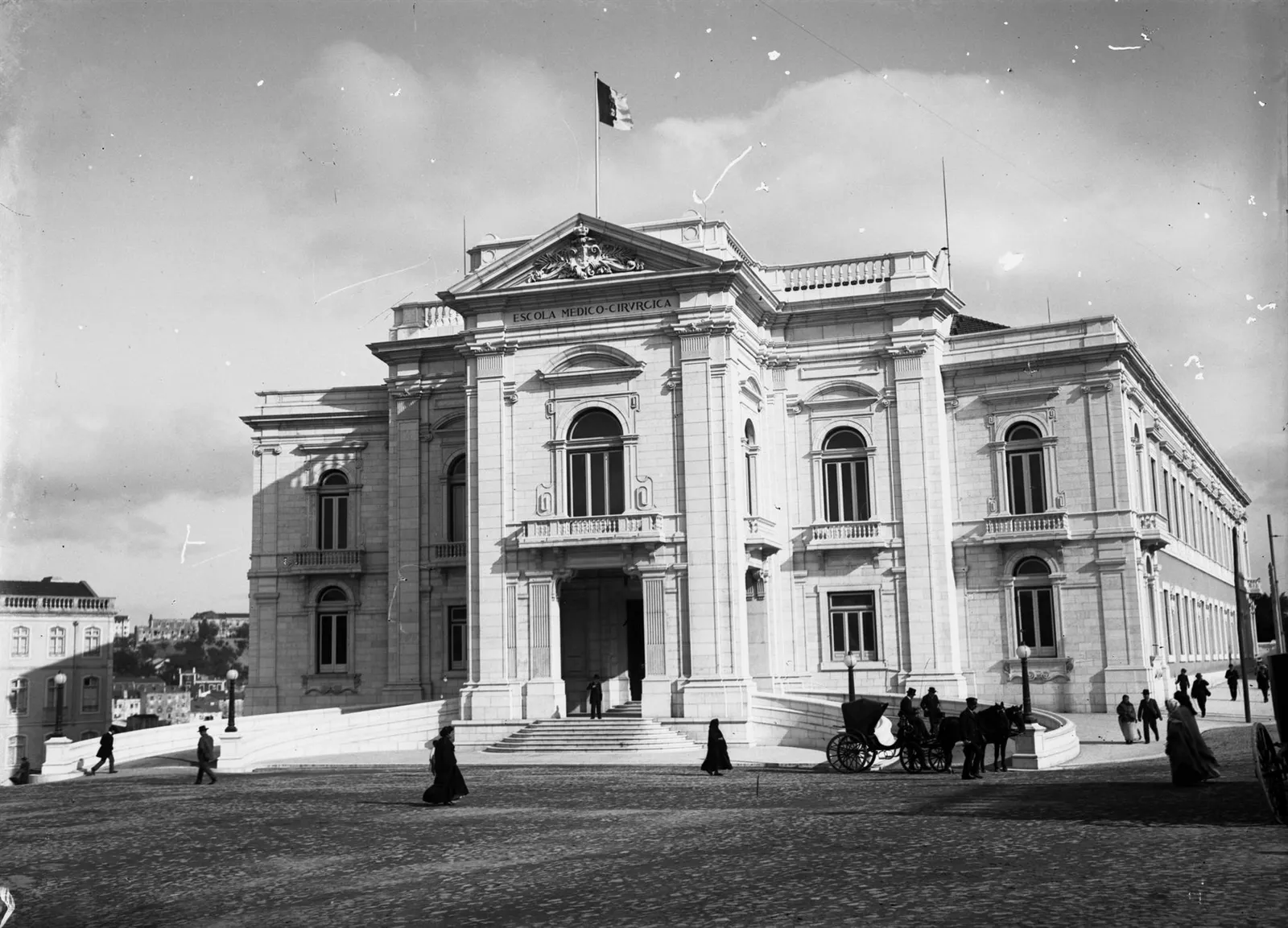
In 1896, nearly 30, she enrolled at the Escola Médico-Cirúrgica de Lisboa, the Lisbon medical school, which then worked in a building its own historians call a shed beside the Hospital de São José. Lisbon had no university until 1911. Her teachers included the psychiatrist Miguel Bombarda in physiology and the obstetrician Manuel Alfredo da Costa.
Women doctors were still rare. Elisa Augusta da Conceição Andrade had finished the Lisbon course in 1889, and the Dicionário de Médicos Portugueses counts Cabete as the third woman to qualify in medicine in Portugal.
On 14 November 1899 Alfredo da Costa opened his obstetrics course with a lecture on protecting poor pregnant women, as a way to stop the physical decline of new generations. Cabete was in the room. On 26 July 1900 she defended her own thesis under almost the same title: A protecção às mulheres grávidas pobres como meio de promover o desenvolvimento físico das novas gerações. She qualified with a final mark of 14 out of 20, at 33.
The thesis argued that a child's weakness at birth followed from its mother's poor food and, above all, lack of rest. If a pregnant woman could not be given lighter work, Cabete wrote, society should at least make sure that poor women could rest for part of their pregnancy. In a newspaper article of 1908 she named the women she pitied most: machine seamstresses, washerwomen, street sellers and factory hands, kept at heavy work until the end of their pregnancy. Biographers read this as an early case for maternity leave.
“It is not my objective to advise rich pregnant women. They usually have their own doctors to counsel them. My considerations are mainly aimed at poor pregnant women.”
In December 1900 she was admitted to the Sociedade das Ciências Médicas de Lisboa. She opened a practice for women's diseases and childbirth. By 1907 it was at Rua da Prata 153; it then moved to Rua do Ouro and finally to Praça dos Restauradores 13, all in or beside the Baixa. The consulting room also served as the meeting place and address of the feminist groups she ran.
She also taught. From 1912 to 1929 she gave classes in hygiene, childcare, anatomy and physiology at the Instituto Feminino de Educação e Trabalho, a girls' school in Odivelas, and argued for sex education for her pupils.
Republican first
Cabete was a republican before she was a feminist. In 1907 she was initiated as a freemason, taking the name Louise Michel after the heroine of the Paris Commune, and joined the Portuguese Group of Feminist Studies with Ana de Castro Osório, Maria Veleda and the doctors Carolina Beatriz Ângelo and Sofia Quintino. In 1908 she wrote in a republican almanac that the priest was evil and the Church was darkness.
She was among the founders of the Liga Republicana das Mulheres Portuguesas, the Republican League of Portuguese Women, which took shape in 1908 and early 1909. Its first provisional seat was her consulting room. She was member no. 143 and was elected treasurer on 27 February 1909, and lists in support of a divorce law could be signed at her practice.
She did not last long in office. On 18 November 1909 she resigned as treasurer, citing illness and overwork, and clashed with Ana de Castro Osório, whom she accused of being more feminist than republican. The minutes record her view:
“Our duty is to work for the Republic, because even if it does not benefit us, it will benefit our husbands and our children.”
She stayed at the heart of the republican cause. The conspirators chose her, with Carolina Beatriz Ângelo, to make the red and green flags used at the Rotunda, in central Lisbon, during the revolution of 5 October 1910.
A month earlier the League had elected her president of its general assembly; in October, days after the revolution, she gave the post up, citing her health. Why she then drifted away is disputed. The historian João Esteves, on his blog Silêncios e Memórias, suggests she thought the League's work was done once the Republic had won; the Porto biography says she objected when the League asked the vote only for women who paid tax.
Twenty-one years at the head of the Council
The Republic brought in divorce, paternity suits and new family laws, but it did not give women the vote. In 1914 Cabete founded the Conselho Nacional das Mulheres Portuguesas (CNMP), the National Council of Portuguese Women, as the Portuguese branch of the International Council of Women. It called itself non-political and non-religious. Its aims included protecting poor women and children, care for pregnant women and new mothers, and the abolition of state-regulated prostitution.
She was re-elected president every time from 1914 until her death. Her husband died on 11 January 1916, and in 1920 she took over the council's magazine, Alma Feminina, which she ran until 1929. In that decade the CNMP joined the International Woman Suffrage Alliance, recruited young graduates in law, letters and medicine, and set up committees on the press, hygiene and peace.
Cabete became Portuguese feminism's link abroad. In May 1923 she represented Portugal at the suffrage alliance's congress in Rome, where she described the new Portuguese laws protecting unmarried mothers and illegitimate children and asked for the vote. In May 1925 she spoke at the International Council of Women in Washington, arguing that women should be allowed to work as school inspectors.
At home the council marked its tenth anniversary with the First Feminist and Education Congress, held from 4 to 9 May 1924 at the hall of the commercial employees' mutual society in Lisbon. The President of the Republic, Manuel Teixeira Gomes, chaired the opening session, and Cabete gave the opening speech. Célia Rosa Costa, a historian of the council, reads the word education in the title as caution: feminism was still a “poorly understood” cause.
“To those timid souls who ask where Feminism will stop, we shall reply: Feminism will end where all ideas of Progress and every generous hope end; it will end where just aspirations end.”
| Measure | Women | Men | Total |
|---|---|---|---|
| Theses presented | 17 | 8 | 25 |
| People who spoke in the debates | 16 | 26 | 42 |
Counts by the historian Zília Osório de Castro from Arnaldo Brazão's 1925 report, as quoted by Almeida and Giesbrecht; the men's column for theses is 25 minus 17. Men made up 26 of the 42 speakers, 62 per cent, which Castro rounds to about 60. The list of titles Almeida and Giesbrecht copy from the report has 24 entries, not 25, 16 of them by women.
Two of the theses in the report were hers, and by Esteves's account she also presented her 1913 Ghent paper again. In one she asked for a month's rest before childbirth for pregnant women, maternity hospitals starting with Lisbon, and crèches. In the other she argued that the fight against alcohol should start in schools, because children were easier to convince than adults who could no longer do without drink.
Her medicine came with the ideas of its time. Like many doctors and feminists of the 1920s, she spoke of saving “the race” from alcohol, syphilis and tuberculosis. In her 1929 thesis on eugenics she proposed that couples should show, when they married, a certificate of basic knowledge of “eugenetics”, the hygiene of procreation, as a milder alternative to banning marriages or requiring medical certificates, and called castration an iniquitous law. Recent historians of the 1924 congress place the CNMP's feminism within this hygienist and eugenic project.
| Year | Congress | Her subject |
|---|---|---|
| 1913 | International Congress of Domestic Occupations, Ghent (sent in writing) | Childcare, women's hygiene and first aid in domestic education |
| 1923 | International Woman Suffrage Alliance, Rome | Portuguese laws for unmarried mothers and illegitimate children; the vote |
| 1924 | First Feminist and Education Congress, Lisbon | Protection of pregnant women and children; the fight against alcohol in schools |
| 1925 | International Council of Women, Washington | Women as school inspectors |
| 1926 | First National Abolitionist Congress, Lisbon | A women's police force |
| 1928 | Second Feminist and Education Congress, Lisbon | Teaching childcare in infant schools |
| 1929 | Second National Abolitionist Congress, Lisbon | Eugénica e Eugenética (eugenics) |
The abolitionist congresses campaigned against state-regulated prostitution. The second feminist congress met in 1928 under the Military Dictatorship that followed the coup of 28 May 1926.
Luanda and the vote of 1933
In 1929, three years into the Military Dictatorship, Cabete left suddenly for Angola, then a Portuguese colony. Lousada presents it as an attempt at a new start by a woman who felt the lack of freedom at home. She opened a practice in Luanda, was injured when a hunting gun went off by accident, and wrote for local papers and for the Lisbon press.
In Africa she wrote articles in favour of the indigenous population, campaigned for maternity wards and charitable homes, and gave lectures on the drop-of-milk dispensaries and on care for African children. At the Liceu Salvador Correia, Luanda's secondary school, she lectured on “Human selection”, warning that would-be fathers passed tobacco, alcohol, syphilis and tuberculosis on to their children, and colonists malaria as well. From Luanda she kept the CNMP presidency and recruited new members.
Meanwhile, the dictatorship had given some women the vote. A decree of 5 May 1931 let women over 21 register if they held a secondary-school or university diploma; men qualified if they could read, write and count or paid at least 100 escudos in certain taxes. A medical degree qualified Cabete. When Salazar's draft constitution was put to a plebiscite on 19 March 1933, she voted in Luanda.
“I voted as a matter of principle; by voting, I voted for the Constitution against the dictatorship.”
The constitution she approved founded the Estado Novo, which lasted until 1974. João Esteves calls her the first woman voter in Luanda and suggests she may not have realised what she was endorsing. The Porto biography goes further and calls her the only woman in Angola who voted.
A closed door and a maternity hospital
Cabete came back to Lisbon in 1934, and dozens of council members welcomed her on 6 December. She died at home the following September. Accounts differ on the day: Esteves gives 19 September, and her age as 66 when she was 68, but Lousada, the Porto biography and a review of Lousada's book give the 14th, and the doctor and writer Henrique de Vilhena's tribute on the first anniversary of her death is dated 14 September 1936.
Alma Feminina devoted an issue to her memory, with tributes by Elina Guimarães and six other women. In the Elvas paper Correio Elvense, Guimarães wrote that altruism and a natural investigating spirit had led Cabete to medicine.
The council outlived her by twelve years. It kept its seat until 1946 in the consulting room at Praça dos Restauradores 13 that she had shared with her sister Maria and her nephew Arnaldo Brazão. Under the writer Maria Lamas, president from 1945, it grew again and in 1947 organised an exhibition of books by women.
Papers close to the regime claimed the council opposed the Estado Novo and that feminism was tied to communism. On 28 June 1947 the police closed the council's door without warning.
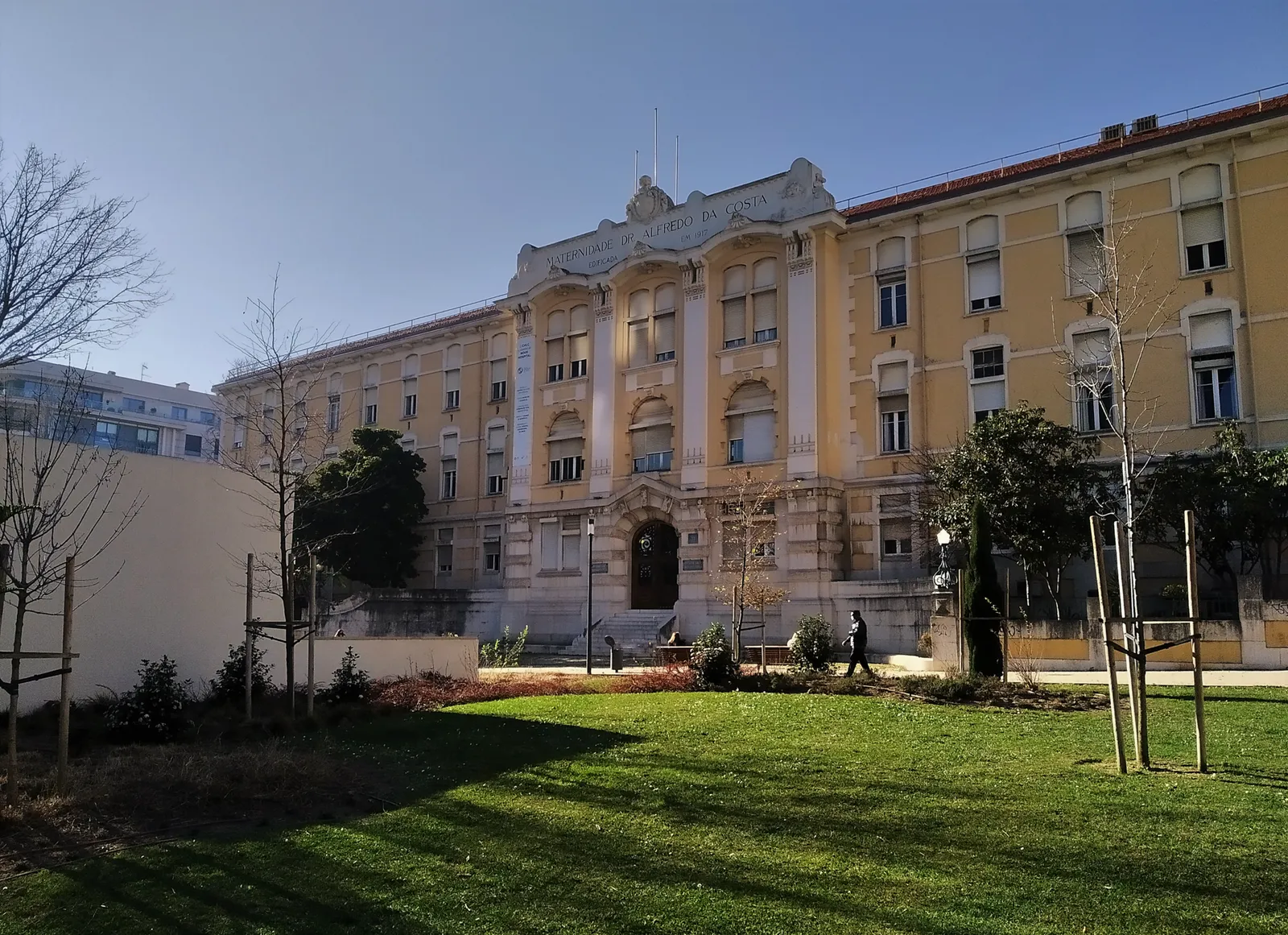
The maternity hospital she had demanded since 1900 opened without her. The Maternidade Alfredo da Costa, named after her teacher, who had died in 1910, was inaugurated on 31 May 1932 and took its first patients in December, while she was in Luanda. It was the first maternity hospital built from scratch in Lisbon, with 300 beds.
Deliveries at the Maternidade Alfredo da Costa, selected years
deliveries
Deliveries (partos) in the first year after the hospital opened in December 1932, in its busiest year and in 2015, as reported by the Diário de Notícias. By 30 November 2022 the hospital had recorded 605,198 deliveries, according to its hospital group.
Show the data
| Deliveries | |
|---|---|
| First year (1932–33) | 2,073 |
| 1977 (peak) | 13,654 |
| 2015 | 3,159 |
Recognition came after the dictatorship. On 10 June 1995 she was made, posthumously, a Grand Officer of the Order of Liberty. In 1997 the novelist Lídia Jorge wrote A Maçon, “The Freemason”, a play about her life, and the Teatro Nacional D. Maria II staged it.
The last restrictions on women's right to vote and stand for election fell only after the revolution of 25 April 1974, almost four decades after her death.
25 January 1867
Born in Alcáçova parish, Elvas
10 February 1886
Marries Manuel Fernandes Cabete
1889 and 1894
Primary exam at 22; lyceum course at 27
26 July 1900
Defends her medical thesis in Lisbon
1907
Initiated as a freemason
1909
Treasurer of the Republican League of Portuguese Women
5 October 1910
The Republic is proclaimed; she had made revolutionary flags
1914
Founds the National Council of Portuguese Women
4–9 May 1924
First Feminist and Education Congress
1929
Leaves for Luanda
19 March 1933
Votes in the constitutional plebiscite in Luanda
1934
Returns to Lisbon
14 September 1935
Dies at home in Lisbon, aged 68
28 June 1947
Police close the National Council
FAQs
Who was Adelaide Cabete?
A Portuguese doctor and feminist (1867–1935). Born to farm workers in Elvas, she qualified in medicine in Lisbon in 1900, practised as a gynaecologist and obstetrician, helped found the Republican League of Portuguese Women and led the National Council of Portuguese Women from 1914 until her death.
When did Adelaide Cabete die?
On 14 September 1935, of a sudden heart attack at her home in Lisbon, according to her biographer Isabel Lousada and other sources. One biographical note by João Esteves gives 19 September.
Was Adelaide Cabete the first woman to vote in Portugal?
No. That was Carolina Beatriz Ângelo, in May 1911. Cabete voted in Luanda, Angola, in the constitutional plebiscite of 19 March 1933, after a 1931 decree let women with a secondary or university diploma register. Biographers call her the first woman voter in Luanda, or the only woman in Angola who voted; the published national count included no returns from Angola.
What was the National Council of Portuguese Women?
The Conselho Nacional das Mulheres Portuguesas, founded by Cabete in 1914 as the Portuguese branch of the International Council of Women. It campaigned for women's rights, the protection of mothers and children and the abolition of regulated prostitution, held feminist congresses in 1924 and 1928, and was closed by the police on 28 June 1947.
On the timeline
Open the timelineNearby moments from dictatorship and the estado novo (1926–1974).
Death in Setúbal of Ana de Castro Osório, writer, suffragist and republican. In 1908 she co-founded the Liga Republicana das Mulheres Portuguesas with the doctor Adelaide Cabete and others, helped Afonso Costa draft the Republic's divorce law, and with her 18-volume series 'Para as Crianças' became a founder of Portuguese children's literature.
The Emissora Nacional, Portugal's new state radio, begins regular broadcasts from Lisbon, three days before its official inauguration on 4 August. For four decades a mouthpiece of Salazar's Estado Novo, it was folded into the new public broadcaster RDP after the 1974 revolution and is today part of RTP.
Alfredo Roque Gameiro, master of Portuguese watercolour, dies in Lisbon aged 71. His 'Lisboa Velha' series recorded the alleys, fountains and street life of the old city, and all five of his children became artists in their own right.
The death of Adelaide Cabete
Adelaide Cabete, one of Portugal's foremost feminists and among the first Portuguese women to qualify as a physician, dies in Lisbon. An obstetrician, republican and abolitionist, she presided over the National Council of Portuguese Women for more than twenty years, campaigning tirelessly for women's rights and suffrage.
Fernando Pessoa dies at the Hospital de São Luís dos Franceses in Lisbon, aged 47. His last written words, in English, were 'I know not what tomorrow will bring'. Little known at his death beyond 'Mensagem', he left a trunk of more than 25,000 papers that revealed one of the century's great poets.
The film director Paulo Rocha is born in Porto. His debut feature, 'Os Verdes Anos' (1963), about a young country boy adrift in Lisbon, is regarded as a founding work of Portugal's Novo Cinema, the 1960s new wave that broke with the cosy comedies favoured under the Estado Novo.
José Policarpo is born in Alvorninha, near Caldas da Rainha. A theologian, he served as Cardinal Patriarch of Lisbon from 1998 to 2013, the leading voice of the Portuguese Catholic Church through two papal conclaves.
Coming up in history
All long reads

15 sources
Archives, scholarship and reporting this article was checked against.
- 1
Adelaide Cabete: entre a eugénica e a eugenética na defesa da Res publica (Isabel Lousada)In Letras & Ciências: as duas culturas de Filipe Furtado, ed. Carlos Ceia, Miguel Alarcão and Iolanda Ramos, pp. 513–531; full text reproduced by Lagos da República
- 2
Adelaide Cabete [III] 1867–1935: biografia (João Esteves)Silêncios e Memórias, blog of the historian João Esteves, co-author of the Dicionário no Feminino, December 2010
- 3
Adelaide Cabete (Daniel Floquet)She Thought It: Crossing Bodies in Sciences and Arts, Instituto de Literatura Comparada Margarida Losa, Universidade do Porto, 2019
- 4
“Criar cidadãos perfeitos para uma República máscula, forte e virtuosa”: o Primeiro Congresso Nacional Feminista e de Educação em Lisboa (1924) e a modernização da desigualdade (Jaqueline Moraes de Almeida and Daniel Florence Giesbrecht)Revista de História Regional, vol. 29, 2024, Universidade Estadual de Ponta Grossa
- 5
Ser mulher em Lisboa: a associação que agitou o regime no século XX (Ana Sofia Paiva)+Lisboa, NOVA FCSH, 8 March 2019
- 6
Adelaide Cabete: uma pedra angular na construção da humanidade (João Rodrigues, Ana B. D. Coelho, Larissa C. Brandão and Valeryia Zholtsikava)European Review of Artistic Studies, vol. 14, n. 2, 2023, pp. 87–104
- 7
Review of Isabel Lousada, Adelaide Cabete (1867–1935), Colecção Fio de Ariana n.º 6 (Fabio Mario da Silva)Revista Alere, vol. 6, n. 6, December 2012, Universidade do Estado de Mato Grosso
- 8
Espaços nobres da NOVA Medical SchoolNOVA Cultura, Universidade Nova de Lisboa, 2023
- 9
A APDH celebra o Dia Internacional da MulherAssociação Portuguesa para o Desenvolvimento Hospitalar, 4 March 2021
- 10
Boletim informativo do Centro de Informação e Documentação, setembro 2019Comissão para a Cidadania e a Igualdade de Género (CIG)
- 11
- 12
Decreto n.º 19:694: organiza o recenseamento eleitoralDiário do Governo, I série, n.º 104, 5 May 1931 (Diário da República Eletrónico)
- 13
- 14
Maternidade Alfredo da Costa: eis a instituição onde mais se nasce em Portugal faz 90 anosPostal do Algarve, with Lusa, December 2022
- 15E 540 mil bebés depois, como é?Diário de Notícias, 12 March 2016
Image credits
- The new building of the Escola Médico-Cirúrgica de Lisboa on the Campo de Santana, photographed between 1900 and 1910. It was inaugurated in 1906; Adelaide Cabete had qualified in 1900, when the school still worked out of makeshift premises beside the Hospital de São José. José Chaves Cruz, Public domain, via Wikimedia Commons.
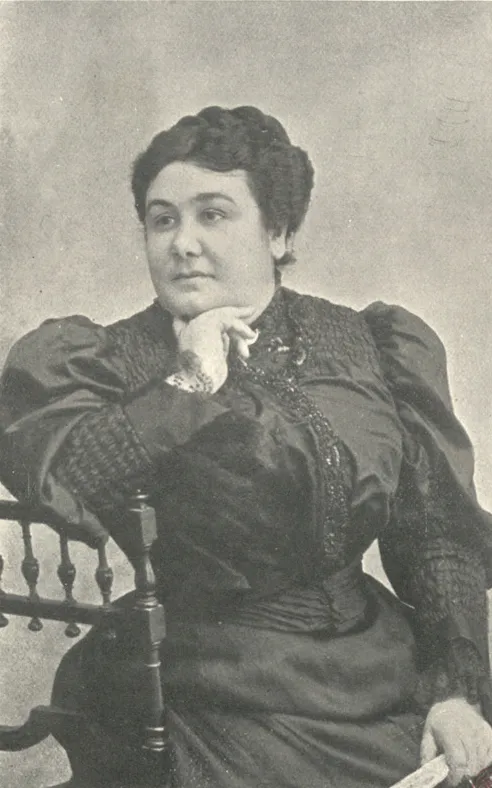
- Adelaide Cabete in the Album Republicano, a 1908 gallery of the republican movement. Only two other women appeared in it: Ana de Castro Osório and Virgínia da Fonseca. Unknown author, Public domain, via Wikimedia Commons.
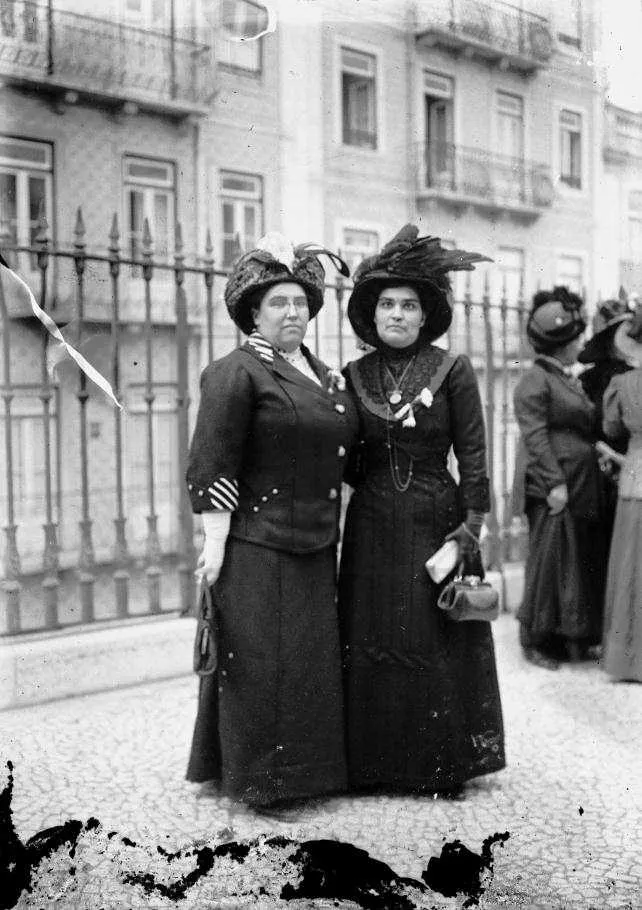
- Carolina Beatriz Ângelo, the first woman to vote in Portugal, with Ana de Castro Osório, photographed for Ilustração Portuguesa's report on the Constituent Assembly elections of May 1911. Both had founded the Republican League with Cabete. Joshua Benoliel, Public domain, via Wikimedia Commons.
- The Maternidade Alfredo da Costa in Lisbon in January 2021. It opened in December 1932, after three decades of campaigning by Cabete and others. RickMorais, CC BY-SA 4.0, via Wikimedia Commons.