

Port under control: the Douro wine company, 1756
After a decade of falling sales and accusations of doctored wine, Pombal's government gave a new company control of the Douro's wine. It marked out the vineyards with granite posts, and in Porto it was met by a riot that ended on the gallows.
At a glance
- On 10 September 1756, at Belém, King José I confirmed the 53 articles of the Companhia Geral da Agricultura das Vinhas do Alto Douro, set up on the initiative of his minister Sebastião José de Carvalho e Melo, the future Marquis of Pombal.
- The company was a response to a crisis: port exports had fallen in the early 1750s, and British merchants and Douro growers blamed each other for doctoring the wine.
- It registered the vineyards, fixed prices, tasted and branded the wine for export and took over all tavern sales in Porto. Between 1758 and 1761 it set up 335 granite posts marking out the export vineyards.
- On 23 February 1757 a crowd in Porto rose against it. Of 478 people held afterwards, 26 were sentenced to death and 17 were executed on 14 October 1757.
- The company outlived Pombal and survives as the wine firm Real Companhia Velha. The core of the Douro region, 24,600 hectares, became a UNESCO World Heritage site in 2001.
“Death to the Wine Company!”
At half past ten on the morning of Ash Wednesday, 23 February 1757, boys and some women gathered on the Terreiro da Cordoaria and marched in through the Porta do Olival, one of Porto's gates, behind a handkerchief tied to a pole. They were shouting “Long live the King, long live the People, death to the Wine Company!”
The company they wanted dead was less than six months old.
The document that created it had reached the king at Belém on 33 half-sheets of paper. Each was initialled by Sebastião José de Carvalho e Melo, Secretary of State for the Affairs of the Kingdom. It was dated Porto, 31 August 1756, and set out in 53 articles a company that the “principal growers of the Upper Douro and good men of the city of Porto” said they wished to form.
On 10 September 1756 José I confirmed every article by an alvará with the force of law. He promised, on his royal word, that the grant would never be revoked. The new Companhia Geral da Agricultura das Vinhas do Alto Douro would have a provedor (governor), twelve deputies and a secretary, and a seal showing Saint Martha, protector of the Douro, above a vine trellis with the motto Providentia regitur, “It is ruled by providence”.
The petition opened with a lament. The growers said they could barely cover the cost of working their land. In Porto, it went on, the tavern keepers had multiplied beyond what the law allowed and were adulterating wine with mixtures “harmful to the human constitution”, ruining the reputation of a product on which the north depended.
Port wine and the English Factory
Port is wine from the steep valley of the upper Douro, in north-east Portugal, carried down the river to Porto and shipped from there. English merchants in Porto were exporting Douro wine to England by the 1650s. From 1678 the export statistics compiled by the Baron of Forrester record shipments every year: an average of 4,545 pipes a year to 1700, and a peak of 13,011 pipes in 1693. A pipe is a cask of about 128 imperial gallons.
War with France and the Methuen Treaty of 1703, which gave Portuguese wine a lower duty in England than French, made port a cheap and, being anti-French, patriotic drink in Britain. Until 1756 wines shipped from Porto made up about 70 per cent of Portugal's wine exports to England. With one or two exceptions the British owned no estates in the Douro, but they had come to dominate the whole business, from the making of the wine to its sale.
Port exports by merchants' nationality, 1756 and 1802–1803
pipes a year
- British firms (1756), all foreign firms (1802–1803)
- Portuguese merchants (the company included in 1802–1803)
Figures given by Francisco Ribeiro da Silva. For 1756 he cites a study counting 12,779.5 pipes shipped by British and 7,536.5 by Portuguese merchants. For 1802 and 1803 together, foreign firms (22 of them apparently British) shipped 63,719 pipes and Portuguese houses 27,248, of which 10,829 were the company's; the bars show half of each two-year total.
Show the data
| British firms (1756), all foreign firms (1802–1803) | Portuguese merchants (the company included in 1802–1803) | |
|---|---|---|
| 1756 | 12,779.5 | 7,536.5 |
| 1802–1803 (yearly average) | 31,859.5 | 13,624 |
A trade in crisis
Historians date the trouble in the Douro from 1740 and especially from 1750 to 1755: lower exports, lower prices and a bad name in England, its main market. How deep it went is less clear. The Real Companhia Velha, the company's successor, puts exports at 19,000 pipes in 1749, yet a count cited by the historian Francisco Ribeiro da Silva has about 20,300 shipped in 1756. Fernando de Sousa, the company's modern historian, thinks the crisis was less severe than the petitions of Porto and the Douro made out.
In September 1754 the English Factory wrote to its commissioners that sales in England had sunk below two-thirds of what they had been. It blamed the growers: they blended in poor wine from the hilltops and bad sites, trod and fermented it too briefly, added brandy too early and used elderberries. It would not buy, it said, from growers who ignored its advice. The Douro's wine institute records that in 1754 the English bought no wine from the growers.
“To dispel the belief held in England that the wines of Porto are harmful to health, which is reaching such an extreme that many already think them poisonous.”
The “veteran commissioners” of the Douro replied in kind. It was the English, they wrote, who had taught the growers to add brandy during fermentation and elderberries for colour, spending five or six thousand réis on every pipe, because the British paid most for the most doctored wine. The Porto merchants, they added, used one pipe of strong Douro wine to cover eight or ten pipes of lesser wine from Anadia, Coimbra or the Serra da Estrela.
“They wanted it to go beyond the limits nature gave it, and, being a drink, to be a drinkable fire in the spirits, gunpowder alight in the burning, writing ink in colour, a Brazil in sweetness and an India in aroma.”
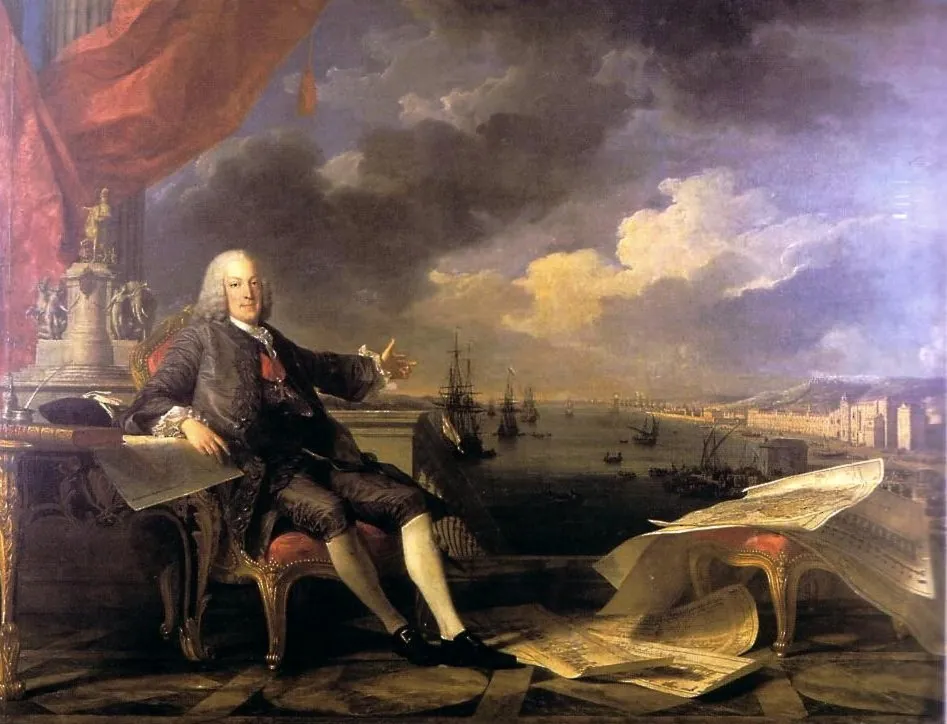
The government in Lisbon had its own reasons to act. Carvalho e Melo had already chartered monopoly companies for Asian trade in 1753 and for Grão-Pará and Maranhão, in Brazil, in 1755. The earthquake of 1 November 1755 had shaken the whole country and left Lisbon to be rebuilt, and wine duties were among the Crown's best sources of revenue.
A company with the powers of a state
Only Portuguese subjects, born or naturalised and living in Porto or the Douro, with shares worth 10,000 cruzados or more, could sit on the board. The capital was set at 1.2 million cruzados in 1,200 shares of 400,000 réis. The 1,200 shares ended up with 208 founding shareholders.
The articles gave the company the sole right to sell wine by the jug in Porto and within three leagues of it, through no more than 95 licensed taverns. Every pipe sent down the river for export needed a permit, a guia, from the grower; the company's board branded the casks it approved with a hot iron and marked the rest for home consumption. Each year it was to print a list of every shipper and every pipe and send it to the ports abroad.
Its privileges, widened by later laws, also included the export of wine, brandy and vinegar to Brazil and the making and sale of brandy in the three northern provinces. Each year it judged the crop, decided how much and whose wine could be exported, set the price and supervised its carriage downriver and its storage in Porto.
| Wine | Paid to the grower (réis a pipe) | Sold in Porto taverns (réis a quartilho) |
|---|---|---|
| Export wine, first quality | 25,000 (no more than 30,000 in a shortage) | For export only |
| Export wine, second quality | 20,000 (no more than 25,000) | For export only |
| From Porto to Arnelas | 4,000 | 10 |
| From Arnelas to Baião | 5,000 | 12 |
| Ancede and its district | 6,000 | 12.5 |
| Barqueiros, Mesão Frio, Barrô and Penajóia | 8,000 | 15 |
| Other mature wines of the upper Douro, outside the export area | 12,000 | 20 |
From the 1797 printing of the statutes. The law of 30 August 1757, which banned manure, raised the export prices to 30,000 réis (no more than 36,000) and 25,000 (no more than 30,000) to make up for smaller crops. Ribeiro da Silva reads the tavern prices as close to those the Porto council had set in 1751–1756, about 20 réis for the best wine and 15 for the lesser, but finds signs that drinkers in fact paid more after 1756.
The British saw at once what they stood to lose. In August 1756 the ambassador announced a protest against the plan to monopolise wine exports to Brazil, and the Factory backed him. By the end of September a printed copy of the statutes had gone to London and been translated. Carvalho e Melo assured the ambassador that the company only wanted to stop adulteration and restore the wine's credit. The statutes kept the British off the board, and they refused to buy shares.
Drawing the line: the demarcation and the marcos
Article 29 ordered a map of both banks of the Douro marking all the land that produced wine fit to leave through the river's bar, with each estate's usual output averaged over the previous five years. No grower could sell more than his allotted number of pipes for export. Article 30 barred wine from outside the boundary unless it travelled with papers from the town councils, so that poor wine could not be blended with good.
The first demarcation was not drawn along parish or council boundaries. António Barreto notes that it was built from a long list of growers and estates, and then given physical frontiers in the form of the famous marcos pombalinos. The wine of the best land, fit for the export trade of the English Factory, was called vinho de feitoria, and the posts were carved with that word.
- Posts set up
- 335 granite marcos: 201 in 1758 and 134 in 1761
- Inscription
- “Feitoria”
- Size
- About 2 metres tall, part of it buried; about 30 cm wide and 20 cm thick
- Found in 1949
- 103, in Moreira da Fonseca's inventory; 97 were then classified as of public interest
- Found in 2007
- 105, in the Museu do Douro's survey, 11 of them newly identified
Rules on how the wine was made followed. A law of 30 August 1757 banned manure in the demarcated vineyards because it gave weak, pale wine, and banned elderberries, used for colour, which in time turned the wine the colour of brick. Nobody could keep an elder tree within five leagues of either bank. Growers were also forbidden to tread white and black grapes together.
Ash Wednesday in Porto
The crowd that came through the Porta do Olival on Ash Wednesday grew, by the council's record, to more than 5,000: boys, Galicians, sailors, women and some artisans. There were shots, stones and threats to burn houses. Rioters sacked the home of the company's provedor, Luís Beleza de Andrade, and threw his furniture into the street. The acting chancellor of Porto's high court, Bernardo Duarte de Figueiredo, gave way: that same day he ordered wine to be sold in the taverns “in the old way” until the king decided otherwise. By three in the afternoon the tumult had begun to die down.
Porto had hundreds of taverns, perhaps 600 or 1,000 by contemporary guesses, round figures that Ribeiro da Silva treats with caution. The council had voted in 1755 to cap them at 95; the statutes now let only keepers approved by the company run those 95, selling the company's wine.
Susan Schneider identified 20 tavern keepers among the rioters. The leader on the day, though, was Caetano Moreira da Silva, a rich wine warehouse owner, and Ribeiro da Silva also points to wine merchants and the city's elected guild leaders. Many drinkers expected dearer, worse wine.
Lisbon treated the riot as high treason. A special tribunal, the Alçada, was sent under the judge João Pacheco Pereira de Vasconcelos, escorted by the Aveiro dragoons. On the night of 15 March, as it arrived, a cleric tried to raise a second crowd and the soldiers broke it up at once. The government also blamed the Jesuits. No British subject was charged, although a Portuguese servant of the merchant Diogo Wood was convicted.
The sentence was given on 12 October 1757 and the appeals rejected on 14 October. The thirteen men present were taken through the streets to gallows outside the Porta do Olival, where the riot had begun, and hanged; their heads were cut off and their quartered bodies displayed around the city.
Four women were put to death and beheaded; the execution of the fifth, Custódia Maria, was suspended because she was seven months pregnant. Eight men who had fled the kingdom were executed in effigy.
Caetano Moreira da Silva and his wife were among the dead.
| Sentence | Men | Women |
|---|---|---|
| Death, the ordinary penalty for the crime | 21 | 5 |
| Flogging, the galleys and loss of half their goods | 26 | 0 |
| Flogging, confiscation and exile to Angola and Benguela | 8 | 9 |
| Exile to Angola and confiscation | 3 | 1 |
| Exile to Mazagão, in Morocco, and loss of a third of their goods | 9 | 0 |
| Exile to Castro Marim and fines | 3 | 0 |
| Exile to Castro Marim and loss of a quarter of their goods | 0 | 9 |
| Exile to Africa and loss of a quarter of their goods | 22 | 0 |
| Banished from the district and loss of a fifth of their goods | 26 | 5 |
| Six months in prison and fines | 54 | 9 |
| Boys under age, sentenced to watch the executions | 17 | 0 |
| Exile to Portuguese India | 4 | 0 |
| Hardened criminals sent to the high court for ordinary trial | 16 | 0 |
| Acquitted | 32 | 4 |
| Released at the tribunal's hearings | 183 | 12 |
| Total | 424 | 54 |
From the table printed with the sentence in 1758 (rows reordered). Of the 21 men condemned to death, 13 were executed and 8, who had fled the kingdom, were executed in effigy and outlawed; of the 5 women, 4 were executed and the fifth was not, because she was pregnant. The totals, 424 and 54, add up to the 478 given in the source.
The city was punished too. Troops were quartered on Porto at its inhabitants' expense, the councillors were replaced, and the Casa dos Vinte e Quatro, which represented the craft guilds, was shut and stayed closed for more than 35 years. Carvalho e Melo sent his cousin João de Almada e Melo to be the city's military governor. Ribeiro da Silva calls the punishment out of all proportion to the crime: set beside the Esquilache riot in Madrid in the same period, he writes, Porto's was a mere game.
September 1754
The English Factory threatens to stop buying; the commissioners reply
1 November 1755
The earthquake destroys much of Lisbon
31 August 1756
The company's statutes are dated at Porto
10 September 1756
José I confirms the company by alvará at Belém
23 February 1757
Ash Wednesday riot in Porto
15 March 1757
The Alçada arrives; a second crowd is dispersed
30 August 1757
Law against elderberries, manure and mixed grapes
12 and 14 October 1757
Sentence, rejection of appeals and 17 executions
1758
201 marcos set up along the export vineyards
1761
134 more marcos complete the first demarcation
The company after Pombal
The company outlasted its founder. Its charter was renewed for 20 years in 1776 and again in 1796, and Pombal's fall in 1777 did not break it, unlike his other chartered companies. Exports climbed to 78,606 pipes in 1801, a figure not passed until 1918. By 1798 port alone made up almost 26 per cent of Portugal's trade.
It did far more than trade wine. It collected taxes for the Crown, carried out works at the Cachão da Valeira rapids and elsewhere to make the river navigable, worked on Porto's harbour bar and built roads. In the Douro it collected the subsídio literário, created in 1772, a tax on wine and brandy that paid for schoolteachers, and the Alto Douro alone supplied 20.8 per cent of it, against 2.8 per cent from Lisbon. In Porto its boards promoted schools of navigation and drawing and the Royal Academy of the Navy and Commerce, later the Polytechnic Academy.
Its critics never went away. Douro growers complained that it was run by Porto merchants: in November 1787 growers from Valdigem, Santa Marta de Penaguião, Peso da Régua and Lamego asked the queen for as many deputies from the growers as from the traders. An inquiry of 1771 to 1775 found small growers blending in forbidden wine. Susan Schneider doubted the company ever paid regular dividends; Falcon thinks it did make money.
Liberalism ended its powers. A decree of 30 May 1834, after the civil war, stripped it of all its privileges and left it a mere trading house. It regained some regulatory powers in 1838, lost them for good in 1852, and in 1865 the Douro trade was freed altogether. The state returned with a new demarcation in 1907 and the Port Wine Institute and Casa do Douro in 1932–1933. The company itself still trades as the Real Companhia Velha.
Why it still matters
On 14 December 2001 UNESCO added the Alto Douro Wine Region to the World Heritage List as an evolving, living cultural landscape. The listed area covers 24,600 hectares in 13 municipalities, the best-preserved part of a demarcated region of about 250,000 hectares. UNESCO's criteria cite some 2,000 years of wine-making and a landscape of terraces, estates, villages, chapels and roads shaped by it.
The Douro's wine institute, the IVDP, calls the alvará of 1756 a pioneering set of rules and the Douro the world's first denomination of origin. In later crises, Gaspar Martins Pereira notes, the Douro's leading growers kept calling for the Pombaline model of state control, and the wine merchants kept fighting it.
FAQs
What was the Companhia Geral da Agricultura das Vinhas do Alto Douro?
A chartered company created by King José I on 10 September 1756, under his minister Sebastião José de Carvalho e Melo, the future Marquis of Pombal. Owned by private shareholders but armed with public powers, it regulated the production, pricing and export of Douro wine and held monopolies on tavern sales in Porto and wine exports to Brazil.
Is the Douro the world's oldest demarcated wine region?
It is often called that, but Chianti (1716) and Tokaj (1737) were bounded earlier. The Douro's claim rests on combining a boundary, a register and classification of vineyards, and an institution to control and certify the wine, which historians see as the forerunner of modern appellations.
What are the marcos pombalinos?
Granite posts about two metres tall, inscribed “Feitoria”, that marked the limits of the vineyards allowed to produce export wine. The company set up 335 of them, 201 in 1758 and 134 in 1761. A Museu do Douro survey in 2007 located 105.
What was the Porto riot of 1757?
A popular uprising against the wine company on 23 February 1757, Ash Wednesday, involving tavern keepers, wine merchants and ordinary drinkers. A special tribunal held 478 people, condemned 26 to death and executed 17 on 14 October 1757; the city lost its guild council for more than 35 years.
Does the company still exist?
Yes. It lost its official powers in 1834 and its last regulatory role in 1852, but it carried on as a trading company and now operates as the wine firm Real Companhia Velha.
On the timeline
Open the timelineNearby moments from earthquake and enlightenment (1750–1807).
At about 9.40 on the morning of All Saints' Day, with many people at Mass, a massive earthquake devastates Lisbon. Roughly 45 minutes to an hour later a tsunami surges up the Tagus into the lower town, and fires burn for days; modern estimates of the dead in Lisbon alone run from about 10,000 to 40,000.
The Douro wine company
By an alvará of King José I, on the initiative of his minister Sebastião José de Carvalho e Melo, the future Marquês de Pombal, Portugal creates the Companhia Geral da Agricultura das Vinhas do Alto Douro to control the port wine trade. Its granite 'marcos pombalinos' (1758–1761) marked out the Douro, often called the first wine region both demarcated and regulated by law.
Gomes Freire de Andrade is born in Vienna, son of Portugal's ambassador to the Austrian court. A soldier of fortune who fought for Catherine the Great against the Turks and marched into Russia with Napoleon, he was hanged in 1817 as the alleged leader of a liberal plot against the British-dominated regency; Lisbon's Campo dos Mártires da Pátria honours the conspirators.
King José I survives an assassination attempt when horsemen ambush his carriage outside Lisbon, wounding him in the arm and shoulder; the affair leads to the trial and brutal execution of the Távora family, strengthens the hand of the future Marquês de Pombal and paves the way for the expulsion of the Jesuits a year later.
The Duke of Aveiro and leading members of the Távora family, condemned for the September 1758 attempt on King José I's life, are executed on a scaffold at Belém, most of them broken on the wheel. Many historians doubt the Távoras' guilt, and some suspect the future Marquis of Pombal of using the case to break the old aristocracy.
Coming up in history
All long reads
19 sources
Archives, scholarship and reporting this article was checked against.
- 1
Collecçaõ das leis, decretos, e alvarás, que comprehende o feliz reinado delrei fidelissimo D. José o I, tomo I (1750–1760)Officina de António Rodrigues Galhardo, Lisbon, 1797; digitised copy at the Internet Archive
- 2
- 3
“Viva El-Rei! Viva o povo! Morra a Companhia!” (O lado sombrio da instituição pombalina) (Francisco Ribeiro da Silva)In A Companhia e as relações económicas de Portugal com o Brasil, a Inglaterra e a Rússia, ed. Fernando de Sousa, CEPESE (2008)
- 4
- 5
- 6
- 7
O vinho do Porto e a intervenção do EstadoAntónio Barreto, Análise Social XXIV, no. 100 (1988), pp. 373–390
- 8
Alto Douro Vinhateiro Património da Humanidade: contributos para a sua valorização e sustentabilidade (Helena Teles and Patrícia Soares, CCDR-N Missão Douro)In Douro e Pico, paisagens culturais património mundial, Faculdade de Letras da Universidade do Porto (2019)
- 9
- 10
Networks and Knowledge: The Beginning and End of the Port Commodity Chain, 1703–1860Paul Duguid, Business History Review 79, no. 3 (2005); author's text
- 11
HistóriaReal Companhia Velha
- 12
- 13
História do vinho do PortoInstituto dos Vinhos do Douro e do Porto (IVDP)
- 14
- 15
Marcos da Demarcação (exhibition)Museu do Douro, Peso da Régua
- 16Localizados 105 marcos pombalinos dos 335 colocados no século XVIIIRTP Notícias / Lusa, 7 March 2007
- 17
- 18
A Companhia Geral da Agricultura das Vinhas do Alto Douro (1756–1978) (Fernando de Sousa)População e Sociedade 10 (2003), CEPESE; Universidade do Porto repository
- 19
Image credits
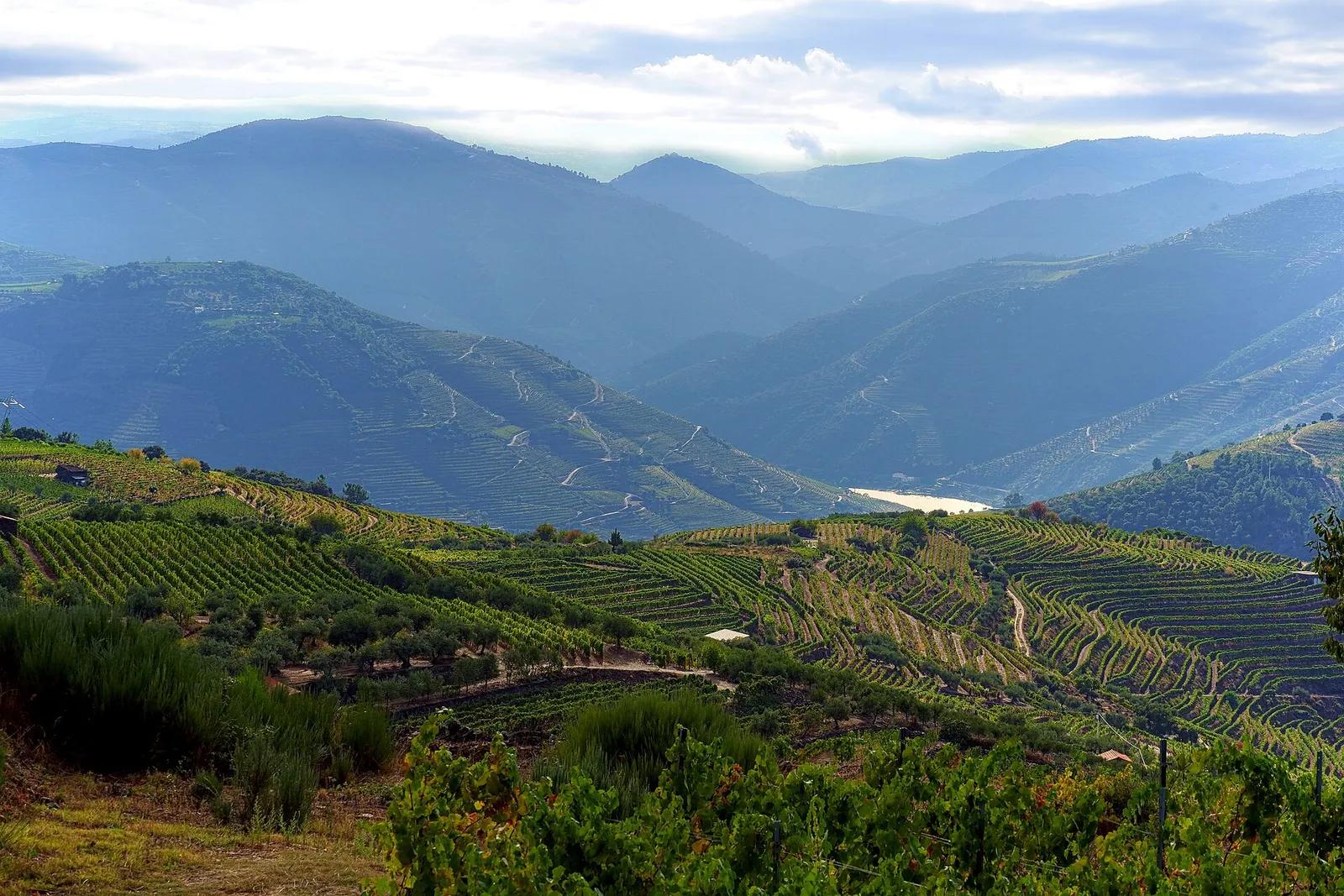
- Terraced vineyards in the Alto Douro, photographed in September 2020. Much of the terracing seen today was rebuilt after phylloxera in the late nineteenth century, and the region now reaches well beyond the first demarcation of 1758–1761. Joana Martins, CC BY-SA 4.0, via Wikimedia Commons.
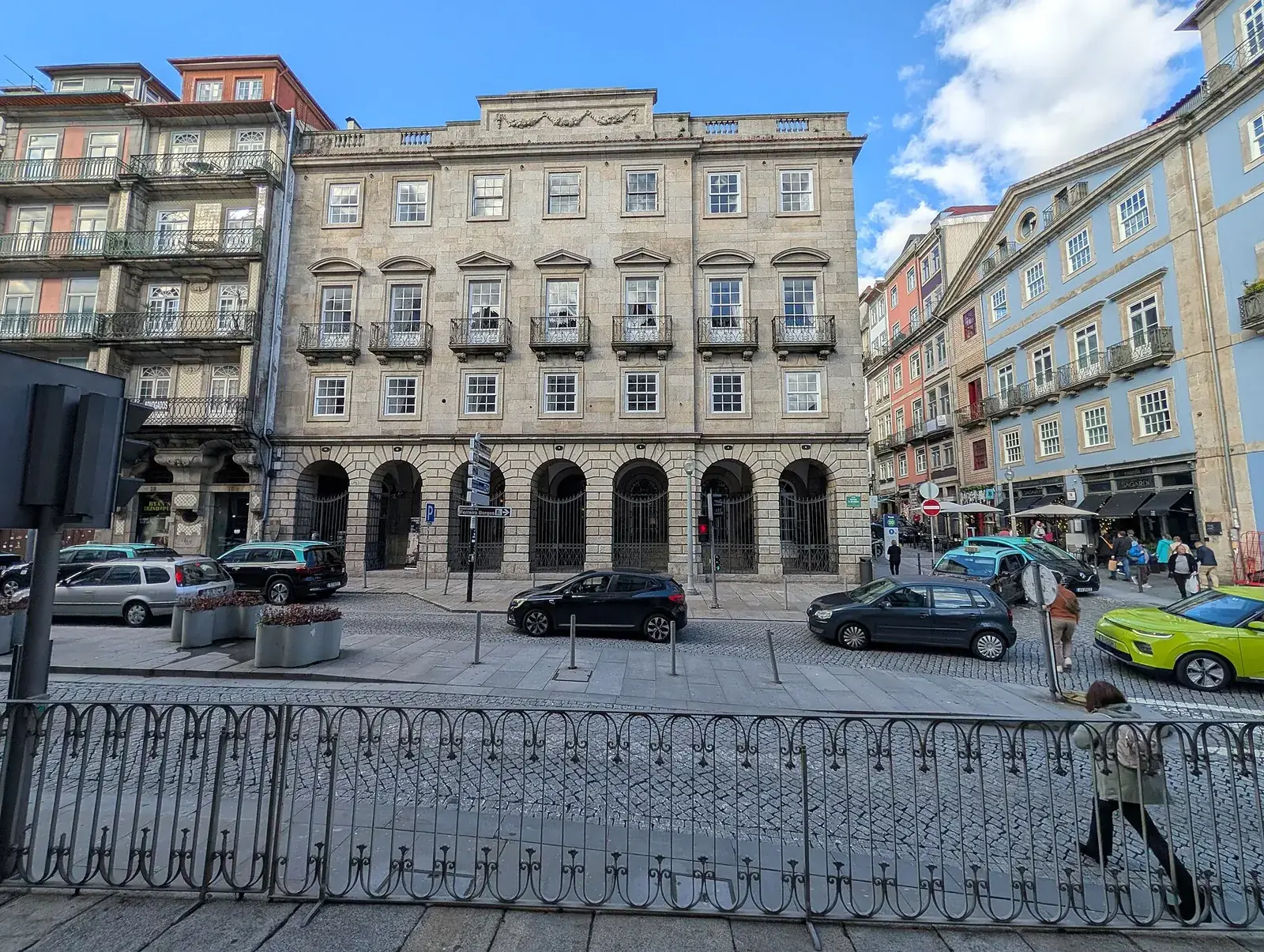
- The Factory House on Rua do Infante D. Henrique in Porto, the British merchants' club house, photographed in 2025. It was begun in 1785 and finished around 1790 to designs by John Whitehead, British consul in Porto from 1756 to 1802. _morgado2, CC BY 4.0, via Wikimedia Commons.
- Sebastião José de Carvalho e Melo, later Marquis of Pombal, painted in 1766 by Louis-Michel van Loo and Claude-Joseph Vernet. In 1756 he was Secretary of State for the Affairs of the Kingdom. Louis-Michel van Loo / Joseph Vernet, Public domain, via Wikimedia Commons.
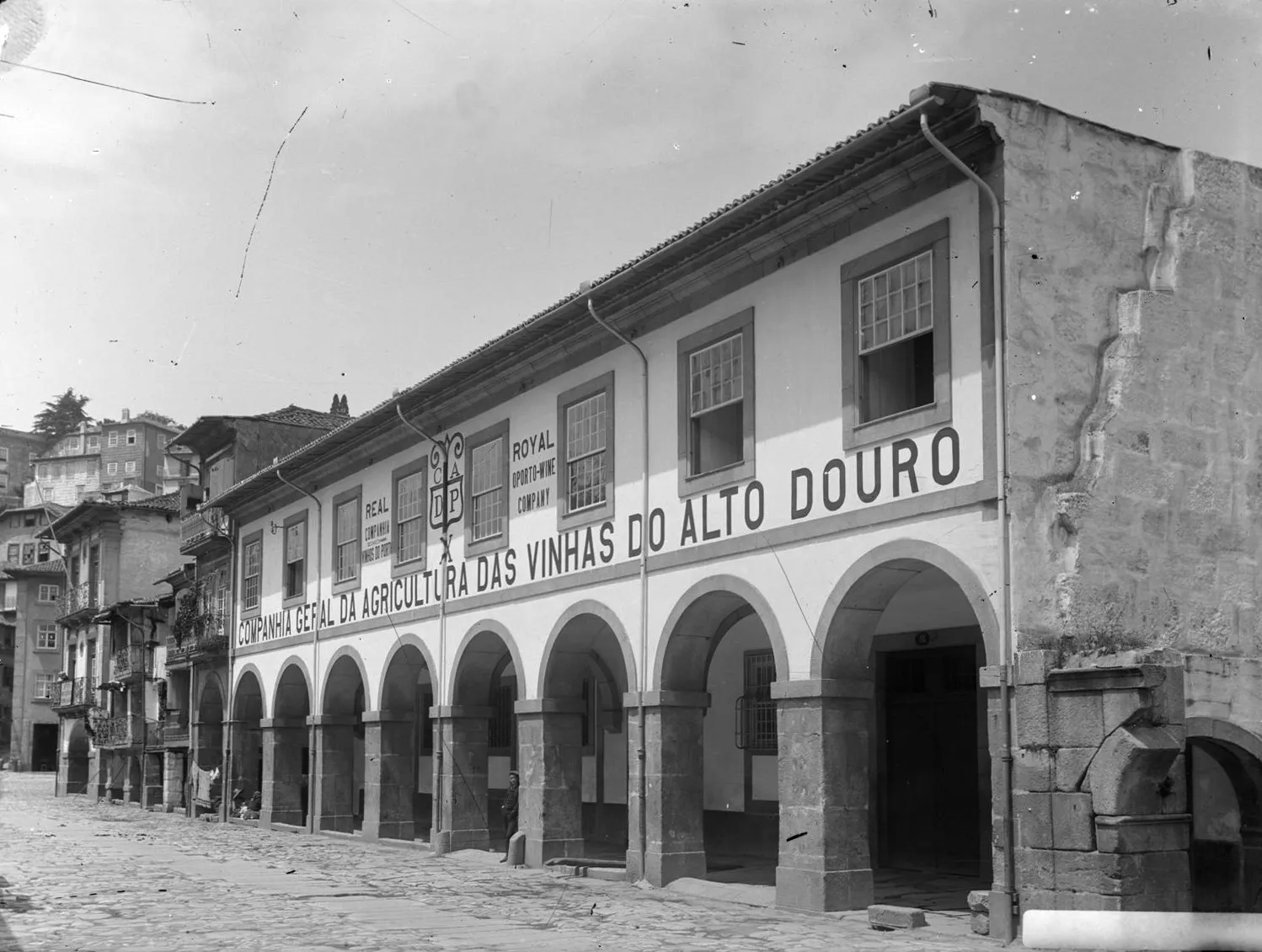
- The company's warehouses on the Rua de Miragaia, by the river in Porto, photographed in the 1910s. The facade carries both its Portuguese name and its English trading name, Royal Oporto Wine Company. Henrique António Guedes de Oliveira, Public domain, via Wikimedia Commons.
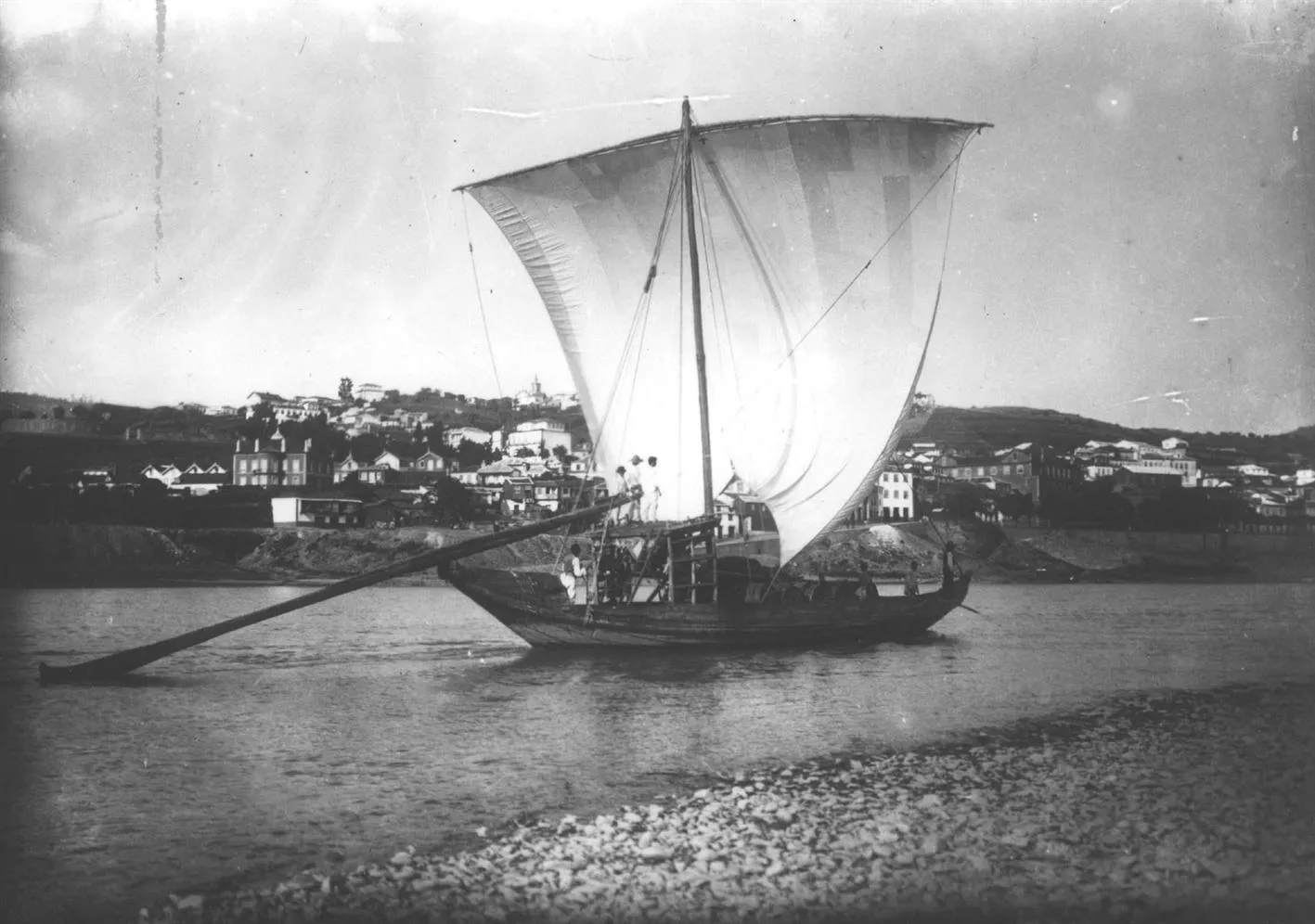
- A rabelo, the flat-bottomed boat that carried wine down the Douro to Porto, sailing off Peso da Régua in 1911. Karl Emil Biel, Public domain, via Wikimedia Commons.