

The September Revolution of 1836 in Lisbon
A crowd went down to the Tagus to cheer the deputies from Porto off a steamer. By the small hours the National Guard held the Rossio, the army would not move against it, and the young queen had to accept a constitution she had never sworn.
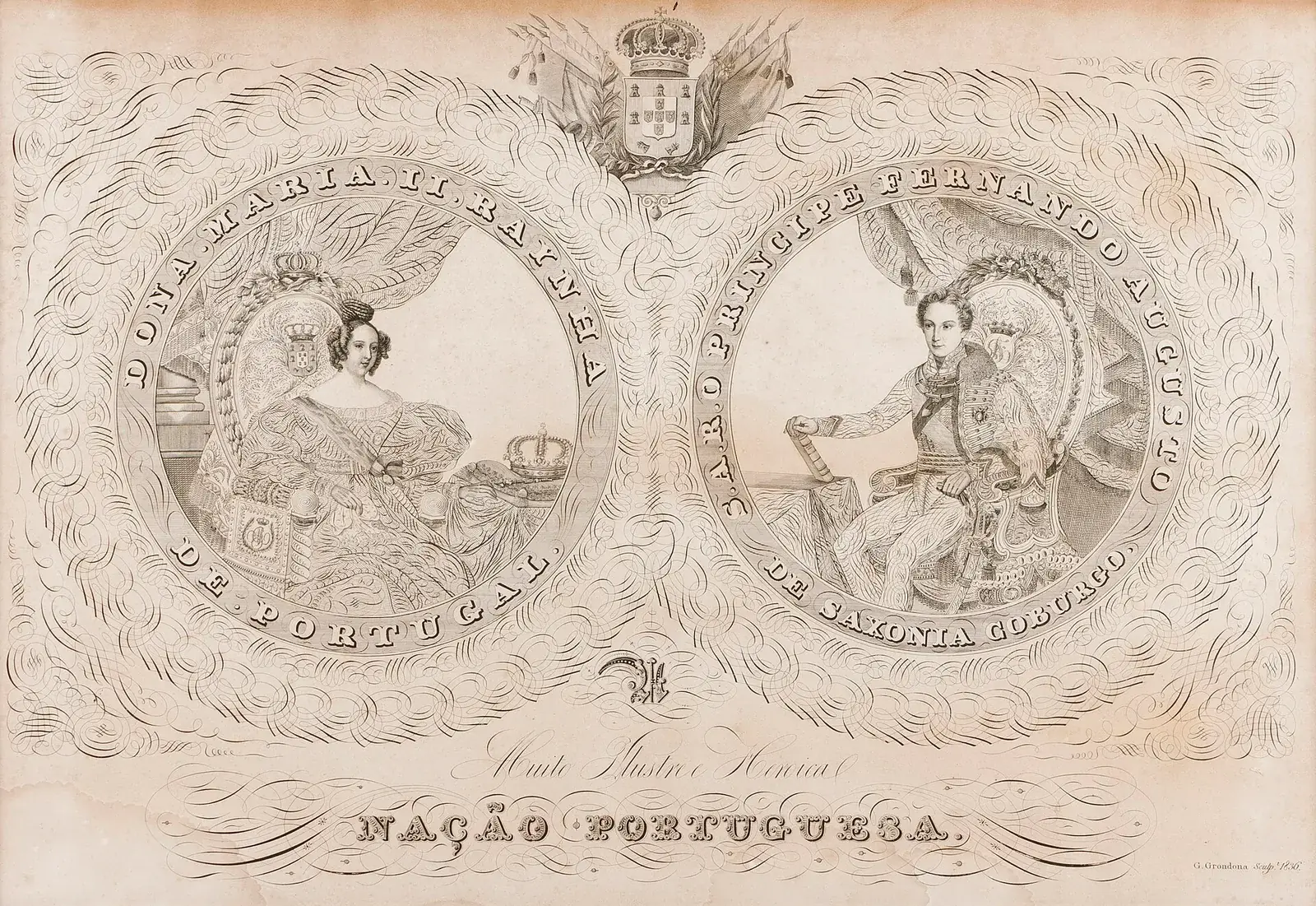
At a glance
- On the afternoon of Friday 9 September 1836, crowds in Lisbon went out to meet the steamer Napier, which brought the opposition deputies elected for the Douro, the Porto region, to the new Cortes.
- That night National Guard battalions, the citizen militia created in 1834, gathered in the Rossio and proclaimed the Constitution of 1822. Regular troops sent to disperse them joined them instead.
- Queen Maria II, then 17, gave way. A new government under the Count of Lumiares, with Passos Manuel at the Ministry of the Kingdom and Sá da Bandeira in the cabinet, restored the 1822 text pending revision and called fresh elections.
- In a few months of rule by decree Passos Manuel created the national liceus, academies of fine arts, a drama conservatoire and polytechnic schools in Lisbon and Porto.
- A palace counter-coup, the Belenzada of 3 to 5 November 1836, failed. Constituent Cortes wrote the compromise Constitution of 1838, which the queen swore on 4 April 1838 and which lasted until Costa Cabral's coup of 1842.
A steamer on the Tagus
On the afternoon of Friday 9 September 1836, boats pushed off from the Cais do Sodré and the Cais das Colunas, the marble steps at the river end of the Terreiro do Paço. They were going out to the steamer Napier, which had come down from Porto with the deputies elected for the Douro. There was music, there were rockets, and there were cheers for the queen, for the Constitutional Charter and for the opposition.
The rockets were themselves a protest. The day before, the civil governor of Lisbon had posted edicts banning public celebrations and the letting off of fireworks. Many of the men in the crowd were in the uniform of the National Guard, Lisbon's citizen militia, and Lisbon had a grudge: its own constituency, Estremadura, had returned the government's candidates, so the city adopted the northern deputies as its own.
The deputies landed and the procession walked up the Rua Augusta towards the Cortes, with women waving flowers from the windows. Somewhere along the way the cheers changed. People began to shout for the “Constitution of 1820”, as they called the radical text of 1822 that came out of the liberal revolution of 1820 and had been dead since 1823.
At the corner of the Rua dos Retroseiros stood Lieutenant-Colonel Francisco Xavier Pereira, recently put in command of the Municipal Guard, the government's police force. According to O Provinciano, the crowd surrounded him and told him to cheer the Constitution and the queen. He cheered only the queen, then pointed to the hilt of his sword and threatened anyone who pressed him again. A rumour spread that he had gone for reinforcements.
Battalions of the National Guard gathered at the Rato and in the Baixa. At about one in the morning (half past ten in O Provinciano's first report), under Soares Caldeira, a former deputy and militia colonel, they all marched into the Rossio. The 5th Caçadores, a light infantry battalion sent to put down the gathering, sided with them.
Soares Caldeira and the other officers sent a message to the queen. They asked her to accept the Constitution they had just proclaimed, a new ministry and a new Council of State.
“Having gone to bed in the shade of the Charter, we woke up under the laws of the constitution the people gave in the year 1820. Everyone rubbed their eyes and asked whether what they heard was a dream.”
Liberals against liberals
The liberals had won the civil war against the absolutist King Miguel in May 1834, at Evoramonte. Pedro IV, who had led their side, died that September, and his daughter Maria II, aged 15, was declared of age. She governed under the Constitutional Charter, the text her father had granted in 1826, which kept strong powers for the crown. Both the Charter and the war that restored it have their own articles.
Victory split the winners. Governments came and went, the last of them under the Duke of Terceira, and the moderate liberals favoured by the court held most of the power. Against them stood an opposition in which the brothers José and Manuel Passos were prominent.
The charges, repeated in parliament, in the press and in the political clubs for two years, were corruption and favouritism. The opposition said the ministers were in thrall to England, piled up loans, devoured the national treasury, handed out jobs to friends and promoted former Miguelists over loyal liberals. From that “devouring” came the name their enemies gave the ruling group: devoristas, and their system devorismo.
The opposition had another weapon. A decree of 29 March 1834 had created the National Guard, a compulsory citizen militia under the Ministry of the Kingdom, meant to keep order and to be a barrier “against the attempts of despotism and the excesses of anarchy”. The law forbade it to meddle in politics, but its officers were chosen in a way the government could not fully control, and the opposition worked hard to win those posts.
One of its strongholds was the Navy Arsenal on the Lisbon waterfront, perhaps the largest manufactory in the city, where the workers' lists show between 2,000 and 2,300 men, besides 280 sailors and ship's boys. Arsenal workers served in the Guard battalions, and the Arsenal had its own political club, where Costa Cabral was a leading voice. The army, meanwhile, was owed more than 13 months' pay and had little reason to defend the government.
The election that lit the fuse
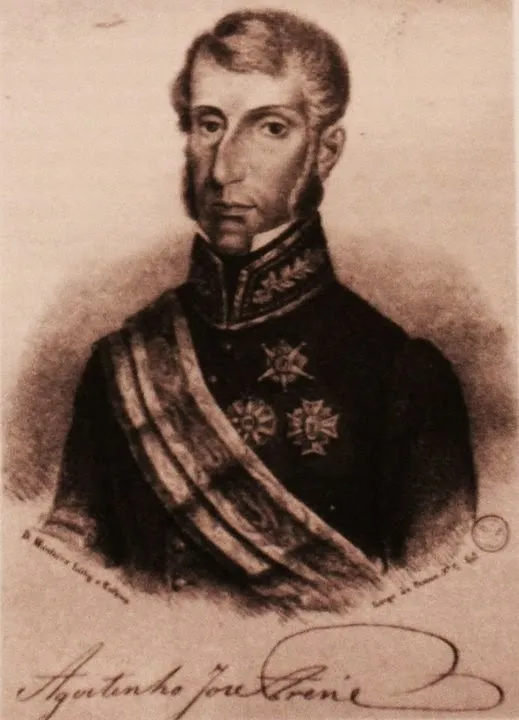
In May 1836 the Duke of Terceira formed a frankly conservative cabinet, with Agostinho José Freire at the Kingdom. It ordered the closure of the Sociedade Patriótica Lisbonense, the best known of the radical clubs, and after eight days of struggle with a hostile chamber had the queen dissolve the Cortes on 3 June.
Elections followed in July. As usual the government won: its candidates took 79 seats and the opposition 41. The exception was the Douro, the region around Porto and the Passos brothers' home ground, where the opposition won outright. Oliveira Martins later compared the arrival of its deputies in Lisbon to that of the Marseillais in revolutionary Paris.
Seats won in the general election of July 1836
seats
The opposition was a minority, but strong enough to make trouble over the budget and the cutting of “scandalous salaries”. Figures from Bonifácio (1981).
Show the data
| Seats | |
|---|---|
| Government supporters | 79 |
| Opposition | 41 |
The opening of the new Cortes was put off from August to September (to the 11th or the 15th; accounts differ), which the opposition read as another manoeuvre. On the morning of 9 September the opposition paper O Nacional wrote that the Cortes were about to open at last, and hoped “the national hopes” would not be dashed. By the next morning there was nothing left to open.
A night in the Rossio
Whether the rising was planned for that day cannot be shown, Bonifácio concludes. Revolution had been talked about for months, and the opposition had tried a military pronouncement in November 1835. What the sources show is a welcome that turned into a show of force and then, after the clash with the Municipal Guard commander, into an insurrection.
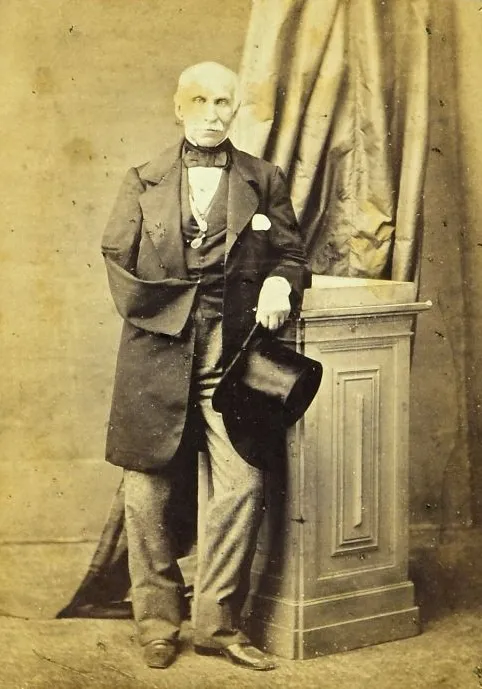
At the palace there was alarm. According to Oliveira Martins, the queen's Belgian adviser, the envoy Van de Weyer, urged her 19-year-old husband, Prince Fernando, to mount his horse and lead loyal battalions against the rebels, and Fernando refused. The court sent instead for Bernardo de Sá Nogueira, Viscount of Sá da Bandeira, a 40-year-old general who had lost an arm to a bullet in the civil war. He agreed to serve if the principles of the revolution were respected.
8 September
Fireworks banned
The civil governor's edicts forbid public celebrations for the deputies' arrival.
9 September, afternoon
The Napier arrives
Crowds row out from the Cais do Sodré and the Cais das Colunas; the deputies land and are cheered up the Rua Augusta.
9 September, evening
Shouts for 1820
The crowd confronts the Municipal Guard commander at the Rua dos Retroseiros; Guard battalions assemble at the Rato and in the Baixa.
10 September, about 01:00
The Rossio
All the battalions gather under Soares Caldeira and proclaim the Constitution; the 5th Caçadores sent against them join them.
10 September, small hours
The palace gives way
The queen agrees to dismiss Terceira's cabinet and to the Constitution of 1822.
10 September
The September ministry
The Count of Lumiares presides; Passos Manuel takes the Kingdom, with Vieira de Castro and Sá da Bandeira. The recent elections are annulled.
Within 24 hours of the rising, Passos Manuel, Vieira de Castro and Sá da Bandeira formed a ministry under the Count of Lumiares, with Passos at the Ministry of the Kingdom, roughly the interior ministry. The Constitution of 1822 was declared in force from 10 September, to be revised by new Cortes, and the elections just held were annulled.
For the queen it was a humiliation. The 1822 text took away her absolute veto and her right to dissolve parliament. Her hand trembled as she signed, Oliveira Martins wrote, and on the 11th she went to the city hall to swear the restored constitution in tears. Terceira and Saldanha, the two great marshals of the civil war, refused to swear it.
“The Constitution of 1820 has just been proclaimed in this loyal city of Lisbon! The edict of the Civil Governor forbidding rockets to be let off, to prevent the popular ovations that a great number of the capital's inhabitants were preparing for the deputies of the Douro on their arrival, was like the alarm bell that gathered the scattered elements of public discontent.”
Nobody wanted the credit. The new ministers said the people had done it, and the opposition papers spoke of the whole nation. Bonifácio reads this as a way to give the revolution legitimacy while keeping its organisers, in the clubs and the Guard, out of view. Only Inocêncio Francisco da Silva, secretary of the Sociedade Patriótica, later claimed that its members had done perhaps the greater part of the work.
“Mr President, I had no part at all in the revolution. The people of Lisbon made it, the provinces applauded, and afterwards I helped it to win, to be noble, glorious and free of blood and crimes.”
Passos Manuel's months
Manuel da Silva Passos was 31, or 35 if he was born in 1801, as some reference works say, and not in January 1805. He was born at Guifões, in the old municipality of Bouças, now Matosinhos, into a well-off northern family, studied at Coimbra and went into exile with his brother José after Miguel seized the throne in 1828. He was a famous speaker, and he governed for months by decree, without a parliament.
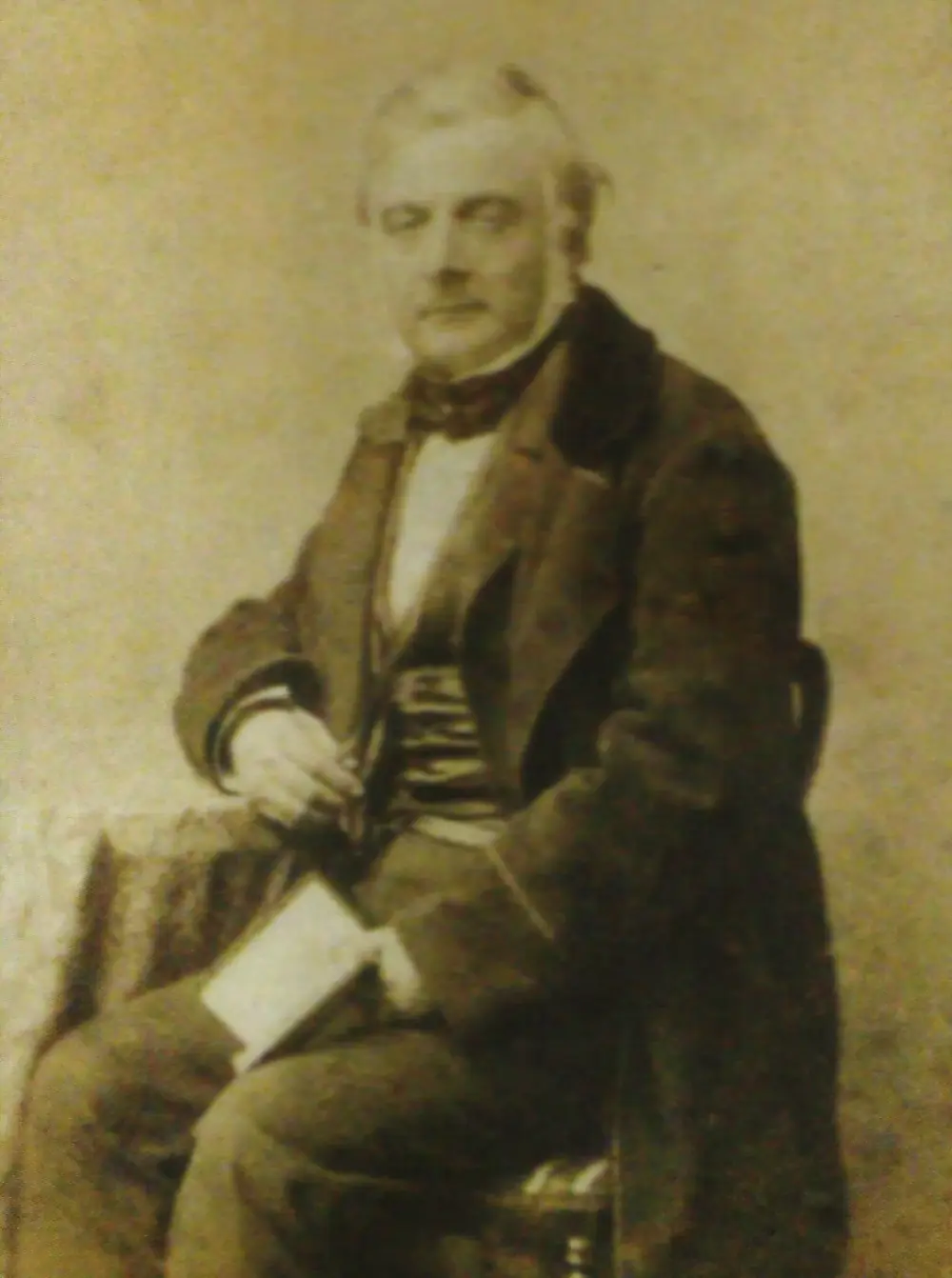
His programme was education. Liberty, he believed, depended on an educated people. A decree of 17 November 1836 brought to Portugal the liceu, the state secondary school France had created as the lycée in 1802: one in each district capital, 18 on the mainland and four in the Azores and Madeira, in place of scattered secondary classes. Other decrees founded academies of fine arts, polytechnic schools and a conservatoire.
Much of it came slowly. The Lisbon liceu opened only in 1838 and Porto's in 1840, in rooms of the new Polytechnic Academy, and it took 19 years to open all the mainland liceus. Political turmoil and a grave economic crisis held them back, and even Porto's liceu could not offer all ten subjects of the 1836 plan.
The Septembrists also raised customs duties to protect Portuguese farming and manufactures from foreign goods, in tariffs Oliveira Martins called almost prohibitive for many items; he thought they mainly made things dearer. Later writers, Bonifácio notes, pictured the Septembrists standing up to the English “with the tariffs in hand”. Sá da Bandeira, for his part, had a decree of 10 December 1836 ban the export of slaves from all Portuguese territories; slavery itself went on, and its abolition has its own article.
Not every liberal came over. The young Alexandre Herculano refused to swear the restored constitution, gave up his post at the Porto library and attacked the revolution in an anonymous pamphlet, A Voz do Profeta.
| Date | Measure | What became of it |
|---|---|---|
| 25 October 1836 | Academy of Fine Arts in Lisbon, with a second academy in Porto the same year | Porto's academy taught painting, sculpture and architecture in the former convent of Santo António |
| 1836 | Almeida Garrett charged with planning a national theatre, a theatre inspectorate and a General Conservatoire of Dramatic Art | The Teatro Nacional D. Maria II opened on the Rossio in 1846 |
| 17 November 1836 | Plan of National Liceus: one in each district capital | Coimbra opened in 1836, Lisbon in 1838, Porto in 1840, the last (Guarda) in 1855 |
| 29 December 1836 | Medical-surgical schools of Lisbon and Porto organised | Schools of medicine and surgery outside Coimbra's university |
| 31 December 1836 | Administrative Code | Replaced by a new code in March 1842, after the Charter returned |
| 11 January 1837 | Escola Politécnica in Lisbon, replacing the Royal Naval Academy | Ran until the Republic, in 1911, training officers and engineers |
| 13 January 1837 | Academia Politécnica in Porto, replacing the Royal Academy of Navy and Commerce | Ran until 1911, training engineers |
The Museu Nacional Soares dos Reis dates both polytechnic schools to 11 January 1837; Hélder Pinto gives 13 January for Porto. The Lisbon school answered to the army and navy. The Administrative Code is credited to José Passos by his 1848 biographer. A decree of the same year planned a National Pantheon, which has its own article.
The Belenzada: a counter-coup at Belém
The court never accepted the revolution. Oliveira Martins, drawing on Sá da Bandeira's own account, puts Van de Weyer at the centre of the plot, with the backing of King Leopold of Belgium, Fernando's uncle, and of Lord Howard de Walden, the British minister in Lisbon. British warships with troops aboard lay in the Tagus.
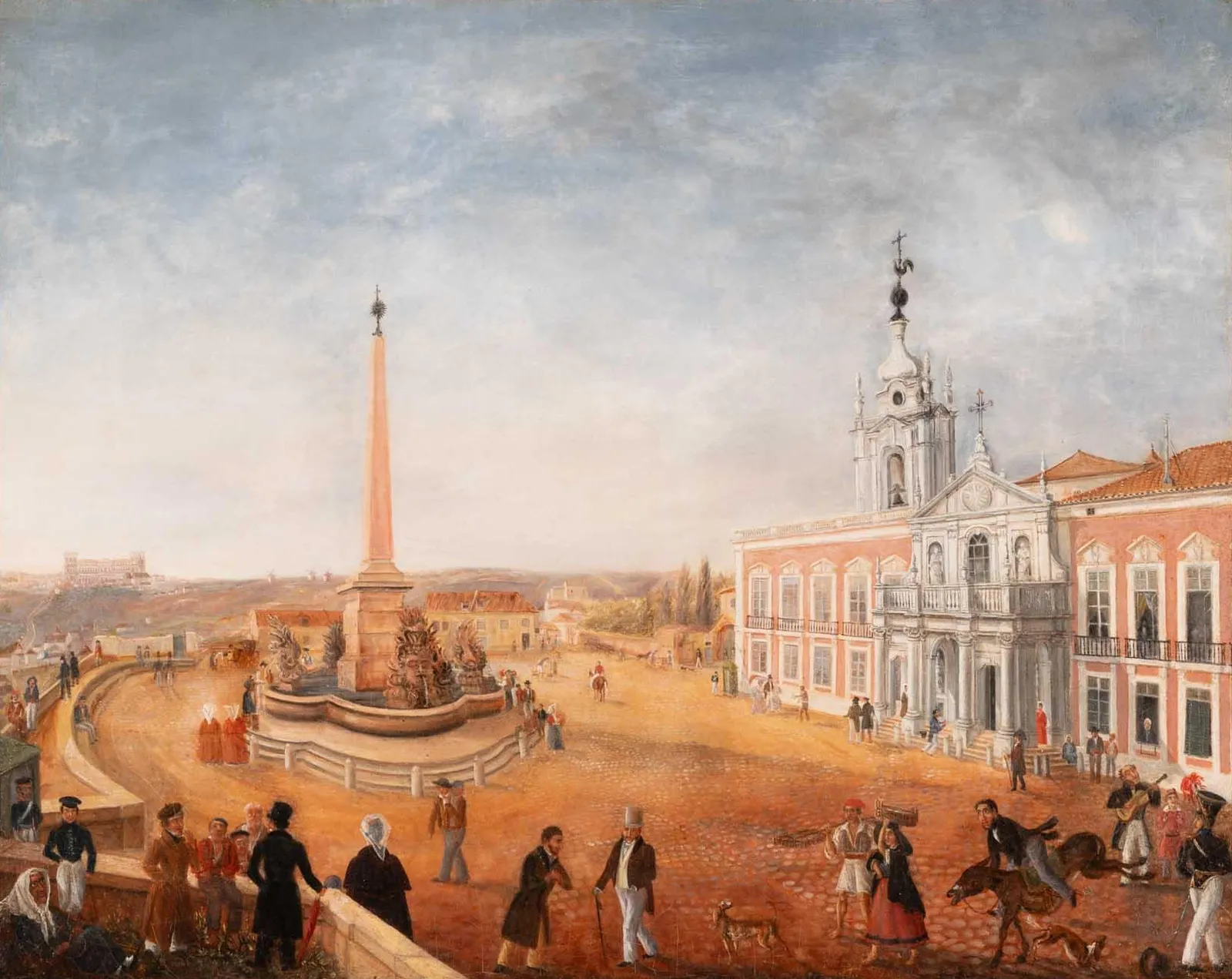
On the evening of 3 November 1836 the court left the Necessidades palace for Belém, where the Lisbon regiments joined it on the orders of the conspiring generals. The queen dismissed her ministers and named a Chartist cabinet. Lisbon answered with alarm bells and drums. By the morning of the 4th the National Guard stood in battle order at Campo de Ourique, where a revolutionary junta met, and its Arsenal battalion was sent to cut the road to the palace at Alcântara.
That morning Agostinho José Freire, the former minister of the Kingdom, set off for Belém in full uniform to answer the queen's call. At a Guard post at the foot of the Pampulha slope his carriage was stopped.
He was shot dead as he stepped down, and his body was stripped and left in the street. Oliveira Martins took the account from an anonymous pamphlet on Freire's death. Bonifácio dates the final break between Chartists and Septembrists from these days.
Passos went to Belém and, before the queen, the diplomats and the peers, refused to renounce the revolution, though he promised two chambers, an absolute veto and a right of dissolution, as in Belgium. That night, Oliveira Martins writes, six or seven hundred British soldiers were landed at Junqueira. The Guard surged towards Belém, and Passos, on horseback at the bridge over the Alcântara stream, held it back.
On 5 November Sá da Bandeira and Saldanha settled terms. The British troops went back aboard, the new ministers with them, and the September ministers were restored, now with Sá da Bandeira at their head. In the afternoon the queen returned to the Necessidades between lines of Septembrist forces.
From the Constituent Cortes to the Constitution of 1838
Elections to the constituent Cortes were held on 22 November 1836, by direct vote of men over 25. The Cortes began work in January 1837, on the 18th or the 26th (the sources differ). In July 1837 Chartist officers rose for the Charter, and the marshals Saldanha and Terceira marched on Lisbon. At Chão da Feira on 28 August, the two sides' cavalry met and refused to fight. After a skirmish at Ruivães in September the marshals capitulated and went into exile.
Passos Manuel left the government in mid-1837 (1 June in Oliveira Martins's chronology, 1 July in his narrative). The pretext was the Cortes' vote against his plan for under-secretaries of state. The radical wing of the National Guard grew restless, and on 13 March 1838 government troops under Bonfim, with Costa Cabral now on the side of order, trapped rebel battalions in the Rossio; about a dozen people were killed. Costa Cabral then began dissolving the most radical battalions.
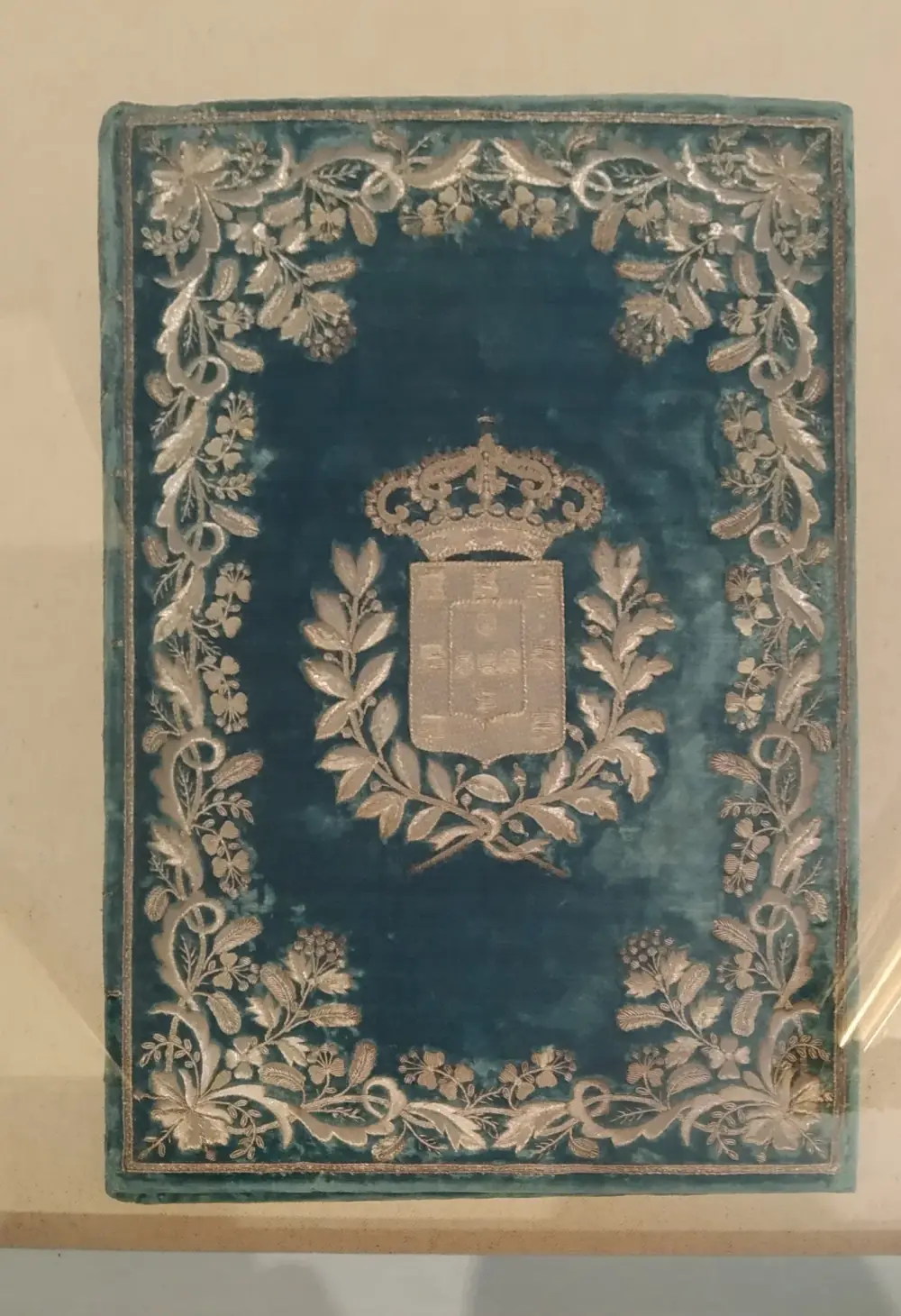
The new constitution is dated 20 March 1838. Maria II swore it at a solemn session on 4 April 1838, and it was published in the Diário do Governo on 24 April. Its preamble put the change in a phrase: the Cortes “decreed, and I accepted and swore” it.
| Constitution of 1822 | Charter of 1826 | Constitution of 1838 | |
|---|---|---|---|
| How it was made | Voted by elected Cortes | Granted by the king | Voted by constituent Cortes, accepted and sworn by the queen |
| Sovereignty | The nation | Royal sovereignty above the nation's, through the king's moderating power | “Essentially in the Nation, from which all political powers emanate” |
| Parliament | One chamber, elected for two years | Chamber of Peers named by the king, for life or by inheritance, and elected Chamber of Deputies | Elected, temporary Chamber of Senators and Chamber of Deputies elected for three years |
| Elections | Direct | Indirect, with an income qualification of 100,000 réis | Direct, men over 25 with 80,000 réis a year |
| Royal veto | Suspensive: a law could be sent back once | Absolute | Absolute: laws need royal sanction |
| Dissolution of parliament | No | Yes | Yes, “when the salvation of the State requires it” |
In 1838 the voting age fell to 20 for married men, officers, graduates and clergy. Deputies needed an income of 400,000 réis and senators had to be at least 35.
The result was a blend. Sardica sums it up: the Septembrists met the left's demands on national sovereignty, direct elections and parliamentary votes on taxes and treaties, and kept for the crown the absolute veto, the power of dissolution, a restricted franchise and an upper house, disguised as an elected Senate. Most Chartists accepted it; Herculano called it a fact made holy by the acceptance of the queen and the nation.
It lasted under four years. A hard-line Chartist wing grew up after 1838, and on 27 January 1842 Costa Cabral staged a coup with the army behind him. A decree of 10 February 1842 put the Charter back in force. The Septembrist left turned from abolishing the Charter to amending it, and won part of its case in the Additional Act of 1852.
What Setembrismo left
The 1836 decree gave Portugal its first plan for public, secular secondary schools run by the state. The polytechnic schools of Lisbon and Porto trained officers and engineers until 1911. The national theatre Garrett was asked to plan still stands on the Rossio, where the Guard proclaimed the Constitution in 1836.
The 1838 Constitution's pairing of national sovereignty with a strong crown was, in Sardica's reading, an early attempt at the compromise that the Regeneração of the 1850s made lasting through the Additional Act of 1852.
Bonifácio counts Setembrismo out of power from 1838, and historians still argue over what it was. Vítor de Sá, in 1969, saw a popular, even working-class, revolution betrayed by its middle-class leaders. Bonifácio, studying the clubs, the Guard and the papers, saw a struggle between two liberal factions over the state and its jobs, in which an opposition shut out of power used the Lisbon crowd to take it.
FAQs
What was the September Revolution of 1836?
A largely bloodless rising in Lisbon on the night of 9 to 10 September 1836. National Guard battalions proclaimed the Constitution of 1822 in the Rossio, the army refused to stop them, and Queen Maria II replaced her conservative government with one led by the radical liberals, soon called Septembrists (setembristas).
Who were the Devorists and the Chartists?
Devoristas was the opposition's insult for the moderate liberals who governed from 1834 to 1836, accused of devouring the treasury. After the revolution their camp, which wanted the 1826 Charter back, was called the Chartists (cartistas), and their opponents the Septembrists (setembristas).
What was the Belenzada?
A failed palace counter-coup of 3 to 5 November 1836. The queen moved to the Belém palace, dismissed the September ministers and, with British warships in the Tagus, tried to restore the Charter. The Lisbon National Guard mobilised, Agostinho José Freire was killed, and the queen gave way.
What did Passos Manuel do?
As minister of the Kingdom from September 1836 to June 1837 he created the national liceus (17 November 1836), academies of fine arts, a drama conservatoire and polytechnic schools in Lisbon and Porto, and called the Cortes that wrote the Constitution of 1838.
How long did the Constitution of 1838 last?
Less than four years. Maria II swore it on 4 April 1838; Costa Cabral's coup of 27 January 1842 brought back the Charter of 1826, formally restored on 10 February 1842.
On the timeline
Open the timelineNearby moments from invasions, brazil and the liberal wars (1807–1851).
Following his defeat in the Liberal Wars and the Convention of Evoramonte, the former King Miguel I embarks at Sines aboard a British warship bound for exile in Genoa. His departure ends absolutism in Portugal and consolidates the constitutional monarchy of his niece, Queen Maria II.
Pedro IV of Portugal, who had also reigned as Pedro I, first Emperor of Brazil, dies of tuberculosis at the Palace of Queluz aged 35, in the very room where he was born. His death came only months after the liberal victory in the Portuguese Civil War secured the throne for his daughter Maria II.
Queen Maria II, just turned 17, marries Prince Ferdinand of Saxe-Coburg and Gotha in Lisbon Cathedral, after a proxy wedding in Coburg. On the birth of their first son he became King Fernando II. Remembered as the 'artist king', he would rescue a ruined monastery above Sintra and turn it into the Pena Palace.
The September Revolution of 1836
The September Revolution breaks out in Lisbon: crowds welcome the opposition deputies elected for the Douro, and that night National Guard battalions proclaim the Constitution of 1822 in the Rossio. The army refuses to stop them and Queen Maria II restores the 1822 text, opening the era of Setembrismo.
A decree issued under minister Passos Manuel creates Portugal's National Pantheon to honour the country's most distinguished figures. It was eventually installed in Lisbon's Church of Santa Engrácia, begun in 1682 and finished only in 1966 — hence 'obras de Santa Engrácia', Portuguese for a job that never ends.
The future King Pedro V, 'the Hopeful', is born at the Necessidades Palace in Lisbon. Acclaimed on his 18th birthday in 1855 — the day Lisbon's first electric telegraph line was inaugurated — the studious, modernising king died in an epidemic in 1861, aged just 24, along with two of his brothers.
Joaquim Guilherme Gomes Coelho, better known as Júlio Dinis, is born in Porto. A doctor who died of tuberculosis at 31, he wrote gentle novels of rural and provincial life such as 'As Pupilas do Senhor Reitor' and 'A Morgadinha dos Canaviais' that remain classics of Portuguese fiction.
Coming up in history
All long reads
19 sources
Archives, scholarship and reporting this article was checked against.
- 1
A revolução de 9 de Setembro de 1836: a lógica dos acontecimentos (Maria de Fátima Bonifácio)Análise Social, vol. XVIII (71), 1982
- 2
- 3
A Carta Constitucional portuguesa de 1826 (José Miguel Sardica)Historia Constitucional, no. 13 (2012), pp. 527-561, Universidad de Oviedo
- 4
Portugal contemporaneo, tomo II (J. P. Oliveira Martins, 3rd edition, Lisbon, 1895)Project Gutenberg
- 5
A Monarquia Constitucional (1820-1910)Assembleia da República
- 6
Constituição de 1838 (text as published in the Diário do Governo, no. 98, 24 April 1838)NOVA School of Law, Universidade Nova de Lisboa
- 7
Dilemas do ensino secundário-liceal em Portugal nos alvores do liberalismo segundo a visão situada do Liceu Nacional do Porto (Luís Grosso Correia)Educação, Sociedade & Culturas, no. 42, 2014
- 8
Passos Manuel: the founder of Porto AcademyMuseu Nacional Soares dos Reis (18 January 2024)
- 9
- 10
- 11
Alexandre Herculano de Carvalho Araújo (1810-1877) (Rita Correia)Hemeroteca Digital, Câmara Municipal de Lisboa
- 12
Herculano, Alexandre (Lisbon, 1810 - Azóia de Baixo, Santarém, 1877) (Arthur Alfaix Assis)Dicionário de Historiadores Portugueses, Biblioteca Nacional de Portugal
- 13
Ofício de informação e parecer, 4 September 1837, on the decree of 25 October 1836 that created the Academia das Belas Artes de LisboaMinistério Público, Arquivo Histórico
- 14
HistóriaTeatro Nacional D. Maria II
- 15
- 16
Do ensino industrial ao ensino da engenharia: contexto histórico em PortugalInstituto Superior de Engenharia de Lisboa (ISEL)
- 17
Introduction to the special issue on engineering and polytechnic schools (Luís Miguel Carolino and Teresa Salomé Mota)HoST: Journal of History of Science and Technology, vol. 7, spring 2013
- 18
- 19
História do Panteão NacionalPanteão Nacional, Museus e Monumentos de Portugal
Image credits
- Queen Maria II and Prince Fernando of Saxe-Coburg-Gotha, whom she married in 1836, in a calligraphic engraving signed by Gotardo Grondona and dated 1836, dedicated to the “very illustrious and heroic Portuguese nation”. That September she was 17 and he 19. Gotardo Grondona, ca.1836, CC BY-SA 4.0, via Wikimedia Commons.
- Agostinho José Freire, minister of the Kingdom in Terceira's cabinet, in a lithograph by D. Monteiro dated to around 1840. He was killed during the Belenzada in November 1836. D. Monteiro, Public domain, via Wikimedia Commons.
- Bernardo de Sá Nogueira, Viscount and later Marquis of Sá da Bandeira, photographed by F. A. Gomes late in his life; he died in 1876. In September 1836 he was 40 and became one of the three leading ministers of the revolution. F. A. Gomes, Public domain, via Wikimedia Commons.
- Passos Manuel in an undated photograph from his later years; he died at Santarém in 1862. The print is kept by the Passos Canavarro Foundation. Unknown author, Public domain, via Wikimedia Commons.
- The Necessidades palace in Lisbon, the queen's residence, painted around 1834 by an unknown Portuguese artist, with the obelisk fountain in the square in front. On 3 November 1836 the court left it for Belém. Unknown author, Public domain, via Wikimedia Commons.
- The velvet and silver-embroidered binding of the original Constitution of 1838, kept at the Torre do Tombo national archive, shown at the Ajuda palace in Lisbon in 2021 (photograph cropped). RickMorais, CC BY-SA 4.0, via Wikimedia Commons.