

Angola's independence at midnight, 11 November 1975
Portugal had promised to hand Angola to a government of all three liberation movements. By independence night two of them had been driven from Luanda, foreign armies were inside the country and an airlift had carried hundreds of thousands of Portuguese to Lisbon.
At a glance
- At midnight on 11 November 1975, in Luanda, Agostinho Neto proclaimed the independence of the People's Republic of Angola in the name of the MPLA. The FNLA and UNITA proclaimed rival states the same night, in Ambriz and in Nova Lisboa (now Huambo).
- On 10 November the last Portuguese High Commissioner, Admiral Leonel Cardoso, had declared independence in Luanda on behalf of Portugal's president and left sovereignty with “the Angolan people”, not with any movement.
- The Alvor Agreement, signed in the Algarve on 15 January 1975, had promised a joint transitional government, a joint army and elections. Fighting broke out in Luanda within weeks, and Lisbon suspended the agreement on 22 August 1975.
- An airlift from May to November 1975 flew about 250,000 to 300,000 people from Angola to Portugal. In all, about half a million “retornados” came back from the colonies, 61 per cent of them from Angola.
- The civil war that followed drew in Cuba, South Africa, Zaire, the Soviet Union and the United States, and lasted until a ceasefire on 4 April 2002. Estimates of the dead vary; Human Rights Watch puts the total at about one million.
Midnight in Luanda
Portugal's goodbye came a day early, and it handed power to no one in particular. On 10 November 1975, in Luanda, Admiral Leonel Cardoso, the last Portuguese High Commissioner, read a declaration on behalf of the President of the Portuguese Republic. Angola would be independent from midnight. No Angolan movement received power from his hands.
“In the name of the President of the Portuguese Republic, I solemnly proclaim, with effect from 0 hours on 11 November 1975, the independence of Angola and its full sovereignty, rooted in the Angolan People, to whom it belongs to decide the forms of its exercise.”
Lisbon had decided to pull its last troops out by independence day. In September the plan was to keep 3,000 picked men in Luanda and take them out on 10 November. The city they left behind belonged to the MPLA, the Popular Movement for the Liberation of Angola, which had driven its two rivals out of the capital in July.
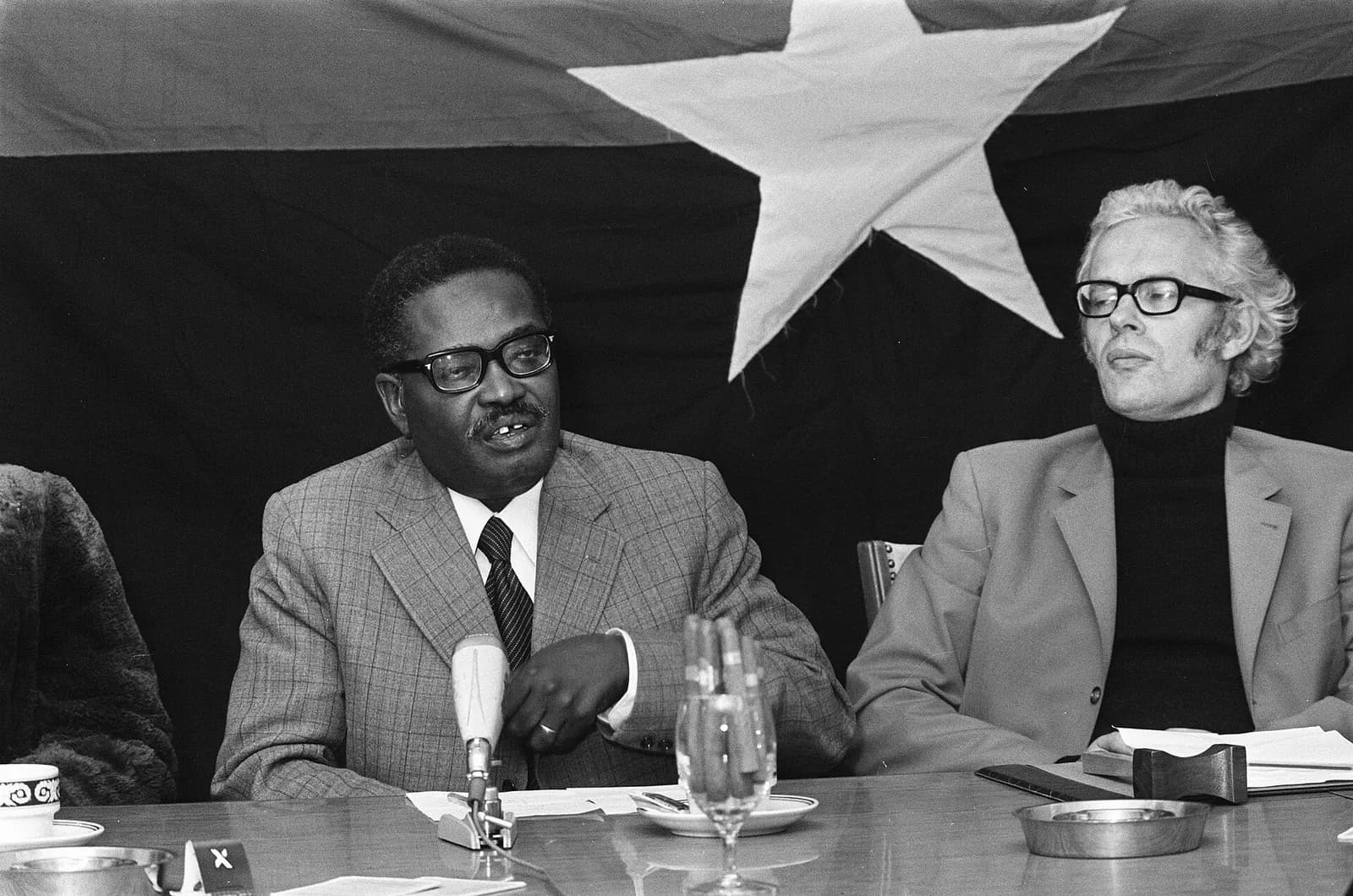
It was deep night when the MPLA's president, Agostinho Neto, a doctor and poet, spoke in the square now called the Largo da Independência. At midnight he read the proclamation. It called for a minute's silence, kept by “the Angolan people and the Central Committee of the MPLA”, for the heroes who had fallen for independence. Then Neto declared the country the People's Republic of Angola.
“In the name of the Angolan people, the Central Committee of the Popular Movement for the Liberation of Angola solemnly proclaims, before Africa and the world, the independence of Angola.”
The speech accused Portugal of breaking the Alvor Agreement by keeping silent while regular armies and mercenaries invaded the country. It also said that the MPLA's struggle “was not, nor ever will be, against the Portuguese people”. That same night Holden Roberto's FNLA proclaimed its own republic in the port of Ambriz, and Jonas Savimbi's UNITA did the same at Nova Lisboa, now Huambo. Angola was born with three governments and a war already under way.
- Date
- Midnight, night of 10 to 11 November 1975
- Place
- Luanda, in the square now called the Largo da Independência
- Proclaimed by
- Agostinho Neto, for the Central Committee of the MPLA
- New state
- People's Republic of Angola
- Rival proclamations
- FNLA at Ambriz; UNITA at Nova Lisboa (Huambo)
- Portuguese declaration
- Admiral Leonel Cardoso, Luanda, 10 November 1975
- Recognised by Portugal
- 22 February 1976
A colony at war since 1961
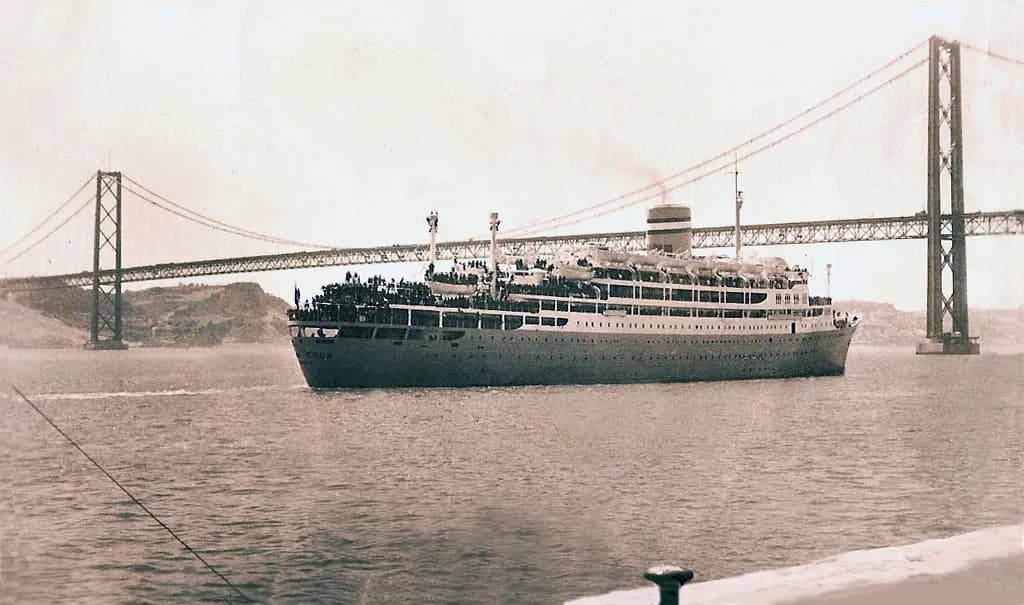
Angola was called the jewel in the crown of Portugal's empire. In 1974 it had the second-largest white population in Africa after South Africa, and white settlers ran almost all its farming, transport and administration. Luanda had about 500,000 inhabitants. Lisbon's dictatorship, the Estado Novo, called the colony an “overseas province”, part of Portugal itself.
The war began in 1961. On the night of 3 to 4 February nationalists attacked Luanda's prisons to free comrades; the MPLA later claimed the attack as its own. On 15 March fighters of the UPA, the Union of the Peoples of Angola, crossed from the Congo and launched an uprising in the north that massacred white settlers and also mixed-race and African workers. In the Luanda slums, far-right whites organised by men of PIDE, the political police, killed Black and mixed-race residents in reprisal.
The fighting spread to Guinea and Mozambique, and Portugal kept conscript armies in Africa until the revolution of April 1974. Tens of thousands of Portuguese soldiers were still in Angola in 1974 and 1975, most of them young men from poor rural families.
Three movements, three Angolas
Unlike Guinea or Mozambique, Angola had no single liberation movement. The historian Malyn Newitt counts at least 58 Angolan nationalist organisations in Léopoldville, the Congolese capital, in 1960. By the 1970s three were left standing, and they fought the Portuguese and each other.
| Movement | Origins | Leader | Main support at home | Foreign backers in 1975 |
|---|---|---|---|---|
| MPLA (Popular Movement for the Liberation of Angola) | Dates its founding manifesto to December 1956; Marxist | Agostinho Neto | Luanda's Kimbundu-speaking population; urban, educated and mixed-race Angolans | Soviet Union, Cuba |
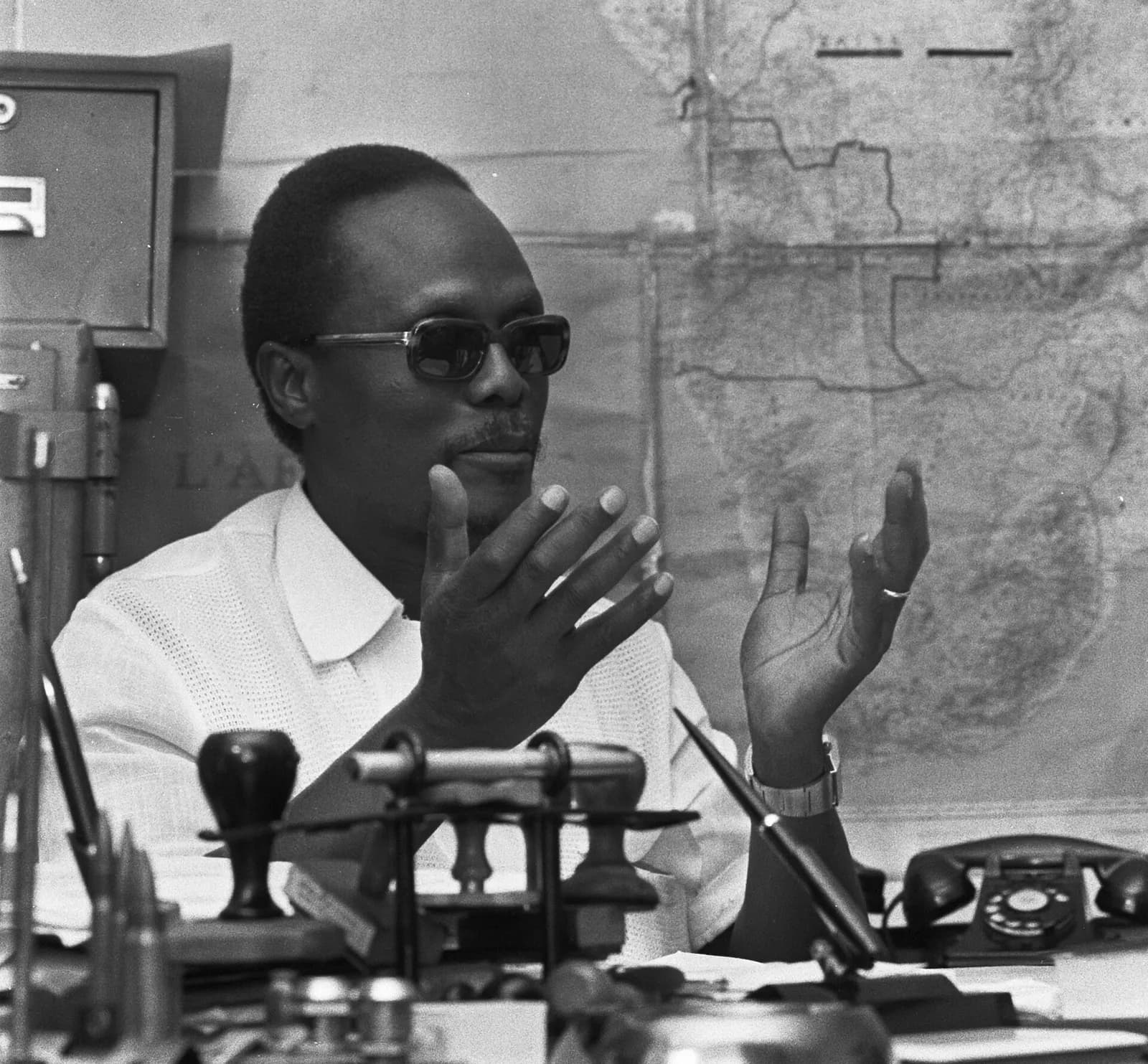
| FNLA (National Front for the Liberation of Angola) | Grew out of the UPA, which led the northern uprising of March 1961; anti-communist | Holden Roberto | The Bakongo north, with bases in Zaire | Zaire, United States, Chinese instructors |
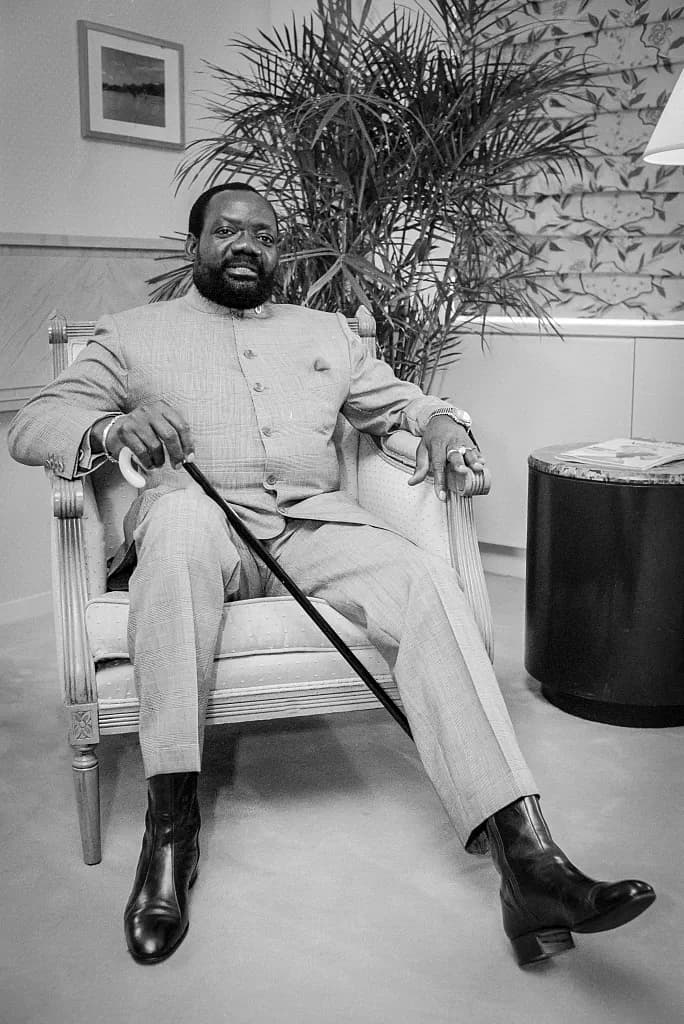
| UNITA (National Union for the Total Independence of Angola) | Split from the FNLA in 1966 | Jonas Savimbi | The Ovimbundu, Angola's largest people, on the central plateau | China at first, then South Africa and the United States |
Neto was born in 1922 in Icolo e Bengo, near Luanda, trained as a doctor and wrote poetry. PIDE arrested him several times. The MPLA's support lay in Luanda, where most of the African population spoke Kimbundu and Portuguese. FNLA soldiers often spoke Lingala or French, because many came from Zaire, and UNITA's spoke mostly Umbundu.
After the revolution in Lisbon
On 25 April 1974 the Armed Forces Movement (MFA) overthrew the Estado Novo. Its programme came down to “three Ds”: democratise, decolonise, develop. In Angola the war had been at a stalemate. The MPLA was split by internal quarrels, and the FNLA and UNITA could not threaten Portuguese rule.
The revolution changed that within months. The Portuguese began to leave at once: 9,000 left Angola in May and June 1974 alone, and between May 1974 and May 1975 more than 132,000 passengers flew from Angola to Portugal on ordinary TAP tickets.
Admiral Rosa Coutinho, High Commissioner from July 1974 to January 1975, was disliked by many settlers and conservative officers for favouring the MPLA. The last High Commissioner, Leonel Cardoso, later told the American consul that Coutinho's brief had been to strengthen both the MPLA and UNITA against the FNLA, then far the strongest militarily.
Six days at Alvor
From 10 to 15 January 1975 the Portuguese government and the three movements met at Alvor, near Portimão in the Algarve. Neto, Roberto and Savimbi signed for their movements, and Portugal's president came for the signing. The agreement has 60 articles. It recognised the FNLA, the MPLA and UNITA as “the only legitimate representatives of the Angolan people”, declared the enclave of Cabinda an inseparable part of Angola, and set independence for 11 November 1975.
Until then Angola would be run by a Portuguese High Commissioner and a transitional government led by a Presidential College of three, one member from each movement. Ministries were shared equally between the movements and Portugal's president. A joint army would merge 8,000 fighters from each movement with 24,000 Portuguese troops. A Constituent Assembly was to be elected within nine months, and only the three movements could put up candidates.
“We worked at this summit a generation late, in the currents of History.”
Neto replied for all three movements, calling the Portuguese president's presence “an eloquent announcement of political progress” for both peoples. Rui Bebiano, a historian who served in Luanda that year as a conscript in the joint forces, judges that the agreement was “only a tactical moment”. No one made a real effort, he writes, to agree a peaceful transfer of power with Lisbon or with international bodies.
| Alvor promised | Articles | What happened |
|---|---|---|
| A general ceasefire; any use of force not ordered by the authorities illegal | 6 | Street fighting in Luanda from late March 1975; open war from 9 July |
| A transitional government sworn in on 31 January 1975, with ministers from the three movements and Portugal | 5, 20, 21 | Divided and short of means; by August absent members had stopped it working |
| A joint army of 24,000 movement fighters and 24,000 Portuguese troops | 32, 33 | The mixed forces lost half their men in July and ceased to exist |
| Elections for a Constituent Assembly within nine months | 40, 41 | Never held; Angola's first national elections came in 1992 |
| Portuguese troops beyond the joint contingent out by 30 April 1975, the rest by 29 February 1976 | 34, 35 | About 20,000 were still in Angola in September 1975; the last left on the eve of independence |
| Independence proclaimed on 11 November 1975 by Portugal's president or his representative | 4 | Declared by Leonel Cardoso on 10 November; three rival proclamations followed |
How the agreement fell apart
All three movements had been welcomed rapturously in Luanda in October and November 1974. In February 1975, within weeks of Alvor, heavily armed and poorly disciplined columns of their fighters marched into the city. Thousands of guerrillas arrived, and weapons were handed out to civilians with no training, organised as “popular militias”. Many police officers had gone home to Portugal or deserted. By the end of March gunfights between the movements' troops had become routine, above all at night.
The MPLA was also divided, between Neto's leadership and the factions of Daniel Chipenda and Mário Pinto de Andrade. In May 1975 Neto's forces seized Chipenda's offices in Luanda by force. On 9 July, shortly after a first contingent of Cuban soldiers and heavy weapons reached the city, open war broke out between the MPLA and the FNLA. Two days later the FNLA was expelled from Luanda and fell back to the north, where Zaire's army supported it. UNITA was pushed out on 29 July.
Portugal's position was weak and contested. On 26 July, after an attack on Portuguese soldiers near the MPLA's office in the Vila Alice district, the army opened fire and killed about 20 people. Bebiano writes that officers close to the MFA armed the MPLA, and that he twice rode in army convoys taking weapons to its barracks.
In September the High Commissioner told the American consul that Portugal followed a policy of “active neutrality” and was not helping the MPLA, though he admitted that individual officers and soldiers had helped all three movements. The consul judged most Portuguese commanders to be hostile to the MPLA.
On 22 August 1975 Lisbon suspended the Alvor Agreement by decree. The preamble blamed frequent violations by the movements, the absence of members of the Presidential College and the transitional government, and a National Defence Commission that had stopped working in practice. Admiral Leonel Cardoso, the last High Commissioner, took office on 28 August.
15 January 1975
Alvor Agreement signed in the Algarve
31 January 1975
Transitional government takes office
March 1975
Clashes between the movements become routine in Luanda
13 May 1975
The airlift from Angola to Portugal begins
9 July 1975
Battle of Luanda between the MPLA and the FNLA
11 July 1975
The FNLA is driven out of the capital
29 July 1975
UNITA is pushed out of Luanda
22 August 1975
Portugal suspends the Alvor Agreement
October 1975
South African forces enter southern Angola; Soviet arms and Cuban troops arrive
10 November 1975
Leonel Cardoso declares independence from midnight
11 November 1975
Neto proclaims the People's Republic in Luanda; rival proclamations in Ambriz and Huambo
Foreign armies move in
Angola's strategic and economic weight was plain to everyone, and the Cold War soon reached it. The Soviet Union and Cuba backed the MPLA. Zaire sent troops to help the FNLA, and the United States supplied aid and training to both the FNLA and UNITA. UNITA, having lost Luanda, turned to apartheid South Africa.
In October 1975 South African forces entered southern Angola and advanced fast towards the capital. Pretoria wanted to stop Angola becoming a base for the guerrillas fighting its occupation of Namibia. The US government had encouraged the intervention but played down its link with the apartheid regime. That same month, Human Rights Watch writes, a massive Soviet airlift of arms and Cuban troops turned the tide for the MPLA. Fidel Castro sent special forces to halt the South African advance.
In Washington, Congress refused President Ford's request for more money for the Angolan operation, and the Clark Amendment of 1976 banned covert aid to UNITA. South African troops withdrew in the spring of 1976, and Zaire's withdrew too. The MPLA formed a single-party socialist state that most of the world recognised, though the United States and South Africa did not.
The airlift and the retornados
From May 1975 hundreds of Portuguese, then thousands, crowded into Luanda's airport to get a flight to Lisbon. By July they slept on the floor without water or food. The airlift, the “ponte aérea”, began on 13 May; Carolina Peixoto dates its official emergency phase from August. Mostly TAP Boeing 747s flew it, seven hours each way, taking off again as soon as they were boarded.
Lisbon had created the Institute for the Support of the Return of Nationals (IARN) on 31 March 1975. It chartered planes, met arrivals at the airport, paid for onward travel and lodged people who had nowhere to go at the Caparica holiday camp, at the Quinta da Uraca and in boarding houses. From 16 September a second route flew to Porto, because Lisbon's airport could not cope.
Other countries lent aircraft, from both sides of the Iron Curtain. By 4 October 1975, according to Portugal's president as reported in O Comércio do Porto, foreign governments had flown 27,603 passengers free of charge, more than half of them in American planes.
Passengers flown from Angola to Portugal on foreign government aircraft, to 4 October 1975
passengers
Figures given by Portugal's president and printed in O Comércio do Porto on 9 October 1975, as tabulated by Maria João Duarte (2019). The flights were 54 American, 21 British, 16 French, 16 East German, 14 West German and 8 Soviet. TAP's own flights, which carried most people, are not included.
Show the data
| Passengers | |
|---|---|
| United States | 14,653 |
| West Germany | 3,214 |
| France | 3,123 |
| United Kingdom | 3,014 |
| East Germany | 2,417 |
| Soviet Union | 1,182 |
Totals vary. Vanessa Rato, in Público, estimates that 905 flights carried about 250,000 people in four months, 451 of them by TAP. O Comércio do Porto reported that the government ended the Luanda to Lisbon airlift on 31 October, having evacuated about 300,000; other accounts have it ending a few days after independence. Some 30,000 to 40,000 Portuguese stayed behind.
Belongings went by sea. The war reporter Ryszard Kapuściński wrote of “wooden cities”, the crates that settlers nailed together in streets and gardens across Angola. By 9 November about 20 cargo ships had carried away 260,000 cubic metres of goods and 16,500 vehicles. Many crates ended up stacked at Alcântara and Belém in Lisbon, looted or left to rot in the rain.
- Retornados from all colonies
- 505,078 in the 1981 census; 463,315 in the official count of displaced people closed at the end of 1977
- Share from Angola
- 61 per cent; 33 per cent from Mozambique
- Airlift from Angola
- 13 May to early November 1975
- People flown
- About 250,000 to 300,000, depending on the source
- Support body
- IARN, created 31 March 1975
- Emergency phase declared over
- May 1977
The 1981 census counted 505,078 retornados from all the colonies, about 5 per cent of Portugal's population, and 61 per cent of them had come from Angola. Many arrived with a suitcase or two and nothing else. They came in the middle of a revolution, and many people saw them as “colonialists” competing for scarce jobs. Even the name was disputed: they were also called the displaced, the dislodged or the dispossessed. On average they were better qualified than the population they joined.
Twenty-seven years of war
Independence did not bring peace. UNITA was driven from Huambo and into the bush, then regrouped and fought the MPLA government for decades, with South African forces operating in the south. The MPLA's own feuds turned deadly too: Nito Alves, interior minister after independence, was killed after the events of 27 May 1977. Neto died in 1979, and José Eduardo dos Santos became the second president. In 1985, Human Rights Watch notes, government offensives against UNITA had the help of some 50,000 Cuban troops.
As the Cold War ended, Portugal hosted six rounds of peace talks between April 1990 and May 1991, with the United States and the Soviet Union as observers. The Bicesse Accords of May 1991 halted a war that had already killed between 100,000 and 350,000 people.
In elections in September 1992, which UN and other foreign observers judged generally free and fair, dos Santos won 49.57 per cent of the presidential vote and Savimbi 40.07, according to the official results (Human Rights Watch gives Savimbi 40.7). Short of 50 per cent, the result required a runoff, but none was held: UNITA rejected the results and went back to war.
The fighting from October 1992 to late 1994 killed an estimated 300,000 people, probably more than the previous sixteen years of war. Human Rights Watch recorded systematic violations of the laws of war by both sides: UNITA shelled starving, besieged cities, and government bombing also killed many civilians.
The Lusaka Protocol of 1994 did not hold either. The war ended only after Savimbi's death in February 2002. On 4 April 2002 the army and UNITA signed a ceasefire at Luena, in eastern Angola. Estimates of the total toll vary widely. Human Rights Watch puts it at about one million killed, 4.1 million displaced and 400,000 driven into neighbouring countries.
22 February 1976
Portugal recognises the People's Republic of Angola
1979
Agostinho Neto dies; José Eduardo dos Santos succeeds him
1987
Battles in the south lead to the siege of Cuito Cuanavale
May 1991
Bicesse Accords, negotiated in Portugal
September 1992
First national elections; UNITA rejects the result
October 1994
Lusaka Protocol initialled
February 2002
Death of Jonas Savimbi
4 April 2002
Luena ceasefire ends the war
Why it still matters
Relations between Lisbon and Luanda started badly and stayed difficult for decades. In Portugal the end of empire is still argued over. In 1976 a book called Acusamos! (We Accuse!), published with the newspaper O Retornado, put four of the officers and politicians who ran decolonisation on its cover, and that accusing tone has never quite gone away.
The retornados settled in. The government judged the emergency phase of their reception over in May 1977, and the IARN aimed, in the words of one official, not to create “a society of retornados” inside Portuguese society. Fifty years on, the commission marking the anniversary of 25 April devoted a dossier to them in 2025.
In Angola, too, the memory is contested. For the 50th anniversary in 2025, the National Assembly approved a commemorative medal for Neto and dos Santos with only the MPLA's votes. Proposals to honour Holden Roberto and Jonas Savimbi, the other signatories of Alvor, were rejected; an MPLA deputy argued that awarding medals was a matter for the president, not parliament. “No one can talk about independence without talking about the Alvor Agreement”, said the FNLA's president, Nimi a Simbi.
FAQs
When did Angola become independent, and who proclaimed it?
Angola became independent at midnight on 11 November 1975. Agostinho Neto proclaimed the People's Republic of Angola in Luanda for the MPLA, and became its first president. The FNLA and UNITA proclaimed rival republics the same night in Ambriz and Nova Lisboa (Huambo).
What was the Alvor Agreement?
It was the deal signed at Alvor, in the Algarve, on 15 January 1975 by Portugal and Angola's three liberation movements, the MPLA, the FNLA and UNITA. It set independence for 11 November 1975 and provided for a transitional government, a joint army and elections in the meantime.
Why did the Alvor Agreement fail?
The three movements never trusted each other, poured armed men into Luanda and fought for the capital from March 1975. Foreign powers armed all sides. By July the MPLA had driven its rivals out of Luanda, and on 22 August 1975 Portugal suspended the agreement.
Who were the retornados?
They were the Portuguese who came back from the African colonies after 1974, about half a million people, 61 per cent of them from Angola. Most arrived in 1975, many on the airlift from Luanda, which carried roughly 250,000 to 300,000 people.
When did the Angolan civil war end?
It ended with a ceasefire signed at Luena on 4 April 2002, weeks after the death of UNITA's leader, Jonas Savimbi, in February. Estimates vary; Human Rights Watch puts the death toll at about one million.
On the timeline
Open the timelineNearby moments from revolution and democracy (1974–1986).
Mário Soares and Álvaro Cunhal face each other on RTP in a debate lasting 3 hours, 40 minutes and 52 seconds, moderated by Joaquim Letria and José Carlos Megre. Cunhal's repeated 'Olhe que não, olhe que não' ('Look, it isn't so') passed into Portuguese folklore, and the clash is still remembered as the longest and most famous political debate on Portuguese television.
At 4.30 in the morning, soldiers of Paratrooper Company 122 blow up the Buraca transmitters of Rádio Renascença, silencing the Catholic station whose Lisbon studios had been occupied by its workers for months. Ordered by the government and the Council of the Revolution, the explosion began the station's return to the Church, completed on 28 December 1975.
At a mass rally in Lisbon's Terreiro do Paço in support of his Sixth Provisional Government, Prime Minister Admiral José Pinheiro de Azevedo is interrupted when gas canisters go off in the crowd. His unflappable 'O povo é sereno' ('The people are calm'), and his assurance that it was only smoke, became one of the best-remembered lines of the revolutionary period.
Angola's independence, 1975
At midnight in Luanda, Agostinho Neto of the MPLA proclaims the independence of the People's Republic of Angola, ending nearly five centuries of Portuguese rule, as the rival FNLA and UNITA declare their own states in Ambriz and Huambo. Neto becomes the country's first president.
Tens of thousands of demonstrators, most of them construction workers demanding a collective labour agreement, surround the Constituent Assembly at São Bento, keeping the deputies inside for some 36 hours and holding Prime Minister Pinheiro de Azevedo in his official residence next door until the government gives in to their demands. The siege marked the final phase of the revolution, ended by the events of 25 November.
Units loyal to the moderate wing of the Armed Forces Movement, with Lieutenant-Colonel Ramalho Eanes directing operations, put down an uprising by left-wing paratroopers who had seized air bases. A state of siege is declared in the Lisbon region, and the defeat of the radical left ends the revolutionary period and sets Portugal on course for parliamentary democracy.
Fretilin unilaterally proclaims the independence of the Democratic Republic of East Timor in Dili, with Francisco Xavier do Amaral as president. Nine days later Indonesia launched its full-scale invasion, and the territory regained its independence only in 2002, after a 24-year occupation.
Coming up in history
All long reads 13 November 1460Henry the Navigator dies at Sagres, 13 November 1460
 14 November 1887Amadeo de Souza-Cardoso: Portugal's lost modernist, born 1887
 15 November 1924Lost in the fog: Sacadura Cabral's last flight, 15 November 1924
 16 November 2003The Estádio do Dragão opens, and a 16-year-old Messi comes off the bench
22 sources
Archives, scholarship and reporting this article was checked against.
- 1
Angola: marcha para a independência (text of the Alvor Agreement, with the speeches of the President of the Portuguese Republic and of Agostinho Neto at the signing)Ministério da Informação, Luanda, 1975 (scan at the Marxists Internet Archive)
- 2
- 3
A descolonização portuguesa e as batalhas da memória (Maria Inácia Rezola), review of O Adeus ao Império: 40 anos de descolonização portuguesaEstudos Ibero-Americanos 42 (3), 2016 (Repositório Científico do Instituto Politécnico de Lisboa)
- 4
Sob fogo cruzado: da independência à Guerra Civil de Angola (Rui Bebiano)Setenta e Quatro, 23 March 2023 (copy in the Centro de Estudos Sociais catalogue, Universidade de Coimbra)
- 5
Os «retornados» das ex-colónias portuguesas: representações e testemunhos (Maria João Domingues Duarte)Omni Tempore: atas dos Encontros da Primavera 2018, Faculdade de Letras da Universidade do Porto, 2019
- 6
Angola Unravels: The Rise and Fall of the Lusaka Peace Process, chapter III, BackgroundHuman Rights Watch, 1999
- 7
The Angola Crisis, 1974–75Office of the Historian, U.S. Department of State (Milestones in the History of U.S. Foreign Relations)
- 8
- 9
Angola comemora independência entre o silêncio da pandemia e o clamor das ruasVer Angola, November 2020
- 10
- 11
A mídia portuguesa e o retorno dos nacionais (Carolina Peixoto)O Cabo dos Trabalhos 6, Centro de Estudos Sociais, Universidade de Coimbra, 2011
- 12
O Estado Novo português e a reforma do Estado colonial em Angola: o comportamento político das elites brancas (1961-1962) (Fernando Tavares Pimenta)História (São Paulo), vol. 33, n.º 2, 2014, pp. 250-272
- 13
Início da Guerra ColonialArquivo Nacional Torre do Tombo
- 14
Um projeto socialista de reconstrução nacional: o discurso do presidente Agostinho Neto na proclamação de independência de Angola (Daniel Precioso)Temporalidades 28, Universidade Federal de Minas Gerais, 2018
- 15Os retornados começaram a chegar há 40 anosObservador
- 16
O mistério das estátuas de jade e outras incógnitas (Vanessa Rato, Portugal em Fuga, part VII)Público, 22 March 2020 (press copy published by the Fundação Calouste Gulbenkian)
- 17
- 18
Decreto-Lei n.º 458-A/75, de 22 de Agosto (suspension of the Alvor Agreement)Diário da República Eletrónico
- 19
- 20
Angola: UNAVEM II, backgroundUnited Nations Peacekeeping
- 21
- 22Novo dossiê dos 50 anos do 25 de Abril dedicado aos “retornados”Observador, 11 September 2025
Image credits
- Agostinho Neto, president of the MPLA, at a press conference in the Netherlands on 1 April 1975, beside S. Bosgra of the Dutch Angola Committee, with the movement's flag behind them. Seven months later he proclaimed Angola's independence. Rob Mieremet / Anefo, CC0, via Wikimedia Commons.
- The liner Vera Cruz leaves Lisbon in 1967 under the new bridge over the Tagus, carrying the army's Companhia de Caçadores 1740 to Angola. From the collection of the Museu Militar da Madeira. Unidentified photographer, Public domain, via Wikimedia Commons.
- Holden Roberto, founder of the FNLA and head of its government in exile in Zaire, photographed on 24 October 1973. Mieremet, Rob / Anefo, CC BY-SA 3.0, via Wikimedia Commons.
- Jonas Savimbi, leader of UNITA, photographed in October 1990. Michael Geissinger, Public domain, via Wikimedia Commons.
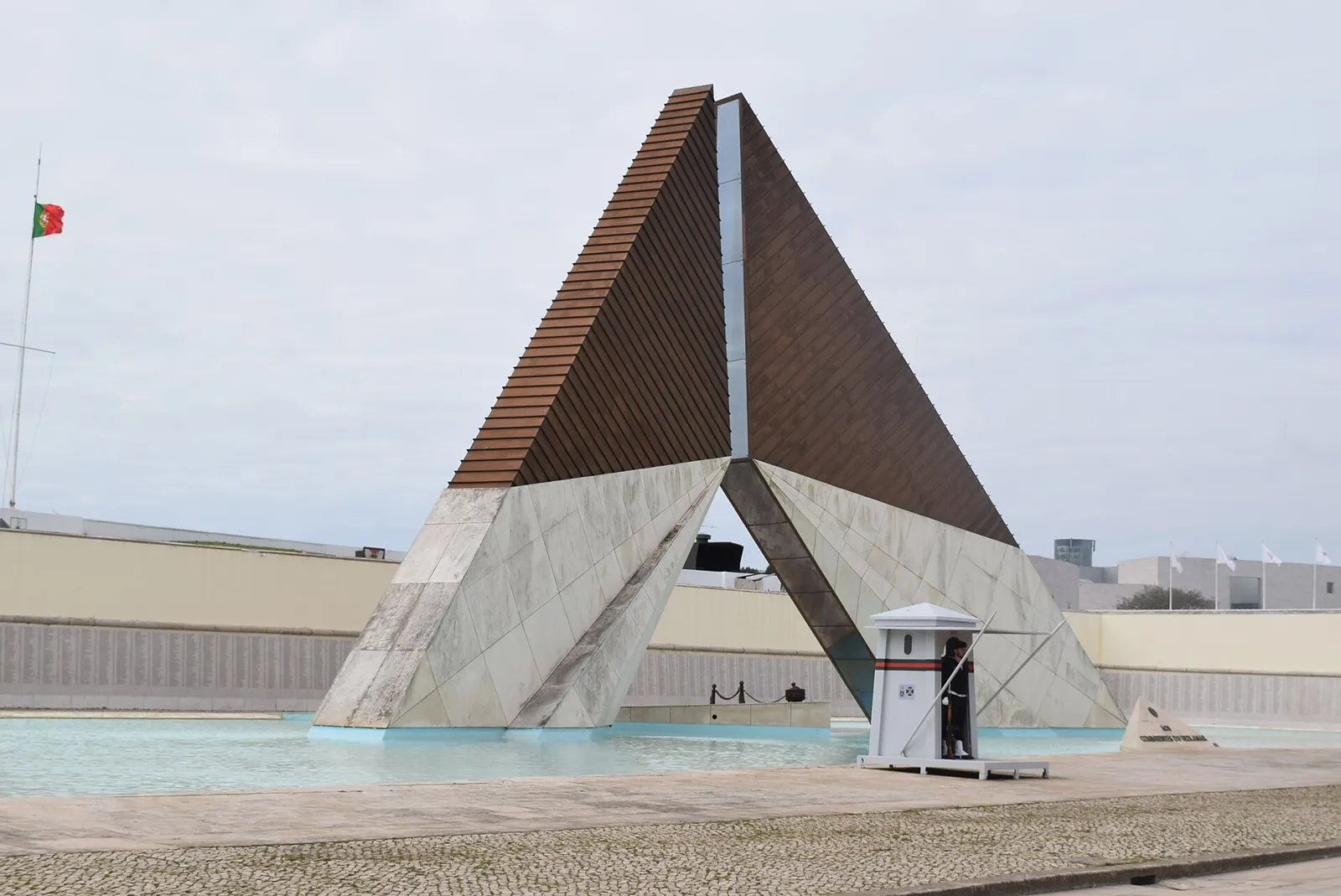
- The Monument to the Overseas Combatants in Belém, Lisbon, which honours the Portuguese who fought in the African wars, photographed in March 2023. Haydn Blackey from Cardiff, Wales, CC BY-SA 2.0, via Wikimedia Commons.